Some places tell you everything about a city the moment you walk in. Food markets do exactly that, pulling together farmers, fishmongers, bakers, spice sellers, and street-food cooks into one loud, delicious, chaotic space.
They have fed neighborhoods for centuries, and today they welcome curious travelers who want to taste a place rather than just see it. These 15 markets across the globe are absolutely worth visiting on an empty stomach.
Mercado de San Miguel, Madrid, Spain
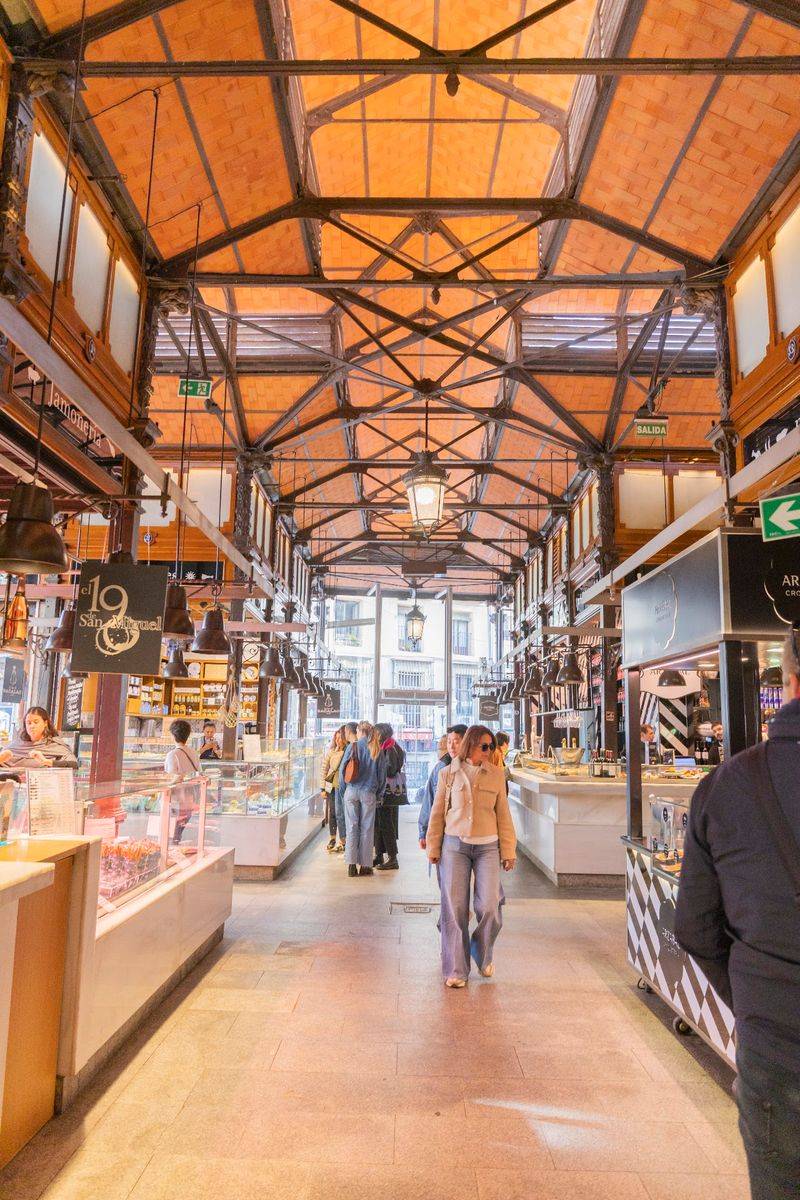
Seven million visitors a year walk through these iron-and-glass doors, and once you step inside, it is pretty clear why. Mercado de San Miguel is not your average grocery run.
It is a curated showcase of Spanish food culture packed into one beautiful nineteenth-century building near Plaza Mayor.
The counters cover serious ground: Iberian ham sliced to order, Galician octopus, cheeses from Asturias and the Basque Country, Mediterranean rice dishes, fresh oysters, churros, and Spanish wines poured by the glass. You move from stall to stall rather than sitting down for a single meal.
The market originally opened as a wholesale operation, but it has evolved into something closer to an edible tour of Spain’s regions. Locals and tourists mix easily here, which keeps the energy lively rather than stiff.
Go with a plan to graze, and leave the big lunch for somewhere else.
Borough Market, London, England
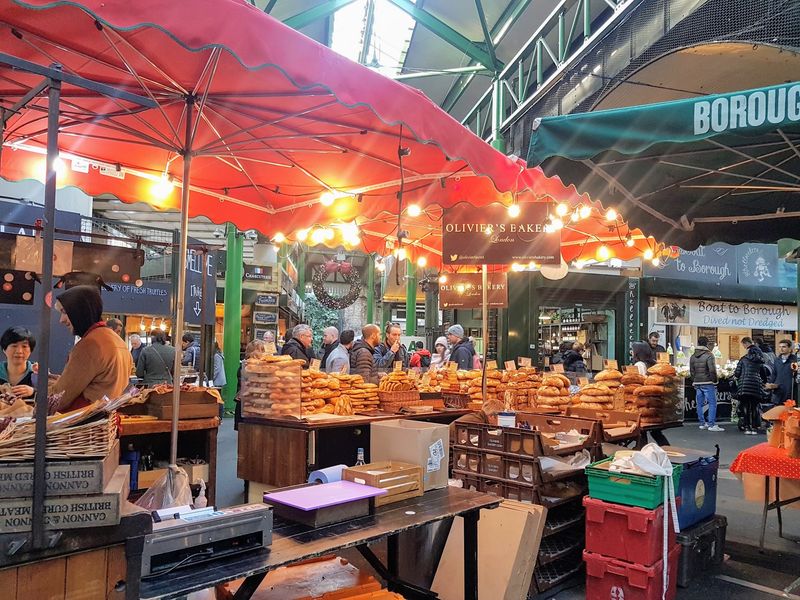
Right next to London Bridge station, Borough Market has been feeding the city in one form or another since the thirteenth century. That is a lot of cheese wheels and bread loaves over the years.
The market is split into distinct sections: Three Crown Square handles larger producers, the Green Market hosts smaller specialists, and Borough Market Kitchen is where you grab something hot to eat right now. British cheeses, sourdough loaves, heritage meats, seasonal vegetables, and street food from dozens of cuisines all share the same cobblestoned space.
Entry is free, which makes it easy to wander without any pressure to spend. Saturdays bring the biggest crowds and the most energy, but weekday mornings offer a quieter look at traders actually doing their jobs rather than performing for visitors.
Either way, Borough Market rewards slow walking and a willingness to try samples from strangers who are clearly very proud of what they sell.
La Boqueria, Barcelona, Spain
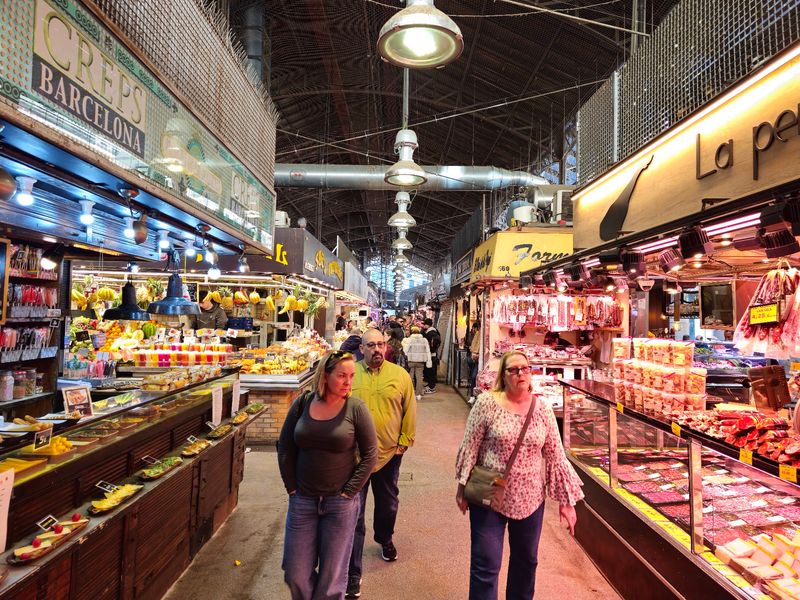
Fruit stacked into geometric towers. Fish so fresh it barely looks like it has left the water.
Candy in colors that seem physically impossible. La Boqueria is the kind of market that makes you want to photograph everything before you eat anything.
Located directly off La Rambla, the market has roots going back to traveling sellers gathering in the area before it officially opened in 1836. The metal-and-glass roof came later, in 1914, giving the whole operation a permanent, cathedral-like feel.
Inside, vendors sell fresh produce, cured meats, sweets, seafood, and meals at small counters where you eat on a stool.
Crowds can be intense, especially mid-morning when tour groups and locals compete for the same narrow aisles. Going early or late in the day gives you a better chance of actually moving around.
The market can feel touristy in spots, but the quality of what is sold here keeps it worth the visit, especially if you find a counter and order breakfast.
Pike Place Market, Seattle, United States
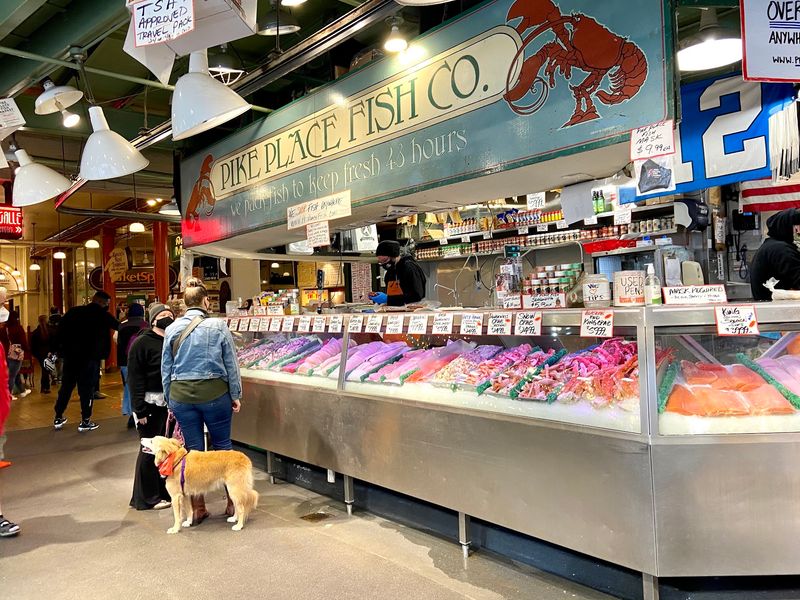
Fishmongers here do not just sell salmon. They throw it.
The flying fish at Pike Place Market have become so famous that the toss has turned into a performance art form, complete with crowd reactions and the occasional nervous tourist.
Beyond the flying fish, Pike Place is genuinely enormous. The nine-acre historic district has operated since 1907 and contains more than 220 independent shops, around 70 farmers, and over 30 international restaurants.
Pacific Northwest seafood leads the menu, but the food options stretch across cuisines from around the world.
What makes Pike Place feel different from many famous markets is that it functions as a real neighborhood. Residents shop here.
Craftspeople sell here. Buskers perform in the corridors.
The market has small businesses that have operated for decades alongside newer vendors, and the whole thing hums with genuine daily life rather than tourist theater. Arrive early for the freshest produce and the best chance of watching the fish fly without a crowd blocking your view.
Tsukiji Outer Market, Tokyo, Japan
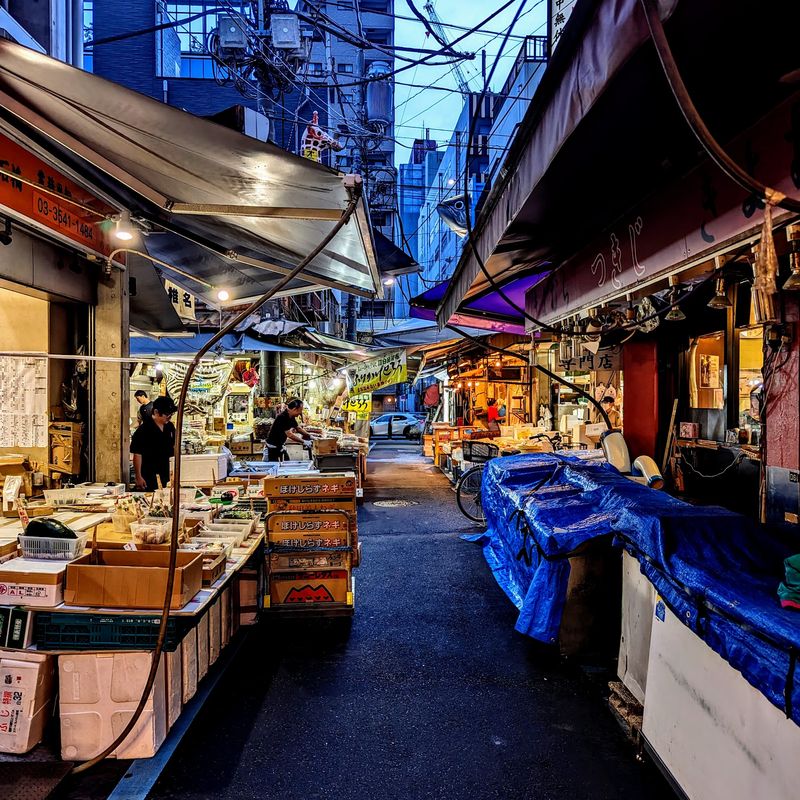
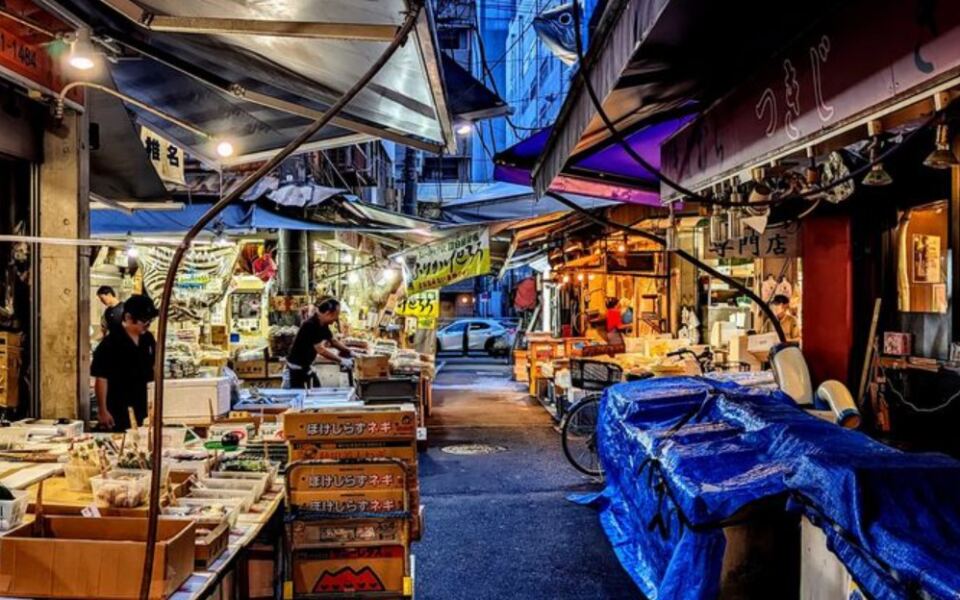
The smell hits you before the stalls even come into view. Tsukiji Outer Market in Tokyo is a full sensory experience, where roughly 460 businesses line narrow lanes selling fresh seafood, dried fish, pickles, tamagoyaki, seaweed, knives, and some of the best sushi you will ever eat standing up.
The wholesale fish auctions moved to Toyosu in 2018, but Tsukiji refused to slow down. The outer market kept its fishmongers, its shellfish counters, its ramen shops, and its devoted regulars who show up before most people have had breakfast.
Tsukiji’s history stretches back to the aftermath of the 1923 Great Kanto Earthquake, with the central market formally opening in 1935. Morning is the best time to visit, once professional buyers have had their early-hour priority.
Arrive hungry, bring cash, and plan to eat far more than you originally intended.
La Merced, Mexico City, Mexico
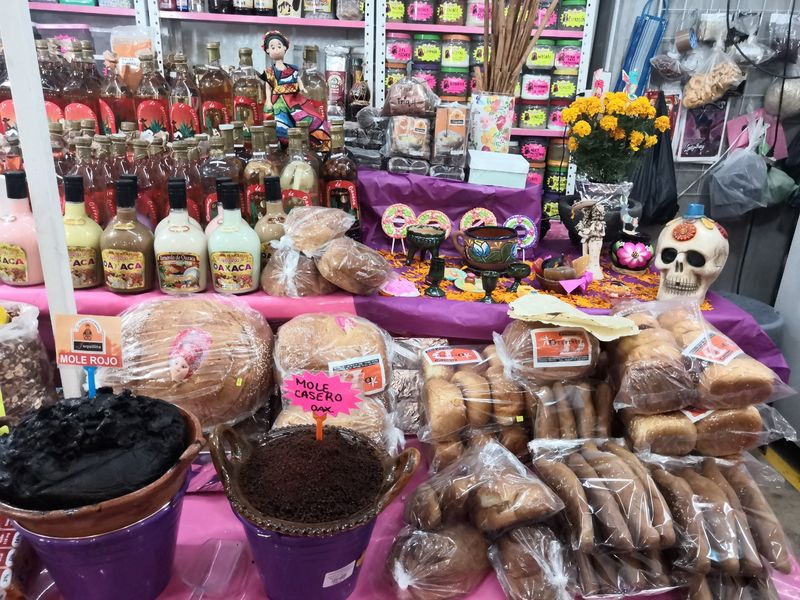
Walking into La Merced feels less like entering a market and more like walking into the food supply of an entire city. Mexico City’s largest traditional market is sprawling, loud, packed with color, and completely unapologetic about it.
The Nave Mayor alone holds dried foods, fresh produce, dozens of chili varieties, spices, prepared dishes, and ingredients that form the backbone of Mexican cooking. The wider neighborhood is a network of interconnected halls and street stalls, each specializing in something different.
La Merced served as the city’s main distribution center for decades before the Central de Abasto took over that role.
What makes this market historically fascinating is the connection between what is sold here and pre-Hispanic food traditions. Dried-food preservation techniques visible in the stalls link directly to practices documented centuries before the city existed in its current form.
La Merced is not polished or curated for tourists, which is precisely what makes a few hours spent wandering its aisles feel genuinely rewarding rather than staged.
Queen Victoria Market, Melbourne, Australia
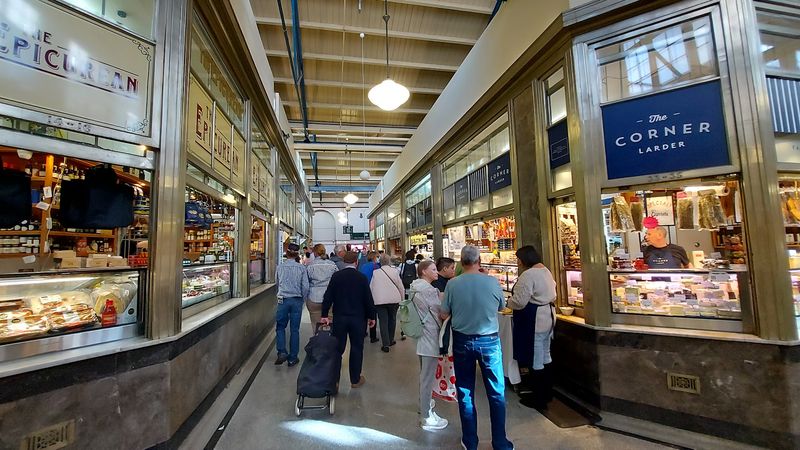
Nearly 150 years old and still pulling weekend crowds like it opened last month, Queen Victoria Market is one of those rare institutions that has somehow managed to stay genuinely useful to the people who live around it.
The Dairy Produce Hall is a particular highlight, with counters loaded with artisan cheeses, smallgoods, marinated olives, baked goods, and specialty coffee. Separate sections handle fresh fish, oysters, fruit, vegetables, and prepared foods.
Periodic night markets bring street food and live music into the mix, giving the space a completely different personality after dark.
Unlike many food destinations that have drifted toward pure tourism, Queen Vic still operates as a working market. Locals shop here for their weekly groceries.
Guided food tours introduce visitors to the producers behind the stalls, but honestly, just walking through the historic sheds while vendors call out their specials gives you a strong sense of why Melbourne takes its food culture so seriously. It is a city that eats well, and this market is a big part of the reason.
Torvehallerne, Copenhagen, Denmark
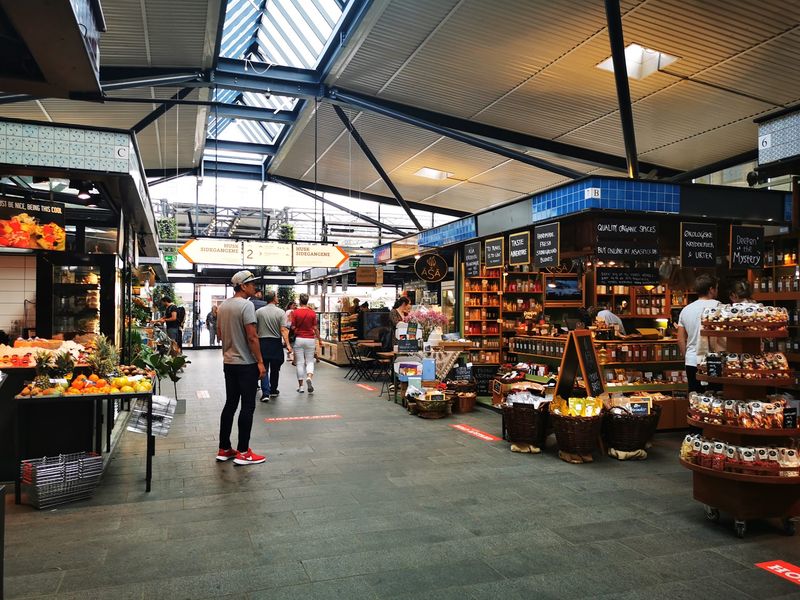
Two sleek glass market halls, a cluster of outdoor vegetable stalls, flower sellers, and enough open-faced sandwiches to make you rethink your entire relationship with bread. Torvehallerne sits right beside Norreport Station, which means it is almost impossible to miss and very easy to return to repeatedly.
Inside the halls, specialist producers sell artisan cheese, fresh seafood, pastries, chocolate, seasonal produce, and dishes ranging from Danish classics to Spanish tapas and Chinese jian bing. The outdoor sections add fresh flowers, vegetables, and coffee carts to the mix, giving the whole complex an energetic, market-square feel.
Torvehallerne works because it serves both locals and visitors without pandering to either. Residents grab breakfast here, pick up groceries, or stop for coffee between errands.
Travelers use it as a fast and delicious introduction to Copenhagen’s food scene, where quality ingredients and independent producers matter just as much as finished dishes. Weekday mornings feel particularly local, which is the best kind of atmosphere a market can have.
St. Lawrence Market, Toronto, Canada
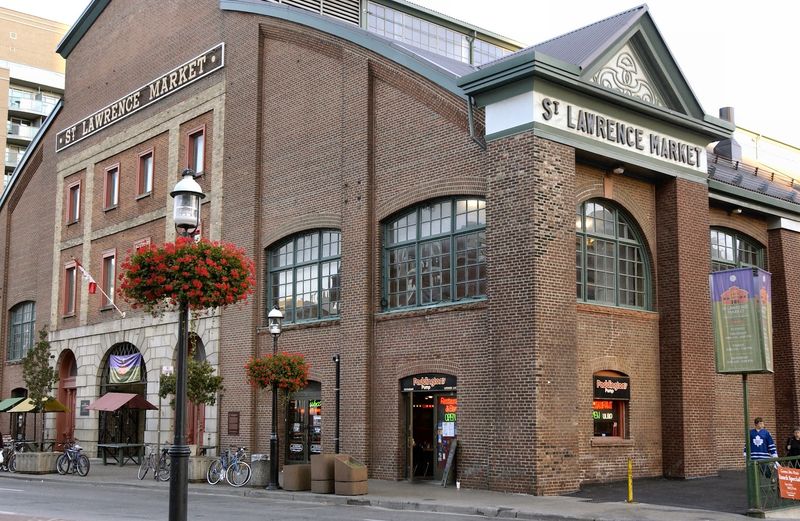
Toronto’s St. Lawrence Market has been a lot of things over the years: a marketplace, a City Hall, a police station, a farmers market, and now one of the city’s most beloved food destinations. That kind of history gives a place real character.
The South Market is the main event, with more than 120 merchants selling everything from dry-aged beef and artisan cheeses to Eastern European pastries, fresh pasta, and Canadian maple products. Butchers, bakers, and specialty food sellers share the space with small restaurants and prepared-food counters, making it easy to eat well without ever sitting down at a proper table.
What sets St. Lawrence apart from purpose-built food halls is that it genuinely reflects the city around it. Toronto is one of the most culturally diverse cities on the planet, and the market’s vendor mix shows that clearly.
Canadian food traditions sit right next to immigrant cuisines that have become part of the city’s identity. Visiting on a Saturday morning, when the farmers market is also running, gives you the fullest picture of what this place can do.
Or Tor Kor Market, Bangkok, Thailand
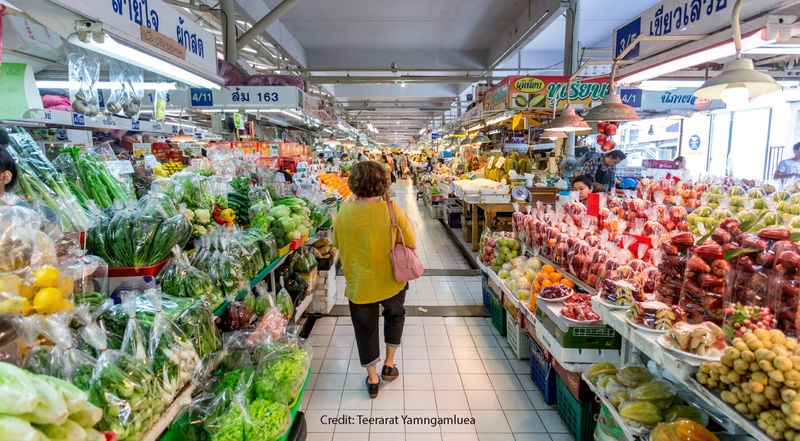
Forget every chaotic market stereotype you have ever heard about Bangkok. Or Tor Kor operates at a different level entirely, known across the city for the quality and presentation of its ingredients rather than its noise or crowds.
Tropical fruit displays here are genuinely spectacular. Mangoes arranged by ripeness, durian cut open to show the custard-yellow interior, mangosteen stacked in perfect pyramids, and rambutans so red they almost glow.
Beyond the fruit, stalls sell fresh curries, grilled meats, seafood, Thai sweets, and the kind of prepared dishes that make you want to buy a container of everything and find somewhere to sit immediately.
Or Tor Kor sits right beside the famous Chatuchak Weekend Market, making it easy to combine both in a single visit. The key difference is focus: Chatuchak is enormous and sells almost everything, while Or Tor Kor zeroes in on premium Thai food.
For travelers who want to understand what Thai home cooking actually looks like at its best, this market is an excellent and accessible starting point.
Nishiki Market, Kyoto, Japan
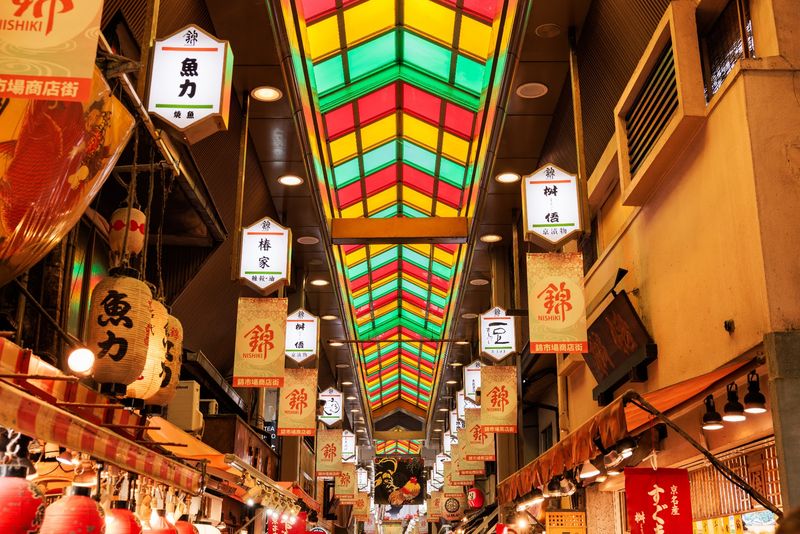
Four hundred meters long, barely wide enough for two people to pass comfortably, and packed with roughly 400 years of food history. Nishiki Market earns its nickname as the Kitchen of Kyoto without any argument.
Around 130 shops line the covered arcade, selling fresh fish, Kyoto vegetables, tofu skin known as yuba, pickled everything, grilled skewers, traditional sweets, and ingredients that define the city’s cuisine. Kyoto’s food culture has always prioritized subtlety and seasonal precision, and Nishiki reflects that in the careful way vendors display and describe what they sell.
One thing worth knowing before you visit: local etiquette here is specific. You are asked not to walk and eat at the same time.
Food should be eaten at the shop where you bought it or in a designated spot, not carried through the narrow lanes. That rule might feel unusual, but it helps preserve a market that still serves working food businesses alongside curious visitors.
Respecting it makes the experience better for everyone, including you.
Grand Central Market, Los Angeles, United States
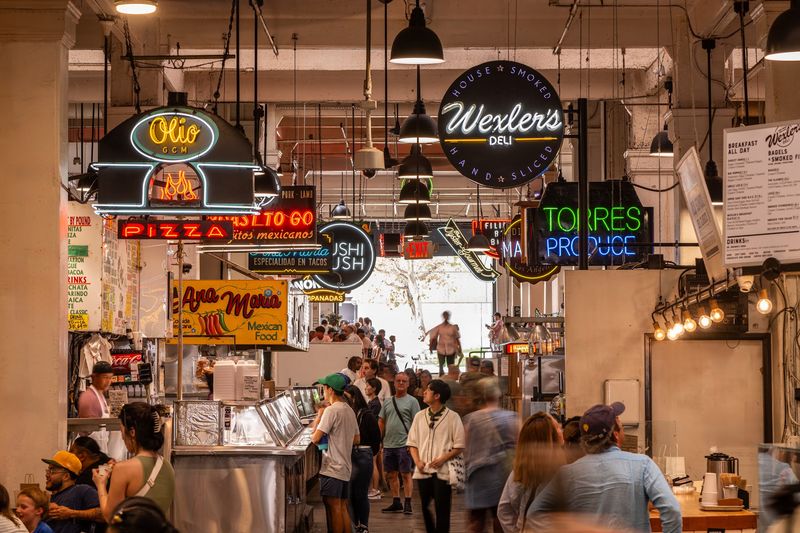
Since 1917, Grand Central Market has been the place where downtown Los Angeles comes to eat. The building covers about 30,000 square feet and holds a vendor mix that reads like a map of the city’s immigrant history and its constantly evolving food scene.
Long-established counters serve tacos, pupusas, Chinese food, and Latin American groceries alongside newer businesses selling pastrami sandwiches, fresh oysters, artisan doughnuts, and small-batch ice cream. Fresh produce stalls still operate inside, keeping a connection to the building’s original market function rather than letting it drift into pure restaurant territory.
What Grand Central Market captures better than almost anywhere else in the country is the way immigrant food traditions and contemporary culinary trends end up sharing the same space rather than competing for separate neighborhoods. That overlap is very much a Los Angeles story.
The market also stays open late, which makes it genuinely useful as a dinner stop rather than just a daytime attraction. Weekday lunches get busy fast, so arriving slightly before or after the rush gives you room to actually look around.
Central Market, Valencia, Spain
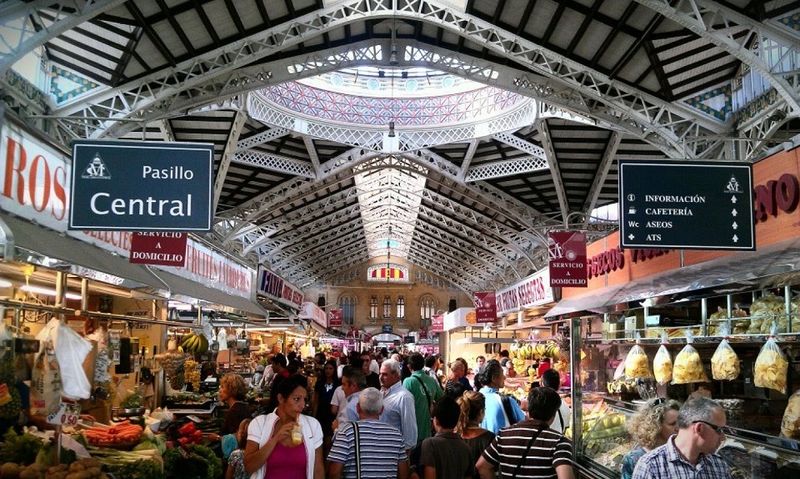
The building alone is worth the visit. Valencia’s Central Market is a Modernist masterpiece covering more than 8,000 square meters, with iron columns, stained glass, decorative tiles, and architectural details that reference local agriculture at every turn.
Then you notice what is actually being sold inside, and the building becomes a bonus.
Over 250 stalls fill the space with Valencia’s famous oranges, tomatoes, and beans from the surrounding huerta, alongside fresh seafood, live eels, cured meats, artisan cheeses, spices, nuts, and salted fish. The variety is enormous, and the quality reflects a city that has some of the most productive farmland in Europe sitting right on its doorstep.
Visit Valencia describes it as Europe’s largest fresh-produce market, which gives you a sense of the scale. For anyone trying to understand why Valencian cooking places such heavy emphasis on fresh, local ingredients, spending an hour walking the stalls provides a clearer answer than any cookbook could.
The market is busiest on weekend mornings, but it rewards a visit any day of the week.
Mercado Central, Santiago, Chile
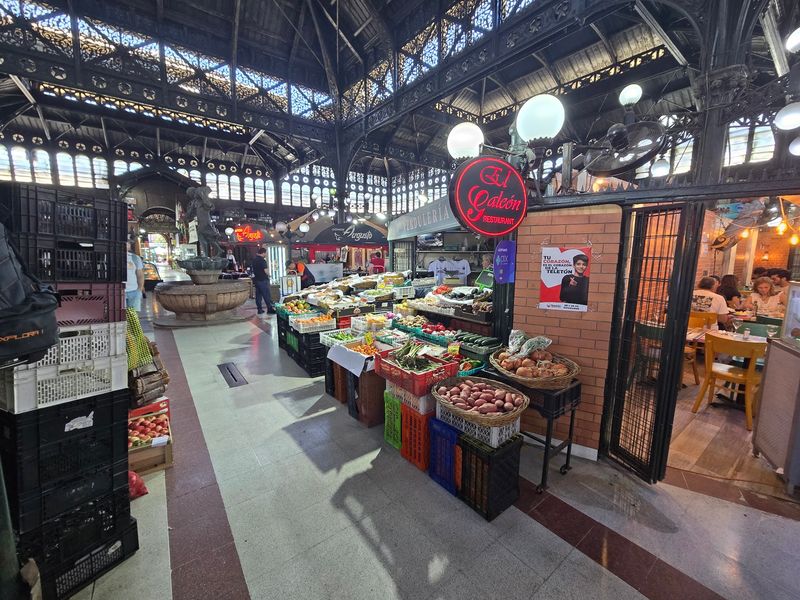
Chile has one of the longest coastlines on Earth, and Mercado Central exists to remind you of that fact in the most delicious way possible. Fresh Pacific seafood is the undisputed star here, with fish, shellfish, and ceviche counters filling the interior of a remarkable iron market building inaugurated in 1872.
Much of the building’s galvanized iron structure was cast in England and shipped over, which is an extraordinary detail for a market that has since been declared a Chilean National Monument. Restaurants and stalls serve traditional Chilean seafood dishes alongside fresh fruit, vegetables, herbs, cheeses, and craft goods sold in the surrounding corridors.
The central restaurant area gets lively and loud, with vendors enthusiastically competing for your attention as you walk past. It can feel overwhelming at first, but picking a counter, sitting down, and ordering a plate of fresh ceviche or a bowl of caldillo de congrio quickly makes everything feel right.
The surrounding market stalls are quieter and worth exploring before or after your meal to get a fuller sense of what the building holds beyond its famous seafood restaurants.
English Market, Cork, Ireland
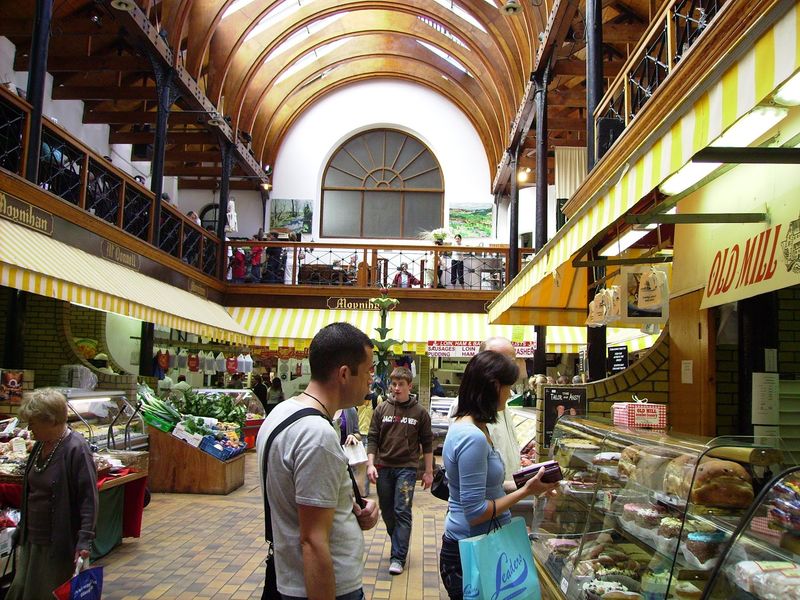
Open since 1788, Cork’s English Market has outlasted empires, economic crashes, and at least a few food trends that probably deserved to disappear. It is one of the oldest municipal food markets in the world still doing exactly what it was built to do.
Local vendors sell artisan breads, Irish cheeses, charcuterie, fresh fish, seasonal fruit and vegetables, cakes, and imported specialties. Distinctly Cork foods like spiced beef and drisheen, a type of blood pudding local to the area, are still part of the regular selection, which tells you something about how seriously the city guards its food identity.
The market’s name comes from the Protestant corporation that established it. A separate market later became known as the Irish Market to distinguish the two, giving the building a name rooted in Cork’s complicated history.
Cork City Council is clear that this remains a genuine place of commerce, not a tourist attraction with a heritage label slapped on it. Narrow aisles, family-run stalls, and a strong regional character make it easy to believe them.
Come hungry and leave with something wrapped in paper.
Share this story