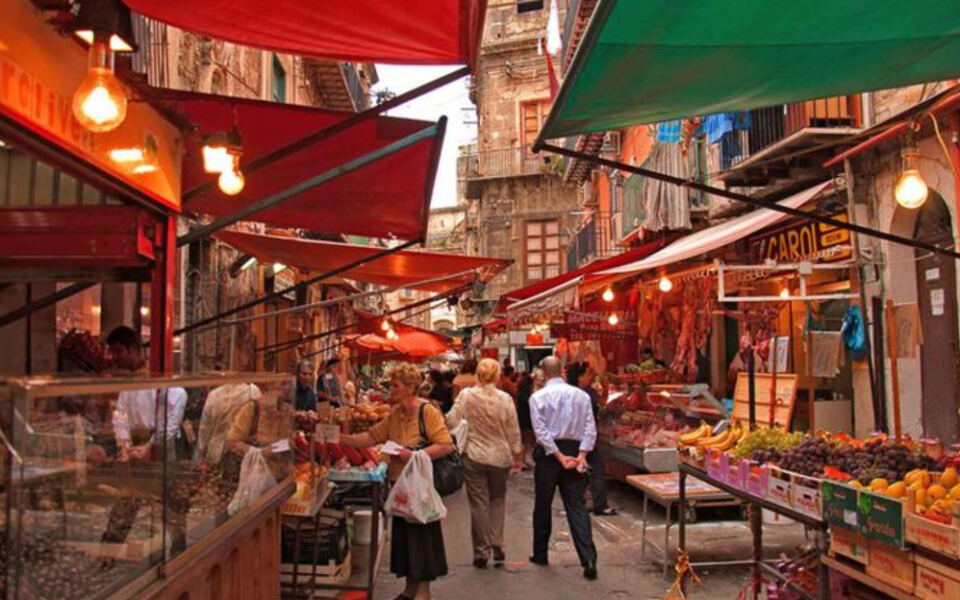
Europe’s food culture is often easiest to understand before anyone sits down at a restaurant. Walk into a great market and the ingredients explain the city for you.
Fish counters reveal how close the sea is, cheese and cured meats point toward nearby farms, and immigrant communities add spices, breads, and dishes that eventually become part of the local food identity. These 15 markets stand out because they combine regional specialties, history, atmosphere, and enough things to taste that arriving hungry is practically a requirement.
Central Market – Valencia, Spain
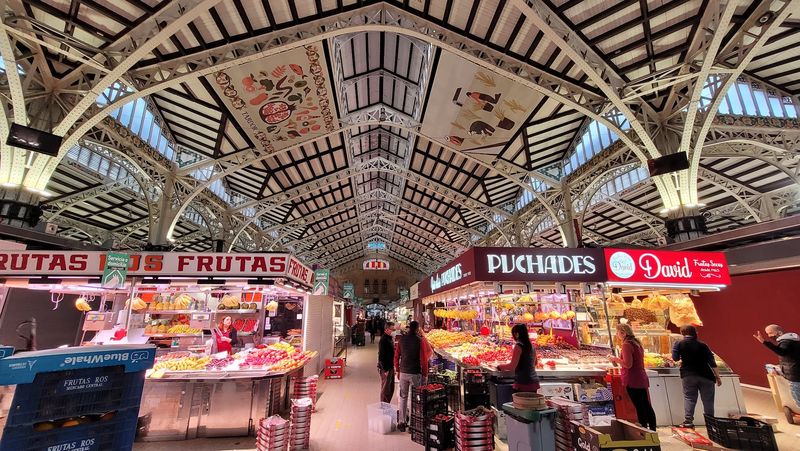
Stepping inside Valencia’s Central Market feels less like entering a grocery store and more like walking into a cathedral built entirely for food lovers. The enormous Modernist building covers more than 8,000 square meters and shelters over 250 stalls beneath iron columns, stained glass, and a spectacular dome that makes the whole space glow.
What fills the building explains Valencia better than any guidebook. Oranges, tomatoes, beans, and vegetables from the fertile L’Horta surrounding the city share space with Mediterranean seafood, meats, cheeses, nuts, spices, salted fish, and even live eels.
Visit Valencia describes it as Europe’s largest fresh-produce market, and the sheer variety makes that claim easy to believe.
Travelers who are not shopping for groceries can still eat very well. Central Bar uses ingredients sourced directly from the market’s stalls to prepare tapas, sandwiches, and seasonal dishes worth stopping for.
The key detail to remember is that this remains a working market, not simply a beautiful attraction. Locals are genuinely buying tomorrow’s lunch while visitors crane their necks at the ceiling, which is exactly the kind of overlap that makes a market worth visiting in the first place.
La Boqueria – Barcelona, Spain
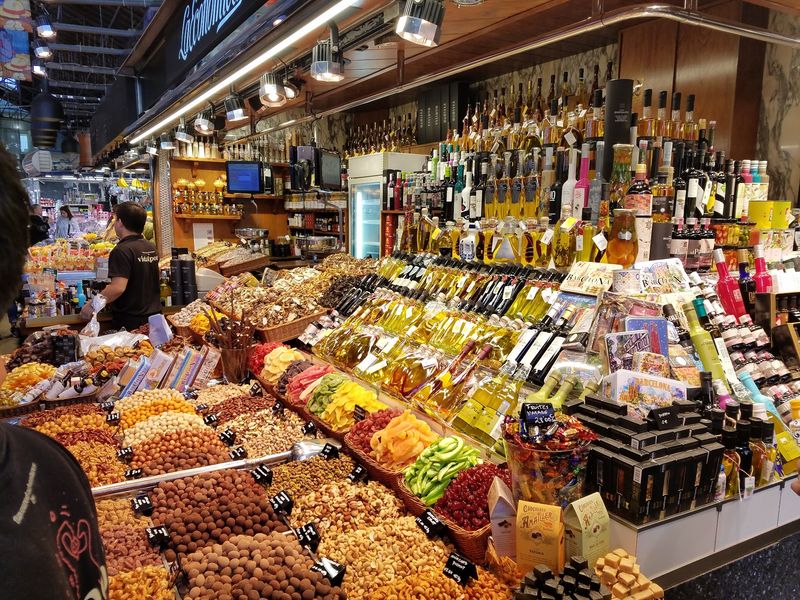
Few markets on Earth have been photographed as many times as La Boqueria, and yet it still manages to surprise first-time visitors who expected nothing but tourist traps. Its location directly off La Rambla guarantees crowds, but the market existed long before Barcelona became one of the world’s busiest tourism cities.
Barcelona tourism traces market activity here back to the 13th century, with the current building dating to 1860.
Enter from La Rambla and you pass beneath an ornate iron entrance with stained-glass decoration before reaching rows of produce, seafood, meats, cheeses, nuts, sweets, and prepared food. La Boqueria works best when visitors move past the stalls designed primarily for quick photographs and pay attention to the fishmongers, the Catalan sausages, the wild mushrooms, and the seasonal fruit that actually supply restaurants elsewhere in the city.
Come early and the market still feels like a market before it feels like a performance. Barcelona has dozens of neighborhood markets, but La Boqueria remains its most theatrical one.
Watch what locals order at the counters, notice the jamón and olives, and resist the urge to buy anything that comes pre-packaged in a little souvenir box.
Borough Market – London, England
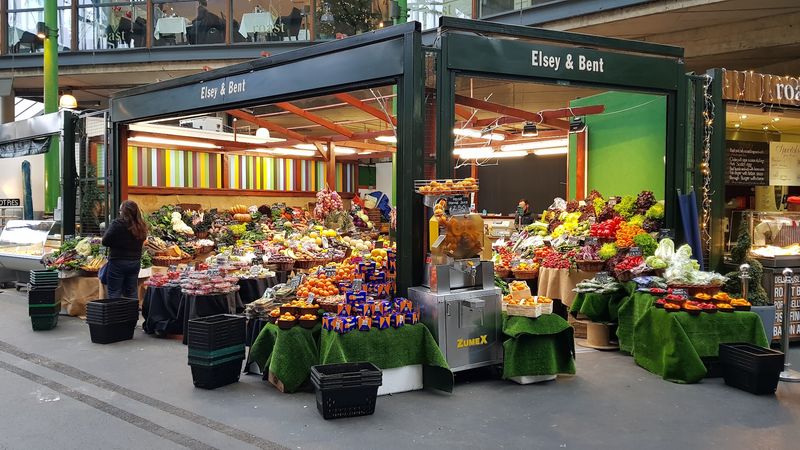
Borough Market has been feeding Londoners for roughly 1,000 years, which means it was already old when Shakespeare was writing plays nearby. A market developed near the southern end of London Bridge during the medieval period, and the present market has occupied its current location since 1756.
By the 19th century, rail connections had helped turn it into a major wholesale fruit-and-vegetable hub before it reinvented itself around high-quality food.
Three Crown Square concentrates produce merchants, the Green Market features smaller specialist sellers, and Borough Market Kitchen brings together street-food traders. British cheese sits near Spanish charcuterie, fresh bread competes with oysters, and seasonal vegetables appear beside dishes influenced by cuisines from across Europe, Asia, Africa, and the Americas.
The range is genuinely hard to match anywhere else in London.
Borough can get intensely busy on Saturdays, and navigating the crowds requires patience and comfortable shoes. But beneath all the noise is still a market shaped by London’s oldest story: people arriving from somewhere else and bringing food with them.
Grab a coffee, pick up something to eat while standing, and let the market do what it has always done, which is feed whoever shows up hungry.
Ballaro Market – Palermo, Italy
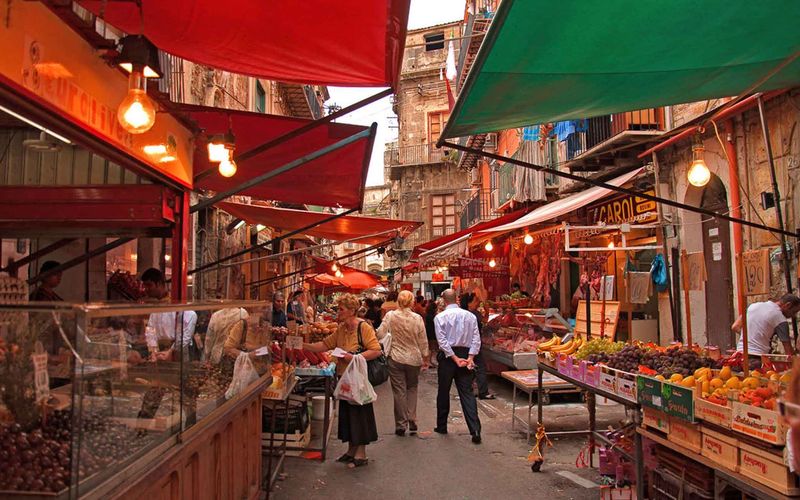
Noise arrives before the food does at Ballaro. Vendors advertising their goods with traditional calls known as abbanniate fill the narrow streets of Palermo’s Albergheria district before you can even see the stalls.
Italia.it describes Ballaro as Palermo’s oldest and largest market, tracing its origins to the city’s Arab period, and that layered history shows up in every corner of the place.
Food here is not neatly separated into shopping and lunch. Stalls sell spices, fish, vegetables, dried goods, fruit, and ingredients reflecting both Sicilian traditions and newer African communities.
Then improvised kitchens scattered throughout the market transform it into one of Palermo’s great street-food destinations, which is a genuinely rare combination to find anywhere in Europe.
Try panelle, the chickpea fritters often served stuffed into bread rolls. Add crocche, arancine, sfincione, or, if you are feeling adventurous, pani ca meusa, Palermo’s famous spleen sandwich that locals eat without a second thought.
Ballaro is noisy, chaotic, and far less curated than most famous European food halls. That is precisely the point.
Some of the best market experiences in Europe come from places that have never tried to become tourist attractions.
Mercado do Bolhao – Porto, Portugal
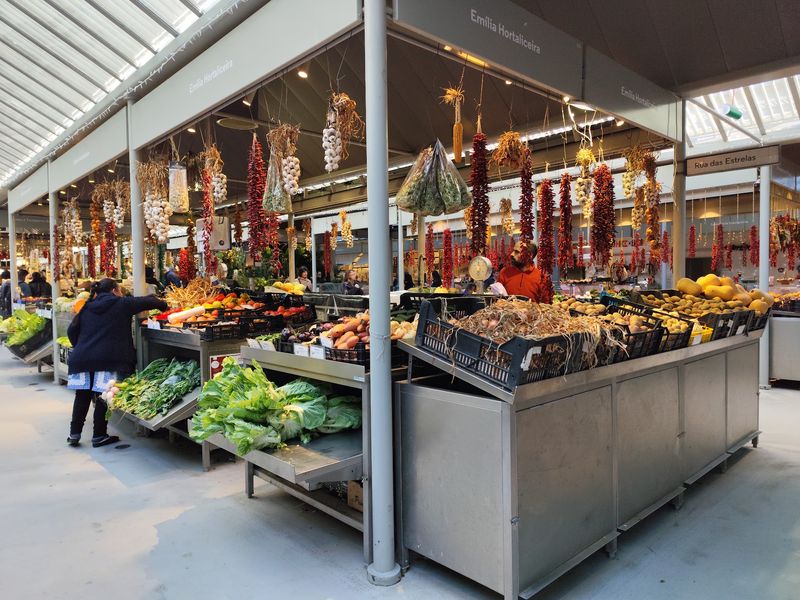
Bolhao has the rare quality of feeling simultaneously old and genuinely alive. Its origins date to 1839, the current building was constructed in 1914, and after a major restoration it reopened in 2022 with modern infrastructure but much of its traditional identity carefully preserved.
More than 70 traders returned with fish, meat, vegetables, fruit, bread, flowers, and regional goods, which is exactly the kind of continuity that separates a real market from a lifestyle concept.
This is one of the easiest places in Porto to understand how northern Portugal actually eats. Look for bacalhau and fresh Atlantic fish.
Notice the cured sausages, cheeses, olives, pastries, and regional wines that reflect how close Porto sits to the Douro Valley and the productive northern countryside. The building itself is worth a slow walk around even before you buy anything.
Bolhao is popular with visitors, but its real appeal comes from still functioning as the kind of place where locals buy ingredients for dinner. The restoration did not turn it into a food museum with admission tickets and gift shops.
It gave an old market another working life, which is a much harder thing to pull off than it sounds. Porto got lucky.
Ostermalms Saluhall – Stockholm, Sweden
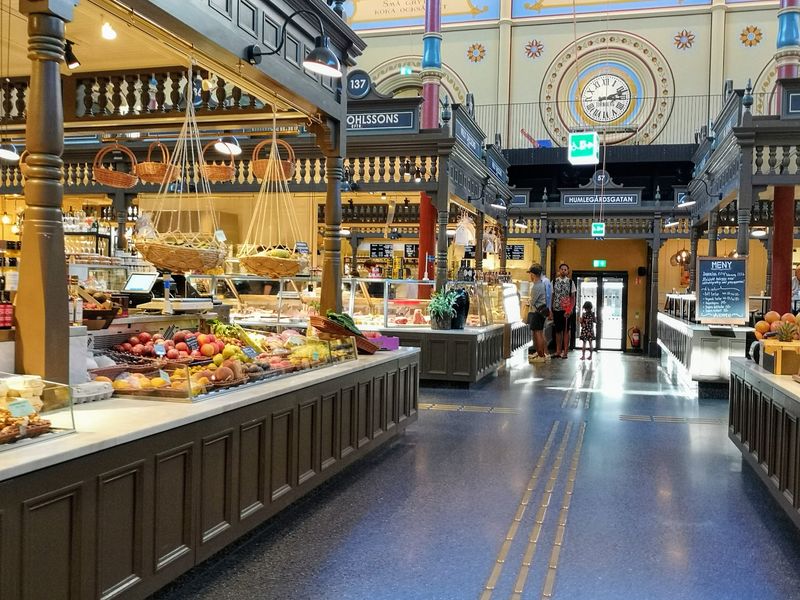
Walking into Ostermalms Saluhall feels like someone decided that buying smoked salmon should look as refined as visiting a fine-dining restaurant. The historic Stockholm food hall dates to the 1880s and reopened in 2020 after an extensive renovation.
Visit Stockholm describes it as one of the city’s most beloved historic buildings and a destination for fresh fish, vegetables, meat, cheese, and delicacies that reflect Scandinavian food culture at its most polished.
The atmosphere fits upscale Ostermalm perfectly. Seafood gleams beneath glass counters.
Cheeses, breads, cured fish, and prepared dishes are presented with a precision that can make ordinary grocery shopping look unexpectedly luxurious. Market halls have deep roots in Scandinavian food culture, particularly in cities where cold weather made indoor trading a practical necessity rather than a lifestyle choice.
This is an ideal place to look for smoked or cured salmon, herring, shellfish, Swedish cheeses, and regional specialties without committing to a formal restaurant reservation. Stockholm can be expensive, and browsing costs nothing.
Resistance once you actually smell what is being prepared for lunch is, however, a completely different problem. Budget extra time, because leaving quickly turns out to be surprisingly difficult once the food counters have your full attention.
English Market – Cork, Ireland
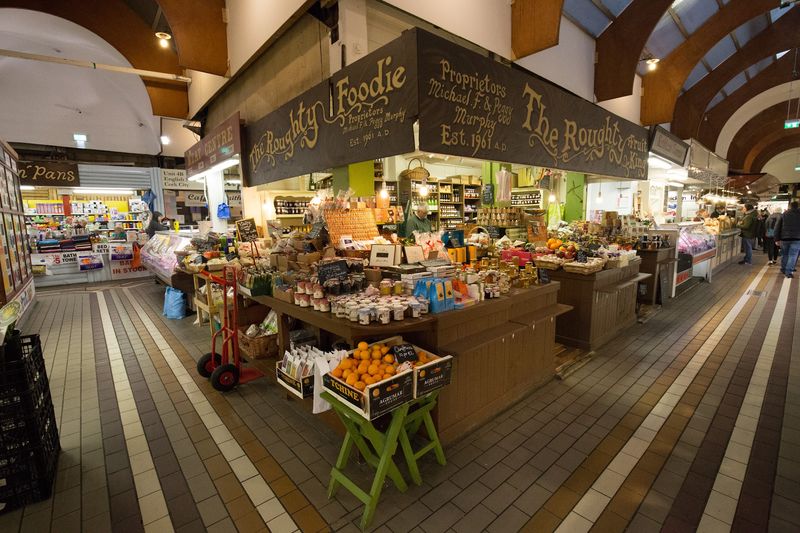
Cork’s English Market has been trading since 1788, which makes it one of the oldest municipal food markets still operating anywhere in Europe, and the name carries a history that most visitors do not expect. The market was established by the Protestant, or English, corporation that governed Cork at the time.
After local-government reform, a second market became known as the Irish Market, leaving the older institution with the name it still carries today.
Family-run counters sell Irish meats, fish, cheeses, breads, vegetables, charcuterie, cakes, and specialty foods that reflect both Cork’s long food traditions and newer artisan producers. Traditional Cork products include drisheen, tripe, spiced beef, buttered eggs, and salted fish that locals still buy regularly rather than treating them as novelties for tourists to photograph.
Cork City Council describes the English Market as simultaneously a place of commerce, a meeting point, a thoroughfare, and a city hub. That description matters more than it might seem.
A great market should not feel like somewhere designed primarily for visitors, and this one still belongs unmistakably to Cork. Spend enough time there and you start to understand the city through the food its people actually choose to eat every week.
Naschmarkt – Vienna, Austria
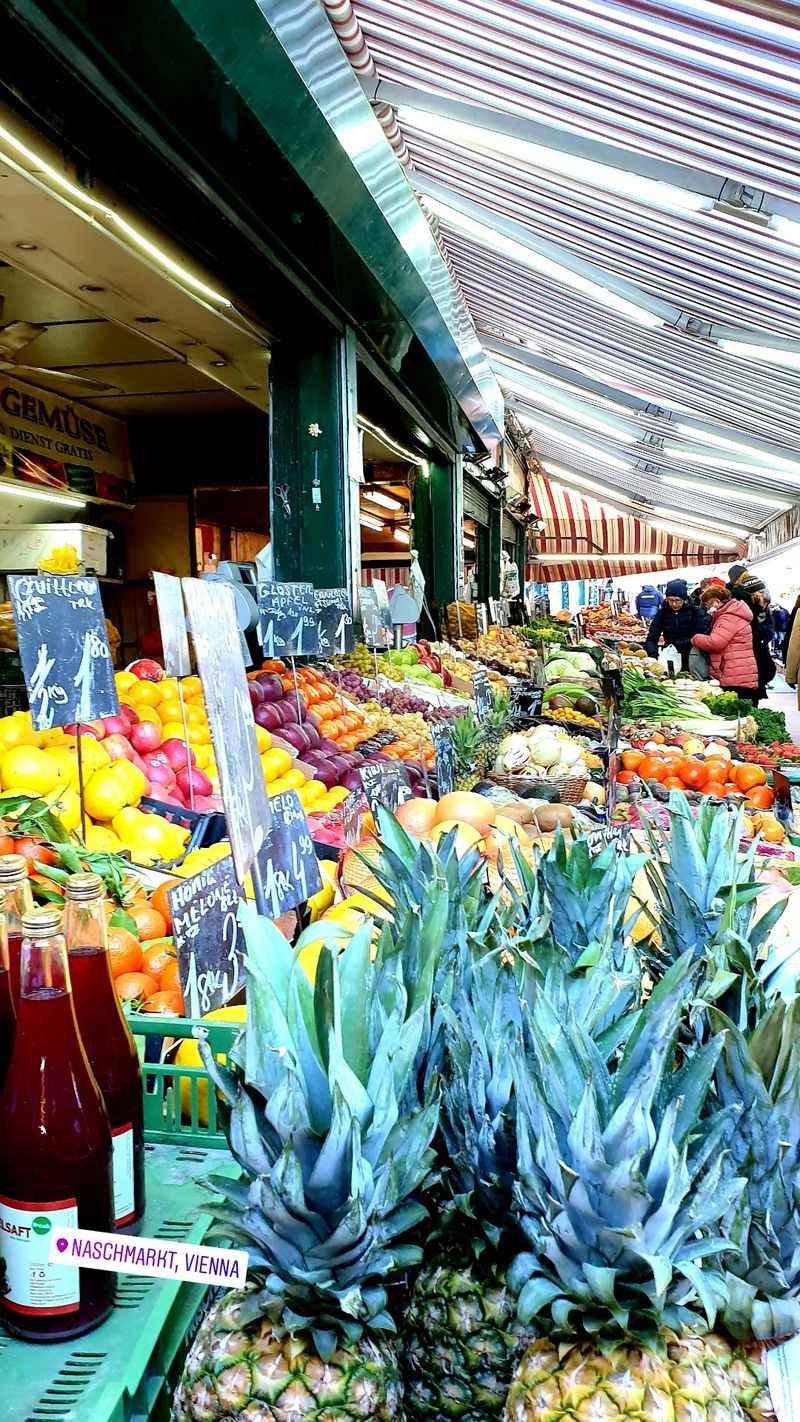
Vienna’s imperial palaces tell one story about the city. Naschmarkt tells a completely different and considerably hungrier one.
The market has existed in some form since 1774 and has occupied its present location since 1916, with roughly 130 stalls, restaurants, and a market hall stretching between Karlsplatz and Kettenbruck engasse. It is long, loud, and packed with a variety of food that the city’s coffee-and-cake reputation does not quite prepare you for.
The food reflects modern Vienna’s genuinely multicultural character. You can buy fruit, vegetables, cheese, fish, meat, spices, coffee, wine, dried fruit, vinegar, chocolate, and specialties from across Europe, the Middle East, and Asia.
Vienna’s tourism authority describes its markets as places where Eastern European, Mediterranean, Austrian, and Oriental influences overlap, which at Naschmarkt is not marketing language but an accurate description of a typical Tuesday morning.
Friday and Saturday bring farmers selling regional products, while Saturday adds a famous flea market next door that makes the whole area worth an extended visit. Come early for produce, stay for lunch at one of the restaurants, and return later for a drink.
Vienna’s appetite, it turns out, is considerably broader than its reputation for elegance and pastry suggests.
Torvehallerne – Copenhagen, Denmark
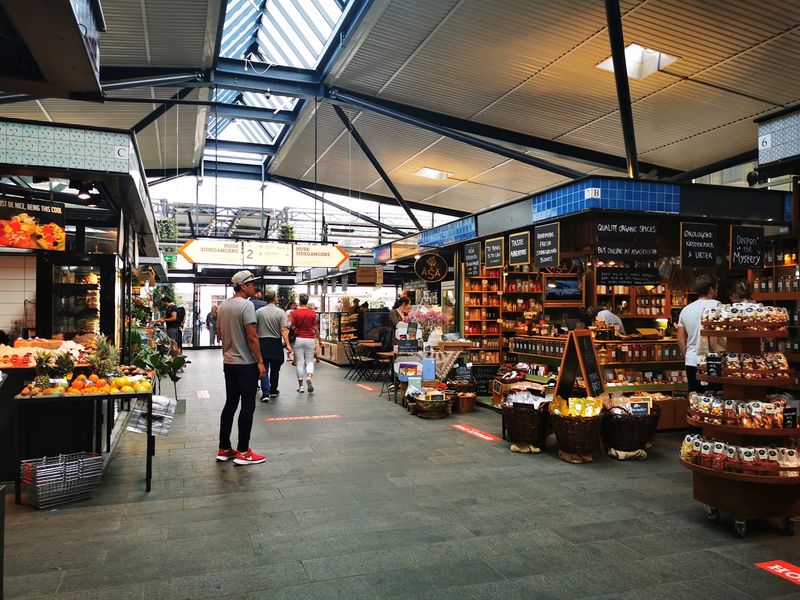
Torvehallerne opened in 2011 and managed to feel essential almost immediately, which is not something most new markets can claim. Two glass-and-steel buildings beside Norreport Station bring together high-quality produce, specialty foods, bakeries, seafood sellers, coffee roasters, cheese shops, and small kitchens.
Visit Copenhagen describes the market as a favorite with both locals and visitors, with a strong emphasis on sustainable, organic, and independently produced food.
This is Copenhagen, so even a casual lunch can become suspiciously well designed. Pick up artisanal cheese, order oysters, or try smorrebrod, Denmark’s open-faced sandwiches that manage to be both practical and beautiful at the same time.
Sourdough pastries and specialty coffee from small-batch roasters are available for anyone who needs breakfast before they commit to the bigger decisions.
The market works because it still serves two audiences without alienating either one. Locals buy ingredients for dinner while visitors build lunch from several vendors and then linger at the outdoor stalls.
Visit Copenhagen specifically recommends Torvehallerne as an introduction to the city’s broader food culture before exploring neighborhoods and restaurants elsewhere. It is not ancient, and that is actually the point.
Its value comes from showing what Danish food culture looks like right now.
Great Market Hall – Budapest, Hungary
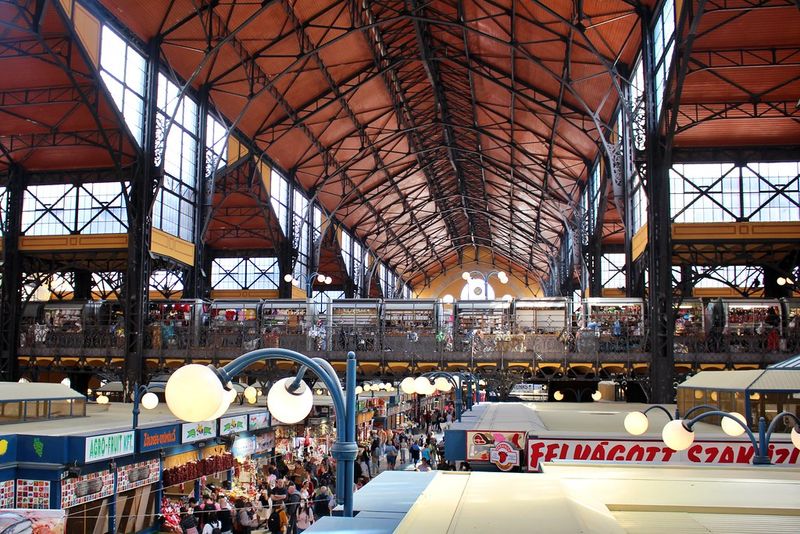
Budapest’s Great Market Hall makes grocery shopping feel like an architectural event. The enormous brick-and-steel building opened in 1897 and was designed by Hungarian architect Samu Pecz, whose ambition clearly extended well beyond providing a dry place to buy vegetables.
Budapest’s official tourism site calls it the country’s biggest traditional food market, and the scale of the building makes that easy to believe from the moment you walk through the front doors.
The ground floor is where the market feels most food-focused and most alive. Look for paprika in every imaginable form, Hungarian sausages, cured meats, cheeses, vegetables, pickles, pastries, and bottles of local wine or palinka spirits.
Prepared-food counters introduce another layer entirely, offering langos, goulash-style meals, stuffed cabbage, and other Hungarian comfort foods without requiring a formal dining room or a reservation.
The building itself is a major part of the experience. Its vast nave, metal framework, patterned Zsolnay-tiled roof, and busy aisles give the Great Market Hall the feeling of a railway terminus that decided food was more interesting than trains.
Budapest has smaller, more local markets worth exploring. This one, however, remains the grand entrance to Hungarian food culture for anyone arriving for the first time.
Old Market Hall – Helsinki, Finland
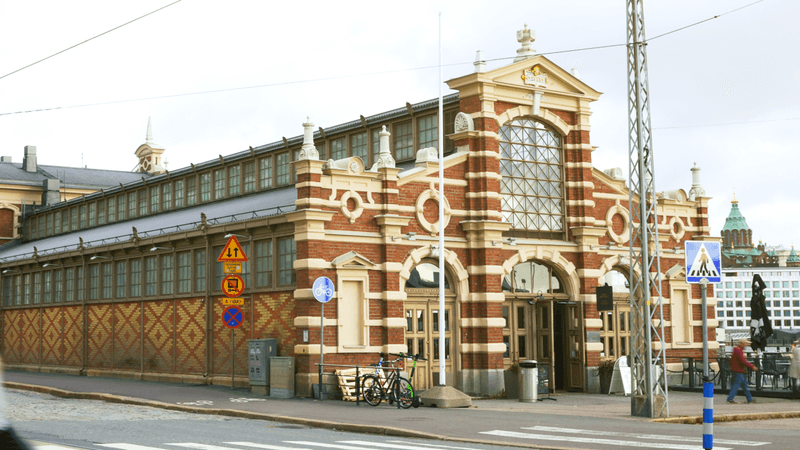
Helsinki’s Old Market Hall opened in 1889 beside the South Harbour, making it the city’s oldest food hall and one of the most quietly atmospheric markets in northern Europe. Its Baltic location shapes much of what is worth eating there.
Seafood counters sell salmon and other fish, while stalls offer artisan cheeses, game, sweets, spices, teas, and distinctly Finnish specialties that you will not find anywhere else in the same combination.
Reindeer meat appears on the menu alongside more expected options. So does salmiakki, Finland’s famously polarizing salty licorice that locals eat enthusiastically while visitors approach it with visible caution.
Visit Finland specifically recommends salmon soup and fish sandwiches as starting points, which is genuinely good advice for anyone who wants to understand what Finnish coastal food actually tastes like.
Architect Gustaf Nystrom designed the building after studying European market halls extensively, and the red-brick exterior and cast-iron interior still retain much of their 19th-century character despite the busy modern trade happening inside. The location makes logistics unusually pleasant.
Buy lunch, step outside, and you are immediately beside Helsinki’s harbor and Market Square, with ferries departing toward Suomenlinna fortress. Few European markets make a picnic this straightforward to organize.
Marche des Enfants Rouges – Paris, France
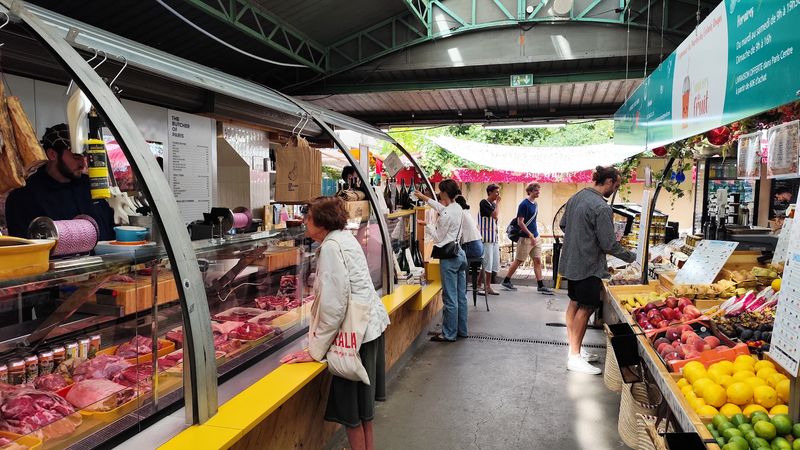
Paris has more than 80 markets, but only one can claim to have been feeding the city since 1615. The covered Marche des Enfants Rouges sits quietly in the Marais, only a short walk from Rue de Bretagne, and its age alone would make it worth a visit.
The name refers to the orphaned children, dressed in red charity uniforms, who once lived in a hospice nearby. Four centuries later, the neighborhood has changed considerably.
The appetite for good lunch has not.
Fresh produce remains part of the market, but lunch is the reason many visitors fall completely in love with the place. Small counters and kitchens serve cuisines ranging from Italian and Lebanese to Japanese and French, creating a dining experience that is far less formal than the Paris restaurant stereotype tends to suggest.
The scale helps enormously. This is not a grand railway-hall-style market but something tucked snugly into the neighborhood.
Tables sit close together, locals shop while visitors queue for food, and the whole thing operates with a relaxed rhythm that feels genuinely Parisian rather than performed. Paris still treats markets as an important part of everyday city life.
Enfants Rouges is the historic version of that tradition, and people are still asking what is good today.
Markthalle Neun – Berlin, Germany
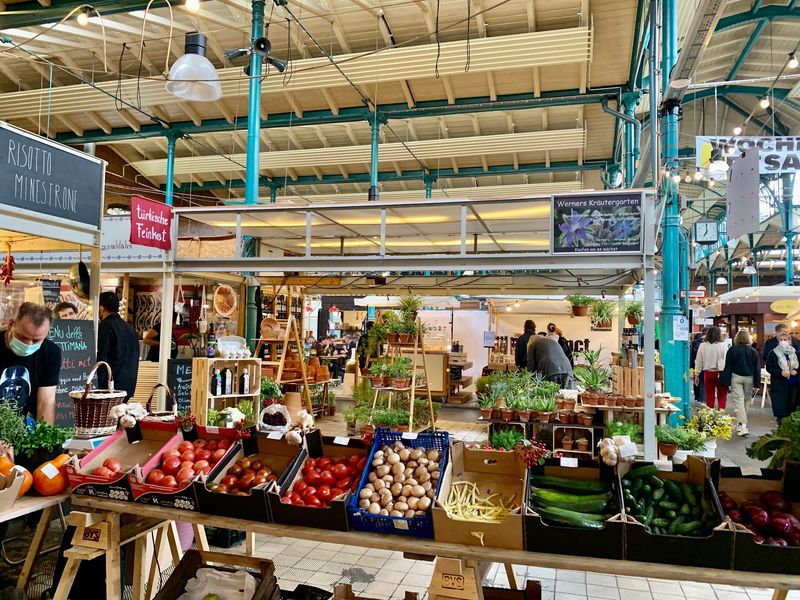
Markthalle Neun proves that a 130-year-old building can still be one of the most forward-looking food spaces in Europe. The Kreuzberg hall originally opened in 1891 and was rescued from potential demolition before reopening in its modern form in 2011, exactly 120 years after its debut.
That gap in the timeline did not slow it down. It came back with a sharper identity than most markets manage from the start.
The everyday market offers fish, oysters, cheese, bread, meat, pasta, produce, and craft beer. Then Thursday changes the rhythm entirely.
Street Food Thursday, launched in 2013, brings international cooks into the hall with dishes ranging from Mexican tacos and Nigerian fufu to British pies, Asian dumplings, and German cheese noodles. That particular mix feels deeply, accurately Berlin in a way that is hard to manufacture artificially.
Markthalle Neun also holds themed markets devoted to cheese, coffee, sweets, and other specialties throughout the year. This is not a museum preserving traditional German eating habits behind glass.
It is an active laboratory showing how urban European food traditions keep evolving when cities stay curious and open. Berlin’s food culture has always been shaped by migration, experimentation, and a willingness to try something new.
This market reflects all of that honestly.
Mercado de San Miguel – Madrid, Spain
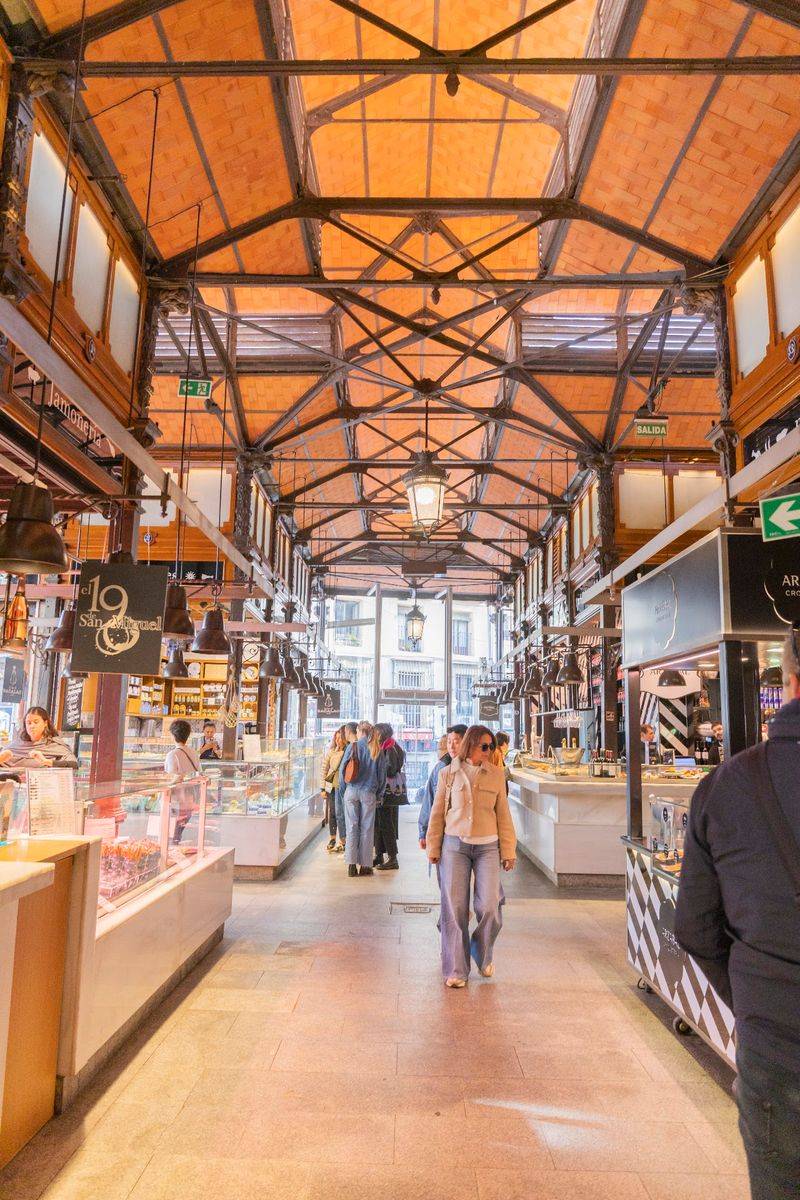
San Miguel Market operates on a simple and very effective principle: instead of buying ingredients to cook at home, you assemble an excellent meal one stall at a time while standing up. The cast-iron building beside Plaza Mayor opened in 1916, fell into decline in the late 20th century, and was transformed and reopened in 2009 as Madrid’s first major gastronomic market of its kind.
That reinvention created one of Europe’s most polished places to graze.
Jamón ibérico, oysters, croquettes, tortilla española, seafood, paella, desserts, and wine are all available within a few steps of each other. The idea is not to replicate a restaurant experience but to eat several excellent small things from different vendors and call that a very satisfying afternoon.
The location makes it particularly useful for visitors exploring central Madrid who want something more interesting than a tourist-menu lunch.
Popularity does come with a tradeoff. Prices and crowds can run higher than in the neighborhood municipal markets where Madrileños actually shop every week.
Treat San Miguel as an introduction to Madrid’s food culture rather than its complete picture. Order a few genuinely excellent bites, then go find a local market where the produce vendors know their regular customers by name.
Santa Caterina Market – Barcelona, Spain
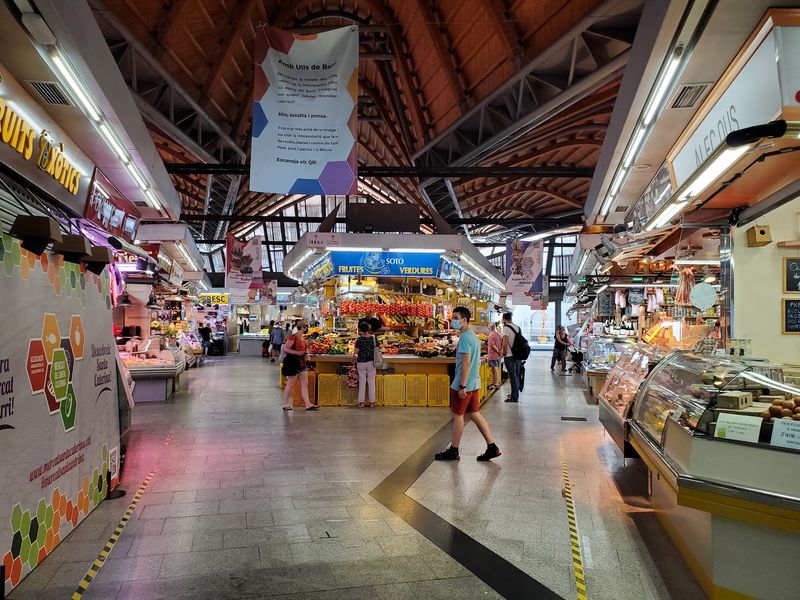
La Boqueria gets the fame, but Santa Caterina has an argument worth hearing. Barcelona’s first covered food market was established here in the 1840s, originally serving the working population of the surrounding neighborhood rather than travelers arriving with cameras.
Its modern identity arrived after a dramatic renovation completed in 2005 by architects Enric Miralles and Benedetta Tagliabue, who clearly decided that a market roof should be something people remember for the rest of their lives.
The defining feature outside is a huge undulating roof covered in brightly colored ceramic tiles designed to evoke the fruit and vegetables sold underneath. From the street it looks like a piece of bold contemporary architecture that landed in the middle of a historic neighborhood.
Inside, the experience becomes surprisingly traditional again. Fresh fish, meat, produce, cheeses, and everyday food stalls serve neighborhood customers who are not particularly interested in being part of anyone’s travel itinerary.
Restaurants within the market make it easy for visitors to sample ingredients without needing to carry anything home on a plane. That contrast between the spectacular exterior and the practical, grounded interior is exactly what makes Santa Caterina so compelling.
Outside it looks like a statement. Inside it is doing the same job markets have always done: feeding the neighborhood, one ordinary Tuesday at a time.
Share this story