Pointed arches and stone spires belong in old European towns, right? Not exactly.
Across the United States, cities known for deserts, palm trees, gold rushes, and steel mills hold Gothic buildings that look like they took a very long detour. Some rise on desert mesas, some stand beside busy downtown circles, and one even towers above a tropical island skyline.
Each of these landmarks has a real story, from a staircase held together by wooden pegs to a chapel with about 250,000 pieces of glass. You will meet architects, kings, and congregations who built big dreams in stone, brick, and even poured concrete.
You will also pick up practical tips on how to visit, what to look for, and which details are easy to miss. So grab your imaginary sketchbook and keep reading.
The first stop is a hilltop in the Pacific Northwest, where an English-style cathedral looks perfectly at home in the wrong country.
1. Cathedral of St. John the Evangelist, Spokane, Washington
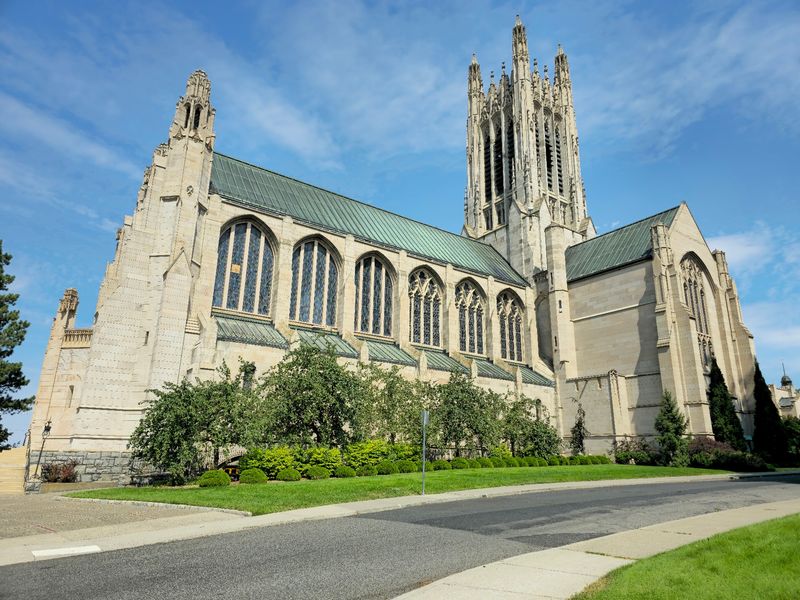
Spokane has a hilltop that seems to have borrowed its skyline from England. The cathedral here follows an English Gothic design, and construction began in the 1920s.
Builders used sandstone for the walls and added carvings in Indiana limestone. The floor plan is cruciform, which means it forms the shape of a cross when seen from above.
Stained glass fills the pointed arches and tells stories in color for anyone who looks up.
The cathedral is still a working place of worship, so plan around services. Visitors can wander in on their own during the week.
Guided tours are offered on Fridays, which is the best choice if you want the stories behind the stonework. Bring a camera for the exterior, and bring curiosity for the carved details inside.
2. Loretto Chapel, Santa Fe, New Mexico
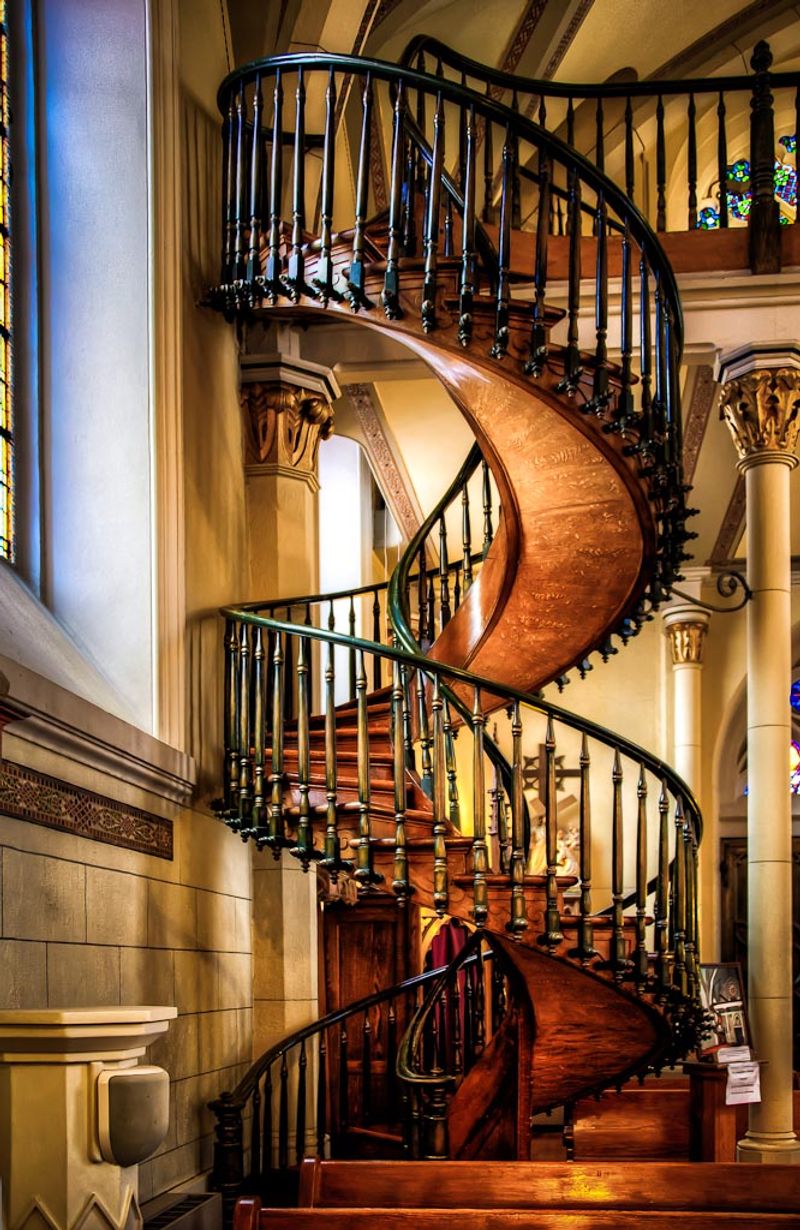
Ask any local about the stairs, and you will hear a legend. The spiral staircase inside Loretto Chapel rises about 20 feet, makes two full turns, and has no center pole.
Wooden pegs hold it together, and the spruce used for it is not native to New Mexico. Handrails were added in 1887, after the first stair users had to manage without them.
The chapel itself was finished in 1878 for the Sisters of Loretto and their girls school. Architect Projectus Mouly drew on Paris and its Sainte-Chapelle, which explains the pointed arches, rose window, and imported French stained glass.
Today it works as a museum and wedding venue. Tours run daily with an admission fee.
Book early if you hope to see it during a busy travel season, because weddings can limit open hours.
3. Trinity Episcopal Cathedral, Reno, Nevada
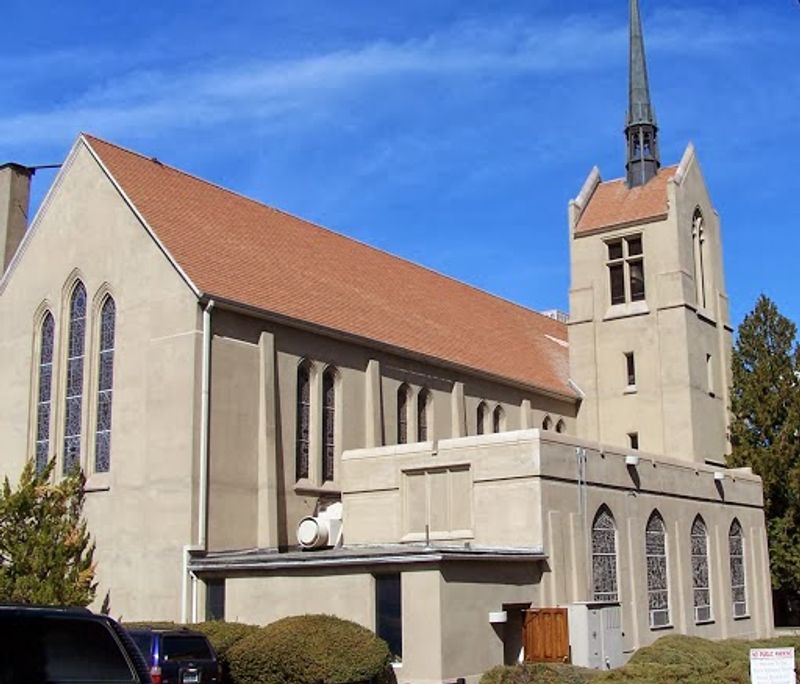
Concrete rarely gets credit for being graceful, but this church changes that. Trinity Episcopal Cathedral in Reno was built mostly in the mid-20th century and is poured concrete from top to bottom.
Nevada preservation officials call it the only poured-concrete church in the Late Gothic Revival style in Reno. That is a pretty specific title, and it is a fair one.
The design still includes the classic Gothic checklist. Look for pointed openings, buttressed aisles, carved doors, stained glass, and a tall bell tower.
The cathedral is an active congregation, so services come first. Visitors are welcome to attend and to explore the architecture on their own.
A walk around the exterior shows how builders gave a modern material an old-world outline.
4. Cathedral of St. Andrew, Honolulu, Hawaii
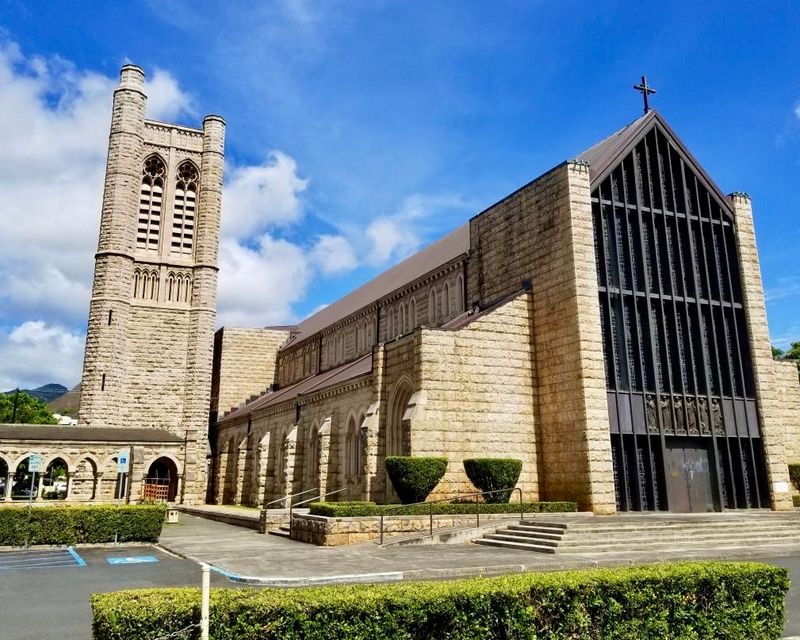
Few buildings can claim a royal groundbreaking, and this one can. King Kamehameha V laid the cornerstone of the Cathedral of St. Andrew in 1867.
Plans were chosen during the Hawaiian monarchy, and the project took a long time to finish. The result is a French Gothic Revival cathedral with stonework, vaulted spaces, and an enormous wall of stained glass.
Palm trees outside and pointed arches above make a combination that does not appear on many postcards. That contrast is the whole fun of it.
The cathedral is active, so check service times before you go. It is open to visitors outside of services, and self-guided tour information is available online.
Bring a few minutes to study the big window, since it is the main attraction.
5. Cathedral of Saint Helena, Helena, Montana
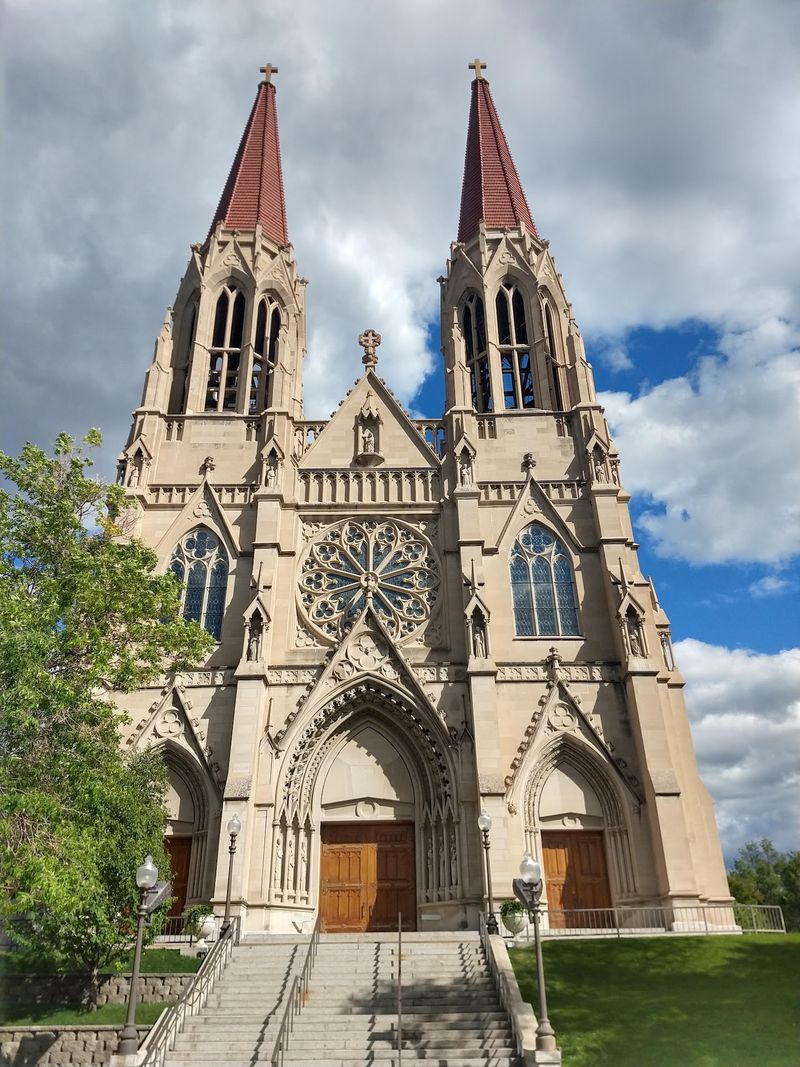
Two spires stand about 230 feet above the street in Helena, and they were not an accident. The Cathedral of Saint Helena took its inspiration from the Votivkirche in Vienna.
Work ran from 1908 to 1924, a stretch that gave the builders plenty of time to add detail. It is recognized as a Late Gothic Revival landmark.
Inside, stained glass from Munich is the star. Marble, carved oak, and decorative touches fill in the rest of the picture.
The cathedral is active, and visitors are welcome outside liturgies. Tours are offered during designated periods, so look at the schedule before you plan a stop.
It is an easy add-on to any Helena history walk, since the gold rush town has more surprises than its Victorian mansions suggest.
6. St. Mary Basilica, Natchez, Mississippi
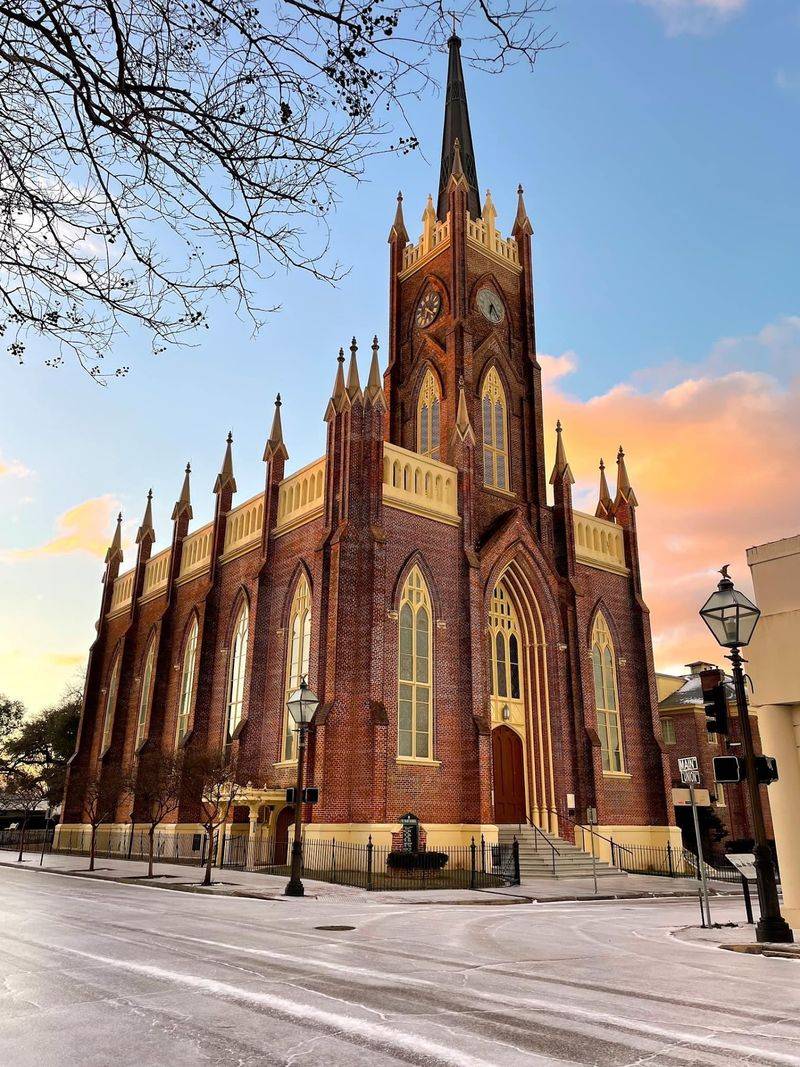
Natchez has a reputation built on columns and grand antebellum homes. St. Mary Basilica adds a very different shape to that mix.
Work began in the 1840s in the Gothic Revival style. The interior is later described as Perpendicular Gothic, a style known for strong vertical lines.
Inside, tall arches draw your eye upward, and stained glass adds rich color. After a morning of house tours, the change of scene is a nice break.
The historic basilica is still in use, so it works as a living church and not just a landmark. It is open to visitors, and self-guided tour information is available.
A short stop here gives you a fresh view of how many building styles one Southern town can hold.
7. Trinity Episcopal Cathedral, Little Rock, Arkansas
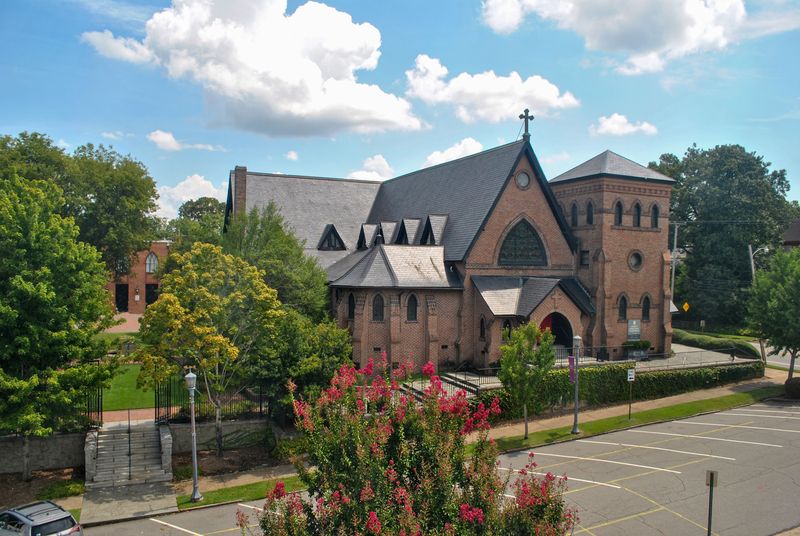
Small can be a selling point. Trinity Episcopal Cathedral in Little Rock is an English Gothic Revival building with a scale closer to a parish church than a giant city cathedral.
It was built in stages between 1884 and 1892. The walls are brick, and the windows follow the pointed arch pattern that defines the style.
The floor plan is cruciform, and the interior is richly wooded. Stained glass adds color without crowding the space.
The cathedral is active and open to the public for services and quiet reflection during specified hours. Check times before you stop by.
It is a good choice if you prefer a calm visit over a crowded one, and the compact size makes the details easier to notice.
8. St. Mark’s Episcopal Cathedral, Salt Lake City, Utah
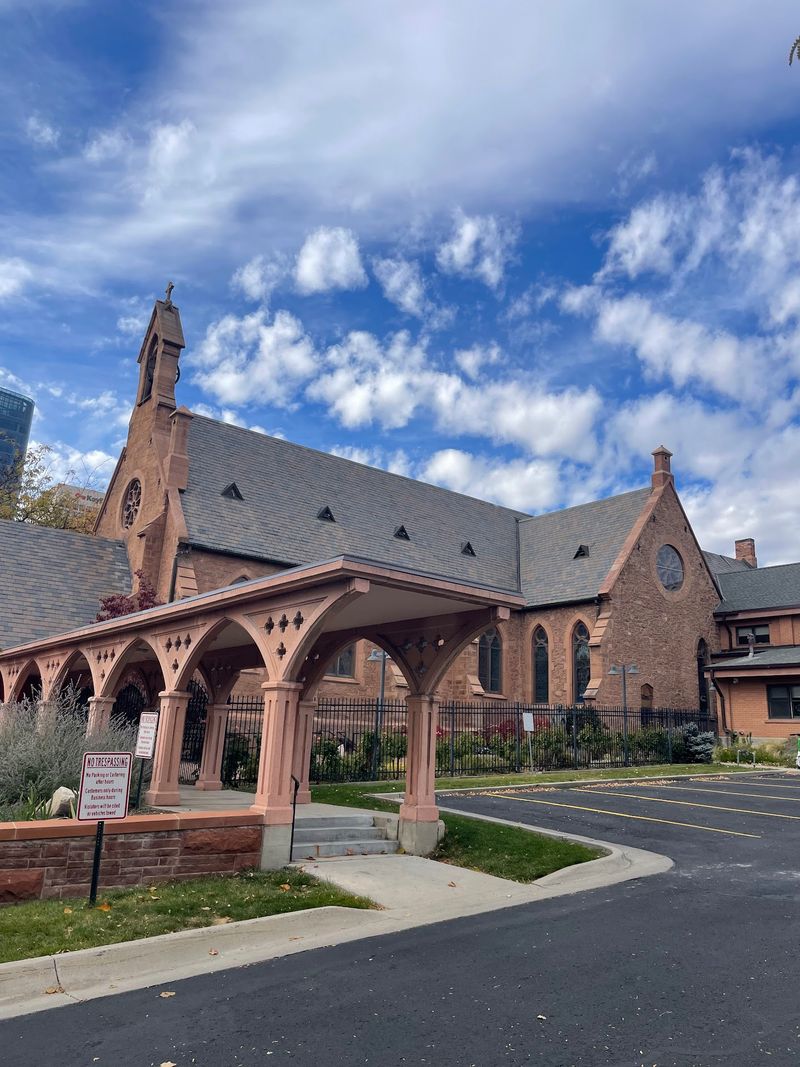
Temple Square gets most of the attention in Salt Lake City, but this red sandstone cathedral has its own claim. St. Mark’s was designed by noted church architect Richard Upjohn.
It was built between 1870 and 1871, when the city was still very much a young Western town. Local red sandstone gives the exterior a rustic look.
Lancet-style openings and exposed interior woodwork complete the Gothic Revival design. The overall effect feels more frontier than grand, and that is the charm.
The cathedral is active and welcoming. Its website lists details for visiting and touring, so check there before you go.
Pair it with a downtown walk, and you will see how different styles share one city.
9. Christ Church Cathedral, Indianapolis, Indiana
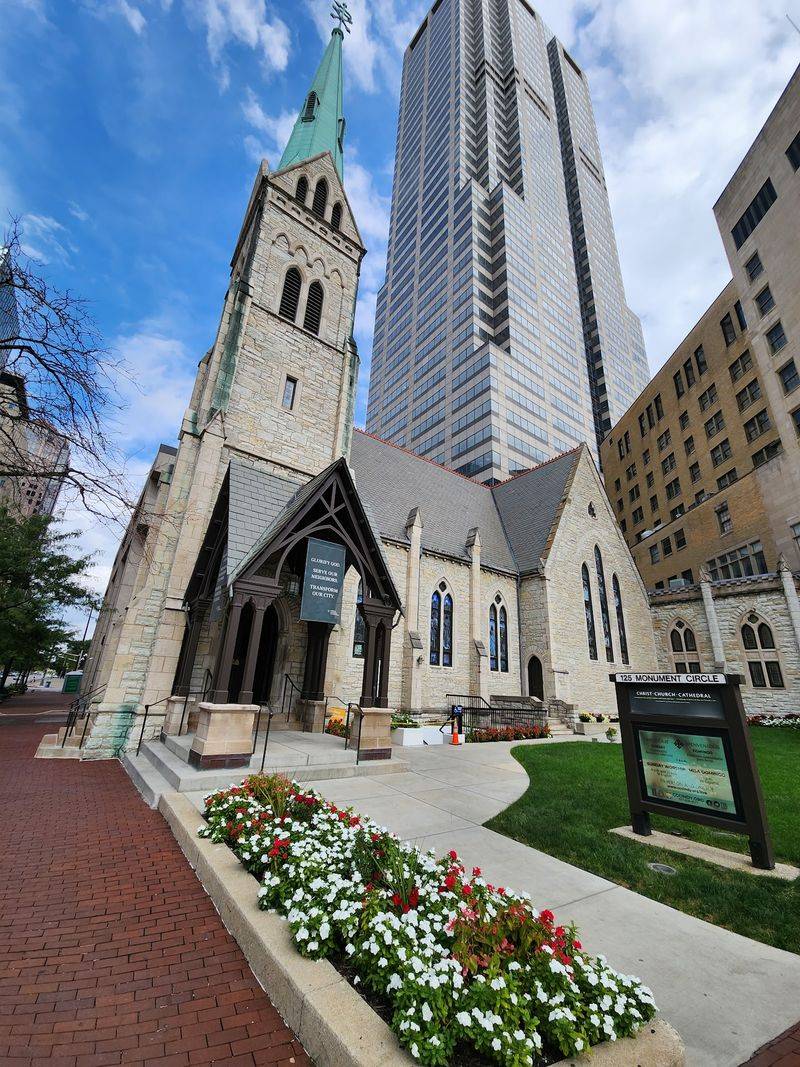
Monument Circle is crowded with tall buildings, and a small church sits right in the middle. Christ Church Cathedral has been there since 1857, and it holds its ground well.
The Gothic Revival design uses rough limestone, lancet windows, buttresses, and a steep roof. A slender copper-clad spire tops it off.
Size is the fun part. Next to office towers and monuments, the cathedral looks almost like a model, yet it is the oldest style on the block.
It remains active and is open daily. That makes it an easy stop between errands or sightseeing.
You can step off a busy sidewalk, look around for a few minutes, and leave with a better sense of how old downtown Indianapolis really is.
10. Trinity Episcopal Cathedral, Omaha, Nebraska
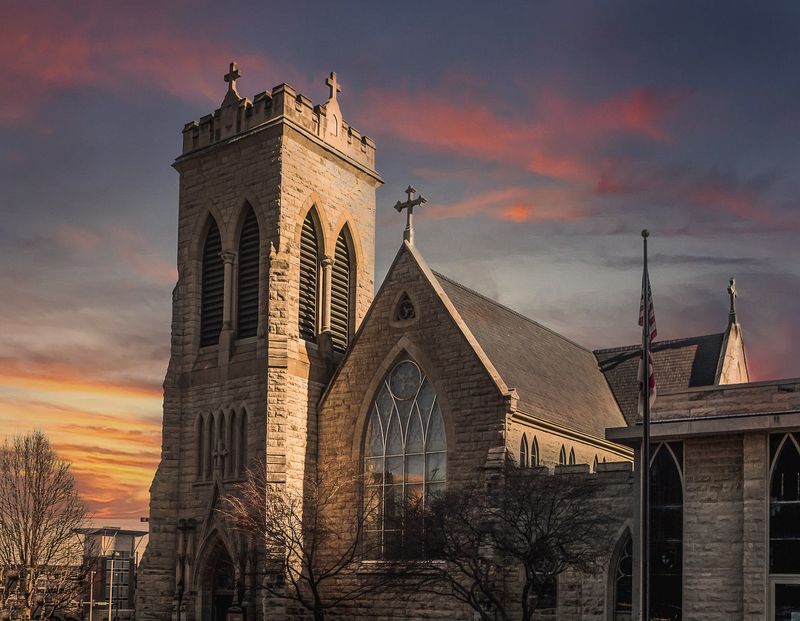
Nebraska’s oldest church building still in use sits in downtown Omaha. Trinity Episcopal Cathedral was built from 1880 to 1883 by English architect Henry G.
Harrison.
Walls of rough-faced Illinois bluestone give it a sturdy look. The plan is cruciform, with a tower added later.
Count the windows if you get inside, because there are more than 43 stained glass lancets. Three Tiffany windows line the south side of the nave.
An oak bishop’s throne and dean’s stall add carved detail.
The parish began in 1856, and the cathedral joined the National Register of Historic Places in 1974. The exterior can be explored any time.
Guided visits and open-door periods cover the interior, and meters nearby offer free parking on Sundays.
11. St. John’s Episcopal Church, Montgomery, Alabama
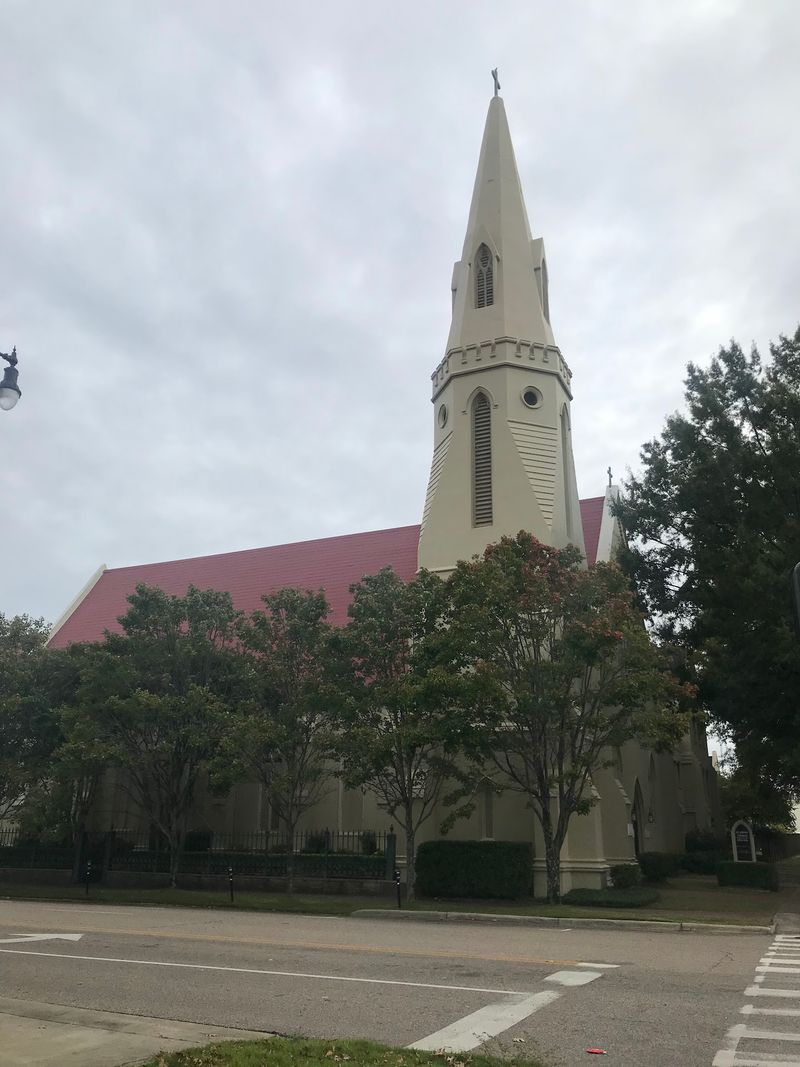
Greek Revival columns dominate the Montgomery postcard, so a Gothic church stands out fast. St. John’s Episcopal Church has been downtown since the 1850s.
Architects Frank Wills and Henry Dudley designed it, and both were known for church work. The building was later listed on the National Register of Historic Places.
Pointed forms and a classic church silhouette give the block an old-world quality. That is a nice change in a city so tied to its classical landmarks.
The congregation is active, so services are the best time to see it. Visitors are welcome for worship and historical appreciation.
A slow walk around the outside shows how the shape fits the style, and it only takes a few minutes.
12. First Presbyterian Church, Topeka, Kansas
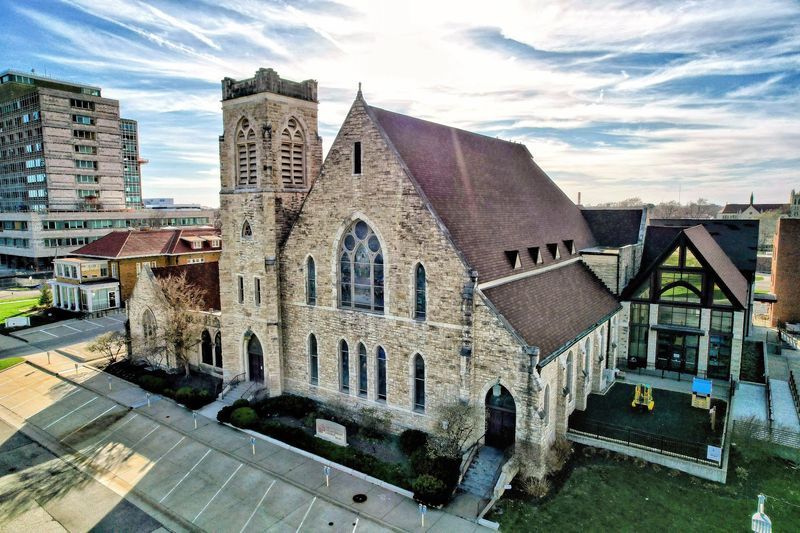
Most Topeka itineraries lead straight to the State Capitol, and this church can slip by unnoticed. That would be a mistake.
The building dates to 1884 and has a rough stone Gothic Revival exterior. Pointed openings, buttresses, and a corner tower are easy to spot from the street.
The real treat is the stained glass. Tiffany windows were unveiled here in 1911, and the church keeps them as a major point of pride.
An active congregation still meets here. Tours of the windows can be arranged through the church, so contact them ahead of time.
A little planning gets you a close look at work by one of the most famous glass studios in American history.
13. Heinz Memorial Chapel, Pittsburgh, Pennsylvania
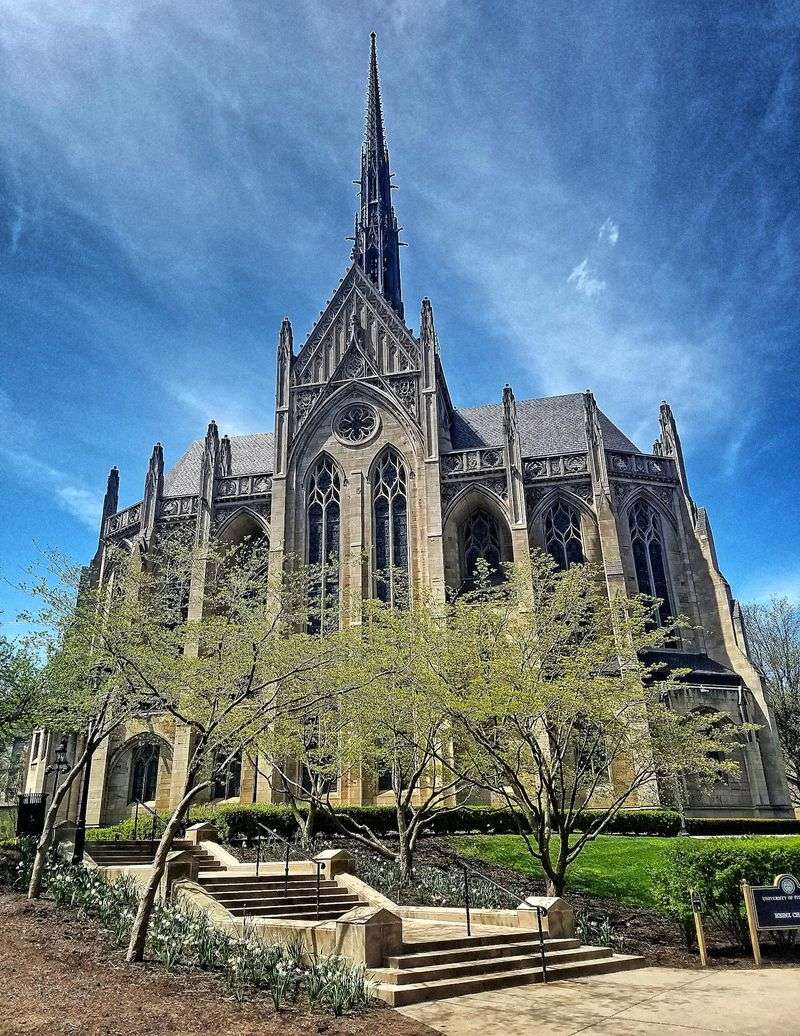
Numbers tell the story here. The chapel’s 23 windows hold about 250,000 pieces of glass, and the transept windows rise 73 feet.
Architect Charles Z. Klauder, who also designed the Cathedral of Learning, used Indiana limestone and a 124-foot spire.
Charles Connick designed the windows, which show 391 identifiable people in equal numbers of women and men.
The Heinz family gave the chapel to the University of Pittsburgh in honor of Anna Margaretha Heinz. Work began in 1933, and it was dedicated in November 1938.
Samuel Yellin made the wrought iron.
It is open Monday through Thursday from 10 am to 4 pm, except for university holidays or private events. Email to book a guided or virtual tour.
14. Cathedral of the Immaculate Conception, Portland, Maine
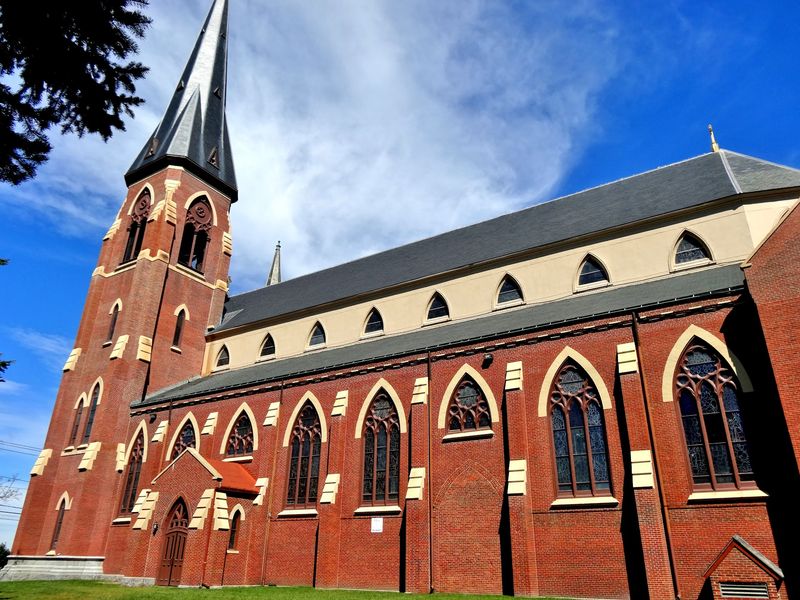
Lobster rolls may lead most Portland trips, but three spires deserve equal time. The Cathedral of the Immaculate Conception was dedicated in 1869.
It is a major example of Gothic Revival architecture in Maine. The red brick exterior and asymmetrical towers give it a silhouette you will not mistake for anything else nearby.
Pointed forms continue inside, where the space rises high above the pews. It is easy to see why locals treat it as a landmark.
The cathedral remains active, so worship comes first. It is open to visitors outside of services, and its website has the details.
Pair a stop here with a waterfront walk for a trip that mixes harbor views with a little architectural history.
15. Cathedral of St. John the Evangelist, Boise, Idaho
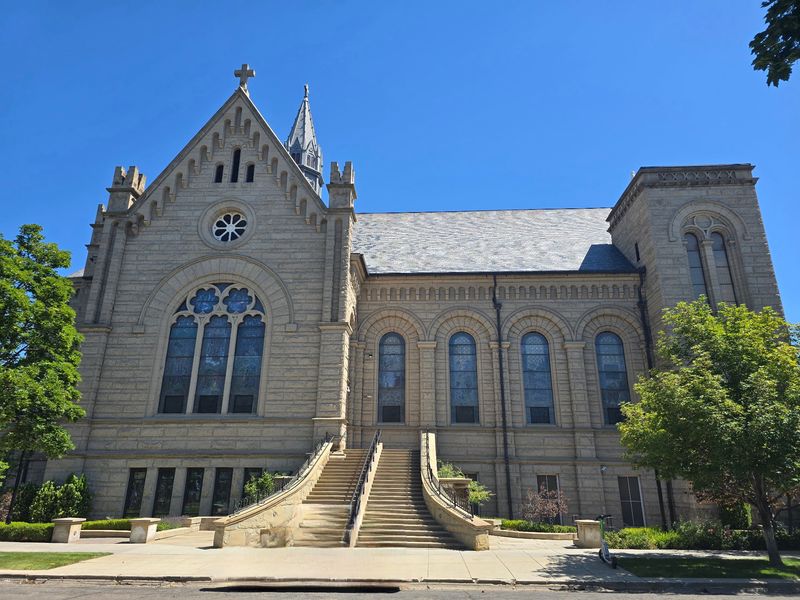
Idaho’s capital has a Gothic landmark that often surprises first-time visitors. The present Cathedral of St. John the Evangelist was dedicated in 1921.
The parish itself goes back to the 19th century. Today the building serves as the mother church for Idaho’s Catholic diocese.
Sandstone covers the exterior, and tall openings and detailed ornament set it apart from nearby downtown buildings. It stands as a clear example of how Gothic design reached far into the American West.
It is more than a historic shell. Regular parish life continues here, and visitors are welcome.
Details about visiting hours and tours are available online, so check before you go. A short stop makes a fitting finale to a tour of unexpected Gothic landmarks.
Share this story