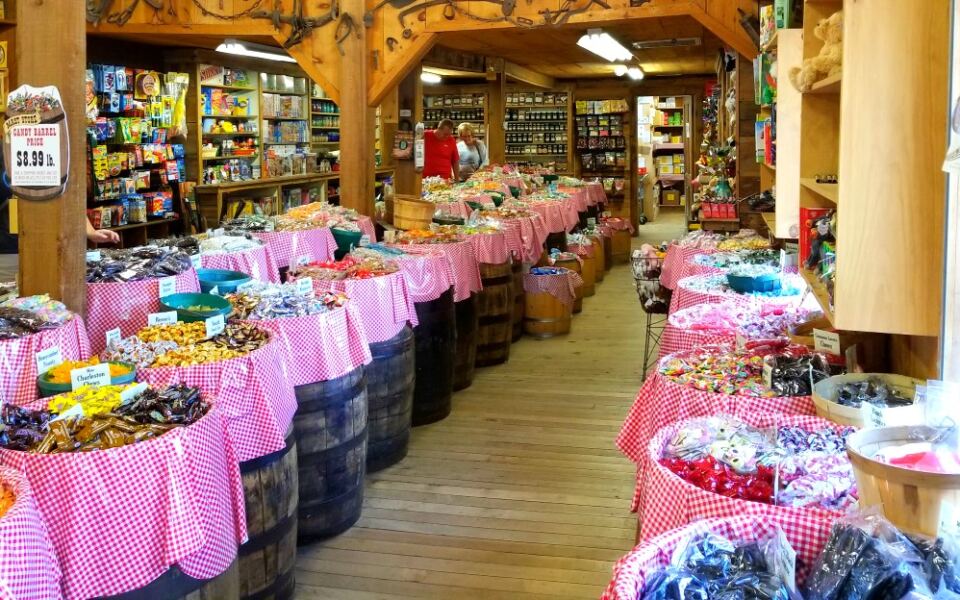
Some American candy shops have been making sweets since before the Civil War. Others still use century-old equipment to turn out handmade caramels, chocolates, and candy canes.
In Ohio, one family-run confectionery dates back to 1840. An Indiana shop still makes its famous cinnamon Red Hots, while a New Hampshire store has a candy counter stretching 111 feet and 11 inches.
These places offer more than shelves of sweets. Some have working soda fountains, antique candy-making machines, and recipes passed down through generations.
One Illinois candy kitchen even reopened after being closed for more than two decades.
Here are 15 historic candy destinations where you can discover old-fashioned favorites, see how traditional sweets are made, and find a few treats worth bringing home.
1. Ye Olde Pepper Companie, Salem, Massachusetts
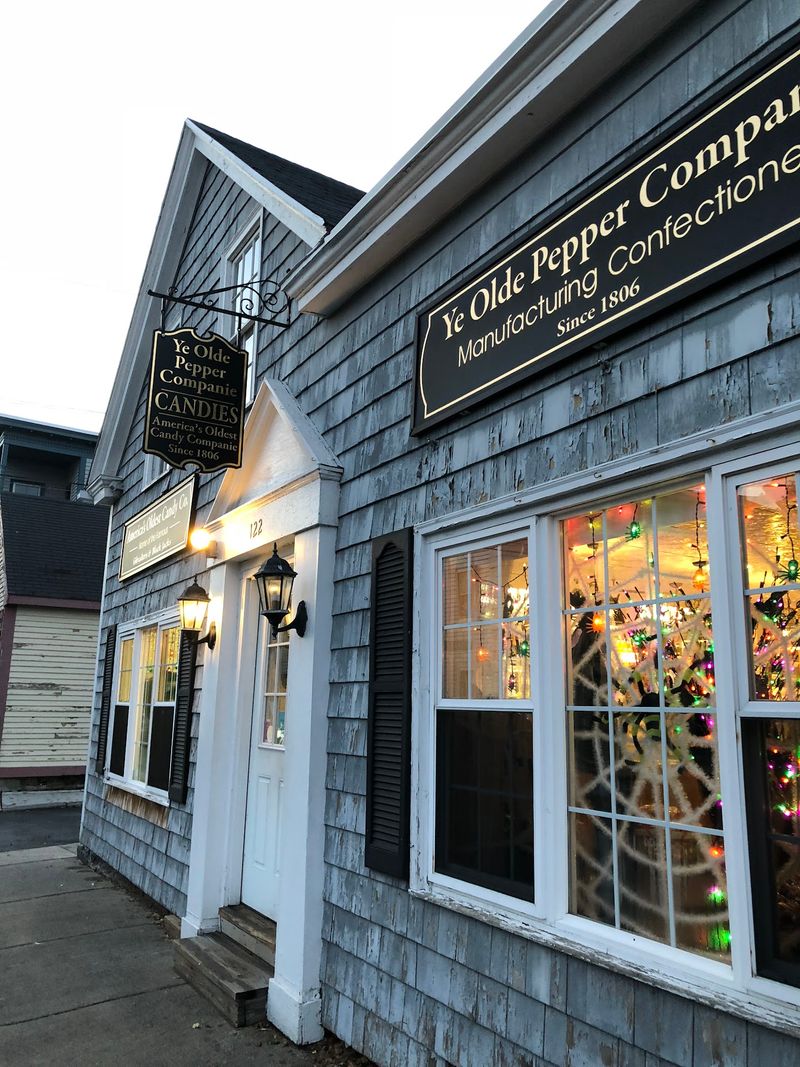
America’s candy story may have started with a single cart in 1806. Mary Spencer arrived in Salem with little money and began selling homemade lemon candies called Gibralters to support her family.
Those sweets are often called the first candy sold commercially in the United States. The nearby Peabody Essex Museum even displays her original vendor cart.
In 1830, John William Pepper bought the business and added Black Jacks, a molasses stick candy. Both treats are still made today, so you can taste the exact candies early Salem sailors once bought.
The shop has sat at 122 Derby Street since 1972, inside a 19th-century grocery building. The Burkinshaw family now runs it.
Tip for visitors: buy a small bag of Gibralters first. They start hard and soften over time, which surprises many first-timers.
Pair your stop with a walk along the historic waterfront nearby.
2. Wittich’s Candy Shop, Circleville, Ohio
Bookbinding was G.F. Wittich’s first job, but candy turned out to be his true calling.
The German immigrant studied candy making in Cincinnati and opened his Circleville shop in 1840.
Today, the fourth generation of the Wittich family keeps things running. That makes it one of the oldest family-run candy businesses in the nation.
Ohio is famous for Buckeyes, the peanut butter balls dipped in chocolate. Most versions leave a small circle of peanut butter showing, but Wittich’s covers the whole piece in chocolate.
Locals will tell you that extra coat is the whole point.
Shelves also hold caramels, cordial cherries, nut brittles, and peppermint patties. Many are made in small batches without preservatives.
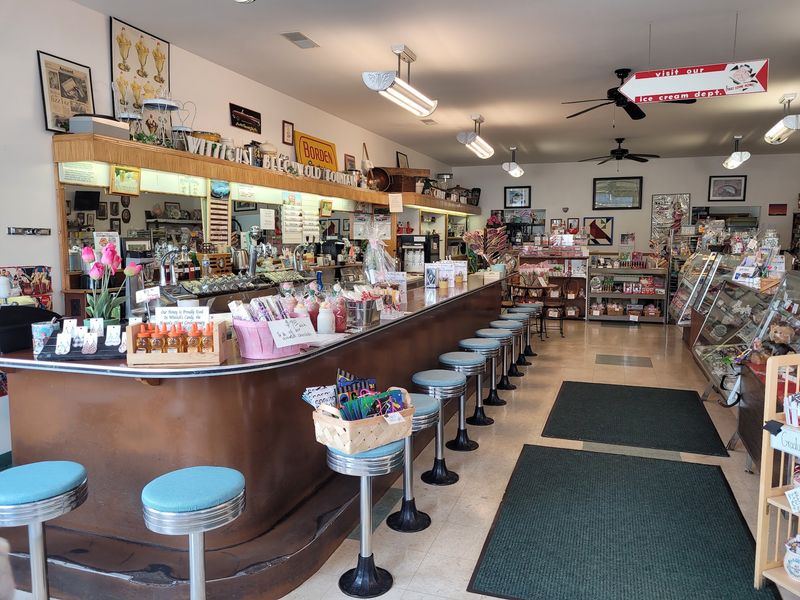
Save room for the soda fountain. A milkshake at the counter turns a quick candy run into a proper outing.
Visiting in October? Circleville hosts a giant pumpkin festival worth planning around.
3. Wilton Candy Kitchen, Wilton, Iowa
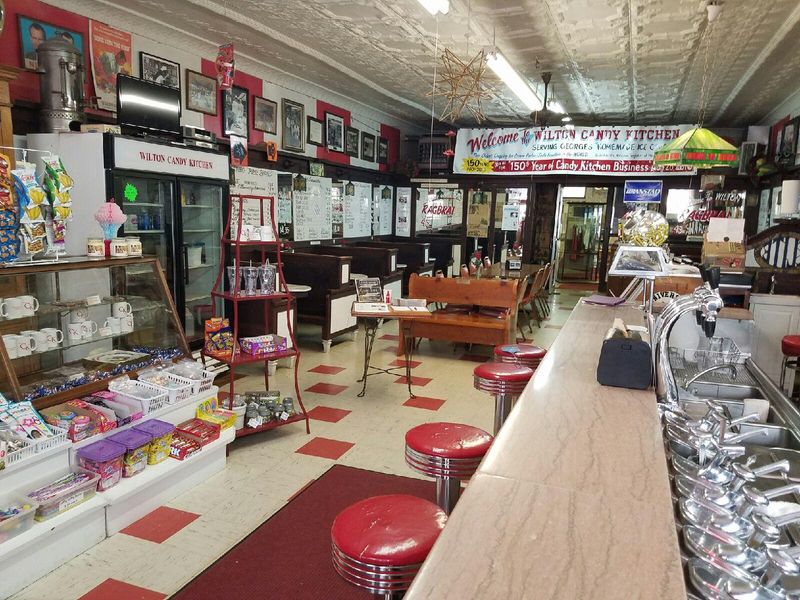
Ordering a phosphate is not something most people do anymore. At Wilton Candy Kitchen, it is still on the menu, and regulars order it without blinking.
The shop’s roots reach back to the 1860s, and it calls itself the oldest continuously operating ice cream parlor, soda fountain, and confectionery in the country. Greek immigrant Gus Nopoulos bought it in 1910.
In 1922, Nopoulos installed furnishings bought from a Davenport confectionery. Those wooden booths and the tin ceiling are still in place.
Homemade ice cream is the big draw, so try a malt or a sundae. Light lunches are also available if you need something before dessert.
Head to the back room for a small museum about Wilton’s past. The building is on the National Register of Historic Places, so take a moment to read the displays before you leave.
4. Shane Confectionery, Philadelphia, Pennsylvania
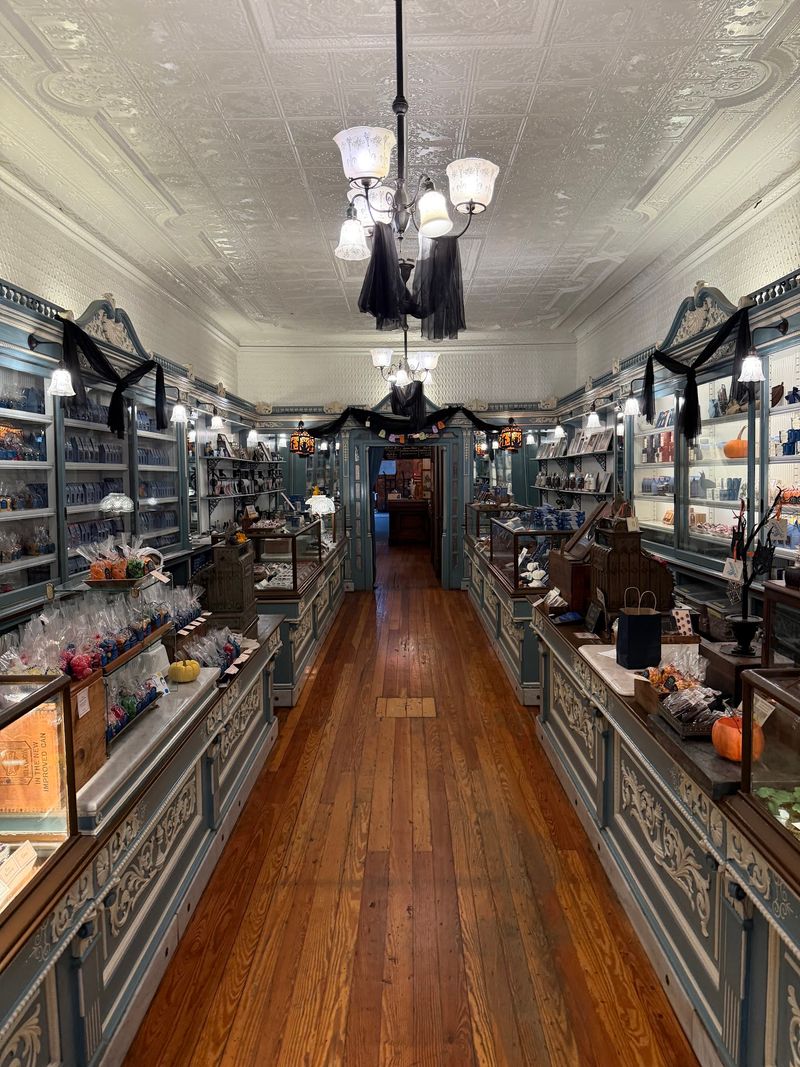
Back in 1910, Philadelphia had about 1,200 confectioneries. Shane Confectionery is one of the few that kept going, selling candy at 110 Market Street since 1863.
Brothers Ryan and Eric Berley bought the shop and restored it to its early 20th-century look. Carved wooden cabinets, marble counters, and stained glass fill the room.
Staff members often wear period clothing. It sounds like a costume party, but it fits the setting.
Behind the scenes, confectioners still make buttercreams using a cast-iron churn from the 1920s. They also produce clear toy candies, tiny shapes made in antique molds, and malt balls.
The Berleys added Shane Chocolate Works, where cacao beans become bars on site. Plan a stop at both counters.
Old City is packed with history, so this sweet break fits nicely between visits to the Liberty Bell and Elfreth’s Alley.
5. Abbott’s Candies, Hagerstown, Indiana
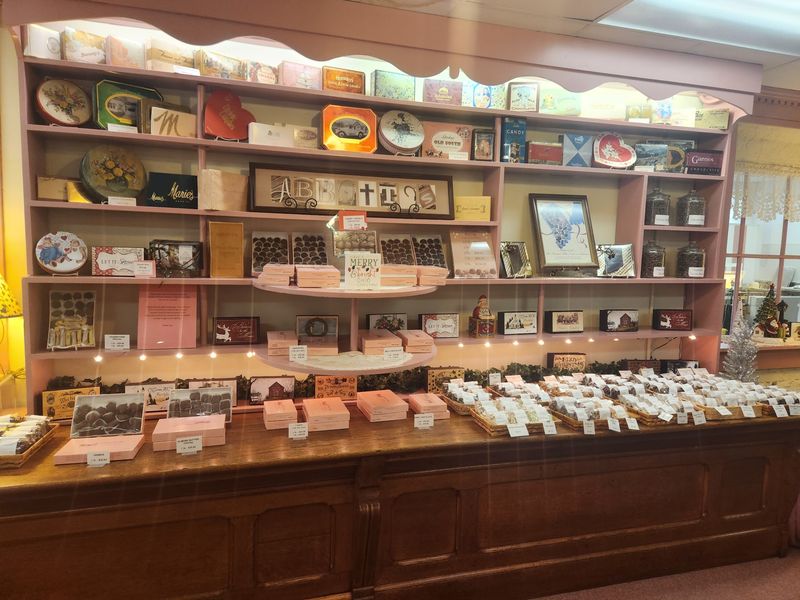
About 27,000 pounds of caramels leave this Indiana shop every year. Each one is still wrapped by hand.
William Clay Abbott, known as W.C., founded the company in 1890. He worked as a traveling candy salesman and briefly ran a restaurant before settling on sweets full time.
The business now operates from a former Presbyterian church built in 1853. Yes, the caramels really do come from a church, which makes saying grace before dessert feel fitting.
Caramels are cooked in copper pots over open flames. Workers slice them on a hand-cranked cutter dating to the late 1800s.
Nearly 50 kinds of handmade chocolates share the shelves, including nut and cream centers. Viewing windows let you watch the work happen.
Call ahead to ask about production days if you want to see candy being made. Kids especially enjoy watching the wrapping process.
6. Schimpff’s Confectionery, Jeffersonville, Indiana
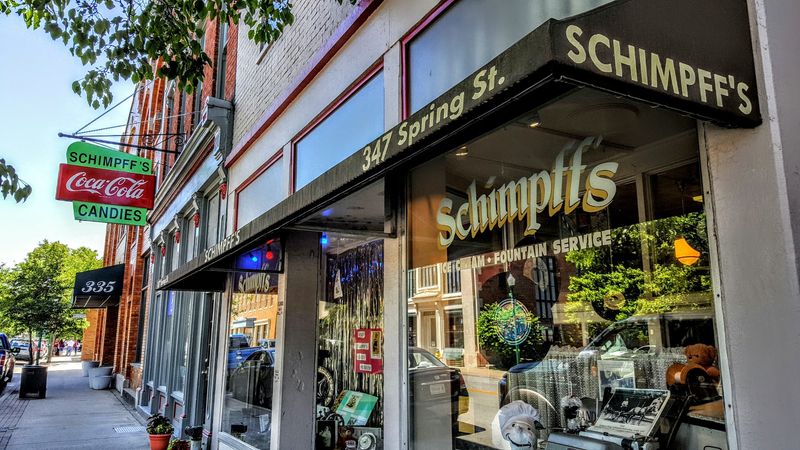
Six generations of one family have kept Schimpff’s going since 1891. The shop has stayed at 347 Spring Street the entire time.
Gus Schimpff Sr. and Gus Jr. opened the business together. Today, it doubles as a candy museum with thousands of pieces of American candy memorabilia.
Old tins, wrappers, and machines line the walls. On some days, staff demonstrate how hard candy was shaped long ago.
Two treats get the most attention here. Cinnamon Red Hots follow a recipe from the 1880s, while Modjeskas wrap marshmallow in caramel.
Fun fact: Modjeskas are named after Helena Modjeska, a Polish actress who performed in nearby Louisville.
Finish your visit at the 1950s soda fountain under the original tin ceiling. Check the shop’s schedule online, since candy demonstrations are not daily.
The Big Four Bridge walking path is close by if you need to stretch your legs.
7. Doscher’s Candies, Cincinnati, Ohio
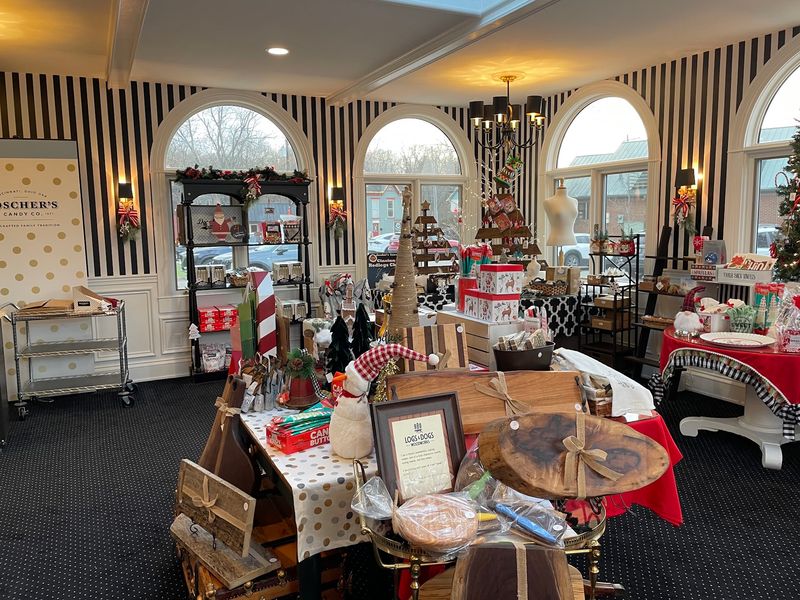
Baseball fans owe Doscher’s a quiet thank-you. The company sold caramel popcorn, called Popcorn Fritters, to the Cincinnati Redlegs, making it one of the first baseball concession sellers in America.
Candy canes came first, though. Claus Doscher started making them on Fifth Street in 1871 with his brothers, John and Heinrich.
They used real peppermint oil and small copper kettles. Every cane was rolled, striped, and hooked by hand, and that method continues today.
Doscher’s is known as the oldest candy cane maker in the country. In 1896, the company added French Chew, a taffy once sold in big slabs and broken up by the pound.
The gift shop now sits in a historic house in Newtown, just outside Cincinnati. Grab a coffee, pick up a few French Chews, and stock up on candy canes before December rolls around.
8. Flesor’s Candy Kitchen, Tuscola, Illinois
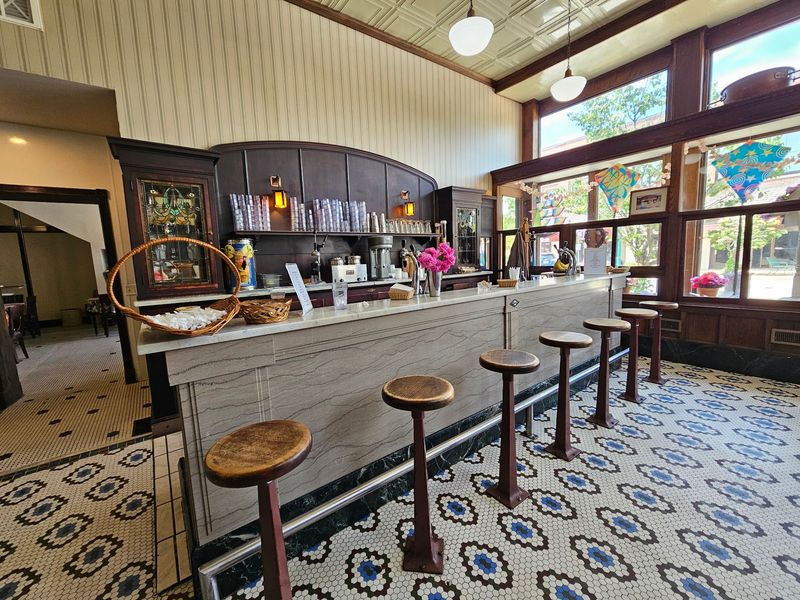
Comebacks do not get much sweeter than this one. Flesor’s closed in the late 1970s and sat empty for more than two decades.
Gus Flesor, a Greek immigrant, first opened the shop in 1901. His granddaughters, Ann Flesor Beck and Devon Flesor Story, decided the family story deserved a second chapter.
They restored the 1871 brick building and reopened it in 2004. Many original antique fixtures were tracked down and brought back.
Today the business works as both a candy kitchen and a restaurant. Hand-dipped chocolates fill the cases, while the original soda fountain serves hand-mixed drinks.
Plan to eat a meal here, then order dessert at the fountain. It makes an easy detour for drivers on Interstate 57 between Chicago and southern Illinois.
Ask staff about the restoration, since many enjoy sharing photos and stories from the reopening.
9. Canelake’s Candies, Virginia, Minnesota
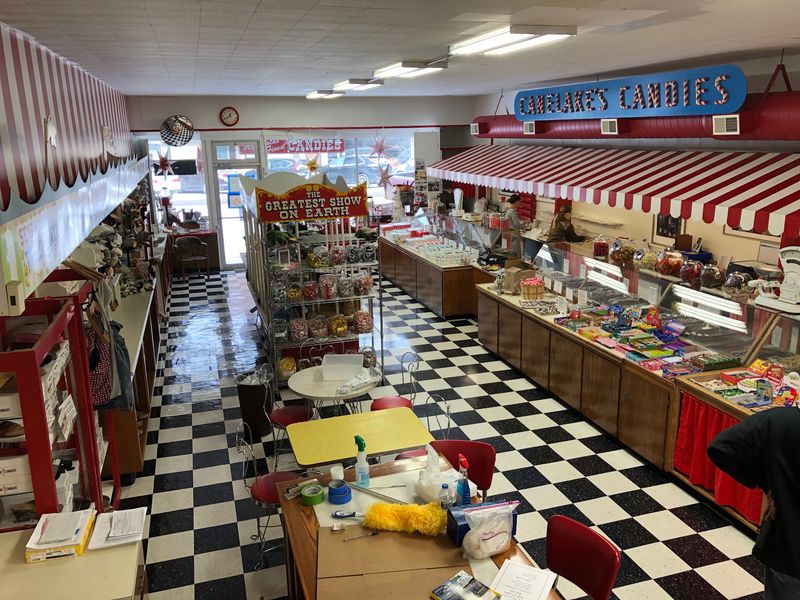
Four brothers named Christ, Gust, Tom, and Nick started this business in 1905. They came from Greece and opened the Virginia Candy Kitchen on Minnesota’s Iron Range.
In 1917, the shop moved to 414 Chestnut Street, where it remains. After a short stretch under other owners, the Canelake family bought it back in 2018.
Family recipes still guide the work. Copper kettles turn out chocolates, caramels, toffee, and a sponge candy the shop calls Hot Air.
The name is a joke worth making. That candy is mostly tiny air pockets coated in chocolate.
A 2020 expansion added space for a candy and Iron Range museum. Some antique candy machines still run for demonstrations, and mining memorabilia covers the walls.
Top it off with a treat from the vintage soda fountain. Summer visits pair well with trips to nearby lakes.
10. Laura’s Candies, Metairie, Louisiana
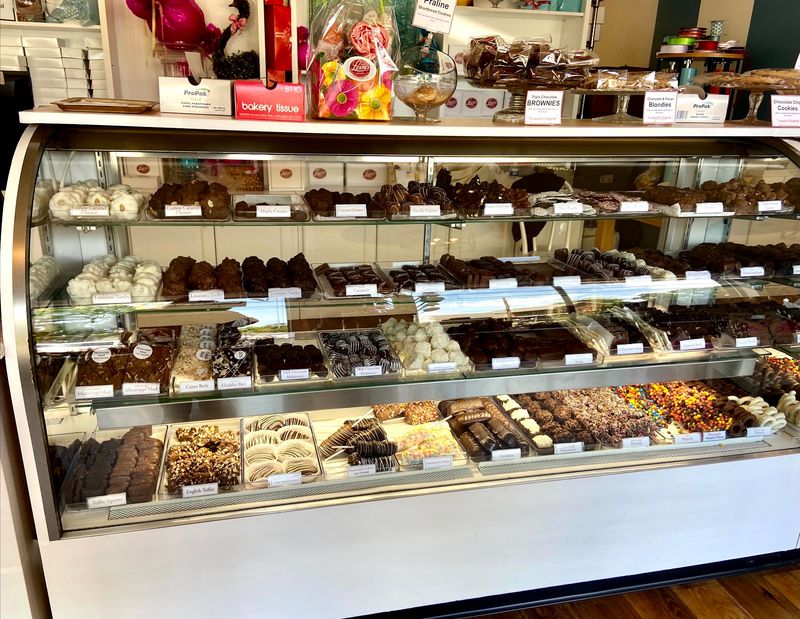
Pralines are a serious subject in New Orleans, and Laura’s has been making them since 1913. It is known as the city’s oldest candy shop.
A Louisiana praline is not the same as the French version. It mixes sugar, butter, cream, and toasted pecans into a soft, fudge-like round.
Laura’s still makes its pralines fresh each day in a French Quarter kitchen. Copper pots and older recipes keep the method close to tradition.
The Metairie shop carries the full lineup. Look for chocolate clusters, fudge, truffles, and Mississippi Mud, a layered treat of caramel, pecans, and chocolate.
Here is a helpful tip for travelers: Metairie usually has easier parking than the French Quarter. You can grab a box of pralines without circling the block a dozen times.
Pralines also ship well, so they make handy gifts for friends back home.
11. Parkside Candy, Buffalo, New York
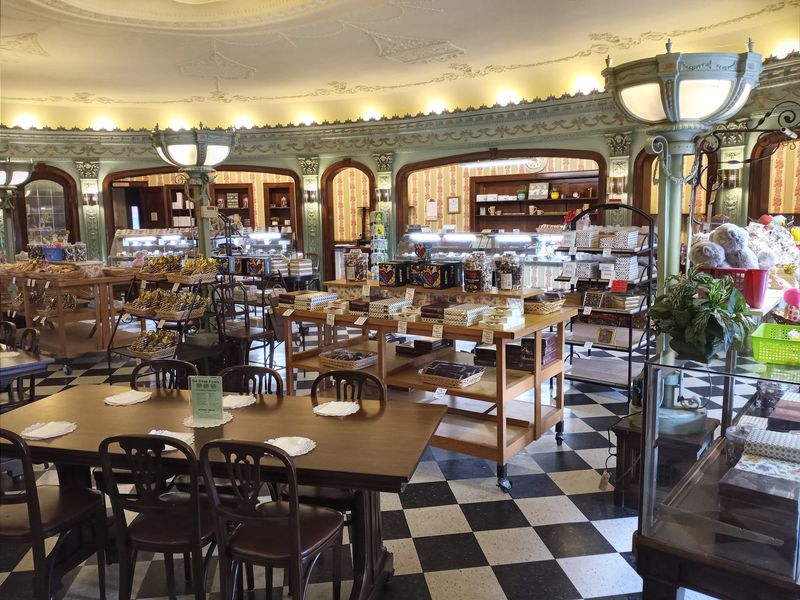
Architects get excited about this candy store, and for good reason. Parkside Candy is on the National Register of Historic Places as a nearly unchanged example of 1920s shop design.
The Kaiser family founded the business in 1917. Ten years later, it moved into the Main Street building that made it famous.
Inside, the room is shaped like an oval. A walnut soda fountain, decorative lighting, and original candy cases complete the scene.
Very few shops from the Roaring Twenties look this close to their first day. Bring a camera, because visitors snap photos before they even reach the counter.
Buffalo is known for chocolate-covered sponge candy, so start there. Locals guard their favorite sponge candy shops the way some people guard pizza opinions.
Ice cream sundaes and classic chocolates round out the menu. The shop sits close to the University at Buffalo South Campus.
12. Chutters, Littleton, New Hampshire
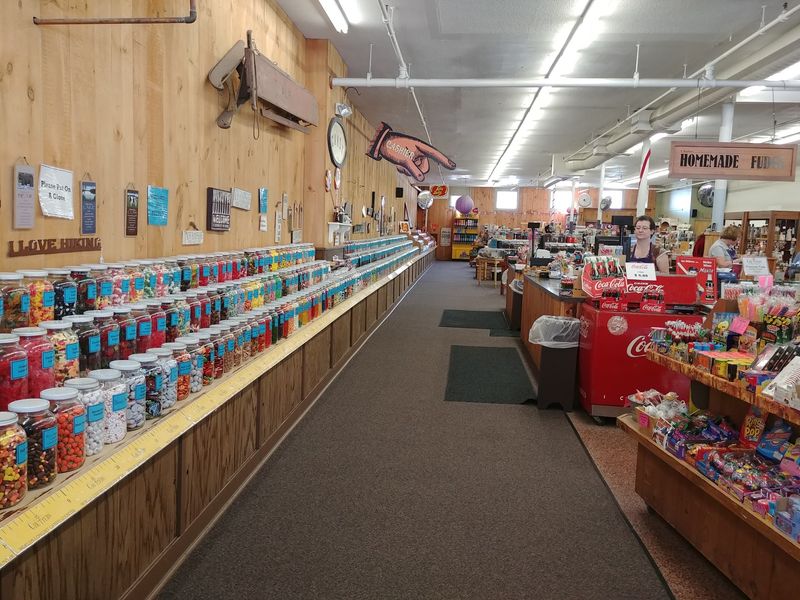
A tape measure would need to stretch 111 feet and 11 inches to cover the counter at Chutters. That length earned the shop a Guinness World Record for the longest candy counter.
The business dates back to the late 1800s. Frederick George Chutter, a former minister, opened a dry goods store that slowly became a candy destination.
Hundreds of jars line that famous counter. Gummies, jelly beans, hard candies, and chocolates are all sold by weight.
Here is a smart move: decide on a budget before grabbing a bag. Scooping a little of everything adds up fast over 111 feet.
Chutters also sells fudge, baked goods, and New Hampshire souvenirs. Littleton’s Main Street is great for strolling, so pair your candy run with a walk to the riverside covered bridge nearby.
Weekends get busy, so mornings tend to be calmer.
13. Old Village Mercantile, Caledonia, Missouri
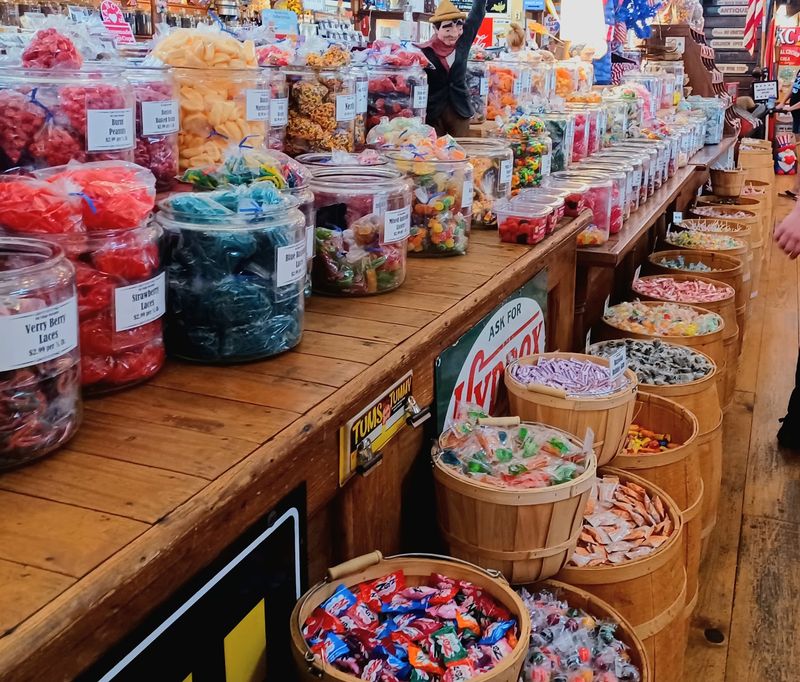
General stores once sold almost everything a small town needed. Old Village Mercantile opened as one in 1909, and it still carries on that tradition in Caledonia, Missouri.
Caledonia is a tiny village with a historic district full of older buildings. The mercantile fits right in, with antiques and shelves of classic treats.
Old-fashioned candies are the main sweet attraction. Fudge and gifts share the space, so browsing takes longer than planned.
Handmade ice cream and coffee give visitors a reason to sit down. A scoop on a warm afternoon is a popular choice for road trippers.
The village sits in the countryside southwest of St. Louis. Pair your stop with a drive to nearby state parks like Elephant Rocks or Johnson’s Shut-Ins.
Hours can change by season, so check ahead before making the trip.
14. The Original Mast General Store, Valle Crucis, North Carolina
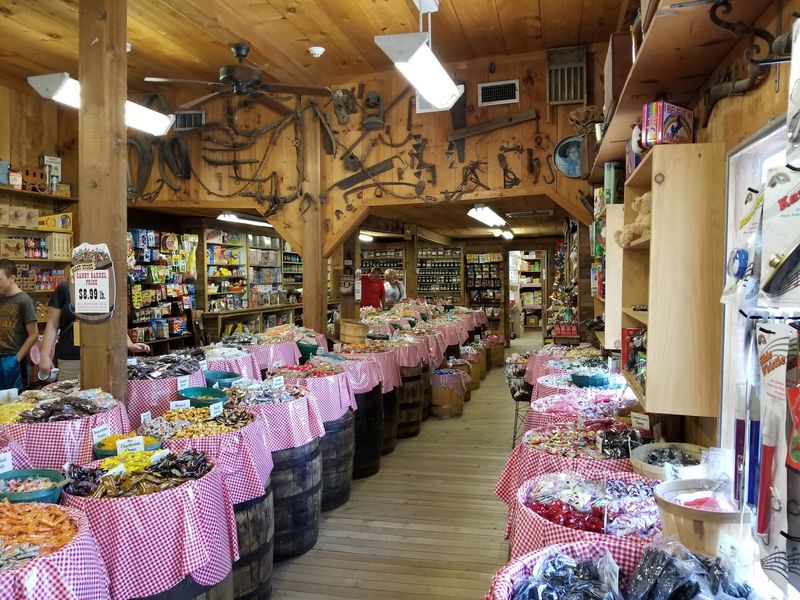
Mountain families in 1883 had few places to shop. The Original Mast General Store opened that year in Valle Crucis, selling supplies and the occasional treat.
It still runs as a working general store today. Clothing, household goods, and local products share the floor with rows of classic candy.
The candy section is where many visitors spend the most time. Barrels hold sweets that were popular generations ago, including horehound drops, rock candy, and Mary Janes.
Bring a paper sack and fill it yourself. Prices are by weight, so grandparents can show kids what penny candy shopping used to be like.
The original wooden floors and old storefront remain in place. Valle Crucis sits near Boone in the Blue Ridge Mountains, so fall leaf season draws big crowds.
Arrive early on autumn weekends to beat the rush.
15. Orne’s Candy Store, Boothbay Harbor, Maine
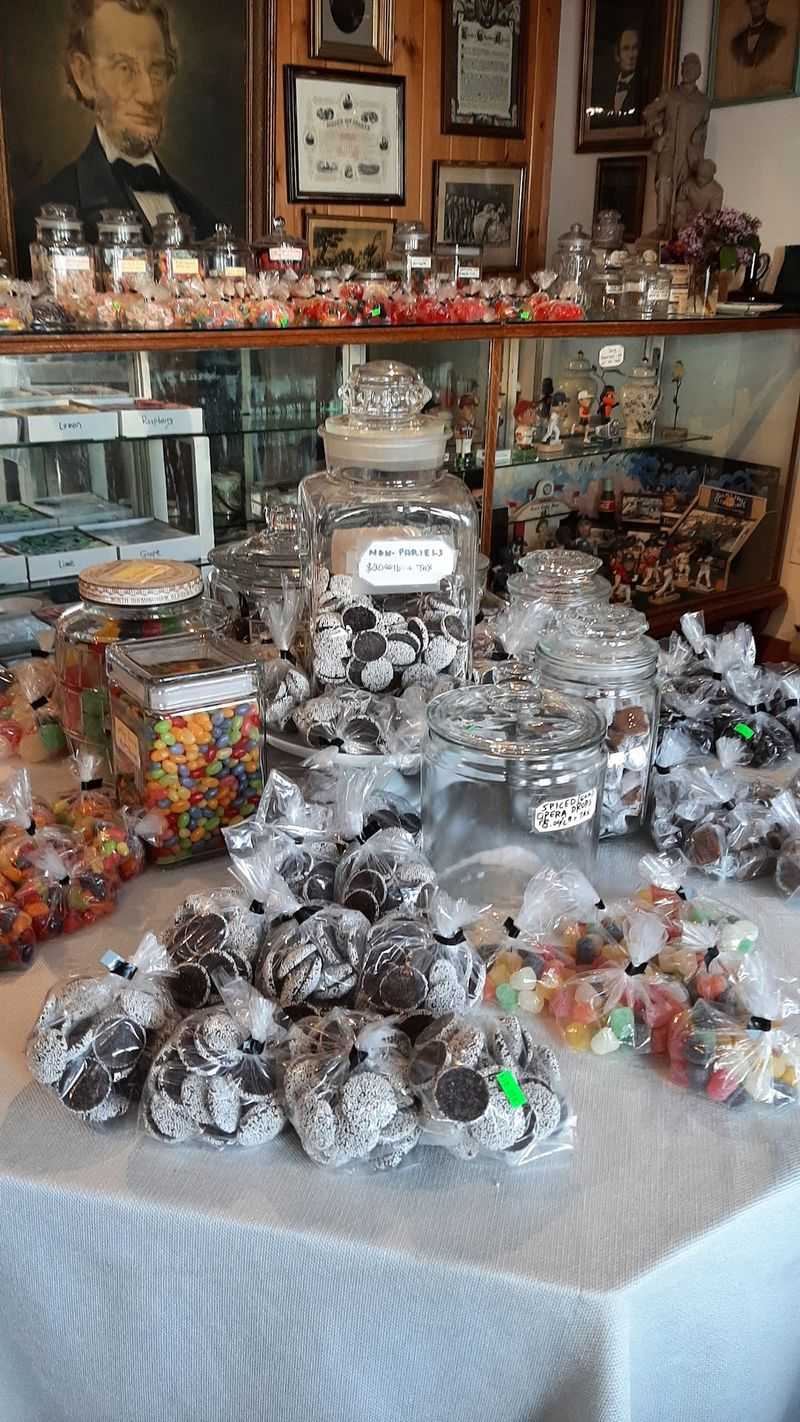
Opening day was July 4, 1885, which gives this Maine shop a built-in reason to celebrate every summer. Orne’s started by selling ice cream, bananas, and a modest mix of candy.
Addie Orne, known around town as Aunt Addie, took charge in 1896. She expanded the shelves with fine chocolates and traditional sweets.
In 1960, Wollcott Webster bought the store and promised to keep its old style. He also perfected a Maine-made fudge that became the top seller.
The original glass cases still hold treats. Look for needhams, a Maine candy made with potato, plus gummy lobsters and saltwater taffy.
One quirky detail stands out. A collection of Abraham Lincoln items, rescued from the town dump by Webster’s father, honors Lincoln County.
Visit in summer and ask about the annual rock-skipping contest. Only two families have ever owned the shop.
Share this story