Some cities have a secret shortcut that also happens to be one of their most memorable experiences. Funiculars are rail cars pulled by cables up steep hillsides, and many of the world’s most iconic ones have been running for well over a century.
They connect busy waterfronts to hilltop fortresses, lower neighborhoods to panoramic viewpoints, and modern streets to places that feel frozen in an earlier era. Whether you are a history lover, a city explorer, or someone who simply enjoys a great view without the uphill climb, these 15 historic funiculars offer something genuinely worth seeking out.
Each one has its own story, its own setting, and its own reason to ride.
Buda Castle Funicular, Budapest, Hungary
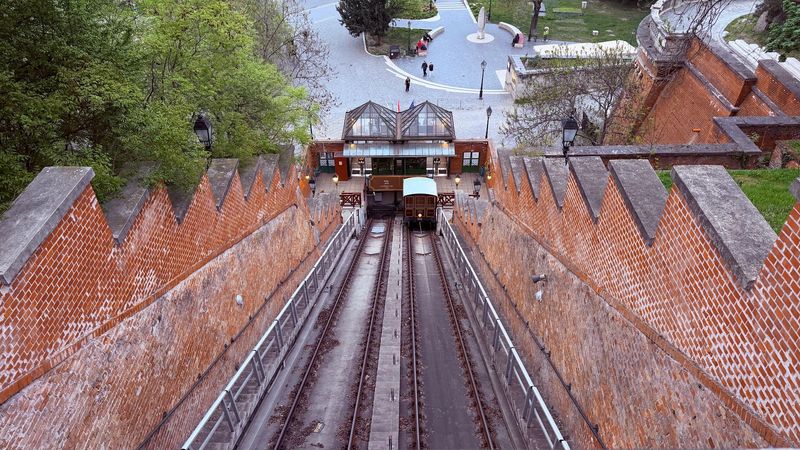
Few city rides pack as much scenery into 95 meters as the Buda Castle Funicular. Positioned at the western end of the iconic Chain Bridge, this compact railway has been hauling passengers up Castle Hill since 1870.
The lower station sits almost at river level, surrounded by the energy of a busy Budapest afternoon.
As the wooden-style carriage climbs, the Danube gradually spreads out below, with the Parliament building and Pest’s skyline filling the opposite bank. The ascent covers roughly 50 meters of elevation between narrow brick walls, and the views keep widening with every passing second.
The upper station deposits passengers right beside the historic Buda Castle complex, saving a steep walk and delivering an immediate sense of arrival. Scheduled maintenance closures happen occasionally, so checking the current timetable before visiting is a smart move.
Still, this is one of Budapest’s most satisfying and accessible experiences.
Tünel, Istanbul, Turkey
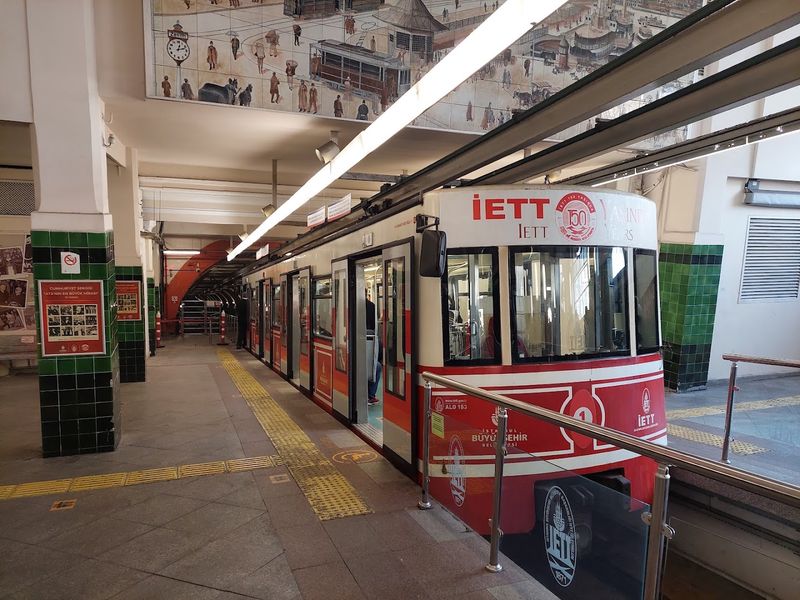
Built in 1875, Istanbul’s Tünel holds a remarkable distinction: it is one of the world’s oldest underground urban railways, predating many of the subway systems travelers take for granted today. The route was created to spare commuters the punishing climb between the waterfront district of Karaköy and the elevated commercial neighborhood of Beyoğlu.
The journey lasts roughly one minute, which makes it the kind of transportation experience you almost miss if you blink at the wrong moment. Yet that brief underground ride connects two completely different urban atmospheres.
Karaköy is busy with port energy and market activity, while Beyoğlu opens into the long pedestrian stretch of İstiklal Avenue.
Today, Tünel operates as the F2 line within Istanbul’s public transit network, meaning you can ride a Victorian-era piece of engineering history for the cost of a standard transit fare. That combination of age, practicality, and accessibility makes it genuinely special among the city’s many landmarks.
Duquesne Incline, Pittsburgh, Pennsylvania
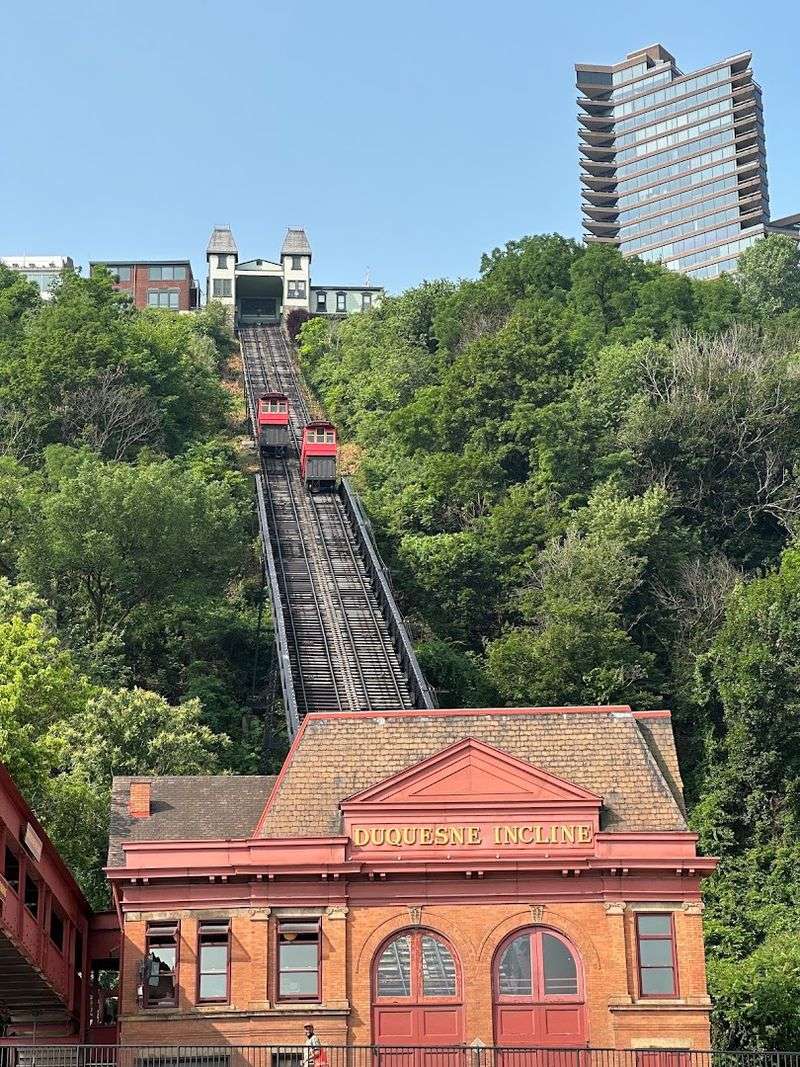
Pittsburgh once had nearly two dozen inclines climbing its surrounding hills, and the Duquesne Incline is one of the last two still running. Open since 1877, it originally served working-class residents commuting between hilltop homes and jobs near the industrial riverfront below.
The restored wooden cable cars that operate today look remarkably close to the originals.
The upper station on Mount Washington is the real draw for visitors. From the outdoor viewing platform and interior observation area, you can see downtown Pittsburgh positioned at the exact point where the Allegheny and Monongahela rivers join to form the Ohio.
It is one of the most photographed city views in the eastern United States.
Inside the upper station, historic displays explain the incline’s mechanical operation and the broader history of Pittsburgh’s hillside transportation systems. The Duquesne Incline runs year-round, and the combination of working history, dramatic scenery, and accessible location near the South Side neighborhood makes it genuinely worth the trip.
Old Quebec Funicular, Quebec City, Canada
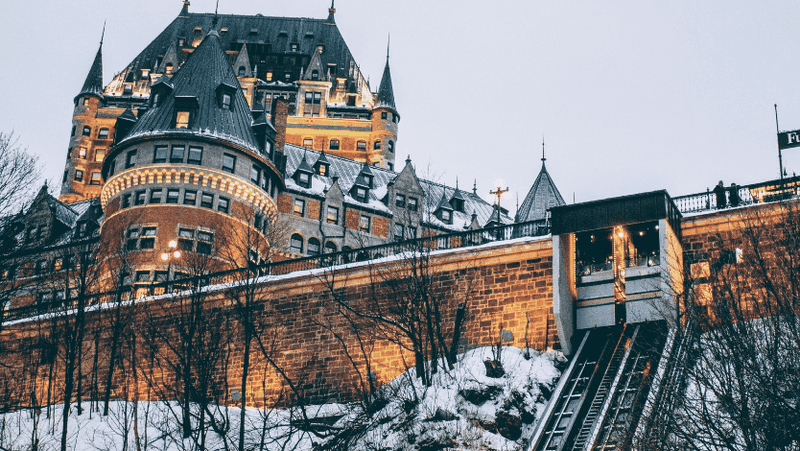
Quebec City’s funicular solves a geography problem that has existed since the city was founded: how do you easily move between the charming stone streets of Lower Town and the dramatic clifftop heights of Upper Town? The answer has been a funicular since 1879, when the first version opened using steam power and a water-counterweight system.
The current ride uses modern panoramic cabins that climb the steep escarpment while framing views of the St. Lawrence River and the rooftops of Petit-Champlain below. The upper station arrives near Dufferin Terrace, placing passengers steps away from the landmark Château Frontenac hotel.
The lower station opens directly into one of North America’s most atmospheric historic shopping districts.
The funicular runs throughout the year, including winter, when the staircase alternative becomes genuinely treacherous with ice and snow. A small fare covers the ride, and the combination of history, scenery, and practical convenience makes this a logical first stop for anyone exploring Quebec City.
Peak Tram, Hong Kong
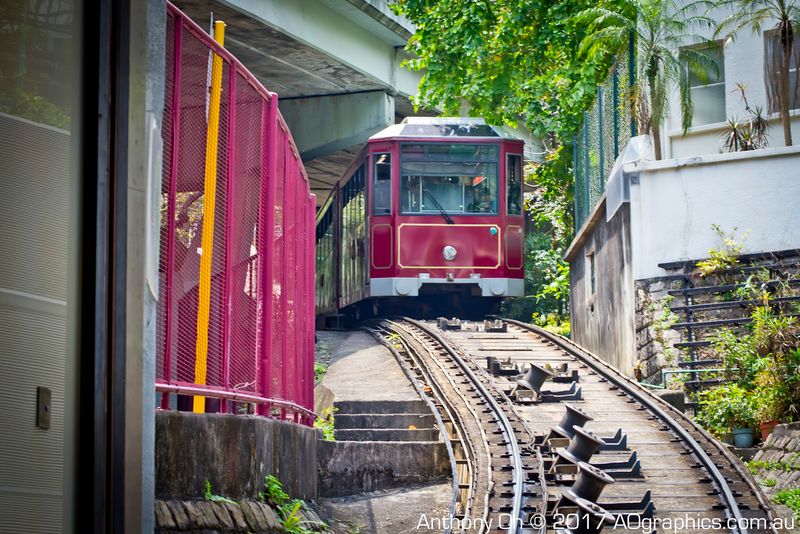
When the Peak Tram first opened in May 1888, it was primarily a convenience for wealthy residents living on the cooler heights of Hong Kong Island. The original wooden cars were powered by steam, and the route looked nothing like the glittering skyline that now frames every uphill journey.
Over more than 135 years, the system has evolved through six generations of vehicles.
The current sixth-generation trains feature panoramic windows and increased passenger capacity, making the climb from approximately 33 meters to 396 meters above sea level feel more like a moving observation deck than a simple commute. Views of Victoria Harbour, skyscrapers stacked against forested slopes, and the dense urban grid below become more dramatic with every passing meter of elevation.
The Peak Tram operates daily from early morning until late evening. At the top, the Peak Tower offers additional observation decks and attractions.
This is easily one of Asia’s most recognized urban railway experiences, combining authentic history with some of the world’s most striking city scenery.
Zagreb Funicular, Zagreb, Croatia
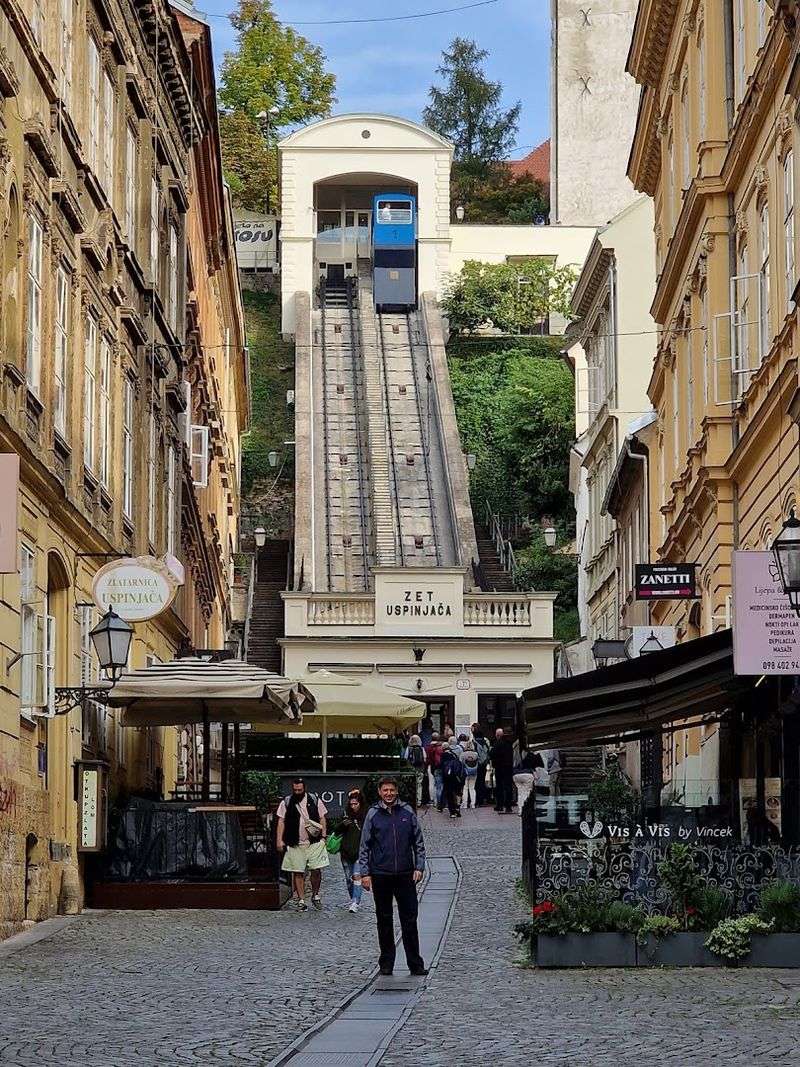
At just 66 meters long, Zagreb’s funicular holds a claim that stops most visitors mid-sentence: its operator describes it as the shortest public-transport funicular in the world. Built in 1890, the bright-blue car connects Tomićeva Street in Lower Town with the Strossmayer Promenade in Upper Town in approximately 64 seconds flat.
Despite covering such a brief distance, this little railway carries real symbolic weight in the Croatian capital. It has been part of Zagreb’s identity for well over a century, and its return to service on May 19, 2026, after a comprehensive modernization, was treated as a genuine civic event worth celebrating.
Departures run every ten minutes throughout the day.
Passengers emerge near Lotrščak Tower, which marks the edge of Zagreb’s medieval hilltop district. From there, the historic lanes, churches, and viewpoints of Gornji Grad spread out in every direction.
Short as the ride is, the funicular delivers you into one of the city’s most rewarding neighborhoods with minimal effort.
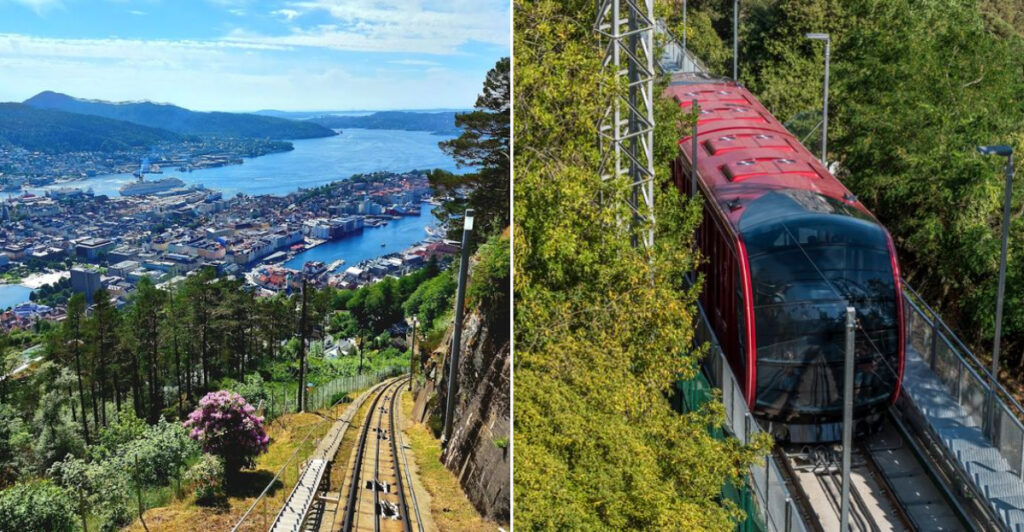
Fløibanen, Bergen, Norway
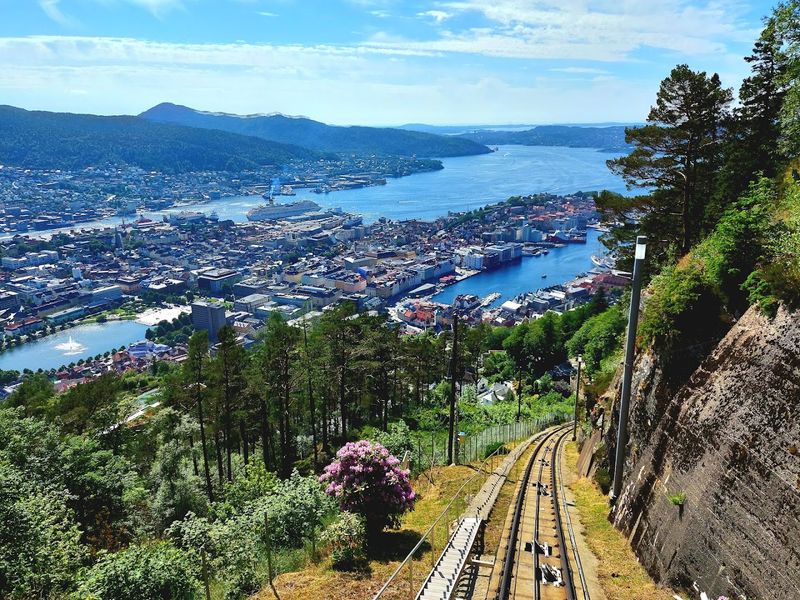
Bergen sits surrounded by seven mountains, and Fløibanen has been connecting the city center to one of them since January 15, 1918. Construction originally began in 1914 but was delayed by World War I and material shortages, making the eventual opening feel well-earned.
The railway rises from central Bergen to Mount Fløyen at approximately 320 meters above sea level.
The traditional red and blue carriages, known as Rødhette and Blåmann, were replaced by modern fifth-generation vehicles in 2022. The new trains continue the same route while offering improved comfort and capacity.
At the top, passengers find walking trails, woodland paths, a small lake, viewpoints, and family-friendly outdoor attractions scattered across the mountain.
Fløibanen currently runs daily, with service often extending until midnight during the main tourist season. The views from Mount Fløyen across Bergen’s colorful wooden houses, harbor, and surrounding fjords are consistently ranked among Norway’s finest urban panoramas.
This is the kind of ride that earns its reputation without any exaggeration.
Bergamo City Funicular, Bergamo, Italy
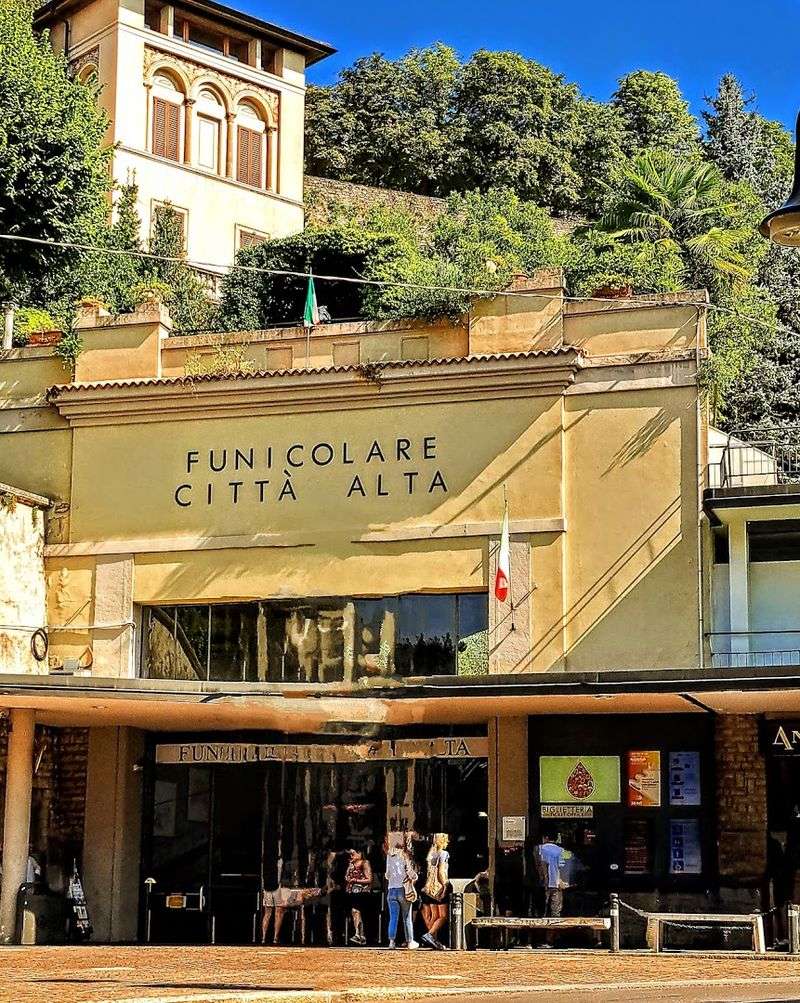
Bergamo is essentially two cities sharing one name. The modern lower city, Bergamo Bassa, moves at a contemporary urban pace, while the hilltop Città Alta is a medieval enclave enclosed by Venetian defensive walls that date back to the 16th century.
The funicular connecting them has been making that transition possible since 1887.
Designed by engineer Alessandro Ferretti, the railway remains part of Bergamo’s public transportation network rather than operating as a purely tourist attraction. That practical role gives it a different energy than many historic funiculars.
You might ride alongside students, residents running errands, or visitors heading toward the piazzas and stone lanes above.
The upper station opens into a district that genuinely feels removed from the city below. Medieval architecture, narrow streets, and Venetian-era walls create a setting that rewards slow exploration.
The funicular runs from morning until late evening, and its combination of historic infrastructure and everyday usefulness makes it one of northern Italy’s most quietly impressive city railways.
Como-Brunate Funicular, Como, Italy
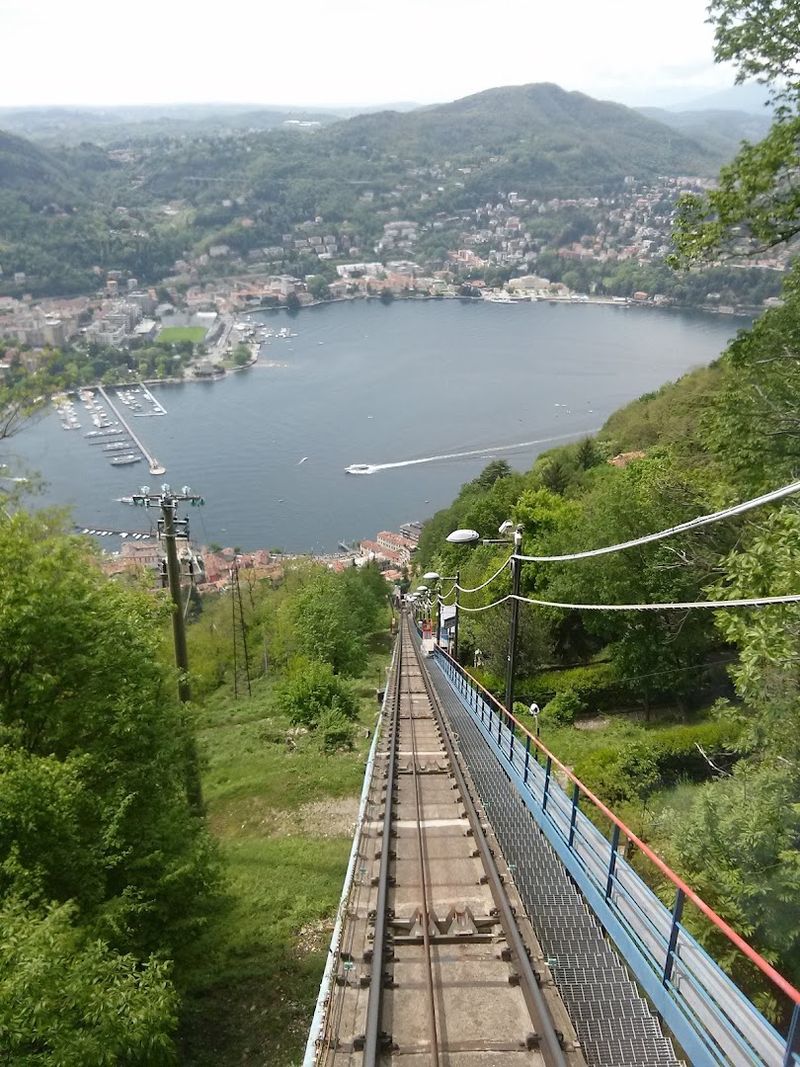
Lake Como has no shortage of scenic transportation options, but the Como-Brunate Funicular offers a perspective that boats and waterfront promenades simply cannot match. Running since 1894, the railway began with steam power before converting to electricity in 1911.
Today, the journey takes around seven minutes and covers a meaningful rise in elevation from the lakeside city to the hillside village of Brunate.
The route passes through a tunnel section before opening up to reveal widening views of the lake and the Alpine peaks framing the horizon. Brunate itself is a quiet community known for villas, walking paths, and terraces that look directly down over Como and the surrounding water.
The funicular currently operates from early morning until midnight, serving both visitors and local residents who use it as a straightforward daily connection. The lower station sits near the Como waterfront, making it easy to combine a lake walk with a hillside excursion.
It is a practical ride that also happens to be genuinely beautiful.
Monte Igueldo Funicular, San Sebastian, Spain
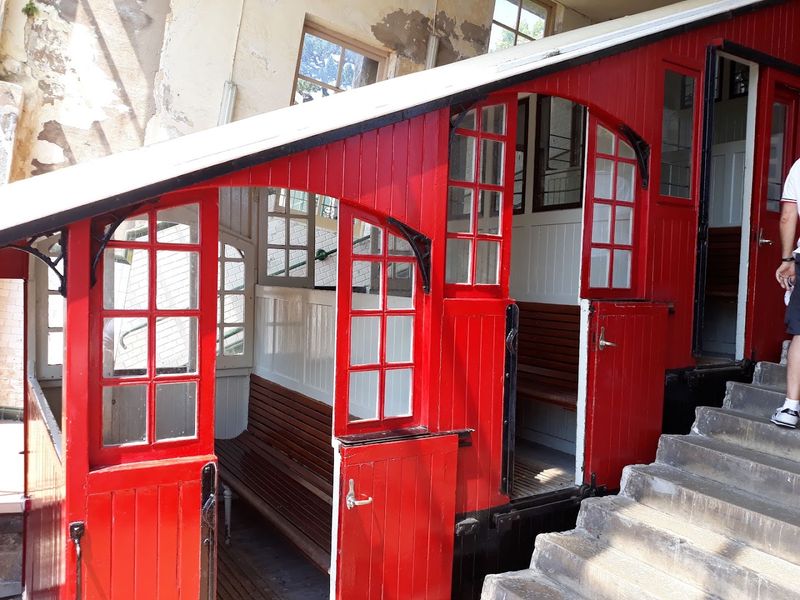
Opened on August 25, 1912, the Monte Igueldo Funicular is operating today with much of the same equipment introduced at its inauguration. The operator states that the wooden carriage bodies are largely preserved from the original build, which makes every ride feel less like transportation and more like boarding a working museum piece.
The slow ascent from the area near Ondarreta Beach to the summit of Monte Igueldo gradually reveals one of Spain’s most celebrated coastal panoramas. La Concha Bay curves below, Santa Clara Island sits in the middle distance, and the surrounding Basque coastline stretches in both directions.
The view earns its reputation without needing any promotional embellishment.
At the top, passengers find a historic amusement park that also dates to 1912, adding to the sense that the entire summit has been preserved from an earlier era of leisure travel. The funicular runs daily with seasonal schedule variations.
Few city railways anywhere in Europe preserve this level of original character while still operating regular public service.
Artxanda Funicular, Bilbao, Spain
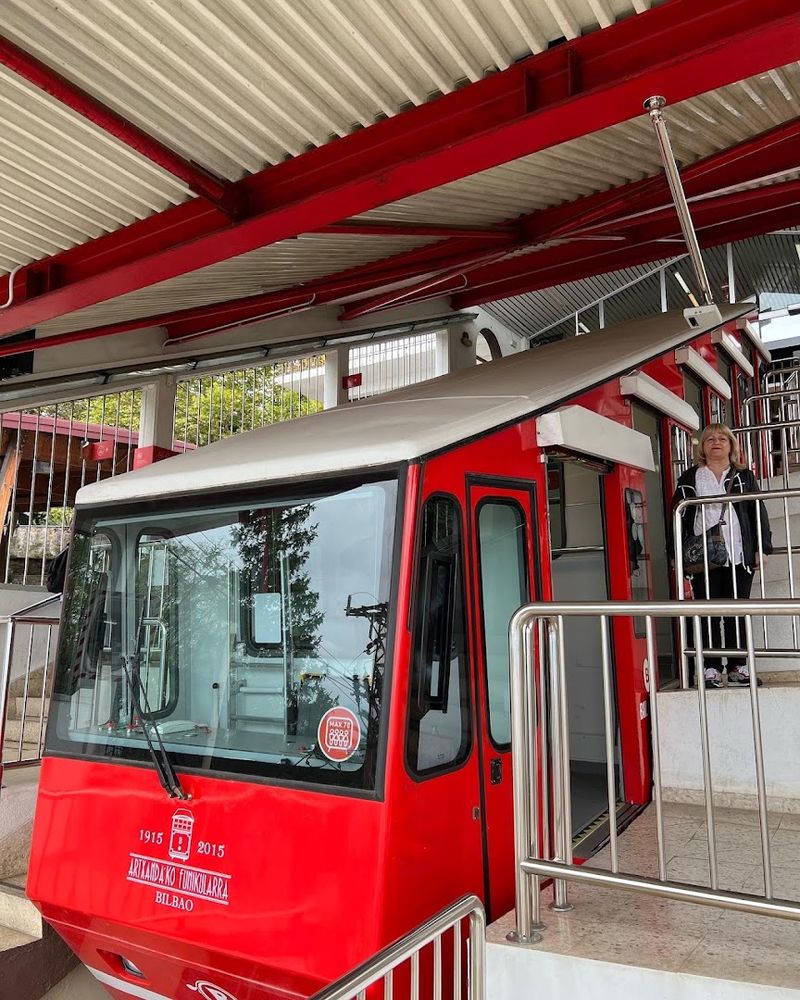
Bilbao is a city tucked into a river valley surrounded by mountains, and the Artxanda Funicular has been offering a way out of that valley since 1915. The line was built to connect the Castaños neighborhood with the restaurants and open spaces developing on Mount Artxanda.
Over the following decades, it survived wartime damage and a lengthy closure before being fully reconstructed.
The current journey takes about three minutes and deposits passengers at a hilltop viewpoint that frames central Bilbao in a way no street-level perspective can match. From the summit, you can trace the Nervión River cutting through the city, spot the titanium curves of the Guggenheim Museum, and see the ring of mountains that gives Bilbao its distinctive enclosed geography.
Departures run every ten to fifteen minutes throughout the year, adjusting based on demand and time of day. The funicular functions as both public transit and one of the city’s most straightforward scenic excursions.
Combining it with a walk along the Artxanda plateau makes for a genuinely satisfying half-day outing.
Cuca de Llum (Tibidabo Funicular), Barcelona, Spain
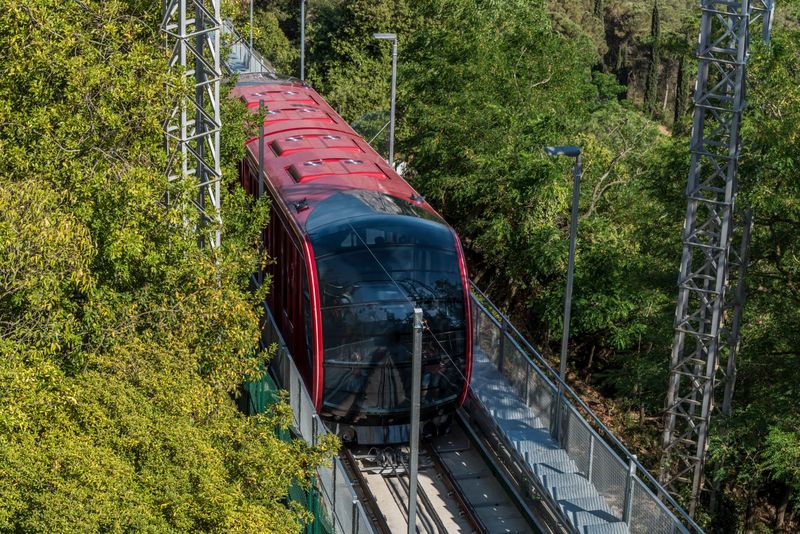
Spain’s first funicular opened on Tibidabo in 1901, and the route has been carrying Barcelona residents and visitors toward the city’s highest point ever since. The current vehicle, introduced in 2021, is called the Cuca de Llum, which translates loosely as Firefly.
With large panoramic windows on all sides, the four-minute climb becomes an unobstructed viewing platform over Barcelona’s rooftops, towers, and coastline.
The funicular departs from Plaça Doctor Andreu and rises to the Tibidabo amusement park, one of the oldest operating theme parks in the world. The summit also offers open terraces with views extending to the Mediterranean on clear days.
The combination of historic route, modern vehicle, and genuinely spectacular scenery is difficult to beat within the city.
Service generally runs daily from March through December, with a reduced winter schedule in January and February. Although the Cuca de Llum itself is a recent addition, it continues a tradition of hilltop leisure travel that Barcelona has maintained for more than 120 years.
The contrast between old tradition and new engineering is part of what makes it interesting.
Festungsbahn, Salzburg, Austria
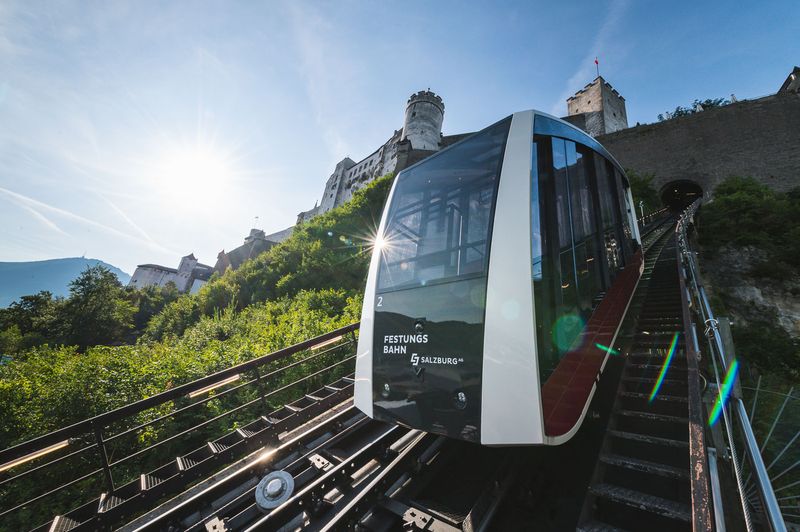
Austria’s oldest funicular still in service has been climbing to Hohensalzburg Fortress since 1892. The Festungsbahn was originally a water-powered railway that locals nicknamed the Tröpferlbahn, a reference to its drip-and-counterweight mechanics.
Modern electric equipment has long since replaced the original system, but the route and destination remain unchanged.
The track stretches 198.5 meters at a maximum gradient of roughly 62 percent, making it one of the steeper urban funiculars in Europe. The journey completes in just 54 seconds, which means the transition from Salzburg’s historic streets to the walls of one of Europe’s largest medieval fortresses happens almost before you have time to register the climb.
From the fortress, views extend across Salzburg’s church towers, the Salzach River, and the surrounding Alpine landscape. The Festungsbahn operates during the fortress’s regular opening season, with extended evening hours available during summer.
Combining the funicular ride with a visit to the fortress itself makes for one of Salzburg’s most complete historical experiences.
Angels Flight, Los Angeles, California
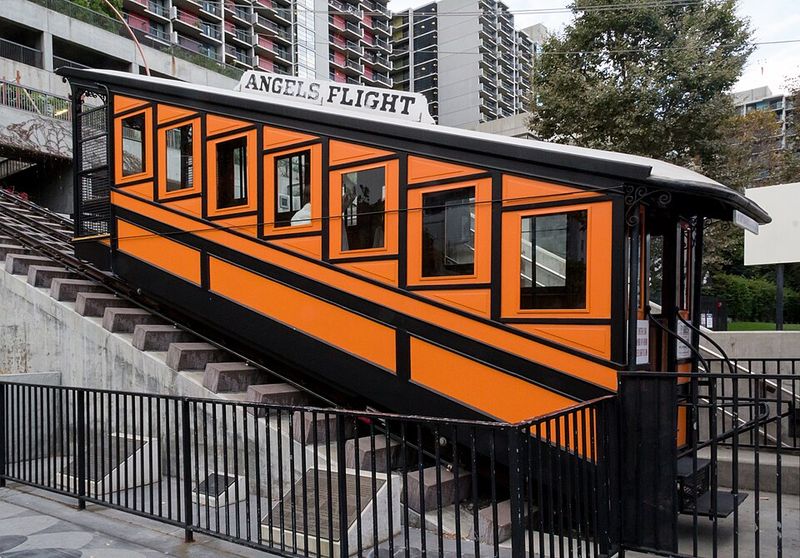
Angels Flight has been a downtown Los Angeles landmark since 1901, connecting Hill Street with Grand Avenue on Bunker Hill. The orange-and-black cars travel one of the shortest funicular tracks in the United States, covering a distance that most people could walk in under a minute.
But the ride itself is the point, not the shortcut.
The lower station sits directly across from Grand Central Market, one of Los Angeles’s most visited food halls. The upper station opens near California Plaza and the Broad museum.
That positioning makes Angels Flight a natural connector between two genuinely interesting destinations rather than a standalone attraction.
The surrounding Bunker Hill neighborhood looks nothing like the residential hillside of hotels and Victorian homes it once was, but the railway preserves a visual memory of that earlier downtown. Angels Flight runs seven days a week from early morning until late evening.
Its repeated appearances in films and television have made it one of the most recognizable pieces of transportation infrastructure in Southern California.
Tbilisi Funicular, Tbilisi, Georgia
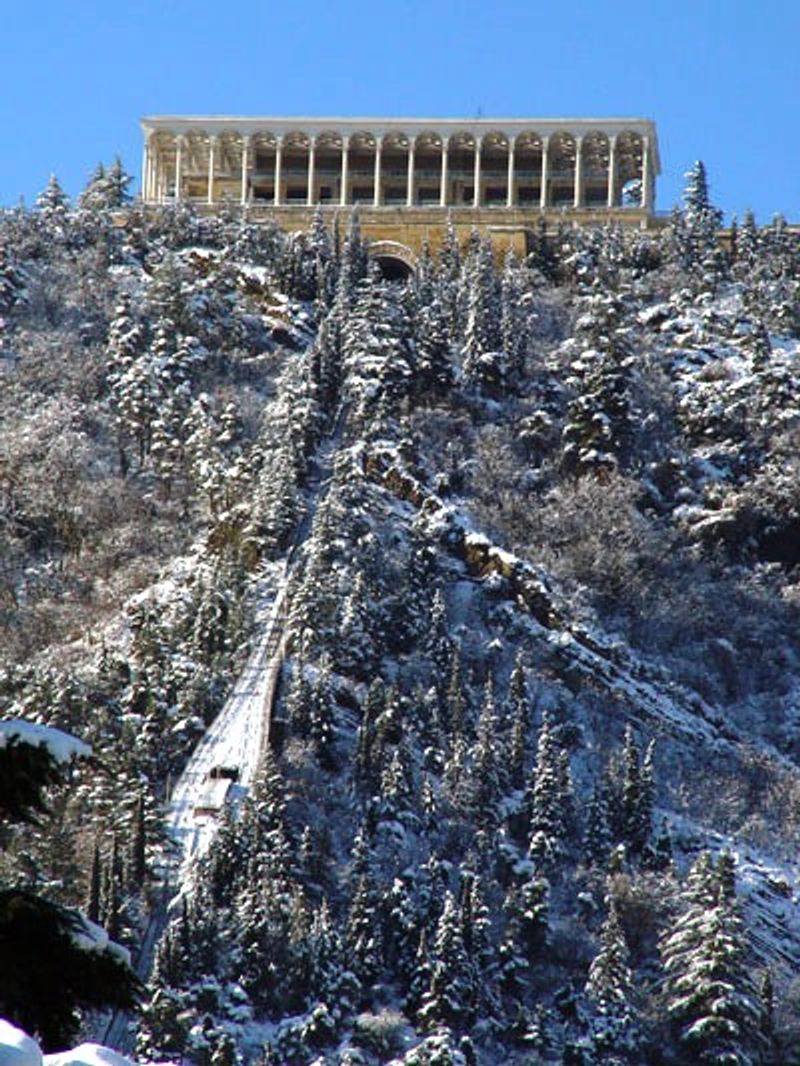
Opened in 1905, the Tbilisi Funicular was built to connect the lower city with a developing residential and recreational area on Mtatsminda Mountain. More than a century later, the same mountain draws visitors for the same basic reason: the views from up there are significantly better than anything you can see from street level.
The climb from Chonkadze Street carries passengers above a cityscape that layers Orthodox churches, Soviet-era apartment blocks, medieval fortifications, and modern architecture into a surprisingly cohesive urban portrait. During summer, the mountain is also noticeably cooler than the streets below, which gives the ride a practical appeal beyond the scenery.
At the top, Mtatsminda Park offers terraces and viewpoints overlooking Tbilisi’s hills, river crossings, and rooftops. Georgia’s official tourism resources confirm daily service from morning until late evening throughout the year.
The funicular remains one of the Georgian capital’s most enduring landmarks, recognized by residents and visitors alike as a genuine piece of the city’s living history.
Share this story