Long before GPS and satellite maps, a single beam of light could mean the difference between a safe harbor and a shipwreck. Along the Atlantic coast of North America, from Newfoundland to Florida, many of those old guardians still stand.
Some date back to the 1700s, and a few still help guide ships today. This list covers 15 historic lighthouses in Canada and the United States, with facts about their past and notes on what visitors can expect.
Schedules and access rules change, so check official websites before you go.
Cape Spear Lighthouse, Newfoundland and Labrador, Canada
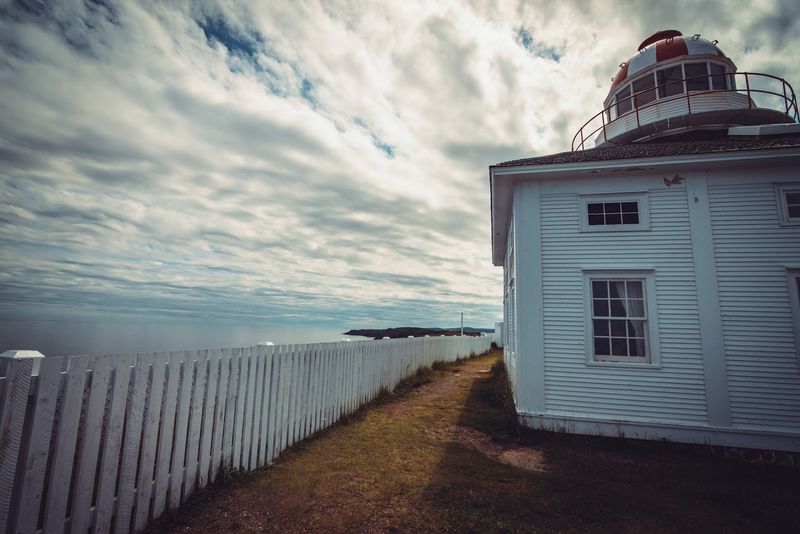
Here’s a fun twist on lighthouse design: the tower at Cape Spear sits right inside a square keeper’s house. Built in 1835, it is the oldest surviving lighthouse in Newfoundland and Labrador, and its light entered service the following year.
That odd layout gives visitors a peek at what life was like for lighthouse families in the 19th century. The keepers lived under the same roof as the lamp they tended.
The setting adds to the story. Cape Spear is Canada’s easternmost point of land, on a rocky headland just outside St. John’s.
The coastline is known for seabirds, whales, and passing icebergs, so a stop here often comes with plenty to look at beyond the building itself.
Plan around the seasons. The historic site operates seasonally, but the grounds stay accessible year-round.
That means you can still walk the headland and take in the Atlantic views outside the main visitor season, though the interior exhibits may be closed.
Louisbourg Lighthouse, Nova Scotia, Canada
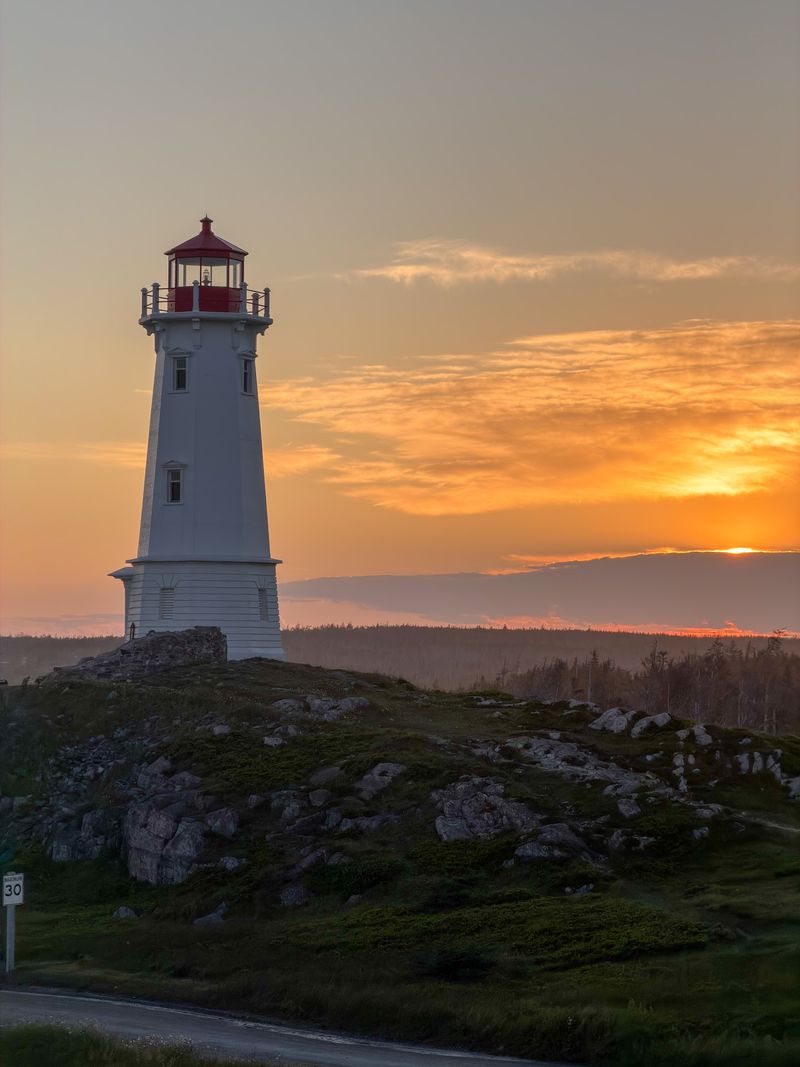
Back in 1734, the French lit a beacon at this spot, and that makes it the site of the first lighthouse in what is now Canada. Few places on the Atlantic coast can claim such an early start.
The original structure was damaged during the 18th-century conflicts surrounding the Fortress of Louisbourg. It was never rebuilt, so the story of the first light ends in the era of cannon fire and sieges.
The lighthouse standing today dates to 1923 and entered service in 1924. It remains an active aid for the fishing community around Louisbourg Harbour, which gives the place a working feel rather than a museum one.
History fans have a good reason to bring walking shoes. The nearby Louisbourg Lighthouse Trail leads past the foundations of earlier towers that once guarded the harbor entrance.
Seeing those old stone outlines helps explain how long this stretch of coast has relied on a guiding light.
Portland Head Light, Cape Elizabeth, Maine
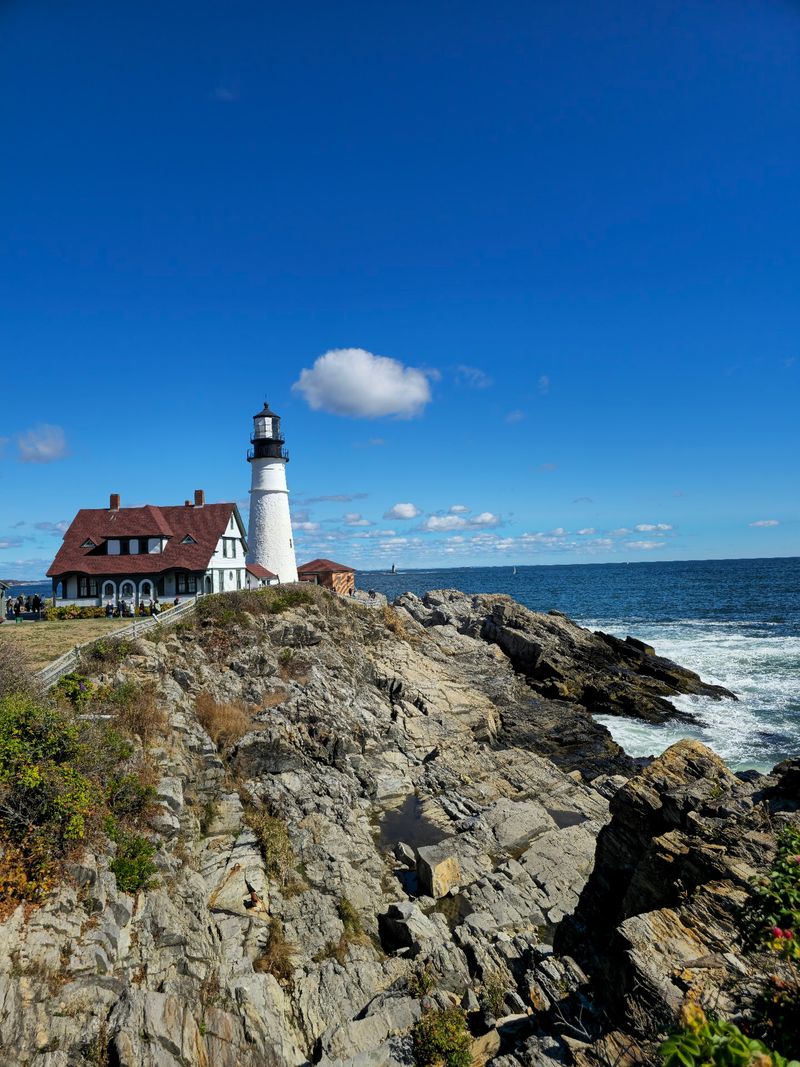
January 10, 1791, is the date when this tower was first lit. Construction began while Maine was still part of Massachusetts, which makes the lighthouse older than the state itself.
Money to finish the job came after the new U.S. government took responsibility for the nation’s lighthouses. That detail ties Portland Head Light to the earliest days of the federal government.
The tower stands within Fort Williams Park in Cape Elizabeth, and photographers often gather along the rocky shoreline for classic views of the tower and the Atlantic.
The former keeper’s quarters now hold a museum about the station’s history, navigational technology, and the generations of keepers who worked here. The museum operates seasonally, while the surrounding park offers the shoreline views.
A good plan is to see the grounds first, then step inside the museum if it is open during your visit.
Pemaquid Point Lighthouse, Bristol, Maine
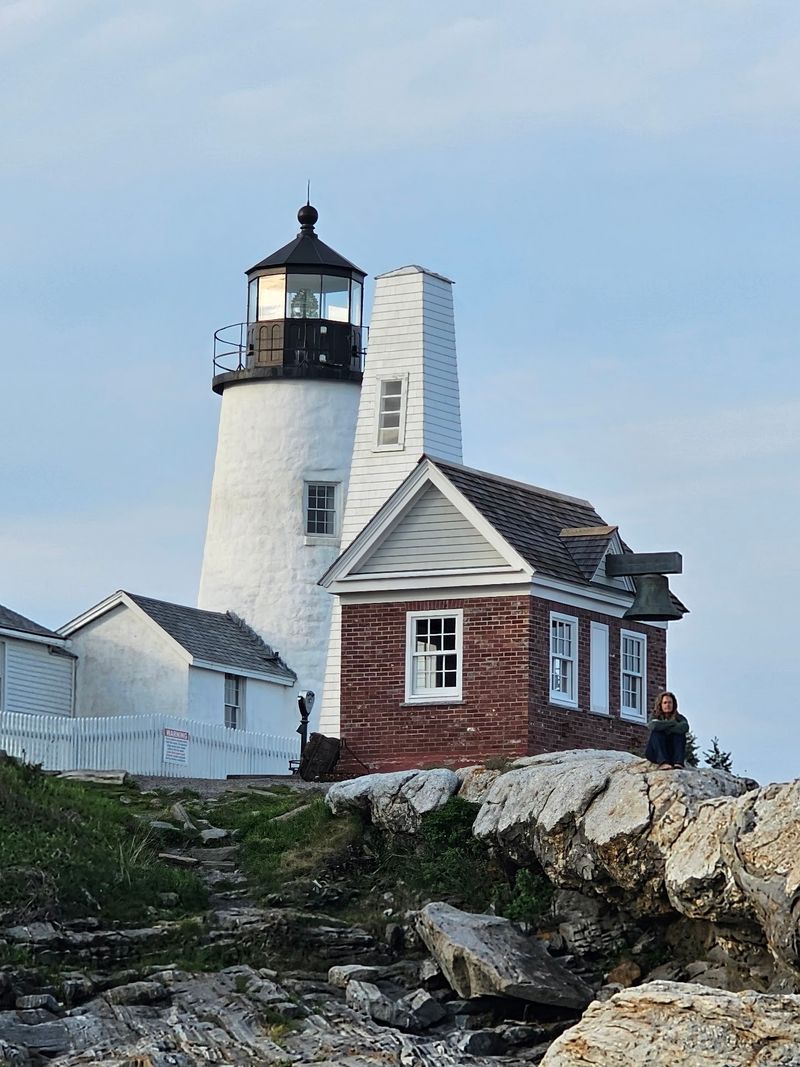
A presidential order started this one. John Quincy Adams ordered the original Pemaquid Point Lighthouse built in 1827 to protect vessels approaching Muscongus Bay.
Problems with that first structure led to the present stone tower in 1835. It remains an active, automated aid to navigation, so the light still does the job it was built for.
The park around it has more to see than most lighthouse stops. Pemaquid Point Lighthouse Park includes the tower, a fishermen’s museum, a learning center, an art gallery, and striking exposed rock formations along the coast.
If you like a view from above, plan for the main visitor season. Weather permitting, visitors can climb the lighthouse during that time.
Since conditions on the Maine coast can change quickly, it helps to check ahead and keep your schedule flexible.
West Quoddy Head Light, Lubec, Maine
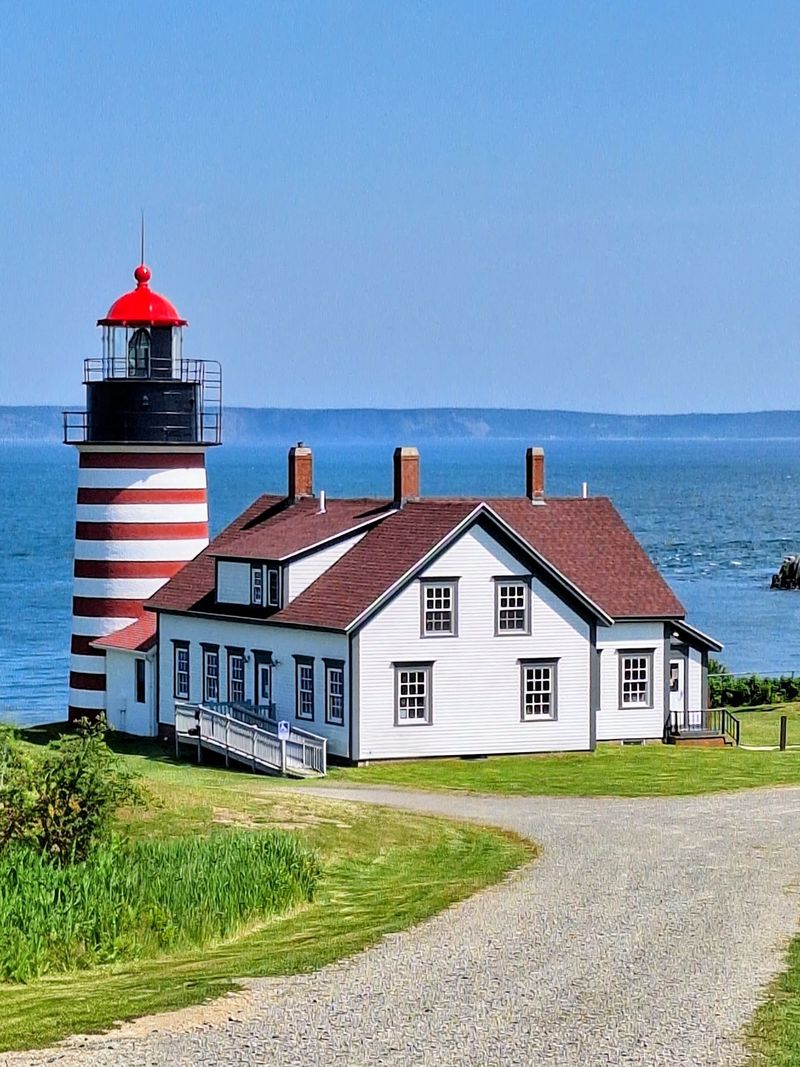
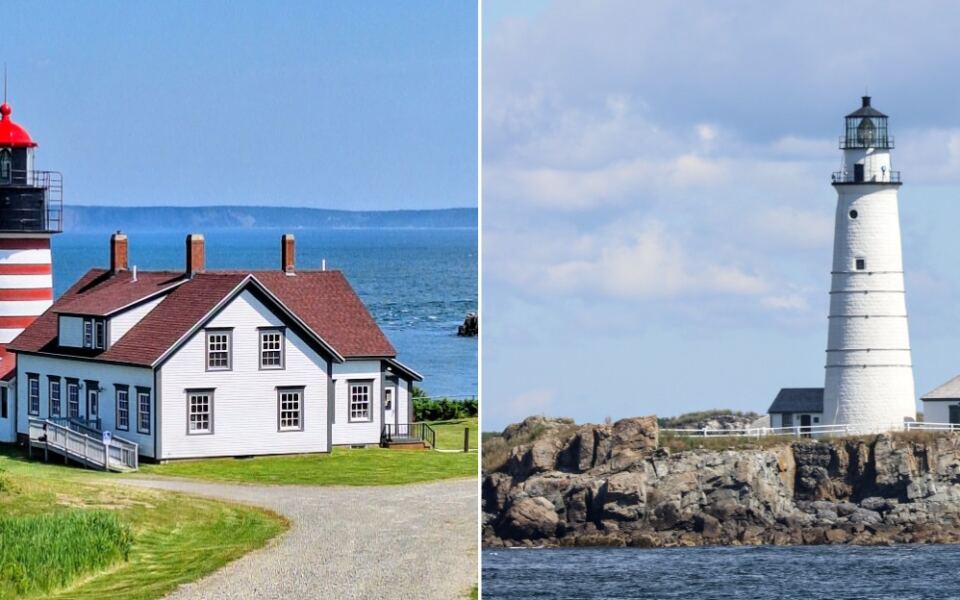
Candy-cane stripes make this tower impossible to mistake for any other. West Quoddy Head Light marks one of the most easterly stretches of the continental United States.
Thomas Jefferson commissioned the first lighthouse here in 1808. The present tower and keeper’s house date to 1858, and resident keepers staffed the station until 1988, when the light was automated.
The lighthouse stands within Quoddy Head State Park near Lubec. From the shore you can look across Quoddy Channel toward Canada’s Grand Manan Island, which gives the spot a real sense of being at the edge of the map.
The state park also has coastal hiking trails and views across the Bay of Fundy region. That makes it easy to turn a short lighthouse stop into a longer walk along the shoreline.
Boston Light, Little Brewster Island, Massachusetts
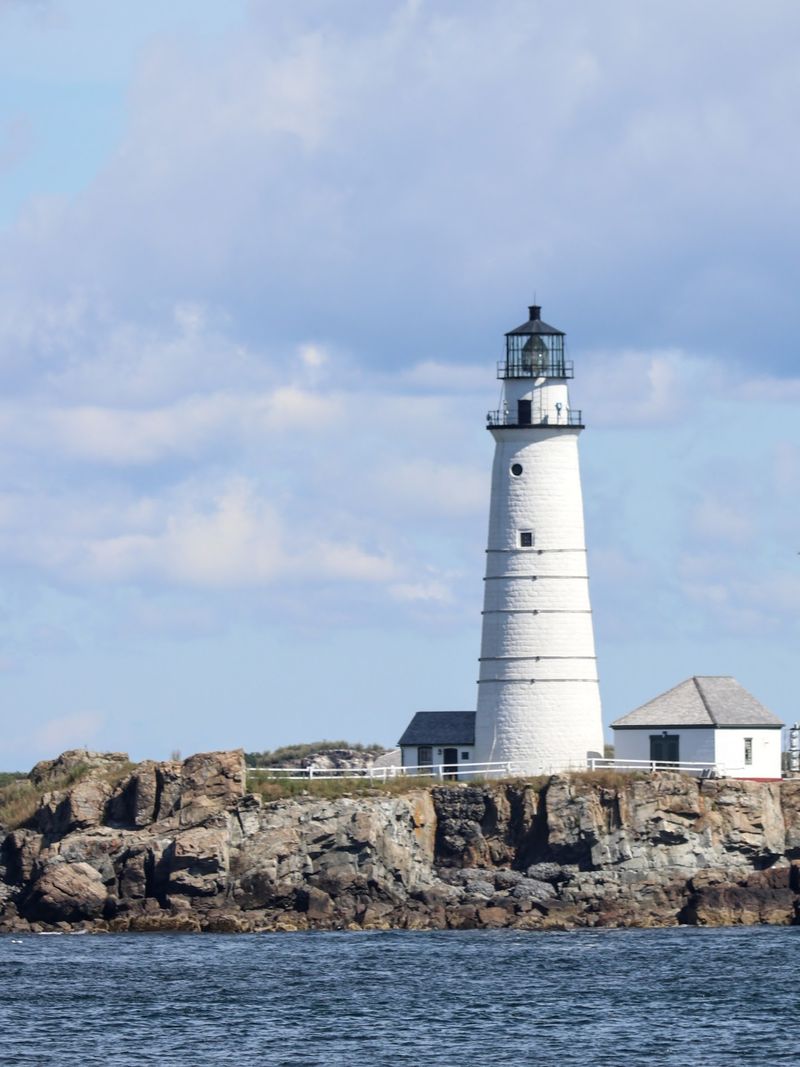
Here is a title worth remembering: the oldest lighthouse site in the United States. Boston Light traces its history to 1716, when Massachusetts built a lighthouse on Little Brewster Island at the entrance to Boston Harbor.
The story takes a dramatic turn in 1776. British forces destroyed the original tower during the American Revolution, and a replacement was erected in 1783.
There is a catch for travelers. Little Brewster Island is currently closed to public access because of safety and access concerns, so you cannot land there.
You can still see the lighthouse from the water. Seasonal lighthouse cruises through Boston Harbor make it possible to appreciate one of the country’s most historically important maritime landmarks without stepping onto the island.
Check with cruise operators for current schedules before planning a trip.
Montauk Point Lighthouse, Montauk, New York
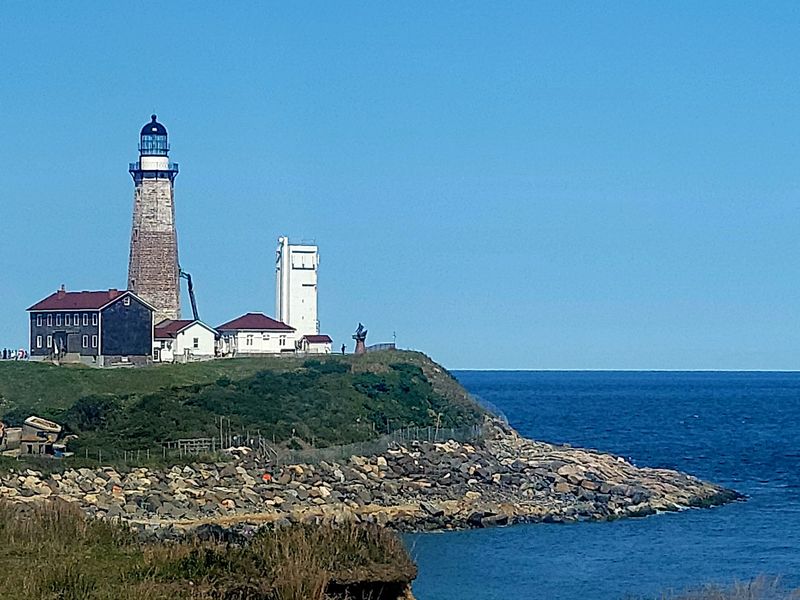
George Washington was president when Congress authorized this lighthouse in 1792. The tower was completed in 1796, making it New York State’s first lighthouse.
It sits at the eastern tip of Long Island and remains an active aid to navigation. Few lighthouses can claim such a long run of continuous usefulness.
The tower was raised by about 30 feet in 1860 and today stands more than 110 feet tall.
Visitors can explore the museum and climb the tower during its seasonal operating schedule. From the top, the Atlantic stretches out on one side and Block Island Sound on the other.
Because the schedule is seasonal, confirm opening dates before making the drive out to the end of the island.
Fire Island Lighthouse, Fire Island, New York
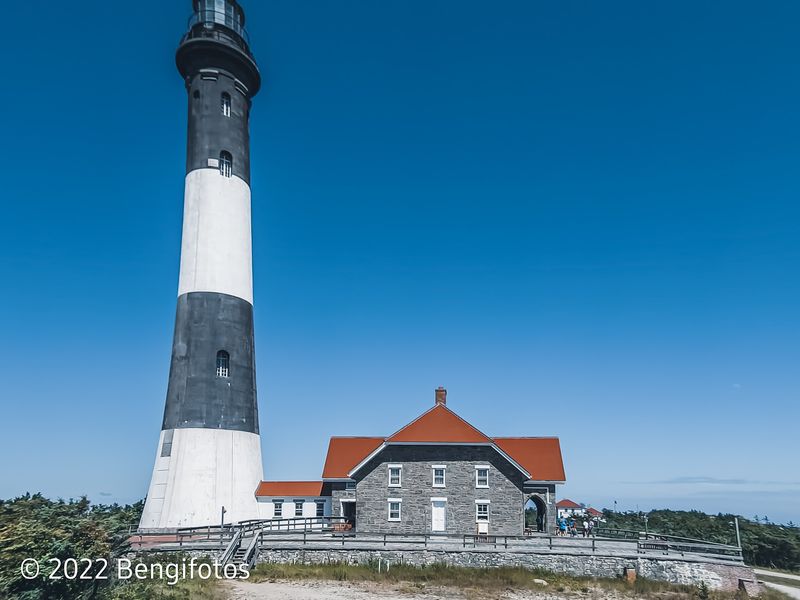
Mariners crossing the Atlantic once looked for this tower to know they were nearing New York Harbor. Fire Island Lighthouse stands along the southern shore of Long Island and helped sailors find their way for generations.
Today it is part of Fire Island National Seashore. The tower, exhibits, nature trails, and nearby shoreline combine to make it one of the more accessible lighthouse experiences in the region.
Unlike many historic towers that can only be admired from outside, this one regularly offers tower access. The National Park Service currently lists the lighthouse as open daily, with seasonal variations in hours and some holiday closures.
The national seashore adds another reason to go, pairing maritime history with barrier-island beaches, dunes, and coastal habitat. Check the park’s website for current hours before you travel.
Cape May Lighthouse, Cape May Point, New Jersey
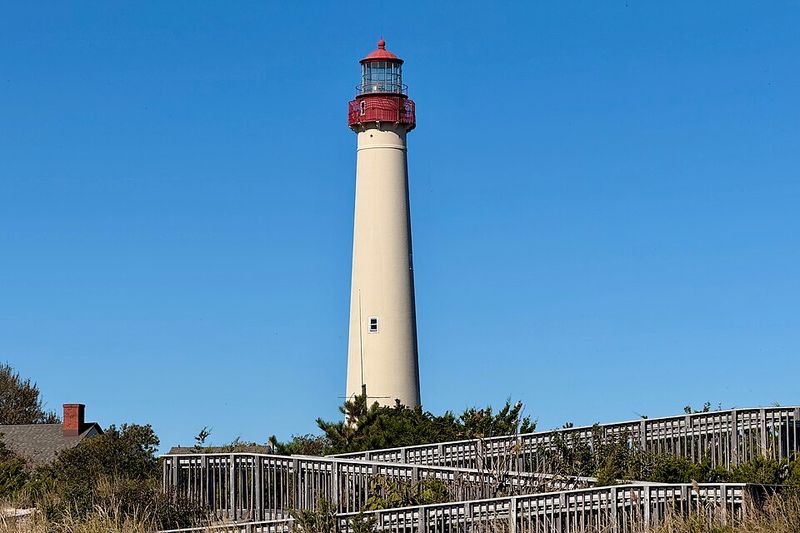
Two earlier lighthouses at Cape May Point are now underwater. Coastal erosion claimed the sites of the towers from 1823 and 1847, so the lighthouse you see today is the third documented one there.
That tower has watched over the meeting of the Delaware Bay and the Atlantic Ocean since 1859. It remains an active aid to navigation and is listed on both the state and national registers of historic places.
Climbing it is a workout with a payoff. Visitors can tackle 199 steps on the original cast-iron spiral staircase.
At the top, panoramic views take in Cape May Point State Park, Delaware Bay, and the Atlantic. Bring comfortable shoes, and check the current operating schedule before you go, since tower access can depend on the season and the weather.
Cape Henry Lighthouse, Virginia Beach, Virginia
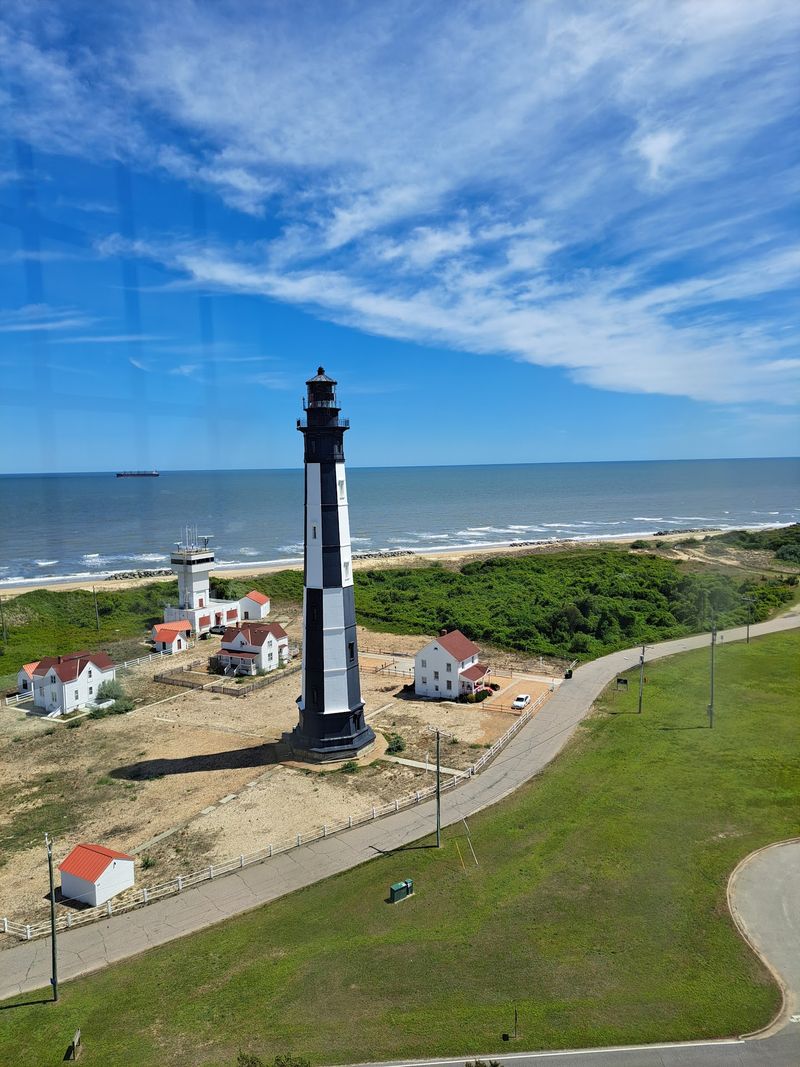
Early American history is packed into this stone tower. Completed in 1792, Cape Henry Lighthouse was the first federally funded public works project completed under the new U.S. government.
It stands close to the point where the Chesapeake Bay meets the Atlantic, a spot that has long mattered to ships entering the region.
Getting inside takes some planning. The lighthouse is open to visitors Tuesday through Sunday, but it sits inside Joint Expeditionary Base Little Creek-Fort Story.
Visitors without base access must follow current security procedures, and identification requirements apply. Travelers should review those rules before arriving so the visit goes smoothly at the gate.
Assateague Lighthouse, Chincoteague, Virginia
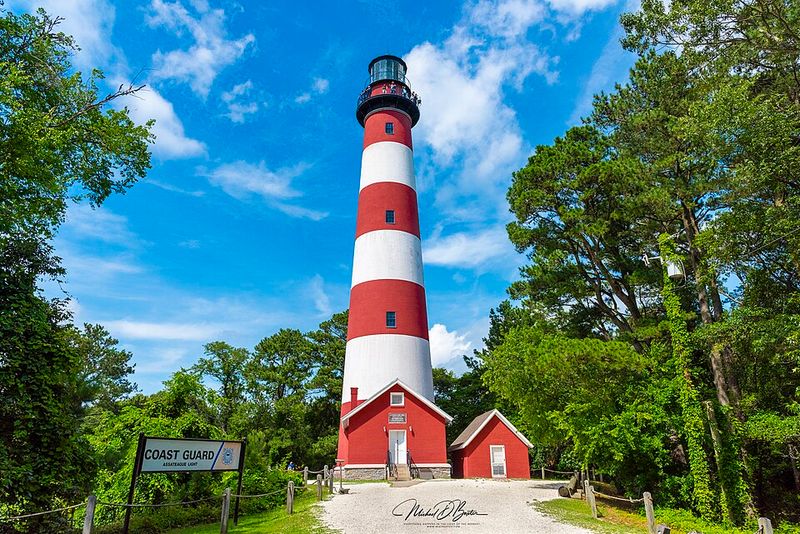
Most people come to Chincoteague for the wildlife and the famous ponies, but a red-and-white striped tower rises above the trees too. Assateague Lighthouse adds a layer of human history to a landscape of forests, marshes, and barrier-island habitat.
It sits on Virginia’s Eastern Shore within Chincoteague National Wildlife Refuge.
Reaching it is easy. The quarter-mile Lighthouse Trail leads to the base of the tower.
The U.S. Fish and Wildlife Service currently offers seasonal lighthouse tours, generally on Fridays and Saturdays between Memorial Day and Labor Day, and on Saturdays from Labor Day through Thanksgiving.
The setting makes this stop a good fit for travelers who want to pair lighthouse history with wildlife viewing and coastal scenery.
Bodie Island Lighthouse, Outer Banks, North Carolina
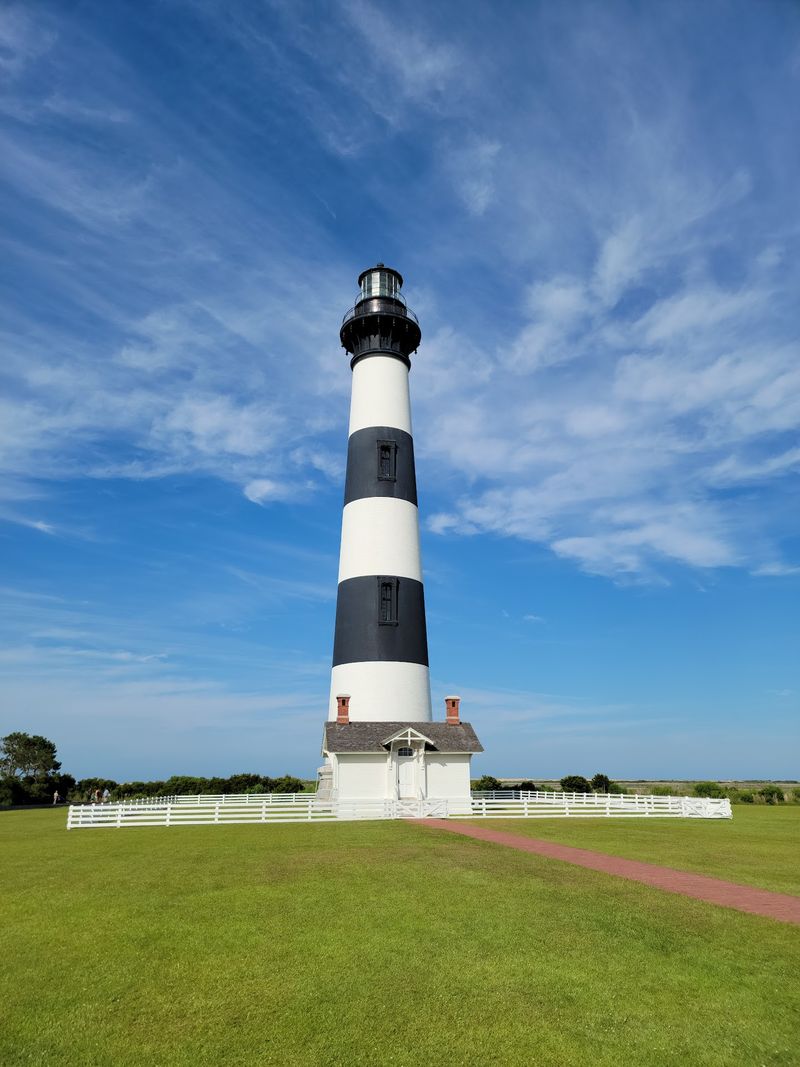
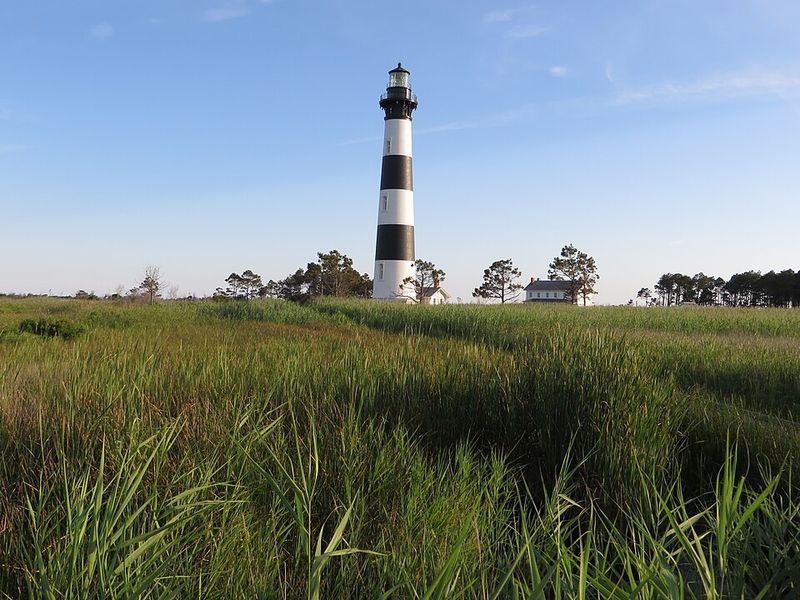
Count the stripes. Bodie Island Lighthouse wears alternating black-and-white horizontal bands, which set it apart from the spiral pattern used at nearby Cape Hatteras.
The present tower was completed in 1872. It is the third lighthouse built to help mariners navigate this stretch of North Carolina’s Outer Banks.
The tower still works as an aid to navigation and contains its historic first-order Fresnel lens, a large glass lens designed to focus light into a powerful beam.
Bodie Island Lighthouse is normally open for seasonal self-guided climbing from spring into fall. Visitors can climb more than 200 stairs for views across the surrounding marshes and barrier island.
Dates can shift from year to year, so confirm current climbing hours with the National Park Service.
Cape Hatteras Lighthouse, Outer Banks, North Carolina
Diamond Shoals earned a scary reputation among sailors, and that danger is the reason a lighthouse exists here. Congress first authorized one at Cape Hatteras in 1794 because the surrounding waters posed such a risk to Atlantic shipping.
The first tower was eventually replaced by the much taller black-and-white spiral lighthouse people associate with the cape today.
There is an important update for 2026. The tower is closed to climbing while restoration work continues, though the outdoor areas around the lighthouse remain open around the clock.
The closure is temporary.
Even without a climb, the enormous striped tower is a remarkable stop on a trip through Cape Hatteras National Seashore. Check the National Park Service website for the latest on when climbing might resume.
St. Augustine Lighthouse, St. Augustine, Florida
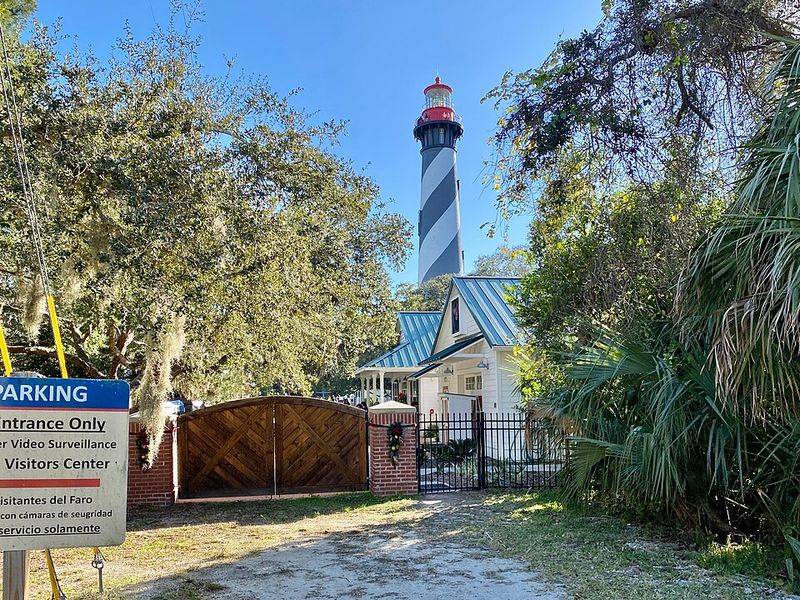
On October 15, 1874, keeper William Russell lit the first-order Fresnel lens here for the first time. The present tower was built between 1871 and 1874 because coastal erosion threatened the older lighthouse nearby.
That worry proved right. The earlier tower eventually collapsed into the ocean in 1880.
The 165-foot tower is still an active private aid to navigation and remains closely tied to St. Augustine’s long maritime history.
Visitors can climb 219 steps to the observation deck and explore the historic keeper’s house and maritime exhibits. The museum currently operates daily except for specified holidays, and tower access can pause occasionally because of weather.
A quick look at the official website before you go will save you a surprise.
Ponce Inlet Lighthouse, Ponce Inlet, Florida
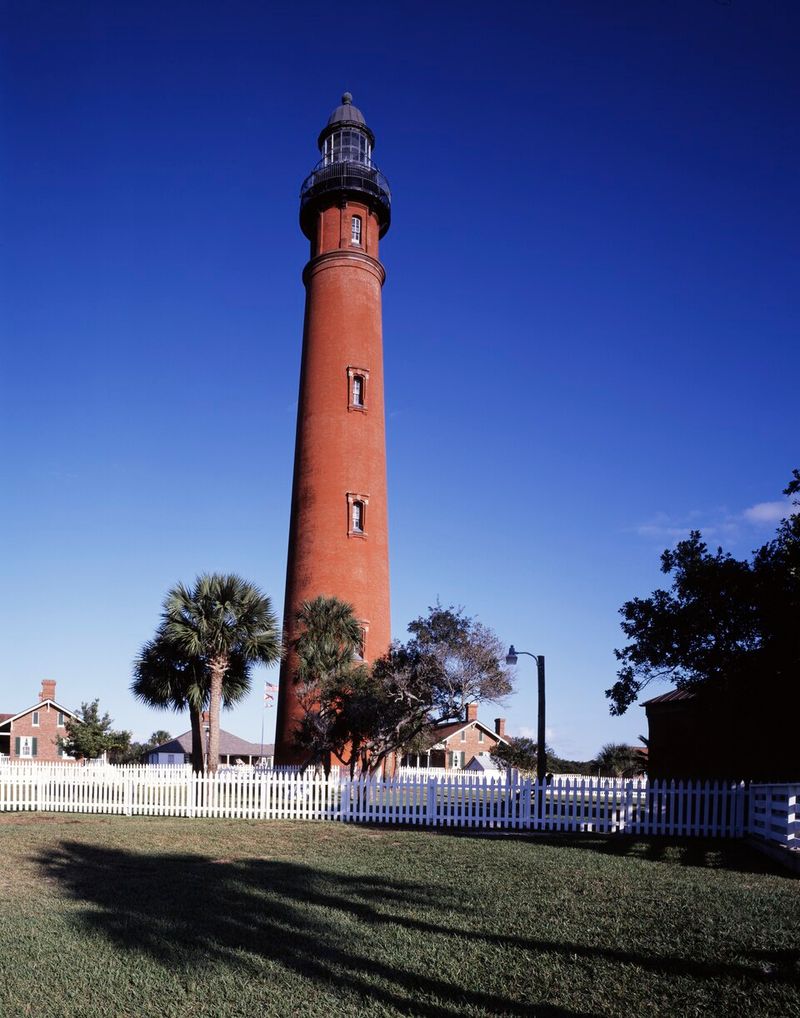
This tower once went by a different name. Completed in 1887, the lighthouse now known as Ponce Inlet originally served as the Mosquito Inlet Lighthouse.
Its tall brick tower marked an important inlet along a stretch of Florida’s Atlantic coast where safe navigational landmarks were badly needed.
The light station is particularly well preserved. Historic buildings form a museum complex around the 175-foot tower.
The lighthouse operates as a private aid to navigation, and visitors can climb the 203 steps to its gallery during regular museum hours.
As of November 2026, the museum remains open daily except Thanksgiving and Christmas. Restoration work has temporarily affected part of the gallery deck, but other sections remain accessible.
Check current conditions before planning your climb.
Share this story