West Virginia’s New River Gorge region is one of those rare places where every turn in the road brings something worth pulling over for. The gorge itself is ancient, carved over millions of years by one of North America’s oldest rivers, and the landscape around it packs an almost unfair amount of variety into a relatively compact area. You get towering bridges, forgotten coal towns, roaring waterfalls, and at least one attraction that will make you question whether gravity is just a suggestion. These 15 spots offer a mix of history, natural scenery, outdoor adventure, and just enough roadside weirdness to keep things interesting.
Read on to find out which places deserve a spot on your itinerary.
1. Canyon Rim Visitor Center, Lansing, West Virginia
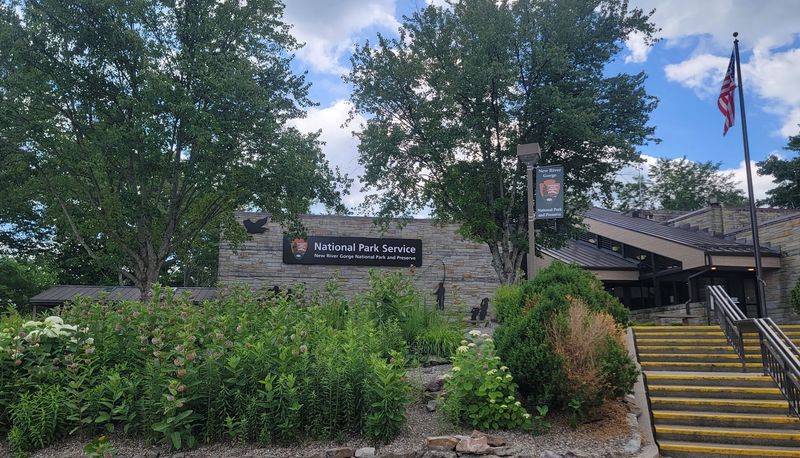
Before you wander too far into the gorge, this is the place to get your bearings. The Canyon Rim Visitor Center welcomes around 300,000 visitors each year and serves as the official starting point for exploring New River Gorge National Park and Preserve.
Inside, a well-organized exhibit room covers the region’s coal, railroad, and timber history through photographs and displays. An 11-minute orientation film gives a solid overview of the park’s significance, and a bookstore stocks maps, publications, and park-specific souvenirs.
The real draw is outside. A half-mile boardwalk leads to two observation decks with clear views of the New River Gorge Bridge. Descending 178 steps brings you to a lower overlook with an even wider panorama. Restrooms, a water bottle station, and picnic areas round out the amenities.
2. Endless Wall Trail, Lansing, West Virginia
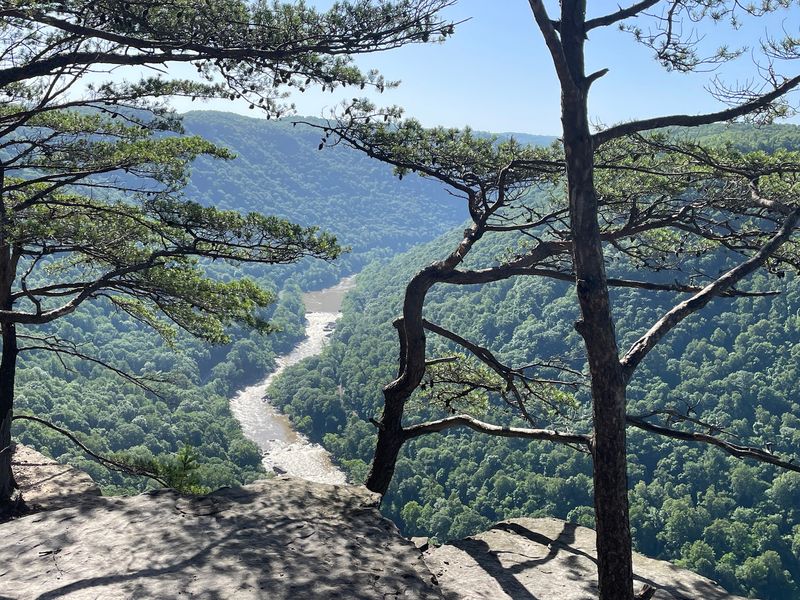
Few trails in the Appalachians deliver this kind of payoff on a 2.9-mile loop. The Endless Wall Trail runs along a dramatic cliff band above the New River Gorge, passing through mature forest before opening to exposed overlooks with views that stretch across the canyon.
Diamond Point is the trail’s headline act, a cliffside viewpoint where the New River appears far below and the surrounding ridges spread out in every direction. Rock climbers are often visible on the sandstone faces beneath the trail’s edge, adding an extra layer of activity to the scene.
Wooden ladders and staircases help navigate the steeper sections, keeping the route manageable for most hikers. Autumn is a particularly strong time to visit, when the surrounding forest turns vivid shades of red, orange, and gold. Plan to arrive early during peak season, as trailhead parking fills quickly.
3. Long Point Trail, Fayetteville, West Virginia
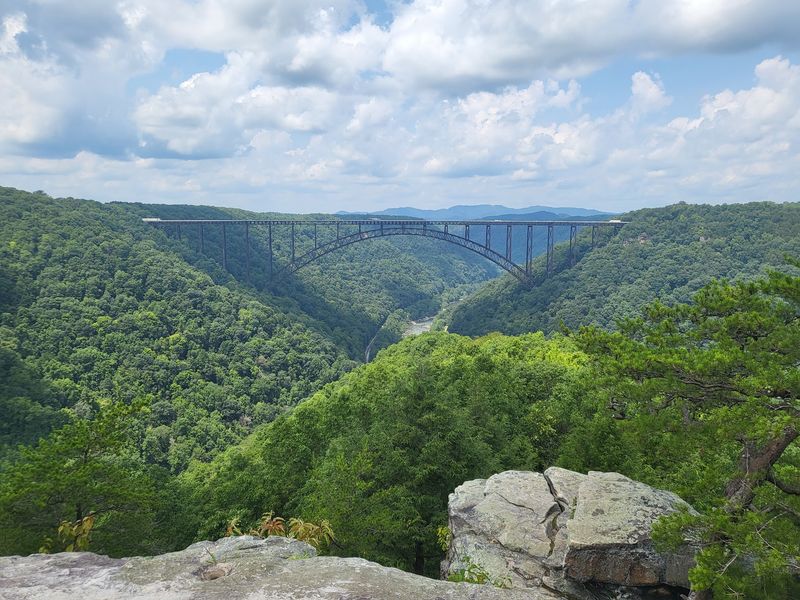
The New River Gorge Bridge is one of West Virginia’s most recognized landmarks, and Long Point Trail delivers one of the best head-on views of it. This 3.2-mile round-trip route is rated moderate and starts from a parking area just off a state highway near Fayetteville.
The first quarter-mile features a boardwalk that makes the initial stretch accessible for a wider range of visitors. After that, the trail narrows into a typical woodland path with modest elevation changes through a shaded forest canopy.
At the far end, the trees give way to a natural rock outcrop jutting out above the gorge. From here, the bridge fills the view directly ahead, with the New River carving through the landscape below. Late afternoon light works particularly well for photographs at this spot. The round trip takes most hikers between 90 minutes and two hours.
4. Sandstone Falls, Sandstone, West Virginia
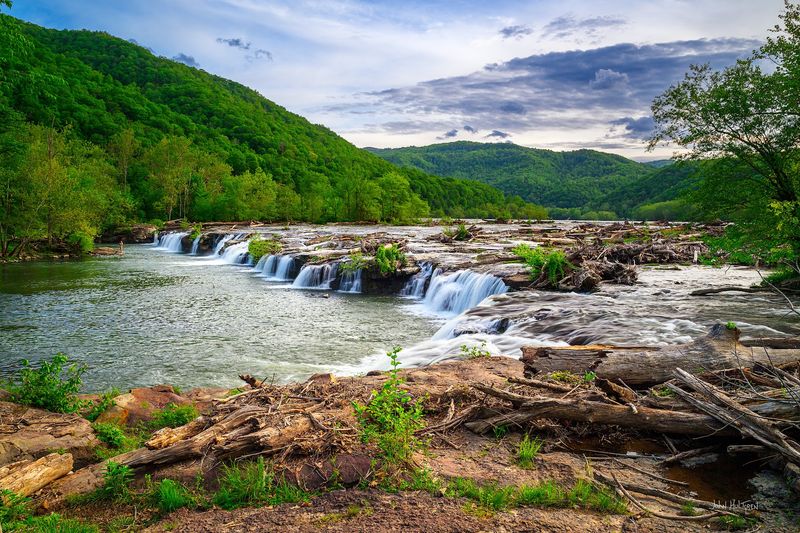
At roughly 1,500 feet wide, Sandstone Falls holds the title of the largest waterfall on the New River, and it earns that distinction without any fuss. Rather than a single dramatic plunge, the water spreads across a series of rocky ledges and flows around multiple islands, creating a broad, layered display of moving water.
An ADA-accessible boardwalk crosses several of those islands, connecting them with two bridges and allowing visitors to view the falls from multiple angles. Interpretive signs along the route explain the rare flatrock plant communities that thrive in this specific riverside environment.
The falls become especially powerful after heavy rainfall, when the volume of water increases noticeably and the cascades grow more intense. Designated fishing and picnic areas provide additional reasons to linger. For anyone who has spent time admiring distant canyon views, Sandstone Falls offers a refreshing change of pace with its close, immediate encounter with the river’s raw energy.
5. Thurmond Historic Town, Thurmond, West Virginia
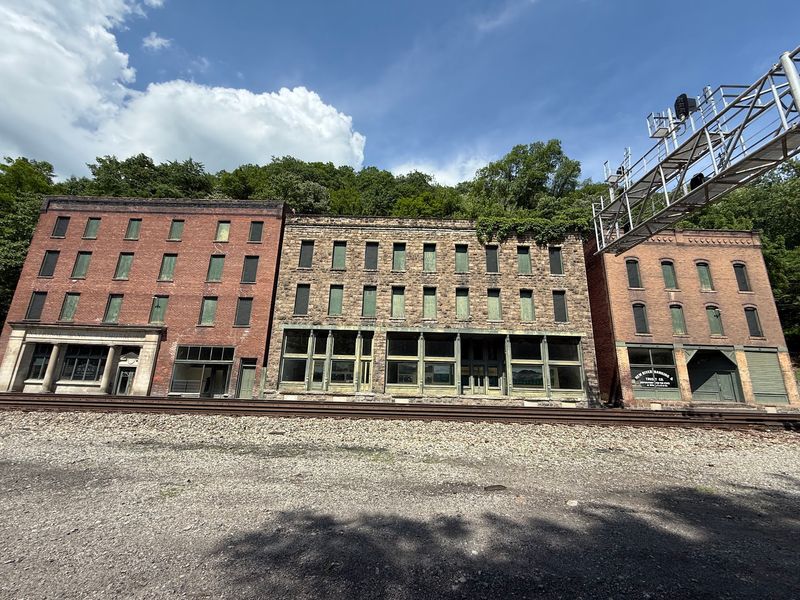
Thurmond was once a powerhouse of the coal and railroad economy, handling freight volumes that rivaled far larger cities during the early 20th century. Today, the town sits largely quiet inside the gorge, its historic buildings weathered but still standing along active freight tracks.
The beautifully restored Thurmond Depot serves as a seasonal visitor center, housing exhibits that trace the town’s rise and gradual decline. Two former hotels, a bank that reportedly was never robbed during its entire operation, and the remnants of various commercial buildings give visitors a tangible sense of what daily life here once looked like.
Steep, forested slopes surround the site on nearly every side, reinforcing just how isolated this community was. Interpretive signs posted throughout town share details about specific buildings and the industries that supported them. History travelers who enjoy walking through places where time seems to have paused will find Thurmond especially rewarding.
6. Babcock State Park, Clifftop, West Virginia
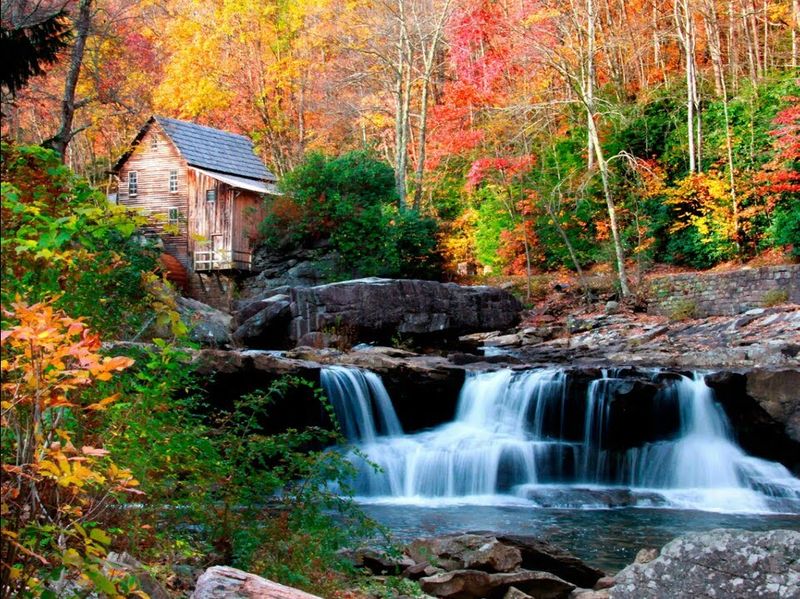
The Glade Creek Grist Mill has appeared on more West Virginia postcards than almost any other single image in the state. This working replica, built from parts of three historic mills, sits beside a rocky stream inside Babcock State Park and operates as a genuine, functional grist mill rather than just a display piece.
Autumn draws the largest crowds, when surrounding trees frame the mill in red, orange, and gold. Outside of fall, the park’s 4,127 acres still offer 20 miles of hiking trails, paddle boating and fishing on Boley Lake, and a quiet mountain atmosphere that suits every season.
Rustic cabins and campgrounds provide overnight options, and a seasonal swimming pool adds a family-friendly element during warmer months. A gift shop and park office round out the facilities. Babcock sits close enough to New River Gorge to fit easily into a multi-stop itinerary without feeling like a detour.
7. Hawks Nest State Park, Ansted, West Virginia
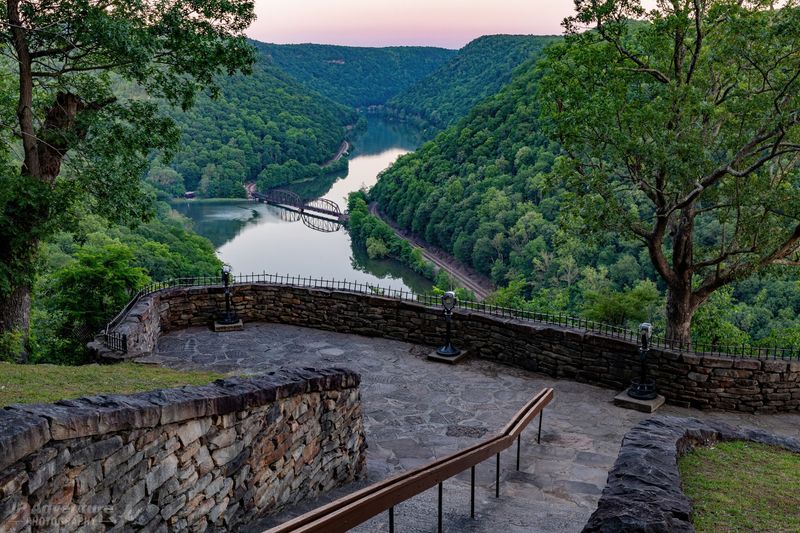
Perched 585 feet directly above the New River, the main overlook at Hawks Nest State Park delivers a panoramic view of the gorge that requires almost no effort to reach. Interpretive signs at the overlook explain the area’s history, including the construction of the Hawks Nest Tunnel, a significant engineering project that redirected part of the river during the 1930s.
The Hawks Nest Tramway offers a more active way to experience the gorge’s depth. This seasonal aerial ride descends 300 feet from the rim to the riverbank, where visitors can explore the water’s edge, access additional trails, or board a jet boat for a canyon-level perspective.
A lodge with dining options, a museum, and a gift shop make the park a comfortable stop for a longer visit. Its location near New River Gorge National Park means it fits naturally into a scenic day trip without requiring a major detour from other regional highlights.
8. New River Gorge Bridge, Victor, West Virginia
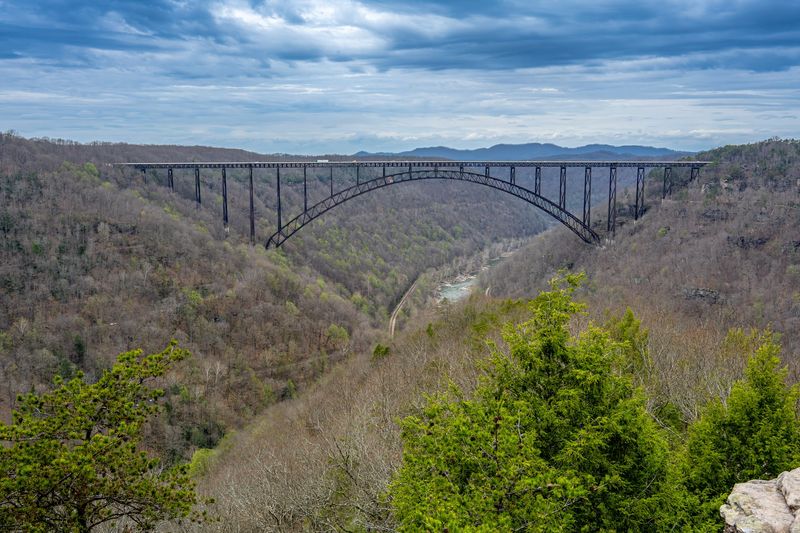
When the New River Gorge Bridge was completed in 1977, it held the title of the world’s longest single-arch bridge for 26 years. At 876 feet above the river and 3,030 feet across, it remains the longest steel arch span in the Western Hemisphere and the defining image of the entire region.
Different viewpoints reveal different aspects of the structure. The Canyon Rim Visitor Center provides the classic elevated perspective, while a drive along Fayette Station Road at the canyon floor shows just how enormous the arch appears from below. The guided Bridge Walk lets participants cross a catwalk 25 feet beneath the bridge deck while securely harnessed.
Every October, Bridge Day closes the span to vehicles and opens it to pedestrians, BASE jumpers, and rappellers, drawing tens of thousands of visitors for one of West Virginia’s largest festivals. Seeing the bridge from the water, from a jet boat tour, adds yet another angle to an already multi-dimensional landmark.
9. Kaymoor Miners Trail, Fayetteville, West Virginia
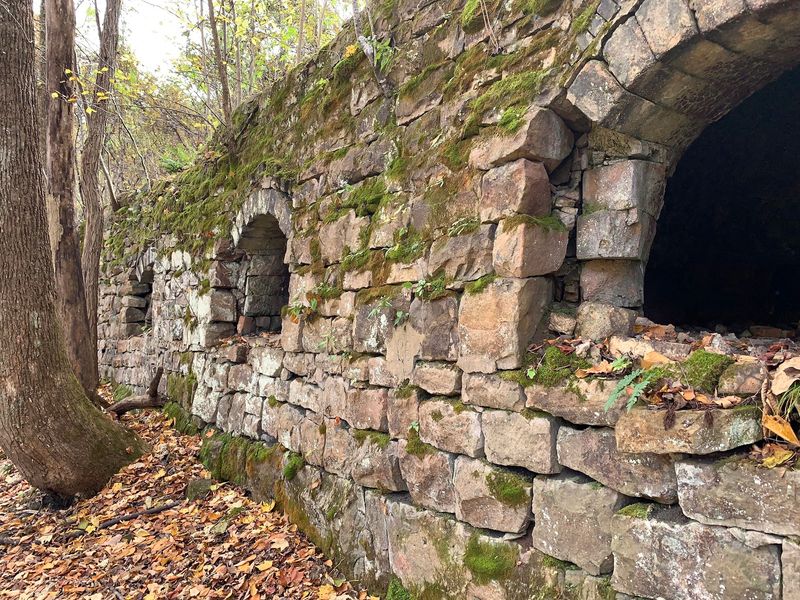
The Kaymoor Miners Trail does not ease you in gently. This steep, strenuous route descends from the gorge rim to the New River below, following roughly the same path that coal miners used every working day during the late 19th and early 20th centuries.
Along the way, the ruins of the Kaymoor No. 1 mining operation appear through the trees. Beehive coke ovens, the foundations of miners’ homes, and remnants of the coal processing plant are scattered across the slope, each with interpretive signs that explain what visitors are looking at and why it mattered.
At the bottom, the old town site sits along the riverbank, slowly being reclaimed by forest. The ascent back to the rim is demanding, so carrying plenty of water and wearing proper footwear are practical necessities rather than suggestions. For visitors interested in the industrial history beneath the gorge’s natural beauty, this trail provides an unusually direct connection to that past.
10. Nuttallburg, Fayetteville, West Virginia
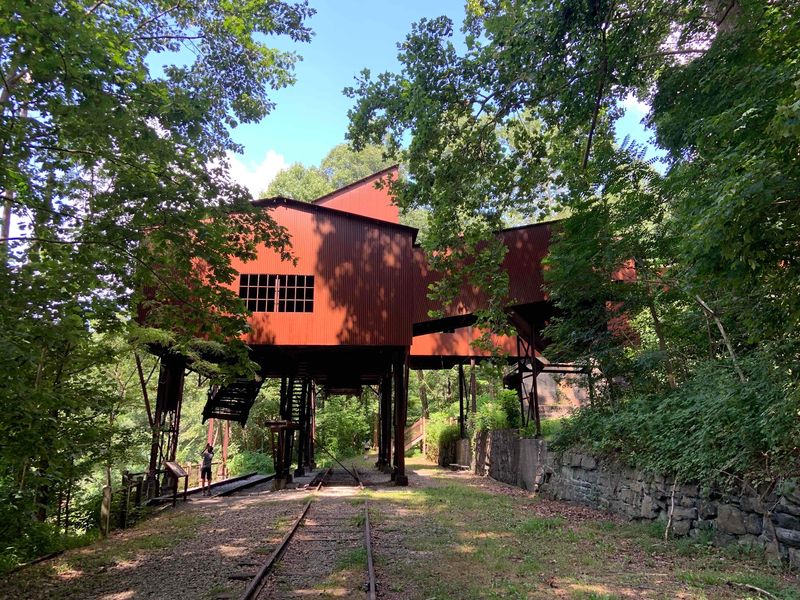
Henry Ford’s involvement in a West Virginia coal town is not a connection most visitors expect to discover, but Nuttallburg has that distinction. Originally established by entrepreneur John Nuttall in the late 19th century, the site was later modernized by Ford in the early 20th century as part of his effort to secure raw materials for automobile production.
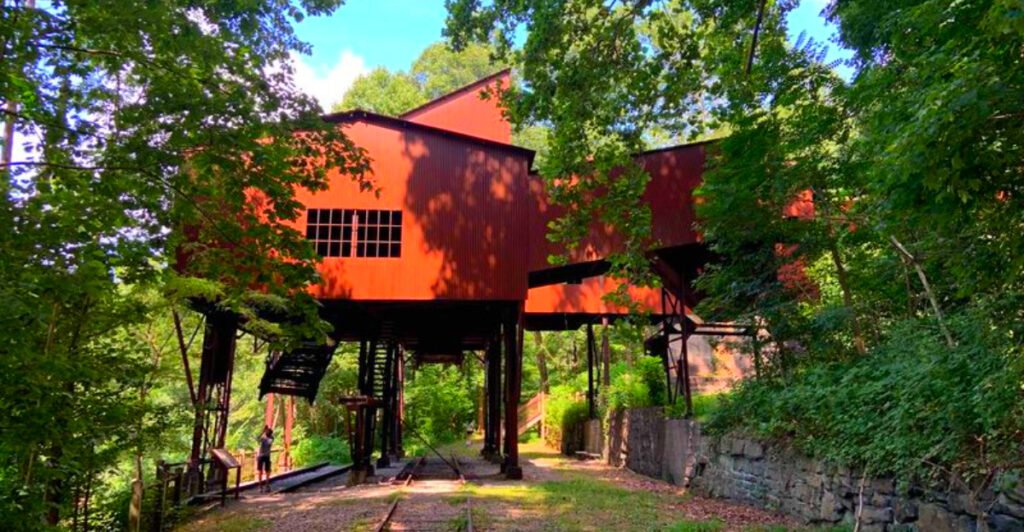
The most striking surviving feature is the coal conveyor system, which stretches from the mine entrance on the cliff face down to the railroad tracks beside the river. The tipple structure, coke ovens, and foundations of residential buildings also remain, spread across the gorge’s steep terrain.
Forest has been gradually reclaiming the site for decades, which gives Nuttallburg a layered quality, part industrial relic, part nature reclamation project. The National Park Service maintains interpretive panels throughout the area, and a winding access road leads to walking trails that connect the various historical features. It rewards visitors who take time to read the signs.
11. Cathedral Falls, Gauley Bridge, West Virginia
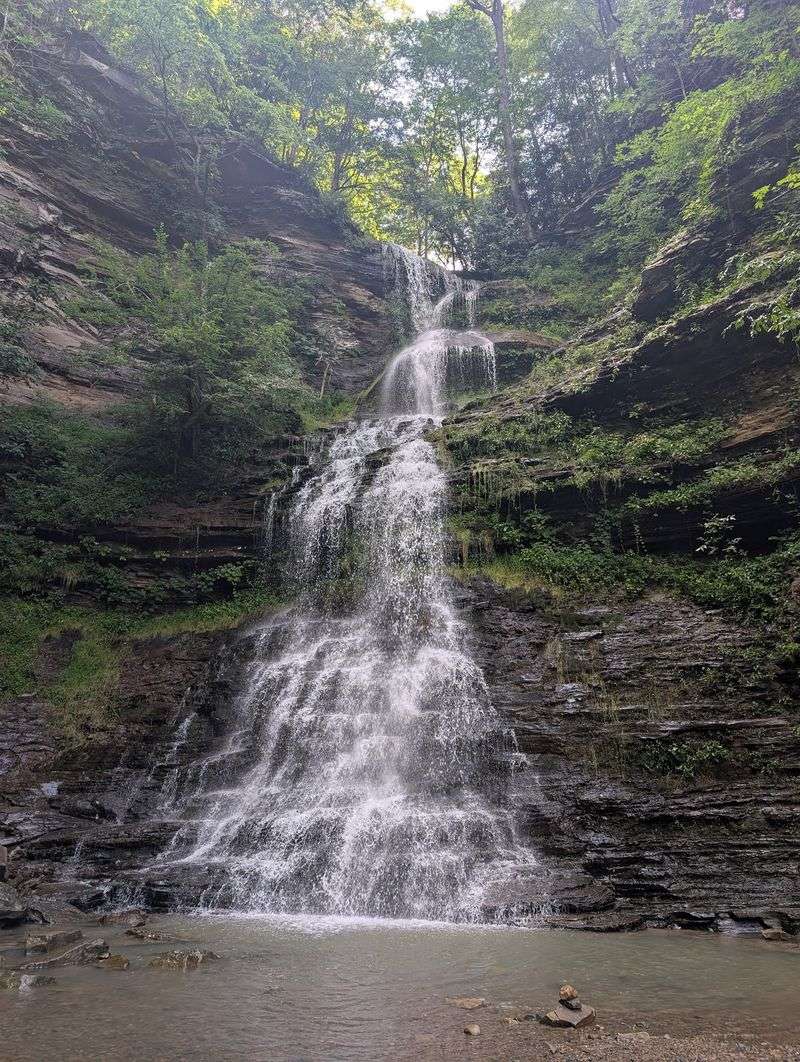
Cathedral Falls makes a compelling case that some of the best waterfalls in West Virginia require almost no effort to find. Located just off U.S. Route 60 near Gauley Bridge, this cascade tumbles approximately 60 feet down a series of dark, tiered rock ledges that curve inward, creating a natural amphitheater shape that inspired the name.
The parking area is close enough that visitors can see the falls without even starting a hike. A short, easy path leads to the base for a closer look and better photography angles. The dark stone contrasts sharply with the white water as it fans across each successive ledge.
After heavy rainfall, the volume increases noticeably and the cascade becomes a much more forceful spectacle. During drier periods, the falls are quieter but still hold their visual appeal. For road-trippers covering U.S. Route 60 between Gauley Bridge and the gorge, Cathedral Falls is one of those stops that takes 15 minutes and earns a disproportionate share of the day’s best photos.
12. Mystery Hole, Ansted, West Virginia
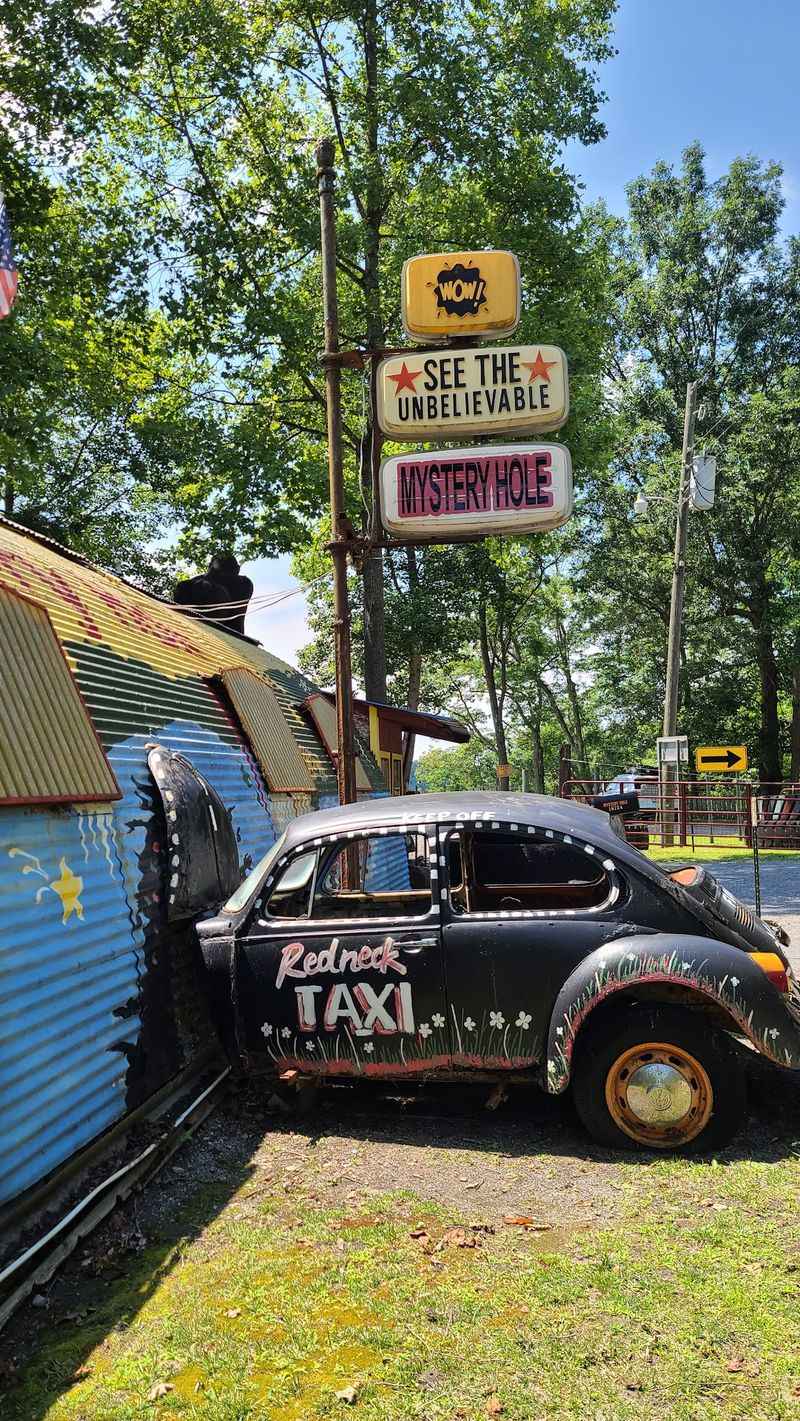
Not everything worth stopping for in the New River Gorge region involves a canyon view or a historic coal town. Mystery Hole, sitting right along U.S. Route 60 in Ansted, has been baffling and delighting visitors for decades with its cheerfully low-tech approach to optical illusion and gravity-defying trickery.
Inside the tilted building, water appears to run uphill, chairs balance on walls, and guests find themselves leaning at odd angles without quite understanding why. Guides lead groups through the experience with lighthearted commentary that leans into the absurdity rather than overselling any supernatural explanation. The real mystery is simply clever construction, a building set at a sharp angle to the ground that creates disorienting visual effects.
The gift shop sells souvenirs that lean fully into the quirky identity of the place. For families traveling with kids, or for anyone who needs a break from scenic overlooks, Mystery Hole delivers exactly what it promises: a genuinely odd and entertaining 20-minute stop that tends to generate more conversation than many far grander attractions.
13. Tamarack Marketplace, Beckley, West Virginia
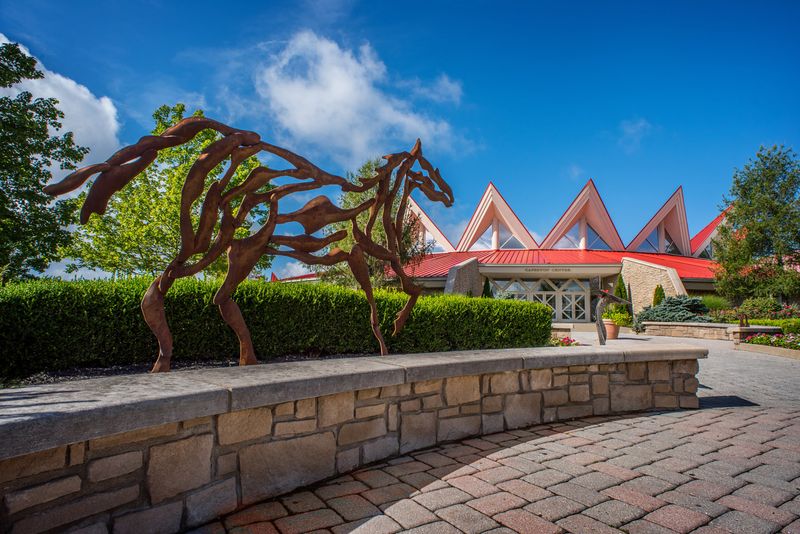
Tamarack Marketplace in Beckley is easy to spot from the highway thanks to its distinctive green-peaked roof, and the interior is just as distinctive as the exterior. The complex showcases handcrafted work from more than 2,800 West Virginia artists, covering everything from pottery and glasswork to woodwork, textiles, and jewelry.
Beyond browsing and buying, the marketplace functions as a working arts center where visitors can watch artisans demonstrate their craft in real time. That live element makes a visit feel more like a cultural experience than a shopping trip, and the range of items on display reflects genuine breadth of talent from across the state.
A full-service restaurant and a food court provide dining options, making Tamarack a practical midday stop as well as a cultural one. Regular events, workshops, and exhibitions add programming throughout the year. For travelers looking for a meaningful break from outdoor activities, this is a spot that offers a different but equally authentic side of West Virginia.
Share this story