Roller coasters have been thrilling Americans for well over a century, evolving from rickety wooden structures to jaw-dropping steel machines that defy what seems physically possible. Whether you are a casual parkgoer or a full-blown enthusiast who tracks airtime seconds like a sport, the United States is home to some of the most remarkable coasters ever built.
The 15 rides featured here were chosen for their history, engineering breakthroughs, and the kind of unforgettable experiences that keep riders coming back year after year. Buckle up, because this list covers everything from a nearly 100-year-old Brooklyn icon to a fire-breathing fifth-dimensional beast in Southern California.
Millennium Force – Cedar Point, Ohio
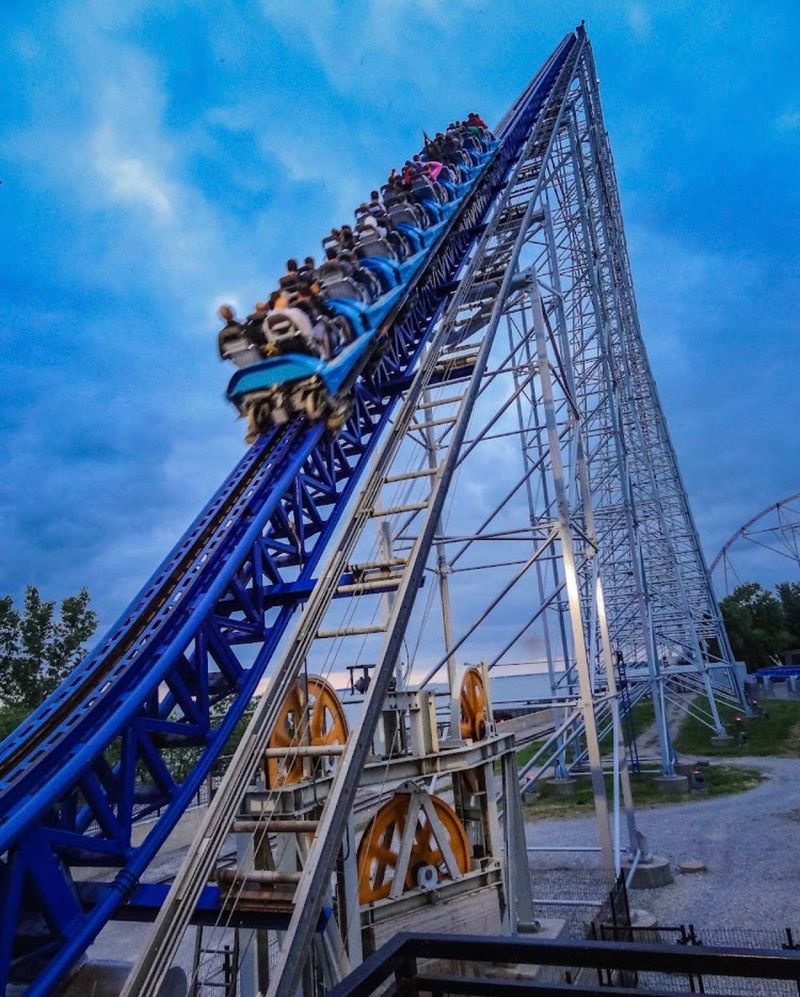
Standing 310 feet tall on the shores of Lake Erie, Millennium Force does not ask for your attention politely. When it launched in 2000, it became the world’s first giga coaster, forcing the entire roller coaster industry to invent a brand-new category just to describe it.
Cedar Point built it with Swiss manufacturer Intamin, and the result hit 93 mph on opening day.
What makes it special more than 25 years later is its pure, unfiltered simplicity. No inversions, no elaborate theming, no gimmicks.
Just a 300-foot drop, sweeping high-speed turns, and tunnels that blur past while Lake Erie sparkles in the background. First-time riders often underestimate how fast 93 mph actually feels when you are seated in an open train with nothing but sky above you.
Millennium Force is the kind of ride that converts skeptics into coaster fans in under three minutes. Arriving early pays off, because the queue regularly builds past two hours by mid-morning.
A seat in the front row is worth every extra minute of waiting for the unobstructed view on that first drop.
The Beast – Kings Island, Ohio
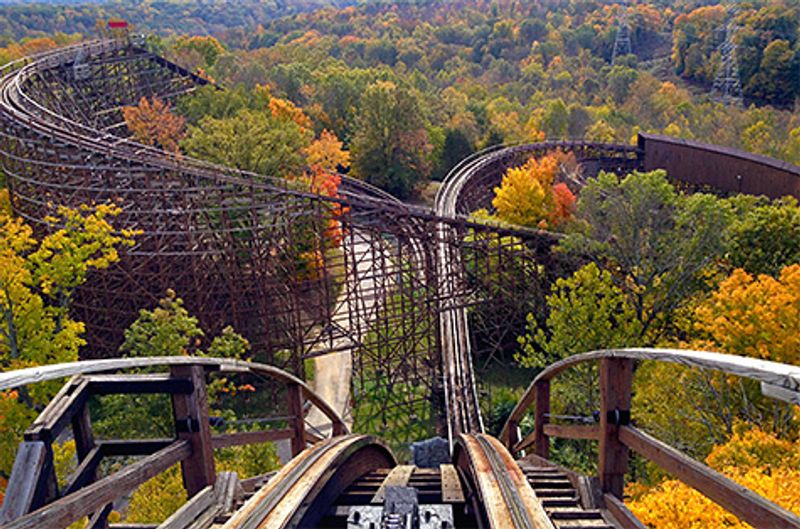
Somewhere deep in the Ohio woods, a coaster hides. Kings Island designed and built The Beast almost entirely in-house, spreading 7,361 feet of wooden track across 35 forested acres before opening it in April 1979.
That track length still holds the world record for wooden coasters, and nobody has come close to breaking it.
The ride lasts more than four minutes, which sounds relaxing until the second lift hill kicks in and delivers riders into a 540-degree covered helix at nearly 65 mph. Most of the layout stays completely hidden inside the trees, which means you cannot see what is coming.
That element of mystery is not accidental. The designers deliberately used the forest as part of the experience.
Riding The Beast after dark is a completely different experience from a daytime run. The trees vanish into blackness, the tunnel entrances appear out of nowhere, and that helix finale feels genuinely wild without any visual reference points.
Guests planning a night ride should check the park schedule, since evening operations vary by season. Comfortable shoes and an empty lap are all the preparation you really need.
Coney Island Cyclone – Brooklyn, New York
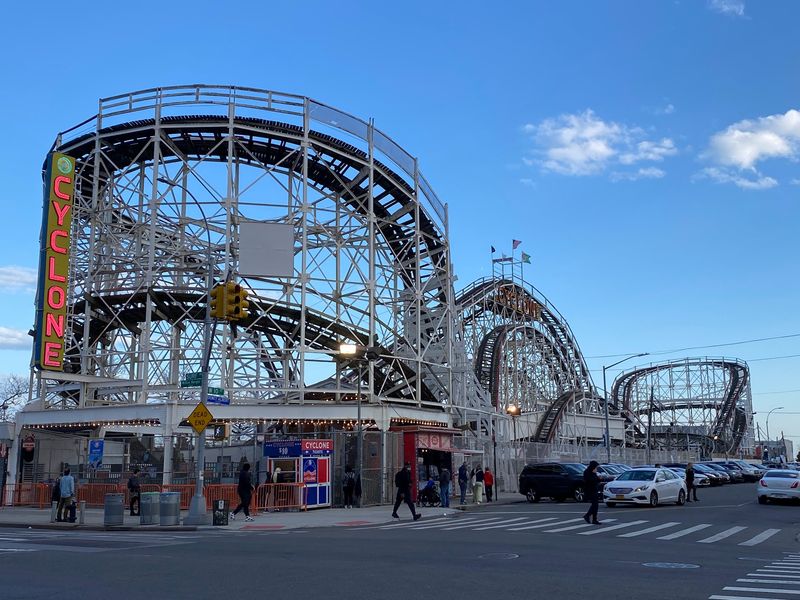
Almost 100 years old and still rattling happily along Surf Avenue, the Coney Island Cyclone is arguably the most culturally famous roller coaster in America. Brothers Jack and Irving Rosenthal opened it on June 26, 1927, with a $100,000 investment that turned out to be one of the best returns in amusement park history.
It packs 2,640 feet of track, an 85-foot first drop, and 27 elevation changes into a footprint that a modern coaster designer would consider tiny.
New York City officially designated it a landmark in 1988, and it joined the National Register of Historic Places in 1991. Those credentials matter because they guarantee the Cyclone’s white wooden framework will remain standing on that corner of Brooklyn for the foreseeable future.
Speeds hit 60 mph, which felt absolutely terrifying in 1927 and still delivers a solid punch today.
Visiting the Cyclone means visiting a piece of living American history. The surrounding Coney Island boardwalk adds atmosphere that no landlocked theme park can replicate.
Combine the ride with a Nathan’s Famous hot dog and an afternoon on the beach, and you have one of the most authentically New York days a visitor can put together.
Matterhorn Bobsleds – Disneyland, California
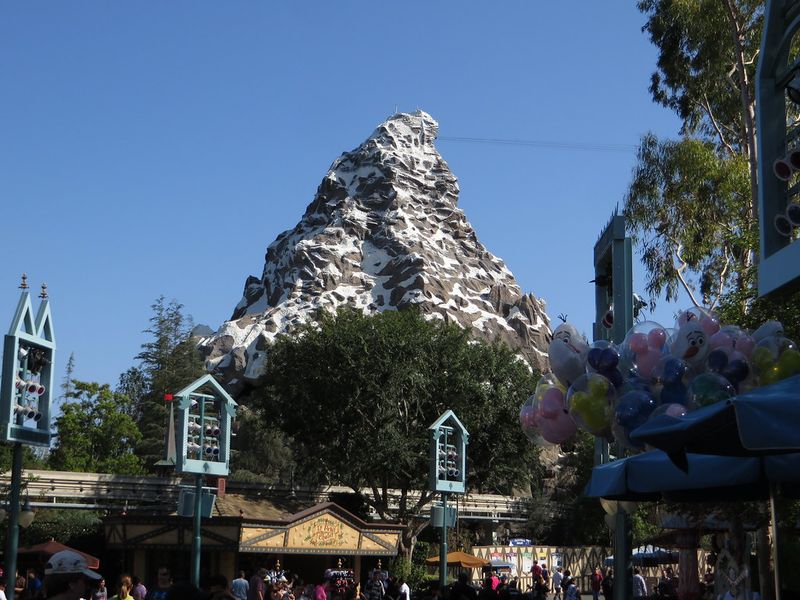
Every modern steel roller coaster owes something to a fake Swiss mountain in Anaheim, California. When Disneyland opened Matterhorn Bobsleds on June 14, 1959, it introduced tubular steel track to the world, a technology that completely transformed how coasters could be designed and built.
Before that moment, wooden track was essentially the only option for major rides.
Walt Disney got the idea after watching Switzerland’s real Matterhorn during production of the film Third Man on the Mountain. The park’s version rises 147 feet and hides two separate bobsled routes inside its structure, weaving through caves, bridges, waterfalls, and run-ins with a convincingly grumpy Abominable Snowman.
No other Disney resort has a Matterhorn, making this strictly a Disneyland experience.
By today’s standards, the speeds are gentle and the drops are modest. But that misses the point entirely.
Matterhorn Bobsleds is a historical artifact as much as a thrill ride, and experiencing it gives riders a direct connection to the moment coaster engineering changed forever. Children who ride it often remember it for years, partly because the Abominable Snowman encounter in the dark is more startling than any statistic suggests.
Phoenix – Knoebels, Pennsylvania
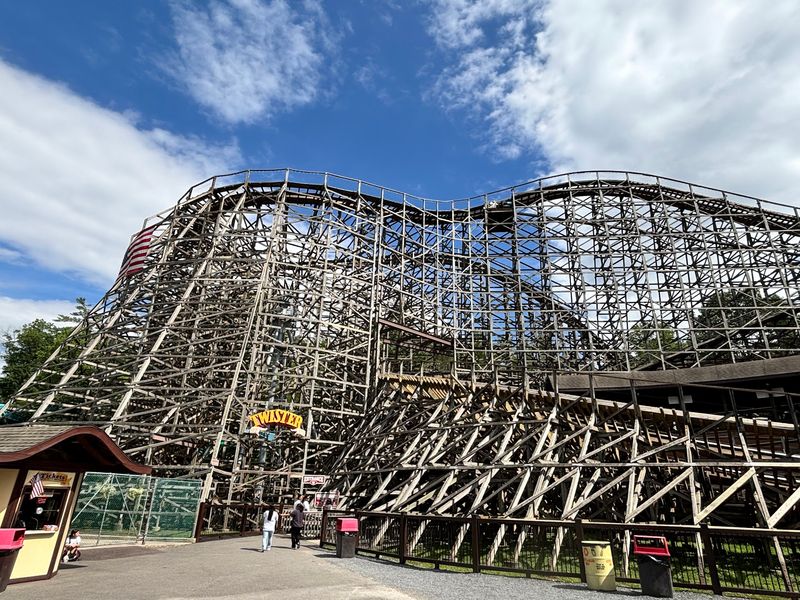
Phoenix has literally risen from the ashes, and not just in name. The wooden coaster originally opened in San Antonio, Texas, in 1947 under the name Rocket.
When that park closed, Knoebels Amusement Resort in rural Pennsylvania purchased the entire structure, relocated it piece by piece, and reopened it as Phoenix in 1985. The mythological name was chosen deliberately and fits perfectly.
Its statistics look almost laughably modest compared to today’s giants: 78 feet tall, roughly 45 mph top speed. What those numbers cannot capture is the relentless series of airtime hills that launch riders out of their seats again and again throughout the course.
Coaster enthusiasts who obsess over floating weightlessness consistently rank Phoenix among the best wooden coasters in the country despite its compact size.
Knoebels itself adds to the appeal. The park charges no general admission, operates on a pay-per-ride system, and maintains a charmingly old-fashioned atmosphere that feels genuinely different from corporate theme parks.
Phoenix represents postwar American amusement history kept lovingly alive rather than replaced. Visiting on a weekday outside of peak summer means shorter lines and more time to appreciate exactly why this relocated 1940s coaster still earns so much praise.
Fury 325 – Carowinds, North Carolina/South Carolina
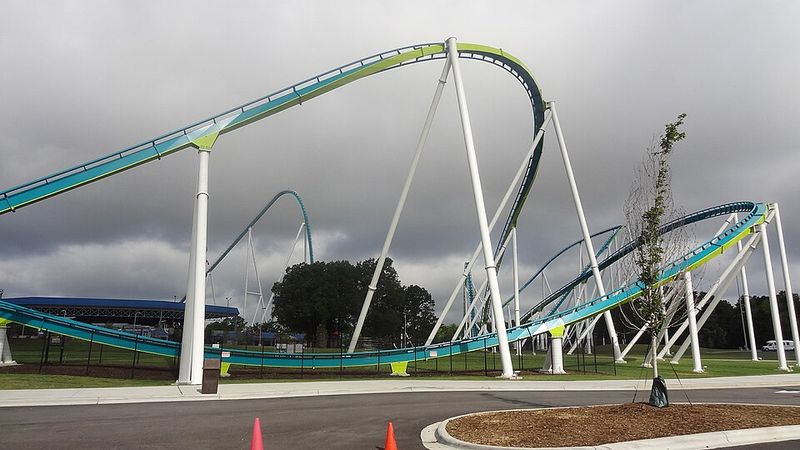
Fury 325 is impossible to ignore from the Carowinds parking lot, which is exactly the point. The giga coaster climbs 325 feet, drops at an 81-degree angle, and reaches 95 mph, making it North America’s tallest, fastest, and longest giga coaster according to the park.
Its track stretches more than 1.25 miles, and the whole circuit takes roughly three minutes to complete.
What separates Fury 325 from simply being a very tall straight line is the quality of its layout. Riders sweep through a 190-foot overbanked barrel turn, a rapid S-curve, a 91-degree horseshoe turn, and a low section called the Hive Dive that threads beneath a pedestrian bridge.
The combination of raw height and genuinely creative geometry keeps the speed feeling earned rather than wasted.
Here is a quirky geographical detail worth knowing: Carowinds sits directly on the state border, and Fury 325 actually crosses between North Carolina and South Carolina during its course. Riders technically visit two states without leaving their seat.
The coaster is most photogenic from the park’s main pathway near the entrance, where the full scale of the structure becomes clear before you have even purchased your first funnel cake.
Steel Vengeance – Cedar Point, Ohio
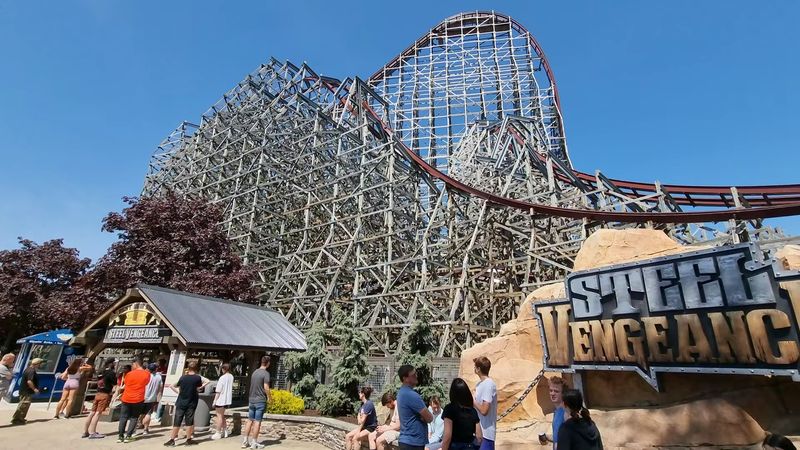
Cedar Point once had a large wooden coaster called Mean Streak that enthusiasts politely described as rough. Rocky Mountain Construction took one look at that aging structure and saw an opportunity.
In 2018, they reopened it as Steel Vengeance, pairing the original wooden supports with precision steel track to create what Cedar Point calls the world’s first hyper-hybrid coaster.
The numbers that resulted are genuinely absurd in the best possible way: 205 feet tall, a 200-foot vertical first drop, 74 mph top speed, four inversions, and nearly 30 seconds of airtime across a 2.5-minute ride. The track constantly threads through its own dense wooden support structure, creating rapid near-miss moments that are visually chaotic and deeply satisfying.
It is the kind of ride that requires a second run just to process what happened during the first.
Steel Vengeance is also proof that hybrid technology does not just salvage old coasters. It transforms them into something genuinely new.
Lines regularly approach three hours on busy summer days, so arriving at park opening and heading straight to Steel Vengeance is the standard local strategy. A Cedar Point Fast Lane pass is worth serious consideration if visiting during peak season.
Iron Gwazi – Busch Gardens Tampa Bay, Florida
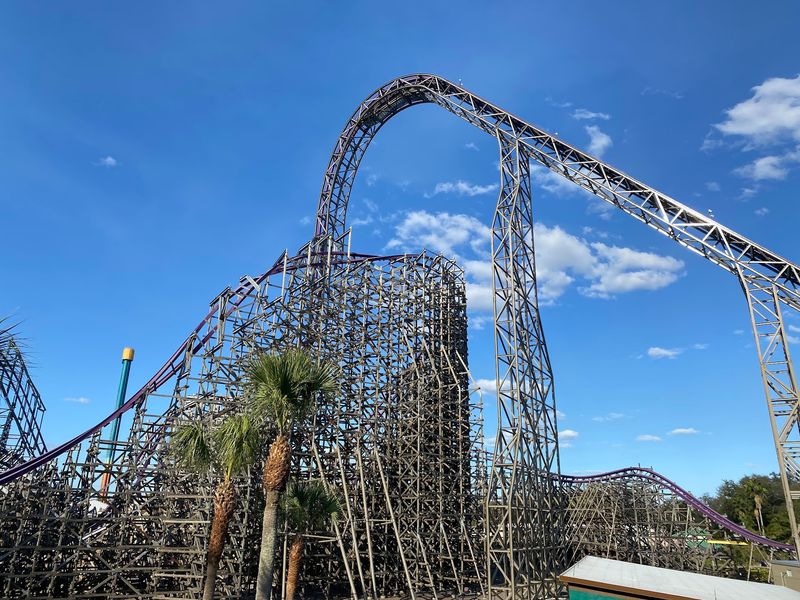
Florida’s most ferocious coaster used to be a wooden ride called Gwazi that spent its later years earning a reputation for being more punishing than fun. Busch Gardens Tampa Bay had a decision to make, and they made the right one.
Working with Rocky Mountain Construction, they rebuilt it from the ground up as Iron Gwazi, opening a hybrid coaster that holds multiple world records.
At 206 feet tall with a 91-degree beyond-vertical first drop, a 76 mph top speed, three inversions, and twelve airtime moments, Iron Gwazi is not subtle about its intentions. Busch Gardens identifies it as North America’s tallest hybrid coaster and the world’s fastest and steepest hybrid.
The beyond-vertical drop is particularly disorienting because the track actually angles past straight down before leveling out.
The surrounding Serengeti Plain adds a visual backdrop that most coasters cannot match. Riders waiting in the queue occasionally spot giraffes or zebras wandering across the habitat in the distance, which is a genuinely surreal contrast to the mechanical chaos overhead.
Iron Gwazi represents the 21st-century philosophy of coaster renovation done at the highest possible level. Guests should check the park’s app for real-time wait times, since the queue moves faster than the ride’s reputation might suggest.
Jurassic World VelociCoaster – Universal’s Islands of Adventure, Florida
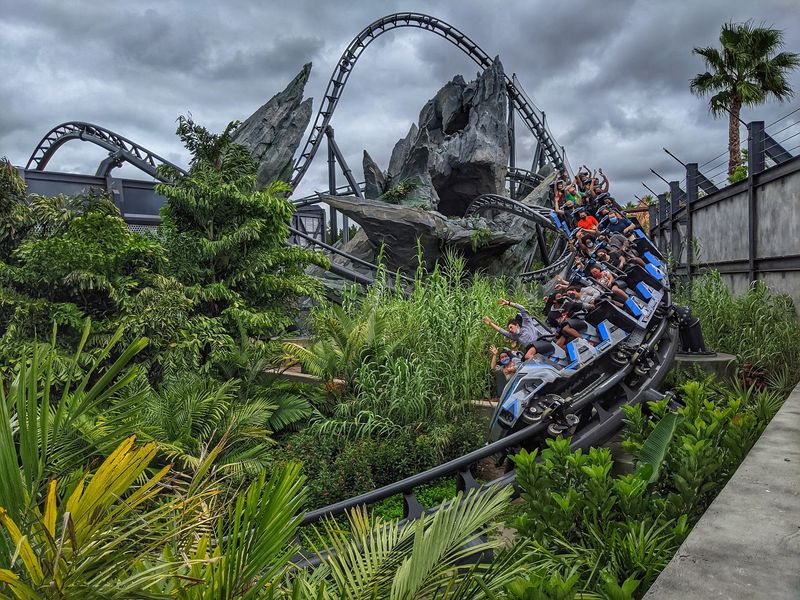
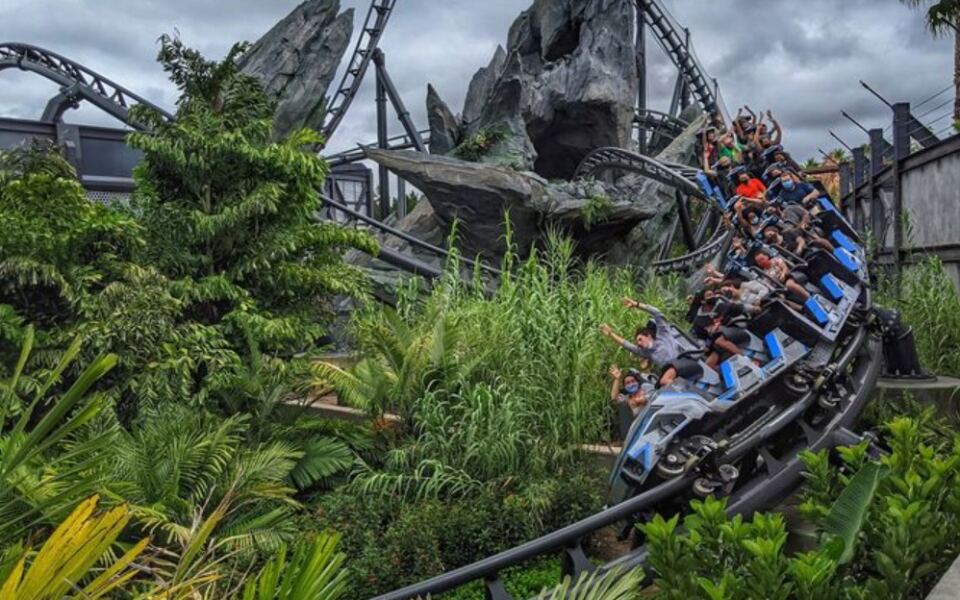
Universal’s Islands of Adventure opened VelociCoaster on June 10, 2021, and immediately gave coaster fans something they did not know they needed: a world-class launch coaster wrapped inside 36,000 square feet of Jurassic World rockwork, waterfalls, and animatronic-inspired scenery. The theming is not decorative wallpaper.
It is woven into the ride experience from queue to final brake run.
Two launches power the experience, with the second accelerating riders to 70 mph in just 2.4 seconds. The 155-foot top hat element drops riders at 80 degrees immediately after that launch, and the layout also features a 100-foot inverted stall and a barrel roll executed just feet above the park lagoon.
That low lagoon roll is the moment that appears in virtually every social media video of the ride, and it earns its reputation.
VelociCoaster bridges a gap that many rides struggle with: it satisfies hardcore coaster enthusiasts while also delivering a fully realized theme park experience that casual visitors genuinely enjoy. Single rider lines move efficiently and cut wait times significantly.
Riders who want the full immersive version should walk through the elaborate queue, which tells a complete story before the first launch even fires.
El Toro – Six Flags Great Adventure, New Jersey
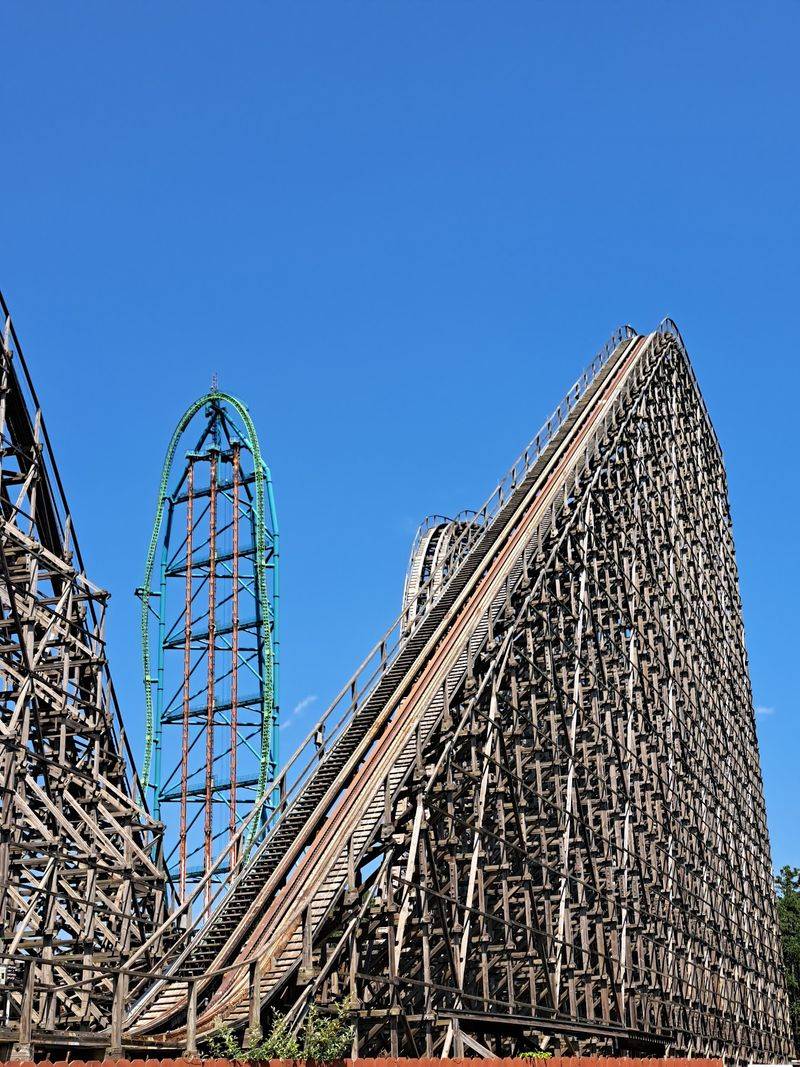
El Toro looks like a traditional wooden coaster from the parking lot, which makes its first drop all the more shocking. Manufacturer Intamin used precision prefabricated wooden track rather than the hand-shaped traditional method, allowing the ride to combine the visual character of wood with geometry that older construction techniques could never have achieved.
That 176-foot drop at 76 degrees is steeper than most steel coasters manage.
Speeds hit 70 mph, and the subsequent airtime hills deliver nine zero-gravity moments that Six Flags counts carefully and advertises proudly. The combination of steep drop angle, high speed, and repeated ejector airtime puts El Toro in a category that few wooden coasters, prefabricated or traditional, have entered.
Riders frequently describe the first drop as one of the most intense moments on any coaster in the northeastern United States.
For 2026, Six Flags installed substantial sections of new track to improve ride smoothness and consistency, making this an excellent time to visit or revisit. El Toro pairs well with Kingda Ka and Jersey Devil Coaster for a full day of Great Adventure’s coaster lineup.
Arriving before the park opens and heading to El Toro first is the most reliable strategy for a short wait on this consistently popular attraction.
The Voyage – Holiday World, Indiana
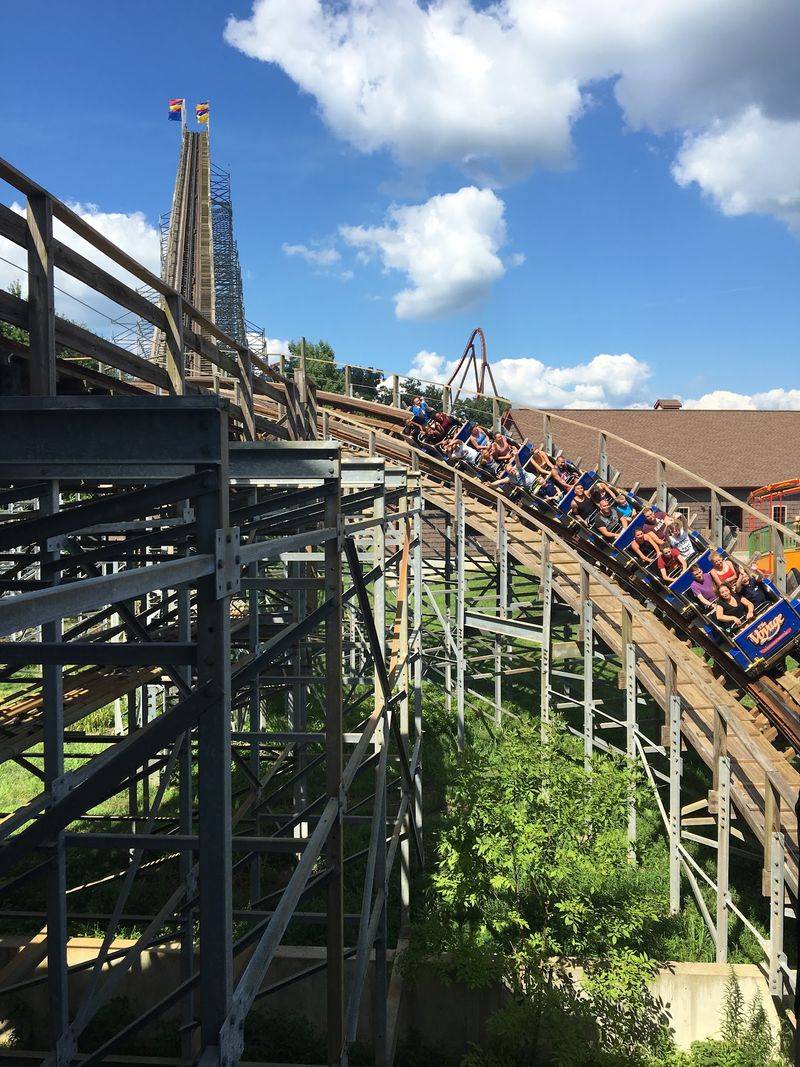
Holiday World built The Voyage in 2006 and essentially dared the wooden coaster world to match it. Running 6,442 feet of track across a hilly Indiana landscape, it climbs a 163-foot lift hill and reaches 67.4 mph before delivering 24.3 seconds of measured airtime, a number the park claims as a wooden coaster world record.
That is nearly half a minute of weightlessness distributed across a 1.2-mile course.
Three drops exceed 100 feet, banking angles push toward 90 degrees, and five underground tunnels create eight separate subterranean moments where the daylight disappears completely. Most long wooden coasters coast gently through their final third.
The Voyage does not extend that courtesy. The underground triple-down sequence near the end of the return journey hits harder than many coasters manage at their peak.
Holiday World itself deserves recognition as one of the most guest-friendly parks in the country. Free soft drinks, free parking, and a family-owned atmosphere set it apart from larger corporate competitors.
The Voyage sits at the back of the park, so comfortable walking shoes matter. Visiting on a weekday in late August or September offers shorter lines and slightly cooler temperatures, which makes the full 2.5-minute experience even more enjoyable without overheating in a summer queue.
Phantom’s Revenge – Kennywood, Pennsylvania
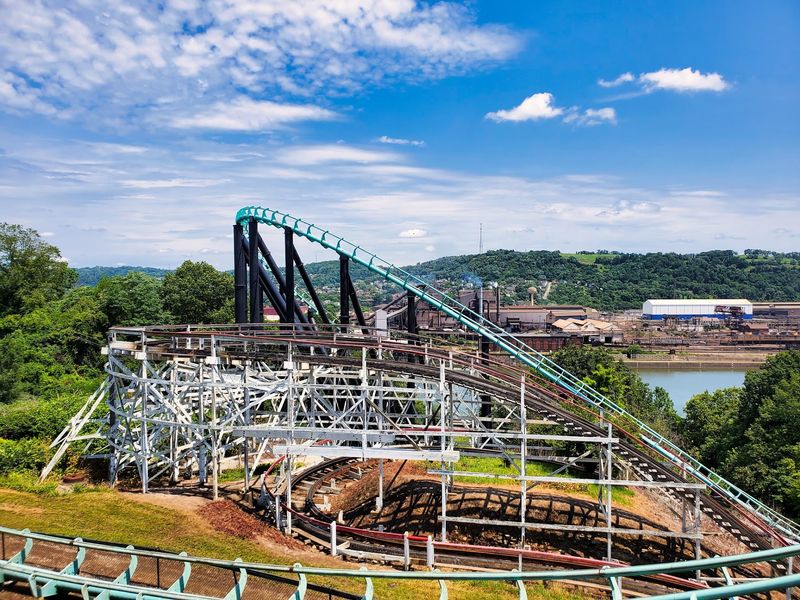
Kennywood sits on a hillside above the Monongahela River, and Phantom’s Revenge uses every inch of that terrain to its advantage. The most important drop on this coaster is not the first.
It is the second, a 232-foot plunge into a natural ravine that helps the ride reach 85 mph, making it the fastest coaster in Pennsylvania according to the park. Very few coasters save their biggest moment for the second drop.
The layout then passes through the structure of the neighboring Thunderbolt coaster twice, producing close visual near-misses that feel genuinely dramatic at high speed. That interaction between two separate coasters sharing the same hillside is a Kennywood specialty born from decades of creative space management.
The park has been operating since 1898, and the layout reflects a century of creative problem-solving.
Phantom’s Revenge evolved from an earlier coaster called Steel Phantom, whose looping elements were removed and replaced with the current ravine-diving design. In 2026, Kennywood is marking 25 years of Phantom’s Revenge with station and train enhancements worth experiencing.
The park’s historic wooden Racer and Jack Rabbit coasters are nearby, making Kennywood one of the best single-day destinations for experiencing multiple generations of coaster design in one compact, genuinely beautiful setting.
GhostRider – Knott’s Berry Farm, California
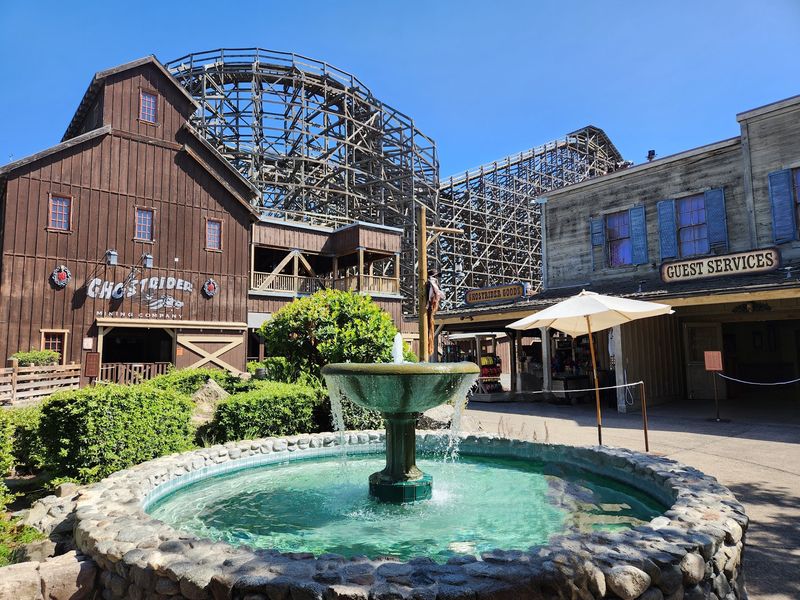
Knott’s Berry Farm built GhostRider in 1998 beside its historic Ghost Town section, and the visual pairing works beautifully. A sprawling wooden coaster rising 118 feet and stretching across 4,533 feet of track fits the dusty western aesthetic far better than any steel structure could.
Knott’s identifies it as the longest, tallest, and fastest wooden coaster on the West Coast, with a top speed of 56 mph across 13 hills.
The ride’s current reputation is partly a comeback story. By the mid-2010s, GhostRider had developed a roughness that frustrated riders and overshadowed its genuine strengths.
Between late 2015 and spring 2016, Knott’s completed an extensive track refurbishment and fitted new trains, transforming the experience without altering the layout. The restored version rides noticeably smoother while keeping the sprawling, unpredictable character that made the original worth preserving.
Knott’s specifically recommends riding GhostRider after dark, and that recommendation is worth taking seriously. The wooden structure blends into the night sky, Ghost Town’s lighting creates an atmospheric backdrop, and the track’s many hidden moments hit harder without visual warning.
California’s year-round park operation means GhostRider is accessible in seasons when most other outdoor coasters in the country are closed for winter maintenance.
Lightning Rod – Dollywood, Tennessee
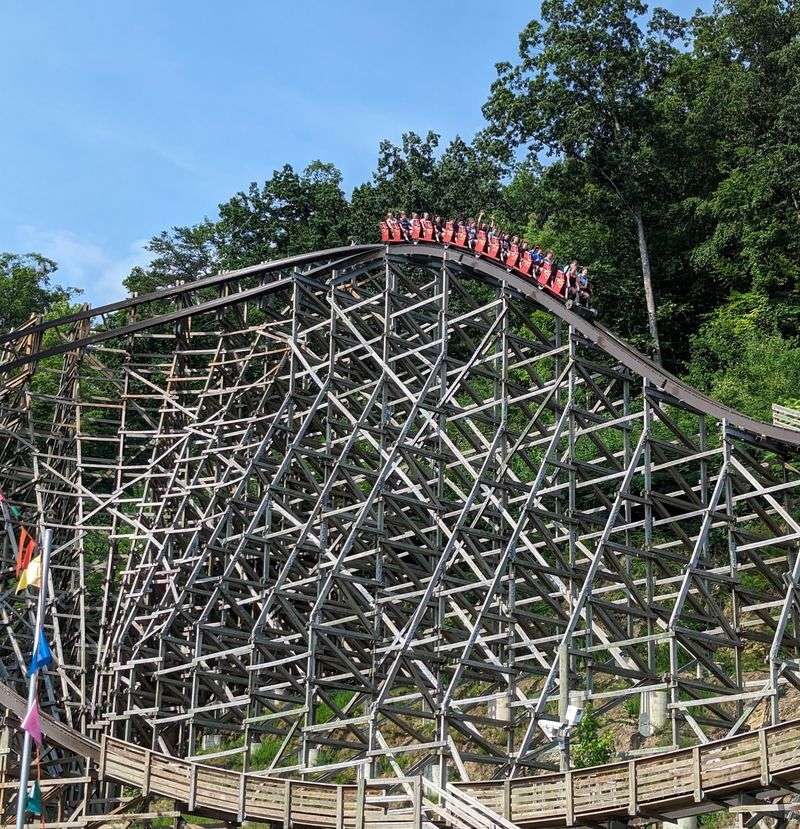
Dollywood built Lightning Rod on a hillside in the Smoky Mountain foothills, and the terrain does half the work. The hot-rod-themed coaster climbs more than 20 stories above Jukebox Junction, drops 165 feet, and races across 3,800 feet of track while delivering nearly 20 seconds of airtime.
The mountain setting adds natural elevation changes that a flat-site park would have to engineer artificially at enormous expense.
Lightning Rod’s track construction is genuinely unusual. Portions use stacked wooden Topper Track, while other sections use Rocky Mountain Construction’s steel I-Box track mounted on the towering wooden framework.
That combination makes it a hybrid that does not fit neatly into standard categories, which is part of what makes it interesting for coaster fans who followed its technical evolution from the original wooden configuration.
Dollywood itself consistently ranks among the best-operated theme parks in the United States, and the surrounding Pigeon Forge area offers enough attractions to fill several days. Lightning Rod’s queue winds through themed hot-rod garage scenery that rewards patient observation.
The coaster operates weather-dependent, and Smoky Mountain afternoons can bring quick thunderstorms in summer, so morning rides are a smart priority. Checking the Dollywood app for wait times before committing to the queue saves considerable frustration.
X2 – Six Flags Magic Mountain, California
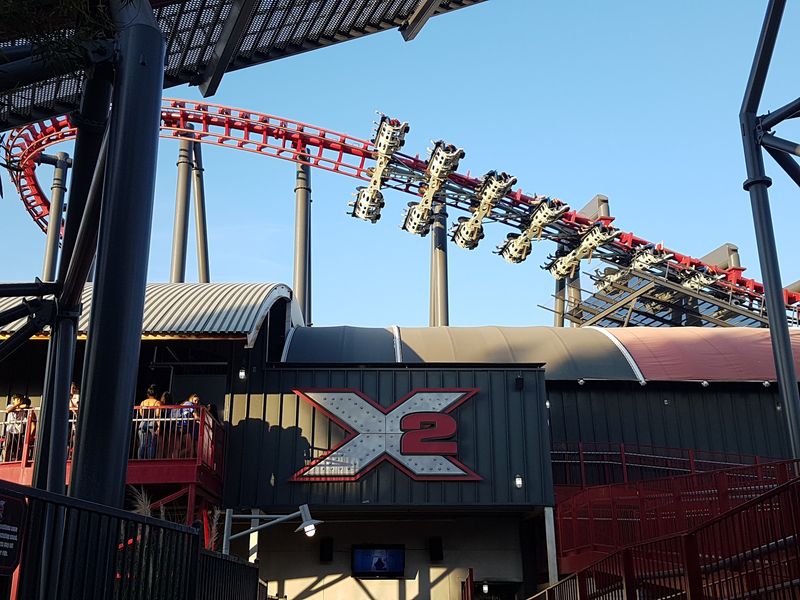
Riding X2 for the first time is a reliably confusing experience, and that confusion is entirely intentional. Instead of sitting above the track in conventional seats, riders occupy chairs mounted on wings extending outside the rails.
Those seats rotate independently a full 360 degrees, meaning your body can face forward, backward, skyward, or headfirst toward the ground while the train follows its own separate course. Two things are happening at once, and your brain takes a moment to catch up.
Six Flags Magic Mountain calls X2 the world’s only fifth-dimensional coaster of its type. The ride includes a roughly 200-foot plunge, 76 mph top speed, two raven-turn elements that are rare even among conventional coasters, and sensory additions including flamethrowers that blast heat as trains pass specific points.
The overall effect is deliberately overwhelming in a way that few major coasters attempt.
X2 opened in its original form as simply X back in 2002, making it one of the older major attractions at Magic Mountain while still feeling unlike anything else operating in the country. One important planning note for 2026: Six Flags lists X2 among attractions scheduled for maintenance in mid-September, so confirming operating status before traveling specifically to ride it is genuinely necessary rather than just cautious advice.
Share this story