Italy has a habit of hiding extraordinary things in plain sight, and its castles are no exception. From rocky island fortresses to snow-dusted Alpine strongholds, the country is packed with medieval and royal architecture that could make any history lover’s jaw drop.
These castles were built by emperors, dukes, bishops, and warlords, each one leaving behind a structure with its own dramatic story. Whether you love art, military history, or just stunning scenery, this list has something to blow your mind.
Castel del Monte, Puglia
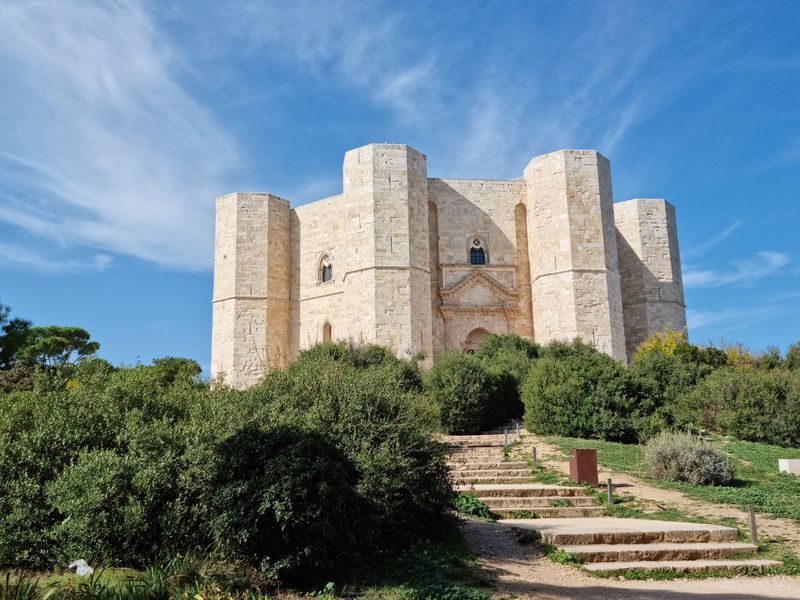
Math nerds, this one is for you. Emperor Frederick II commissioned this 13th-century fortress near Andria, and he was apparently obsessed with the number eight.
The entire building has an octagonal floor plan, eight octagonal towers, eight rooms on each floor, and an eight-sided courtyard at its core.
UNESCO called it a masterpiece of medieval architecture, recognizing influences from classical antiquity, northern Europe, and the Islamic world all blended into one geometric statement. It earned World Heritage status in 1996.
Remarkably, the castle lacks many typical defensive features you might expect from a military fortress of its era.
Instead, the near-perfect symmetry makes it look like a stone crown dropped onto the Apulian countryside from a great height. Historians still debate exactly what Frederick intended it for.
Whatever the answer, the result is one of the most visually distinctive castles anywhere on earth, and standing before it in person feels genuinely unreal.
Feinis Castle, Aosta Valley
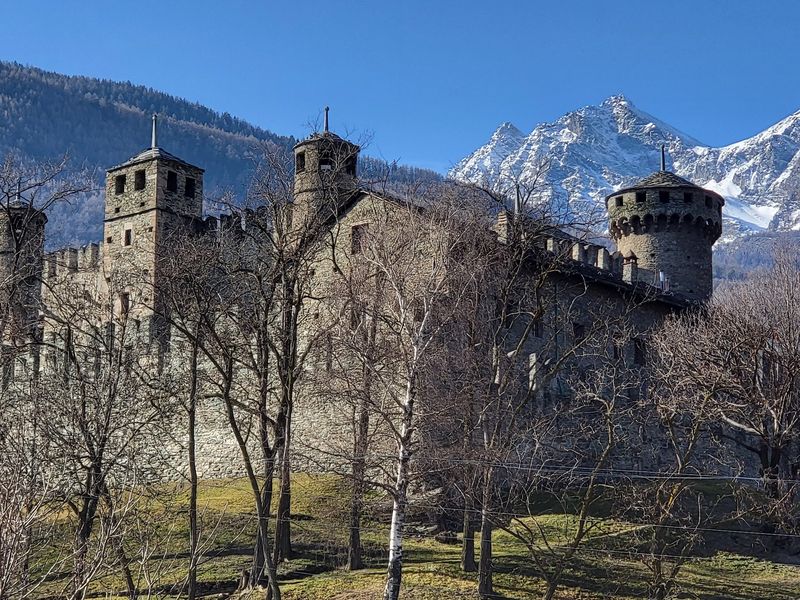
Close your eyes and picture a fairy-tale castle. Chances are, you just imagined Castello di Fenis.
Tucked into the Aosta Valley with snow-capped mountains looming behind it, this fortress has double crenellated walls, stacked towers, and turrets that look borrowed straight from a storybook illustration.
The Challant family shaped much of the castle between the 14th and early 15th centuries, transforming it from a simple fortification into an aristocratic residence and administrative hub. Because it sits on relatively gentle terrain, it served multiple purposes beyond pure defense, which explains the richness found inside its walls.
The courtyard is the real showstopper. Medieval frescoes cover the walls, depicting sages, prophets, religious scenes, and proverbs in vivid colors that have survived for centuries.
Wooden galleries frame the upper levels, adding warmth to the stone surroundings. Few castles in northern Italy manage to feel this theatrical on the outside while being this culturally rich on the inside.
Visiting Fenis is like flipping through an illustrated medieval manuscript, except the pages are walls and you can walk between them.
Aragonese Castle, Ischia
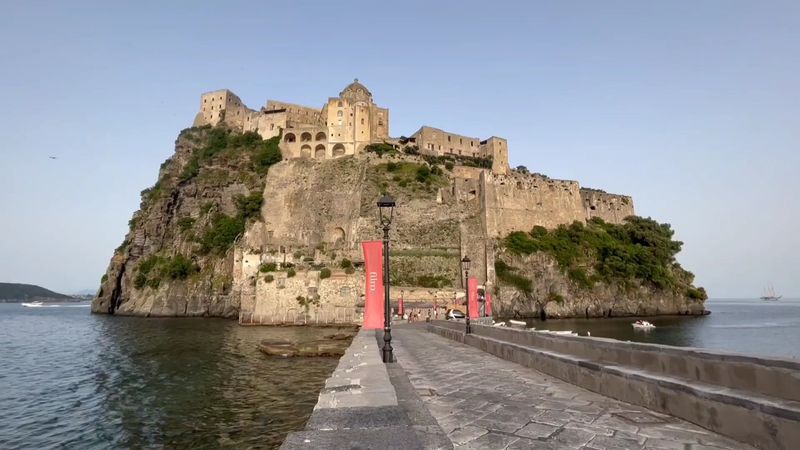
Picture a volcanic rock rising from the sea, topped with centuries of fortifications, churches, convents, and tunnels, all connected to the main island by a 200-meter masonry bridge. That is the Aragonese Castle, and it is every bit as dramatic as it sounds.
Greek settlers first fortified this rock back in 474 B.C., making it one of the oldest continuously occupied military sites in Italy. Alfonso of Aragon gave it its defining transformation in the 15th century, turning the rocky outcrop into a layered world of defensive structures and religious buildings stacked on top of each other.
Today, visitors pass through tunnels carved into the rock and climb between terraces, garden spaces, and former chapels, with blue Mediterranean water glittering on almost every side. Italia.it calls it the most visited monument on Ischia, and the view from the upper levels across the Gulf of Naples makes the climb completely worth it.
No other Italian castle offers quite this combination of ancient history, volcanic geology, and sea-drenched drama packed into a single extraordinary location.
Rocca Scaligera, Sirmione, Lake Garda
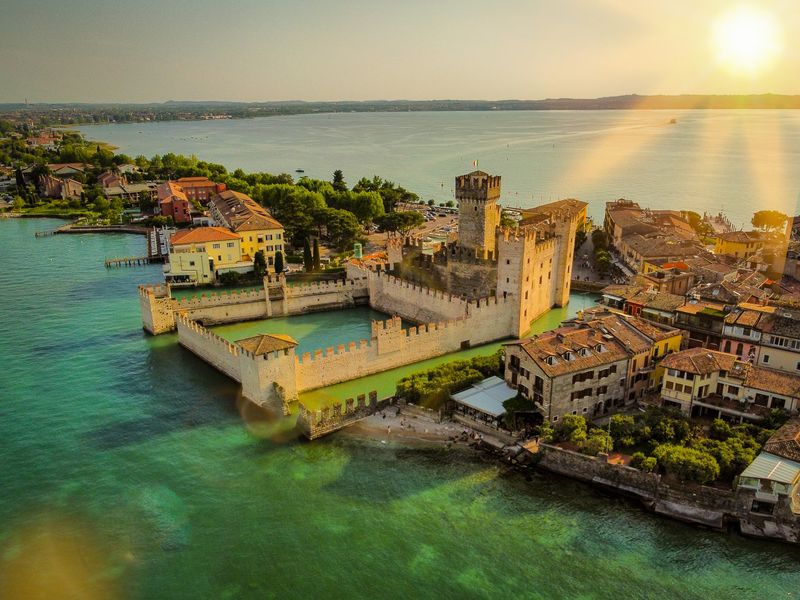
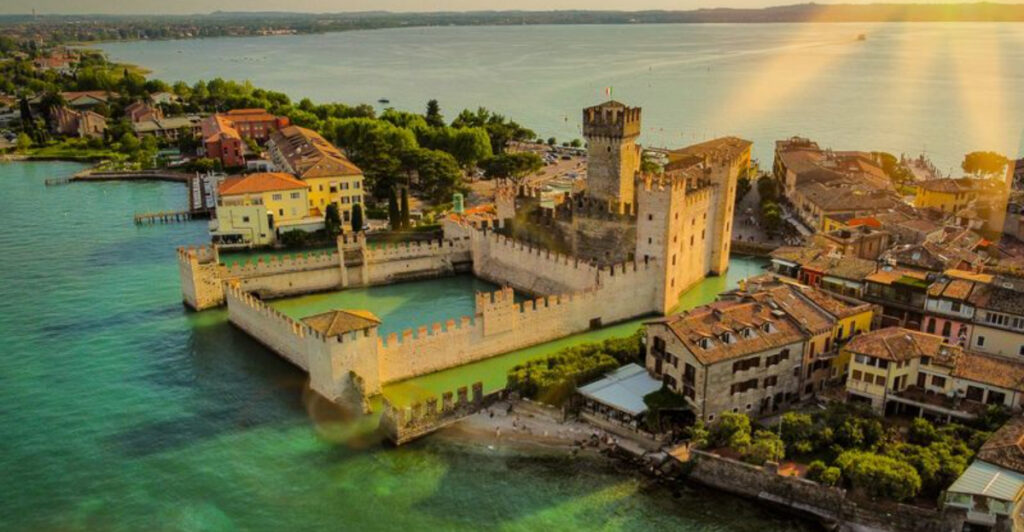
Water is a castle’s best friend, and Rocca Scaligera takes that idea to its logical extreme by rising almost directly out of Lake Garda. Located at the entrance to the charming old town of Sirmione, this fortress is one of the best-preserved medieval castles in the whole country, and its lakeside setting makes it genuinely hard to stop staring at.
The Scaliger family of Verona built the stronghold during the Middle Ages as part of a regional defensive network, and they included a fortified harbor where stone walls extend straight into the lake. When the water is calm, the towers and crenellations reflect back at you in a way that feels almost too picturesque to be real.
Climbing through the fortress rewards visitors with elevated views across Sirmione’s rooftops and the shimmering expanse of Lake Garda stretching toward the Alps. When the visit ends, the old town’s narrow streets and cafes are right there waiting.
Combining a medieval fortress with one of northern Italy’s most beloved lakeside towns in a single afternoon is the kind of travel luck that makes you feel like a genius planner.
Castello di Miramare, Trieste
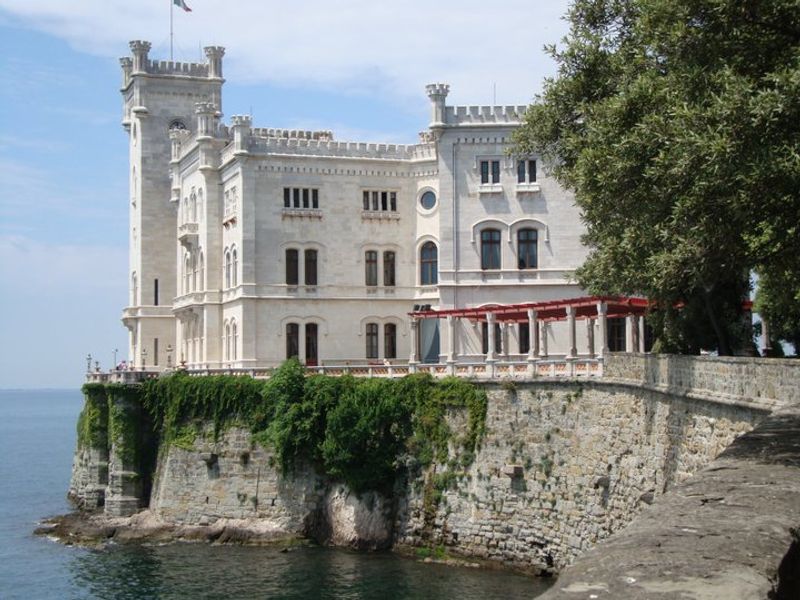
Not every castle needs a drawbridge and a dungeon to be magnificent. Miramare proves that point with effortless elegance.
Archduke Ferdinand Maximilian of Habsburg commissioned this white stone residence in 1856 on a rocky promontory above the Adriatic near Trieste, and he moved in with his wife Charlotte of Belgium in 1860.
The setting is spectacular in every direction. Mediterranean and exotic plantings fill the surrounding estate, and the sea views from the grounds are the kind that make you forget whatever you were worried about.
Unlike many older castles stripped of their original contents over centuries, Miramare retains a remarkably complete princely interior, giving visitors a genuine sense of how 19th-century Habsburg royalty actually lived.
Private apartments downstairs and formal rooms above, including the grand Throne Room, are all open for touring. The surrounding park is almost as compelling as the building itself, drawing visitors who come purely for the gardens and the sea air.
Maximilian intended Miramare as a romantic imperial retreat, and the building delivers on that vision so completely that even the most castle-skeptical traveler tends to leave quietly impressed.
Castello Estense, Ferrara
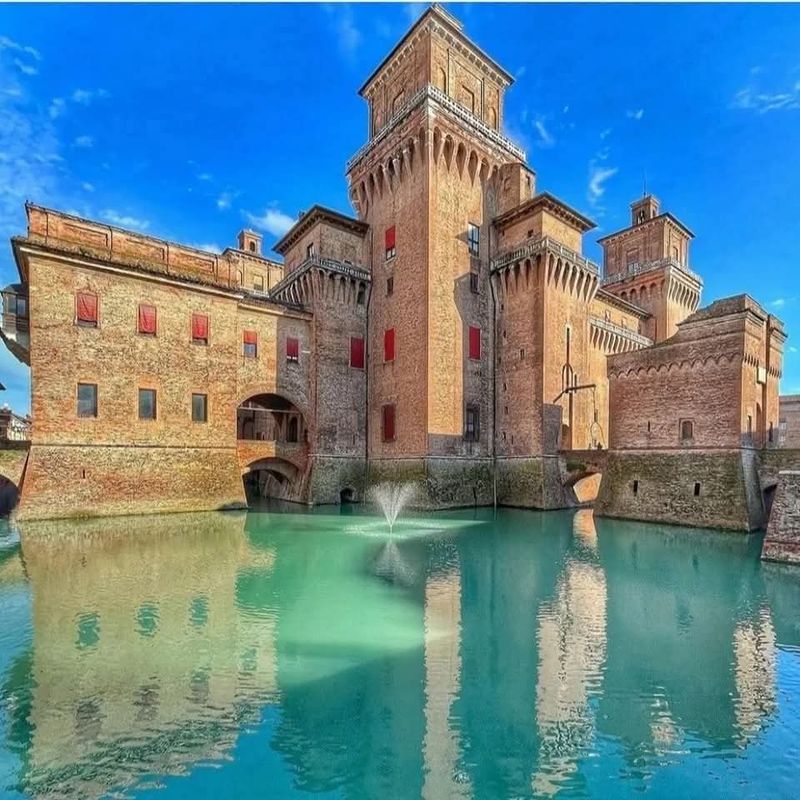
Urban castles often lose their drama when squeezed between modern buildings, but Castello Estense dodges that problem with a secret weapon: a genuine, water-filled moat right in the middle of the city. The Este family started construction in 1385 under Nicolo II d’Este, and what began as a defensive stronghold gradually became one of Renaissance Italy’s most glamorous ducal courts.
Four massive corner towers still give the exterior a satisfyingly medieval feel, but step inside and the mood shifts completely. Painted ceilings, private chambers, courtly reception rooms, and an ornate chapel reveal how the Este family slowly transformed their fortress into a palace worthy of one of Italy’s most sophisticated ruling dynasties.
The castle’s old prisons are also open to visitors, adding a darker layer to the story. Climbing the Lion’s Tower via 120 steps delivers panoramic views across Ferrara’s rooftops and towers.
Few buildings in Italy compress so much history, from medieval defense to Renaissance luxury to political intrigue, into such a compact and walkable space. Arriving on a misty morning, when the moat reflects the towers in still water, borders on unforgettable.
Torrechiara Castle, Emilia-Romagna
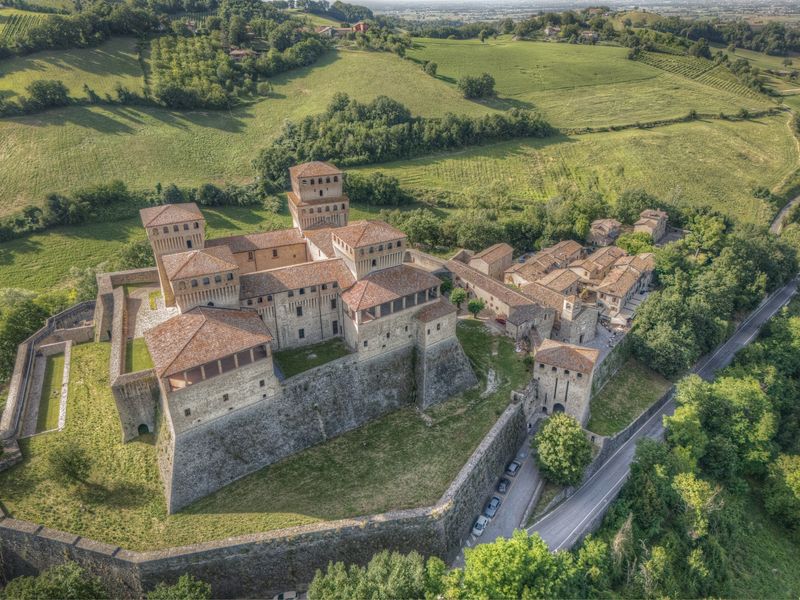
Behind every great castle, there is usually a great story, and Torrechiara has one of the best. Nobleman and military commander Pier Maria Rossi built this fortress between 1448 and 1460, partly as an expression of his devotion to his beloved Bianca Pellegrini.
The result is a castle that manages to be both militarily imposing and romantically charged at the same time.
From the outside, the four corner towers and multiple rings of fortification make the building look every bit as serious as a 15th-century warlord’s headquarters should. Walk inside, though, and the famous Camera d’Oro, or Golden Chamber, changes the atmosphere entirely.
Its frescoes, traditionally linked to the relationship between Pier Maria and Bianca, cover the walls with imagery that feels more like poetry than warfare.
Other halls are decorated with coats of arms, angels, mythological figures, and decorative grotesques that reward slow, careful looking. The hilltop position adds rolling Emilia-Romagna countryside and vineyards to the view from the battlements.
Because the castle sits near Parma’s famous food-producing territory, combining a visit with tastings of Prosciutto di Parma and Parmigiano Reggiano is practically mandatory. History and lunch rarely pair this well.
Rocca di Gradara, Marche
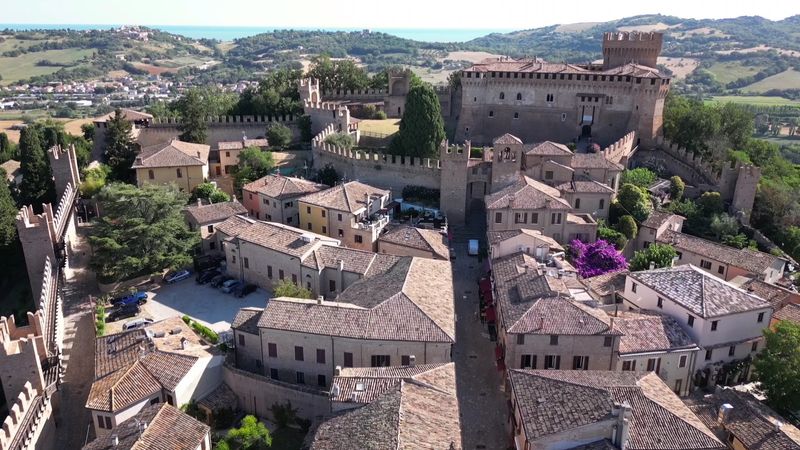
Gradara does not just hand you a castle. It hands you an entire fortified medieval world.
The Rocca sits on a hill 142 meters above sea level, protected by two complete rings of medieval walls, with the original keep dating back to around 1150 and the Malatesta family expanding the defenses through the 13th and 14th centuries.
Over the following centuries, Gradara passed through the hands of some of Italy’s most powerful and notorious families, including the Borgia, Della Rovere, and Medici. Each left their mark on the stones.
Adding to its fame, tradition connects Gradara with Paolo and Francesca, the doomed lovers immortalized by Dante in the Divine Comedy, making the fortress a pilgrimage site for literary enthusiasts as well as history fans.
Whether every detail of that romantic legend can be confirmed or not, the atmosphere inside the walled village is remarkably convincing. Narrow medieval streets, stone towers, and sweeping views across the Marche countryside create a setting that feels genuinely untouched by the modern world.
Gradara is the kind of place where you half expect to hear the clatter of armor around the next corner.
Rocca Calascio, Abruzzo
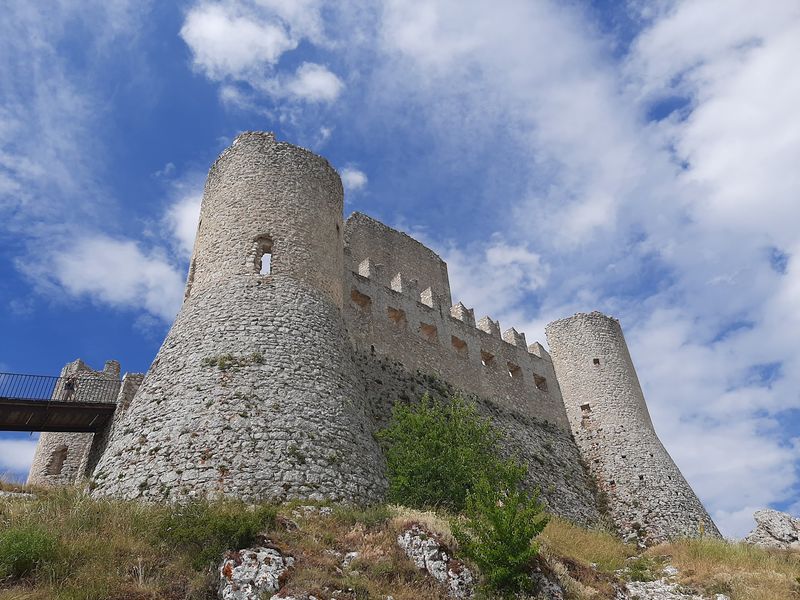
Some places look like they were designed specifically to appear in a film, and Rocca Calascio has actually been used as one. Rising high in the Abruzzo Apennines, this ruined fortress holds the title of the highest castle in the Apennine range, according to Italia.it, and its elevated position gave medieval defenders visibility across a vast stretch of mountain territory.
Today that same geography gives visitors views that stretch across an austere, almost otherworldly landscape of peaks, plateaus, and tiny hilltop villages. The castle itself is partially ruined, which somehow makes it more compelling rather than less.
There are no velvet ropes or gift shops cluttering the experience, just stone, sky, and silence.
The broader landscape between Rocca Calascio and the nearby village of Santo Stefano di Sessanio has attracted filmmakers repeatedly, drawn by scenery that looks ancient and cinematic at the same time. Conservation work has helped stabilize the structures and open the site to visitors.
For travelers willing to make the drive into the Abruzzo mountains, the reward is one of Italy’s most atmospheric and genuinely remote castle experiences, the kind that stays in your memory long after you return home.
Castello Sforzesco, Milan
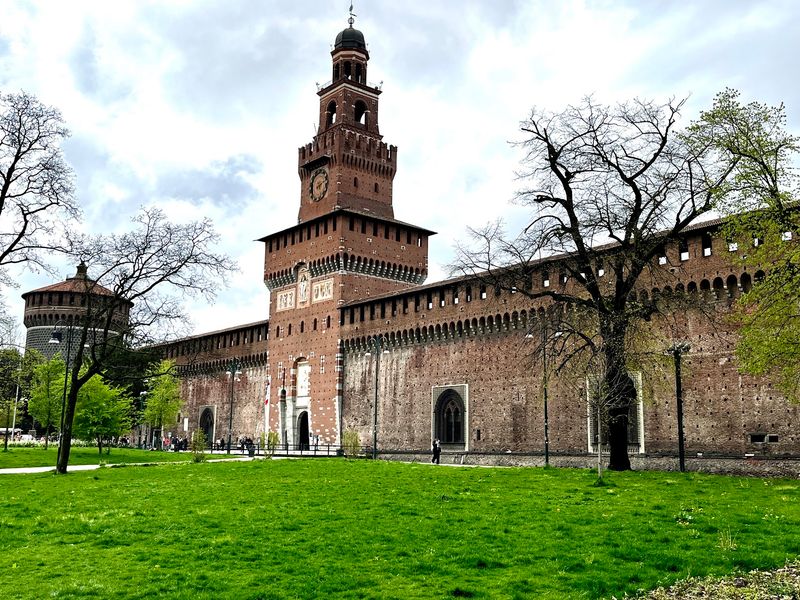
Milan’s reputation for fashion and finance tends to overshadow the fact that one of Europe’s largest castles is sitting right in the city center, casually waiting for people to notice it. Castello Sforzesco grew from a medieval defensive complex and became closely associated with the powerful Sforza rulers of Milan, who turned it into a full-scale ducal court during the 15th century.
Its history was turbulent. The complex changed hands repeatedly, suffered damage during various conflicts, was partially dismantled during the Napoleonic period, and underwent a massive restoration in the late 19th century under architect Luca Beltrami, who gave it much of its current appearance.
Today the castle contains multiple civic museums and collections spread across three major courtyards.
The vast Piazza d’Armi, the protected Rocchetta, and the Ducal Court each offer a different atmosphere. One of the greatest treasures housed inside is Michelangelo’s unfinished Rondanini Pieta, displayed in a dedicated museum space within the complex.
For anyone already visiting Milan for the Duomo or the Last Supper, adding Castello Sforzesco to the itinerary requires almost no extra effort and delivers a completely different kind of reward.
Castel Sant’Angelo, Rome
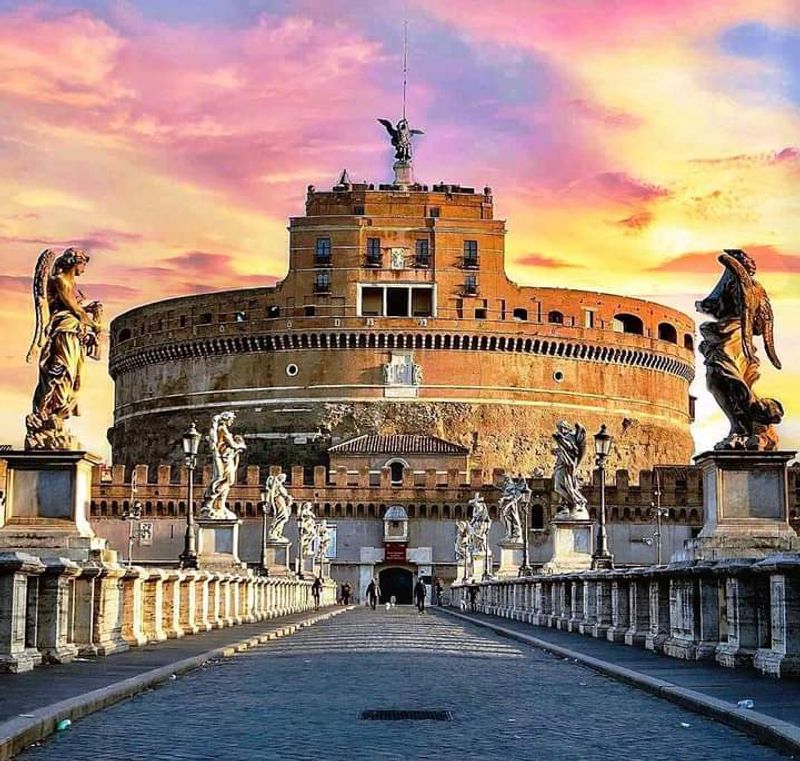
Few buildings in the world have had as many career changes as Castel Sant’Angelo. It started life around A.D. 123 as the monumental mausoleum of Emperor Hadrian, a circular drum of stone and marble designed to hold the remains of an imperial dynasty.
Then Rome’s history happened, and the building kept getting repurposed.
Over the following centuries, the massive cylindrical structure was converted into a fortress, a papal refuge, a prison, and a military garrison, accumulating layers of history the way old buildings accumulate paint. Its position near the Vatican made it strategically essential to the papacy, and a covered elevated walkway, the Passetto di Borgo, once allowed popes to escape from the Vatican directly into the castle during emergencies.
Today it houses the National Museum of Castel Sant’Angelo, and visitors climb through multiple levels until reaching the upper terrace, where the view across the Tiber toward Rome’s domes and rooftops is genuinely one of the finest in the city. Italia.it recommends approaching via Ponte Sant’Angelo, lined with Bernini’s famous angel statues, which frames the arrival perfectly.
Rome is full of extraordinary buildings, but few summarize the city’s genius for recycling history quite so dramatically.
Castello del Buonconsiglio, Trento
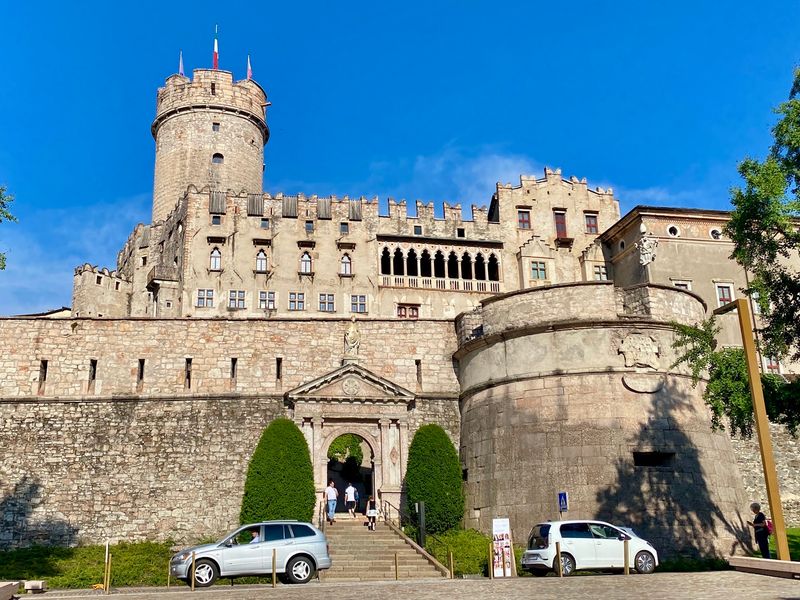
Calling Castello del Buonconsiglio a single castle is a bit like calling a symphony a single note. The complex is really an architectural timeline built over several centuries, beginning with a 13th-century fortified structure and expanding steadily as the prince-bishops who ruled Trento kept adding new wings, courtyards, loggias, and decorated interiors to reflect their growing ambitions.
The oldest section, known as Castelvecchio, retains the muscular character of a medieval fortress, with thick stone walls and a commanding tower. As you move through later sections, the architecture softens into Renaissance elegance, with painted ceilings, open arcaded courtyards, and frescoes that rival those found in purpose-built palaces across northern Italy.
The transition from fortress to refined court residence happens gradually and visibly as you walk through the complex.
The famous Torre dell’Aquila contains a remarkable cycle of Gothic frescoes depicting the months of the year, considered one of the finest examples of late medieval secular painting in Italy. Today the complex also houses museum collections covering the art and history of the Trentino region.
Its location within walking distance of central Trento makes it one of the most accessible great castles in the entire country.
Royal Castle of Racconigi, Piedmont
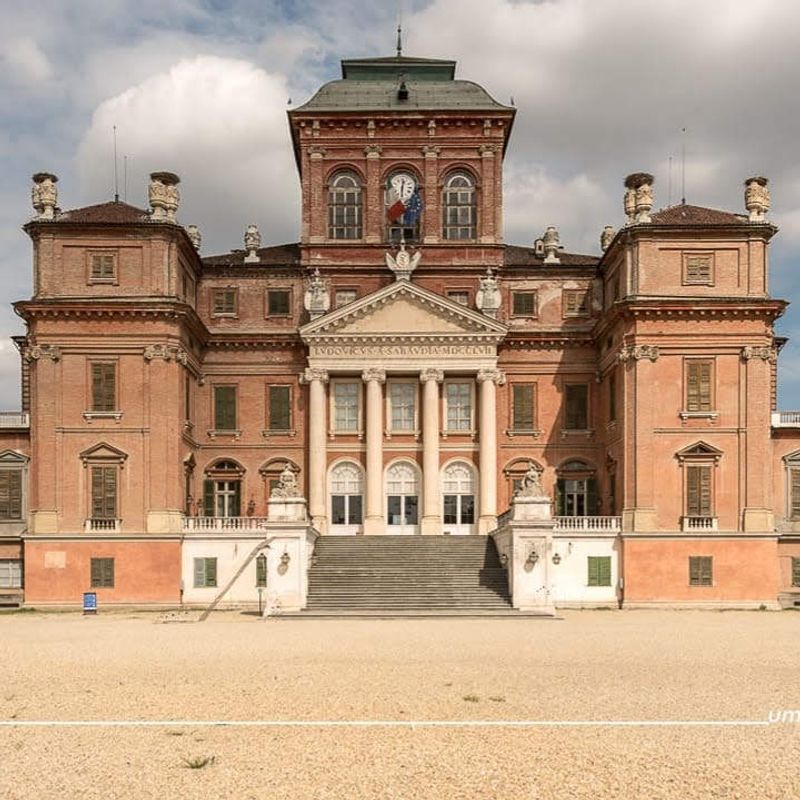
Racconigi started out as an 11th-century stronghold in the historic March of Turin and ended up as a royal palace fit for a dynasty that would eventually rule a unified Italy. That is quite a glow-up for a medieval fortress.
The site passed through various hands before the House of Savoy claimed it and began the long process of transforming a defensive structure into a grand royal residence.
Successive renovations replaced thick walls and towers with elegant architecture and formal gardens. The surrounding park became as important as the building itself, with a formal Italian garden historically connected to Andre Le Notre, the landscape designer behind the gardens at Versailles, before later modifications introduced more naturalistic English-style landscaping.
Racconigi belongs to the broader network of Savoy royal residences scattered across Piedmont, a UNESCO-recognized ensemble of palaces, hunting lodges, and retreats that reflects the dynasty’s power and taste. Visitors expecting dark stone battlements and arrow slits tend to be pleasantly surprised by how palace-like the whole experience feels.
Racconigi is proof that castles do not always have to look like fortresses to be historically fascinating, and that ambition, given enough centuries, can completely reinvent a building.
Castle of Melfi, Basilicata
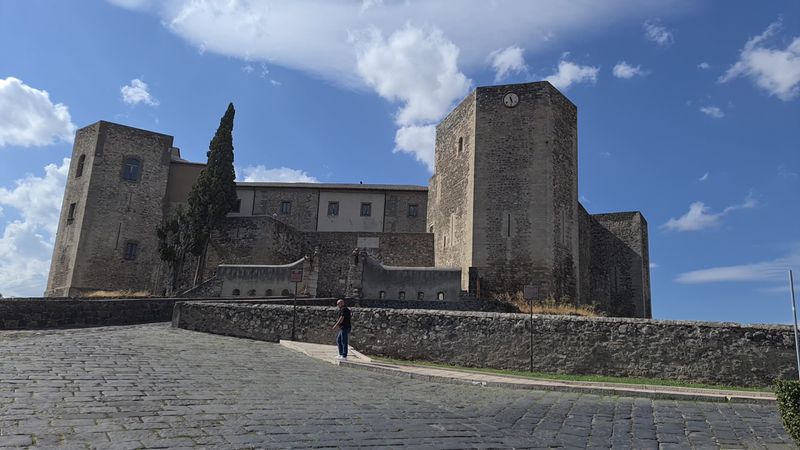
Ten towers. Let that sink in for a moment.
The Norman castle of Melfi rises from the slopes of Monte Vulture in Basilicata with ten imposing towers creating one of southern Italy’s most recognizable and genuinely intimidating medieval silhouettes. This is a fortress that means business, and its history backs up every stone of that impression.
Melfi became a major political center under the Normans and later under Emperor Frederick II, who used the castle as a base for issuing the Constitutions of Melfi in 1231, a landmark legal code governing his Kingdom of Sicily that historians still study today. The building was repeatedly modified by Angevin and later rulers, producing a layered architectural history visible in the different styles of construction across the complex.
Today the castle also houses the National Archaeological Museum of the Melfese, displaying finds from the surrounding region including an extraordinary Roman sarcophagus known as the Sarcophagus of Rapolla. For travelers exploring southern Italy beyond the standard tourist circuit of Rome, Naples, and the Puglia coast, Melfi delivers a powerful historical surprise wrapped in genuinely impressive medieval stonework.
Few castles in the south reward the detour more generously.
Castello di Venere, Erice, Sicily
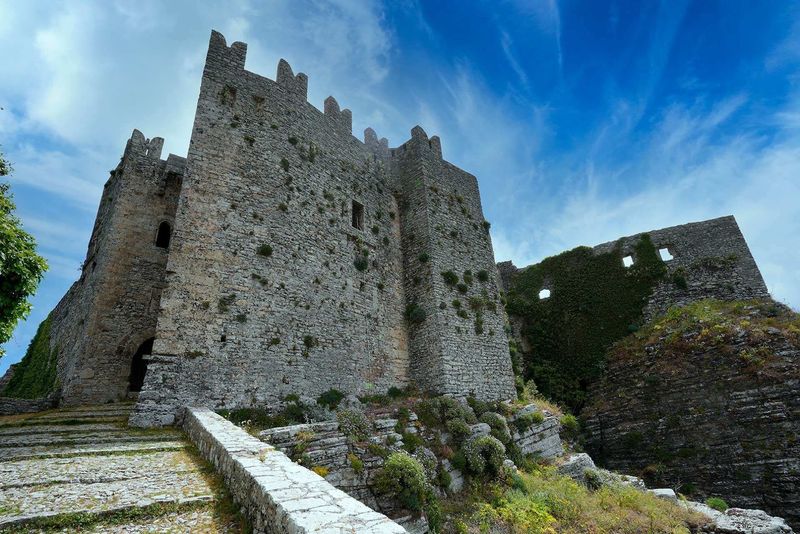
Fog rolls in from the sea, the village streets turn quiet and narrow, and somewhere above it all, the Norman walls of Castello di Venere rise from the summit of Mount Erice like they grew there naturally. This is atmosphere at its absolute maximum, and no photograph fully captures what it feels like to stand on this mountaintop in western Sicily.
The site has been considered sacred for far longer than the Norman castle has existed. An ancient sanctuary dedicated to Venus Erycina once occupied the summit, and when the Normans built their castle between the 12th and 13th centuries, they incorporated some of the earlier stonework into the new structure, layering history upon history in the way only very old places can.
From the castle walls, on clear days, the views extend across Trapani, the surrounding salt pans, the Egadi Islands, and Monte Cofano in a panorama that covers much of western Sicily. When mist wraps around the mountaintop, as it frequently does, the whole scene takes on an almost mythological quality.
For sheer atmospheric power, Castello di Venere is one of the hardest Italian fortresses to surpass, and the village of Erice surrounding it is equally worth exploring before the fog rolls back in.
Share this story