Italy is packed with small places that feel like storybook pages come to life. Some sit on cliffs, some hug the sea, and some hide high in snowy mountains.
You do not need a big city to find wonder here. Get ready to meet 15 towns and villages that prove the best of Italy often comes in small packages.
Alberobello, Puglia
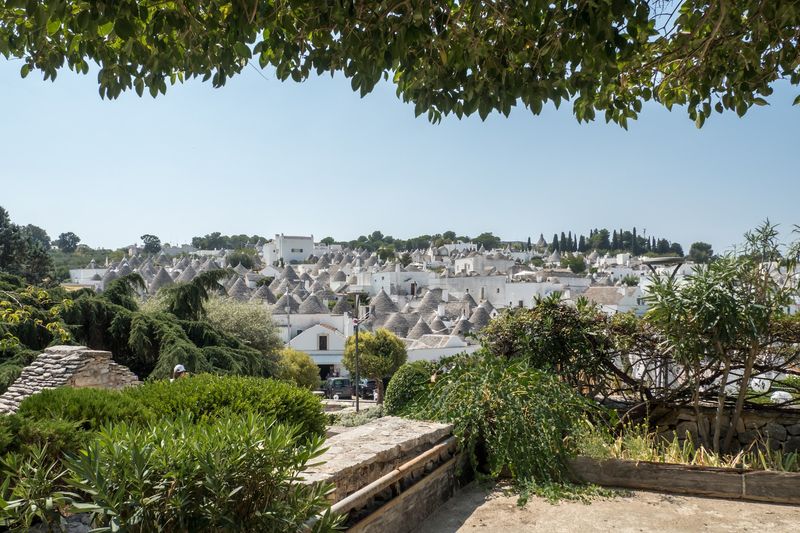
Picture a whole town wearing pointy gray hats. That is Alberobello, where more than 1,500 trulli, the traditional dry-stone houses with cone-shaped roofs, still stand.
UNESCO gave the town World Heritage status in 1996, and one look explains why.
The Monti district holds the largest crowd of trulli. Most of them now host shops, cafes, and small stays, so wandering the lanes feels a bit like browsing a village built for gnomes.
Head to the Santa Lucia lookout for the classic view of white walls and gray cones rolling across the hillside.
For a calmer visit, cross over to Aia Piccola. Hundreds of trulli here are still ordinary homes, so you will spot laundry, plants, and neighbors chatting at doors.
Keep your eyes on the rooftops, too. Some carry painted symbols, and locals have long used them for religious or good luck marks.
Plan to arrive early in the morning or stay until evening. The day crowds thin out, the stone glows warm, and the town feels much more like a place where real people live.
Civita di Bagnoregio, Lazio
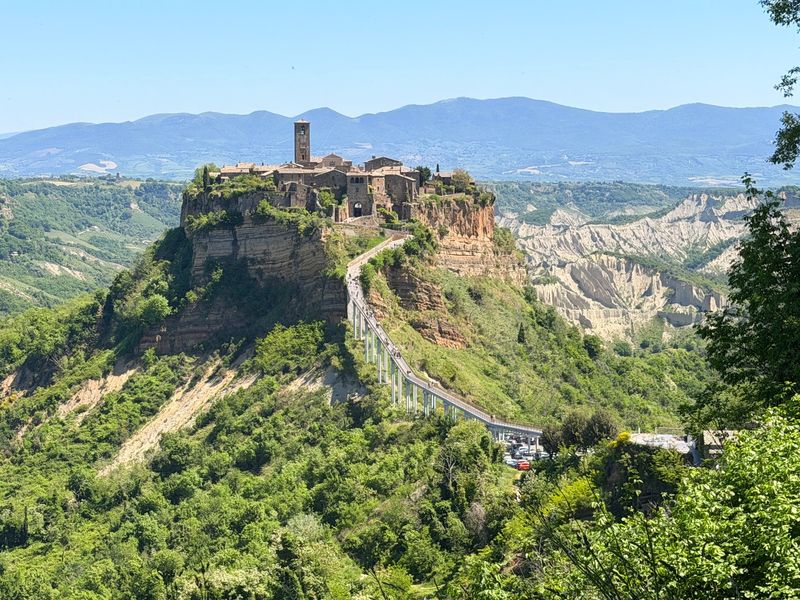
Nobody wanders into Civita di Bagnoregio by accident. You have to cross a long pedestrian bridge, and the walk across is half the thrill.
Ahead, a medieval village sits on a skinny hill of volcanic rock, looking cut off from the rest of the world.
Locals call it the dying city, since the soft tuff stone keeps crumbling away. The Etruscans founded the settlement over 2,500 years ago, and it has hung on through every landslide since.
Once you pass through Porta Santa Maria, you enter a maze of stone houses, little arches, and flowery gardens. Piazza San Donato makes a handy spot to rest and soak up the quiet.
Only a handful of people live here year round, so the lanes often feel hushed.
Deep ravines circle the village on nearly every side. When morning mist fills them, Civita seems to float on a cloud.
Bring comfortable shoes, because the bridge is long and uphill on the way in, and pack your camera for the walk back.
Vernazza, Liguria
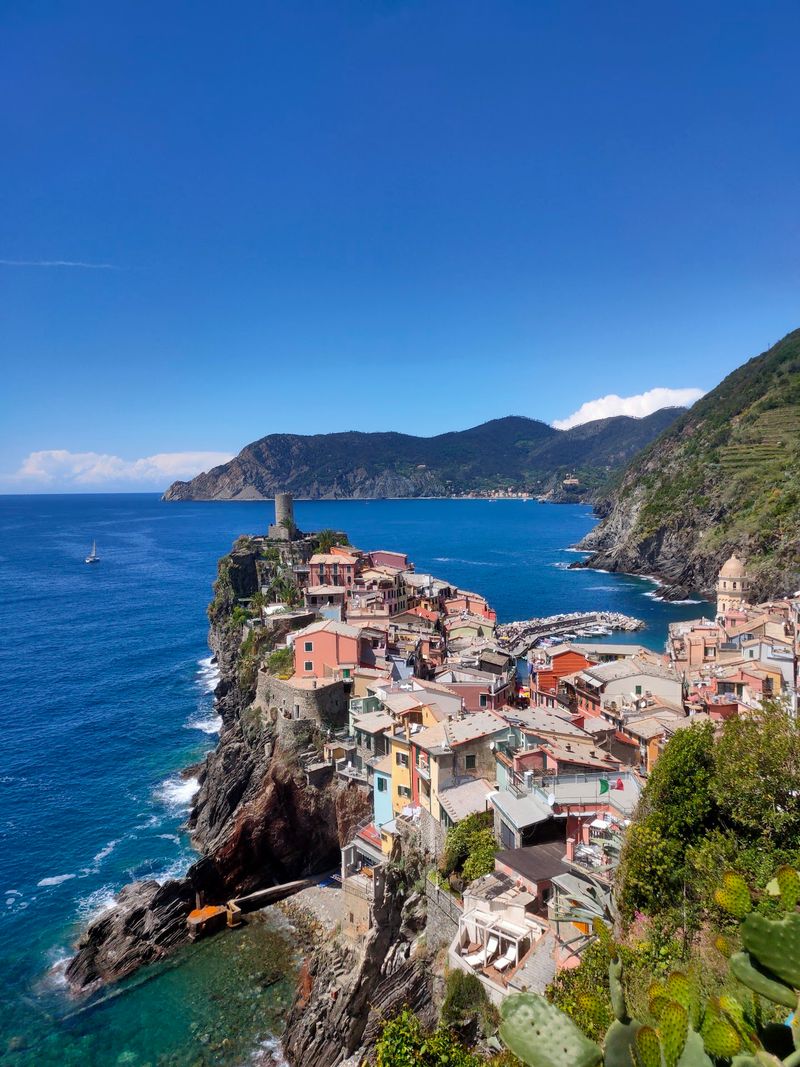
Salt air, fresh focaccia, and church bells all greet you in Vernazza. Pastel houses crowd around a tiny harbor, while steep vineyard terraces rise right behind them.
It is one of the most dramatic spots in the whole Cinque Terre.
The village is about a thousand years old and grew up around the sea. Narrow lanes called carruggi climb sharply from the waterfront, so expect a few stairs and a good leg workout.
The Church of Santa Margherita d’Antiochia sits right beside the water, and waves almost reach its doorstep.
Cars barely matter here. Most visitors arrive by train, by boat, or on foot along the coastal trails.
That keeps the center peaceful, apart from the happy chatter of cafe tables.
Follow the paths uphill for lookout points over the harbor and coastline. Those views are the reward for the climb.
Grab a seat near the water at sunset, order something with local anchovies or pesto, and watch the colors glow while the fishing boats bob below.
Pienza, Tuscany
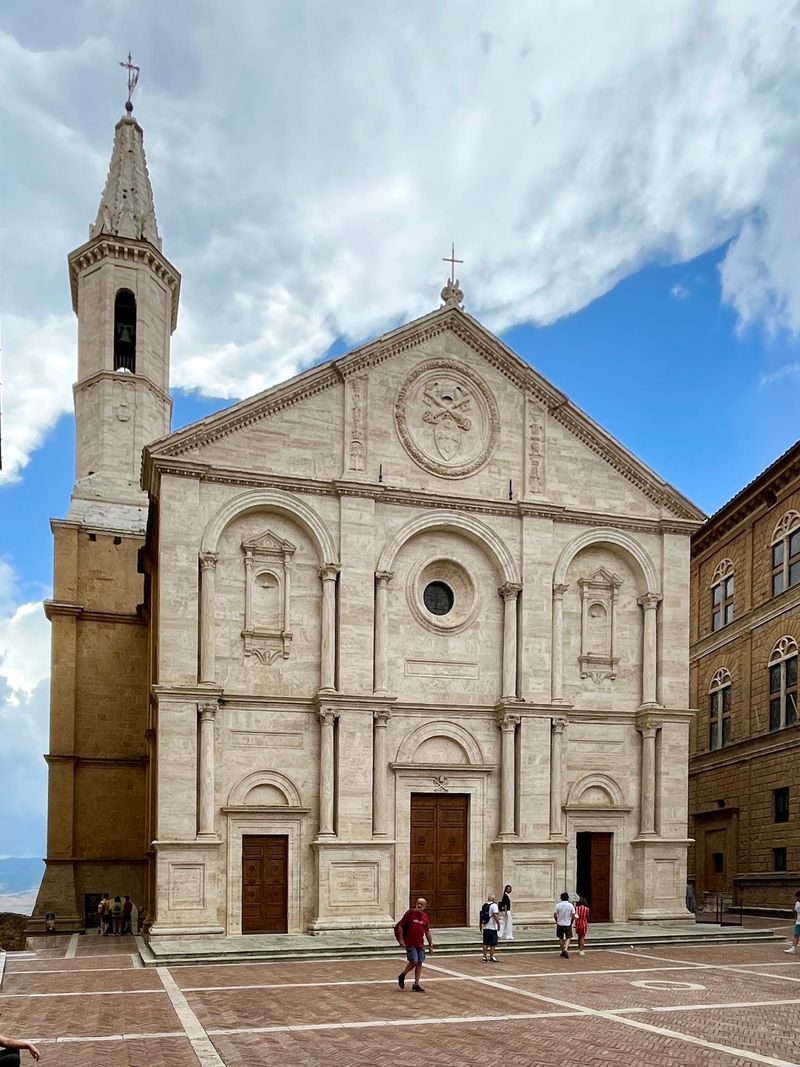
Here is a fun fact: a pope once decided his hometown needed a makeover. Pius II, born in Pienza, ordered the center rebuilt in the 15th century as an ideal Renaissance town.
The result is still tidy, graceful, and wonderfully balanced.
Piazza Pio II is the star. The cathedral, Palazzo Piccolomini, and other civic buildings frame it with careful proportions.
UNESCO honored the historic center in 1996 for its influence on town planning.
Yet the setting steals just as much attention. Walk to the edge of town and panoramic terraces open onto the Val d’Orcia.
Cypress trees line the ridges, farmhouses dot the hills, and wheat fields ripple in the breeze.
Pienza is also famous for pecorino cheese, so wander into a shop and ask for a taste. Locals are happy to explain the differences between young and aged wheels.
Pair a slice with a glass of local wine on a terrace, and you have a perfect Tuscan afternoon.
Pitigliano, Tuscany
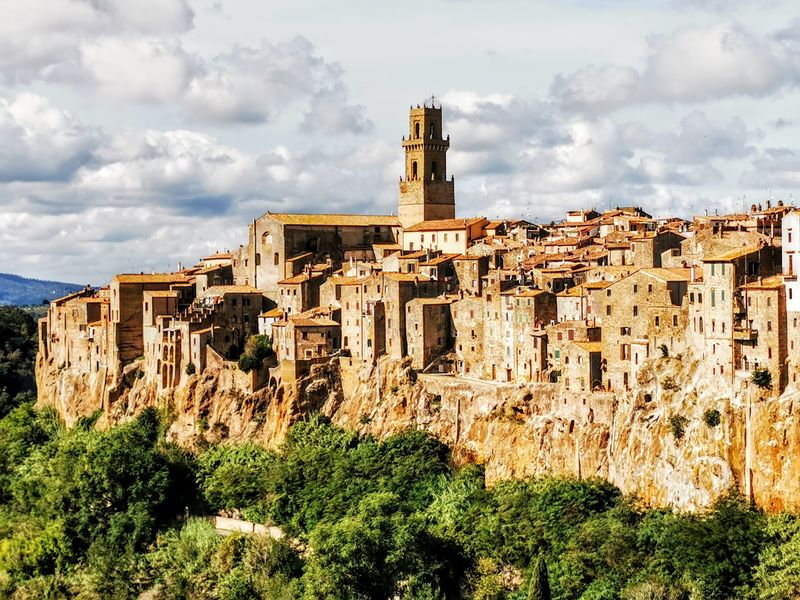
Stand on the road outside Pitigliano and you will swear the houses grew out of the rock. Tall stone buildings line the edge of a volcanic cliff, forming one unbroken wall above deep valleys.
It is a sight that makes drivers pull over.
The Orsini family shaped much of the town between the 13th and 16th centuries. Their Palazzo Orsini still stands, along with an aqueduct, churches, and winding medieval lanes.
Outside town, old Etruscan paths called vie cave slice through the stone like hidden hallways.
Pitigliano also goes by the name Little Jerusalem. A strong Jewish community lived here for centuries, and a synagogue from 1598 survives in the old Jewish quarter.
A small museum helps tell that story.
Food lovers should look for local sweets and the white wine grown nearby. Walk the lanes at dusk, when the golden stone seems to warm from within.
Wear sturdy shoes, since the streets are uneven, steep, and full of surprises.
Castelmezzano, Basilicata
Hold onto your hat, because Castelmezzano comes with a zip line. The Volo dell’Angelo, or Angel’s Flight, sends brave visitors sailing across the valley to the neighboring village of Pietrapertosa.
Even if you stay on the ground, this place delivers thrills.
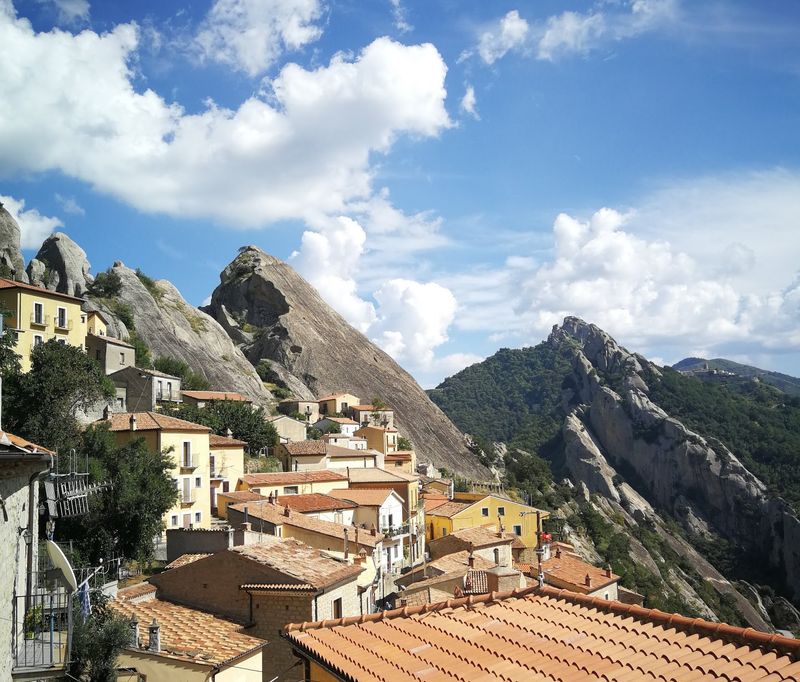
The village looks as if someone tucked it into the jagged peaks of the Dolomiti Lucane. Houses climb the mountainside, linked by stairways, alleys, and archways.
Sandstone towers loom overhead, and clouds sometimes drift right between them.
Castelmezzano sits inside the Gallipoli Cognato Piccole Dolomiti Lucane Regional Park. That means hiking trails and lookout points are right outside your door.
Pietrapertosa across the valley is just as striking, so try to see both.
Leave time for slow strolling. The streets are steep, so take breaks at a cafe and chat with locals about the best trails.
Photos here look unreal, but the real view is even better. This is southern Italy at its wildest and most memorable.
Erice, Sicily
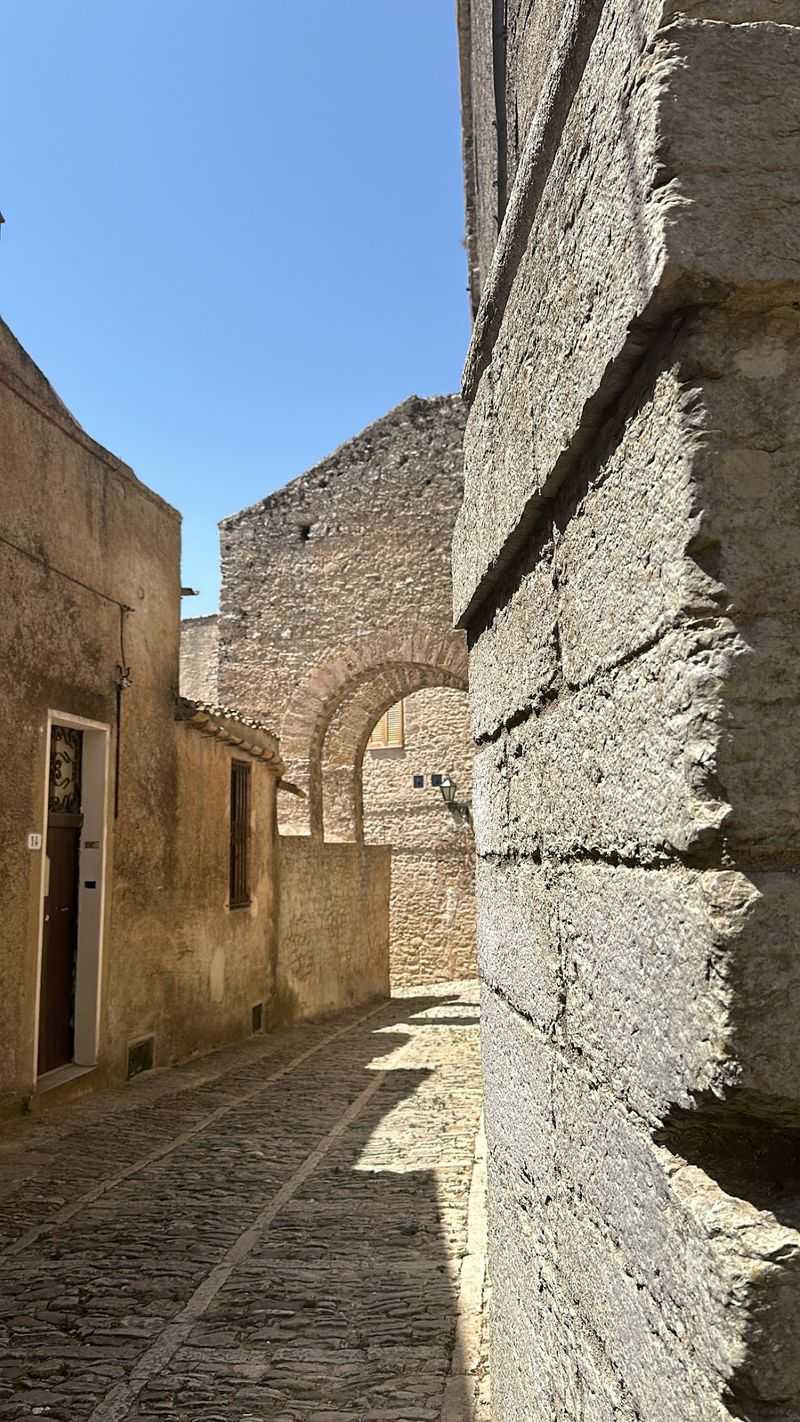
Mist drifts through Erice like a slow, silent visitor. The town sits 751 meters above sea level on a mountain over Trapani, so clouds often roll through the stone lanes.
It feels nothing like the sunny Sicilian coast far below.
The roots here run deep. The Elymians lived on this peak, and a famous sanctuary to Aphrodite, known as Venus Ericina, once drew pilgrims.
Later, Norman rulers built a fortress on the sacred spot.
Enter through fortified gates and you will find stone houses, churches, quiet courtyards, and viewpoints that stretch to the Egadi Islands. On clear days, the Mediterranean spreads out in every direction.
Sweet tooths, rejoice. Erice is known for its pastry shops, and a warm treat on a misty morning is hard to beat.
Wear a jacket even in summer, because the mountain air can be cool. Take your time on the cobblestones, which can be slippery when wet.
Corricella, Procida, Campania
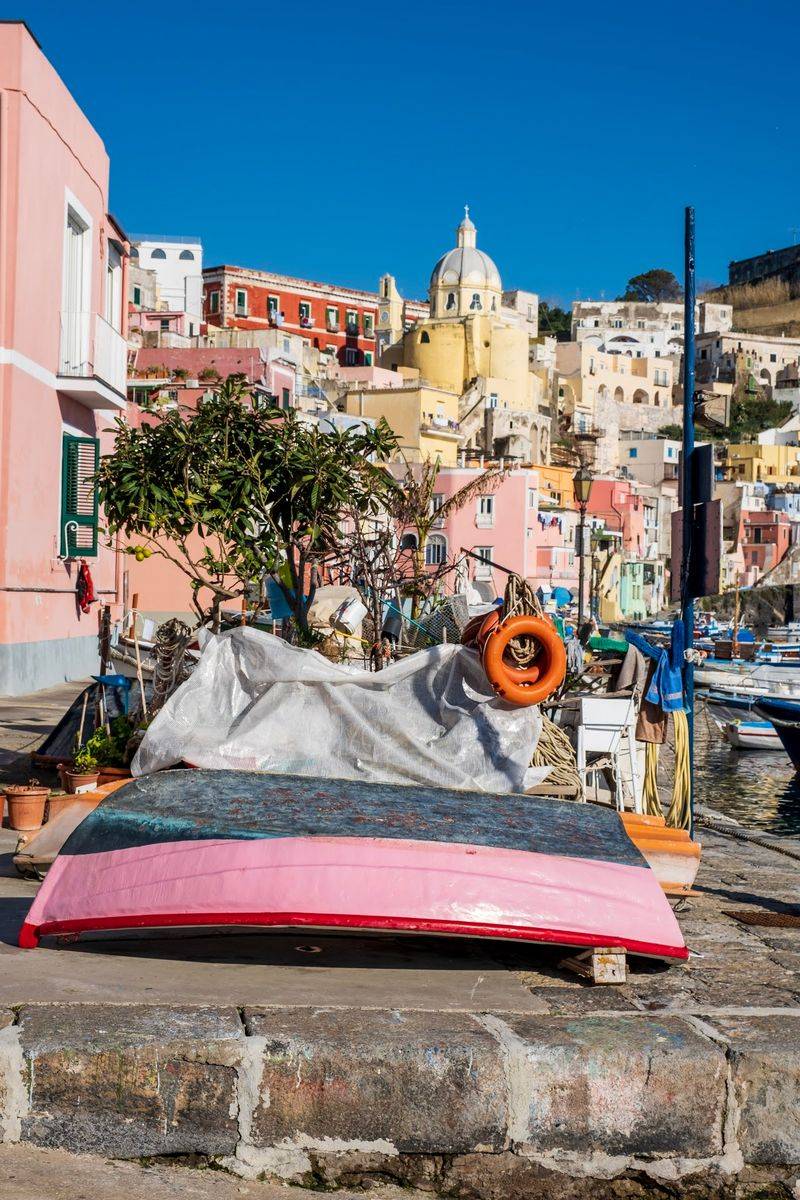
Crayon-box colors tumble down to the water at Marina Corricella. Pink, yellow, blue, and terracotta houses stack above a tiny fishing harbor on the island of Procida.
It is a quieter, more relaxed cousin to nearby Capri and Ischia.
Narrow staircases and lanes drop between the buildings toward restaurants and moored boats. Up above, Terra Murata is the island’s oldest fortified settlement and offers wide views.
Procida has nine traditional districts, volcanic scenery, beaches, and a strong seafaring spirit.
The island is small, so walking is the best way to get around. Italia.it calls it a fine pick for slow travel, and that fits.
Nobody here seems in a hurry.
Grab a harborside table and order whatever the fishermen brought in that morning. Lemons grow all around the island, so look for lemon treats too.
Come in the evening, when the lights flicker on and the colors turn soft and golden.
Spello, Umbria
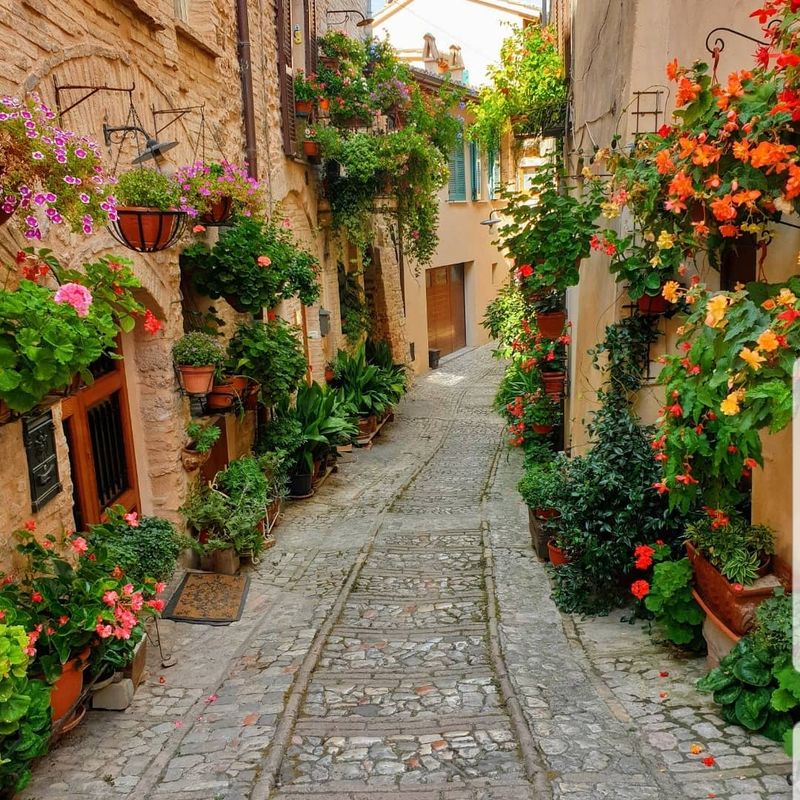
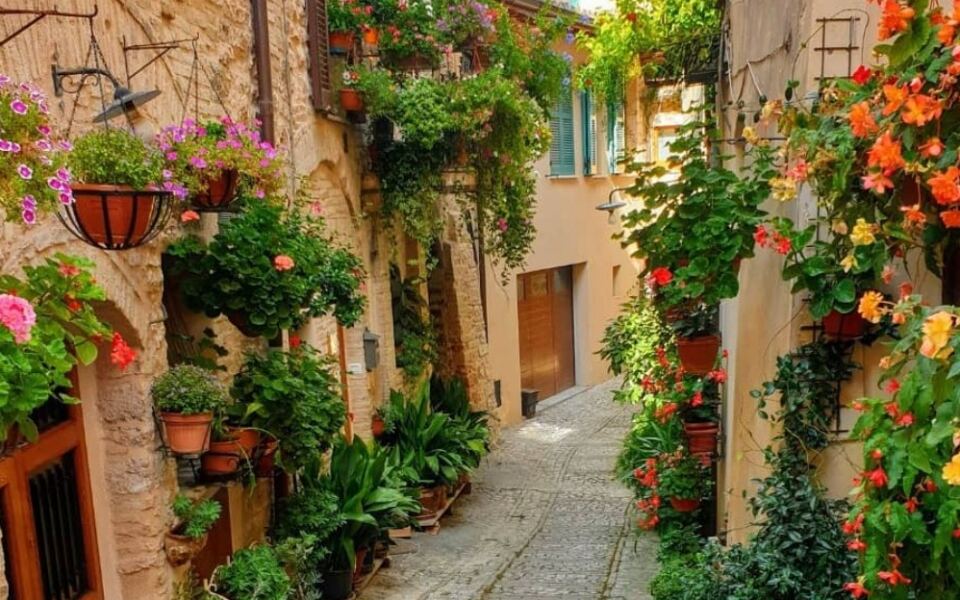
Flowers spill from nearly every window in Spello. The town drapes itself over the slopes of Mount Subasio in warm pink and honey-colored stone.
Olive groves wrap around it, so the countryside is always close.
History is layered thickly here. Spello keeps Roman walls, ancient gates, mosaics, and archaeological remains alongside its medieval alleys.
In the church of Santa Maria Maggiore, the Baglioni Chapel holds bright frescoes by the Renaissance painter Pinturicchio.
Timing your trip can add magic. During the Infiorate, held for Corpus Christi, artists cover the streets with detailed carpets made from flower petals.
Locals work through the night to finish them, and the result is stunning.
Even on an ordinary day, each street has its own character. Climb the lanes slowly and look back often, because the views over the Umbrian plain open up with every turn.
Pick up a bottle of local olive oil to take home as a tasty souvenir.
Bosa, Sardinia
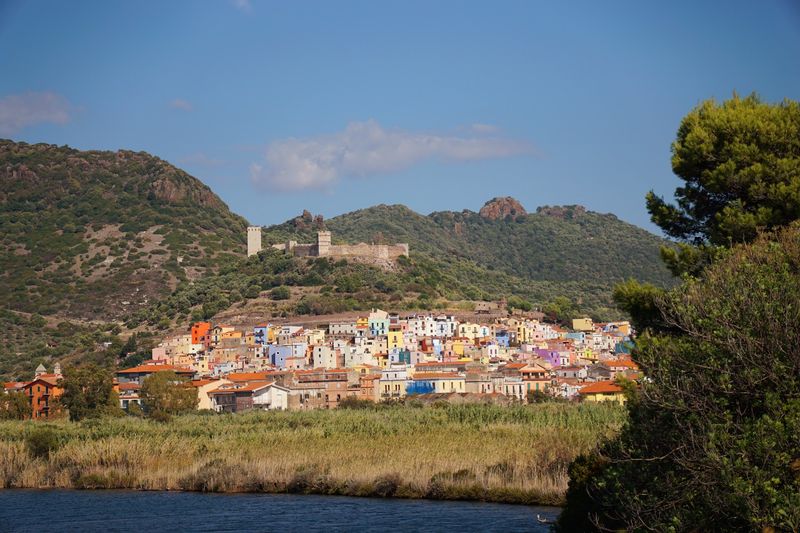
Sardinia is famous for beaches, so Bosa surprises people with a river. The Temo is the island’s only navigable river, and it runs right through this colorful town.
Pink, yellow, blue, and orange houses climb the hill toward Malaspina Castle.
Inside the castle walls, the church of Nostra Signora de Sos Regnos Altos holds medieval frescoes. Down below, cobbled streets and stairways wind through the old Sa Costa district.
Getting a little lost is half the fun.
Along the water, the Sas Conzas buildings tell the story of Bosa’s old tanning trade. They are recognized as an important piece of industrial heritage.
Walk the riverbank and imagine the busy workshops that once filled them.
Bosa feels different from the island’s glitzy coastal resorts. It is calmer and more local.
Stop for a coffee by the river, then hike up to the castle for a sweeping look at the rooftops, the water, and the hills beyond.
Scanno, Abruzzo
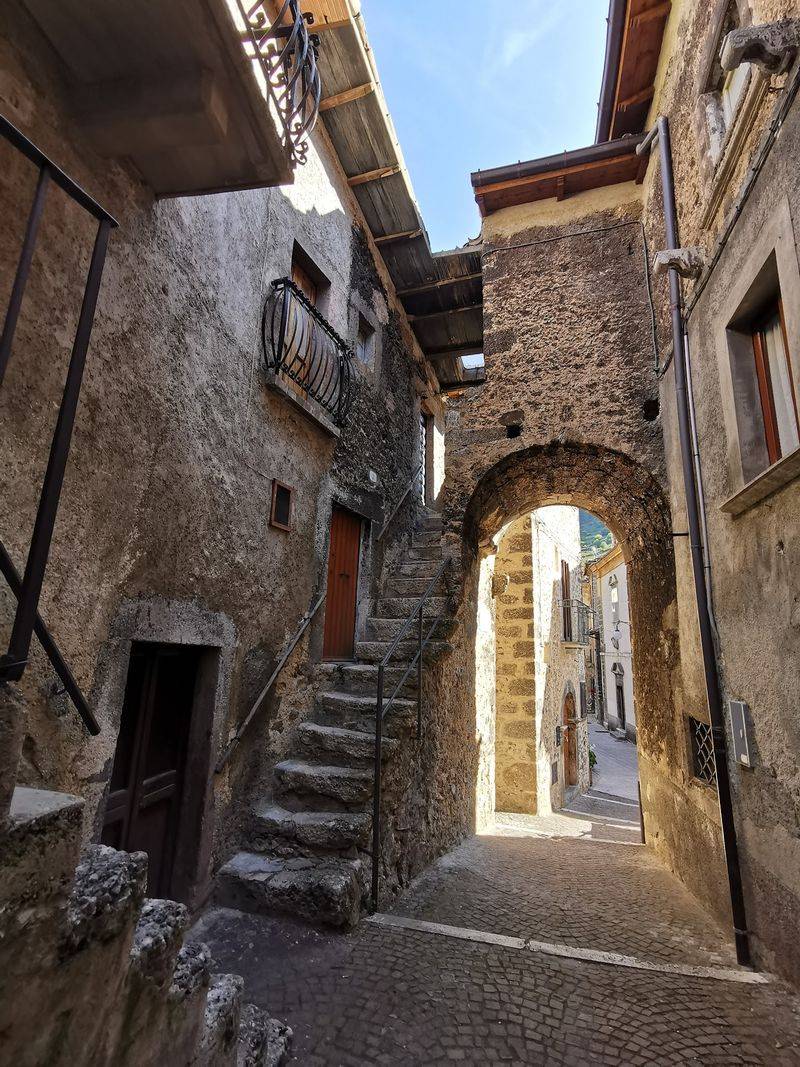
Famous photographers like Henri Cartier-Bresson came to Scanno for a reason. Tightly packed stone houses, stairways, and arches create scenes that look straight out of an old black and white film.
At over 1,000 meters high, the town has real mountain character.
Local traditions are still alive. Goldsmithing, wool production, and distinctive traditional clothing are all part of Scanno’s identity.
Browse the small workshops and you may find jewelry made by hand.
Just outside town lies Lake Scanno, the largest natural lake in Abruzzo. From certain high viewpoints, it looks shaped like a heart.
It is a sweet bonus for any photo album.
The Abruzzo, Lazio and Molise National Park surrounds the area, with trails for hiking, cycling, and wildlife spotting. Winter brings snow sports.
Visit outside the summer rush, and the village feels especially moody and atmospheric, with woodsmoke in the air and forested Apennine slopes all around.
Brisighella, Emilia-Romagna
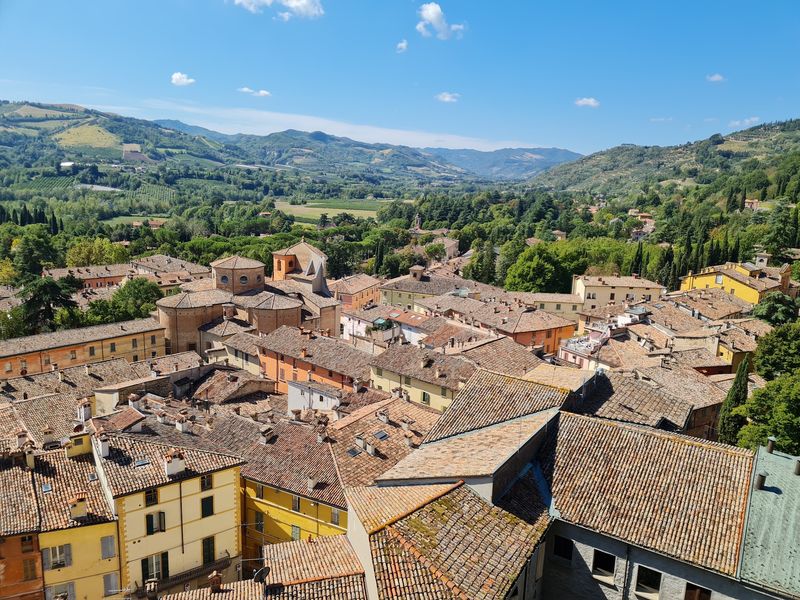
Brisighella has three hills and each one wears a crown. A fortress called Rocca Manfrediana, the Monticino Sanctuary, and a clock tower all stand guard above the rooftops.
The effect is like a stage set made for photos.
Below them, the medieval town spreads out in quiet lanes, pastel houses, arches, and small squares. Green hills of the Lamone Valley surround everything.
Italia.it describes the place as relaxed, with slow rhythms and a genuine, preserved feel.
Olive groves near the village produce a well-loved local oil. Try it drizzled on fresh bread at a nearby trattoria.
Hiking and cycling routes lead out into the countryside for anyone who wants more fresh air.
Climb up to each monument for a different angle on the town. The views change at every level, and the rooftops look different from each perch.
Allow a full afternoon, and do not rush the walk down.
Sauris, Friuli-Venezia Giulia
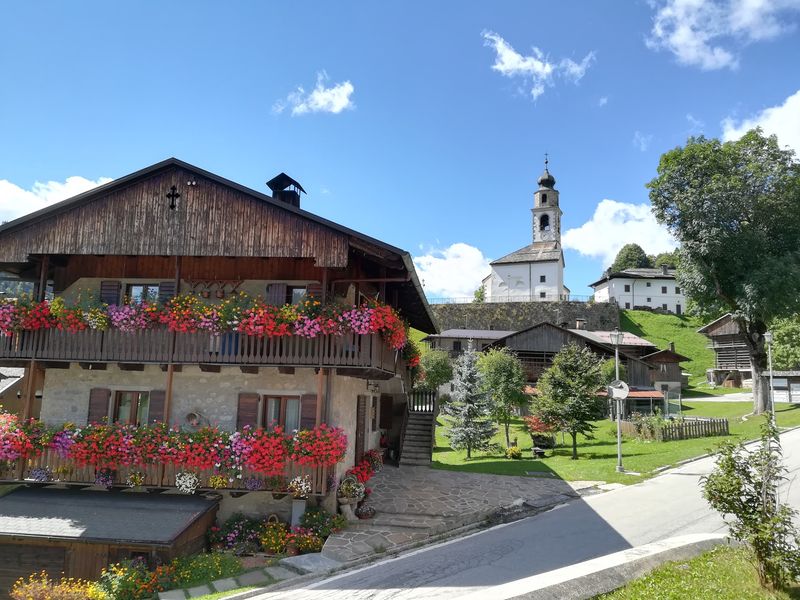
Order a slice of smoked ham in Sauris and you are tasting a legend. The local ham is famous across Italy, and it comes from a village that feels more Alpine than Italian.
At around 1,400 meters in the Carnic Alps, Sauris sits high and far from the crowds.
The village grew as a German-speaking enclave. Its isolation helped keep a distinct language, building style, and food culture alive.
Homes often have stone lower levels, timber upper floors, and wooden balconies.
Forests and mountain pastures surround the small settlements. Sauris has also earned recognition from a UN tourism initiative for rural communities that protect their heritage while growing in sustainable ways.
Winter brings deep snow and cozy traditional celebrations. Summer offers green meadows and easy walks.
Either way, bring warm layers, since the mountain air is crisp. Chat with locals and you may hear a dialect that sounds nothing like standard Italian.
Castell’Arquato, Emilia-Romagna
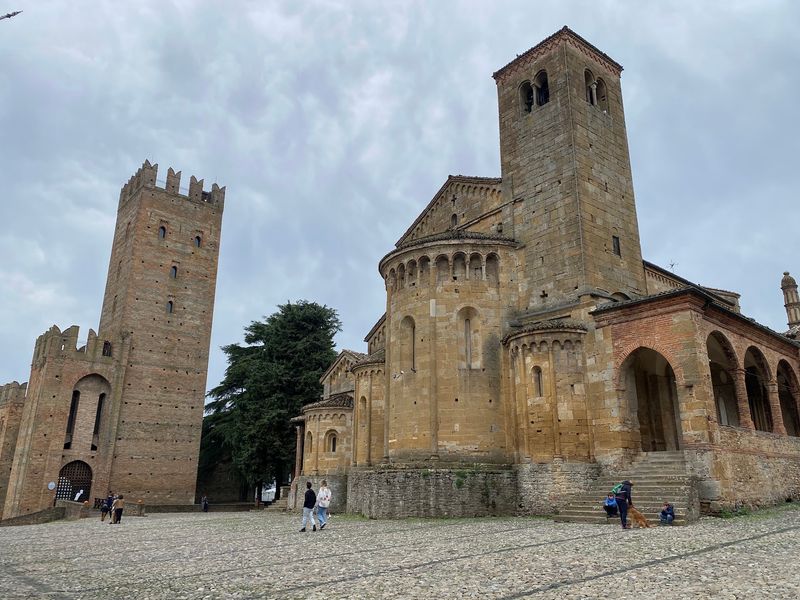
Film directors would happily borrow this skyline. Castell’Arquato’s upper town centers on a grand square with three medieval heavyweights: the Palazzo del Podestà, the Visconti Fortress, and the Romanesque Collegiate Church.
It looks staged, yet it is entirely real.
The church was consecrated in 1122, and the fortress dates to the 14th century. Step inside and feel the centuries stack up around you.
Stone floors, thick walls, and echoing halls set the mood.
Here is a quirky bit of trivia. The hill itself holds fossilized shells from a time when the area sat beneath the sea.
So you are walking over ancient ocean floor.
Streets slope down through stone houses and old defensive neighborhoods toward the Piacenza countryside. The architecture is remarkably well preserved, and the village is counted among Italy’s notable historic villages.
Visit a local cellar afterward for wines from the nearby hills.
San Gimignano, Tuscany
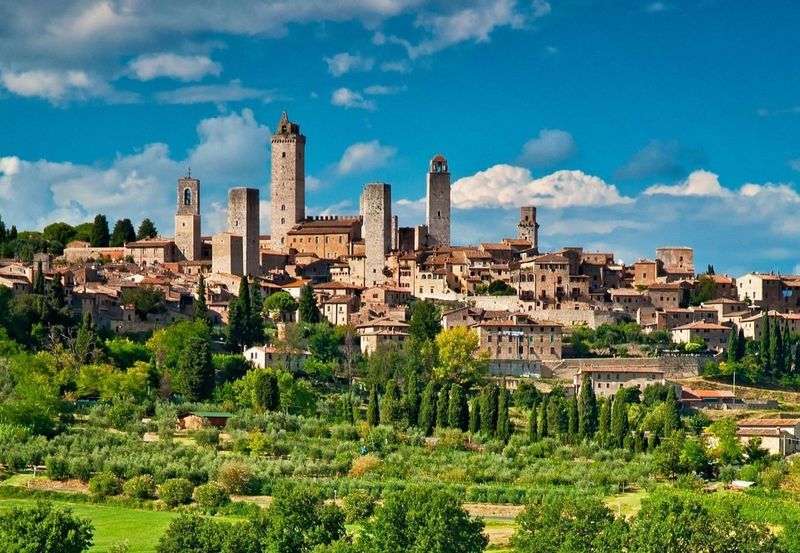
Back in the Middle Ages, rich families raced to build the tallest tower. In San Gimignano, dozens of tower houses went up as proof of wealth and power.
Many still stand, giving the town a skyline that few other Italian places kept intact.
UNESCO listed the historic center in 1990 as an outstanding example of medieval urban planning. The remaining towers rise above stone lanes, Piazza della Cisterna, churches, and palaces.
Beyond the walls, vineyards and rolling Tuscan hills stretch out.
Daytime can get busy, since many visitors come on trips from Florence and Siena. Streets fill up fast, and popular spots have lines.
Gelato shops do a brisk business, too.
Here is the trick: stay the night. After the tour groups leave, the village turns quiet and golden.
Stroll the empty lanes at dusk, sip local white wine, and watch the towers glow against the evening sky. It feels like having a medieval town all to yourself.
Share this story