New Hampshire is best known for its mountains and fall foliage, but it also hides an impressive collection of lesser-known natural wonders. From glacial formations and hidden ravines to unique wetlands and scenic overlooks, these destinations showcase a quieter side of the Granite State.
Whether you’re planning a road trip, a day hike, or simply looking to explore beyond the popular attractions, these 15 natural spots are well worth the detour. Each offers a memorable glimpse of New Hampshire’s remarkable landscape.
1. Chesterfield Gorge Natural Area, Chesterfield, New Hampshire
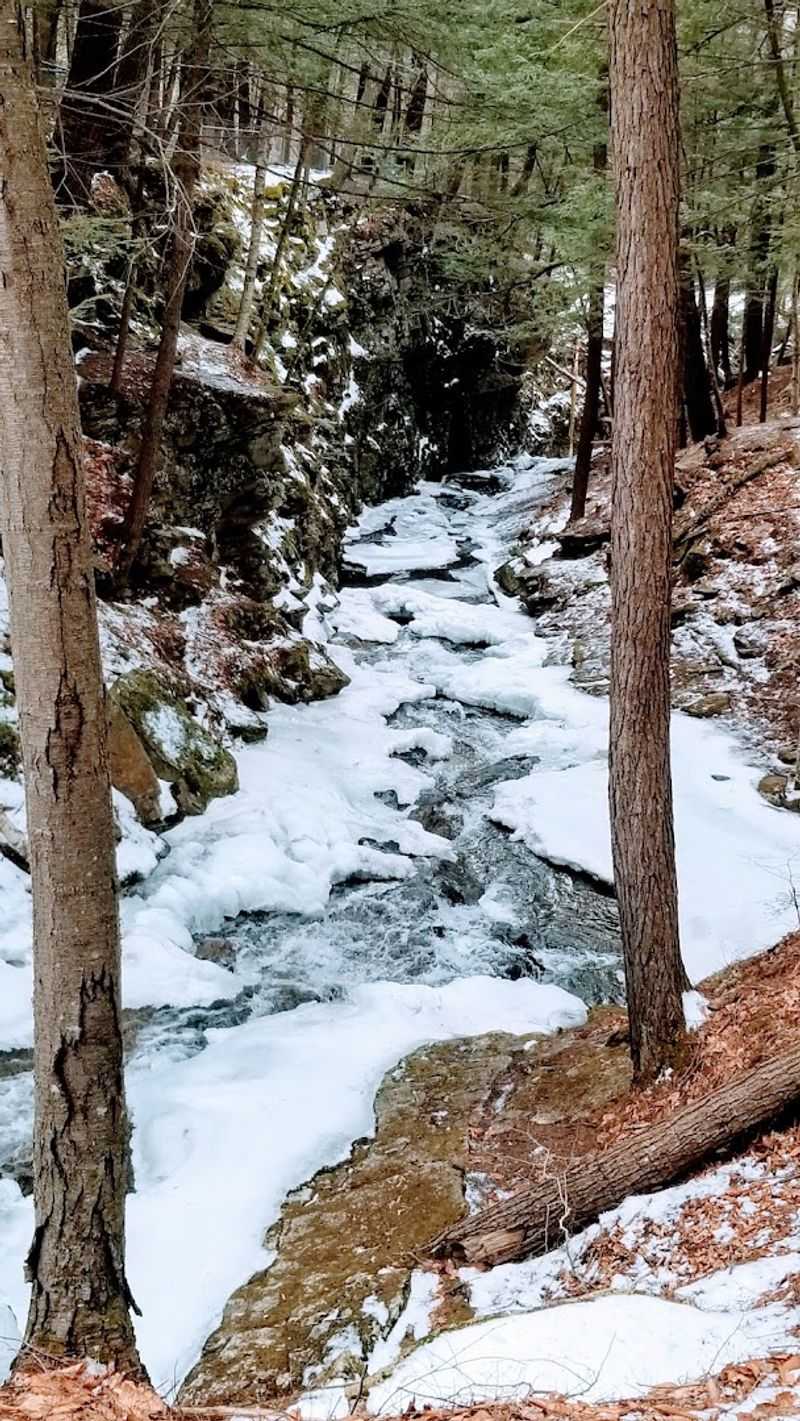
Glacial meltwater carved these 70-foot granite canyon walls roughly 12,000 years ago, and Wild Branch Brook has been adding finishing touches ever since. The result is a compact but genuinely dramatic gorge packed with cascades, smooth-sided potholes, and ripple marks pressed into solid bedrock.
A 0.7-mile Wilderness Loop Trail follows the gorge floor, while a half-mile cliff-top path delivers multiple overlook views of the rushing water below. The most impressive lower falls drop a total of 75 feet, making the payoff well worth the short walk.
History buffs will appreciate the stone abutments from an 1762 bridge that was swept away by floodwaters in 1835, still visible across the river. At just 13 acres, this southwestern New Hampshire wayside packs an enormous amount of geological drama into a very small footprint.
2. Sculptured Rocks Natural Area, Hebron, New Hampshire
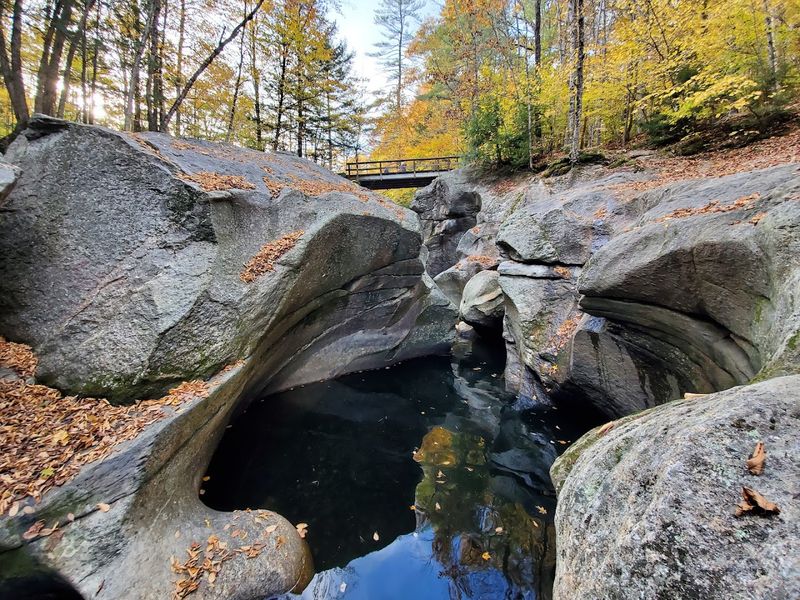
Locals have nicknamed this place the “Little Grand Canyon of New Hampshire,” and once you see the Cockermouth River’s handiwork, that bold claim starts to make complete sense. Over thousands of years, the river used sand and fine sediment as its tools, carving smooth arcs, curves, and deep circular potholes into solid granite bedrock.
The 272-acre state park site is easy to reach, and a short walk from the parking area brings visitors to a wide wooden footbridge that frames the best views of the carvings below. Spring visits are especially rewarding when higher water levels fill every channel and bowl to capacity.
Swimming holes carved naturally into the granite make this a popular warm-weather stop, though the geological formations alone justify the trip at any time of year. Few places in New Hampshire offer this combination of accessible trails and genuinely head-turning rock formations.
3. Madison Boulder Natural Area, Madison, New Hampshire
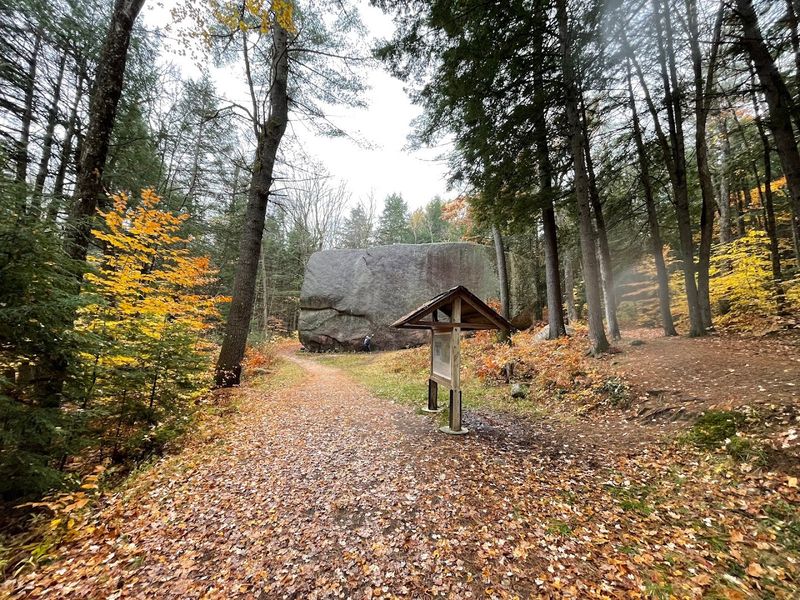
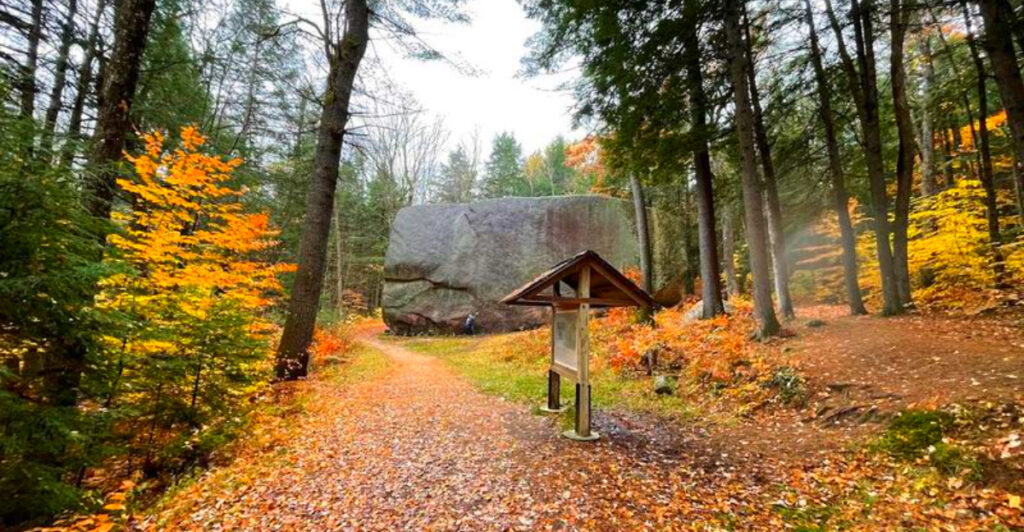
Few natural objects in North America command attention quite like the Madison Boulder, a single chunk of Conway Granite measuring 83 feet long, 37 feet wide, and 23 feet tall above the ground. Estimates put its weight at somewhere between 5,000 and 5,963 tons, which works out to roughly 12 million pounds of glacier-delivered rock.
The Laurentide Ice Sheet carried this colossal stone at least two miles from its origin on Whitten Ledge during the Wisconsinan glaciation, which ended around 11,000 years ago. Glacial abrasion smoothed its edges during the journey, and the ice sheet then simply walked away, leaving the boulder sitting on an entirely different type of bedrock than its own composition.
Designated a National Natural Landmark in 1970, the 17-acre site allows visitors to wander freely around this geological celebrity. The sheer scale of the boulder only becomes truly apparent when a person stands directly beside it.
4. Devil’s Hopyard, Stark, New Hampshire
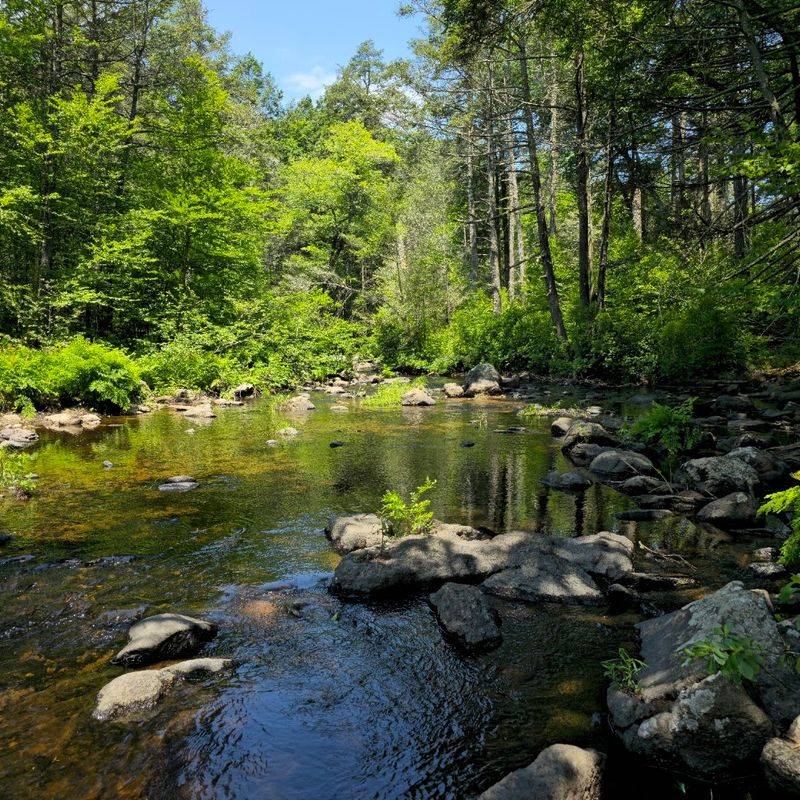
The name alone is enough to make curious hikers detour off the main road, and the Devil’s Hopyard delivers on every bit of that dark promise. This glacial gorge in the remote Kilkenny region features near-vertical cliffs, moss-covered boulders stacked in chaotic piles, and a stream that has the audacity to vanish completely beneath the rocks.
The 2.4-mile out-and-back trail begins easily from the South Pond Recreation Area on the Kilkenny Ridge Trail before dropping into the gorge itself, where careful footwork becomes essential on the slippery, uneven terrain. A distinct cool microclimate settles over the floor of the gorge, noticeably colder than the surrounding forest.
The gorge earned a spot on New Hampshire’s Terrifying 25 Hiking Challenge, a badge of honor that accurately reflects the rugged character of the experience. Northern New Hampshire does not get much wilder or more rewarding than this particular stretch of trail.
5. Waterville Flume, Waterville Valley, New Hampshire
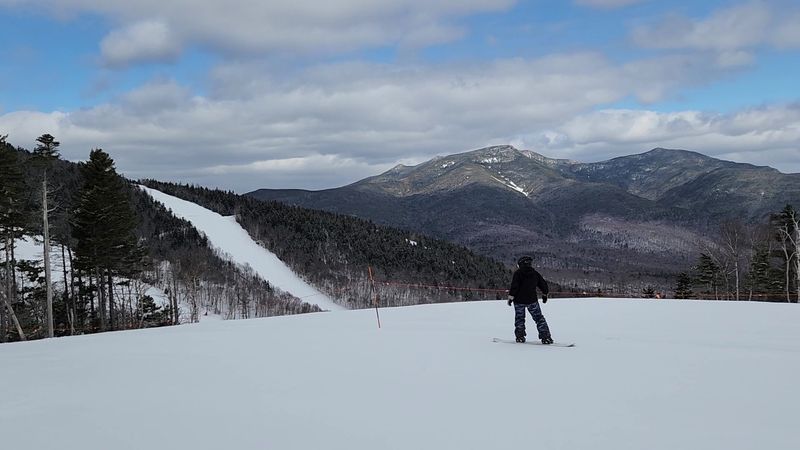
Mad River Notch keeps one of the White Mountains’ most underrated geological features tucked quietly behind a moderate forest hike, far from the lift lines and lodge crowds of nearby Waterville Valley Resort. The Waterville Flume channels Flume Brook between granite walls rising more than 60 feet, creating a series of cascades that slide down long ledge ramps in a genuinely satisfying display.
The round-trip hike runs between 5.4 and 6.6 miles depending on the chosen route, with the Livermore Trail and Irene’s Path providing the most direct access. A worthwhile spur trail branches off toward The Scaur, a rocky outcrop with excellent views of Mount Tecumseh and the Sandwich Range.
Hikers completing the Old Skidder Trail loop get an extended tour of this quiet valley, making the outing feel more like a full day adventure than a quick detour. The secluded setting is the main attraction here, offering genuine solitude in a region that can feel crowded elsewhere.
6. Philbrick-Cricenti Bog, New London, New Hampshire
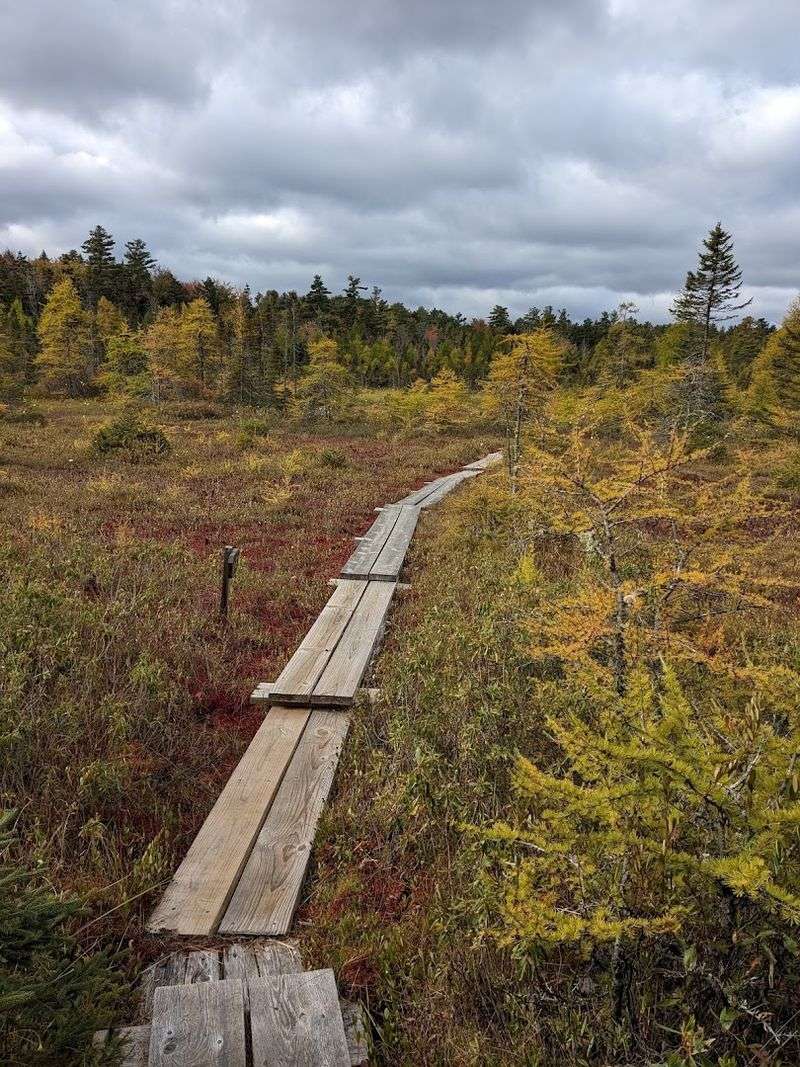
A bog that literally quivers underfoot is not something most people expect to find in central New Hampshire, but Philbrick-Cricenti delivers exactly that sensation. This rare kettle-hole bog formed after glaciers receded, leaving behind a floating mat of tundra-like vegetation anchored over open water by layers of compressed peat moss.
An elevated boardwalk guides visitors safely through the ecosystem, passing carnivorous pitcher plants, sundews with their sticky glands, bog rosemary, and sheep laurel along the way. The Quaking Loop trail earns its name honestly, providing a palpable wobble with every step as the floating mat responds to foot traffic.
A 20-foot pole near the Peek Hole Loop can be pulled straight out of the bog to demonstrate just how deep the water sits beneath the surface. Recognized with the Homer Lucas Landscape Award in 1995 for its native plant display, this preserve offers a completely different side of New Hampshire’s natural character.
7. Loverens Mill Cedar Swamp Preserve, Antrim, New Hampshire
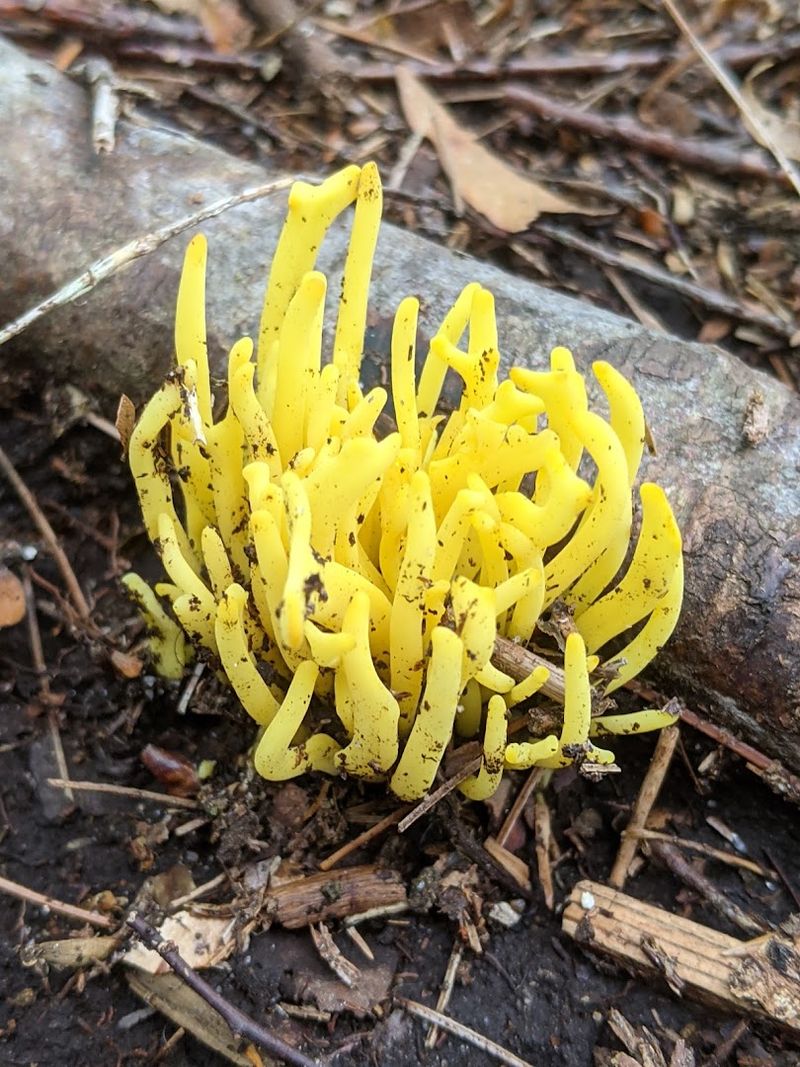
Atlantic white cedars do not grow just anywhere, and the Loverens Mill Cedar Swamp Preserve protects the second largest and highest quality boreal cedar swamp in all of New Hampshire. The nearly 50-acre swamp sits at an elevation between 1,040 and 1,083 feet, where surrounding hills funnel cold air downward to simulate a climate found much farther north.
A 200-foot elevated boardwalk provides access into this fragile habitat without disturbing the sphagnum moss and specialized plants beneath. Beyond the boardwalk, a three-mile loop trail follows the North Branch of the Contoocook River and winds through mixed forest, offering sightings of moose, bobcat, river otter, and the rare Hessel’s Hairstreak butterfly, which depends entirely on Atlantic white cedar for its survival.
8. Pondicherry Wildlife Sanctuary, Whitefield, New Hampshire
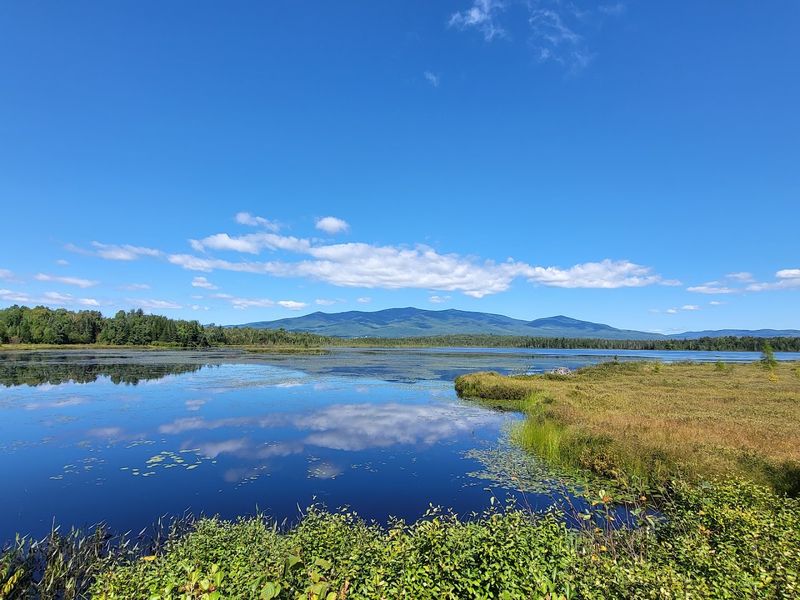
More than 220 bird species have been recorded at Pondicherry Wildlife Sanctuary, a figure that puts many far more famous birding destinations to shame. The sanctuary combines wetlands, boreal forests, and open ponds into one remarkably diverse landscape positioned directly beneath the northern Presidential Range.
An 8-foot wide, hard-surfaced Presidential Rail Trail runs through the sanctuary, making it accessible to walkers, cyclists, and wheelchair users alike. A viewing platform on Cherry Pond offers clear sightlines across the water to the Northern Presidentials, with mountain reflections providing one of the most photogenic scenes in northern New Hampshire.
Unusual geological features called ice push ramparts line the shore of Cherry Pond, where centuries of ice movement have shoved gravel and boulders onto the bank in a process that has been repeating since glaciers first retreated 11,000 years ago. Designated a National Natural Landmark in 1972, this sanctuary is genuinely one of New England’s most rewarding and least crowded natural destinations.
9. Beaver Brook Falls, Colebrook, New Hampshire
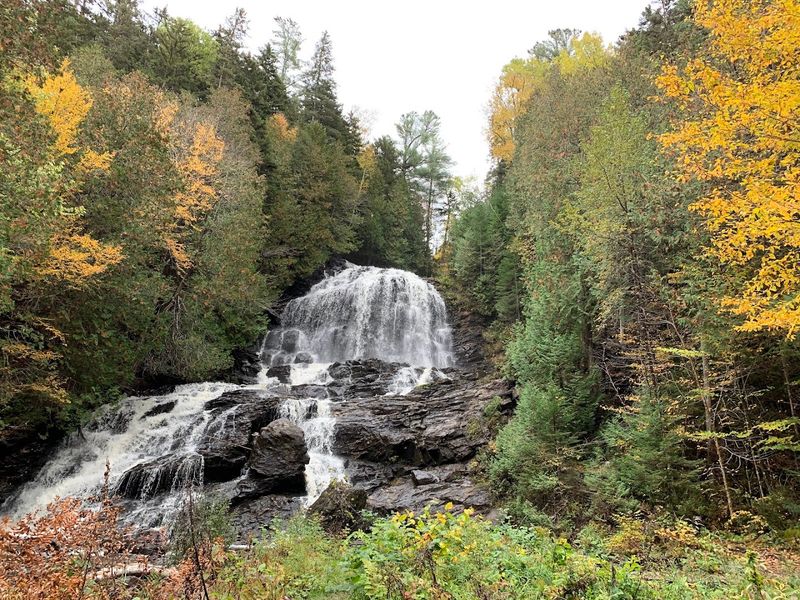
An 80-foot waterfall that requires almost zero effort to reach sounds too good to be true, yet Beaver Brook Falls delivers precisely that deal for anyone willing to drive to the far north of the state. The graceful horsetail cascade drops over broad granite ledges right alongside Route 145, making it one of the most accessible dramatic waterfalls anywhere in New England.
A paved ramp leads from the parking area down to the base of the falls, making it genuinely reachable for visitors using wheelchairs or with limited mobility. Trails also allow adventurous visitors to climb alongside the cascade and, at certain water levels, even step briefly beneath the falling water.
Picnic tables and pit toilets make this a practical stop for families on a long drive through the Great North Woods region. Because it sits far outside the usual tourist corridors, many travelers pass within a few miles without ever knowing this waterfall exists.
10. Giant Falls, Shelburne, New Hampshire
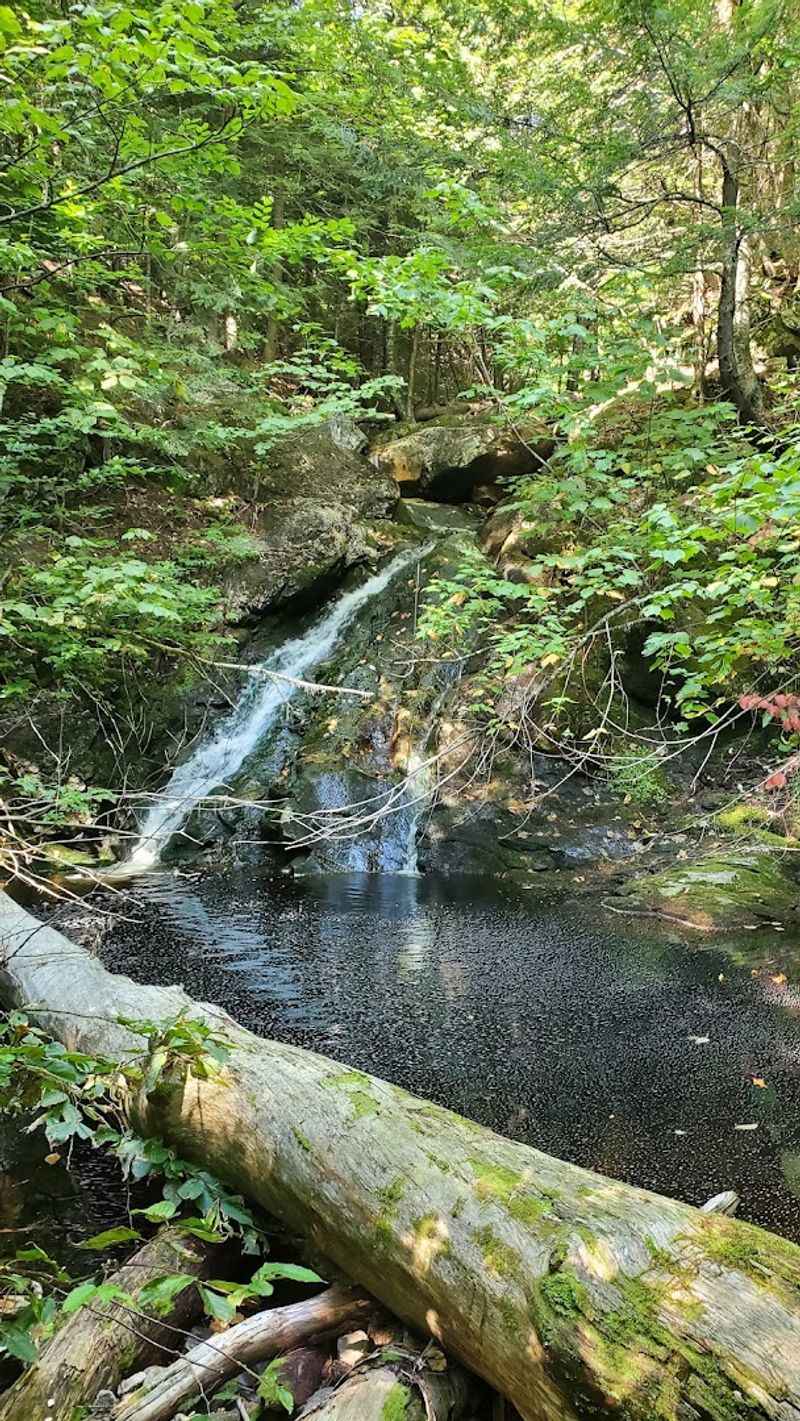
Tucked inside a shadowy ravine on the south side of the Mahoosuc Range, Giant Falls earns its straightforward name with an 80-foot horsetail cascade that spills down an enormous cliff face fed by Peabody Brook. Spring visits and post-rain conditions transform the falls into a full-volume spectacle, while late summer reveals a dramatically different, quieter version of the same cliff.
The 3-mile out-and-back Peabody Brook Trail provides a moderate approach, with the terrain becoming noticeably rockier and steeper in the final stretch before the falls. Sturdy footwear is a practical necessity rather than a casual suggestion on this particular trail.
Only the lower section of the two-tiered falls is clearly visible from the trail’s end, yet even that partial view consistently ranks among New Hampshire’s most impressive waterfall experiences. Hikers seeking additional mileage can continue past the falls toward Bald Cap Peak for open ledge views over the surrounding forest.
11. Binney Pond Natural Area, New Ipswich, New Hampshire
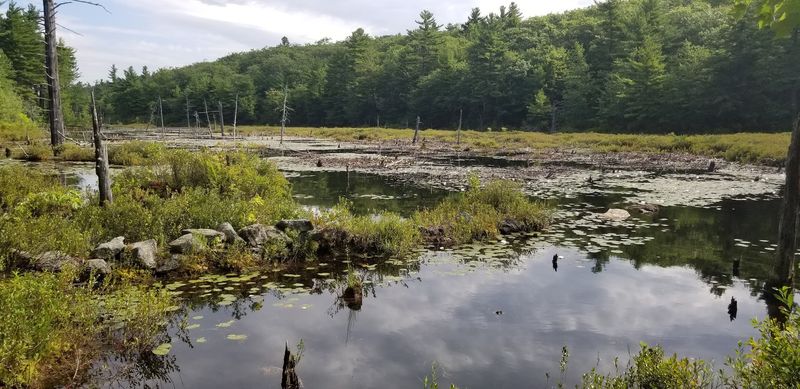
Southern New Hampshire is not typically where people expect to find a 550-acre wilderness preserve protecting a rare bog ecosystem, but Binney Pond Natural Area quietly makes that case with considerable conviction. The preserve spans New Ipswich and Rindge, forming a critical link in a connected block of over 6,000 acres of protected land.
Black spruce, sphagnum moss, and insect-eating plants dominate the bog environment, earning the area a top habitat-quality designation in the State Wildlife Action Plan. Boardwalks cross the wettest sections, while gentle loop trails circle the pond and offer consistent wildlife sightings including moose, bobcat, black bear, and an impressive variety of wildflowers from spring through early summer.
12. Purgatory Falls, Lyndeborough, New Hampshire
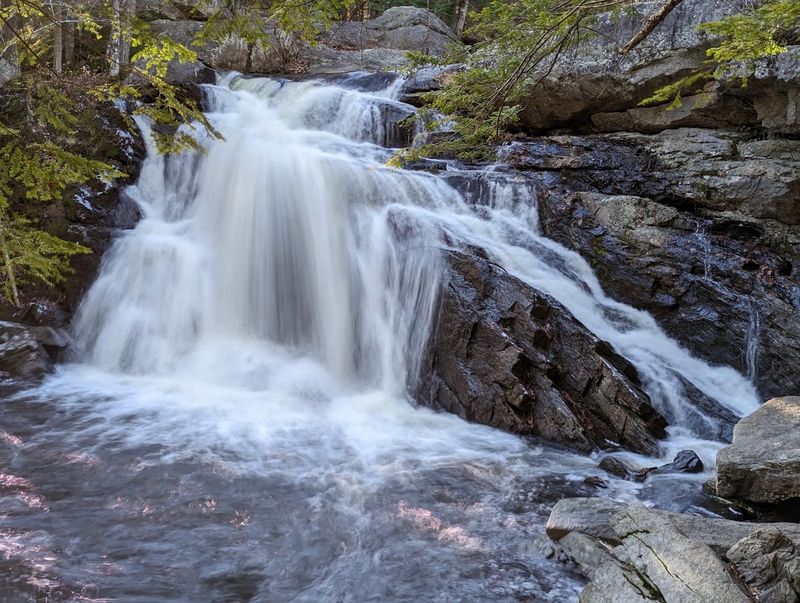
Local legend claims the Devil once used this gorge as his personal kitchen, a story that makes the 3.7-mile loop hike to Purgatory Falls considerably more entertaining than your average trail description. The evidence, according to folklore, includes a large hole in the rock near the upper falls known as the Devil’s Bean Pot and a nearby indent identified as the Devil’s Footprint.
Three distinct waterfalls anchor the route: the wide, voluminous Lower Purgatory Falls, which spreads across a broad rock face with a smaller cascade beside it, plus the more remote Middle and Upper Falls. From the 1890s through the Great Depression, the upper falls hosted Purgatory Grove, a full tourist complex featuring a dance hall and bowling alley, though only traces of those structures remain today.
A lookout point on the South Wah Lum Trail within the preserve delivers clear views of Pack Monadnock and North Pack Mountains. The combination of geological drama, woodland quiet, and genuinely strange local history makes this one of southern New Hampshire’s most character-filled short hikes.
13. Ice Gulch, Randolph, New Hampshire
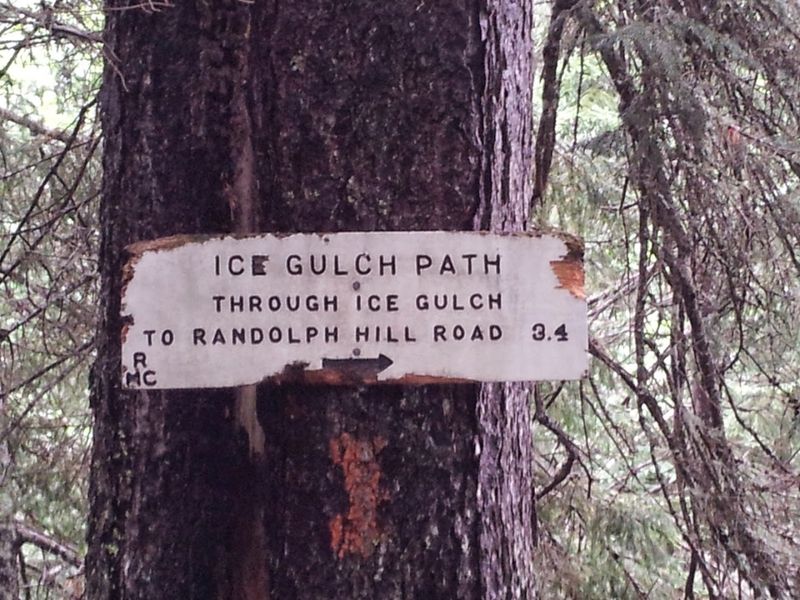
Ice still hiding between boulders in August is not something most hikers expect to find in the White Mountains, yet Ice Gulch in Randolph delivers precisely that geological curiosity on a reliable basis. The ravine’s east-west orientation and canyon-like depth drastically limit direct sunlight, while the chaotic stacking of massive boulders creates cavities where water freezes and stays frozen long after the surrounding forest has fully warmed.
This extreme cold environment supports vegetation typical of much higher elevations, including stunted black spruce trees that may be over a century old despite their modest height, alongside alpine bilberry, mountain cranberry, and Labrador tea. The hike through the gulch is classified as strenuous and appears on the New Hampshire Terrifying 25 Hiking Challenge, requiring hikers to climb over, under, and around car-sized boulders on wet, slippery surfaces.
14. Lost River Gorge and Boulder Caves, North Woodstock, New Hampshire
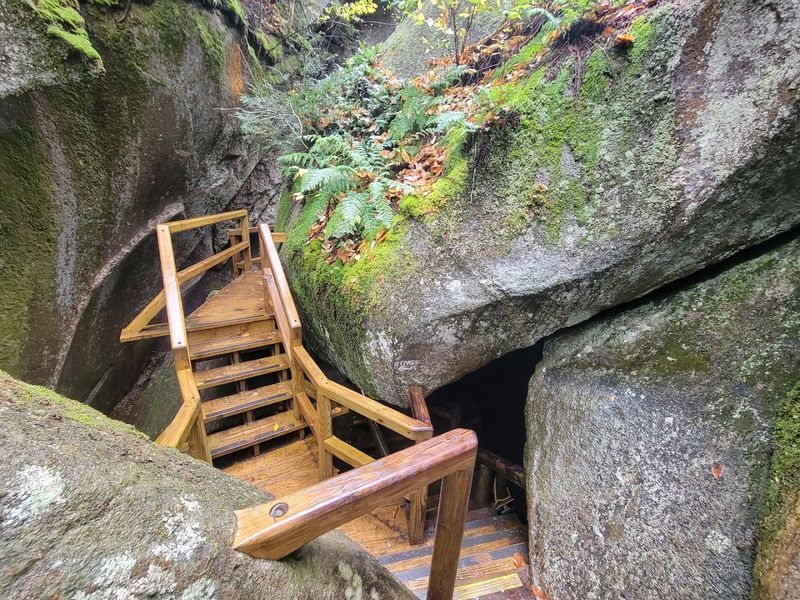
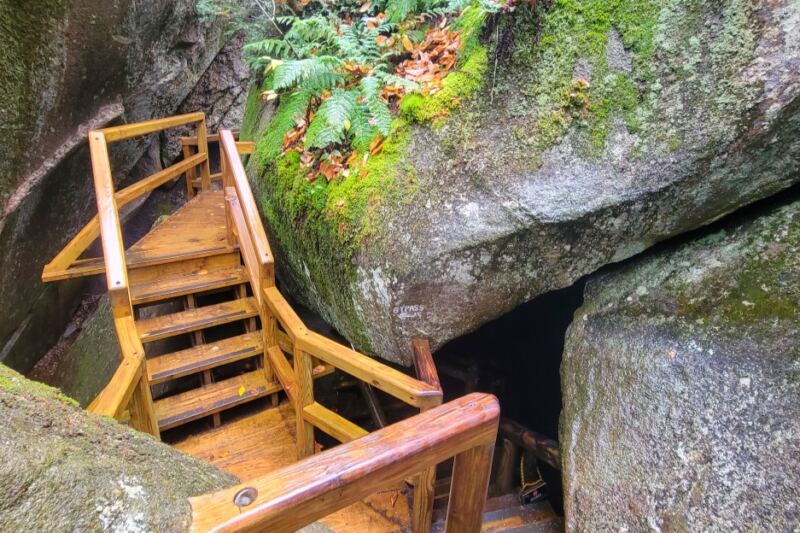
A river that disappears underground and a collection of glacial caves with names like Fat Man’s Misery and the Cave of Silence make Lost River Gorge one of the most genuinely playful natural attractions in New Hampshire. The gorge formed during the Ice Age as glaciers carved deep chasms and deposited massive boulders, creating the conditions for a river to vanish beneath the surface entirely.
A one-mile wooden boardwalk incorporating more than 1,300 steps descends 300 vertical feet through the gorge, passing 11 distinct glacial caves, picturesque waterfalls, and towering granite walls. A suspension bridge, a covered bridge, and a Valley Viewpoint Overlook platform add variety to what is already a densely packed geological tour.
Share this story