Some buildings carry history so deeply that stepping inside feels like traveling through time. Christianity has left its mark on the world for nearly 2,000 years, and a surprising number of its earliest places of worship are still standing today.
From the shores of the Red Sea to the deserts of Egypt, these landmarks connect modern visitors to the very beginnings of one of the world’s largest religions. Whether you are a history lover, a curious traveler, or a person of faith, these ancient sites have something genuinely awe-inspiring to offer.
Aqaba Early Christian Church – Aqaba, Jordan
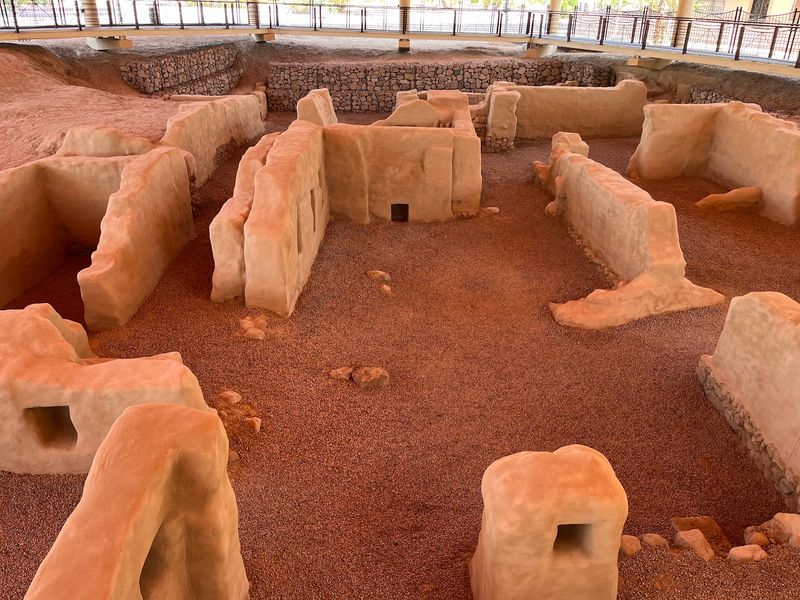
Built before Christianity was even legal, the Aqaba Early Christian Church is one of the most jaw-dropping archaeological finds of recent decades. Archaeologists date its first phase to approximately A.D. 293 to 303, making it one of the earliest known buildings constructed specifically for Christian worship.
That puts it ahead of Constantine’s famous legalization of Christianity in 313.
The mud-brick structure followed a basilica-like plan, complete with a central nave, side aisles, and an apse. Pottery, coins, glass lamps, and fragments of what may have been a bronze cross helped researchers confirm both its age and its Christian identity.
An earthquake in 363 apparently ended the building’s active use.
For a long time, the site was off-limits to casual visitors. Jordan formally reopened and developed it for public visitation in late 2025, making now a genuinely exciting moment to plan a trip.
Standing within the outline of this church, you are walking through a space where early Christians gathered at real personal risk. Few archaeological sites anywhere in the world can match that kind of raw historical weight.
Church of the Holy Sepulchre – Jerusalem
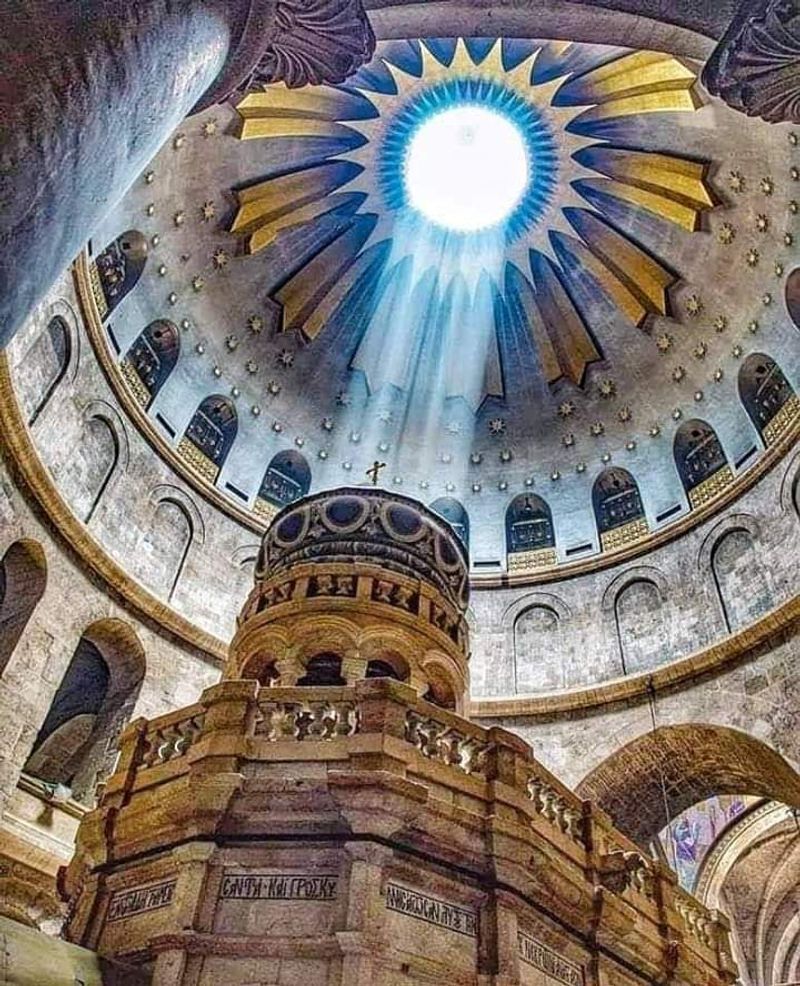
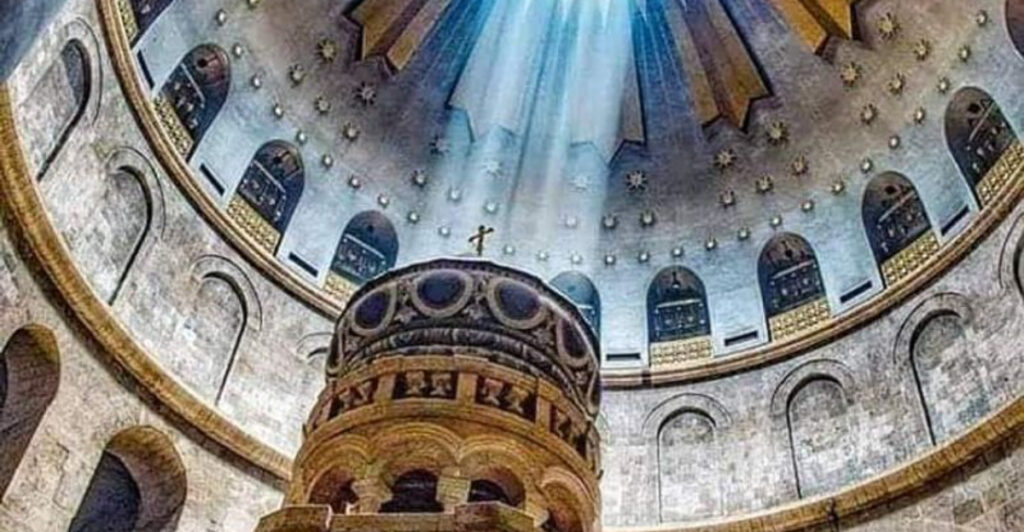
Every year, millions of people travel to Jerusalem specifically to stand inside this church, and the atmosphere inside is unlike anywhere else on earth. The Church of the Holy Sepulchre marks the site traditionally associated with both the crucifixion and burial of Jesus, and a monumental Christian complex was first established here in the fourth century under Emperor Constantine.
The building visitors see today is not a single ancient structure. Destruction by fire, earthquakes, Crusader rebuilding, and centuries of renovation have layered period upon period into one remarkably compact site.
Byzantine tradition, Roman archaeology, medieval chapels, and living worship from multiple Christian denominations all share the same walls.
Jerusalem’s Old City, including the church, holds UNESCO World Heritage status because of its extraordinary significance to Judaism, Christianity, and Islam. Navigating the church’s interior can feel overwhelming at first, with chapels, staircases, and crowds pulling in every direction.
Arriving early in the morning or on a weekday tends to give visitors a quieter, more reflective experience. The site rewards patience and a slow pace far more than a rushed walk-through ever could.
Church of the Nativity – Bethlehem
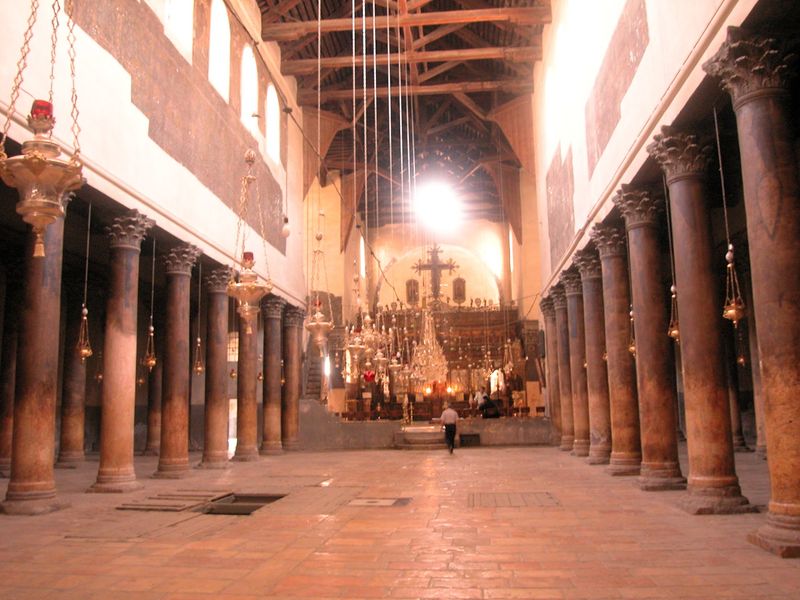
Walking through the low doorway of the Church of the Nativity requires a literal bow of the head, and that small act feels fitting given what the building represents. Bethlehem’s most famous landmark sits over the grotto traditionally identified as the birthplace of Jesus, and the site has drawn pilgrims continuously since at least the fourth century.
The original church was built in the fourth century, but much of what visitors see today reflects a sixth-century reconstruction. That makes it unusually significant among early Christian sites, because many buildings from that era survive only as foundations or beneath later structures.
Here, substantial ancient fabric remains visible and accessible.
Rows of ancient columns frame the nave, while surviving mosaics from different construction phases decorate both the floor and walls. Stairs descend to the Grotto of the Nativity, where a silver star marks the traditional birthplace site.
UNESCO recognizes the Church of the Nativity as one of the world’s most sacred Christian monuments. For visitors, the combination of ancient architecture, living pilgrimage tradition, and underground sacred space creates an experience that is genuinely hard to find anywhere else.
Cathedral of Etchmiadzin – Vagharshapat, Armenia
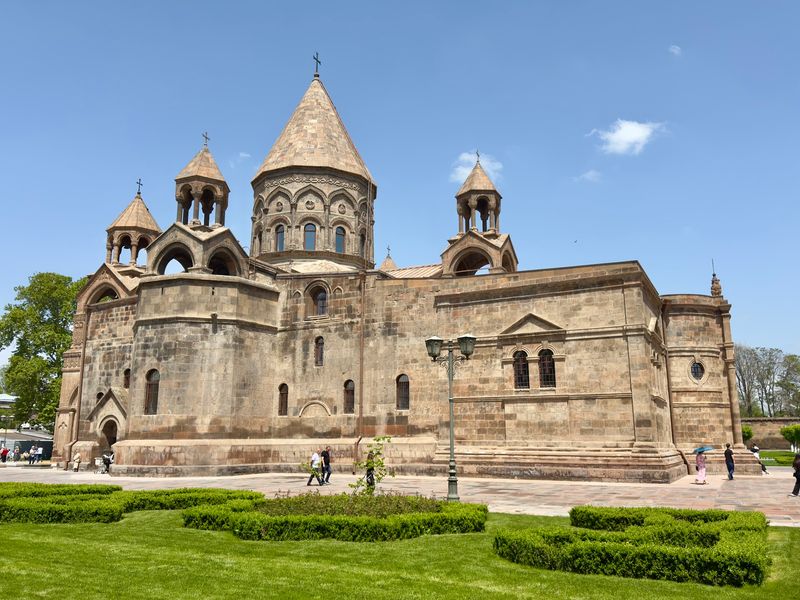
Armenia holds a record no other nation can claim: it was the first kingdom in history to adopt Christianity as its official state religion. That happened in the early fourth century, and Etchmiadzin has served as the spiritual heart of the Armenian Apostolic Church ever since.
That is an unbroken religious tradition stretching back roughly 1,700 years.
The cathedral has been reconstructed and altered many times over the centuries, so today’s building is not a frozen snapshot of the original. What it does preserve is something arguably more valuable: continuous religious use and cultural memory reaching back to Christianity’s earliest days as a state institution.
UNESCO recognizes the Cathedral and Churches of Echmiatsin as a World Heritage Site, praising their role in shaping Armenian Christian architecture across the centuries.
The site remains the active headquarters of the Armenian Apostolic Church, meaning visitors encounter a living institution rather than a preserved relic. Religious ceremonies, clergy, and pilgrims from around the world give Etchmiadzin an energy that purely archaeological sites simply cannot replicate.
If you want to understand how ancient faith traditions survive and evolve across millennia, this is one of the most instructive places on the planet to visit.
Archbasilica of St. John Lateran – Rome, Italy
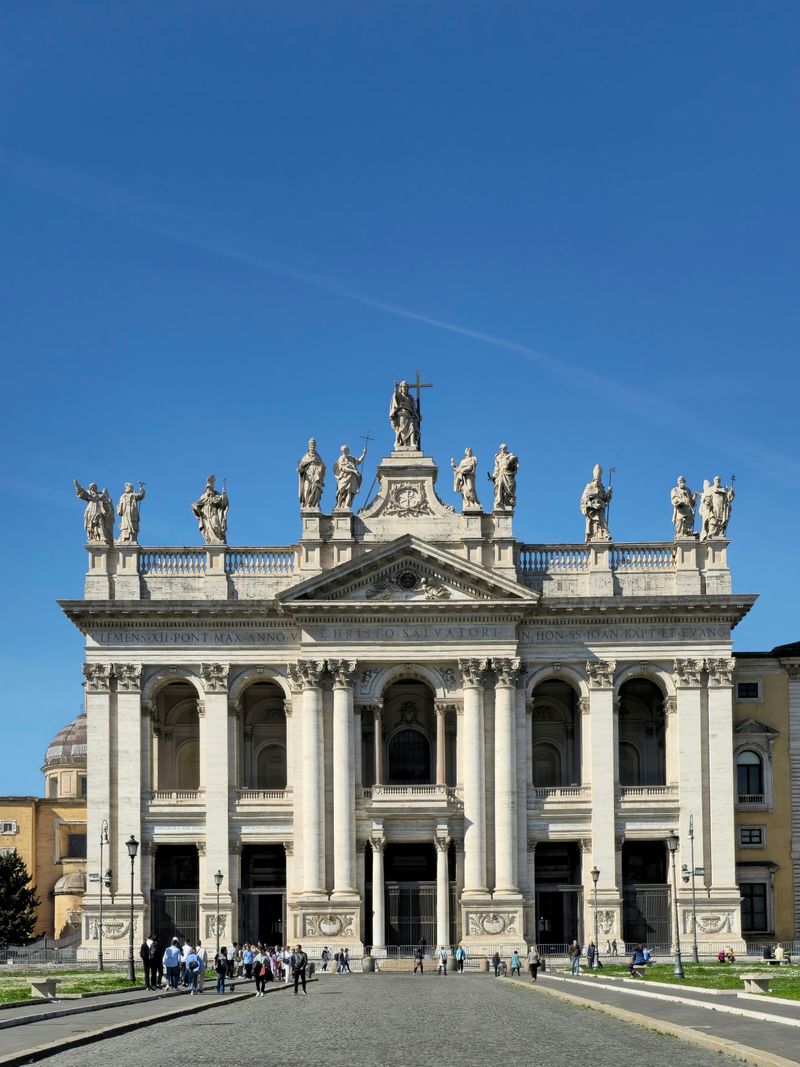
Forget the popular assumption that St. Peter’s Basilica is Rome’s most important church. That title actually belongs to St. John Lateran, which is the official cathedral of the Bishop of Rome, a role held by the pope.
Constantine established it in the fourth century after Christianity gained legal recognition across the Roman Empire, giving the basilica a founding history that predates most of Rome’s famous religious monuments.
The church seen today looks very different from its Constantinian origins. Major medieval and Baroque makeovers reshaped the interior and facade over the centuries.
Visitors looking for untouched ancient architecture will not find it here, but those interested in how Christianity evolved from persecuted movement to imperial institution will find the history genuinely fascinating.
The nearby Lateran Baptistery is the real architectural gem for early Christian enthusiasts. Vatican sources note that its development includes elements reaching back to the Constantinian era, with significant fifth-century rebuilding.
Together, the basilica and baptistery represent one of the earliest monumental expressions of Christianity as a public, state-supported religion. Visiting both in the same afternoon gives a surprisingly rich picture of how dramatically the church’s status changed in the fourth century.
Basilica of Aquileia – Aquileia, Italy
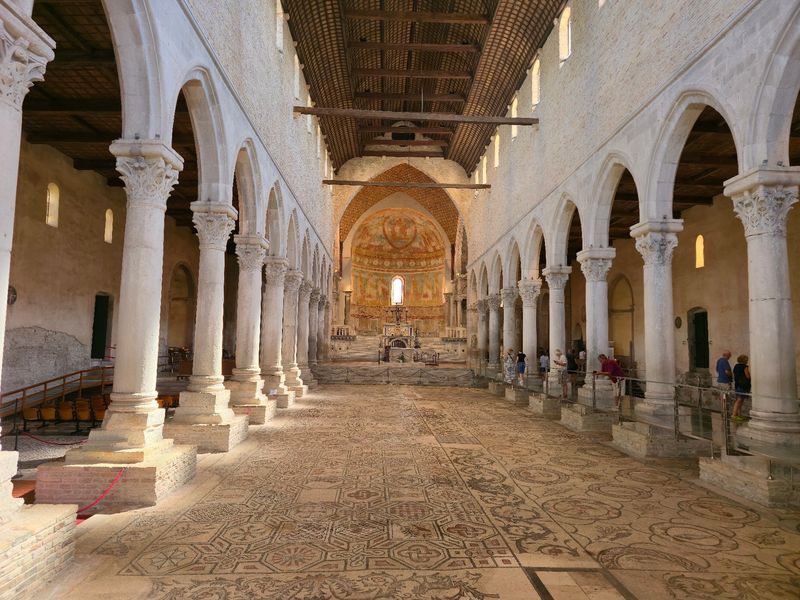
Aquileia was once one of the Roman Empire’s most powerful cities, and the early Christian remains buried beneath and within its Patriarchal Basilica are nothing short of extraordinary. Spread across the floor are vast mosaic panels originating in the fourth century, making them among the oldest and largest surviving Christian mosaic floors in the world.
The sheer scale stops most visitors cold.
The mosaics are packed with symbols, biblical imagery, animals, and intricate decorative patterns that scholars have spent decades interpreting. Some images connect to scripture, others to the ritual life of early Christian communities, and a few remain genuinely puzzling.
Walking across the transparent protective flooring above them feels strangely intimate, like reading someone’s private visual diary from 1,700 years ago.
UNESCO recognizes Aquileia’s archaeological zone and patriarchal basilica as a World Heritage Site, emphasizing the city’s remarkable transformation from Roman metropolis to major Christian center. The later medieval basilica above the ancient floors adds another layer of history without overwhelming the older material beneath.
For travelers who enjoy sites where multiple eras coexist visibly, Aquileia is an almost unbeatable destination in northern Italy.
Rotunda of Galerius – Thessaloniki, Greece
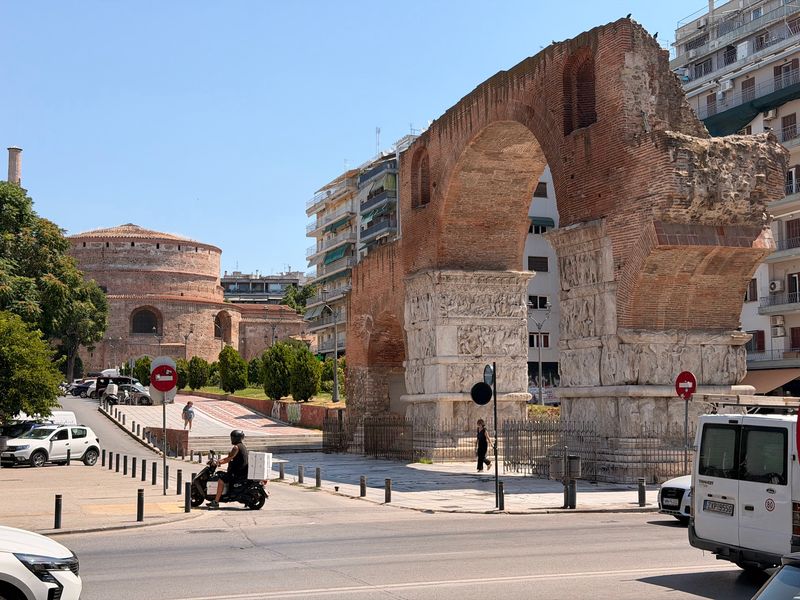
Here is a fun historical twist: the Rotunda in Thessaloniki was never meant to be a church. Built during the Roman imperial period in the early fourth century, it was later converted to Christian use and transformed with some of the most stunning mosaics in the entire Byzantine world.
That repurposing tells a bigger story about how Christianity absorbed and reshaped Roman architecture across the empire.
The structure is enormous. Its thick circular brick walls support a massive dome, and the surviving mosaics high above the floor depict saints standing against shimmering golden backgrounds.
Getting a clear look requires craning your neck, but the effort is absolutely worth it. The detail and preservation of these images after more than 1,600 years is genuinely remarkable.
The Rotunda forms part of UNESCO’s Paleochristian and Byzantine Monuments of Thessaloniki, a collection that documents the city’s central role in early Christian and Byzantine culture. Thessaloniki itself is an underrated destination for history lovers, and the Rotunda ranks among its most impressive stops.
Combining a visit here with Thessaloniki’s other UNESCO-listed monuments makes for one of the richest ancient Christian itineraries available in Greece.
Basilica of Sant’Apollinare Nuovo – Ravenna, Italy
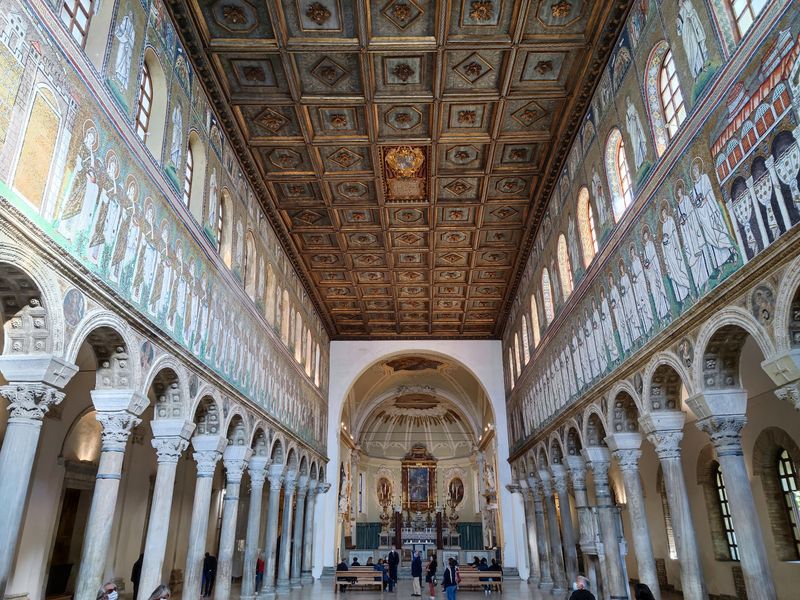
Ravenna is a city that quietly outshines most of its more famous Italian neighbors when it comes to early Christian art, and Sant’Apollinare Nuovo is a perfect example of why. Built in the early sixth century under the Ostrogothic ruler Theodoric, the basilica’s long nave is lined from end to end with glittering mosaic processions that have been dazzling visitors for roughly 1,500 years.
On one side, a procession of virgin martyrs moves toward the Virgin Mary and the Christ child. On the other, male martyrs advance toward Christ enthroned.
The figures are formal and hieratic in the Byzantine style, but the gold backgrounds give the whole interior an almost otherworldly warmth. Even visitors with no background in Christian iconography tend to stop and stare.
The church belongs to UNESCO’s group of Early Christian Monuments of Ravenna, which the organization praises as exceptional evidence of the meeting between eastern and western artistic traditions. Ravenna’s compact historic center makes it easy to visit several UNESCO sites in a single day.
Sant’Apollinare Nuovo is an ideal starting point because its scale and visual impact set a high standard that the rest of the city then somehow manages to meet.
Neonian Baptistery – Ravenna, Italy
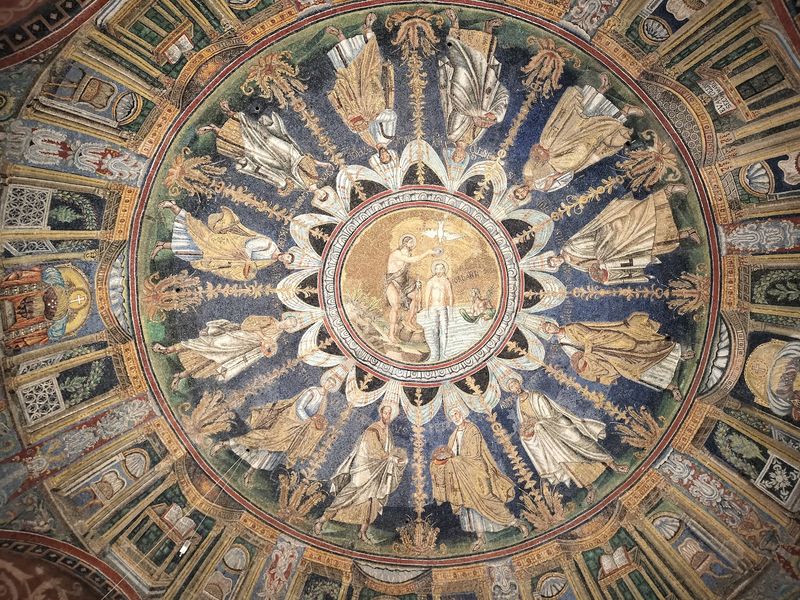
Smaller than Ravenna’s famous basilicas but arguably more dazzling per square foot, the Neonian Baptistery packs an almost unreasonable amount of beauty into a compact octagonal space. Step inside and look up: the fifth-century mosaic program covering the ceiling centers on the Baptism of Christ, ringed by a procession of apostles and framed by elaborate architectural imagery rendered in jewel-like tesserae.
Because the space is small, visitors stand almost directly beneath mosaics that have survived roughly 1,500 years. That physical closeness creates an intimacy that larger churches cannot always provide.
The colors remain vivid, the figures expressive, and the theological symbolism layered enough to reward careful study even for visitors who spend just a few minutes inside.
The baptistery is included in UNESCO’s World Heritage designation for Ravenna’s early Christian monuments, which celebrates the city’s extraordinarily preserved late-antique art. For anyone curious about how early Christians understood baptism as a ritual, this building offers one of the richest surviving visual statements on the subject anywhere in the world.
A visit here pairs naturally with Ravenna’s other UNESCO sites, all of which are within easy walking distance of one another.
Mausoleum of Galla Placidia – Ravenna, Italy
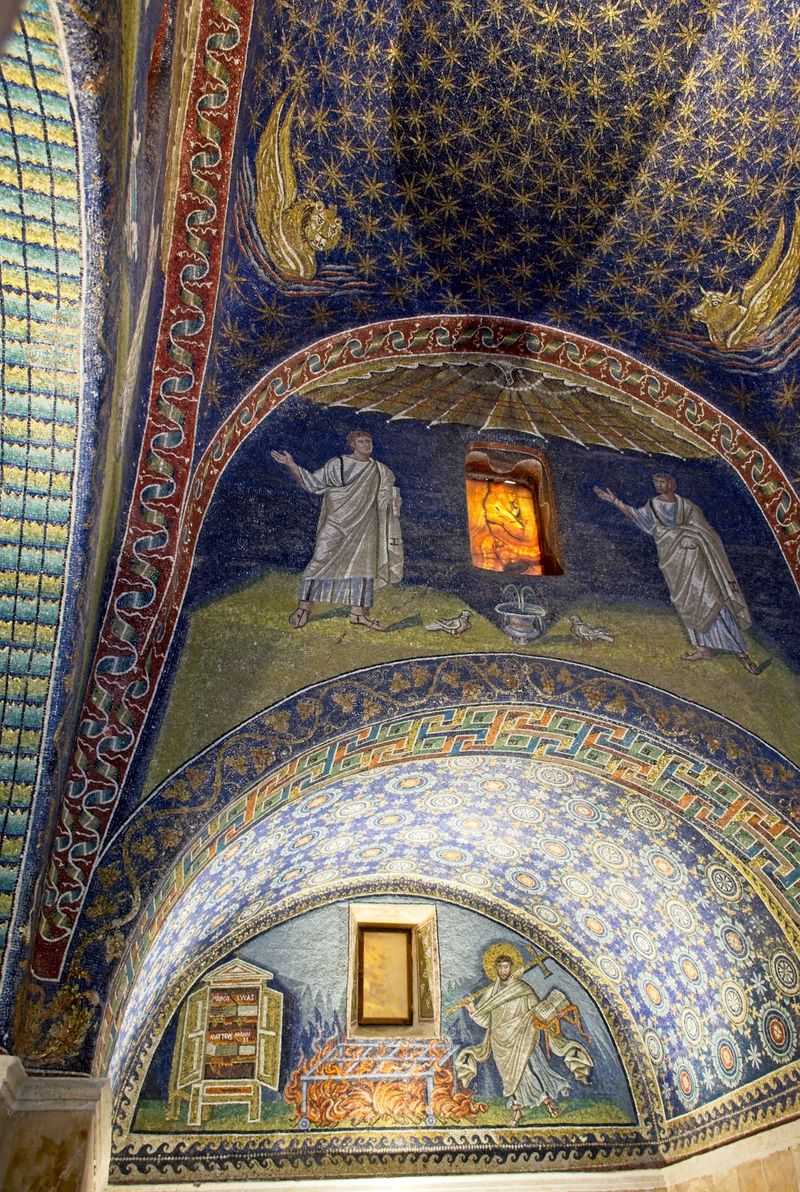
From the outside, the Mausoleum of Galla Placidia looks almost unassuming: a small, plain brick building that gives nothing away. Then you walk through the entrance, and the effect is genuinely shocking.
The entire interior is blanketed in deep-blue mosaics studded with golden stars, crosses, vines, doves, and deer, creating one of the most atmospheric spaces in all of early Christian art.
The building dates to the fifth century and is traditionally associated with Galla Placidia, daughter of Emperor Theodosius I. Whether she was actually buried there is a question scholars continue to debate, but the monument’s significance has never depended on resolving it.
What matters is the art, and the art is extraordinary by any standard.
The mosaics here are among the most celebrated surviving examples of late Roman Christian funerary decoration in the world. UNESCO includes the mausoleum in its Early Christian Monuments of Ravenna designation, and it consistently ranks among the must-see stops on any visit to the city.
Visiting on a bright day helps, because natural light filtering through the alabaster windows transforms the blue interior into something that feels closer to a spiritual experience than a museum visit.
Basilica of Santa Maria Maggiore – Rome, Italy
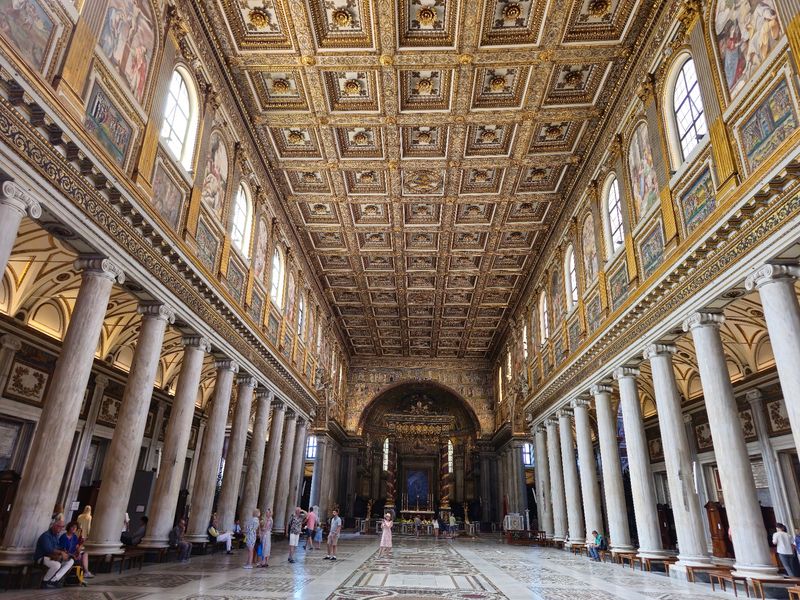
Rome has no shortage of famous churches, but Santa Maria Maggiore stands apart because it gives visitors something genuinely rare: a working basilica where fifth-century mosaics still line the nave walls above centuries of later decoration. Most ancient Roman churches have been so thoroughly renovated that the early layers are hard to find.
Here, they are impossible to miss.
The fifth-century mosaic cycle along the nave represents one of the most significant surviving early Christian mosaic programs in the city. Biblical scenes from the Old Testament unfold across panel after panel, rendered in the formal style of late antiquity and still remarkably well preserved.
Later popes added coffered ceilings, Baroque chapels, elaborate tombs, and ornate facades, layering the building with centuries of Catholic ambition.
Santa Maria Maggiore is included within UNESCO’s World Heritage property covering Rome’s historic center and the extraterritorial properties of the Holy See. Unlike the city’s purely archaeological Christian sites, this basilica remains one of Catholicism’s major functioning churches, with regular masses and a constant stream of pilgrims.
That combination of ancient art and living tradition makes it one of the most complete early Christian experiences Rome can offer any visitor.
Church of the Acheiropoietos – Thessaloniki, Greece
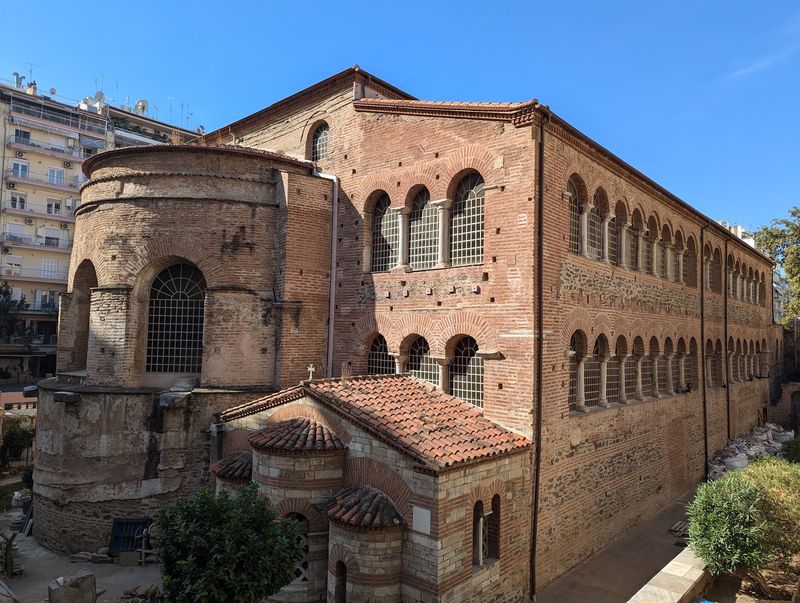
The name alone is worth the trip: Acheiropoietos translates roughly as “made without hands,” referring to a miraculous icon once associated with the church. But the building itself is the real miracle of preservation.
Dating from the fifth century, it is one of Thessaloniki’s most important surviving early Christian basilicas, and it still communicates the scale and spatial logic of the basilican form that spread across the Christianized Roman Empire.
Rows of ancient marble columns divide the nave from the side aisles in the classic early Christian arrangement. Architectural fragments and decorative details scattered throughout the interior reveal the building’s late-antique origins without needing any explanation.
Unlike many ancient sites where imagination has to fill in the gaps, Acheiropoietos lets the space speak for itself.
The church belongs to the UNESCO-listed Paleochristian and Byzantine Monuments of Thessaloniki, a group that collectively tells the story of one of early Christianity’s most important urban centers. Thessaloniki is increasingly recognized as a destination for serious history travelers, and Acheiropoietos rewards visitors who take the time to sit quietly inside and absorb the atmosphere rather than rushing through for a quick photo.
The building has been hosting worshippers for roughly 1,600 years, and that continuity is palpable.
Saint Catherine’s Monastery – Sinai, Egypt
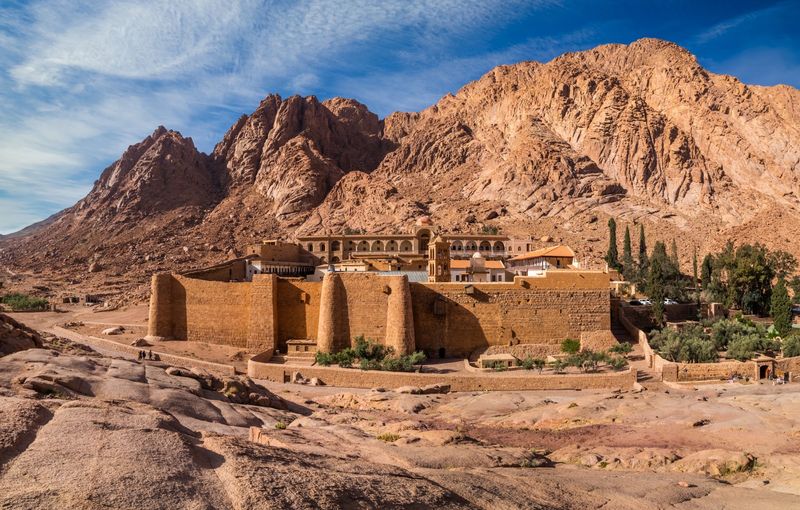
Tucked against the base of Mount Sinai in one of the most remote deserts on earth, Saint Catherine’s Monastery has been continuously inhabited by Christian monks since the sixth century. Emperor Justinian ordered its construction, and the isolated location that once made it seem impractical turned out to be its greatest protector.
Centuries of desert solitude helped preserve an astonishing collection of architecture, manuscripts, icons, and religious traditions that would likely have been lost in a more accessible place.
The monastery’s library holds one of the oldest and most important collections of Christian manuscripts in existence. Its icon collection is equally remarkable, preserving early Byzantine works that survived the iconoclast period precisely because they were so far from the centers of power.
The famous Burning Bush, referenced in the biblical Book of Exodus, is traditionally identified with a plant still growing within the monastery walls.
UNESCO recognizes the Saint Catherine Area as a World Heritage Site for its religious, cultural, and historical importance. Visiting requires some advance planning, as access is managed to protect the site and the monastic community.
The monks who live and pray here are not performing for tourists. Their presence is a reminder that this place has never stopped being exactly what it was built to be.
Basilica of San Vitale – Ravenna, Italy
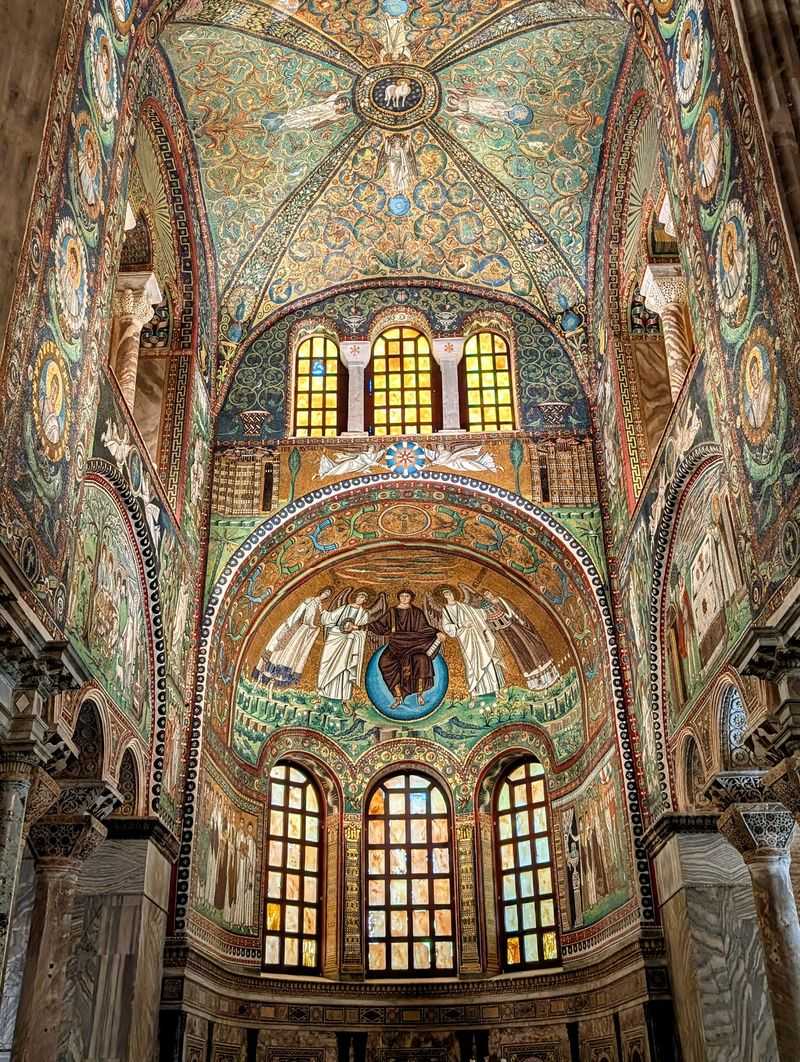
If you could travel back to the court of Emperor Justinian without a time machine, the Basilica of San Vitale is about as close as modern travelers are going to get. Consecrated in A.D. 547, the church’s apse mosaics depict Justinian and Empress Theodora flanked by clergy, soldiers, and court officials in portraits so detailed and immediate that they feel more like photographs than ancient art.
The figures have real presence.
The octagonal design of the building is itself unusual for Western church architecture, reflecting the strong Byzantine influence that made Ravenna one of the most cosmopolitan cities of the late antique world. The mosaics are not just beautiful decoration: they are a deliberate visual argument about the relationship between imperial authority and Christian worship, frozen in tesserae for 1,500 years.
UNESCO includes San Vitale among Ravenna’s eight Early Christian Monuments and praises the city’s mosaics as some of the finest surviving examples in Europe. Standing before the Justinian and Theodora panels, most visitors go quiet without being asked to.
The experience of facing those sixth-century eyes across fifteen centuries is one of those rare travel moments that is genuinely difficult to describe to someone who has not been there.
Euphrasian Basilica – Porec, Croatia
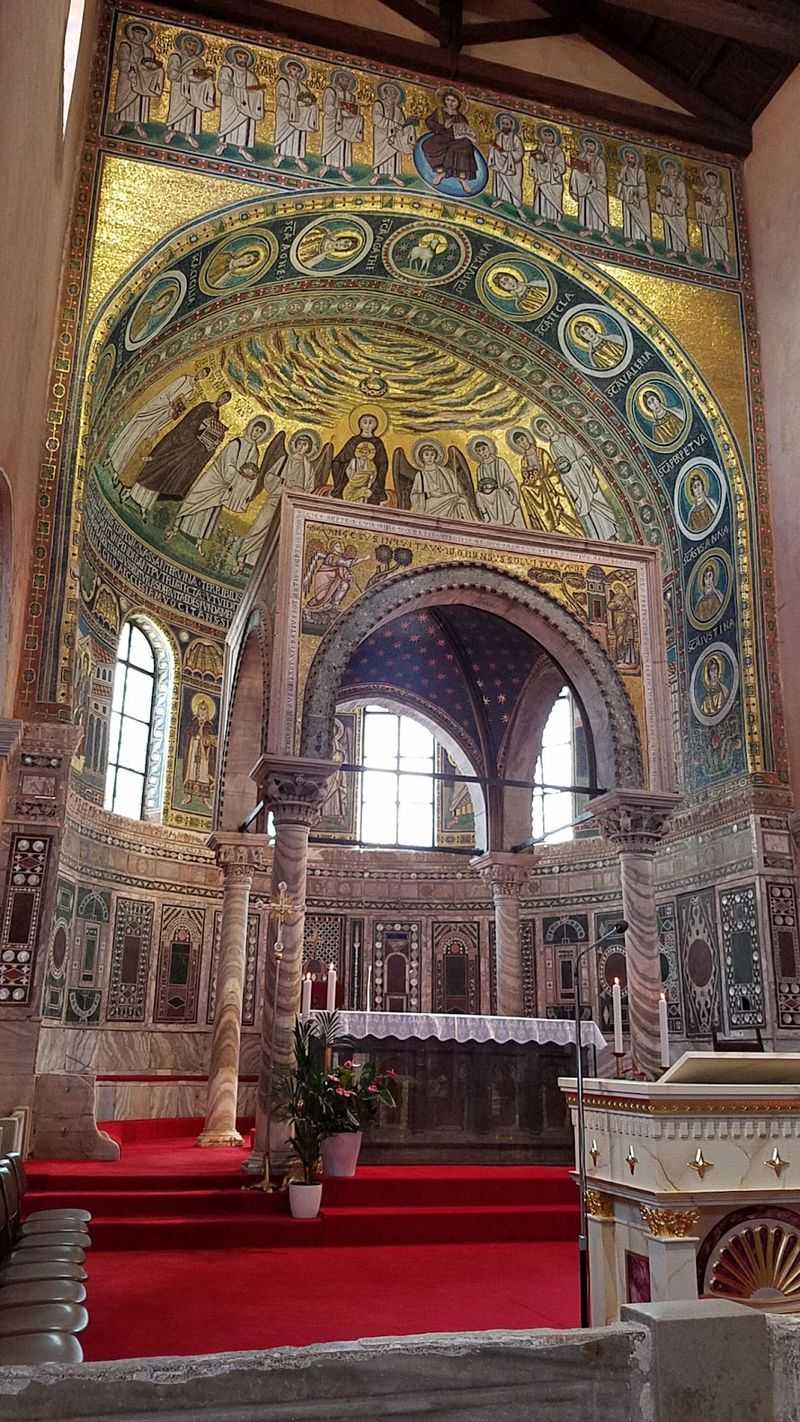
Croatia does not always make the top of early Christian travel lists, but the Euphrasian Basilica in Porec makes a very strong case for a detour. Built in the sixth century, the complex is one of the best-preserved early Christian episcopal centers anywhere in Europe, and UNESCO describes it as exceptional for the survival of its original components.
That is high praise from an organization that has seen a lot of ancient churches.
The apse mosaics are the showstopper. Gold-backed Byzantine images of the Virgin Mary, Christ, saints, and Bishop Euphrasius himself cover the curved sanctuary wall with a richness that rivals Ravenna’s finest work.
The bishop even included a portrait of himself holding a model of the church, which is either deeply pious or impressively self-promotional, depending on your perspective.
Beyond the basilica itself, the complex includes a baptistery, an atrium, a bishop’s residence, and a memorial chapel, giving visitors an unusually complete picture of how an early Christian episcopal community actually functioned. Most ancient church sites preserve just the church.
Porec preserves much of the institutional world that surrounded it. For travelers interested in early Christianity, that completeness makes the Euphrasian Basilica one of the most rewarding stops on any European itinerary.
Share this story