Some restaurants have been feeding hungry guests for hundreds of years, long before modern kitchens existed. Their dining rooms have welcomed travelers, artists, and neighbors through wars, changes in rulers, and new food trends.
This list visits fifteen of them across Europe, Japan, and the United States. Founding dates for many of these places are based on records, traditions, or claims, so each entry notes how the date is understood.
1. St. Peter Stiftskulinarium – Salzburg, Austria (803, earliest recorded reference)
Few tables in the world can claim a link to the year 803, yet this one in Salzburg does. A document from that year mentions a hospitality house at St. Peter’s Abbey, which is why many call it the oldest restaurant in Europe.
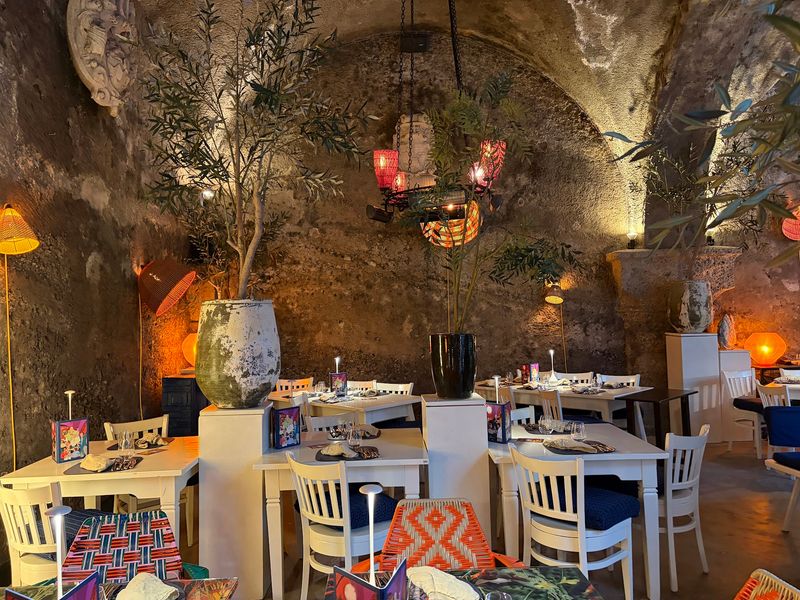
The abbey sits at the foot of the Monchsberg cliff, close to the old town. Guests can eat in several rooms, including a vaulted hall and a candlelit space with centuries of character.
Legend says Charlemagne once visited, and the story is often told to diners. Whatever the truth, the setting feels like stepping into a storybook.
The menu focuses on Austrian cooking, such as schnitzel and dumplings, along with lighter modern plates. Reservations are wise in summer, when festival visitors fill the rooms.
Come hungry and leave time to wander the abbey grounds afterward.
2. Historische Wurstkuchl – Regensburg, Germany (1146, historic kitchen origins)
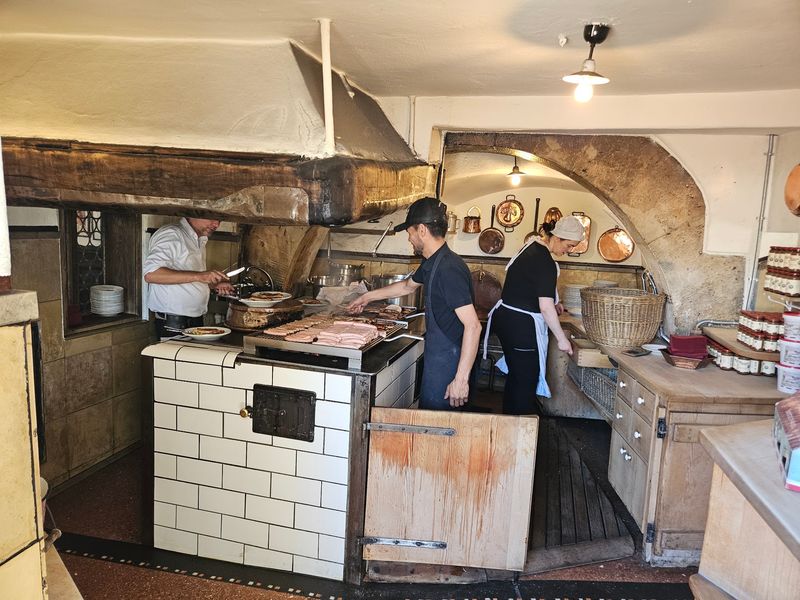
Smoke curls from a tiny grill beside the Danube, and the smell of sausages drifts across the Stone Bridge. That is the daily scene at the Wurstkuchl, a snack house with roots that reach back to the twelfth century.
The kitchen was first built to feed workers constructing the bridge. Over time it became a small tavern, and it has served grilled sausages for generations.
The menu is simple. Guests order six, eight, or ten small pork sausages, served with sauerkraut and sweet Bavarian mustard made in the house recipe.
Seating is tight, and strangers often share a bench. That friendly squeeze is part of the charm.
Flooding has hit the building many times, and marks on the wall show how high the river has climbed.
3. Piwnica Świdnicka – Wrocław, Poland (1273, historic cellar origins)
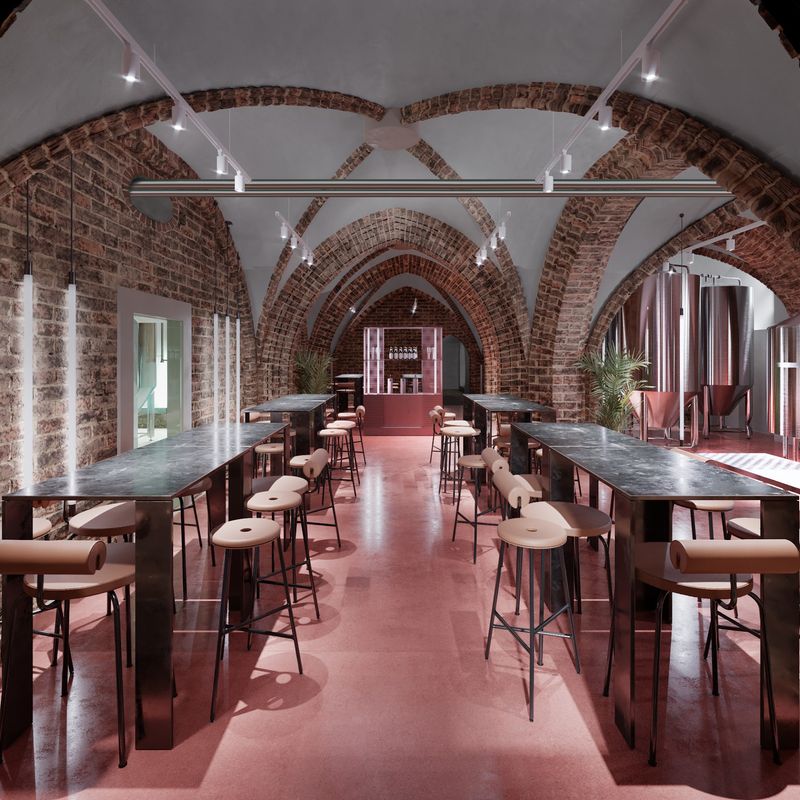
Beneath the Gothic town hall on Wrocław’s main square, a cool brick cellar has served drinks since the thirteenth century. Stepping down the stairs feels like leaving the modern city behind.
The cellar began as a place to sell beer and wine brewed and traded in medieval Silesia. Records show it was already busy long before the town hall reached its present form.
Writers and artists have long gathered here. The German author Gerhart Hauptmann is among those linked to its tables.
Today the menu leans toward hearty Polish and Silesian food, such as pork knuckle, dumplings, and soups. The low arches and candlelight make it a cozy spot on a chilly evening, and the beer list is long enough to satisfy any curious visitor.
4. La Couronne – Rouen, France (1345, traditional founding date)
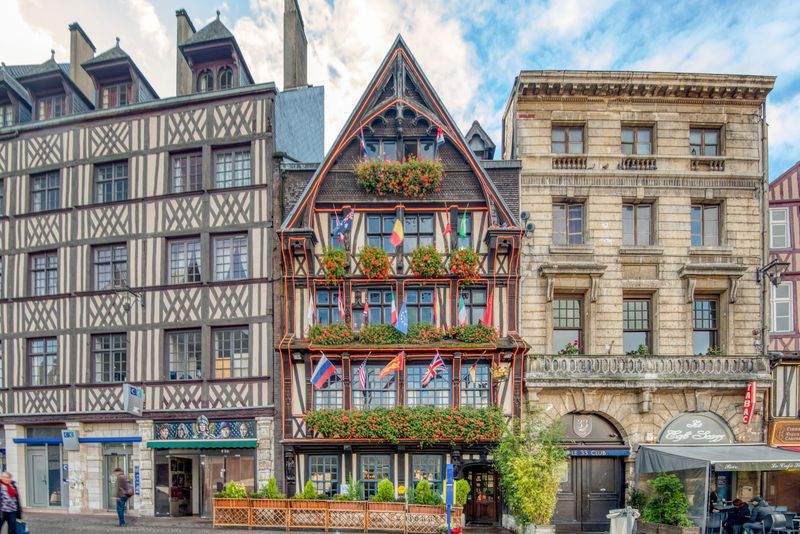
Rouen is the city where Joan of Arc was tried, and La Couronne has stood nearby for about as long as anyone can remember. Its half-timbered front on the old market square looks like a postcard from medieval Normandy.
The traditional founding date is 1345, and the house is often called the oldest inn in France. Its guest list over the centuries has included famous chefs, writers, and even film stars.
Julia Child dined here in 1948, and she later described the meal as a turning point in her love of French food. Her pressed duck was the dish that stuck in her memory.
Normandy butter, cream, and seafood still shape the menu. Order the sole meuniere or a classic duck dish, then enjoy the beams overhead.
5. The Sheep Heid Inn – Edinburgh, Scotland (1360, claimed founding date)
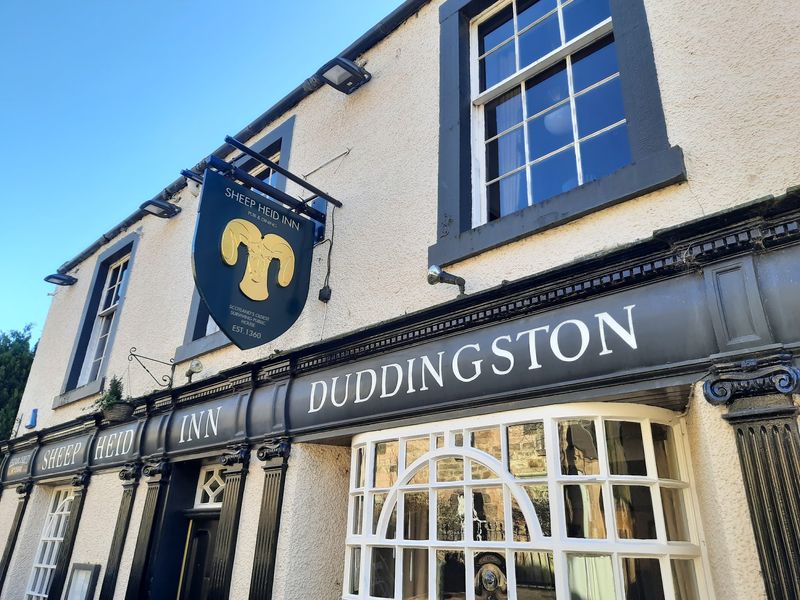
Picture a quiet village tucked under Arthur’s Seat, and in the middle sits a pub with a ram’s head on its sign. The Sheep Heid Inn says it has poured drinks since 1360, making it a strong contender for Scotland’s oldest pub.
A story says Mary, Queen of Scots, once drank here. Another tells of King James VI presenting a ram’s head snuff box to the landlord, which gave the inn its name.
Inside, there is a small skittles alley that dates to the nineteenth century, and guests can still book a game. It is a fun surprise for groups.
The kitchen serves pub favorites like pies, fish, and Sunday roasts. After a hike up the hill, a pint by the fire is hard to beat.
6. Schlenkerla – Bamberg, Germany (1405, historical property origins)
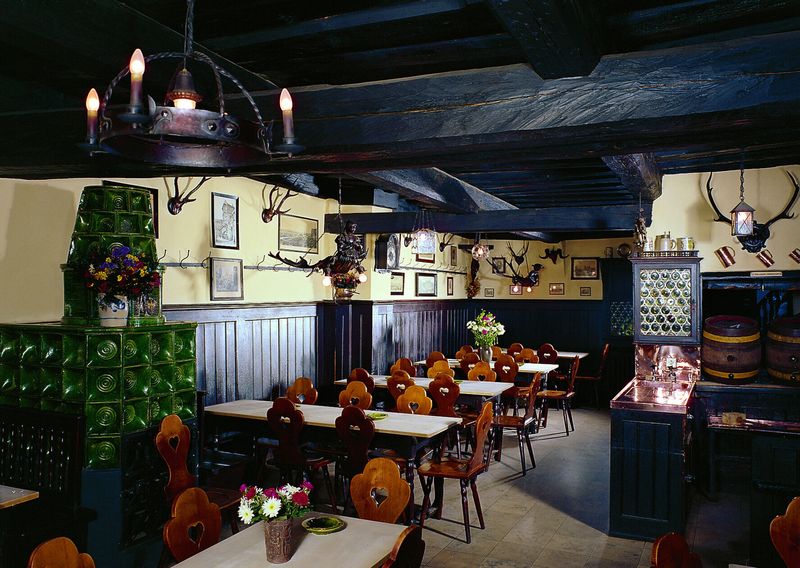
Take a sip of the beer here and your first thought might be that someone lit a campfire in the glass. That smoky flavor is the signature of Schlenkerla, a tavern in Bamberg’s old town.
The property dates back to 1405, and the brewery tradition has carried on for centuries. The name comes from a nickname for a former brewer who walked with a dangling, swinging gait.
Rauchbier is made from malt dried over beechwood fires. It tastes of bacon and campfire, and first-timers often need a few sips to decide if they like it.
The food matches well. Try the stuffed onion with meat or the smoked-beer roast pork, then pour another mug from a wooden barrel.
The wood-paneled rooms add to the old-world feel.
7. Griechenbeisl – Vienna, Austria (1447, historical inn tradition)
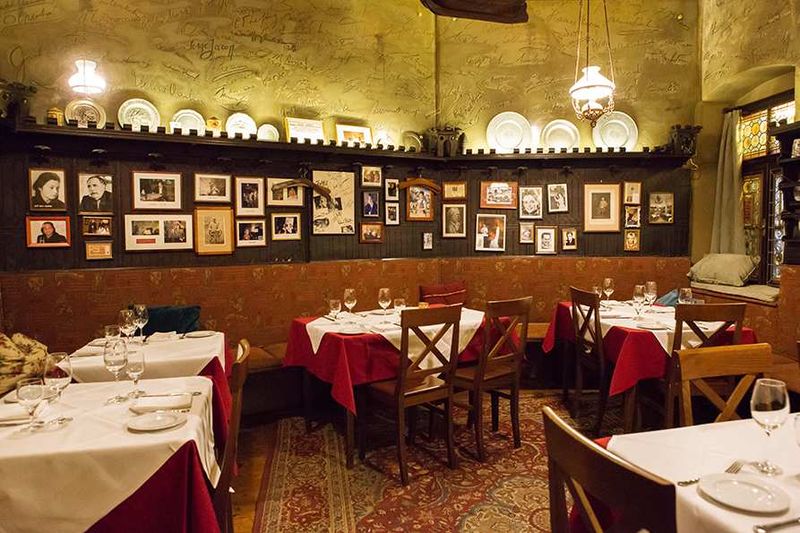
Mozart, Beethoven, and Mark Twain are all said to have eaten at this Vienna inn, and their names are scribbled on the walls. Griechenbeisl keeps its guest book close to its heart.
The inn’s tradition reaches back to 1447, when a tavern stood on the spot near the old city wall. The name means Greek Tavern, a nod to the merchants who once traded in the district.
One famous tale involves a bagpiper named Augustin, who fell into a plague pit after a night of drinking and survived. His story is told in a Viennese folk song.
Meals here center on classic Austrian dishes, such as Wiener schnitzel and goulash. The warren of small rooms and twisting passages makes dinner feel like a visit to another era.
8. Honke Owariya – Kyoto, Japan (1465, originally a confectionery)
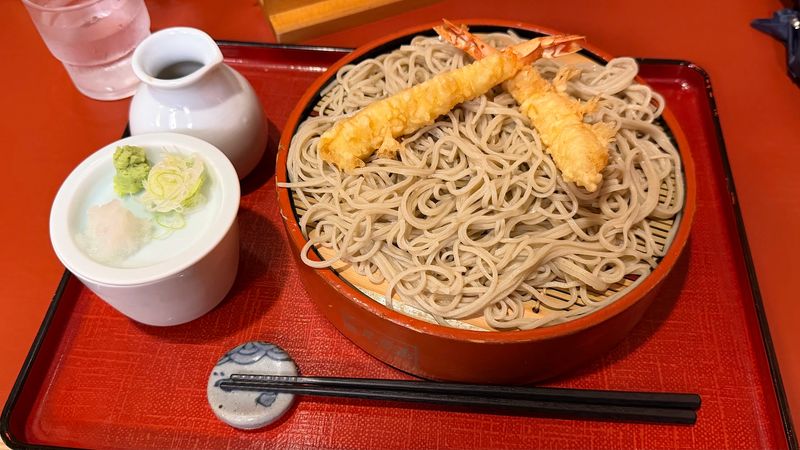
Imagine a shop that began by selling sweets and ended up famous for buckwheat noodles. That is the path of Honke Owariya in Kyoto, which opened as a confectionery in 1465.
Soba noodles joined the menu in the late 1700s and soon became the main attraction. The family has run the business for over fifteen generations, and the Imperial court once ordered from them.
A signature dish is hourai soba, served in stacked red lacquer boxes with toppings like shrimp tempura, mushrooms, and seaweed. The presentation makes it feel like a festive gift.
Warm soba in broth is the comfort choice on cold days. The wooden rooms, paper screens, and quiet manners reflect old Kyoto, and a small garden view adds calm to the meal.
9. U Fleků – Prague, Czech Republic (1499)
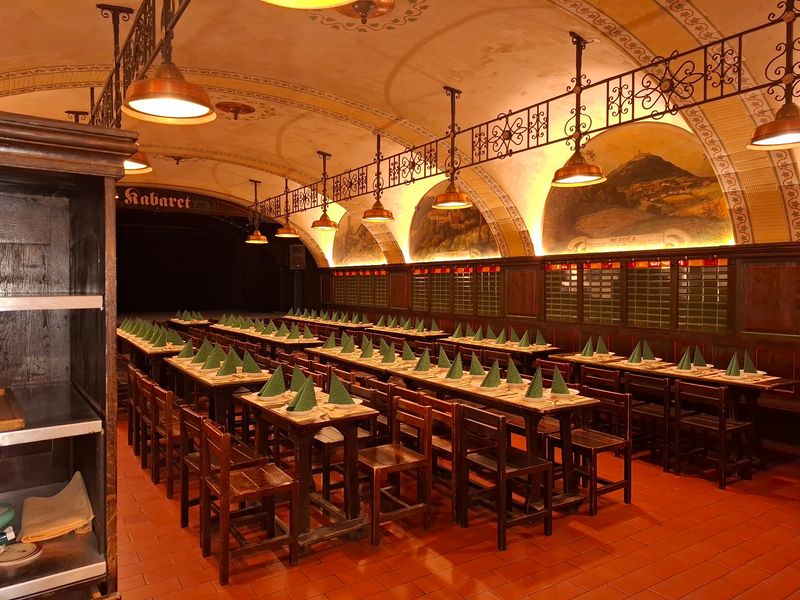
Since 1499, one Prague brewery has made a single kind of beer and served it right where it is brewed. U Fleků is a sprawling beer hall in the New Town, with courtyards, halls, and even a small museum.
The beer is a dark lager with notes of caramel and roasted malt. It is poured fresh from the tap, and servers roam the rooms with trays, offering another round to anyone with a low glass.
Here is a fun detail: a brass band sometimes plays, and the rooms get lively by evening. Visitors from around the globe share benches and trade stories.
Food leans toward Czech comfort fare. Roast pork with dumplings and cabbage is a favorite, and so is the beer-friendly goulash.
Go early if you want a quieter table.
10. Zur Letzten Instanz – Berlin, Germany (1621)
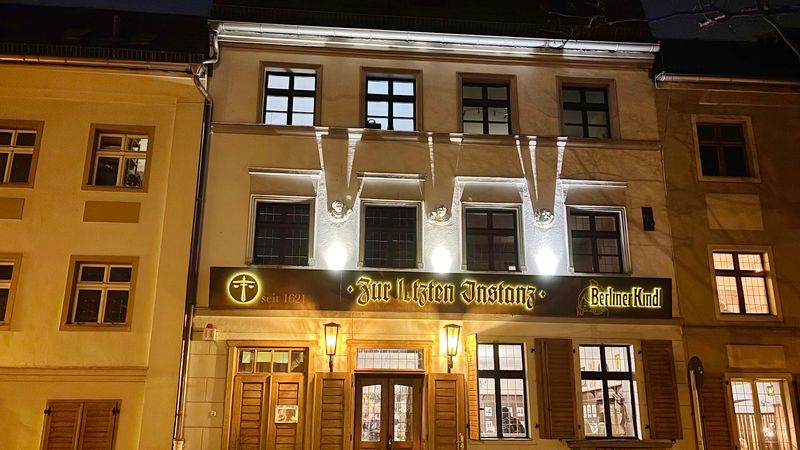
The name means The Last Instance, and the story behind it involves a courthouse and a long divorce case. Legend says a judge once finished a hearing here after the court had already sent the couple home.
Founded in 1621, the restaurant is considered Berlin’s oldest. It stands near a surviving stretch of the medieval city wall, which adds to the sense of history.
Guests have included Napoleon, Beethoven, and Charlie Chaplin, according to the house tradition. A tiled stove in the corner still warms the dining room in winter.
The menu is classic Berlin cooking. Look for Eisbein, a pork knuckle with sauerkraut and pea puree, along with meatballs called Buletten.
Portions are generous, so share a starter and save room for a hearty main.
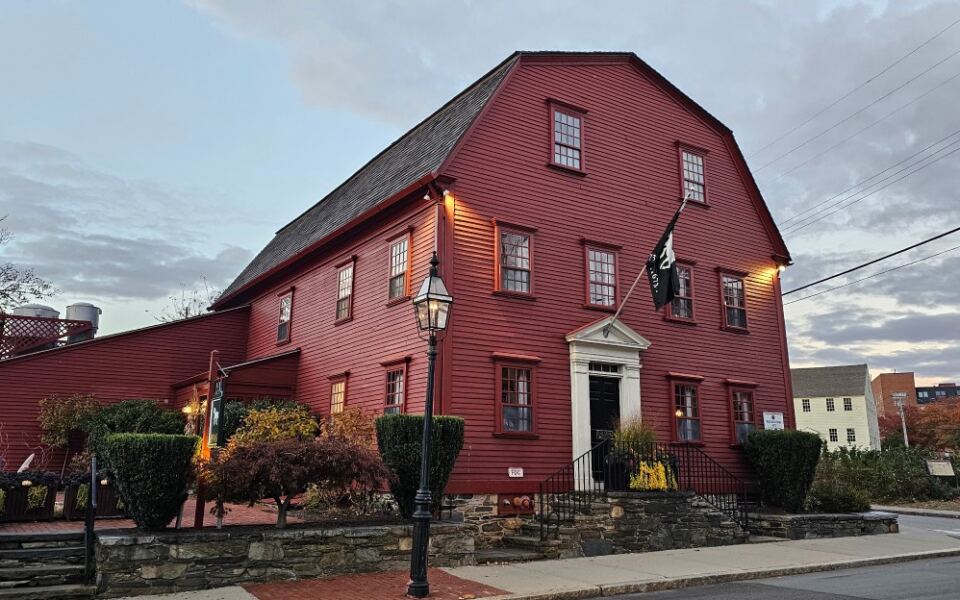
11. White Horse Tavern – Newport, Rhode Island, USA (1673)
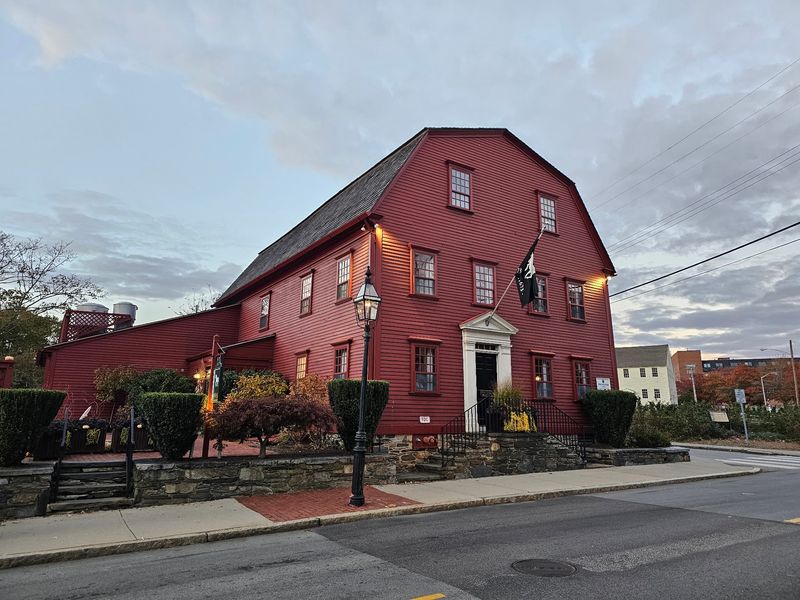
Long before the United States was a country, a tavern was already serving customers on a Newport street corner. The White Horse Tavern opened in 1673 and is often called the oldest operating tavern in America.
The building began as a home, then became a tavern in 1673 when its owner received a license. It also served as a meeting place for the colony’s government and a gathering spot for sailors.
Walk in and you will notice low beams, creaky floors, and big fireplaces. The rooms look much as they did in colonial times, with a few modern touches for comfort.
The kitchen offers refined New England cooking, with seafood, steaks, and seasonal plates. It is a popular place for special occasions, so booking ahead is a good idea.
12. Le Procope – Paris, France (1686, historic café origins)
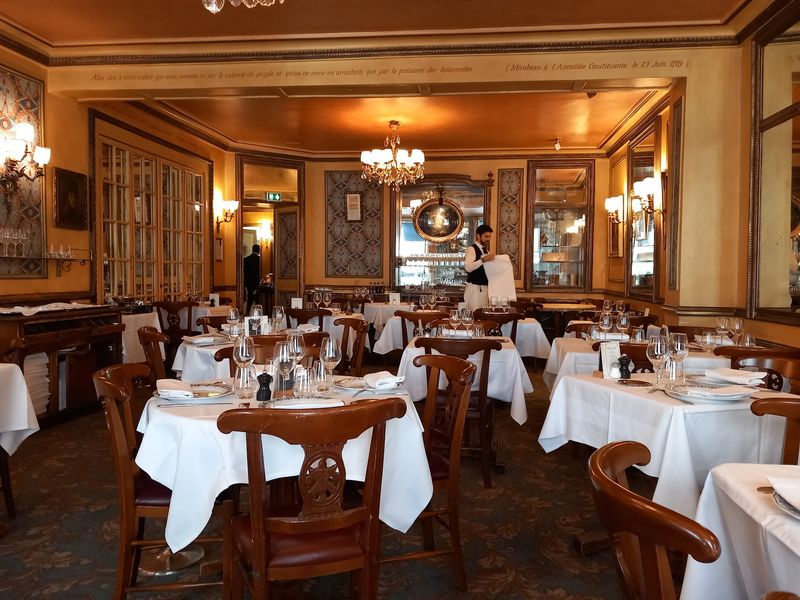
Parisians once came here for a new drink called coffee, and they stayed to argue about ideas. Le Procope opened in 1686 as a cafe and became a gathering place for thinkers.
Voltaire, Rousseau, and Diderot are said to have sat at its tables. Later, revolutionaries such as Danton and Robespierre met here, and Benjamin Franklin visited while serving as an American diplomat in France.
Visitors can still see portraits and relics on the walls, including items tied to the era. The elegant rooms in red and gold give a taste of eighteenth-century Paris.
The menu features French classics such as onion soup, coq au vin, and seafood platters. Many guests come for the history, but the traditional recipes hold their own.
It sits on a lively street in Saint-Germain.
13. Caffè Florian – Venice, Italy (1720)
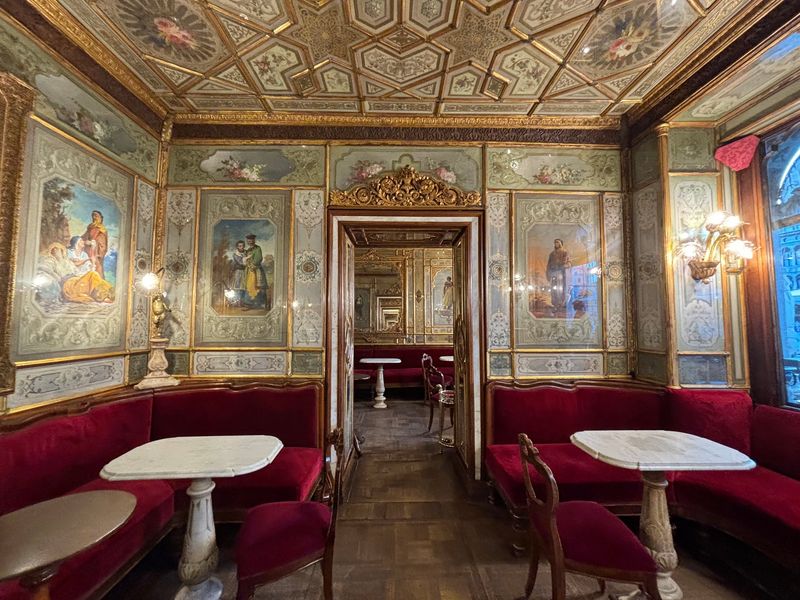
A small orchestra plays under the arcades of Piazza San Marco while waiters glide between tables with silver trays. This is the daily show at Caffè Florian, which opened in 1720.
It is often described as the oldest continuously operating cafe in Italy. Casanova, Lord Byron, and Charles Dickens are among the famous names linked to it.
Inside, a string of small salons has painted ceilings, mirrors, and velvet seats. Each room has its own theme and mood, from a Chinese-style room to a senate chamber.
Coffee and hot chocolate are the classics, and pastries come in delicate shapes. Prices are high, mostly because of the view and the music, so treat it as a treat.
Sit outside to enjoy the square, or step in to admire the decor.
14. Sobrino de Botín – Madrid, Spain (1725)
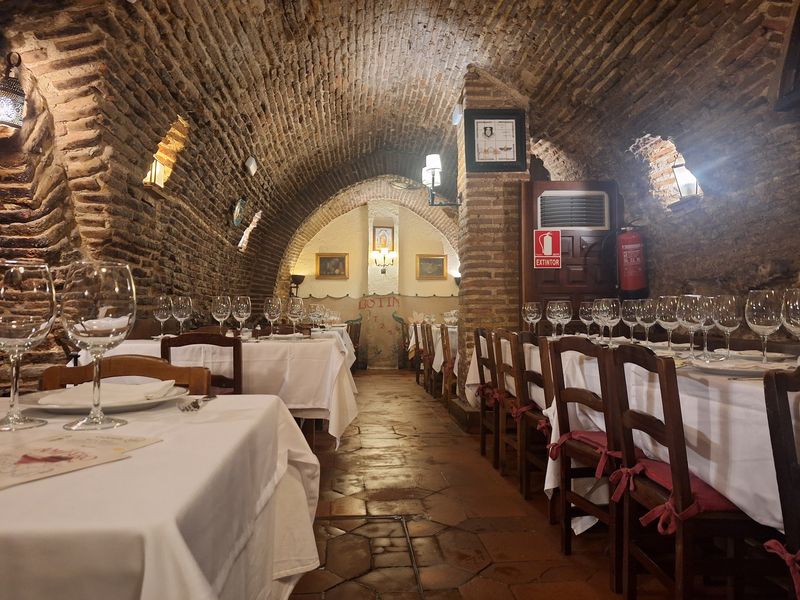
Guinness World Records lists this Madrid restaurant as the oldest in the world still in operation, with a start date of 1725. That claim alone draws crowds to a narrow street near Plaza Mayor.
The heart of the kitchen is a wood-fired oven that has burned since the early days. Its heat roasts the famous cochinillo, a young suckling pig with crackling skin, and cordero, a tender roast lamb.
A young painter named Francisco de Goya is said to have worked as a dishwasher here before he became famous. Ernest Hemingway also loved the place, and he ended his novel The Sun Also Rises with a meal here.
Dining rooms are spread across several floors, including a stone cellar. Arrive with an appetite, since the portions are generous and meant to be savored slowly.
15. Del Cambio – Turin, Italy (1757)
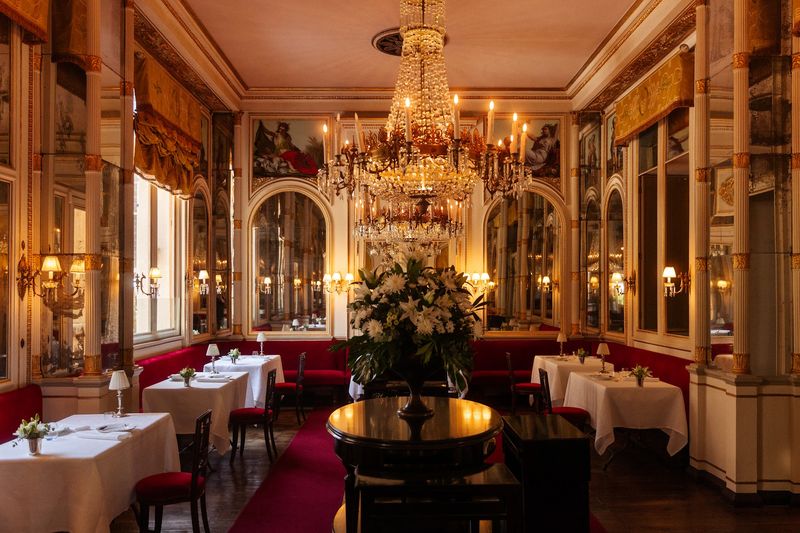
Count Cavour, the architect of Italian unification, had a favorite table here, and people still point to it. Del Cambio opened in 1757 across from the Carignano Palace, and it soon became the dining room of Turin’s political elite.
The interior is a showpiece of gilded mirrors, painted ceilings, and crimson seating. Few restaurants in Europe have kept an eighteenth-century look so well preserved.
Writers and composers also passed through, among them Puccini and Verdi. Many deals and decisions in the young Kingdom of Italy were shaped over meals served on these tables.
Today the kitchen mixes Piedmontese tradition with modern ideas. Dishes might include egg pasta with rich sauces, local beef, and hazelnut desserts.
It is a place for a slow, memorable meal in a historic setting.
Share this story