Before one-click ordering and digital downloads took over, American bookstores were the places where communities gathered, ideas were exchanged, and readers could spend hours getting happily lost between shelves. A surprising number of those original bookselling institutions are still open today, some with histories stretching back centuries.
A few of them were founded before the Civil War, before California was a state, and in one extraordinary case, before the United States itself existed. This list covers 15 of the oldest bookstores in America that are still actively selling books, arranged from oldest to newest.
Each one has a story worth knowing, and more than a few have survived fires, economic downturns, and dramatic relocations to keep their shelves stocked for another generation of readers.
1. Moravian Book Shop, Bethlehem, Pennsylvania
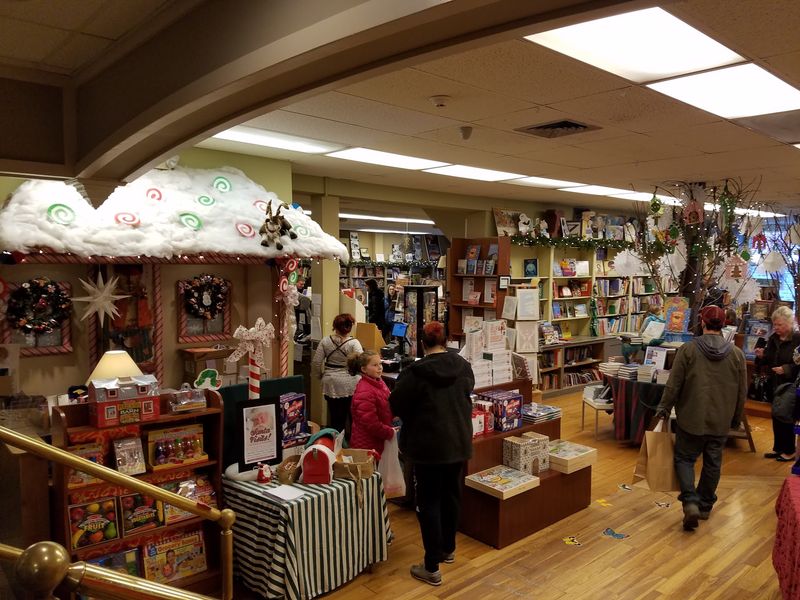
Founded in 1745 by the Moravian Church, this Bethlehem institution holds the remarkable title of the oldest continuously operating bookstore in the United States, and is recognized as the second oldest in the world, trailing only Livraria Bertrand in Lisbon, Portugal.
Its original purpose was supplying devotional and liturgical materials to churchgoers and missionaries, but the inventory has expanded considerably over nearly three centuries. The shop settled permanently on historic Main Street in 1871, where it occupies an impressive 14,000 square feet across four interconnected buildings.
Moravian University now owns the store, and its shelves carry indie bestsellers, children’s books, Pennsylvania history titles, and traditional Moravian gifts including the iconic Moravian Star. Bethlehem’s Moravian Church Settlements received UNESCO World Heritage designation in 2024, making a stop here feel even more historically significant.
2. Andover Bookstore, Andover, Massachusetts
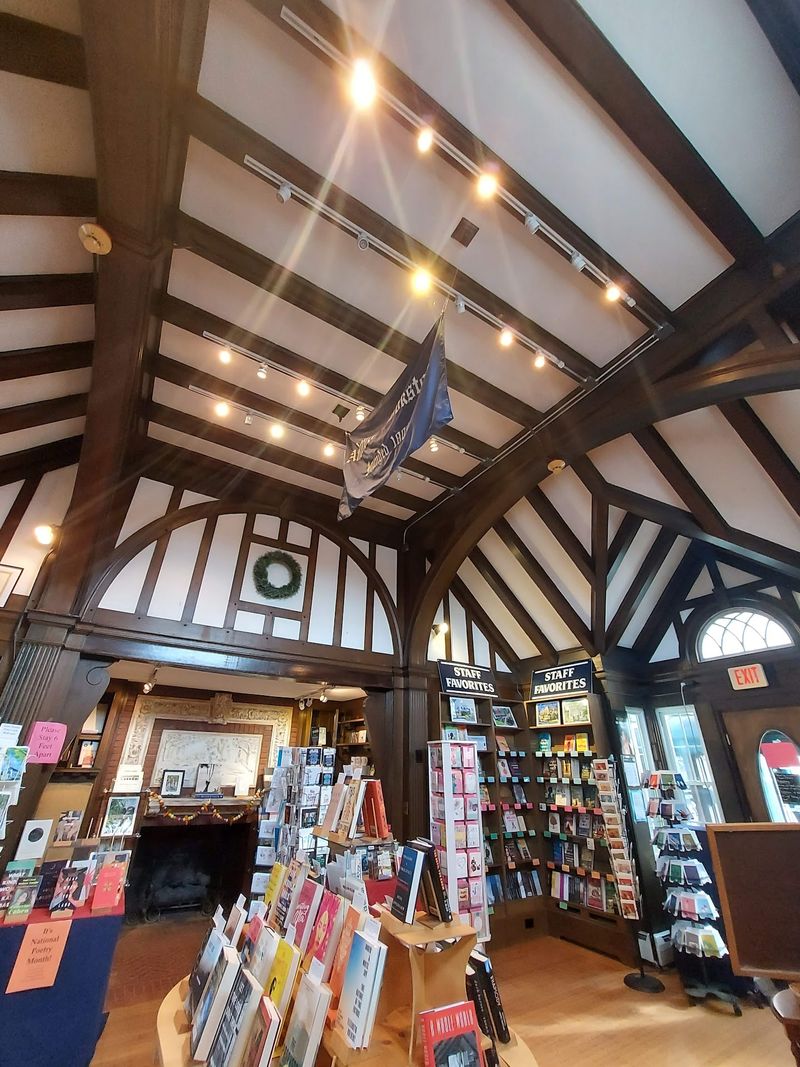
Two centuries of bookselling is no small achievement, and Andover Bookstore has managed exactly that since 1809, making it one of the most enduring independent bookstores in the country. Its roots connect directly to Phillips Academy and Andover Theological Seminary, where it served as a printing press and supplier of academic texts.
The current home is a striking 1850s English Tudor-style building with exposed wooden beams and vaulted ceilings that give the space an authentically antique character. Inside, carefully selected bestsellers, works by local authors, and a solid children’s section share space with greeting cards and locally made goods.
The store functions as a genuine community anchor, hosting author events, children’s story hours, and regular book club meetings throughout the year. Long-time residents describe it as a “third space” where time feels a little softer than everywhere else.
3. Brattle Book Shop, Boston, Massachusetts
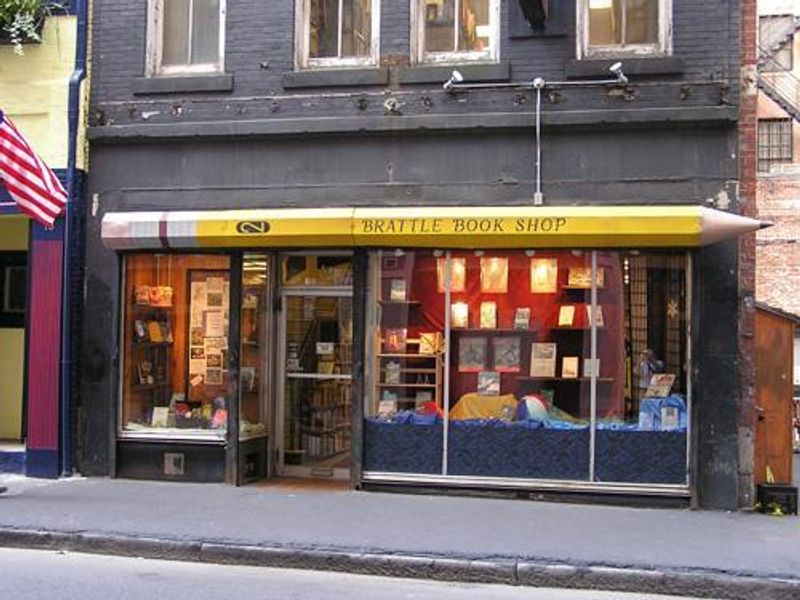
Since 1825, Brattle Book Shop has been the go-to destination for Boston readers who prefer their literary adventures unpredictable. Ken Gloss, whose family has owned the shop since 1949, is a nationally recognized rare book appraiser who has appeared on television programs to evaluate literary finds, lending the store an air of genuine expertise.
The three-story West Street building holds roughly 250,000 items, including first editions, signed copies, antique maps, historical prints, and collectible bindings. A distinctive oversized No. 2 pencil marks the entrance, a fitting symbol for a place this devoted to the written word.
The outdoor sale lot, born from a 1973 fire that cleared an adjacent lot, is one of Boston’s most photographed spots. Rows of discounted books priced from one to five dollars line the open-air space, turning a quick errand into an unexpectedly long and rewarding afternoon.
4. The Otto Bookstore, Williamsport, Pennsylvania
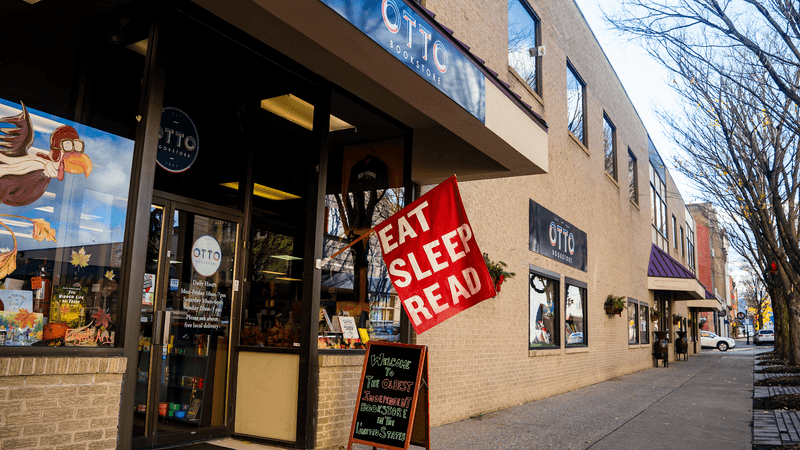
Pennsylvania’s oldest independently owned bookstore has been a fixture on West Fourth Street since 1841, outlasting countless retail trends, economic cycles, and the rise of every digital reading device invented. The business started as A.D.
Lundy and Co., a general store that sold everything from wallpaper to insurance before narrowing its focus to books. The Otto name arrived later, courtesy of business partner H.Y.
Otto.
The shop recently completed its most significant expansion in over 180 years, nearly doubling in size by integrating a neighboring storefront through a custom-built archway. Inventory grew from around 21,000 titles toward an anticipated 60,000, covering current bestsellers, indie picks, graphic novels, local authors, and a strong children’s section.
A dedicated event space now supports author visits, open mic poetry nights, children’s story times, and book clubs, keeping this historic shop firmly connected to contemporary readers rather than functioning as a preserved exhibit.
5. Books Inc., San Francisco, California
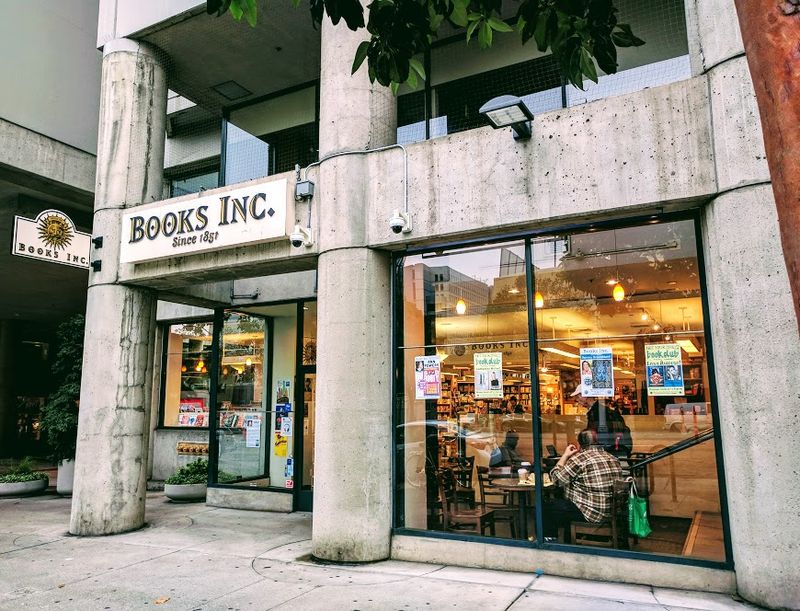
Few booksellers anywhere can trace their origins to the Gold Rush, but Books Inc. does exactly that. Anton Roman, an immigrant entrepreneur, opened the first iteration of this business in Shasta City in 1851, later relocating to San Francisco.
When the catastrophic 1906 earthquake and fire leveled much of the city, Roman’s partner Alex Robertson rebuilt the store from scratch, cementing a reputation for resilience.
That reputation has been tested again recently. In early 2025, Books Inc. filed for Chapter 11 bankruptcy protection due to shifting market conditions, and was subsequently acquired by Barnes and Noble.
The company has committed to maintaining the Books Inc. name and continuing local operation at its Northern California locations, including several San Francisco stores and two airport outposts.
The inventory spans current fiction, children’s books, nonfiction, toys, and games, with author events and book clubs keeping the community connections alive that have defined this bookseller since California was barely a state.
6. Vroman’s Bookstore, Pasadena, California
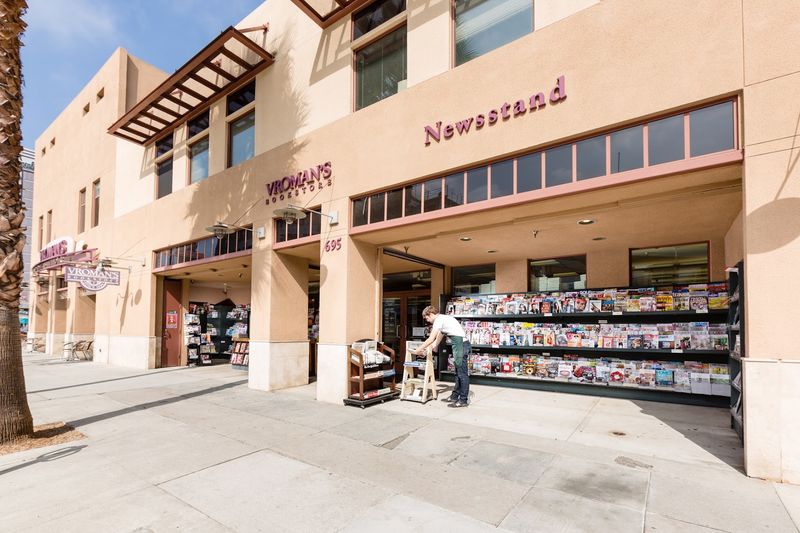
Adam Clark Vroman moved to Pasadena in 1894 hoping the climate would help his ailing wife recover, and reportedly sold his personal book collection to raise enough capital to open a store. That poignant beginning launched what is now Southern California’s oldest and largest independent bookstore, a title Vroman’s has held for over 130 years.
The two-floor Colorado Boulevard location is considerably grander than its modest origins might suggest. Books share space with gifts, stationery, music, and children’s toys, while a particularly robust children’s department draws families from across the region.
Vroman’s hosts more than 400 free community events annually, from author appearances by major literary names to children’s story times and book clubs. Its history of philanthropy includes donating books to Japanese American internees during World War II, a legacy that speaks to the store’s character as much as its impressive longevity does.
7. Warwick’s, La Jolla, California
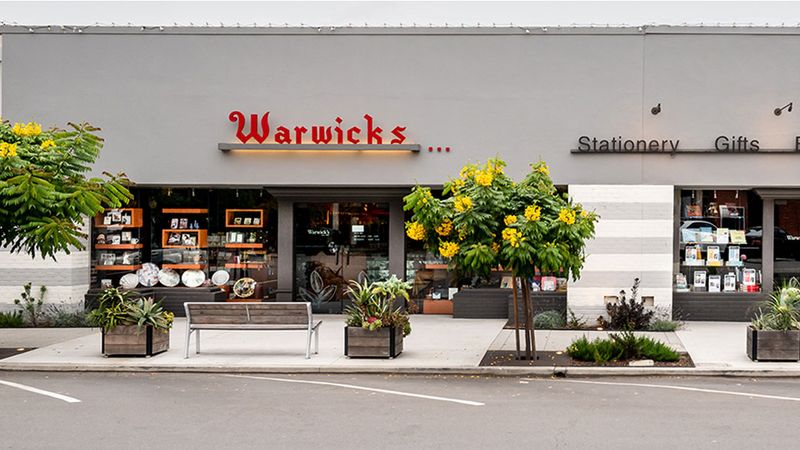
William T. Warwick opened his first bookstore in Mankato, Minnesota in 1896, and the business has remained in family hands through four generations, earning it the distinction of being the oldest continuously family-owned and operated bookstore in the United States.
The store traveled from Minnesota to Iowa before W.T. Warwick brought it to La Jolla in 1939 by purchasing an existing bookshop.
It has occupied its Girard Avenue address since 1952.
Current owner Nancy Warwick, who took over in 1997 after working there since childhood, helped lead a community campaign in 2021 that raised over 8 million dollars to purchase the building and secure the store’s future. The store still uses an antique dumbwaiter that Nancy played in as a child to move stock between floors.
Warwick’s earned Publishers Weekly’s Bookstore of the Year award in 2024, recognizing its author events, curated inventory, and the giant chess board outside its front entrance that has become a neighborhood landmark.
8. University Book Store, Seattle, Washington
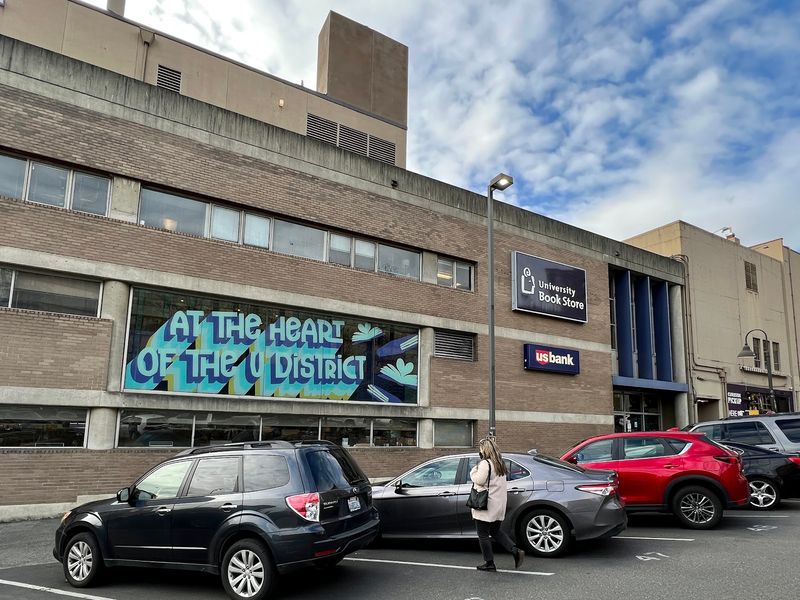
In 1900, two University of Washington students set up a small book operation inside a cloakroom in Denny Hall with very little money and even less certainty the venture would survive. It nearly did not, requiring financial rescue from faculty members within its first few months.
That unlikely start eventually produced Seattle’s oldest and largest independent bookstore.
Structured as an independent corporate trust with a board of students and faculty, the store reinvests its profits into UW scholarships and student support rather than outside shareholders. The main University District location settled on University Way in 1924 and has anchored the neighborhood ever since.
In July 2025, the General Books Department entered a partnership with Barnes and Noble, expanding to over 17,000 square feet across two floors and adding vinyl records to its offerings. All other departments, including textbooks, art supplies, Husky gear, and an in-store cafe, continue under independent operation.
9. Argosy Book Store, New York City, New York
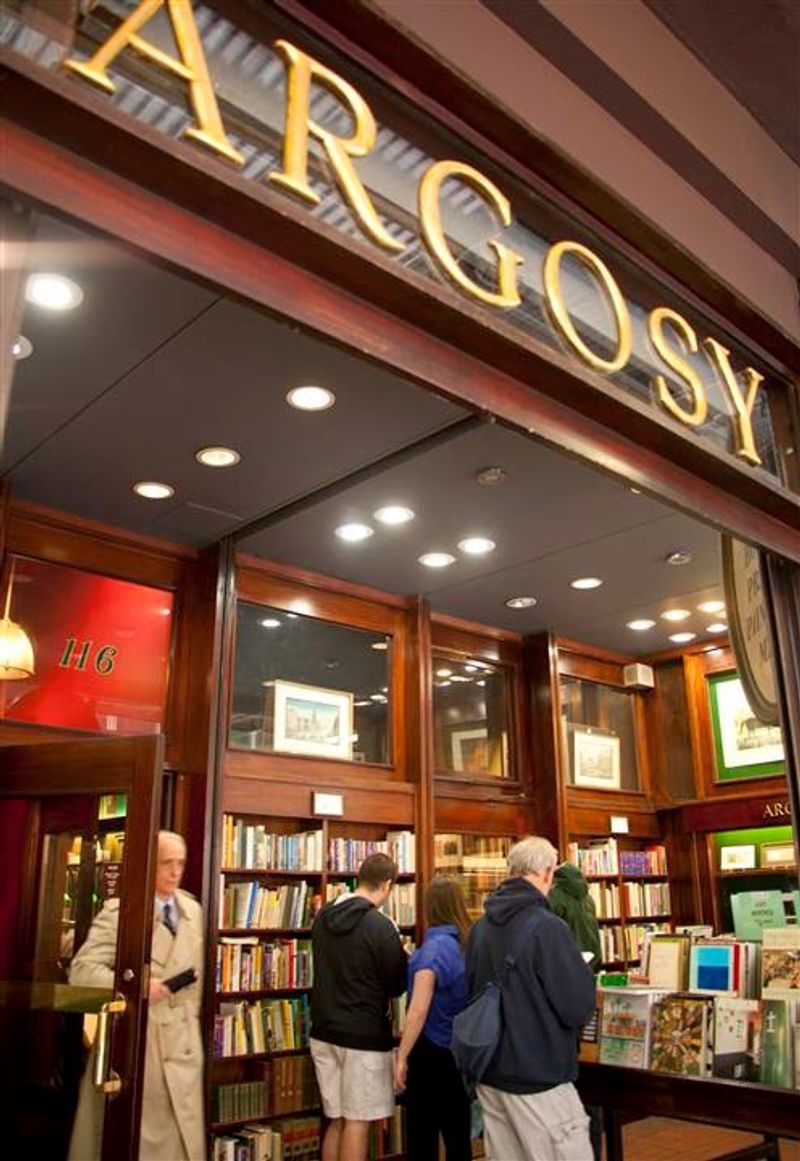
Louis Cohen named his bookstore Argosy in 1925 specifically so it would appear near the top of telephone directory listings, a clever bit of early marketing that helped establish what is now New York City’s oldest independent bookstore. Cohen’s daughters and grandson still run the business today, having turned down numerous multi-million dollar offers to sell the East 59th Street townhouse.
The six-story building between Park and Lexington Avenues holds floor-to-ceiling shelves, rolling ladders, and an estimated 300,000 antiquarian and out-of-print items, supplemented by a large Brooklyn warehouse. Rare first editions, signed books, antique maps, prints, and volumes on the history of science and medicine fill the upper floors.
The basement offers more affordable general-interest books for casual browsers, while the top-floor autograph department draws serious collectors. Argosy has appeared in films and reportedly helped First Lady Jacqueline Kennedy select books for the White House library.
10. Strand Book Store, New York City, New York
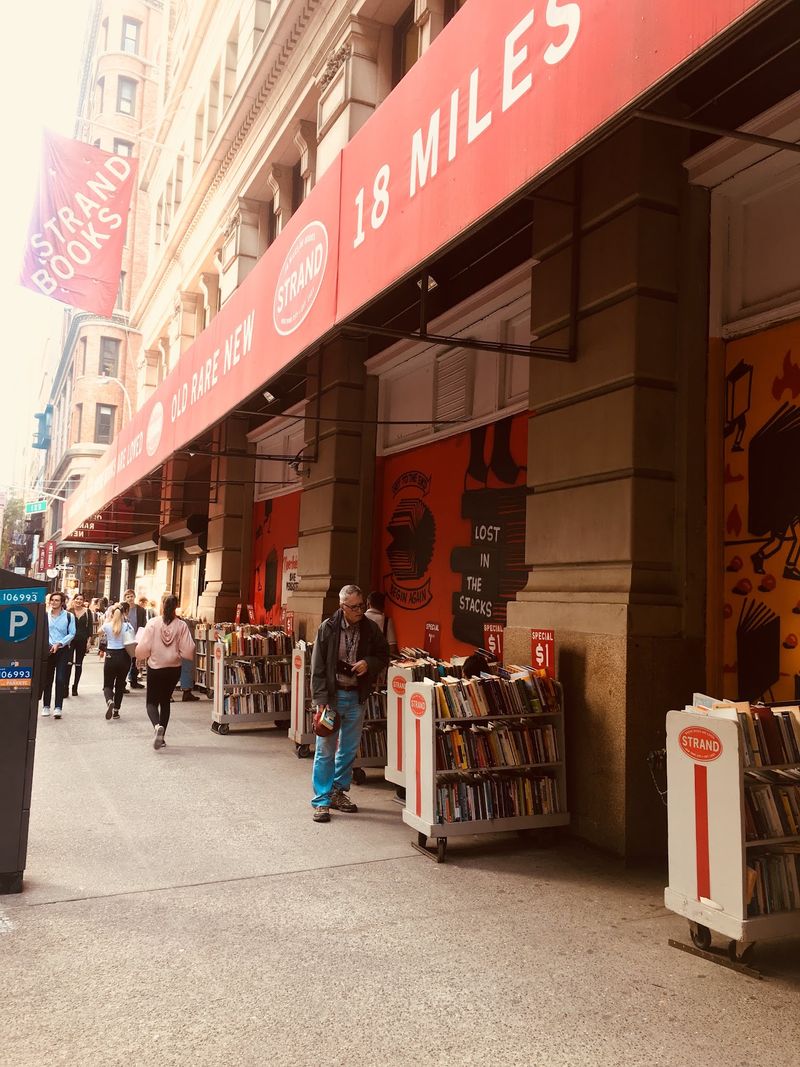
Benjamin Bass founded the Strand in 1927 on Fourth Avenue’s legendary Book Row, a six-block stretch that once held 48 competing bookshops. Every one of those other stores has since closed, but the Strand not only survived, it became one of New York’s most recognizable cultural institutions, now claiming over 23 miles of books across its Broadway flagship.
Third-generation owner Nancy Bass Wyden oversees a collection of roughly 2.5 million new, used, and rare books spread across four floors. A dedicated Rare Book Room houses first editions and collectible volumes, while the famed outdoor dollar carts along the sidewalk remain a perennial draw for budget-conscious readers hunting unexpected finds.
Author events, book launches, poetry readings, and panels fill the calendar nearly every night of the week. The sheer volume and variety of material, combined with the organized chaos of its shelves and tables, gives the Strand an energy that polished chain bookstores rarely replicate.
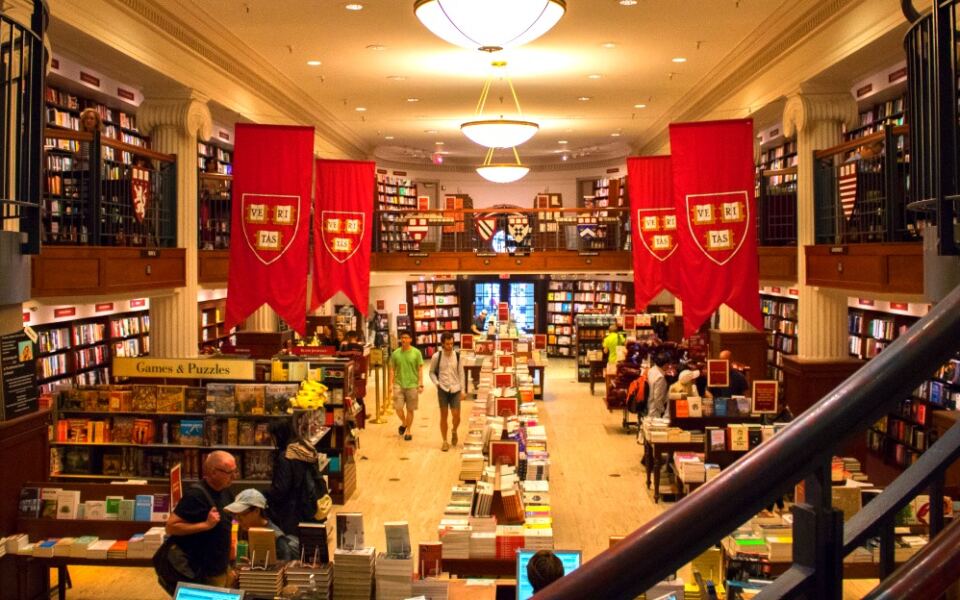
11. Harvard Book Store, Cambridge, Massachusetts
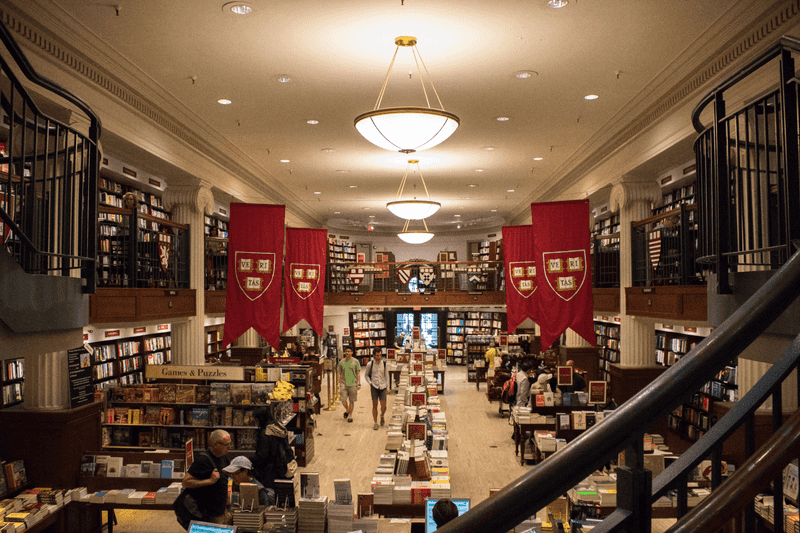
Mark S. Kramer borrowed 300 dollars from his parents in 1932 and used it to open a bookstore in Harvard Square, launching what would become one of Cambridge’s most beloved independent institutions.
Despite the name and its location steps from Harvard Yard, the store has no affiliation with Harvard University, a fact worth knowing before assuming the university gets any credit for it.
Current owners Jeff Mayersohn and Linda Seamonson, who purchased the store in 2008, have maintained its reputation for an extraordinary mix of new releases, used titles, and deeply discounted remaindered books. The basement section in particular draws devoted bargain hunters who treat each visit as a treasure hunt through publisher overstock.
The store’s author event series, which has hosted Salman Rushdie, Haruki Murakami, and Stephen King among many others, operates on an almost daily basis. A corner of Massachusetts Avenue near the entrance was named in honor of the Kramer family in 2007.
12. Baldwin’s Book Barn, West Chester, Pennsylvania
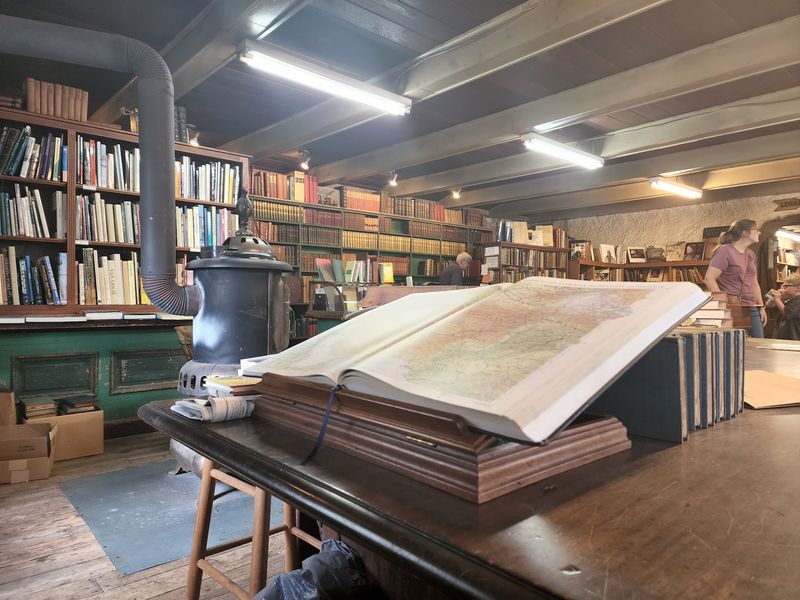
William and Lilla Baldwin started their used-book business in Wilmington, Delaware in 1934, but the operation found its true identity in 1946 when they moved into a stone dairy barn built by Quakers in 1822 outside West Chester. William later hired a structural engineer to add two additional floors to the original three, creating a five-story labyrinth that some visitors describe as feeling larger inside than its exterior suggests.
Over 300,000 used and rare books, manuscripts, antique maps, prints, and estate antiques fill the stone walls, narrow passages, and wooden shelving. Sections cover local history, Black and Native American Studies, music, rare art books, and specialized reference collections, with more valuable items displayed near the main entrance.
Antique chairs, reading nooks, and a wood-burning stove encourage visitors to settle in rather than rush through. The store is now owned by Kathy Baldwin and managed by Carol Rauch and Fred Dannaway, who continue the Baldwins’ tradition of welcoming serious collectors and casual browsers alike.
13. Hickory Stick Bookshop, Washington Depot, Connecticut
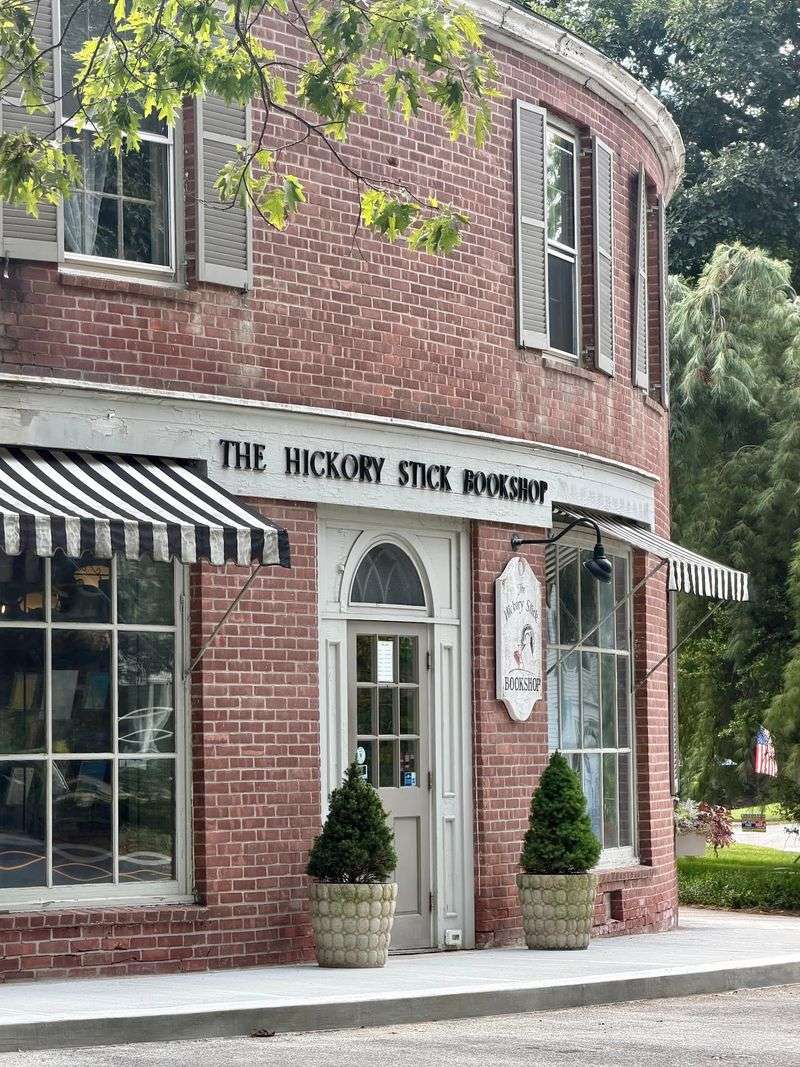
The name alone tells you something about this place. Hickory Stick Bookshop takes its title from the old schoolroom phrase about reading, writing, and arithmetic, a nod to the deep respect for education that has defined this Washington Depot institution for over 70 years.
Current owners Fran and Michael Keilty have kept that spirit very much alive in the Litchfield Hills.
The store occupies a charming curved brick building with a two-room layout that feels appropriately intimate for a village bookshop. Shelves hold current bestsellers, new releases for adults and children, staff picks, and works by local authors, alongside gifts, puzzles, games, and greeting cards.
The owners also sell yarn spun from their own sheep, which is a detail not many bookstores can claim.
Fans of the television series Gilmore Girls make regular pilgrimages here because Washington, Connecticut served as the inspiration for fictional Stars Hollow. The shop even maintains a dedicated Gilmore Girls section to welcome those literary tourists.
14. City Lights Booksellers & Publishers, San Francisco, California
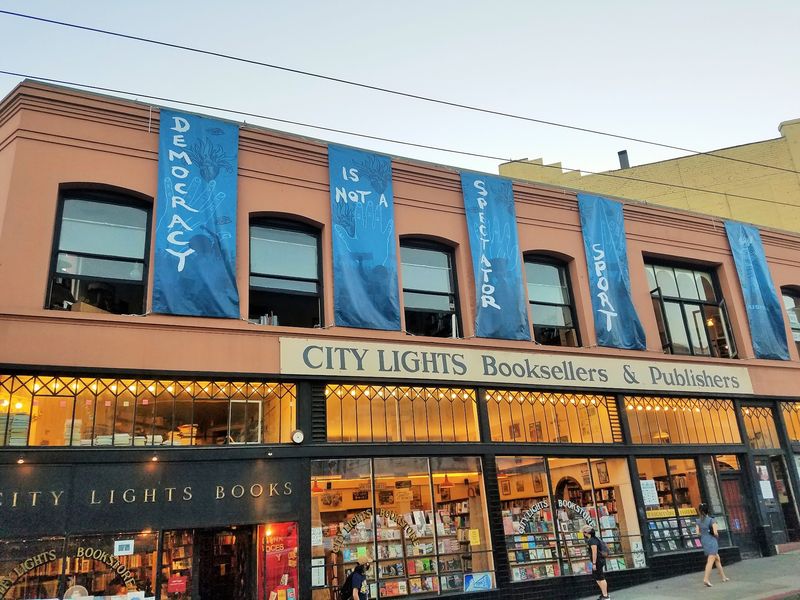
When Lawrence Ferlinghetti and Peter D. Martin opened City Lights in 1953, the idea of an all-paperback bookstore was considered a genuinely radical concept.
The book trade largely dismissed paperbacks as inferior, which made City Lights a deliberate act of defiance from its very first day of business.
The publication of Allen Ginsberg’s Howl and Other Poems in 1956 by City Lights Publishers triggered a landmark obscenity trial that Ferlinghetti won, cementing the store’s reputation as a defender of free expression. In 2001, San Francisco designated the triangular North Beach building an official historic landmark, the first time that honor had been extended to a business rather than just a structure.
Three floors now hold poetry, fiction, history, philosophy, translations, politics, music, film, and titles from independent publishers, with the store open until midnight daily. A GoFundMe campaign during the pandemic drew global donations, demonstrating how far City Lights’ reputation extends beyond its Columbus Avenue address.
15. Moe’s Books, Berkeley, California
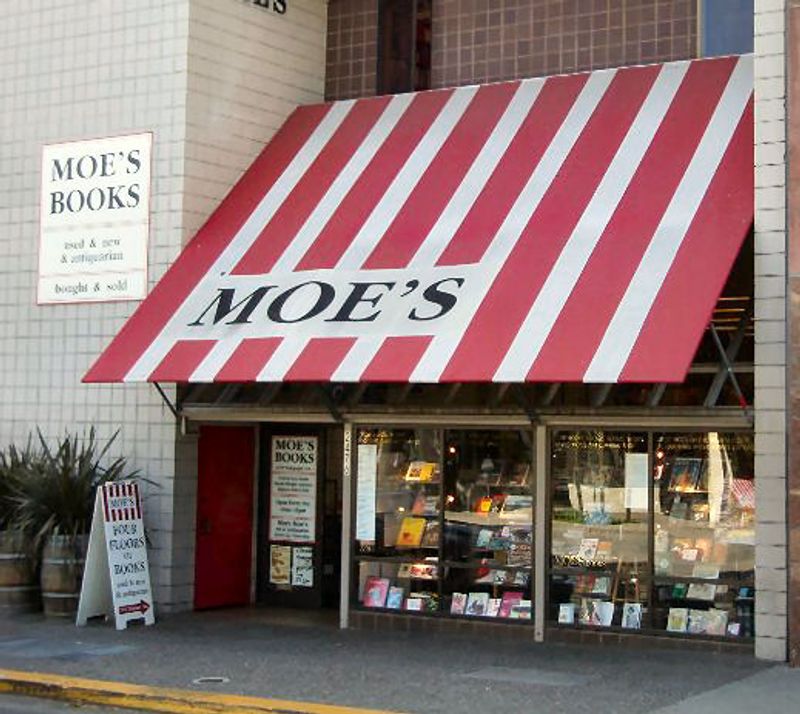
Moe Moskowitz had a specific frustration when he founded his store in 1959: other bookshops paid too little for used books. His solution was to establish fair trade policies that offered customers significantly better prices for their collections, a philosophy that quickly made Moe’s Books a trusted institution on Telegraph Avenue near the University of California, Berkeley.
Moe himself was a colorful character known for debating politics, singing arias behind the counter, and sheltering student protestors during the Free Speech Movement. The Berkeley Historical Society installed a plaque outside the store in 2014 recognizing his contributions to the city’s history.
His daughter Doris Moskowitz now runs the business, and published a book about her father’s life in 2016.
Four floors hold over 200,000 titles, ranging from rare antiquarian books on the top floor to new releases and used paperbacks below. Moe’s was also an early pioneer of online bookselling, putting it ahead of the digital curve long before most independent stores recognized the internet’s potential.
Share this story