America has always had a soft spot for a good story, and few stories are better than a business that has outlasted wars, economic crashes, and every passing trend for over a century. Long before chain stores arrived to make every town look the same, local taverns, inns, bookstores, pharmacies, and restaurants were the beating heart of community life.
Some of those original businesses are still standing, still serving customers, and still carrying the kind of history that no amount of rebranding can manufacture. The 15 establishments on this list span from 1673 to 1885, and each one has survived the kind of odds that would make any modern entrepreneur nervous.
A few of them have hosted presidents, pirates, and poets. All of them are open right now, waiting for your visit.
1. Longfellow’s Wayside Inn, Sudbury, Massachusetts
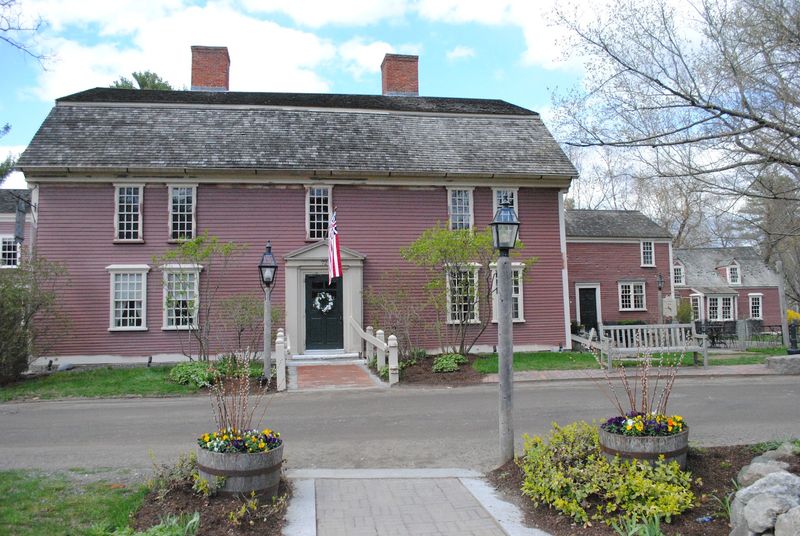
Henry Wadsworth Longfellow liked this place so much he wrote an entire poetry collection about it. David Howe received his innkeeping license from Sudbury selectmen in 1716, operating along the Old Boston Post Road out of a two-room home built in 1686.
The Howe family ran the inn for four generations, including Ezekiel Howe, a Lieutenant Colonel who fought at Lexington and Concord. Longfellow published his famous “Tales of a Wayside Inn” in 1863, cementing the property’s literary reputation and lending it his name.
In 1923, Henry Ford purchased the inn and relocated a one-room schoolhouse from Sterling, Massachusetts onto the grounds. Today guests can stay in one of 10 antique-furnished rooms, dine on classic New England dishes like Prime Rib and Yankee Surf and Turf, and buy freshly ground flour from the on-site grist mill.
2. Moravian Book Shop, Bethlehem, Pennsylvania
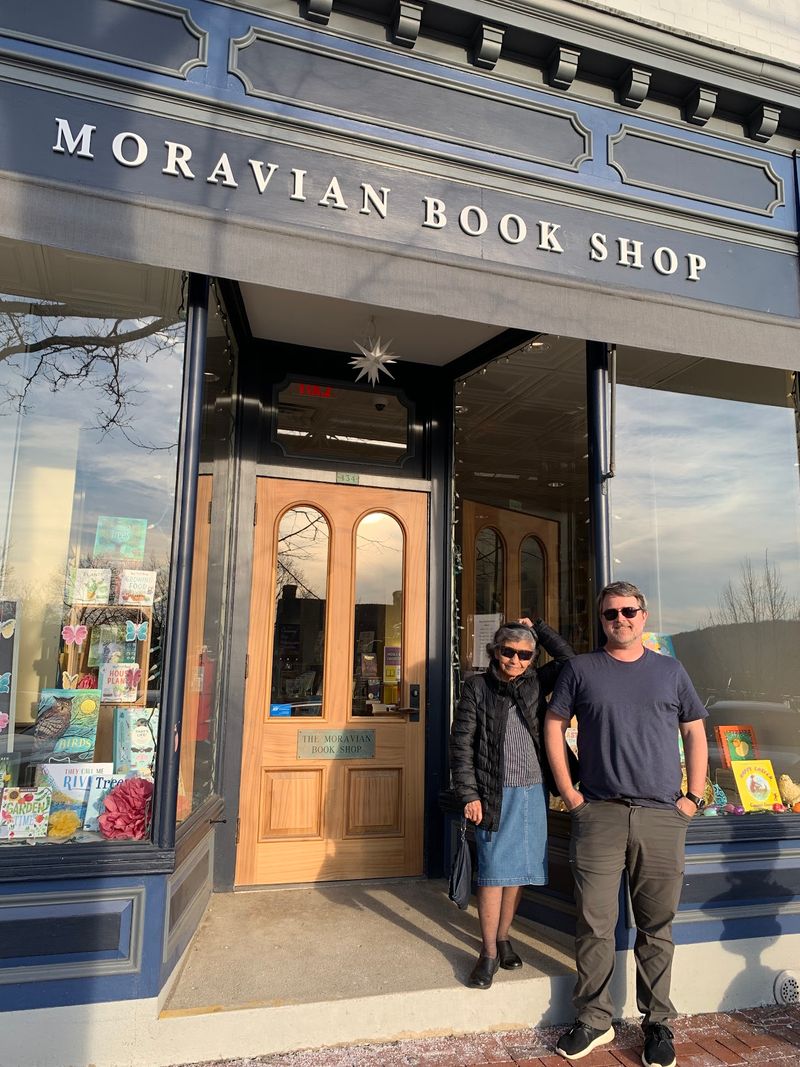
Books have been sold on this corner of Main Street since 1745, which puts the Moravian Book Shop solidly ahead of the United States itself. Bishop Augustus Spangenberg commissioned innkeeper Samuel Powell to open the “Bethelhemer Bucher Shop” to supply devotional and liturgical materials to the Moravian community.
That founding mission has expanded considerably. Today the shop covers 14,000 square feet across four buildings at 428 Main Street and carries indie bestsellers, local history titles, Moravian star kits, handmade beeswax candles, and a well-stocked children’s section with Lego and educational toys.
The shop is recognized as the oldest continuously operating bookstore in the United States and the second oldest in the world, ranking just behind a Lisbon bookseller that opened in 1732. Barnes and Noble College Booksellers now manages daily operations on behalf of Moravian University, which has owned the shop since 2018.
3. Fraunces Tavern, New York City, New York
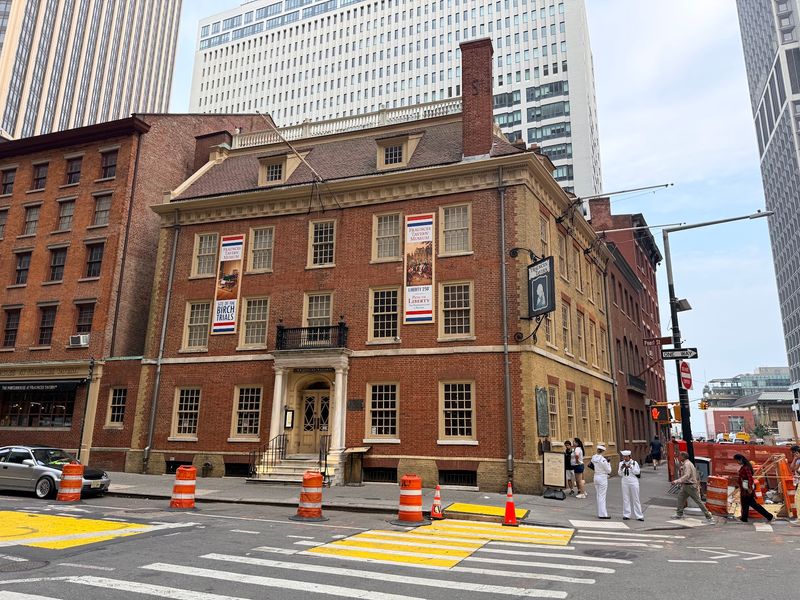
George Washington said farewell to his officers in this building on December 4, 1783, and the room where it happened is still there. Samuel Fraunces opened his tavern at 54 Pearl Street in 1762, inside a structure originally built in 1719, and it quickly became a hub for patriots including John Jay and members of the Sons of Liberty.
Over the following centuries the building served as government offices, a bank, and a boarding house before the Sons of the Revolution acquired it in 1904 and restored it to its original character.
Today the ground floor operates as a working restaurant serving traditional American fare, while the upper floors house a museum dedicated to the building’s Revolutionary-era history, including the preserved Long Room where Washington delivered his famous address. Few dining rooms in America carry that kind of documented weight.
4. The Griswold Inn, Essex, Connecticut
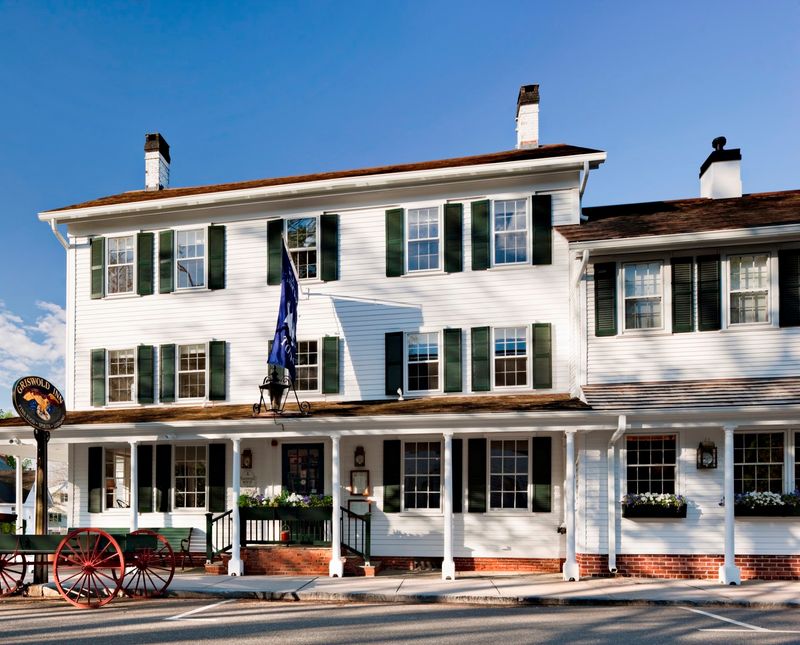
The Griswold Inn opened in 1776, the same year Essex Harbor launched America’s first Revolutionary Warship just down the street, which means “The Gris” has been pouring drinks since before the country officially existed.
Its famous Tap Room is housed inside Essex’s original 1738 schoolhouse, which was dragged to the inn’s site by a team of oxen in 1801. The interior holds one of the largest privately owned maritime art collections in the country, plus a Gun Room containing a musket with a handwritten note dated July 7, 1776, urging a son to join George Washington’s forces.
During the War of 1812, British troops occupied the inn. During Prohibition, it operated as a speakeasy.
Today it offers 34 guest rooms, five dining rooms, a Wine Bar and Bistro, and a Monday night sea chantey singalong tradition that has run continuously since 1972.
5. Bell in Hand, Boston, Massachusetts
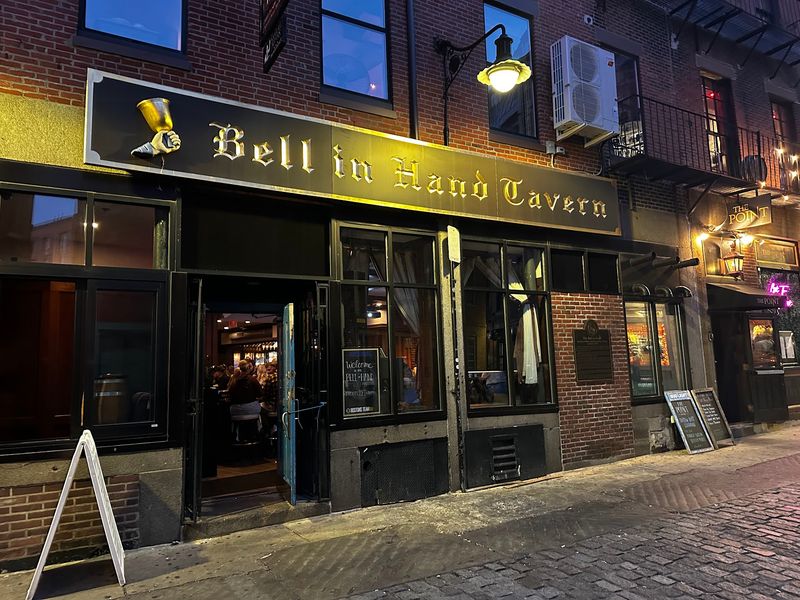
Jimmy Wilson spent 50 years as Boston’s town crier before retiring in 1795 and opening a tavern named after the bell he had carried for decades. That practical pivot produced what is now recognized as America’s oldest continuously operating tavern.
Wilson’s early policy was unusual: no hard liquor, only Smith’s Philadelphia Cream Ale. His clientele, however, was far from ordinary.
Paul Revere, Daniel Webster, Benjamin Franklin, John Adams, Samuel Adams, Charles Dickens, and Ralph Waldo Emerson all passed through at various points.
During Prohibition the Bell in Hand ran a speakeasy in the basement while maintaining a legitimate restaurant upstairs, a two-floor strategy that kept its doors open when many competitors closed permanently. Today it operates on Union Street in Boston’s historic center, steps from the Freedom Trail, with craft beers on tap and pub food on the menu.
6. Union Oyster House, Boston, Massachusetts
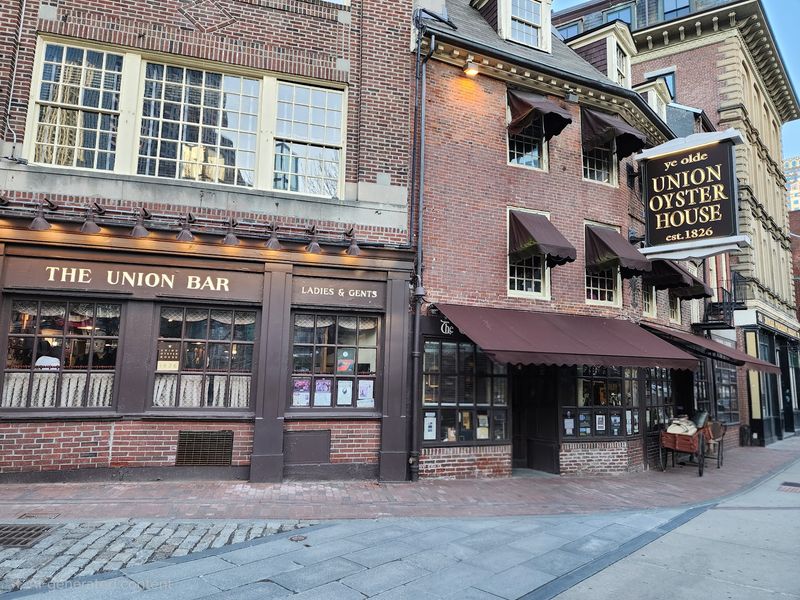
The building the Union Oyster House occupies is even older than the restaurant, dating to 1704, which means the walls were already 122 years old when the kitchen first opened in 1826. That timeline makes it the oldest restaurant in continuous service in the United States and the oldest in Boston.
Before becoming a seafood institution, the building housed a colonial print shop for “The Massachusetts Spy” and served as a gathering spot for patriots connected to the Boston Tea Party. Louis Philippe, the future King of France, lived upstairs in the late 1790s while teaching French to support himself during his exile.
Daniel Webster was a known regular who favored plates of oysters at the famous curved horseshoe bar, which still serves customers today. Its Freedom Trail location, low ceilings, and wood-paneled dining rooms make the restaurant feel like a natural extension of the city’s historic landscape rather than simply a tourist stop.
7. C.O. Bigelow Chemists, New York City, New York
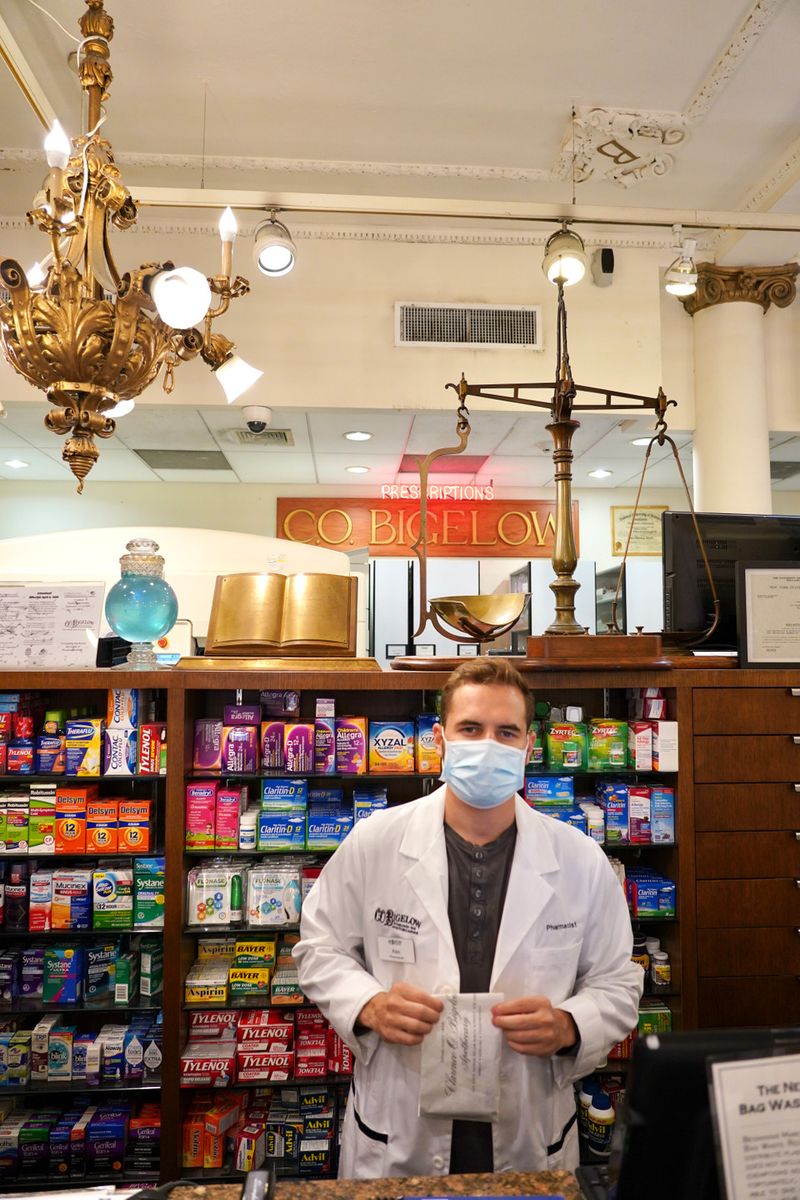
Back in 1838, the neighborhood pharmacy was where you went for everything from headache remedies to beauty advice, and C.O. Bigelow Chemists has been doing exactly that in Greenwich Village ever since.
Originally called the Village Apothecary Shoppe, it holds the title of America’s oldest apothecary.
The shop’s shelves blend modern wellness and beauty products with time-honored formulations, including the store’s own line of classic remedies and proprietary lotions based on original recipes. Many of the original fixtures remain in place, giving the interior a layered quality that reflects nearly two centuries of continuous retail operation.
Service here has traditionally leaned toward the personalized end of the spectrum, reflecting a period when pharmacists knew their customers by name. For anyone curious about how a 19th-century neighborhood pharmacy adapted into a 21st-century beauty and wellness retailer without losing its identity, this Greenwich Village storefront offers a clear, concrete answer.
8. White Horse Tavern, Newport, Rhode Island
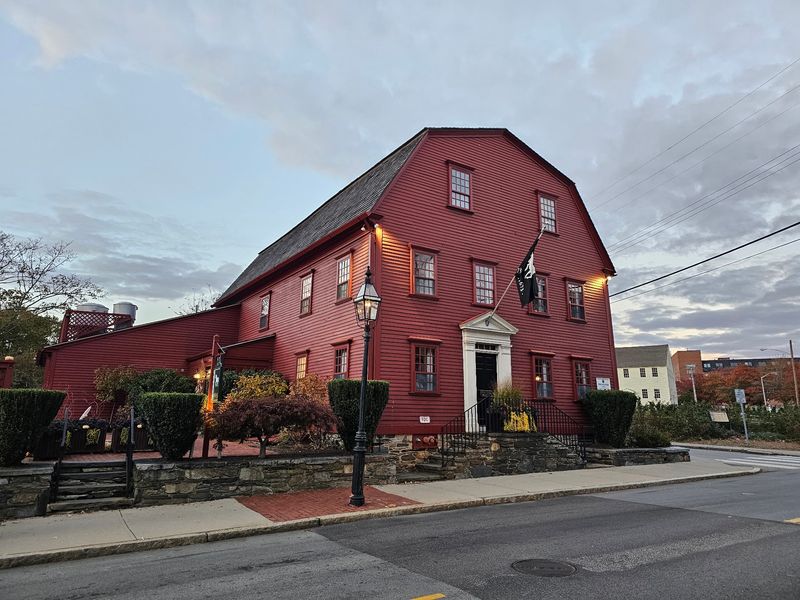
A pirate once owned this place, and that is honestly the least surprising thing about it. William Mayes Jr., a notorious Red Sea buccaneer, inherited the White Horse Tavern in 1702 after his father turned the 1652 Brinley residence into a licensed tavern in 1673.
During its colonial years, the tavern hosted the Rhode Island General Assembly, the Criminal Court, and the City Council, making it one of the busiest civic spaces in Newport before the Colony House was built.
British troops and Hessian mercenaries were quartered here during the Revolutionary War, giving the building yet another chapter of lived history. After a careful restoration from 1954 to 1957, it reopened as a working restaurant and National Historic Landmark, serving classic New England dishes including beef Wellington and pan-seared scallops.
9. Antoine’s Restaurant, New Orleans, Louisiana
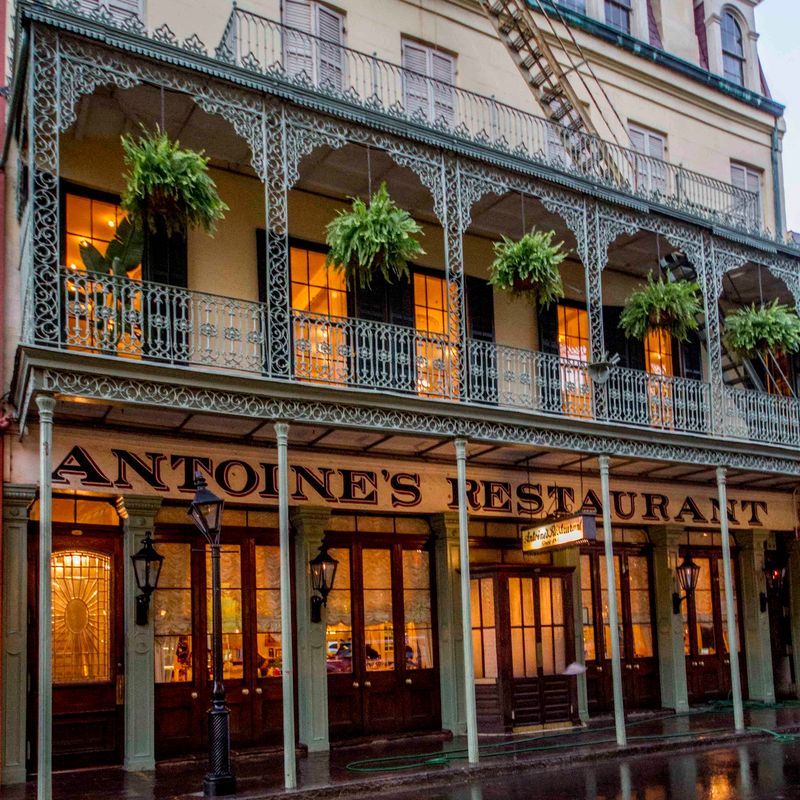
Antoine Alciatore was barely 20 years old when he opened his restaurant in New Orleans in 1840, which is either very ambitious or very reckless depending on how you look at it. Five generations of the same family have run the business since then, making it the oldest family-run restaurant in the United States.
His son Jules invented Oysters Rockefeller in 1889, reportedly because escargot was scarce that season. The recipe remains a closely guarded family secret.
Jules also created Pompano en Papillote and guided the restaurant through Prohibition, when spirits were served in the clandestine “Mystery Room,” accessed through a closet in the ladies’ restroom.
The restaurant occupies 14 or 15 interconnected dining rooms at 713 St. Louis Street, each with its own theme and history. The wine cellar holds 25,000 bottles, and the restaurant has survived the Civil War, the Great Depression, and Hurricane Katrina without closing its doors.
10. Tadich Grill, San Francisco, California
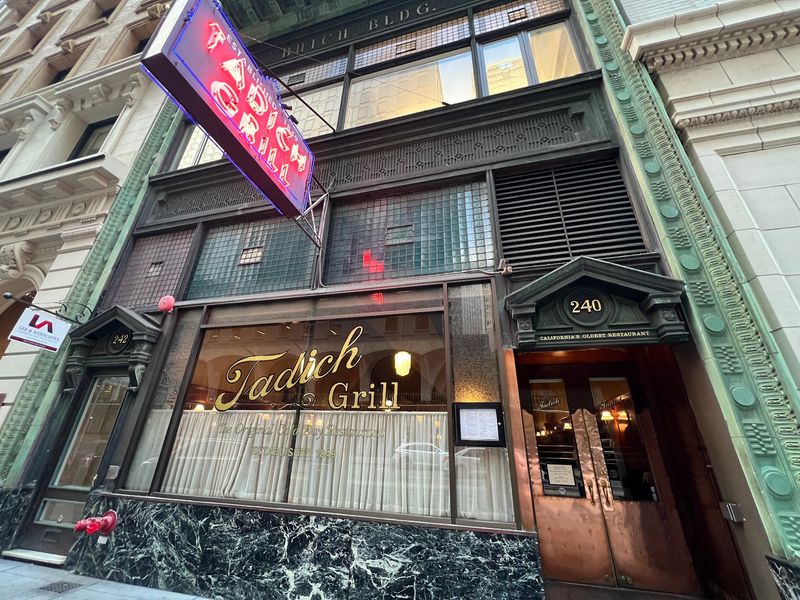
Three Croatian immigrants set up a coffee and fish stand on Long Wharf in 1849, before California was even a state, and that tent eventually became the oldest continuously operating restaurant in California. The Gold Rush brought the customers; the quality kept them coming back.
John Tadich, another Croatian immigrant from the island of Hvar, took ownership in 1887 and renamed the business after himself. The Buich family purchased it in 1928 and still operates it today, introducing Croatian-style mesquite broiling in 1925 as a signature cooking method that remains in use.
The current location at 240 California Street in the Financial District opened in 1967, with a classic interior featuring polished wood and counter seating. The menu runs to over 75 entrees, including Cioppino and Sand Dabs.
The restaurant does not take reservations, and the average cook on staff has worked there for more than 17 years.
11. The Old Ship Saloon, San Francisco, California
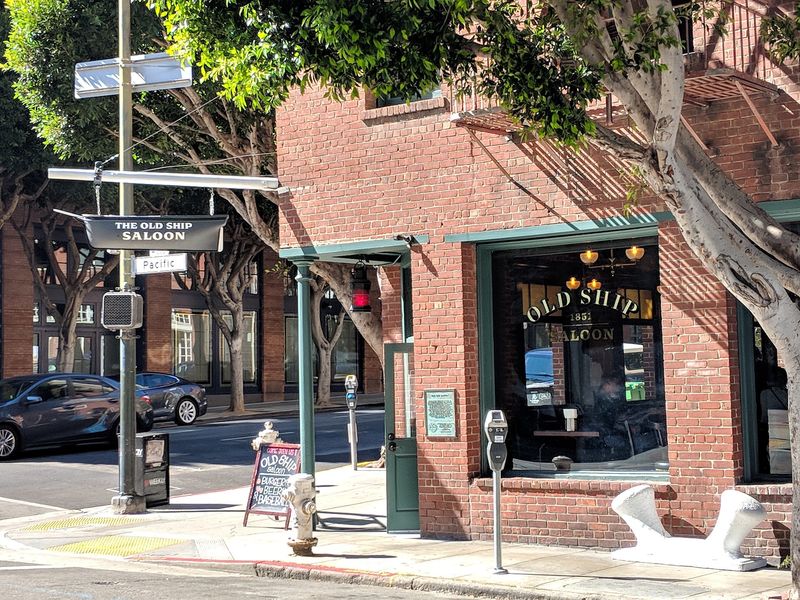
Most bars are built on solid ground. The Old Ship Saloon started life as an actual ship.
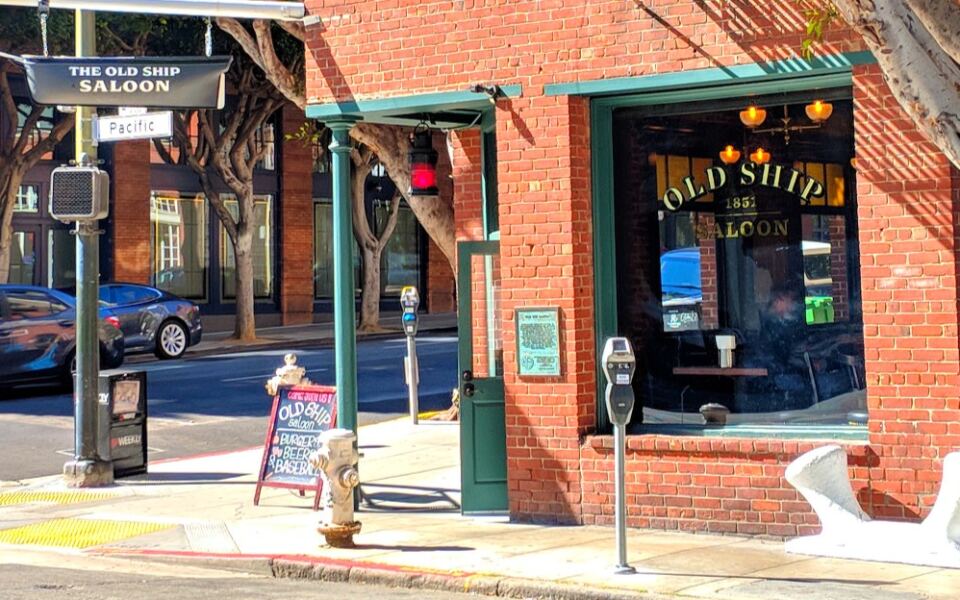
The three-masted Arkansas arrived in San Francisco Bay during the 1849 Gold Rush, was promptly abandoned by its crew, and in 1851 an Englishman named Joe Anthony converted its hull into a bar by cutting an entrance from the Pacific Street side and installing a counter.
The ship operated as a saloon for nine years before San Francisco’s expanding landfill buried the hull underground. A wooden structure replaced it, then a brick building, which survived the 1906 earthquake with damage and was rebuilt in 1907 using salvaged bricks from the surrounding area.
During Prohibition it became the Toscano Hotel and Monte Carlo Cafe, serving soft drinks until restrictions lifted. Today at 298 Pacific Avenue in the Jackson Square district, it is recognized as the oldest known bar still operating in San Francisco and one of the oldest on the entire West Coast.
12. Old Ebbitt Grill, Washington, D.C.
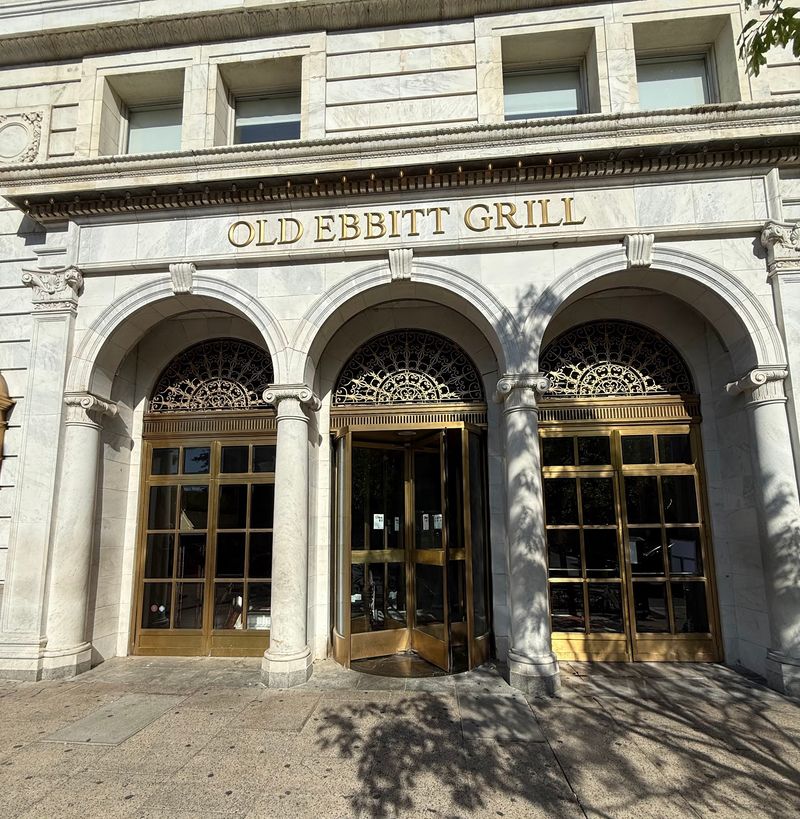
Washington has always been a city where power and lunch overlap, and the Old Ebbitt Grill has been at that intersection since 1856, when it began as a restaurant inside the Ebbitt House Hotel. Presidents Ulysses S.
Grant, Andrew Johnson, Grover Cleveland, Theodore Roosevelt, and Warren G. Harding were all reportedly regulars at its bar.
The establishment adopted the name “Old Ebbitt Grill” in 1926 and moved several times before settling at 675 15th Street NW in 1983, just steps from the White House, after a $4.4 million remodel. The Clyde’s Restaurant Group has owned it since 1970.
Its Victorian-style interior features brass fixtures, antique details, and a bustling oyster bar that serves fresh seafood daily. The menu focuses on classic American cuisine, and the dining room draws a steady mix of lawmakers, journalists, Capitol Hill staffers, and tourists who want their history served with a proper meal.
13. McGillin’s Olde Ale House, Philadelphia, Pennsylvania
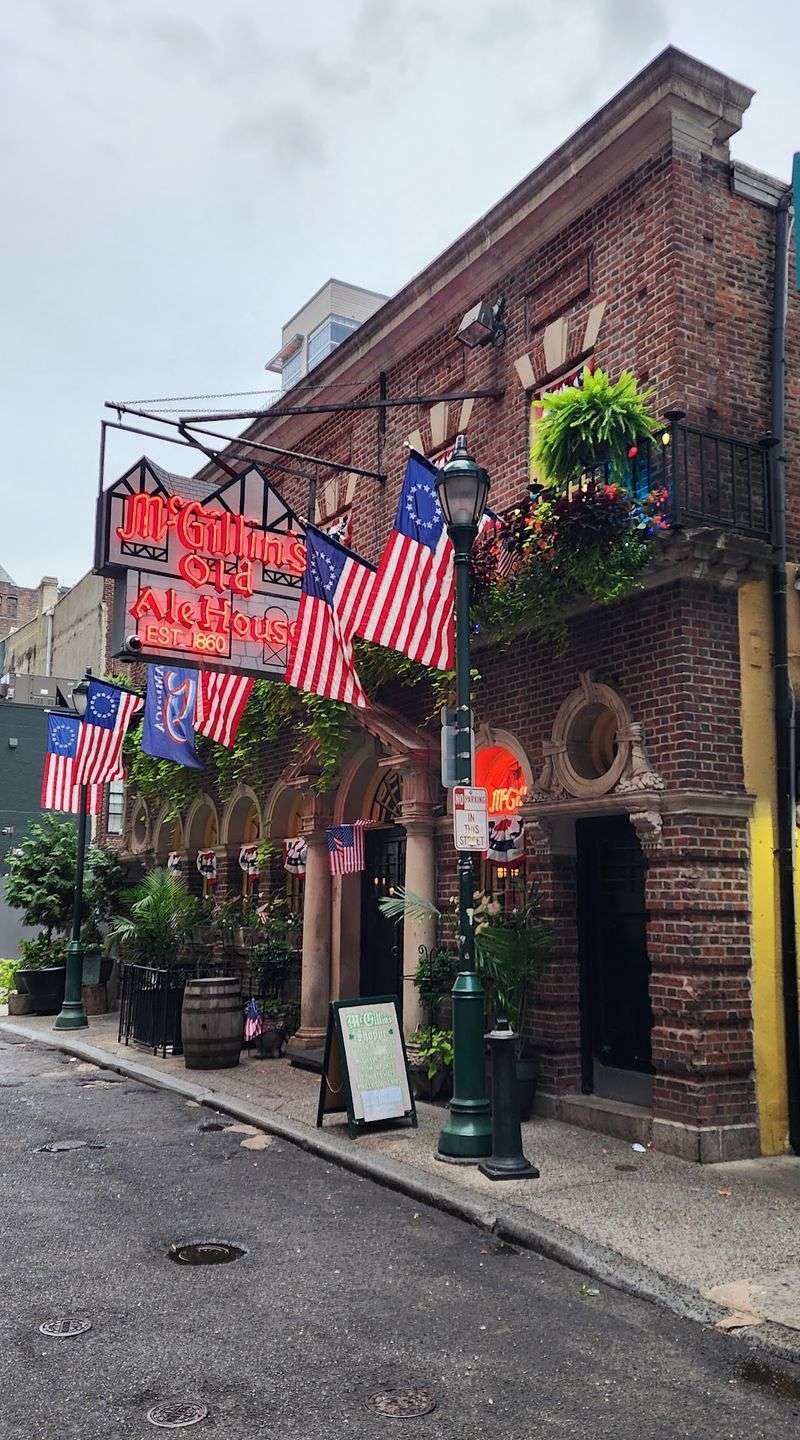
McGillin’s opened in 1860, the same year Abraham Lincoln was elected president, and has been serving Philadelphia ever since without a single change of city. Founded by Irish immigrants Catherine and William McGillin, the couple famously raised their 13 children in the residence directly above the bar, which is a commitment to the business that is hard to top.
During Prohibition, Ma McGillin converted the first floor into a food and ice cream parlor while the second floor quietly operated as a speakeasy. Every liquor license ever issued to the tavern since 1871 hangs on the walls, with the Prohibition years conspicuously absent as a nod to that creative survival.
Tucked along narrow Drury Street near City Hall, the tavern has stayed under just two family ownerships in over 160 years. Today it offers rotating local and regional beers on tap, traditional pub food, and regular karaoke and open mic nights in what remains Philadelphia’s oldest continuously operating tavern.
14. P.J. Clarke’s Third Avenue, New York City, New York
There is something genuinely striking about a small red-brick saloon sitting at the base of a canyon of Midtown skyscrapers, looking completely unbothered by any of it. P.J.
Clarke’s has occupied the corner of Third Avenue and East 55th Street since 1884, and the building has not moved an inch while the neighborhood transformed entirely around it.
Frank Sinatra had a regular booth in the back. Nat King Cole called it his favorite restaurant in the world.
The saloon’s dark wood paneling, long bar, and no-fuss American menu have remained consistent through more than a century of New York reinvention.
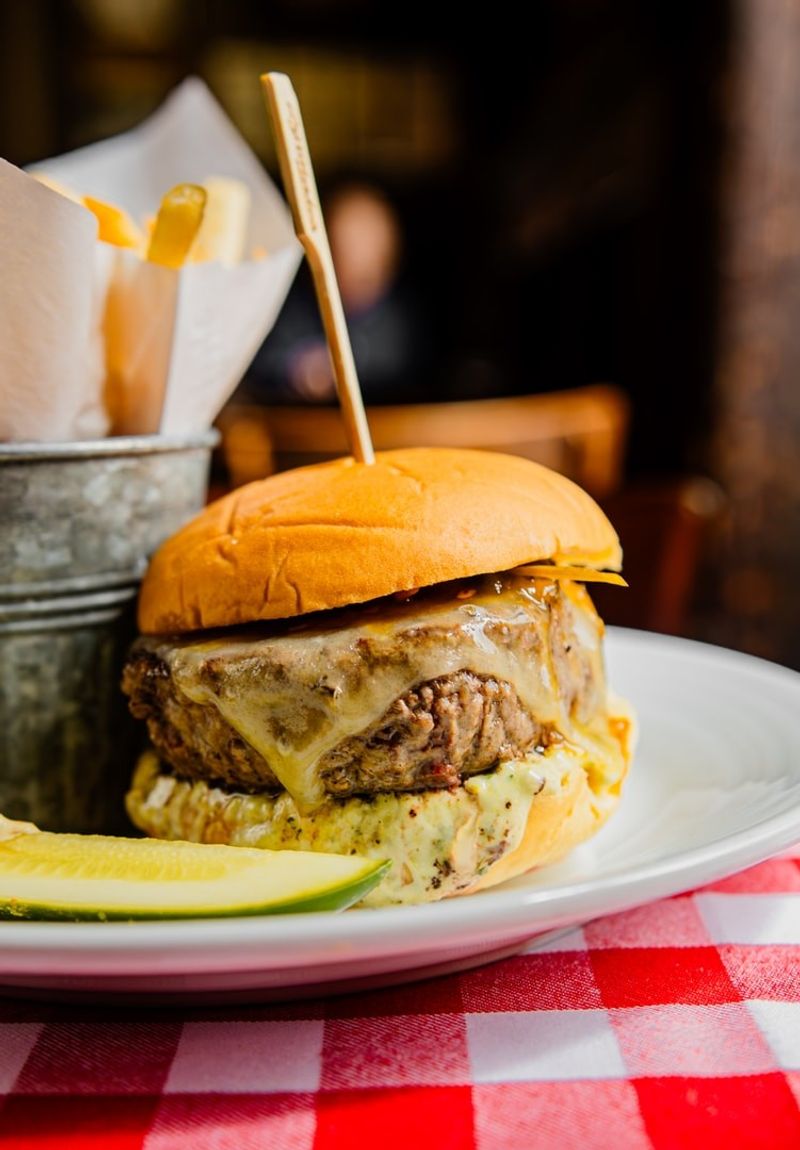
The cheeseburger is legendary, frequently cited among the city’s best, and the overall menu stays firmly in classic pub territory. P.J.
Clarke’s has appeared in films and television productions over the decades, but its real cultural weight comes from being exactly the same place it has always been, regardless of what gets built around it.
15. Keens Steakhouse, New York City, New York
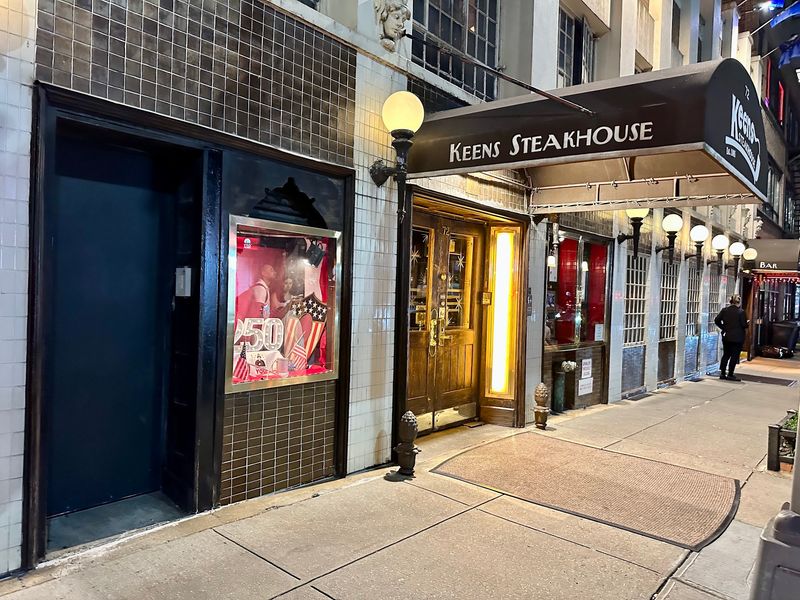
When Keens opened as a chophouse in 1885, Herald Square was packed with theaters, newspaper offices, publishers, and actors who needed a reliable place to eat after curtain call. The restaurant became that place almost immediately, and the theatrical crowd shaped its character in ways that are still visible today.
The most visually distinctive feature is the ceiling, which holds thousands of clay churchwarden pipes belonging to members of the restaurant’s pipe club. Babe Ruth, J.P.
Morgan, and President Theodore Roosevelt were all registered members. The tradition began because actors had to leave their pipes at the stage door before performances and needed a reliable place to store them.
Keens still serves its legendary mutton chop, a dish that has been on the menu since the beginning and functions as a benchmark for the whole experience. The dark wood interior, theater memorabilia, and caricature-covered walls make dining here feel like a genuine piece of old Midtown rather than a recreation of one.
Share this story