America’s railroad stations were built for more than just trains. They were the front doors of cities, the backdrops for wartime farewells, and the architectural pride of communities that believed rail travel would last forever.
Many of those grand old buildings are gone, but a surprising number have held on, and they are well worth tracking down. Some still welcome daily commuters, while others have reinvented themselves as museums and heritage attractions.
What makes this list especially fun is the sheer variety on offer, from a rugged granite building that opened before the Civil War to a neon-lit Pacific Northwest landmark still buzzing with long-distance travelers. Whether you are a history enthusiast, a rail fan, or simply someone who appreciates a well-built old building, these 15 surviving stations offer a genuinely rewarding journey through American history.
1. B&O Ellicott City Station Museum, Ellicott City, Maryland
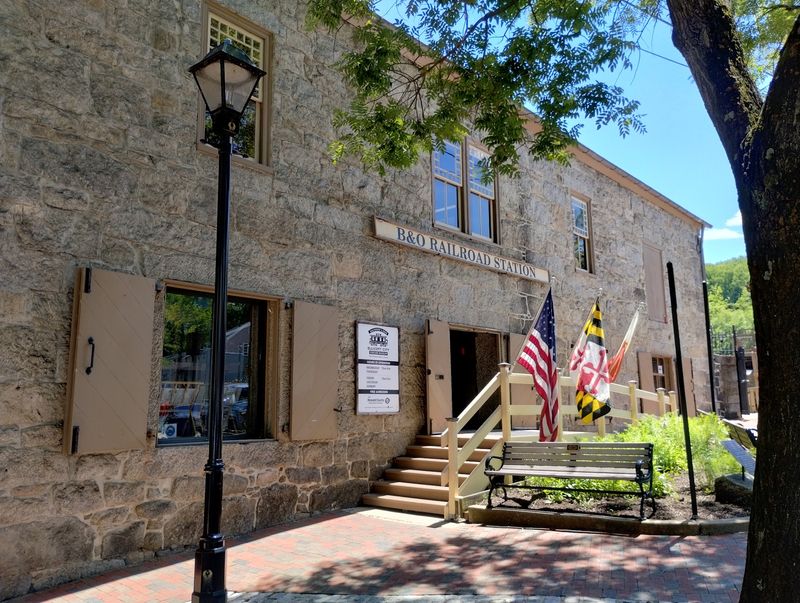
The oldest surviving passenger railroad station in the United States is not a grand marble palace but a sturdy granite structure built right into a Maryland hillside in 1830 to 1831. Originally constructed as a freight depot for the Baltimore and Ohio Railroad, the building adapted quickly into a passenger stop and never looked back.
Today it operates as a free museum managed by Howard County’s Department of Recreation and Parks. Inside, visitors find a restored ticket and telegraph office, period waiting rooms, and the preserved living quarters of a freight agent.
The outdoor grounds add real depth to the visit. Granite foundations from an 1863 turntable, an 1885 freight station designed by architect E.
Francis Baldwin, and a 1927 caboose round out the site. Active railroad tracks still run right beside the property, keeping the station connected to the living world of rail.
2. National Museum of Railroad History & Innovation, Baltimore, Maryland
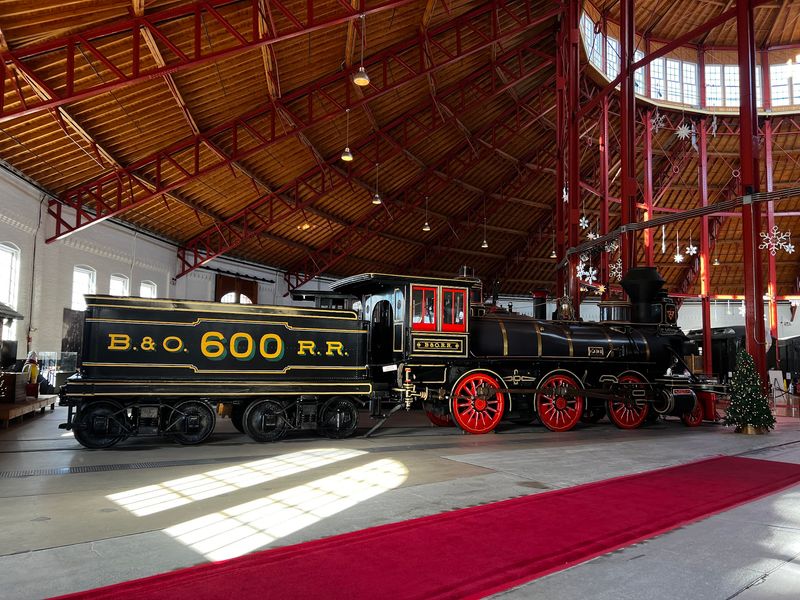
Mount Clare Station in Baltimore holds a remarkable double distinction: it stands as the oldest surviving building on the campus of a museum dedicated to the very industry it helped launch. Built in 1851, the brick structure once anchored passenger services for the Baltimore and Ohio Railroad’s expanding southwest routes.
The broader site carries even deeper historical weight. America’s first regular passenger rail service launched here in May 1830, and the first telegraph message in history, “What hath God wrought,” was transmitted from this location on May 24, 1844.
A visit covers far more than one old building. The 40-acre campus includes the spectacular 1884 Baldwin Roundhouse, over 250 pieces of historic railroad equipment, and detailed model railway displays.
For anyone curious about where American railroading truly began, this Baltimore campus delivers the full story in one place.
3. Hanover Junction Station, Seven Valleys, Pennsylvania
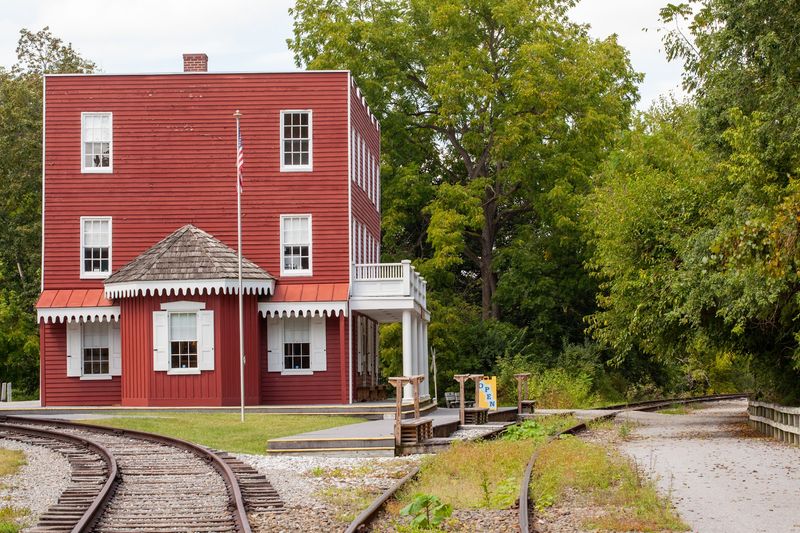
Rural, quietly dignified, and loaded with Civil War significance, Hanover Junction Station sits along what is now the York County Heritage Rail Trail in Seven Valleys, Pennsylvania. Built between 1852 and 1854 by the Hanover Branch Railroad, the three-story frame building was originally positioned to facilitate interchange between two converging rail lines.
Its modest appearance belies a dramatic history. Confederate forces targeted the station in 1863, destroying a nearby railroad bridge and turntable.
President Abraham Lincoln passed through here twice in November 1863, traveling to and from Gettysburg to deliver his famous address.
After decades of disuse, the station was carefully restored to its Civil War-era appearance in 2003 and now functions as a railroad museum. Civil War photographs, scale models showing the station’s various configurations, and railroad memorabilia fill the interior, while the surrounding trail offers a peaceful complement to all that history.
4. Gettysburg Lincoln Railroad Station™, Gettysburg, Pennsylvania
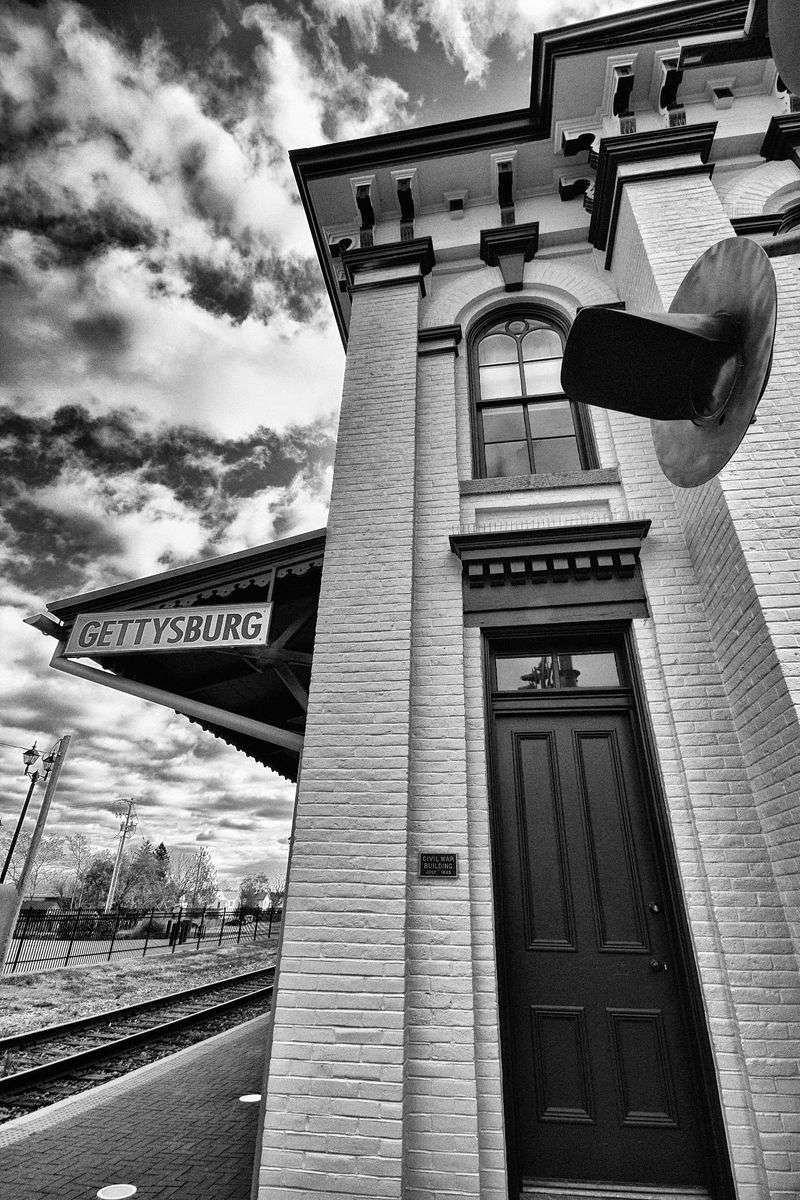
Abraham Lincoln arrived at this handsome Italianate station on the evening of November 18, 1863, the night before he delivered the Gettysburg Address to a nation in crisis. That single fact transforms what might otherwise be a pleasant 19th-century depot into something considerably more significant.
Opened in 1859, the station served a dual role during the Civil War, facilitating the movement of critical military supplies toward the front and the transport of wounded soldiers away from the battlefields. Its architectural style, with elegant decorative trim and clean proportions, provides a dignified setting for stories of real historical weight.
Today the building welcomes visitors with period artifacts, interpretive displays, and an orientation film that contextualizes the events connected to this site. Its downtown Gettysburg location makes it a natural and rewarding starting point for a broader exploration of the area’s history, and it requires very little out-of-your-way effort to include.
5. Michigan Central Railroad Station, Jackson, Michigan
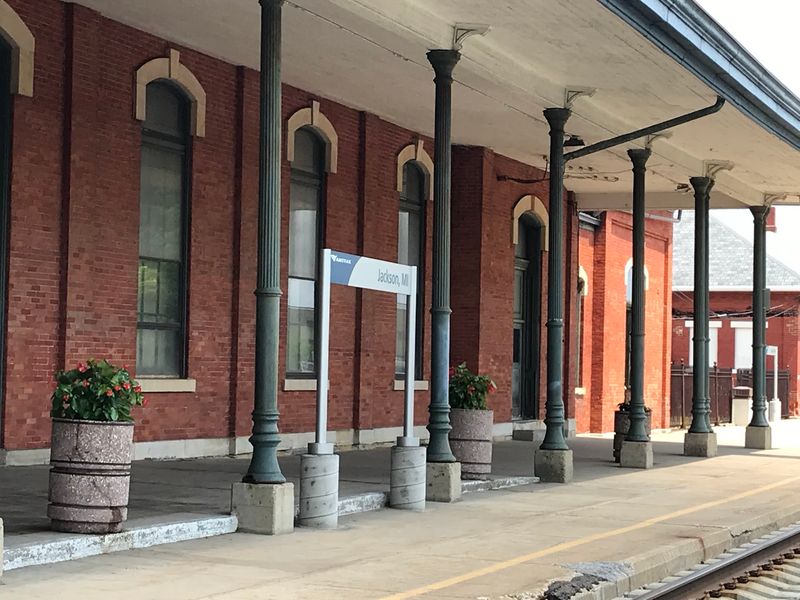
Few railroad stations anywhere in the United States can claim what Jackson’s Michigan Central depot can: it opened in 1873 and has never stopped serving passengers. That unbroken chain of operation across more than 150 years puts it in genuinely rare company.
Designed by Henry R. Gardner, the Victorian-Italianate red-brick building originally featured heart pine, ash, oak, and walnut woodwork harvested from Michigan forests.
A carved walnut arch once separated the ticket office from the women’s waiting room, and a slate roof was chosen specifically to resist sparks from passing steam locomotives.
Amtrak undertook a significant restoration in 1978, cleaning the exterior brick, refinishing the elaborate wood trim, and restoring the terrazzo floors. A mural painted during that project depicts the depot in 1904 alongside a modern Turboliner, a quietly clever reminder that some buildings age without ever becoming irrelevant.
Trains still stop here daily.
6. Conway Scenic Railroad, North Conway, New Hampshire
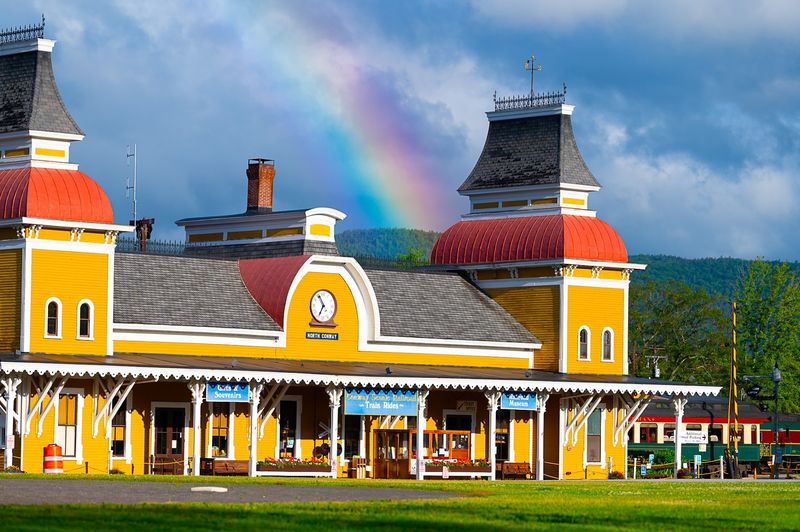
North Conway’s station is the sort of building that stops people mid-stride just to stare at it. Completed in 1874 and designed by Nathaniel J.
Bradlee in an eclectic style that mixes Victorian and Russian architectural influences, its twin towers and decorative details make it one of the most photogenic historic depots in New England.
The station was added to the National Register of Historic Places in 1979, and it earns that recognition on architectural merit alone. Inside, a small museum covers the regional history of railroading, while a ticket office remains fully operational for visitors ready to board.
Conway Scenic Railroad runs regular excursions from this very platform into the surrounding White Mountains and countryside. Route options range from shorter family-friendly valley runs to longer journeys through Crawford Notch, meaning the historic depot serves as the genuine starting point for a full vintage rail outing rather than just a backdrop for photographs.
7. Tamaqua Railroad Station, Tamaqua, Pennsylvania
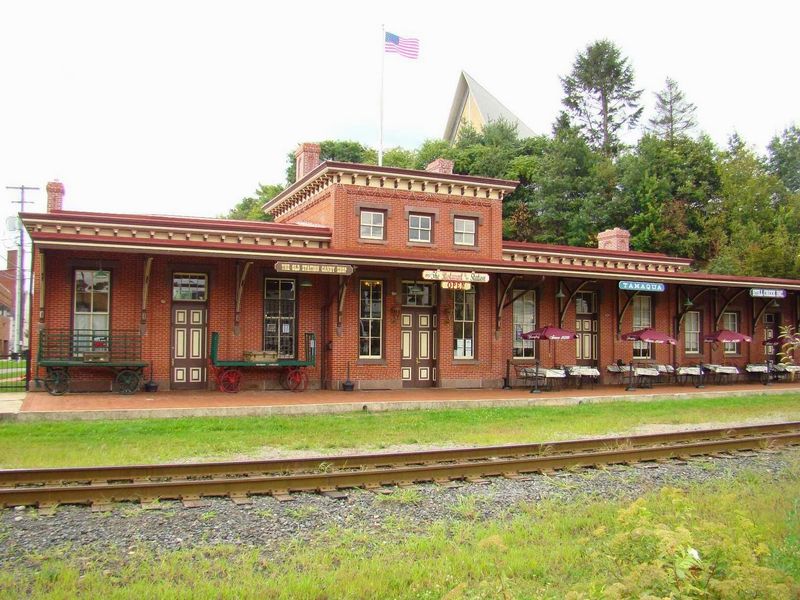
Built in 1874 by the Philadelphia and Reading Railroad, Tamaqua’s Italianate brick station was once a thriving hub in Pennsylvania’s anthracite coal country. Passenger service eventually ended in the mid-1980s, and the building sat empty long enough that demolition became a real possibility.
A determined local preservation group refused to let that happen. After an extensive restoration effort, the depot reopened in 2004 as a visitor center, restaurant, and gift shop, bringing foot traffic and community life back to a building that had gone very quiet.
The station’s comeback earned national recognition in 2023 when it appeared on a USPS Forever stamp, a distinction that very few historic buildings ever achieve. Reading Blue Mountain and Northern Railroad excursion trains now board here, connecting the restored depot to active rail operations once again.
Its broad roofline, detailed brickwork, and trackside setting give it plenty of old-fashioned character worth experiencing in person.
8. Point of Rocks, Point of Rocks, Maryland
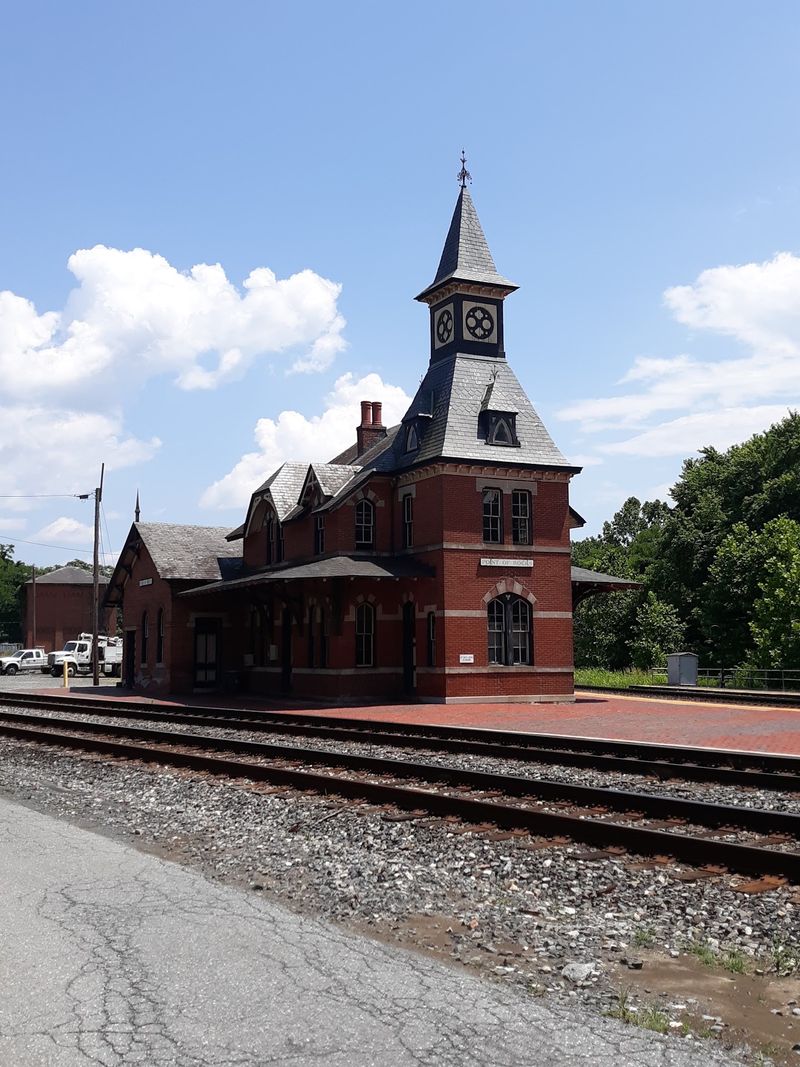
Point of Rocks Station is the kind of building that makes first-time visitors do a double take. Completed in 1876 and designed by the prolific railroad architect E.
Francis Baldwin for the Baltimore and Ohio Railroad, its Victorian Gothic silhouette features colorful masonry, intricate trim work, and a four-story central tower with a pyramidal roof.
The design is widely considered one of the most architecturally dramatic small-town railroad stations in the entire country. Its triangular Gothic Revival form, with a steeple facing directly toward the tracks, seems almost extravagant for a station serving such a compact Maryland community.
What makes Point of Rocks especially satisfying is that it remains in active service. MARC commuter trains stop here regularly, so the station is not merely preserved but genuinely used.
Even viewed from public areas around the platform, the building’s detailed facades and commanding tower make this a memorable stop along the scenic Potomac River corridor.
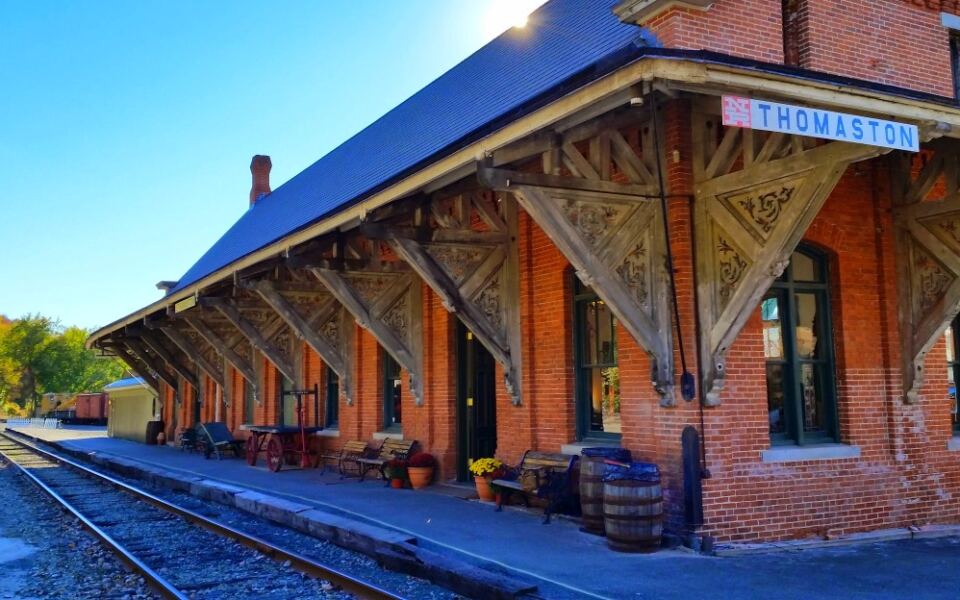
9. Railroad Museum of New England, Thomaston, Connecticut
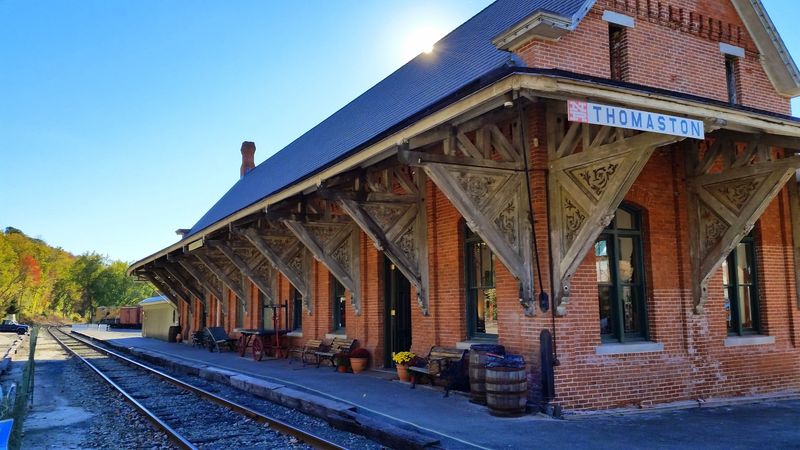
Thomaston Station has had a rougher journey than most buildings on this list. Built in 1881 for the Naugatuck Railroad, it served passengers faithfully until 1958, then endured decades of neglect and an arson fire in 1993 that could easily have ended its story for good.
Preservation advocates and volunteers refused that outcome. Since 1999 the station has served as the headquarters of the Railroad Museum of New England, with ongoing restoration work steadily returning the Victorian structure toward its 1950s appearance.
Heritage excursion trains depart from this very platform on operating days, pulled by vintage diesel or steam locomotives along the Naugatuck Railroad corridor. The museum itself holds one of New England’s largest collections of historic railroad equipment, displayed both inside and outside the station.
On excursion days especially, Thomaston takes on the convincing atmosphere of a working railroad town from a previous century, which is exactly the point.
10. Gaithersburg Community Museum, Gaithersburg, Maryland
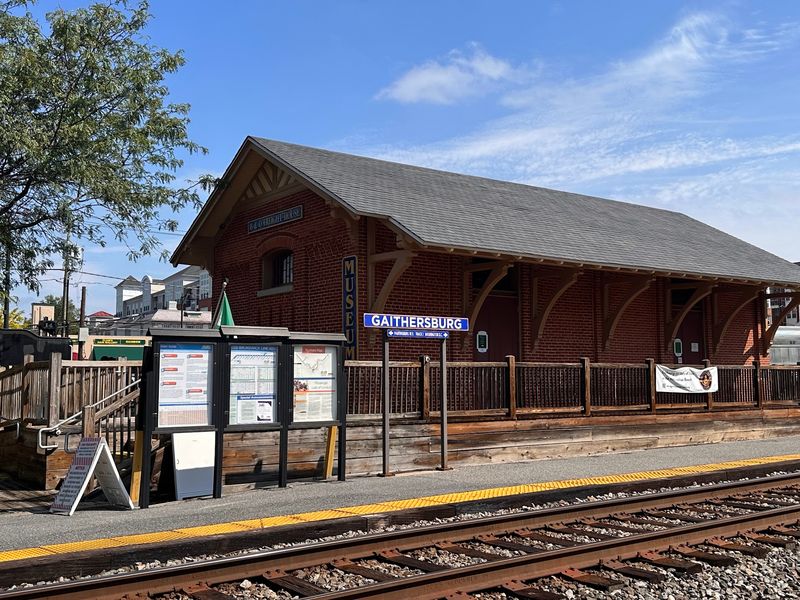
Gaithersburg’s railroad complex dates to 1884, when the Baltimore and Ohio Railroad constructed both a passenger station and an accompanying freight house to serve what was then a growing Maryland town. The two buildings have since taken on different roles while remaining side by side.
The original station still functions as an active commuter stop for modern trains, giving it a living connection to the present that pure museums cannot quite replicate. Next door, the freight house now contains the Gaithersburg Community Museum, where exhibits and interactive learning centers cover the city’s broader history for visitors of all ages.
Outside the complex, a collection of historic rail equipment adds considerable visual interest. A 1918 Buffalo Creek and Gauley steam locomotive, a 1950s Budd railcar, and a Chesapeake and Ohio Railroad caboose are all on display.
Real trains passing the property at regular intervals ensure the site feels dynamic rather than frozen, which is a combination not easily found elsewhere.
11. Harrisburg Railroad Station, Harrisburg, Pennsylvania
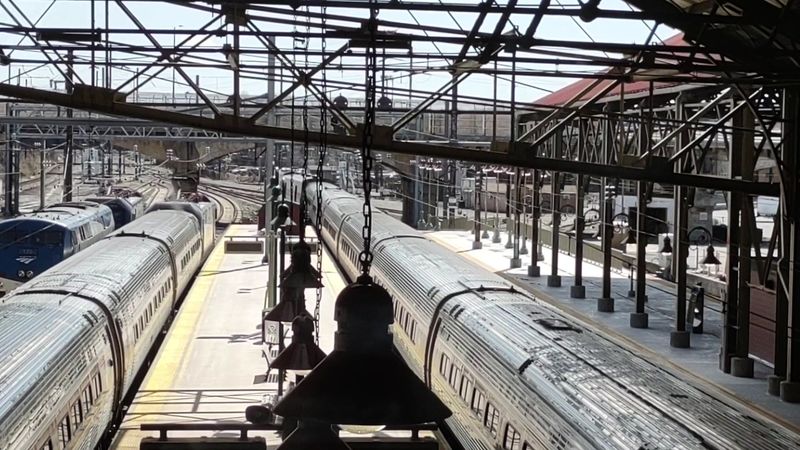
Harrisburg’s Pennsylvania Railroad station, completed in 1887, operates on a different scale than most of the smaller depots on this list. Its Queen Anne red-brick facade and position as the capital city’s primary rail hub gave it an institutional confidence from the very beginning.
The feature that genuinely sets Harrisburg apart is its surviving Victorian train shed, a soaring steel and wood structure that still covers the tracks today. Train sheds of this era are extraordinarily rare survivors, and Harrisburg’s example is one of the finest still in active use anywhere in the country.
At the station’s busiest point in 1922, more than 100 trains arrived and departed daily beneath it.
Amtrak passenger services continue to use the station, now officially called Harrisburg Transportation Center. Watching a modern train pull in under a structure built in the 1880s creates a quietly satisfying contrast that rail history enthusiasts and casual travelers alike tend to appreciate.
The station has also earned designation as a National Engineering Landmark.
12. Jim Thorpe Visitors Center, Jim Thorpe, Pennsylvania
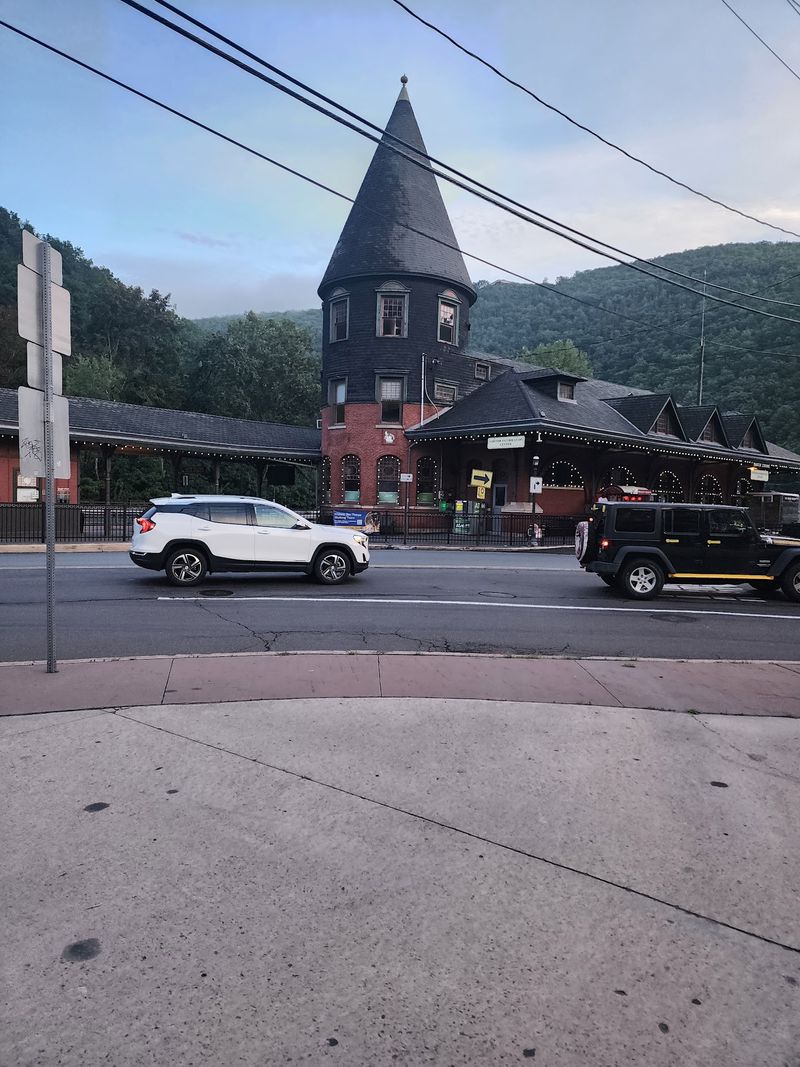
The former Central Railroad of New Jersey station in Jim Thorpe is a confident piece of Victorian architecture, designed in 1888 by the Wilson Brothers and Company of Philadelphia. Its red-brick construction features broad arches, a three-and-a-half-story cylindrical corner tower, and Queen Anne detailing that gives the building a distinctly assertive presence at the foot of one of Pennsylvania’s most appealing historic downtowns.
The station’s original importance was tied directly to the anthracite coal trade, with the surrounding region producing enormous quantities of coal that moved through this very building. After passenger service ended in the late 1960s, the depot found a new purpose as the Jim Thorpe Visitors Center, ensuring the building remained part of daily community life.
Railroad atmosphere is easy to find nearby. The Lehigh Gorge Scenic Railway operates tourist excursions through the dramatic Lehigh Gorge, with mountains rising sharply around the valley.
Very few stations on this list sit within such a naturally compelling setting, and the combination of historic architecture and active rail excursions makes Jim Thorpe well worth the trip.
13. Harpers Ferry Railroad Station, Harpers Ferry, West Virginia
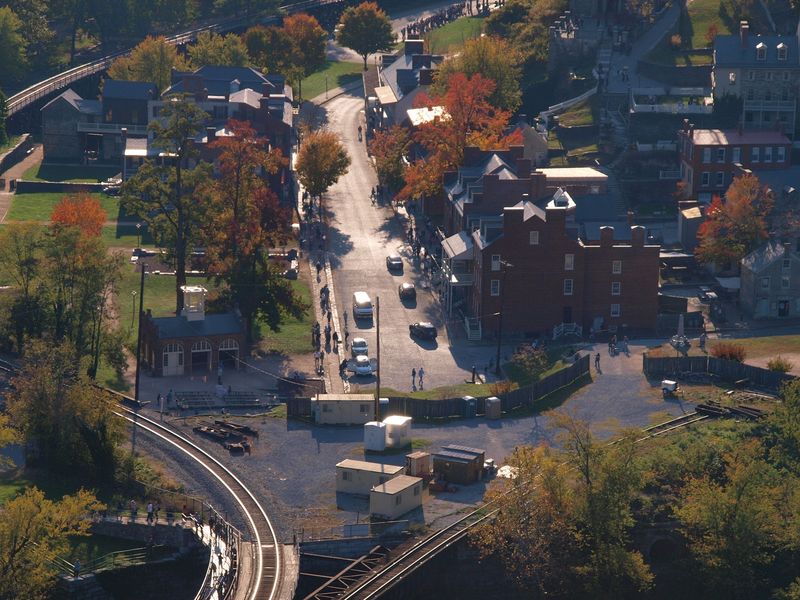
Harpers Ferry’s railroad station occupies one of the most dramatically positioned sites of any depot in the eastern United States. Designed by E.
Francis Baldwin for the Baltimore and Ohio Railroad and dating to 1894, the wooden structure sits near the confluence of the Potomac and Shenandoah rivers, surrounded by wooded ridges, stone buildings, and historic bridges.
The station was carefully relocated in 1931 as part of railroad improvements, and a later restoration returned it to its 1931 appearance. Today it serves both Amtrak long-distance passengers and MARC commuter train riders, making it one of the more versatile historic stations on this list in terms of current function.
Inside, the former women’s waiting area now contains a historical exhibit, alongside a MARC ticket office and a meeting room. The station forms part of the broader Harpers Ferry National Historical Park landscape, where the surrounding natural and built environment competes fiercely with the depot itself for a visitor’s attention.
That is a genuinely pleasant problem to have.
14. Portland Union Station , Portland, Oregon
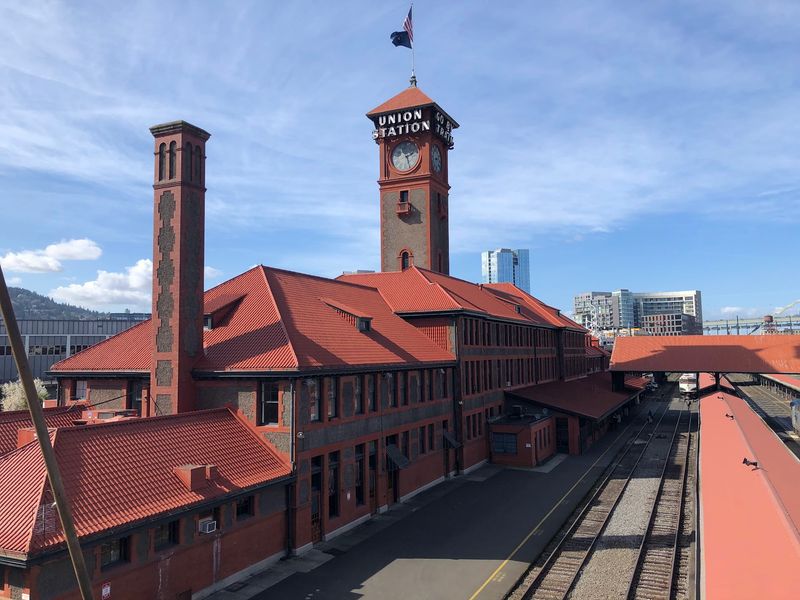
Portland Union Station opened in 1896 and has not stopped working since, earning its reputation as the oldest continually operating passenger rail station on the entire West Coast. Its Richardsonian Romanesque design, courtesy of the firm Van Brunt and Howe, gives the building a robust stone-and-brick solidity that makes it look like it was built to outlast everything around it.
The tall clock tower and the iconic neon “Go By Train” sign are the two visual details that most visitors remember longest. Both have become genuine landmarks in the Pacific Northwest skyline.
Inside, original wood and marble elements from the 1896 opening survive alongside updates from a major 1927 to 1930 redesign.
Amtrak’s Cascades, Coast Starlight, and Empire Builder all use the station today, ensuring a steady flow of long-distance travelers through a building that also served as a major departure point for military personnel during World War II. That layered history, combined with active daily operations, gives Portland Union Station a depth that very few historic stations can match.
15. Union Station, Montgomery, Alabama
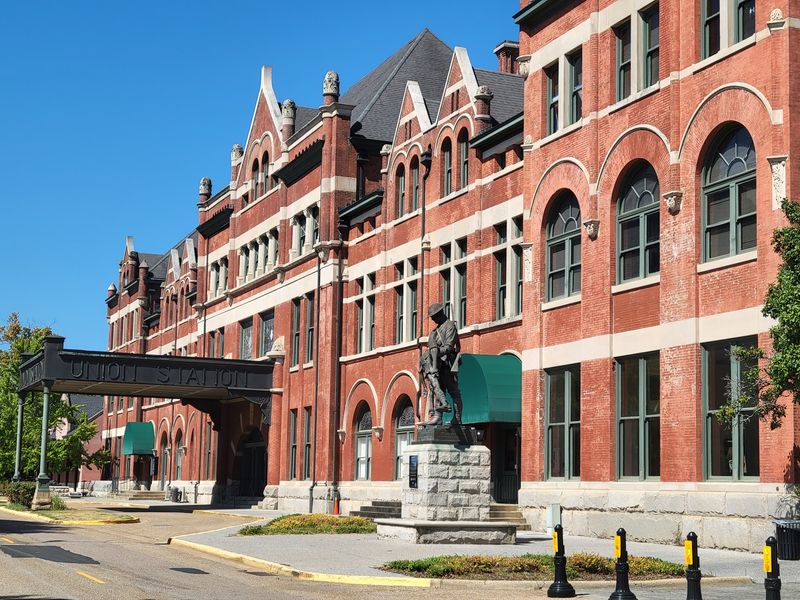
Montgomery Union Station was constructed in 1897 and opened in 1898, bringing Richardsonian Romanesque architecture and serious ambition to Alabama’s state capital. Built by the Louisville and Nashville Railroad, the three-story brick and limestone structure featured grand archways and the kind of confident scale that signaled a city expecting great things from its railroad connections.
Its most remarkable surviving feature is the immense gable-roofed trainshed, originally designed to shelter six railway tracks. This shed is considered one of the very few intact examples of a 19th-century gable-roofed railroad shed remaining in the United States, which makes it architecturally significant well beyond Montgomery’s city limits.
Passenger rail service ended in 1979, but the building was restored rather than demolished, a decision that looks better with every passing decade. The complex now houses the Montgomery Area Visitor Center along with commercial tenants.
The heavy brickwork, arched entrance, and preserved trainshed make this a worthwhile destination for anyone with an interest in American architectural and transportation history.
Share this story