Greece packs temples, mountain villages, medieval towns, and glowing islands into one small country. Every stop tells a different story, from ancient games to volcano views.
Some places are famous, and others are quiet surprises. Here are fifteen spots that show just how many sides Greece has.
Athens
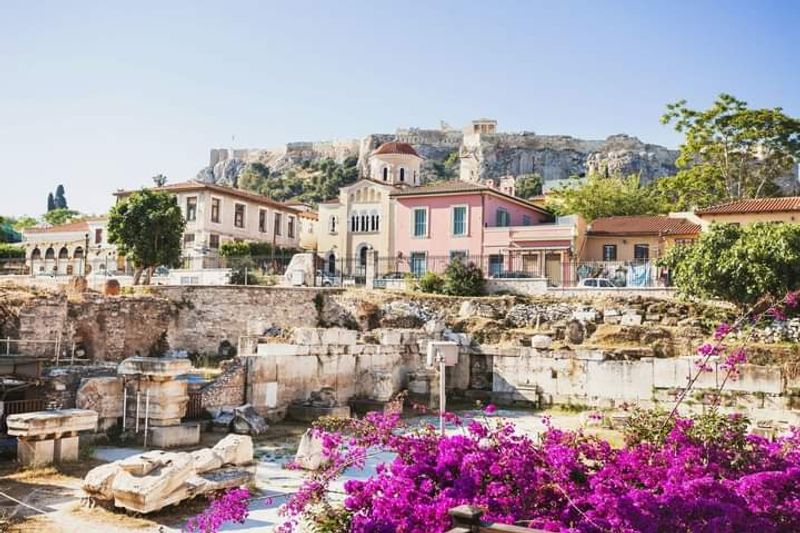
Few cities let you sip coffee within sight of a 2,400-year-old temple. Athens does it daily.
The Acropolis rises above restaurants, markets, and apartment blocks, and nobody seems to think that is strange.
Its great monuments, including the Parthenon, Erechtheion, Propylaea, and Temple of Athena Nike, were mostly built in the second half of the fifth century B.C. under the leader Pericles. Go early in the morning, because the stone gets hot and the crowds get thick by midday.
The city is much more than one hill. Plaka has winding lanes, Monastiraki has busy flea market stalls, and the Ancient Agora shows where citizens once argued about laws and trade.
Neoclassical buildings, museums, and lively neighborhoods show how the city kept changing across the centuries.
Plan at least two full days. Spend one on the ancient sites and one wandering the modern streets, snacking on souvlaki as you go.
Comfortable shoes are a must, since marble paths can be slippery. By sunset, climb a nearby hill for a view that makes the whole trip feel worth it.
Delphi
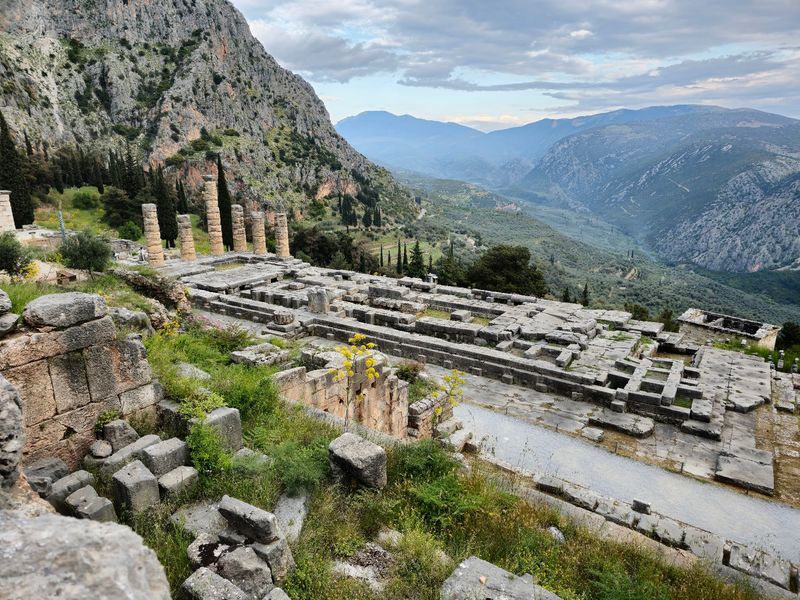
Ancient Greeks believed Delphi was the navel of the world, and the view makes that idea easy to accept. The sanctuary sits on the slopes of Mount Parnassus, with an olive-covered valley falling away below.
It was the home of Apollo and the Pythia, whose answers drew visitors from across the Greek world.
The site climbs in terraces. You walk the Sacred Way, pass treasury remains, and reach the Temple of Apollo.
Higher up wait the theater and the stadium, along with the best viewpoints.
Here is a quirky fact: the modern village was moved in 1893 so archaeologists could dig up the ancient sanctuary. Imagine being told your whole town had to pack up for a temple.
Bring water and wear sturdy shoes, because the slope is steady and the sun is strong. The nearby museum holds the famous bronze Charioteer, so do not skip it.
Delphi blends mythology, mountain air, and big scenery in a single day trip.
Arrive when the gates open for quiet paths and soft light.
Meteora
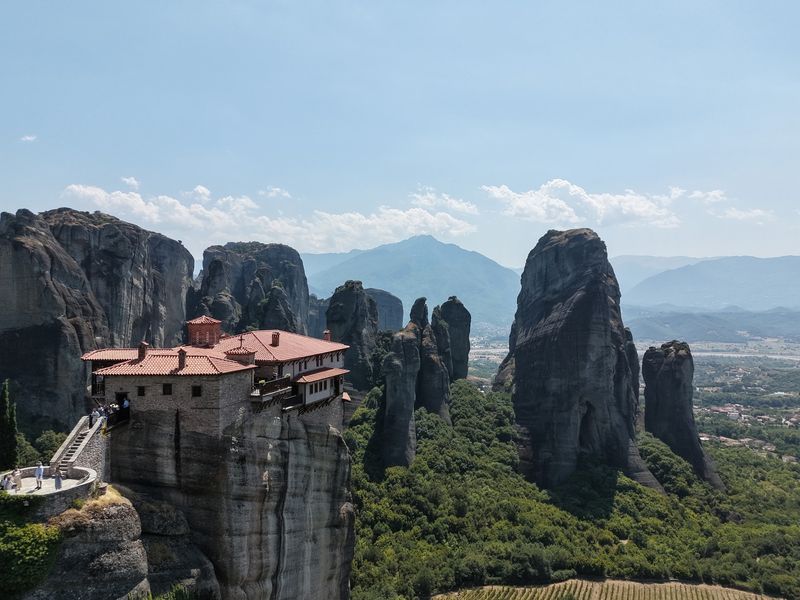
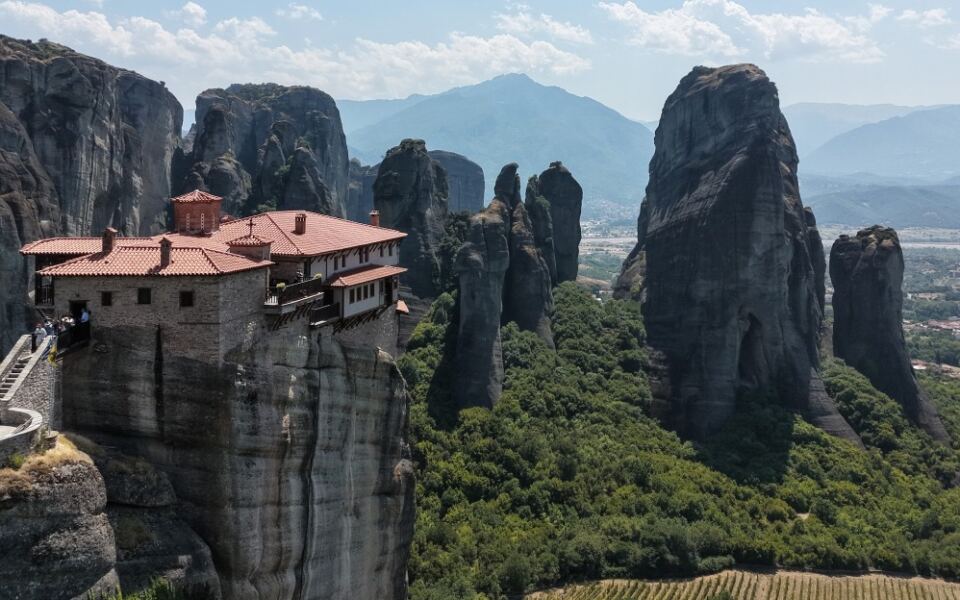
Stand at the base of Meteora and your neck starts to ache. More than 800 towering rock formations rise above Thessaly, and monasteries sit on top of them like stone crowns.
Hermits were living in caves and cracks here by the 11th century.
Around 30 monasteries once existed, and six are still active today. Monks used ropes, ladders, and hoists to reach them, which kept the isolation they wanted.
UNESCO listed the area in 1988 for both its culture and its nature.
Roads and stairs now make visits easier, though your legs will still notice. Dress modestly, since these are working religious places.
Women usually need a long skirt, and wraps are often lent at the door.
Visit at sunrise or sunset, when the cliffs glow orange and the valley fills with mist. Walking between monasteries shows how geology, architecture, and Orthodox tradition fit together.
Kalambaka makes a handy base, with plenty of tavernas for a hearty dinner after a long day of climbing.
Thessaloniki
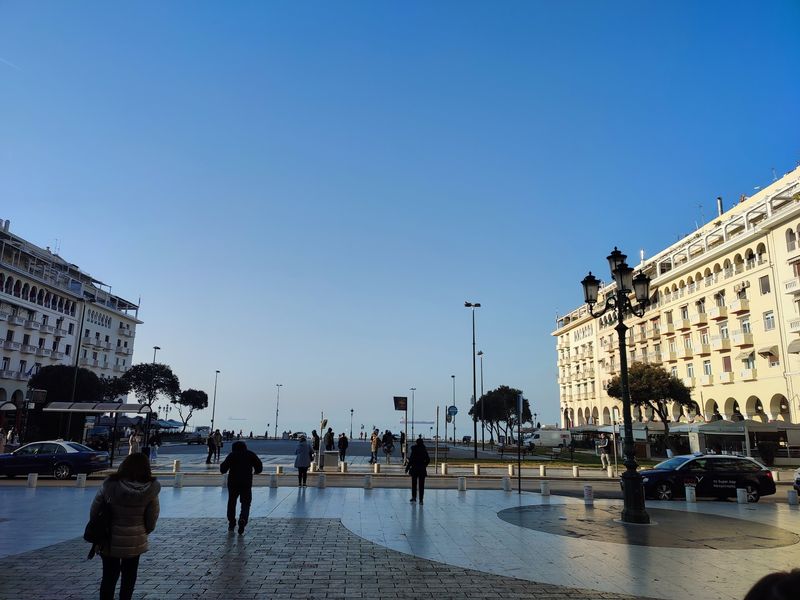
Ask a Greek where the best food is, and many will say Thessaloniki. The second-largest city in Greece sits on the Thermaic Gulf and has long been a crossroads of the Balkans and the eastern Mediterranean.
Roman, Byzantine, Ottoman, Jewish, and modern Greek layers all show in its streets.
The White Tower, Byzantine churches, Ottoman monuments, and the fortifications of Ano Poli give you plenty to explore. Many early Christian and Byzantine monuments on the UNESCO list stand inside busy neighborhoods, so you may stumble on one while looking for lunch.
The long waterfront is made for evening walks. Locals stroll, chat, and eat bougatsa, a flaky pastry filled with cream or cheese.
Markets and restaurants reflect communities that arrived from across southeastern Europe and Asia Minor.
Give yourself three days if you can. Start with the old walls for views, then drift down to the market for snacks.
Thessaloniki feels historic without ever turning into a museum, and that is its charm.
Zagori
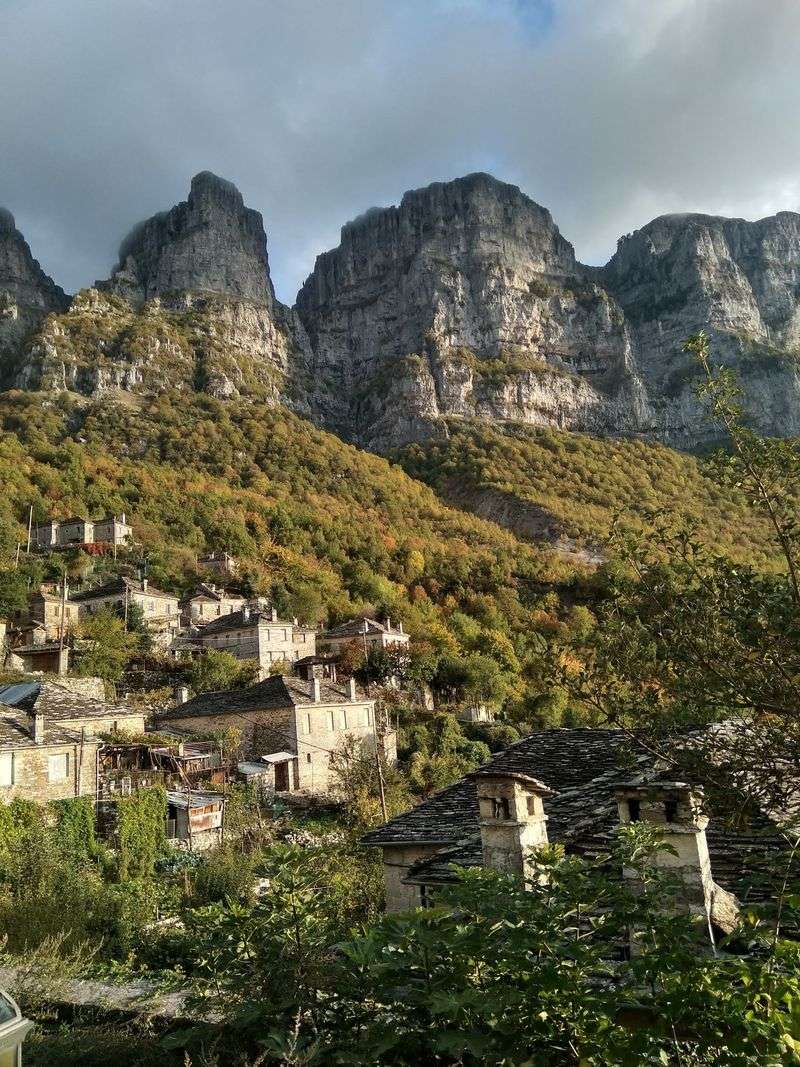
Picture a Greece with no beaches at all, and you have Zagori. High in the Pindus Mountains of Epirus, villages are built almost entirely from local stone.
Slate roofs, cobbled lanes, arched bridges, and old mansions tie the settlements together.
UNESCO named it a cultural landscape in 2023, and nature is part of the deal. Vikos-Aoos National Park holds Vikos Gorge, the Voidomatis River, deep forests, and the peaks of Tymfi.
Villages such as Papigo and Monodendri make great hiking bases. Megalo and Mikro Papigo sit about 950 to 960 meters above sea level, right under the sharp Astraka towers.
Mornings can be chilly even in summer, so pack a jacket.
Hikers can follow old stone paths between villages, crossing little bridges that once carried mule traders. Autumn brings golden leaves, and spring brings rushing water.
Try local pies and mountain cheeses at a family tavern after a long walk. Zagori shows an inland Greece that many island-focused trips miss, and it rewards slow travelers best.
Ancient Olympia
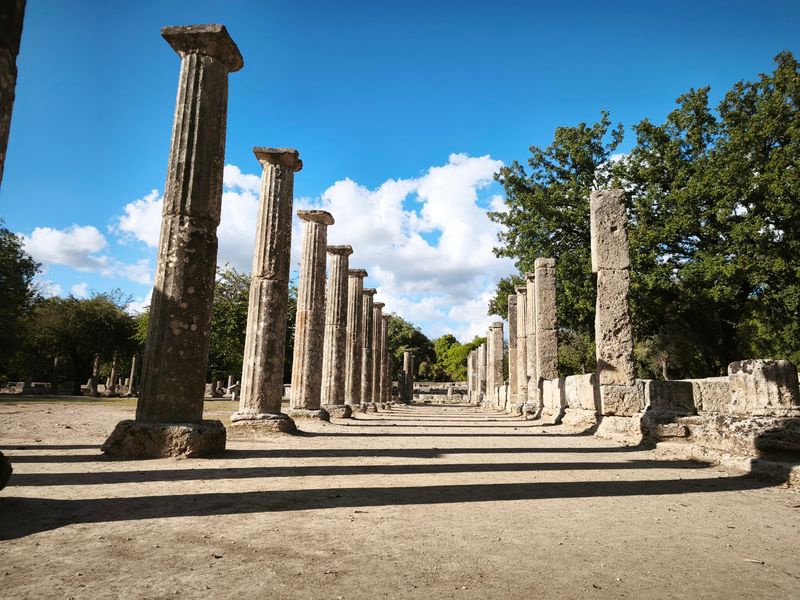
Take off your shoes and race down the old stadium track, as many visitors cannot resist doing. Olympia was one of the most important sanctuaries of ancient Greece and the birthplace of the Olympic Games.
Contests took place every four years in honor of Zeus.
Athletes and spectators came from across the Greek world. Hostilities were paused during the festival so everyone could travel safely.
The site holds the stadium, the temples of Zeus and Hera, a palaestra, and a gymnasium. A giant gold-and-ivory statue of Zeus by Phidias once stood in his temple and was counted among the Seven Wonders of the Ancient World.
The statue is gone, but the ruined temple still hints at its scale.
One link to today is the flame. Before every modern Games, it is lit here in a ceremony using the sun’s rays.
Visit the museum first, since it explains the ruins and holds the superb Hermes of Praxiteles. Go early, bring a hat, and give yourself half a day under the pine trees.
Nafplio
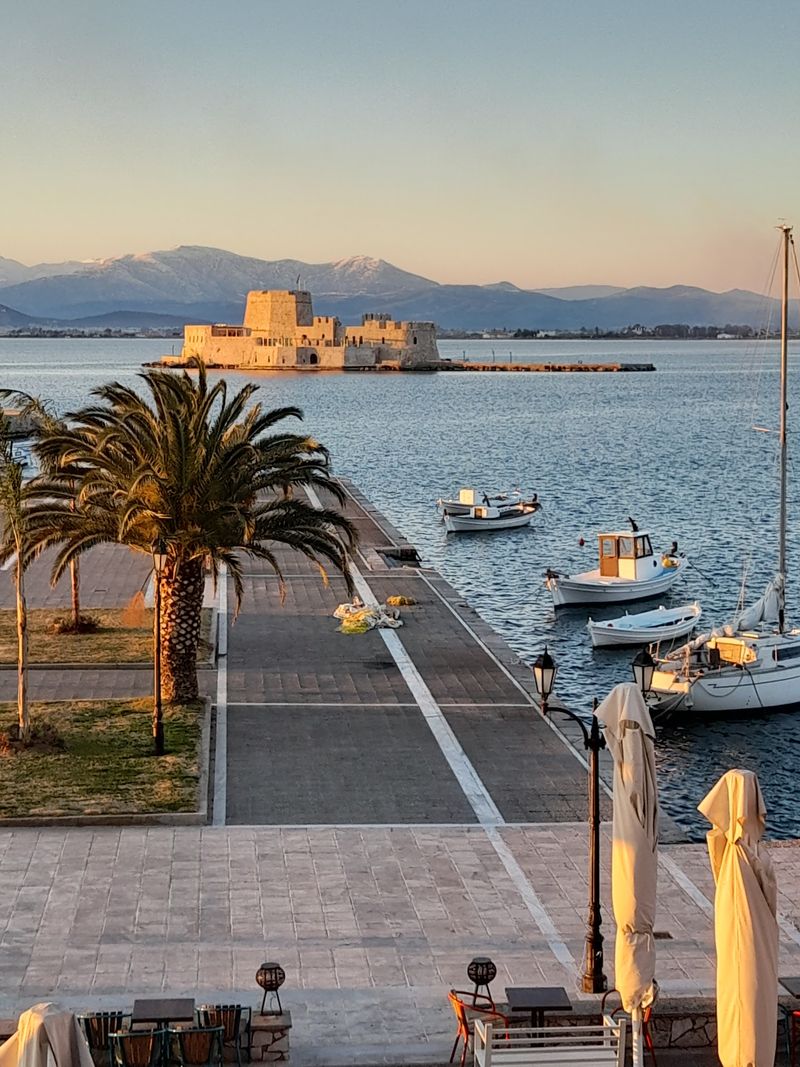
Many say Nafplio is the prettiest town in Greece, and few arguments break out. It was the first capital of the modern Greek state, serving from 1827 to 1834.
Today it mixes Venetian forts, neoclassical streets, and Ottoman touches.
Palamidi Fortress watches over the town from its ridge, and you can climb its many steps for the view. Akronafplia holds an older fortified hill behind the center.
Out in the harbor sits the little Bourtzi fortress, which looks like a toy castle.
The old town is a joy to wander. Narrow streets, squares, balconies, and fountains show Frankish, Venetian, Ottoman, and Greek eras.
Cafes spill onto the pavement, and bougainvillea drapes over walls.
Nafplio also works as a smart base. Mycenae and Epidaurus are close enough for day trips, so you can see ancient wonders and return to a seaside dinner.
Walk the waterfront promenade at dusk, when the forts glow and the whole town seems to slow down for a moment.
Epidaurus
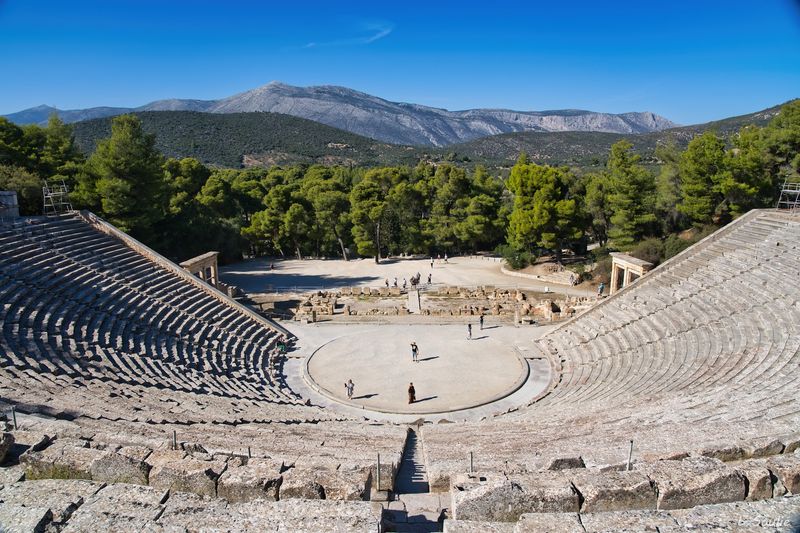
Drop a coin on the stage and someone in the top row may hear it. That is the legend of the Epidaurus theater, and guides love to test it.
The theater dates to about 340 to 330 B.C. and sat inside the Sanctuary of Asklepios, the god of healing.
Patients once came here for treatment that mixed ritual, rest, diet, and exercise. It was part hospital and part holy place.
Dreams were believed to carry cures.
The theater still does its original job. Productions have been staged here since the 1950s as part of the Athens Epidaurus Festival, so you can watch a play on stones laid over 2,300 years ago.
Check the summer schedule before you go.
Nearby Palaia Epidavros offers a small harbor, beaches, and another ancient theater. It makes a calm place for lunch and a swim after the sightseeing.
Climb to the highest seats for a view of the pine-covered hills, then speak from the center stage. The sound travels clearly, and the effect is a little magical.
Santorini
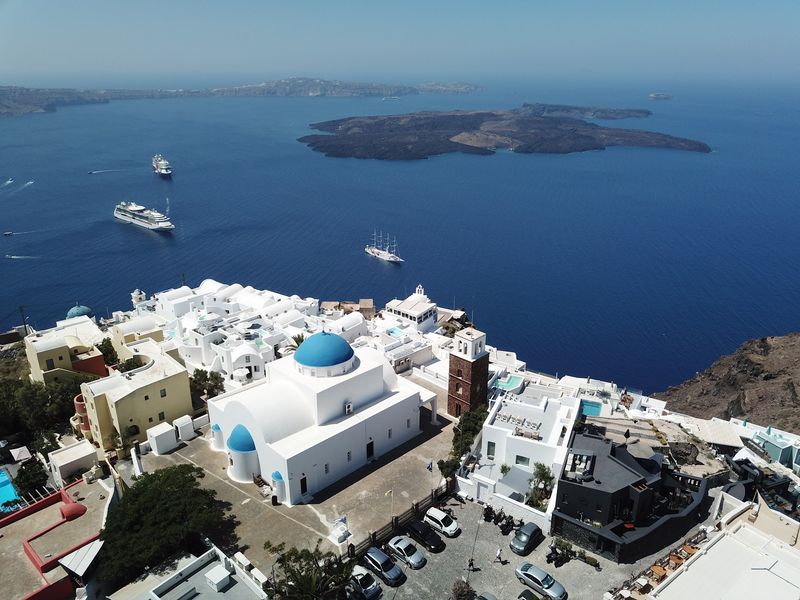
Blue domes and white walls sell the postcards, but the real star of Santorini is a volcano. Repeated eruptions and collapses carved the huge caldera that Fira and Oia now cling to.
The island group includes Thera, Thirasia, Aspronisi, Palea Kameni, and Nea Kameni.
That fiery past explains the beaches. Sand and rock appear in black, red, and pale shades, and walking on them feels like stepping onto another planet.
The dry climate shapes the food too. Farmers grow vines, yellow split peas, and tiny tomatoes with a sweet, concentrated flavor.
Try them in a local salad with a glass of crisp white wine.
For history, visit Akrotiri, a Bronze Age town buried under volcanic ash. Its buried streets and painted houses give a rare look at ancient daily life.
Crowds gather in Oia at sunset, so stake out a spot early or choose a quieter village like Pyrgos. Walk the cliff path between Fira and Oia for views at every turn.
Naxos
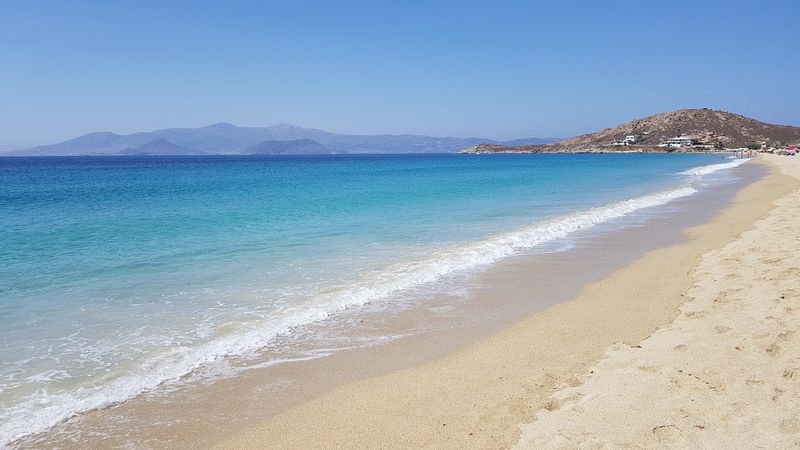
Hungry travelers tend to fall for Naxos first through its cheese and potatoes. It is the largest and most fertile island in the Cyclades, so it feels greener than many neighbors.
Mount Zas rises at the center, ringed by valleys, olive groves, and farms.
Naxos Town mixes Cycladic houses with a Venetian castle district. The famous Portara, a giant marble gateway, is all that remains of an unfinished ancient Temple of Apollo.
Locals gather there at sunset, and it is hard to blame them.
Head inland for the best surprises. Apeiranthos, Halki, and Filoti keep stone architecture and old traditions alive.
Stop for fresh citrus treats and local wine in a village square.
The beaches are wonderful too. Agios Prokopios, Agia Anna, and Plaka stretch long and sandy, with shallow water that is kind to families.
Rent a car for a day and loop around the island. You will pass mountain roads, hidden chapels, and farm stands.
Naxos pays off most when you wander beyond the coast.
Milos
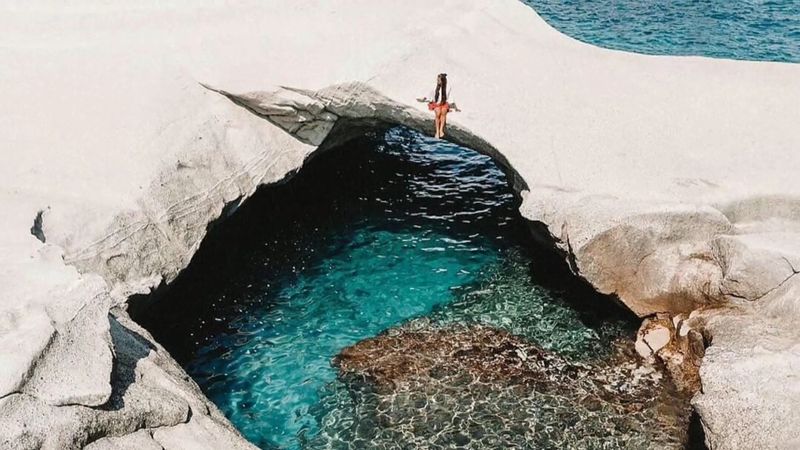
Seventy beaches on one island sounds like a boast, yet Milos has more than that. Volcanic activity painted its rocks white, red, yellow, and black.
The coast is full of caves, arches, coves, and oddly sculpted stone.
Sarakiniko is the best known. Smooth white rock curves down to deep blue water, and the scene looks almost like the moon.
Bring sandals, because the stone can be sharp and hot.
Kleftiko is best seen by boat. Sea caves and giant pale formations make it perfect for swimming and snorkeling, and many tours include a lunch stop.
The island also has real history. The Venus de Milo was found here in 1820, and you can see where at the local sites.
Prehistoric traders prized Milos obsidian, a sharp volcanic glass, and the settlement of Phylakopi shows how important the island was long ago.
Rent a small car or scooter and chase different beaches each day. Finish with a seaside dinner in a fishing village such as Klima, where colorful boat garages line the water.
Crete and Chania
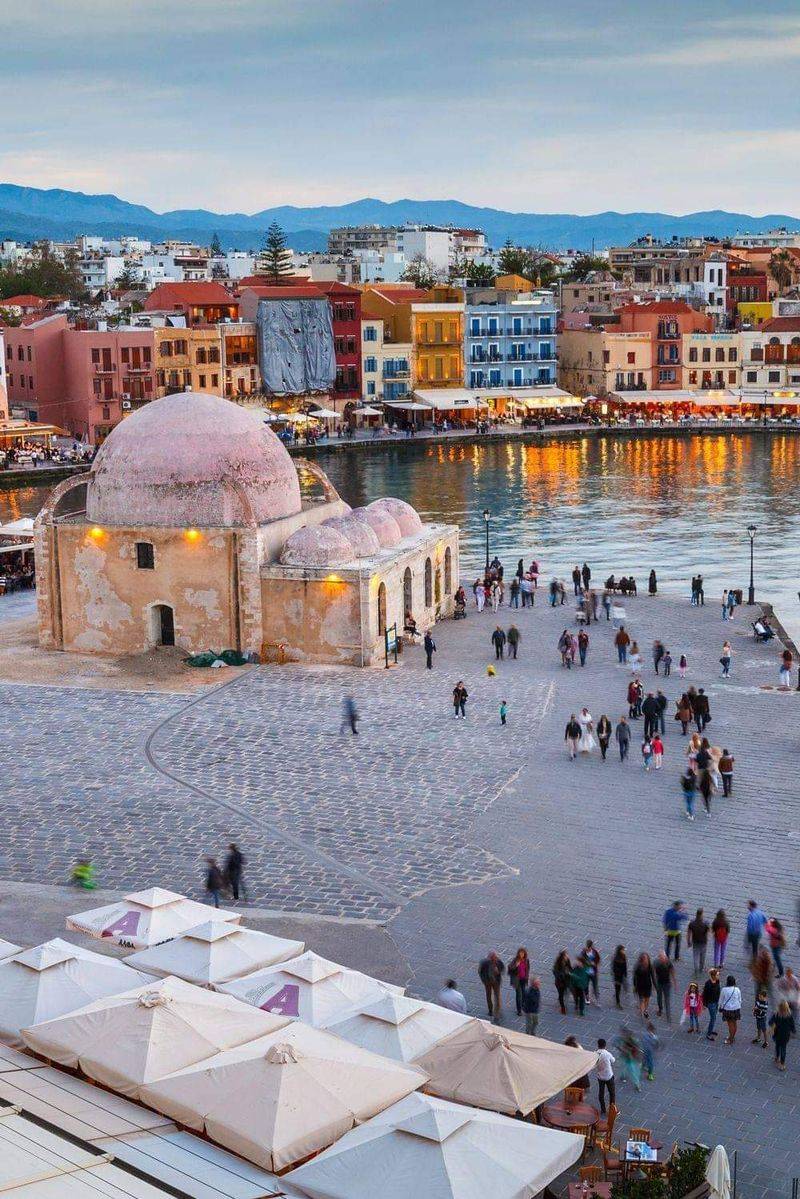
Crete is so big that it feels like its own country. Chania makes the friendliest doorway into it.
The old town layers Venetian mansions, Ottoman buildings, churches, and hammams along narrow lanes, and the harbor is guarded by a classic lighthouse.
The island goes much deeper into history. In 2025, six Minoan Palatial Centres joined the UNESCO list: Knossos, Phaistos, Malia, Zakros, Zominthos, and Kydonia.
These palaces belong to one of Europe’s earliest advanced civilizations.
Nature gets equal billing. Crete has over 1,000 kilometers of coastline, tall mountain ranges, gorges, and traditional villages.
Hikers love the Samaria Gorge, while beach fans chase pink sand at Elafonissi.
Then there is the food. Cretan cooking leans on olive oil, wild greens, fresh cheese, and honey, and many tavernas serve dishes from family recipes.
Try dakos, a barley rusk topped with tomato and feta.
Plan a week or more if you can. Base yourself in Chania, rent a car, and mix palaces, beaches, and mountain villages.
Smaller islands cannot match this scale.
Rhodes
Walk through a gate in Rhodes Old Town and you step into the Middle Ages. The Knights of St. John turned Rhodes Town into a heavily fortified stronghold, and much of it survives.
UNESCO lists the old town for its walls, gateways, and winding lanes.
The Palace of the Grand Master and the cobbled Street of the Knights are highlights. Ancient Rhodes was also home to the Colossus, a giant statue counted among the Seven Wonders of the Ancient World.
It is long gone, but the legend still draws curious visitors.
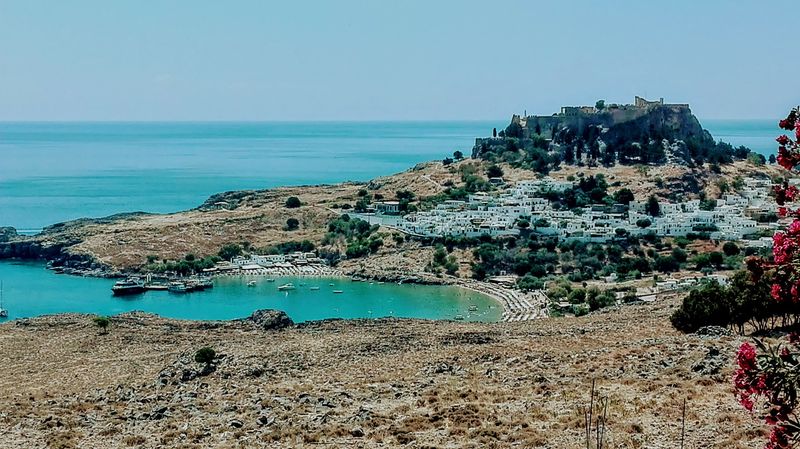
Head south to Lindos for another layer of history. An acropolis rises above whitewashed houses and turquoise bays, and the climb rewards you with sweeping views.
A donkey ride is available for tired legs.
Byzantine, Ottoman, Italian, ancient Greek, and medieval influences all mix across the island. You can spend the morning among castles and the afternoon on a sandy beach.
Visit in late spring or early autumn for pleasant weather and thinner crowds. Rhodes is far more than a beach resort.
Corfu
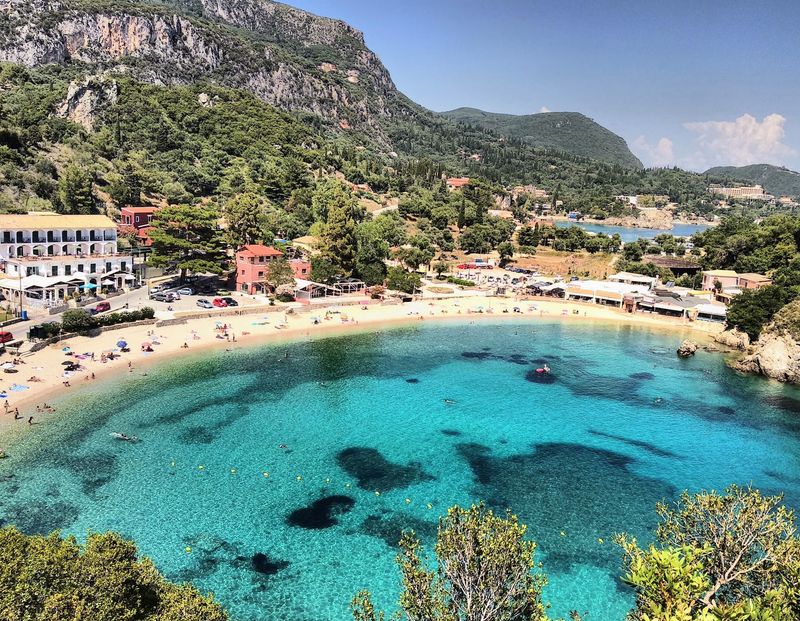
Corfu surprises first-timers who expect whitewashed Cycladic cubes. Instead, its UNESCO-listed Old Town has arcaded streets, palaces, churches, and wide public squares that feel closer to Italy.
Centuries of Venetian and western European influence shaped it.
Stroll the Liston, a graceful arcade lined with cafes, and watch the town go by. Two fortresses guard the old harbor, and both offer fine views at sunset.
Outside town, the island is lush. Olive groves, wooded hills, pebble beaches, and quiet coves line the Ionian coast.
Rain makes it greener than most Greek islands, which also explains its famously good produce.
The cultural calendar is strong. Expect music, religious celebrations, and spectacular Easter traditions, including the pot-throwing in town on Holy Saturday.
Local food shows the island’s mixed past, with spicy pastitsada and sweet kumquat treats.
French, British, Venetian, and Greek chapters all left their mark here. Rent a car or scooter to find hidden villages in the north, or take a day boat to nearby small islands.
Mykonos and Delos
Mykonos has a party reputation, yet its quiet side is easy to find. Whitewashed houses, windmills, dry-stone walls, and small chapels give the island its classic Cycladic look.
Little Venice, with balconies hanging over the water, is the favorite photo stop.
Wander the maze of lanes in Mykonos Town and you will lose your map within minutes. That is part of the fun.
Stop for a coffee and let the cats supervise.
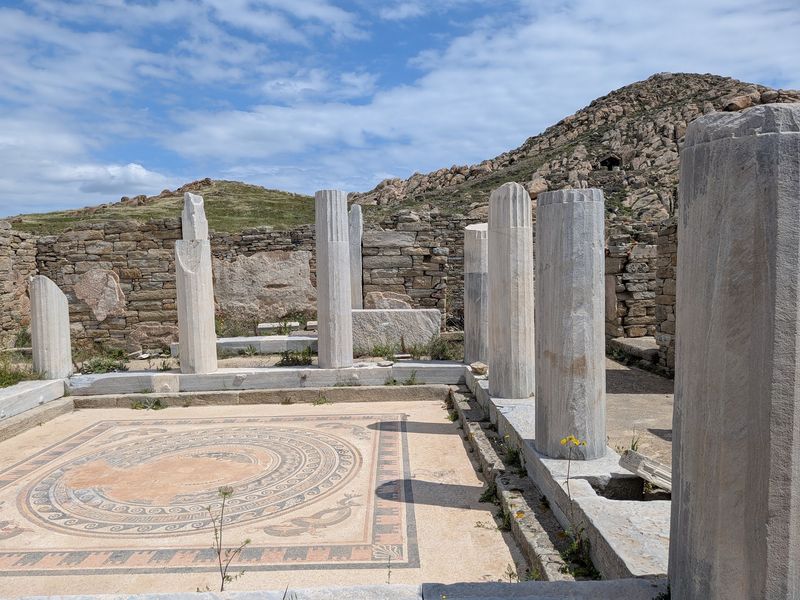
The island’s greatest historical treasure sits a short boat ride away. Delos is now uninhabited and protected as a UNESCO World Heritage property.
It was one of the most sacred islands of the ancient Greek world and the legendary birthplace of Apollo and Artemis.
Walk among mosaics, marble lions, and the remains of houses and markets. The place was also a major hub of Aegean trade.
Bring a hat and water, because there is little shade on Delos. Book an early boat to beat the heat.
The pairing of glamorous Mykonos and sacred Delos makes for a striking contrast.
Share this story