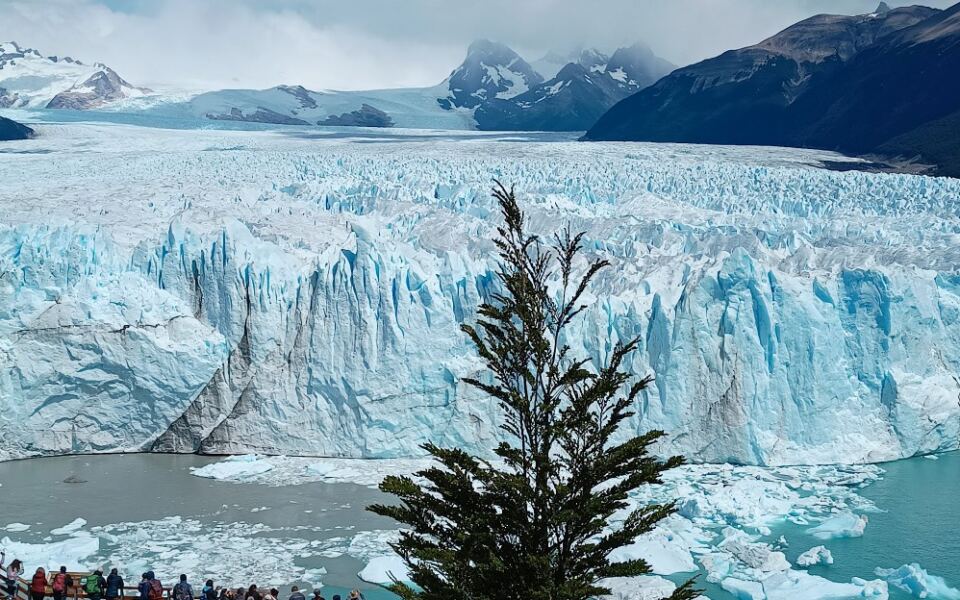
Argentina stretches from icy southern waters to sun-baked northern canyons, and the scenery changes almost every few hours. You can stand beside a wall of blue ice, hike to a lake under jagged peaks, or drive through red rock valleys.
Each stop on this list shows off a different side of the country. Grab your boots and a sense of adventure, because the views here are hard to forget.
Perito Moreno Glacier
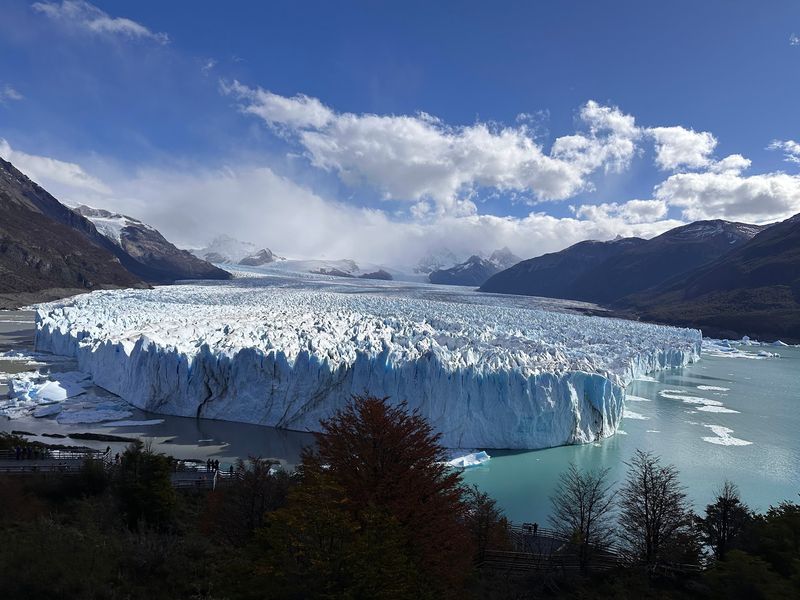
Crack! Boom!
That sound is a piece of ice the size of a building falling into the lake. It happens often at Perito Moreno, and it never gets old.
The glacier covers about 250 square kilometers and runs roughly 30 kilometers long. It is one of 48 glaciers fed by the Southern Patagonian Ice Field in the Andes, a range shared with Chile.
The ice glows a deep, surprising blue, especially up close.
Getting a good look is easy. A visitor center sits nearby, and boardwalks and viewpoints show the ice wall from many angles.
Boat tours bring you right up to the front, where the colors and fallen chunks look almost unreal. If you want to go further, you can book a mini-trekking tour and walk on the glacier itself.
A cafe near the walkways makes it simple to warm up between lookouts. Bring a windproof jacket, even on sunny days, because cold air rolls off the ice.
Give yourself plenty of time, since you will want to sit and watch the wall a little longer than planned. Patience pays off here, as the best crashes often come when you have just lowered your camera.
Parque Nacional Los Glaciares
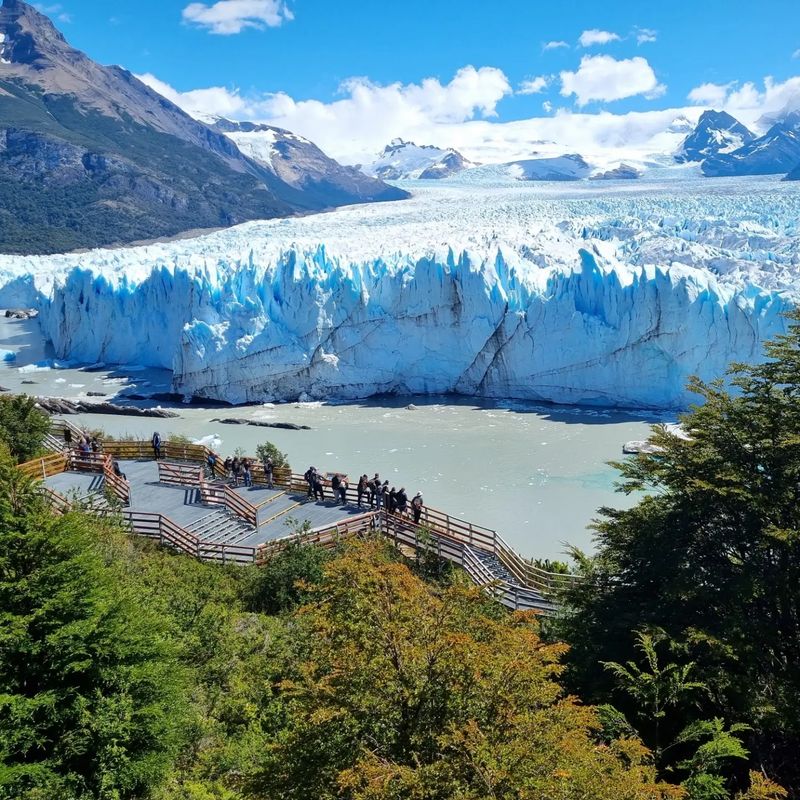
Ice fields, sharp peaks, and quiet forests all share one giant park. Los Glaciares is a vast protected area in Santa Cruz Province, and it is the home base for some of Patagonia’s most famous views.
Entry costs about 13 USD per person, or 700 pesos for adult foreigners. The park is open daily from 8 AM to 6 PM.
Well-maintained walkways and plenty of miradores show the glacier from many angles, and buses help you skip extra stairs.
You can hike, take a boat ride, or join a tour to see calving ice. The drive from El Calafate takes roughly 1 hour 15 minutes to 1 hour 45 minutes, and the winding road serves up gorgeous scenery the whole way.
The famous Perito Moreno glacier rises almost 200 feet above Lake Argentino.
Families will find kid-friendly hikes, restrooms, and onsite services. Parking comes in free and paid lots.
Pack layers, snacks, and a fully charged camera. Restaurants are available, but lines can grow at busy times, so eating a bit early or late keeps the day moving.
Laguna de los Tres
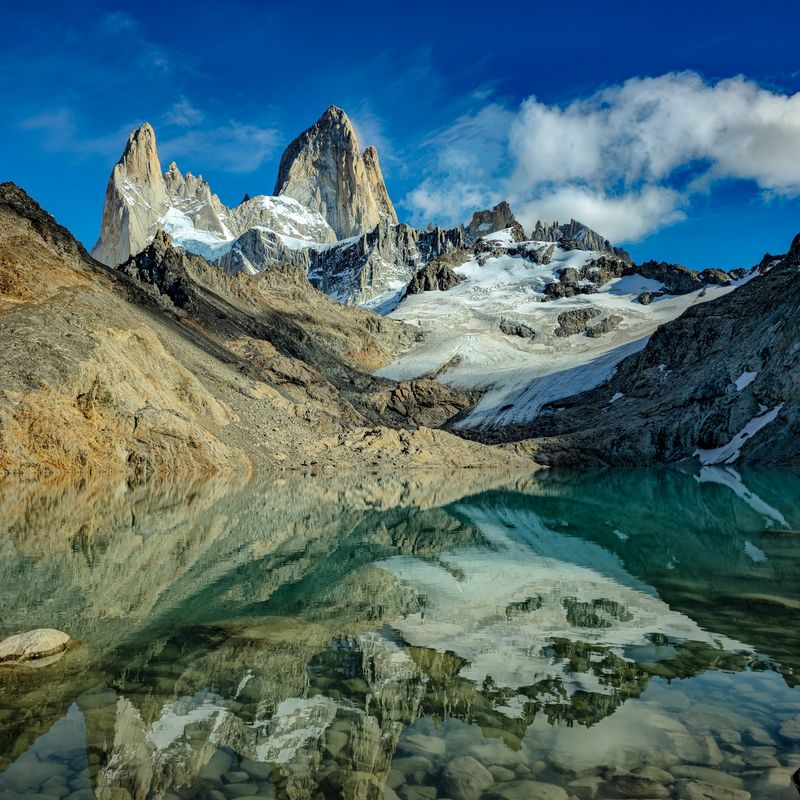
Legs burning, lungs working, and then the whole mountain appears. That is the reward at Laguna de los Tres, a glacial lake tucked below Mount Fitz Roy near El Chaltén.
The hike is one of the most iconic in Patagonia. The first 8 kilometers are fairly easy, with lovely views of Fitz Roy along the way.
The last stretch is steeper and tests your energy, but the payoff is a magnificent look at the granite pillars and the lake.
Sunrise is a favorite time, when the peaks can glow orange. The trail is open 24 hours, though most people go during daylight.
Busy spells tend to include Sunday afternoon and Wednesday evening, while Monday evening and Saturday afternoon are quieter.
Start early and carry water, a warm layer, and a wind jacket. Weather near Fitz Roy can flip fast, so check the sky before you go.
Take your time on the final climb, and save a snack for the top. Few lunch spots anywhere can compete with this one.
Parque Provincial Aconcagua
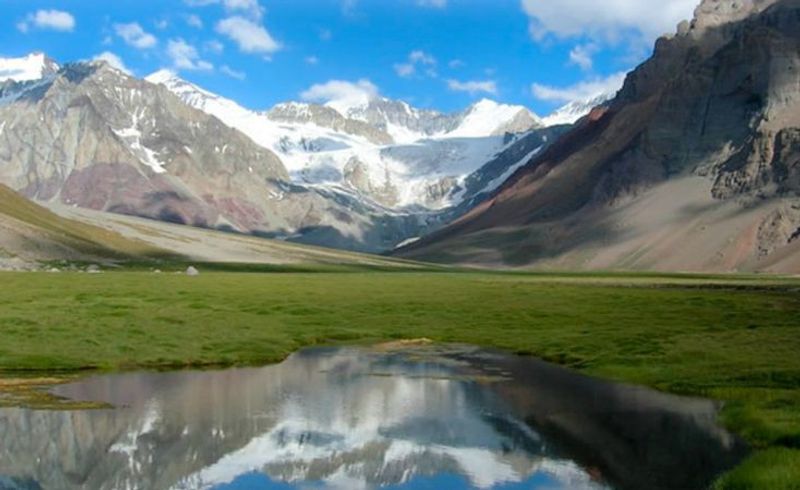
South America’s highest peak is waiting, and you do not need climbing gear to meet it. Aconcagua Provincial Park sits along RN7 near Puente del Inca in Mendoza, and it offers sweeping views of the mountain and its valley.
The park protects mountains and archaeological sites, and it is popular for hiking and adventure sports. Trails suit different levels, including a challenging 3 to 4 hour hike and a moderate 4 to 5 hour hike toward base camp.
Families can find kid-friendly walks too.
Fees depend on how far you go, and the park is carefully supervised, so check costs before heading out. Hours run from 10 AM to 6 PM daily.
Afternoons tend to be busiest, while evenings are calmer.
Free parking, restrooms, and onsite services make the basics simple. The trails are dusty and high, so bring sunscreen, water, and a hat.
Go slowly to let your body adjust to the altitude. The mountain is not going anywhere, and the views improve with every careful step.
Catedral Alta Patagonia
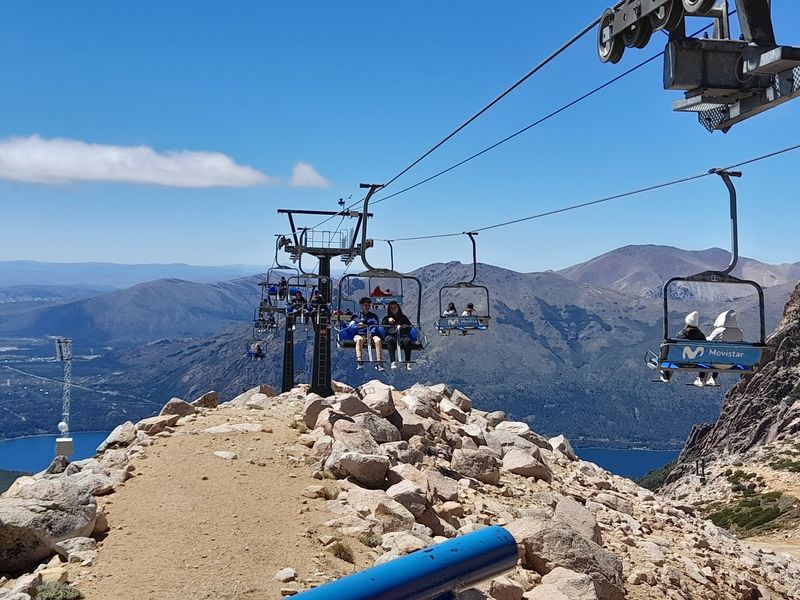
Skiers from the Northern Hemisphere often find a fun surprise here: big mountain, big variety. Catedral Alta Patagonia is the largest ski resort in Argentina by skiable area, infrastructure, and runs.
The resort near San Carlos de Bariloche offers 1,480 acres of terrain and 38 lifts. There is a large beginners area, and snow cannons now help with snow practice.
A base village gives you a cool place to wander when your legs need a break.
It is not just for winter. Hiking, biking, and sightseeing keep it lively all year.
From the top, the views of surrounding mountains and lakes are spectacular.
Plenty of refugios serve food and drinks and have restrooms. There is a bar, a restaurant, and paid parking at the base.
Hours run from 9 AM to 4 PM, and buying tickets in advance is a smart move. Afternoons are usually busier, while Sunday morning tends to be quiet.
Bring sunglasses, since the glare off the snow can be fierce.
Martial Glacier
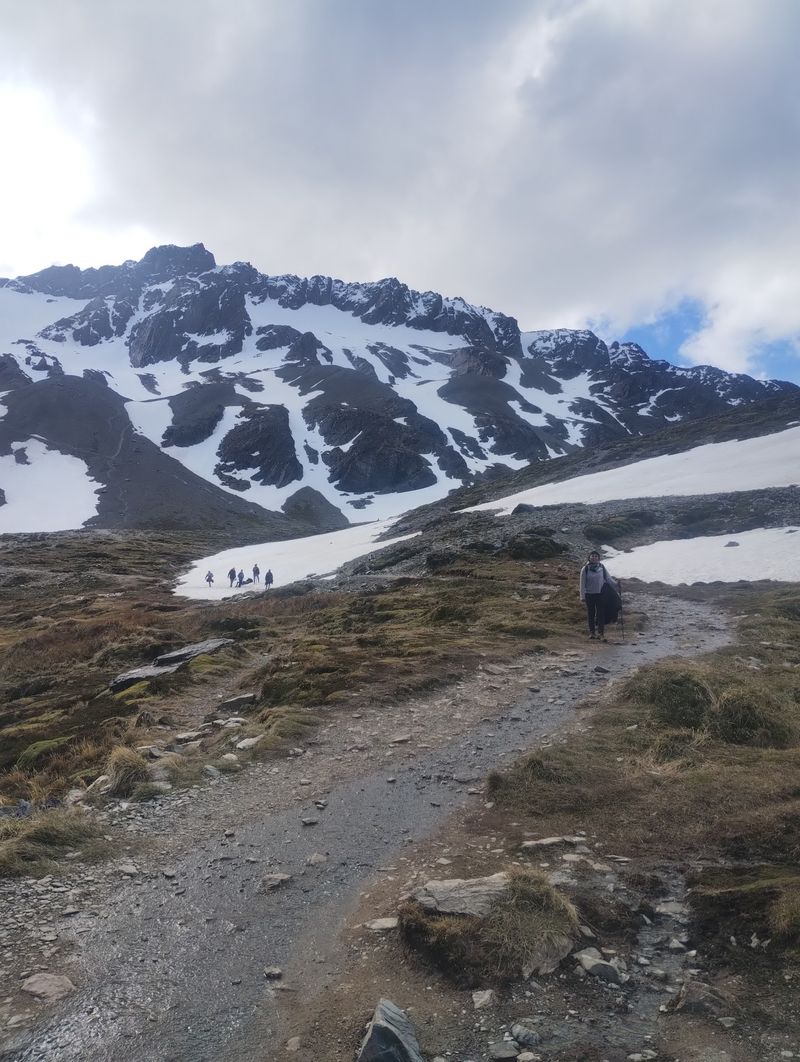
Right outside Ushuaia, a short ride puts you on a trail to a glacier. Martial Glacier is about 10 kilometers from the city center, which makes it a handy half-day adventure.
In winter the area works as a ski zone with a chairlift. In summer, trails open up for trekking.
The walk is easy, takes roughly an hour and a half to two and a half hours going up, and ends at a main viewpoint with spectacular views.
Much of the ice has shrunk over the years, but the scenery still rewards the effort. In October the slopes can be full of snow, so the look changes with the season.
If you want a shorter outing, a taxi can carry you to where the road ends.
There is a restroom at the site. Wear sturdy shoes, since paths can be loose and damp.
Bring a jacket, because wind picks up as you climb. Saving money on transport leaves room in the budget for other Ushuaia fun, like a canopy tour.
Laguna Esmeralda
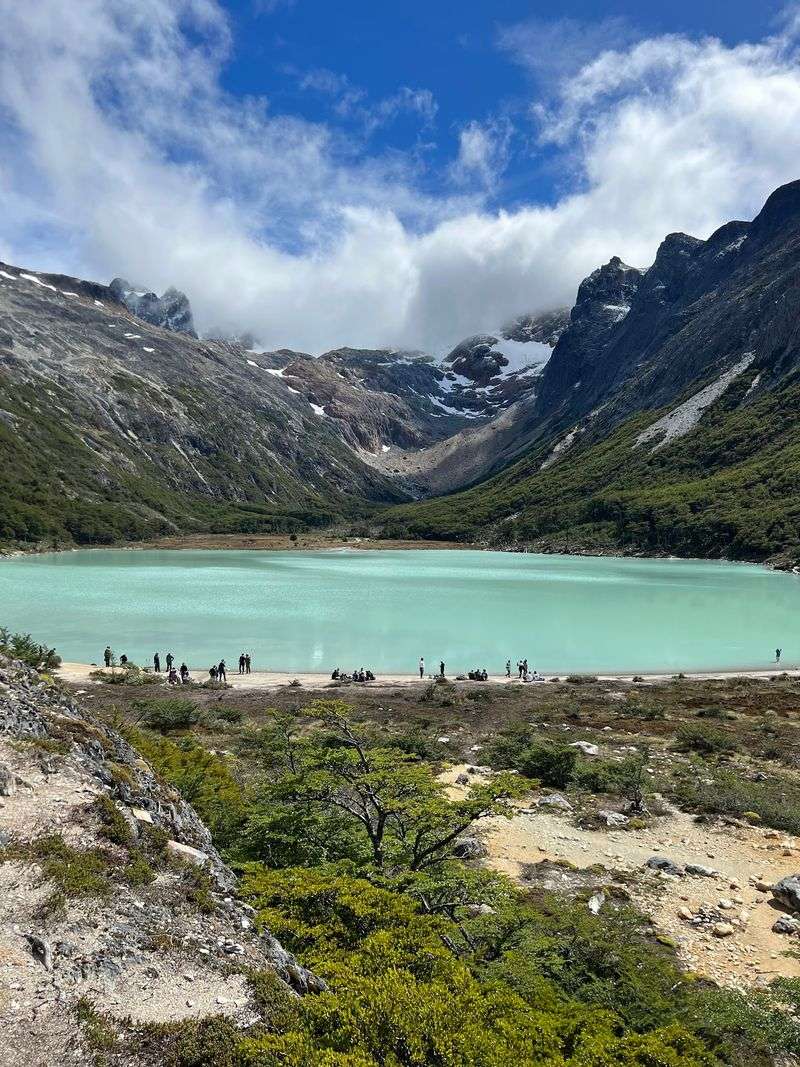
Mud boots are the unofficial dress code for this hike. The trail to Laguna Esmeralda can get squishy, but it is well marked and the lagoon at the end has a special color that makes every splash worthwhile.
The route starts near Ushuaia and takes about 5 hours round trip. Fit hikers can add an hour and continue toward Glacier Ojo for a lovely look back at the lagoon.
Advice for summer is to avoid starting after 3 PM.
The trail is moderate and picturesque, not too strenuous, and a great way to spend an afternoon. Sunday afternoon can be busier, while weekday evenings are quieter.
Open all day, it sits among southern Andean scenery.
There is no restroom, so plan ahead. Free parking is available, along with free street parking and a paid lot.
Carry water, snacks, and a rain layer. Waterproof footwear is your best friend here.
If you can only do one thing around Ushuaia, this walk is a strong contender.
Parque Nacional Tierra del Fuego
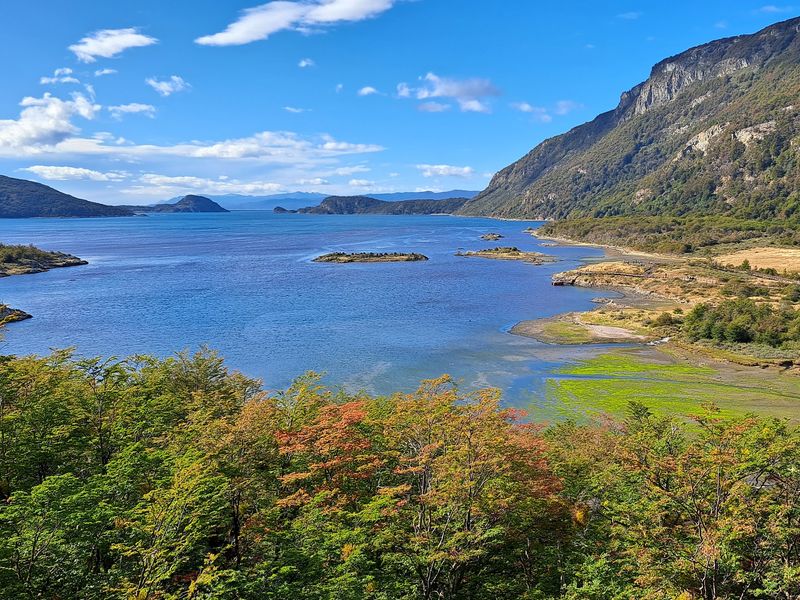
Here is a place where the road literally runs out. Parque Nacional Tierra del Fuego sits about 12 kilometers west of Ushuaia and marks the end of Argentina’s Route 3.
It is the only national park in the country that unites Andean peaks, dense forest, glacial lakes, and saltwater fjords along the Beagle Channel. Created in 1960, it offers waterfalls, bogs, rich wildlife, and views of snowcapped mountains and glaciers.
Trails are easy to follow and many show off water views, rock formations, and varied plants. You can hike, canoe, or simply enjoy a picnic at the tables provided.
Kid-friendly hikes make it a good family stop, and the park is welcoming to all visitors.
Hours are 9 AM to 6 PM daily, and mornings tend to draw the crowds. Evenings are calmer.
There is paid parking, public restrooms, and onsite services. Pack layers, because weather near the southern tip can change in minutes.
Take a moment at the road marker to say you made it to the end.
Cerro de los Siete Colores
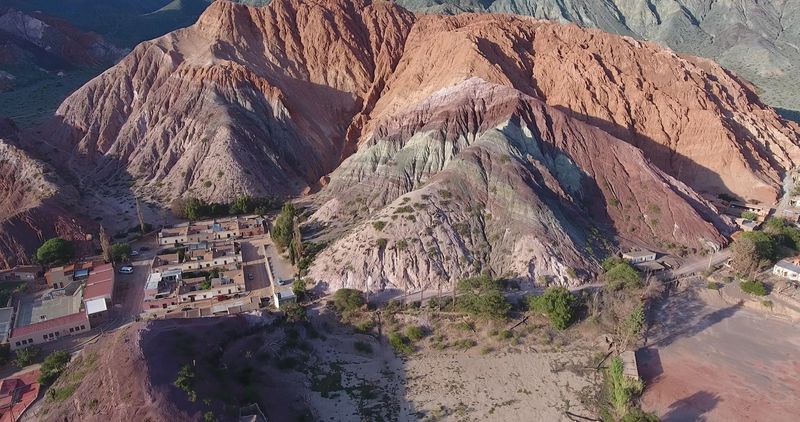
Rainbow stripes on a mountain sound made up, yet Purmamarca has them for real. Cerro de los Siete Colores shows seven different shades, created by a complex geological history.
The hill rises right beside the village of Purmamarca in Jujuy Province. Purmamarca itself is a lovely town, so a visit pairs well with a stroll through its streets.
The walk around the viewpoints takes about 30 minutes. Some find it less dramatic than the photos suggest, so the best plan is to treat it as a relaxing stop rather than a big hike.
Go when the light is soft, since the colors pop most in the morning and late afternoon.
Bring a hat and water, because the sun is strong at this altitude. Comfortable shoes help on dusty paths.
If you are traveling in the region, the hill is a must-do and an easy win for photos. Linger a little, and let the shifting light show you a few extra shades.
Serranía de Hornocal
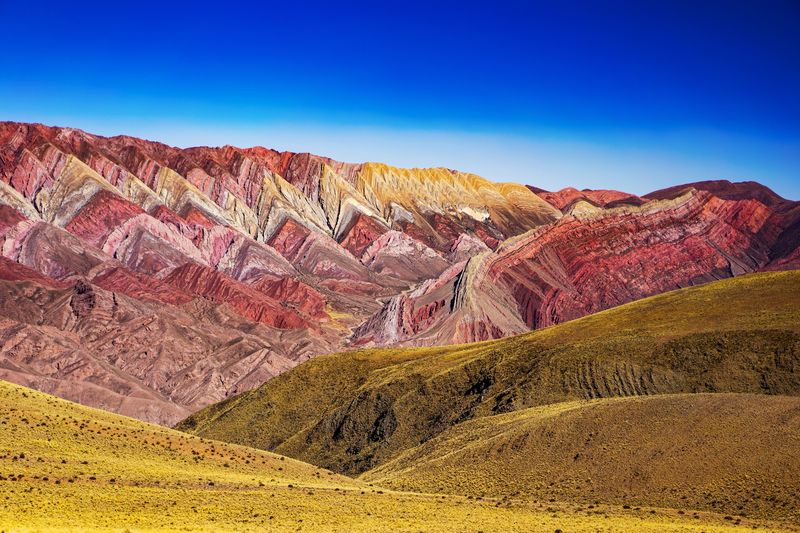
Altitude gives you two reasons to gasp here. The first is thin air, and the second is a mountain painted in bands of color.
Serranía de Hornocal reaches 4,761 meters and is made of limestone layers in many hues.
The gateway is the mountain town of Humahuaca. Some travelers climb with a guide, while others buy 4×4 tickets in the market square.
Expect an unpaved, stony road, and a winding climb that takes about an hour.
Views are gorgeous, and wild animals sometimes appear along the way. Many visitors call the colors among the most beautiful they have seen while traveling, proof that Argentina’s mountains hold their own against any in the world.
Take it slow at the top, since the air is thin. Drink water, wear sunscreen, and bring a warm layer, because wind can be sharp.
Consider arriving earlier in the day for clearer light. Bring patience for the bumpy road, and a camera with plenty of space.
Salinas Grandes
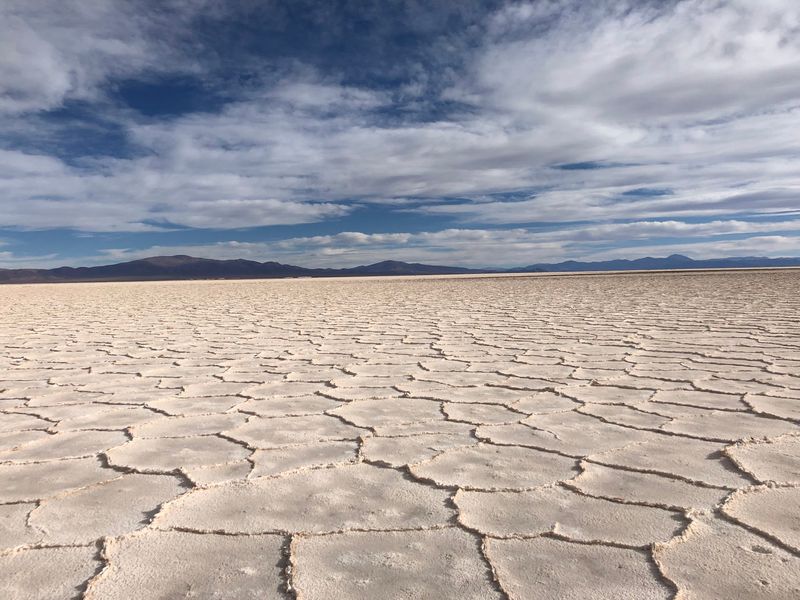
Sunglasses are not optional out here. Salinas Grandes is a sprawling white salt flat with striking blue pools, and the glare is part of the show.
The flats cover more than 8,290 square kilometers. Hexagonal patterns mark the ground, and pools left by salt extraction add pops of color.
You can even see buildings made from salt blocks.
The road from Purmamarca is very scenic and takes around 45 minutes. It climbs to 4,170 meters before dropping to the flats.
At the information center, you pay a fee per car and then drive to a spot with a guide. Local guides are also available at the entrance.
Bring a hat, sunscreen, and water, since there is little shade. Dress in layers, because the altitude can be cool.
Take a moment to notice the crunch of salt under your shoes and the wide, quiet horizon. It is a crazy landscape that is worth the stop.
Parque Nacional Talampaya
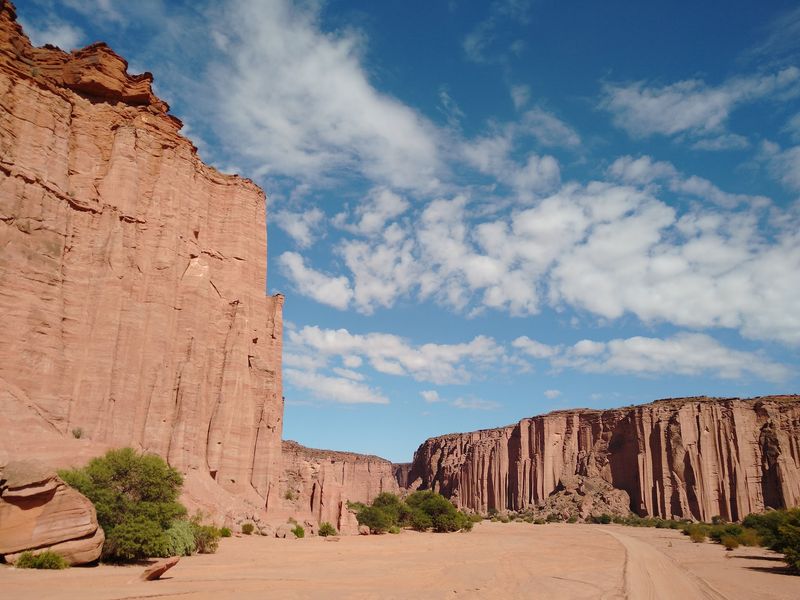
Feeling tiny can be wonderful. Talampaya National Park delivers that feeling with towering red canyon walls and wide desert skies.
The park protects unusual eroded rock formations, extensive dinosaur remains, and archaeological sites. It became a national park in 1997.
Expect lots of color, along with animals such as vicunas.
Tours are the way to see it, and knowledgeable guides explain the carvings and formations. Book in advance if you can.
Only some plaques are in English, so a guide is especially helpful. Hours run from 8:30 AM to 4:30 PM daily.
Public restrooms and onsite services are available, and the park works for kids too. Costs include the excursion plus park entrance fees, so check current prices before you go.
Bring a hat, sunscreen, and lots of water, because the desert sun is strong. A camera is essential.
If you only visit one park in Argentina, many travelers say this could be the one.
Ischigualasto Provincial Park
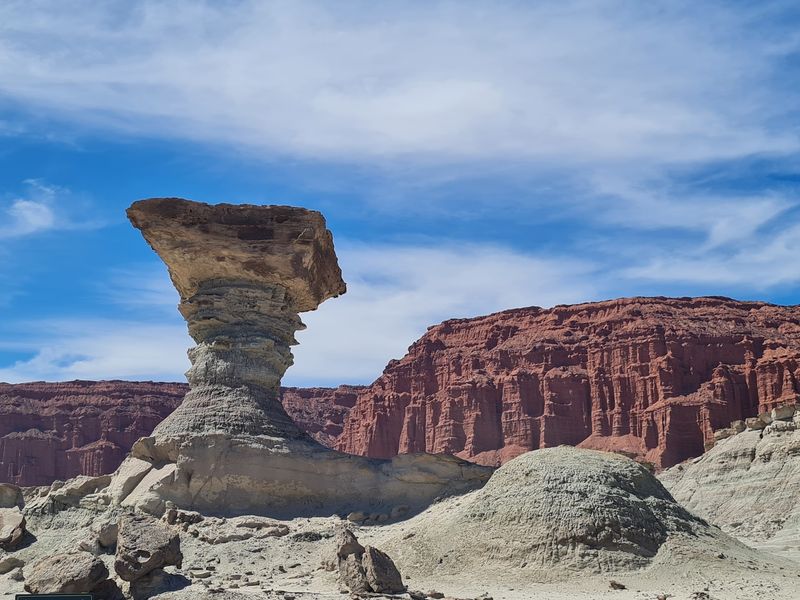
Follow the leader is the official rule here. At Ischigualasto, cars travel in small convoys behind a ranger vehicle, and everyone stops together at each highlight.
This UNESCO park in San Juan Province is full of unique rock formations and out-of-this-world scenery. The drive covers about 40 kilometers with five or six stops.
Guides are friendly and knowledgeable, though explanations are given in Spanish.
You can go in your own car or as part of a tour, always on a schedule with a park guide. Guided car and bike tours are offered, and you can hire what you need at the park or online.
There is also a museum and camping.
Hours are 8 AM to 5 PM daily. Afternoons on weekends are busier, while weekday mornings are calmer.
Free parking, restrooms, and a playground make it family friendly, and dogs are allowed. Fill your gas tank, bring water and snacks, and wear sun protection.
Shells’ Ravine
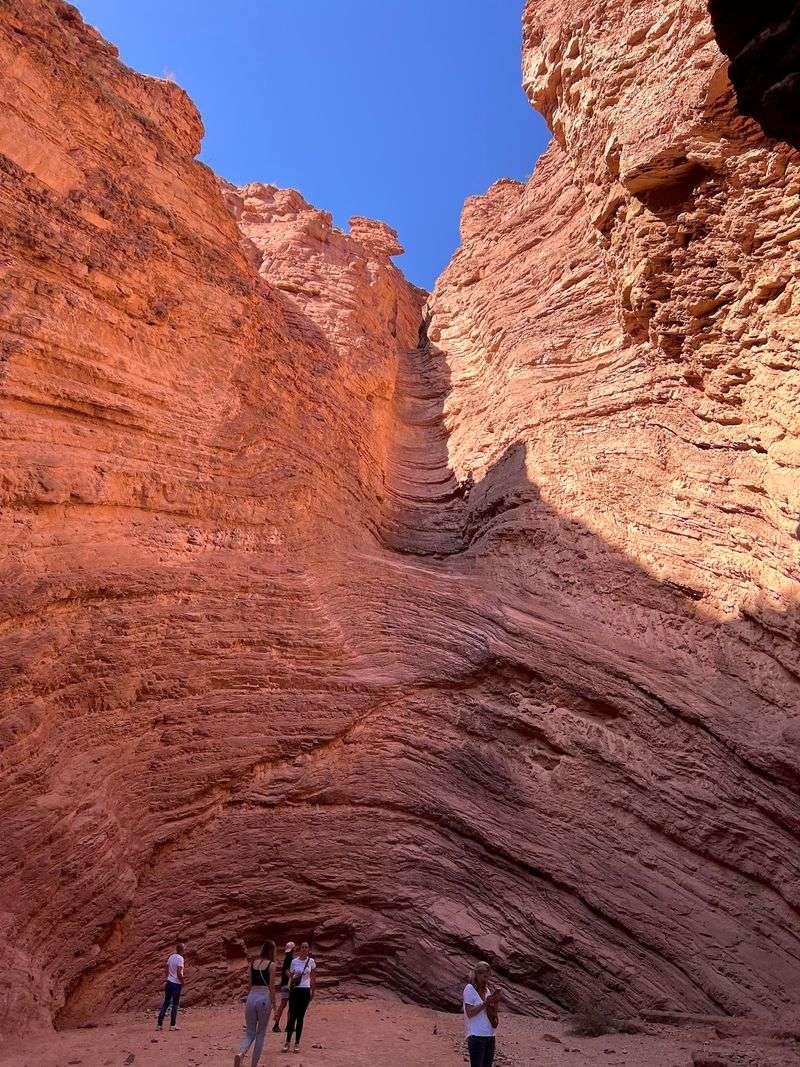
Some of the best sights come free with the drive. Shells’ Ravine, near Cafayate, is a canyon lined with picturesque colored rock formations embedded with marine fossils.
The route follows RN68 between Cafayate and Salta, and the views along the way are excellent. A natural amphitheater adds a dramatic stop where you can stand and take it all in.
The place is open 24 hours, so you can pull over when the light looks best.
Busy times include Sunday evening and Wednesday afternoon, while Friday morning and Sunday night tend to be quieter. Kids enjoy the open space, and dogs are allowed.
Plan for short stops and bring a hat and water, since shade is limited. Wear shoes with good grip for rocky ground.
Keep an eye out for fossil details in the rock, and take your time on the road. The best moments often happen at the next turn, so keep the camera handy.
Perito Moreno Glacier Walkways
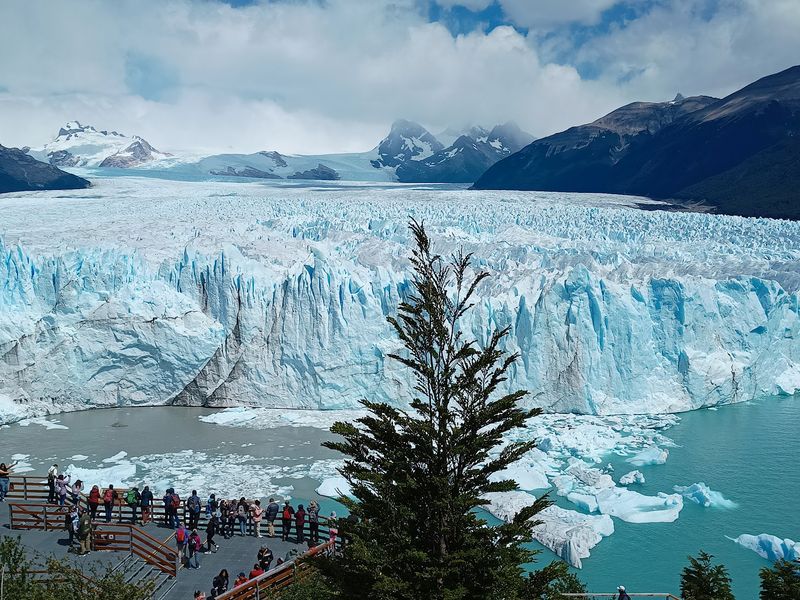
Front-row seats to a giant ice wall cost about 4,000 ARS, roughly 50 USD. The ticket is valid for two days, with a 50 percent discount on the second day, so you can return for another look.
The walkways give close-up access to the front walls of the glacier, and multiple well-marked routes wind along the viewpoints. Boat tours of about one hour bring you even closer.
The glacier is roughly an hour from the town of El Calafate.
Hours run from 8 AM to 6 PM. Afternoons on Sunday, Thursday, Friday, and Saturday are busiest, so arriving in the morning or evening gives more space at the railings.
Buying tickets in advance is recommended.
Free and paid parking are available, along with onsite services. Families will find it welcoming.
Dress warmly, wear good shoes for the stairs, and bring patience for crowded viewpoints. The wait is worth it when the ice starts to roar.
Share this story