America’s most famous national parks can feel anything but wild when parking lots fill before breakfast and scenic overlooks turn into long queues. Great Smoky Mountains pulled in over 11.5 million visits in 2025, while Zion, Yellowstone, Grand Canyon, and Yosemite each topped 4 million.
But some extraordinary parks operate on a completely different scale, with some welcoming fewer than 50,000 visitors in the same year. These 15 destinations offer open trails, uncrowded overlooks, dark skies, and the sense of space people genuinely expect from a national park trip.
Great Basin National Park, Nevada
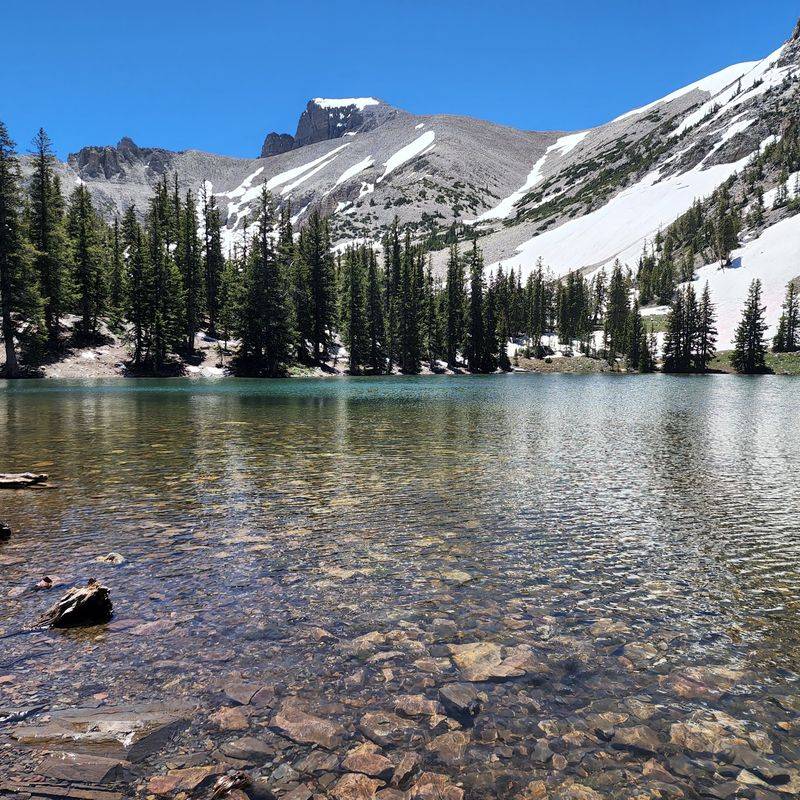
Somehow, Great Basin manages to pack several headline-worthy experiences into one park that most people drive right past on the way to somewhere else. Wheeler Peak climbs to 13,063 feet, ancient bristlecone pines twist across rocky slopes, and Lehman Caves hide an underground world of stalactites, stalagmites, and rare cave shields beneath the desert surface.
The National Park Service ranks Great Basin among the darkest sky locations in the contiguous United States. On a clear, moonless night, the Milky Way stretches overhead in full detail, and the Andromeda Galaxy becomes visible to the naked eye.
That alone makes the drive worth it for stargazers.
Only 161,210 recreation visits were recorded in 2025. Compare that to Yosemite’s 4.28 million, and the math becomes obvious quickly.
Travelers drawn to high-country scenery, alpine lakes, and genuine solitude will find everything they hoped for here, without the competition for parking spots. Great Basin rewards patience and curiosity in equal measure.
North Cascades National Park, Washington
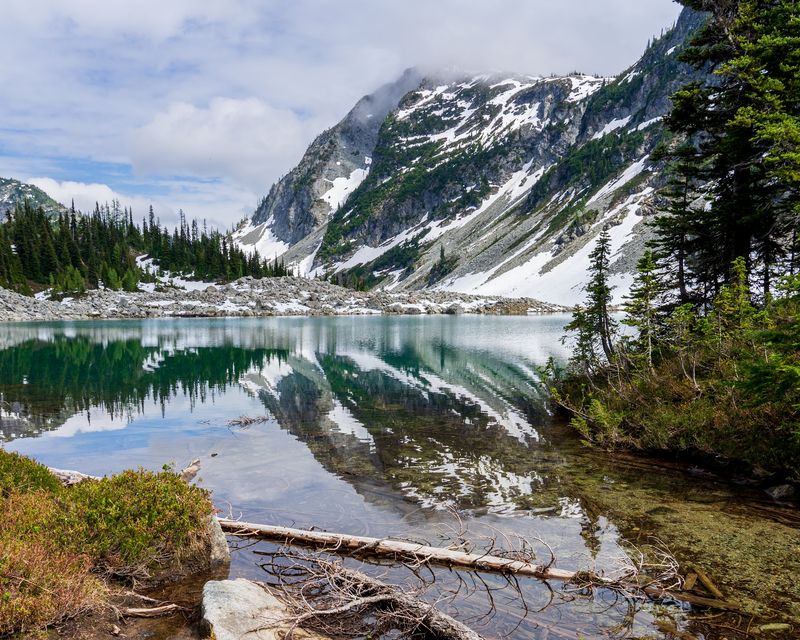
More than 300 glaciers cover the North Cascades, making it the most heavily glaciated landscape in the United States outside Alaska. That fact alone should put it on every serious hiker’s radar, yet official NPS figures recorded only 46,925 recreation visits to the park itself in 2025.
Glacier National Park, by comparison, welcomed over 3 million.
Nearly 400 miles of trails cross the broader complex, winding through old-growth forest, over high passes, past waterfalls, and into meadows that feel genuinely remote. More than 90 percent of the North Cascades National Park Service Complex carries wilderness designation, which means the rules are stricter and the rewards are bigger.
The adjoining Ross Lake and Lake Chelan national recreation areas bring in additional visitors, so the broader region is busier than the headline number suggests. Still, the contrast with more famous mountain parks is enormous.
If Glacier National Park is on your bucket list but crowds are a dealbreaker, the North Cascades offer a compelling and far quieter mountain wilderness that punches well above its reputation.
Black Canyon of the Gunnison National Park, Colorado
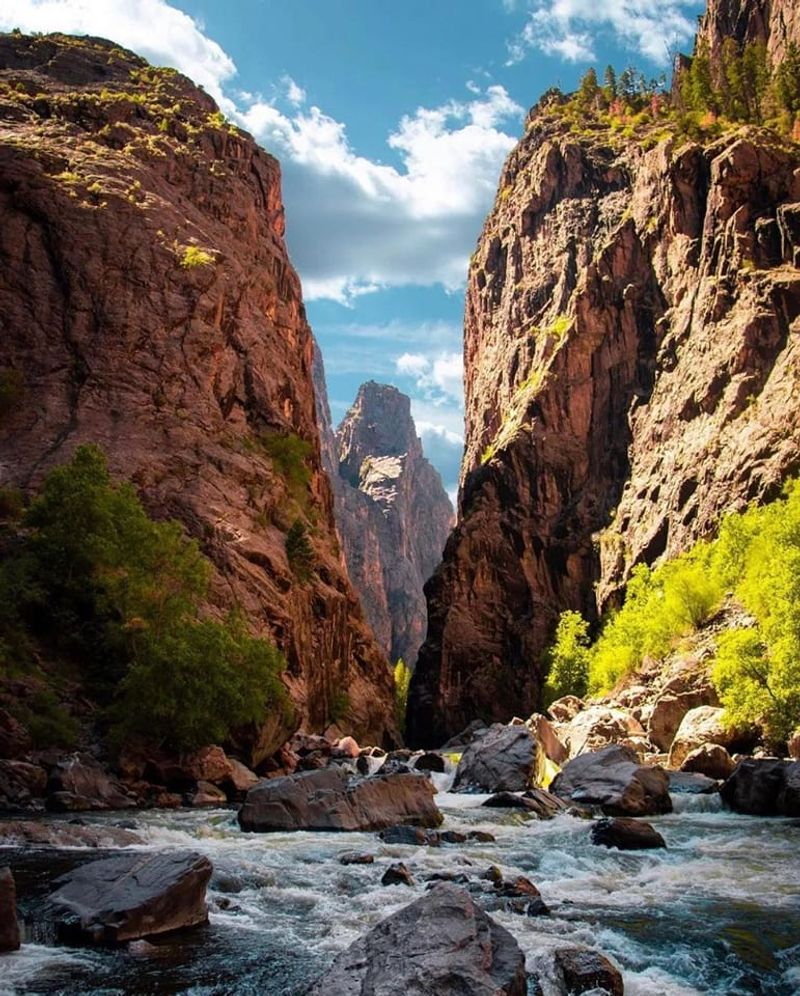
Forget wide and sprawling. Black Canyon goes straight down, and the effect is genuinely unsettling in the best possible way.
The National Park Service describes it as containing some of North America’s steepest cliffs, oldest exposed rock, and craggiest spires, all compressed into a gorge so narrow that some sections receive less than 33 minutes of sunlight per day.
The South Rim Drive covers seven miles and reaches 12 overlooks, including Chasm View, Painted Wall, and Sunset View. No multi-day backcountry expedition is required to appreciate the scale.
Pull over at any overlook and you are staring nearly 2,000 feet down to the Gunnison River threading through ancient Precambrian rock.
In 2025, about 250,000 visitors came here compared to more than 4.43 million at Grand Canyon. The difference in atmosphere is dramatic.
Instead of sharing a guardrail with tour groups, you may find yourself completely alone at an overlook with nothing between you and the abyss. Black Canyon rewards visitors who prefer their geological drama served without a side of crowd noise.
Lassen Volcanic National Park, California
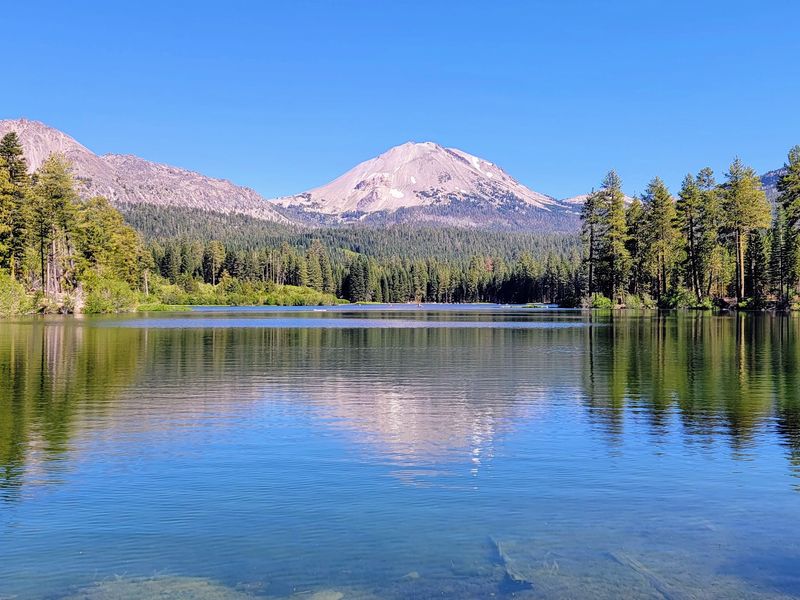
Lassen Volcanic feels like someone quietly combined Yellowstone, Crater Lake, and a Cascade volcano and then forgot to tell anyone. Bumpass Hell delivers steaming ground, boiling pools, mud pots, and fumaroles across a landscape that smells like rotten eggs and looks like another planet.
Sulphur Works brings similar volcanic activity right to the edge of the main park highway.
Beyond the hydrothermal areas, more than 150 miles of trails lead to alpine lakes, volcanic summits, waterfalls, and high meadows. Manzanita Lake reflects Lassen Peak perfectly on calm mornings.
Cinder Cone offers a steep hike to a nearly perfect volcanic crater with painted dunes spreading below.
Lassen received 504,777 recreation visits in 2025. Yellowstone saw close to 4.8 million.
The gap between those numbers translates directly into elbow room on the trail. Heavy snow closes high roads and trails well into summer most years, so the season is shorter than some western parks.
But when everything opens up, Lassen delivers one of California’s most varied national park landscapes without the famous-park chaos attached to it.
Big Bend National Park, Texas
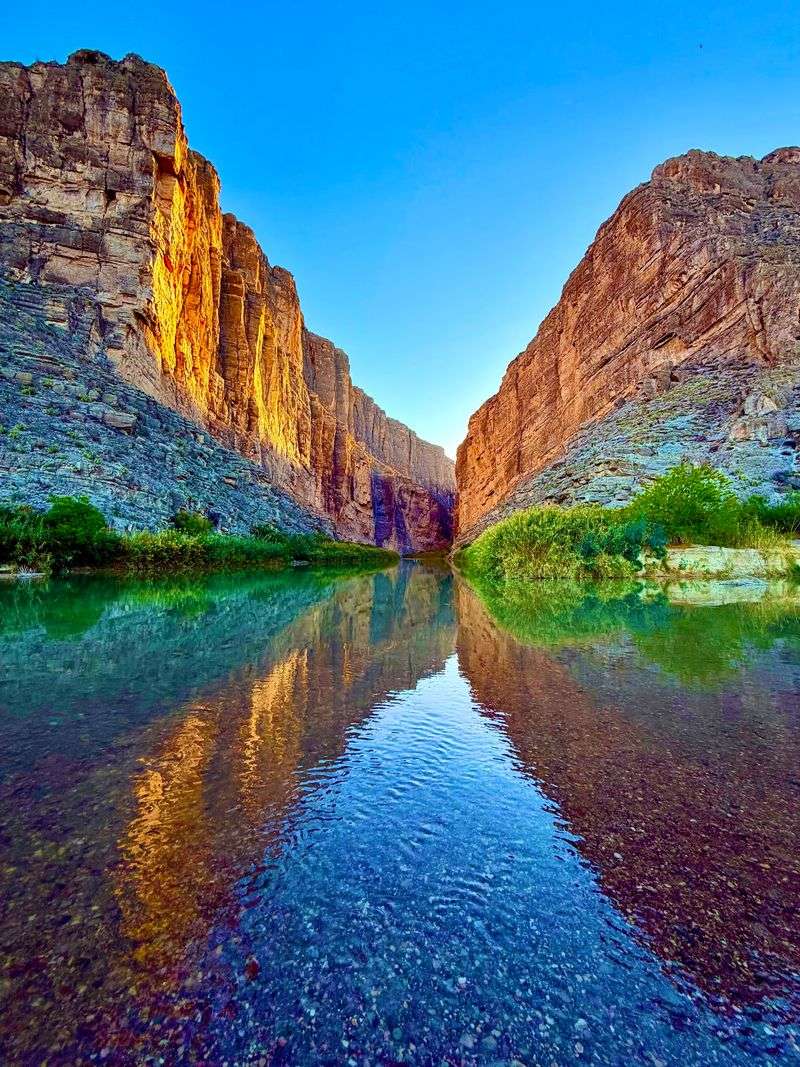
Big Bend is what happens when a landscape refuses to pick just one identity. The park combines Chihuahuan Desert, the Chisos Mountains, and the Rio Grande into a single protected area where elevations swing from below 1,800 feet near the river to nearly 8,000 feet in the mountains.
That range produces radically different ecosystems within a short drive of each other.
Hiking options reflect that variety. Desert trails pass cacti, roadrunners, and javelinas.
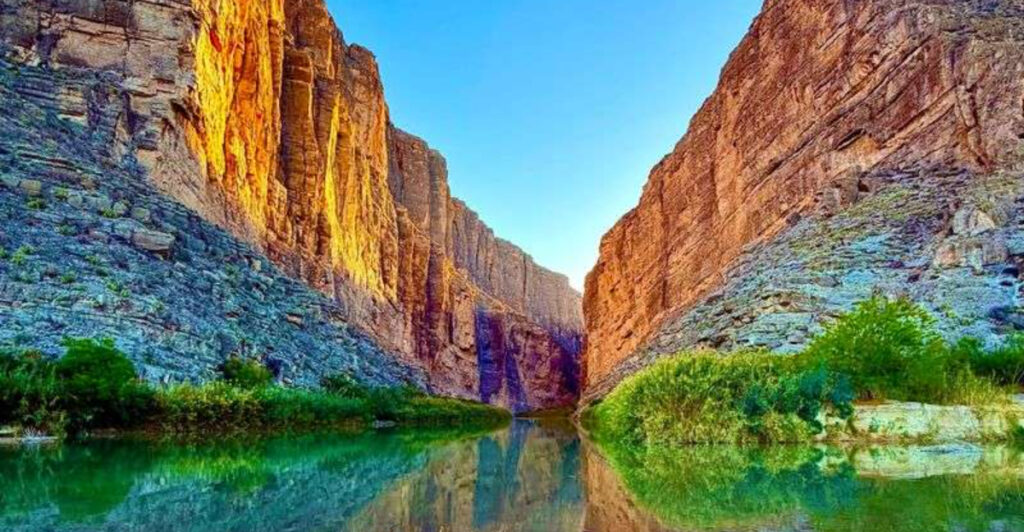
The Chisos Basin leads into wooded mountain terrain. Santa Elena Canyon squeezes the Rio Grande between 1,500-foot limestone walls.
Every environment feels distinct and genuinely wild.
After sunset, Big Bend earns another distinction. The NPS describes it as having the least light pollution of any national park unit in the lower 48 states, putting it among North America’s top stargazing destinations.
The park recorded 568,104 visits in 2025, a fraction of what better-known western parks attract. The reason is simple geography: Big Bend is genuinely remote.
For travelers willing to commit to the drive, that remoteness stops being a drawback and starts feeling like the whole point.
Guadalupe Mountains National Park, Texas
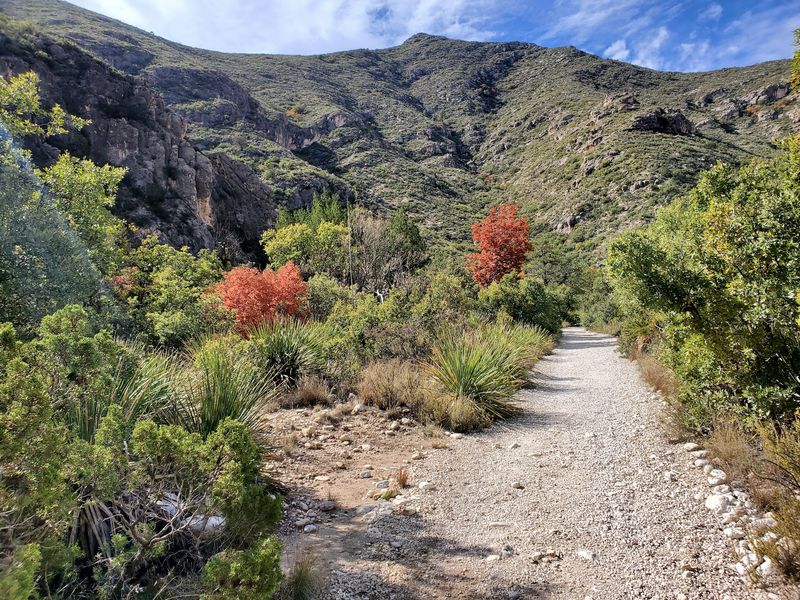
Most people chasing rugged mountain scenery automatically look toward Colorado or Wyoming. West Texas rarely makes the short list, which is exactly why Guadalupe Mountains National Park stays so refreshingly uncrowded.
Only 206,423 recreation visits were recorded in 2025, leaving trails quiet even during peak travel periods.
The mountains here are not just impressive by Texas standards. Guadalupe Peak reaches 8,751 feet, making it the highest point in the entire state.
The surrounding landscape preserves the remains of a massive Permian-age reef system, now exposed as dramatic limestone escarpments, steep canyons, desert slopes, and surprising springs supporting over 1,000 plant species.
Reaching the summit of Guadalupe Peak requires a strenuous hike gaining roughly 3,000 feet of elevation, so casual visitors tend to stay near the trailhead. That self-selection keeps the trail population manageable and the summit experience genuinely satisfying.
The view from the top stretches across a vast desert basin framed by ancient geology. Come expecting serious hiking rather than drive-up sightseeing, and Guadalupe Mountains will deliver something much more memorable than a windshield panorama.
Channel Islands National Park, California
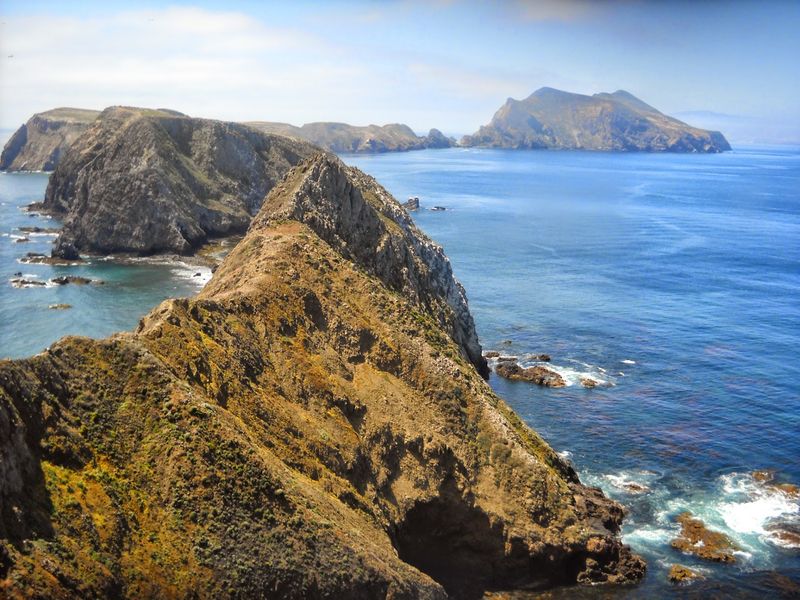
Just a few dozen miles from the freeways and beach crowds of Southern California, Channel Islands exists in a completely different version of the state. Five islands make up the park, each shaped by sea cliffs, coastal scrub, endemic wildlife, and the kind of quiet that feels almost illegal this close to Los Angeles.
The island fox is the park’s most iconic resident, a small, fearless creature found nowhere else on Earth. Each island hosts its own subspecies, and the foxes famously show little fear of humans, often trotting right past hikers on the trail.
Sea caves carved by wave erosion line the coastlines, and experienced kayakers can paddle through some of the largest coastal caves in the world under the right conditions.
Getting to Channel Islands requires a boat or seaplane from Ventura or Oxnard, and that logistical step keeps annual visitation at 227,186. The crossing itself sets the tone: by the time land disappears behind the boat, the noise of modern California starts to feel very far away.
For a state packed with overcrowded parks, Channel Islands feels like a well-kept secret hiding in plain sight.
Theodore Roosevelt National Park, North Dakota
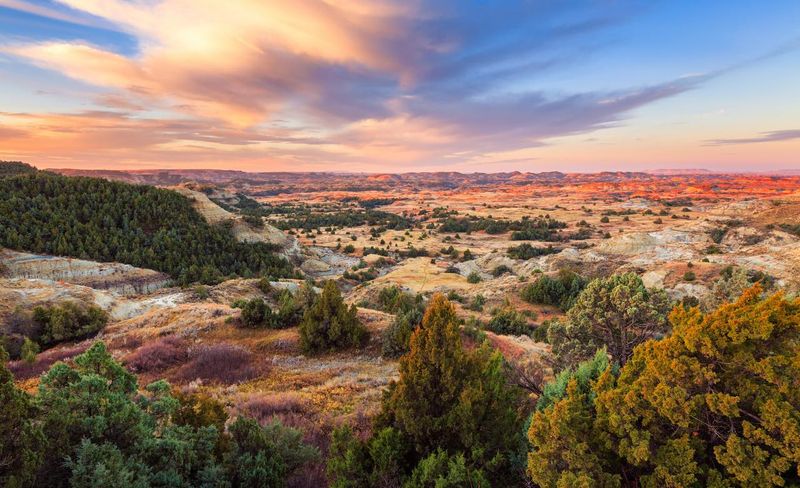
Bison sightings at Yellowstone are legendary, but so are the traffic jams they cause. Theodore Roosevelt National Park offers a very different experience: bison roaming the Little Missouri Badlands with only a fraction of the audience.
The park recorded 729,893 recreation visits in 2025, compared to Yellowstone’s 4.76 million.
The landscape itself is the surprise. Badlands formations in shades of red, orange, purple, and gray rise above grass-covered valleys where prairie dog towns sprawl across open ground.
Bighorn sheep navigate rocky ridges, elk graze in the evenings, and wild horses occasionally appear along the scenic drives. The North Unit is the quieter of the park’s two main sections, with designated wilderness covering most of its terrain.
Theodore Roosevelt himself ranched in this area in the 1880s, crediting the Badlands experience with shaping his conservation philosophy. The park preserves two of his original ranch sites, adding a historical layer beneath the wildlife watching and scenic drives.
Sunrise and sunset here are worth setting an alarm for. The badlands light up in deep orange and the bison stand silhouetted against the prairie like something out of a painting.
Voyageurs National Park, Minnesota
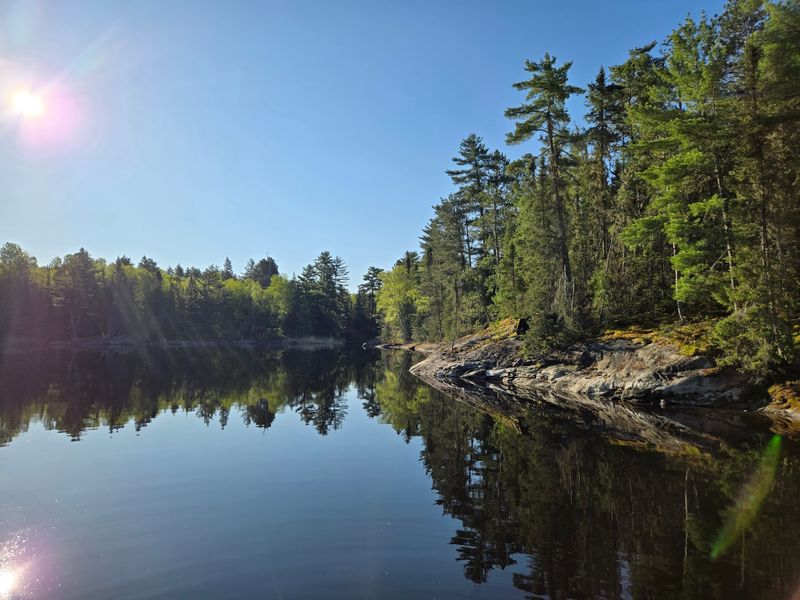
Forget hiking boots. At Voyageurs, the main mode of exploration is a boat.
The park protects 218,000 acres of interconnected lakes, forested islands, rocky shorelines, and streams in northern Minnesota, following the historic waterways once paddled by French-Canadian fur traders called voyageurs.
Canoes, kayaks, and motorboats replace trail maps here. Paddle far enough from the visitor center and developed areas disappear completely, replaced by pine-covered islands, quiet coves, and wilderness campsites accessible only by water.
The sense of removal from ordinary life arrives quickly once you push off from the dock.
After dark, Voyageurs adds another draw. The NPS notes that northern lights are visible sporadically over the park, and many campsites offer wide-open views toward dark northern horizons where the aurora puts on remarkable shows during active periods.
Only 206,326 recreation visits were recorded in 2025. For travelers who love the forest-rock-water combination that makes Acadia so appealing but want something far less road-focused, Voyageurs offers an immersive alternative where the experience genuinely changes depending on how far you are willing to paddle from the shore.
Isle Royale National Park, Michigan
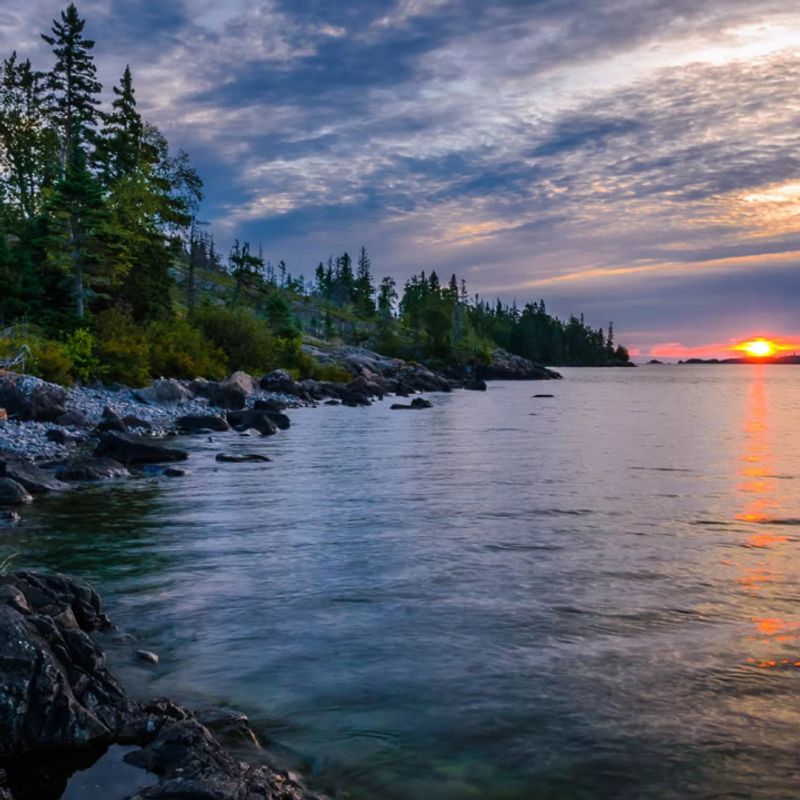
There are quiet parks, and then there is Isle Royale, which takes the concept of solitude and makes it structural. Sitting in the middle of Lake Superior and reachable only by ferry, seaplane, or private boat, the island recorded just 29,091 recreation visits in 2025, placing it among the least-visited national parks in the entire country.
The park covers one large island and more than 450 smaller ones, connected by 165 miles of trails through boreal forest, past inland lakes, and along rugged shoreline. No roads link different parts of the island.
Getting anywhere meaningful requires hiking or paddling, which filters the visitor list down to people who genuinely want to be there.
Isle Royale is also home to one of ecology’s most famous long-running studies. Wolves and moose have been monitored continuously since 1958 in a predator-prey relationship that scientists call the world’s longest study of its kind.
Spotting either species feels less like a lucky accident and more like a privilege the island grants selectively. For anyone whose idea of a national park trip involves leaving roads and gift shops behind completely, Isle Royale takes that assignment more seriously than almost anywhere else.
Congaree National Park, South Carolina
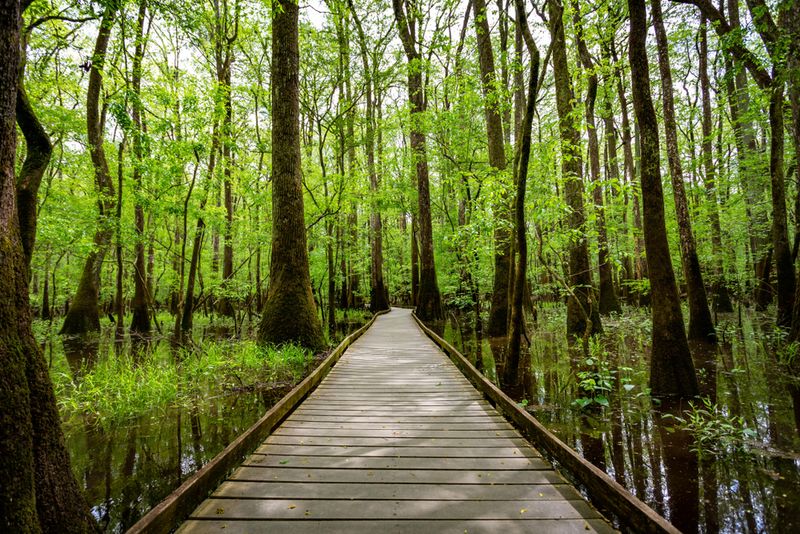
Congaree does not announce itself with dramatic peaks or sweeping desert views. Its power is quieter, closer, and wetter.
The park preserves the largest intact expanse of old-growth bottomland hardwood forest remaining in the southeastern United States, where bald cypress trees stretch toward the canopy and periodic flooding keeps the ecosystem remarkably productive.
The 2.6-mile Boardwalk Loop provides an easy and genuinely atmospheric introduction, threading through towering cypress, tupelo, loblolly pine, and oak without requiring any technical hiking ability. Oxbow lakes and wetland channels branch off into the forest, and bird activity is nearly constant throughout the year.
For roughly two weeks in late spring, Congaree hosts one of North America’s strangest natural spectacles: synchronous fireflies flashing in coordinated patterns across the dark forest floor. The 2026 viewing event ran May 13 through 20 and required timed-entry passes because demand has grown significantly.
Despite that seasonal spike in interest, annual visitation was only 287,833 in 2025, roughly one-fortieth of Great Smoky Mountains. Congaree rewards visitors who appreciate beauty that builds slowly rather than hitting you immediately.
Spend a full morning here and the forest has a way of making everything else feel unnecessary.
Great Sand Dunes National Park and Preserve, Colorado
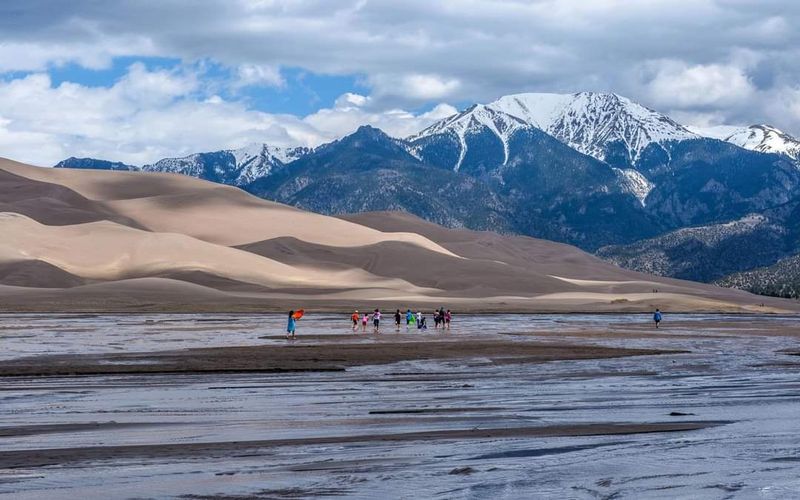
Nothing about Great Sand Dunes looks like it should exist. Enormous sand dunes, some topping 750 feet, rise directly against the snow-covered Sangre de Cristo Mountains in southern Colorado, creating a landscape that genuinely looks like two different photographs accidentally stitched together.
The central dunefield covers roughly 30 square miles and contains the tallest dunes in North America.
There are no designated trails across the dunes themselves, which means visitors can wander freely in any direction. Sledding down the slopes is encouraged and surprisingly fast.
Medano Creek flows seasonally along the dunefield’s eastern edge, creating a shallow sandy-bottomed stream where kids and adults alike spend hours. Beyond the dunes, the park and preserve extend into grasslands, forests, alpine lakes, and tundra.
After dark, Great Sand Dunes holds International Dark Sky Park designation, making the stars almost as impressive as the dunes. About 432,498 recreation visits were recorded in 2025, which sounds busy until you consider the park’s visual drama.
One practical note: summer sand surfaces can reach temperatures above 150 degrees Fahrenheit by midday, so planning visits for early morning or evening makes a significant difference in both comfort and photography quality.
White Sands National Park, New Mexico
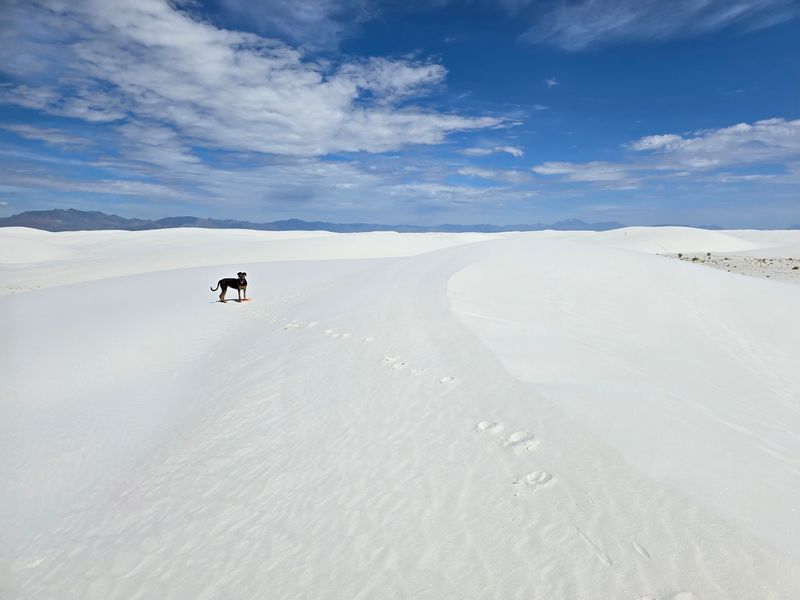
White Sands looks like a desert that forgot what color it was supposed to be. The park protects part of a 275-square-mile gypsum dunefield, the largest on Earth, where dunes appear almost snow-white against New Mexico’s deep blue sky.
The effect is genuinely disorienting, especially for first-time visitors expecting the warm gold tones of a typical desert landscape.
Hiking across the dunes is more physical than it looks. The soft surface shifts underfoot and the reflected light is intense, so sunglasses and sunscreen are not optional.
Sledding down the slopes on plastic discs is one of the park’s most popular activities, and the visitor center sells rentals for exactly that purpose.
Sunset is the moment White Sands fully reveals itself. As light softens toward the horizon, the white dunes begin reflecting pink, lavender, gold, and blue from the sky and surrounding mountains simultaneously.
The NPS schedules ranger-led sunset strolls specifically for this reason. White Sands welcomed 659,742 visits in 2025, which sounds significant until you compare it to Joshua Tree’s nearly 3 million.
The park does get busy on weekends, but weekday evenings near closing time offer something close to a private showing of one of the Southwest’s most surreal landscapes.
Pinnacles National Park, California
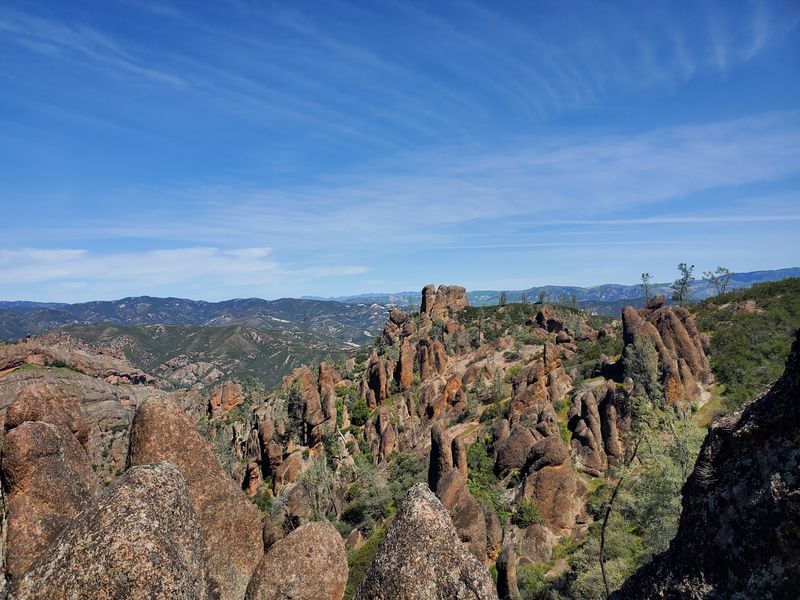
About 23 million years ago, a volcanic field erupted in what is now southern California. Tectonic movement along the San Andreas Fault gradually split and displaced those formations over millions of years, eventually producing the twisted spires, narrow canyons, and bizarre rock piles that define Pinnacles today.
Geology rarely produces something this visually strange.
The talus caves are among the park’s most distinctive features. They formed when massive boulders tumbled into narrow gorges and became wedged overhead, creating dark passages that visitors can explore by headlamp when water levels and wildlife closures allow.
The caves close during certain seasons to protect roosting bats, which is a reasonable trade-off given the ecological importance.
California condors are the living headline at Pinnacles. North America’s largest land bird declined to just 27 individuals before captive breeding and reintroduction programs began turning the numbers around.
Pinnacles is now one of the primary release and nesting sites, and spotting a condor with a wingspan stretching nearly 10 feet riding thermals above the spires is something that does not get old. Pinnacles recorded 343,208 visits in 2025.
Visit on a weekday outside peak spring weekends and California suddenly feels like a much less crowded state.
Dry Tortugas National Park, Florida
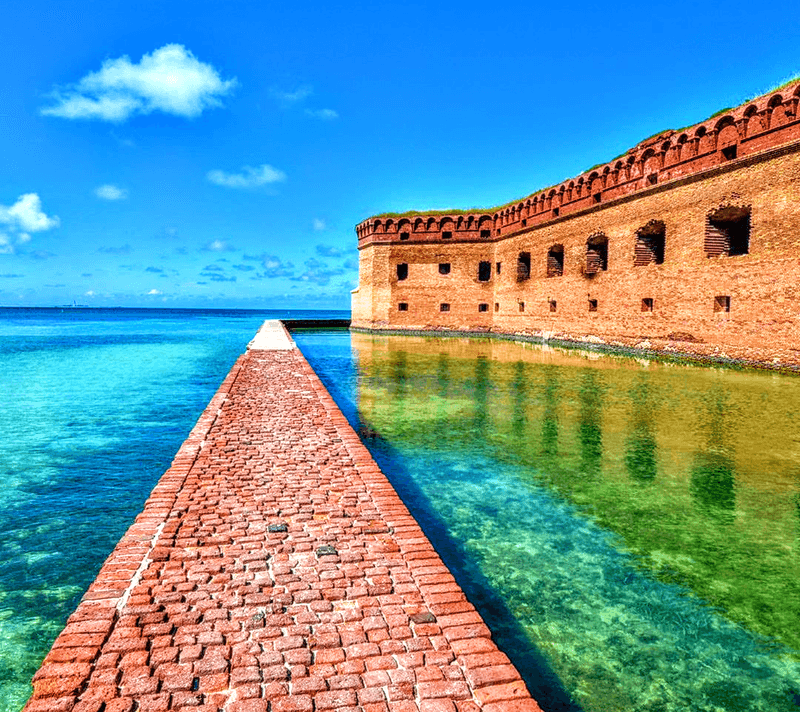
Dry Tortugas sits nearly 70 miles west of Key West in the Gulf of Mexico, making it one of the most remote national parks in the eastern United States. Getting there requires a ferry, seaplane, or private boat, and that logistical commitment keeps annual visitation low: only 89,355 recreation visits were recorded in 2025.
Garden Key is dominated by Fort Jefferson, a colossal 19th-century masonry fortress built to control strategic shipping routes through the Florida Straits. The fort used over 16 million bricks in its construction and was never fully completed, yet it remains one of the largest brick structures in the Western Hemisphere.
History and scale combine in a setting that feels completely unexpected this far out at sea.
Step outside the fort walls and the experience shifts entirely. Clear, shallow water surrounds coral reefs inhabited by tropical fish, lobsters, sea stars, sponges, and roughly 30 coral species.
Snorkeling here requires almost no effort because the reef starts just offshore. The ferry brings day visitors who fill Garden Key during midday hours, but the island empties by late afternoon.
Campers who stay overnight discover what a remote national park 70 miles out to sea actually sounds like: mostly wind, water, and birds.
Share this story