Some bridges are built for cars, trains, or commerce. But a handful of suspension bridges around the world were designed specifically for people on foot, and engineers have made them more thrilling than most roller coasters.
Stretching hundreds of meters across mountain valleys, river gorges, and canyon walls, these crossings are attractions all on their own. Whether you are a thrill-seeker, a hiker, or just someone who wants a story to tell, these 15 record-holding pedestrian suspension bridges are waiting for your footsteps.
Zemplén 723 – Hungary
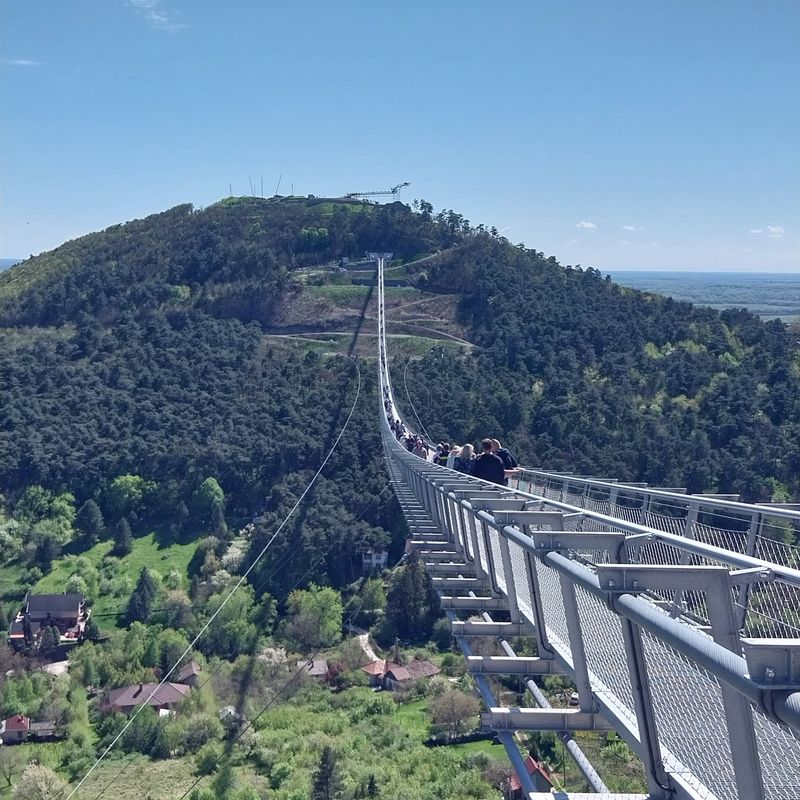
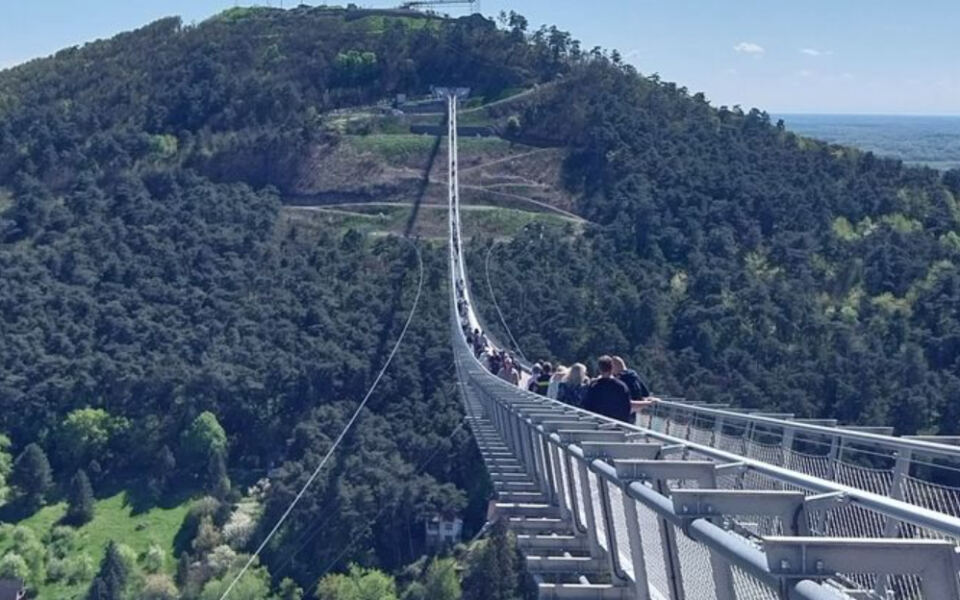
Hungary quietly pulled off one of the biggest engineering flexes in pedestrian bridge history. The Zemplén 723, officially called the Bridge of National Unity, stretches a jaw-dropping 723 meters across the Május Creek valley in the Zemplén Adventure Park near Sátoraljaújhely.
Guinness World Records currently recognizes it as the world’s longest-span traditional pedestrian suspension bridge.
The bridge opened in June 2024, which means it is still brand new by bridge standards. Its specs are genuinely wild: over 24 kilometers of cable, nearly 497 tons of steel, and a walking surface only 1.2 meters wide.
The center sags about 27 meters and sits roughly 82 meters above the valley floor.
Just when walkers think they have made it through the hardest part, the deck reveals a glass-floor section near the middle. After several hundred meters of swaying steel, suddenly looking through your feet at an 82-meter drop adds a whole new layer of excitement.
The park charges an admission fee, and tickets typically need to be booked in advance online. If you want to claim you walked the world’s longest pedestrian suspension bridge, this is your destination right now.
Sky Bridge 721 – Czechia
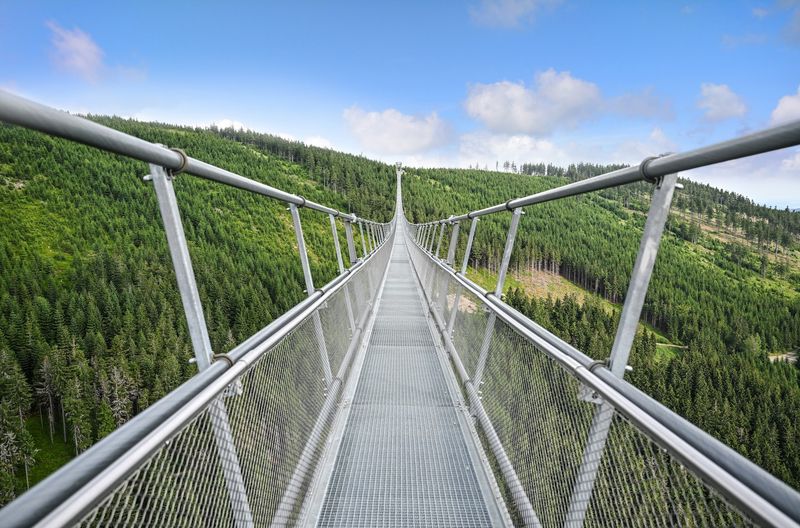
For two solid years, Sky Bridge 721 wore the crown as the world’s longest pedestrian suspension bridge, and losing the title by just two meters to Hungary barely dents its reputation. The bridge opened in 2022 at the Dolní Morava resort in the Králický Sněžník massif, connecting the Slamník and Chlum ridges across 721 meters of open air.
At its peak, the deck hovers about 95 meters above the valley.
The crossing is one-directional, meaning visitors walk the full 721 meters before returning via a mountain trail. There is no turning back halfway.
That setup means the only way to finish is to keep moving forward, one step at a time, until the opposite ridge finally arrives under your feet.
The Dolní Morava resort has built a full range of attractions around the bridge, including a treetop walk called the Sky Walk, making the area worth a full day trip. Tickets are sold online, and the site manages visitor flow carefully to avoid overcrowding on the deck.
The surrounding Králický Sněžník views are genuinely stunning. If you love mountains and mild existential discomfort, Sky Bridge 721 delivers both in generous quantities.
Skywalk Willingen – Germany
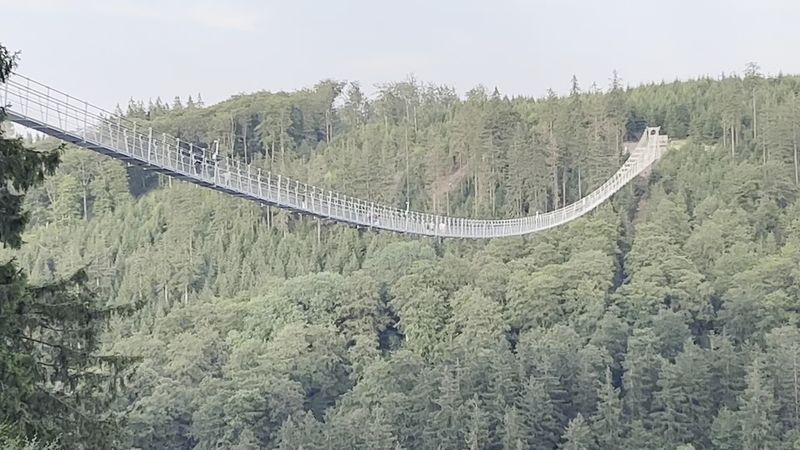
Germany entered the world of record-breaking pedestrian bridges with serious ambition. Skywalk Willingen opened in July 2023 and immediately claimed the title of Germany’s longest suspension bridge, stretching 665 meters across the Stryck Valley in the state of Hesse.
The central section hangs roughly 100 meters above the Sauerland landscape below.
The design follows a Tibetan-style construction, which uses cables anchored at each end rather than tall support towers. This gives the bridge a floating, almost weightless appearance from a distance.
Up close, the metal-grate walking surface makes sure visitors stay fully aware of exactly how much air exists between them and the forest floor.
Willingen is already a popular outdoor destination in Germany, known for winter sports and hiking trails. The bridge fits naturally into the region’s adventure tourism identity.
Visitors can combine the crossing with nearby cycling routes or forest hikes for a full outdoor day. The bridge sits near the Ettelsberg ski area, and the surrounding hills offer views in every direction.
Germany may have been a late arrival to the pedestrian suspension bridge competition, but Skywalk Willingen proves the country had no interest in doing things halfway once it finally showed up.
Tibetan Bridge of Canillo – Andorra
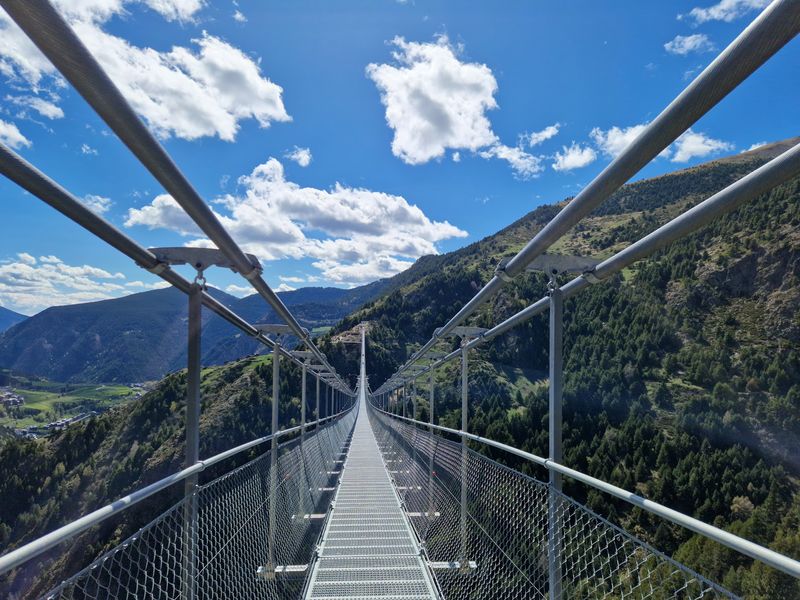
Tucked into the tiny mountain nation of Andorra, the Tibetan Bridge of Canillo is the kind of structure that makes you rethink what a small country can pull off. Stretching 603 meters across the Vall del Riu gorge, the bridge reaches a maximum height of 158 meters above the terrain and sits at an elevation of over 1,875 meters in the Pyrenees.
The walking surface is exactly one meter wide.
Standing at one end and looking toward the opposite side, the bridge appears as a thin line threading through mountain scenery before vanishing into rock. That visual is both beautiful and mildly alarming.
The official tourism site openly warns visitors with serious fear of heights or balance issues to reconsider making the crossing. Straightforward advice like that is actually refreshing compared to typical tourism marketing.
Andorra is best known as a duty-free shopping destination and ski resort country, so the bridge offers a genuinely different side of the nation. The surrounding area includes hiking trails and mountain scenery that rank among the most dramatic in the Pyrenees.
Combining the bridge crossing with a hike in the Vall del Riu area turns a single attraction into a proper mountain adventure. Canillo itself is a charming small parish worth exploring before or after the crossing.
Ponte Tibetano di Castelsaraceno – Italy
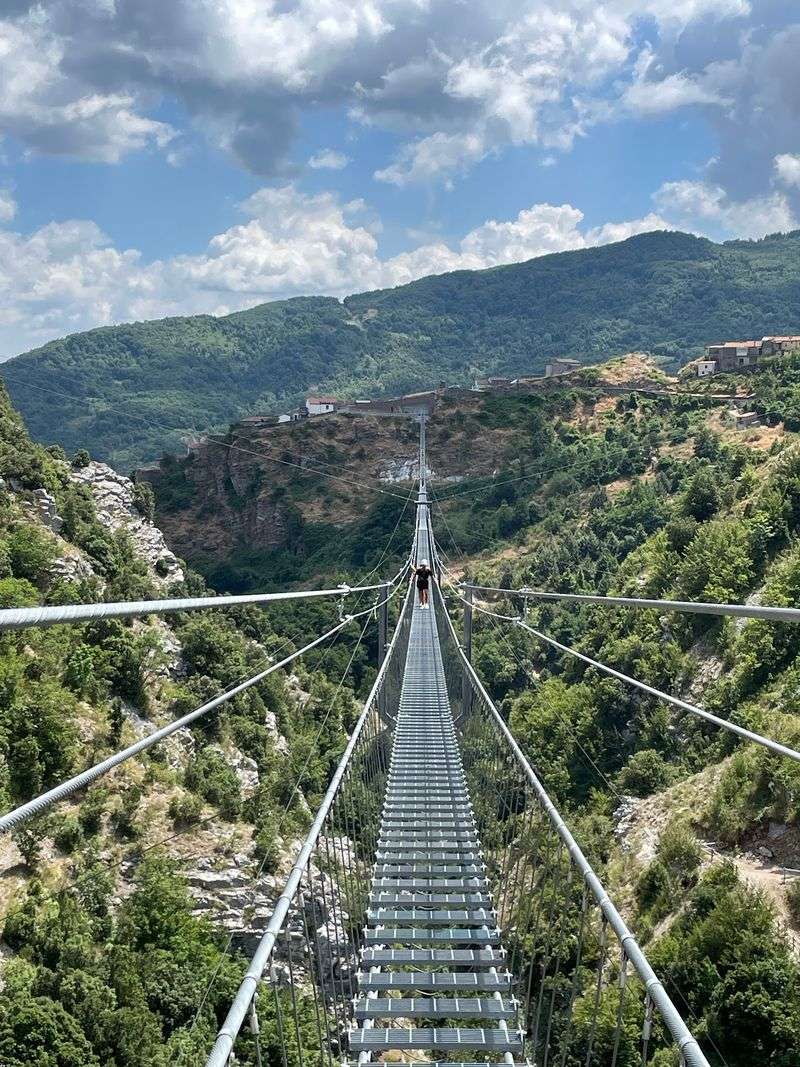
Southern Italy is not the first place most people picture when they think of record-breaking suspension bridges, which makes Castelsaraceno’s entry all the more satisfying. The 586-meter Ponte Tibetano connects the Pollino National Park side of Castelsaraceno with terrain toward the Lucanian Apennines-Val d’Agri Lagonegrese National Park.
Operators promote it as the world’s longest single-span Tibetan-style pedestrian bridge, and the crossing requires approximately 1,160 steps above the valley floor.
The bridge hangs roughly 80 meters above the ground. Lateral stabilizing cables run along the sides to reduce swaying in windy conditions, which is a thoughtful engineering touch given the exposed mountain location.
That said, 80 meters is still 80 meters, and no cable system makes that drop feel particularly comfortable when the deck shifts beneath your feet.
Basilicata is one of Italy’s least-visited regions, which makes the bridge a rewarding reason to explore a part of the country most tourists skip entirely. The surrounding landscape is genuinely wild, with forested ridges, rocky peaks, and river valleys that look almost untouched.
Visiting the bridge can be combined with stops in the ancient hilltop towns nearby. If you want a dramatic Italian experience that has nothing to do with pasta or art museums, Castelsaraceno delivers something completely different.
Gandaki Golden Bridge – Nepal
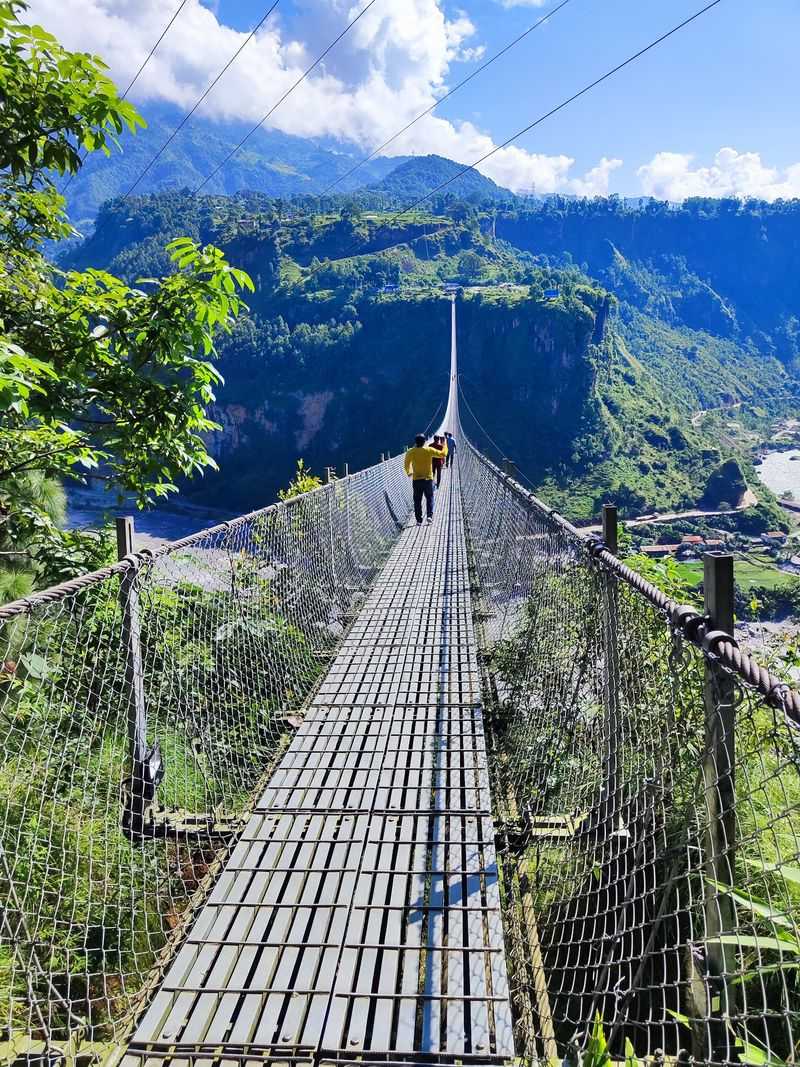
Nepal has been engineering suspension footbridges across its mountain rivers for generations, turning a practical necessity into a national skill. The Gandaki Golden Bridge takes that tradition to a global scale.
Spanning 567 meters across the Kali Gandaki River and connecting the towns of Baglung and Kushma in Parbat District, the bridge stands approximately 122 meters above the river below.
Guinness World Records once officially recognized this bridge as the world’s longest-span pedestrian suspension bridge before the record category was restructured. That history gives the crossing a legacy that newer European thrill bridges simply cannot replicate.
The Gandaki Golden Bridge was not built purely as an attraction. It serves a region where suspension bridges have been essential transportation infrastructure for decades.
Walking across it means experiencing something that blends tourism with genuine local utility. The Kali Gandaki gorge is one of the deepest river gorges on Earth, and the surrounding landscape is dramatic in every direction.
The nearby town of Kushma has developed bungee jumping and zip-lining tourism around the gorge, making the area a growing adventure destination. But the bridge itself, with its record-holding history and Himalayan setting, remains the centerpiece.
Few pedestrian crossings in the world carry this combination of engineering scale and cultural depth.
516 Arouca – Portugal
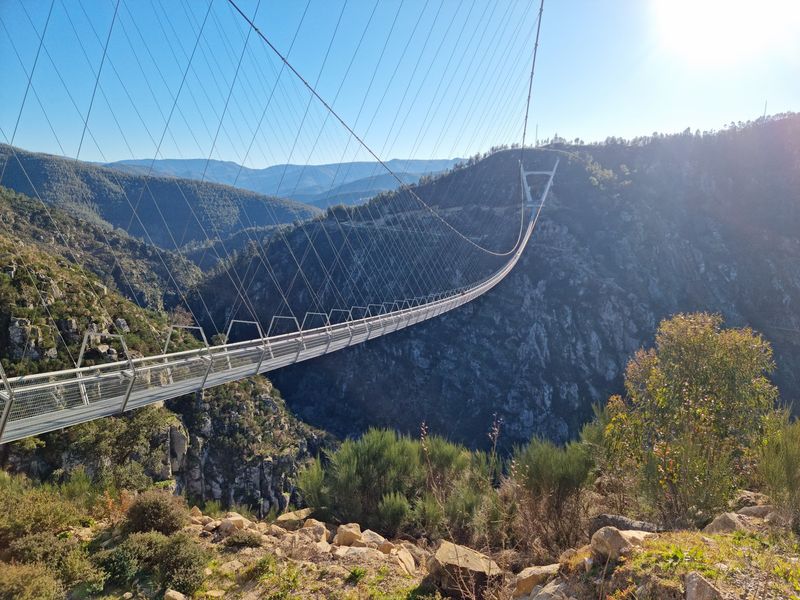
When 516 Arouca opened, the number in its name told the whole story: 516 meters of suspension bridge hanging 175 meters above the Paiva River. Located inside the Arouca UNESCO Global Geopark in northern Portugal, the bridge quickly became one of the country’s most photographed outdoor attractions.
The deck is made entirely of open metal grating, so the Paiva Gorge is visible directly beneath every single step.
The gorge itself is stunning. Steep rock walls, dense forest, the Aguieiras waterfall, and the wild green river far below create a view that rewards the nervous energy of the crossing.
The bridge connects to the famous Paiva Walkways, a system of wooden boardwalk paths that follow the river through the gorge. Buying a combined ticket turns the bridge into the dramatic highlight of a longer gorge hike rather than a standalone thrill.
Newer bridges have since surpassed 516 Arouca in raw length, but its setting inside an active UNESCO Geopark gives it a context that purpose-built resort bridges often lack. Visitor numbers grew so quickly after opening that timed entry tickets became mandatory.
Booking ahead is essential. Portugal built something special here, and the crowds showing up from across Europe every season are happy proof of that.
Charles Kuonen Suspension Bridge – Switzerland
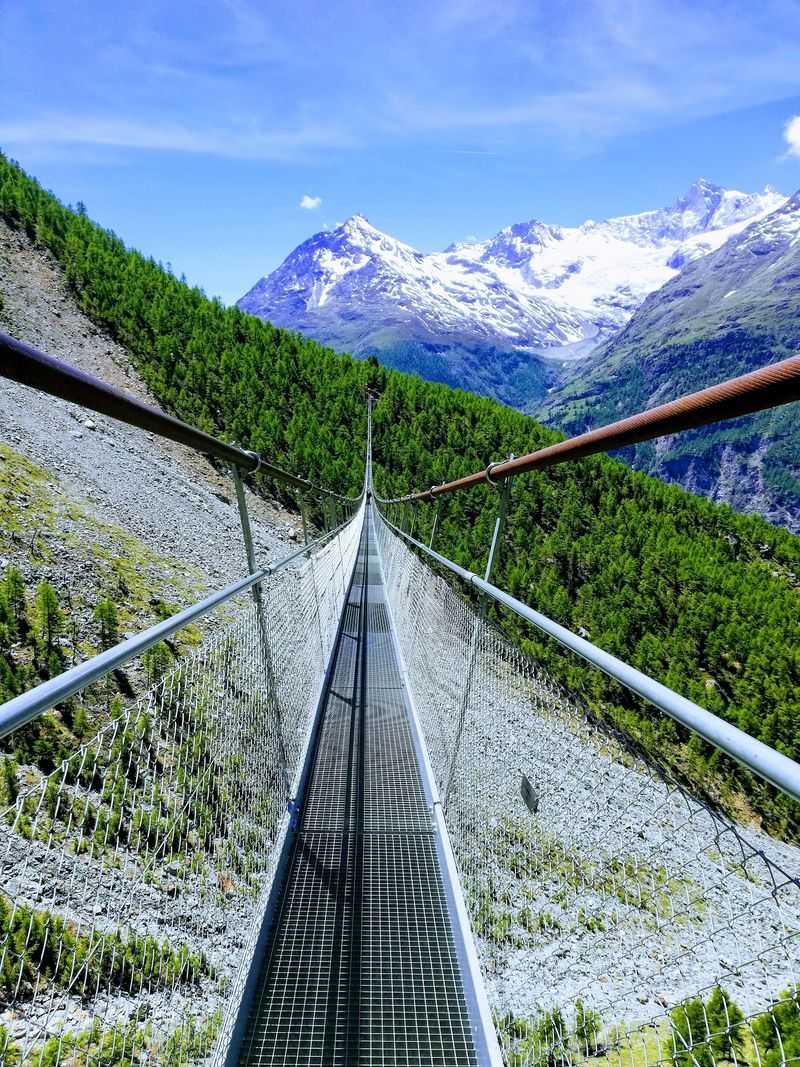
At 65 centimeters wide, the Charles Kuonen Suspension Bridge is narrower than most people’s bathroom doors. That detail becomes very personal when you are 494 meters into a crossing above an 85-meter ravine near Randa, Switzerland.
Guinness World Records recognized the bridge as the world’s longest Tibet-style footbridge when it opened in 2017, and the title was well earned.
The bridge crosses the Grabengufer ravine and forms a key section of the Europaweg, the famous high-altitude hiking route between Grächen and Zermatt. It replaced a section of trail that was repeatedly damaged by rockfalls, which means the bridge is not just a scenic attraction.
It is also a genuine engineering solution to a real mountain access problem.
The Matterhorn is visible from sections of the surrounding hiking route, giving the crossing an Alpine backdrop that few pedestrian bridges in the world can match. The narrowness of the deck creates its own social challenge: passing another hiker coming the other direction requires careful coordination and mutual trust.
The crossing is free as part of the Europaweg trail, making it one of the best-value record-holding bridge experiences anywhere. If you are hiking the Zermatt region, skipping this bridge would be a genuine mistake.
Titan RT – Germany
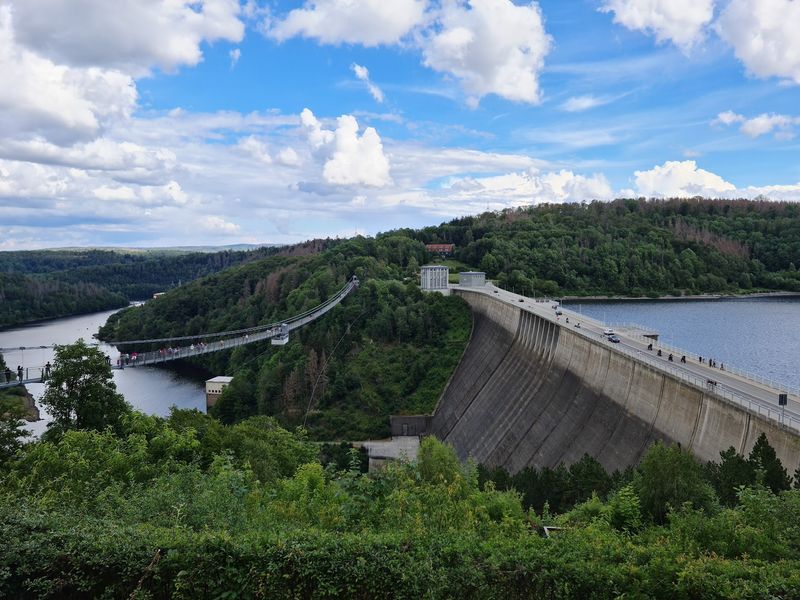
Germany appears on this list twice, and both entries are fully justified. Titan RT opened in 2017 in the Harz Mountains and immediately claimed a major record: its free-hanging unsupported span of approximately 458.5 meters made it one of the longest of its kind in the world at the time.
The full structure stretches roughly 483 meters and crosses the Rappbode Valley near Germany’s tallest dam, hanging about 100 meters above the landscape.
The walking surface is open metal grating surrounded by steel mesh on the sides and overhead. That design keeps the structure visually open in almost every direction, which is either thrilling or deeply uncomfortable depending on your relationship with heights.
There is no solid surface to stare at when the valley below becomes too obvious to ignore.
For visitors who complete the crossing and decide it was not intense enough, the GigaSwing operates directly from the bridge structure, launching riders out over the valley in a massive pendulum arc. Suddenly, walking across 483 meters of suspended grating sounds like the relaxing option.
The Titan RT is part of a broader outdoor adventure area around the Rappbode Reservoir, making it easy to combine with other activities. The Harz region itself is beautiful, forested, and well worth the trip.
SkyBridge – Sochi, Russia
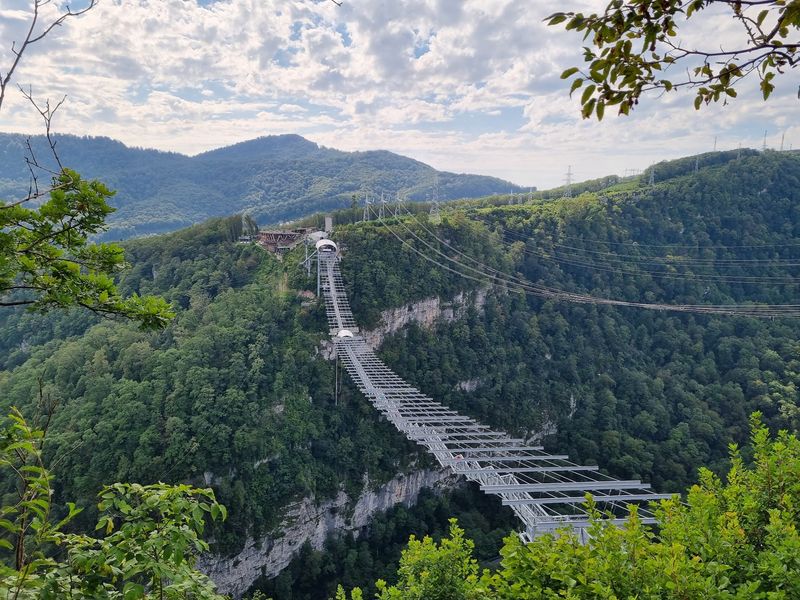
Before European resorts started adding hundreds of meters to the record books, Sochi’s SkyBridge was the bridge everyone pointed to as proof of what pedestrian suspension crossings could become. Stretching 439 meters across the Akhshtyr Gorge and reaching approximately 207 meters above the landscape, it remains Russia’s longest pedestrian suspension bridge.
The vertical exposure here is exceptional even by global standards.
The Caucasus Mountains and the broader Black Sea region create a dramatic natural backdrop for the crossing. Views extend across ridgelines and forested gorge walls that make the surrounding landscape feel genuinely remote despite the bridge’s proximity to a major resort city.
Sochi built its outdoor adventure reputation partly on attractions like this one.
The bridge also anchors a broader extreme sports complex. Bungee jumping platforms and giant swing installations use the same gorge, which means walking across the bridge is actually the calmest activity available at the site.
That context says a great deal about what kind of place this is. Its length record may have been surpassed by newer structures, but the combination of height, mountain scenery, and sheer vertical exposure keeps SkyBridge in a category of its own.
If a 207-meter drop sounds manageable, the bungee platform is right there.
Zhangjiajie Grand Canyon Glass Bridge – China
Most bridge designers focus on helping people get across. The team behind the Zhangjiajie Grand Canyon Glass Bridge had a different priority: making sure no one could ignore what was beneath them.
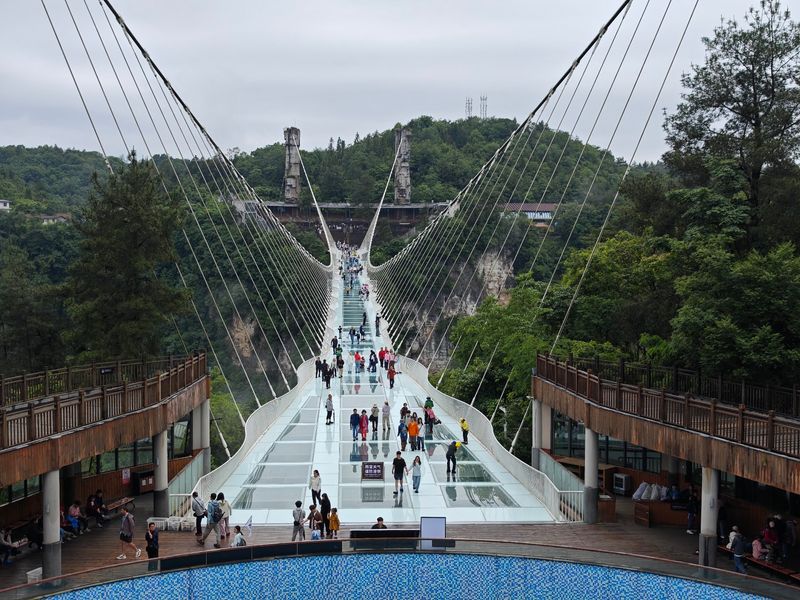
The 430-meter bridge stretches between canyon cliffs in Hunan Province and hangs approximately 300 meters above the valley floor. The deck is made of tempered glass panels, giving every visitor an unobstructed view straight down into the canyon.
When the bridge opened, it set world records for both the longest and highest glass-bottom bridge. The builder’s own description includes pedestrians, sightseeing, and bungee jumping as the primary intended uses, which covers a fairly wide range of human experiences on a single structure.
The surrounding Zhangjiajie landscape is already famous for its towering sandstone pillars, which inspired the floating mountains in the film Avatar.
The glass deck has been tested to handle enormous loads, and the panels are thick enough to feel solid underfoot. None of that makes the view downward feel any less extreme.
Visitors have been photographed dropping to their knees, crawling, and refusing to look down entirely. The bridge has become one of China’s most shared social media locations, which makes sense.
There are not many places where the floor itself is the most terrifying part of the view.
Mishima Skywalk – Japan
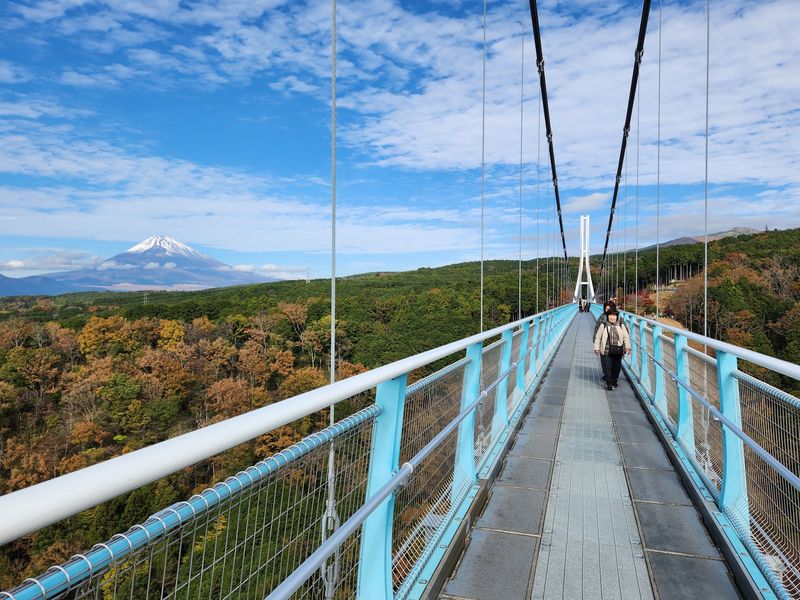
Mishima Skywalk offers something no other bridge on this list can: a single viewpoint that simultaneously frames Mount Fuji and Suruga Bay. Japan’s longest pedestrian-only suspension bridge stretches 400 meters across a valley in Shizuoka Prefecture, with its deck sitting about 70 meters above the ground.
The bridge’s own visitor materials highlight the Fuji-and-bay combination as one of its defining features, and it is hard to argue with that framing.
The walkway is a comparatively generous 1.6 meters wide, which makes the crossing feel more like a scenic promenade than a nerve-wracking tightrope act. That width allows visitors to pause, take photos, and properly appreciate the view without the anxiety of squeezing past oncoming foot traffic on a 65-centimeter-wide deck.
The valley below is lush and green, adding a softer visual contrast to the dramatic mountain backdrop.
Mishima city sits between Tokyo and Osaka on the Shinkansen line, making the bridge genuinely easy to include in a Japan itinerary without significant detour. The surrounding park area includes a gift shop, cafe, and seasonal flowers that draw visitors even beyond the bridge itself.
Mount Fuji can be shy on cloudy days, so checking weather forecasts before visiting is genuinely worthwhile. A clear morning crossing here is hard to forget.
Titlis Cliff Walk – Switzerland
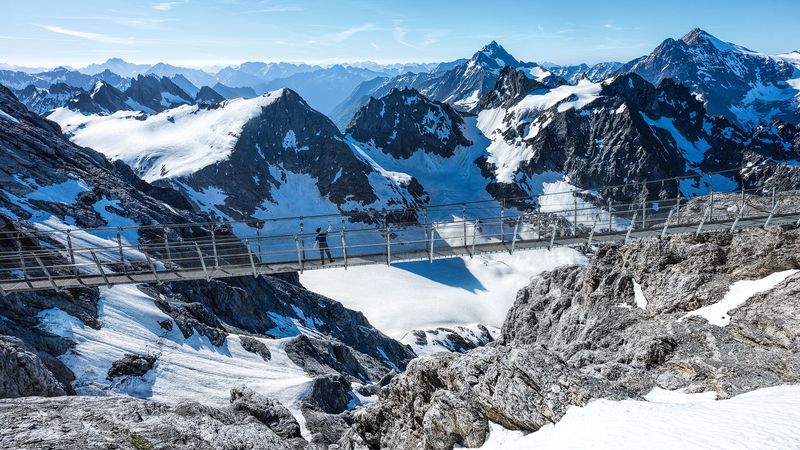
Height does not always mean length. The Titlis Cliff Walk on Mount Titlis proves that a 100-meter bridge can be more memorable than one stretching 700 meters, depending entirely on what is underneath it.
Attached to the sheer cliff face of Mount Titlis at roughly 3,041 meters above sea level, the walkway hangs above a drop of approximately 500 meters. The glacier, snow, and exposed rock surrounding the structure make the setting feel genuinely otherworldly.
The Cliff Walk earns its place among Europe’s highest-elevation pedestrian suspension bridges. The deck is only about a meter wide, and the Alpine wind at that altitude has a personality of its own.
Thin mountain air, icy surfaces nearby, and panoramic views of the Swiss Alps create an environment that is simultaneously spectacular and humbling.
Access to Mount Titlis requires taking a series of cable cars from Engelberg, including the famous rotating Rotair gondola. The mountain itself is a major Swiss tourist destination, and TITLIS confirmed that the Cliff Walk remains open to visitors even during the resort’s significant 2026 summit redevelopment project.
That commitment to keeping the bridge accessible during construction says something about how important it has become to the mountain experience. A hundred meters at 3,000 meters feels like a completely different distance than a hundred meters at sea level.
Peak Walk by Tissot – Switzerland
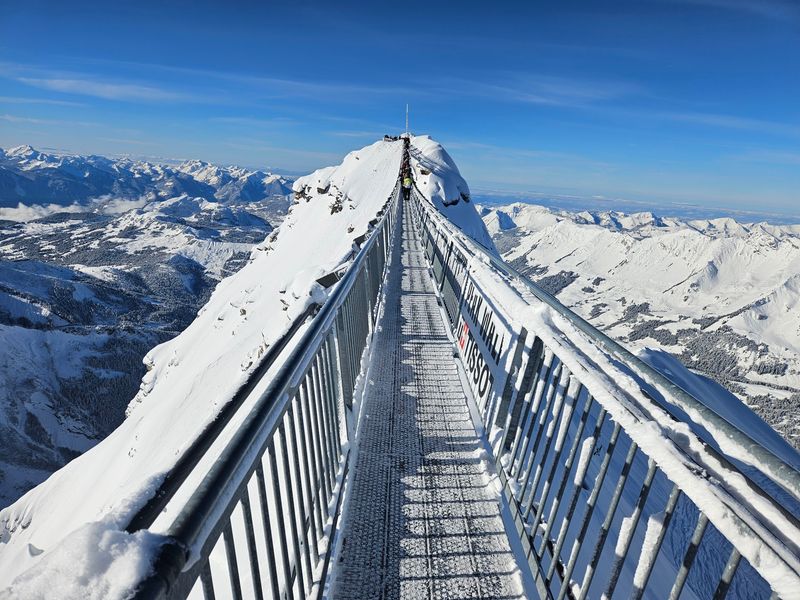
Peak Walk holds a distinction that no engineering upgrade can replicate: it was the first suspension bridge in the world built to connect two separate mountain peaks. The 107-meter walkway crosses between the Scex Rouge summit and an adjacent peak at Glacier 3000 in the Swiss Alps, sitting nearly 3,000 meters above sea level.
Tissot, the Swiss watchmaker, sponsors the bridge, which adds a certain precision-engineering elegance to the whole arrangement.
The deck is approximately 80 centimeters wide, so the crossing demands focus and comfortable footwear. From the bridge, visitors look out at a panorama containing some of the Alps’ most celebrated high summits, including the Matterhorn, Mont Blanc, and the Jungfrau.
On a clear day, the view spans four countries. That is a remarkable return on 107 meters of walking.
Glacier 3000 is accessible by cable car from the resort town of Les Diablerets, making the area reachable without technical mountain climbing experience. The resort also offers glacier hiking, dog sledding, and other seasonal activities, so the bridge fits naturally into a full day on the mountain.
There are longer bridges in the Alps and higher drops below other footbridges. But starting on one mountain peak and finishing on another is a crossing category entirely its own, and Peak Walk owns it completely.
Capilano Suspension Bridge – Vancouver, Canada
Some bridges win records by being the longest or the highest. Capilano wins by being the one that started the conversation.
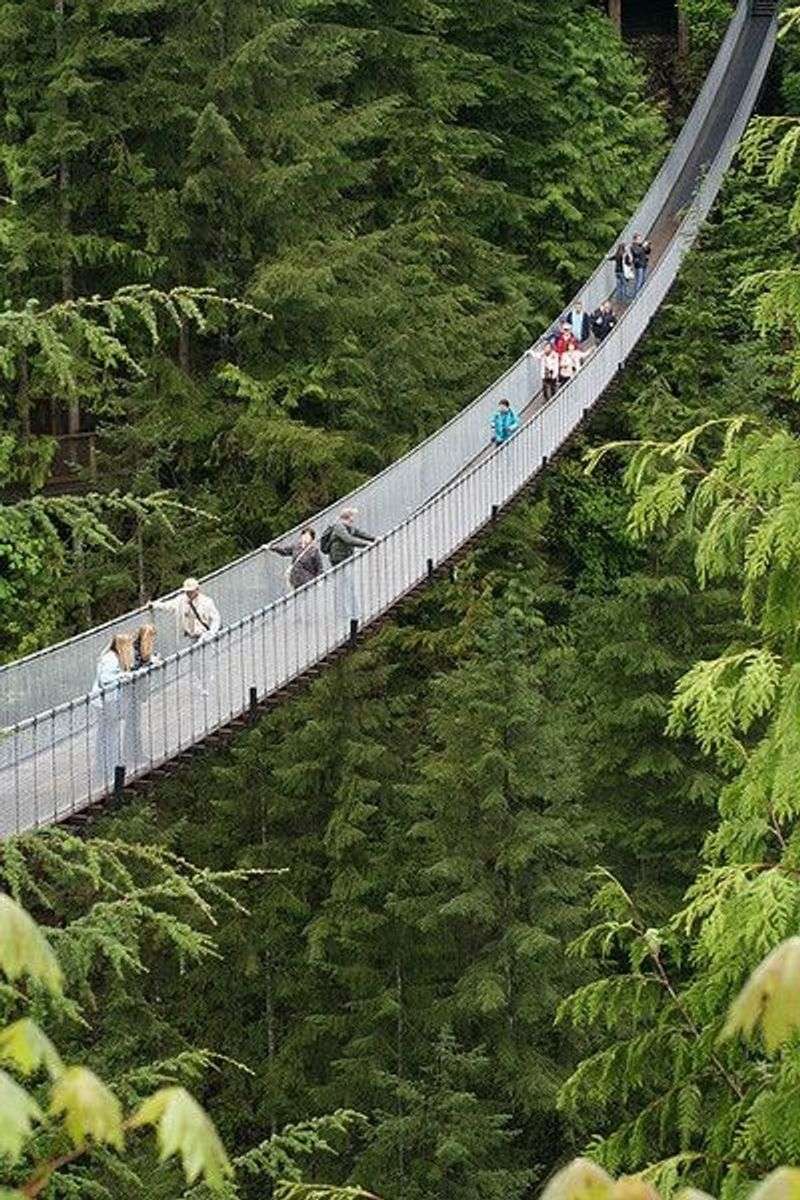
A suspension bridge has crossed the Capilano River in Vancouver since 1889, making this one of the oldest continuously operating pedestrian suspension attractions anywhere in the world. The current bridge stretches 137 meters and hangs roughly 70 meters above the Capilano River, which is modest by the standards of everything else on this list.
What makes Capilano different is its setting. Instead of bare rock, Alpine snow, or open canyon walls, enormous coastal rainforest trees rise up on both sides of the gorge.
The bridge seems to disappear into a wall of green at the far end. Moss, ferns, towering Douglas firs, and the sound of the river below create an atmosphere unlike any mountain bridge experience.
It feels more like stepping into a forest novel than crossing an engineering record.
The surrounding park has grown significantly over the decades and now includes the Cliffwalk, a cantilevered walkway attached to the canyon wall, plus a network of smaller treetop suspension bridges threading between the giant trees. Capilano charges a substantial admission fee and gets very busy, so arriving early is smart.
Raw dimensions may place it far down the record charts. As a living piece of outdoor adventure history, it belongs at the table with the best of them.
Share this story