Europe’s famous capitals may dominate travel itineraries, but some of the continent’s most memorable buildings stand in much smaller communities. A Portuguese town has a palace assembled from Gothic, Moorish, and Renaissance ideas, a Slovenian village has a castle embedded directly into a cliff, and a Norwegian community still uses a medieval wooden church built with techniques refined centuries ago.
Elsewhere, former mining wealth produced extraordinary cathedrals, monks constructed monasteries on nearly inaccessible rock pillars, and villagers simply built their homes around enormous boulders. These 15 buildings and architectural ensembles have become inseparable from the smaller European places that surround them.
The Trulli of Alberobello, Italy
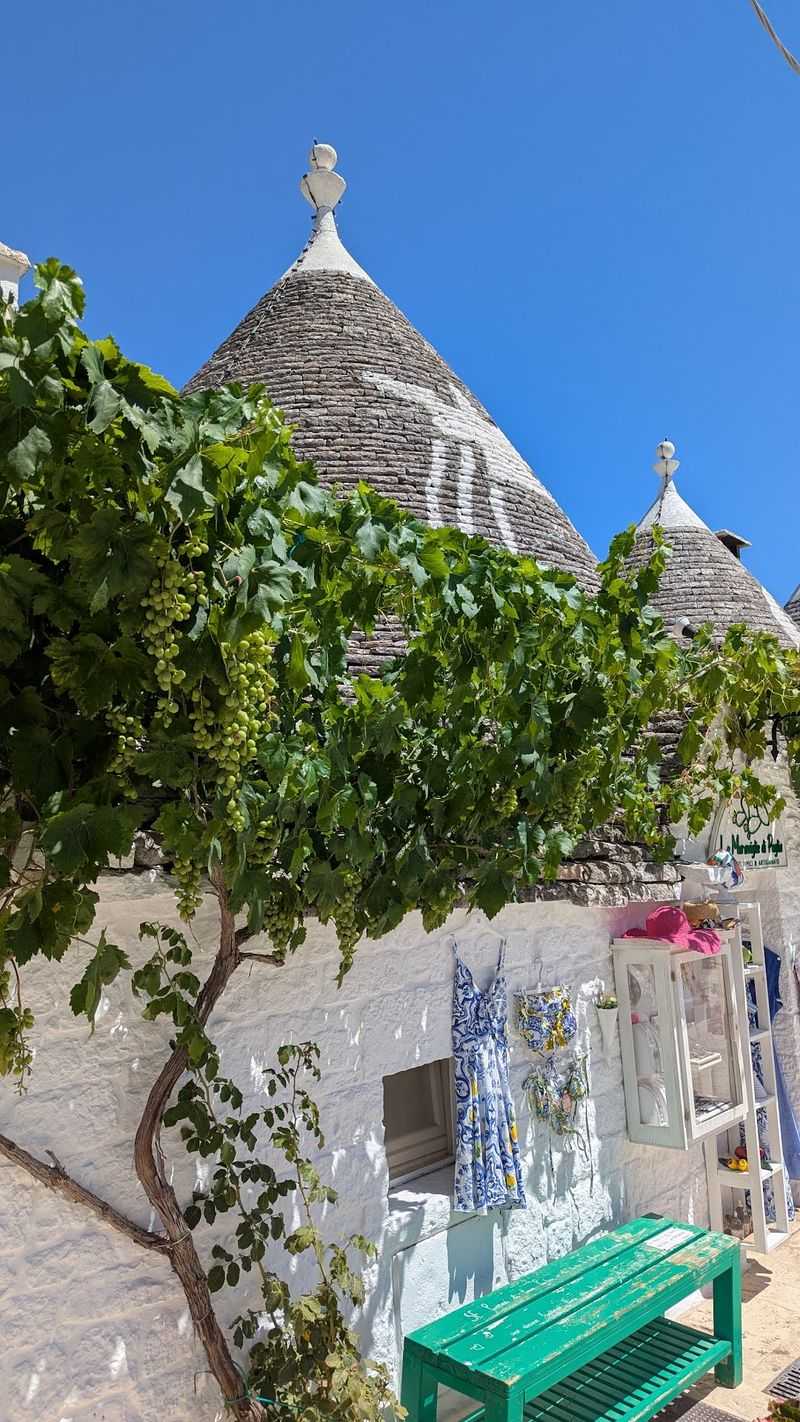
Walking through Alberobello feels like stepping inside a fairy tale that someone forgot to finish. More than 1,500 trulli fill parts of this small Puglian town, making it unlike anywhere else on the planet.
The whitewashed limestone dwellings are stacked close together, their conical roofs pointing skyward like a crowd of stone hats.
What makes these buildings genuinely fascinating is how they were built. No mortar holds the limestone slabs together, meaning the entire structure relies on careful stacking and balance.
UNESCO recognizes some examples as dating back to at least the mid-14th century, and the highest concentrations survive in the Rione Monti and Aia Piccola neighborhoods.
Many trulli are still lived in today, which gives Alberobello a warmth that purely preserved museum towns sometimes lack. Trullo Sovrano stands out as a rare two-story example, rising above its single-story neighbors with quiet confidence.
Visiting during the cooler months means smaller crowds and better photos. The trulli’s thick stone walls naturally regulate temperature, keeping interiors cool in summer and surprisingly warm in winter.
Predjama Castle, Slovenia
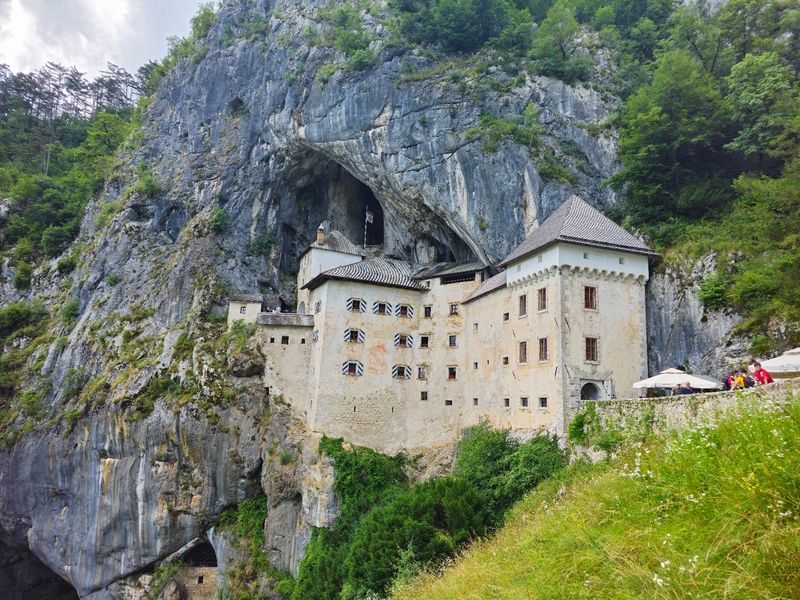
Forget everything you think you know about castle locations, because Predjama takes the concept somewhere completely unexpected. The fortress is built directly into the entrance of a huge limestone cave, with the surrounding cliff functioning as part of its defensive architecture.
It looks less like a human construction and more like something the mountain grew by itself.
The site has a documented history stretching back centuries and is closely associated with the 15th-century knight Erazem of Predjama. According to local legend, Erazem used natural passages running deep into the cave system to smuggle in food and supplies while under siege.
A conventional hilltop fortress simply could not have offered that kind of hidden advantage.
Today, Predjama Castle is one of Slovenia’s most visited historic attractions, drawing travelers who genuinely cannot believe the photographs until they see it in person. The combination of medieval masonry and raw limestone cliff creates a visual effect that no architect could have planned from scratch.
Guided tours take visitors through rooms carved partly from rock, and the nearby Postojna Cave system adds another layer to an already extraordinary day out.
Pena Palace, Sintra, Portugal
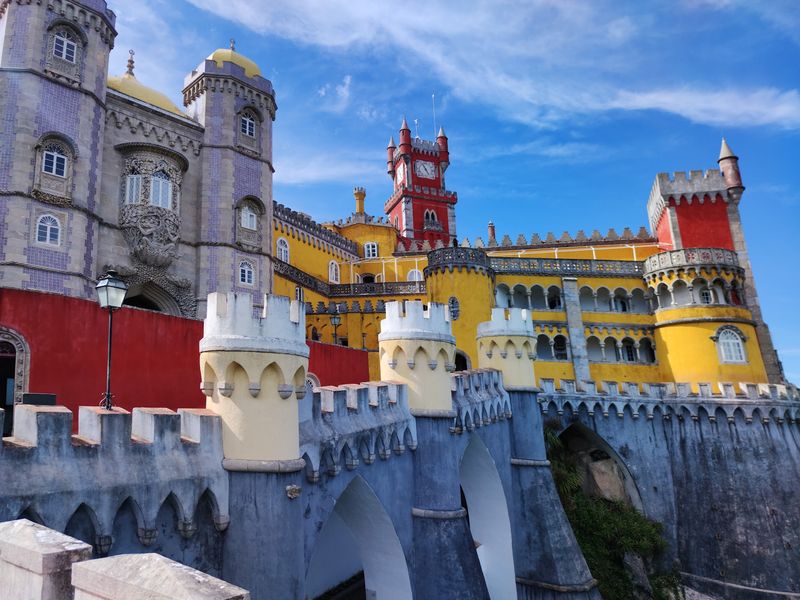
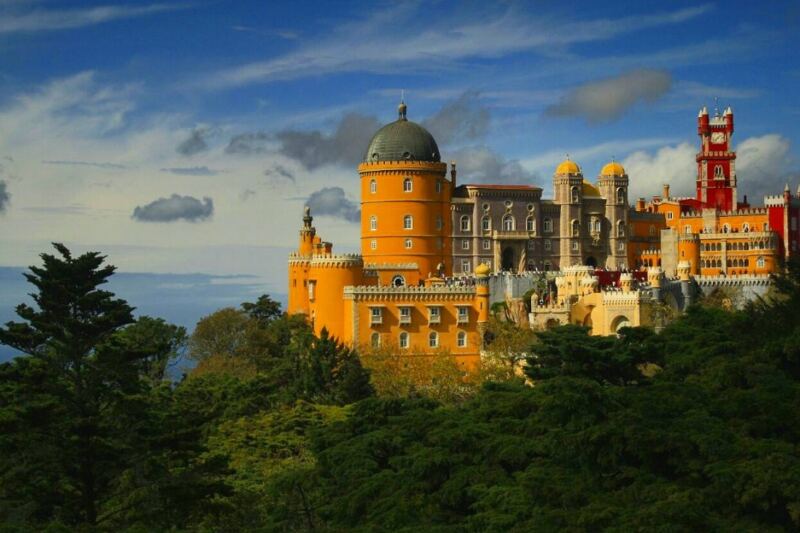
Sintra’s forested hills are beautiful on their own, but Pena Palace cranks the drama up to a level that makes other royal residences look modest. Perched high above the town, the palace blazes with yellow, red, and ochre colors visible from miles away.
Its roofline is a cheerful collision of Gothic turrets, Moorish arches, Renaissance domes, and Egyptian details.
King Ferdinand II began converting the ruins of a monastery into this spectacular Romantic palace around 1840. Parts of the original 16th-century monastery, including its cloister, church, and refectory, were deliberately folded into the new design rather than demolished.
The surrounding park was planted with both local and exotic species, creating a landscape that feels as theatrical as the palace itself.
UNESCO highlights Pena Palace as an important early example of European Romantic architecture, placing Sintra alongside other pioneering 19th-century design movements. The palace is extremely popular, so arriving early on weekdays avoids the longest queues.
Wandering the park without entering the palace is free and genuinely rewarding, with viewpoints that frame the building against the Atlantic horizon in a way that no postcard quite captures.
Heddal Stave Church, Norway
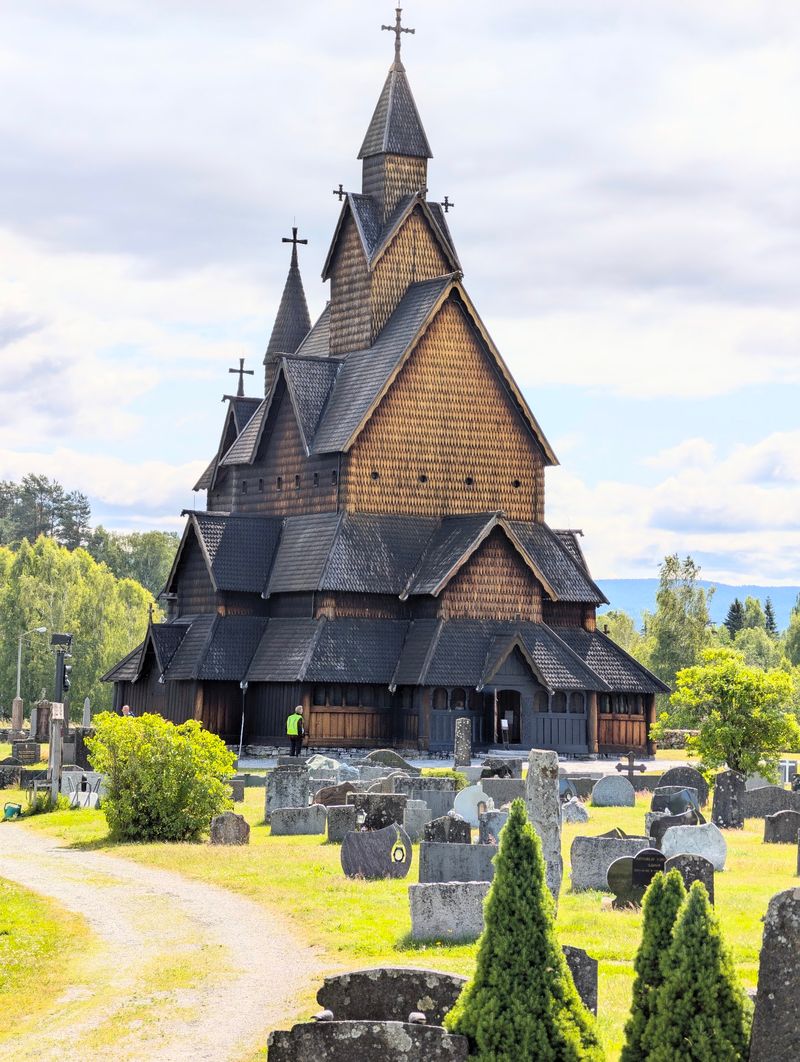
Heddal Stave Church looks like it was carved from a single enormous tree by someone with extraordinary patience and very sharp tools. Rising about 29 meters high, it is the largest surviving stave church in Norway, and its silhouette of stacked roofs and three towers is unlike any other wooden building in Europe.
The dark timber has weathered into deep browns and near-blacks, giving the whole structure a brooding, ancient quality.
Its construction relies on a framework of large vertical timber posts called staves, a sophisticated medieval Norwegian woodworking tradition that required precise joinery without relying on nails. Visit Norway notes that only 28 stave churches survive in the entire country, making Heddal one of the rarest architectural types on the continent.
The craft knowledge behind these buildings was so specialized that it nearly disappeared entirely.
Inside, painted decorations and carved details reward visitors who look carefully rather than rushing through. The church still holds regular services, connecting a living religious community to a building more than 800 years old.
Nearby, a small museum explains the stave construction method with models and tools, making the technical achievement much easier to appreciate for visitors without a background in medieval carpentry.
St. Barbara’s Church, Kutna Hora, Czechia
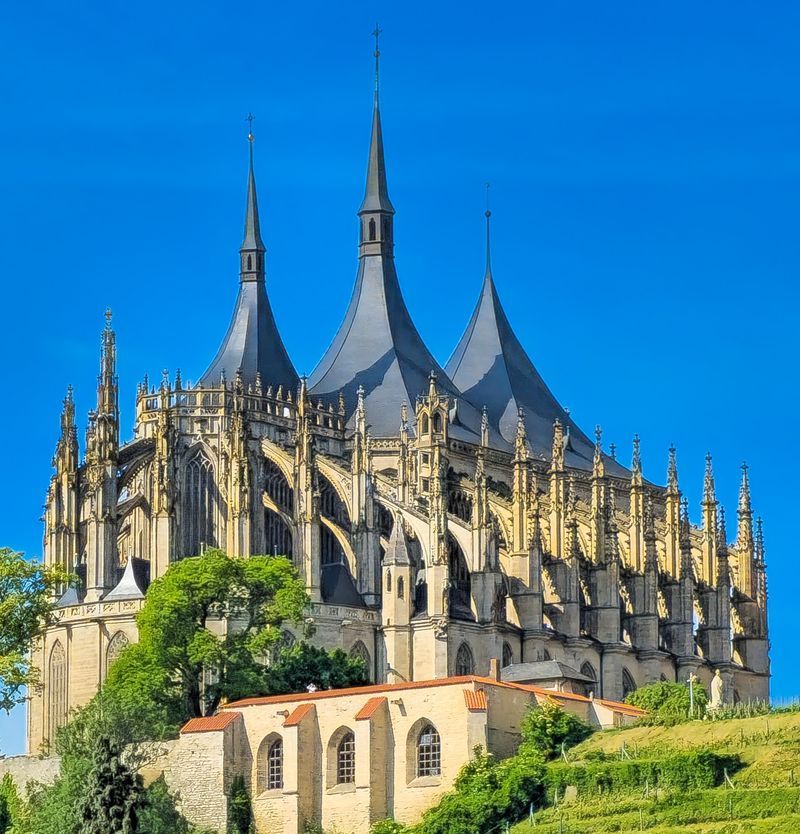
Silver made Kutna Hora rich, and St. Barbara’s Church is what happens when a medieval mining town decides to spend that wealth as impressively as possible. Dedicated to the patron saint of miners, the church took roughly 500 years to complete, meaning generation after generation of builders each left their mark on the design.
The result is a Gothic cathedral that feels like a collaboration across centuries.
Outside, flying buttresses spring outward like frozen leaps, while pinnacles crowd the roofline in a way that makes the whole building look perpetually mid-celebration. Inside, painted scenes preserve images of miners at work and coin-makers striking silver, turning the walls into a visual record of the industry that paid for everything.
VisitCzechia credits architects Matyáš Rejsek and Benedikt Ried as major contributors to its development.
Together with Kutna Hora’s historic center and Sedlec Cathedral, St. Barbara’s forms part of a UNESCO World Heritage Site. The town itself is compact enough to explore on foot in a day, and the combination of Gothic architecture, medieval streets, and the nearby Sedlec Ossuary makes it one of Central Europe’s most rewarding small-town destinations.
Afternoon light through the nave windows is particularly worth timing a visit around.
Cesky Krumlov Castle and Baroque Theatre, Czechia
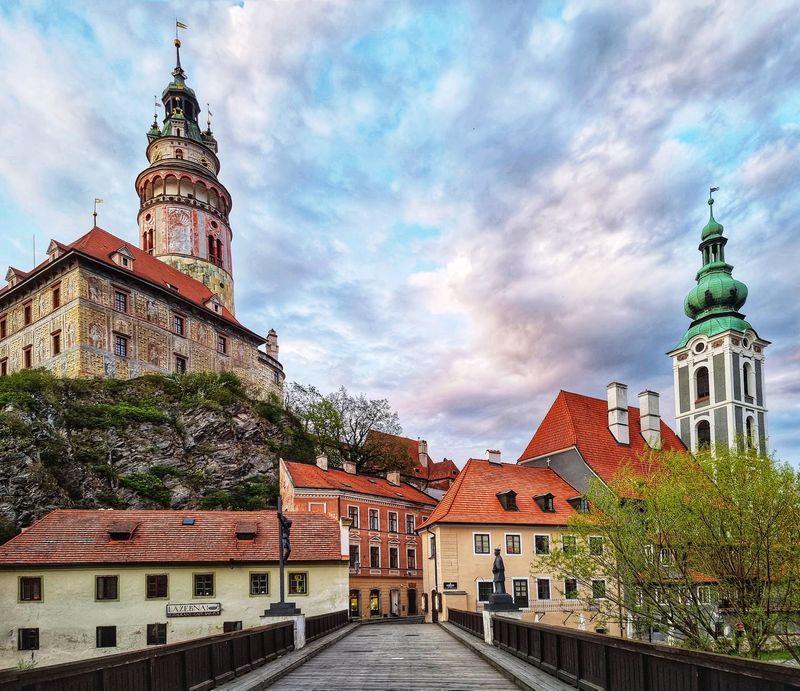
Cesky Krumlov’s castle doesn’t just overlook the town, it completely dominates it, sitting above a tight horseshoe bend in the Vltava River like a landlord who never left. Founded in the 13th century, the complex grew through Gothic, Renaissance, and Baroque phases as successive noble families kept adding rooms, towers, and ambitions.
The painted Round Tower alone is enough to stop visitors mid-stride.
Hidden inside is one of Europe’s most extraordinary theatrical survivors: a Baroque theatre completed in 1766 that retains much of its original stage machinery, painted scenery, and costumes. UNESCO singles it out as part of an unusually intact historic theatrical environment, the kind of place where you half-expect the curtain to rise at any moment.
Very few theatres from this period survive with their technical equipment still in place.
The surrounding medieval town earned UNESCO recognition independently, preserving its old street plan, original facades, roof forms, and historic relationship with the castle above. Cesky Krumlov is genuinely one of those places where the photographs do not exaggerate.
Visiting outside peak summer months rewards travelers with quieter streets and better opportunities to appreciate the architectural detail without navigating large tour groups at every corner.
Monsanto’s Boulder Houses, Portugal
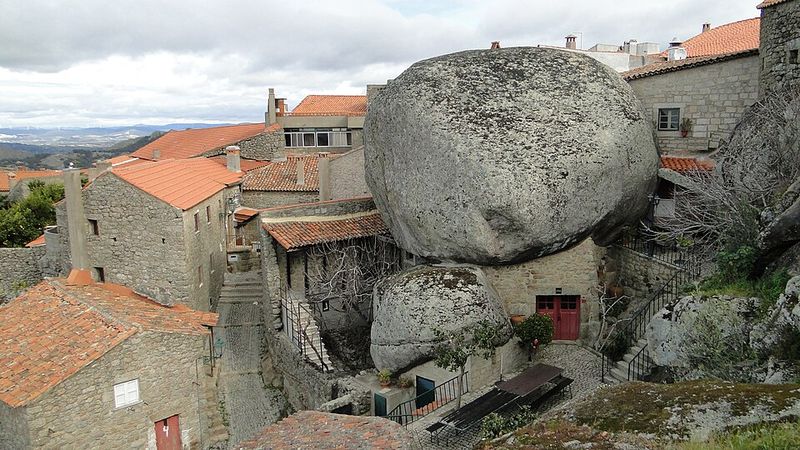
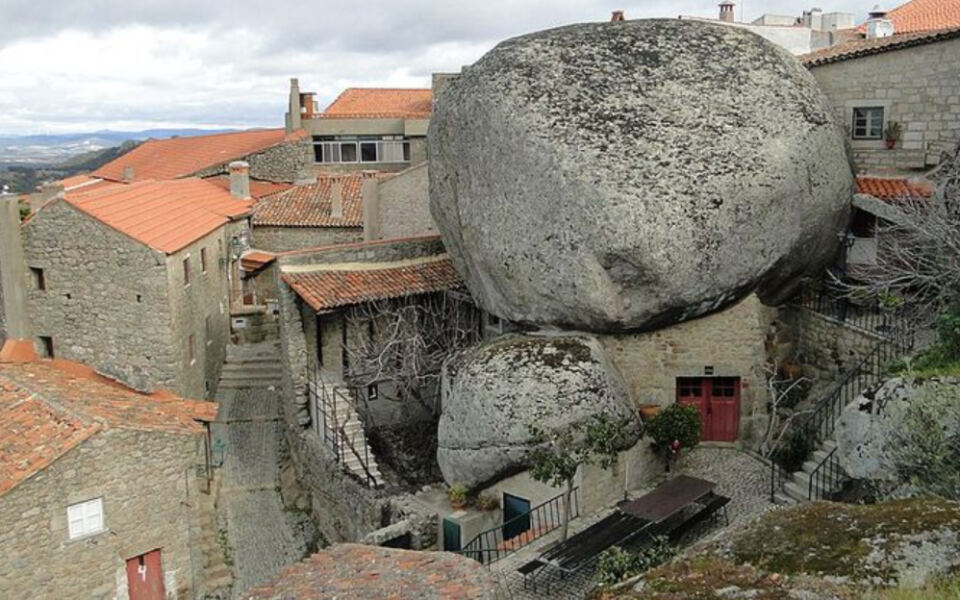
Most builders remove obstacles. Monsanto’s residents looked at enormous granite boulders covering their steep hillside and decided to build around them instead.
The result is one of Portugal’s most bizarre and brilliant village landscapes, where geology and architecture have become genuinely inseparable. Some houses use a single massive rock as their entire roof, which inspired a local joke that these homes have only one roof tile.
Visit Portugal notes that rocks form walls in many buildings, with traditional masonry filling the gaps between natural stone formations. Manueline doorways, carved with the ornate Portuguese Gothic details typical of the early 16th century, appear unexpectedly between boulders, adding another layer of historical texture to an already extraordinary streetscape.
The 14th-century Lucano Tower adds military history to the mix.
Monsanto won a competition in 1938 to be named the most Portuguese village in Portugal, a title that brought attention but not excessive development. The village remains small, steep, and genuinely atmospheric, with cats sleeping on boulder-roofs and residents going about their days in surroundings most people only see in photographs.
Climbing to the ruined castle at the top rewards visitors with panoramic views across the Beira Baixa plains stretching toward the Spanish border.
St. Michael’s Chapel and Bone House, Hallstatt, Austria
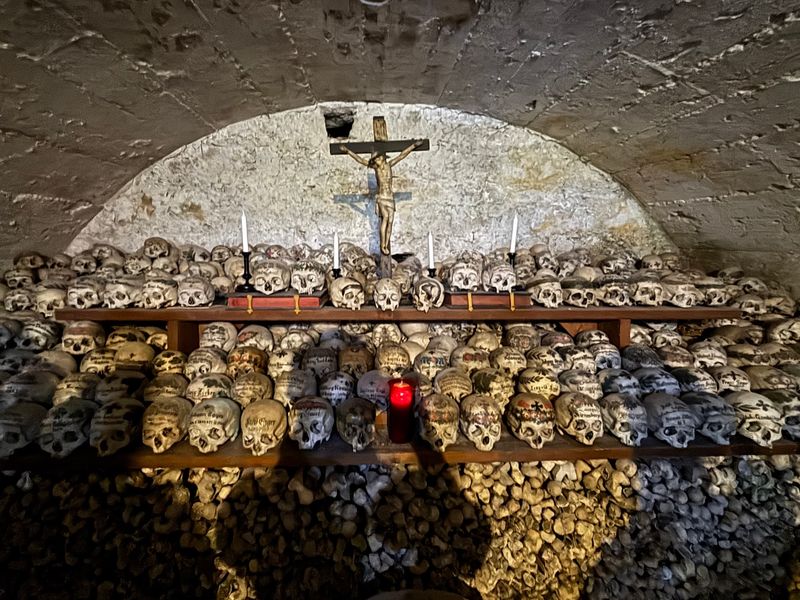
Hallstatt is one of Austria’s most photographed villages, but its most unusual attraction is not the lake view. Beside the Catholic church stands St. Michael’s Chapel, whose lower level contains an ossuary holding hundreds of decorated human skulls.
Names, dates, crosses, leaves, and flowers are painted directly onto the bone in careful script, turning the space into something unexpectedly personal and moving.
The practice developed partly because burial space in this narrow mountain settlement was severely limited. Graves were reused after a set number of years, with older remains transferred to the ossuary rather than discarded.
It sounds grim described that way, but the care taken in decorating each skull suggests that families saw this as a form of continued remembrance rather than disposal.
The oldest dated skull in the collection is from 1720, though the practice continued until 1995. UNESCO recognizes Hallstatt as part of a cultural landscape shaped by thousands of years of salt mining, making the chapel one layer in a very deep historical story.
The village itself is extremely popular and can feel crowded during summer weekends. Arriving early in the morning or visiting in autumn transforms the experience, with mist rising off the lake and far fewer visitors competing for the same viewpoints.
The Church Town of Gammelstad, Sweden
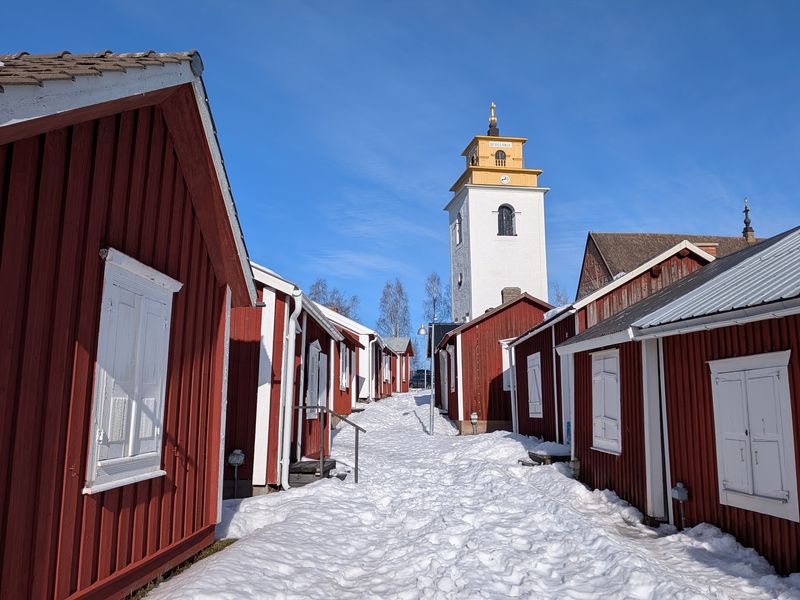
Gammelstad solved a very practical problem with a very unusual solution, and the result still stands as the best-preserved example of a traditional Scandinavian church village. The late-15th-century stone church sits at the center, surrounded by 404 small wooden cottages that were built not for permanent residents but for weekend visitors.
It is essentially a medieval parking lot, except instead of cars, people left their houses.
Worshippers once traveled from widely scattered farms across the surrounding region to attend Sunday services and religious festivals. The distances and northern Swedish weather made returning home the same day impractical, so families maintained simple cottages where they could stay overnight.
This arrangement created a dense settlement whose shape was dictated entirely by geography, climate, and religious obligation rather than conventional town planning.
UNESCO describes Gammelstad as an exceptional example of this once-common Scandinavian practice, most examples of which have long since disappeared. The surviving cottages are still owned by local families, some of whom continue using them for church occasions.
Walking through the settlement outside of busy summer weekends gives a genuine sense of how this community-driven architecture functioned. The stone church itself contains medieval furnishings and wall paintings worth examining slowly rather than rushing past.
Collegiate Church of St. Servatius, Quedlinburg, Germany
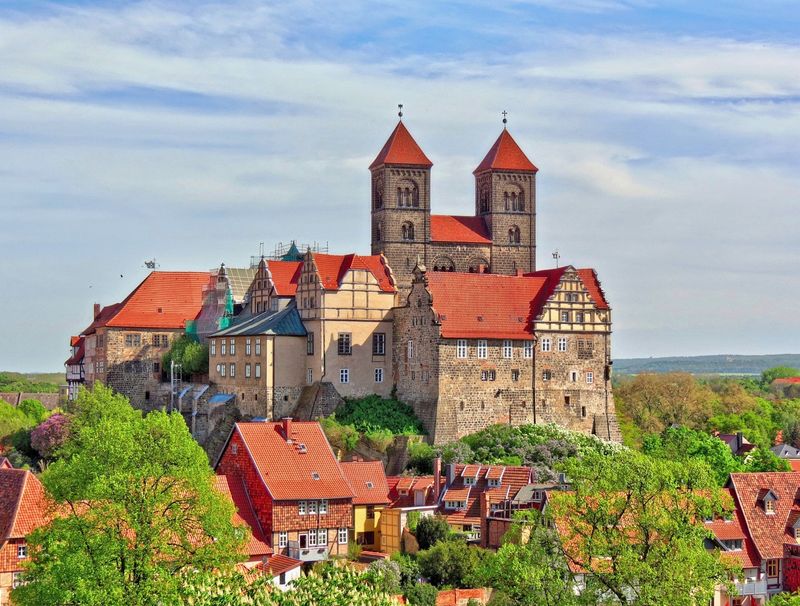
Quedlinburg’s Castle Hill carries a building that helped define what Romanesque architecture could achieve in northern Europe. The Collegiate Church of St. Servatius sits at the summit, its twin towers and solid stone basilica form visible from across the surrounding countryside.
UNESCO calls it a masterpiece of Romanesque architecture, and the description holds up when you stand in front of it.
Construction of the present basilica took place largely between 1070 and 1129, though the site’s importance stretches back further. The crypt preserves significant architectural and artistic material from the 10th through 12th centuries, including the tomb of Henry I, the first Saxon king of Germany.
Quedlinburg was closely tied to the Saxon-Ottonian dynasty and served as an important royal center during the formation of the early medieval German state.
Below Castle Hill spreads one of Germany’s most remarkable small historic towns, containing an extraordinary concentration of preserved timber-framed buildings from multiple centuries. The combination of Romanesque hilltop church and intact medieval streetscape below makes Quedlinburg feel genuinely layered rather than frozen at a single moment in time.
The town is compact enough to explore comfortably on foot, and the market square provides a good starting point before climbing to the church.
Meteora Monasteries, Greece
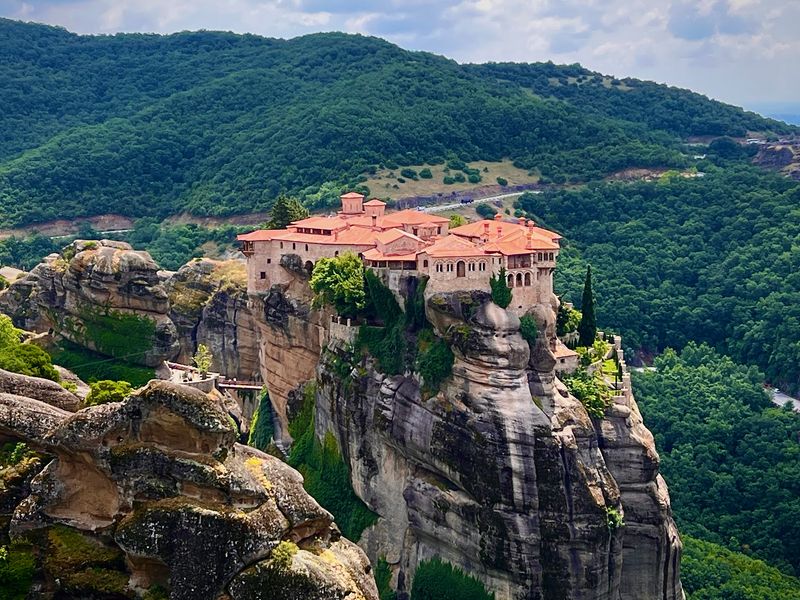
Sandstone pillars rise from the Thessalian plain near Kalambaka like columns left behind by some unfinished ancient project, and monks decided they were the perfect place to build. The Meteora monasteries occupy the summits of these formations, some of which reach over 400 meters high, in positions that look physically impossible even after you understand how they were constructed.
Getting building materials to the top originally required ropes, nets, and a considerable amount of faith.
Monks began settling among the Meteora rock formations from around the 11th century, and by the end of the 15th century there were 24 monasteries operating in the area. UNESCO describes the ensemble as an exceptional transformation of a dramatic natural setting into places of religious retreat and worship.
Several monasteries still house active communities, giving the site a living quality that purely archaeological sites cannot replicate.
The 16th-century frescoes inside several monasteries are considered important milestones in the development of post-Byzantine painting, making the interiors as remarkable as the exteriors. Six monasteries are currently open to visitors, each with different access routes and opening hours.
Visiting early in the morning before tour buses arrive from Kalambaka gives a much quieter and more contemplative experience, particularly at the smaller monasteries perched on the narrower pillars.
Berat Castle, Albania
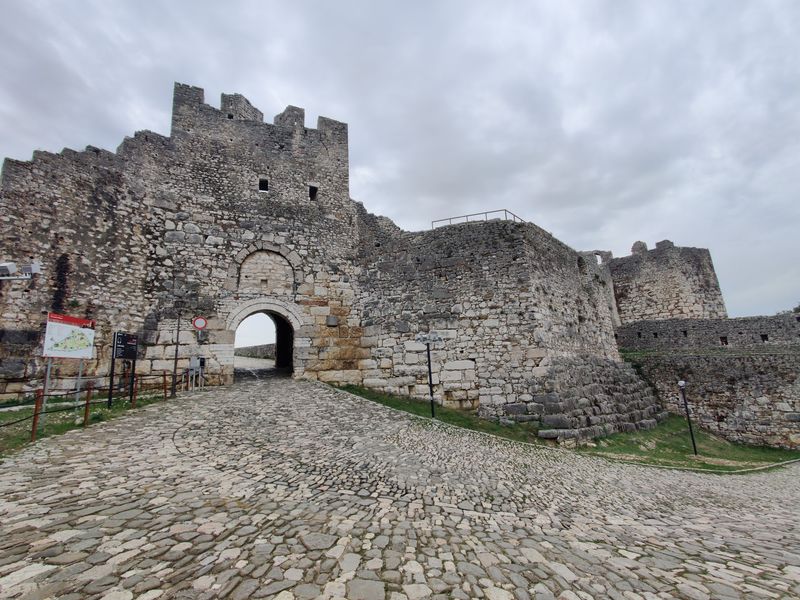
Berat has two nicknames, the City of a Thousand Windows and the City of Two Castles, and both make sense the moment you see it. The hillside of closely packed white houses rises beneath Berat Castle, locally called Kala, whose origins reach back to the fourth century BCE.
UNESCO notes that most of the surviving fortress dates to the 13th century, though the layers of history underneath run much deeper.
What makes Berat Castle genuinely unusual is that it developed as far more than a military installation. Churches, homes, streets, and Ottoman-period religious buildings all existed within and around its defenses over the centuries.
Several Byzantine churches survive inside the citadel, some containing fresco fragments that reward careful attention. The fortress was a functioning community, not just a defensive wall.
Below, the Mangalem and Gorica quarters preserve tiered traditional houses with unusually large windows, a distinctive feature that gave the city its thousand-windows nickname. Together, the castle and historic neighborhoods create one of Albania’s most visually cohesive townscapes.
Albania remains one of Europe’s less-visited destinations, which means Berat offers the rare combination of genuine historic significance and uncrowded streets. The riverside walk between the two historic quarters at dusk is one of the most pleasant ways to end a day there.
Gjirokastra’s Tower Houses, Albania
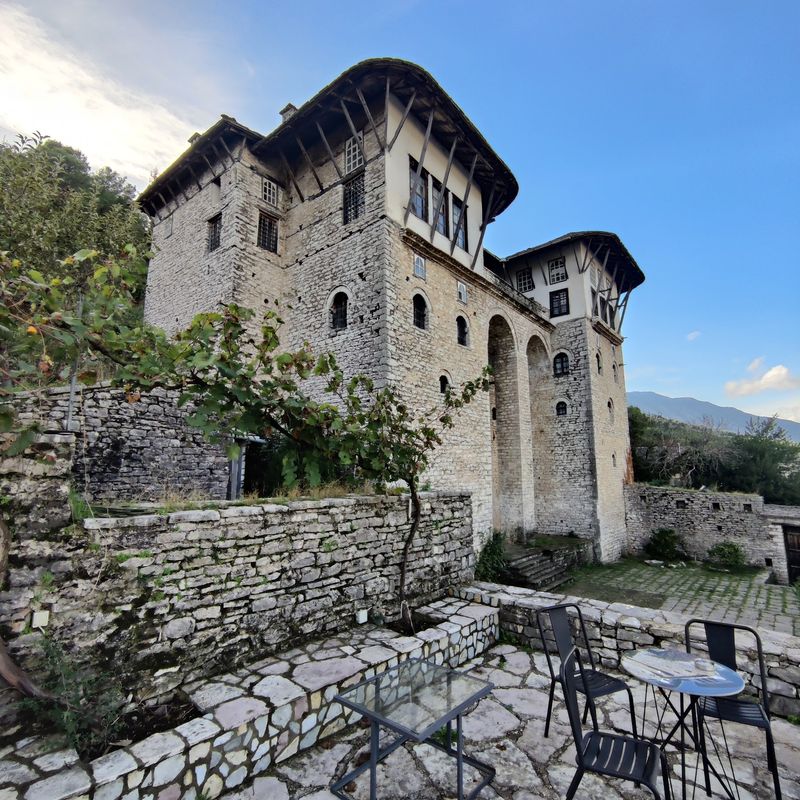
Gjirokaster looks like it was designed by someone who wanted to make absolutely sure nobody forgot it. The steep hillside is covered with monumental stone-roofed residences called kule, or tower houses, their gray slabs and tall proportions giving the entire town a unified, almost fortress-like appearance.
No two are identical, but together they create one of the most distinctive urban silhouettes in the Balkans.
UNESCO explains that many were constructed by wealthy landowners beginning in the 17th century, with more elaborate examples appearing in the early 19th century. These fortified-looking homes typically have solid stone lower levels and projecting upper stories designed to suit extended households and the challenging terrain.
The layout of each house reflects both social status and the practicalities of building on a very steep slope.
Gjirokaster Castle looms above everything, adding another layer to a townscape already heavy with history. UNESCO recognizes Gjirokaster together with Berat as rare surviving examples of Ottoman-period urban architecture in the Balkans.
The National Museum of Armaments inside the castle houses a captured American spy plane from 1957, which is either historically significant or wonderfully random depending on your perspective. The old bazaar district at the base of the hill connects the tower house neighborhoods with a more everyday historic streetscape.
Visby’s Medieval Buildings and City Wall, Sweden
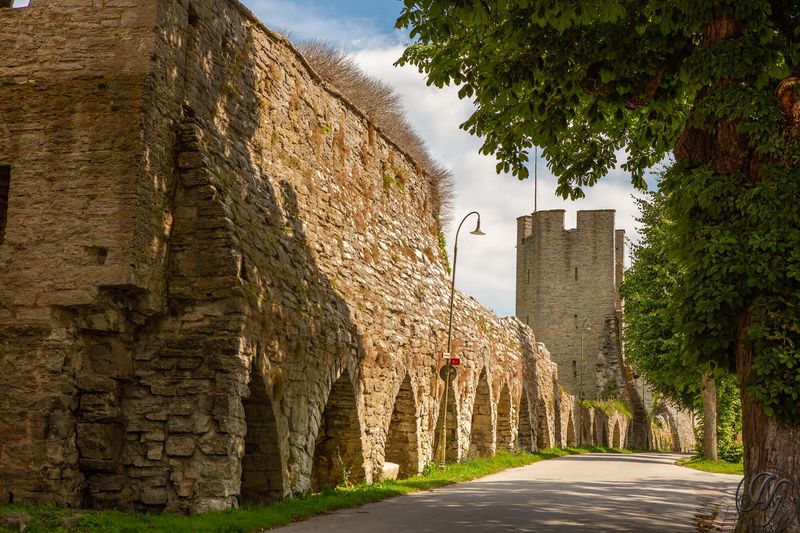
Visby once controlled Baltic Sea trade with a confidence that smaller towns can only dream about, and its surviving architecture makes that former power completely believable. The medieval defensive wall extends about 3.4 kilometers around the old town, still including towers and gates that give the city an almost theatrical sense of enclosure.
Walking along the top of the wall at sunset over the Baltic is one of Scandinavia’s genuinely great experiences.
Inside the walls, the old town preserves the remains of more than 200 medieval warehouses and merchants’ residences from Visby’s years as a powerful Hanseatic trading center. UNESCO notes that Visby once had 15 churches inside its walls and two outside, a density of religious buildings that reflects extraordinary medieval wealth.
Today St. Mary’s Cathedral remains in active use, while numerous others survive as atmospheric roofless ruins covered in summer wildflowers.
This exceptional degree of preservation allows visitors to understand the physical layout of a prosperous 13th-century northern European trading town without needing much imagination. Gotland’s island location kept major development pressure away, which is largely why so much survived.
The annual Medieval Week festival in August fills the streets with costumed participants and market stalls, transforming an already historic setting into something that feels genuinely time-shifted rather than merely themed.
Lom Stave Church, Norway
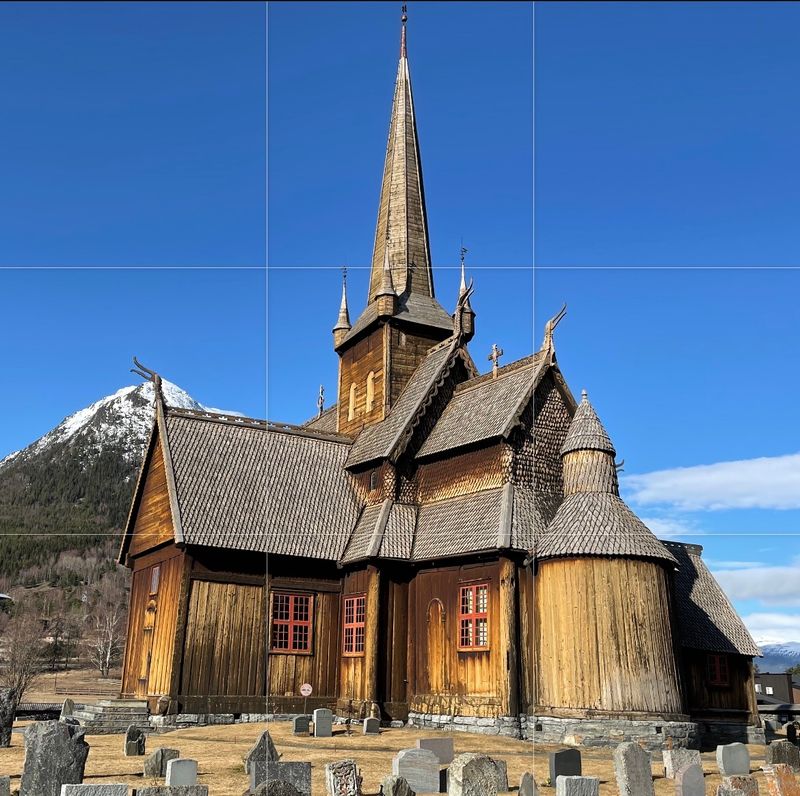
Tree-ring analysis confirmed that the timber used to build Lom Stave Church was felled during the winter of 1157 to 1158, making it possible to pinpoint the church’s origins with unusual precision for a medieval building. That kind of specific detail makes the structure feel less like a historic monument and more like a real object with a real beginning.
Somebody felled those trees on a cold Norwegian winter morning over 860 years ago.
The church did not stay frozen in its original 12th-century form. Transepts and a tower were added during the 17th century, and much of the interior furnishing dates from the 18th, giving Lom a layered quality that reflects changing tastes and congregational needs across many generations.
Archaeological work in the 1970s uncovered more than 2,000 coins beneath the floor, along with a runic letter, adding mystery to an already remarkable building.
After more than eight centuries of change, Lom Stave Church remains the town’s main parish church rather than functioning solely as a preserved exhibit. Regular services still take place inside, connecting a modern mountain community to a medieval wooden structure in the most direct way possible.
The surrounding valley is spectacular in summer, and combining a visit to the church with hiking in the nearby Jotunheimen National Park makes for an exceptionally rewarding Norwegian mountain day.
Share this story