Across the United States, communities from many faiths have built places of worship that are as beautiful as they are meaningful. Some are marble temples carved by hand, while others are quiet monasteries tucked into the hills.
Each one tells a story of people who brought their traditions to a new home. Here is a look at fifteen sites that welcome worshippers and curious visitors alike.
1. Bahá’í House of Worship in Wilmette
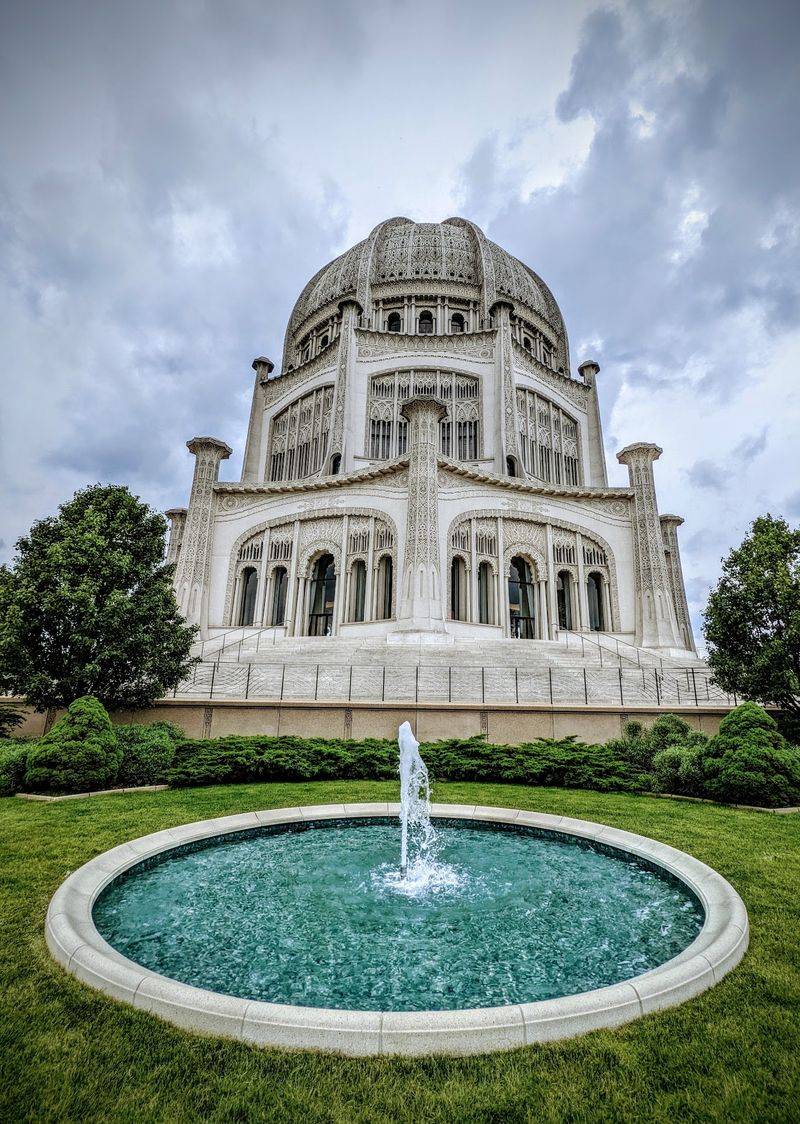
Nine sides, nine doors, and a dome that looks like white lace: the Wilmette temple is hard to forget. It is the oldest surviving Bahá’í House of Worship in the world and opened for services in 1953 after decades of building.
The number nine matters to the Bahá’í Faith because it stands for unity and completeness. The design welcomes people of every background, and its open doors reflect the belief that all religions share a common source.
The outer walls are made of a special mix of quartz and cement, which allowed workers to shape delicate patterns. Gardens and fountains surround the building, making it a pleasant place for a walk.
Visitors are welcome to enter, sit quietly, and listen to prayers or music. Sermons are not given, and no rituals are performed.
Check the visitor center for hours and guided tours before you go.
2. BAPS Swaminarayan Akshardham in Robbinsville
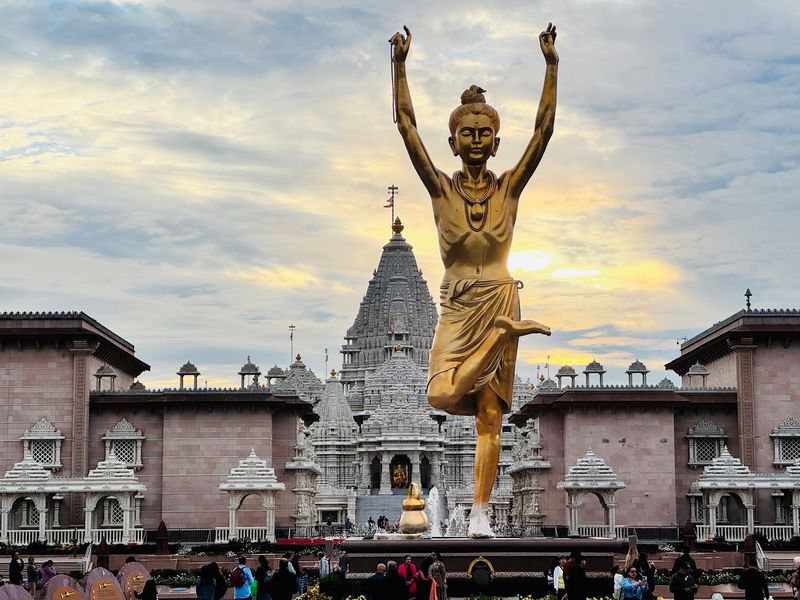
Few people expect to find one of the largest Hindu temples outside India in the middle of New Jersey farmland. Yet there it stands, with spires and domes that seem to glow in the afternoon sun.
The complex opened in 2023 and covers about 185 acres. Its stone came from places such as Bulgaria, Turkey, Greece, Italy, and India, then was carved by thousands of artisans and shipped to the site for assembly.
Inside, you will find thousands of figures, musical instruments, and dancers carved into pillars and ceilings. The main shrine honors Bhagwan Swaminarayan, a saint who lived in India more than two centuries ago.
Plan a long visit, since the grounds include exhibits and gardens. Dress modestly, expect security screening, and remember to remove your shoes before entering the temple.
3. BAPS Shri Swaminarayan Mandir in Chino Hills
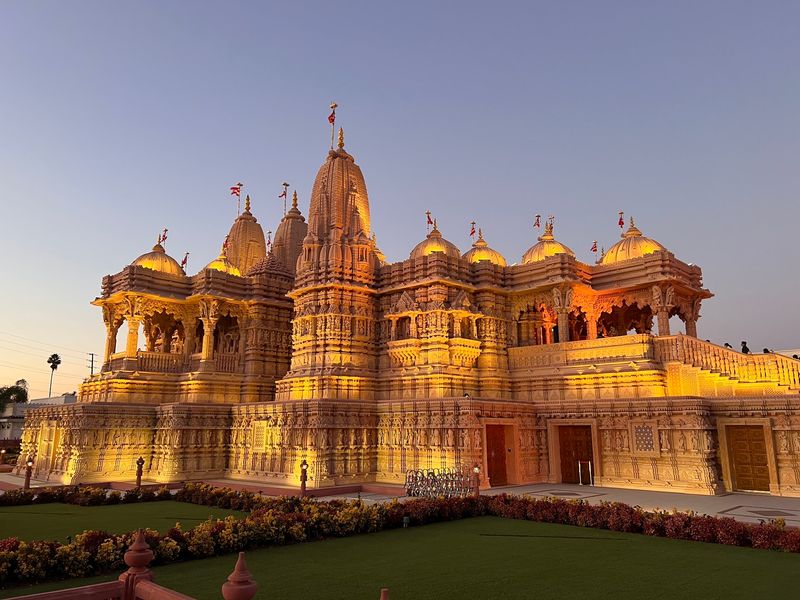
Picture a temple carved piece by piece in another country, then fitted together like a giant puzzle in Southern California. That is the story of the Chino Hills mandir, which opened in 2012.
Craftspeople in India shaped Italian marble and Turkish limestone by hand, following ancient Hindu building rules. The finished pieces were shipped across the ocean and assembled without steel support.
The temple is a place of daily worship, but it also hosts festivals, community service projects, and cultural events. Families come to celebrate holidays like Diwali, when lights and sweets fill the grounds.
Guests are welcome and can take part in a guided tour. Bring a camera for the outside, though photos are limited inside.
Modest clothing is expected, so cover shoulders and knees out of respect for worshippers.
4. Sri Venkateswara Temple in Penn Hills
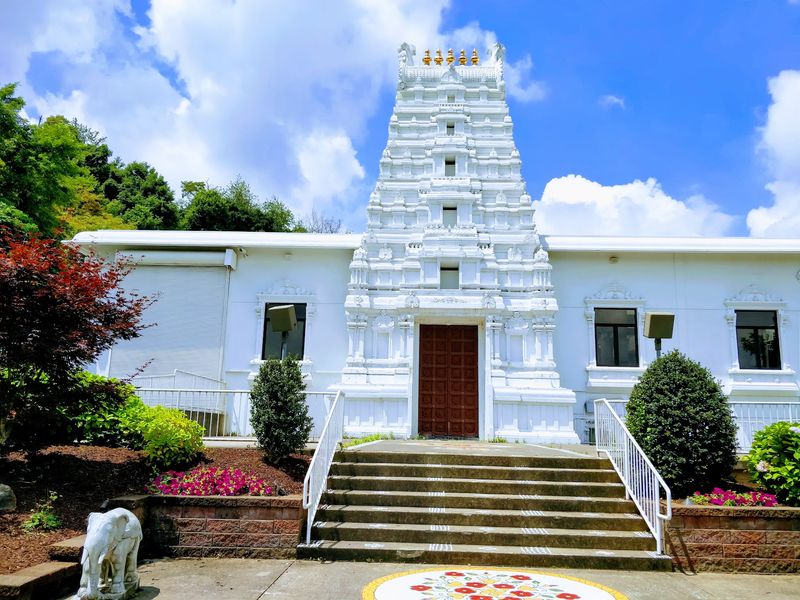
Pittsburgh locals sometimes call it simply the S.V. Temple, and it has been a landmark since the 1970s.
Built on a hillside in Penn Hills, it is one of the oldest major Hindu temples in the country.
The temple follows South Indian style, with a tall tiered tower called a gopuram. It honors Lord Venkateswara, a form of the god Vishnu who is especially beloved in Andhra Pradesh, India.
Hindu families from across the region gather here for weddings, naming ceremonies, and festivals. Many arrive early on weekends to attend ceremonies and share a meal in the dining hall.
Fun fact: Sculptors from India worked on the temple’s carvings, giving the site an authentic look. If you visit, ask about the cafeteria, where simple vegetarian dishes are often served.
5. Hsi Lai Temple in Hacienda Heights
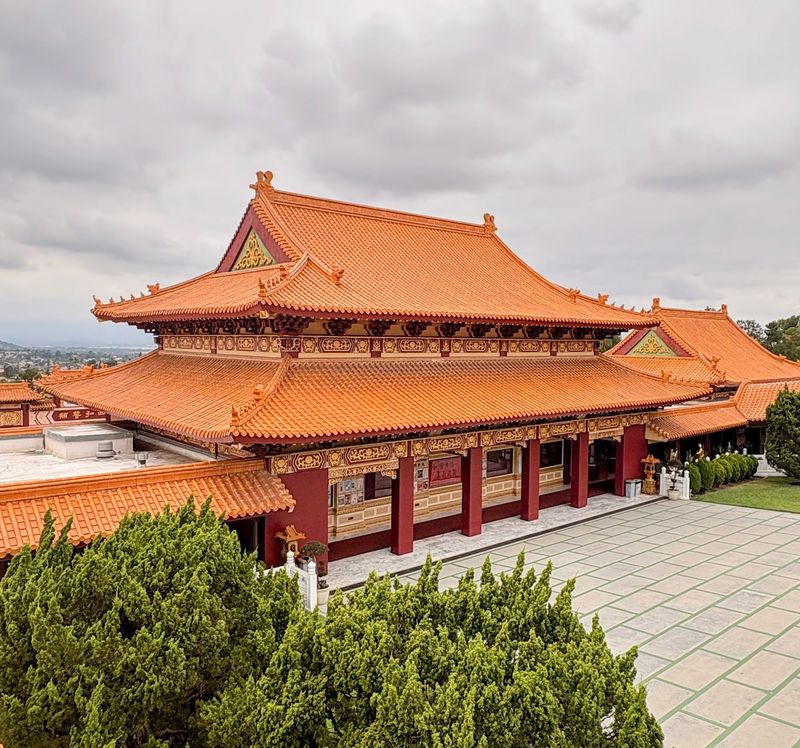
Golden roof tiles flash in the California sun above a suburban neighborhood, and that is your first clue that Hsi Lai is no ordinary landmark. The name means “Coming West,” a nod to Buddhism’s journey to America.
Completed in 1988, it is among the largest Buddhist temples in the Western Hemisphere. Its design draws on Chinese palace architecture, with courtyards, bright red columns, and a grand main shrine hall.
The temple belongs to the Fo Guang Shan order from Taiwan. It offers meditation classes, tea ceremonies, and vegetarian meals that are open to the public.
Visitors can walk the grounds and see statues of the Buddha in many sizes. Speak softly, dress comfortably but modestly, and try the vegetarian lunch if the dining hall is open during your visit.
6. Islamic Center of America in Dearborn
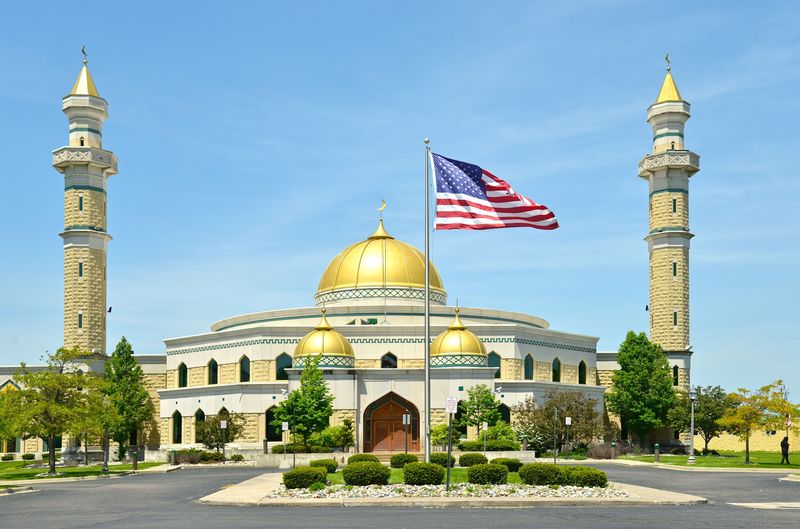
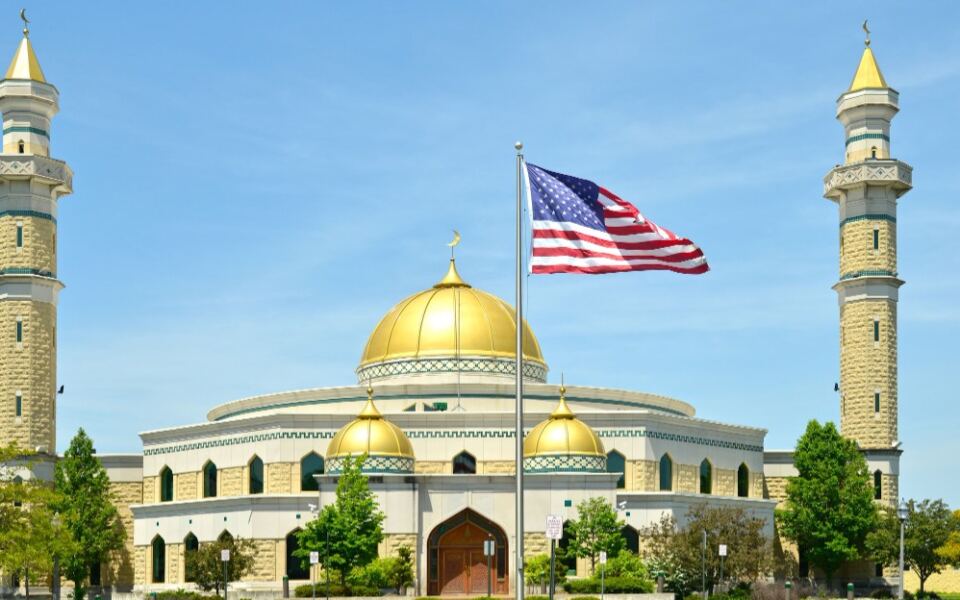
Dearborn is home to one of the largest Arab American communities in the country, and its biggest mosque sits proudly in the middle of it. The Islamic Center of America opened in 2005 and is often called the largest mosque in North America.
The building holds a huge prayer hall, a tall dome, and two slender minarets. Detailed tile work and Arabic calligraphy decorate the walls, with colors that shift as sunlight moves across them.
Beyond prayer, the center runs a school, hosts community events, and welcomes neighbors during open house programs. Many visitors are surprised by how friendly the tours are.
If you plan to visit, check the schedule first, since prayer times shape the day. Women are asked to cover their hair, and everyone removes shoes before stepping onto the carpeted floor.
7. Islamic Center of Washington
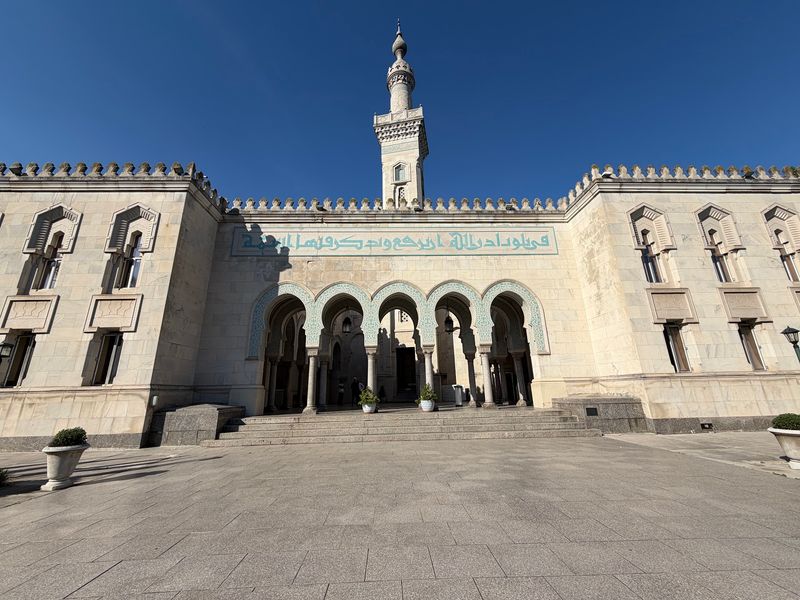
Back in 1957, President Eisenhower attended the opening of this mosque, a sign of its importance to the capital. Today it still draws diplomats, students, and neighbors to its tall minaret on Embassy Row.
The design blends classic Islamic style with a modern touch. Turkish tiles, Persian carpets, and Egyptian lamps give the prayer hall its warm glow, and many Muslim countries contributed materials and gifts.
The center was built to serve a growing Muslim community in the city and to introduce Islam to a wider public. It continues that mission through classes, lectures, and guided visits.
Before you go, remember that visitors remove shoes at the entrance. Women are asked to wear a scarf, which can sometimes be borrowed at the door.
Quiet voices help keep the space peaceful for worshippers.
8. Central Synagogue in New York City
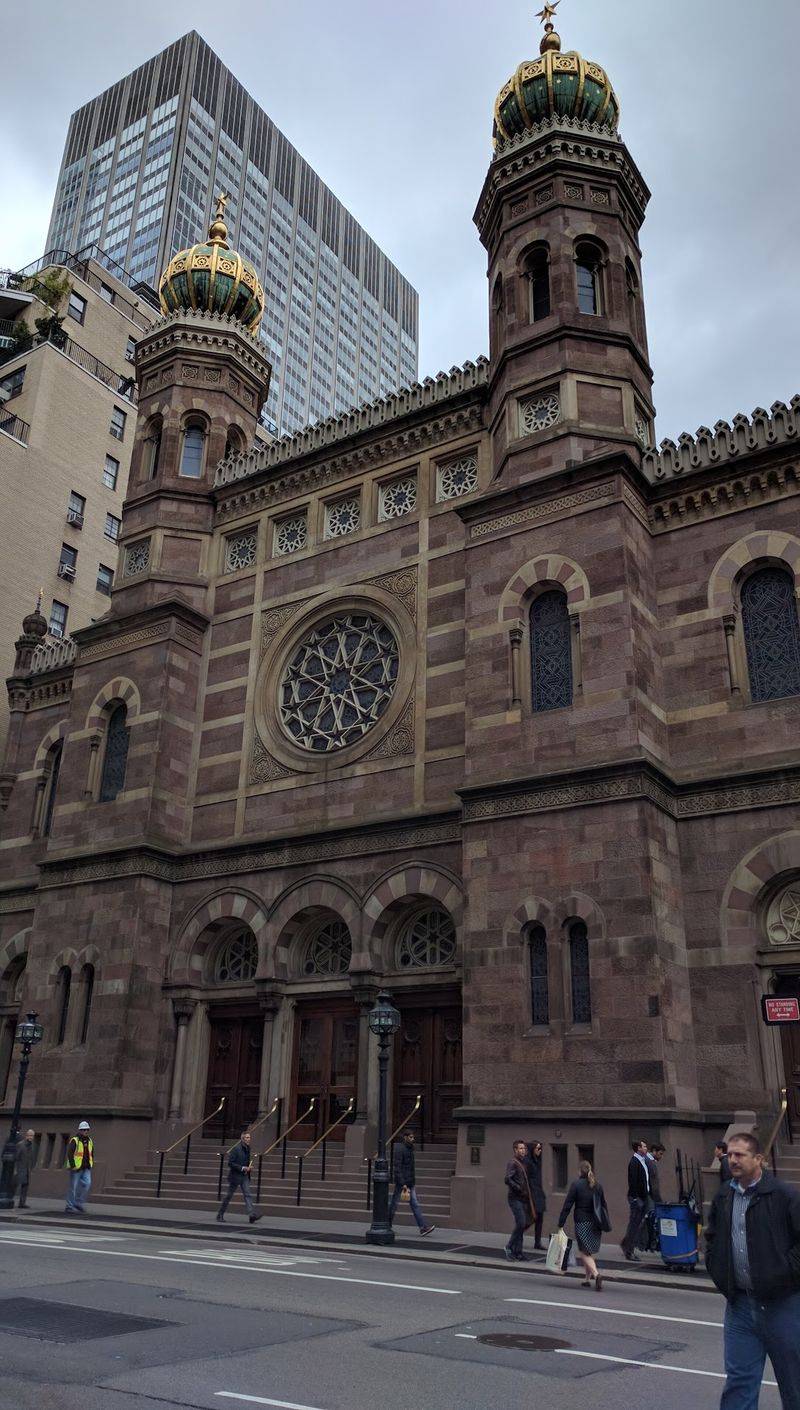
Two onion-shaped domes rise above Lexington Avenue, standing out among glass towers. Central Synagogue has stood here since 1872, making it the oldest synagogue building in New York City in continuous use.
Architect Henry Fernbach designed it in the Moorish Revival style, with colorful patterns and horseshoe arches. Inside, stenciled walls in gold, blue, and red give the sanctuary a rich look.
In 1998, a fire badly damaged the building. The community rebuilt it carefully, matching original colors and details, and it reopened in 2001.
The synagogue belongs to the Reform movement and is a National Historic Landmark. Tours and services are offered, but check ahead because security is tight.
Photographs are best taken from across the street, where both towers fit into the frame.
9. Wilshire Boulevard Temple in Los Angeles
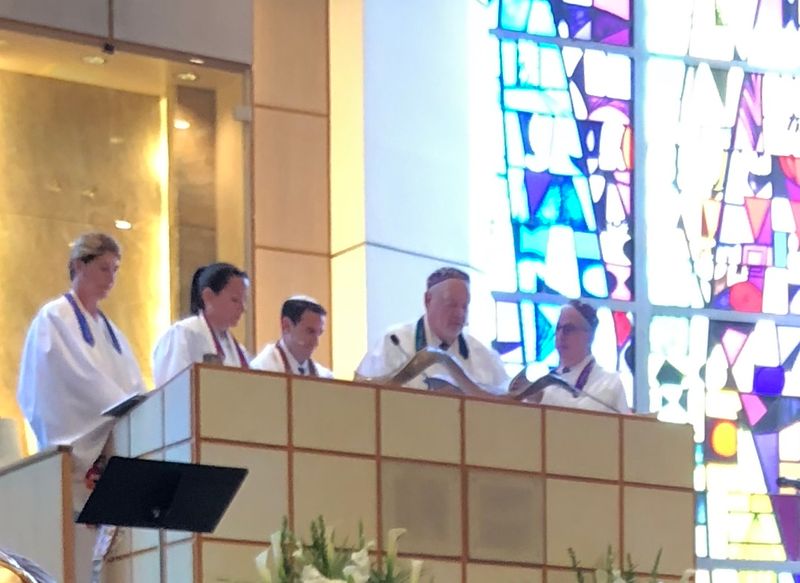
Step inside and look up: a vast dome stretches overhead, and the walls glow with painted scenes from Jewish history. Wilshire Boulevard Temple opened in 1929 and quickly became a center of Jewish life in Los Angeles.
The building mixes Byzantine and Romanesque styles. Its murals, created by artist Hugo Ballin, show stories from ancient times to the modern era in rich color.
Hollywood leaders helped fund it, and the temple has long been tied to the city’s cultural story. Over time, it has grown to include schools, camps, and social programs.
The congregation belongs to the Reform movement. Tours help visitors learn about the art and symbols, from the Torah ark to the stained glass.
It is a good stop if you enjoy architecture and history.
10. Sikh Temple Yuba City
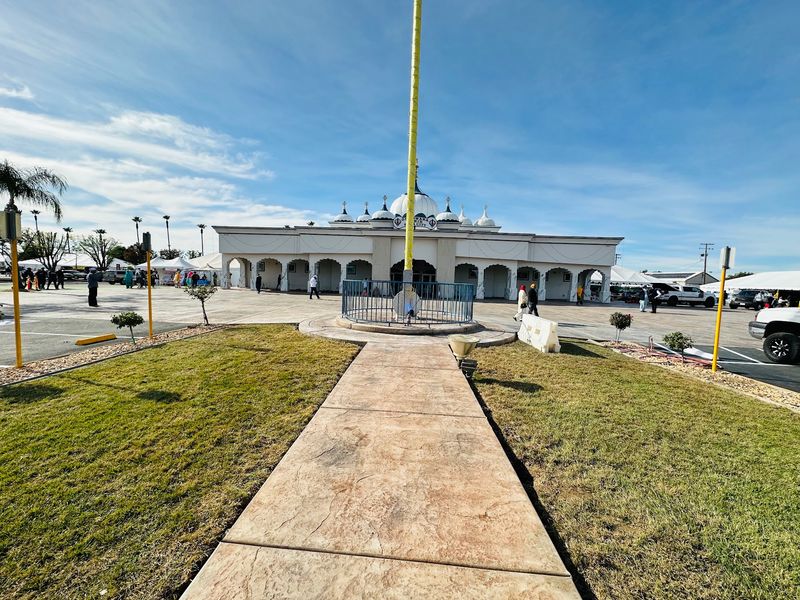
Yuba City has one of the oldest and largest Sikh communities in America, and its gurdwara tells that story. Punjabi farmers settled here more than a century ago, drawn by the fertile fields of the Sacramento Valley.
The Tierra Buena gurdwara, built in the 1970s, serves as a spiritual home and a gathering place. Its white domes and flag, called the Nishan Sahib, mark it as a Sikh house of worship.
Every November, the city hosts one of the biggest Sikh parades in the country. Thousands line the streets for music, floats, and free food.
A key tradition is langar, a free meal open to everyone. Visitors should cover their heads, remove shoes, and sit on the floor.
The welcome is warm, and so is the food.
11. Gurdwara Sahib Hacienda de Guru Ram Das in Española
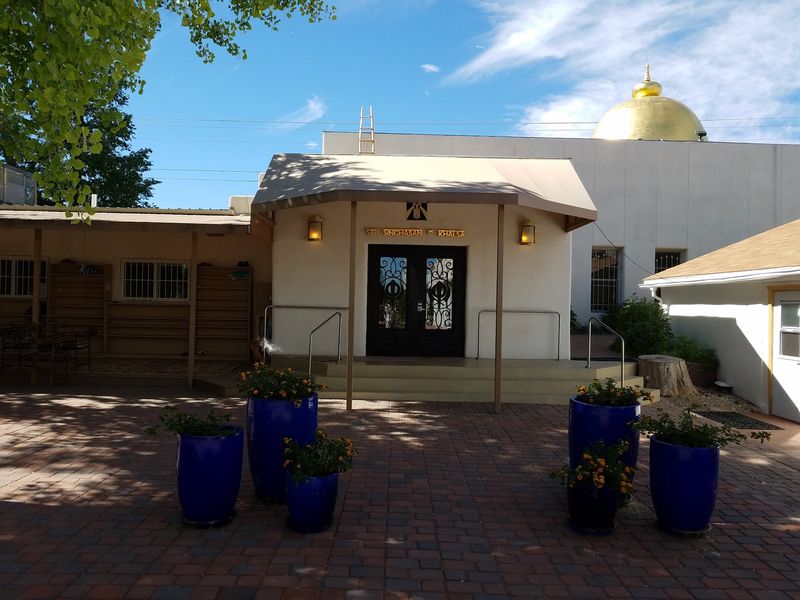
High desert mountains, adobe country, and turbans of bright white: Española offers a surprising scene for Sikhism. The Hacienda de Guru Ram Das is tied to the Sikh Dharma community founded by Yogi Bhajan.
The area became a spiritual hub in the 1970s, when American-born Sikhs built a community in northern New Mexico. They set up a gurdwara, schools, and businesses, including a well-known security company.
Many members follow a daily practice that begins before sunrise with meditation and chanting. The gurdwara also hosts yoga and the Kundalini practice, which draws people from near and far.
Visitors are generally welcome, but it is best to call ahead. As in all gurdwaras, cover your head, take off your shoes, and be ready to share a simple vegetarian meal in the community kitchen.
12. Chuang Yen Monastery in Carmel
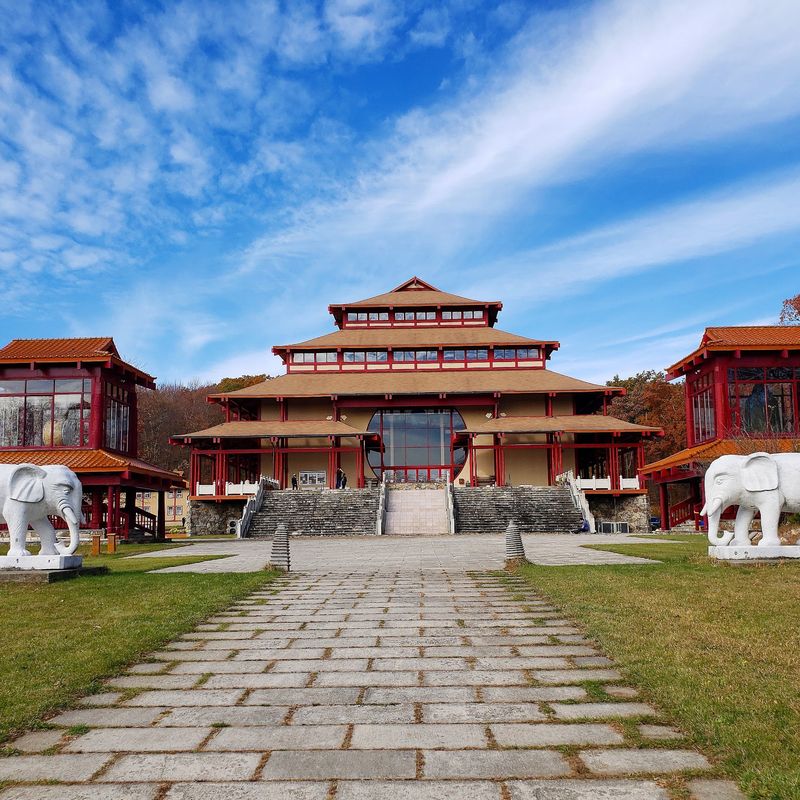
Hidden in the Hudson Valley woods sits the largest Buddha statue in the Western Hemisphere. The seated Vairocana Buddha inside the Great Buddha Hall stands about 37 feet tall and is surrounded by thousands of smaller Buddhas.
Chuang Yen Monastery was founded in 1975 and sits on about 240 acres near Lake Gleneida. Its design draws on Chinese Buddhist temple styles, with sweeping roofs and calm courtyards.
The grounds include a Seven Jewel Pagoda, a Wishing Pool, and a peaceful garden path. Many guests come just to walk and enjoy the quiet.
The monastery offers retreats, meditation sessions, and library access. Visitors can join a vegetarian lunch on certain days.
Wear comfortable shoes, speak softly, and plan on spending a few hours to take everything in.
13. Karma Triyana Dharmachakra Monastery in Woodstock
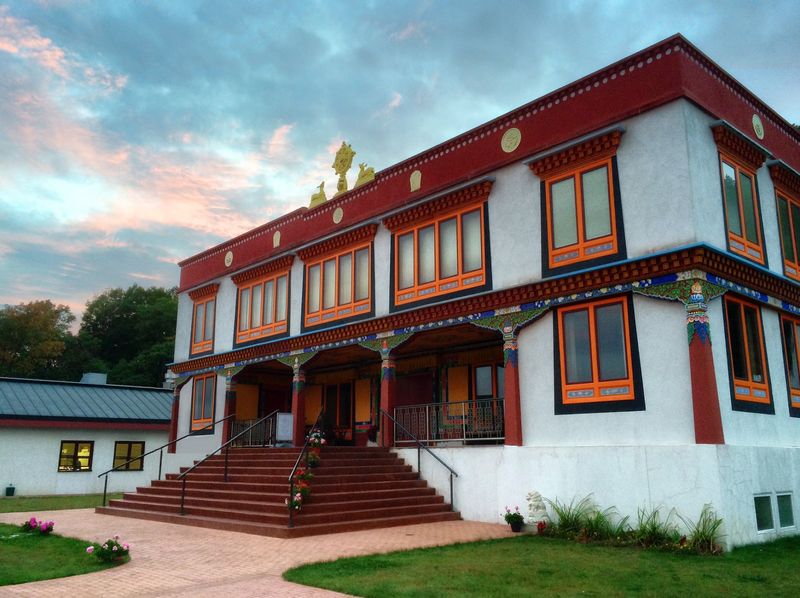
Prayer flags flutter in the Catskill breeze, and the sound of chanting drifts from the shrine hall. KTD is the North American seat of the Karma Kagyu lineage of Tibetan Buddhism, led by the Karmapa.
The monastery was founded in 1976 and sits on a wooded hillside near Woodstock. Its main building, finished in the 1980s, blends Tibetan design with local materials and a bright, welcoming look.
Inside, a large shrine room features a golden Buddha and colorful paintings. Monks, nuns, and lay students gather for ceremonies and teachings throughout the year.
Open programs include meditation sessions and classes for beginners. A gift shop offers books and prayer items.
If you visit, ask the staff how to respectfully enter the shrine room, as there are customs about where to sit and how to move.
14. Izumo Taishakyo Mission of Hawaii
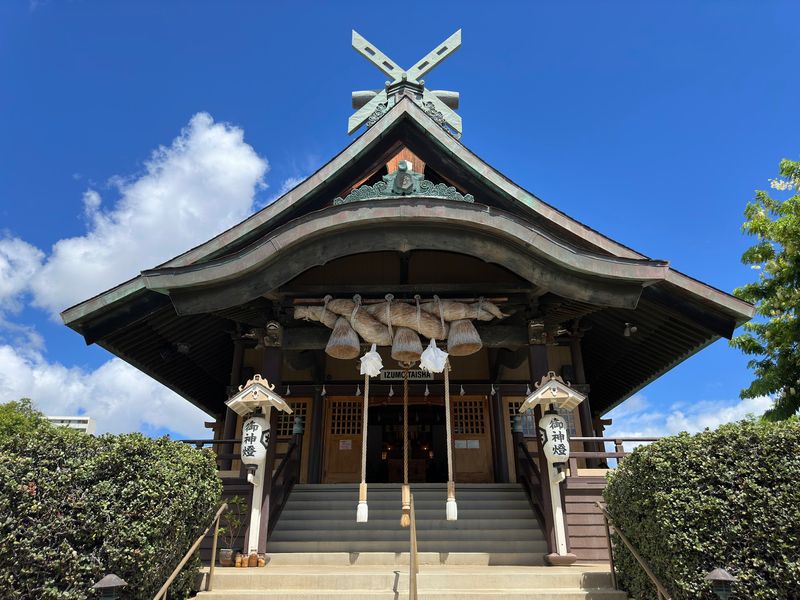
Shinto is rarely seen outside Japan, which makes this shrine special. The Izumo Taishakyo Mission of Hawaii in Honolulu was built in 1906 and looks much like the ancient Izumo Taisha in Japan.
The main hall stands out with its raised wooden form and thick straw rope, called shimenawa, hanging at the entrance. Its design reflects the oldest shrine style in Japan, and it is one of the few of its kind in the United States.
Worshippers visit to pray for good health, safe travel, and success. They bow, clap, and ring a bell to greet the kami, the spirits of Shinto belief.
During the New Year, families line up for blessings and charms. Visitors are welcome outside of events.
Be gentle and respectful, and ask permission before taking pictures near the main hall.
15. Kauai Hindu Monastery in Kapaa
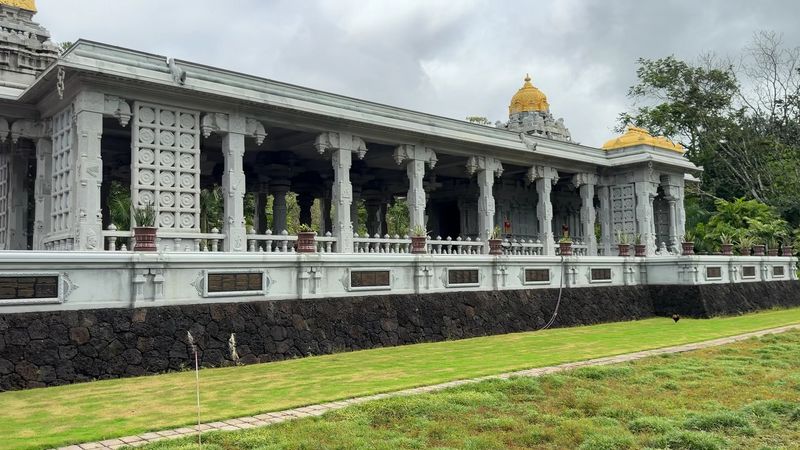
Deep in the green hills above the Wailua River, a white granite temple is rising stone by stone. Iraivan Temple is the heart of the Kauai Hindu Monastery, founded by Gurudeva Sivaya Subramuniyaswami in 1970.
Craftspeople in India carved the granite by hand, and the pieces were shipped to Hawaii. The temple is built without steel or mortar, following traditional Hindu methods meant to last a thousand years.
Nearby, a sacred Chola-style sanctuary houses a large crystal Shiva Lingam, a six-sided stone that glows in the light. Monks live and study on the 458-acre property.
Guests can take a free self-guided tour on weekday mornings, after reserving a spot in advance. Dress modestly, follow the signs, and leave plenty of time to enjoy the peaceful gardens and quiet paths.
Share this story