The Baltic Sea has a habit of hiding its best places in plain sight. Long, narrow peninsulas jut out into the water like fingers pointing toward nowhere in particular, and at the tips of many of them sit towns and villages that most travelers simply drive past on their way to bigger cities.
These places are not undiscovered by any means, but they are seriously underappreciated by anyone who does not already live nearby. From Lithuania’s towering sand dunes to Denmark’s candy-striped beach huts and Germany’s forest-backed resort villages, the Baltic coastline holds an impressive collection of small towns that punch well above their weight in character, scenery, and history.
This list covers 15 of the most rewarding peninsula towns around the Baltic, each one worth a detour, a longer stay, or a full trip built around it.
1. Nida, Neringa, Lithuania
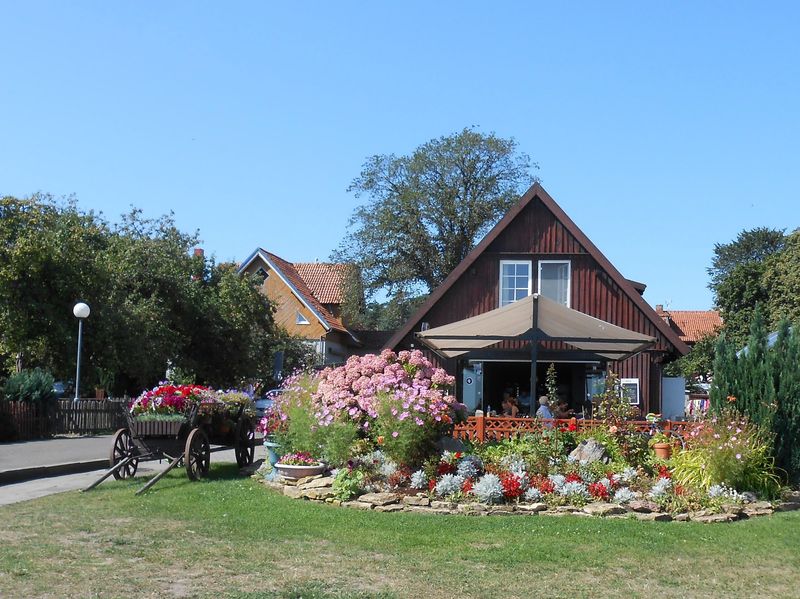
Sand dunes that rise 52 meters above sea level are not something most people expect to find on a Baltic peninsula, but Nida delivers exactly that. Perched near the southern end of Lithuania’s Curonian Spit, the town sits between the Curonian Lagoon and the open Baltic, giving it water on practically every side.
The Parnidis Dune is the centerpiece, complete with a granite sundial at the top and sweeping views that stretch toward Kaliningrad on a clear day. Traditional wooden houses with distinctive weathervanes line the harbor streets, and the Thomas Mann House-Museum adds a literary footnote to the scenery.
Nida functions as a polished resort today, but its surroundings keep it feeling wilder than its amenities suggest. Cyclists, hikers, and birdwatchers all find reasons to stay longer than originally planned.
2. Juodkrantė, Neringa, Lithuania
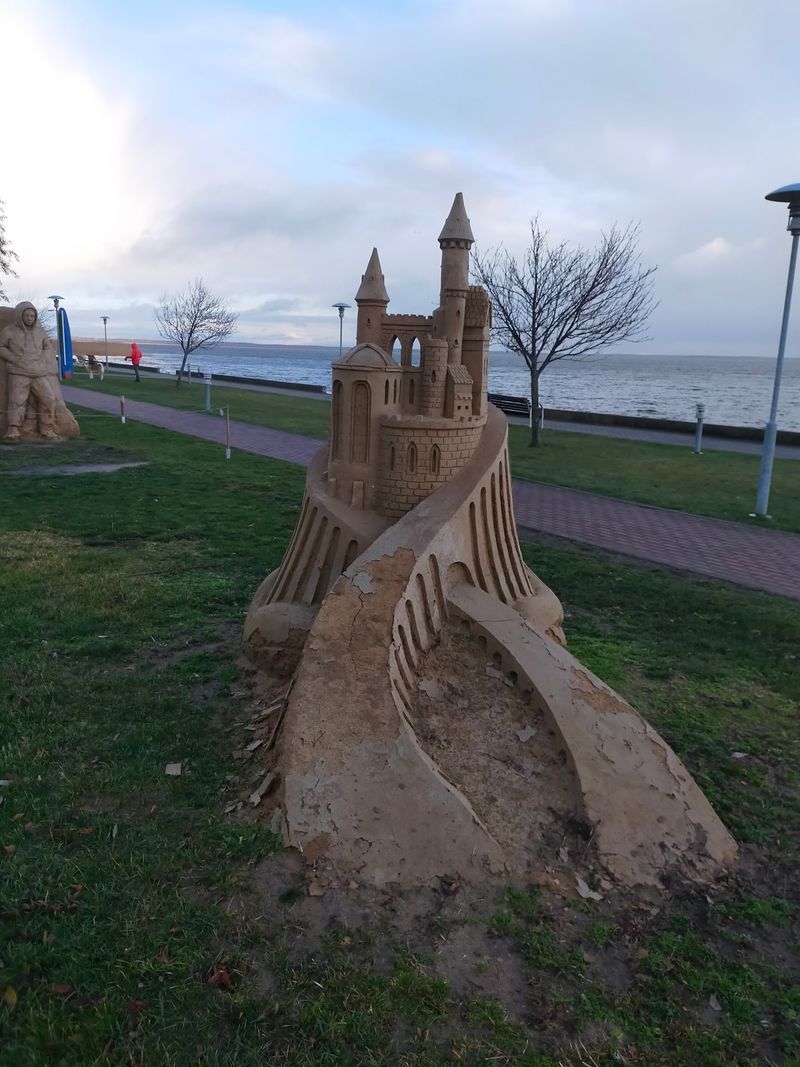
Wooden witches, devils, and pagan spirits carved from tree trunks are not what most people expect to find on a forest trail, but that is exactly what waits at the Hill of Witches in Juodkrantė. This open-air sculpture park, started in 1979, now features more than 80 carvings inspired by Lithuanian folklore, and new pieces are added regularly by visiting sculptors.
The village itself sits quietly on the Curonian Spit, farther north than Nida and noticeably calmer. Dense pine forest rises directly behind the lagoon waterfront, and paths across the narrow peninsula lead to a broad Baltic beach that rarely feels crowded.
Historically, the hill served as a gathering place for Midsummer celebrations, which gives the carved figures a deeper cultural context beyond mere decoration. Juodkrantė rewards visitors who prefer atmosphere over amenities.
3. Hel, Pomeranian Voivodeship, Poland
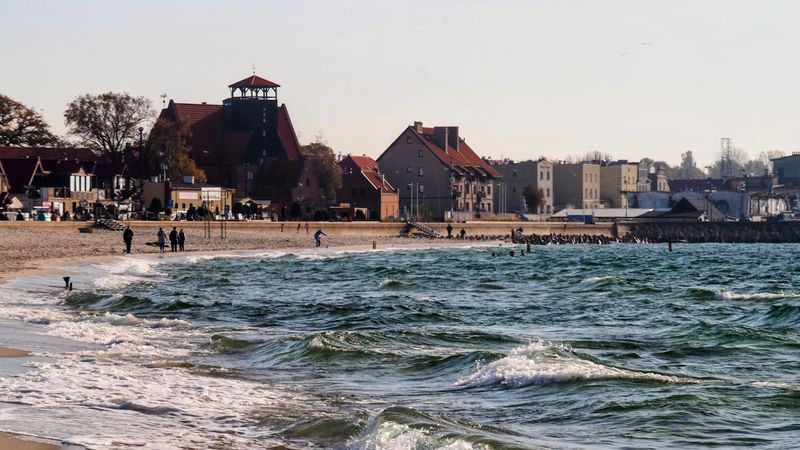
Geography alone makes Hel worth the trip. The town sits near the tip of a peninsula so narrow that, in some spots, you can see water on both sides simply by turning your head.
The Baltic stretches out to the north while Puck Bay sits quietly to the south, and the road connecting Hel to the mainland runs along this sliver of land for roughly 35 kilometers.
The town traces its roots back to the 10th century as a herring trading settlement. Today, visitors come for the beaches, the Museum of Coastal Defense housed in former artillery bunkers, and the Marine Station’s Seal Sanctuary, where Baltic grey seals are rehabilitated before being returned to the wild.
The Hel Lighthouse offers panoramic views that make the peninsula’s extraordinary shape fully apparent. Cycling the length of the peninsula is one of the most popular ways to experience it properly.
4. Łeba, Pomeranian Voivodeship, Poland
Poland’s answer to the Sahara sits just outside this small coastal town, and it surprises almost everyone who sees it for the first time. The shifting dunes of Slowinski National Park reach heights of over 40 meters and move several meters each year, slowly swallowing forest as they advance across the landscape.
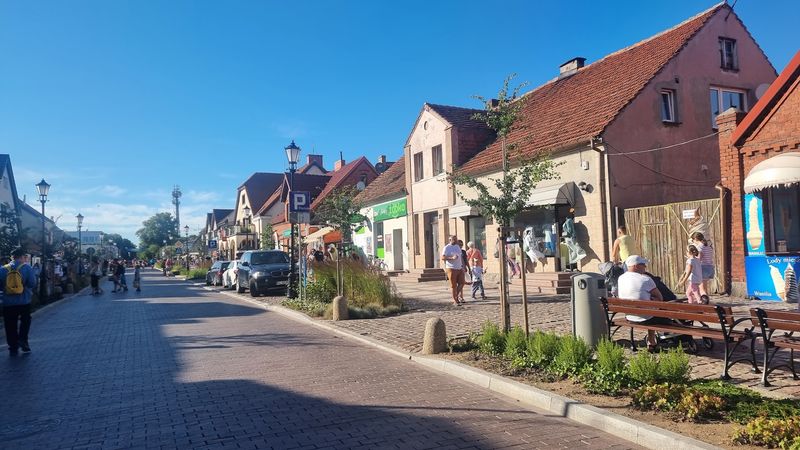
Łeba itself has the easygoing energy of a classic seaside resort, with a harbor, sandy beach, and the kind of relaxed pace that encourages an extra day or two. The town is bordered by Łebsko Lake on one side and the Baltic on the other, which makes the surrounding scenery feel layered and varied rather than simply flat coastline.
Slowinski National Park holds UNESCO Biosphere Reserve status and shelters around 250 bird species. Visitors typically reach the dunes from Rąbka village by foot or electric cart, turning a beach trip into something considerably more adventurous.
5. Käsmu, Lääne-Viru County, Estonia
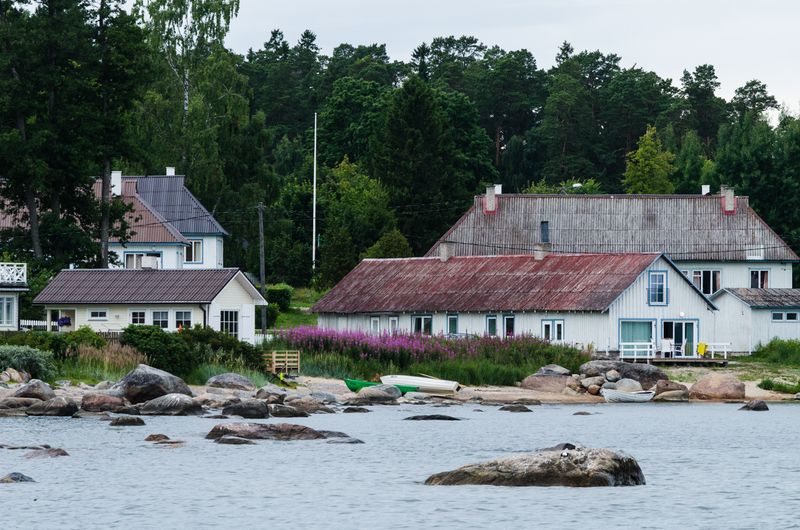
Known locally as the Village of Captains, Käsmu earned that nickname honestly. Records show it was first noted as a fishing ground in 1453, and by the 19th century it had become a hub for trained shipmasters, with a Maritime School operating from 1884 to 1931 and producing generations of seafarers.
The village occupies its own small peninsula on Estonia’s northern coast, and the landscape reflects that maritime past at every turn. White wooden captain’s houses stand among pine trees, granite boulders line the shore, and the Käsmu Peninsula holds the largest stone field in Estonia, with massive glacial erratics scattered across the terrain.
The Käsmu Maritime Museum, housed in a former cordon building, documents the village’s seafaring history in detail. Walking the shoreline trail is the most direct way to appreciate both the scenery and the scale of this remarkably quiet corner of the Baltic coast.
6. Haapsalu, Lääne County, Estonia
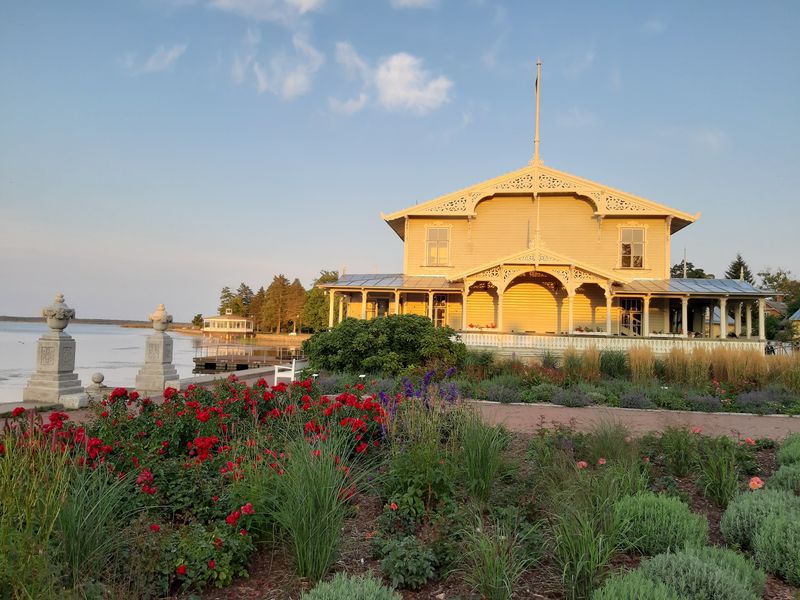
Estonia’s first mud spa resort has been drawing visitors since 1825, when physician Carl Abraham Hunnius promoted the healing properties of local sea mud to the Baltic German elite and, eventually, the Russian imperial household. That fashionable past left behind a town full of wooden resort-era architecture, a long promenade, and a sense of unhurried elegance.
Haapsalu spreads across a landscape of bays and small peninsulas, which means water appears from unexpected directions as you move through the town. The medieval castle, dating to the 13th century, adds a completely different historical layer, with its courtyard open to visitors and the legendary White Lady Chapel attracting curious visitors each year.
The seafront promenade runs from Africa Beach to the Chocolate Promenade, passing a sundial and a bench dedicated to composer Tchaikovsky, who once spent time here. Haapsalu feels polished but never overproduced, especially away from its busiest streets.
7. Hanko, Uusimaa, Finland
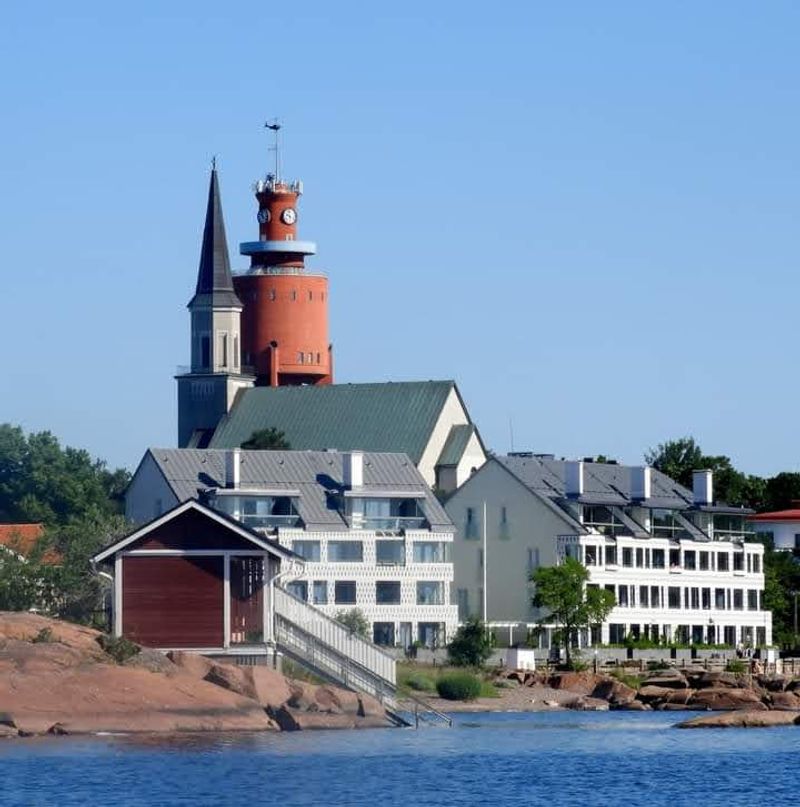
Finland’s southernmost municipality stretches into the Baltic on the Hankoniemi Peninsula and packs 130 kilometers of coastline into one compact town, including 30 kilometers of sandy beach. That ratio of coastline to size is hard to beat anywhere in the country.
Hanko developed as a fashionable spa destination in the late 19th century, and the ornate timbered villas from that era still line many of its streets, giving the town an architectural character noticeably different from most Finnish coastal communities. The Eastern Harbour functions as Finland’s largest guest marina, making it a busy stop for boaters navigating between Helsinki and the Archipelago Sea.
Three significant lighthouses dot the surrounding coastal area, including Bengtskär, the tallest lighthouse in the Nordic countries. Outside peak summer weeks, Hanko settles into a quieter rhythm that suits long walks, cycling, and exploring the ancient rock carvings at Hauensuoli, where seafarers once carved their names into stone.
8. Skanör, Skåne County, Sweden
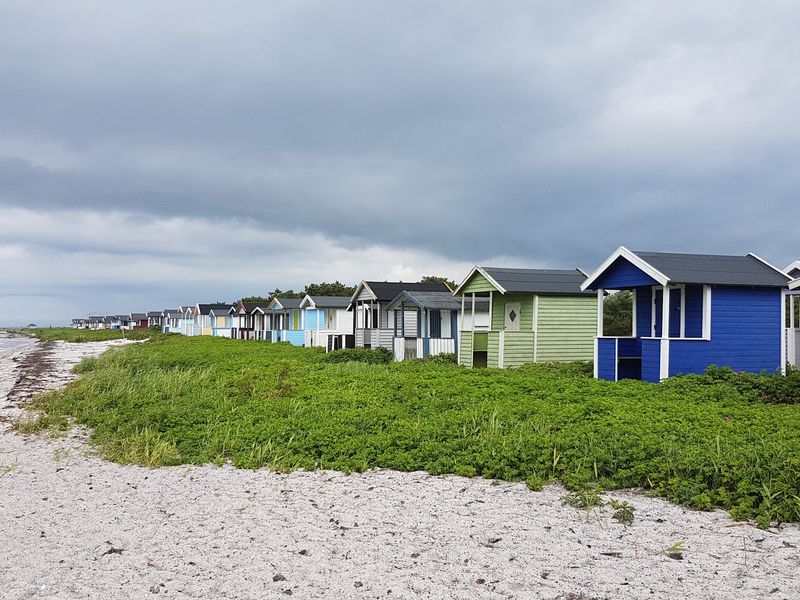
Nearly one thousand colorful beach huts line the dunes of the Falsterbo Peninsula, and in Skanör they have become as much a part of the local identity as the medieval church that dates back to the 1200s. These compact wooden structures, originally built as changing rooms, are now passed down through families like prized real estate.
Skanör sits alongside neighboring Falsterbo on a peninsula that feels detached from nearby Malmö despite the short distance. The beaches here are known for fine white sand and clear water, drawing comparisons to more southerly European coastlines.
The surrounding nature reserves protect an area of extraordinary ecological value, particularly for birds. The Falsterbo Bird Observatory counts over a million migrating birds each autumn, with hawks, eagles, and falcons making the peninsula one of the best raptor migration points in northern Europe.
Skanör’s character shifts noticeably with each season.
9. Kivik, Skåne County, Sweden
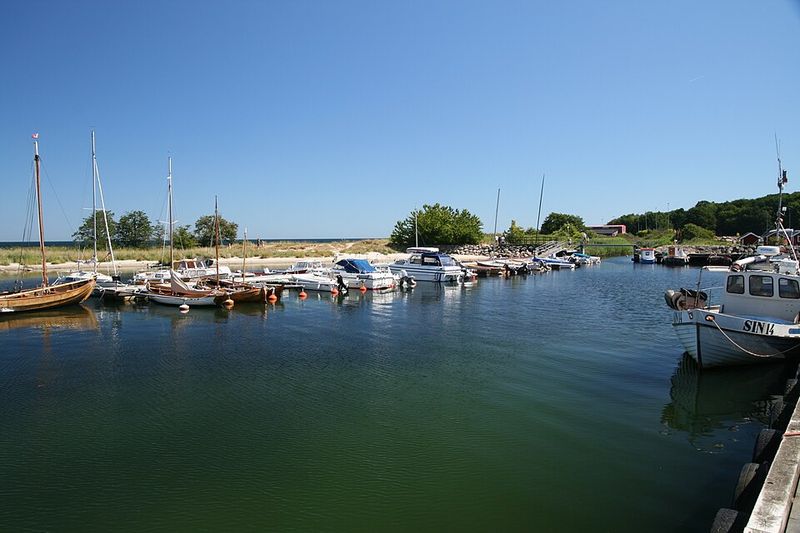
Bronze Age royalty chose this stretch of Scanian coastline for their final resting place, and the King’s Grave at Kivik is the evidence. This circular burial monument, 75 meters in diameter and the largest of its kind in Sweden, contains stone slabs decorated with intricate petroglyphs that have puzzled and fascinated archaeologists for generations.
The town itself operates at a scale that feels deliberately unhurried. A small harbor, low-rise streets, and a population of under a thousand give Kivik the proportions of a working fishing community rather than a resort, which is precisely the appeal for visitors who prefer a harbor stroll and a quiet café to organized entertainment.
The surrounding Österlen countryside is famous for apple orchards, and Kiviks Musteri is Sweden’s oldest apple orchard. To the south, Stenshuvud National Park provides hiking trails and coastal views that make the area worth exploring well beyond the town itself.
10. Ebeltoft, Central Denmark Region, Denmark
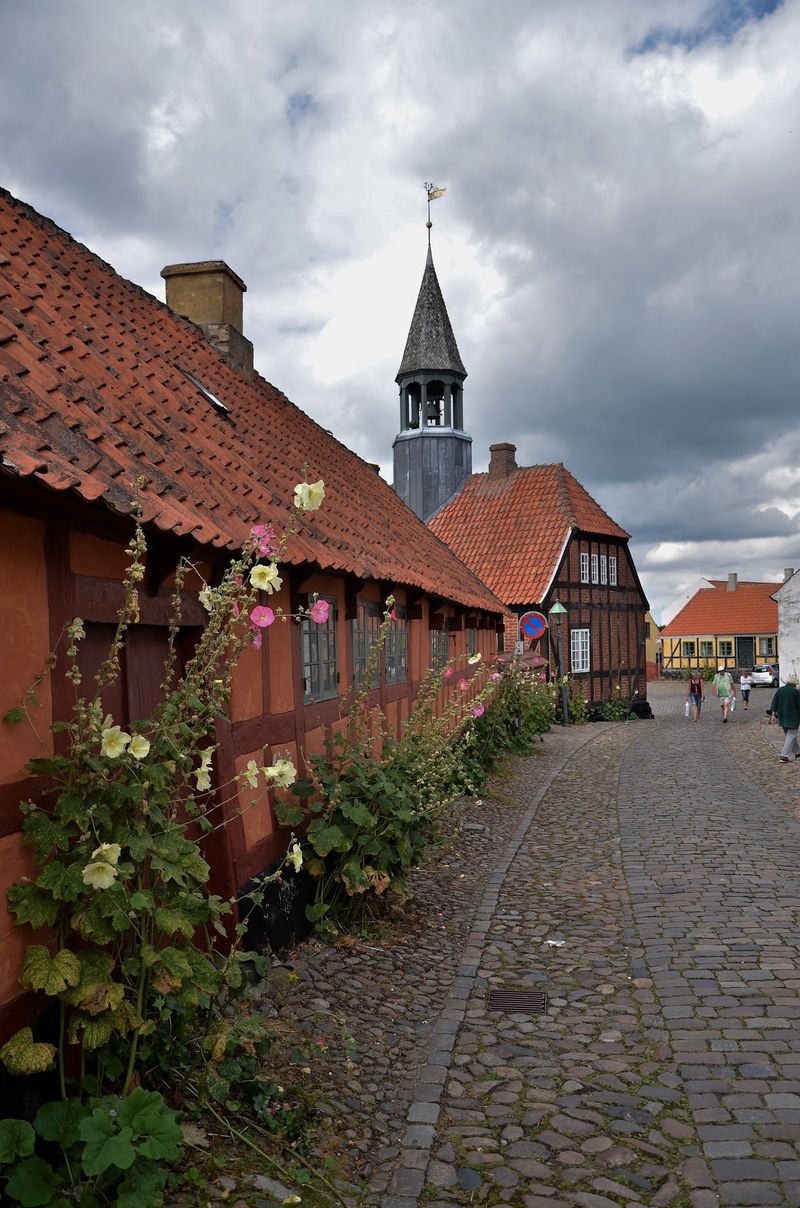
Denmark has no shortage of charming old towns, but Ebeltoft makes a strong case for being among the most intact. Conservation efforts begun in the 1960s protected its cobblestone lanes and half-timbered houses from the kind of redevelopment that reshaped many comparable towns, leaving behind a streetscape that genuinely looks like it belongs to an earlier century.
The Old Town Hall, built in 1789 and now part of the Museum of East Jutland, is one of the most photographed buildings in the region. The harbor stretches for 2.5 kilometers and encompasses several smaller harbors, while the Frigate Jylland, the longest wooden warship ever built, sits as a museum ship with interactive exhibits for visitors of all ages.
Glasmuseet Ebeltoft, one of the world’s first museums dedicated to contemporary glass art, adds a cultural dimension that surprises many first-time visitors. Ebeltoft rewards those who slow down enough to notice its details.
11. Gilleleje, Capital Region of Denmark, Denmark
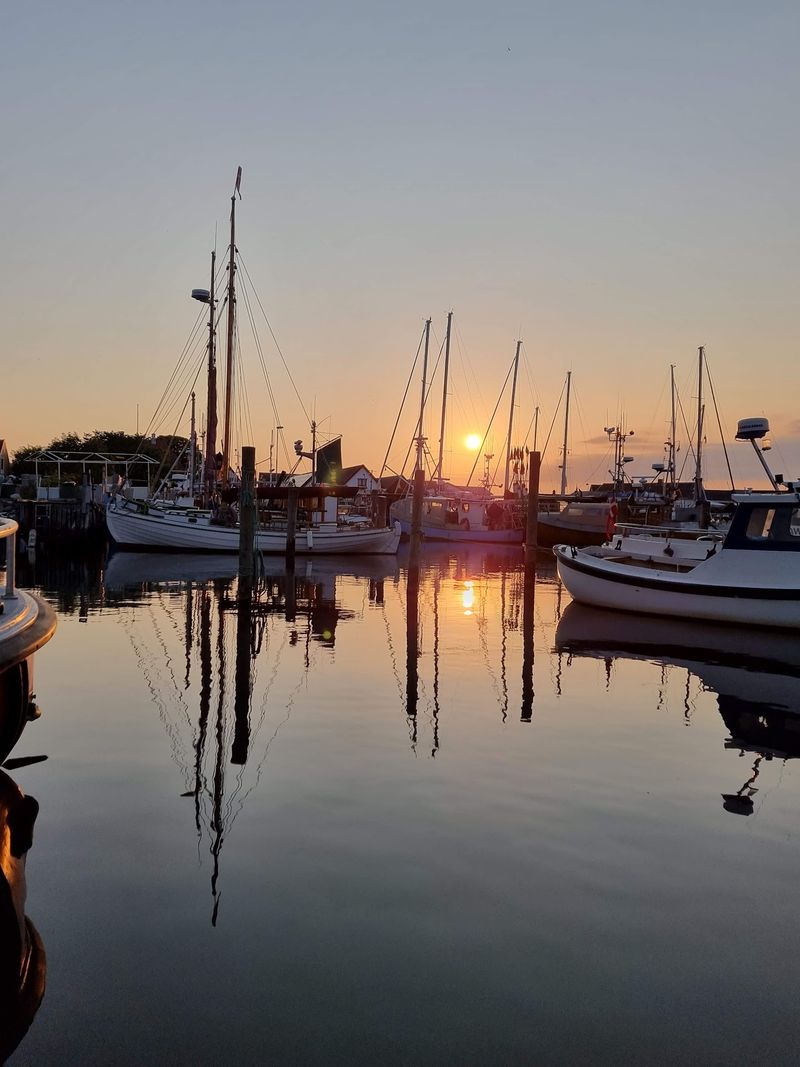
Zealand’s largest commercial fishing port does not advertise itself as a tourist attraction, and that is a significant part of what makes it one. Gilleleje’s harbor operates on its own schedule, with boats heading out before dawn and returning with catches that end up in the smokehouses lining the waterfront, a process that has not changed much in its essentials for generations.
The town sits at the northernmost edge of the North Zealand Peninsula, which gives the sea an unusually dominant presence. Coastal paths, thatched fishermen’s cottages, and a compact town center with a Thursday and Saturday market all contribute to a place that feels genuinely local rather than staged for visitors.
Gilleleje’s cultural harbor brings together a library, cinema, and year-round events in a single waterfront complex, making it a gathering point for residents and travelers alike. The working harbor remains the most compelling reason to visit.
12. Rågeleje, Capital Region of Denmark, Denmark
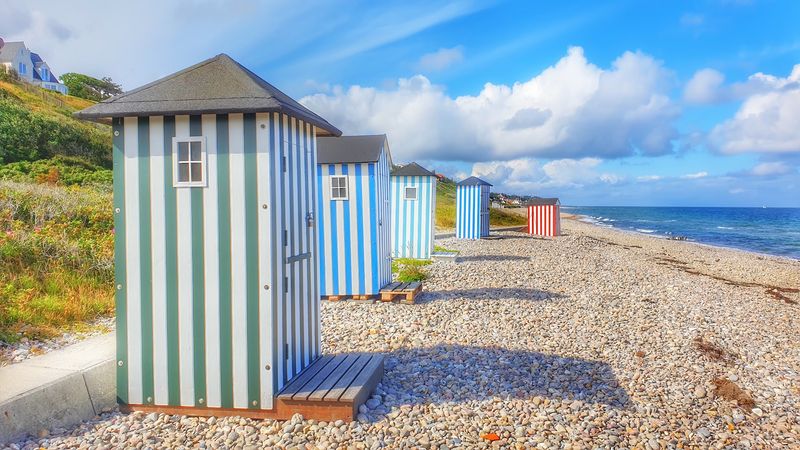
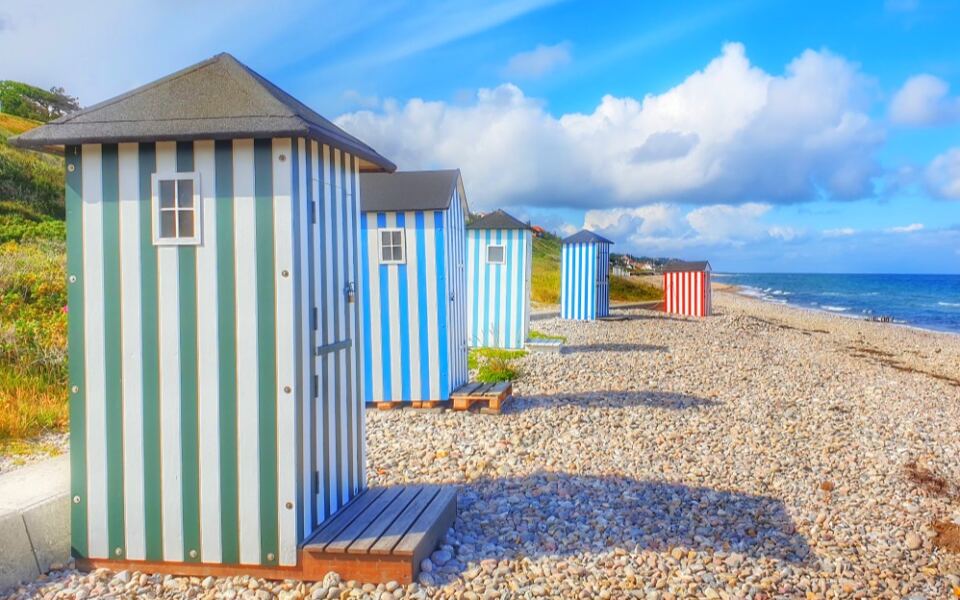
Tucked between Gilleleje and Tisvildeleje on Zealand’s north coast, Rågeleje has managed to stay smaller and quieter than either of its neighbors, which is an achievement worth appreciating in a region where coastal villages tend to grow into resorts. The candy-striped beach huts lining its shore have become the town’s most recognizable image, and rightly so.
The beach itself stretches for 3.6 kilometers with a gradual descent into the Kattegat, making it well-suited for swimming when the weather cooperates. When the wind picks up, kite surfers and windsurfers take over, adding movement to what is otherwise a very peaceful scene.
The surrounding landscape includes Heatherhill, a heather-covered area with Bronze Age burial mounds and hiking trails that open up views across the water. Rågeleje’s origins as a fishing community, where families supplemented income by herding sheep, still feel present in the town’s unhurried character and modest scale.
13. Zingst, Mecklenburg-Vorpommern, Germany
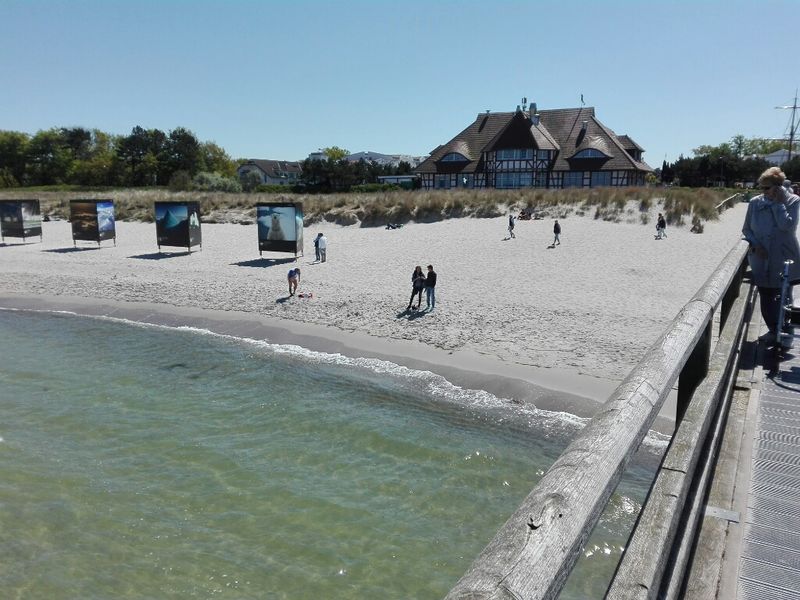
Very few towns can claim two completely different coastlines, but Zingst manages it without any effort. On one side of this narrow peninsula, Baltic beaches and dunes face the open sea.
On the other, the sheltered bodden waters spread out across a quieter landscape of reeds, wetlands, and bird-filled shallows.
Zingst forms part of the Vorpommersche Boddenlandschaft National Park, which protects both coastal environments and the remarkable wildlife that depends on them. Each autumn, tens of thousands of cranes stop here during their southward migration, gathering in columns above the bodden before settling for the night in a spectacle that draws birdwatchers from across Europe.
Cycling and walking trails cover the peninsula well, connecting beach access points with quieter bodden viewpoints. The resort has solid visitor infrastructure, but nature dominates the wider landscape so thoroughly that it never feels far from the surface, regardless of how busy the town gets.
14. Prerow, Mecklenburg-Vorpommern, Germany
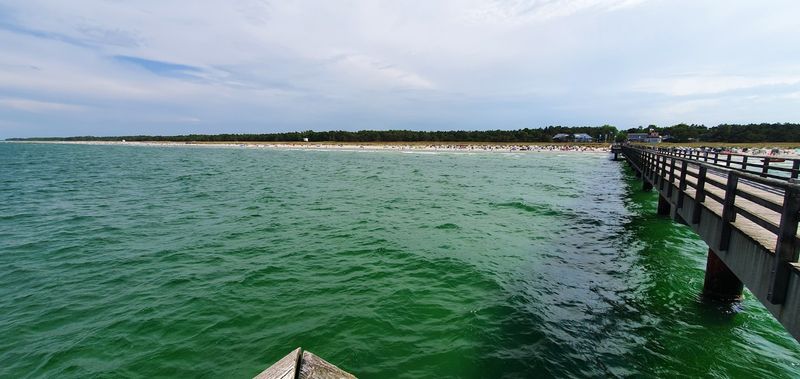
Thatched roofs and elaborately painted wooden doors are the visual signatures of Prerow, a village that has been welcoming summer visitors for over 130 years without losing the character that made it appealing in the first place. The Darß forest rises directly behind the settlement, and a 395-meter wooden pier extends into the Baltic at the front, giving the town a clear sense of being sandwiched between two very different natural environments.
West Beach, reached through the forest, is one of the wilder stretches of coastline on the entire peninsula. Wind-bent pines, known locally as windflüchter, line the approach, their shapes shaped entirely by decades of coastal exposure.
The Seafarers’ Church, over 280 years old and the oldest building on the Darß, and the Darß Museum both provide cultural depth to complement the outdoor activities. Prerow suits travelers who plan to split their days between the beach and long forest walks.
15. Kühlungsborn, Mecklenburg-Vorpommern, Germany
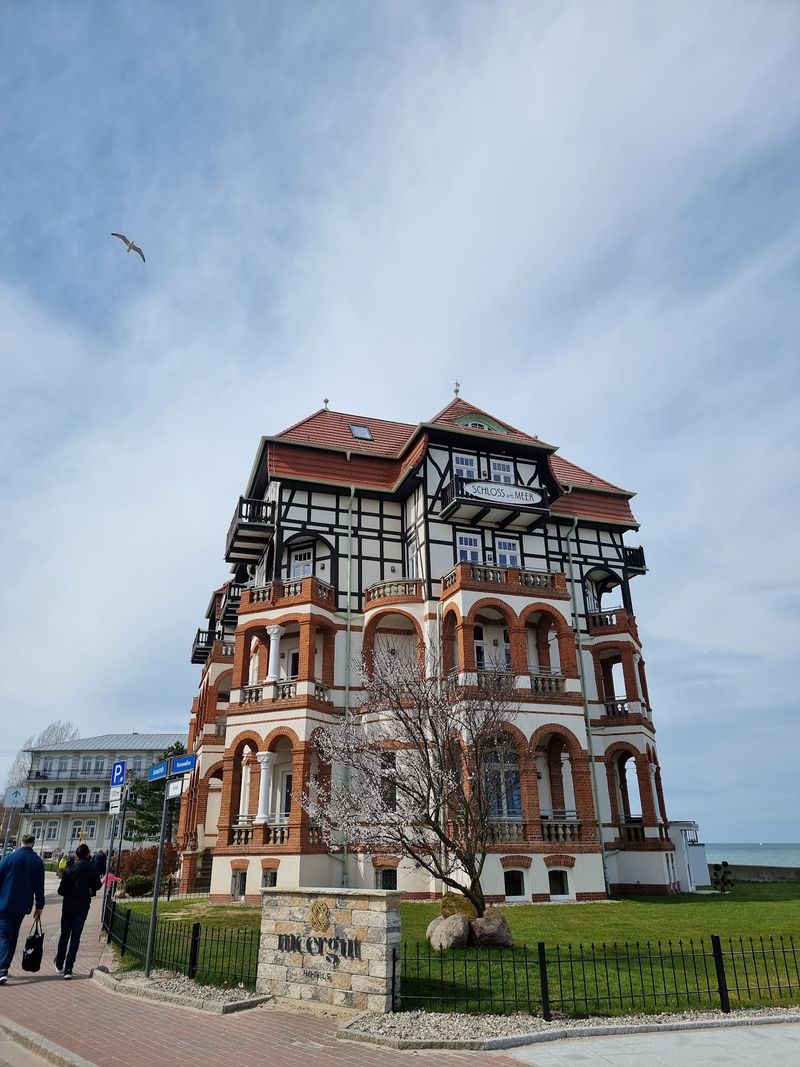
Germany’s longest continuous beach promenade runs for nearly four kilometers through Kühlungsborn, connecting the town’s western and eastern districts along a wide, paved walkway that faces the Baltic the entire way. The beach behind it stretches up to six kilometers and regularly earns Blue Flag certification for water quality.
The resort has been popular since the 1860s, and the spa architecture from that era has been carefully reconstructed, preserving the old-fashioned Baltic holiday atmosphere that made this coastline fashionable well before modern tourism existed. A 240-meter pier extends into the sea, offering an additional vantage point above the water.
Despite being more developed than most towns on this list, Kühlungsborn keeps an intimate scale compared to major European beach resorts. A 133-hectare town forest with walking and cycling paths borders the settlement, and the nearby Kühlung hills provide elevated views across the Mecklenburg Baltic Coast for those willing to venture slightly inland.
Share this story