Europe’s most famous cities are incredible, but they only tell part of the story. Hidden between mountain ranges, river bends, and coastlines are small towns that have quietly preserved centuries of history, culture, and character.
From salt-mining villages in Austria to walled hilltop settlements in Portugal, these places feel lived-in and real. If you are ready to trade crowded tourist hotspots for something more authentic, these 15 towns are a great place to start.
Hallstatt, Austria
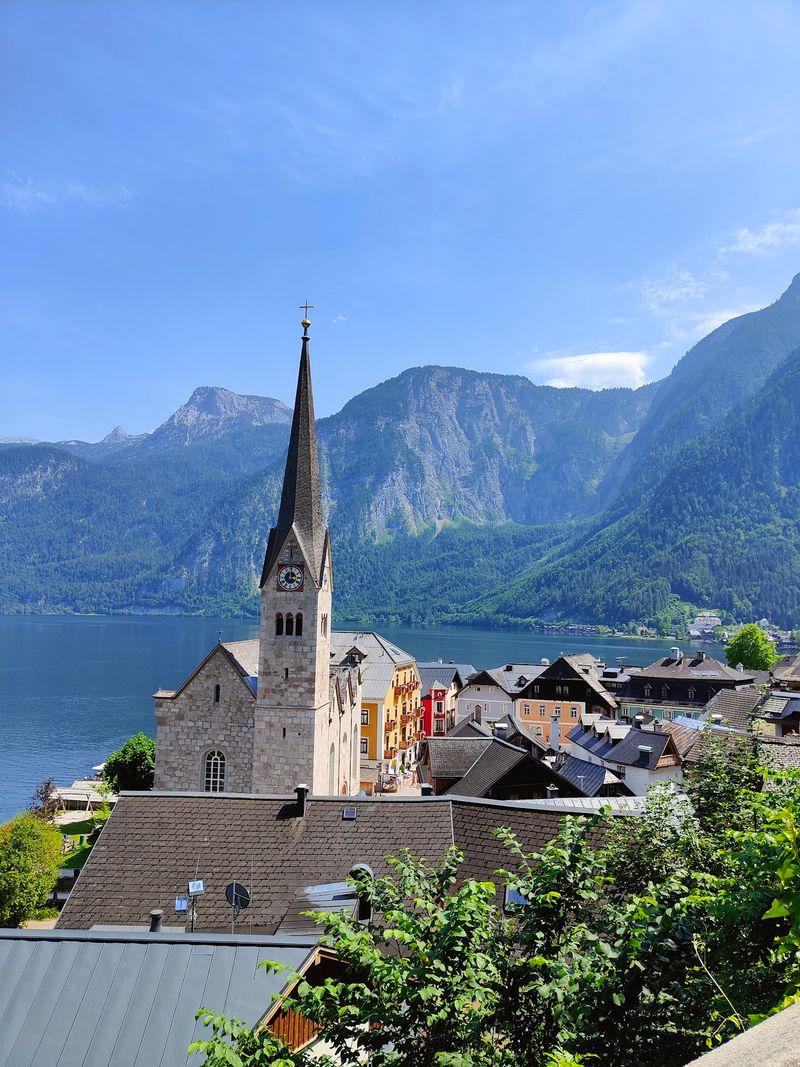
Salt made Hallstatt famous long before Instagram ever did. Perched on a sliver of land between Lake Hallstatt and the dramatic Dachstein mountains, this tiny Austrian village had to build upward and outward simply because there was no room to spread.
The lake reflects the pastel-colored houses so perfectly that photos almost look too good to be real.
Salt mining here dates back to the second millennium BCE, making it one of the oldest industrial sites in the world. Hallstatt became so historically significant that archaeologists named an entire Iron Age culture after it.
UNESCO recognized the wider Salzkammergut landscape for both its natural beauty and its ancient relationship with salt production.
Visitors can explore the salt mine, take a boat across the lake, or wander the narrow lakeside paths that connect the village. The local charnel house, decorated with painted skulls, is a quirky but deeply human reminder of how communities adapted to limited burial space.
Hallstatt rewards slow travel. Give yourself more than a few hours, and you will find a place where geology, history, and mountain scenery combine in a way that few towns anywhere can match.
Cesky Krumlov, Czechia
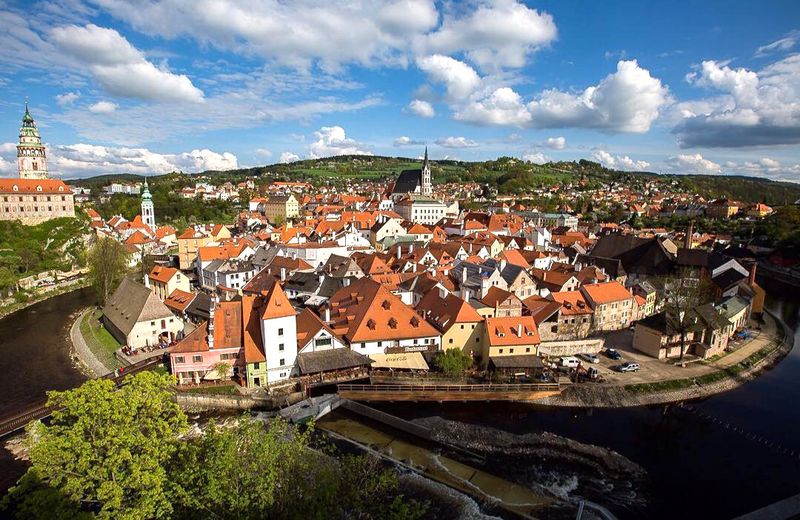
The Vltava River practically gift-wraps Cesky Krumlov’s historic center by looping tightly around it in a dramatic horseshoe bend. That geography made the town naturally defensible centuries ago, and today it makes for one of the most striking small-town layouts in all of Central Europe.
Standing on the castle terrace and looking down at the red rooftops below is a genuinely jaw-dropping moment.
The castle itself was founded in the 13th century and expanded over hundreds of years, collecting Gothic, Renaissance, and Baroque layers along the way. One of its great hidden treasures is a rare 18th-century Baroque theater, still fitted with original stage machinery and painted scenery.
UNESCO recognized the town because its medieval street plan survived five centuries with remarkably little disruption.
Unlike Prague, which can feel overwhelming in peak season, Cesky Krumlov is compact enough to explore comfortably on foot in a day or two. The relationship between river, castle, and town is immediately visible from almost anywhere you stand.
Local restaurants serve hearty Czech food, kayak rentals are available on the river, and the surrounding countryside offers quiet walks through forest and farmland that most visitors never bother to find.
Rothenburg ob der Tauber, Germany
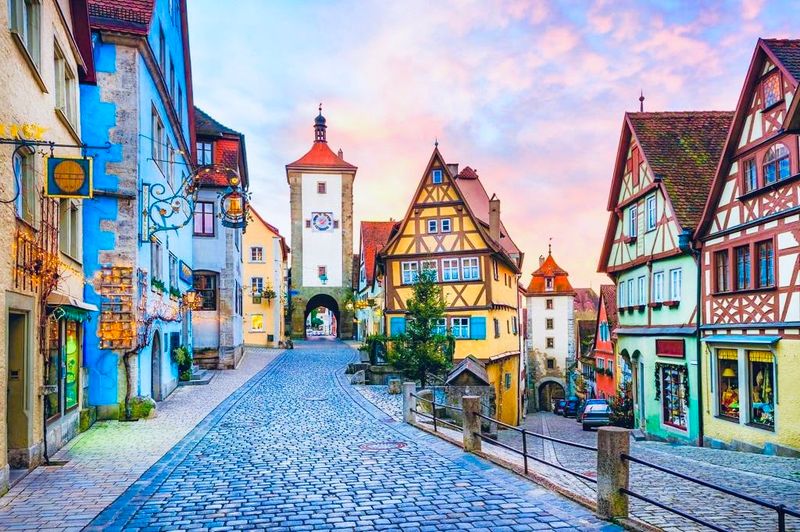
Few towns in Germany have held onto their medieval identity as stubbornly as Rothenburg ob der Tauber. The historic center is ringed by defensive walls, dotted with towers and gates, and packed with timber-framed buildings that look like they were designed for a fairy tale.
The famous Plonlein intersection, where two lanes split around a small fountain and tower, has been photographed so many times it has practically become a national icon.
What makes Rothenburg more than just a pretty picture is how much there is to actually explore. Visitors can walk long sections of the original town walls, climb the towers for views over the Tauber Valley, and wander through historic squares that feel genuinely old rather than artificially preserved.
The Christmas market held here each December is among Germany’s most atmospheric.
Germany’s Romantic Road passes through Rothenburg, connecting it to other historic towns across Bavaria and Baden-Wurttemberg. The town can get busy during summer weekends, so arriving early in the morning or staying overnight makes a real difference.
Once the day-trippers leave, the streets quiet down considerably. Rothenburg is also a great base for cycling into the surrounding vineyards and valley, which offer a calm contrast to the busy town center.
Colmar, France
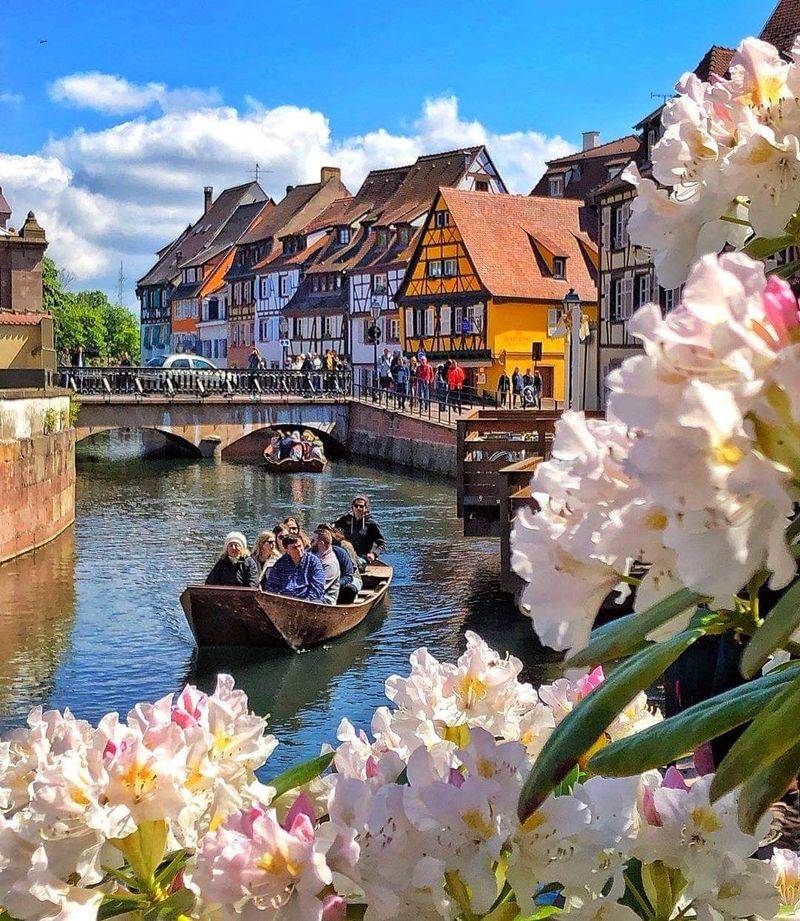
Colmar smells like pretzels and wine, and that combination feels entirely appropriate for a town shaped by centuries of French and German cultural exchange. Located in the Alsace region of northeastern France, Colmar has a visual identity unlike anywhere else in the country.
Timber-framed buildings painted in yellows, pinks, and greens crowd narrow streets that have barely changed since the medieval period.
The Little Venice district is Colmar’s most photographed area, where historic buildings lean over waterways in the southern part of the old town. Nearby, the Quai de la Poissonnerie was historically home to fishermen and river traders.
The Pfister House, built in 1537, is a beautiful early example of Renaissance architecture that still dominates one of the town’s central lanes.
Alsatian cuisine is reason enough to visit. Tarte flambee, choucroute garnie, and local Riesling wines are staples at the small restaurants tucked into the old quarter.
Colmar is also an excellent base for exploring the Alsace Wine Route, which winds through vineyard-covered hillsides and small villages stretching north and south of town. If Paris feels too urban and polished, Colmar offers something warmer, more regional, and far more relaxed without sacrificing any of the good food.
Alberobello, Italy
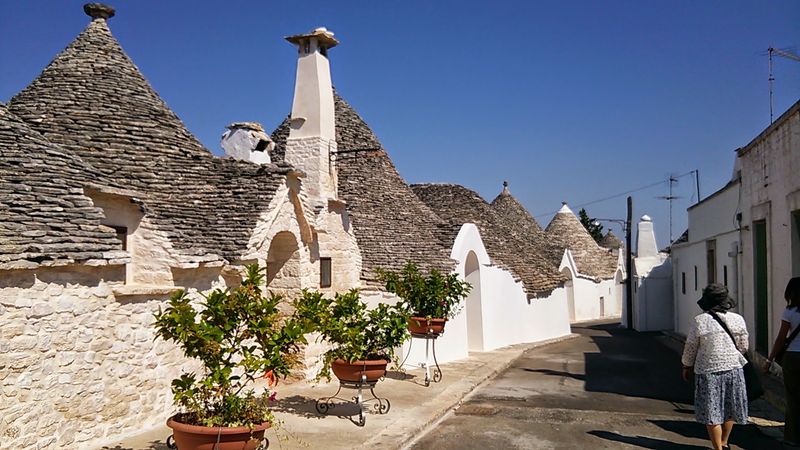
Alberobello looks like someone decided the rules of architecture did not apply here, and honestly, they were onto something. The town’s two main historic districts are filled with trulli, round white limestone structures topped with conical roofs made from stacked stone without a drop of mortar.
Over 1,500 of them crowd the hillside neighborhoods of Rione Monti and Aia Piccola, creating one of Italy’s most visually distinctive urban landscapes.
The building technique is ancient and surprisingly practical. Thick walls keep interiors cool in summer and warm in winter, while the corbelled roofs channel rainwater efficiently.
Symbols painted on some rooftops are thought to have religious or protective meanings, though their exact origins are still debated. UNESCO recognized Alberobello because the trulli represent a unique example of prehistoric building tradition surviving into a living town.
Wandering through Rione Monti feels genuinely surreal, especially early in the morning before the souvenir shops open. Many trulli have been converted into small guesthouses, and staying in one overnight is an experience worth planning around.
The surrounding Puglia region offers olive groves, coastal towns, and excellent local food to round out a trip. Alberobello proves that Italy’s architectural creativity was never limited to its great cities.
Sintra, Portugal
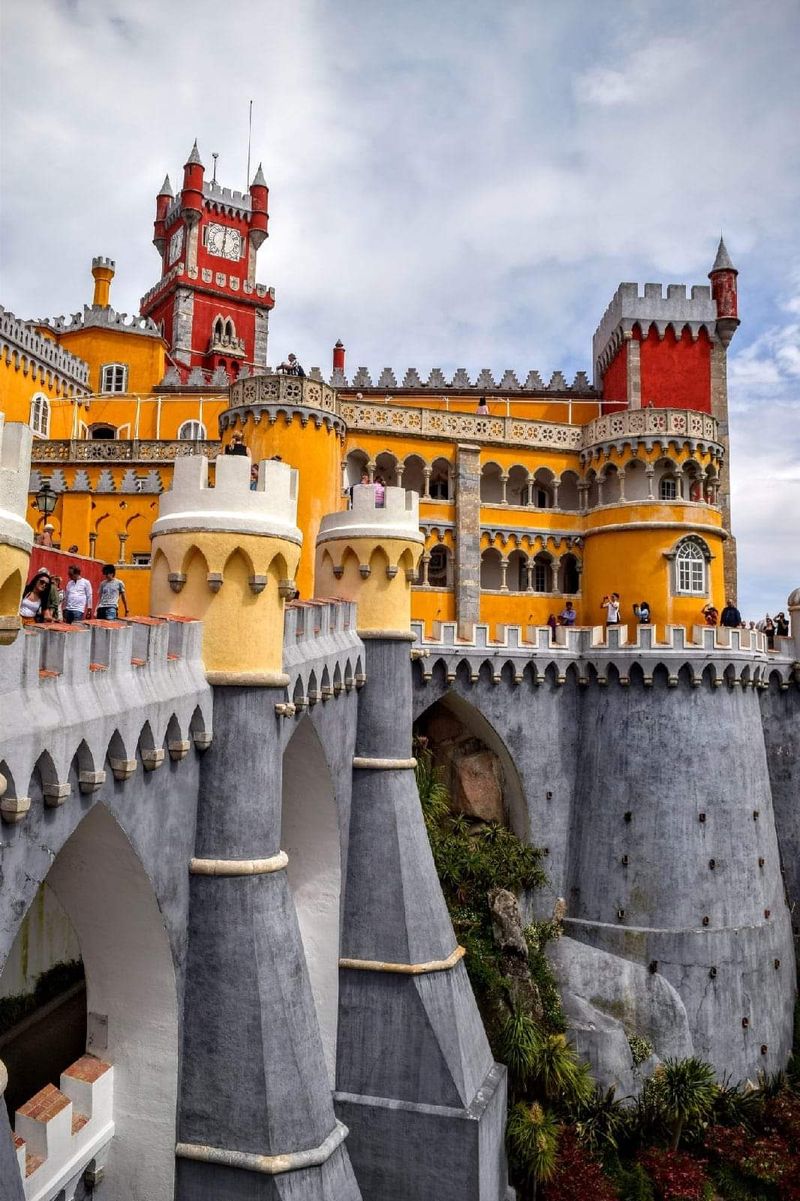
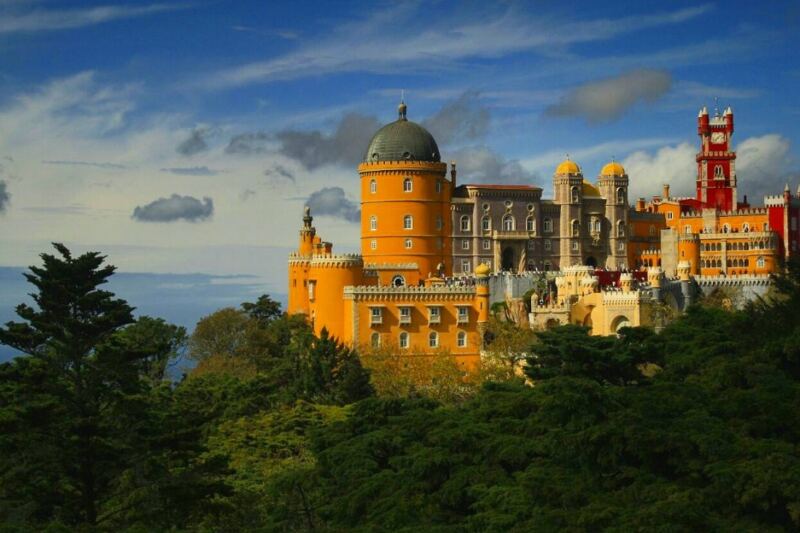
Pena Palace looks like it was designed by someone who had read too many storybooks, which is basically what happened. King Ferdinand II commissioned its construction in the 1840s on the ruins of a monastery, blending Gothic towers, Moorish archways, Egyptian details, and Renaissance ornamentation into one gloriously theatrical building.
The result is either wonderful or deeply chaotic depending on your taste, but nobody can say it is boring.
Sintra is not just one palace. The forested Serra de Sintra hills hold an extraordinary concentration of Romantic-era estates, gardens, and follies, including the Moorish Castle, Monserrate Palace, and Quinta da Regaleira with its mysterious initiation well.
UNESCO called Sintra the first major center of European Romantic architecture and noted its influence on landscape design across the continent.
The historic town below the palaces has its own charm, with narrow streets, the old National Palace rising from the town square, and plenty of local pastry shops selling the famous travesseiros and queijadas. Sintra is easily reached from Lisbon by train in about 40 minutes, making it a popular day trip.
Visiting on a weekday morning gives you a much better experience before the afternoon crowds arrive. Staying overnight lets you explore the gardens at a genuinely peaceful pace.
Bled, Slovenia
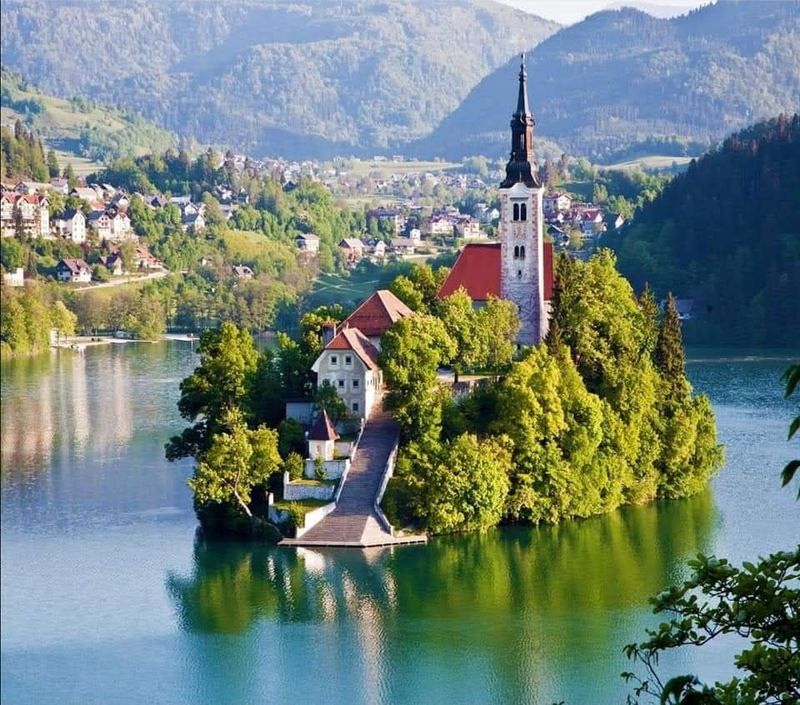
Bled has the kind of scenery that makes people question whether they have accidentally walked onto a film set. A lake of impossibly clear water, a tiny island with a church in the middle, a medieval castle clinging to a cliff above the shore, and the Julian Alps rising in the background.
All of this fits into a space small enough to walk around in a couple of hours.
The castle’s history reaches back to 1004, when the estate was granted to the Bishop of Brixen, with early defensive structures built around 1011. It later gained towers, walls, and a small museum that explains the region’s history in surprisingly engaging detail.
Traditional wooden boats called pletnas are still rowed by local oarsmen to carry visitors across to the island church, where a wishing bell can be rung by climbing 99 steps.
Bled is compact but not lacking in things to do. Hiking trails climb into the surrounding hills and offer views across the entire lake.
The nearby Vintgar Gorge is a spectacular wooden walkway built along a fast-moving river canyon just a short drive away. Local cream cake, known as kremna rezina, is a non-negotiable stop at one of the lakeside cafes.
Slovenia is genuinely underrated, and Bled is a perfect introduction to why.
Giethoorn, Netherlands
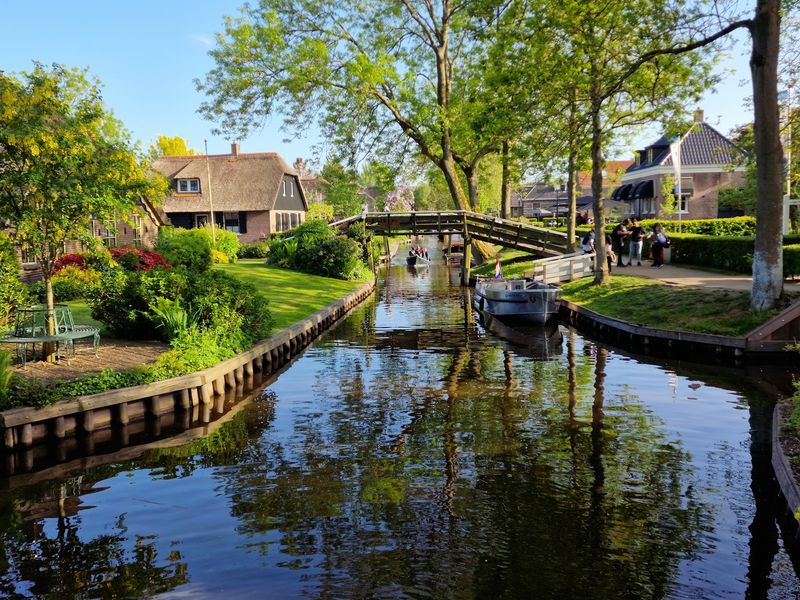
There are no roads through the oldest part of Giethoorn, just canals and more than 170 small wooden bridges connecting the properties along the water. Getting around means renting a small electric boat, cycling along the paths, or simply walking.
For a country already famous for its waterways, Giethoorn takes things to a wonderfully logical extreme.
The village sits within the Weerribben-Wieden National Park, a vast wetland landscape of reed beds, lakes, and drainage channels that developed through centuries of peat cutting. Thatched farmhouses sit behind well-tended gardens that slope gently down to the water’s edge.
The whole place has a quietly theatrical quality, as though rural Dutch life has been arranged for maximum charm.
Giethoorn gets busy on summer weekends, and the canal can feel like a traffic jam of slow boats. Visiting on a weekday or in the shoulder season transforms the experience considerably.
The national park surrounding the village offers excellent birdwatching, with species including marsh harriers, bitterns, and bearded reedlings appearing in the wetlands. Cycling routes connect Giethoorn to neighboring villages through flat, open countryside typical of this part of Overijssel.
It is a completely different side of the Netherlands from Amsterdam’s canals and crowds, and all the better for it.
Ronda, Spain
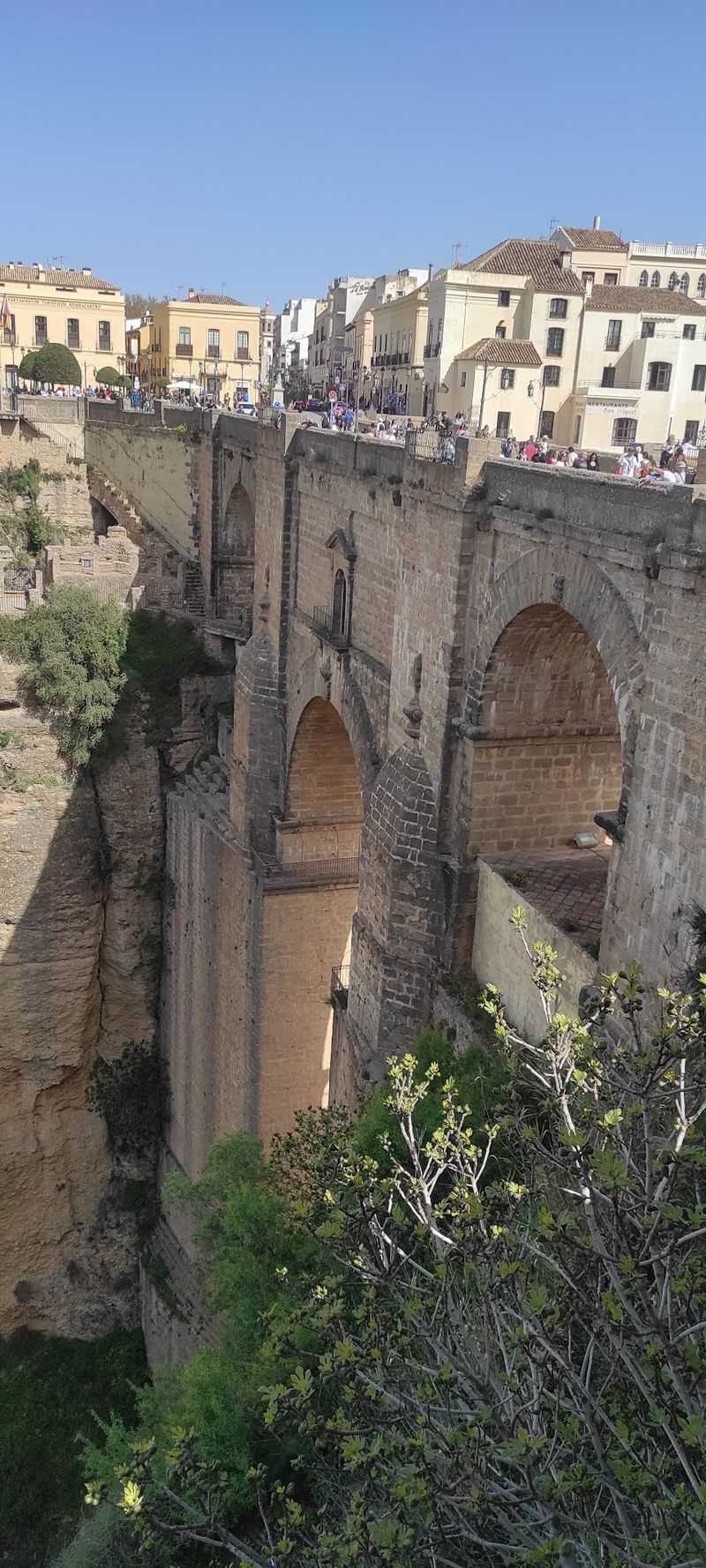
Ronda is a town literally split in two by a gorge that drops nearly 100 meters straight down. The Puente Nuevo, completed in 1793, spans that gap with three stone arches and enough architectural confidence to make it look almost casual.
Standing on the bridge and peering over the edge into the Tajo gorge below is one of those travel moments that genuinely stops conversation mid-sentence.
The older part of town, known as La Ciudad, sits on the far side of the gorge and contains layers of Islamic urban history, Moorish baths, and old noble houses. Ronda also claims one of Spain’s oldest and most historically significant bullrings, the Plaza de Toros, built in 1785.
The town played a notable role in the development of modern bullfighting, and the ring’s museum is surprisingly interesting even for those with no interest in the sport.
Ronda sits in the mountains of Malaga province, well away from the Costa del Sol beach crowds. The surrounding countryside is covered in cork oak forests, olive groves, and white hilltop villages that reward exploration by car or on foot.
Local restaurants serve hearty mountain food, including rabo de toro and local mountain cured meats. Ronda shows an inland Andalusia that feels entirely different from Seville or Granada, and equally rewarding.
Kotor, Montenegro
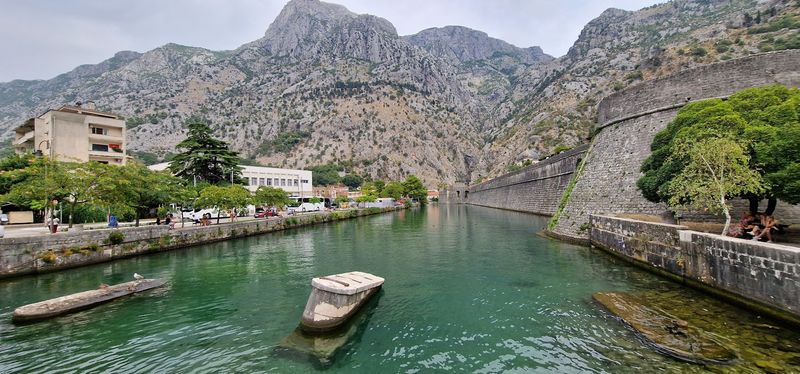
Kotor’s defensive walls do not just protect the old town, they climb straight up the mountain behind it in a series of zigzagging stone ramparts that reach a fortress nearly 300 meters above sea level. The hike up those walls is steep, sweaty, and absolutely worth it for the view over the bay below.
On a clear day the entire Boka Kotorska, one of southern Europe’s most sheltered natural harbors, spreads out like a map.
Inside the walls, the medieval city is remarkably intact. Romanesque churches, Venetian-era palaces, narrow lanes, and small squares preserve centuries of maritime history.
Kotor developed strong schools of masonry and icon painting during the Middle Ages, and several churches contain art that reflects those traditions. UNESCO recognized the relationship between the town’s architecture and its dramatic mountain setting as exceptional.
Kotor was badly damaged in the 1979 earthquake but was carefully restored in the years that followed. Today it is Montenegro’s most visited historic site and a popular stop for Adriatic cruise ships, which means mornings can get crowded near the main gate.
Arriving early or staying overnight and exploring in the evening gives a much better sense of the town’s character. The surrounding bay has quieter villages, good seafood restaurants, and scenic drives along the water that round out any visit.
Dinant, Belgium
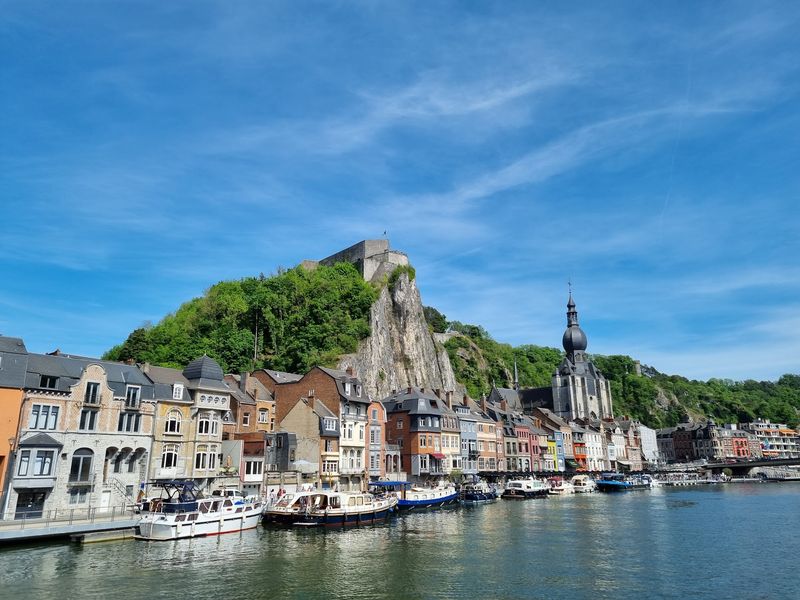
Dinant is squeezed into a gap between the Meuse River and a sheer limestone cliff so dramatically that the buildings seem to be holding their breath. The town stretches in a long, narrow ribbon along the water, with the bulbous Gothic tower of Notre-Dame church anchoring the skyline and the Citadel perched on the cliff above.
It is one of Belgium’s most visually striking settings, and almost nobody outside Europe has heard of it.
The Citadel can be reached by cable car or by climbing 408 steps, and the views from the top explain immediately why this location was fortified for so long. Below the fortress, the town has another claim to fame: Adolphe Sax, who invented the saxophone in the 1840s, was born here.
Saxophone sculptures appear throughout the streets in various colors and styles as a cheerful tribute.
Dinant also sits above a network of caves, including the Han-sur-Lesse caves a short drive away, which are among Belgium’s most impressive natural attractions. The Meuse Valley around Dinant is excellent cycling country, with well-marked routes following the river through countryside and smaller villages.
Belgian beer and waffles are, of course, readily available. Dinant rewards visitors who go looking for the Belgium that exists beyond Brussels and Bruges, and it delivers something genuinely memorable.
Ribe, Denmark
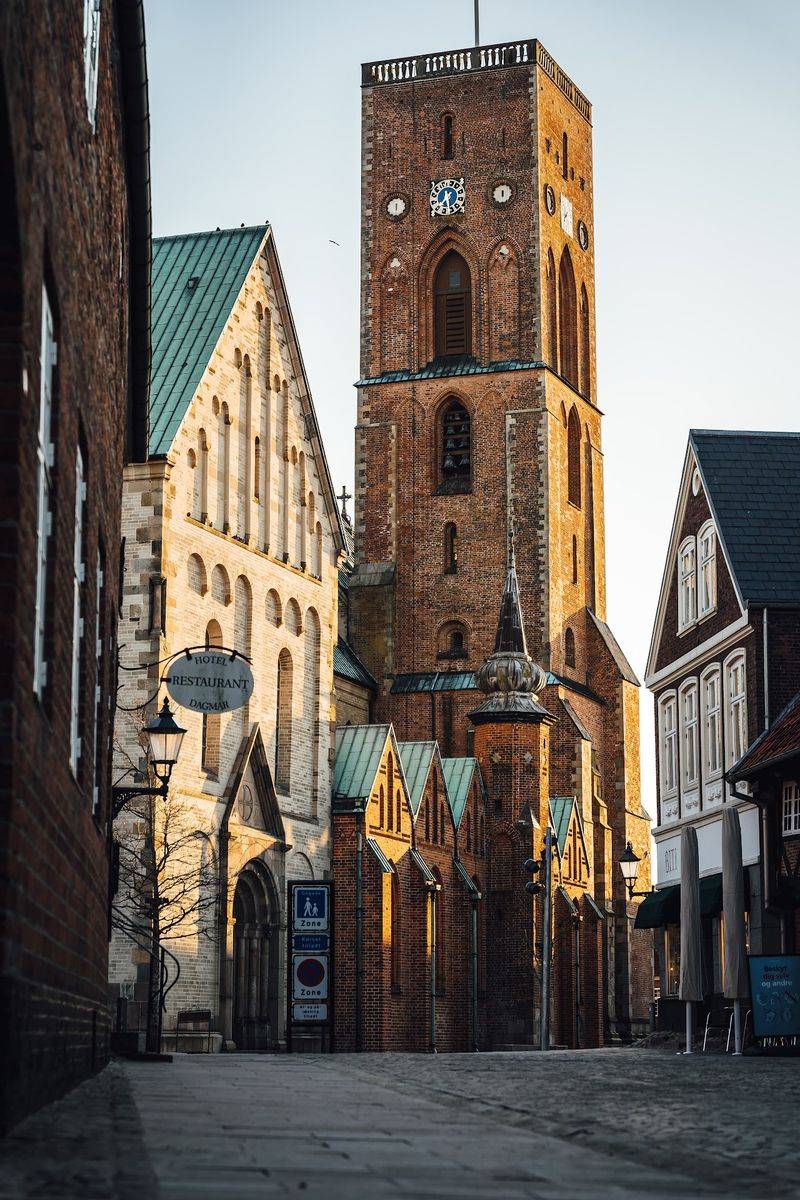
Ribe has been around for roughly 1,300 years, which makes it Denmark’s oldest town by a comfortable margin. Walking its narrow cobblestone lanes past half-timbered houses, it is easy to understand why Danish historians treat the place with such reverence.
The massive Ribe Cathedral, a Romanesque structure that dominates the town from almost every angle, has been watching over this community since the 12th century.
The town’s location in western Jutland connects it directly to the Wadden Sea, one of northern Europe’s most extraordinary tidal landscapes. At low tide, the mudflats stretch for kilometers and support enormous populations of migratory birds, seals, and marine invertebrates.
UNESCO recognizes the Wadden Sea as a World Heritage Site, and Ribe serves as a natural gateway into that coastal world.
Ribe developed as a trading center during the Viking Age and maintained its importance through the medieval period before quieter centuries gradually preserved rather than changed it. The Viking Museum in town tells that early history well, with artifacts and reconstructed environments that are genuinely engaging.
Night watchman tours of the old town run in summer and are surprisingly entertaining. Ribe is not flashy or dramatic, but it offers a calm, deeply historical experience that feels very different from Copenhagen’s modern energy.
Visby, Sweden
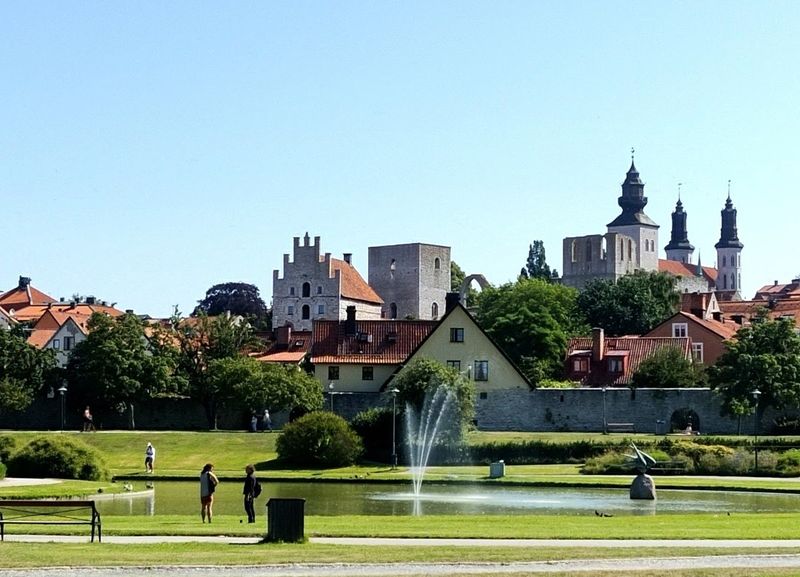
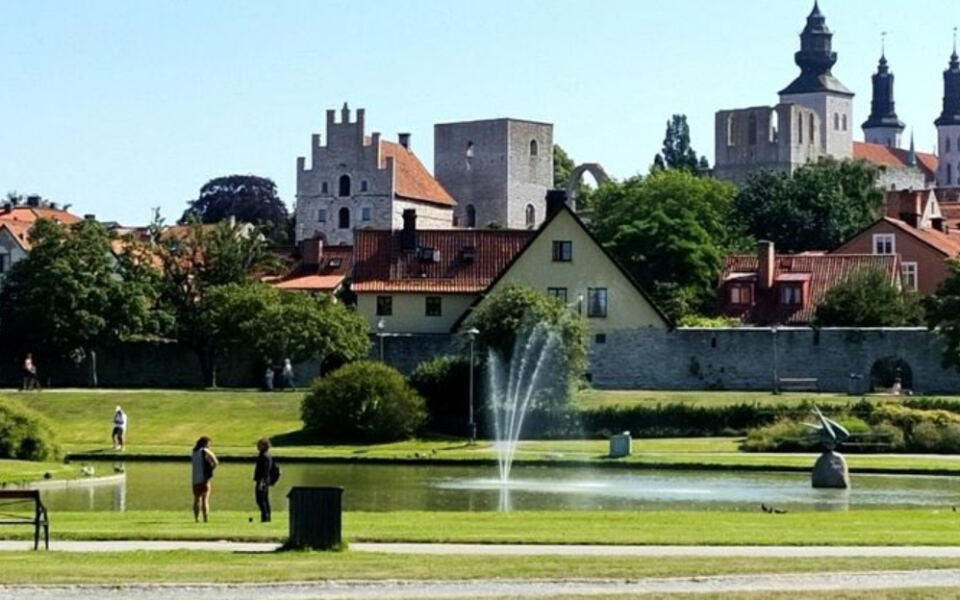
Visby’s town walls are so well preserved that walking along their 3.4-kilometer length feels less like sightseeing and more like stepping inside a history textbook. Located on the Baltic island of Gotland, this Swedish town grew from a Viking-age trading post into one of the most powerful centers of the Hanseatic League during the 12th and 14th centuries.
At its peak, Visby was one of northern Europe’s wealthiest and most cosmopolitan cities.
UNESCO recognized Visby for its remarkable medieval completeness, which includes the defensive walls, surviving gates and towers, the medieval street plan, church ruins, and over 200 warehouses and merchants’ residences. St. Mary’s Cathedral still holds regular services, while several ruined medieval churches stand open within the walls as atmospheric reminders of the town’s former scale and ambition.
Gotland itself is worth exploring beyond Visby. The island has a distinctive limestone landscape, unusual rock formations called raukar along its coastlines, sandy beaches, and a slower pace of life that feels genuinely restorative.
In summer, Visby hosts a large medieval week festival where the town fills with costumes, markets, and performances. Getting there requires a ferry from the Swedish mainland, which adds to the sense of arrival.
Visby is a reminder that the Baltic world produced cities every bit as sophisticated as those further west in Europe.
Obidos, Portugal
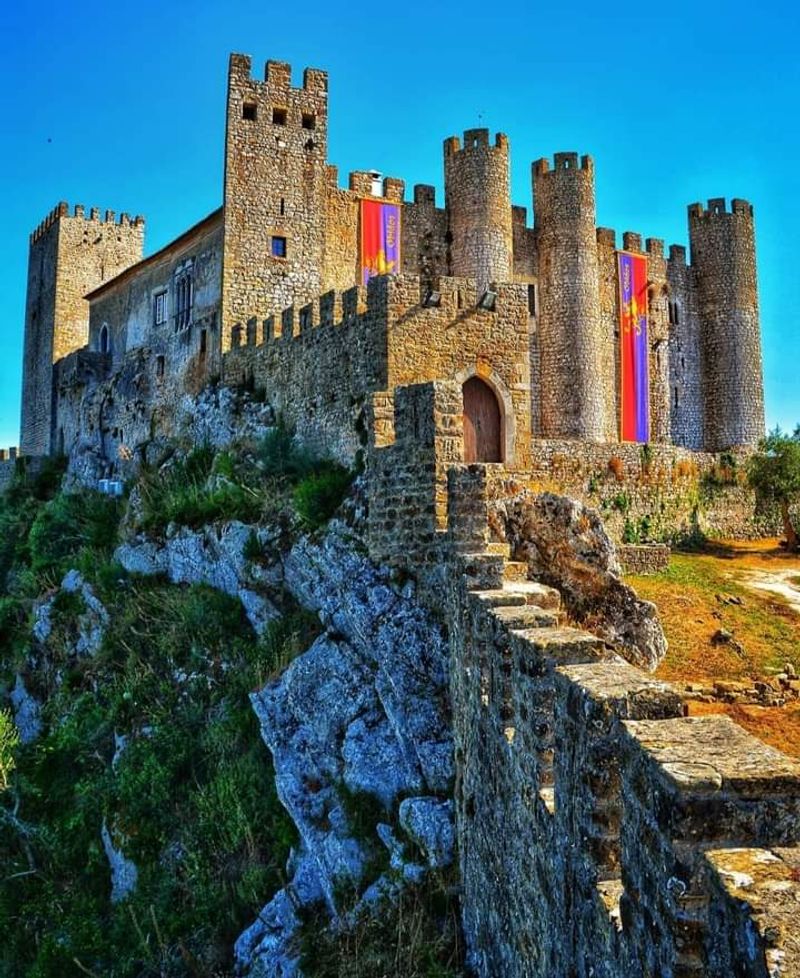
Walking through the main gate of Obidos and into the walled town feels like the outside world simply stops existing. The medieval walls here are almost completely intact and form a tight ring around a village of whitewashed houses painted with borders of blue or yellow, flower-draped balconies, and cobblestone lanes barely wide enough for two people to pass comfortably.
Portugal has many beautiful historic towns, but Obidos has a concentrated charm that is hard to beat.
The settlement existed before Roman rule, but it gained particular status in the 13th century when King Dinis gave the town to Queen Isabel as a wedding gift. Obidos subsequently became part of the traditional estate associated with Portugal’s queens, a royal connection that helped preserve its character over the centuries.
Manueline architectural details appear on church doorways and public buildings throughout the town.
Visitors can walk along the top of the walls for views over the rooftops and surrounding countryside, though some sections require a head for heights. The town is also famous for ginjinha, a local sour cherry liqueur traditionally served in a small chocolate cup.
Literary festivals and medieval markets are held here regularly throughout the year. Obidos is small enough to explore fully in an afternoon, but pleasant enough to justify staying overnight and enjoying the quiet after the day visitors leave.
Sighisoara, Romania
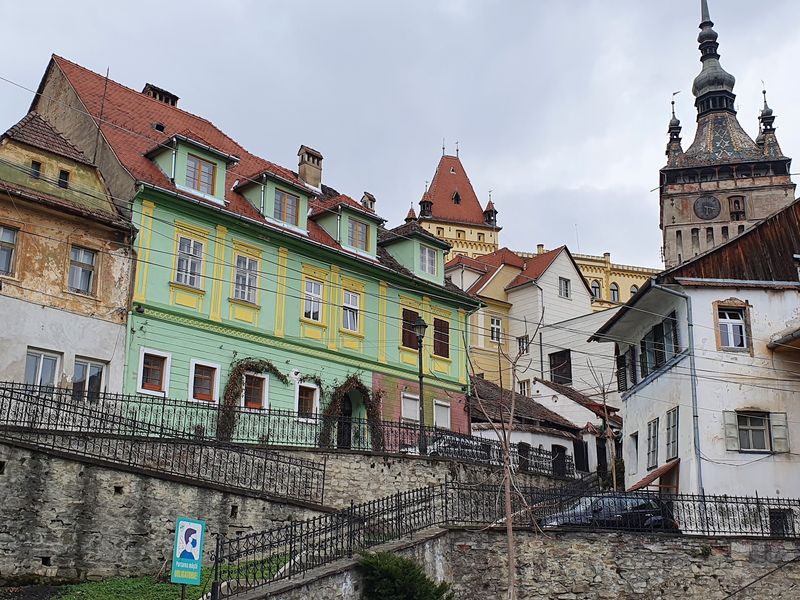
Sighisoara is one of those rare places where people actually live inside a medieval fortress, not just visit one. The historic citadel sits on a hill above the lower town and has been continuously inhabited since German craftsmen and merchants known as the Transylvanian Saxons established it during the medieval period.
Colorful houses in blues, yellows, and oranges line narrow cobblestone streets that have changed very little in centuries.
The Clock Tower is the citadel’s most recognizable landmark, rising above the main entrance gate and housing a small museum with historical exhibits and old mechanical figures that emerge at certain hours. Nine defensive towers once protected the settlement, each maintained by a different guild of craftsmen, and several survive in good condition.
UNESCO recognized Sighisoara as an outstanding example of a small fortified medieval town in the Transylvanian region.
Vlad the Impaler, the historical figure who inspired Bram Stoker’s Dracula, was reportedly born in Sighisoara in the 1430s, and a house in the citadel is traditionally identified as his birthplace. Whether that connection draws you in or not, the town’s architecture and atmosphere stand fully on their own merits.
The surrounding Transylvanian countryside offers rolling hills, Saxon villages, and forests that are excellent for hiking. Sighisoara gives visitors a side of Romania that has nothing to do with Bucharest and everything to do with a fascinating regional history.
Share this story