Southern France is one of those rare places where almost every turn reveals something worth stopping for. Lavender fields, ancient Roman ruins, clifftop villages, and turquoise coves all share the same stretch of country.
From the ochre-colored hills of Provence to the Catalan fishing harbors near Spain, the south packs an extraordinary amount of beauty into one region. Whether you are planning your first trip or your fifth, these 15 destinations offer something genuinely memorable.
Gordes
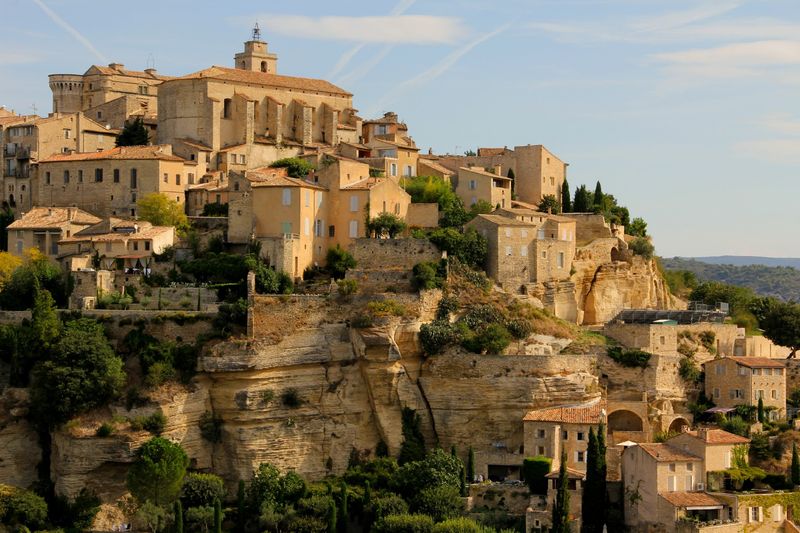
Perched like a crown above the Luberon valley, Gordes earns every bit of its reputation as one of Provence’s most striking villages. The pale limestone houses stack up the hillside in tight terraces, climbing toward a Renaissance chateau that anchors the whole scene.
Narrow lanes twist between old walls, passing fountains, flower boxes, and tiny squares where locals gather for coffee in the mornings.
Just a few kilometers away, Senanque Abbey sits quietly among lavender fields in a narrow valley. Founded by Cistercian monks in the 12th century, the abbey is still active today.
Visiting in late June or early July, when the lavender blooms purple around the stone buildings, is one of the most rewarding experiences in all of Provence.
The surrounding countryside offers vineyards, olive groves, and wide views across limestone hills. The village can get busy in summer, so arriving early in the morning rewards you with quieter lanes and softer light.
Gordes is a strong starting point for exploring the greater Luberon, with Bonnieux, Roussillon, and Lacoste all within easy driving distance. Few places in France pack this much visual impact into such a compact setting.
Roussillon
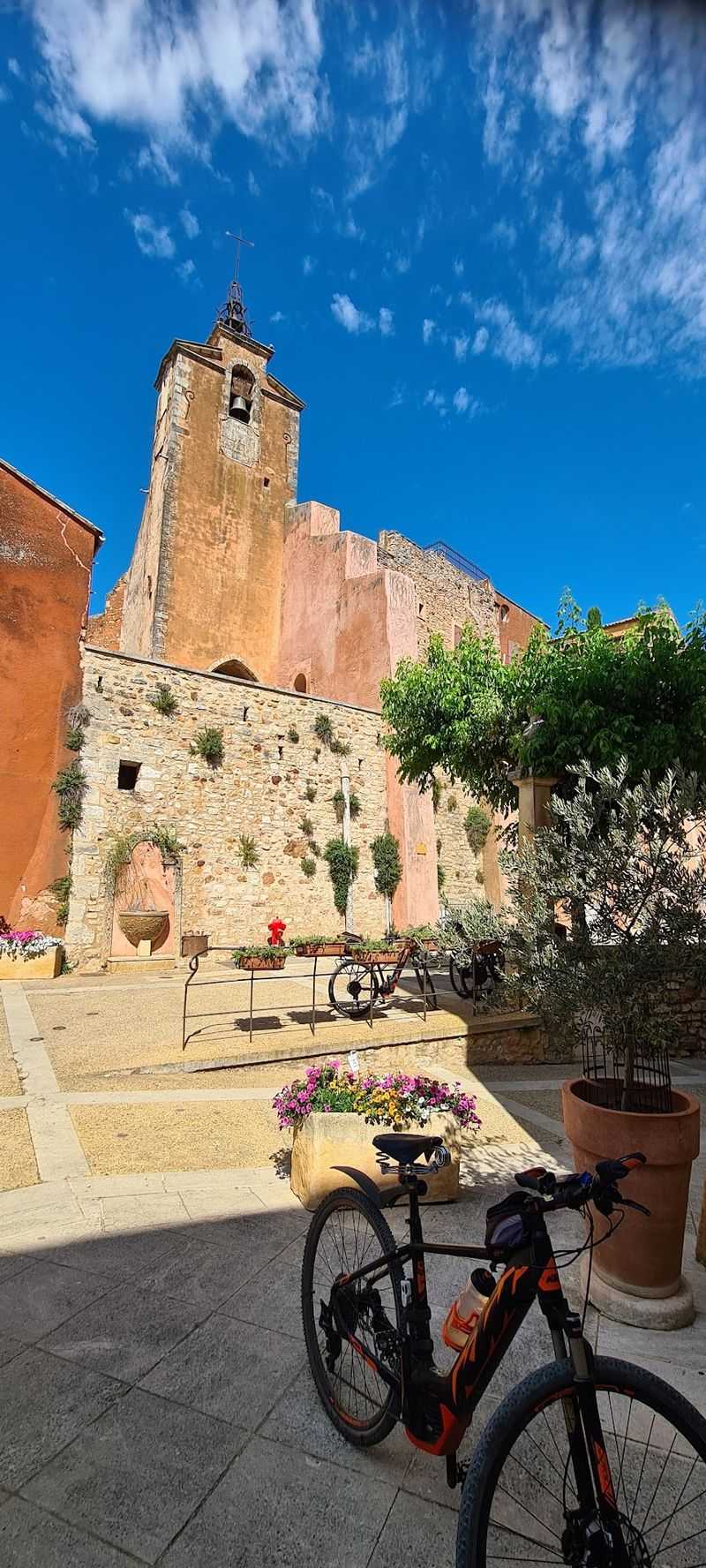
Roussillon is the village that looks like it was painted by someone who had never heard of subtlety. Rich shades of red, burnt orange, deep yellow, and rust coat every building, mirroring the extraordinary ochre cliffs that surround the town.
Walking through the main square feels like stepping inside a warm painting, with the colors shifting beautifully depending on the time of day and the angle of the sun.
The ochre deposits here were once commercially extracted on a large scale, making Roussillon an important industrial site before it became a tourist destination. Today, the old quarry network has been turned into the Sentier des Ocres, a walking trail that winds through towering rust-colored formations shaped by centuries of extraction and erosion.
The trail takes about 35 minutes and is genuinely spectacular.
Back in the village, the usual Provencal pleasures apply: good wine, strong coffee, local honey, and shaded terraces. Roussillon sits within the Luberon, so vineyards and olive groves fill the landscape between villages.
The color palette here makes it stand out clearly from its honey-toned neighbors. If you visit only one Luberon village, the argument for making it Roussillon is surprisingly strong.
Les Baux-de-Provence
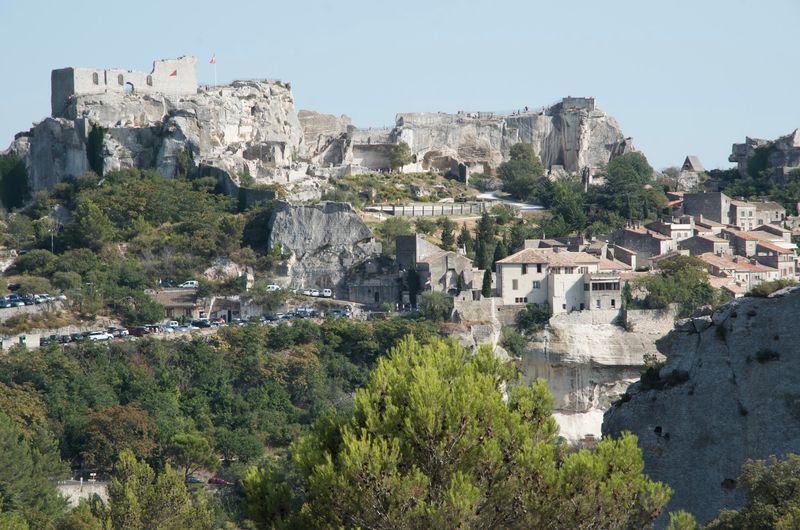
Les Baux-de-Provence has the kind of dramatic setting that makes people stop mid-sentence and just stare. The village clings to a sharp rocky spur in the Alpilles, with the ruined walls of a medieval fortress spreading across the highest point of the ridge.
Below, olive groves and limestone hills stretch out toward the horizon in every direction, making the views from the ramparts genuinely breathtaking.
The medieval ruins are open to visitors and include reconstructed siege weapons, towers, and defensive walls that tell the story of a powerful and often turbulent local dynasty. Narrow pedestrian streets lined with stone houses, small churches, and courtyards fill the village below the castle.
It is officially listed among France’s Plus Beaux Villages, and the designation feels well-earned here.
A short drive from the village, the Carrieres des Lumieres offers something completely different. Former limestone quarries have been transformed into a space where massive digital art exhibitions are projected across walls, ceilings, and floors.
The shows change yearly and have featured works inspired by Van Gogh, Picasso, and Klimt. Les Baux therefore covers medieval history, classic Provencal scenery, and contemporary art all within a few square kilometers, making it one of the most layered destinations in the Alpilles.
Saint-Rémy-de-Provence
Van Gogh painted some of his most famous works within walking distance of Saint-Remy’s main square. During 1889 and 1890, he stayed voluntarily at the Saint-Paul-de-Mausole institution just outside town, producing over 150 paintings of the surrounding wheat fields, olive trees, and limestone hills.
Visitors can still walk the same paths he painted, which is a quietly moving experience even if you are not a particular fan of art history.
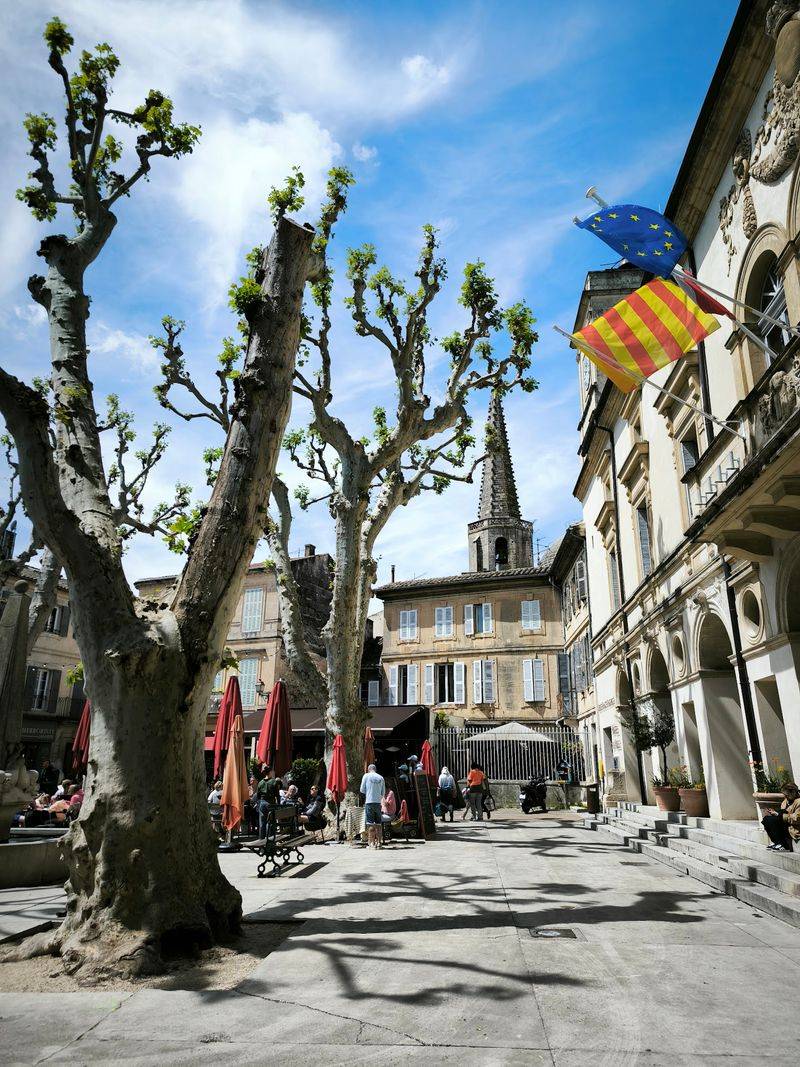
Saint-Remy itself is a lively Provencal market town with a relaxed, lived-in atmosphere. Stone streets pass boutiques, bakeries, and cafes shaded by plane trees, and the Wednesday market fills the center with local produce, cheese, olives, and lavender products.
The town avoids feeling like a museum, which makes it more enjoyable for longer stays.
Just outside town, the archaeological site of Glanum preserves Greek-influenced and Roman-era remains including a triumphal arch and mausoleum that date back over 2,000 years. The combination of ancient ruins, impressionist art history, mountain scenery, and everyday market-town life gives Saint-Remy a depth that many of Provence’s more photogenic but smaller villages simply cannot match.
It works equally well as a base for day trips or as a destination in its own right.
Aix-en-Provence
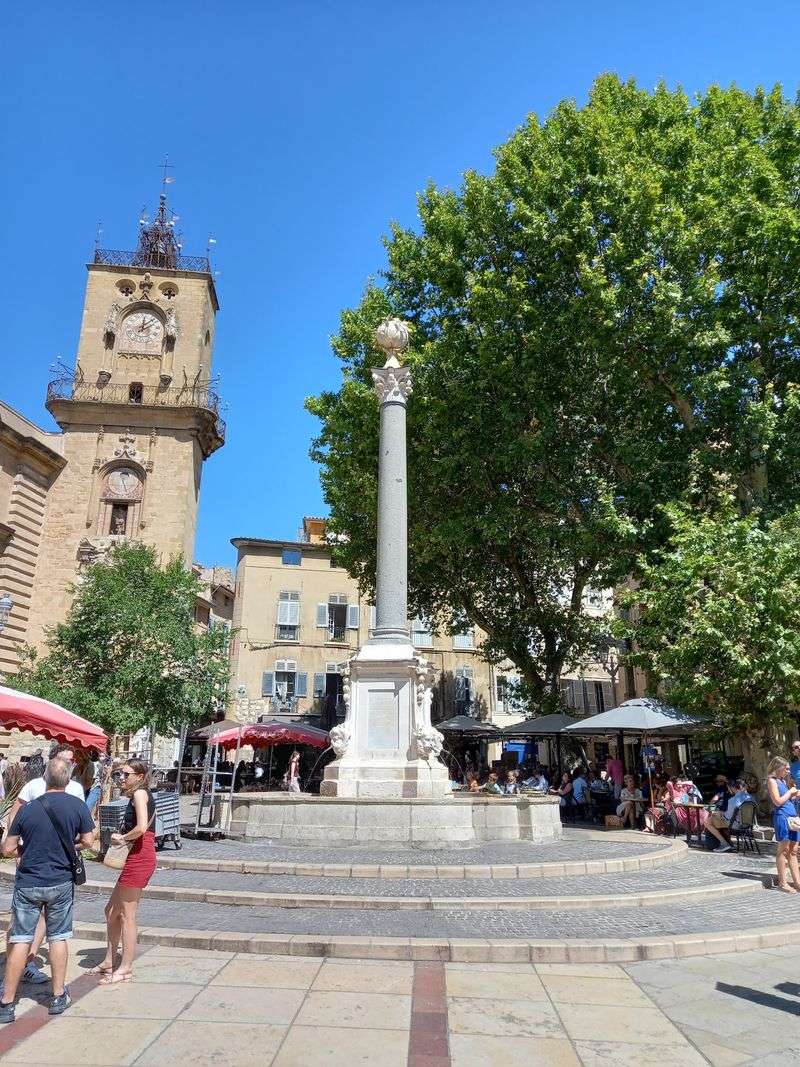
The Cours Mirabeau is one of those boulevards that makes you want to slow down immediately. Plane trees arch overhead, dappling light across the wide pavement, while elegant 17th-century mansions line one side and cafes spill onto the other.
Aix has a particular talent for making ordinary afternoon activities, like sitting outside with a coffee and a newspaper, feel effortlessly civilized.
Paul Cezanne was born here in 1839, and the city takes that heritage seriously. His studio north of the center has been preserved as a museum, and the nearby Sainte-Victoire mountain, which he painted repeatedly from different angles and in different seasons, remains a dominant presence on the eastern horizon.
Walking routes lead up into the mountain from the city’s outskirts.
Aix also has one of southern France’s best markets, held on the Place Richelme and surrounding streets. Flowers, fruit, cheese, olive oil, and calissons, the local almond-based sweet, fill the stalls most mornings.
Compared with Marseille, Aix is quieter, smaller, and easier to navigate on foot. The surrounding countryside offers vineyards, walking trails, and access to the Luberon and Alpilles within an hour’s drive.
For a first base in Provence, Aix makes an extremely strong case for itself.
Cassis
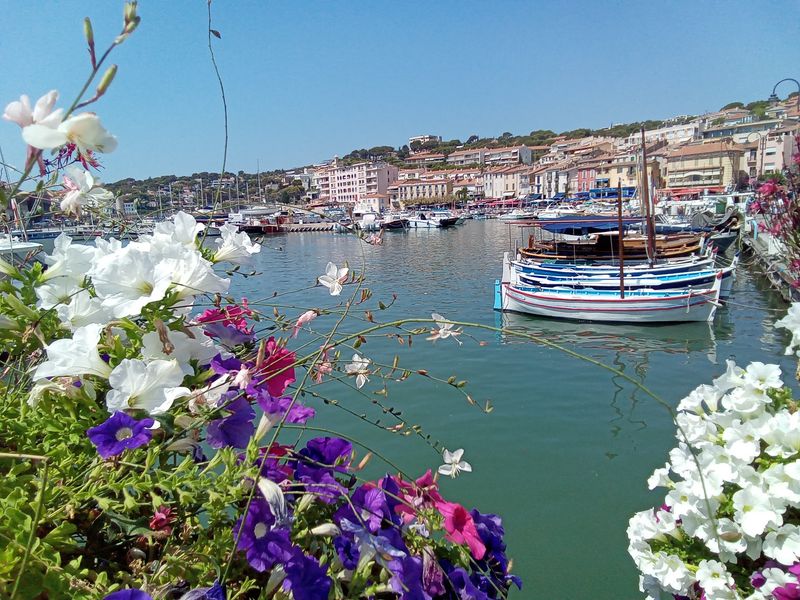
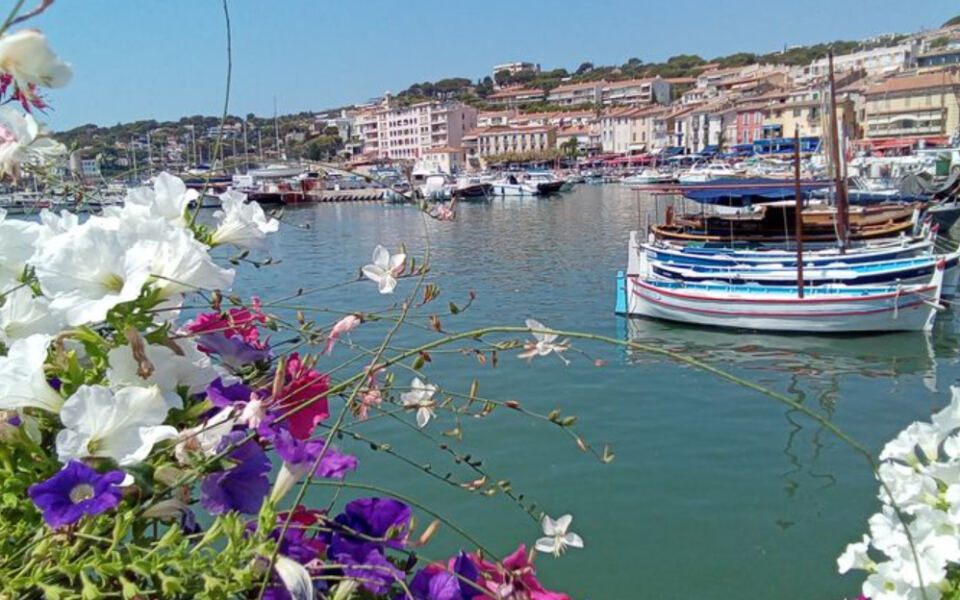
Cassis has a harbor so photogenic that it almost feels unfair to the other fishing ports in southern France. Colorful boats bob in front of pastel buildings, cafes line the waterfront, and behind it all, white limestone cliffs rise sharply toward the sky.
The town is charming enough on its own, but the real reason people make the trip is what lies just beyond those cliffs.
Calanques National Park stretches between Cassis and Marseille along one of the most dramatic coastlines in metropolitan France. Deep rocky inlets, locally called calanques, cut into the cliffs with turquoise water filling their narrow bases.
The most accessible are Port-Miou, Port-Pin, and En-Vau. Boat trips from Cassis harbor visit several in a single morning, while hikers can reach them on foot along trails that require good shoes and a decent level of fitness.
Cassis also produces its own appellation wine, a dry white that pairs well with the local fish and seafood served on the harbor terraces. Parking can be difficult in July and August, so arriving by train from Marseille and taking a shuttle into town saves considerable frustration.
The combination of a classic Mediterranean port and a genuinely wild national park right next door makes Cassis one of the south’s most satisfying stops.
Marseille
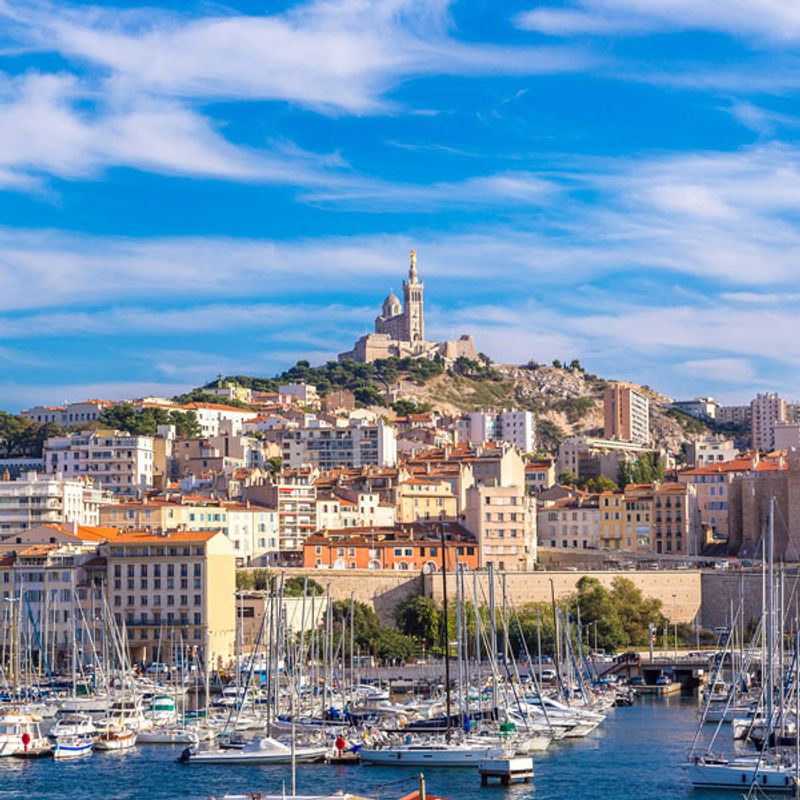
France’s oldest city does not do quiet. Marseille is loud, colorful, slightly chaotic, and completely alive in a way that polished resort towns rarely manage.
The Vieux-Port has been the city’s beating heart for over 2,600 years, and the morning fish market there still draws locals who argue over sea bass and sea bream with the kind of passion usually reserved for football matches.
Notre-Dame-de-la-Garde watches over the city from a high limestone bluff, offering one of the best panoramic views in southern France. Down at the waterfront, the Mucem museum explores Mediterranean civilizations across several floors of striking modern architecture.
The Panier neighborhood, the city’s oldest quarter, climbs steeply above the port in a maze of narrow streets painted with murals and lined with small restaurants.
Marseille also provides easy access to the Calanques, with the national park beginning effectively at the city’s southern edge. The Chateau d’If, the island fortress made famous by Alexandre Dumas, sits just offshore and can be reached by ferry from the Vieux-Port.
Few European cities this size offer such a varied combination of history, culture, food, beaches, and wilderness. Marseille rewards visitors who approach it with curiosity rather than caution.
Porquerolles
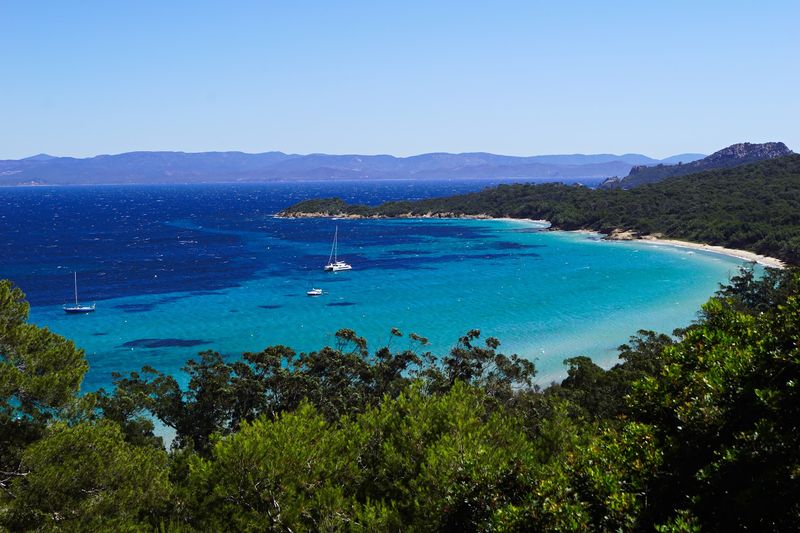
Imagine a Mediterranean island where cars are almost entirely banned, pine forests cover the interior, and the beaches look like they belong in a travel magazine from 1975 before the crowds found everything. Porquerolles is exactly that place.
Located off the coast near Hyeres, it forms part of Port-Cros National Park and takes its protected status seriously in the best possible way.
Ferries run regularly from the mainland, and once you arrive, bicycles are the preferred way to get around. The northern coast has several sandy, sheltered beaches, with Plage Notre-Dame frequently cited as one of the finest in France.
The southern coast is rockier, wilder, and less visited, with coastal paths running above the sea through low scrubland and pine trees.
The island also has vineyards producing wine under its own appellation, a small village with a handful of restaurants and shops, and enough walking trails to fill a full day without retracing your steps. Porquerolles fills up considerably in July and August, so visiting in May, June, or September rewards you with fewer people and equally beautiful conditions.
For anyone who finds the developed Riviera coastline too busy, Porquerolles offers a genuinely uncrowded and protected alternative just a short ferry ride from the mainland.
Cotignac
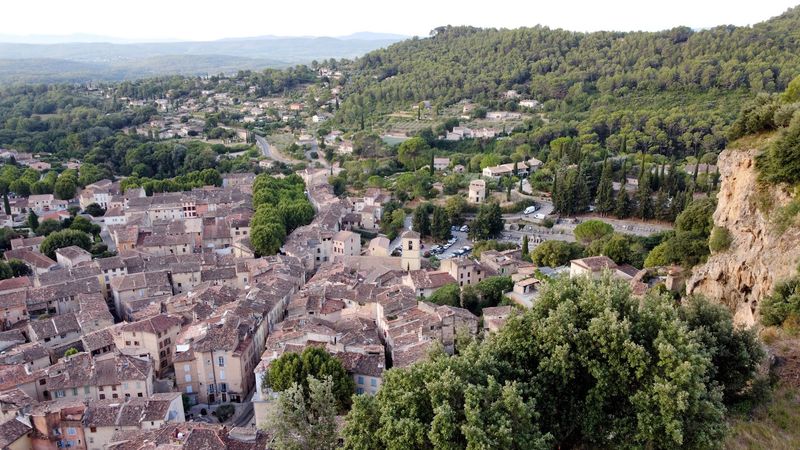
Most Provencal villages have a square, a fountain, and a church. Cotignac has all of those plus a 80-meter tufa cliff riddled with caves and openings that towers directly behind the main street.
The cliff is the first thing you notice and the detail that stays with you longest. Troglodyte dwellings were carved into the rock face centuries ago, and some of the openings can still be visited today.
Below the cliff, Cotignac has the relaxed, unhurried atmosphere of a village that has not yet been fully claimed by tourism. The main square has shaded cafes, a large fountain, and enough local activity to make people-watching genuinely entertaining.
Markets, local wine producers, and olive oil mills fill out the practical side of a visit.
The surrounding Provence Verte region is excellent territory for exploring by car or bicycle, with vineyards, lavender fields, and limestone landscapes connecting the dots between small villages. Cotignac is also reasonably well-placed for day trips toward the Verdon Gorge, one of Europe’s most impressive canyon landscapes.
Compared with the busier Luberon villages to the north, Cotignac feels quieter and more authentic, making it a good choice for travelers who want to experience Provence at a slower pace without sacrificing interesting architecture or scenery.
Èze
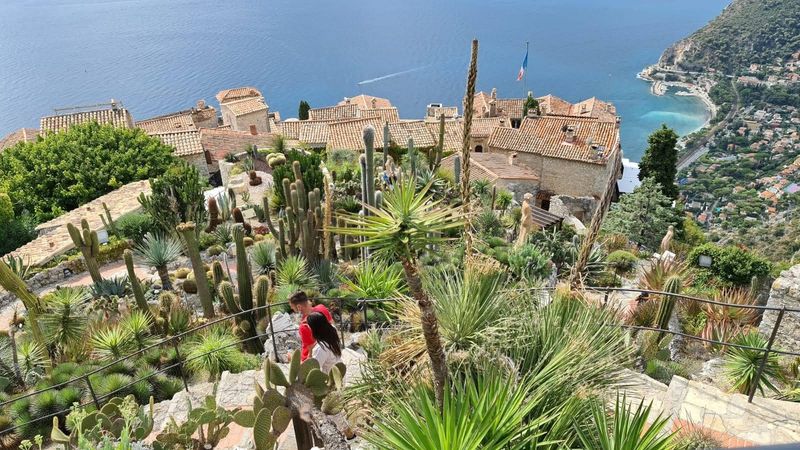
Standing at the top of Eze, looking straight down several hundred meters to the glittering Mediterranean below, is one of those experiences that genuinely makes your legs feel slightly unreliable. The village sits at roughly 427 meters above sea level on a narrow rocky peak, which is an extraordinary place to build anything, let alone a functioning medieval settlement complete with lanes, houses, and gardens.
At the very top, the ruins of an old fortress have been transformed into an exotic garden filled with cacti, succulents, and sculptures. The views from here sweep across the Riviera toward Monaco and, on clear days, the Italian coast.
The garden alone justifies the climb through the village’s steep, winding lanes. Galleries, artisan shops, and small restaurants line the route upward.
Eze sits directly on the Grande Corniche road between Nice and Monaco, making it easy to combine with either city. Summer crowds can make the lanes genuinely tight, so morning visits before the tour buses arrive work best.
The village is also accessible via a steep footpath from the lower coastal road, known as the Nietzsche Path, named for the philosopher who reportedly walked it while working on ideas for one of his major books. Few places on the Riviera match this level of drama per square meter.
Saint-Paul-de-Vence
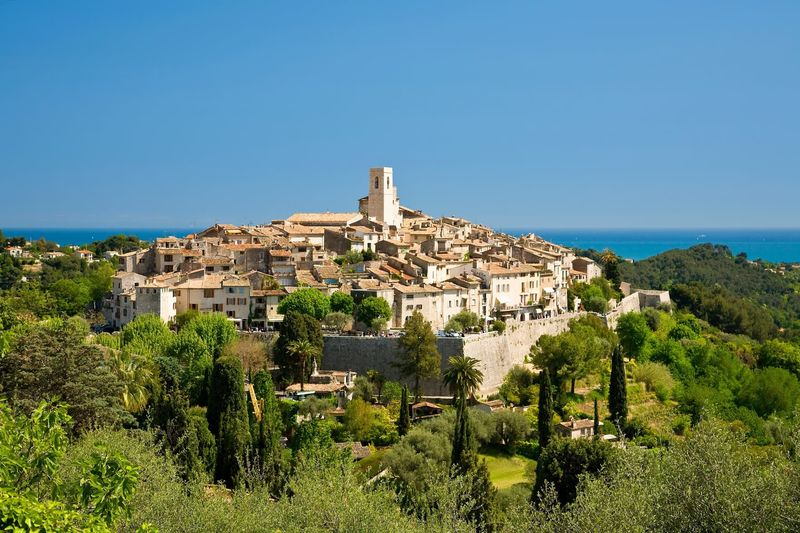
Saint-Paul-de-Vence has been attracting artists, writers, and creative types since the 1920s, when painters including Matisse and Chagall began spending time here. The village’s combination of medieval stone architecture, warm light, and proximity to the Mediterranean coast made it a natural gathering point for people who notice how places look.
That artistic energy has never entirely left.
Walking the ramparts that circle the old town gives a clear sense of the village’s hilltop position, with vineyards, pine forests, and the distant sea filling the view below. Inside the walls, narrow cobblestone lanes pass galleries, studios, boutiques, and small restaurants in an almost continuous flow.
The cemetery at the edge of the village contains Marc Chagall’s grave, which is frequently visited by admirers leaving small stones and flowers.
Just outside the village, the Fondation Maeght is one of the finest small art museums in France. Its collection includes works by Miro, Calder, Giacometti, and Braque, displayed in a purpose-built building surrounded by sculpture gardens.
The combination of the historic village and a world-class contemporary art foundation within five minutes of each other is genuinely unusual. Saint-Paul can be crowded in high season, but the quality of what it offers makes the visit worthwhile almost regardless of the time of year.
Menton
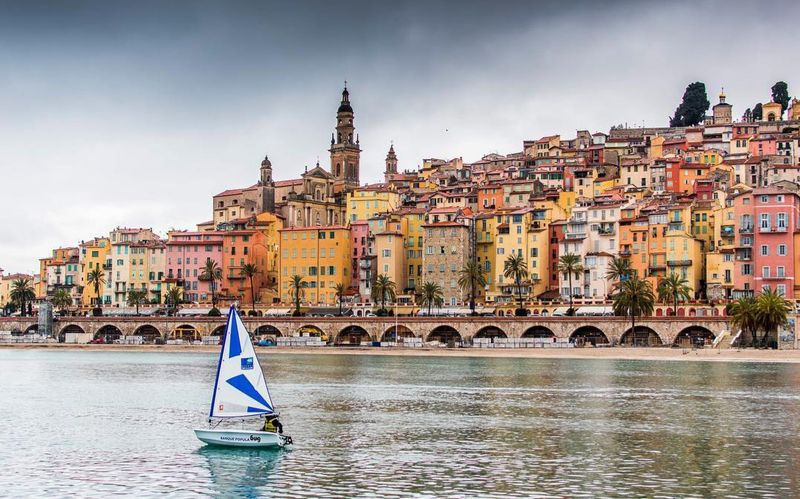
Tucked right against the Italian border, Menton has a personality that does not quite match anywhere else on the French Riviera. The old town rises steeply from the waterfront in layers of warm ochre, terracotta, and pale yellow buildings that look more like Liguria than Provence.
The Italian influence here is not just visual; it shows up in the food, the architecture, the dialects of older residents, and the general attitude toward afternoon naps.
Menton’s microclimate is one of the mildest on the entire coast, sheltered from cold northern winds by the Alps rising directly behind the town. This warmth has made it famous for gardens and, above all, for lemons.
The annual Lemon Festival in February fills the town with elaborate sculptures made entirely from citrus fruit, drawing visitors from across Europe to what is otherwise a relatively quiet corner of the Riviera.
The old town climbs to a Baroque church with a colorful tiled roof, while below, beaches and promenades stretch along the shore. Jean Cocteau, the French artist and filmmaker, spent time in Menton and decorated the local wedding hall with murals that are still open to visitors.
For travelers who find the western Riviera too crowded or too expensive, Menton offers a gentler, more personal version of the same coastal magic.
Aigues-Mortes
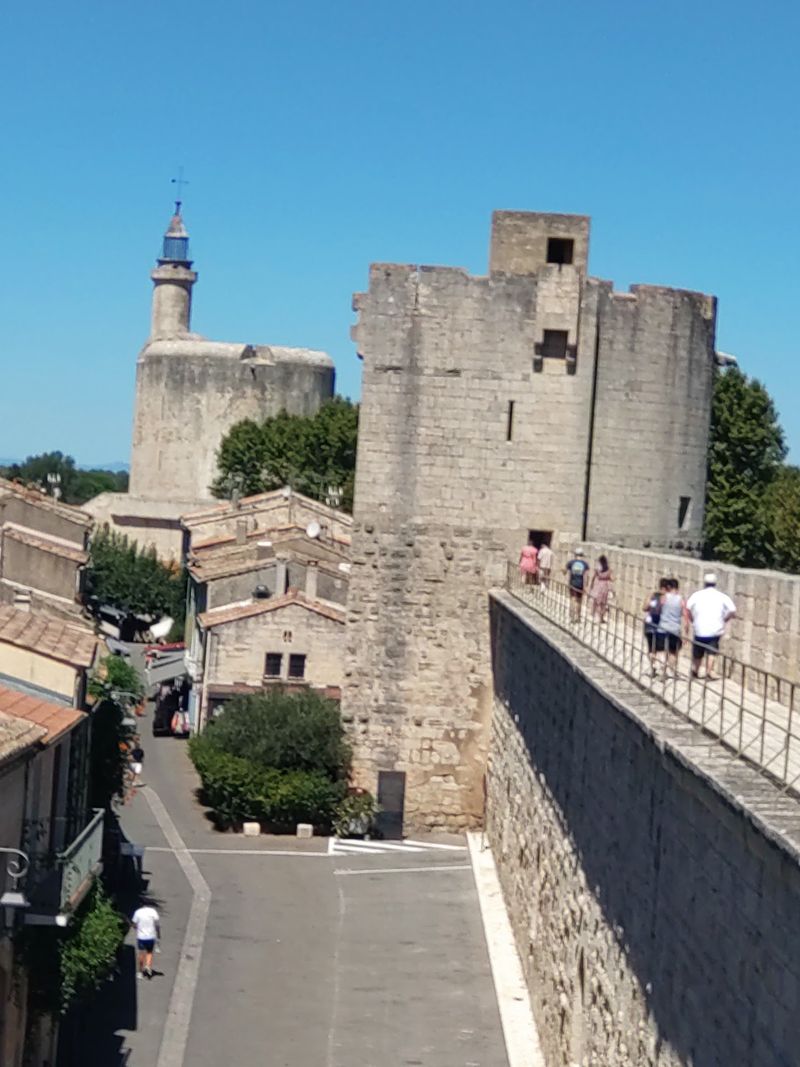
Aigues-Mortes looks like someone dropped a perfectly preserved medieval fortress into the middle of a vast, flat wetland and then forgot to build anything around it. The town’s rectangular walls and towers remain almost entirely intact after 800 years, rising from salt flats and marshes in a way that seems improbable and magnificent at the same time.
The name translates roughly as dead waters, which gives you a reasonable sense of the landscape.
Louis IX, known as Saint Louis, ordered the construction of Aigues-Mortes in the 13th century to give France its own Mediterranean port for crusading expeditions. The town’s grid layout, designed from scratch, is still clearly visible today.
Walking the full circuit of the ramparts takes about 45 minutes and provides views across the flat Camargue landscape in every direction, including the pink-tinted salt production pans nearby.
The surrounding Camargue region adds significant natural interest to any visit. White horses, black bulls, flamingos, and vast reed beds fill the wetlands just outside town.
Salt harvesting remains an active industry, and the large pink salt flats near Aigues-Mortes are among the most visually striking in France. The contrast between medieval military architecture and open, watery wilderness makes this one of southern France’s most genuinely surprising destinations, especially for first-time visitors.
Sète
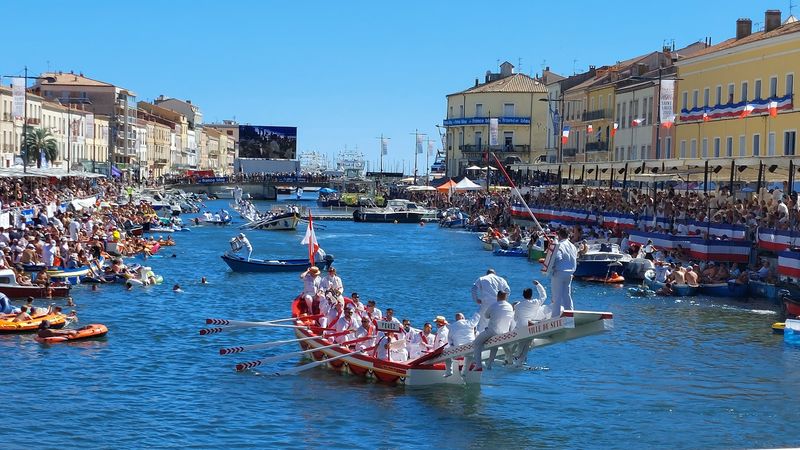
Sète is the kind of port town that feeds you well and does not apologize for being exactly what it is. Built on a narrow strip of land between the Mediterranean and the Etang de Thau lagoon, the town has canals, fishing boats, seafood restaurants, and a working harbor atmosphere that feels refreshingly unpolished compared with the groomed resorts farther east along the coast.
The lagoon is the source of much of what ends up on local plates. Oysters, mussels, and clams are farmed directly in the Etang de Thau, and the town’s restaurants serve them with a simplicity that lets the quality speak clearly.
The traditional water jousting tournaments, held on the canals since the 17th century, are a local obsession and draw enthusiastic crowds during the summer festival season.
Mont Saint-Clair rises above the town and provides excellent views across both the lagoon and the Mediterranean from its summit. Sandy beaches extend along the coast in both directions, offering plenty of space even in summer.
The poet and singer Georges Brassens was born in Sete, and the town celebrates him with a dedicated museum. Sete rewards visitors who prefer authentic port energy over manicured promenades, making it one of Occitanie’s most characterful and underappreciated coastal destinations.
Collioure
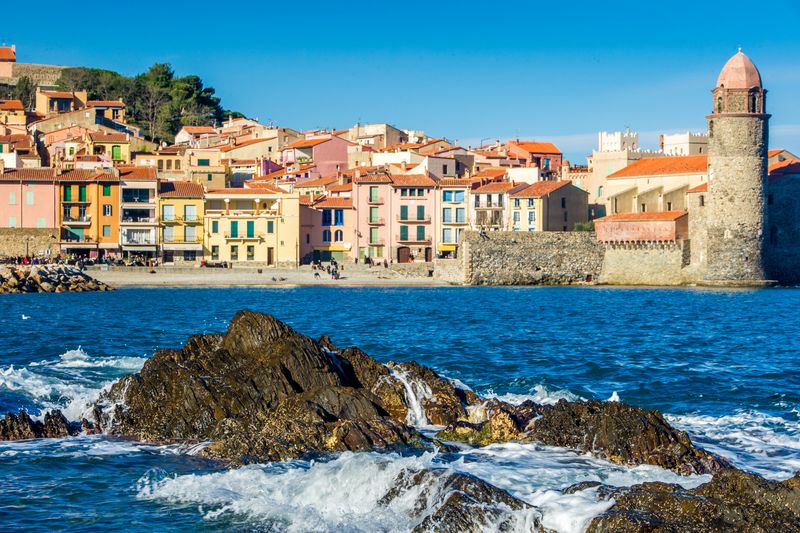
Henri Matisse arrived in Collioure in the summer of 1905 and promptly helped invent a new art movement. The intensity of the light here, bouncing off the water and the pale walls of the harbor buildings, pushed him and Andre Derain toward colors so bold and unnatural that critics called them Fauves, meaning wild beasts.
The name stuck, and Fauvism became one of the defining movements of early 20th-century painting.
The harbor itself is small, curved, and backed by a church whose bell tower doubles as a lighthouse, one of the more charming architectural arrangements on any Mediterranean coast. Colorful boats sit in the water in front of brightly painted buildings, while the Pyrenees rise steeply behind the town, covered in terraced vineyards producing the area’s famous Banyuls and Collioure wines.
The Royal Castle, built by the Kings of Majorca, anchors one end of the waterfront.
Collioure has a distinctly Catalan identity that sets it apart from the rest of the French Mediterranean. Street signs appear in both French and Catalan, the cuisine leans toward anchovies and rich red wines, and the surrounding landscape has a rugged, sun-baked intensity that feels closer to northern Spain than to Provence.
Coastal walking paths lead north and south along the rocky Cote Vermeille, connecting small coves and vineyards in a genuinely beautiful final chapter for any southern France itinerary.
Share this story