Spain is home to some of the world’s most beautiful wine country, where rolling hills, ancient castles, and dramatic river canyons share the landscape with rows of carefully tended vines. From the green, rainy coast of Galicia to the sun-baked slate slopes of Priorat, every region tells a different story through its wines.
Whether you are a serious wine lover or just someone who enjoys great scenery and a good glass, these fifteen Spanish vineyards offer experiences worth planning a trip around.
Marqués de Riscal, Rioja Alavesa
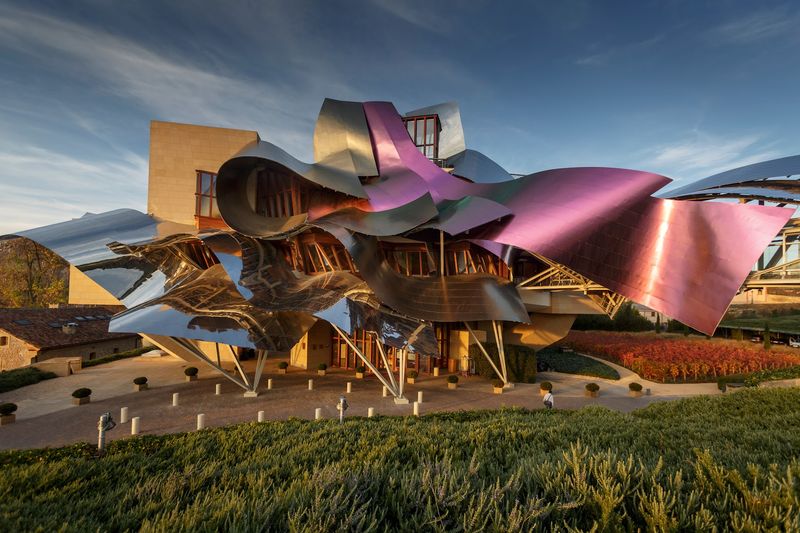
Frank Gehry designed a titanium hotel that looks like it landed from another dimension right in the middle of a traditional Rioja village. At Marqués de Riscal, the swirling ribbons of silver, gold, and purple metal tower above rows of green vines and centuries-old stone buildings.
Few wineries anywhere in the world make such a bold first impression.
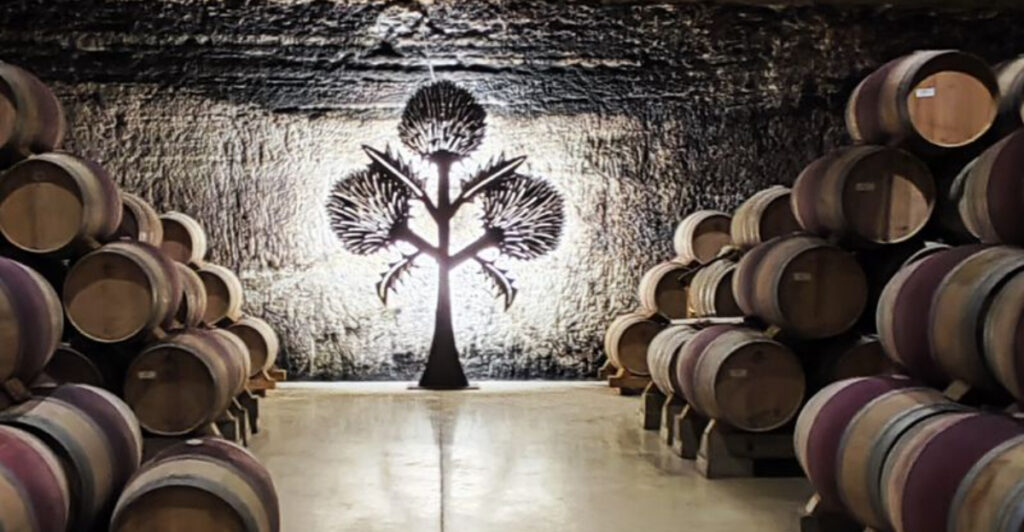
The estate’s underground cellars date back to the 1860s, making this a place where serious wine history and serious architectural ambition share the same address. Guided tours walk visitors through the historic galleries before finishing with a tasting of classic Rioja reds and crisp Rueda whites.
The contrast between old and new gives the experience a genuine sense of depth.
Elciego itself is a lovely medieval town worth exploring on foot after your visit. Booking ahead is strongly recommended, especially during harvest season when the estate gets very busy.
The hotel’s Spa Vinothérapie offers wine-based wellness treatments that are as unusual as the building housing them.
Bodegas Ysios, Rioja Alavesa
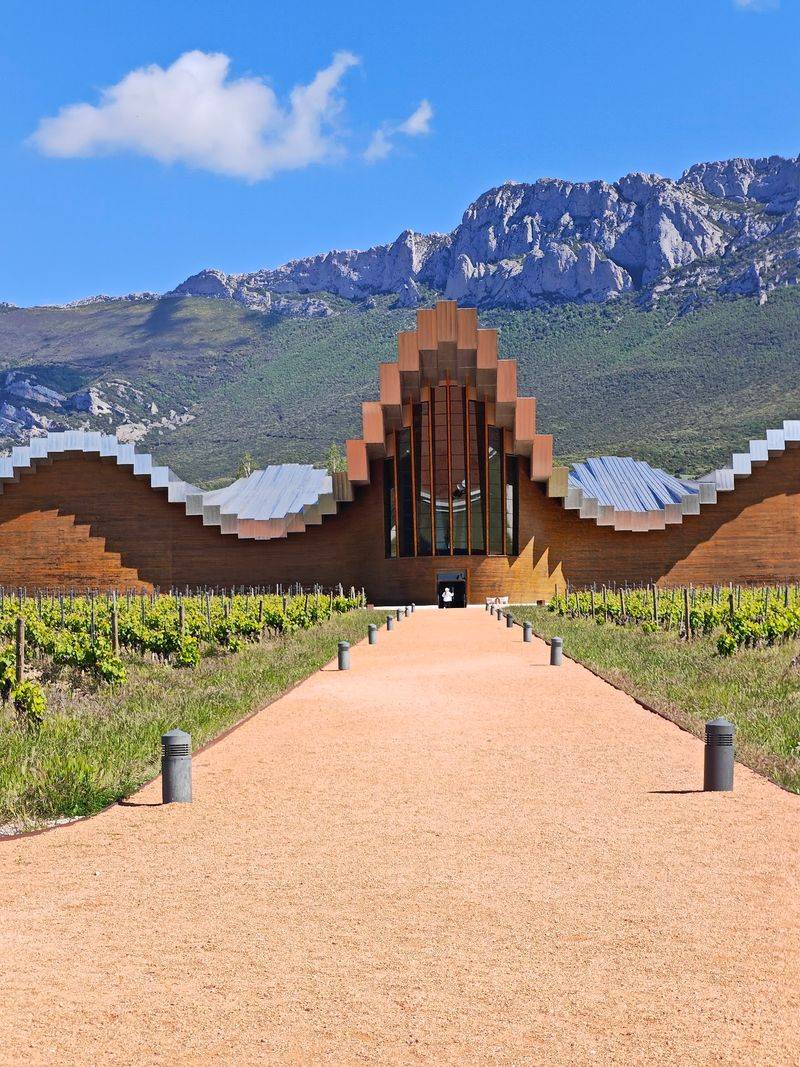
Santiago Calatrava’s undulating roof at Bodegas Ysios seems to breathe in and out as the light shifts throughout the day. The aluminum waves mirror the ridgeline of the Sierra de Cantabria directly behind the building, creating one of the most photographed winery views in all of Spain.
Standing at the end of the vine-lined path leading to the entrance feels genuinely cinematic.
The wines here focus exclusively on Rioja Alavesa, drawing from vineyard plots around Laguardia and Elvillar. Tempranillo grown in this cooler, higher-altitude corner of Rioja tends to produce wines with good structure and freshness.
A walk through the barrel room reveals just how seriously the team takes the aging process.
Visitor experiences range from basic cellar tours to longer vineyard walks with tastings. The nearby walled town of Laguardia is only a short drive away and makes a natural companion to any visit here.
Ysios proves that a winery building can be a destination in its own right, not just a backdrop for the bottles.
Finca Valpiedra, Rioja Alta
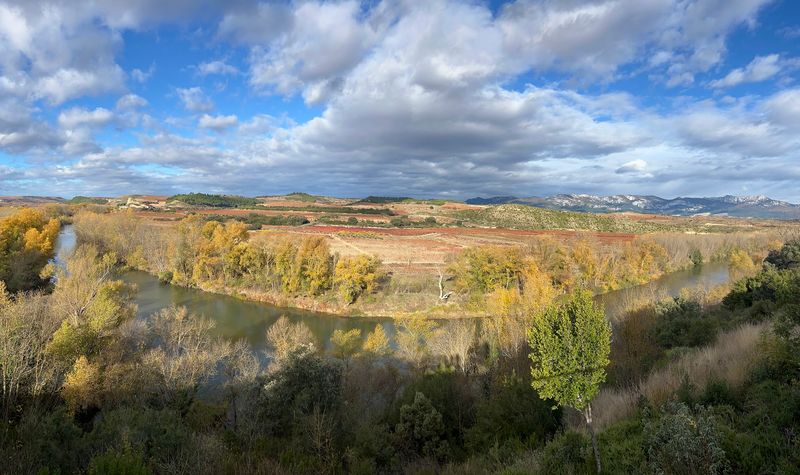
Tucked inside a sweeping bend of the Ebro River, Finca Valpiedra feels like a secret that Rioja has been quietly keeping for years. Its eighty hectares of vines spread across three descending terraces, each one stepping closer to the water in a way that looks almost too perfectly arranged to be natural.
The name itself means “stone field,” a nod to the stony soils that define the estate’s character.
Those rocky soils force vine roots to dig deep, producing wines built to express this one very specific place. Single-estate Rioja like this offers something different from blended regional wines, giving drinkers a genuine sense of terroir.
The bottles carry a quiet confidence that comes from knowing exactly where they come from.
Because Finca Valpiedra sits away from Rioja’s busier wine towns, the atmosphere during visits feels calm and unhurried. The combination of river views, terraced vineyards, and total tranquility makes it a wonderful stop for anyone wanting to slow down and truly absorb the landscape.
Reservations are required and visitor numbers are kept small.
Vivanco, Briones
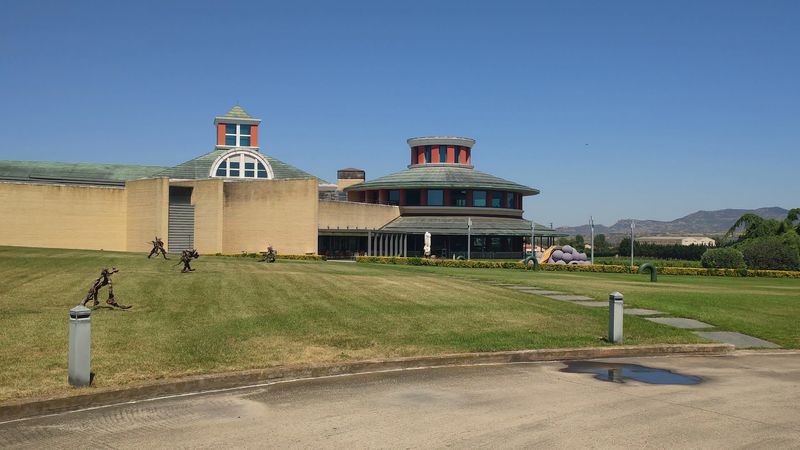
Vivanco is the kind of place that makes you realize you underestimated how interesting wine history actually is. Perched near the gorgeous hilltop village of Briones, this estate pairs a serious winery with one of Europe’s most comprehensive museums dedicated entirely to wine culture.
The collection covers everything from Roman amphoras to medieval drinking vessels to contemporary art inspired by the vine.
Outside, the Garden of Bacchus grows hundreds of different grape varieties, offering a living encyclopedia of viticulture you can walk through at your own pace. It is genuinely fascinating to see how many different shapes and colors grape clusters can take before they ever become wine.
The garden alone justifies the visit for curious travelers.
Briones itself is one of Rioja’s most beautiful villages, with stone streets and panoramic views that reward a slow afternoon stroll. Vivanco’s tastings cover the estate’s range of Rioja wines, from young, fruit-forward styles to more complex aged reservas.
Families, history lovers, and wine enthusiasts all tend to leave happy, which is a harder balance to strike than it looks.
Bodegas Roda, Haro
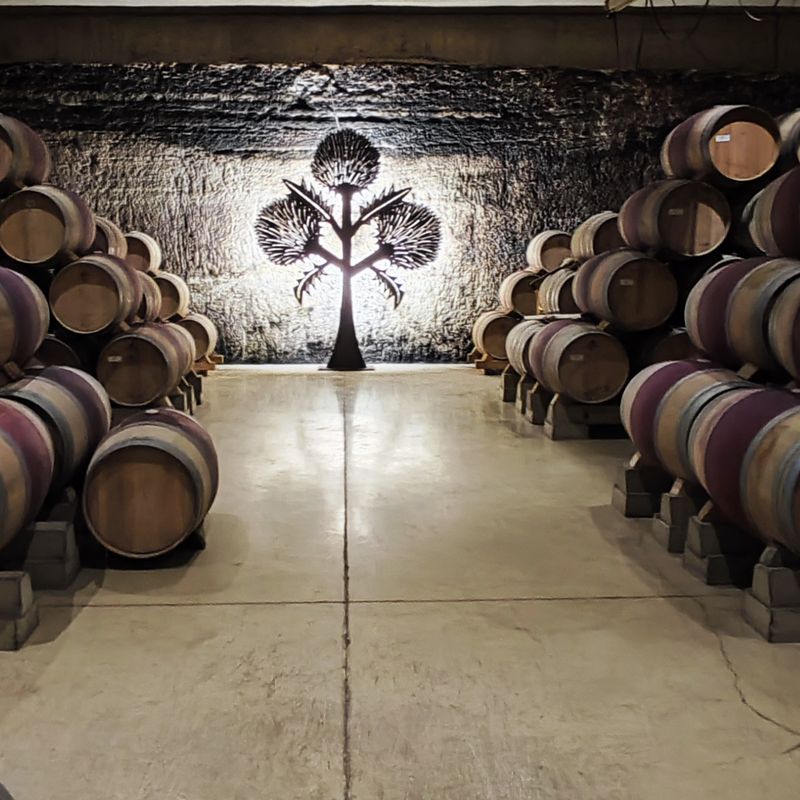
Haro’s Barrio de la Estacion is one of the most remarkable clusters of historic wineries anywhere in Europe, and Bodegas Roda sits proudly at its edge overlooking the Ebro River. The estate blends a historic underground cellar with a clean, modern aesthetic that respects its surroundings without trying to copy them.
Walking through the barrel rooms here feels like reading a very well-edited book.
Roda’s reserva wines are among Rioja’s most respected, built on old-vine Tempranillo with a philosophy that values precision over excess. Tours explain the production process in clear, engaging terms that make the wines taste even better once you understand the thought behind them.
The tasting sessions are well-paced and genuinely informative.
One of the great advantages of visiting Roda is its location within walking distance of several other legendary producers in the Barrio de la Estacion. A full morning or afternoon can be spent moving between century-old wine houses without ever getting in a car.
Haro itself is a lively market town with excellent restaurants, making it an ideal base for exploring western Rioja.
Bodegas Protos, Peñafiel
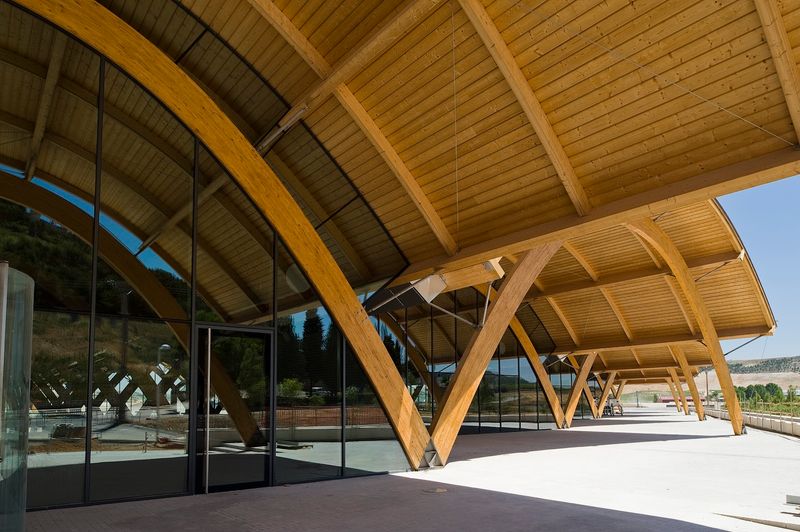
Very few wineries in the world operate directly beneath a medieval castle, but Bodegas Protos pulls it off with remarkable style. Peñafiel Castle looms above the hillside like a stone ship, and the estate’s modern winery designed by Richard Rogers fans out below it in a way that somehow makes both structures look even more impressive.
The visual drama starts the moment you arrive.
Older underground galleries carved into the hillside provide natural temperature and humidity control that winemakers today still rely on for aging. Walking through those tunnels, with bottles stacked in every direction and the faint smell of oak in the air, is one of Ribera del Duero’s most memorable experiences.
The contrast between ancient cellar and contemporary design is striking at every turn.
Ribera del Duero’s Tempranillo-based wines are known for their depth and structure, and Protos has been producing them since 1927. Guided visits explain the region’s winemaking traditions alongside the estate’s own story.
After the tour, the view from the castle above the winery and the surrounding Duero Valley makes an excellent way to finish the afternoon.
Pago de Carraovejas, Ribera del Duero
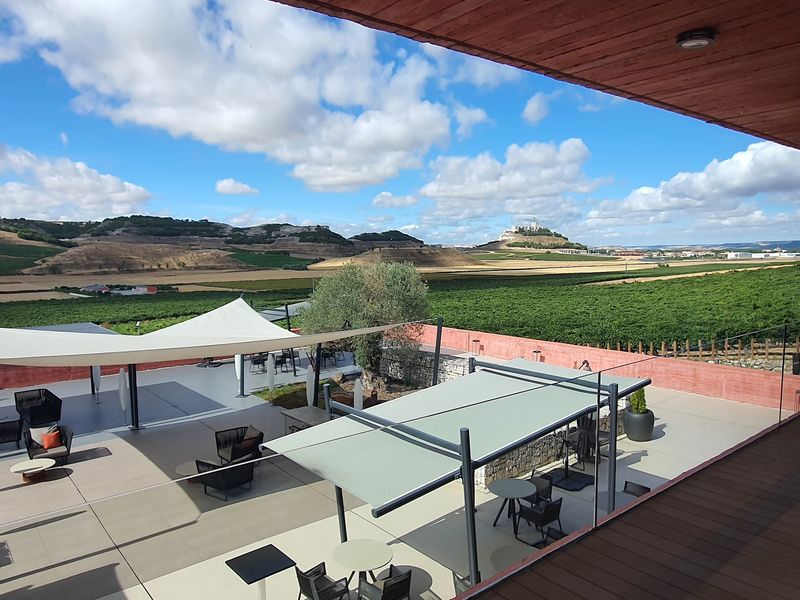
On a clear day, the view from Pago de Carraovejas stretches all the way to Peñafiel’s hilltop castle, with the Duero Valley spreading out below in shades of gold, green, and rust depending on the season. The estate sits on sloping terrain that gives its vineyards excellent sun exposure and drainage, two things that Ribera del Duero’s Tempranillo absolutely loves.
The landscape feels generous and open in a way that immediately puts visitors at ease.
Food plays a central role in the experience here, with wine pairings designed to show how the estate’s bottles perform alongside carefully prepared dishes. The Alma Carraovejas project explores different vineyard identities and winemaking approaches, offering guests a broader picture of what this specific corner of Ribera del Duero can produce.
It goes well beyond a standard tasting.
The estate is particularly popular during autumn when the vines turn deep red and gold before harvest. Booking well in advance is essential for weekend visits.
Pago de Carraovejas has built a reputation as one of Ribera del Duero’s top producers, and the visitor experience matches the quality of the wines without feeling overly formal or intimidating.
Abadía Retuerta, Sardón de Duero
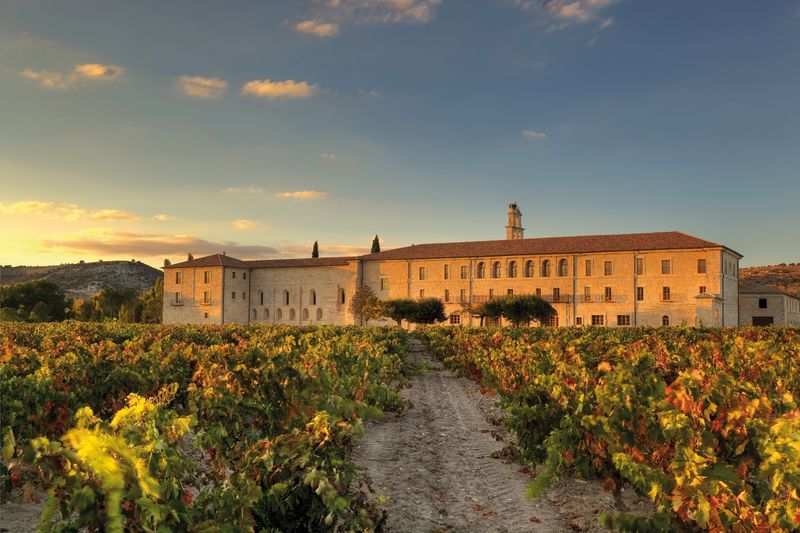
A 12th-century monastery surrounded by nearly 200 hectares of vines is not a combination you come across every day. Abadía Retuerta in Sardón de Duero is one of Spain’s most extraordinary wine estates, where Romanesque architecture, luxury accommodation, acclaimed restaurants, and serious winemaking all share roughly 700 hectares beside the Duero River.
It is the kind of place that makes you want to cancel your other plans.
The estate’s wines come from numerous individual plots with different soils and sun exposures, each contributing something distinct to the final blends and single-vineyard bottlings. This plot-by-plot approach gives the winemaking team enormous creative flexibility and the wines a genuine sense of place.
Tastings here reward attention and patience.
Visitors can arrive just for a wine experience or stay overnight in the beautifully converted monastery, where the spa, dining rooms, and cloisters create an atmosphere that feels genuinely removed from everyday life. Vineyard walks and guided tastings can be combined with a long lunch at the estate’s restaurant.
Few places in Spain offer this level of setting, hospitality, and wine quality all under one ancient roof.
Bodegas Portia, Gumiel de Izán
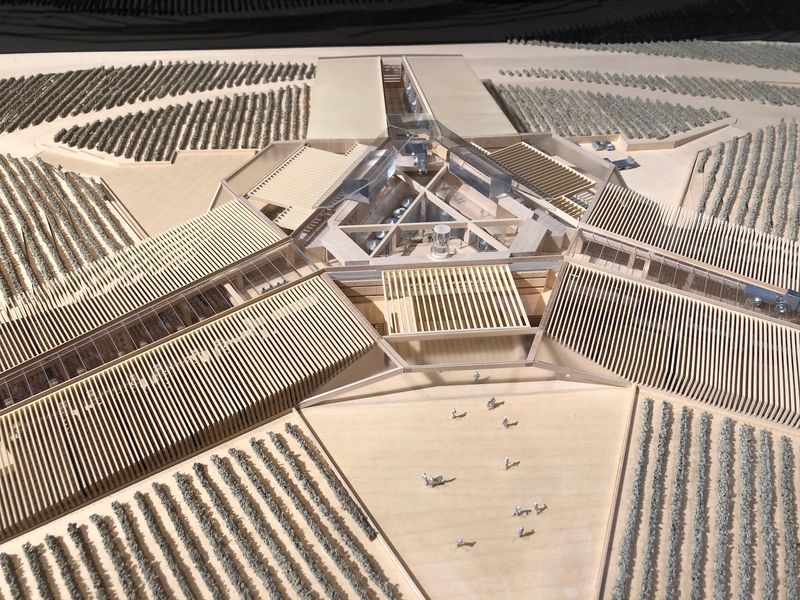
Bodegas Portia looks like an architect’s dream doodled on a napkin and then somehow built at full scale in the middle of a Spanish vineyard. Norman Foster’s three-pointed star design is not just visually striking, it is functionally clever, with each wing of the building dedicated to a different phase of wine production.
Gravity does most of the work moving wine through the facility, which is as elegant a solution as the building itself.
From above, the structure creates a bold geometric shape against the flat Ribera del Duero landscape. From ground level, the arrival along a straight road flanked by vines builds anticipation in a way that feels almost theatrical.
The winery earns its reputation as one of Spain’s great examples of architecture serving both aesthetics and purpose.
Tours cover the winemaking process clearly and end with tastings of the estate’s Tempranillo-based wines, which are approachable without being simple. The option to dine at the estate makes it easy to turn a visit into a proper half-day experience.
Gumiel de Izán sits in the heart of Ribera del Duero, surrounded by producers and villages worth exploring before or after your visit.
Clos Mogador, Priorat
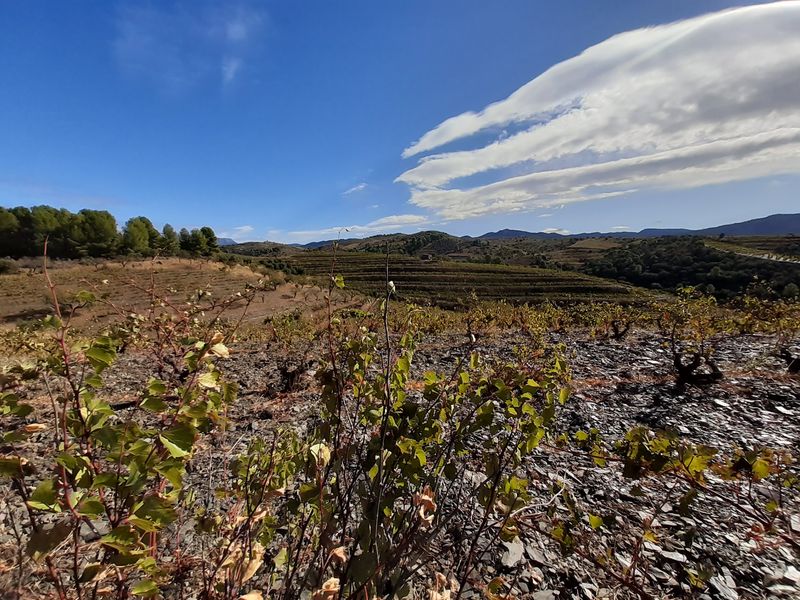
Priorat’s slate soils, known locally as llicorella, crunch underfoot like broken pottery and shimmer in the afternoon sun. Clos Mogador sits near Gratallops at the heart of this rugged landscape, where vines cling to slopes so steep that working them by machine is simply not possible.
Everything here is done by hand, and you can taste that effort in every glass.
René Barbier pioneered the modern Priorat movement from this estate starting in the late 1980s, helping transform a nearly forgotten region into one of Spain’s most prestigious wine appellations. Small-group visits take guests through the vineyard parcels before moving into the winery for tastings of Clos Mogador, the white Nelin, and other estate wines.
The experience is intimate and unhurried.
The landscape itself is unlike anything else in Spain, all dark rock, twisted vines, and dramatic hillside views. Understanding how grapes survive and thrive on this demanding terrain adds a whole new layer of appreciation to the wines.
Priorat is not the easiest region to visit, but Clos Mogador makes the effort very much worthwhile for anyone serious about Spanish wine.
Perinet, Priorat
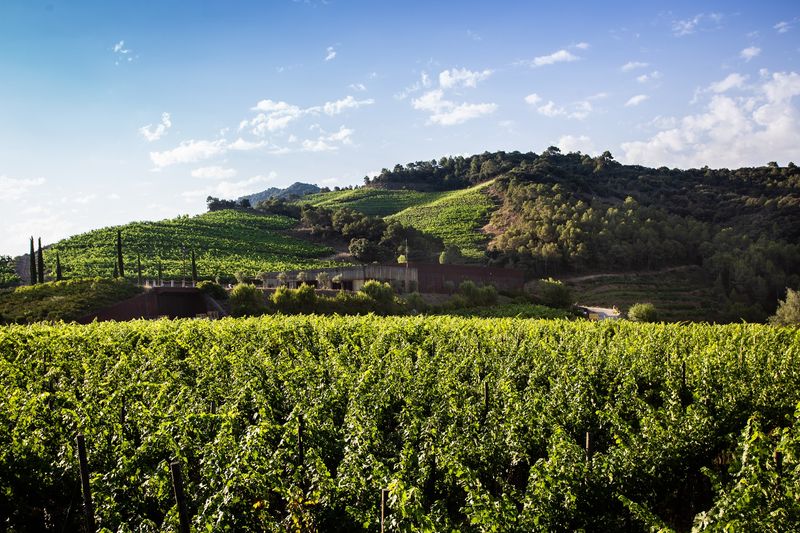
Carved into the mountains of Priorat like steps built for a giant, Perinet’s terraced vineyards stretch across several contrasting sites that together paint a full picture of what this demanding region can offer. Some parcels face south into full sun, while others catch cooling breezes drifting in from the Mediterranean, giving the winemaking team genuinely different raw materials to work with each vintage.
The variety within a single estate is quietly impressive.
Garnacha and Cariñena thrive here despite soils that look more like rubble than farmland. Old vines with deep root systems find water and nutrients far below the surface, producing small yields of intensely concentrated fruit.
That concentration shows up clearly in the wines, which tend to be powerful but balanced.
From the estate’s higher viewpoints, the visual reward is spectacular, layer after layer of vine-covered ridges fading into the distance. Perinet’s visitor experiences give guests a genuine physical sense of how much labor goes into each bottle produced on these slopes.
For travelers who want to understand why Priorat wines command such respect and such prices, a visit here answers both questions very convincingly.
Familia Torres, Penedès
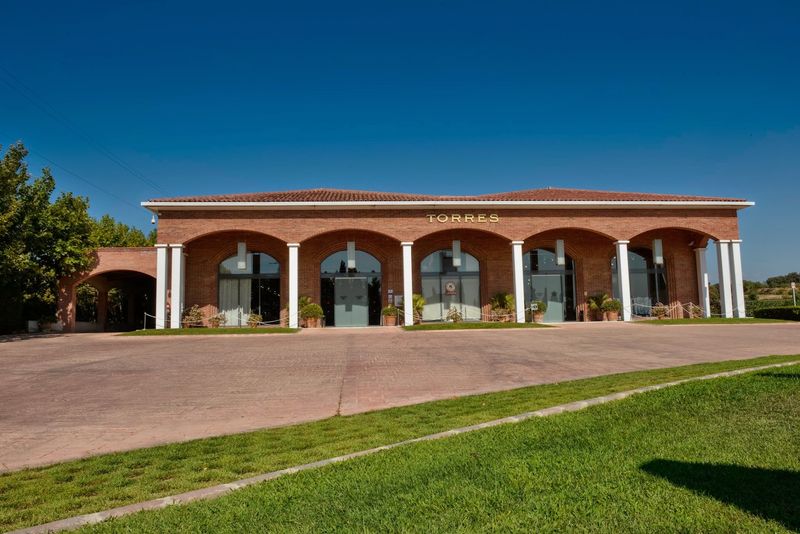
On a clear morning at Familia Torres, the jagged silhouette of Montserrat rises above the Penedès plain like a natural cathedral, framing rows of vines that have been producing some of Catalonia’s finest wines for generations. The landscape here is gentler and more open than Priorat, filled with Mediterranean warmth, wildflowers between the rows, and a sense of agricultural calm that feels deeply rooted in place.
It is easy to understand why the Torres family has stayed committed to this land for over 150 years.
Mas La Plana is the estate’s most celebrated vineyard, home to a Cabernet Sauvignon that famously outperformed several top Bordeaux wines in a 1979 tasting competition in Paris. That result put Spanish wine on the international map in a way few events had managed before.
The vineyard still produces one of the estate’s flagship bottles today.
Tours focus on regenerative viticulture alongside the estate’s broader wine range, reflecting the family’s long-standing commitment to environmental sustainability. Food pairing experiences are available for those who want a more complete afternoon.
Penedès is an accessible region, close to Barcelona, making Familia Torres a natural first stop on any Catalan wine itinerary.
Codorníu, Sant Sadurní d’Anoia
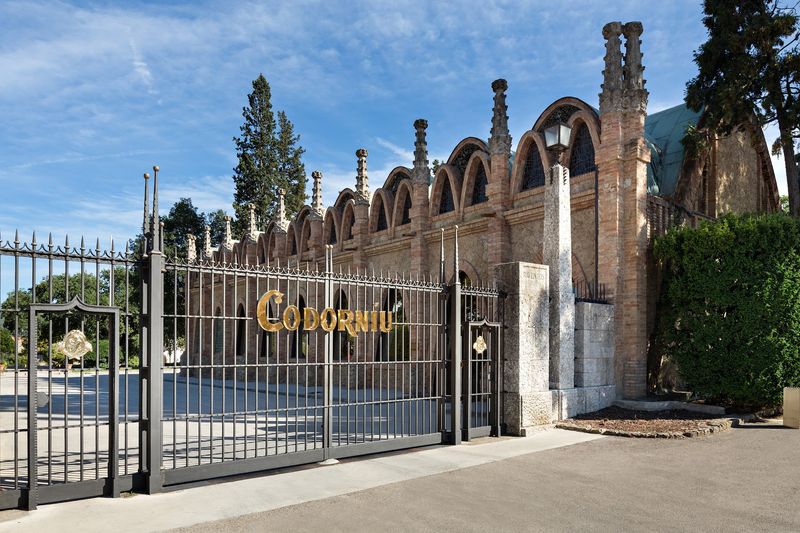
Codorníu’s winery complex in Sant Sadurní d’Anoia looks less like a place of production and more like a Modernist palace that decided wine was the most dignified thing to make inside it. Josep Puig i Cadafalch, a student of Antoni Gaudí, designed the buildings in the early 20th century, filling them with decorative stonework, stained glass, and graceful arches that have since earned the site status as a National Monument.
Few wineries anywhere can match this level of architectural ambition.
Beneath those beautiful buildings stretch over 30 kilometers of underground cellars, where millions of cava bottles rest quietly through their second fermentation. The scale is staggering once you are standing inside the tunnels.
Codorníu helped establish cava as a globally recognized sparkling wine style, and the history of that achievement is woven into every corner of the estate.
Guided tours move through the historic buildings, gardens, and subterranean galleries before finishing with a tasting of the estate’s sparkling wines. The experience works well for first-time wine tourists and seasoned enthusiasts alike.
Sant Sadurní d’Anoia is only about 45 minutes from Barcelona, making this one of the most convenient great wine experiences in all of Spain.
Bodegas Martín Códax, Rías Baixas
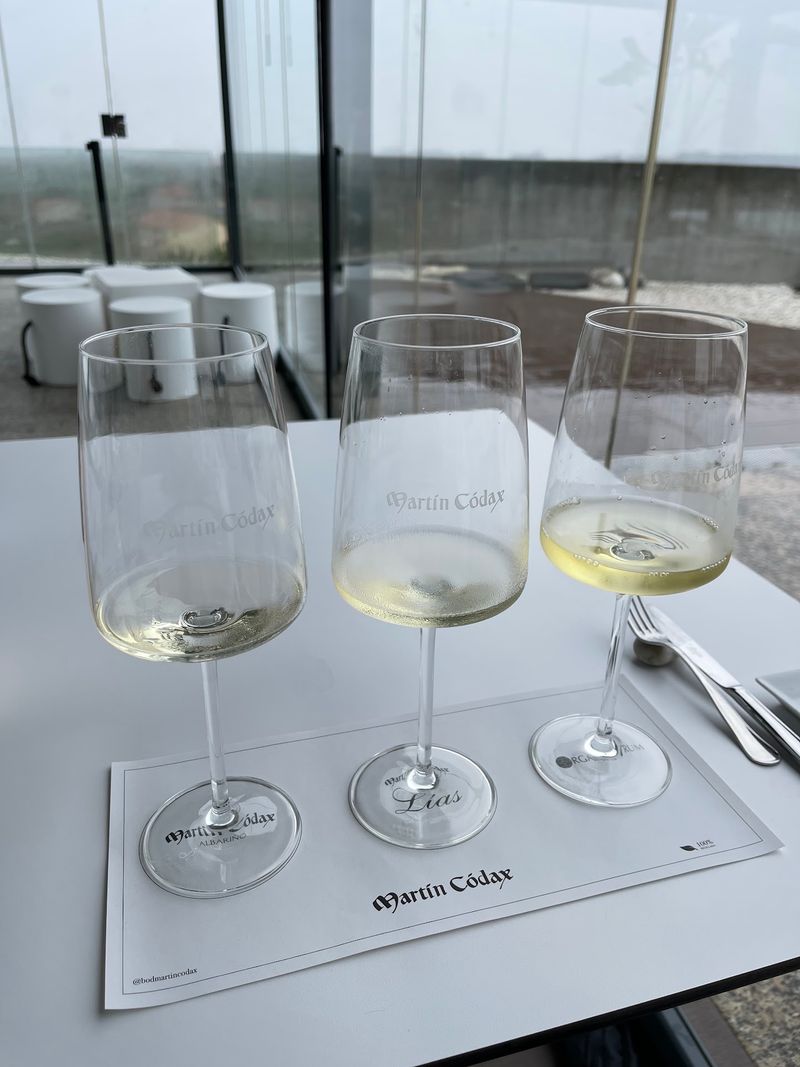
Everything about Rías Baixas feels different from Spain’s dry interior wine regions, and Martín Códax makes that contrast impossible to ignore. The vineyards here are lush, green, and draped over granite soils beneath an Atlantic sky that can shift from brilliant sunshine to soft coastal mist within the same hour.
Albariño grapes thrive in this humid, breezy climate, producing wines with bright acidity and a freshness that practically smells of the sea.
From the winery’s terrace, the view stretches across vineyards toward the Ría de Arousa, one of the beautiful estuaries that give this region its name. The combination of green countryside, tidal water, and vine rows creates a scene that looks nothing like the image most people carry of Spanish wine country.
It is a genuinely refreshing surprise.
Martín Códax is one of the most recognized names in Albariño production, with a cooperative structure that connects hundreds of local growers to the winery. Guided tastings explore different expressions of the grape alongside the story of how Rías Baixas built its modern reputation.
Cambados, the nearby coastal town, pairs beautifully with a post-tasting lunch of fresh Galician seafood.
Regina Viarum, Ribeira Sacra
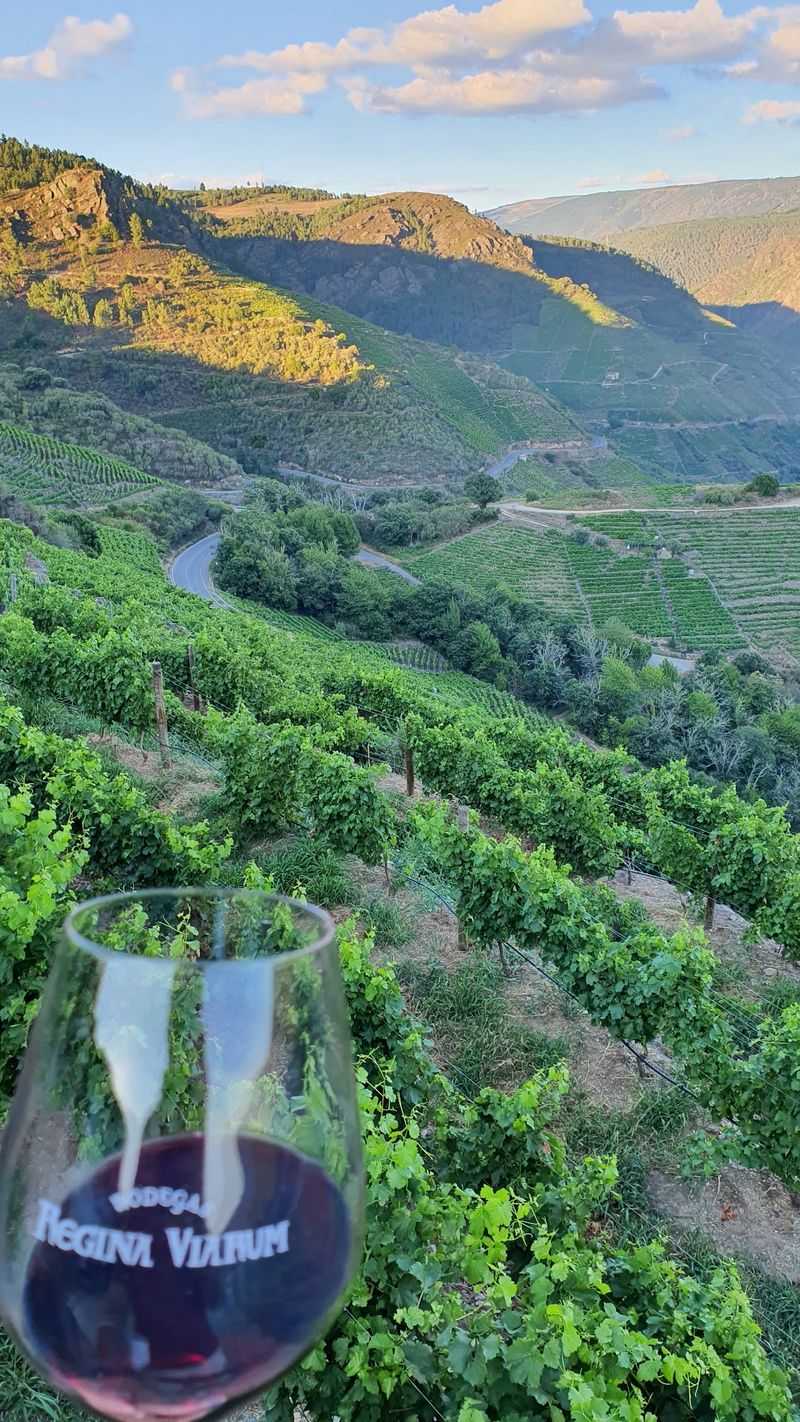
Standing on the terrace at Regina Viarum and looking down into the Sil Canyon is the kind of moment that makes you reach for your camera before you even fully process what you are seeing. The vineyard terraces drop away in narrow strips toward the river hundreds of meters below, carved into slopes so vertical that the term heroic viticulture starts to feel like an understatement.
This is some of the most dramatic wine scenery in all of Europe.
Mencía grapes grown on these impossible slopes produce wines with a mineral edge and floral lift that reflect the granite soils and river-cooled air of the canyon. Because harvesting by machine is out of the question, every cluster is picked by hand, often using pulleys and baskets to transport the fruit back up the hillside.
That effort gives the wines a story worth knowing before you taste them.
The winery’s visitor experience pairs canyon views with an explanation of how Ribeira Sacra’s unique viticulture developed over centuries of Roman and monastic influence. The region is still relatively undiscovered compared to Rioja or Ribera del Duero, which means visits feel personal and unhurried.
Getting here takes some driving, but the Sil Canyon rewards every kilometer of the journey.
Share this story