Some of the clearest water on Earth shows up where nature does the filtering. Rain can spend decades slipping through rock before it bubbles up in a spring, and underground rivers can fill deep stone pits with glowing blue water.
From jungle swimming holes to icy mountain pools, these places look almost unreal. Grab your sense of wonder, because some are for swimming and some are for looking only.
Blue Spring at Te Waihou, New Zealand
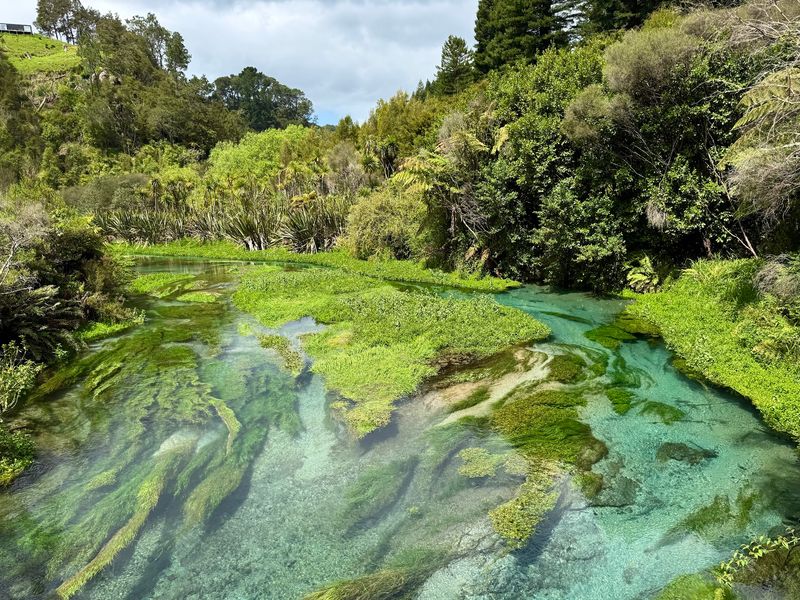
Ever seen water so clear it looks like empty air? Blue Spring near Putaruru does exactly that, showing every plant and pebble beneath its blue-green surface.
The secret is time. Rain that lands on the Mamaku Plateau can spend 50 to 100 years moving underground before it pops out here.
Along the way, nearly all the tiny bits of dirt get filtered away.
The spring pours out about 700 liters every second, and it stays near 11 degrees Celsius all year. That is chilly enough to make your toes complain even if you just stand nearby.
Getting there is half the fun. The Te Waihou Walkway follows the equally see-through river past farmland and native plants, so bring a camera and comfortable shoes.
The walk is easy, and the path is friendly for families.
One thing to remember is that this spring is treated as a precious natural treasure, not a swimming hole. Staying on the path and following local rules keeps the water spotless for the next visitor.
Look closely at the plants waving below, because they seem to float in midair.
Rainbow Springs, Florida
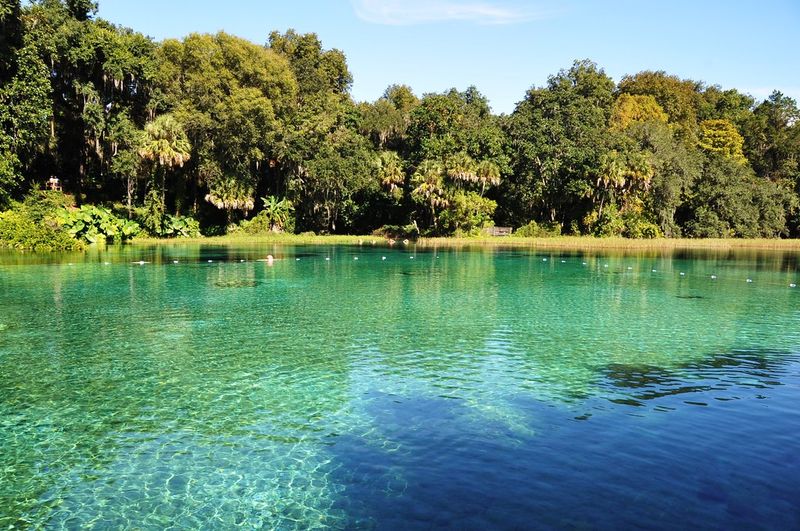
Florida has hundreds of freshwater springs, yet Rainbow Springs wins the volume contest with more than 400 million gallons of water gushing out every day. That is a lot of bubbling.
The water travels through soil and limestone before rising through several vents and forming the Rainbow River. By the time it arrives, it is so clean that snorkelers can spot fish, turtles, and waving grasses with no effort at all.
Here is a comforting detail for swimmers. The water in the swimming area sits around 72 degrees Fahrenheit all year, which feels cool in summer and surprisingly pleasant in winter.
People have loved this place for a very long time. Evidence shows visitors were stopping by more than 10,000 years ago, well before anyone dreamed of sunscreen or flip-flops.
If you go, bring a mask and take your time. Floating slowly over the grassy bottom feels like watching an underwater movie, and the stars are scaly, shelled, and completely unbothered by your presence.
Semuc Champey, Guatemala
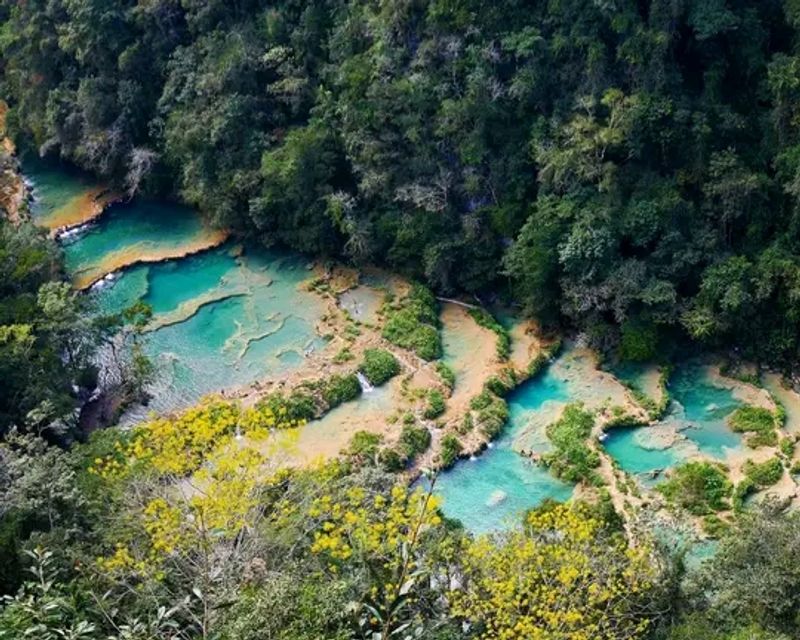
Getting to Semuc Champey takes effort, and the bumpy ride near Lanquin makes sure you earn every splash. Then the jungle opens, and the turquoise pools appear like a prize.
Here the Cahabon River slips under a wide natural limestone bridge. On top of that bridge sits a staircase of pools with clear water in many shades of green and blue.
Mineral deposits and limestone ledges split the flowing water into basins of different depths. Some are shallow enough for a quick wade, while others invite a proper swim.
Visitors can swim in the designated pools, and the experience feels like a reward for all that travel. A quick tip: the limestone gets slick, so water shoes are a smart choice.
Tropical rainforest wraps around the whole scene, so expect birdsong and a green glow overhead. Because the place is remote, it keeps a quiet, wild feeling that big resorts could never copy.
Pack light, bring patience, and leave plenty of time for floating.
Kuang Si Falls, Laos
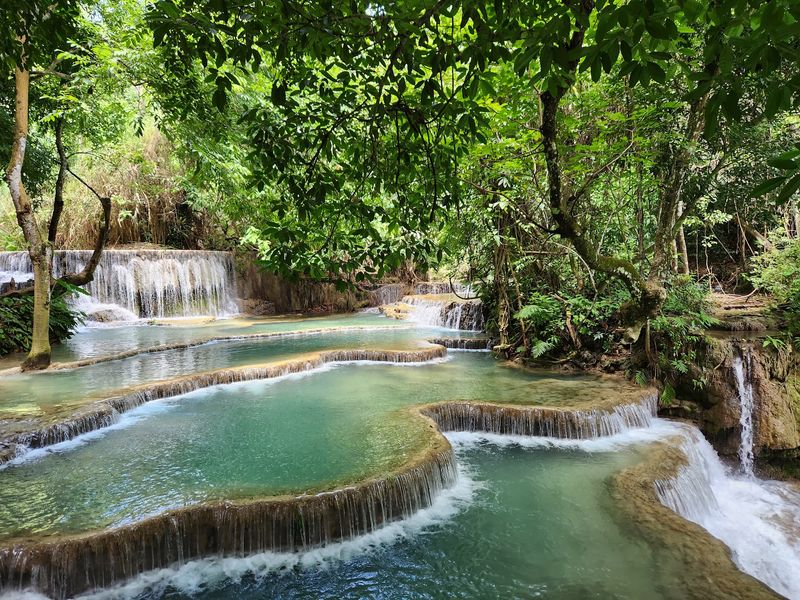
Milky turquoise water tumbles down a forest hillside outside Luang Prabang, and suddenly a quiet stream looks like a staircase for giants. That is Kuang Si.
The falls come in three levels. Shallow upper pools lead to the main drop of roughly 60 meters, and below it the water spills over rounded limestone barriers into one lovely basin after another.
The eye-catching color comes from dissolved minerals and pale limestone under the water. Light bounces off that bright bed differently than it would off a dark riverbottom, so everything glows.
Many lower pools are open for swimming, which makes for a happy splash after a hot walk. Some sections may close for safety or conservation, so look for signs before you jump in.
Trails and wooden bridges make it easy to wander from pool to pool. Go early if you can, because the quiet morning light turns the water into something that looks painted, and the crowds have not yet arrived to photobomb it.
Fervedouro Bela Vista, Brazil
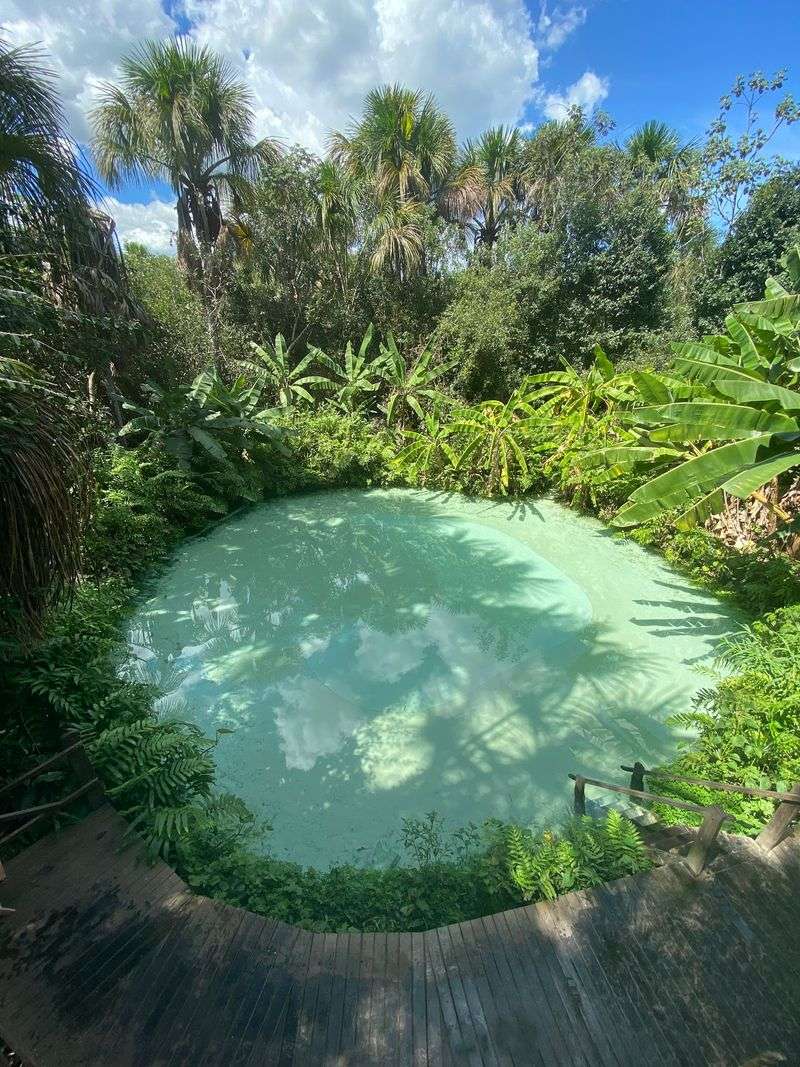
Try to sink here, and the water politely refuses. Fervedouros in Brazil’s Jalapao region are springs where water pushes up through fine sand with enough force to hold swimmers afloat.
Visit Brasil explains that people can struggle to go under even in surprisingly deep pools. The steady upward flow keeps nudging against the body, which makes floating feel like magic.
Fervedouro Bela Vista is one of the best-known examples. Its spring pool is roughly 15 meters deep, and the water is a bright, see-through blue that glows against the pale sand below.
Buriti palms and other plants of the Cerrado circle the basin, giving it a cozy oasis look. It feels like a secret garden with a bubbling heart.
Similar springs are scattered across Jalapao, but visitor numbers are often limited to protect these delicate sandy systems. Be ready to wait your turn, follow the guides, and enjoy a swim that feels like a gentle push from the earth itself.
Cenote Ik Kil, Mexico
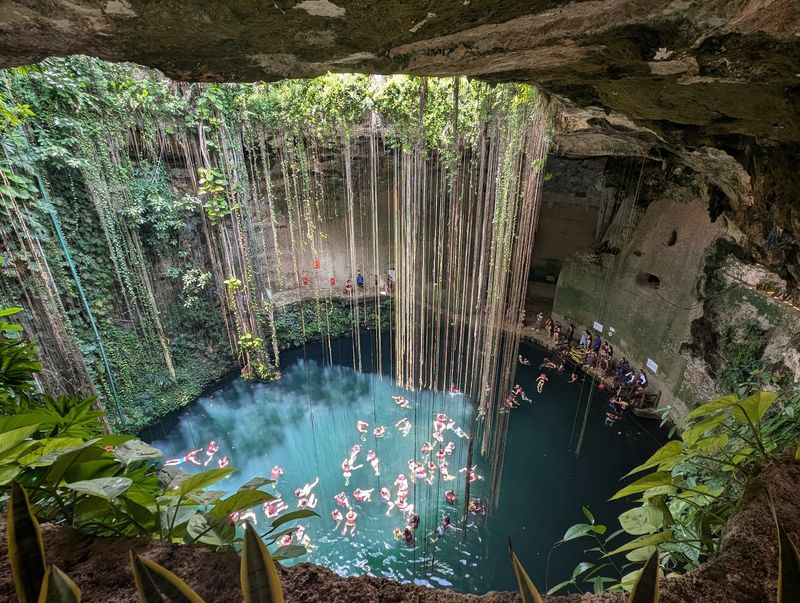
Picture a swimming pool with a missing roof and a jungle for decoration. Ik Kil formed when a limestone cavern collapsed and left groundwater open to the sky.
Near Chichen Itza in Yucatan, the circular shaft drops far below the forest floor. Vines and roots dangle toward the blue-green water, and sunbeams slice through the air like spotlights.
Visitors walk down a stairway to the water level. Swimming is allowed under supervision, and life jackets are required, so it is easy for beginners to feel safe.
There is a reason cenotes are everywhere in the Yucatan. Rain dissolves the region’s porous limestone, and the water travels through a huge network of hidden holes and channels underground.
Ik Kil is known for its crystal appearance, and the water looks clean enough to drink with your eyes. Come at a quiet hour if you can, and look up while you float.
The ring of green above you is half the show.
To-Sua Ocean Trench, Samoa
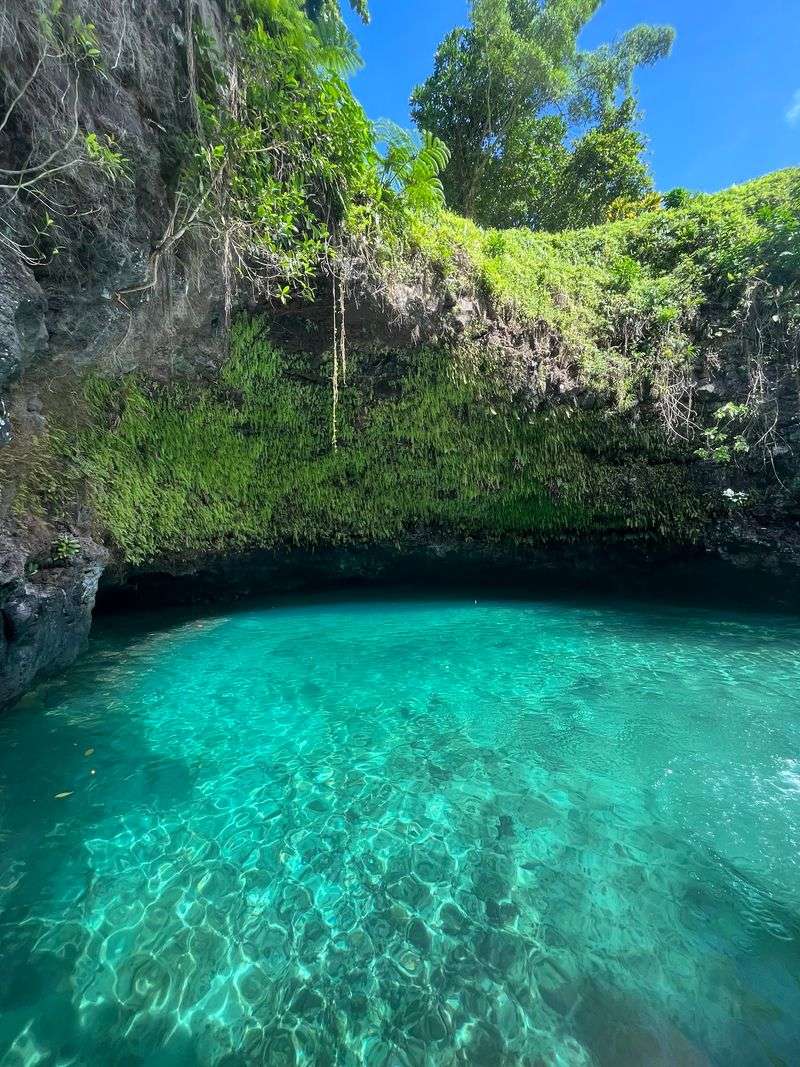
A hidden blue pool tucked into a tropical garden sounds made up, yet To-Sua is real. It sits on the south coast of Upolu in Samoa.
The deep trench connects to the ocean underground, and steep rock walls covered in ferns surround it. Samoa’s tourism authority describes the water as deep sapphire blue, and that description fits.
Getting in is part of the thrill. Visitors climb down a long ladder to a platform at water level, then slip into the pool one rung at a time.
Since the trench is linked with the sea, water movement can change with the tides. Check conditions before you go, and listen to local staff about safe times to swim.
Upolu also hides freshwater cave pools and volcanic swimming holes, but To-Sua is the island’s most dramatic natural basin. Bring a camera, take your time on that ladder, and enjoy the feeling of swimming inside a living postcard.
Pamukkale Travertine Pools, Turkiye
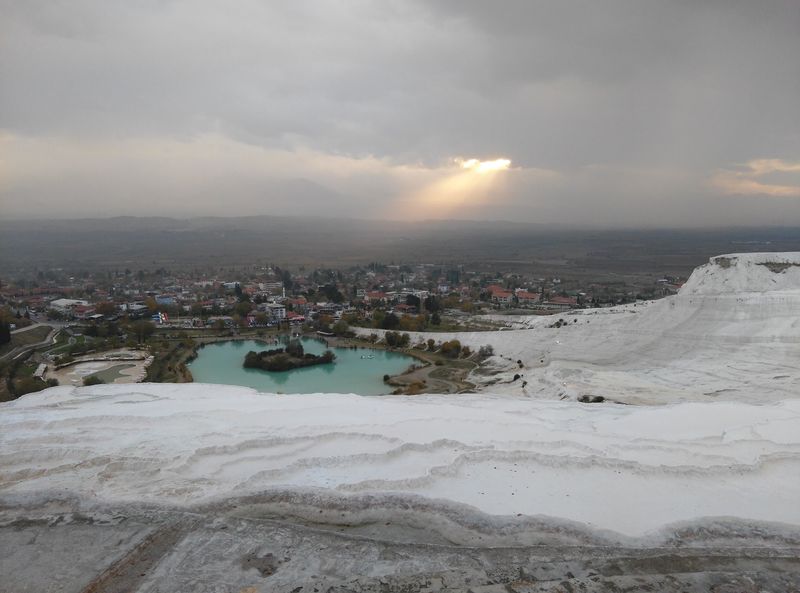
Cotton castle is the meaning of Pamukkale, and one look at the white terraces shows why. Mineral-rich warm water flows down a cliff nearly 200 meters high and builds the scene bit by bit.
UNESCO explains that the springs deposit calcium carbonate as they flow. Over time, this forms bright travertine, petrified cascades, and stepped basins that hold pale blue water.
Some terraces are shallow, while others rise several meters. Against the dazzling white stone, the water looks almost electric.
People have loved these springs for thousands of years. The ancient city of Hierapolis grew up here as a famous Greco-Roman spa, so you can mix a nature stop with a history lesson.
Here is the catch. Walking and uncontrolled bathing can harm the fragile formations, so visitor movement is carefully managed.
Follow the marked paths, keep your shoes off where asked, and let the terraces keep growing for future travelers.
Grotta della Poesia, Italy
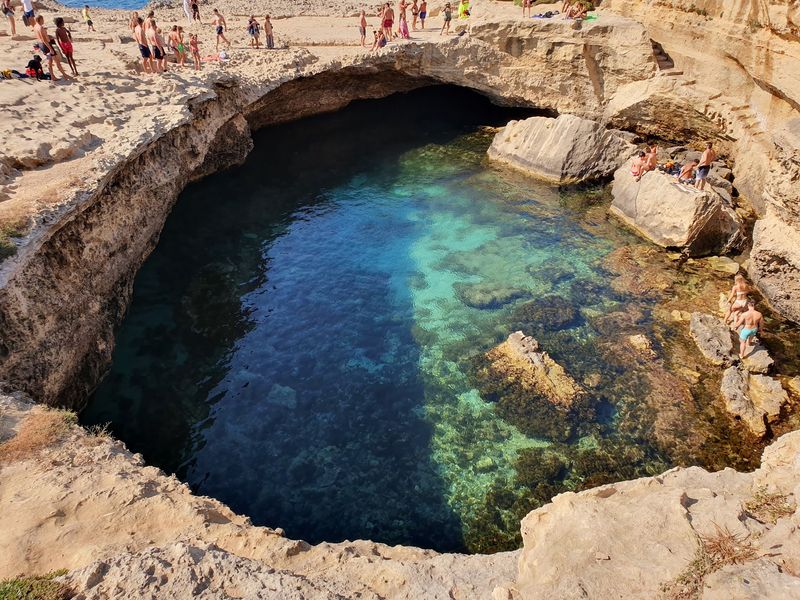
Poetry fans, rejoice: this grotto earned its name honestly. On the Adriatic coast of Puglia, a round natural pool is carved right into the limestone, and it looks almost too neat to be real.
The larger grotto holds clear seawater about five meters deep. It links to the coast through the cave system below, so the sea keeps the pool fresh.
Roca Vecchia is more than a pretty place. Archaeological evidence there shows people were active as far back as the Bronze Age, which adds layers of history to the view.
Heavy visitation eventually caused conservation worries, and swimming in the grotto is currently prohibited. Check local rules before you plan a trip so there are no sad surprises.
You can still enjoy the water from the limestone rim, where the see-through blue is easy to admire. Take a slow walk around the coast, and let the mix of old stones and bright sea do the talking.
Blue Eye, Albania
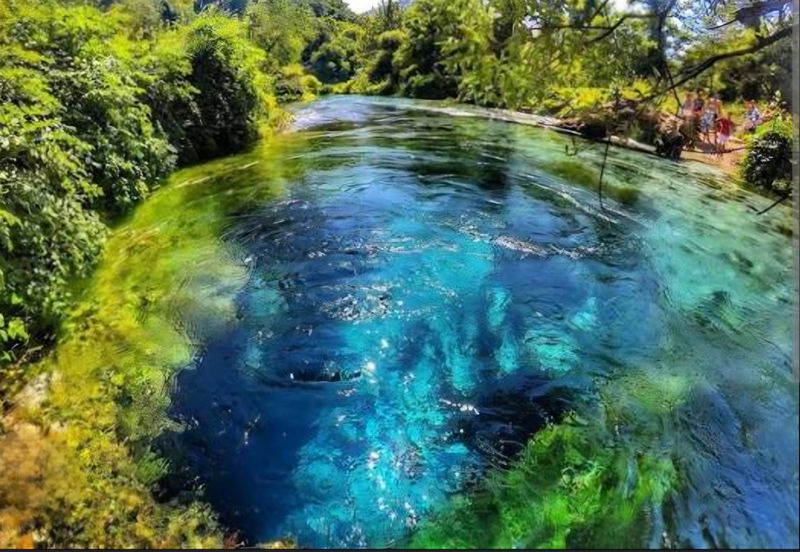
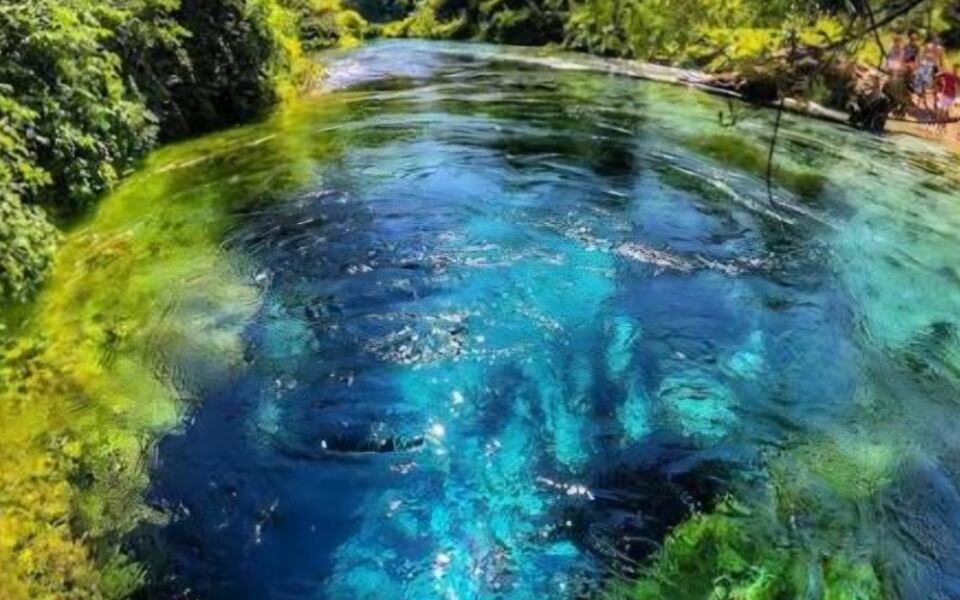
Stare into the Blue Eye, and it seems to stare back. The center of this Albanian spring is deep, dark blue, ringed by glowing turquoise and green.
Albania’s tourism authority says the water rises from a depth of more than 45 meters. The underground system is even more complex than the pool suggests, which adds to the mystery.
Cold is the word to remember. The clear water feeds the Bistrica River and stays strikingly chilly even in summer, so a quick dip is more of a gasp than a swim.
The shifting colors come from depth, clear water, plants, and light bouncing around the basin. Each angle gives the view a slightly different shade.
You will find it near Muzine, between Sarande and Gjirokaster. It is protected as a Natural Monument for its water and wildlife value, so respect the signs, keep the area clean, and enjoy the view from the edge.
Rio Celeste, Costa Rica
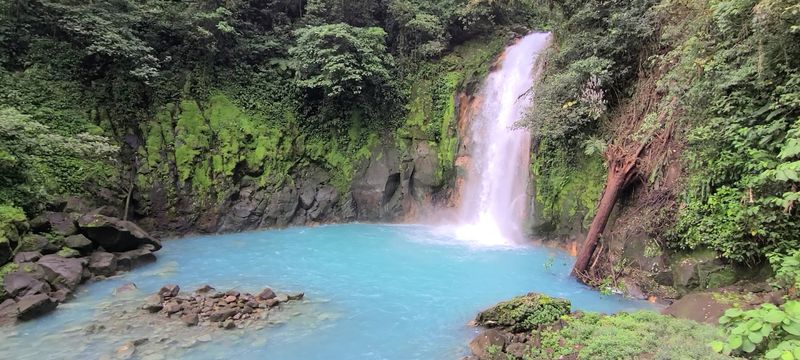
Some travelers swear someone dumped paint in the river. Rio Celeste really is that blue, and nature alone is responsible.
Costa Rica’s tourism authority explains that two clear streams meet at a spot called El Tenidero. There, chemical and physical changes involving tiny mineral particles produce the sky-blue glow downstream.
The river then tumbles over a waterfall of about 30 meters and fills a small pool called Laguna Azul. The color is so vivid that photos can look edited, even when they are not.
Here is a surprise. Swimming is not allowed in these protected blue pools inside Tenorio Volcano National Park, despite what some travel pictures suggest.
You enjoy the river from forest trails and viewpoints instead.
Weather matters too. Heavy rain adds sediment and can dull the color for a while, so check recent conditions.
Wear good boots, bring a rain jacket, and keep your eyes open for birds along the muddy trail.
Fairy Pools, Scotland
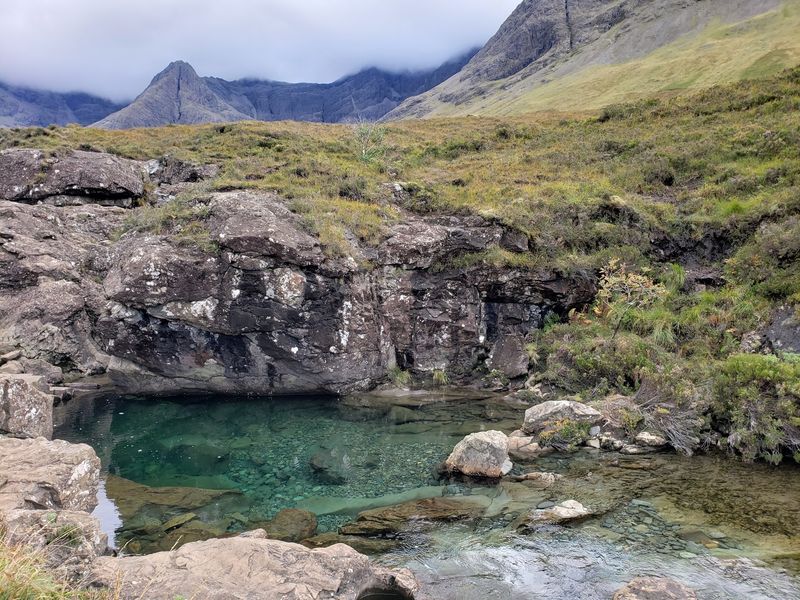
Brrr is the first word most swimmers say at the Fairy Pools. The water here is clear, beautiful, and bracingly cold, even on a pleasant day.
On the Isle of Skye, mountain streams from the Cuillin feed a chain of rocky basins linked by small waterfalls. VisitScotland describes them as translucent spring water along the River Brittle system.
Swimming is possible, but brave swimmers should consider a wetsuit. A quick dip is fun if you can handle the chill, and warm drinks afterward taste better than usual.
The walk in is about 2.4 kilometers through Glenbrittle. Dark volcanic peaks rise behind the pools, which makes the water look even brighter by comparison.
Weather changes the whole scene. The pools can look clear, blue, or green depending on light and clouds.
Wear sturdy shoes, because the path can be muddy, and pack a towel before you start.
Jiuzhaigou Valley Pools, China
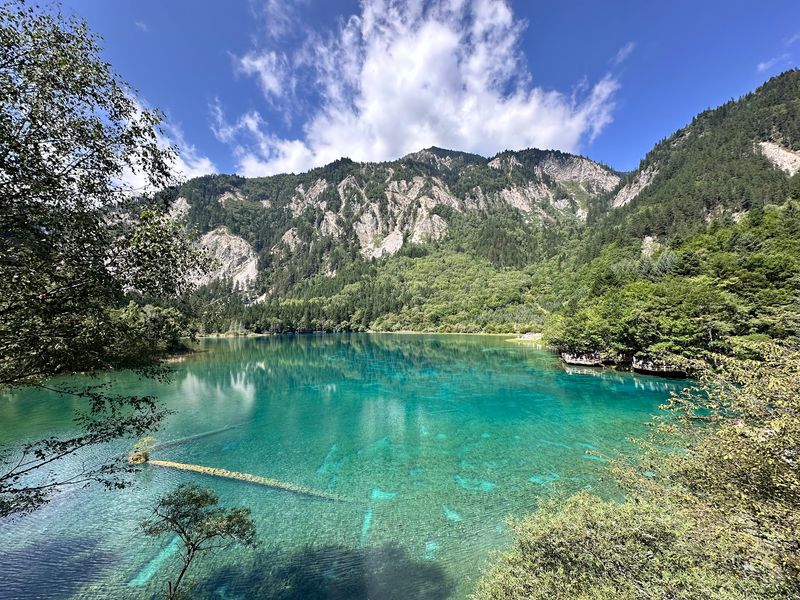
One pool is nice, but Jiuzhaigou gives you a whole valley of them. Clear lakes, waterfalls, limestone terraces, and mineral basins stretch beneath the Minshan mountains in Sichuan.
UNESCO describes the water as unusually clear and tinted in blue, green, and purple. The mix of karst rock, groundwater, glacier history, minerals, and underwater plants creates those shades.
Look closely and you may spot fallen tree trunks resting far below the surface. They stay visible for years, like frozen scenes from a very quiet underwater forest.
The protected area covers about 72,000 hectares. It also shelters threatened animals, including giant pandas and takin, so the valley is a wildlife home as well as a scenic stop.
Swimming is not the goal here. Visitors follow designated routes and enjoy the water from boardwalks and viewpoints.
Bring a camera, walk slowly, and let the color changes surprise you at every bend.
Plitvice Lakes, Croatia
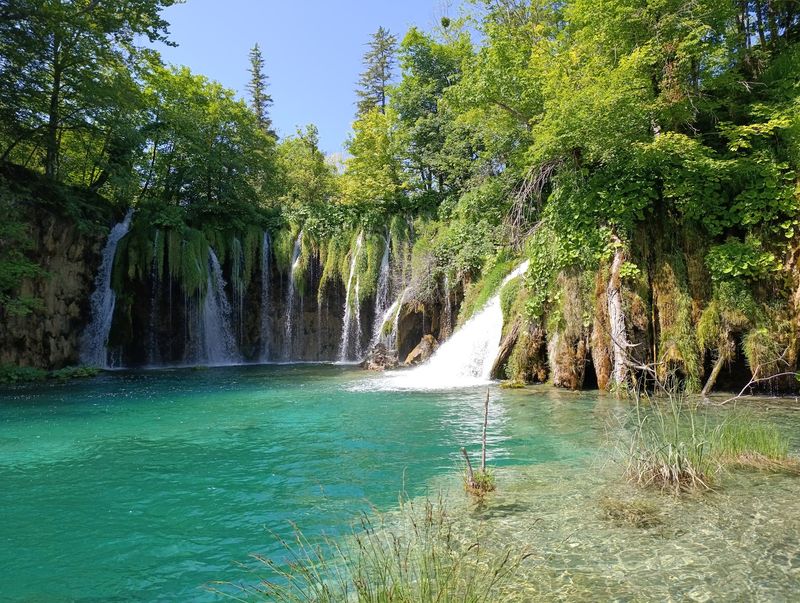
Nature builds its own dams at Plitvice, and they keep growing. Mineral-rich water leaves deposits around mosses, algae, and other surfaces, slowly forming tufa barriers that split the river into lakes and cascades.
The colors change with minerals, tiny organisms, depth, and sunlight. On one visit the water may look turquoise, and on another it may seem emerald, gray, or deep blue.
The national park describes the lakes as crystal clear. It also strictly bans swimming across the whole protected area, and that rule is a big deal.
The same delicate biology and chemistry that create the scenery can be disrupted by heavy use. Keeping people out of the water helps the barriers keep building.
No need to feel left out, though. Wooden paths wind right above parts of the clear water, so you can peer down at fish and plants while staying dry.
Wear grippy shoes, because boards can be damp, and bring a camera.
Zelenci Springs, Slovenia
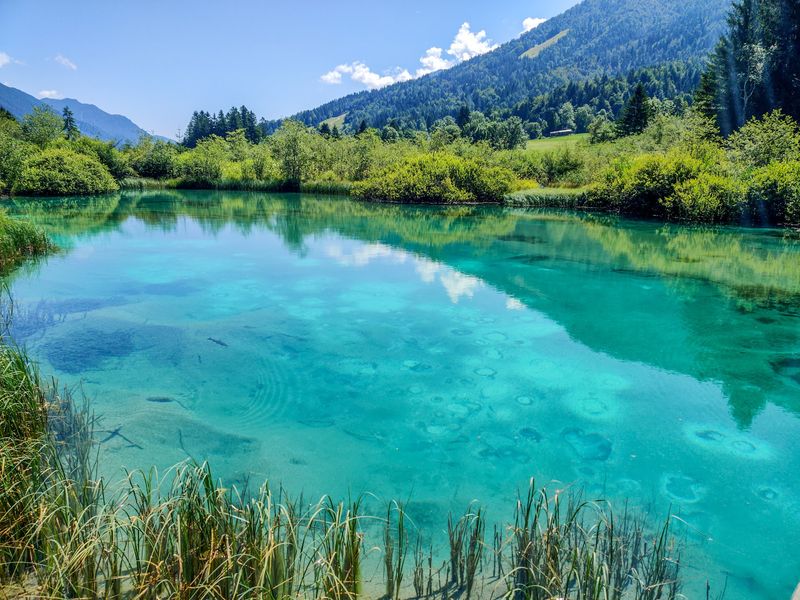
Tucked near Kranjska Gora, Zelenci is a small spot with a big green glow. Groundwater rises into emerald pools and becomes one of the sources of the Sava Dolinka River.
Slovenia’s national tourism material describes the spring water as distinctly transparent and green. Farther downstream, the color continues in a softer form.
The pools sit beneath the Julian Alps, close to the Italian and Austrian borders. Marsh plants and forest frame the scene, so the setting feels peaceful and a little secret.
Because Zelenci is a protected nature reserve, watching is the main activity. Swimming and fishing are not the point here, and that keeps the water calm and unspoiled.
The stillness works in your favor. Aquatic plants, spring vents, and the light bottom are easy to see, especially from the wooden observation paths and tower.
Visit on a quiet morning, speak softly, and let the green water steal the show.
Share this story