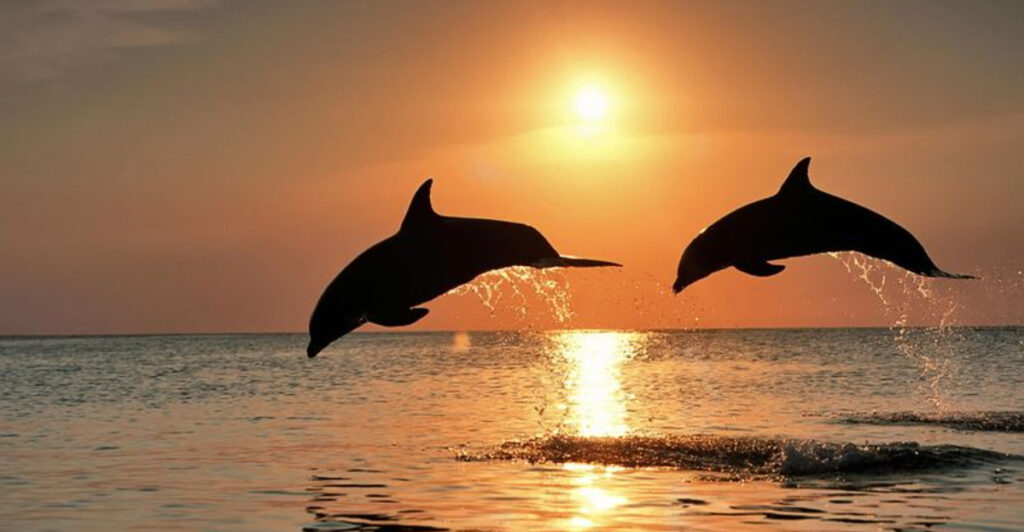
Seeing a dolphin perform in a tank and seeing one appear beside your boat in the open ocean are two completely different experiences. In the wild, the animals choose whether to show up, how close to get, and how long to stick around.
That unpredictability is exactly what makes a genuine wild encounter so unforgettable. The destinations below were chosen for their established wild populations, breathtaking scenery, and real opportunities to watch dolphins living life entirely on their own terms.
Kaikoura, New Zealand
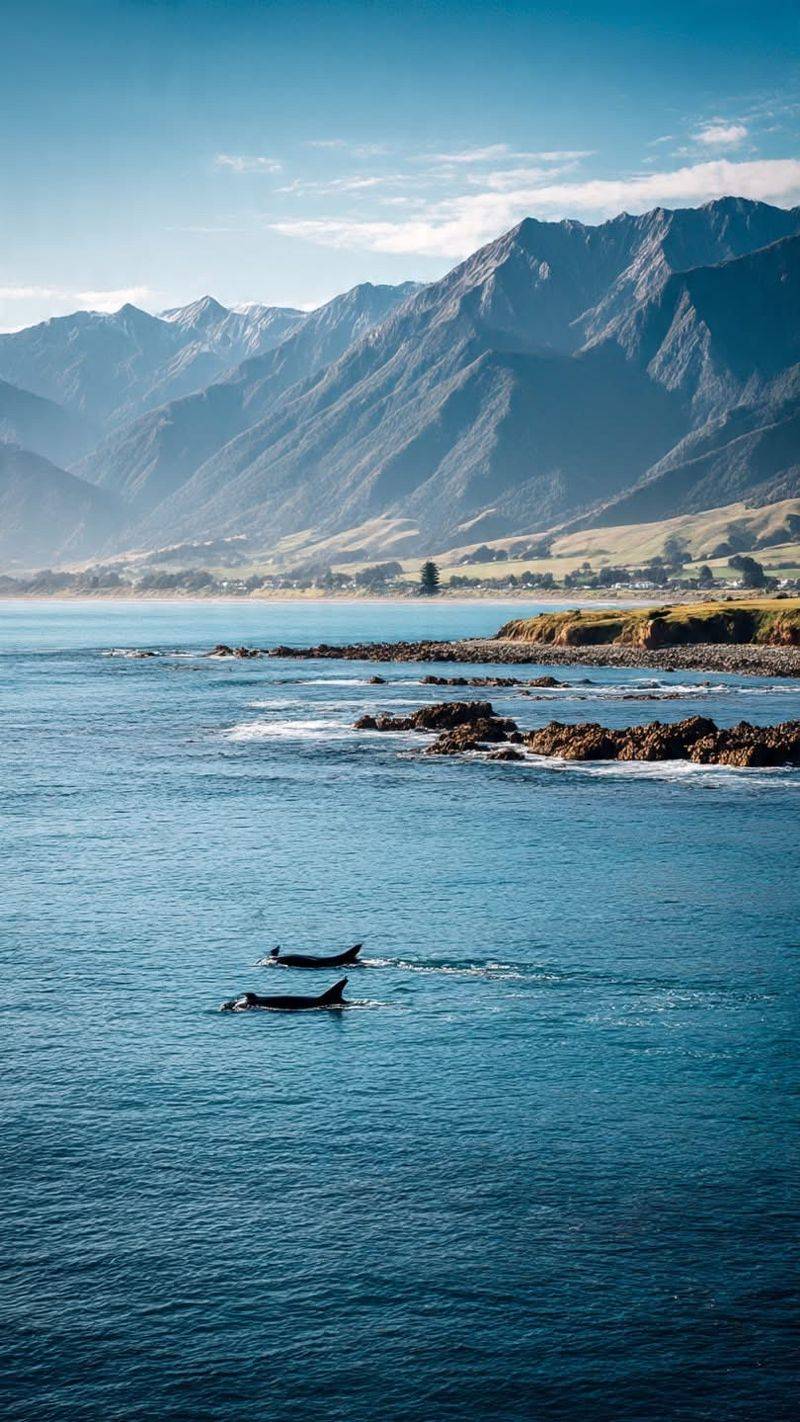
Snow-capped mountains rising directly behind a Pacific coastline teeming with wildlife sounds almost too cinematic to be real, but that is exactly what Kaikoura delivers. The nutrient-rich waters here support whales, fur seals, seabirds, and enormous groups of dusky dolphins that can number several hundred to more than 1,000 animals at once, according to New Zealand’s Department of Conservation.
Dusky dolphins are natural showoffs. They are famous for energetic aerial displays, spinning leaps, and the kind of synchronized surface activity that makes wildlife photographers genuinely emotional.
Watching a group of several hundred move together through the water beneath those mountains is one of the great wildlife spectacles of the South Pacific.
Dolphin and whale watching trips depart regularly from the town of Kaikoura, and the broader marine environment adds even more to the experience. Seals haul out on rocks nearby, albatrosses glide overhead, and sperm whales surface in the deep water just offshore.
This is a destination that rewards every type of wildlife watcher.
Fernando de Noronha, Brazil
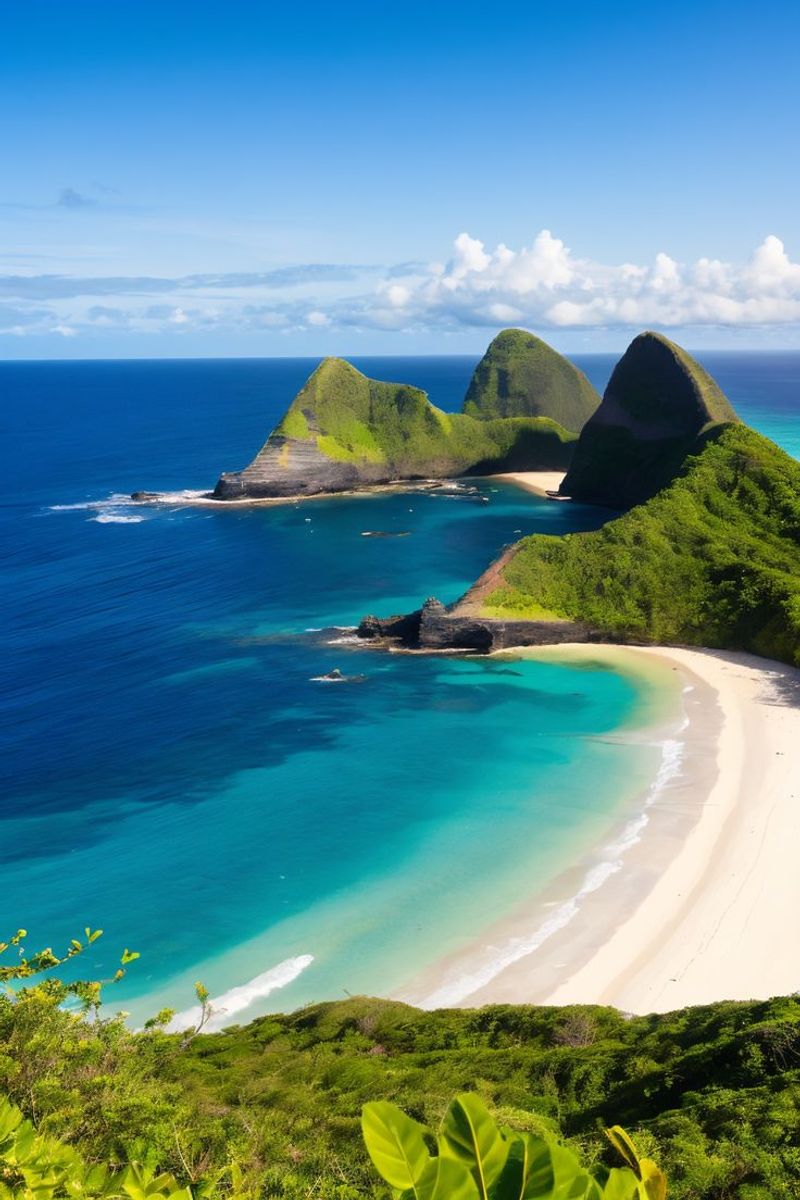
Before the dolphins even show up, Fernando de Noronha already looks like a scene from a nature documentary. Dramatic volcanic cliffs, sea turtles, rays, sharks, and some of Brazil’s clearest tropical water surround this protected archipelago sitting roughly 350 kilometers off the northeastern coast.
Visit Brasil specifically highlights Baia dos Golfinhos, or Dolphin Bay, as one of the destination’s signature experiences.
Spinner dolphins are the stars of the show here. They are commonly associated with the archipelago, and early mornings are particularly good for spotting them moving through the bay before they head out to deeper water.
The behavior is entirely natural, which makes it far more interesting than anything choreographed.
One of Noronha’s best features is that you do not need a boat to enjoy it. Clifftop viewpoints overlooking Dolphin Bay let visitors watch offshore activity while the dolphins go about their normal routines undisturbed below.
For travelers who want wild dolphins combined with world-class tropical scenery and a genuine conservation atmosphere, this Brazilian outpost is extraordinarily hard to beat.
Cardigan Bay, Wales
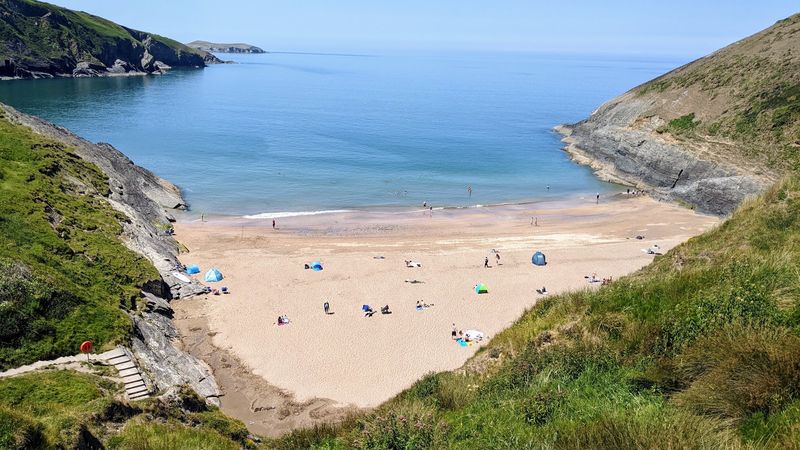
Tropical water is not a requirement for a world-class dolphin destination, and Cardigan Bay proves it spectacularly. This sweeping Welsh bay supports Britain’s largest resident population of bottlenose dolphins, according to Visit Wales, and the animals can be spotted throughout the year.
Summer typically offers the most reliable sightings, but winter visits are not without their rewards either.
New Quay is the most popular base for dolphin watching, with boat trips heading out into the bay regularly. But Cardigan Bay has an unusual advantage that many warmer destinations cannot match: some of the finest shore-based dolphin watching in Britain.
Visit Wales recommends viewpoints including Mwnt, Ynys Lochtyn, Aberporth, and Cardigan Island for visitors who prefer watching from dry land.
That accessibility makes the region especially appealing to travelers who enjoy passive wildlife observation. Add green cliffs, coastal walking paths, grey seals, harbour porpoises, and seabirds riding the Atlantic breeze, and the dolphins become part of something much larger.
Cardigan Bay rewards slow, patient visitors who are happy to scan the water and wait for a dorsal fin to break the surface.
Madeira, Portugal
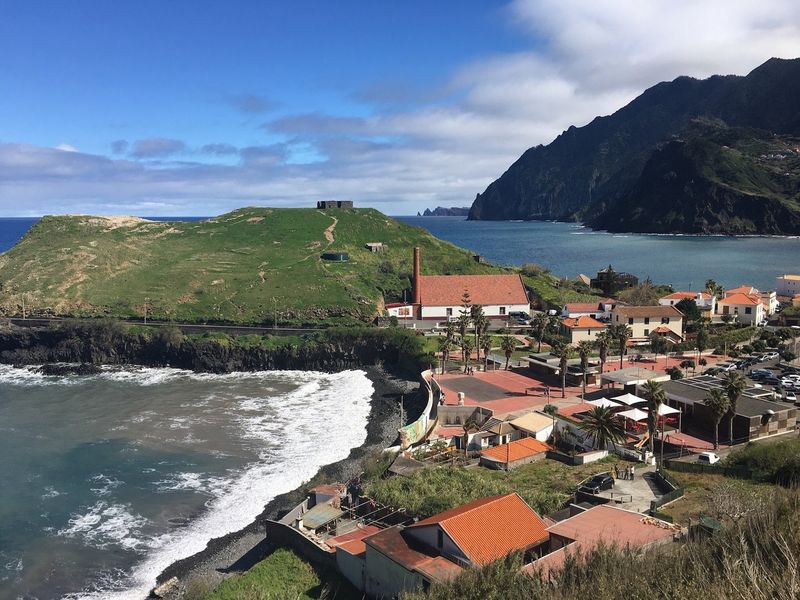
Madeira rises almost vertically from some of the deepest water in the Atlantic, and that dramatic geography is a big part of why cetaceans appear so close to the islands. The surrounding ocean drops to roughly 3,000 meters in some areas, creating conditions that attract species ranging from common dolphins and Atlantic spotted dolphins to sperm whales and pilot whales, all within a relatively short boat ride from shore.
Whale and dolphin excursions operate year-round from Funchal and Calheta, giving visitors genuinely flexible options. The scenery during these trips is extraordinary.
Boats move through deep blue water while steep volcanic slopes tower above, making the experience feel almost surreal compared to watching from a flat coastal town.
Madeira suits travelers who want more than a single wildlife activity. Hiking through ancient laurel forest, exploring coastal villages, and watching the sun set over the Atlantic are all part of the same island experience.
The mild year-round climate means there is no single bad season to visit, and the chances of encountering dolphins on any given excursion are consistently strong throughout the calendar year.
Moray Firth, Scotland
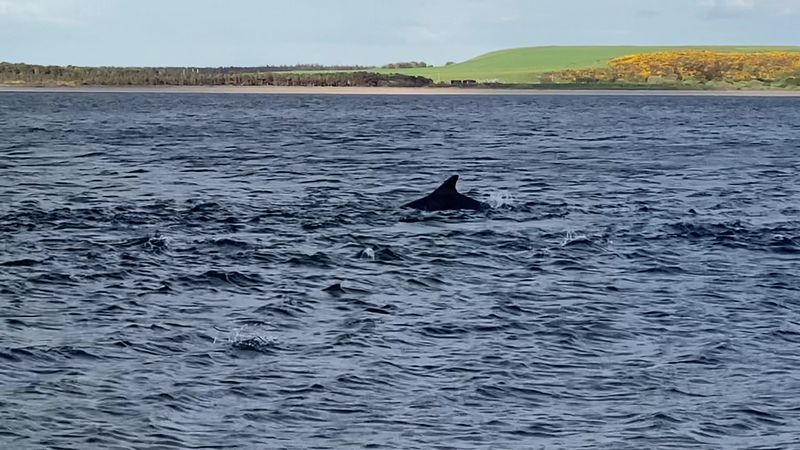
Standing on a Scottish beach watching wild bottlenose dolphins move through a tidal current with the Highlands stretched out behind them is not a sentence most people would associate with dolphin watching. Yet that is exactly what Chanonry Point on the Moray Firth offers, and VisitScotland calls it one of the best shore-based dolphin-watching locations in the entire United Kingdom.
The geography works in visitors’ favor. Dolphins regularly move through the relatively narrow stretch of water at Chanonry Point, especially around tidal changes when fish are forced through predictably.
Other recommended shore viewpoints include Burghead, Hopeman, and Spey Bay, giving travelers several options along the same coastline.
Boat trips also operate through the inner Moray Firth for those who prefer being on the water. The resident bottlenose dolphins here are famously robust, being among the largest of their species in the world.
Seeing them up close, whether from a pebbly Scottish beach or a small boat, carries a very different kind of atmosphere from tropical destinations. Cold air, grey water, and wild dolphins feel surprisingly thrilling together.
The Azores, Portugal
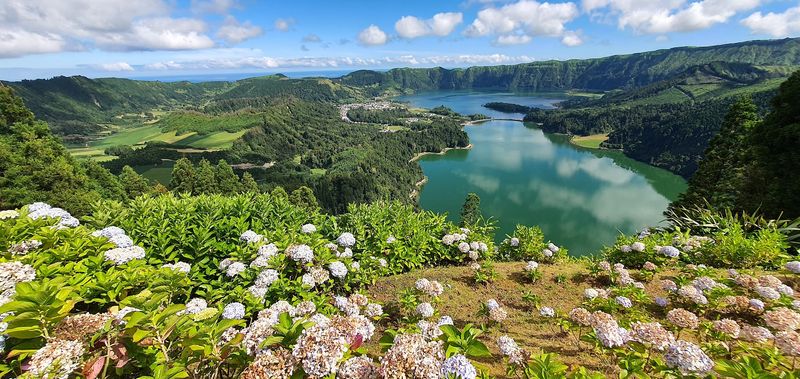
More than 20 cetacean species have been recorded around the Azores, making this volcanic Portuguese archipelago one of the most biologically rich dolphin destinations on the planet. Resident common and bottlenose dolphins share the water with seasonal spotted dolphins, meaning visitors have a genuinely strong chance of a sighting no matter the time of year.
Dolphin and whale watching operates across all seasons here.
What truly sets the Azores apart is its old whale-spotting tradition. Lookouts called vigias still climb to hilltop stations and scan the Atlantic from land, radioing boat crews when they spot cetaceans offshore.
That centuries-old practice now serves conservation instead of hunting.
A formal cetacean-watching code governs all boat activity. Operators must maintain set distances, avoid chasing or disturbing animals, and limit the number of vessels around any group.
For sheer variety of species and the richness of the cultural backdrop, the Azores belong near the very top of any dolphin-watching list.
Sado Estuary, Portugal
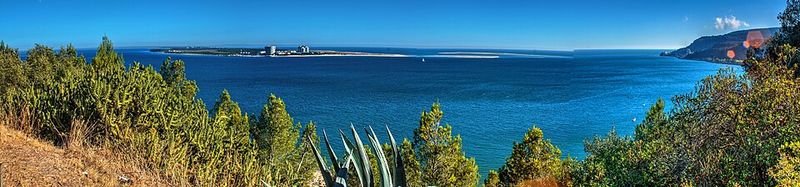
Just south of Lisbon, tucked inside a protected estuary that most international travelers overlook, lives one of Europe’s most unusual dolphin communities. The Sado Estuary Nature Reserve near Setubal supports a small resident population of bottlenose dolphins that spends its life in and around the estuary’s sheltered waters, far from the open ocean.
Visit Portugal describes them as one of the reserve’s defining natural features.
Portugal’s conservation agency catalogued 27 resident dolphins in 2020, which underscores just how closely monitored and ecologically significant this tiny community is. Boat excursions depart from Setubal and from the Troia Peninsula, passing through marshes, sandbanks, and tidal channels before reaching the dolphins’ preferred areas.
Seabirds, flamingos, and long sandy beaches add to the scenery along the way.
The proximity to Lisbon is a genuine practical advantage. A traveler can spend one morning walking through a European capital and the next afternoon watching a resident dolphin family in protected coastal waters less than an hour away.
The Sado Estuary is the kind of place that surprises visitors who arrive expecting something ordinary and leave having seen something genuinely rare.
Akaroa and Banks Peninsula, New Zealand

Nowhere else on Earth will you find Hector’s dolphins. These small, round-finned cetaceans are endemic to New Zealand, and Akaroa Harbour on Banks Peninsula is one of their most important strongholds.
The harbor’s sheltered waters are particularly critical during summer, when greater numbers of Hector’s dolphins move in to feed and raise their young, according to New Zealand’s Department of Conservation.
In 2025, DOC introduced daily limits on permitted dolphin-watching and swimming trips after research showed that excessive vessel activity was beginning to displace dolphins from areas they depend on. That conservation decision matters.
Akaroa is now a destination where wildlife tourism has been deliberately scaled back to protect the animals, which makes visiting feel more responsible than simply ticking off a bucket-list item.
The harbor itself is beautiful, framed by steep volcanic hills and home to a small French colonial town with a genuinely charming character. Visitors who arrive understanding the context, that these dolphins are rare, closely studied, and locally protected, tend to leave with a deeper appreciation of what they witnessed.
Seeing a Hector’s dolphin in the wild is a privilege that deserves to be treated as one.
Port Stephens, Australia
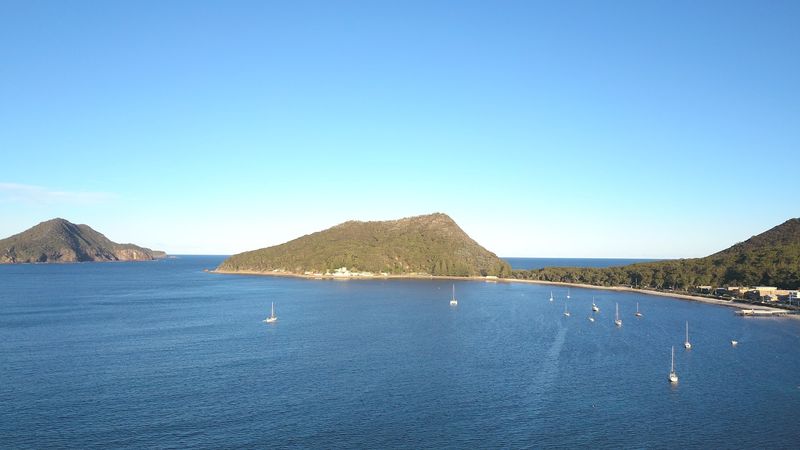
Tourism Australia has given Port Stephens a bold title: the dolphin capital of Australia. That reputation is backed by a marine park, licensed tour operators, and year-round populations of both common and oceanic bottlenose dolphins living in the surrounding waters.
Destination NSW promotes the area as one of the country’s premier wildlife-watching destinations, with trips departing regularly from Nelson Bay.
Cruises head into the Port Stephens-Great Lakes Marine Park, where dolphins share the water with seabirds and, during migration season, whales passing along the coast. The marine environment is genuinely rich, and the relatively sheltered geography of the bay means conditions are often calmer than open-ocean destinations, making the experience comfortable for a wide range of visitors.
Port Stephens also benefits from having a lot more going on beyond the water. Enormous sand dunes, sheltered beaches, coastal walking tracks, and headlands with sweeping ocean views make the area worth spending several days exploring.
Travelers who want dolphins as part of a broader coastal holiday rather than a single-purpose wildlife expedition will find Port Stephens particularly well-suited to that approach.
Plettenberg Bay, South Africa
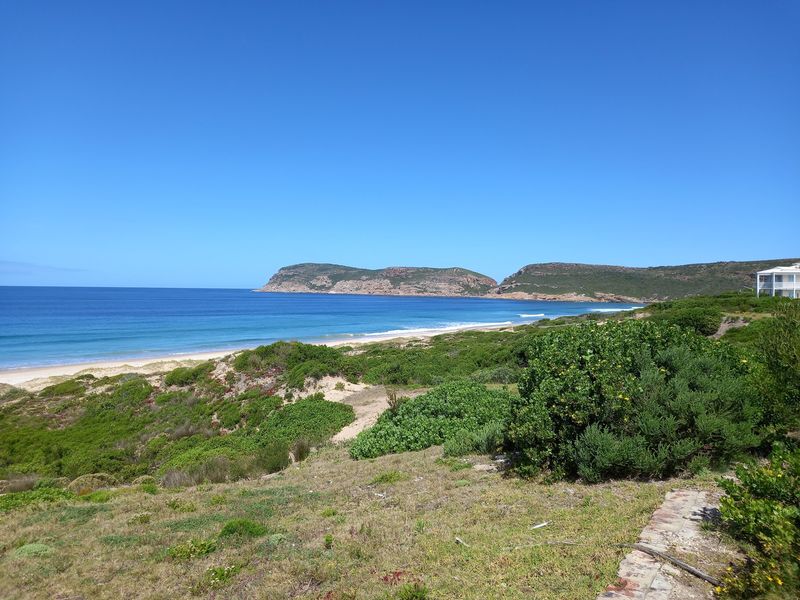
Plettenberg Bay sits at the heart of South Africa’s Garden Route, and the combination of dramatic coastal scenery and genuinely diverse marine life makes it one of the continent’s most compelling dolphin destinations. Bottlenose, common, and the rarer Indo-Pacific humpback dolphin can all be encountered in the waters near the Robberg Marine Protected Area, along with several whale species depending on the season.
South African Tourism notes that dolphins can sometimes be observed directly from shore here, which means you can walk along a South African beach and simply find yourself watching a pod working through the surf. The broader South African coastline becomes even more spectacular during the Sardine Run, typically occurring between late May and early August, when massive dolphin groups follow migrating fish shoals along the Eastern Cape and KwaZulu-Natal coasts.
One firm rule applies: swimming with dolphins is illegal in South African waters because of the potential disruption to feeding and nursery behavior. Watching from shore, from a kayak, or from a properly managed boat is the correct approach.
Respecting that boundary is part of what keeps Plettenberg Bay’s dolphin population healthy enough to be worth visiting in the first place.
Kona Coast, Hawaii
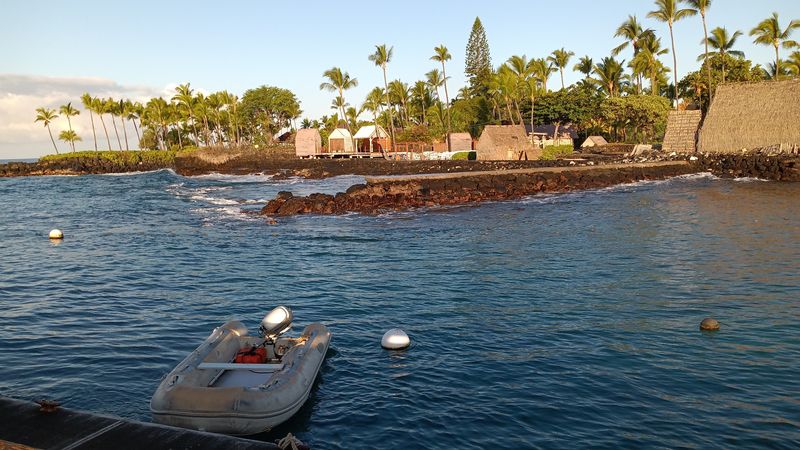
Hawaiian spinner dolphins are named for a very good reason. Their acrobatic spinning leaps are genuinely spectacular, and the Kona Coast of the Big Island is one of the places where these animals are most commonly observed, alongside areas off Oahu and Lanai, according to Go Hawaii.
The clear tropical water and volcanic backdrop make any sighting feel particularly cinematic.
Hawaii is also one of the clearest examples of why wildlife-tourism rules matter. Spinner dolphins rest during daylight hours after spending the night feeding in deeper offshore water.
Disturbing resting pods affects their ability to recover and function normally. Go Hawaii advises visitors to stay at least 100 yards away and to avoid swimming toward or pursuing the animals at any point.
The best experience here is not trying to get as close as possible. Watching naturally from an appropriate distance, ideally through an operator that follows NOAA guidance, produces a more genuine encounter than any forced interaction.
With volcanic cliffs, manta rays, seasonal humpback whales, and some of the clearest Pacific water on Earth, the Kona Coast needs no artificial closeness to make dolphin watching genuinely memorable.
Dana Point, California

Visit California describes Dana Point as the Dolphin and Whale Watching Capital of the World, which is quite a claim for a Southern California harbor town. The title is backed by consistently rich offshore waters, year-round boat trips, and the kind of large dolphin aggregations that can genuinely stop a boat crew mid-sentence.
Common dolphins regularly gather in superpods here, sometimes numbering in the thousands.
The deep offshore waters of the surrounding Pacific support a broad range of cetacean activity across different seasons. Gray whales migrate through in winter, blue whales appear in summer, and dolphins are present throughout the year.
That variety makes Dana Point one of the most reliably productive marine-wildlife destinations on the entire West Coast.
Its location is another practical advantage. Los Angeles and San Diego are both within easy reach, and Laguna Beach sits just up the coast.
Travelers can build a full California road trip around this stretch of coastline without making any sacrifices. Choosing operators that follow responsible marine-mammal viewing practices matters here just as much as anywhere else.
NOAA advises against feeding, chasing, or deliberately swimming with wild dolphins in U.S. waters.
Port Phillip Bay, Australia

Most major cities do not have a wild dolphin population living practically in their backyard. Melbourne is a notable exception.
Visit Victoria reports that approximately 120 wild bottlenose dolphins inhabit Port Phillip Bay, with licensed tours operating from the Mornington Peninsula and Queenscliff for visitors who want to see them up close. The bay’s sheltered geography makes conditions manageable for most travelers.
Victoria specifically encourages visitors to use licensed operators who follow strict protective guidelines, and for good reason. Some regional dolphin populations face ongoing pressures, and responsible tourism practices help reduce the risk of disturbance to animals that have no option to simply relocate.
Choosing the right operator here is not just good practice, it is genuinely important for the population’s wellbeing.
The bay also works beautifully as part of a broader Melbourne itinerary. Mornington Peninsula wineries, coastal villages, surf beaches, and hot springs are all within reach of the same dolphin-watching departure points.
Port Phillip Bay proves that significant wild dolphin habitats can exist surprisingly close to a major metropolitan area, provided the surrounding community treats those animals with consistent respect and care.
Peninsula Valdes and the Patagonian Coast, Argentina
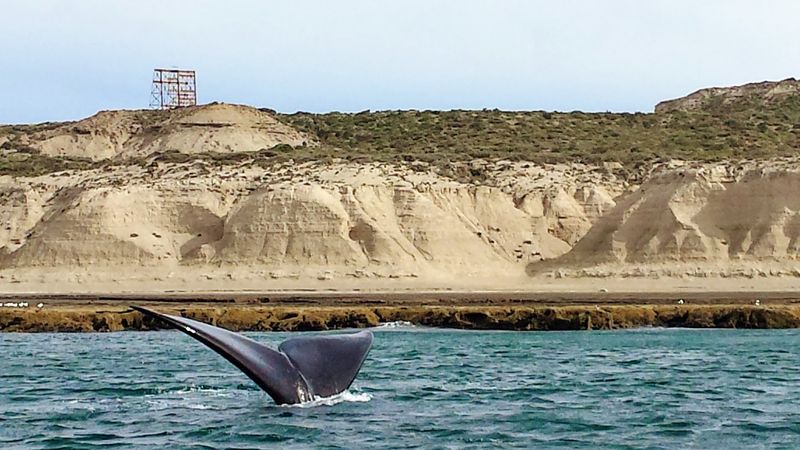
Patagonia gets most of its international attention for orcas and southern right whales, but dolphins are a vivid and underappreciated part of its wild marine cast. Argentina’s official tourism organization highlights Peninsula Valdes and the broader Chubut coast as places where visitors can encounter whales, orcas, sea lions, penguins, and dolphins all within the same extraordinary stretch of southern Atlantic coastline.
The real standout here is the Commerson’s dolphin, known locally as the tonina overa. Boldly patterned in black and white, compact, and energetic, these dolphins look like nothing else in the ocean.
Argentina Tourism identifies Rawson in Chubut, Puerto Deseado, and Puerto San Julian farther south as particularly good locations for boat trips focused on seeing them in the wild.
The wider setting amplifies everything. Enormous skies, windswept cliffs, penguin colonies hauled out on pebble beaches, and sea lions barking from rocky outcrops all surround the dolphin encounters.
There is very little urban development along much of this coast, which gives the whole experience a raw, unfiltered quality that more popular destinations simply cannot replicate. Patagonia rewards travelers who are willing to go a little farther south.
Sarasota Bay, Florida
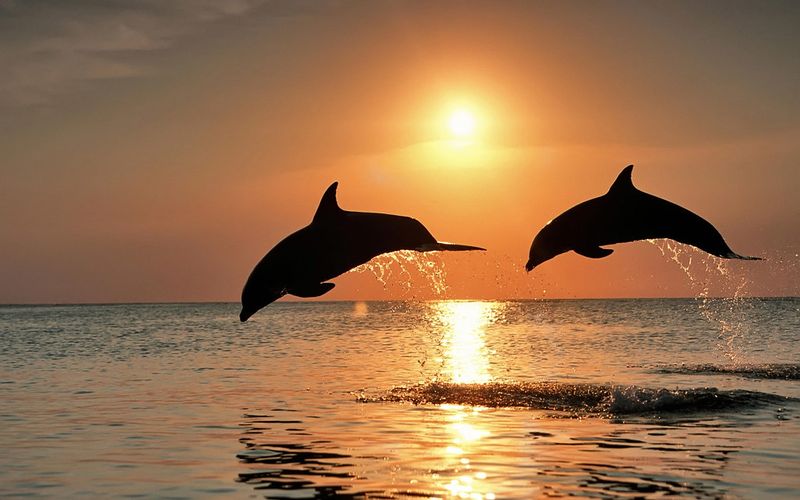
Florida has no shortage of places to see dolphins, but Sarasota Bay carries something that most other destinations simply cannot offer: more than five decades of continuous scientific research. The Sarasota Dolphin Research Program, described by Visit Florida as the world’s longest-running study of wild dolphins in their natural habitat, has been tracking the resident bottlenose dolphin community here since 1970.
That history gives every sighting a layer of meaning most wildlife encounters lack.
Responsible eco-cruises operate in the bay, and the surrounding area around Lido Key combines dolphin watching with mangrove kayaking, beaches, and a genuinely relaxed Florida coastal atmosphere. The dolphins here are not performing.
They are simply living their lives in a bay that scientists have been quietly observing for generations, building one of the most detailed behavioral records of any wild dolphin population on Earth.
Sarasota also makes a quietly powerful point about coexistence. This is a busy, heavily populated Florida destination, not a remote wilderness.
Yet the dolphins remain genuinely wild, choosing their movements and behavior on their own schedule. They stay because the water is productive and people largely respect the boundaries.
That balance, fragile as it is, is exactly what responsible wildlife tourism is supposed to protect.
Share this story