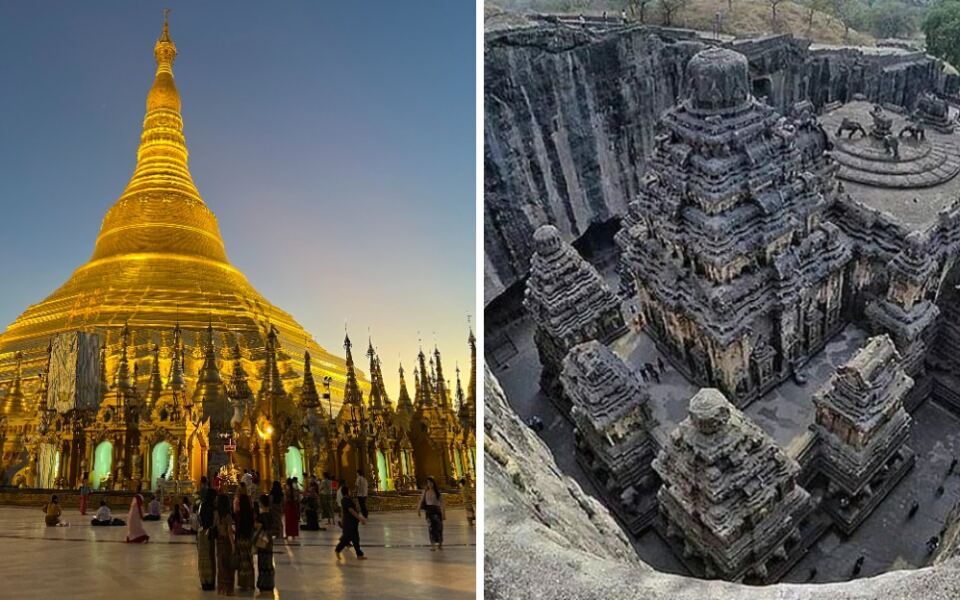
Temples in Asia are much more than quiet places to pray. They have been royal monuments, schools, art studios, and the beating heart of whole cities.
Some are over a thousand years old, and millions of people still visit them today. Come along and meet fifteen sacred places that helped shape how people live, celebrate, and believe.
Angkor Wat, Cambodia
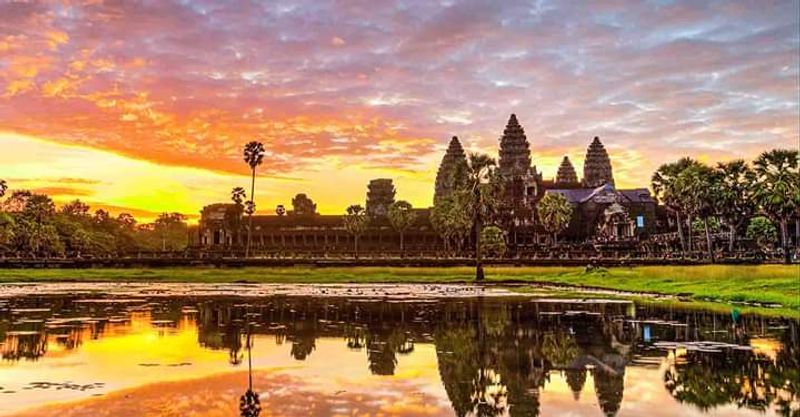
Picture sunrise turning five stone towers into dark cutouts against a glowing orange sky. That is the scene that greets thousands of early risers at Angkor Wat every morning.
It is the national symbol of Cambodia, and it even appears on the country’s flag.
King Suryavarman II built it in the early 12th century. It was first dedicated to the Hindu god Vishnu, then slowly became a Buddhist site.
The temple sits inside a huge area of about 400 square kilometers that holds old capitals, canals, roads, and reservoirs.
Walk the long galleries and you will find bas-reliefs packed with gods, armies, and dancers carved into the stone. The five towers and wide enclosures were designed to represent Mount Meru, the sacred mountain of Hindu belief.
UNESCO notes that Khmer ideas born here influenced much of Southeast Asia.
Practical tip: arrive before dawn, bring water, and wear shoes with good grip for the steep stairs. The crowds thin out by midmorning, so a quiet corner is easy to find if you explore the outer walls.
Borobudur, Indonesia
Climbing Borobudur is like reading a giant stone book with your feet. The monument rises in Central Java and was built in the 8th and 9th centuries under the Sailendra dynasty.
Its design shows Buddhist ideas about the universe in three-dimensional form.
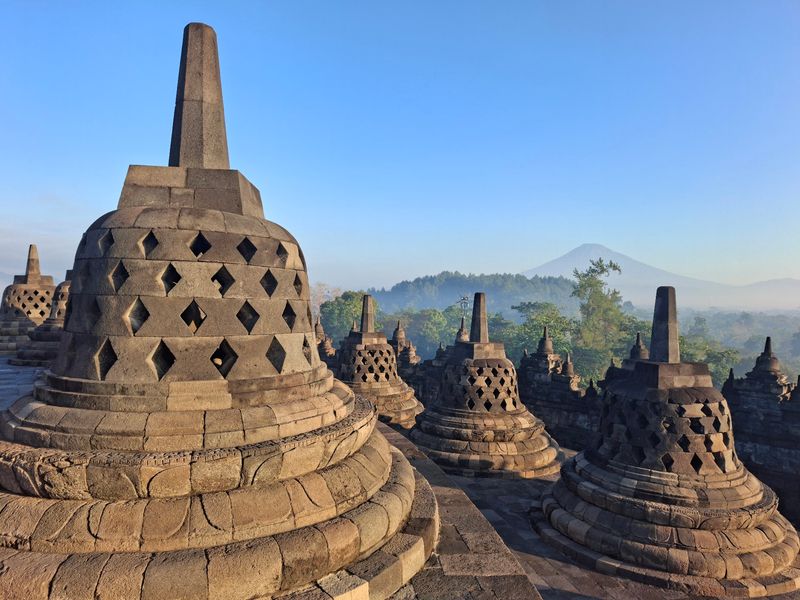
Pilgrims walk up five square terraces and then reach three round platforms. At the top sits one grand stupa.
Around the upper levels stand 72 perforated stupas, and each traditionally holds a Buddha figure.
Carvings cover about 2,500 square meters of walls. They tell stories of Buddha’s lives and teachings, so every turn offers a new scene.
The climb is meant to show a journey from the everyday world toward enlightenment.
Fun fact: the site needed a huge international restoration in the 1970s and early 1980s to save it. Many visitors go at sunrise, when mist floats between nearby volcanoes and the stupas seem to glow.
Wear light clothes, carry water, and take your time on the steps.
Golden Temple, Amritsar, India
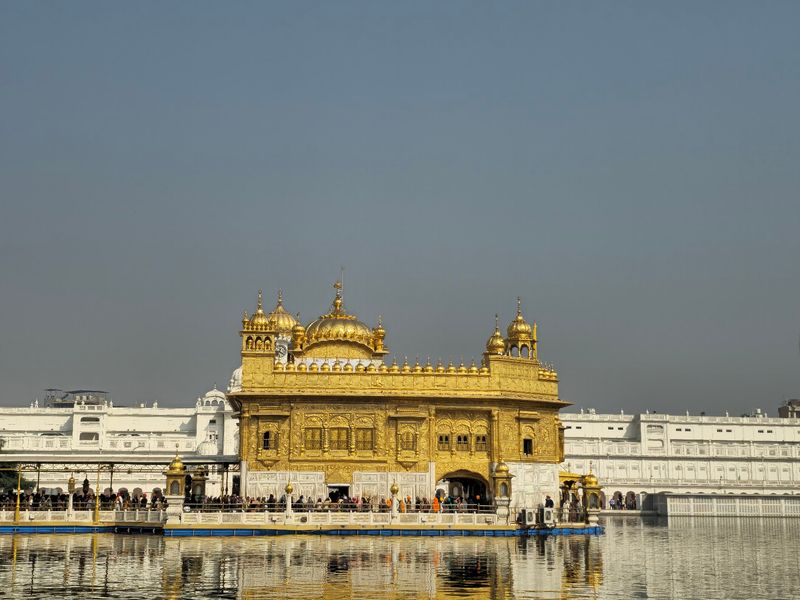
Free hot meals for tens of thousands of people every single day: that is the everyday magic of the Golden Temple. Officially named Sri Harmandir Sahib, it is the spiritual heart of Sikhism.
The glittering shrine floats in the middle of the Amrit Sarovar pool, which gave Amritsar its name.
Guru Arjan, the fifth Sikh Guru, helped shape the design. The building has four entrances, which show that people from every direction and background are welcome.
Nobody is turned away.
The community kitchen, called the langar, is just as famous as the golden walls. Volunteers cook, serve, and wash dishes, and everyone sits together on the floor to eat.
Caste, religion, and wealth do not matter there.
Visitor advice: cover your head, remove your shoes, and wash your feet at the entrance. Go in the evening to see the temple lit up and reflected in the water.
The calm hymns drifting across the pool make it hard to leave.
Mahabodhi Temple, Bodh Gaya, India
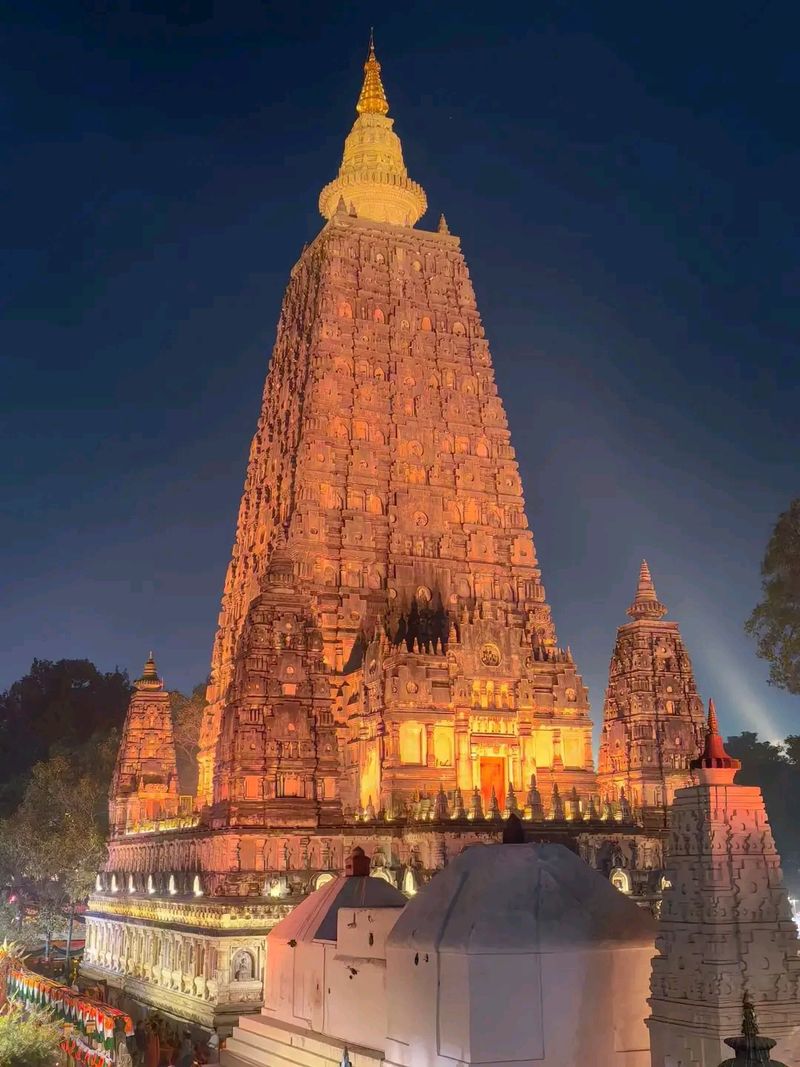
Under one tree, a man sat down and rose up as the Buddha. According to Buddhist tradition, that happened at Bodh Gaya, where Siddhartha Gautama reached enlightenment.
The Mahabodhi Temple now stands beside that sacred Bodhi Tree.
Emperor Ashoka set up an early temple here in the 3rd century BCE. The brick temple you see today mostly dates from the 5th or 6th century.
UNESCO calls it one of India’s earliest surviving brick Buddhist temples.
The tower climbs about 50 meters high. Next to the tree sits the Vajrasana, or Diamond Throne, marking the spot of the awakening.
It is one of the four main pilgrimage sites of Buddhism.
Monks from many countries come to chant, meditate, and walk slowly around the grounds. You might hear Tibetan, Thai, and Japanese prayers in a single afternoon.
Visit early for quiet meditation, and bring a small offering of flowers or a candle if you wish.
Meenakshi Amman Temple, Madurai, India
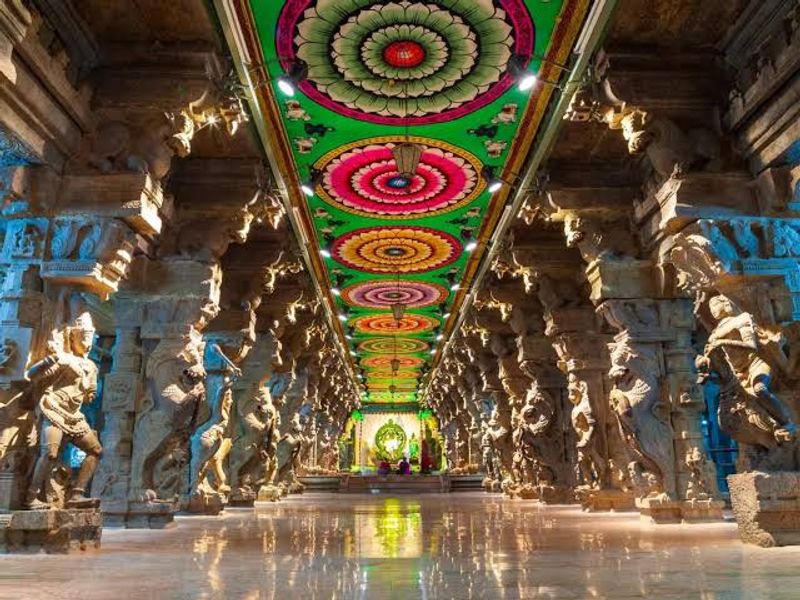
Hold onto your camera, because the towers of Madurai are a riot of color. Meenakshi Amman Temple has 14 gopurams, which are tall entrance towers.
Many rise between about 45 and 50 meters and are packed with painted gods, animals, and heroes from old stories.
The temple honors Goddess Meenakshi and Lord Sundareswarar, a form of Shiva. Its style is Dravidian, with huge halls and long corridors.
Inside, you will find the Thousand-Pillar Hall, some musical pillars, and the Golden Lotus Tank.
Every year the Meenakshi Thirukalyanam festival acts out the divine wedding of the goddess and Sundareswarar. Crowds pour in for music, processions, and feasts.
The temple is not a museum but a living center of Tamil life.
Tip: dress modestly, leave your shoes outside, and check the rules about cameras inside. Evening is a lovely time, when oil lamps flicker and the towers are lit up.
Hire a local guide to decode the thousands of figures overhead.
Prambanan, Indonesia
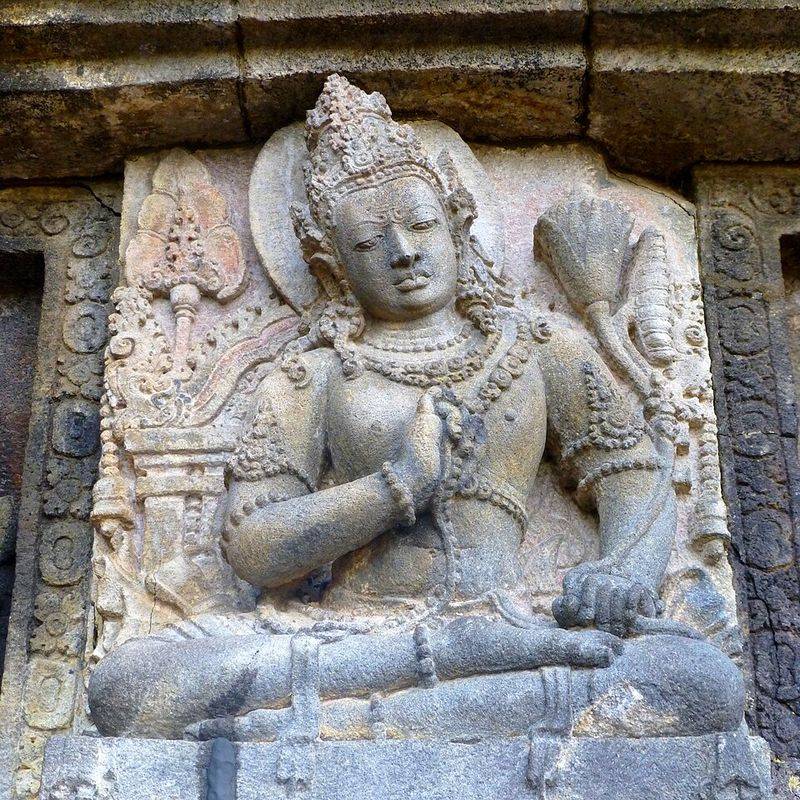
Sharp stone spires poke at the sky like giant carved rockets at Prambanan. This is the largest Hindu temple compound in Indonesia that is dedicated to Shiva.
Most of it was built in the 9th and 10th centuries.
Three main temples honor Shiva, Vishnu, and Brahma. Smaller shrines nearby belong to their animal companions.
The central sanctuary is covered in carved scenes, including episodes from the Ramayana.
Borobudur, a Buddhist monument, stands not far away. Together they show how Hindu and Buddhist traditions lived side by side in medieval Java.
That neighborly history is a big part of their charm.
Earthquakes have shaken the site over the centuries, with serious damage in 2006. Careful repair work has allowed restored temples to reopen to visitors.
Plan a late afternoon visit, stay for sunset, and look for the Ramayana reliefs along the walkways. Bring a hat, because the stone gets hot.
Tōdai-ji, Nara, Japan
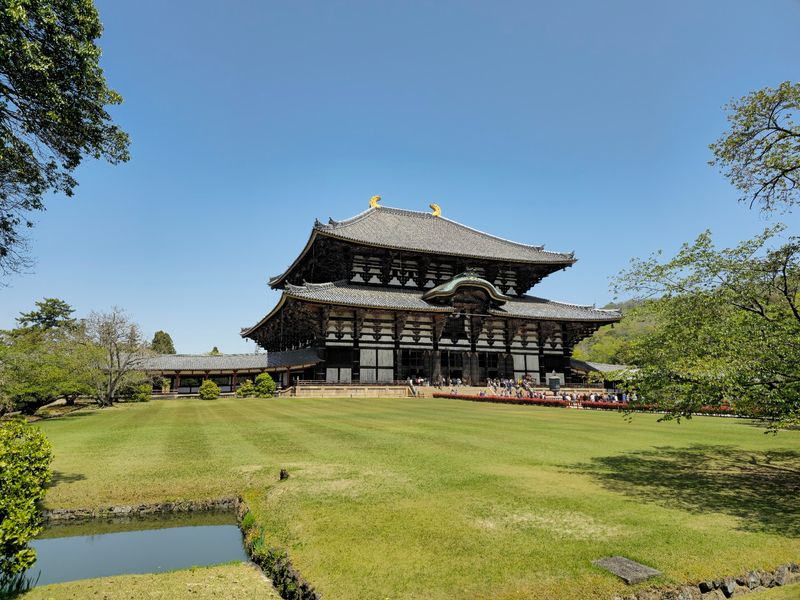
Bow to the deer, then meet a Buddha so big he needs a mega-sized hall. Tōdai-ji in Nara holds a colossal statue of the Buddha Vairocana inside the Daibutsuden.
It is one of Japan’s best known religious sculptures.
In the 8th century, Emperor Shōmu ordered a nationwide network of provincial Buddhist temples. Tōdai-ji was meant to be the main one.
An imperial proclamation in 743 started work on the great Buddha, and it was formally consecrated in 752.
The temple became a center for state ceremonies and Buddhist study. Its story shows how Buddhism wove itself into government, learning, and ideas about protecting the nation during the Nara period.
Today the grounds are friendly and open. Friendly deer wander nearby and will happily nibble at your map, so hold it tight.
Go in the morning to avoid tour groups, and take a moment to look up at the Buddha’s calm face. The scale really does feel humbling.
Fushimi Inari Taisha, Kyoto, Japan
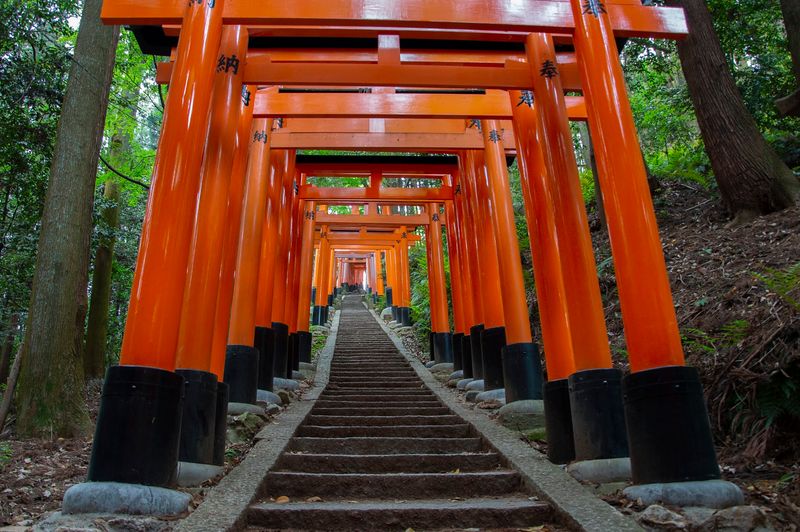
Walk through a tunnel of bright orange gates and you will understand why this shrine is famous worldwide. Fushimi Inari Taisha is a Shinto shrine in Kyoto, and its torii gates seem to go on forever.
Each one is a donation.
The shrine honors Inari, a deity linked with rice, farming, and prosperity, and later with business. Official history marked the 1,300th anniversary of its founding in 2011.
That places its start in the early 8th century.
Buildings were burned in the 15th century during the Ōnin conflict and rebuilt afterward. The main gate dates to 1589.
Over time, thousands of gates were added by worshippers and companies, and they now climb the paths of Mount Inari.
Hiking the full trail takes a couple of hours, so bring water and comfy shoes. Start early or go at night for fewer crowds and a magical glow.
Look for stone fox statues, because foxes are seen as Inari’s messengers.
Temple of Heaven, Beijing, China
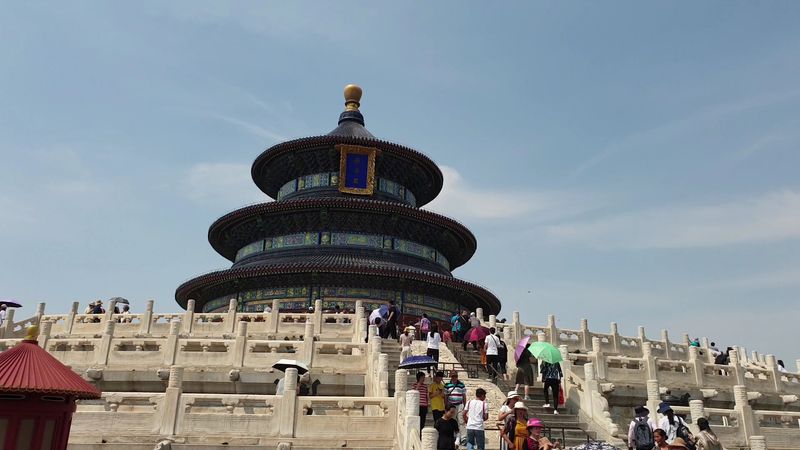
Emperors once stood here with a heavy job: keeping heaven, earth, and people in balance. The Temple of Heaven in Beijing was not a regular place of worship.
It was a huge ritual complex used by Ming and Qing emperors.
Work began in the first half of the 15th century. The site includes the Circular Mound Altar, the Imperial Vault of Heaven, and the lovely Hall of Prayer for Good Harvests.
Its blue roof is one of the most recognized images of China.
The layout expresses Chinese ideas about the universe. Round shapes stand for heaven and square shapes for earth.
UNESCO stresses the emperor’s special role as a go-between for humanity and the heavens.
Today locals fill the surrounding park with tai chi, music, cards, and dancing. Visit in the morning to catch that lively scene.
Try the Echo Wall at the Imperial Vault, where whispers can travel along the curved stone.
Shwedagon Pagoda, Yangon, Myanmar
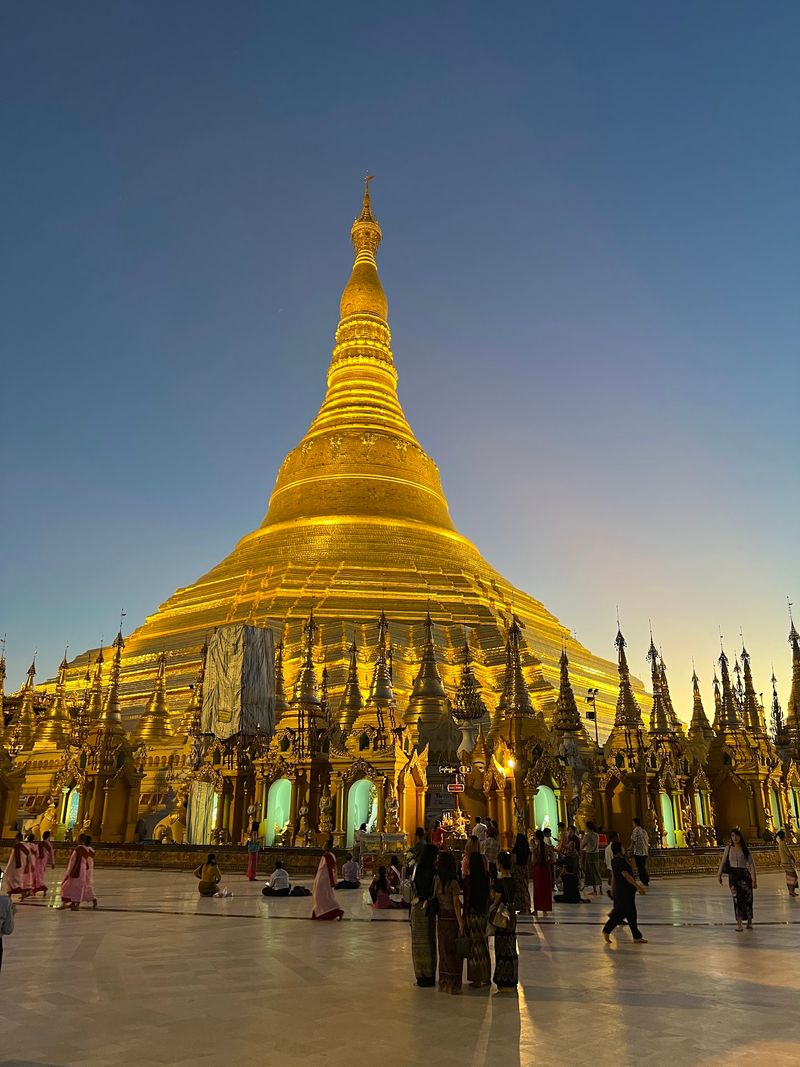
Gold, gold, and more gold: Shwedagon Pagoda practically glows over Yangon. Its stupa rises from Singuttara Hill and dominates the skyline.
Myanmar’s tourism ministry calls it the country’s most iconic and beloved pagoda.
Around the main stupa you will find smaller shrines, prayer halls, statues, and quiet corners. Pilgrims walk clockwise around the center, make offerings, and pour water over statues.
They also visit planetary posts that match the day of the week they were born.
Festivals fill the calendar, so there is often music, flowers, and chanting in the air. The pagoda is not only a pretty sight.
It is a major center of Theravada Buddhist devotion and a symbol of Burmese faith that has lasted through many changes.
Plan to go near sunset, when the gold turns warm and the marble floor cools down. Remember to take off shoes and socks, and wear clothes that cover shoulders and knees.
Find your birth day post and join the locals.
Dambulla Cave Temple, Sri Lanka
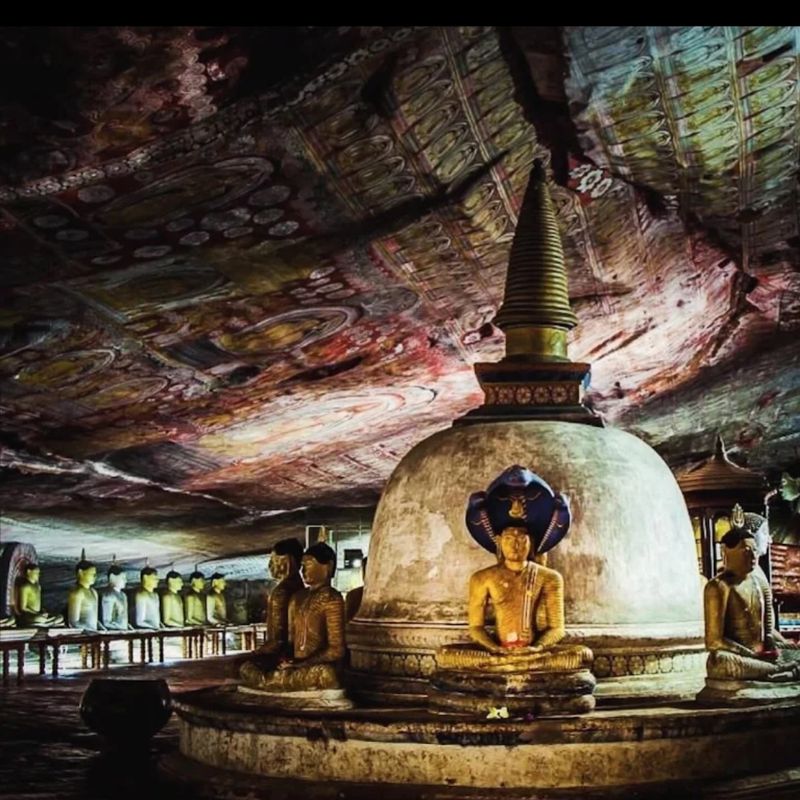
Step through a low doorway and the ceiling suddenly bursts into color. Dambulla is a set of caves in Sri Lanka that became a shrine of wonders.
Buddhist monks have used the caves since at least the 3rd century BCE.
Over many centuries, kings paid to decorate them. Today there are five main shrine caves.
UNESCO calls Dambulla the island’s largest and best-preserved cave-temple complex.
The murals cover about 2,100 square meters, and the caves hold 157 statues. Paintings show the Buddha, Buddhist cosmology, and moments from Sri Lankan history.
Every inch of rock seems to have a story.
Worship never stopped here, so Dambulla is not just a ruin. It is a place with more than two thousand years of steady ritual and pilgrimage.
Be ready for a climb up stone steps, and cover your shoulders and knees. Watch for the cheeky monkeys along the path and keep snacks hidden.
Bagan Temple Landscape, Myanmar
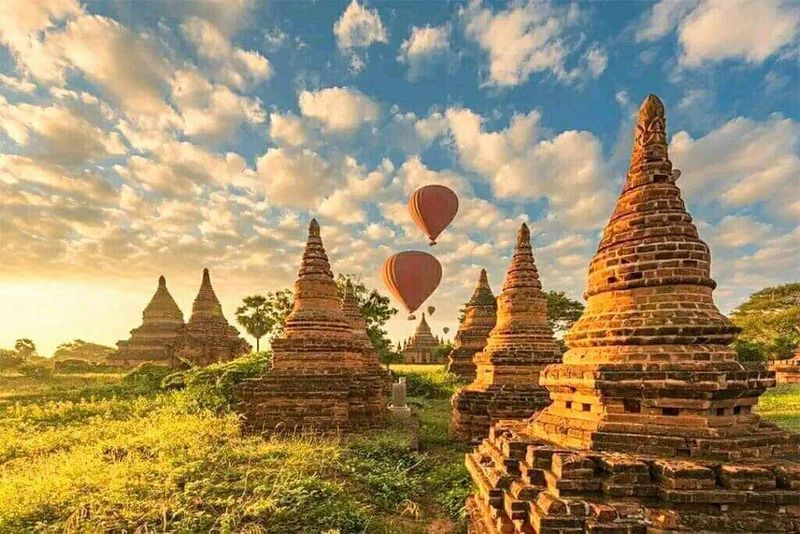
Thousands of temples scattered across one flat plain is not a normal view. Bagan, in Myanmar, is a whole sacred landscape instead of a single building.
It sits beside the Ayeyarwady River.
From the 11th to the 13th century, Bagan was the capital of a powerful kingdom. Rulers and rich donors built stupas, temples, and monasteries by the thousands.
Sponsoring a temple was a way to earn spiritual merit, and it also showed political strength.
UNESCO sees Bagan as exceptional evidence of this Theravada Buddhist merit-making. Ananda Temple and Shwezigon Stupa show different stages of Burmese architecture.
Their styles shaped art and faith in Myanmar long after the kingdom faded.
The best way to explore is by e-bike or bicycle, stopping when a temple catches your eye. Sunrise and sunset are the golden times.
Carry a flashlight for dark inner corridors, and remember to take off your shoes before entering each shrine.
Pashupatinath Temple, Kathmandu, Nepal
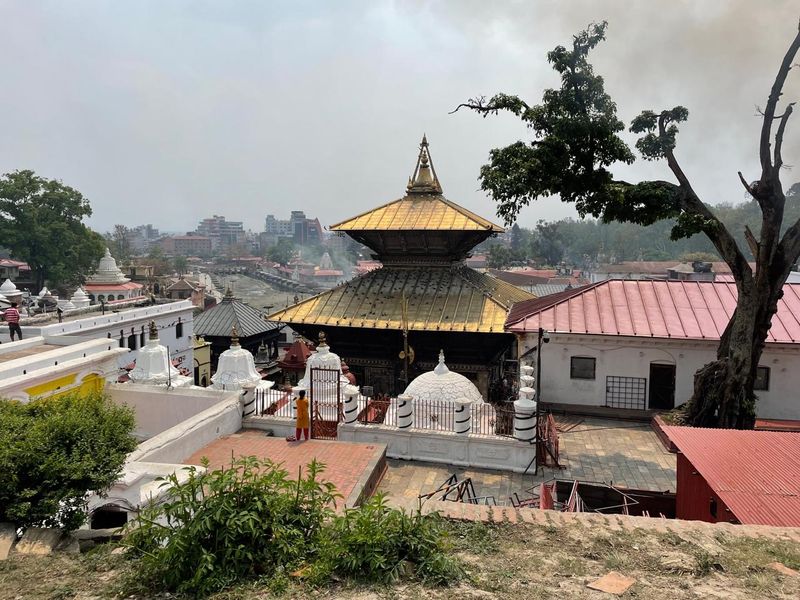
Smoke drifts over the Bagmati River while bells ring from every direction. That is everyday life at Pashupatinath in Kathmandu.
It is one of the most important Hindu sites in the Himalayan region.
The temple honors Shiva in his form as Pashupati. The complex includes temples, shrines, courtyards, and cremation ghats built up over centuries.
It is one of seven monument zones in the UNESCO-listed Kathmandu Valley.
UNESCO places Pashupati alongside the Buddhist monuments of Swayambhu and Boudhanath as a main ensemble of the valley. Riverside cremations, festivals, and wandering holy men called sadhus all share this space.
Faith here is part of ordinary family and city life.
Be respectful, because cremations are real funerals and not a show. Ask before taking photos of people, and keep your voice low near the ghats.
Non-Hindus may not enter the main temple, but the views from the opposite riverbank are excellent.
Kailasa Temple at Ellora, Maharashtra, India
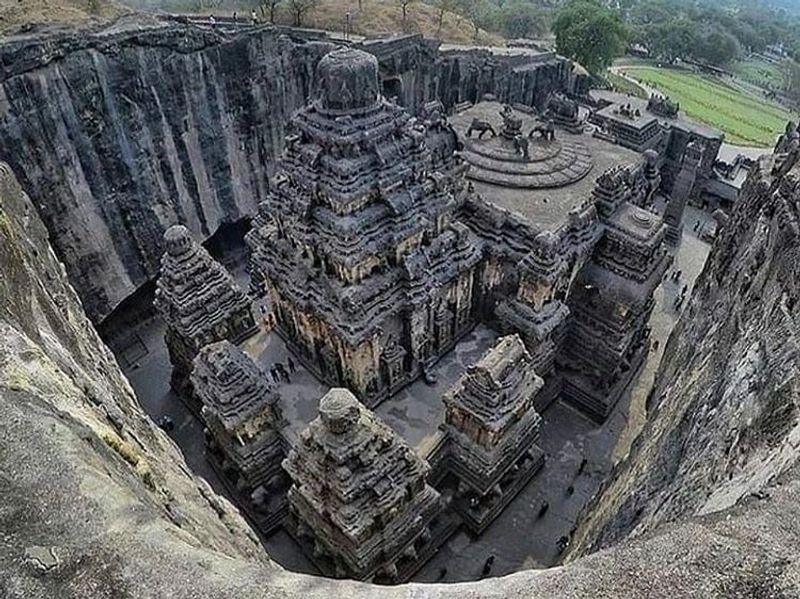
Most builders stack stones upward, but the makers of Kailasa Temple carved downward. They cut this whole temple out of one giant block of basalt.
It is Cave 16 at the Ellora Caves in Maharashtra.
UNESCO calls it the largest monolithic temple at Ellora and an outstanding feat of structure and craftsmanship. The temple is dedicated to Shiva and inspired by Mount Kailash.
Elephants, gods, and tall pillars were all shaped from the same mass of rock.
Ellora has 34 Buddhist, Hindu, and Jain monasteries and temples, dug out between roughly the 6th and 12th centuries. They show how several faiths thrived side by side.
Walking from cave to cave feels like a tour through different beliefs.
Visit early in the day to beat the heat. Climb to the upper viewpoints for a look at the courtyard from above, and bring a hat and water.
The scale is easier to grasp when you spot tiny visitors next to the carved walls.
Kiyomizu-dera, Kyoto, Japan
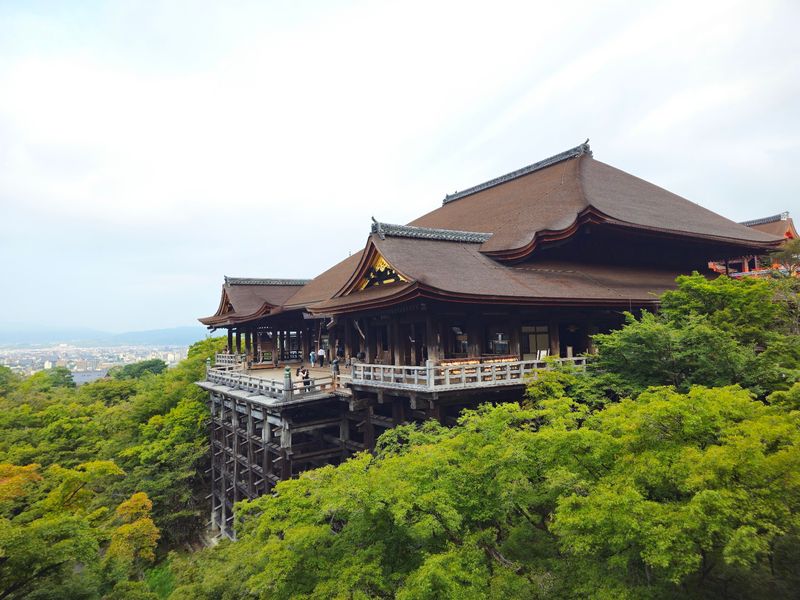
A wooden stage hangs out over a forested hillside, and the view takes your breath away. That is Kiyomizu-dera, one of the most loved temples in Kyoto.
It is one of 17 parts of the Historic Monuments of Ancient Kyoto, a UNESCO World Heritage property.
Kyoto was Japan’s cultural center from 794 until the 19th century. Its temples trace more than a thousand years of religious architecture and garden design.
Kiyomizu-dera shows this well, with views stretching across eastern Kyoto.
The temple is about more than prayer. It reflects landscape design, skilled carpentry, pilgrimage, and seasonal traditions.
Cherry blossoms in spring and red maples in autumn draw big crowds.
The wider Kyoto group of sites shaped building and garden styles across Japan and far beyond. For a calmer visit, arrive right at opening time.
Walk the lanes leading up to the temple, try local sweets, and stay late for special evening lighting during certain seasons.
Share this story