Spain has a way of surprising you around every corner, and nowhere is that more true than in its smaller towns and villages. Some of these places look so perfectly preserved that you might wonder if time simply forgot to move on.
From ancient hilltop fortresses to colorful fishing harbors and cave-carved streets, these 15 destinations capture everything magical about Spanish culture and history. Pack your walking shoes and a sense of wonder because these villages are absolutely worth the journey.
Albarracín – Aragón
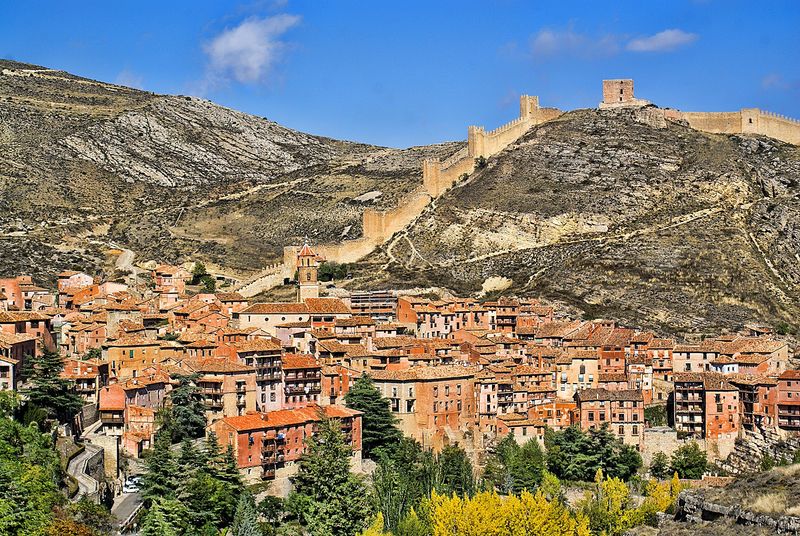
Walk into Albarracín and you might genuinely check your phone to confirm it’s still the 21st century. This medieval gem in Aragón is famous for its warm, rosy-pink stonework that glows beautifully at sunset, giving the whole town an almost magical atmosphere.
The color comes from the local iron-rich rock used to build nearly every structure here.
The ancient defensive walls that wrap around the town are among the best-preserved in all of Spain. Wandering through them feels like exploring a real fortress, not a tourist replica.
Narrow cobbled lanes twist and turn between centuries-old buildings, leading to hidden squares and charming little courtyards.
Albarracín sits within a dramatic loop of the Guadalaviar River, surrounded by rugged hills that make the scenery even more striking. The town belongs to the prestigious network of Spain’s Most Beautiful Villages.
History lovers, architecture fans, and casual wanderers all find something to fall head over heels for here.
Ronda – Andalusia
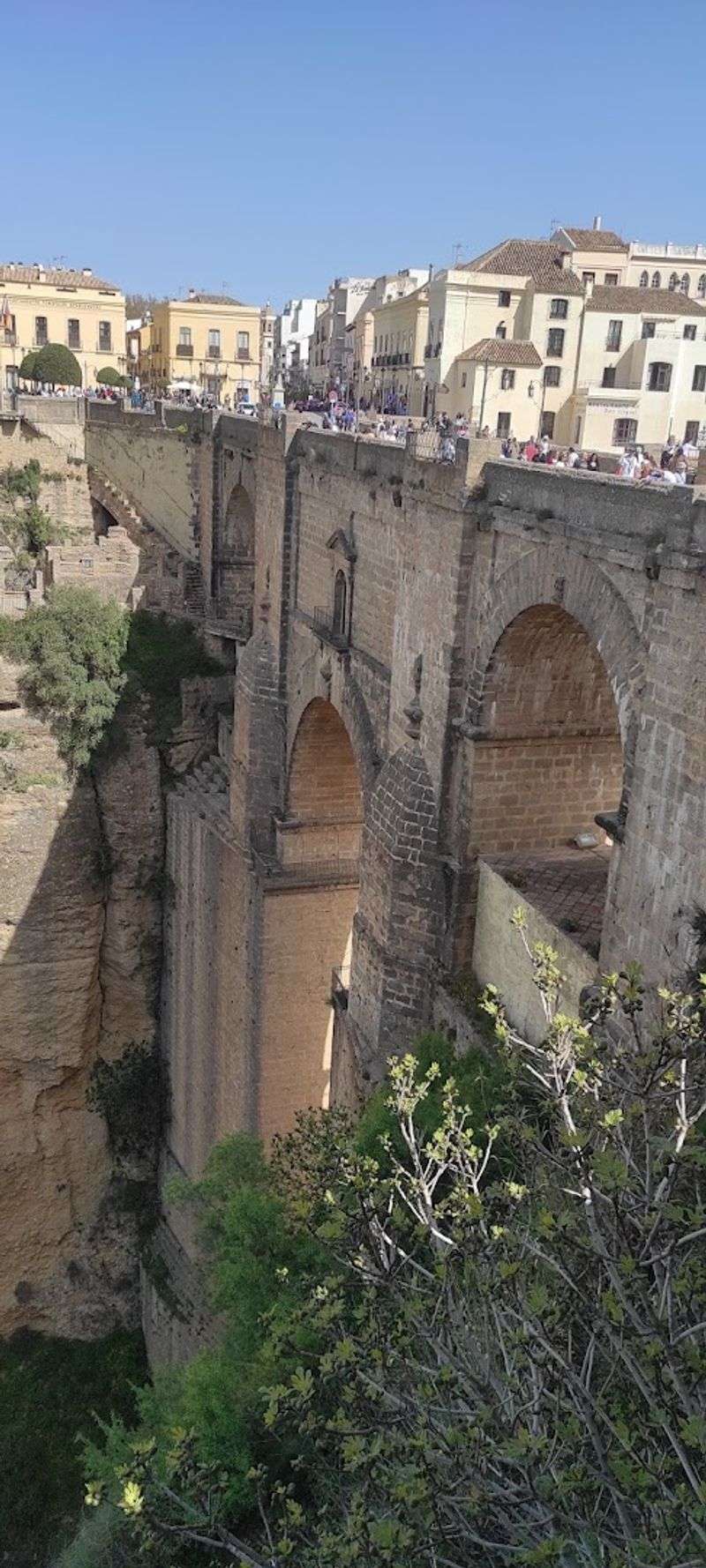
Ronda does not ease you in gently. The moment you peer over the edge of the El Tajo Gorge, your stomach drops in the best possible way.
The Puente Nuevo bridge, built in the 18th century, spans this jaw-dropping chasm with an elegance that still baffles engineers today. It took over 40 years to complete and is arguably Spain’s most dramatic piece of civil architecture.
Beyond the bridge, Ronda rewards curious explorers with Spain’s oldest bullring, a beautifully preserved Arab baths complex, and a historic old town packed with Renaissance mansions. The views from the clifftop promenade stretch endlessly across olive groves and mountain ranges.
Ernest Hemingway and Orson Welles both loved this town, and it is easy to understand why.
Ronda sits about an hour from Málaga and makes an excellent day trip or overnight stay. The town has a solid restaurant scene too, with local dishes featuring game meats and Ronda wines.
Few places in Spain combine natural drama with cultural richness quite so effortlessly.
Cudillero – Asturias
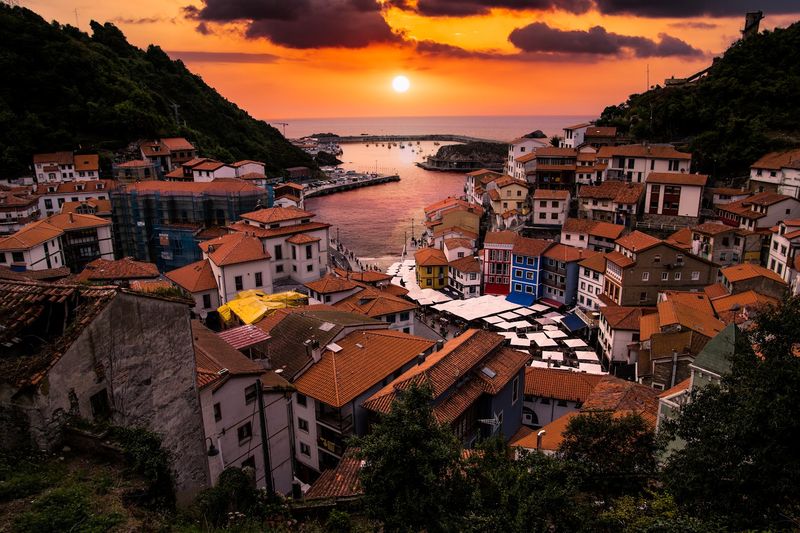
Cudillero looks like someone stacked a box of crayons on a hillside and called it a village. Brightly painted fishermen’s houses in yellow, blue, pink, and orange tumble down a steep slope toward a snug little harbor, creating one of northern Spain’s most cheerful and photogenic scenes.
This is Asturias at its most charming and completely irresistible.
The village wraps around its harbor like a natural amphitheater, so from almost any vantage point you get a postcard-worthy view of the boats below and the Cantabrian Sea beyond. Locals speak a unique dialect called Pixueto, a quirky linguistic reminder that Cudillero has always done things its own way.
The fishing tradition here runs deep and the seafood is absolutely outstanding.
Fresh octopus, spider crab, and locally caught fish are staples on every restaurant menu in town. The village gets busy in summer but retains its authentic character year-round.
Visiting in the off-season means quieter streets, lower prices, and a more genuine connection with the community that has called this dramatic hillside home for generations.
Setenil de las Bodegas – Andalusia
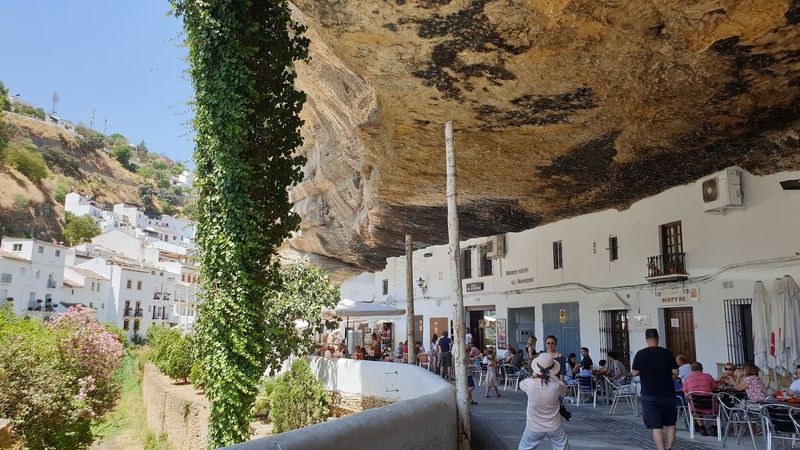
Imagine living under a rock, but make it stylish. Setenil de las Bodegas is one of the most genuinely bizarre and brilliant villages in all of Europe, where entire streets of homes, cafes, and shops are tucked snugly beneath enormous overhanging rock formations.
These natural stone roofs have sheltered residents since Moorish times, and the effect is absolutely mind-bending.
The town sits in a narrow gorge carved by the Trejo River in Cádiz province. Two main cave streets, Calle Cuevas del Sol and Calle Cuevas de la Sombra, translate roughly as Sun Caves Street and Shadow Caves Street.
Sitting at a table in one of the rock-sheltered bars and ordering a cold beer while a massive cliff hovers overhead is an experience unlike anything else in Spain.
Beyond the famous cave streets, Setenil has a lovely hilltop castle ruin, a medieval church, and a relaxed village atmosphere that feels refreshingly unhurried. The surrounding countryside is dotted with olive groves and white villages.
Getting here requires a car, but the journey through Andalusia’s rolling hills makes the trip worthwhile on its own.
Cadaqués – Catalonia
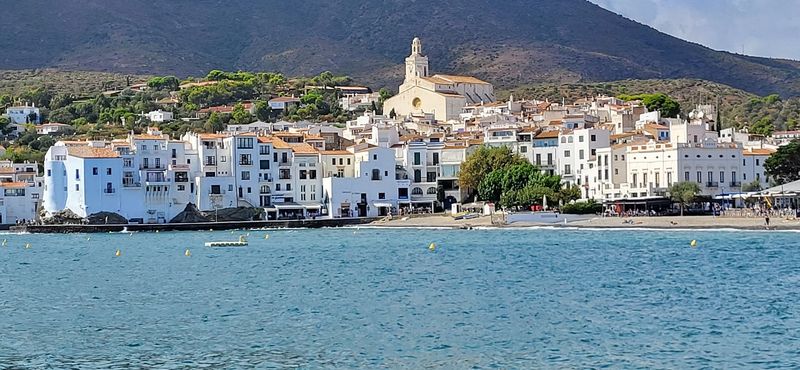
Salvador Dalí chose Cadaqués as his home, and honestly, the man had impeccable taste. This whitewashed Catalan fishing village on the Costa Brava has a dreamy, slightly otherworldly quality that has attracted artists, writers, and romantics for well over a century.
The sparkling blue Mediterranean, the rocky Cap de Creus headland, and the maze of narrow lanes all contribute to an atmosphere that feels almost too beautiful to be real.
Cadaqués is only accessible by a winding mountain road, which helps it maintain a quieter and more exclusive feel than many other coastal villages. Dalí’s house at nearby Portlligat is now a fascinating museum where visitors can see the eccentric spaces he designed for himself and his muse, Gala.
The village church, with its ornate Baroque interior, sits at the heart of town and is well worth a visit.
The local restaurant scene leans heavily on fresh seafood, with anchovies from the region being particularly celebrated. Strolling the seafront promenade at golden hour while fishing boats bob gently in the harbor is one of those simple travel moments that stays with you for years.
Cadaqués earns its reputation every single day.
Morella – Valencian Community
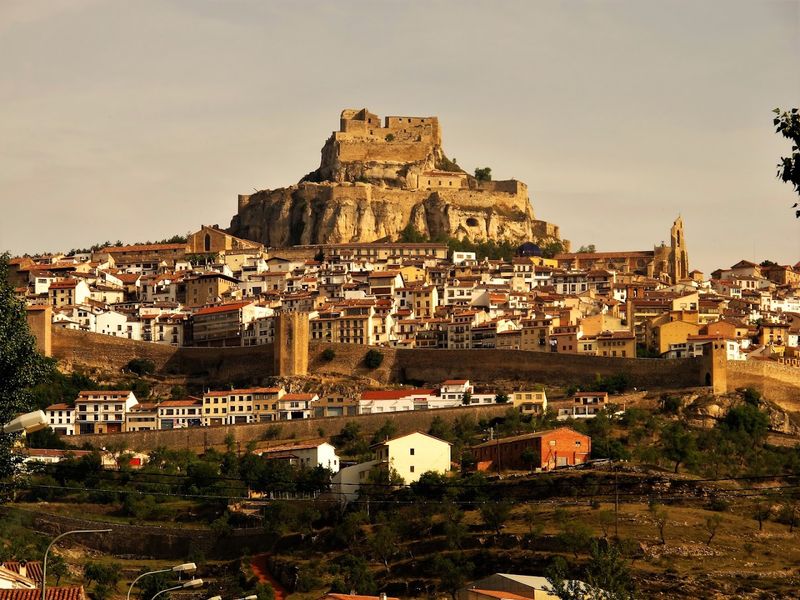
Morella is the kind of town that makes your jaw drop from five miles away. Perched on an isolated rocky outcrop in the Maestrazgo region, it is completely encircled by two kilometers of intact medieval walls and crowned by a striking hilltop castle that can be seen from an almost ridiculous distance.
The visual impact is genuinely theatrical.
Inside those ancient walls, Morella is a wonderfully preserved medieval world. The Gothic basilica of Santa María la Mayor is a standout, featuring a spiral staircase carved with extraordinary detail and a beautifully decorated choir.
The covered market arcades, stone streets, and old palaces all add to the sense that centuries have passed very gently here.
Morella hosts a famous sexennial festival called La Sexennial, a religious celebration held every six years that transforms the town with elaborate processions and decorations. The surrounding countryside offers excellent hiking and birdwatching.
Local cuisine features mountain specialties like lamb, truffles, and the region’s distinctive cheeses, all best enjoyed in one of Morella’s traditional stone-walled restaurants with a glass of local wine in hand.
Frigiliana – Andalusia
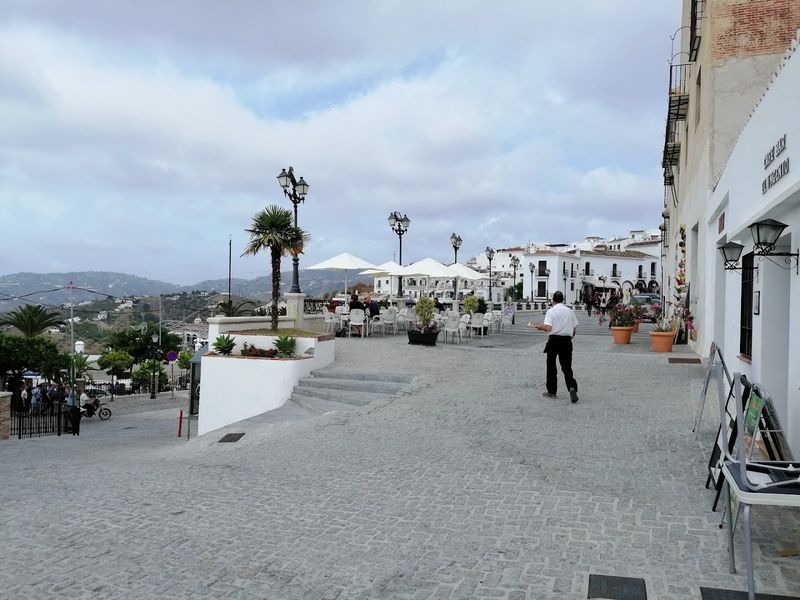
Frigiliana regularly wins awards for being one of Andalusia’s prettiest villages, and walking through it makes those awards feel completely well-deserved. Perched in the hills above Nerja on the Costa Tropical, this blindingly white village is a sensory treat, with bougainvillea tumbling over blue-trimmed walls, terracotta pots bursting with color, and the scent of jasmine drifting through every narrow lane.
The village has a strong Moorish heritage, and the upper barrio known as El Barribarto preserves this history beautifully with its winding streets, traditional architecture, and hand-painted ceramic tiles that tell the story of the 1569 Moorish revolt. Frigiliana is also home to one of Spain’s last traditional molasses factories, still producing the thick, dark cane syrup that the region has been known for centuries.
The views from the upper village stretch across the mountains and all the way down to the glittering Mediterranean Sea. Frigiliana sits just seven kilometers from Nerja, making it an easy half-day excursion from the coast.
The village is best explored on foot and at a leisurely pace, ideally with a stop for local wine and freshly made tapas along the way.
Aínsa – Aragón
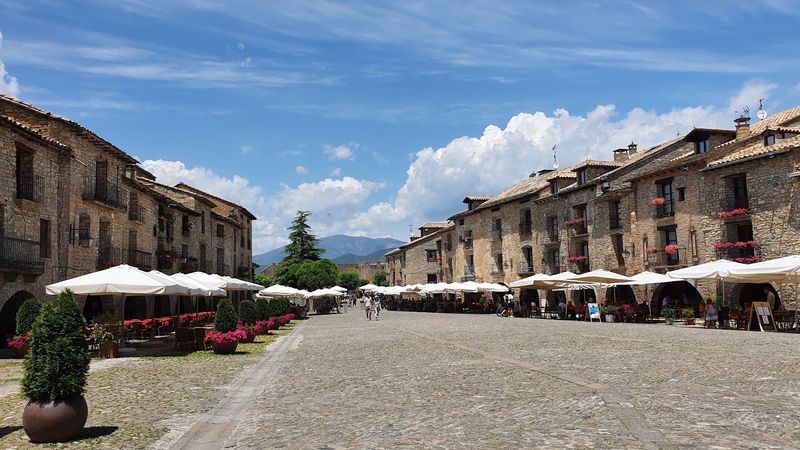
At the confluence of two rivers with the Pyrenees rising dramatically behind it, Aínsa has one of the most enviable backdrops of any village in Spain. The old upper town is a beautifully intact medieval settlement built from warm honey-colored stone, with a magnificent arcaded central plaza that looks like it was designed specifically to make photographers weep with joy.
The Romanesque church of Santa María, dating back to the 11th century, anchors the plaza with quiet authority. Its simple tower and cool interior offer a peaceful contrast to the mountain scenery outside.
The village castle, restored and now used as a cultural center, provides sweeping views over the confluence of the Cinca and Ara rivers below.
Aínsa has earned recognition as one of UN Tourism’s Best Tourism Villages, a distinction that reflects its commitment to balancing heritage preservation with quality visitor experiences. The surrounding Sobrarbe region is a paradise for outdoor enthusiasts, offering white-water rafting, canyoning, hiking, and cycling.
The local market held on Wednesdays is a wonderful way to sample regional produce, cheeses, and charcuterie from the Pyrenean foothills.
Mojácar – Andalusia
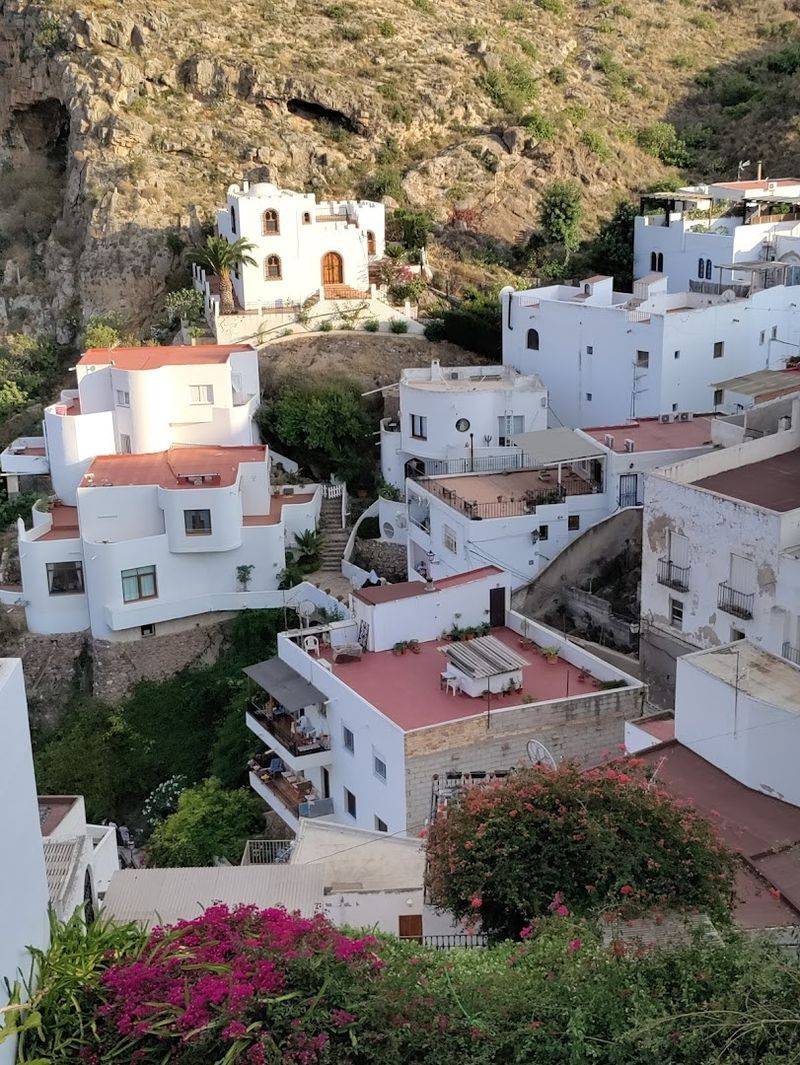
Blinding white and fiercely proud, Mojácar sits on a rocky hilltop in Almería province like a crown above the Mediterranean. The village is a jumble of cubic white houses stacked on top of each other, connected by steep stepped lanes and tiny squares with views that stretch all the way to the sea.
It is the kind of place that looks completely unreal in photographs and even more spectacular in person.
Mojácar has a fascinating Moorish past and its layout still reflects that heritage clearly. Legend has it that Walt Disney’s family had roots here, a story the locals tell with great pride and considerable humor.
Whether true or not, there is something undeniably magical about the place that makes the tale feel fitting.
The village sits a few kilometers from Mojácar Playa, a long sandy beach strip with restaurants and beach bars, giving visitors the best of both worlds. The hilltop village is best explored in the early morning or late afternoon when the light is soft and the tourist crowds are thinner.
Local crafts, ceramics, and handmade jewelry fill the small boutique shops tucked along the winding streets.
Besalú – Catalonia
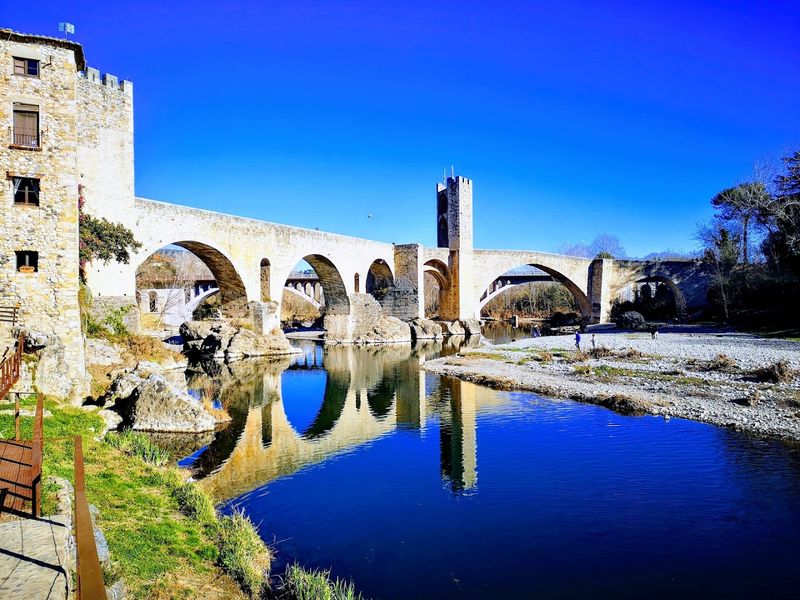
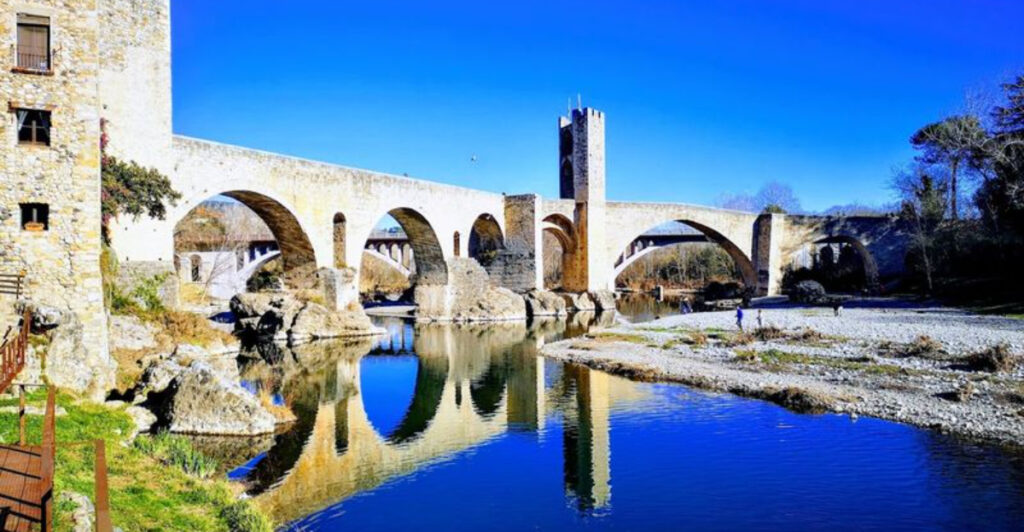
The first thing most visitors see of Besalú is its bridge, and that first impression is absolutely unforgettable. The medieval fortified bridge, with its distinctive Z-shaped form and stone watchtower gateway, has been guarding the entrance to this Catalan town since the 12th century.
It is one of the most photographed structures in all of Catalonia and completely worth the hype.
Cross the bridge and Besalú reveals itself as a remarkably complete medieval town. Romanesque churches, Jewish heritage sites, arcaded streets, and stone mansions all crowd together in a compact historic center that takes perhaps two hours to explore thoroughly.
The Jewish ritual bath, or Miqveh, discovered beneath the town in 1964, is one of only three known to survive in Spain.
Besalú sits in the Garrotxa region of Girona province, surrounded by volcanic landscapes and medieval villages that make this corner of Catalonia endlessly rewarding to explore. The town hosts a lively medieval market each May that draws visitors from across the region.
Local restaurants serve hearty Catalan cuisine, with dishes featuring local sausages, wild mushrooms, and the region’s celebrated buckwheat crepes called fajols.
Alquézar – Aragón
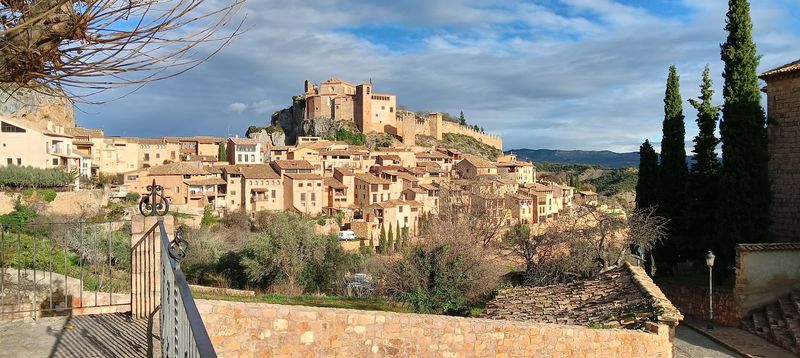
Perched above a dizzying limestone canyon carved by the Vero River, Alquézar is the sort of place that adventure travelers and history buffs rarely agree on but somehow both adore. The medieval village clings dramatically to a rocky spur in the Sierra de Guara, with a collegiate church and former Moorish citadel dominating the skyline in a way that is genuinely hard to stop staring at.
The canyon below the village is one of Spain’s premier canyoning destinations, attracting outdoor enthusiasts from across Europe every summer. Colorful swimming holes, natural rock formations, and ancient cave paintings hidden along the canyon walls make the natural surroundings just as compelling as the village itself.
The contrast between the medieval streets above and the wild gorge below is striking.
Alquézar has earned recognition as one of Spain’s Best Tourism Villages, celebrated for balancing natural heritage with cultural preservation. The village has a well-preserved medieval quarter with stone arches, a charming central square, and a handful of excellent restaurants serving hearty Aragonese mountain food.
Roasted lamb, local honey, and the region’s famous Somontano wines are all worth seeking out during a visit here.
Vejer de la Frontera – Andalusia
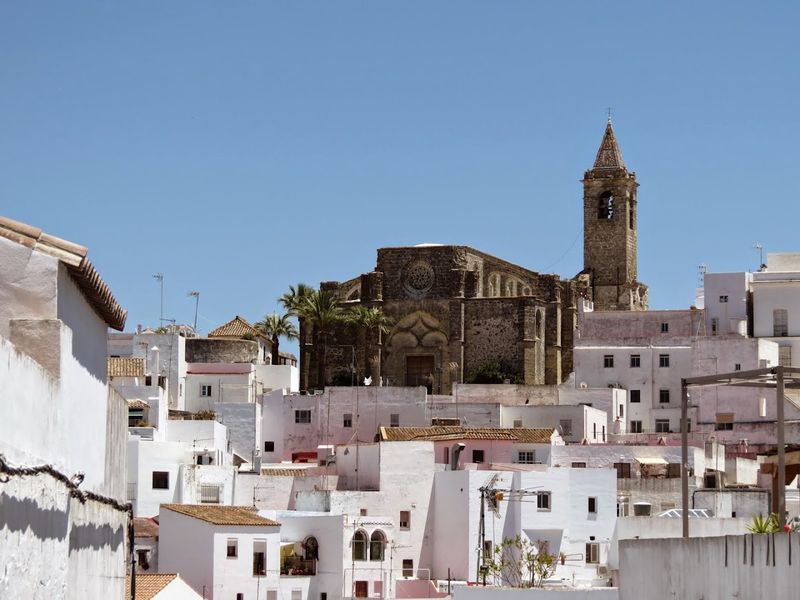
Vejer de la Frontera has a habit of stopping visitors in their tracks. Perched high on a rocky hill above the Costa de la Luz in Cádiz province, this blindingly white Moorish-influenced village radiates a kind of effortless cool that has made it increasingly popular with artists, food lovers, and travelers seeking something beyond the typical beach resort experience.
The old town is a beautifully tangled maze of narrow whitewashed streets, flower-draped archways, and hidden patios that reward slow and aimless wandering. The medieval castle at the town’s highest point offers panoramic views stretching toward the Atlantic, the Strait of Gibraltar, and on clear days, the Moroccan coast across the water.
That view alone is worth the winding drive up the hill.
Vejer has developed a strong culinary reputation in recent years, with a thriving tapas scene and several acclaimed restaurants celebrating local Andalusian produce. The surrounding area is famous for its tuna fishing tradition, and bluefin tuna dishes appear on menus across the village every spring.
The nearby beaches of El Palmar and Zahora are wild, windswept, and far less crowded than the Costa del Sol.
Castellfollit de la Roca – Catalonia
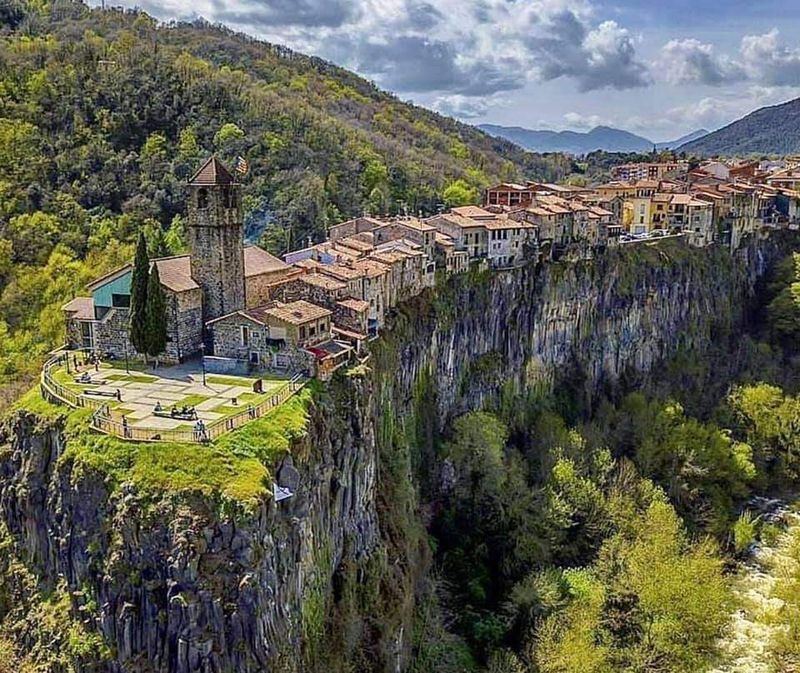
Castellfollit de la Roca might just be the most precarious village in Spain. Built on a narrow basalt cliff just 50 meters wide and rising nearly 50 meters above the confluence of the Fluvià and Toronell rivers, the village looks as though it could slide off the edge at any moment.
Spoiler: it has been sitting there for centuries and shows no signs of going anywhere.
The basalt cliff itself is the result of ancient volcanic activity in the Garrotxa region, one of Europe’s best-preserved volcanic zones. Looking up at the village from the riverbank below is one of those genuinely spectacular views that no photograph ever quite captures fairly.
The dark stone houses seem to grow directly out of the cliff face, their walls flush with the sheer rock drop.
The village interior is quiet and compact, with a small church, traditional stone houses, and a local sausage-making tradition that has earned the area a solid culinary reputation. Castellfollit sits within the Garrotxa Volcanic Zone Natural Park, making it an ideal stop on any road trip through this extraordinary corner of Catalonia.
The nearby town of Olot offers additional restaurants and cultural attractions.
Potes – Cantabria
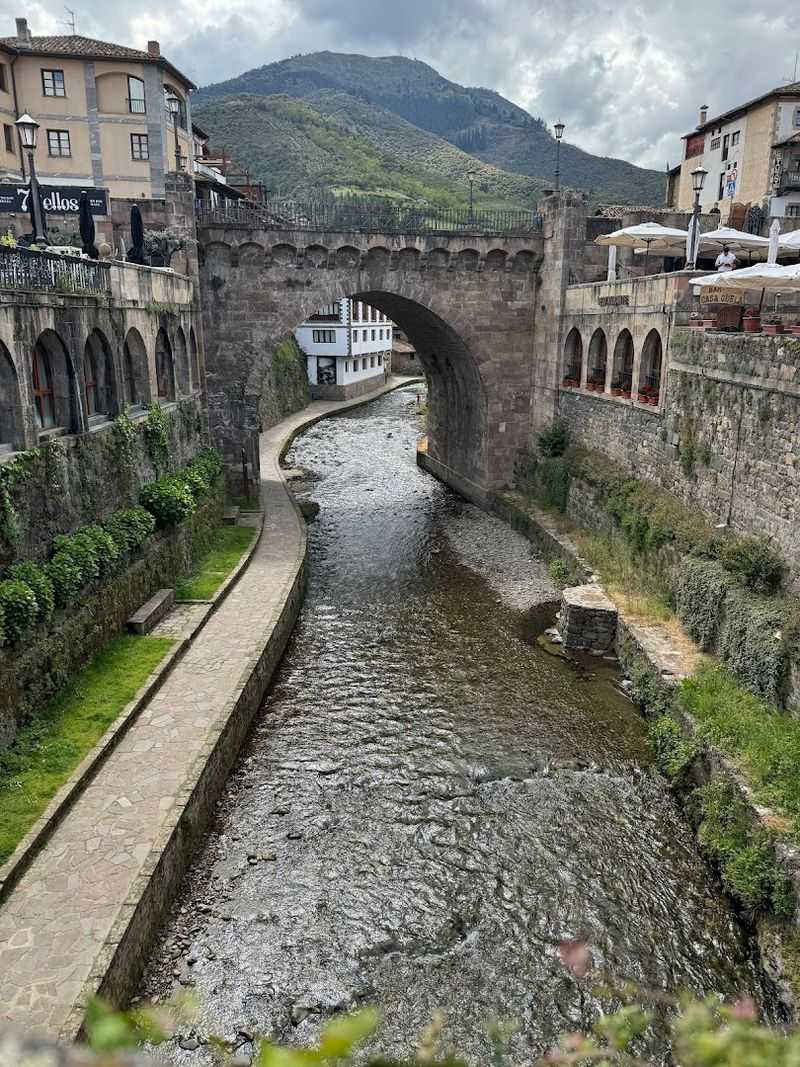
Tucked into the valleys of the Picos de Europa, Potes punches well above its weight as a destination. This small Cantabrian market town has an authentic medieval core of stone buildings, old towers, and narrow streets that feels genuinely lived-in rather than preserved for tourism.
The Torre del Infantado, a 15th-century defensive tower, rises above the rooftops and gives the whole town a satisfyingly historic silhouette.
Four rivers converge near Potes, and the sight of crystal-clear mountain water rushing under ancient stone bridges is the kind of scene that makes you want to sit on a bench and just breathe for a while. The surrounding Liébana Valley is extraordinarily fertile, producing a famous local liqueur called orujo de hierbas that the town celebrates with its own annual festival each November.
Potes serves as the main base for exploring the western side of the Picos de Europa National Park, one of Spain’s most dramatic mountain landscapes. The Fuente Dé cable car, just a short drive away, whisks visitors up to a high plateau with jaw-dropping mountain views.
Hiking, wildlife watching, and sampling local cheeses like the powerful Picón Bejes-Tresviso all make Potes an incredibly rewarding stop in northern Spain.
Mura – Catalonia
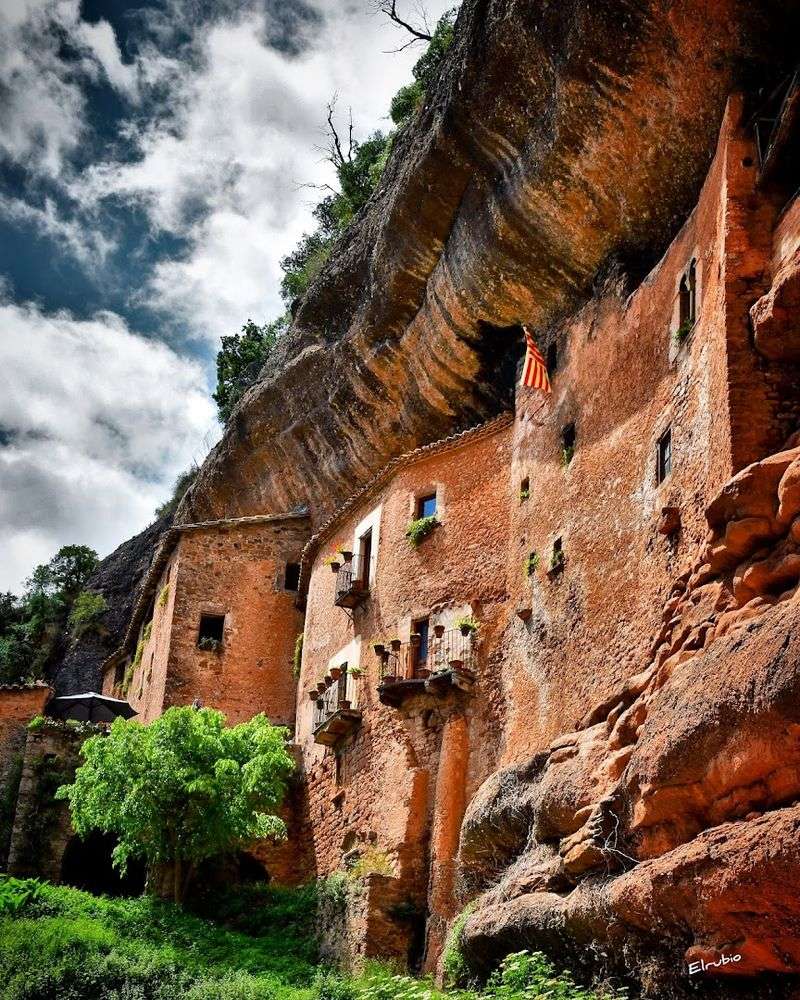
Mura is the kind of village that people stumble upon and then quietly tell only their closest friends about. Nestled inside the Sant Llorenç del Munt i l’Obac Natural Park in the Bages region, this tiny Catalan gem has stone cottages, cobbled lanes, and a Romanesque church that together create one of the most serene and unspoiled village atmospheres in all of Spain.
The natural park surrounding Mura is spectacular, with rugged sandstone formations, dense Mediterranean forest, and excellent hiking trails that attract outdoor lovers year-round. The park’s highest peak, Sant Llorenç del Munt, is crowned by a Benedictine monastery that has stood since the 11th century.
Combining a village stroll with a hike through this landscape makes for a deeply satisfying day out.
UN Tourism recognized Mura as one of its Best Tourism Villages, specifically praising the community’s dedication to heritage conservation and sustainable tourism practices. The village has fewer than 200 permanent residents, which means it retains an intimate, unhurried quality that larger destinations simply cannot replicate.
Visiting on a quiet weekday feels almost like having the whole place to yourself, which is honestly one of travel’s greatest small pleasures.
Share this story