Around the world, mausoleums stand as some of the most breathtaking structures ever built, created to honor the memory of rulers, leaders, and legends. These grand monuments tell stories of power, love, faith, and history in ways that textbooks simply cannot match.
From ancient ruins to modern marble masterpieces, each one offers a unique window into the culture and era that shaped it. Whether you are a history enthusiast or simply love remarkable architecture, these 15 mausoleums are absolutely worth adding to your travel list.
1. Taj Mahal, Agra, India
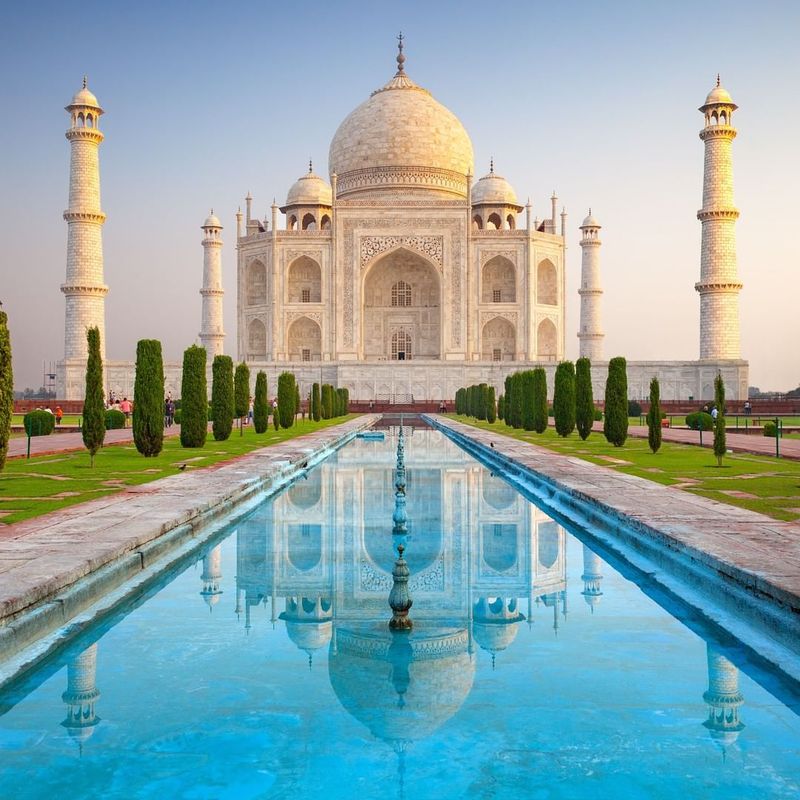
Few buildings in the world carry as much emotional weight as the Taj Mahal. Built by Mughal Emperor Shah Jahan in the 17th century, this ivory-white marble mausoleum was constructed entirely as a tribute to his beloved wife, Mumtaz Mahal, who died during childbirth in 1631.
The monument took over 20 years and roughly 20,000 workers to complete.
Standing at the heart of a vast garden complex in Agra, the Taj Mahal is recognized as a UNESCO World Heritage Site and one of the Seven Wonders of the Modern World. Its perfectly symmetrical design, intricate inlaid gemstone patterns, and towering central dome make it an architectural achievement unlike any other.
Visiting at sunrise is highly recommended, when the soft light turns the white marble a warm shade of pink and gold. Crowds are also smaller early in the morning, making the experience far more peaceful and memorable.
2. Mausoleum at Halicarnassus, Bodrum, Turkiye
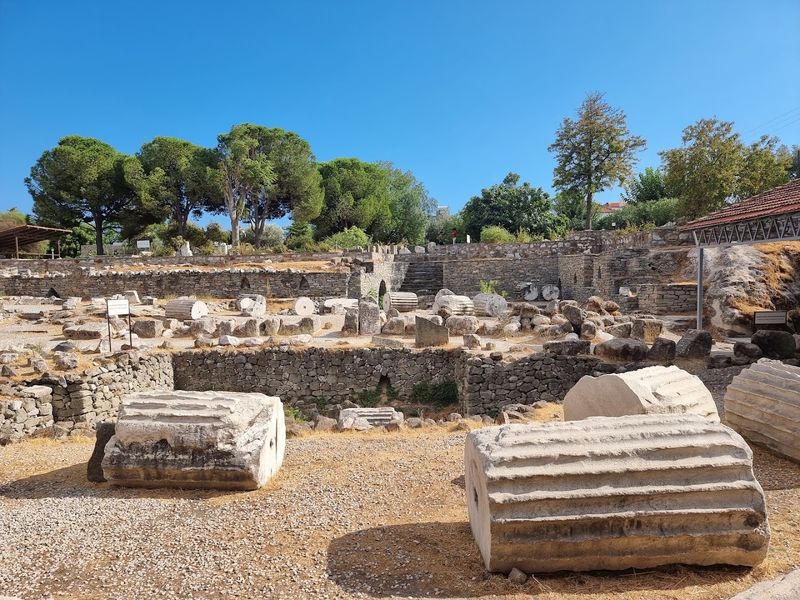
The word “mausoleum” itself comes from this very site. Built around 350 BCE for Mausolus, the ruler of Caria, this ancient tomb was so magnificent that the ancient Greeks counted it among the Seven Wonders of the Ancient World.
Though earthquakes and centuries of stone repurposing have left only ruins today, the site still carries an undeniable sense of grandeur.
Located in the coastal city of Bodrum in modern-day Turkiye, the archaeological remains are open to visitors year-round. A nearby museum displays recovered sculptures, friezes, and artifacts that give a clearer picture of just how elaborate the original structure must have been.
History buffs will appreciate knowing that some of the original carved marble reliefs were relocated to the British Museum in London, where they remain on display. Visiting both sites together gives a fuller understanding of this ancient wonder’s incredible legacy.
3. Lenin’s Mausoleum, Moscow, Russia
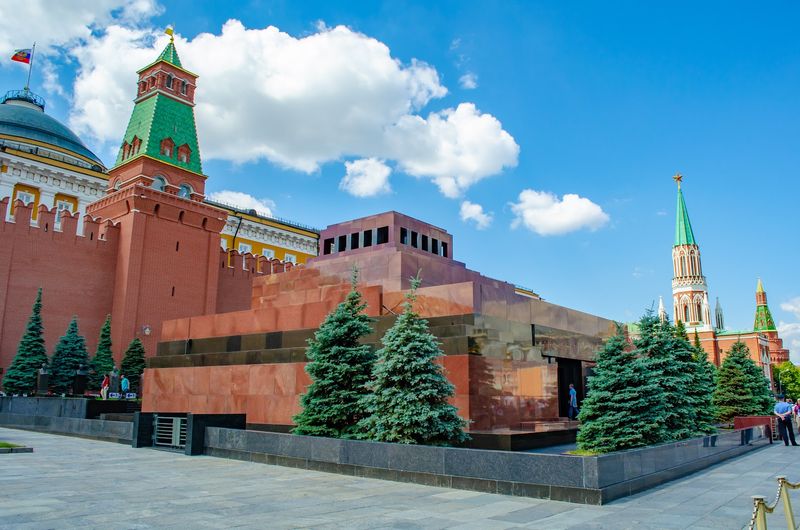
Red Square in Moscow is already one of the most iconic public spaces on Earth, but the low, granite structure at its edge draws visitors for a particularly unusual reason. Vladimir Lenin, leader of the Russian Revolution and founder of the Soviet state, has been on public display inside this mausoleum since his death in 1924.
His preserved body is still viewable today, making this one of the most visited and debated monuments in the world.
The mausoleum was designed by architect Alexei Shchusev and built from dark red granite and black labradorite, giving it a solemn and commanding presence. Visiting requires passing through security and following strict rules, including no photography inside and a requirement to walk past the body in silence.
Whether you find the experience historically fascinating or philosophically complex, standing in Red Square and stepping inside this structure is genuinely unforgettable for any traveler.
4. Grant’s Tomb, New York City, USA
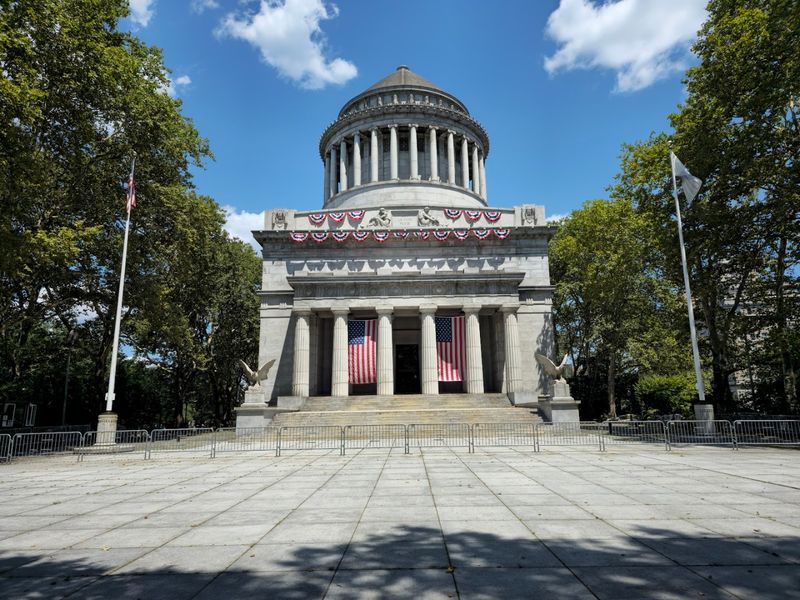
Officially named the General Grant National Memorial, Grant’s Tomb is the largest mausoleum in North America. Located in Riverside Park in Manhattan, it holds the remains of Ulysses S.
Grant, the 18th President of the United States and commanding general of the Union Army during the Civil War. His wife, Julia Dent Grant, is also interred here alongside him.
The structure was completed in 1897 and designed by architect John Duncan in a neoclassical style inspired by the Mausoleum at Halicarnassus. Over 90,000 Americans donated money to fund its construction, reflecting the deep national respect for Grant at the time of his death.
Today, the site is managed by the National Park Service and is free to visit. The interior features stunning mosaic floors and twin sarcophagi made of red granite.
It is a surprisingly undervisited gem for a city as busy as New York.
5. Mausoleum of Augustus, Rome, Italy
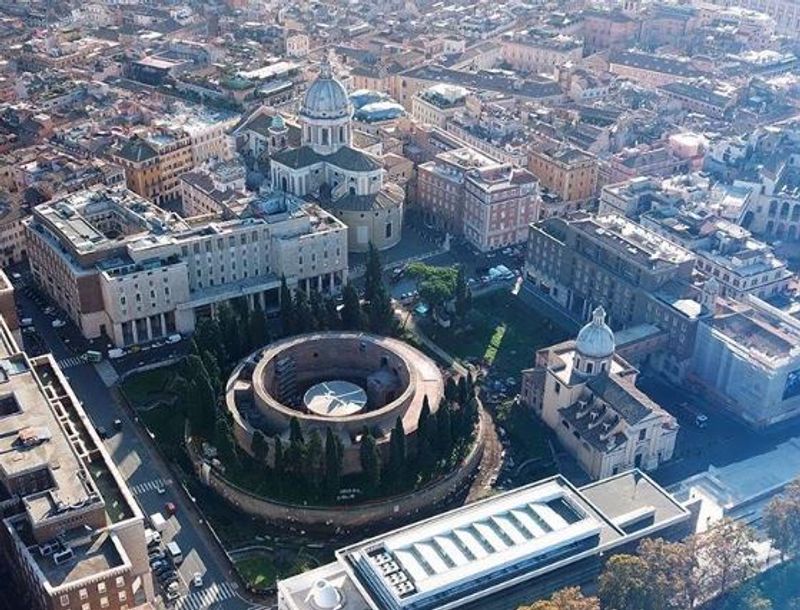
Rome’s oldest imperial mausoleum was built by Augustus himself around 28 BCE, long before he even died, which tells you something about how seriously Roman emperors took their legacy. The circular brick structure once stood over 40 meters tall and was topped with a mound of earth planted with cypress trees, creating a dramatic silhouette on the Roman skyline.
Over the centuries, the building was repurposed as a fortress, a garden, a bullfighting arena, and even a concert hall before restoration efforts began in the 20th century. After years of excavation and preservation work, the mausoleum was reopened to the public in 2021, allowing visitors to walk inside for the first time in decades.
Seeing the mausoleum up close puts Roman history in sharp perspective. Augustus was one of the most powerful rulers in human history, and this structure, though weathered, still radiates the ambition and permanence he sought to achieve.
6. Hadrian’s Mausoleum (Castel Sant’Angelo), Rome, Italy
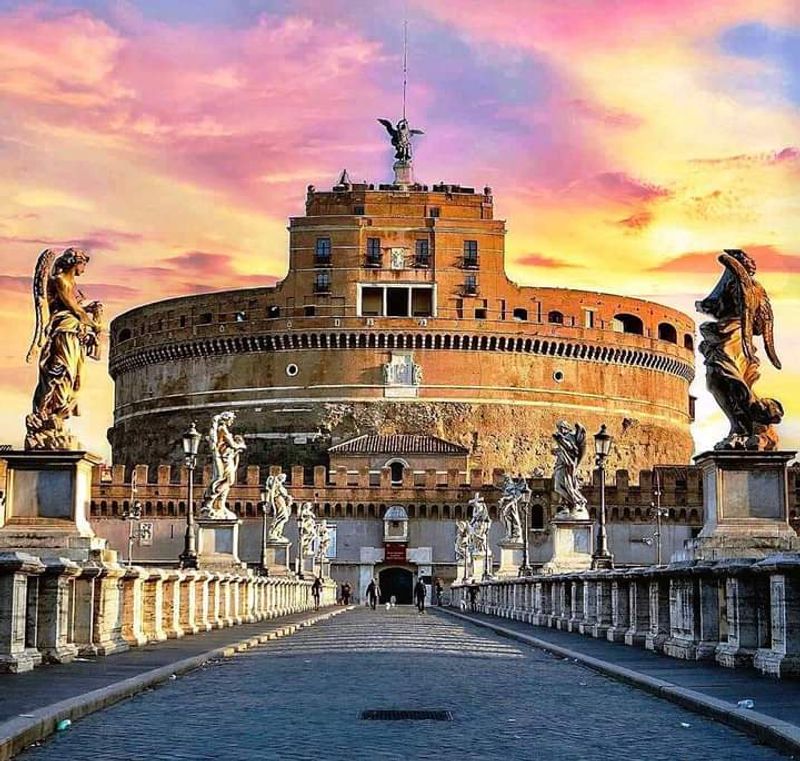
Originally built as a tomb for Emperor Hadrian and his family around 135 CE, Castel Sant’Angelo has lived more lives than almost any other structure in Rome. It has served as a mausoleum, a papal fortress, a prison, and today stands as one of Rome’s most popular museums.
The transformation from imperial tomb to fortified castle is a story that spans over 1,800 years.
Pope Gregory I reportedly saw a vision of the Archangel Michael atop the structure in 590 CE during a plague, which led to its current name. The iconic bronze angel statue now crowning the building commemorates that legend.
A secret elevated corridor called the Passetto di Borgo connects the castle to Vatican City, once used by popes to escape danger.
Visitors can climb to the top for sweeping views of the Tiber River and St. Peter’s Basilica. The castle is a must-see for anyone spending time in Rome.
7. Humayun’s Tomb, Delhi, India
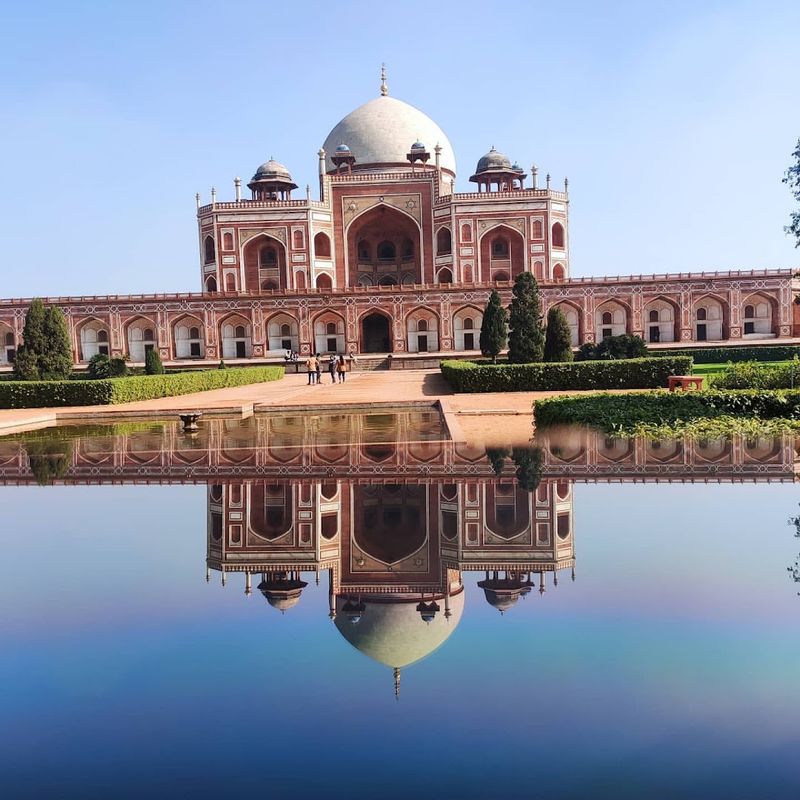
Before the Taj Mahal was ever conceived, Humayun’s Tomb set the blueprint for Mughal funerary architecture in India. Completed in 1572, this stunning monument was built by the widow of Mughal Emperor Humayun and is widely regarded as the first garden-tomb on the Indian subcontinent.
It served as direct inspiration for the Taj Mahal, built nearly 80 years later.
The structure blends Persian and Indian architectural styles beautifully, featuring a massive double dome in white marble set atop a platform of red sandstone. The surrounding Char Bagh garden, divided into four quadrants by water channels, creates a serene and geometric landscape that feels almost otherworldly.
A UNESCO World Heritage Site since 1993, Humayun’s Tomb sits in a complex that also contains dozens of other Mughal-era monuments. Visiting here gives travelers a deeper appreciation for the architectural evolution that eventually produced the world-famous Taj Mahal just a few decades later.
8. Mausoleum of Qin Shi Huang, Xi’an, China
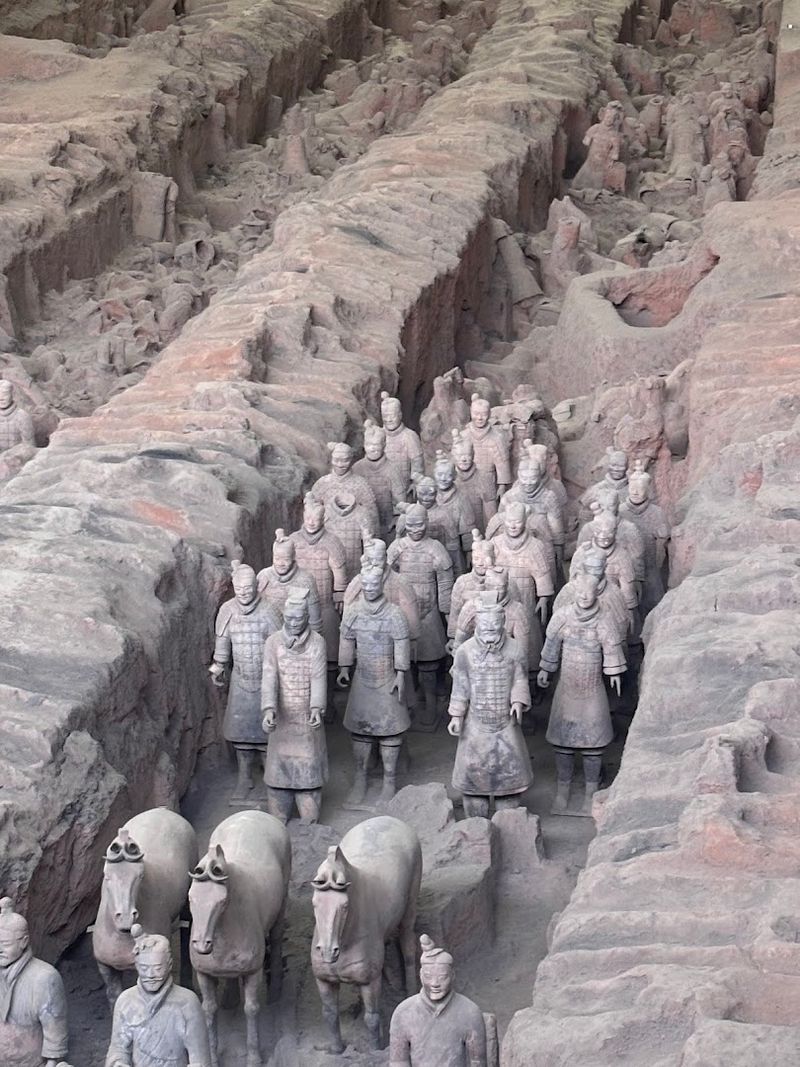
The tomb of China’s first emperor is one of the greatest archaeological mysteries still being uncovered today. Emperor Qin Shi Huang, who unified China in 221 BCE, was buried beneath a massive earthen mound near the city of Xi’an.
The full burial complex is estimated to cover nearly 98 square kilometers, making it one of the largest tombs ever constructed anywhere on Earth.
Most visitors come to see the famous Terracotta Army, discovered nearby in 1974 by farmers digging a well. Over 8,000 life-sized clay soldiers, horses, and chariots were created to protect the emperor in the afterlife.
The main burial chamber itself has never been excavated, as archaeologists are still developing the technology to safely preserve its contents.
Visiting the site is a humbling experience. The scale of ambition behind this tomb, built over 2,000 years ago, is almost impossible to fully comprehend even when standing directly in front of it.
9. Anitkabir (Mustafa Kemal Ataturk Mausoleum), Ankara, Turkiye
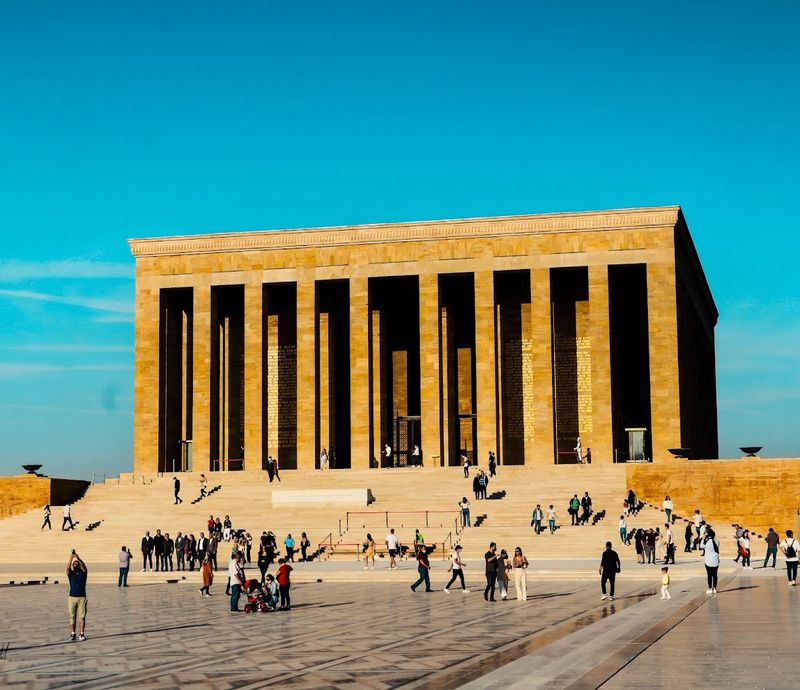
Perched on a hill overlooking the Turkish capital, Anitkabir is more than just a tomb. It is a national symbol of the Turkish Republic and the final resting place of Mustafa Kemal Ataturk, the founder and first president of modern Turkey.
Completed in 1953, nearly 15 years after Ataturk’s death in 1938, the mausoleum reflects the nation’s deep reverence for the man who transformed a crumbling empire into a modern republic.
The design blends ancient Anatolian and classical architectural elements, featuring a ceremonial road lined with stone lion statues leading to a massive colonnaded hall. Inside, the sarcophagus is made of a single block of marble weighing nearly 40 tons.
A museum within the complex showcases Ataturk’s personal belongings, state gifts, and documents from the founding of the republic.
Millions of Turkish citizens and international visitors come here each year. The atmosphere is one of quiet pride and deep national reflection that leaves a lasting impression on every visitor.
10. Royal Mausoleum of Mauretania, Tipaza, Algeria
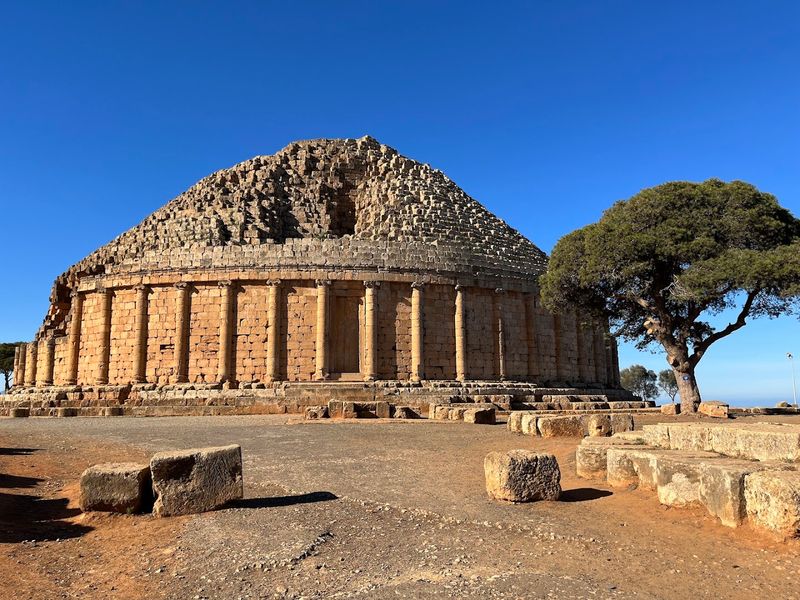
Rising dramatically from the Algerian coastal landscape, the Royal Mausoleum of Mauretania is one of North Africa’s most striking ancient monuments. Built around the 1st century BCE, it is believed to be the tomb of Berber King Juba II and his wife Cleopatra Selene II, the daughter of the famous Cleopatra of Egypt.
That royal connection alone makes this site extraordinary.
The cylindrical stone structure stands about 32 meters tall and 60 meters in diameter, topped with a stepped conical roof and encircled by decorative columns. Despite centuries of treasure hunters and attempts by Spanish soldiers to blast it open in the 16th century, the tomb has remained largely intact and still contains its original burial chamber.
Located near the ancient Roman ruins of Tipaza, also a UNESCO World Heritage Site, the mausoleum makes for a rewarding day trip from Algiers. Seeing it in person feels like stumbling upon a forgotten chapter of history.
11. Mausoleum of Mohammed V, Rabat, Morocco
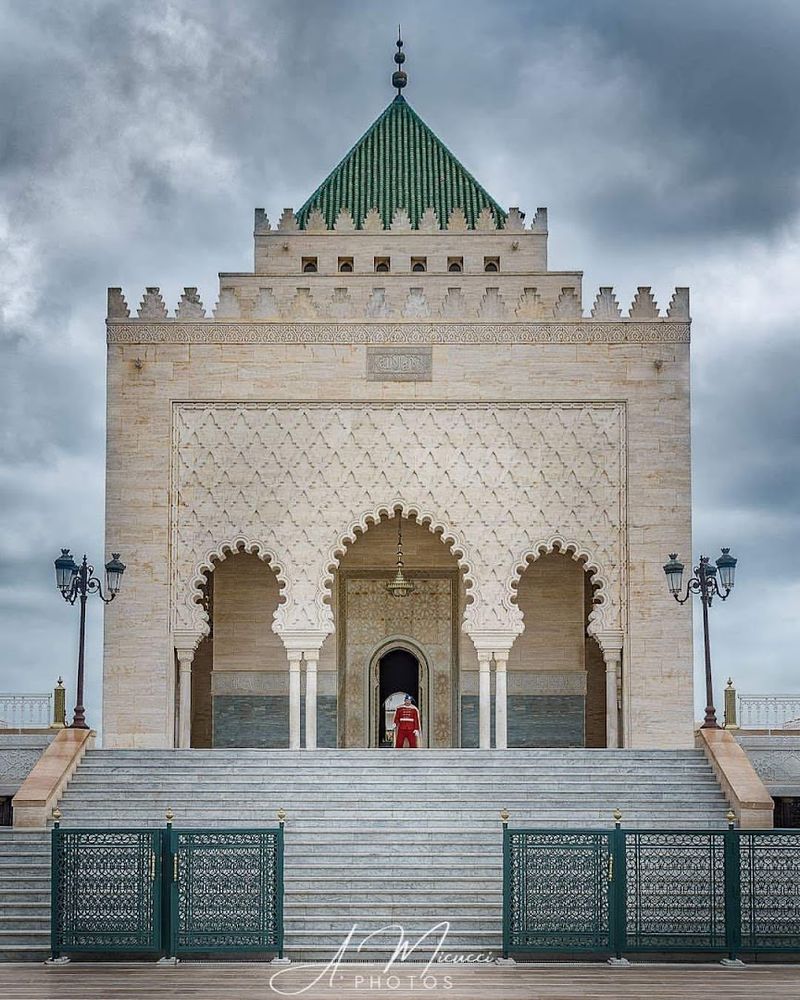
Gleaming white marble, a green pyramid roof, and royal guards dressed in scarlet make the Mausoleum of Mohammed V one of the most visually spectacular sites in all of Morocco. Built to honor King Mohammed V, the beloved monarch who led Morocco to independence from French colonial rule in 1956, the mausoleum was completed in 1971 and stands adjacent to the historic Hassan Tower in Rabat.
The interior is equally breathtaking, featuring hand-carved plaster walls, intricate zellige mosaic tiles, and a central chamber where the sarcophagi of King Mohammed V and two of his sons rest beneath a soaring painted ceiling. Visitors of all faiths are welcome to enter and observe respectfully from a gallery above the main hall.
The surrounding esplanade offers sweeping views of the unfinished Hassan Tower and the Bou Regreg River estuary. Together, these monuments form one of Morocco’s most moving and historically significant cultural landmarks.
12. Kumsusan Palace of the Sun, Pyongyang, North Korea
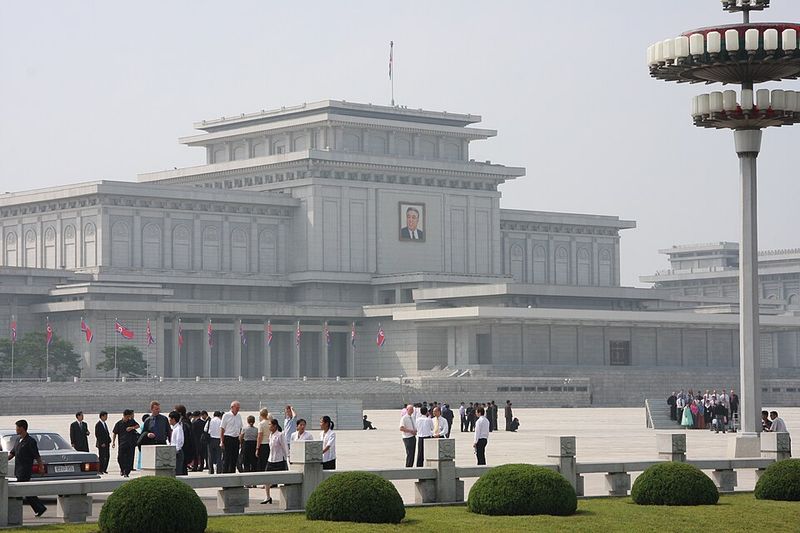
Unlike any other mausoleum on this list, the Kumsusan Palace of the Sun is as much a political statement as it is a place of mourning. Originally the official residence of North Korean founder Kim Il Sung, the massive building was converted into a mausoleum after his death in 1994.
His son Kim Jong Il, who died in 2011, was later interred there as well. Both leaders lie in state in glass sarcophagi.
The complex is enormous, covering over 100,000 square meters, and is considered the largest mausoleum dedicated to communist leaders anywhere in the world. Access for foreign tourists is strictly controlled and visits require coordination through state-approved tour operators.
Travelers who do manage to visit describe the experience as deeply surreal and unlike anything else they have encountered. The combination of grand architecture, absolute silence, and tightly regulated ritual creates an atmosphere that is genuinely unlike any other destination on Earth.
13. Royal Mausoleum of King Rama IX, Bangkok, Thailand
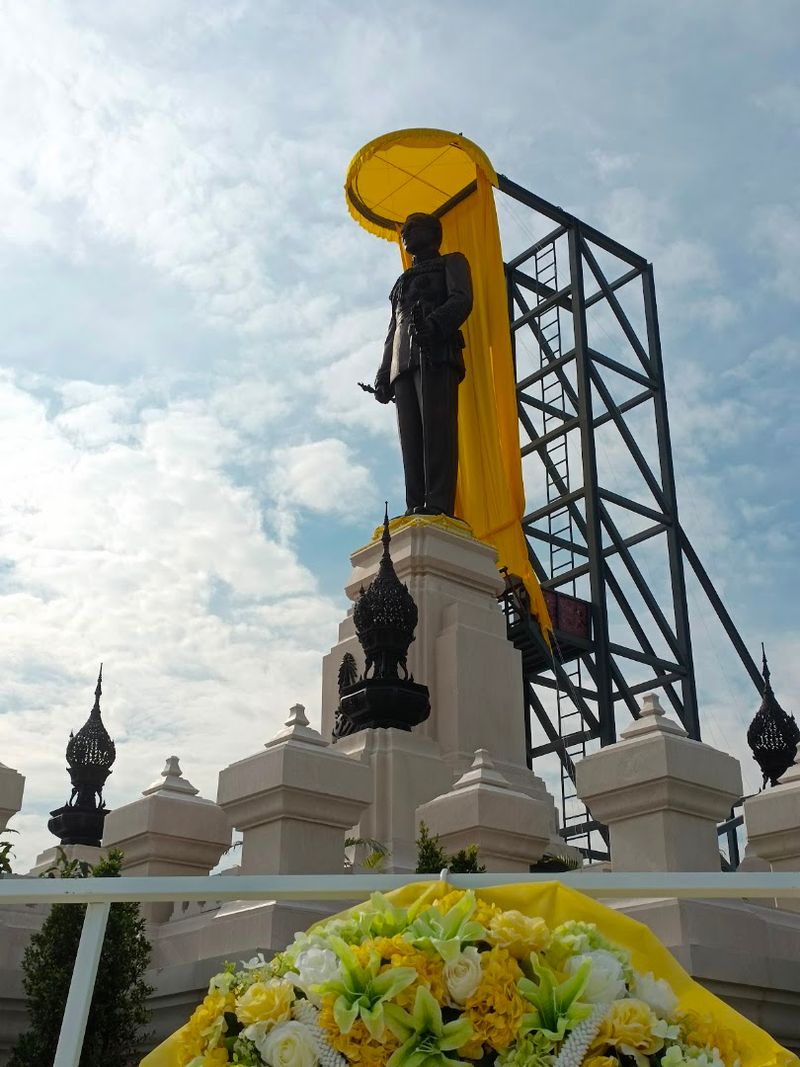
When King Bhumibol Adulyadej, known as Rama IX, passed away in 2016 after 70 years on the throne, Thailand mourned deeply and collectively. The Royal Crematorium built in his honor near Sanam Luang in Bangkok was one of the most elaborate funerary structures constructed in modern Thai history.
Completed in 2017, the towering golden structure blended traditional Thai temple architecture with mythological imagery drawn from Hindu and Buddhist traditions.
Thousands of skilled artisans worked for months to craft the intricate gilded decorations, mythological animal figures, and ornate pavilions that made up the crematorium complex. After the royal cremation ceremony, a permanent memorial structure was later established to honor his legacy.
King Rama IX remains one of the most beloved monarchs in Thai history, known for his dedication to rural development and his people. Visiting the memorial in Bangkok offers a moving and culturally rich experience for anyone who wants to understand modern Thailand more deeply.
14. Napoleon’s Tomb (Les Invalides), Paris, France
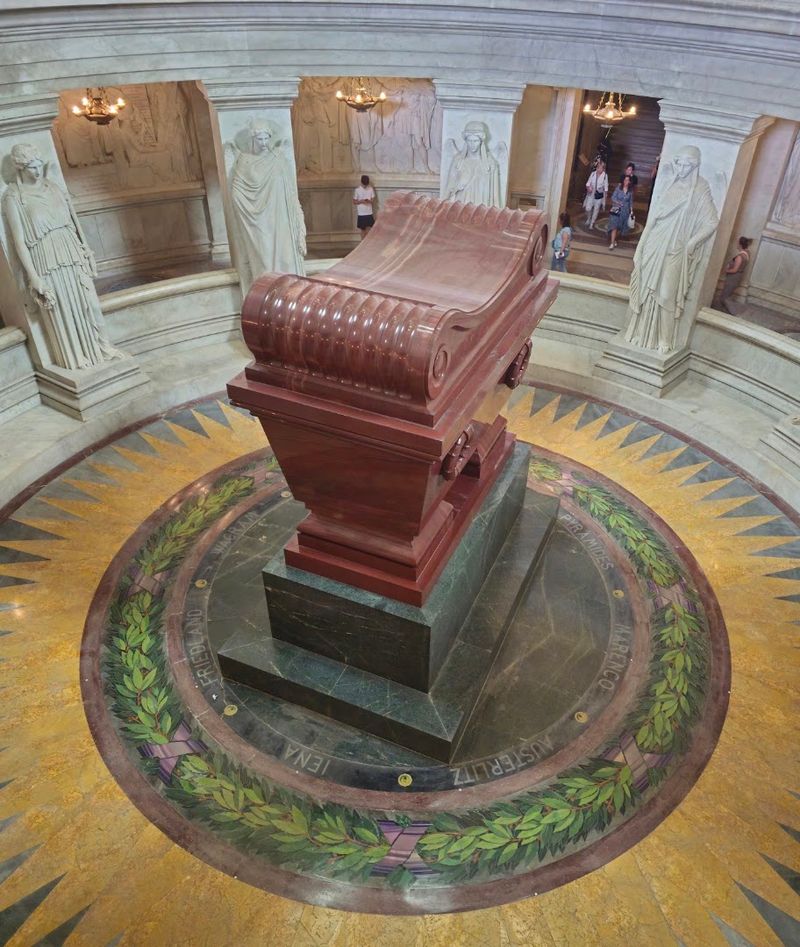
Napoleon Bonaparte may have been a man of modest physical stature, but his tomb is anything but small. Housed beneath the golden dome of Les Invalides in Paris, Napoleon’s sarcophagus is made of red Finnish quartzite and sits inside a circular sunken crypt so large that visitors must look down from a gallery above to see it.
The sheer scale of the memorial was intentional, designed to reflect the emperor’s outsized impact on history.
Napoleon died in 1821 while in exile on the island of Saint Helena. His remains were returned to France in 1840 and eventually placed in this magnificent setting in 1861.
The crypt is surrounded by twelve sculptured victories representing his military campaigns.
Les Invalides itself is a historic military complex that also houses the Army Museum, one of the finest military history museums in the world. Combining both attractions in a single visit makes for a rich and rewarding half-day in Paris.
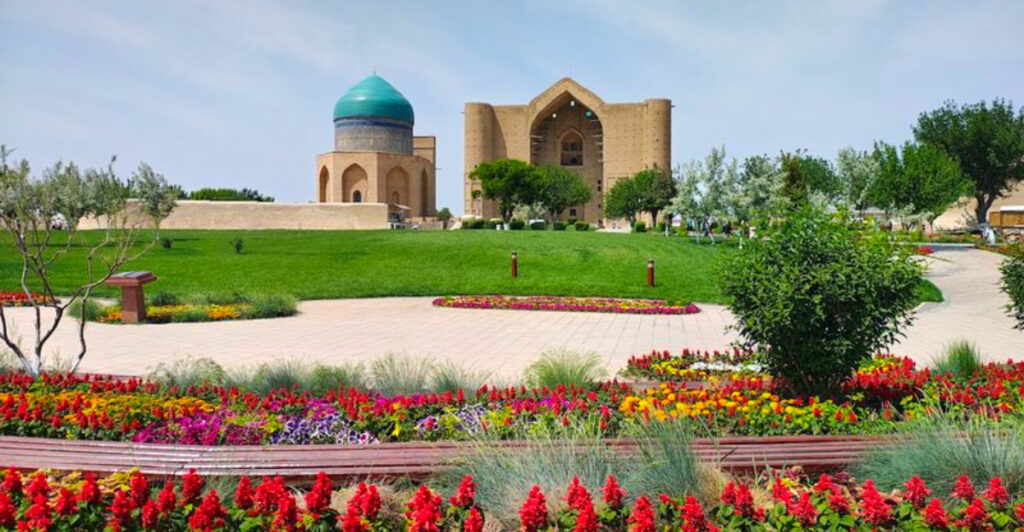
15. Mausoleum of Khoja Ahmed Yasawi, Turkistan, Kazakhstan
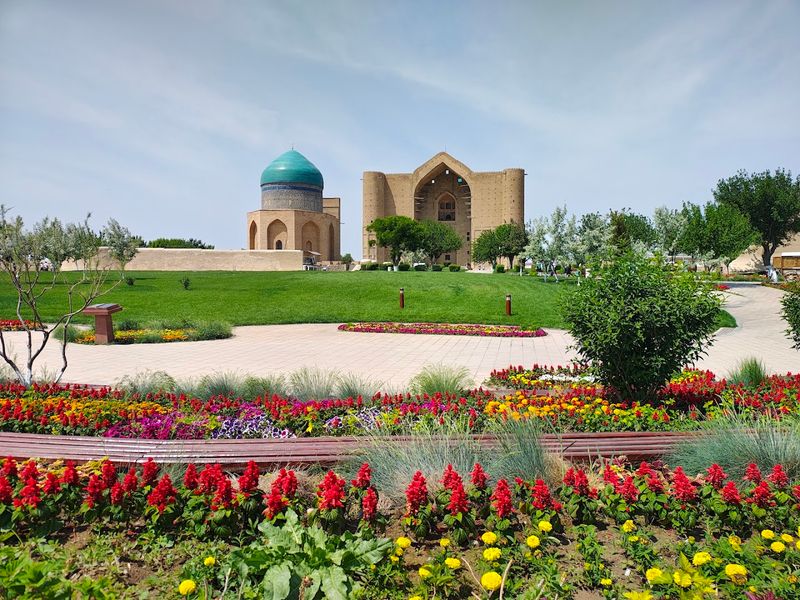
Standing in the steppe of southern Kazakhstan, the Mausoleum of Khoja Ahmed Yasawi is one of the finest surviving examples of Timurid architecture anywhere in Central Asia. Commissioned by the great conqueror Timur (Tamerlane) in 1389, the mausoleum honors the 12th-century Sufi poet and spiritual leader Khoja Ahmed Yasawi, whose teachings shaped Islamic culture across the region for centuries.
The building is remarkable for its enormous turquoise-glazed dome, which at 38.7 meters remains the largest existing dome in Central Asia. The interior contains a massive cast-iron cauldron called a taikazan, used to hold holy water during religious ceremonies, along with beautifully decorated reception halls and the saint’s actual tomb room.
Construction was never fully completed after Timur’s death in 1405, yet the unfinished sections have been preserved exactly as they were left, giving researchers a rare look at medieval building techniques. It was inscribed as a UNESCO World Heritage Site in 2003.
Share this story