Some places make your jaw drop for all the right reasons, and a few of them might also make your knees shake. Around the world, certain tourist attractions push visitors beyond scenic viewpoints and into genuinely nerve-wracking territory.
From glass floors suspended over canyons to narrow mountain ledges with nothing but air beside you, these spots are as breathtaking as they are terrifying. If you have ever wondered what it feels like to walk on the edge of something extraordinary, this list is your starting point.
Angels Landing, Utah
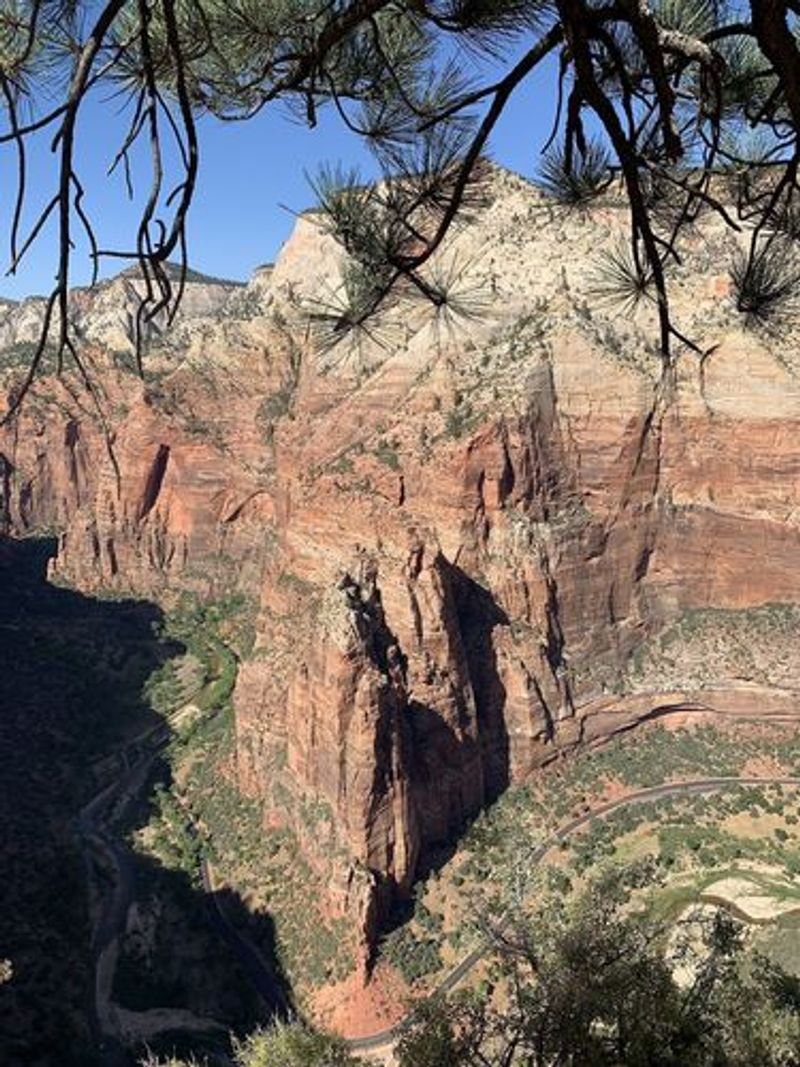
Chains bolted into rock are the only thing standing between confident hikers and a very long fall at Angels Landing. This iconic Zion National Park trail saves its scariest moments for the final stretch, where a narrow spine of sandstone connects Scout Lookout to the summit.
The views are genuinely spectacular, but getting there requires steady footing and a calm head.
The drop on either side of the ridge is severe enough that the National Park Service introduced a permit system to manage the crowds and reduce accidents on the exposed section. Permits are required for anyone continuing past Scout Lookout, and they are distributed through advance and walk-up lotteries.
Busy days once meant hikers were essentially gridlocked on a cliff edge, which is exactly as uncomfortable as it sounds.
Bring water, wear proper hiking shoes, and be honest with yourself about your comfort around heights before heading out. Early morning starts help beat both the heat and the crowds.
The 360-degree view from the top, looking out over Zion Canyon, is the reward that keeps thousands of people coming back every single year.
Caminito del Rey, Spain
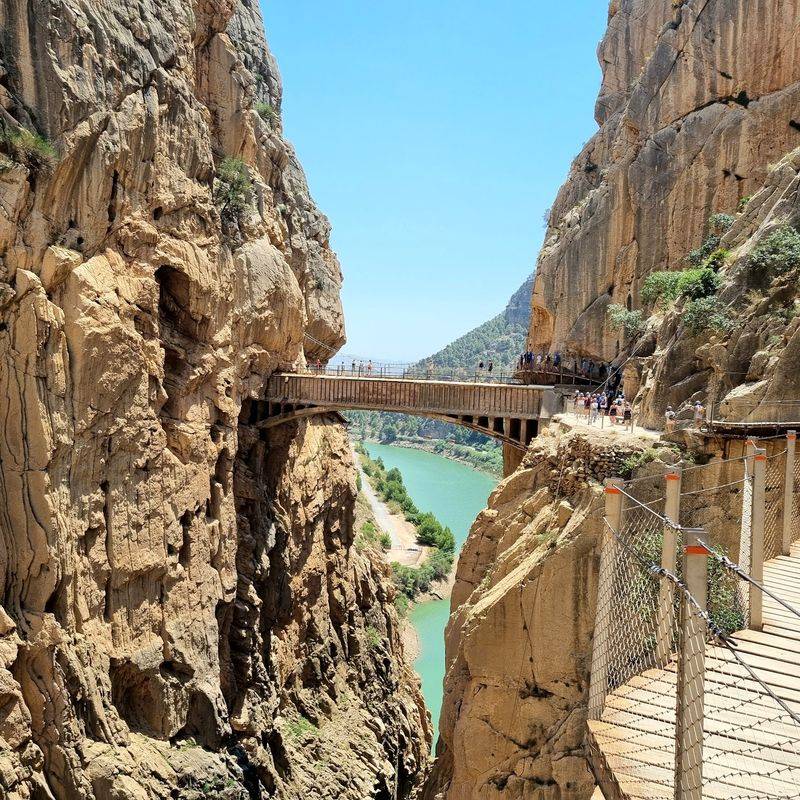
There was a time when Caminito del Rey had a reputation as the most dangerous footpath in the world, and the crumbling state of the old walkway absolutely earned that title. The route has since been rebuilt with modern materials and proper safety features, but the gorge itself has not changed one bit.
Sheer limestone walls, a roaring river far below, and wooden planks bolted directly to the cliff face still create a route that commands your full attention.
The complete linear trail runs about 7.7 kilometers, with roughly three of those kilometers consisting of elevated walkways attached to the rock. Helmets are provided, tickets must be reserved in advance, and young children are not permitted on the route.
The one-way design keeps foot traffic moving in the same direction, which helps prevent the awkward standoffs that would otherwise occur on a ledge barely wide enough for two people.
Southern Spain’s warm climate makes this accessible for much of the year, though summer days can get hot inside the gorge. Going early in the morning tends to mean cooler temperatures and better light for photographs.
The gorge scenery alone is worth the trip, even before the walkway gets involved.
CN Tower EdgeWalk, Canada
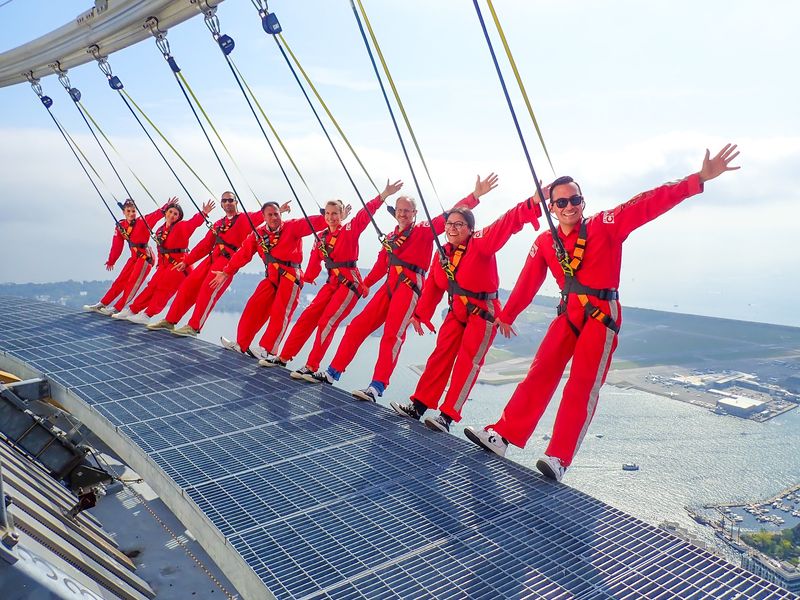
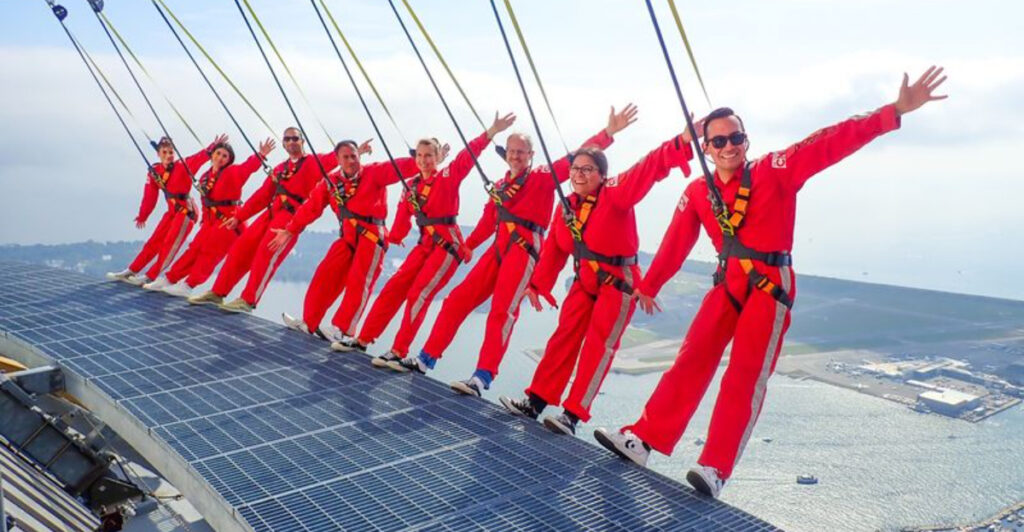
Standing on a ledge more than 350 meters above Toronto without anything in front of you is not a typical Tuesday afternoon activity, but EdgeWalk makes it a bookable experience. Participants wear a full-body harness connected to an overhead rail system, which keeps them attached to the tower at all times.
The harness does its job reliably, though knowing that fact and feeling it are two very different things when you are leaning out over the city.
The ledge circles the CN Tower’s main pod at approximately 356 meters above street level. Guides encourage participants to lean forward and backward over the edge, shuffle around the full perimeter, and generally confront every instinct that says this is a terrible idea.
Weather conditions can affect whether the walk goes ahead on any given day, so checking ahead of time is a smart move.
Participants must meet age and health requirements, and certain medications may affect eligibility. The whole experience lasts around 90 minutes from start to finish, including suiting up and safety briefings.
What you get at the end is a story that sounds completely unbelievable to anyone who has never looked straight down at a city from that height.
Devil’s Pool at Victoria Falls, Zambia
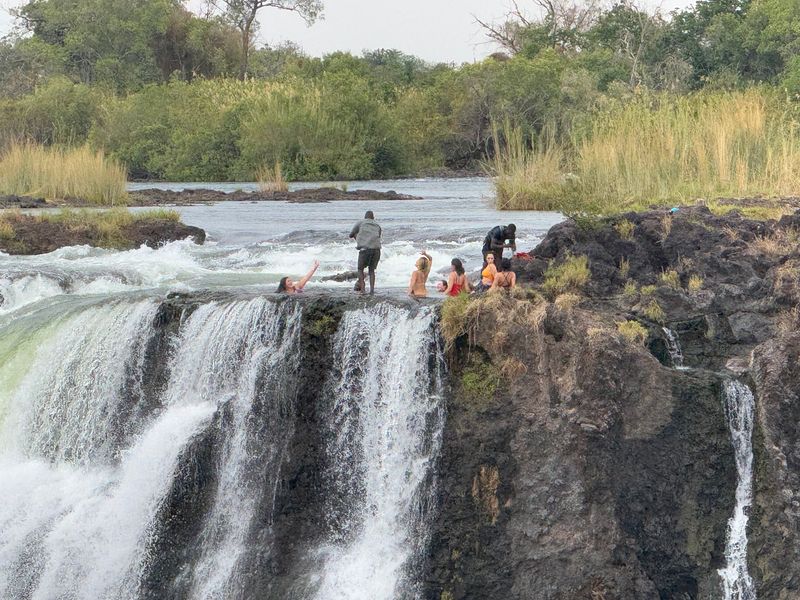
At the very edge of one of the largest waterfalls on earth, there is a natural swimming pool where guided visitors can float and peer directly over the drop. Devil’s Pool sits along the rim of Victoria Falls on the Zambian side, formed by a submerged rock ledge that prevents swimmers from being swept over during low water season.
The Zambezi River roars past, the mist rises, and you are right there in the middle of it.
Access is only possible when river levels are low enough, typically from around August through January, depending on annual conditions. Visitors must book through an authorized Livingstone Island excursion, as independent access is not permitted and would be genuinely dangerous.
A guide accompanies the group throughout the swim, which provides reassurance even when the edge of the falls is just a few feet away.
Swimming ability matters here, and participants should be comfortable in moving water before signing up. The experience is seasonal, so checking current conditions and availability before planning a trip is essential.
For those who can manage the nerves, floating at the lip of Victoria Falls with the gorge stretching out below is the kind of moment that stays with a person for a very long time.
Grand Canyon Skywalk, Arizona
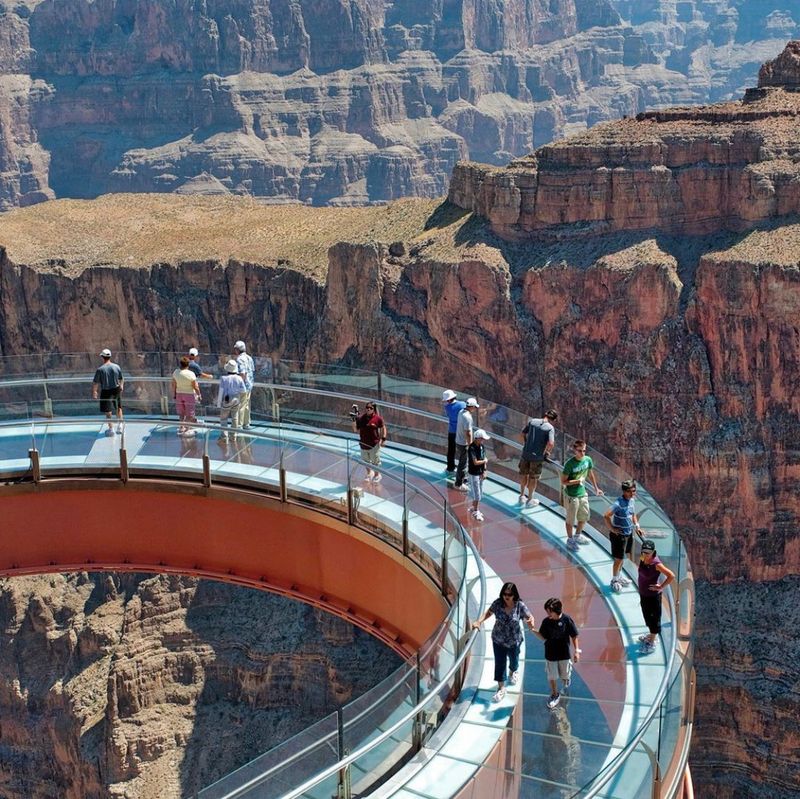
Glass floors have a way of making heights feel intensely personal, and the Grand Canyon Skywalk is designed to exploit that feeling as fully as possible. The horseshoe-shaped structure extends about 70 feet beyond the canyon rim, placing visitors directly above a drop that measures thousands of feet to the Colorado River below.
There is no canyon wall nearby to anchor your sense of scale, just open space in every direction.
Grand Canyon West sits on Hualapai Nation land and operates separately from Grand Canyon National Park, so visitors heading here are not at the main South Rim. The Skywalk is one component of a larger West Rim destination that includes additional viewpoints and cultural experiences.
Cameras and personal belongings must be stored in lockers before stepping onto the glass, so a staff photographer handles pictures on the bridge itself.
Shoe covers are provided to protect the glass surface, which means everyone shuffles out looking slightly awkward before the vertigo sets in. The view through the floor is the kind that makes your brain work overtime trying to process what it is seeing.
Whether that sounds exciting or horrifying probably tells you everything you need to know about whether this one belongs on your itinerary.
Trolltunga, Norway
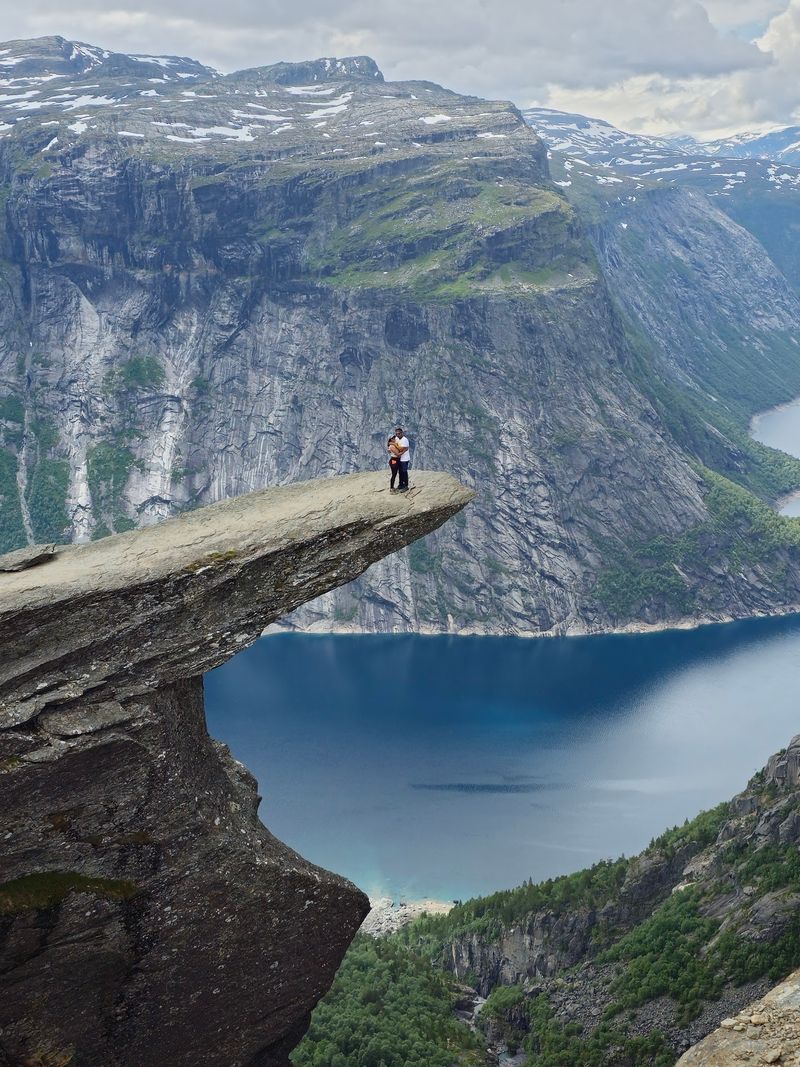
Trolltunga translates to “Troll’s Tongue,” which is a fitting name for a slab of rock that sticks straight out from a Norwegian mountainside like it is daring you to stand on it. The famous photo spot at the tip of the ledge has made this one of the most recognized images in Scandinavian tourism.
Getting that photo, however, requires completing one of the more demanding day hikes in the country first.
The round trip from the main P2 trailhead covers roughly 27 kilometers and gains about 800 meters of elevation, with most hikers needing between eight and twelve hours to complete it. Mountain weather in Norway can shift quickly regardless of the season, and the trail is genuinely remote in sections.
Outside the peak summer window, guided travel and winter gear are strongly recommended, and some seasons require them entirely.
Proper hiking boots, layered clothing, enough food and water, and an early start are non-negotiable for this one. The ledge itself has no fence, no railing, and no safety net of any kind.
That is precisely what makes the photograph so dramatic, and also precisely why hikers should take the preparation seriously before committing to the full journey up the mountain.
Nevis Bungy, New Zealand
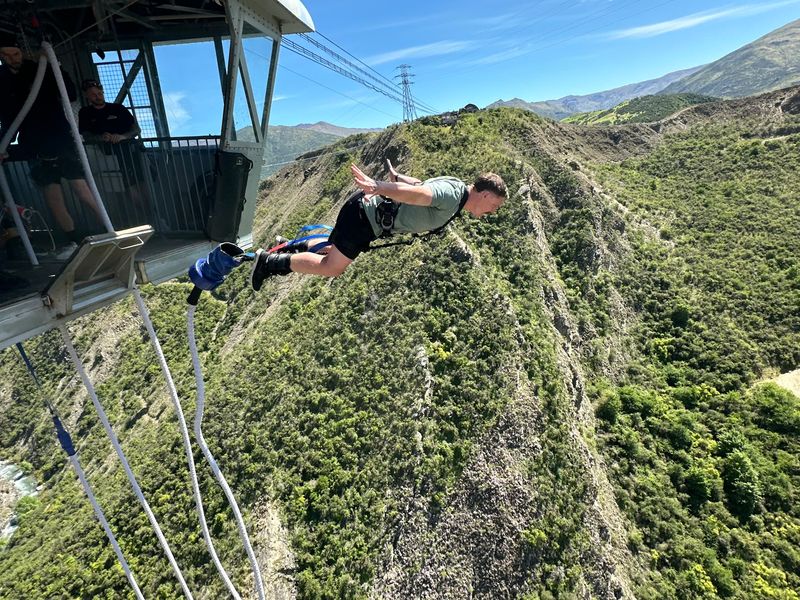
Falling 134 meters toward the floor of a remote New Zealand canyon is not something most people put on a casual weekend plan, yet the Nevis Bungy has been doing exactly that since 1999. The jump platform hangs on cables above the Nevis Valley gorge, reached only by a cable car from a ridgeline access point.
There is no bridge beneath you, no nearby structure, and no way to pretend the drop is anything other than enormous.
The freefall lasts approximately 8.5 seconds, which sounds brief until you are the one experiencing it. Queenstown is widely regarded as the adventure capital of the world, and the Nevis Bungy sits confidently at the top of that city’s extreme activity menu.
Participants are transported to the site from Queenstown along a gravel road, and the remote setting adds a sense of genuine isolation before the jump even happens.
Weight limits and health requirements apply, and the operator provides thorough safety briefings before anyone steps to the edge. Booking ahead is recommended since availability can fill quickly during busy travel periods.
For bungy enthusiasts who feel that bridge jumps have become too routine, the Nevis platform offers a level of exposure that is genuinely hard to match anywhere else in the world.
Half Dome Cables, California
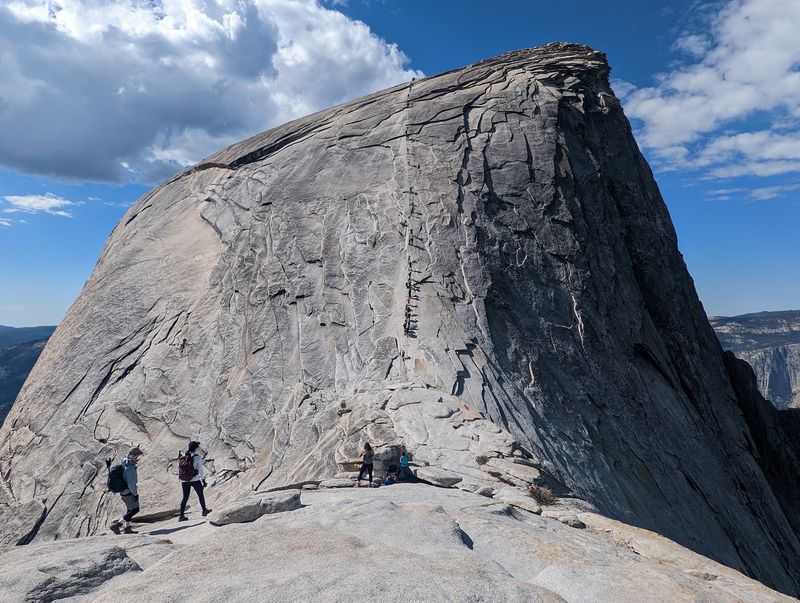
Smooth granite and a near-vertical incline would be a problem on their own, but Half Dome delivers both at the same time on its famous cable section. Two parallel metal cables run up the steepest part of the summit approach, giving hikers something to grip while pulling themselves up a slope that would otherwise be nearly impossible to climb safely.
Wooden boards placed across the rock serve as footholds, and even with those in place, the exposure is significant.
The cables are only installed during the main hiking season, typically from late May through mid-October depending on snow conditions. Permits are required when the cables are up, distributed through a lottery system that reflects just how popular this route has become.
The full round trip from Yosemite Valley covers roughly 14 to 16 miles and involves thousands of feet of elevation gain, so physical preparation matters as much as mental readiness.
Gloves are strongly recommended on the cable section since the metal can be cold, rough, or wet depending on conditions. Many hikers start before dawn to avoid afternoon thunderstorms and arrive at the summit for sunrise.
The view from the top, looking out over the valley and surrounding peaks, is the reason this permit lottery fills within minutes of opening every single season.
516 Arouca Bridge, Portugal
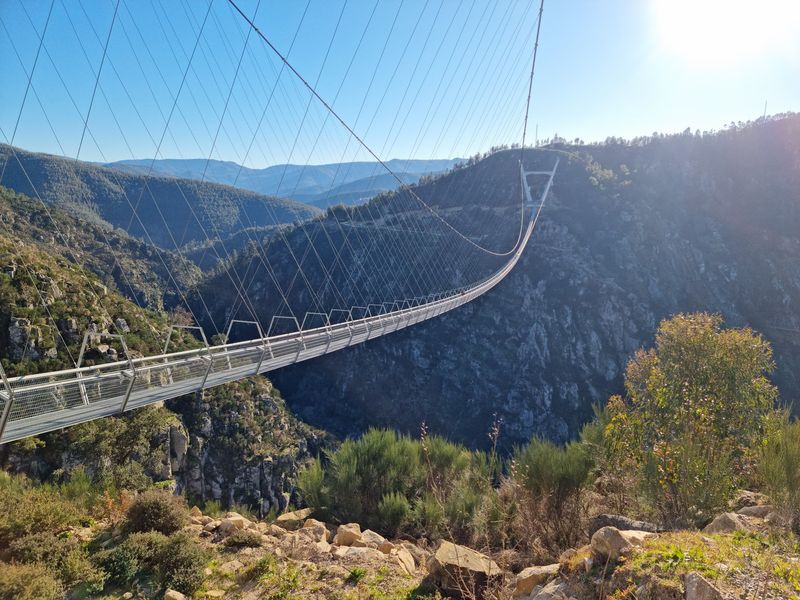
Walking across a bridge where the floor is a metal grid and the river is 175 meters directly below your feet creates a very specific kind of awareness. The 516 Arouca Bridge in northern Portugal held the title of the world’s longest pedestrian suspension bridge when it opened in 2021, and even with that record later surpassed elsewhere, the crossing remains one of the most striking in Europe.
The Paiva River winds through the gorge beneath it, framed by dense forest and steep canyon walls.
At 516 meters long, the bridge sways gently underfoot as visitors make their way across, which is entirely normal for a suspension structure of this length but feels anything but ordinary in practice. The Arouca UNESCO Global Geopark provides a dramatic natural setting that amplifies the sense of scale throughout the crossing.
Tickets are required, and the site is well organized with timed entry to manage the number of visitors on the bridge at any one time.
The surrounding area also features the famous Paiva Walkways, a riverside trail that pairs well with a bridge visit for a full day of outdoor exploration. Comfortable walking shoes are recommended, and visitors with a strong fear of heights should think carefully before committing to the full crossing.
The views from the midpoint are genuinely hard to forget.
Mount Huashan Plank Walk, China
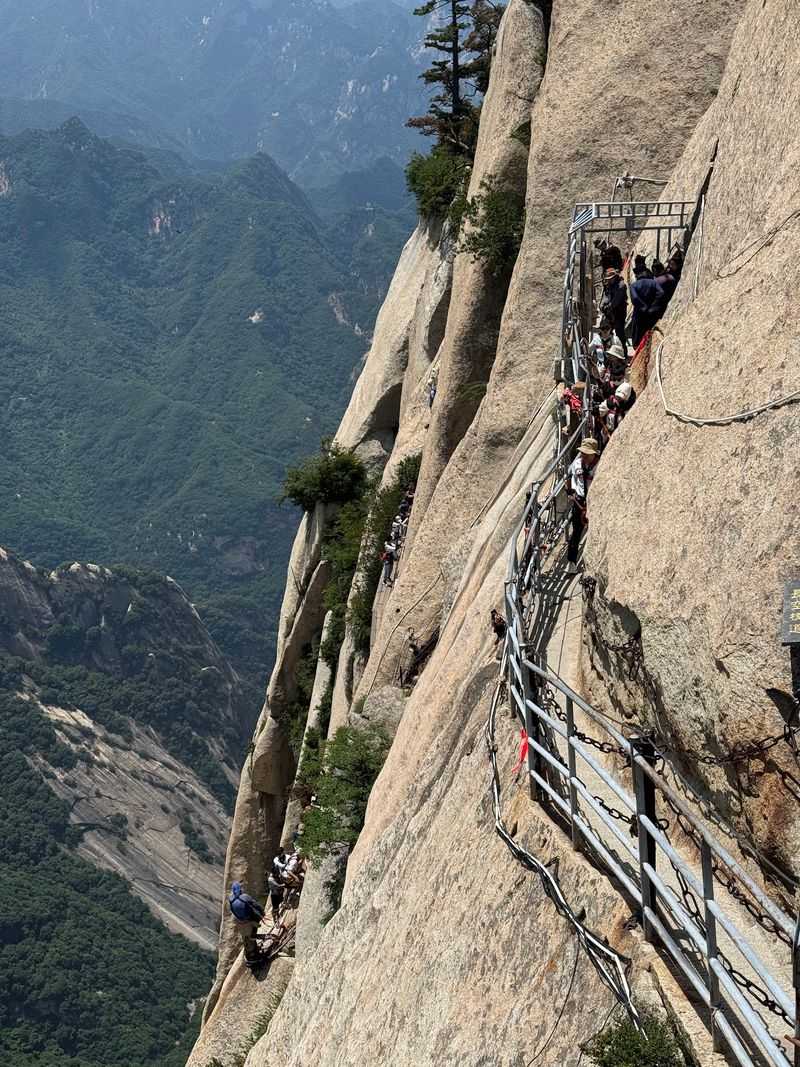
Narrow wooden planks bolted to a sheer cliff face, a harness clipped to a cable, and a drop that stretches further than most people want to think about: this is the Mount Huashan Plank Walk in a nutshell. Located on one of China’s Five Sacred Mountains in Shaanxi Province, the route attracts visitors who want an adrenaline experience wrapped inside a site of genuine historical and spiritual significance.
The mountain has been a place of Taoist pilgrimage for centuries, which makes the plank walk feel oddly serene in between the terrifying moments.
Participants rent harnesses at the base and clip themselves to the safety cable before stepping onto the boards. The planks are narrow enough that sideways shuffling is required along certain sections, with nothing but open air beside you the entire time.
The plank route connects to a small teahouse built directly into the cliff, which has become one of the most photographed destinations on the entire mountain.
The full Huashan experience includes multiple peaks, ancient stairways carved into rock, and temple complexes at various elevations. Weather and seasonal conditions can affect which sections are accessible, so checking before visiting is worthwhile.
Comfortable grip shoes and a willingness to commit to each step make a meaningful difference on the exposed sections.
Dachstein Stairway to Nothingness, Austria
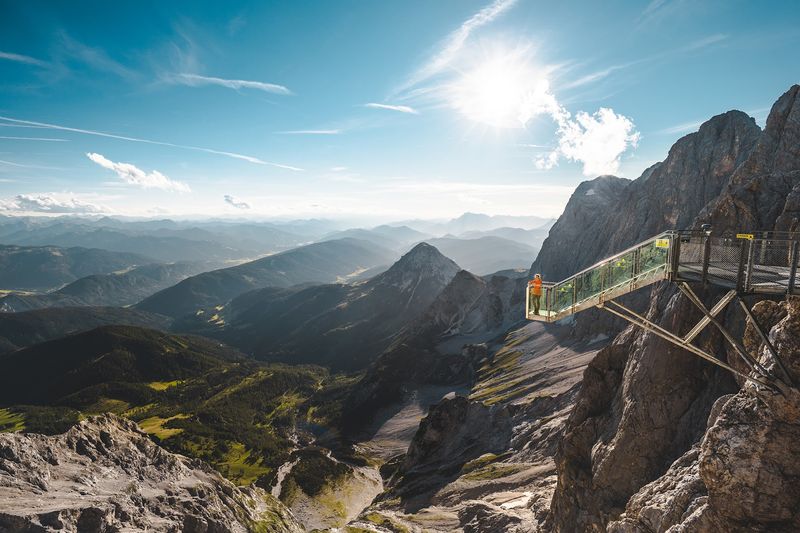
The name “Stairway to Nothingness” is not trying to be dramatic; it is just accurate. Perched high in the Austrian Alps, this attraction invites visitors to cross a suspension bridge and then descend a short glass-sided staircase that appears to end in open mountain air.
The final platform offers an unobstructed view straight down the cliff face, with absolutely nothing between the visitor and the drop except a transparent barrier.
The Stairway to Nothingness is part of the broader Dachstein Glacier complex, which also includes Austria’s highest suspension bridge and a glacier ice palace. Snow and cold temperatures are common even in summer at this elevation, and visitors should dress accordingly regardless of what the weather looks like in the valley below.
The combination of altitude, changing mountain weather, and transparent flooring creates a layered experience that goes well beyond a standard observation deck.
Getting to the Dachstein complex typically involves a cable car ride from the valley, which offers its own impressive views of the surrounding Alps. The site is accessible for most of the year, though winter conditions can affect specific areas within the complex.
For visitors who find glass floors mildly unsettling at sea level, a glacier-top version of the same concept at over 2,000 meters elevation is a considerable upgrade in intensity.
Tianmen Mountain Glass Skywalk, China
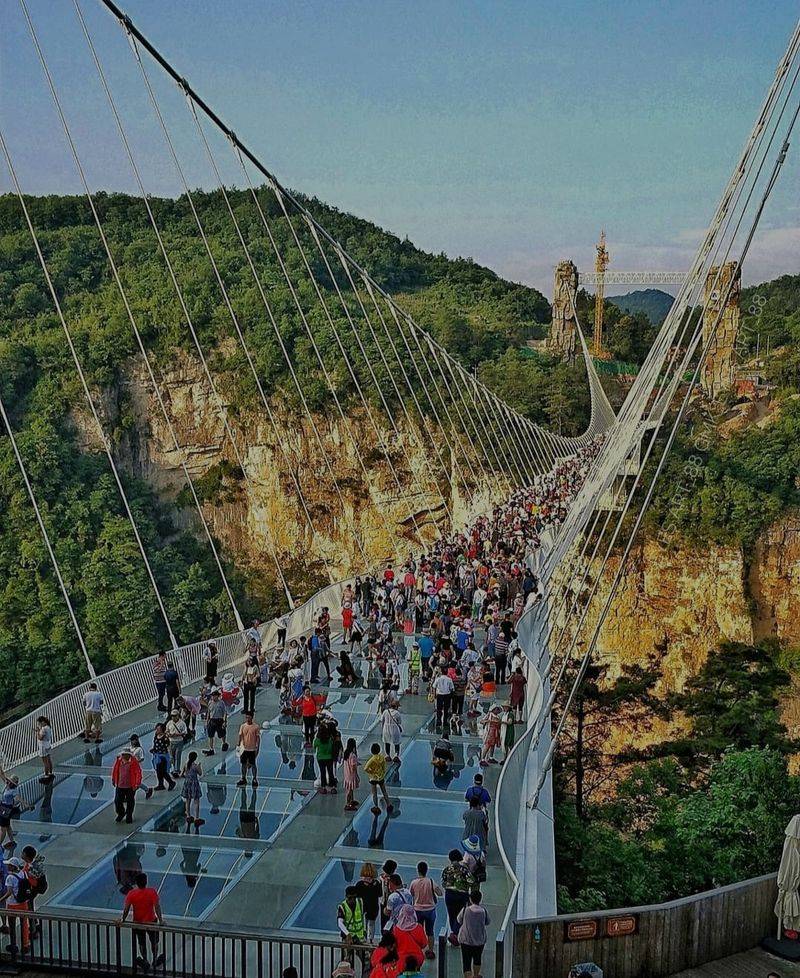
Tianmen Mountain in Hunan Province offers something that most mountain experiences do not: a glass walkway where the floor disappears and the valley takes over. The transparent trail runs along sections of the cliff face, giving visitors a direct view down through their own feet to the forested slopes hundreds of meters below.
The mountain also features a winding cliff road, ancient stone stairways, and the famous Tianmen Cave, a massive natural arch visible from the city below.
Getting to the top involves one of the longest cable car rides in the world, which covers a significant elevation change and already delivers views that feel almost unreal. The glass walkway is physically straightforward compared to a serious mountain hike, but the combination of cliff-edge positioning and a transparent floor has a way of making even short distances feel surprisingly challenging.
Visitors with vertigo often find that the glass sections hit differently than they expected.
The mountain complex is large enough to occupy a full day comfortably, with multiple viewpoints, cultural sites, and walking routes spread across the summit area. Footwear covers are provided before stepping onto the glass sections to protect the surface and maintain visibility.
Tianmen Mountain tends to be busy, so arriving early gives a better chance of enjoying the glass walkway without large crowds directly behind you.
Langkawi SkyBridge, Malaysia
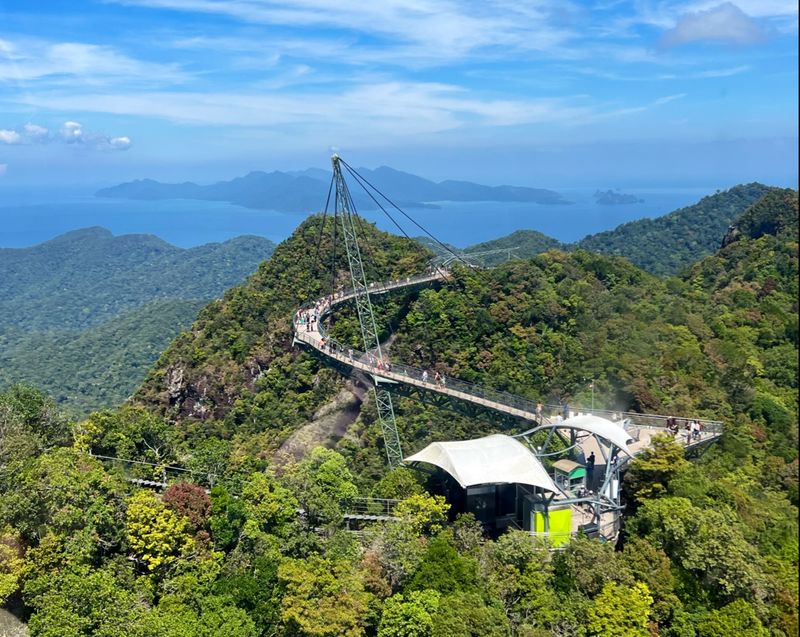
Floating above a Malaysian rainforest on a curved bridge supported by a single pylon is not your average afternoon stroll. The Langkawi SkyBridge sits at roughly 700 meters above sea level on Mount Machincang, curving gently over the forested slopes while offering wide open views toward the Andaman Sea and the surrounding islands.
The single-pylon design gives the bridge an almost theatrical appearance, as though it is trying to look like it belongs in a science fiction film.
Reaching the bridge typically involves a cable car ride from the base of the mountain, which is already worth taking for the views alone. Sections of the SkyBridge feature transparent flooring, which allows the valley below to become very visible very quickly for anyone who glances down.
The bridge is not a long crossing, but its height, the open sea views, and the glass floor sections combine to make it more memorable than its modest length suggests.
Langkawi itself is a popular island destination with beaches, wildlife, and a relaxed atmosphere that balances the adrenaline of the SkyBridge nicely. The cable car and bridge area can get busy during peak travel periods, so going on a weekday or early in the morning tends to result in a more comfortable visit.
The combination of jungle, sea, and suspended walkway makes this one genuinely hard to replicate anywhere else.
Ijen Crater, Indonesia
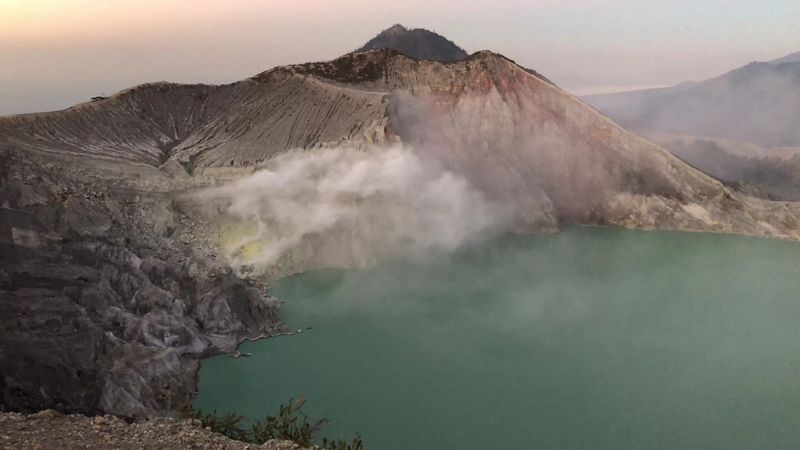
Blue fire is not something most people expect to find on a volcano, but Ijen delivers it. At night, sulfuric gases escaping from vents near the crater floor can ignite, producing an electric blue glow that spreads across the rock like something from another planet.
The phenomenon has made Ijen famous, but reaching it requires a steep nighttime hike through an active volcanic landscape with real gas hazards and unpredictable conditions.
The crater also contains one of the world’s largest acidic lakes, its surface a striking turquoise color that looks beautiful from a distance and is genuinely corrosive up close. Sulfur miners have worked the crater for generations, carrying loads of solid sulfur up the steep crater walls in baskets, often without full protective equipment.
Witnessing that process adds a sobering human dimension to an already overwhelming environment.
Visitors should hire experienced local guides, carry appropriate respiratory protection, and follow any closures in effect before attempting the hike. The blue flames are most visible in darkness, which means starting the ascent in the early hours of the morning is standard.
Volcanic activity levels can change, and the crater is occasionally closed when conditions become unsafe. Treating this as a regulated adventure rather than a casual tourist stop is the only responsible approach.
Zhangjiajie Grand Canyon Glass Bridge, China
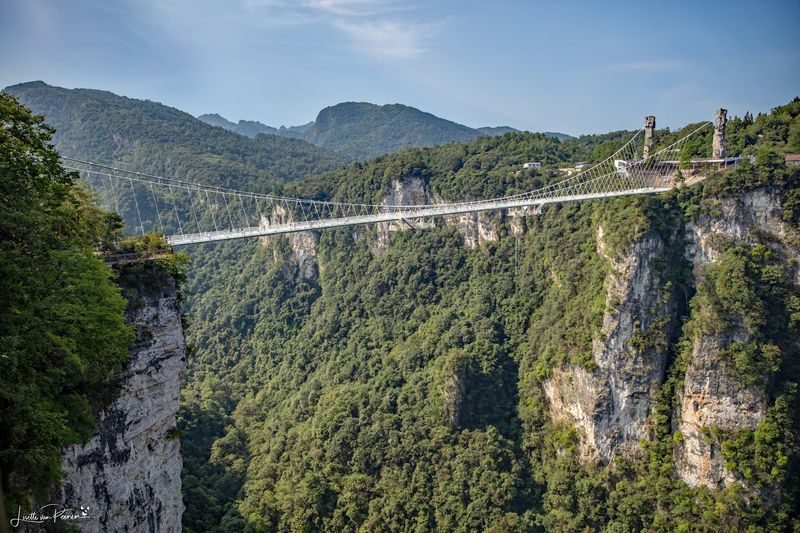
When a bridge is made entirely of glass and crosses a canyon filled with towering sandstone formations, looking down stops being optional and becomes completely unavoidable. The Zhangjiajie Grand Canyon Glass Bridge in Hunan Province was designed specifically to make the landscape visible through the deck, and the surrounding scenery of pillar-like rock formations rising from the forest below makes the drop feel even more dramatic than the numbers suggest.
The bridge stretches roughly 430 meters and rises about 300 meters above the canyon floor.
Zhangjiajie is the region that inspired the floating mountain visuals in the film Avatar, so the setting already has an otherworldly quality before the glass bridge enters the picture. The bridge has become one of the most recognized glass attractions in the world, though visitors should note that it is a separate site from the glass walkways on Tianmen Mountain, located in a different part of the broader Zhangjiajie area.
Mixing them up is an easy mistake that leads to a very long detour.
Tickets are required and visitor numbers are managed to prevent overcrowding on the structure. Shoes must be covered with protective booties before stepping onto the glass.
The canyon scenery visible through the deck is the clear highlight, and the bridge is long enough that most visitors find themselves genuinely adjusting to the transparency by the time they reach the midpoint.
Share this story