Europe is home to some of the most remarkable places on the planet, and UNESCO World Heritage Sites are among the best reasons to explore it. From ancient ruins and medieval monasteries to volcanic coastlines and primeval forests, these protected destinations tell the story of both human civilization and the natural world.
Each site earned its status because it offers something genuinely irreplaceable, the kind of place that stays with you long after the trip ends. Whether you are planning your first European adventure or adding to a long list, these 15 destinations are absolutely worth your time.
Plitvice Lakes National Park, Croatia
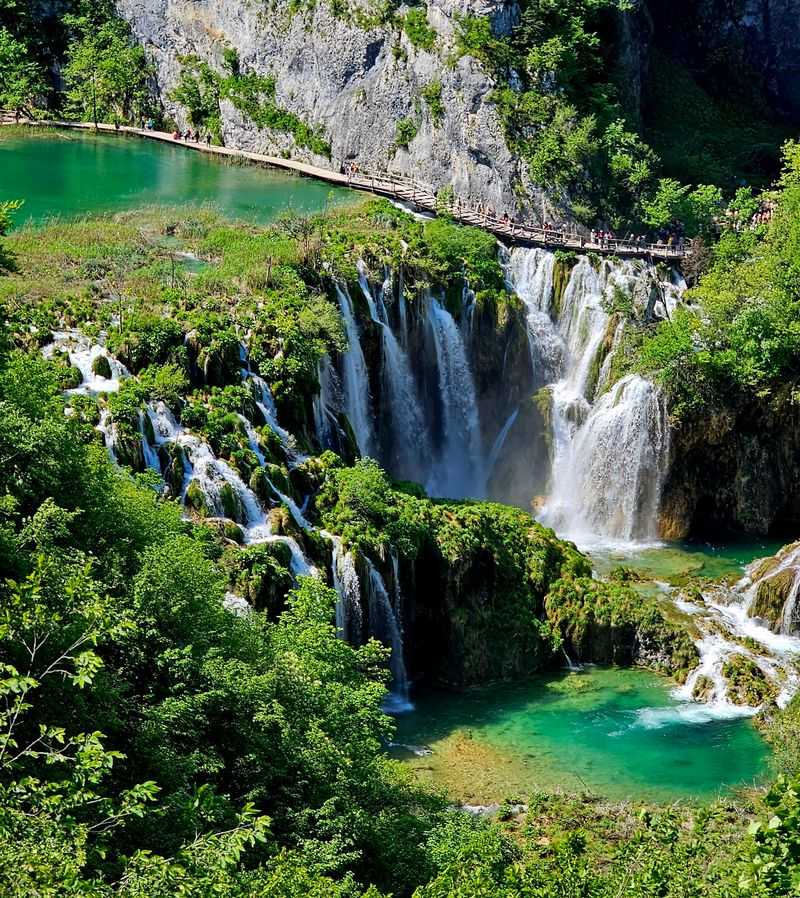
Plitvice’s water looks like someone turned up the color saturation and forgot to turn it back down. Turquoise, teal, and deep blue lakes spill into each other through a series of waterfalls, while wooden boardwalks carry visitors directly over water so clear you can see every pebble below.
The science behind the scenery is genuinely fascinating. Natural tufa barriers form where calcium carbonate deposits build up with help from mosses, algae, and bacteria, and that process is still happening right now.
The landscape visitors walk through today is literally different from the one visitors walked through a decade ago.
The World Heritage property covers nearly 30,000 hectares and shelters brown bears, wolves, and lynx in its forested areas. Arrive early in the morning before crowds build, and the still water reflects the surrounding trees in a way that makes the whole place feel surreal.
Plitvice was first inscribed in 1979 and remains one of Croatia’s most visited natural areas for very good reason. Few places on the continent combine living geology, rich wildlife habitat, and jaw-dropping color quite so effortlessly.
Meteora, Greece
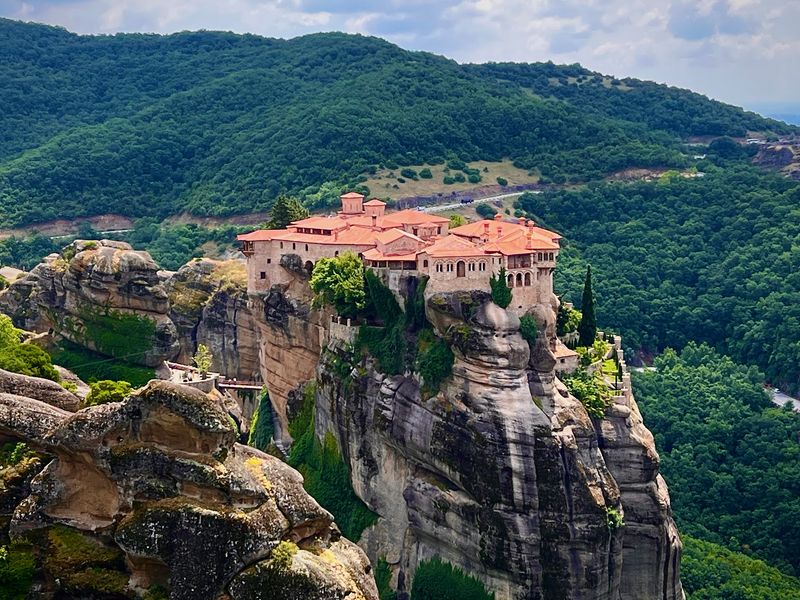
Standing in the valley below Meteora and looking up at monasteries balanced on sandstone towers is one of those experiences that genuinely makes you question what you are looking at. The rock formations rise from the plains of Thessaly like enormous stone columns, and the monasteries on top appear almost weightless from a distance.
Hermits first settled among these formations around the 11th century, drawn by the isolation that sheer vertical rock provides. At the height of monastic activity, 24 monasteries occupied the summits.
Monks and supplies were once hauled upward in nets and baskets using rope systems, because stairs simply did not exist yet.
UNESCO recognizes Meteora for both its extraordinary cultural heritage and the dramatic natural landscape that makes the whole complex possible. Only a handful of monasteries remain active today, but several are open to visitors.
Visit in the late afternoon when the valley light shifts and the cliffs turn golden, and the whole scene starts to feel like something assembled specifically to be unforgettable. Few UNESCO sites combine geology and human ambition quite this theatrically, and Meteora earns every bit of the attention it receives.
The Dolomites, Italy
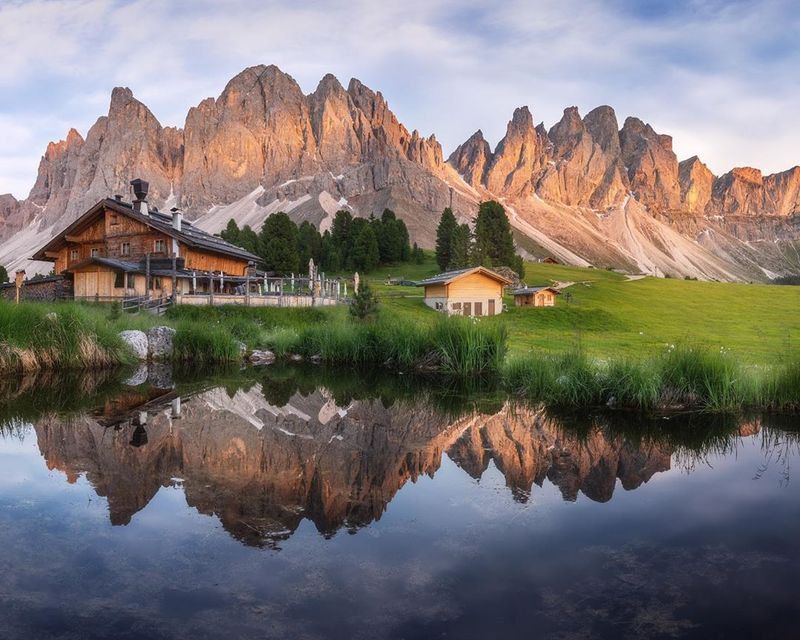
When the Dolomites catch the evening light, their limestone faces shift from white to pink to deep orange in a matter of minutes. Locals call it the enrosadira, and watching it happen from any viewpoint in the valley is the kind of moment that makes people immediately start planning a return trip.
The UNESCO World Heritage property covers more than 141,000 hectares across nine mountain groups, with 18 peaks above 3,000 meters. Some limestone walls rise more than 1,500 meters straight up, placing them among the tallest rock faces of their type anywhere on Earth.
Beyond the scenery, the Dolomites preserve a remarkable geological record of ancient marine environments and the recovery of life after one of Earth’s worst mass-extinction events.
For travelers, all of that translates into hiking trails, via ferrata climbing routes, mountain huts, ski areas, and high passes with views that stretch across multiple valleys at once. The Dolomites are the kind of place where you could visit ten times and still find a different experience each time.
The landscape itself is the attraction, and no single viewpoint or trail captures all of it. Plan accordingly and bring good boots.
Venice and Its Lagoon, Italy
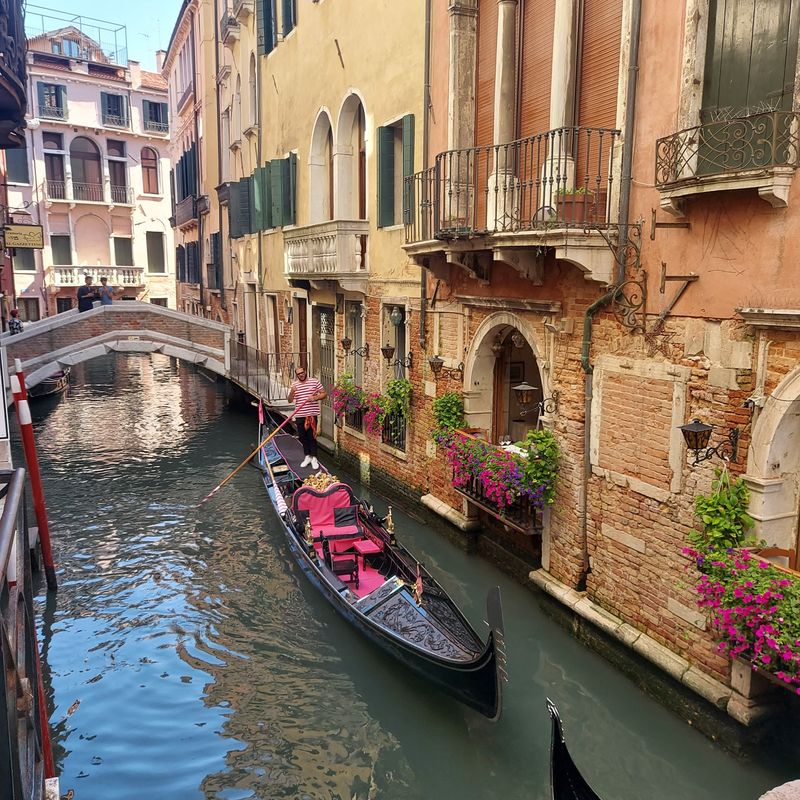
Venice is one of those cities that people think they already know before they arrive. Then the boat pulls away from the station and the Grand Canal opens up in both directions, and it turns out photographs have been underselling the place for years.
The UNESCO designation covers far more than the famous squares and bridges. The full World Heritage property includes Venice and its surrounding lagoon across more than 70,000 hectares.
The city developed across 118 small islands and became one of the Mediterranean’s most powerful maritime republics by the 10th century, building an urban environment where architecture, water management, trade, and engineering all had to evolve together.
UNESCO describes the result as an extraordinary architectural achievement, with the Doge’s Palace, St. Mark’s Basilica, and hundreds of churches, palaces, and merchant buildings forming one interconnected urban system. The best way to actually understand Venice is to leave the busiest routes behind.
Take a vaporetto out to quieter islands. Walk until the streets narrow and the crowds thin out.
That is when the city starts revealing itself as the genuinely improbable place it has always been, and why it earned its World Heritage status in 1987.
Alhambra, Generalife and Albayzin, Granada, Spain
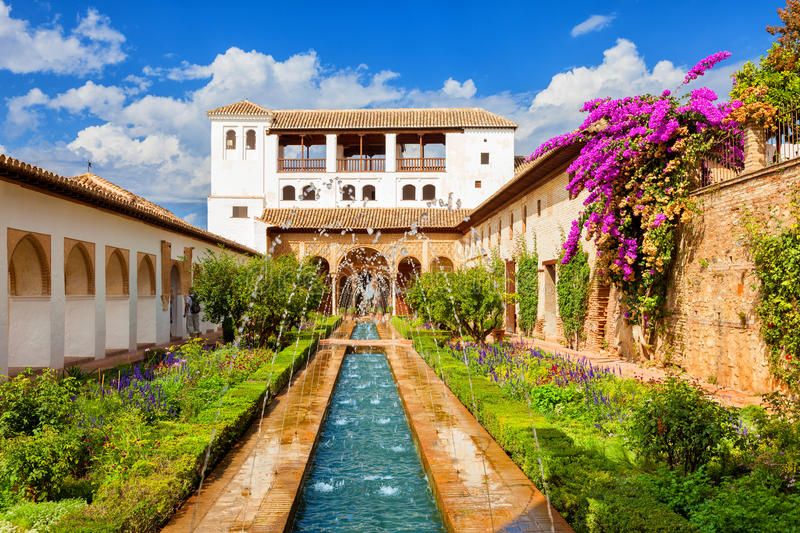
Walk into the Nasrid Palaces at the Alhambra and the level of decorative detail is almost disorienting. Walls are covered with carved plaster, geometric tilework, and Arabic calligraphy so densely layered that it takes a moment to figure out where to look first.
Every surface seems to carry a pattern within a pattern.
UNESCO describes the Alhambra as the only preserved palatine city from the Islamic period in Spain and considers it among the finest surviving examples of Nasrid architecture anywhere. Across the valley, the Albayzin neighborhood preserves the street pattern of a medieval Moorish residential district, and the Generalife gardens above show how water, terraces, agriculture, and architecture were woven together around the royal complex.
The Generalife is easy to underestimate on a map but extraordinary in person. Water channels run through garden terraces, and the whole hillside feels deliberately designed to be experienced slowly.
Then cross toward the Albayzin at sunset and look back toward the Alhambra with the Sierra Nevada rising behind it. That particular view has been stopping people in their tracks for centuries, and it still works perfectly.
Book tickets well in advance because this site sells out fast.
Mont-Saint-Michel and Its Bay, France
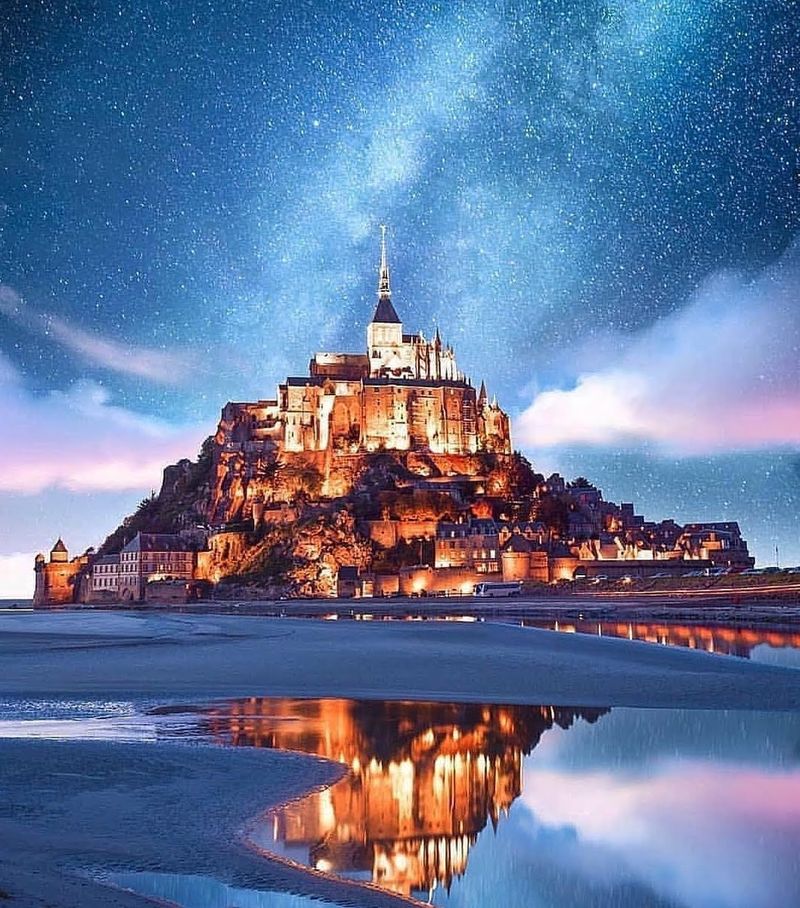
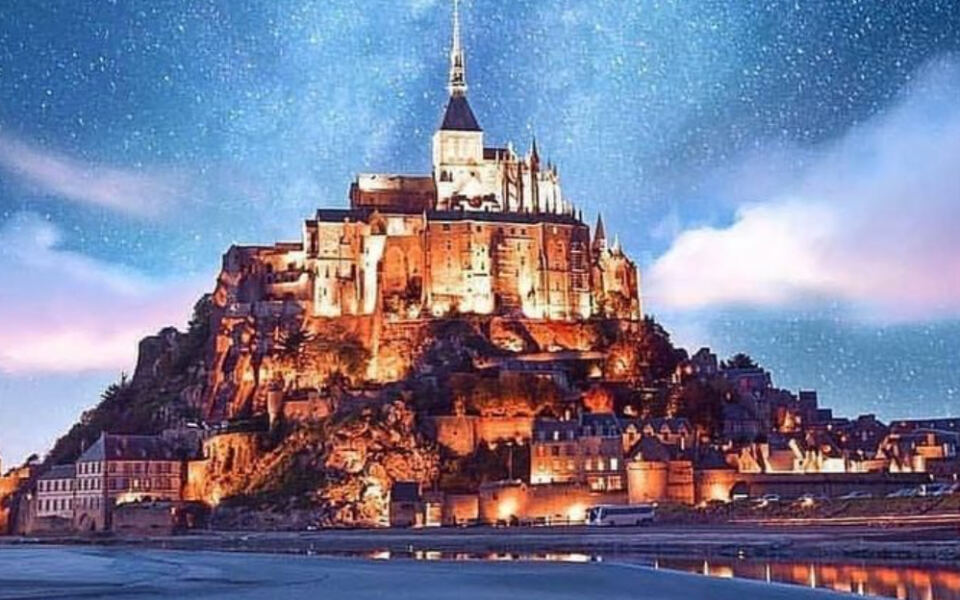
From ten kilometers away, Mont-Saint-Michel already looks like something invented for a fantasy novel. A Gothic abbey and fortified village rise from a rocky tidal island between Normandy and Brittany, surrounded by vast sandbanks that the sea covers and uncovers with tides among the most powerful in Europe.
Construction evolved from the 11th through the 16th centuries, and builders had to fit churches, cloisters, refectories, and defensive walls onto an extraordinarily restricted rocky summit. UNESCO describes the result as both a technical and artistic achievement, noting the way successive generations of builders stacked structures vertically to work within the island’s natural limits.
The experience of visiting changes completely depending on how close you are. From a distance, Mont-Saint-Michel reads as a single dramatic silhouette.
Inside, it becomes a village of narrow medieval streets and steep stairways. Higher still, abbey rooms seem layered on top of each other until you reach terraces overlooking the bay.
The tides are part of the story too. Without them, the abbey would still be magnificent.
With them, it becomes one of Europe’s most theatrical cultural landscapes, and one that has been drawing visitors since the Middle Ages without any sign of stopping.
Old City of Dubrovnik, Croatia
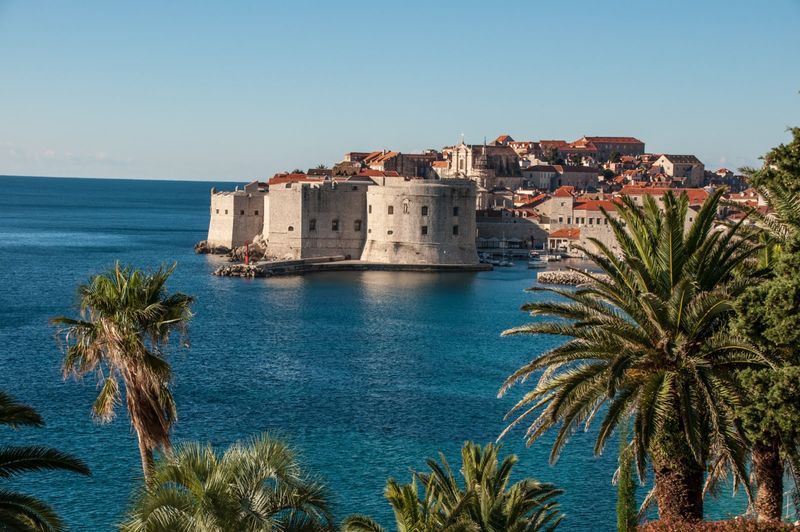
Walk the full circuit of Dubrovnik’s city walls and you get two completely different views at the same time. On one side, terracotta rooftops, church towers, and limestone streets pack tightly inside the fortifications.
On the other side, the Adriatic stretches out to the horizon without interruption. The contrast between the two never gets old.
Dubrovnik became an important Mediterranean maritime power from the 13th century onward, developing Gothic, Renaissance, and Baroque architecture across its compact old city. A devastating earthquake in 1667 destroyed much of the original fabric, and the city suffered further damage during armed conflict in the 1990s.
Extensive restoration followed both events, and the results are impressive.
UNESCO first inscribed Dubrovnik in 1979, recognizing its exceptional urban ensemble and the quality of its surviving historic architecture. The Rector’s Palace, Franciscan Monastery, Sponza Palace, and the long main street known as the Stradun are among the highlights.
The city draws enormous crowds in peak summer, but early morning visits reveal quieter streets and better light. Dubrovnik can feel like a living museum in the best possible sense, a place where maritime history, architecture, and Adriatic scenery combine into something genuinely hard to replicate elsewhere.
Cultural Landscape of Sintra, Portugal
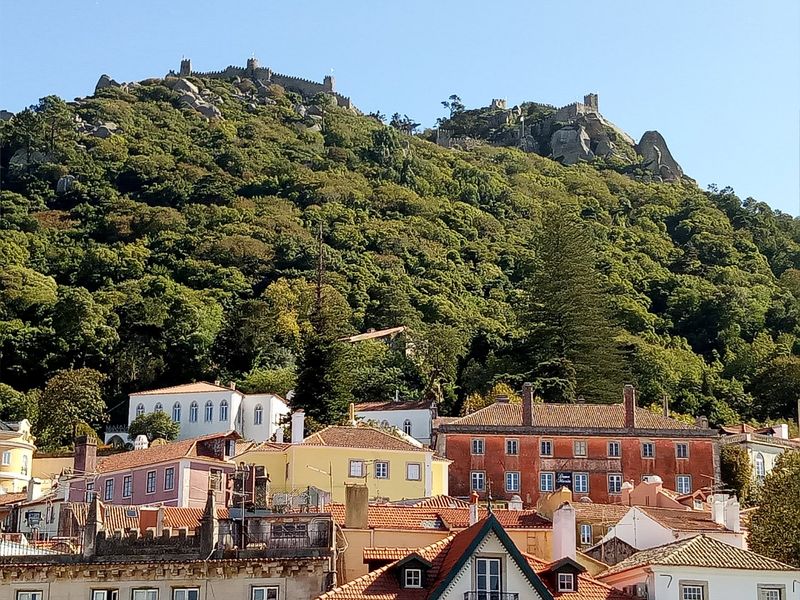
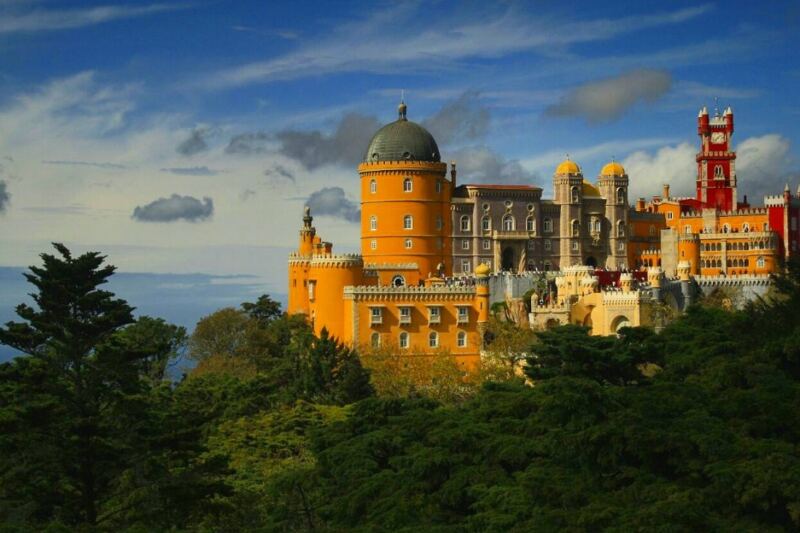
Pena Palace looks like the result of a competition between architects who were specifically told that restraint was not allowed. Its towers mix Gothic, Moorish, Egyptian, and Renaissance influences into a single building painted in yellow and red, perched on a forested hilltop above Sintra.
It should not work. Somehow it absolutely does.
UNESCO identifies Sintra as the first major center of Romantic architecture in Europe. King Ferdinand II transformed a ruined monastery into Pena Palace around the mid-19th century and surrounded it with an enormous landscaped park filled with exotic trees and winding paths.
But the World Heritage cultural landscape extends well beyond Pena, including the Moorish Castle, the medieval Sintra Palace, aristocratic estates, and forested mountain scenery that shaped Romantic landscape design across the continent.
Fog actually makes Sintra better. Palaces emerge between trees, stone walls vanish into cloud, and paths through the park feel much longer and more mysterious than they are on a clear day.
Sintra sits only about 30 kilometers from Lisbon, making it an easy day trip, though the mountain area rewards anyone who stays longer. Wandering between the monuments here can be just as memorable as entering them, which is not something every heritage site can claim.
Giant’s Causeway and Causeway Coast, Northern Ireland
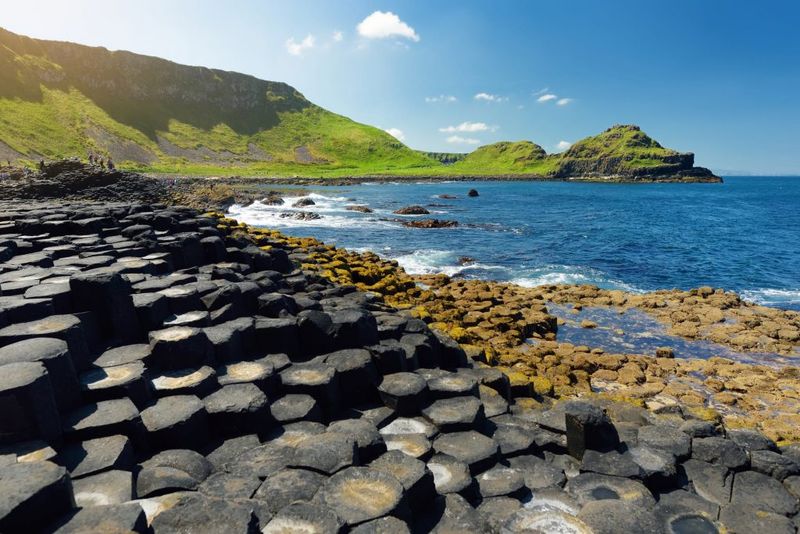
Around 40,000 basalt columns packed so tightly together that they form what looks like a geometric staircase built by someone with an obsessive sense of order. The Giant’s Causeway on Northern Ireland’s Antrim coast is one of those natural formations that seems too precise to be accidental, which is exactly why legend stepped in before science did.
The geological explanation is still impressive. Volcanic activity between 50 and 60 million years ago produced lava flows that cooled and fractured into the distinctive polygonal columns visible today.
The site became significant not just for its scenery but for what it contributed to early scientific understanding of basaltic volcanism and Earth’s geological history.
The famous columns are only the beginning of the experience. Cliff paths along the Causeway Coast open up long Atlantic views, and the basalt and sea change color dramatically depending on weather and light.
A calm sunny day makes the place beautiful and approachable. A stormy afternoon with waves rolling in from the Atlantic makes it feel genuinely mythological, which fits the legend of the giant Finn MacCool rather well.
UNESCO inscribed the site in 1986, and it remains one of the most distinctive natural landmarks in the British Isles.
Sceilg Mhichil, Ireland
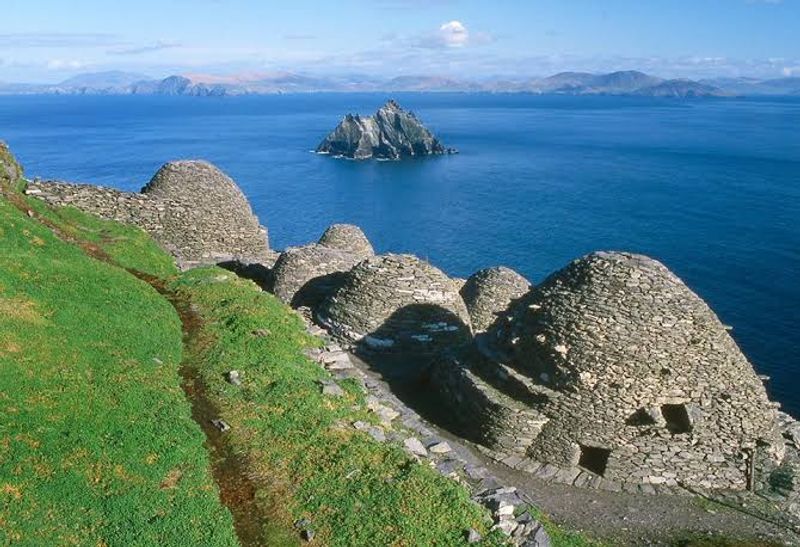
Getting to Skellig Michael requires a boat ride of nearly 12 kilometers across open Atlantic water, followed by a climb up ancient stone steps cut directly into the rock face. The island does not make things easy for visitors, and that is entirely the point.
Monks chose this remote pyramid of rock off County Kerry specifically because the Atlantic made it feel unreachable. They built stone cells, oratories, and terraces on narrow ledges high above the water, creating one of the most remarkable early medieval monastic settlements anywhere in Europe.
The two peaks reach 185 and 218 meters, and the monastic structures sit on exposed ground far above the sea below.
Isolation helped preserve the site exceptionally well. UNESCO notes that much of the monastery’s dry-stone architecture and original layout remain largely intact, which is extraordinary for a structure dating back to the early medieval period.
Access depends entirely on weather and sea conditions, and when the Atlantic decides boats cannot land, there is no arguing with it. When conditions allow, visitors climb those ancient steps toward a settlement that feels genuinely separated from ordinary life, not as a performance but because that separation was the whole reason the monks came here in the first place.
Bialowieza Forest, Poland and Belarus
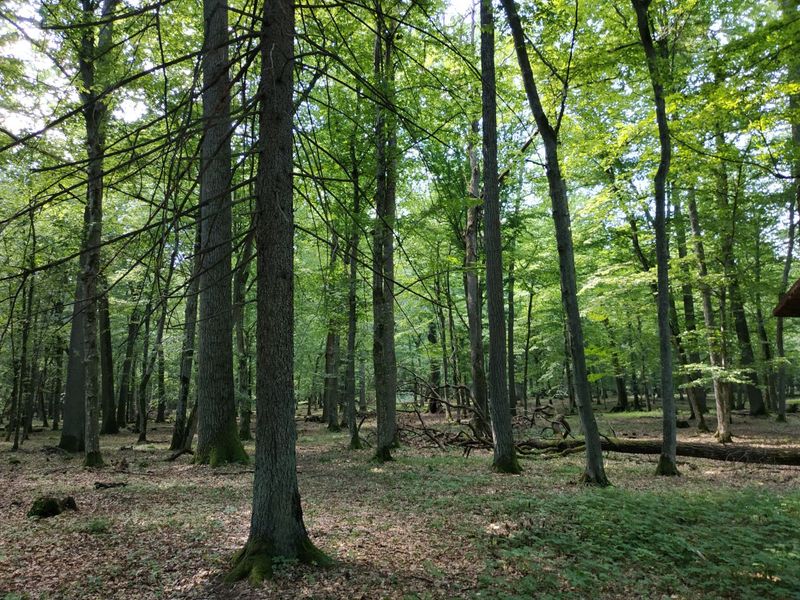
Most of Europe’s ancient lowland forest was cleared for farming and settlement centuries ago. Bialowieza survived, and walking through it makes you realize exactly what was lost everywhere else.
The trees here are enormous. Dead wood stays on the forest floor.
The whole ecosystem runs on its own schedule.
The transboundary World Heritage property covers 141,885 hectares across Poland and Belarus and contains some of the best-preserved old-growth temperate forest remaining in Europe. Natural ecological processes continue here with relatively little interference, meaning fungi, insects, birds, and mammals occupy habitats that have almost completely disappeared from the rest of the continent.
The forest is most famous for its European bison population, the largest on Earth, but UNESCO also records wolves, lynx, hundreds of bird species, and thousands of invertebrate species across the wider ecosystem. Bialowieza does not offer the immediate visual drama of a mountain range or a cascading lake.
Its power is quieter and builds slowly. Spend a few hours walking among trees that are genuinely ancient and the experience shifts from sightseeing to something closer to perspective adjustment.
The forest reminds you that Europe had a version of itself long before humans decided what it should look like.
Acropolis of Athens, Greece
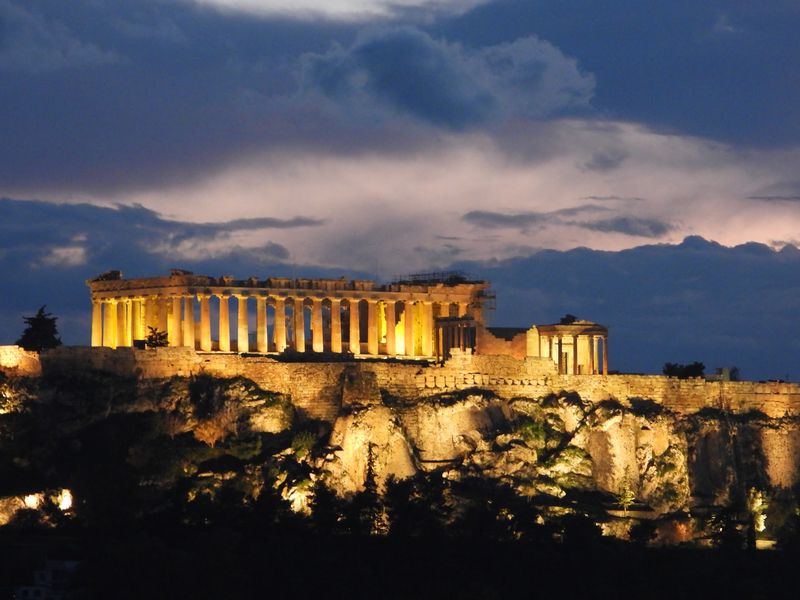
Photographs of the Acropolis are so common that arriving in Athens and seeing it for the first time can feel almost routine. Then you actually climb the hill, stand beside the Parthenon, and realize that no photograph has ever come close to capturing what it feels like to be that close to something nearly 2,500 years old.
The rocky hill rises roughly 156 meters above Athens and has been fortified and occupied for more than 3,300 years. The fifth-century-BC building program associated with Pericles produced the monuments most visitors come to see, including the Parthenon, the Erechtheion, the Propylaea, and the Temple of Athena Nike.
UNESCO calls the complex the most complete surviving ancient Greek monumental ensemble and emphasizes the enormous influence its architecture has had on building design worldwide.
The modern city makes the visit even more striking. Turn away from the ancient monuments and Athens spreads in every direction, apartment blocks and streets and hills reaching toward the horizon.
The ancient city is not preserved somewhere separate from modern life. It sits directly above it, which says something interesting about continuity that no museum exhibit quite manages to convey.
Visit early morning for thinner crowds and better light on the marble.
Palace and Park of Versailles, France
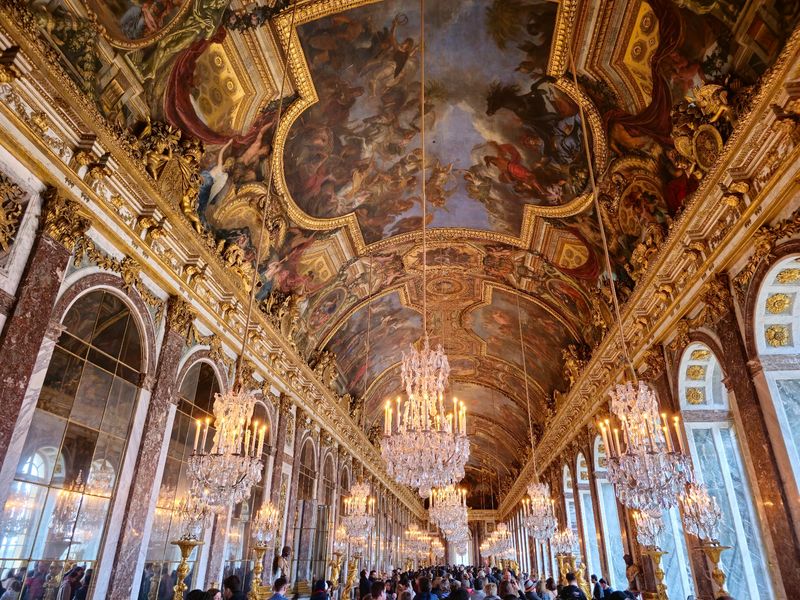
Louis XIV did not build Versailles to be modest. He built it to be the most powerful visual statement in Europe, and several centuries later it is still making that argument to everyone who walks through the gates.
The palace served as the principal residence of French monarchs from Louis XIV through Louis XVI and became the architectural model that royal courts across Europe spent decades trying to imitate. The Hall of Mirrors alone could anchor any other building’s reputation, but Versailles keeps going.
The UNESCO property covers 1,070 hectares, incorporating the main palace, the Trianon estates, formal gardens, and a visual axis extending all the way to the Grand Canal.
The gardens may be the most effective expression of the whole idea. Landscape becomes geometry.
Trees, fountains, paths, canals, and sculpted hedges appear controlled as carefully as the architecture itself, turning nature into an extension of royal authority. A quick visit to the palace interiors is impressive on its own.
A full day that includes the gardens, the Grand Trianon, and the Petit Trianon reveals the actual scale of the ambition. When you are still walking toward another garden feature two hours after arriving, the political message becomes surprisingly clear without anyone needing to explain it.
Hallstatt-Dachstein/Salzkammergut Cultural Landscape, Austria
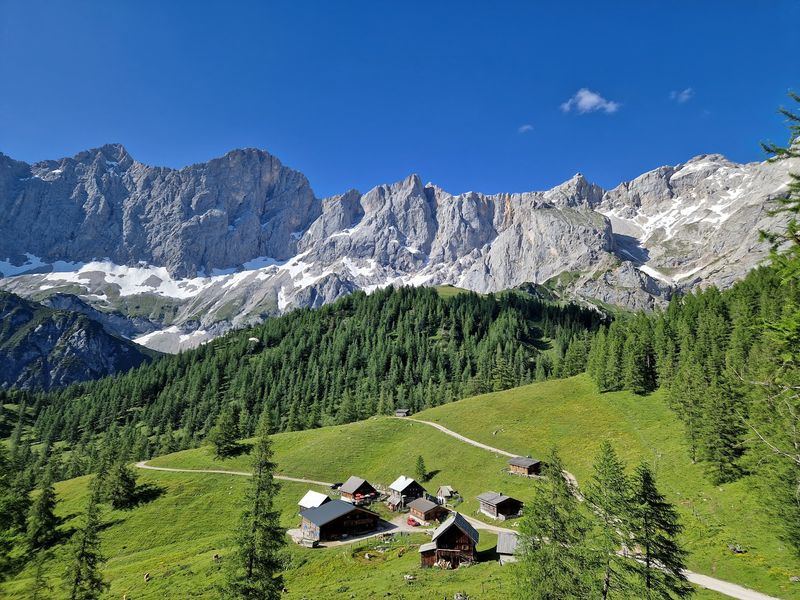
Hallstatt is so photogenic that a full-scale replica was built in China. The original, however, sits wedged between a steep Alpine slope and a lake in Upper Austria, and no copy has managed to replicate the specific combination of history, scenery, and atmosphere that makes the place worth the journey.
The UNESCO cultural landscape extends far beyond the famous village, covering almost 29,000 hectares of lakes, Alpine valleys, mountains, and settlements shaped by thousands of years of salt production. Salt was being extracted here as early as the second millennium BC, and the industry grew important enough that an entire period of European Iron Age archaeology eventually took the name Hallstatt Culture.
The mountains and narrow valley made large-scale farming difficult, so salt became the economic foundation of the entire region.
That history explains the landscape visitors see today. Buildings stack up between the lake and the slope because there was simply nowhere else to build.
Mining tunnels run deep into the mountains above. The nearby Dachstein caves and glaciers add geological drama to the cultural significance.
The postcard view of Hallstatt is genuinely beautiful, but the full UNESCO designation recognizes something far older and more layered than any photograph manages to suggest. This is a landscape shaped by salt, mountains, and time.
Rila Monastery, Bulgaria
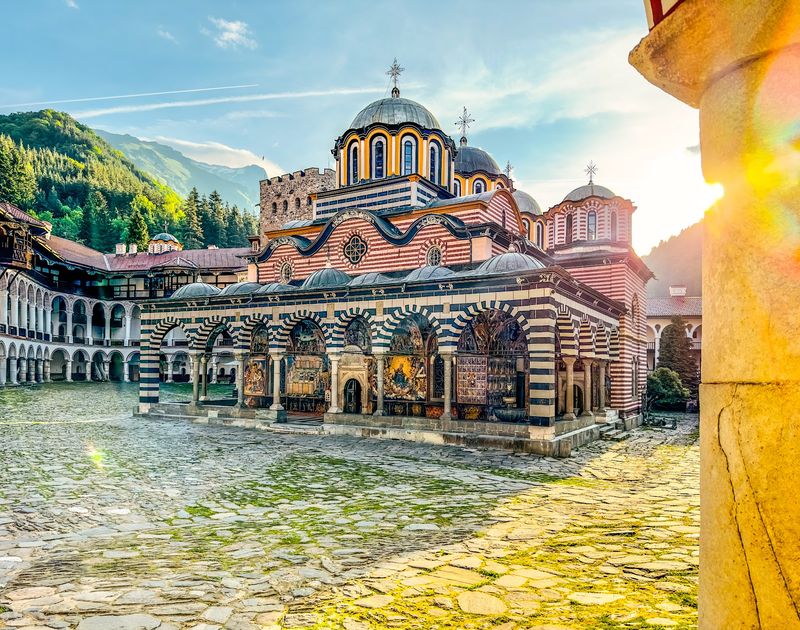
The road to Rila Monastery winds through forested mountain valleys long enough that by the time the complex comes into view, arriving feels like discovering something the mountains have been keeping to themselves. The exterior walls are fortress-like and deliberately imposing.
Step through the gate and the atmosphere shifts completely.
Founded in the 10th century by St. John of Rila, the monastery became one of the most significant spiritual and cultural centers of medieval Bulgaria. During centuries of Ottoman rule, it helped preserve Bulgarian religious traditions, literature, art, and cultural identity in ways that made it far more than a place of worship.
A major fire destroyed much of the complex in the early 19th century, and rebuilding between 1834 and 1862 produced the remarkable appearance visitors see today.
Inside the courtyard, arcaded residential galleries with striped arches surround the monastery church on three sides. Frescoes cover the church exterior with extraordinary detail and color, depicting biblical scenes in a style that reflects both Byzantine tradition and Bulgarian artistic development.
The medieval Hrelyo Tower stands at one corner as a reminder of the original medieval structure. Forested Rila peaks rise beyond the walls in every direction.
UNESCO inscribed Rila Monastery in 1983, recognizing its outstanding cultural, historical, and architectural significance to Bulgarian and broader European heritage.
Share this story