America has some of the most jaw-dropping underground landscapes in the world, and most people have no idea they exist. From massive underground lakes to 100-foot waterfalls hidden beneath mountain ridges, these caverns offer experiences that are hard to find anywhere else.
Scattered across states like Tennessee, Virginia, Texas, New York, and beyond, each one has its own personality, its own formations, and its own story. Whether you are planning a road trip, looking for a rainy-day adventure, or just want to explore something genuinely different, this list gives you 15 real, operating caverns worth adding to your travel radar.
Some have been welcoming visitors for nearly two centuries. Others became state parks just recently.
All of them offer something that is genuinely hard to describe until you are standing inside, looking up at ceilings covered in crystal formations with a waterfall echoing somewhere in the dark.
Ruby Falls Cave, Chattanooga, Tennessee
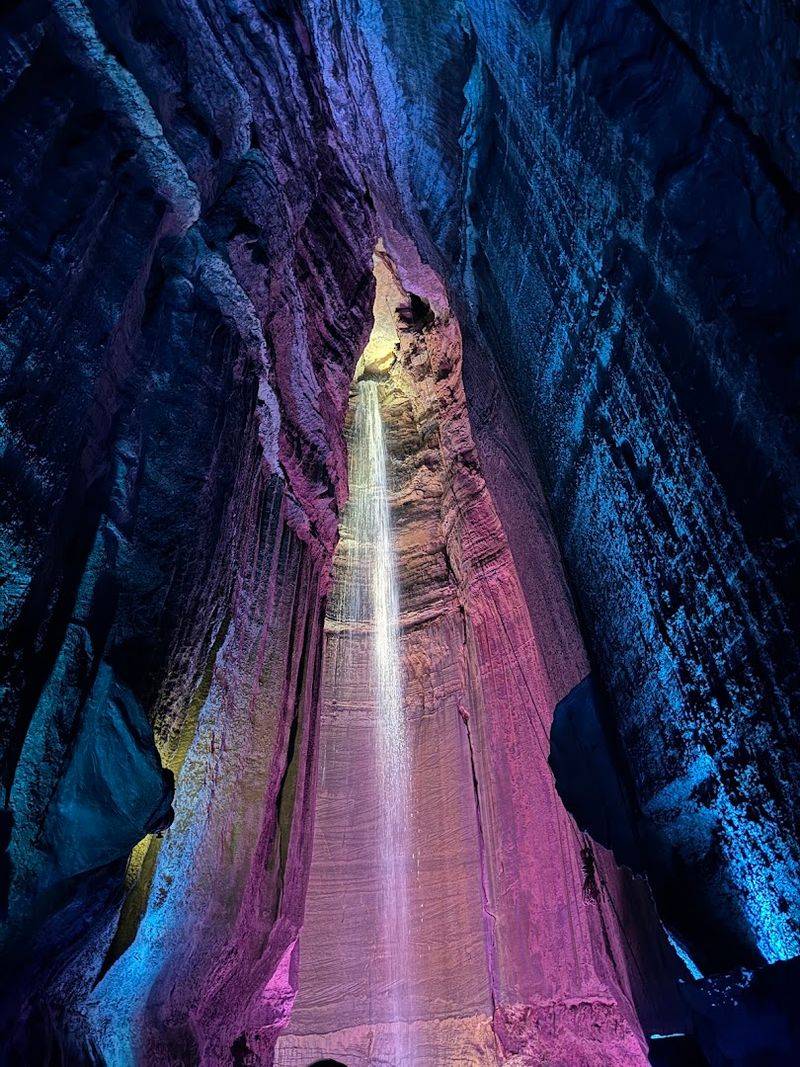
Standing 63 feet tall and hidden more than 1,100 feet inside Lookout Mountain, Ruby Falls is one of the most dramatic underground waterfalls in the entire country. Guided tours have been running since 1930, which means this attraction has been drawing curious visitors for nearly a century.
The waterfall was discovered by cave explorer Leo Lambert while he was drilling an elevator shaft into the mountain. He named it after his wife, Ruby, which adds a personal touch to an already remarkable place.
Tours move through winding limestone passages before opening into the cavern chamber where the falls drop dramatically into a pool below. The combination of natural rock formations along the route and the waterfall finale makes this one of the most complete cave experiences in Tennessee.
The attraction is open daily, so scheduling a visit is straightforward regardless of the time of year.
Tuckaleechee Caverns, Townsend, Tennessee
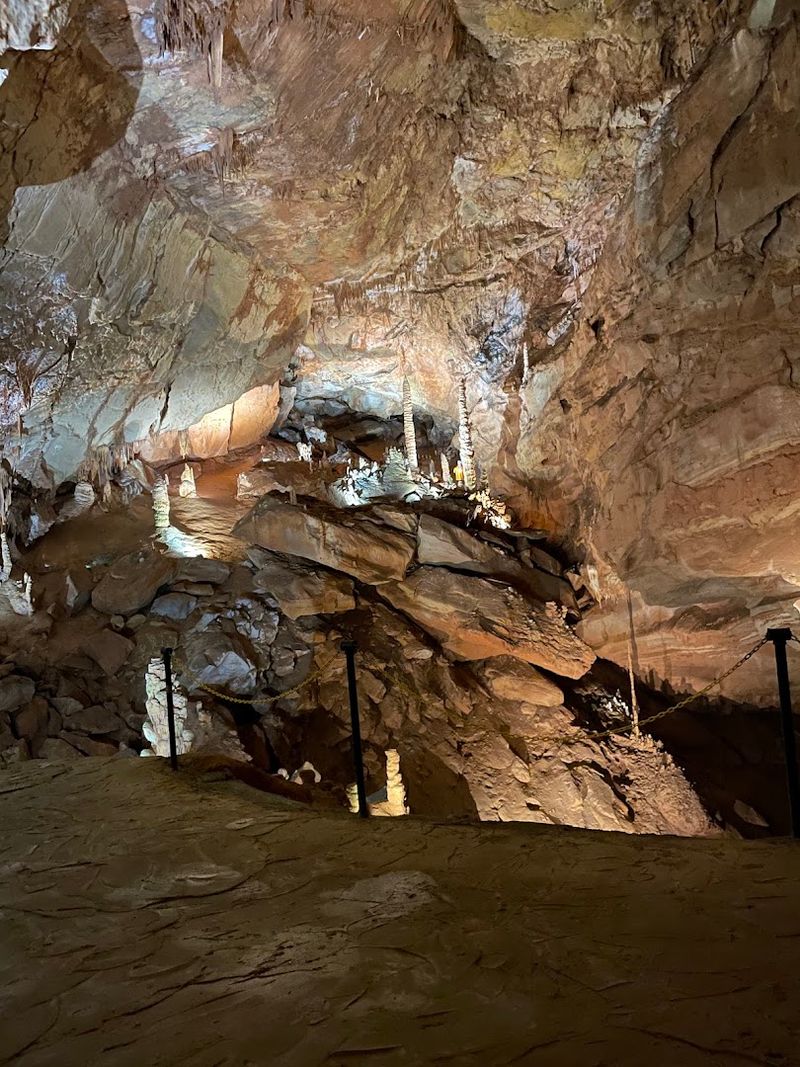
Few cave experiences in the Southeast match what Tuckaleechee Caverns offers in terms of sheer scale. Silver Falls drops 210 feet underground, making it one of the tallest underground waterfalls in the eastern United States.
The tour covers a 1.25-mile round trip through chambers filled with millions of formations, including the Big Room, which is one of the largest open cavern spaces in the Appalachian region. The density of stalactites and stalagmites throughout the route is genuinely impressive.
Tuckaleechee sits near the entrance to Great Smoky Mountains National Park, so it pairs well with a broader mountain trip to the Townsend area. The caverns operate from March through November, which aligns nicely with peak travel season in the Smokies.
If you are already planning a trip to that part of Tennessee, skipping this stop would be a missed opportunity worth regretting on the drive home.
The Lost Sea Adventure, Sweetwater, Tennessee
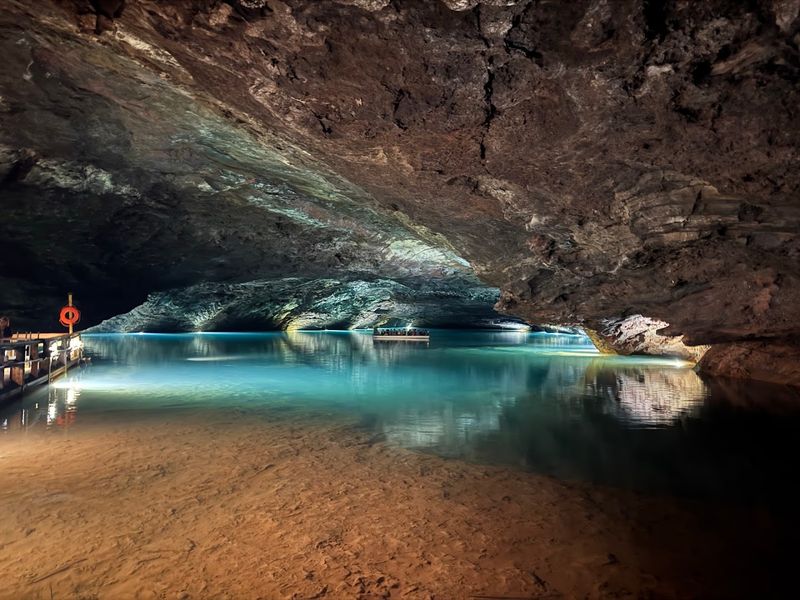
Craighead Caverns holds something that no other cave in the United States can claim: the country’s largest underground lake. The Lost Sea Adventure offers guided boat tours across this glassy underground body of water, which spans several acres beneath the Tennessee hills.
The lake was officially documented in the 1960s, but the cave itself has a much longer history, with evidence of Cherokee use and Civil War-era activity found within its chambers. Divers have explored the underwater rooms connected to the main lake, and mapped passages extend far beyond what visitors see on the surface tour.
Rainbow trout swim in the lake, and large cave formations line the passages leading to the water. Tours run year-round, with closures only on Thanksgiving and Christmas.
The boat ride portion of the tour is what most visitors remember longest, floating in near-silence across a lake that sits completely hidden from the world above.
Cumberland Caverns, McMinnville, Tennessee
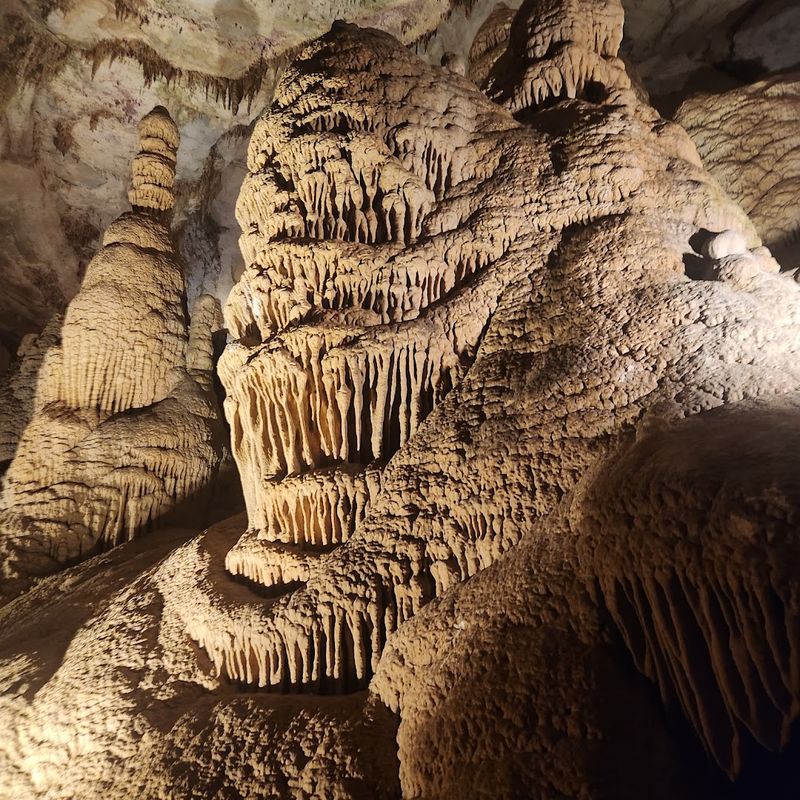
With more than 27 miles of mapped underground passages, Cumberland Caverns is often described as Tennessee’s longest show cave. That is not just a marketing claim; the cave system genuinely stretches far beneath the Cumberland Plateau, with commercial tours offering a well-organized look at a fraction of that network.
The formations here include massive flowstone curtains, stalactites, stalagmites, and columns that have been building for thousands of years. One of the more notable rooms features a chandelier made from cave formations, which gives the space an almost theatrical quality.
Cumberland Caverns also hosts underground events, including concerts performed inside the cave’s largest chamber, where the natural acoustics are remarkable. Tours run year-round, which makes it a reliable option even during off-season travel through middle Tennessee.
McMinnville is a small town, but the caverns draw visitors from across the region who come specifically for this underground experience.
Niagara Cave, Harmony, Minnesota
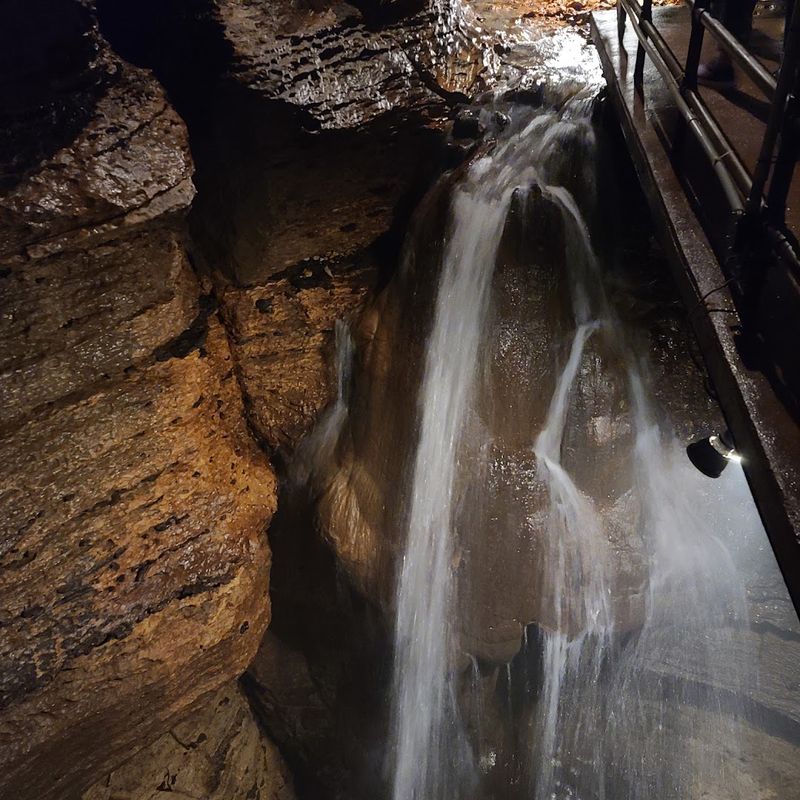
Minnesota is not the first state most people associate with underground caves, which makes Niagara Cave one of the more surprising discoveries on this list. Hidden beneath the bluff country of southeastern Minnesota, this cave features a 60-foot underground waterfall that tumbles through a narrow limestone shaft.
The cave also contains an underground stream, well-preserved fossils embedded in the walls, and a solid collection of stalactites and stalagmites throughout the tour route. The fossils alone make it worth slowing down and looking closely at the walls as you walk through.
Tours are seasonal, so planning ahead is important if you want to catch this one. Harmony is a small town in Fillmore County, and the cave sits in a region known for its scenic karst landscape.
The surrounding area also has Amish communities nearby, which makes the drive through that part of Minnesota interesting in its own right. Niagara Cave is a genuinely unexpected find for this part of the Midwest.
Secret Caverns, Howes Cave, New York
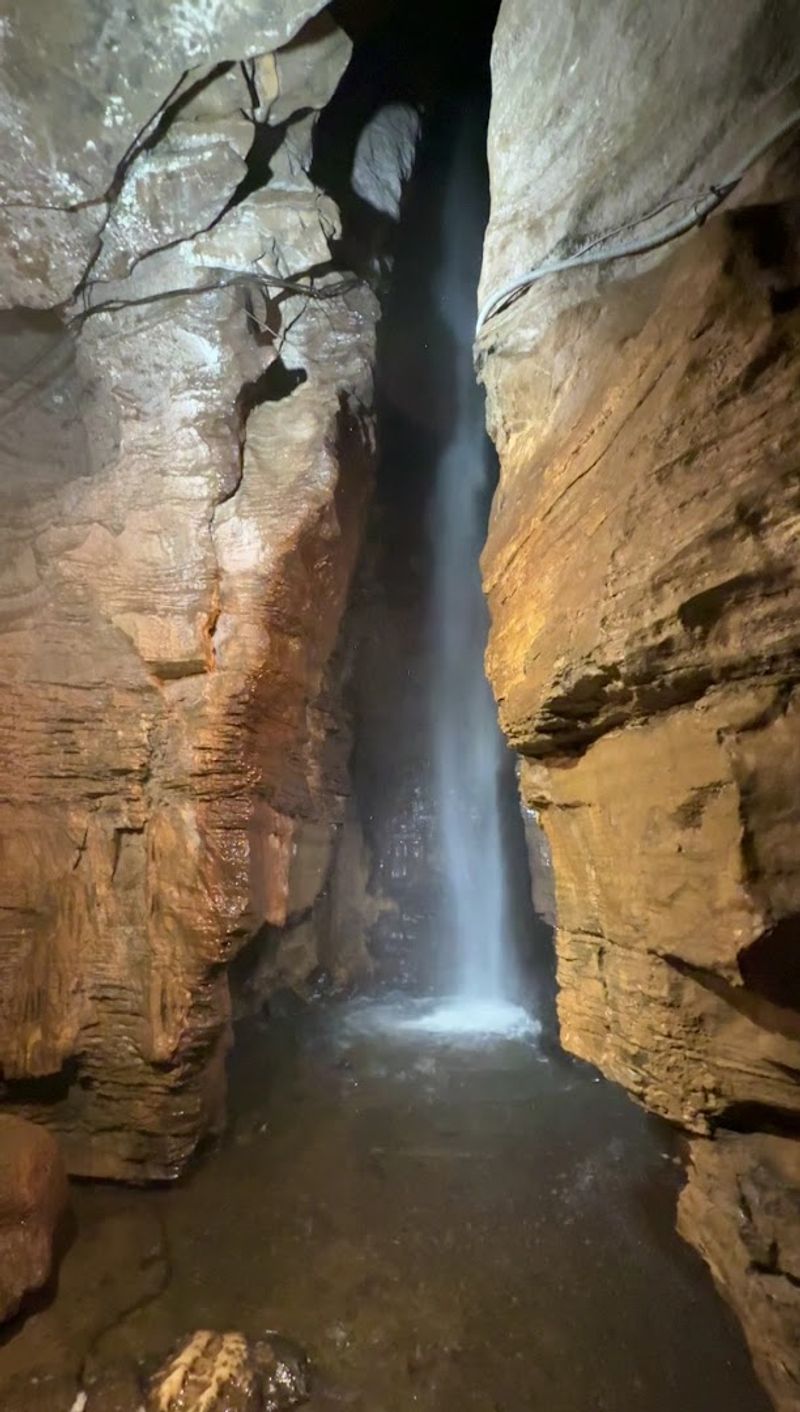
Secret Caverns lives up to its name in the best possible way. While nearby Howe Caverns gets most of the regional attention, this smaller, quirkier cave has built a loyal following among visitors who prefer a more raw and adventurous underground experience.
The tour winds through tight passages with low ceilings, calcite formations growing in unusual shapes, and the unmistakable sound of a 100-foot underground waterfall growing louder as you approach. That waterfall is the highlight, and it hits differently when you realize you are standing underground looking at something that tall.
The cave has a personality all its own, from its roadside sign style to its no-frills approach to the tour experience. Hourly tours are available in 2026, and the cave is open for the season.
If you are already stopping at Howe Caverns, adding Secret Caverns to the same day makes a lot of sense and gives you a genuinely different cave experience just down the road.
Howe Caverns, Howes Cave, New York
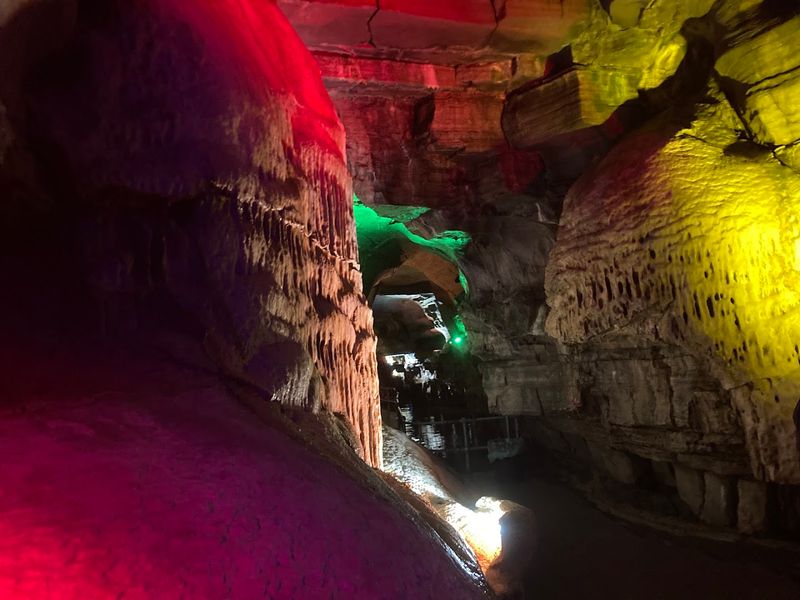
Howe Caverns has been one of the most visited natural attractions in New York State for a long time, and the 90-minute guided tour explains why. The route covers walking passages lined with speleothems before arriving at the River Styx, where visitors board flat-bottom boats for an underground boat ride.
The cave was first opened for tours in 1843, making it one of the older commercial cave operations in the country. It sits about 15 stories below the surface, reached by elevator, which sets the mood before the tour even begins.
In 2025, the cave experienced flooding that temporarily suspended the boat ride, but the attraction reopened and the River Styx boat tour was back in operation. That kind of resilience says something about how seriously the operation takes its visitors.
For families, the combination of walking passages, dramatic formations, and the boat ride makes Howe Caverns one of the more complete cave experiences available in the northeastern United States.
Natural Stone Bridge and Caves, Pottersville, New York
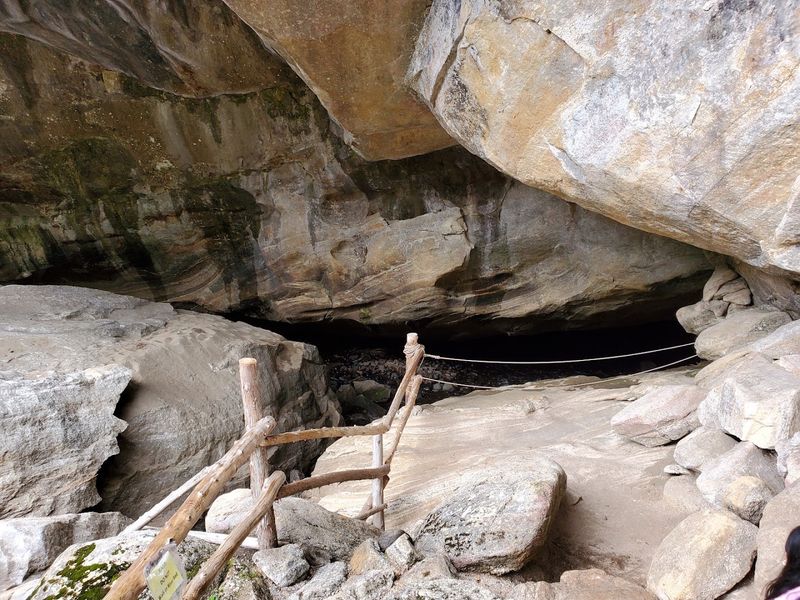
Unlike most cave attractions that take you deep underground through guided tunnels, Natural Stone Bridge and Caves in the Adirondacks offers a self-guided outdoor experience through marble caves, canyon passages, and active waterways. Trout Brook runs directly through parts of the cave system, creating waterfalls, whirlpools, and sculpted potholes that look like they belong in a geology textbook.
The marble formations here were carved by thousands of years of flowing water, and the results are genuinely striking. Some of the potholes are several feet deep, ground smooth by centuries of swirling stones and current.
The site sits in Pottersville in the southern Adirondacks, which already draws visitors for its outdoor scenery. Adding this stop gives you a ground-level look at geological processes that are still actively shaping the landscape.
The self-guided format means you can move at your own pace, linger at the waterfall sections, and explore without feeling rushed by a group tour schedule.
Penn’s Cave, Centre Hall, Pennsylvania
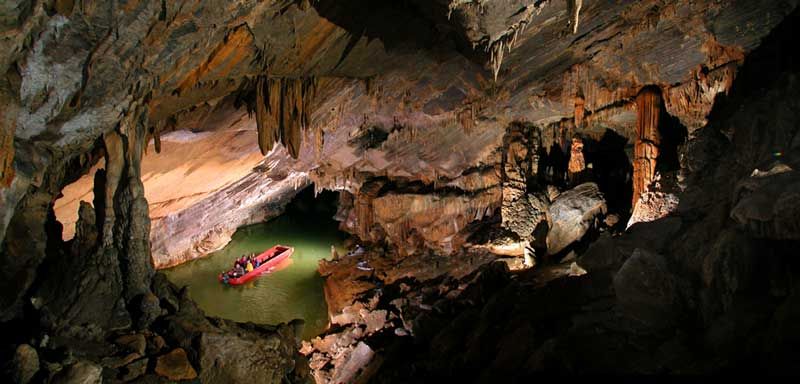
Penn’s Cave might be the most unusual cave experience on this entire list. Every inch of the guided tour takes place on water.
Visitors board flat-bottomed motorboats and travel through a fully water-filled limestone cavern, with stalactites hanging just overhead and cave walls rising on both sides of the narrow waterway.
The cave has been welcoming visitors since 1885, which gives it one of the longer operating histories of any show cave in Pennsylvania. The waterway runs completely through the mountain and exits at a lake on the far side, where the boats turn around and return through the same passage.
The all-water format means there is no walking involved, which makes it accessible to a wide range of visitors. Centre Hall sits in central Pennsylvania’s Penns Valley, and the surrounding farmland is scenic on its own.
Penn’s Cave also operates a wildlife park on the surface property, so there is more to see beyond the underground boat tour itself.
Laurel Caverns State Park, Farmington, Pennsylvania
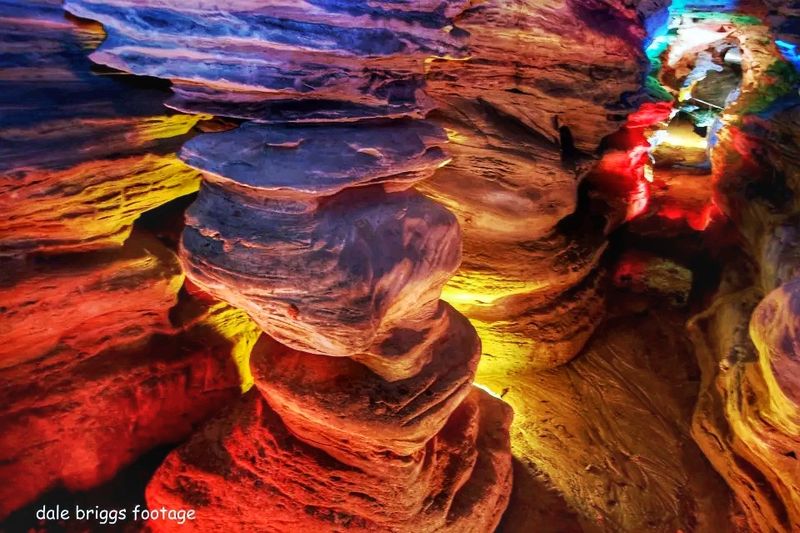
In April 2026, Laurel Caverns made history by becoming Pennsylvania’s first underground state park. That designation alone makes it worth paying attention to, but the cave itself has been drawing visitors for years before the official state park status was added.
The cavern system contains about 4 miles of passages carved through sandstone, which gives it a different texture and character compared to the limestone caves more common in other parts of the country. The passages range from wide walking corridors to tighter sections that require a bit more attention to navigate.
Seasonal cave tours operate through the warmer months, and the Farmington area in southwestern Pennsylvania is already known for outdoor recreation near Ohiopyle State Park. Stacking Laurel Caverns with a visit to Ohiopyle makes for a solid two-stop day in that corner of the state.
The new state park designation should bring more resources and visibility to a cave that deserves more recognition than it has historically received.
Luray Caverns, Luray, Virginia
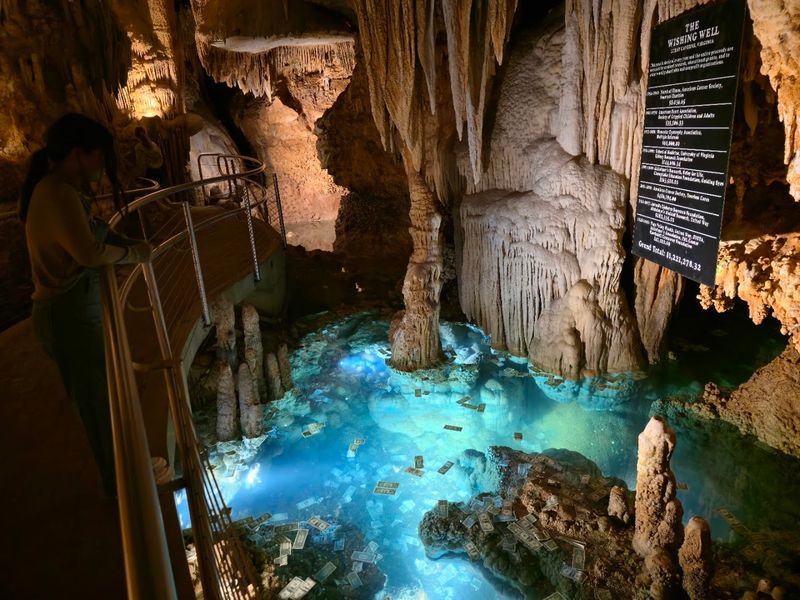
Luray Caverns is arguably the most famous cave in the eastern United States, and the formations inside justify that reputation completely. The cavern is packed with stalactites, stalagmites, columns, and flowstone curtains at a density that is hard to appreciate until you are actually walking through it.
Dream Lake is one of the most photographed spots in the cave. The water is only a few inches deep, but it reflects the ceiling formations so perfectly that it looks like a bottomless pool stretching downward into the earth.
The visual effect stops most visitors mid-step.
Then there is the Great Stalacpipe Organ, a one-of-a-kind instrument that uses rubber mallets to tap stalactites throughout the cave, producing musical tones that resonate through the chambers. It was built in 1954 and is recognized as the world’s largest natural musical instrument.
Luray sits in the Shenandoah Valley, making it an easy addition to any Blue Ridge Parkway or Skyline Drive trip.
Shenandoah Caverns, Quicksburg, Virginia
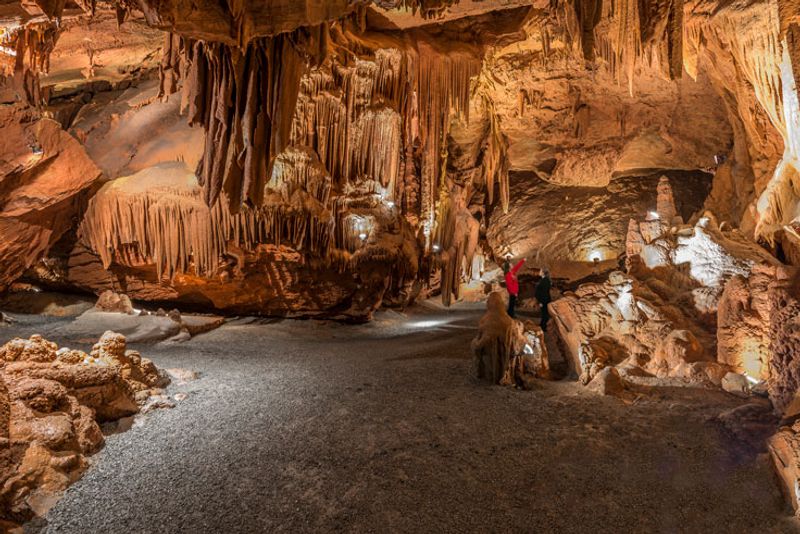
Shenandoah Caverns offers a mile-long guided tour through 17 connected rooms, each with its own named formations and distinct character. Diamond Cascade is one of the standout features, a wall of calcite crystals that catches light in a way that makes the name feel earned rather than invented.
Other named rooms include Rainbow Lake, Grotto of the Gods, and Capitol Dome, each offering something different as the tour progresses. The variety across 17 rooms keeps the experience from feeling repetitive, which is something not every cave tour manages to pull off.
Shenandoah Caverns is the only cavern in Virginia with elevator access, which makes it more accessible for visitors who prefer not to climb stairs throughout the tour. The cave sits near Interstate 81 in the northern Shenandoah Valley, making it a practical stop for road travelers passing through that corridor.
Quicksburg is a small community, but the caverns draw visitors from across the mid-Atlantic region consistently throughout the year.
Grand Caverns, Grottoes, Virginia
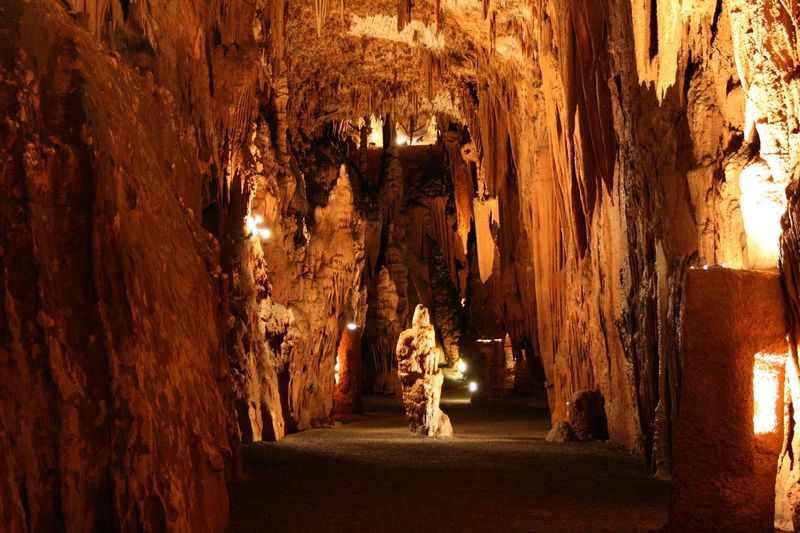
Grand Caverns has been open to the public since 1806, which makes it the oldest operating show cave in the United States. That history includes a visit from Thomas Jefferson, who explored the cave and reportedly measured its formations.
Civil War soldiers from both sides also sheltered in the area, and some left signatures on the cave walls that are still visible today.
The cave is known for its shield formations, a relatively rare type of speleothem that grows in flat, disc-like shapes projecting outward from the walls. Grand Caverns has one of the highest concentrations of shield formations of any cave open to the public in the country.
Large rooms, dramatic flowstone, stalactites, stalagmites, and columns fill out the tour route. The town of Grottoes sits in the Shenandoah Valley near Waynesboro, putting Grand Caverns within easy reach of other Virginia attractions.
For anyone interested in both geology and American history, this cave covers both without trying too hard.
Natural Bridge Caverns, San Antonio, Texas
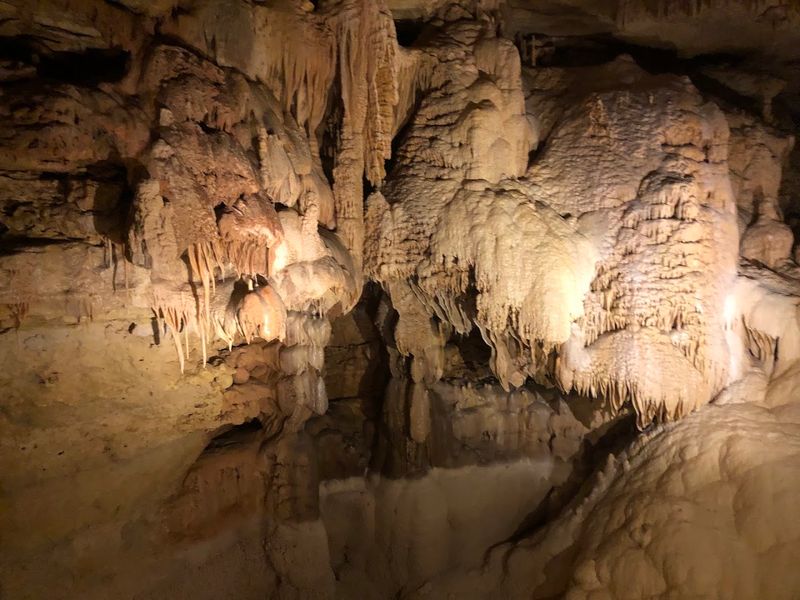
Natural Bridge Caverns is the largest commercial cavern in Texas, and the scale of the formations inside reflects that status. The cave was discovered in 1960 by a group of college students from St. Mary’s University, which gives it a relatively recent origin story compared to some of the caves on this list.
Two main tour options cover different parts of the cave system. Discovery Passages takes visitors through the main chambers with towering formations and active water movement through the limestone.
Hidden Passages offers a longer and more adventurous route through additional sections of the cave network.
The cave sits just north of San Antonio off Interstate 35, making it one of the more accessible cave attractions in the southern United States. Active water still moves through the limestone, which means formations are continuing to grow and change.
That ongoing geological activity gives the cave a sense of being a living system rather than a static display preserved behind velvet ropes.
Cascade Caverns, Boerne, Texas
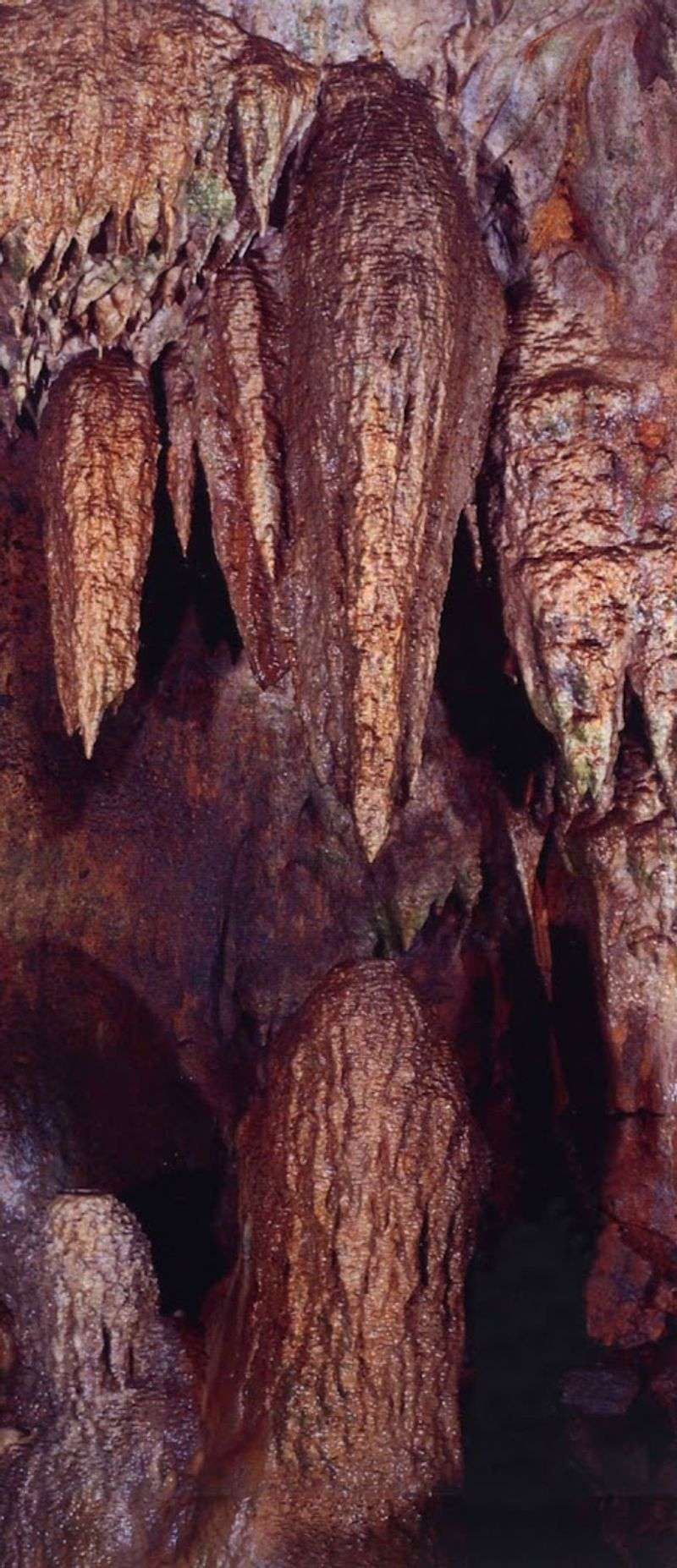
Cascade Caverns has been operating as a show cave since 1932, giving it one of the longer commercial histories of any cave in Texas. Located in the Hill Country near Boerne, the cave draws visitors who are exploring the scenic stretch of the region northwest of San Antonio.
The tour moves through flowstone corridors and winding chambers before reaching the Cathedral Room, which is the largest open space in the cave and gives the tour a strong finishing point. A recreated interior waterfall pays tribute to the cave’s original natural cascade, which gave the cavern its name before the water flow changed over time.
Boerne itself is a charming Hill Country town with its own shops and dining, so pairing a cave visit with time in town makes for a well-rounded day trip. The cave sits on a property that also includes outdoor space, and the combination of geological history and Hill Country setting makes Cascade Caverns a satisfying stop for travelers moving through that part of Texas.
Share this story