Long before asphalt took over American roads, brick was the paving material of choice for cities that wanted to signal progress. Starting in the late 1800s, towns across the country laid millions of clay bricks across their downtowns and neighborhoods, creating road networks that were built to last.
Most of those streets eventually vanished under layers of blacktop, but a surprising number survived. The 15 cities on this list still have original brick pavement you can see and drive on today.
Some have preserved entire districts, while others hold onto just a single precious block. What they all share is a direct, unfiltered connection to the way American streets looked and worked more than a century ago.
Read on to find out which cities made the cut and what makes each one worth a visit.
1. Brick Street Historic District, Woodbine, Iowa
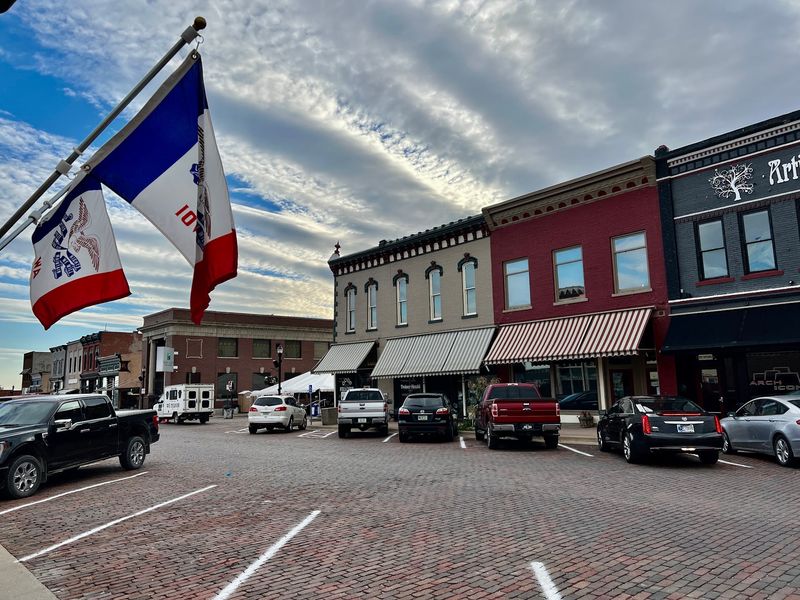
Eleven blocks of original brick road running through a small Iowa town sounds like a modest claim, but Woodbine backs it up with receipts. These blocks of Lincolnway were paved in 1921 and represent the longest remaining original brick portion of the Lincoln Highway in the entire state of Iowa.
What makes this stretch especially impressive is that the bricks were not simply left in place and forgotten. They were carefully removed, cleaned, and relaid during restoration work, so the road could keep functioning as an everyday street rather than being roped off as a museum exhibit.
Drivers crossing those eleven blocks still get the same rhythmic rumble that accompanied early motorists across much of America. That is not nostalgia.
That is living history under your tires.
2. Brick Streets Neighborhood Historic District, Tyler, Texas
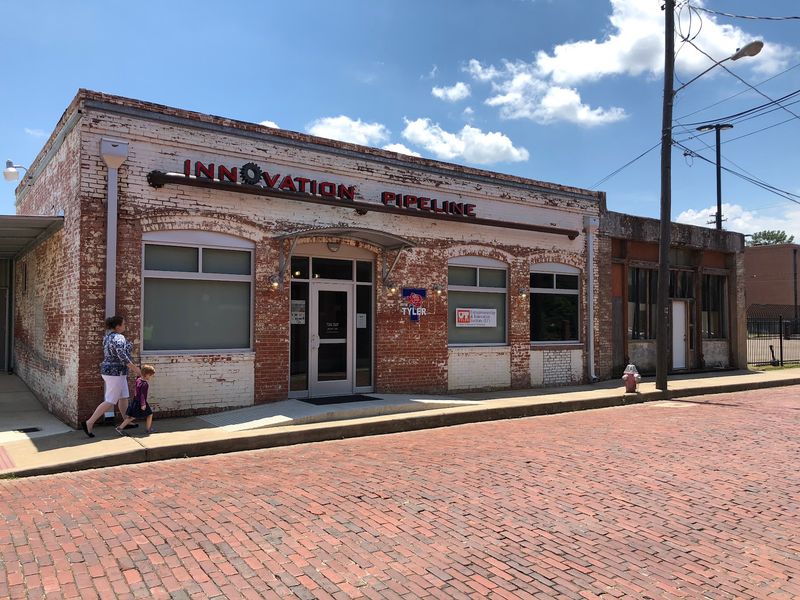
Tyler named an entire neighborhood after its streets, which tells you how seriously the city takes its brick pavement. The Brick Streets Neighborhood Historic District sits just southwest of downtown and contains numerous surviving brick-paved roads among homes built between the mid-19th and mid-20th centuries.
The engineering behind these streets is worth noting. Each road was built on a 4-inch concrete base, topped with sand for flexibility, then fitted with carefully laid bricks sealed with hot tar.
That method worked so well that many of the original streets remain structurally sound today.
By the mid-20th century, Tyler had nearly 14 miles of brick roads containing approximately 12.6 million bricks. Mature trees, stone-lined drainage channels, and preserved historic homes complete a streetscape that feels genuinely intact rather than staged for visitors.
3. Downtown Historic District, Stephenville, Texas
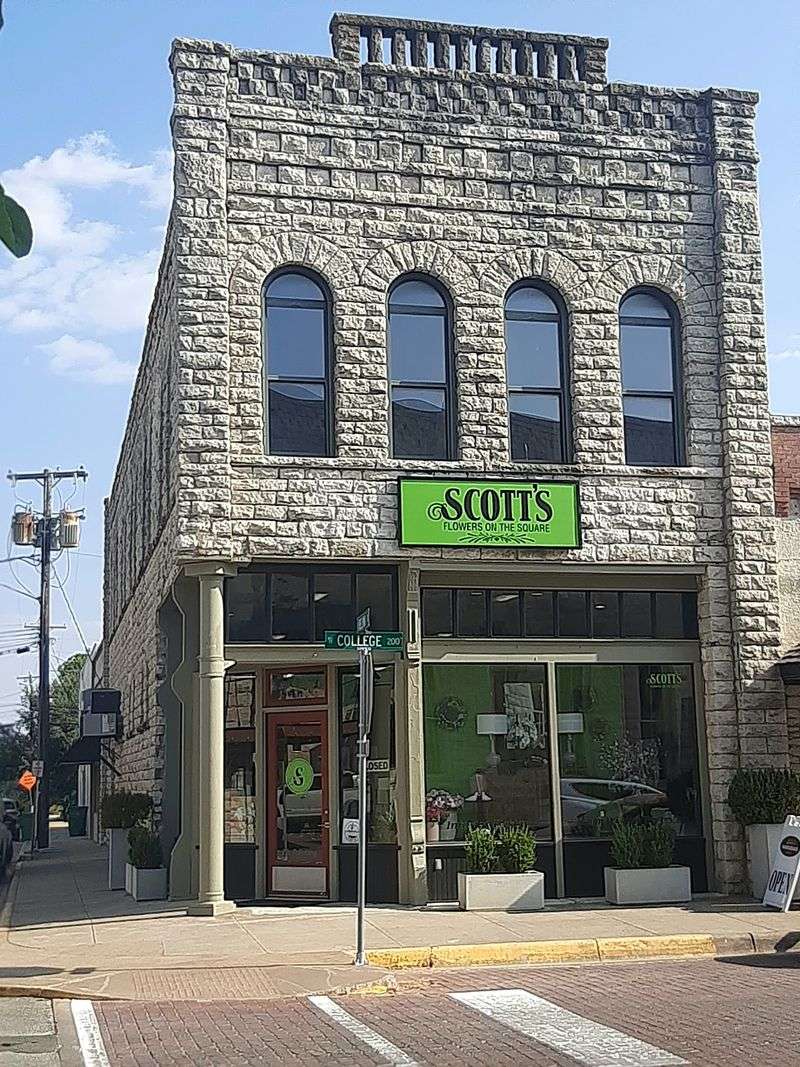
Stephenville went big on brick in the 1920s, sourcing its vitrified paving bricks from the nearby town of Thurber, which was one of the most productive brick-manufacturing communities in Texas at the time. The city launched an ambitious street paving program during that decade, and enough of that work survived to remain clearly visible today.
National Register documentation confirms that original brick streets continue to exist throughout the downtown historic district, even though some pavement near the courthouse was later covered with asphalt. What remains is particularly interesting from a historical standpoint.
Paving a street in that era was not a simple government project. Property owners along the route often helped shoulder the cost, making each surviving brick a small piece of civic investment that has outlasted nearly everyone who paid for it.
4. Old Towne District, Vicksburg, Mississippi
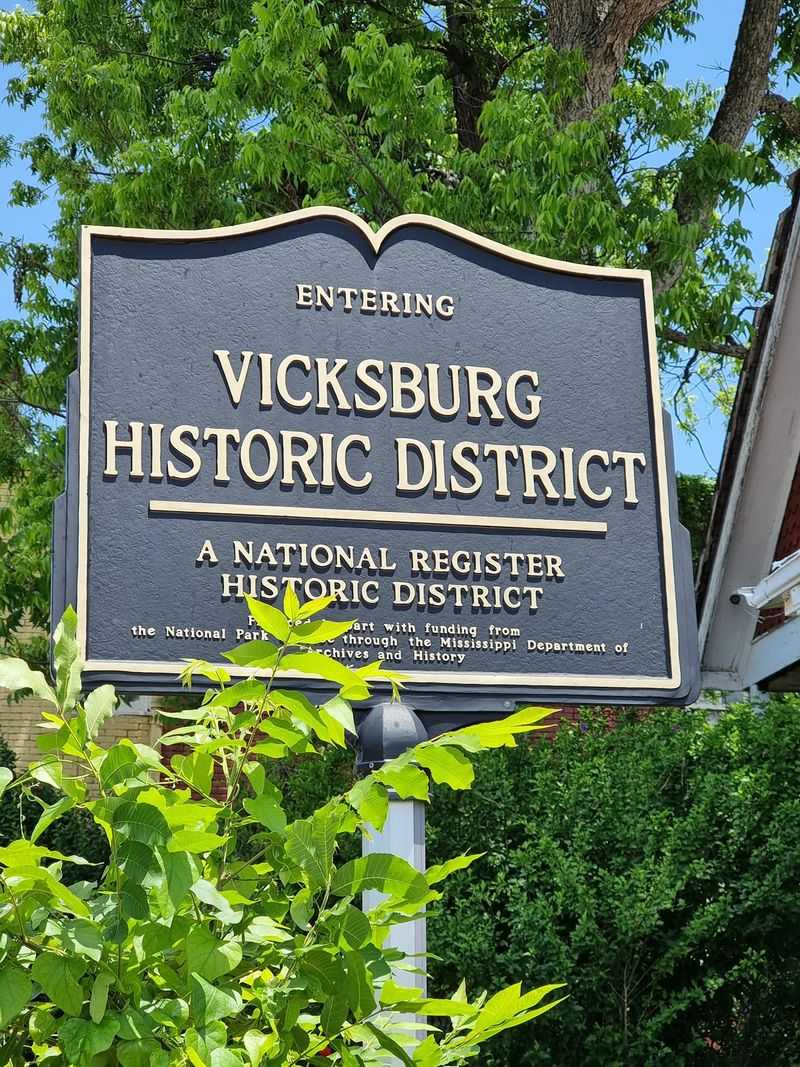
Vicksburg’s Old Towne District offers brick streets in a setting that most preserved road surfaces cannot match. The pavement here winds through a hilly residential neighborhood rather than running straight through a flat downtown grid, which gives the whole area a more organic, unhurried character.
The city’s comprehensive planning documents specifically note that the district’s original brick streets have been maintained and remain in good condition, a detail that distinguishes Vicksburg from cities where surviving bricks are crumbling or buried under decades of patching.
Historic homes, traditional sidewalks, and mature landscaping frame the roadway on all sides. The result is a neighborhood where the brick pavement does not feel like an attraction added to draw visitors.
It feels like something the community chose to keep because it belongs there.
5. Adel Public Square Historic District, Adel, Iowa
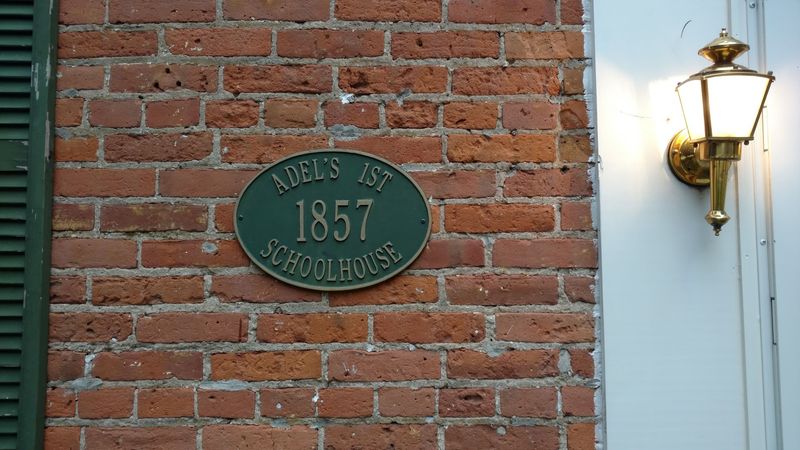
Not every city gets to say its courthouse sits on a ring of original brick pavement, but Adel manages it with quiet confidence. The Public Square Historic District places the Dallas County Courthouse at the center of a streetscape where original paving bricks are recognized as a contributing historic structure in their own right.
The bricks did not survive by accident. When the streets were renovated, workers salvaged the original material and reused it rather than swapping it out for something newer and cheaper.
That decision paid off in a big way visually.
Red brick pavement surrounding a traditional courthouse, flanked by classic Iowa storefronts, creates exactly the kind of downtown scene that cities spend a lot of money trying to recreate. Adel simply kept the original.
6. Downtown Marianna, Marianna, Arkansas
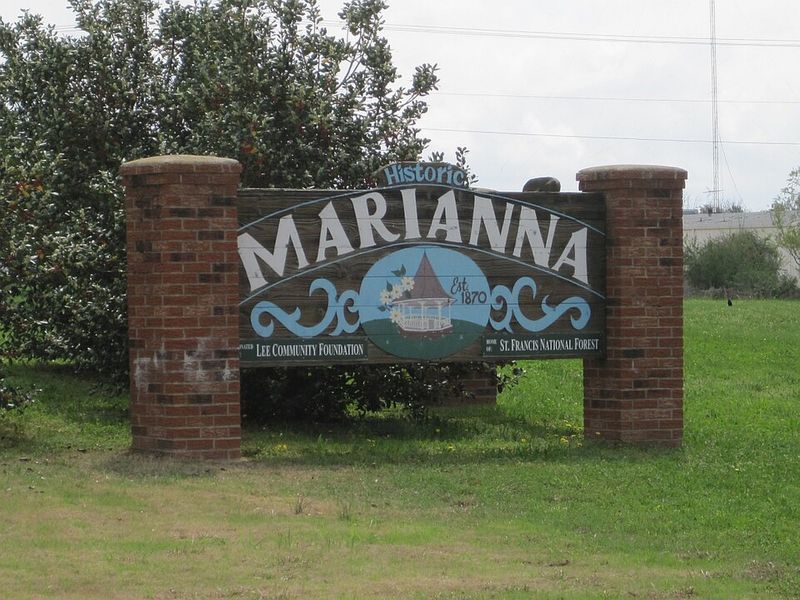
Marianna earned a spot on the Federal Highway Administration’s America’s Byways program, and its original brick streets are part of the reason why. The surviving pavement runs through the historic downtown and connects naturally with the older commercial buildings and the stately Lee County Courthouse at the center of town.
There is something straightforward and honest about a place that keeps its original streets simply because they still work. Marianna has not turned its brick pavement into a major tourism campaign or a heritage trail with interpretive signs at every corner.
The bricks are just there, doing what they have always done, giving the downtown a strong early 20th-century character that makes the street itself part of what visitors remember. That kind of authenticity is harder to manufacture than most cities realize.
7. Old Dixie Highway, Longwood, Florida
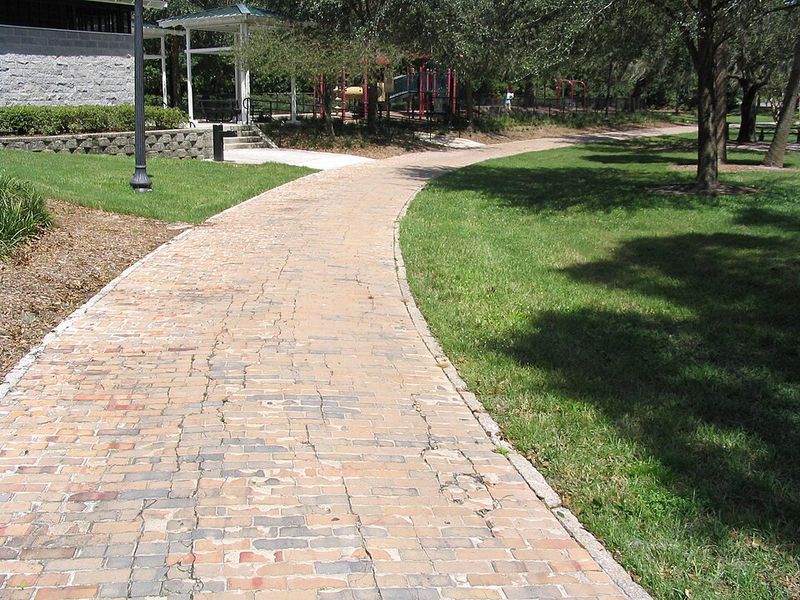
Florida is not the first state most people associate with historic brick roads, which makes Longwood’s surviving section of the original Dixie Highway all the more surprising. This particular stretch was paved in 1916, making it one of the older surviving examples of early highway brick work in the southeastern United States.
For decades, the bricks sat hidden under asphalt, effectively erased from the landscape. A preservation project in the early 2000s changed that when workers uncovered the original roadway and decided to keep it rather than pave over it again.
Both the original bricks and the period curbing were preserved in place, giving visitors a rare complete picture of what an early Florida highway looked like before the state became synonymous with wide, multi-lane roads built for speed rather than history.
8. Ridgewood Historic District, Canton, Ohio
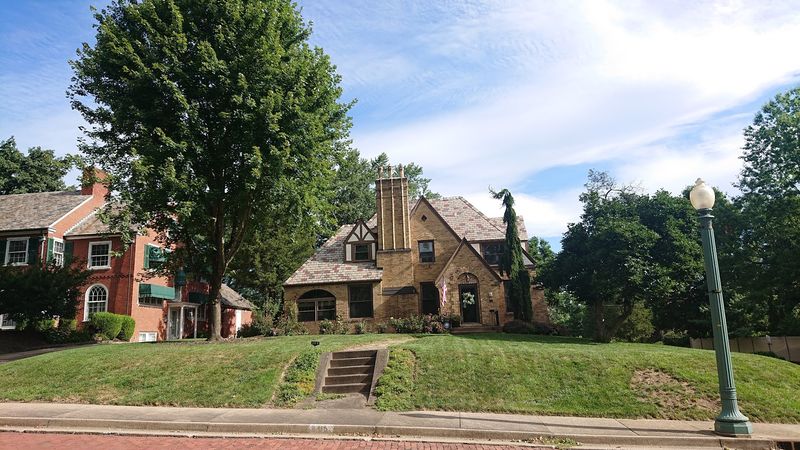
Canton’s Ridgewood Historic District has a brick-street story with an unusually local twist. The roads here were paved with bricks produced by the Metropolitan Paving Brick Company, a Canton manufacturer whose products also ended up in major New York tunnels and on the famous Indianapolis speedway.
The neighborhood developed primarily between 1918 and 1940, with its most active building period running from 1920 to 1930. Tudor, Georgian, and Colonial Revival homes line the brick-paved blocks, and period streetlights made by the local Union Metal Manufacturing Company add another layer of historical consistency to the setting.
Ridgewood was added to the National Register of Historic Places in 1982, giving the district formal recognition for both its architecture and its streetscape. The bricks here are not just a road surface.
They are a locally made product that helped build the neighborhood’s identity from the ground up.
9. Downtown Hays, Hays, Kansas
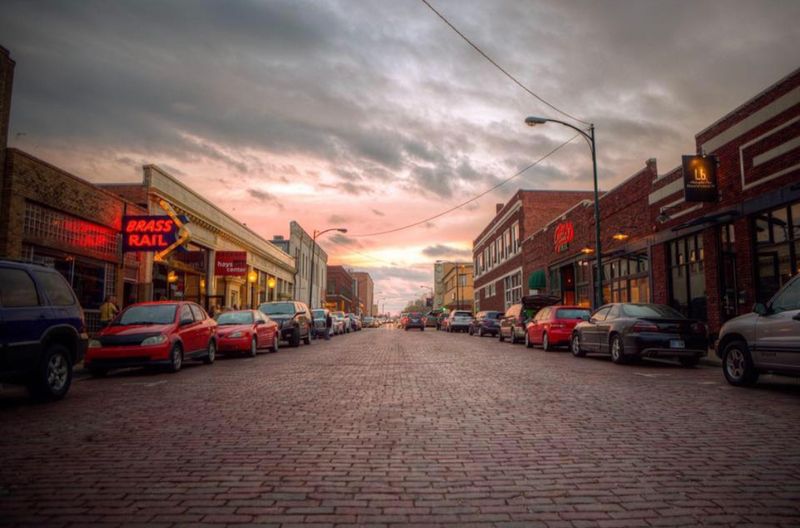
Hays built its reputation on frontier history, but the city’s original brick streets add a chapter that most visitors do not expect to find. The Kansas Gunsmoke Trail, which highlights the region’s Old West heritage, specifically calls out the brick pavement as part of the historic landscape worth seeking out.
That pairing works better than it might seem. The frontier era ended and the automobile age began within a relatively short span of years, and Hays experienced both transitions in real time.
The surviving brick streets represent the moment the city shifted from dirt roads and horse traffic to something more permanent and modern.
Today, the bricks serve as a quiet bridge between two very different periods in Kansas history. Visitors focused on the frontier story often walk right across that bridge without fully realizing what is under their feet.
10. Heritage Plaza Brick Street, Albany, Georgia
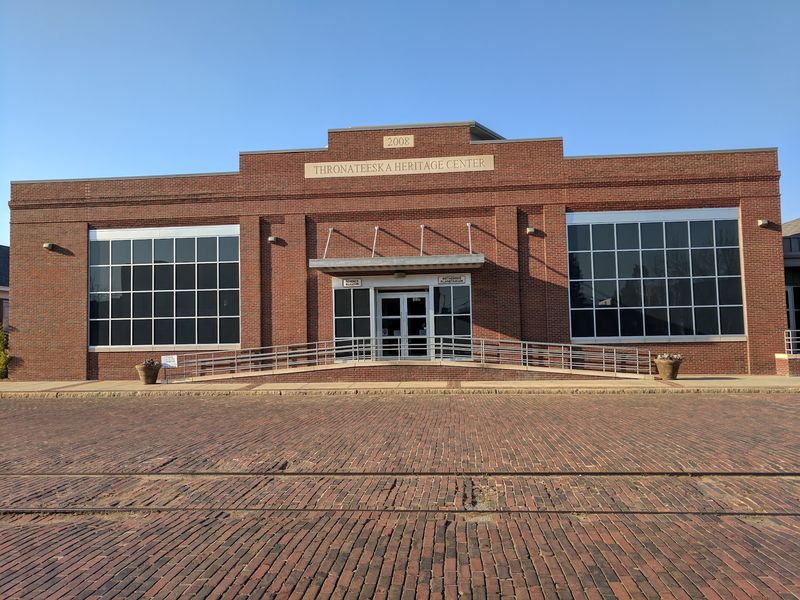
Albany has exactly one surviving brick street, which makes the remaining section beside the Thronateeska Heritage Center more valuable than it might be in a city with dozens of preserved blocks. The pavement on the 100 block of West Roosevelt Avenue was laid in 1913 as part of a downtown street improvement campaign and has stayed in place ever since.
The Thronateeska Heritage Center’s campus sits directly on this street, creating an environment where the brick roadway functions as part of a larger open-air collection rather than an isolated curiosity. Museums, historic buildings, and the old pavement occupy the same space, reinforcing each other.
The street is also recognized on the National Register as part of Albany’s Railroad Depot Historic District. That designation gives the single surviving block a level of protection and documentation that helps guarantee it will not quietly disappear under a repaving project.
11. Downtown Walnut, Walnut, Iowa
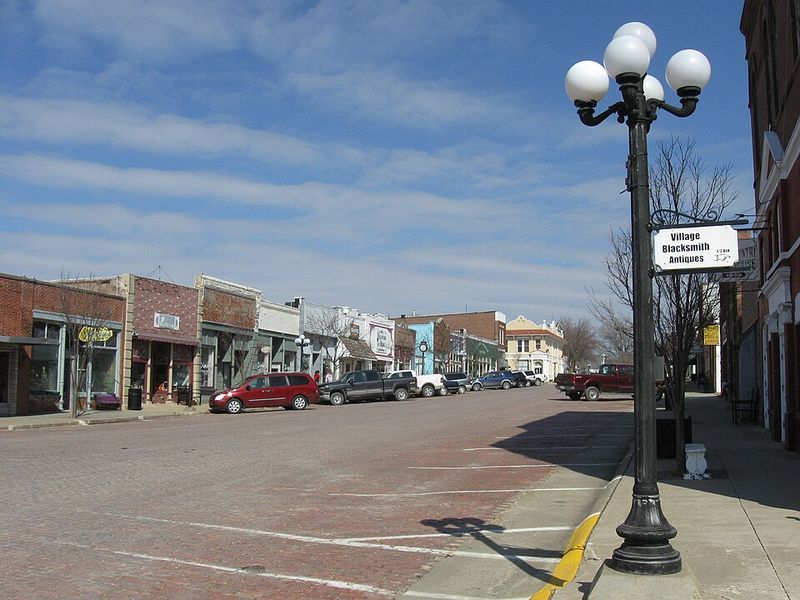
Walnut calls itself Iowa’s Antique City, and its original brick streets, laid in 1915, fit that identity almost too perfectly. The city highlights the pavement as a key feature of the downtown’s historic appearance, and it is easy to see why once you are standing in the middle of it.
Traditional storefronts line both sides of the street, and the combination of old buildings and old pavement creates a visual consistency that newer commercial districts spend enormous amounts of money trying to replicate. In Walnut, it happened organically and has been maintained ever since.
Antique hunters who come for the shops often end up spending as much time looking at the streetscape as they do browsing the merchandise. That is a genuine compliment to a small Iowa town that kept its original infrastructure when many larger cities did not.
12. Elm Street, Marion, Kansas
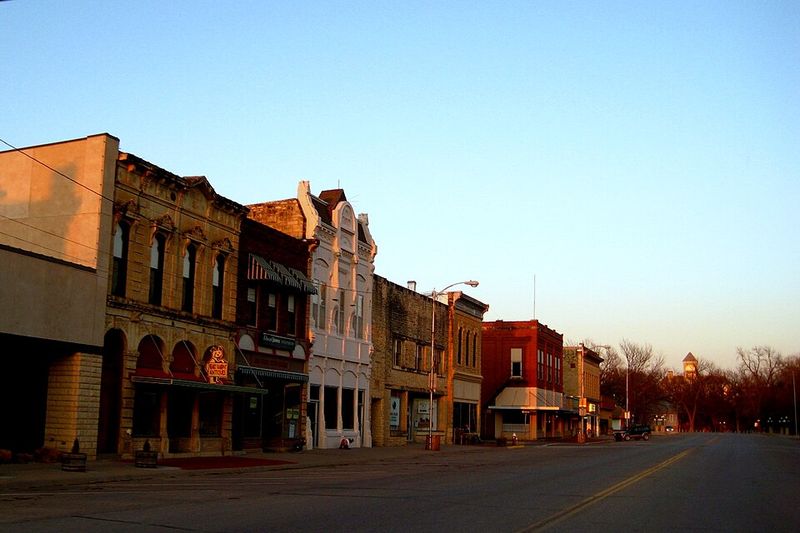
Marion once had a more extensive network of brick roads, and while much of that original pavement has been lost over the years, Elm Street stands as a documented example of what the city’s streets once looked like across a much wider area. The city’s own historical records specifically identify this street as an original brick road that remains fully intact.
That level of local documentation matters because it moves the surviving pavement from the category of interesting detail into the category of verified historical record. Marion did not just happen to keep a brick street.
The city knows which one it kept and why it matters.
Residents from generations past would recognize Elm Street immediately. That kind of continuity is rare in a country that has spent more than a century aggressively modernizing its infrastructure, often at the direct expense of the material beneath it.
13. Heritage Park Brick Street, Grafton, West Virginia
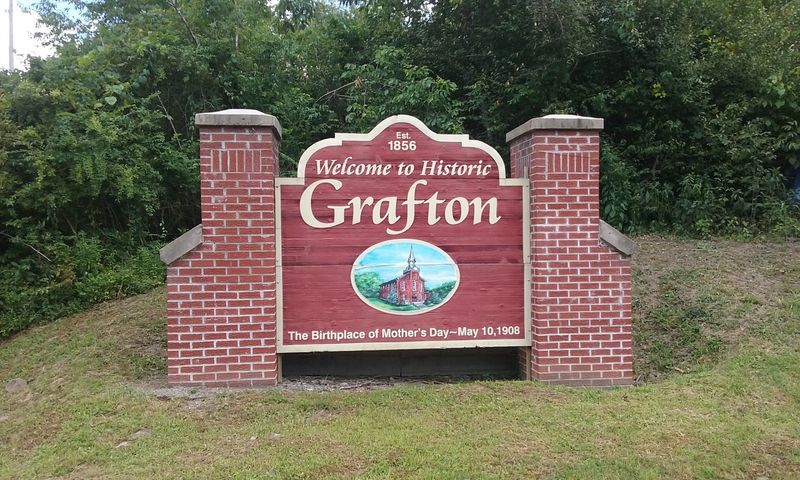
Grafton is best known for its railroad history, and the city’s connection to that era is well documented and widely celebrated. What gets less attention is the small section of original brick pavement near Heritage Park that adds a road-building chapter to the same story.
West Virginia University Extension specifically identifies the roadway adjacent to the historic caboose as one of Grafton’s few remaining original brick streets. That geographic detail matters because it places the surviving pavement within a cluster of railroad artifacts and classic downtown architecture, rather than leaving it isolated on a block with no historical context.
The combination of rail history, period buildings, and original brick pavement gives this Appalachian community a compact but genuinely layered portrait of the transportation networks that shaped everyday life here. Small details like this one tend to reward the visitors who notice them.
14. Brown Street Historic District, Iowa City, Iowa
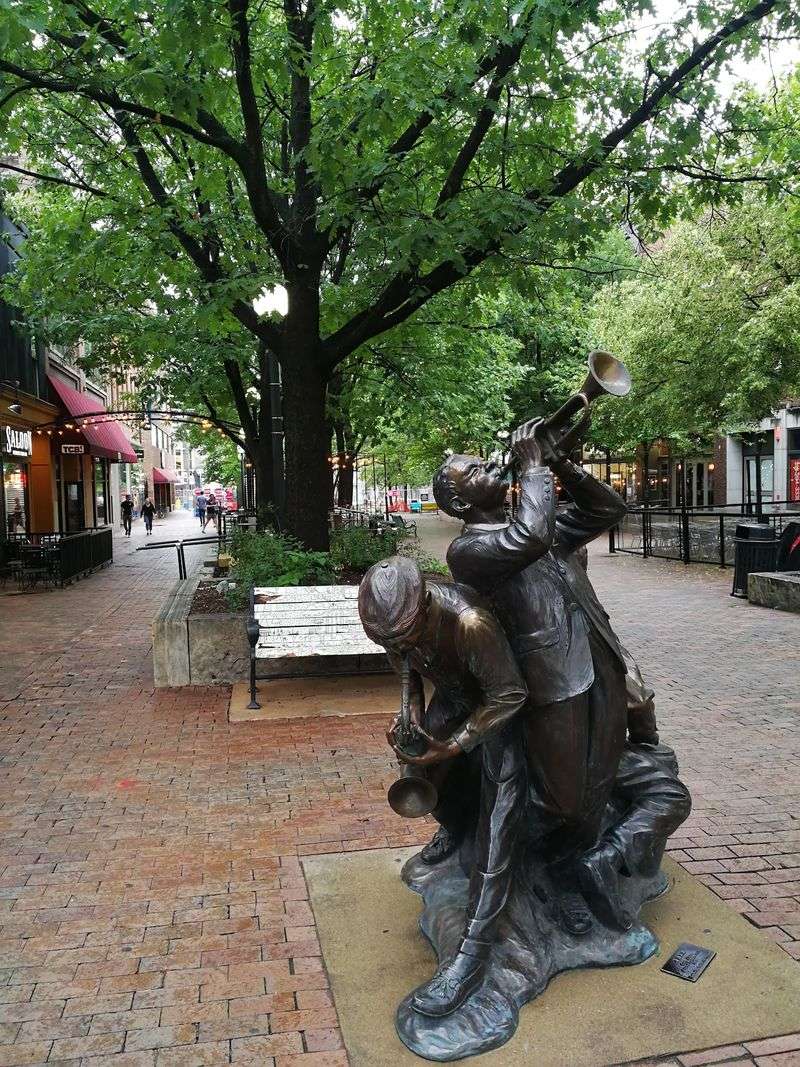
Iowa City’s Northside is home to one of the more carefully managed collections of historic brick streets in the Midwest. The Brown Street Historic District is the standout example, with city preservation documents specifically calling out intact brick streets as a defining characteristic of the neighborhood’s overall character.
Managing original brick pavement in a city with a major university and steady traffic requires active effort, not just passive neglect avoidance. Some of Iowa City’s historic brick streets have been carefully rebuilt or upgraded over the years to handle modern vehicle loads without losing their original material or visual identity.
That ongoing investment reflects a community that treats its historic streetscape as infrastructure worth maintaining rather than a heritage feature worth photographing once and then ignoring. The Northside bricks have benefited from that attitude, and the neighborhood looks better for it.
15. Warren Brick Streets, Warren, Arkansas

Warren may have the most thoroughly documented surviving brick street network in the entire country. Portions of Cedar, Myrtle, Chestnut, First, Walnut, Elm, and Cypress streets all retain original pavement laid in 1927, totaling nearly 5,000 feet of historic roadway across the city.
The construction details are specific enough to be genuinely interesting. The bricks, typically measuring 4 by 8.5 inches and approximately 2 inches thick, were laid in a running-bond pattern along the length of each street, then switched to a diamond pattern at intersections to help keep the bricks locked in position under turning vehicle loads.
The streets are 36 feet wide with 2-foot concrete gutters and curbing.
Listed on the National Register of Historic Places in 2007, these streets are also part of the Warren Commercial Historic District. Driving through them is a direct, unmediated encounter with 1920s road-building craft.
Share this story