Europe is packed with places that make your jaw drop and your camera work overtime. From ancient stone circles built before the pyramids to soaring Gothic cathedrals still under construction today, the continent holds some of the most jaw-dropping landmarks ever created by human hands.
Whether you are planning your first European trip or your tenth, knowing what makes each landmark special helps you get so much more out of your visit. Get ready to explore 17 iconic spots that have been stopping people in their tracks for centuries.
Eiffel Tower, Paris, France
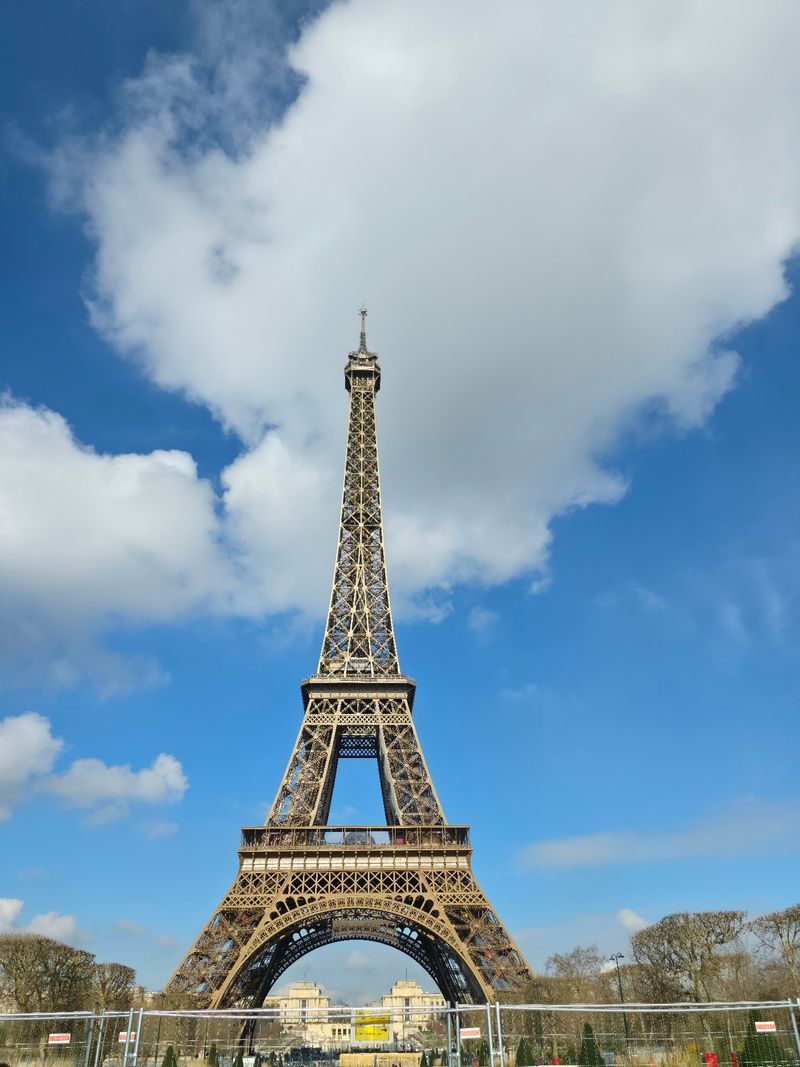
Nobody wanted it at first. When Gustave Eiffel proposed his iron tower for the 1889 World’s Fair, Parisian artists and writers signed a public petition calling it an eyesore.
Today, roughly seven million people visit it every year, making it one of the most visited paid monuments on Earth.
Built to celebrate the centennial of the French Revolution, the tower stood 300 meters tall and held the title of world’s tallest structure for 42 years. Antennas added later for radio and TV broadcasting pushed its height to 330 meters in 2022.
That practical upgrade is a big reason the city never tore it down after the fair ended.
Visiting at night is a completely different experience. Every evening after dark, 20,000 LED bulbs create a sparkling light show for five minutes every hour on the hour.
The top floor observation deck offers views stretching up to 70 kilometers on a clear day, so bring your best zoom lens and a little patience for the ticket line.
Colosseum, Rome, Italy
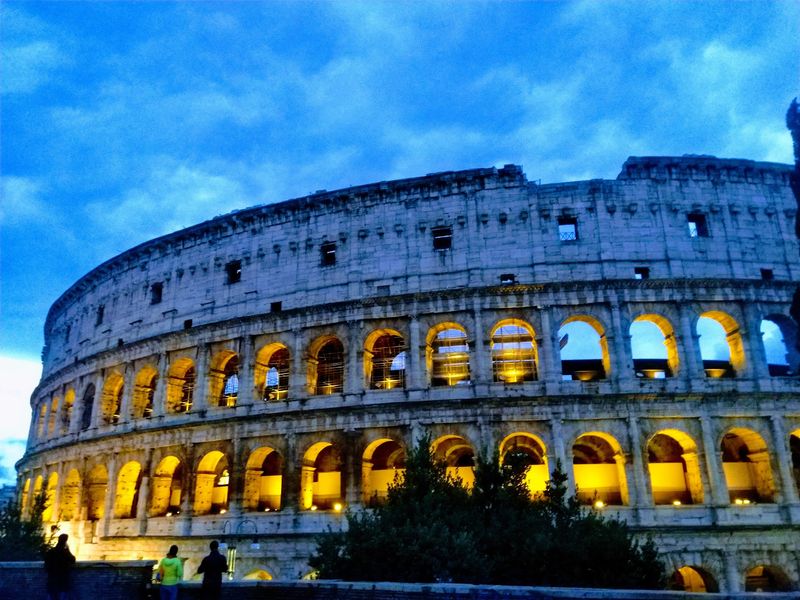
Imagine 50,000 roaring Romans packed into a single oval stadium watching gladiators battle lions below. That was a regular Tuesday at the Colosseum during ancient Rome’s height.
Officially called the Flavian Amphitheatre, this massive structure was inaugurated by Emperor Titus in A.D. 80 with 100 straight days of spectacles.
What most visitors miss is the incredible engineering hidden underground. A network of tunnels, trapdoors, and wooden elevators allowed animals and fighters to appear suddenly on the arena floor as if by magic.
Dozens of lifts powered by hundreds of workers could raise a full-grown lion from the basement in seconds.
After the fall of Rome, the Colosseum was used as housing, a church, a cemetery, and even a quarry for building materials. That recycling explains why roughly two-thirds of the original structure is missing today.
Still, what remains is extraordinary. A visit to the underground chambers is especially worth booking in advance, since those tickets sell out fast and the tunnels give a completely different perspective on the building’s genius.
Sagrada Familia, Barcelona, Spain
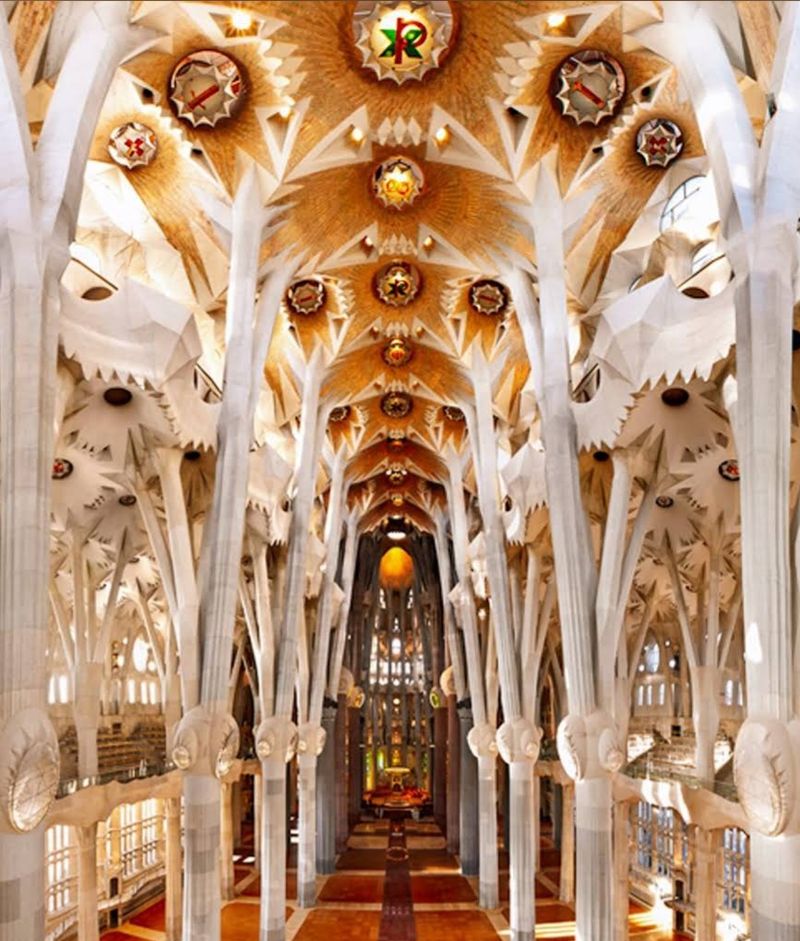
Construction started in 1882 and the building still is not finished. That fact alone makes Barcelona’s Sagrada Familia unlike any other major landmark in Europe.
Antoni Gaudi took over the project in 1883 and completely reinvented it, turning a straightforward Neo-Gothic church into something that looks like it grew out of the earth rather than being built on top of it.
Gaudi spent over 40 years working on the basilica and devoted his final years almost entirely to it. He died in 1926 after being struck by a tram, leaving behind detailed drawings, scale models, and a team of devoted architects to carry his vision forward.
Modern technology, including 3D modeling and computer-aided design, now helps builders interpret his complex geometric plans.
Walking inside feels like standing in a stone forest. Branching columns spread toward a canopy of geometric skylights, flooding the interior with colored light that shifts throughout the day.
The building is expected to be completed around 2026, marking the centenary of Gaudi’s death. Booking tickets well in advance is absolutely necessary since entry slots fill up weeks ahead during peak travel season.
Acropolis of Athens, Greece
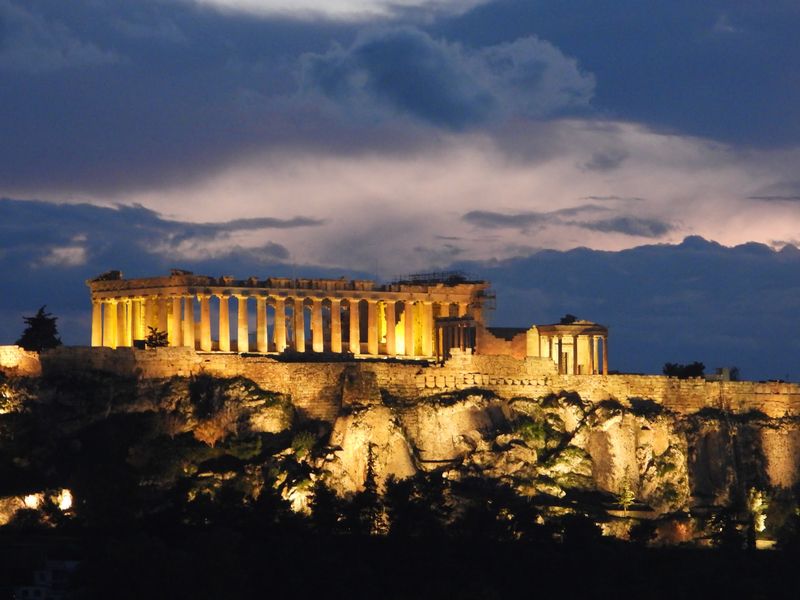
Few places on Earth carry the weight of history the way this rocky hilltop does. Rising above modern Athens, the Acropolis was rebuilt in the fifth century B.C. under the statesman Pericles after Persian forces burned the earlier temples.
What emerged became one of the most influential architectural achievements in all of human history.
The Parthenon is the star of the show, a temple dedicated to the goddess Athena with 46 outer columns still standing after 2,500 years. Architects Ictinus and Callicrates used subtle optical tricks in its design, including slightly curved surfaces and columns that lean inward, to make the building look perfectly straight from a distance.
Without those tricks, the structure would appear to bow outward under its own weight.
The surrounding complex also includes the elegant Erechtheion, famous for its porch supported by six sculpted female figures called caryatids. The best time to visit is early morning when crowds are smaller and the light on the marble is spectacular.
A combined ticket covers several nearby archaeological sites and offers solid value if you plan to spend a full day exploring ancient Athens.
Stonehenge, Wiltshire, England
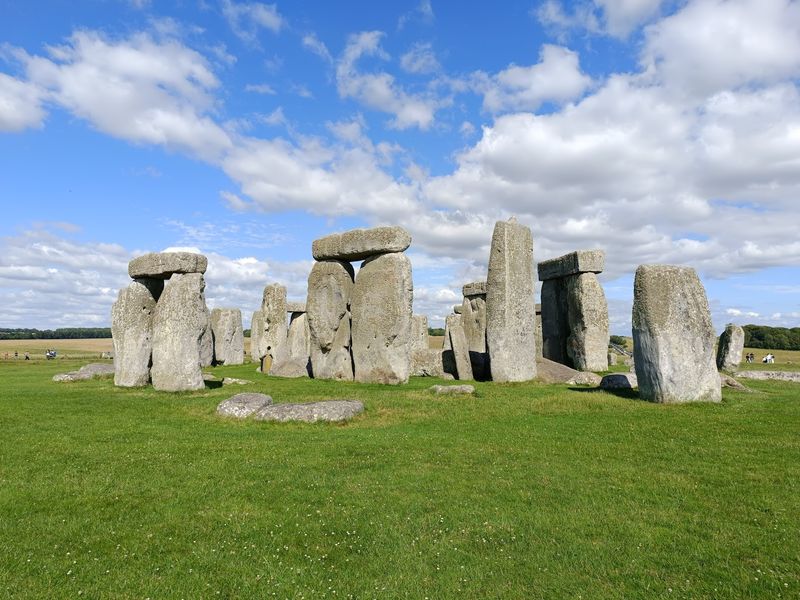
Stonehenge was already ancient when the Egyptian pyramids were being built. The first earthworks at this site date back to around 3000 B.C., and the famous stone circle was erected around 2500 B.C.
That means people have been puzzling over its purpose for roughly 4,500 years, and archaeologists still cannot agree on a definitive answer.
What makes the construction even more mind-bending is the logistics. The smaller bluestones were transported from the Preseli Hills in Wales, more than 150 miles away, while the enormous sarsen stones came from Marlborough Downs, about 25 miles north.
The builders shaped these massive blocks with joints similar to woodworking techniques, fitting them together without metal tools or wheels.
The monument aligns almost perfectly with the midsummer sunrise and midwinter sunset, strongly suggesting astronomical and ceremonial purposes. Stonehenge is also just one part of a much larger prehistoric landscape filled with burial mounds, processional avenues, and other ancient features.
The visitor center does a great job of providing context before you approach the stones, and the audio guide adds fascinating detail that you would otherwise walk right past.
Neuschwanstein Castle, Bavaria, Germany
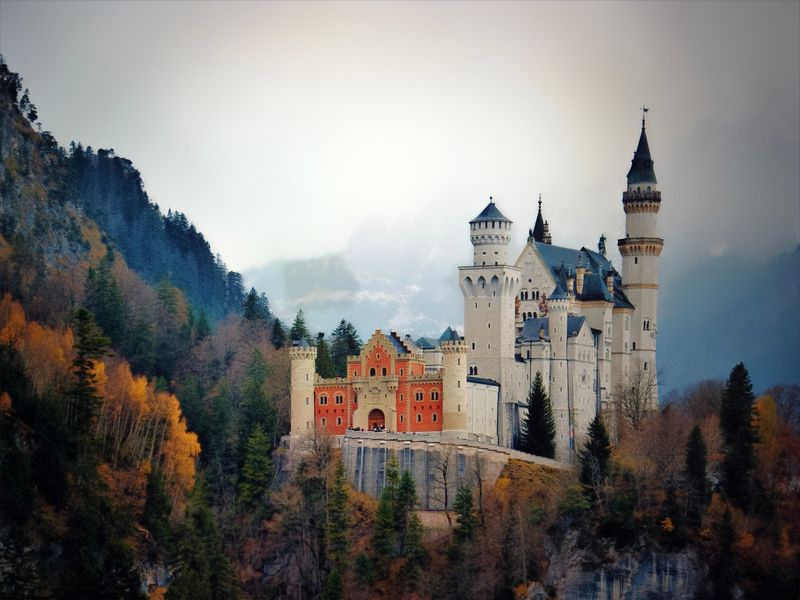
Neuschwanstein looks like it belongs in a fairy tale, which is exactly what King Ludwig II intended when he started building it in 1869. Walt Disney reportedly used this Bavarian castle as direct inspiration for Sleeping Beauty’s castle, and the resemblance is unmistakable.
The twist? Neuschwanstein is not actually medieval at all.
Ludwig II was a 19th-century king obsessed with medieval legends, particularly the operas of Richard Wagner. He designed the castle as a personal tribute to that imagined world, commissioning theatrical set designers rather than traditional architects to help plan its interiors.
The result is a building that looks ancient on the outside but contained modern luxuries for its time, including running water and a central heating system.
Ludwig never saw his dream completed. He died under mysterious circumstances in 1886 just weeks after being declared unfit to rule, with construction still ongoing.
The castle was opened to the public almost immediately after his death, and it has been drawing visitors ever since. The Marienbrücke bridge nearby offers the most photographed view of the castle from above, though the walk there is steep and the bridge gets extremely crowded in summer.
Alhambra, Granada, Spain
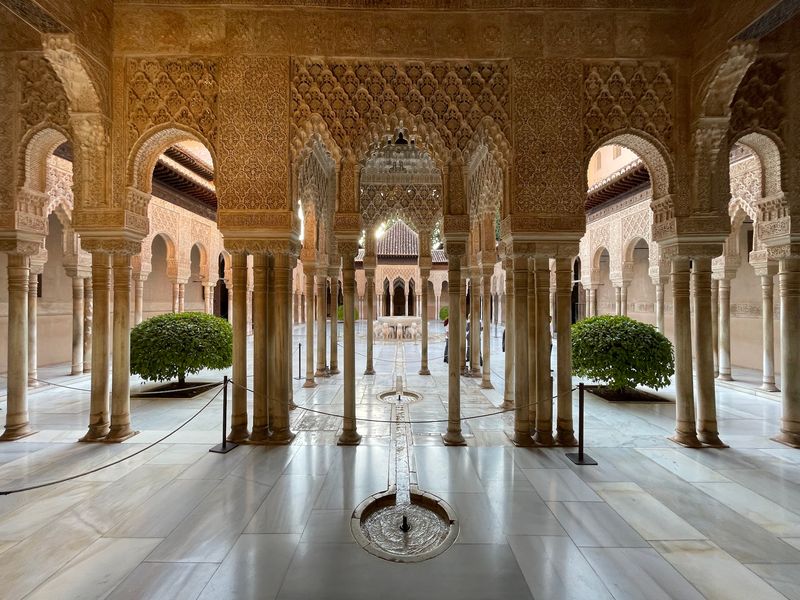
Stepping into the Alhambra’s Nasrid Palaces feels like walking into an elaborate geometric daydream. Every surface, from the honeycomb-like muqarnas ceilings to the endlessly repeating tile patterns, was designed with mathematical precision by Moorish craftsmen during the 14th century.
The sheer density of detail is almost overwhelming in the best possible way.
The complex served as the royal seat of the Nasrid dynasty, the last Muslim rulers of the Iberian Peninsula. Muhammad I began developing the site in the 13th century, but the palaces reached their peak splendor under Yusuf I and Muhammad V.
Water channels, reflecting pools, and fountains were woven throughout the design, making the palace feel cool and alive even during hot Andalusian summers.
After the Christian conquest of Granada in 1492, Spain’s new rulers moved in and later added a Renaissance palace right in the middle of the complex. That unexpected combination of Islamic and Renaissance architecture in one place makes the Alhambra genuinely unique.
Tickets must be booked weeks or even months in advance, especially for the Nasrid Palaces, since entry is timed and strictly limited to protect the fragile interiors.
Mont-Saint-Michel, Normandy, France
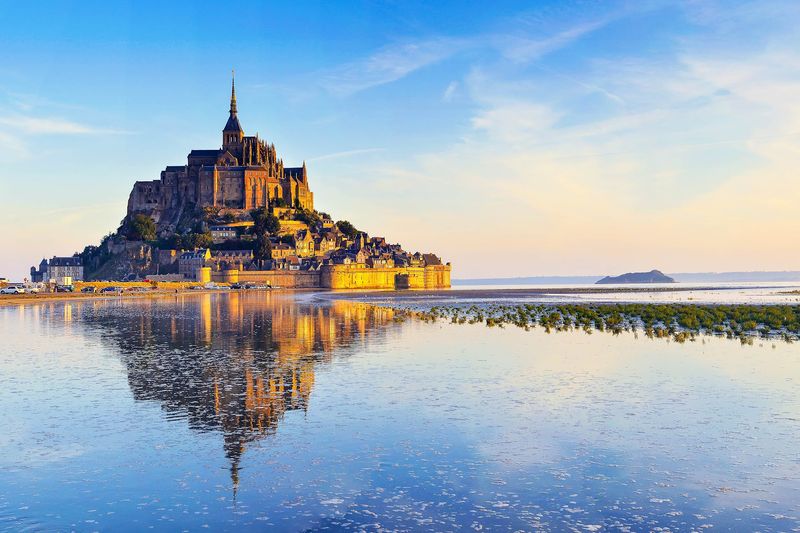
At high tide, Mont-Saint-Michel becomes a true island, completely surrounded by water and looking like something a fantasy novelist invented on a particularly inspired afternoon. At low tide, the sea retreats to reveal vast sandy flats that visitors can cross on guided walks.
The tidal range here is among the largest in Europe, sometimes reaching 14 meters.
Medieval builders faced an extraordinary challenge on this tiny rock. With almost no flat land available, they stacked the monastery buildings vertically up the hillside over several centuries.
The crown jewel is La Merveille, a 13th-century Gothic complex built right into the north face of the mount, containing halls, a cloister, and a refectory arranged across three dramatic levels.
The site has been a pilgrimage destination since the eighth century and served as a prison after the French Revolution, holding notable political prisoners for decades. A major engineering project completed in the 2010s removed the old road causeway and replaced it with a bridge-like structure, restoring the natural water flow around the mount.
Arriving at dawn before the tour buses pull in rewards you with an almost otherworldly quiet that makes the experience genuinely unforgettable.
Big Ben and the Palace of Westminster, London, England
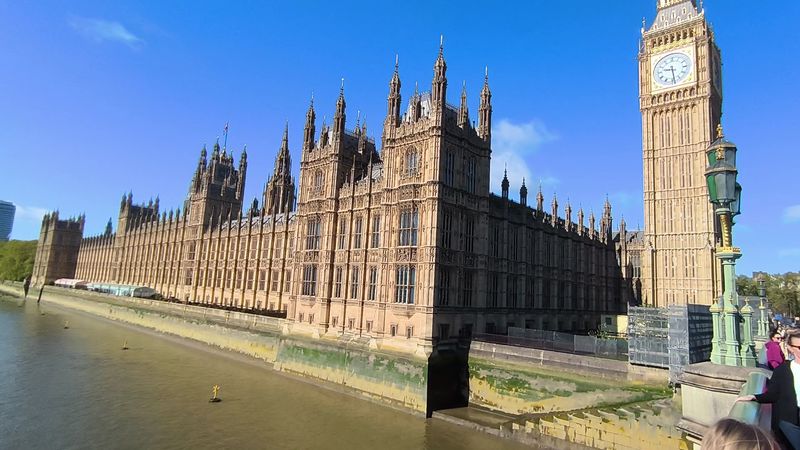
Technically speaking, Big Ben is a bell, not a tower. The Great Bell first rang out in 1859, and its deep, resonant bong became so famous that people started calling the whole tower by the bell’s nickname.
The tower itself is officially named Elizabeth Tower, a title it received in 2012 to mark Queen Elizabeth II’s Diamond Jubilee.
The Palace of Westminster surrounding it is not as old as it looks. A catastrophic fire in 1834 destroyed most of the original medieval palace, and construction of the replacement began in 1840.
Architect Charles Barry designed the overall structure, while Augustus Welby Pugin poured extraordinary energy into every Gothic detail, from the wallpaper to the coat hooks. Pugin reportedly worked himself to exhaustion on the project.
Westminster Hall is the one major survivor from the medieval palace, with a stunning hammer-beam oak roof that has stood since 1399. A years-long conservation project on Elizabeth Tower wrapped up in the early 2020s, restoring stonework, gilding, and the famous clock faces.
Viewing the building from the South Bank of the Thames at night, when everything is lit up, is one of London’s genuinely free and spectacular experiences.
Leaning Tower of Pisa, Tuscany, Italy
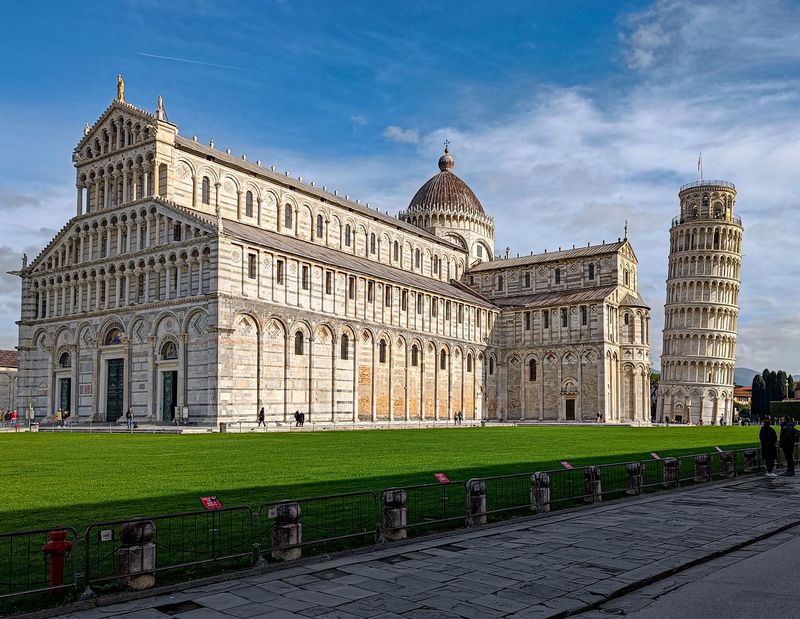
Here is a building that became world-famous because of a construction mistake. The Leaning Tower of Pisa started tilting during construction in the 12th century due to soft, unstable soil on one side of the foundation.
Builders noticed the problem early but kept going anyway, and the lean gradually worsened over the following centuries.
The tower is actually just the cathedral’s freestanding bell tower, or campanile, in the larger Piazza dei Miracoli. That square also contains the stunning cathedral itself, a circular baptistery, and the Camposanto, a monumental cemetery enclosed by Gothic arcades.
The whole ensemble is a masterpiece of Romanesque architecture and deserves far more attention than the famous tilting tower tends to get.
By the late 20th century, the lean had become dangerous enough that the tower was closed to visitors for over a decade while engineers stabilized it. They removed soil from the higher side to straighten it slightly, reducing the tilt from about 5.5 degrees to a safer 3.97 degrees.
Climbing the 294 steps to the top is a slightly dizzying experience because your body keeps trying to compensate for the angle, which makes it a genuinely unique physical sensation.
Schonbrunn Palace, Vienna, Austria
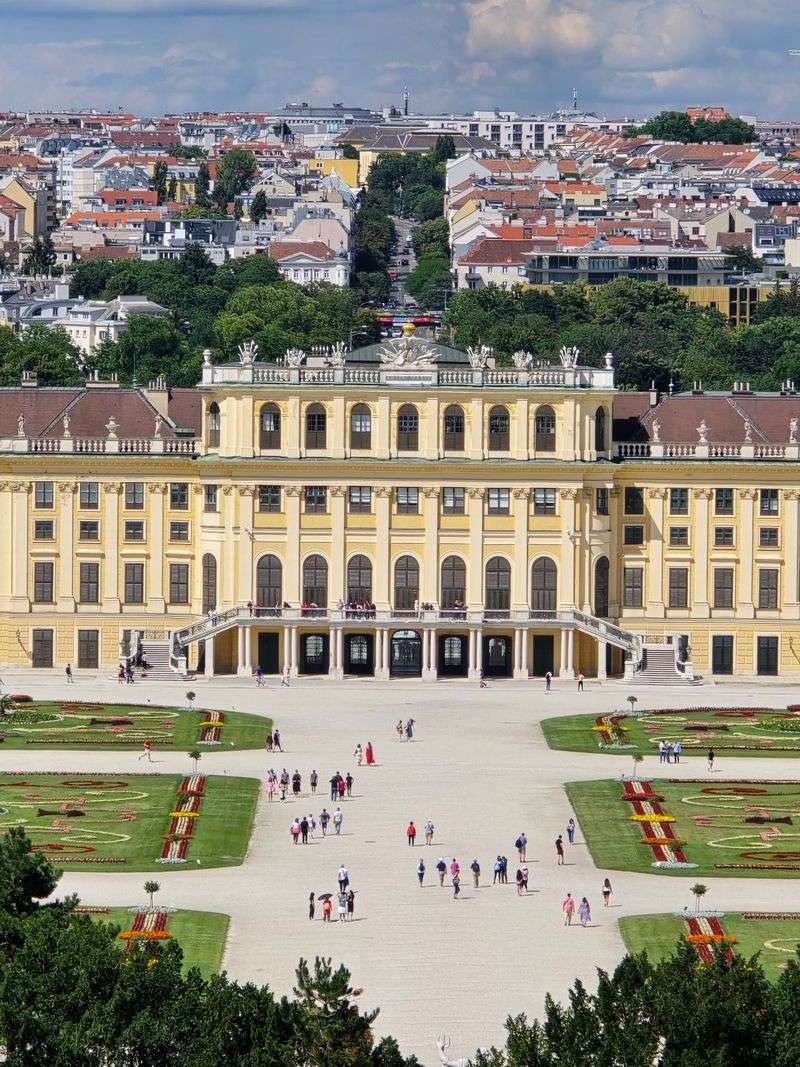
Yellow might not seem like the most imperial color, but Schonbrunn Palace pulls it off with remarkable confidence. The Habsburg dynasty’s summer residence in Vienna stretches across an almost unbelievable 1,441 rooms, making Buckingham Palace look modest by comparison.
Only 45 of those rooms are open to the public, and they are still enough to fill a solid half-day of exploring.
Empress Maria Theresa left the biggest mark on the palace, overseeing major renovations in the mid-18th century that gave it the Baroque grandeur visitors see today. The interiors mix rococo decoration, Chinese porcelain rooms, and lavish state apartments where historical decisions affecting all of Europe were made over coffee and paperwork.
Napoleon used the palace as his headquarters twice during his campaigns.
The gardens outside are just as impressive as the building itself. Formal parterres, sculpted fountains, and tree-lined avenues lead up the hill to the Gloriette, a colonnaded structure with a rooftop cafe offering panoramic views over Vienna.
The zoo within the palace grounds, established in 1752, is the oldest continuously operating zoo in the world. Visiting in the morning gives you the gardens largely to yourself before the afternoon crowds arrive.
Edinburgh Castle, Edinburgh, Scotland
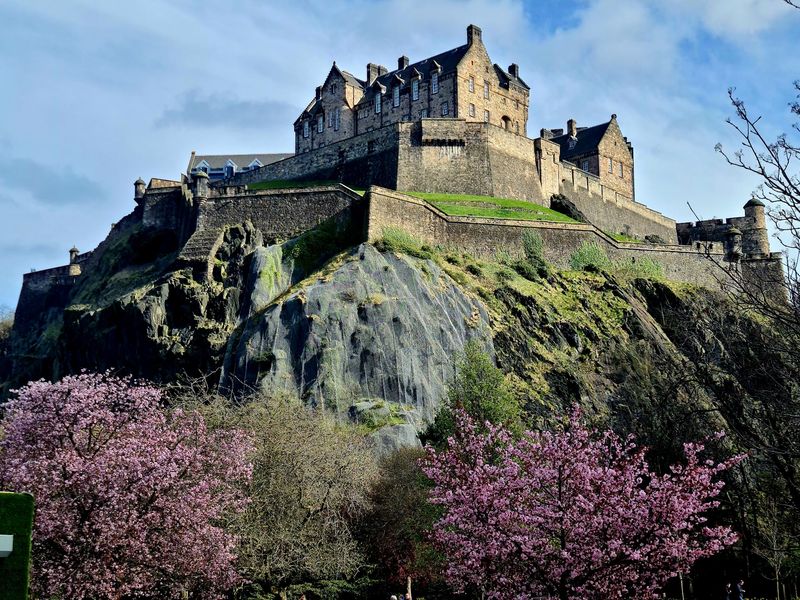
Edinburgh Castle sits on an ancient plug of volcanic rock that last erupted 350 million years ago, and the fortress on top of it has been causing trouble for invaders ever since. The rock’s sheer cliff faces on three sides made it one of the most naturally defensible positions in medieval Scotland, and the castle changed hands at least 26 times through siege and battle over the centuries.
Scottish kings and queens called this fortress home for generations. Mary Queen of Scots gave birth to the future King James VI of Scotland here in 1566, in a tiny room barely large enough to hold a modern sofa.
The castle later served as a military garrison, a prison for captured soldiers, and a treasury for Scotland’s royal regalia.
The Crown Jewels of Scotland, known as the Honours of Three Kingdoms, are kept here along with the Stone of Destiny, the ancient coronation stone used for Scottish and later British monarchs. The One O’Clock Gun, a cannon fired every day except Sunday at exactly 1 p.m., is a tradition dating back to 1861 that still startles unprepared tourists on a regular basis.
The Royal Mile stretching below makes the castle a natural starting point for exploring Edinburgh’s Old Town.
Prague Castle, Prague, Czech Republic
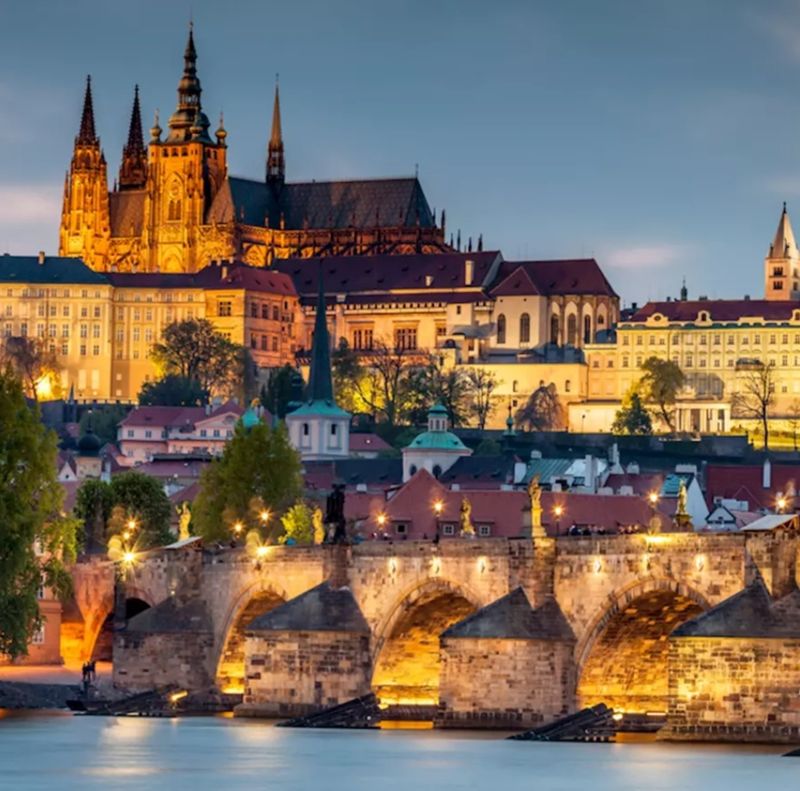
Prague Castle holds a record that often surprises visitors: it is officially recognized as the largest ancient castle complex in the world, covering around 70,000 square meters. Walking through its gates feels less like entering a single building and more like stepping into a small medieval city that never quite stopped evolving across twelve centuries.
Prince Borivoj founded the complex around A.D. 880, and early wooden structures gave way to stone churches and defensive walls within a few generations. Emperor Charles IV transformed everything in the 14th century, commissioning the Gothic St. Vitus Cathedral and upgrading the royal palace into something worthy of a Holy Roman Emperor.
The cathedral took nearly 600 years to complete, with its final sections finished only in 1929.
The castle complex contains three courtyards, multiple palaces, a basilica, a convent, gardens, and even a tiny lane called Golden Lane where craftsmen once lived in miniature houses built into the castle walls. Today those colorful little buildings contain small exhibitions and gift shops.
President of the Czech Republic still uses parts of the castle as an official residence, making Prague Castle one of the rare landmarks that functions simultaneously as a historic monument and a working seat of government.
Louvre Museum and Glass Pyramid, Paris, France
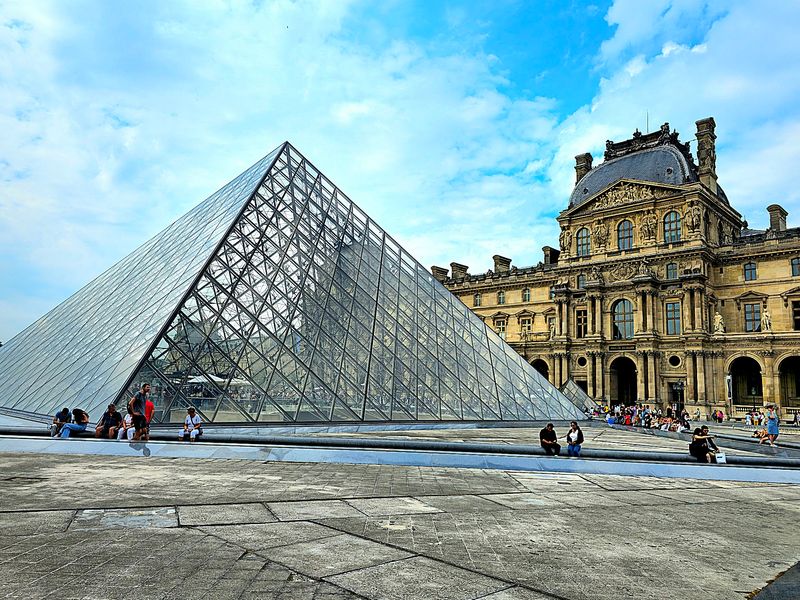
Before it held the Mona Lisa, the Louvre was a medieval fortress built around 1190 to defend Paris from Viking raids along the Seine. It then became a royal palace for centuries before French Revolutionary authorities turned it into a public museum in 1793.
That layered history means the building itself is as fascinating as anything hanging on its walls.
The glass pyramid that now defines the museum’s entrance was not welcomed warmly when it was proposed in the 1980s. President Mitterrand commissioned architect I.M.
Pei to solve the museum’s chronic overcrowding problem, and Pei’s solution was a bold modern entrance structure in the middle of the historic courtyard. When it opened in 1989, critics called it an insult to French heritage.
Within a few years, it had become one of Paris’s most beloved architectural landmarks.
The Louvre holds around 380,000 objects but displays only about 35,000 of them at any given time. Even at that reduced scale, you could spend a full week inside without seeing everything.
A smart strategy is to pick two or three specific galleries before you arrive and focus there rather than trying to cover the whole museum. The free audio guide app helps enormously with navigation in a building this size.
St. Peter’s Basilica, Vatican City
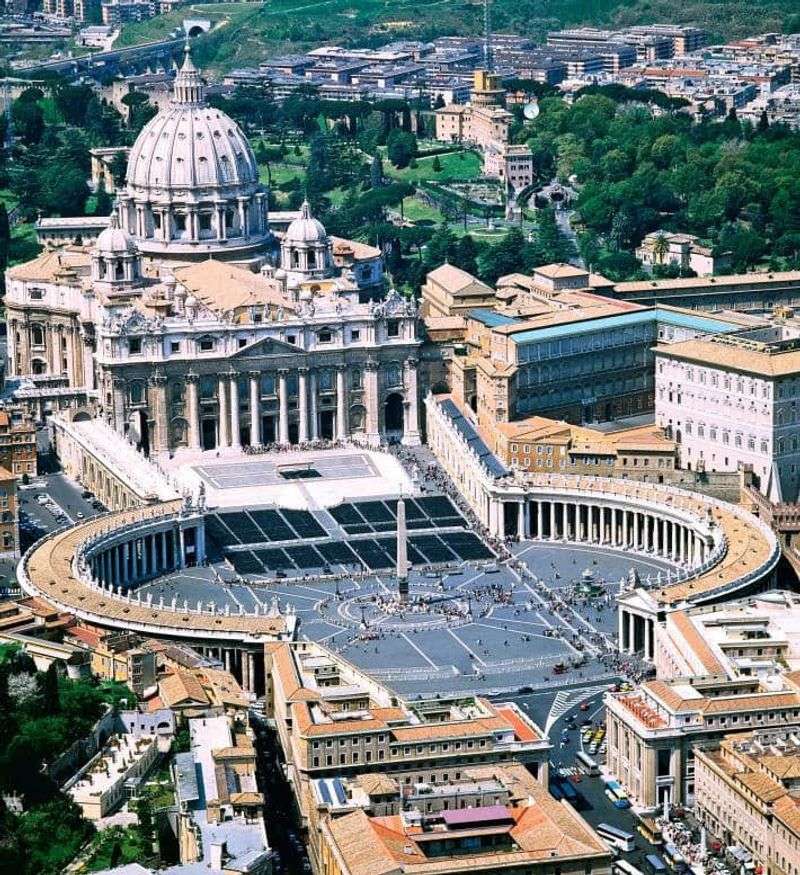
St. Peter’s Basilica took 120 years to build, involved more than a dozen architects, and consumed the financial resources of the Catholic Church so heavily that it contributed to the Protestant Reformation. Pope Julius II laid the foundation stone in 1506, but the basilica was not consecrated until 1626.
The building’s sheer ambition changed the course of Western architecture.
Michelangelo took over as chief architect at age 71 and redesigned the dome, which remains the tallest in the world at 136 meters. He never saw it completed, but his design was largely followed after his death.
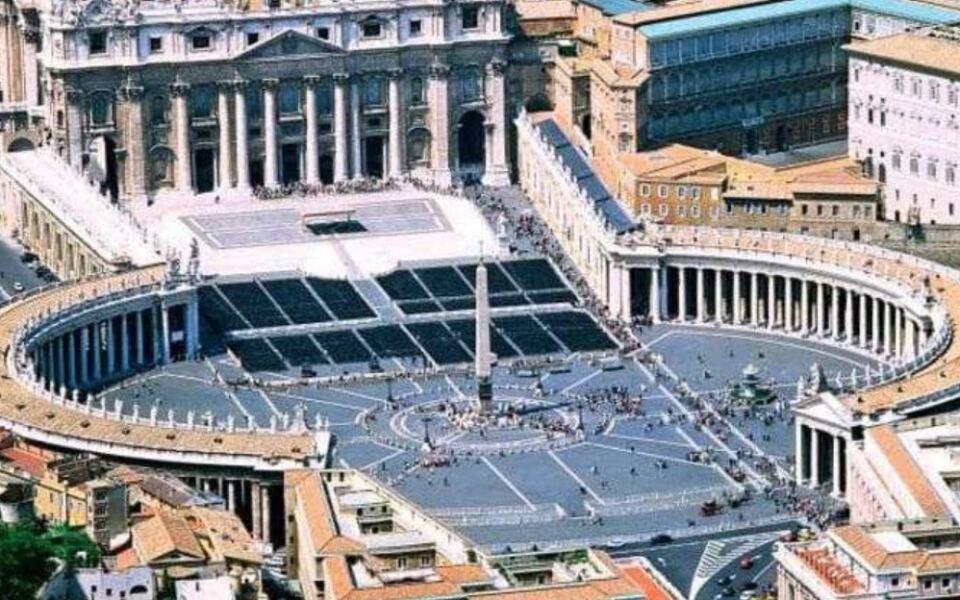
Carlo Maderno added the wide facade, and Gian Lorenzo Bernini created the sweeping oval piazza outside, framed by colonnades that Bernini described as the church’s arms reaching out to embrace the faithful.
The interior is so vast that it takes a moment for your eyes to calibrate to the scale. Marble inlays on the floor mark the lengths of the world’s other great cathedrals, showing how thoroughly St. Peter’s outpaces them all.
Climbing to the top of the dome is a genuinely rewarding challenge involving 551 steps and increasingly tight spiral staircases, but the view over Vatican City and Rome from the top is absolutely worth every step.
Pena Palace, Sintra, Portugal
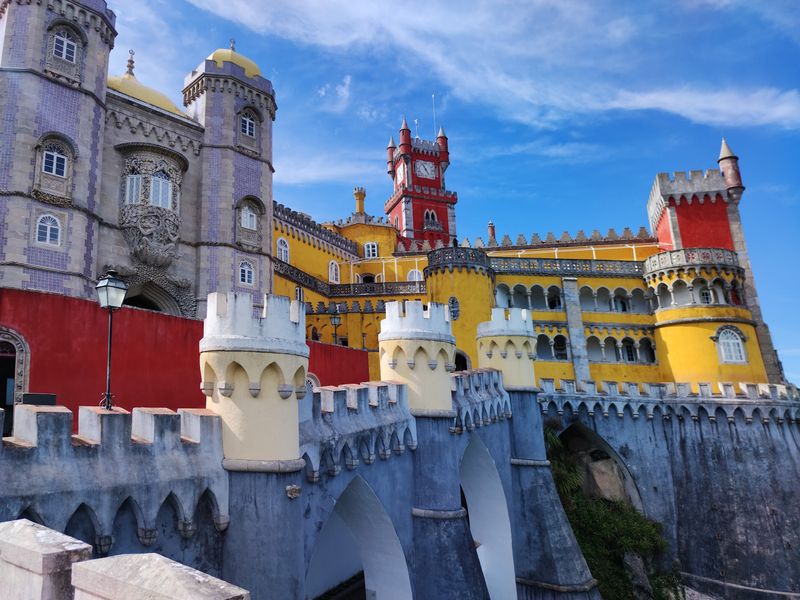
Pena Palace looks like someone took five different architectural styles, threw them into a blender, and then painted the result in the boldest colors available. Bright red and yellow walls meet Moorish arches, Manueline stone carvings, Gothic towers, and Renaissance domes in a combination that should not work but somehow absolutely does.
This is Romanticism with zero restraint and maximum personality.
The site began as a 16th-century monastery dedicated to Our Lady of Pena. The Lisbon earthquake of 1755 severely damaged the building, and it sat in ruins until King Ferdinand II bought the property in 1838.
Ferdinand was a passionate art lover with a taste for the dramatic, and he transformed the ruined monastery into a royal summer retreat that blended the surviving religious structures with a wildly imaginative new palace.
Ferdinand also landscaped an 85-hectare park around the palace, filling it with exotic trees and plants gathered from around the world. The park itself is worth at least two hours of wandering, with hidden paths, ponds, and follies tucked throughout the forest.
Sintra’s UNESCO-listed cultural landscape includes several other palaces and estates nearby, making it an easy full-day trip from Lisbon that rewards anyone willing to start early and stay late.
Charles Bridge, Prague, Czech Republic
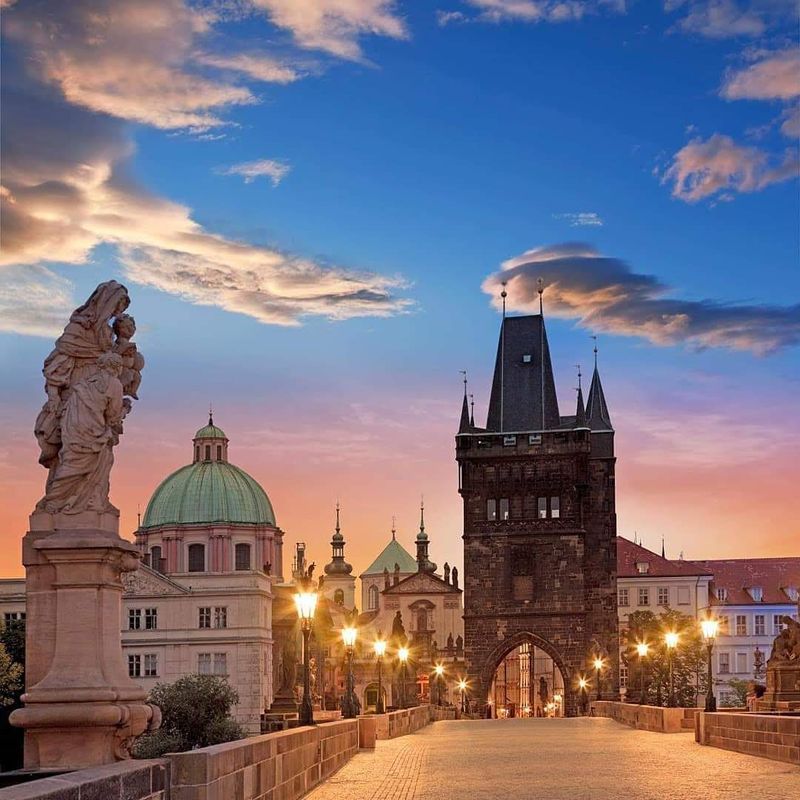
Charles Bridge has been connecting Prague’s neighborhoods since 1402, and for most of that time it was the only way to cross the Vltava River in the city. Emperor Charles IV ordered its construction in 1357 after severe flooding destroyed the earlier Judith Bridge, and legend says he laid the foundation stone at exactly 5:31 a.m. on July 9 to align with a favorable astrological configuration.
The bridge stretches 516 meters and is lined with 30 Baroque sculptural groups added between the late 17th and early 20th centuries. Most of the originals have been moved to indoor museums to protect them from pollution and weathering, replaced by high-quality replicas on the parapets.
The statue of Saint John of Nepomuk is the most famous, and rubbing the bronze relief at its base is said to bring good luck, judging by how polished it is from millions of hands.
Crossing Charles Bridge at sunrise is one of Prague’s genuinely magical experiences. The tourist crowds that pack the bridge shoulder to shoulder by mid-morning have not yet arrived, street musicians have not set up yet, and the early light over the river and castle is extraordinary.
Gothic towers at both ends frame the views perfectly, making almost every photograph taken from the bridge look professionally composed.
Share this story