Scattered across mountains, hilltops, and former battlefields, the Balkans hold some of the strangest and most striking monuments ever built. These concrete giants were created during the socialist era to honor wartime sacrifice, revolution, and political ideals that have since disappeared.
Many were once visited by millions, but today they stand cracked, stripped, or simply overlooked. Their stories reveal how quickly a society can change its mind about what deserves to be remembered.
Battle of Sutjeska Memorial, Bosnia and Herzegovina
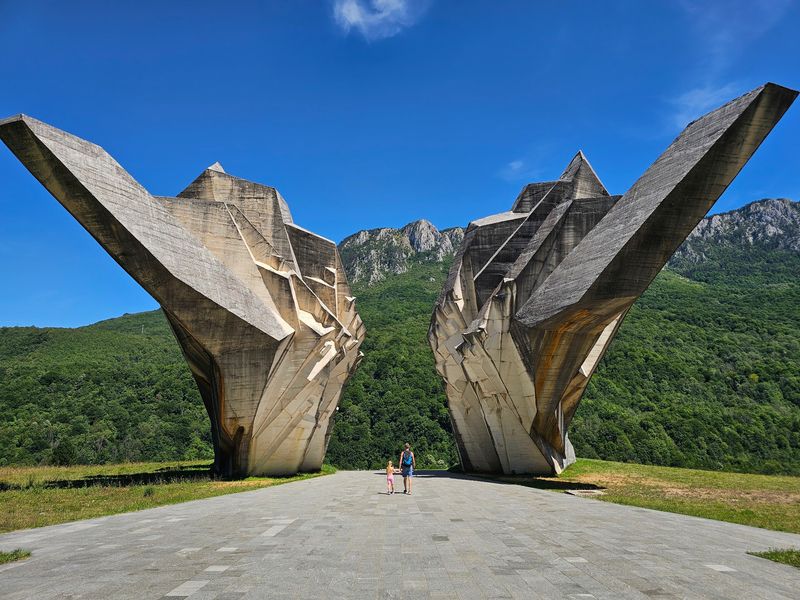
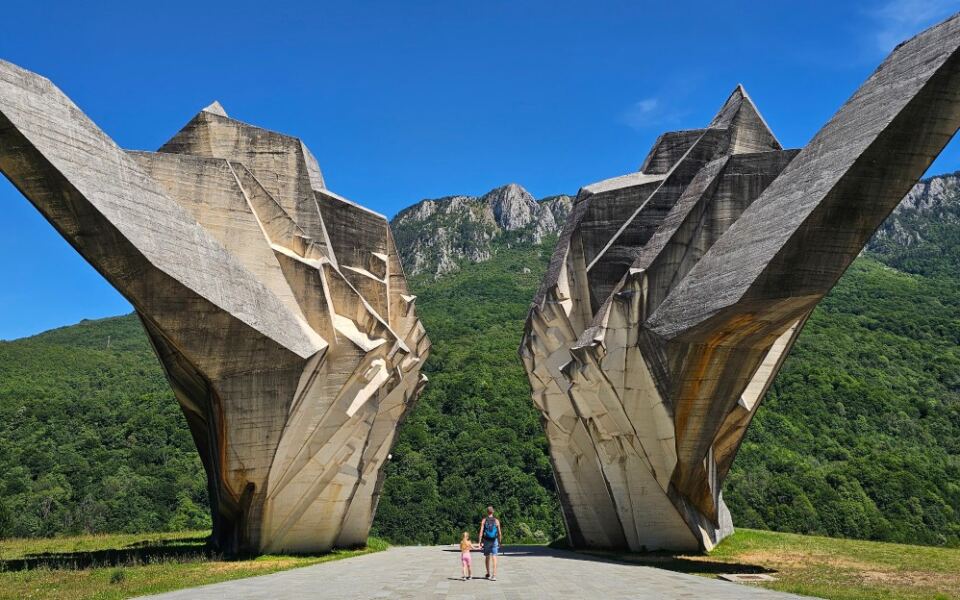
Standing in the Valley of Heroes, two fractured concrete wings reach toward the sky like something caught mid-explosion. Sculptor Miodrag Zivkovic designed the central monument, unveiled in 1971, as part of a sweeping memorial landscape that includes an ossuary, museum, and amphitheater.
The structures commemorate the Battle of Sutjeska, one of World War II’s most brutal partisan engagements fought in 1943.
Each wing stands roughly 19 meters high, making the composition visible from far down the valley. During Yugoslavia’s peak years, organized school groups and delegations traveled here from across the country.
The scale was deliberate: the architecture was meant to feel as overwhelming as the battle itself.
Today the site is legally protected within Sutjeska National Park, which actually helped preserve it better than many similar Yugoslav memorials. Rangers, park infrastructure, and continued visitor access kept the complex from falling into complete ruin.
It remains one of the most powerful surviving examples of Yugoslavia transforming an entire wartime landscape into living memorial architecture, where the forest, the river, and the concrete all work together to tell one enormous story.
Monument to the Revolution at Kozara, Bosnia and Herzegovina
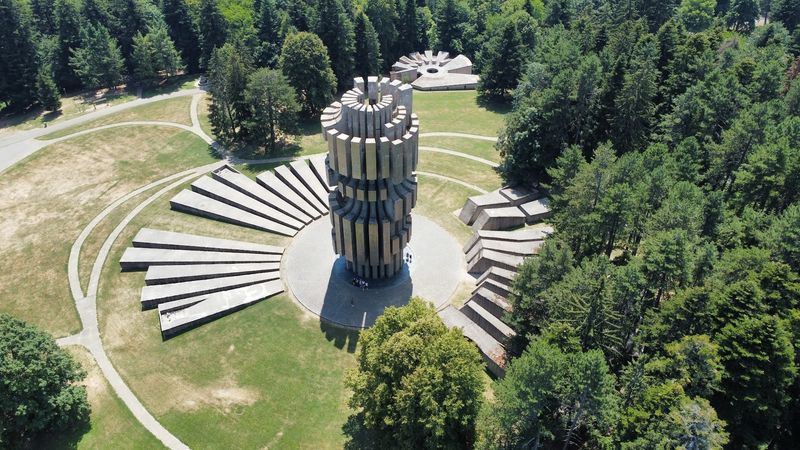
Forget marble generals on horseback. Dusan Dzamonja’s monument at Mrakovica chose a vertical cylinder of concrete fins over recognizable human figures, and the result is genuinely unforgettable.
Completed in 1972, the structure rises 33 meters within Kozara National Park and commemorates the wartime fighting and devastating civilian suffering connected to this region during World War II.
The surrounding memorial wall records 9,921 names of fighters killed in the area, while a museum preserves photographs, documents, and personal objects. Dzamonja conceived the concrete columns surrounding the central tower as a visual representation of enemy pressure closing in around Kozara.
That concept gives the whole structure a sense of tension that a conventional statue simply could not achieve.
Unlike many Yugoslav memorials left to deteriorate after 1991, Kozara remains integrated into an active national park with regular visitors. The park infrastructure provides a level of maintenance and oversight that isolated roadside memorials rarely receive.
Guided tours still explain the wartime context, connecting the abstract concrete forms back to real people and real suffering. For anyone curious about socialist memorial architecture at its most ambitious, Kozara is one of the best-preserved examples still functioning as originally intended.
Partisan Memorial Cemetery, Bosnia and Herzegovina
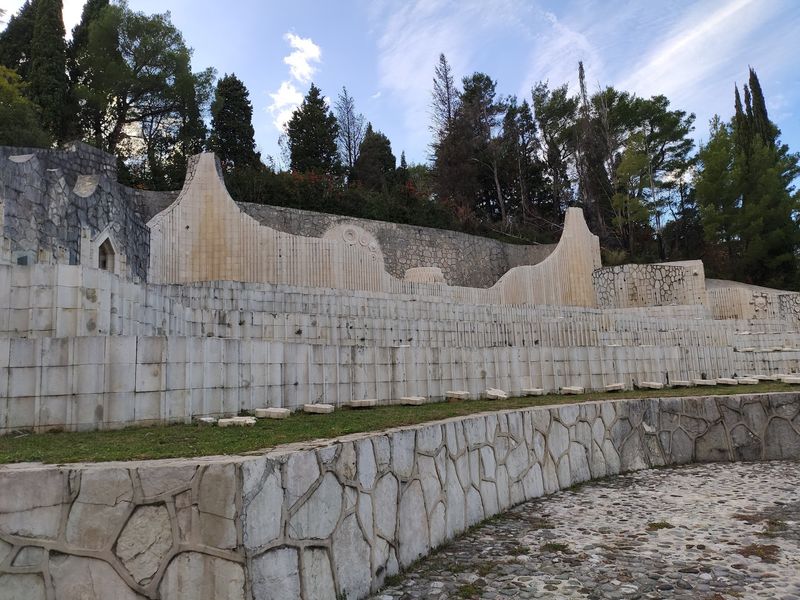
Bogdan Bogdanovic did not design a cemetery. He designed a ceremonial city of the dead, carved into a hillside in Mostar using thousands of limestone elements shaped by craftsmen from across the Adriatic coast.
Construction ran from 1959 to 1965, and the result looks less like a military burial ground and more like the ruins of an ancient civilization that never actually existed.
The terraced complex honors Partisan fighters from Mostar and was declared a National Monument of Bosnia and Herzegovina in 2006. That designation, unfortunately, did not prevent years of vandalism and neglect.
The destruction of hundreds of memorial plaques in 2022 shocked heritage specialists working to protect postwar commemorative sites across the region.
By 2026, restoration discussions were gaining momentum again, with some advocates pushing for inclusion in a broader UNESCO initiative covering Bogdanovic’s work across the former Yugoslavia. The site sits in an awkward political space: cherished by some as irreplaceable heritage, ignored or actively resented by others who associate it with a discredited political system.
That tension is precisely what makes it worth understanding. Few memorials in the Balkans tell a more complicated story about what happens to memory after the government that created it disappears.
Stone Flower at Jasenovac, Croatia
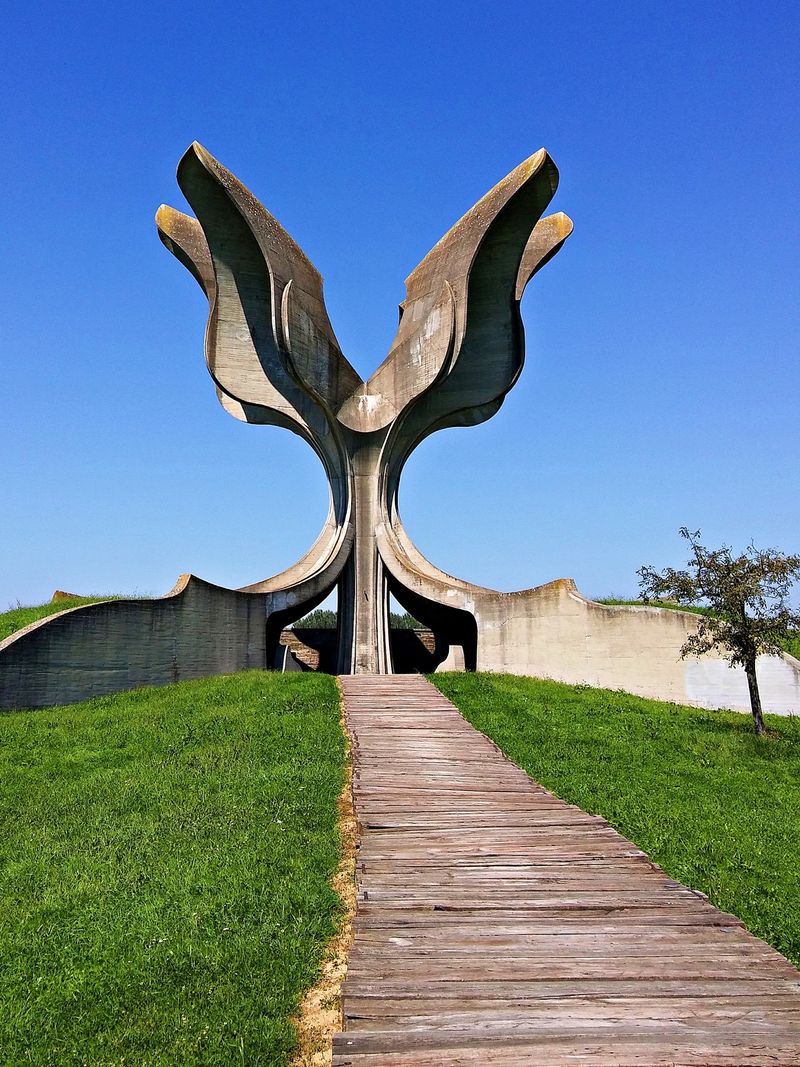
Some memorials shout. The Stone Flower at Jasenovac is quiet in a way that makes it louder than anything that shouts.
Architect Bogdan Bogdanovic designed the reinforced-concrete memorial, completed in 1966, deliberately avoiding military imagery or graphic depictions of suffering. The result is a six-part concrete form that opens upward like a flower while a crypt-like space below draws attention back toward the earth and the dead within it.
Bogdanovic explained the flower as an image of renewal: roots reaching toward the dead, the crown turning toward light. That layered symbolism was a conscious rejection of socialist-realist heroism.
Jasenovac was a concentration camp where enormous numbers of Serbs, Jews, Roma, and political prisoners were killed during World War II, and Bogdanovic felt that heroic figures would be dishonest to that history.
The memorial remains part of the active Jasenovac Memorial Site, where historical interpretation centers firmly on the victims rather than on the monument’s later fame within architectural circles. Visitors sometimes arrive expecting dramatic spectacle and find something quieter and stranger instead.
That strangeness is the point. The Stone Flower refuses to make atrocity look manageable, and that refusal has kept it one of the most emotionally honest memorials anywhere in Europe.
Monument to the Uprising at Petrova Gora, Croatia
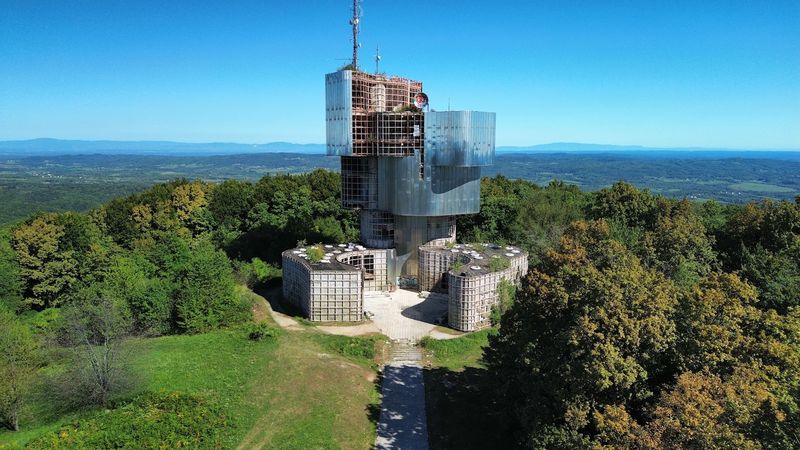
On a forested hilltop in Croatia sits a building that looks like it crash-landed from another decade entirely. Vojin Bakic’s Petrova Gora monument is clad in stainless-steel panels, giving it a reflective, almost liquid appearance that shifts dramatically as clouds move overhead.
Construction was completed in 1981 after an unusually compressed schedule, with architect Berislav Serbetic translating Bakic’s sculptural model into a structure large enough to house exhibition halls and observation decks.
During its operating years, the reflective exterior made the building appear to dissolve into the sky from certain angles, a genuinely strange optical effect for a concrete building in the middle of a forest. The monument commemorated the 1941 uprising in the Kordun and Banija regions of Croatia, honoring Partisan fighters who organized resistance against occupation forces.
After Yugoslavia’s collapse and the wars of the 1990s, substantial portions of the cladding were stripped and the interior gutted. What remains is a ruined shell of extraordinary architectural ambition, simultaneously a memorial to wartime sacrifice and an accidental monument to post-socialist neglect.
Photographers and architecture enthusiasts regularly make the hike up Petrova Gora specifically to document its deterioration. The building’s decay has become, somewhat ironically, its most-discussed feature.
Monument to the Revolution at Podgaric, Croatia
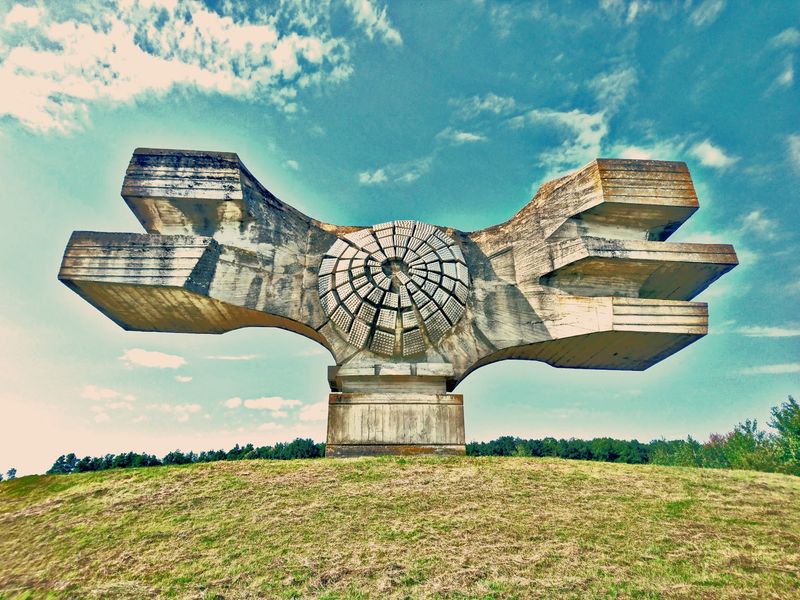
If you stumbled across the Podgaric monument without any context, your first guess might be a film set for a 1960s science-fiction movie. Sculptor Dusan Dzamonja created a roughly 10-meter-high and 20-meter-wide winged concrete structure centered on a circular form once faced with aluminum.
Josip Broz Tito himself unveiled it on September 7, 1967, which tells you how seriously Yugoslavia took this remote memorial in the Moslavina region.
The surrounding earthworks are just as deliberate as the concrete centerpiece. Burial mounds beside the approach contain remains associated with approximately 900 Partisans who died at a wartime field hospital operating in the area during World War II.
The landscape design by Vladimir Velickovic turns the entire hillside into a kind of outdoor theater focused on remembrance.
Seen purely as sculpture, the monument is one of Dzamonja’s most visually striking works, all curved tension and implied motion. Seen in context, it marks ground soaked in wartime loss.
That gap between appearance and meaning is exactly what makes Yugoslav abstract memorials so interesting to study. They were never meant to be pretty decorations.
They were meant to make you feel the weight of something enormous without spelling out every detail.
Kosmaj Partisan Monument, Serbia
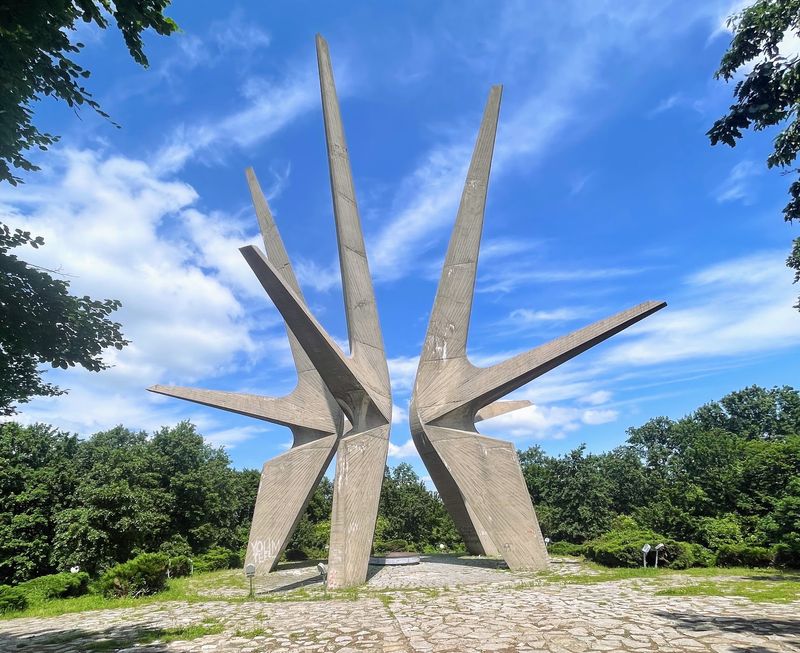
Five concrete arms reach upward from a mountain ridge outside Belgrade, forming a shape that looks simultaneously like a star, a crown, and an open hand. Sculptor Vojin Stojic and architect Gradimir Medakovic designed the Kosmaj monument, opened on July 2, 1971, exactly 30 years after the formation of the Kosmaj-Posavina Partisan Detachment.
The anniversary timing was deliberate: Yugoslav memorial culture loved precise historical symmetry.
Each of the five fins rises roughly 30 meters, creating a composition that changes dramatically depending on where you stand. From directly below, the arms frame a circle of sky.
From a distance through the trees, the structure reads as a single abstract form. That visual flexibility was a hallmark of the best Yugoslav memorial sculpture.
Official commemorations were still taking place at Kosmaj in 2026, which puts it in better shape than many comparable Serbian monuments. Outside Serbia, however, the site is far better known through photographs shared in online communities dedicated to Yugoslavia’s lost architecture than through any understanding of the wartime history it commemorates.
That disconnect between visual fame and historical knowledge is one of the more curious side effects of the internet’s love affair with abandoned socialist monuments.
Kadinjaca Memorial Complex, Serbia
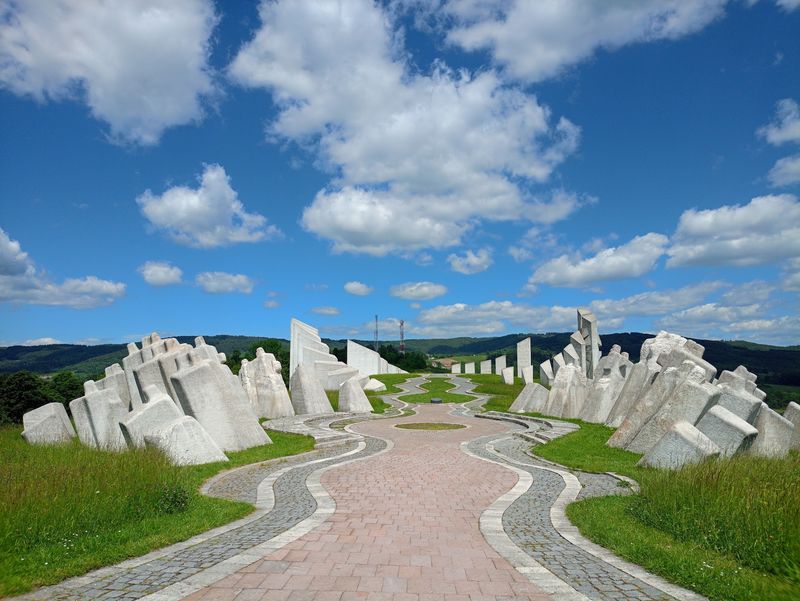
A crowd of nearly 100,000 people reportedly gathered on September 23, 1979, when Josip Broz Tito officially opened the Kadinjaca Memorial Complex near Uzice. That turnout gives you a sense of how seriously Yugoslavia treated its memorial culture.
Sculptor Miodrag Zivkovic spent years developing the complex to honor the Workers’ Battalion and other Partisan units who fought German forces here in November 1941, during some of the war’s earliest organized resistance.
Visiting Kadinjaca is not like seeing a single sculpture in a park. Visitors move through a sequence of sculptural fields and walls, building tension before arriving at enormous white concrete forms that appear to explode outward across the ridge.
The progression is theatrical and clearly intentional, designed to make the final arrival feel earned.
Serbia’s national tourism material still lists Kadinjaca among the country’s major 20th-century memorial parks, which reflects genuine ongoing recognition rather than simple nostalgia. The site connects to a real and dramatic moment in Yugoslav resistance history, when a lightly armed workers’ unit held off a much larger German force long enough to allow the broader Partisan movement to survive its most vulnerable early period.
That story deserves to be told, and Kadinjaca tells it with considerable architectural force.
Bubanj Memorial Park, Serbia
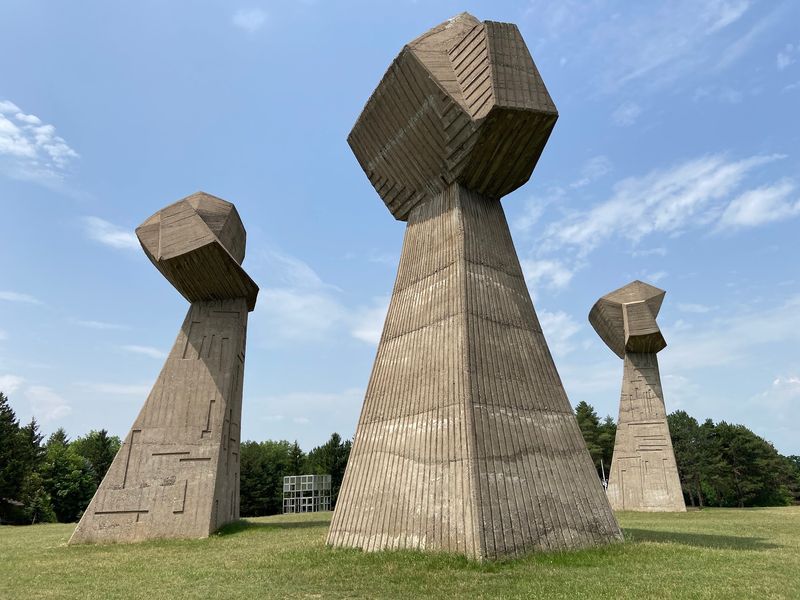
Three concrete fists punch upward from a hill outside Nis, and the gesture feels exactly as defiant as it was meant to. Croatian sculptor Ivan Sabolic designed the memorial, opened in 1963, on a site used by German occupation forces for mass executions during World War II.
The three fists represent a man, a woman, and a child, and together they symbolize the refusal to be erased from history.
The memorial’s meaning is inseparable from the nearby Crveni Krst concentration camp. Thousands of prisoners, including Serbs, Jews, Roma, resistance members, and others targeted by occupation authorities, were brought to Bubanj Hill and killed there.
The abstract fists make no attempt to reconstruct those killings visually, which was a deliberate artistic and ethical choice.
By avoiding graphic representation, Sabolic turned the site into a landscape of defiance rather than a documentation of atrocity. Visitors stand on the actual hill where executions took place, surrounded by trees and silence, with three enormous stone gestures overhead.
That combination of real geography and abstract form creates an emotional effect that a realistic sculpture probably could not achieve. Bubanj is not widely known internationally, but among Serbia’s postwar memorial sites it remains one of the most powerful.
Monument to the Executed Pupils and Teachers, Serbia
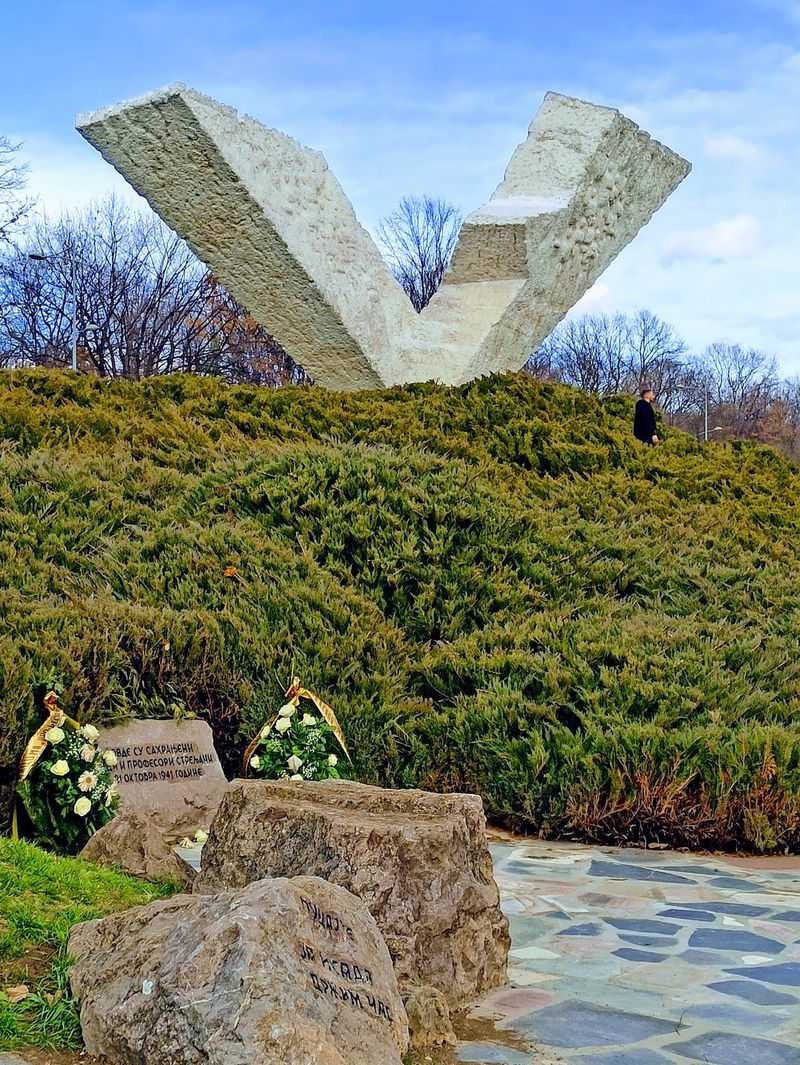
A white concrete bird with a broken wing stands in Sumarice Memorial Park, and once you know what it commemorates, you cannot look at it the same way twice. Sculptor Miodrag Zivkovic completed the work in 1963 to honor school pupils and teachers executed by German occupation forces in Kragujevac in October 1941.
Among the victims were children pulled directly from their classrooms.
The sculpture measures approximately 8 meters high and 16 meters wide. Stones carrying fragments of student messages surround the base, grounding the abstract form in specific human voices.
That combination of abstract shape and personal text is unusually affecting, turning a modernist sculpture into something closer to a conversation with the dead.
Sumarice is not a single monument but an open-air memorial environment spread across the execution landscape, with several works distributed through the park. Visiting means walking through the actual terrain where thousands of civilians were killed, which changes how every sculpture feels.
Serbia recognizes the complex as a major achievement of postwar commemorative architecture, and the park continues to draw visitors, school groups, and official commemorations. The broken-wing sculpture remains the emotional center of a site that refuses to let one of the war’s most heartbreaking episodes become a footnote.
Ilinden Monument, Makedonium, North Macedonia
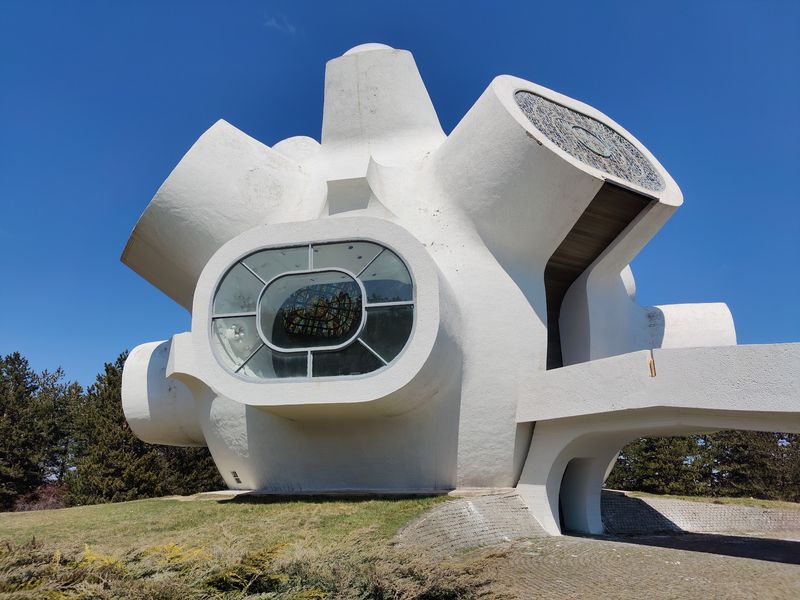
The Makedonium looks like something an architect designed after dreaming about spacecraft and medieval chapels simultaneously, and somehow it works. Designed by Jordan and Iskra Grabuloski, the roughly 25-meter spherical structure was inaugurated in Krusevo on August 2, 1974, a date chosen deliberately to coincide with the anniversary of the 1903 Ilinden Uprising against Ottoman rule.
The approach to the monument is carefully choreographed. Visitors first pass five broken chains, then move through a crypt containing 58 symbolic elements, before reaching an amphitheater and finally the dome itself.
Large stained-glass windows fill the interior with colored light, creating an atmosphere that feels somewhere between a religious space and a science museum.
The Makedonium connects two separate historical moments: the 1903 uprising and the 1944 foundation of the Macedonian republic within Yugoslavia. That dual reference gave the monument political usefulness across different eras, which may partly explain why it survived the post-Yugoslav period better than many comparable structures.
Unlike the ruined shells and stripped interiors of some former Yugoslav monuments, the Makedonium still operates as a functioning museum and visitor attraction. It is genuinely one of the most visually original memorial buildings in the entire Balkans, and it deserves far more international attention than it currently receives.
Mound of the Unbeaten, North Macedonia
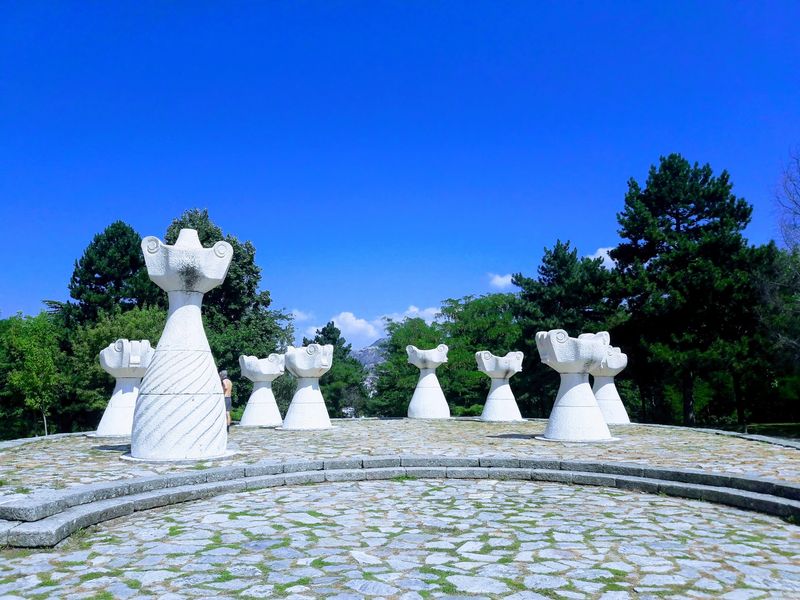
Bogdan Bogdanovic arrived in Prilep in 1961 with a vision that had nothing to do with socialist-realist heroes or triumphant bronze generals. The Mound of the Unbeaten, also called the Partisan Necropolis, is a collection of abstract stone forms arranged across a ceremonial landscape rather than a single towering centerpiece.
The shapes can resemble stylized urns, standing stones, or artifacts from a civilization that never quite existed.
That deliberate ambiguity was one of Bogdanovic’s signatures. He believed that memorial architecture should open toward interpretation rather than close it down.
By avoiding literal depictions, he created spaces where grief, memory, and imagination could coexist without one dominating the others. The monument honors resistance fighters from Prilep and sits within the city’s Park of the Revolution.
Jasenovac Memorial Site’s catalogue of Bogdanovic’s work identifies Prilep as one of his early Yugoslav memorial projects, predating his better-known works at Jasenovac and Mostar. Studying Prilep therefore offers a window into how his distinctive approach developed before it reached its most famous expressions.
The site is less visited and less photographed than Bogdanovic’s other works, which gives it a quieter, more contemplative atmosphere that actually suits his intentions rather well.
Barutana Memorial, Montenegro
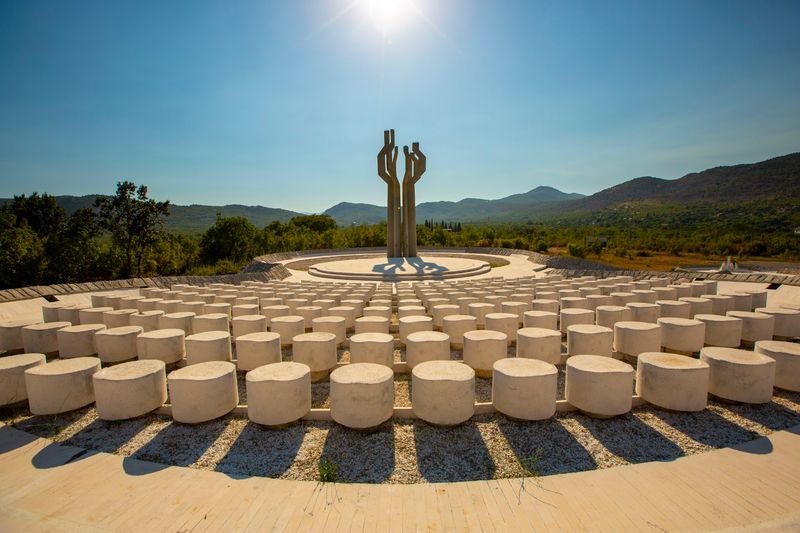
Svetlana Kana Radevic was one of Montenegro’s most important 20th-century architects, and the Barutana memorial is among her most quietly powerful works. The complex opened in 1980, only weeks after Tito’s death, honoring people from the Ljesanska Nahija region who died across multiple 20th-century conflicts.
The timing gave the opening an unexpectedly elegiac quality that no one had planned for.
A roughly 12-meter arrangement of slender concrete elements creates the impression of a torch or a rising flame. Beside it sits a circular amphitheater with approximately 210 seats, built for public gatherings and commemorative ceremonies.
Three smaller memorial stations along the approach each reference a different conflict: the Balkan Wars, World War I, and World War II.
Radevic conceived the entire complex as a single integrated composition where architecture, sculpture, and gathering space reinforce one another. That holistic approach was relatively unusual even within Yugoslav memorial culture, which more often separated the monument from its surrounding landscape.
Today the complex survives but has suffered from inconsistent maintenance, making it representative of a broader challenge facing post-socialist memorial landscapes across the region. The flame still stands, but the infrastructure around it needs serious attention before further deterioration makes restoration significantly more expensive.
Miners’ Monument, Kosovo
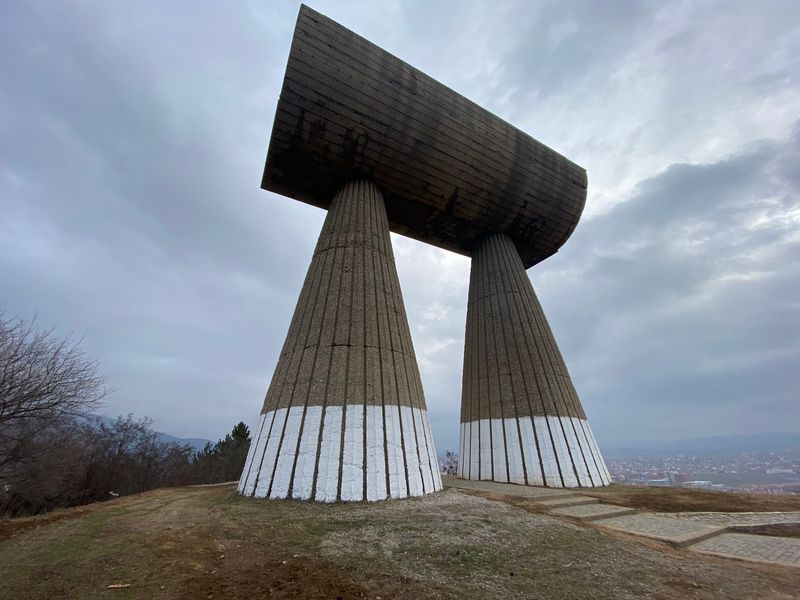
Bogdan Bogdanovic spent more than a decade developing the monument that rises above Mitrovica, which tells you something about how seriously he took the commission. Opened in 1973 and now identified specifically as the Monument to the Mining Heroes, the complex commemorated Albanian and Serbian miners who joined the Partisan-led National Liberation Movement during World War II.
Mitrovica’s identity as a major mining and workers’ center made the subject matter especially fitting.
The most striking element involves two massive tapered concrete columns carrying what resembles a horizontal mining cart or cradle high above the surrounding landscape. It is an unmistakably industrial image translated into monumental concrete, connecting the abstract language of Yugoslav memorial sculpture to the specific working-class history of the city below.
Jasenovac Memorial Site’s catalogue dates Bogdanovic’s work on the complex from 1960 to 1973, a span of 13 years that underlines just how ambitious and labor-intensive the project was. Today the monument exists in a complicated political context given Kosovo’s contested status and the ethnic tensions that have shaped Mitrovica since the 1990s.
Heritage documentation has become particularly important here, because political uncertainty creates real risks for monuments that commemorate a shared history that different communities now interpret very differently.
Monument on Freedom Hill, Slovenia
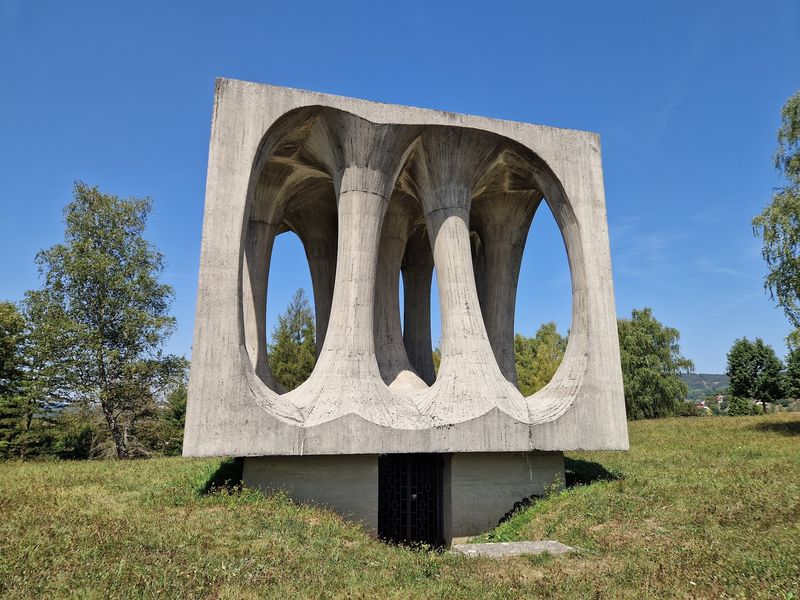
Nine concrete columns narrow as they rise before supporting a hollow form that looks somewhere between a bone and a stalactite. Designed by Janez Lenassi and Ziva Baraga-Moskon, the monument at Ilirska Bistrica was unveiled on November 29, 1965, and its shapes were almost certainly inspired by the famous karst cave formations found throughout Slovenia’s landscape.
The connection between the local geology and the memorial architecture gives the work a regional specificity that many Yugoslav monuments lack.
Beneath the monument sits a crypt containing the remains of 284 Partisans connected to the liberation of the region. The combination of abstract sculptural form and actual burial space creates a layered memorial experience: the striking shapes draw the eye upward while the crypt reminds visitors that real people are interred in the ground beneath their feet.
Lenassi received Slovenia’s prestigious Preseren Award for the work, which demonstrates that these memorials were considered serious architectural and artistic achievements even at the time of their construction. The monument has survived the post-Yugoslav period comparatively well and still hosts commemorative events.
Slovenia’s relatively stable political transition after 1991 may partly explain why this site avoided the vandalism and neglect that damaged comparable memorials in other former Yugoslav republics.
Mother Albania, Albania
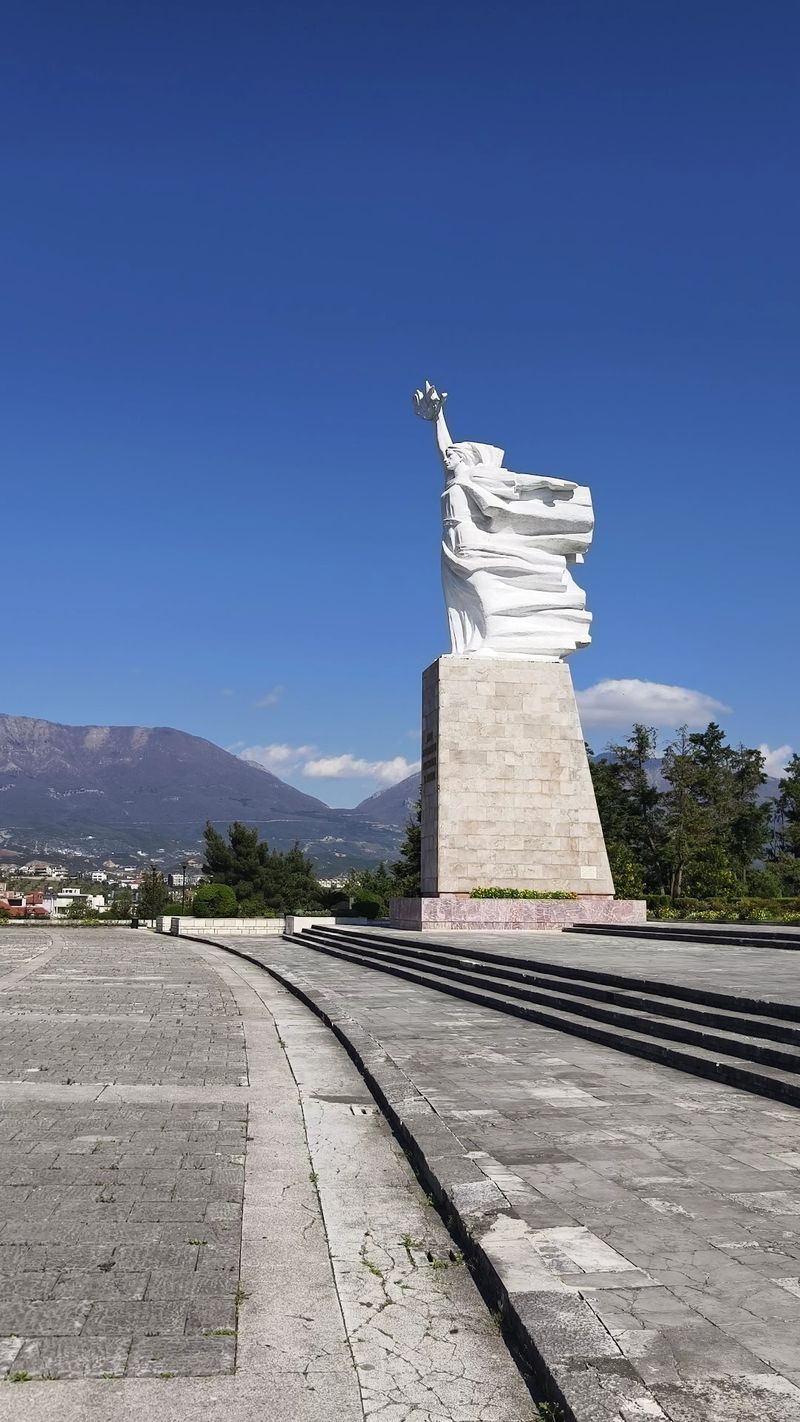
Standing 12 meters tall on a three-meter pedestal above Tirana’s National Martyrs’ Cemetery, Mother Albania is the kind of monument that makes the political history of a country visible from a considerable distance. Unveiled in 1971, the concrete female figure was created by sculptors Kristaq Rama, Muntaz Dhrami, and Shaban Haderi, who portrayed Albania as a protective mother holding a laurel wreath and a star.
The imagery is unmistakably socialist in its vocabulary.
The cemetery primarily honors people commemorated for their role in Albania’s antifascist struggle during World War II. For years it also held a more politically charged burial: longtime communist ruler Enver Hoxha was interred beneath the monument after his death in 1985.
That arrangement lasted only until 1992, when his remains were removed and reburied elsewhere following the collapse of communist rule.
The monument itself survived that political upheaval, which is not a given in countries undergoing rapid ideological change. Mother Albania still stands above the cemetery, though the framework of meaning that originally surrounded it has shifted completely.
She is now a historical artifact as much as a memorial, a reminder that monuments outlast the governments that commission them and must then negotiate entirely new relationships with the societies that inherit them.
Buzludzha Monument, Bulgaria
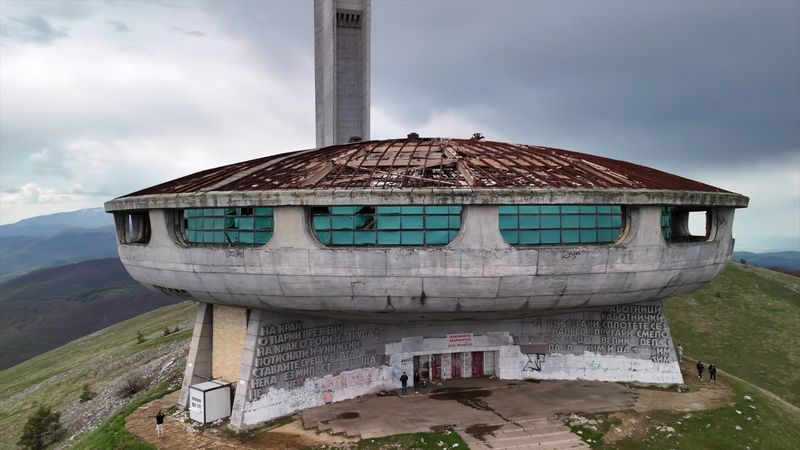
Perched on a Bulgarian mountain summit like a concrete flying saucer that decided to stay, Buzludzha is the Balkans’ most spectacular architectural relic of communist rule. Architect Georgi Stoilov designed the enormous circular building for the Bulgarian Communist Party, and construction from 1974 to 1981 required around 6,000 workers, 70,000 tons of concrete, 3,000 tons of steel, and nearly 1,000 square meters of interior mosaics.
Those numbers are not exaggerated for effect.
During only eight years of official operation before the communist government collapsed in 1989, almost two million people reportedly visited. After closure, the building was extensively stripped of its interior fittings, mosaic fragments were damaged, and the structure deteriorated badly.
For years Buzludzha became the ultimate symbol of post-socialist architectural abandonment, photographed endlessly by urban explorers and architecture enthusiasts worldwide.
Its story is now changing. Conservation work began in 2019, funded partly by international heritage organizations, though the interior remains closed for safety reasons.
Rather than quietly disappearing, Buzludzha has become a test case for how the Balkans handle the architecture of politically difficult pasts. Preservation requires confronting what the building represented, which is uncomfortable, but leaving it to collapse entirely would erase a genuine piece of 20th-century history that future generations deserve the chance to encounter.
Share this story