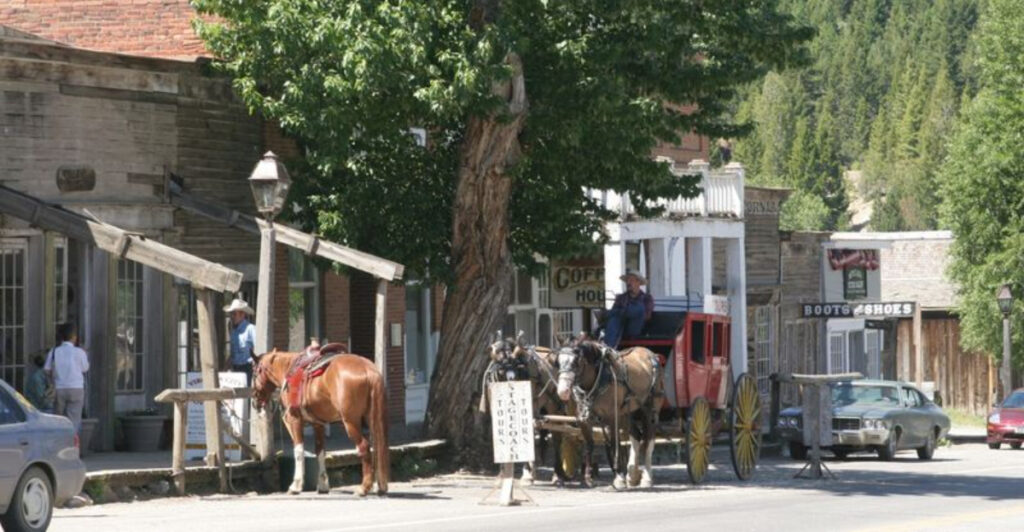
The Wild West wasn’t just a chapter in history books. It was a real, rough, and fascinating era that shaped the American identity in ways still visible today.
From dusty ghost towns to living cattle drives, there are places across the country where you can step off a modern sidewalk and feel like you’ve crossed into another century. Whether you’re a history lover, a road trip planner, or just someone who grew up watching Western movies, this list covers 17 destinations that bring the frontier era to life in genuinely memorable ways.
Some are preserved ghost towns. Others are active historic sites or living museums.
A few have been welcoming visitors for generations. All of them offer something specific and real, not just a backdrop for souvenirs.
Save this list, because it covers more ground than you might expect.
Tombstone, Arizona
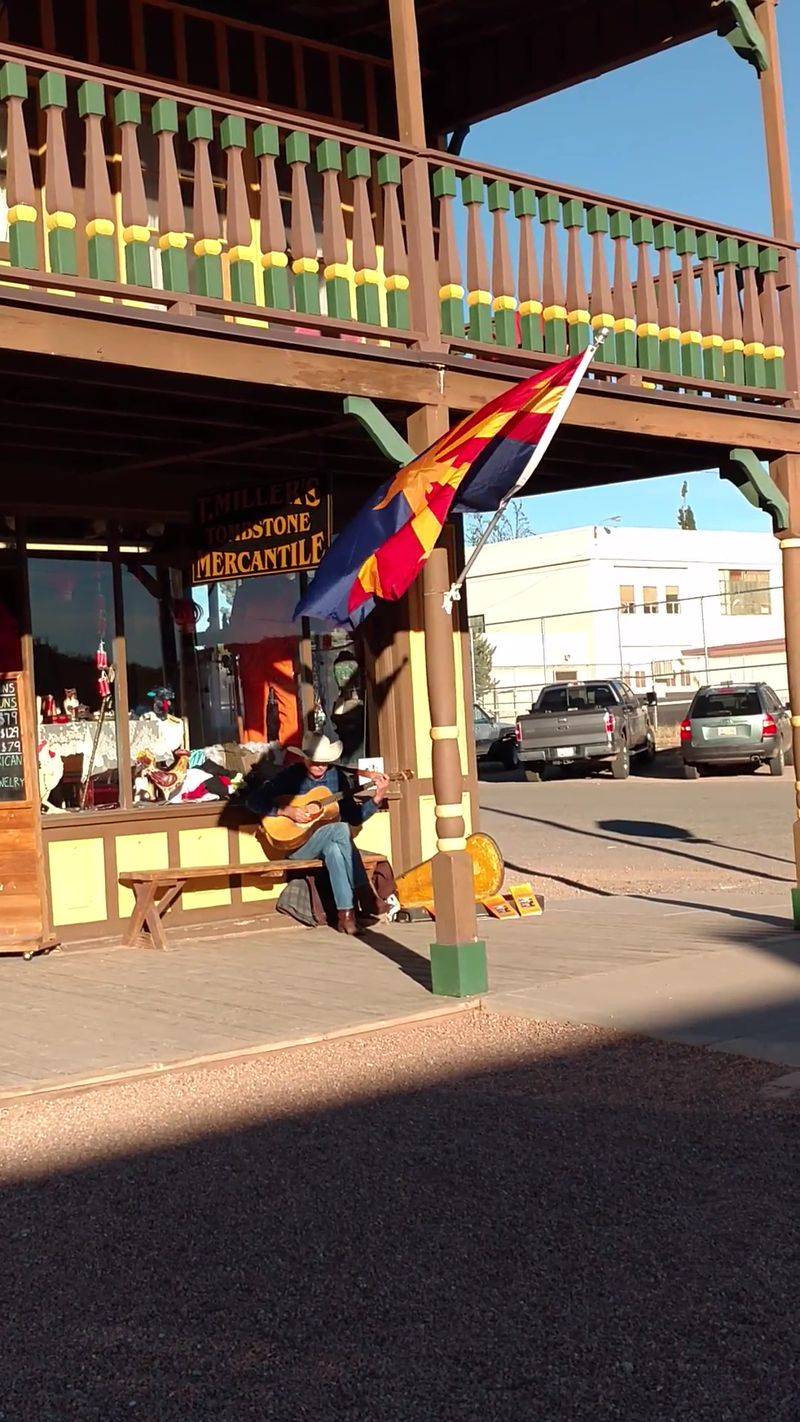
Few places in America wear their history as openly as Tombstone. The 1881 gunfight involving Wyatt Earp, Doc Holliday, and members of the Clanton-McLaury group turned this Arizona mining town into a legend that never faded.
More than a century later, visitors can still walk along wooden sidewalks and explore a historic district filled with museums, saloons, and frontier-era buildings. The O.K.
Corral Historic Complex holds daily reenactments of the famous gunfight, and the surrounding exhibits go deep into the town’s layered past.
Allen Street is worth exploring at a slow pace. The Bird Cage Theatre, which operated as an entertainment venue during Tombstone’s boom years, still stands and is open for tours.
Arizona’s official tourism organization lists Tombstone as a National Historic Landmark where period-costumed performers and authentic historic structures continue to recreate the atmosphere of the 1880s frontier. It earns its reputation every single day.
Deadwood, South Dakota
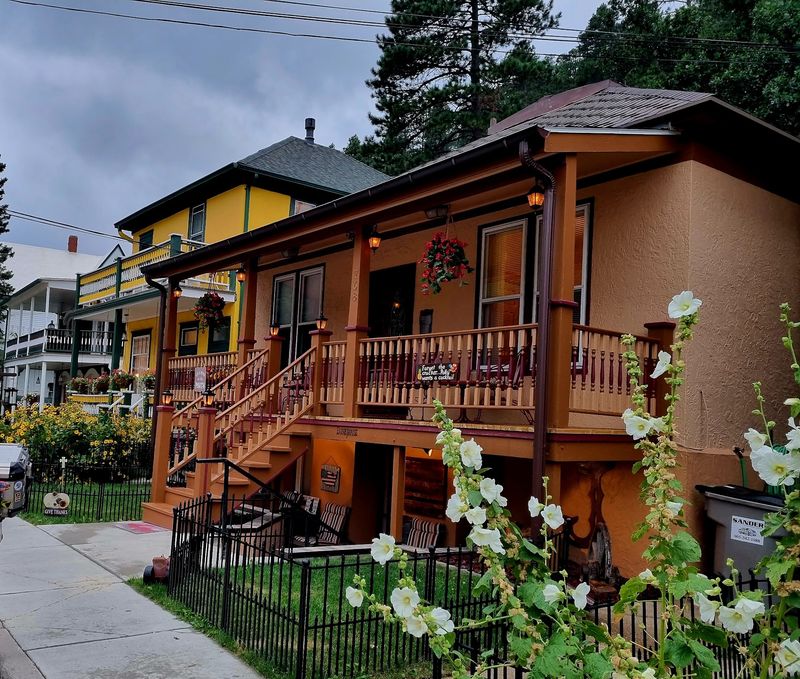
Gold brought prospectors rushing into the Black Hills in 1876, and the settlement that grew from that rush became one of America’s most storied frontier towns. Wild Bill Hickok, Calamity Jane, and Seth Bullock all left their marks here, and Deadwood has never let those connections go quiet.
The Adams Museum and the Days of ’76 Museum both cover the town’s frontier history in detail. Mount Moriah Cemetery, where Hickok and Calamity Jane are buried, draws steady visitors year-round.
The Broken Boot Gold Mine offers a look underground at the kind of operation that sparked the whole rush.
What makes Deadwood stand apart from many reconstructed Western attractions is that it functions as a real, living community. The historic district and modern businesses exist side by side.
In 2026, the town is marking its 150th anniversary with a full calendar of events, making this particular year a genuinely good time to visit.
Dodge City, Kansas
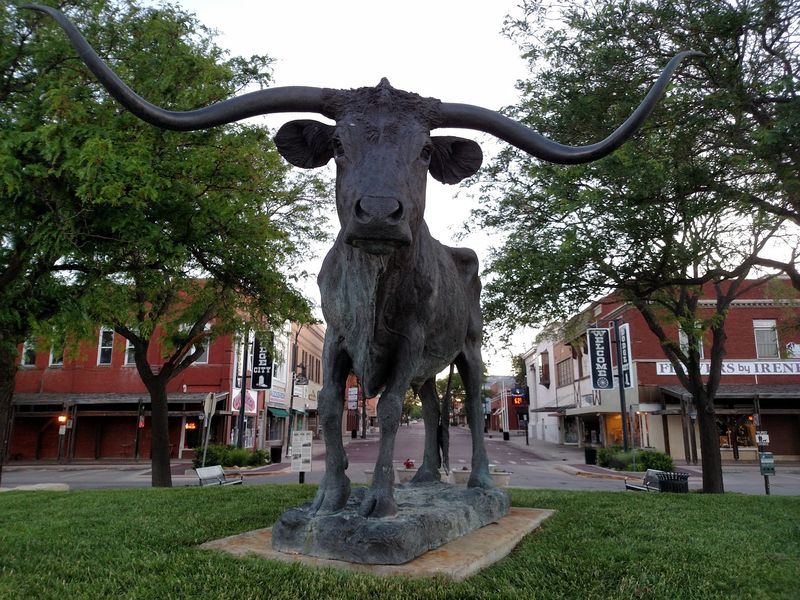
During the late 1800s, Dodge City sat at the center of the American cattle trade. Texas herds arrived here in enormous numbers, and the cowboys, saloon owners, gamblers, and lawmen who followed helped build a reputation that books, movies, and television have never fully let go of.
Boot Hill Museum is where that history comes alive most directly. Its reconstructed Front Street recreates the look of the cattle town during the 1870s and 1880s, complete with boardwalks, period storefronts, and historical exhibits.
The original Boot Hill Cemetery site sits within the museum grounds.
During summer, gunfighter performances and historical entertainment add energy to the experience. The Dodge City Convention and Visitors Bureau notes that Boot Hill Museum operates 362 days a year, which makes planning a visit considerably easier than at many seasonal attractions.
Around town, the Dodge City Trail of Fame honors Wyatt Earp, Bat Masterson, Doc Holliday, and others connected to the cattle-town era.
Cody, Wyoming
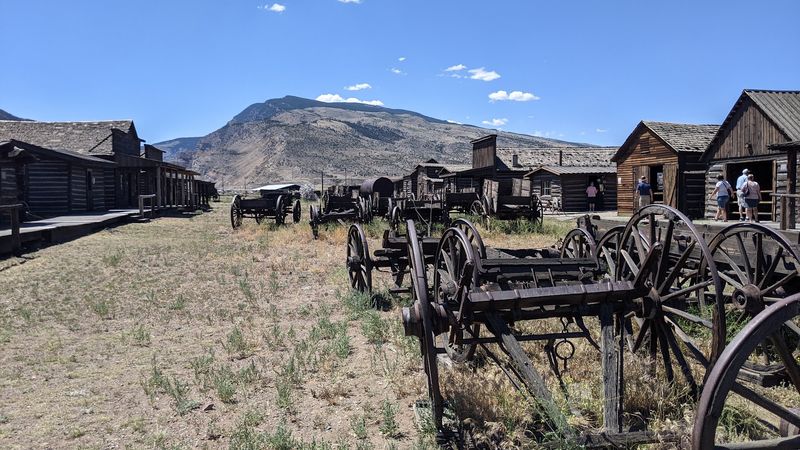
Founded by William F. “Buffalo Bill” Cody, this Wyoming town has always had a direct line to the frontier era. That connection goes well beyond the name on the welcome sign.
Old Trail Town and the Museum of the Old West is one of the more unusual Western attractions in the country. Rather than constructing modern replicas, the site assembled 28 genuine historic frontier structures relocated from across the region.
Visitors can walk among original cabins, a schoolhouse, a saloon, and other buildings that actually stood on the Wyoming frontier during the 1800s.
One of the most talked-about structures is a cabin associated with Butch Cassidy’s Hole-in-the-Wall Gang. The site’s cemetery includes the grave of frontiersman Jeremiah “Liver-Eating” Johnston.
Cody Yellowstone’s tourism organization lists Old Trail Town as an active attraction and promotes the broader area as a destination where rodeos, ranches, museums, and Western culture remain central to the visitor experience year after year.
Fort Worth Stockyards, Texas
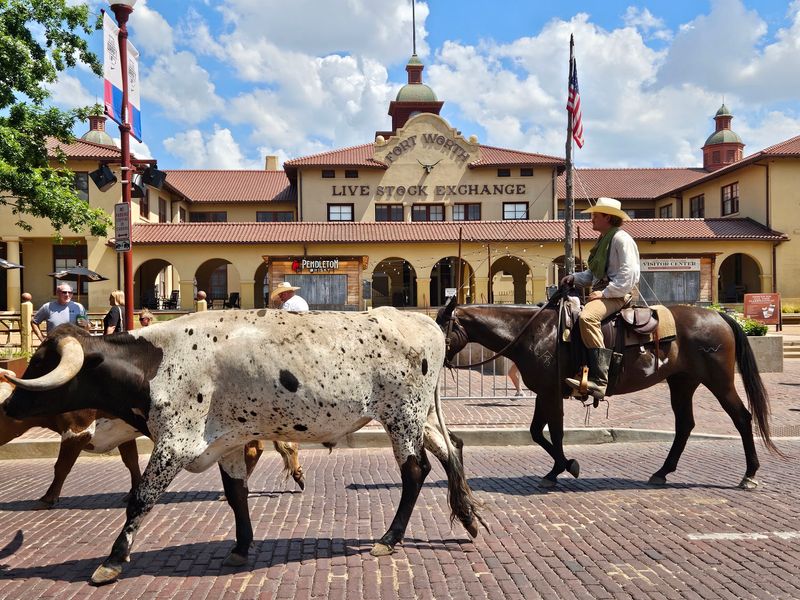
Twice each day, real cowhands in traditional Western gear drive Texas longhorn cattle along East Exchange Avenue in Fort Worth. Fort Worth’s official tourism organization describes it as the world’s only twice-daily cattle drive, currently scheduled at 11:30 a.m. and 4 p.m.
The Fort Worth Stockyards preserves the city’s cattle-industry heritage within a lively historic district. The surrounding area is filled with Western shops, restaurants, entertainment venues, and buildings that date to the stockyards’ commercial peak.
It operates within a fully functioning part of a major modern city, which makes the experience genuinely unusual.
Standing on a city sidewalk and hearing the hoofbeats of longhorns approaching down the street is something that doesn’t happen in many places. The Stockyards also hosts rodeo events at Cowtown Coliseum and a variety of other Western-themed entertainment throughout the year.
For a taste of the cattle-drive era without a long drive into remote territory, this historic district is a strong choice.
Virginia City, Nevada
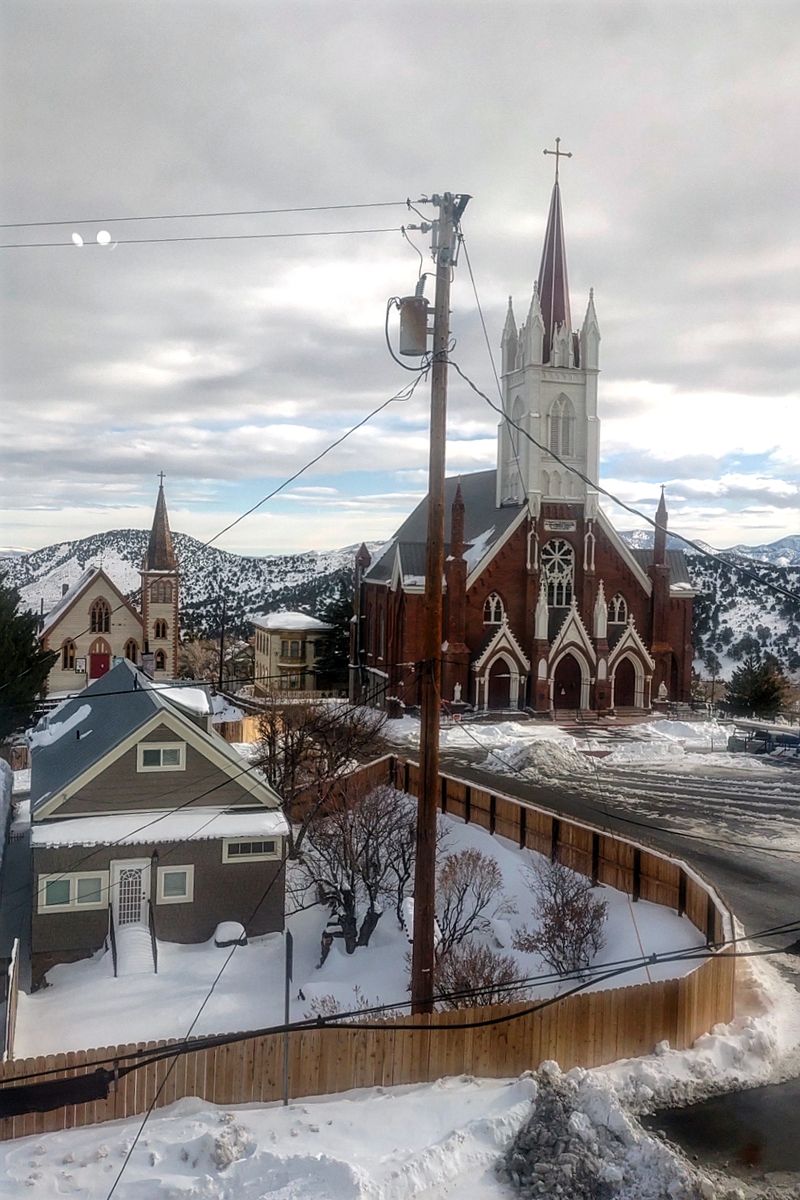
The discovery of the Comstock Lode turned Virginia City into one of the great mining boomtowns of the American West. Gold and silver poured out of the surrounding hills, and the wealth that followed brought miners, journalists, businessmen, and fortune seekers in numbers that few frontier settlements ever matched.
The historic community still carries that era visibly. The Way It Was Museum holds a large collection of Comstock mining artifacts.
The historic Storey County Courthouse and other surviving 19th-century buildings give Virginia City a streetscape that reads as genuinely old rather than reconstructed. Several saloons and museums operate year-round, while additional attractions open during the main visitor season.
The Virginia and Truckee Railroad offers rides during the summer months, adding a transportation-history element to the visit. Virginia City’s official tourism organization is actively promoting a full schedule of events for 2026.
The combination of intact historic architecture and mining heritage makes this one of Nevada’s most compelling destinations for anyone interested in the frontier West.
Old Tucson, Arizona
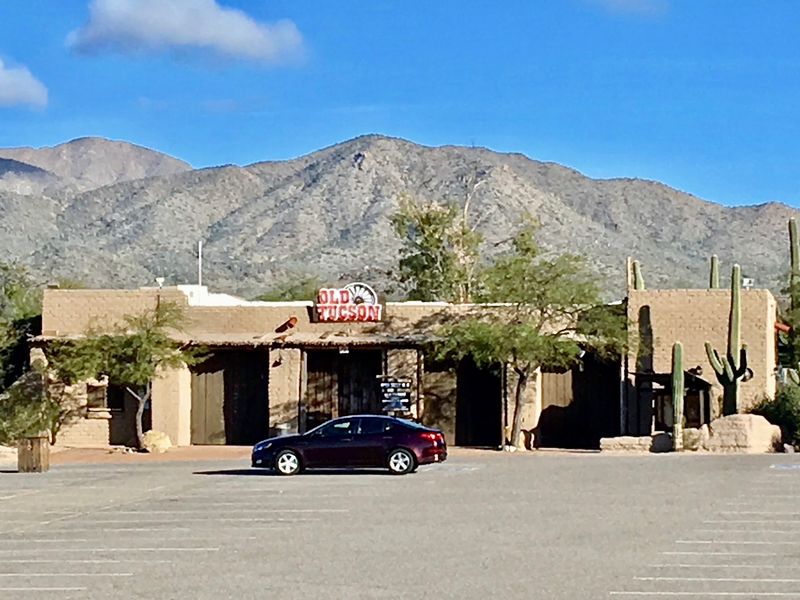
Old Tucson offers a genuinely different kind of trip into the frontier era. This wasn’t a real mining camp or cattle town.
It began as a movie set and grew into one of the country’s best-known Western filming locations, which gives it a character that preserved historic towns simply can’t replicate.
Walking its streets means walking through the visual world that Hollywood built for the Western genre. The buildings were designed to look exactly like the classic cinematic version of the Old West, and the effect holds up well in person.
Guided historical studio tours run multiple times on operating days and focus on the site’s filmmaking legacy.
Old Tucson continues operating in 2026, with a current calendar that includes studio tours as well as seasonal Western experiences and special events. For travelers who grew up watching classic Westerns, there’s something oddly satisfying about standing in a place where so many of those scenes were actually filmed.
The Sonoran Desert setting makes the backdrop entirely convincing.
Goldfield Ghost Town, Arizona
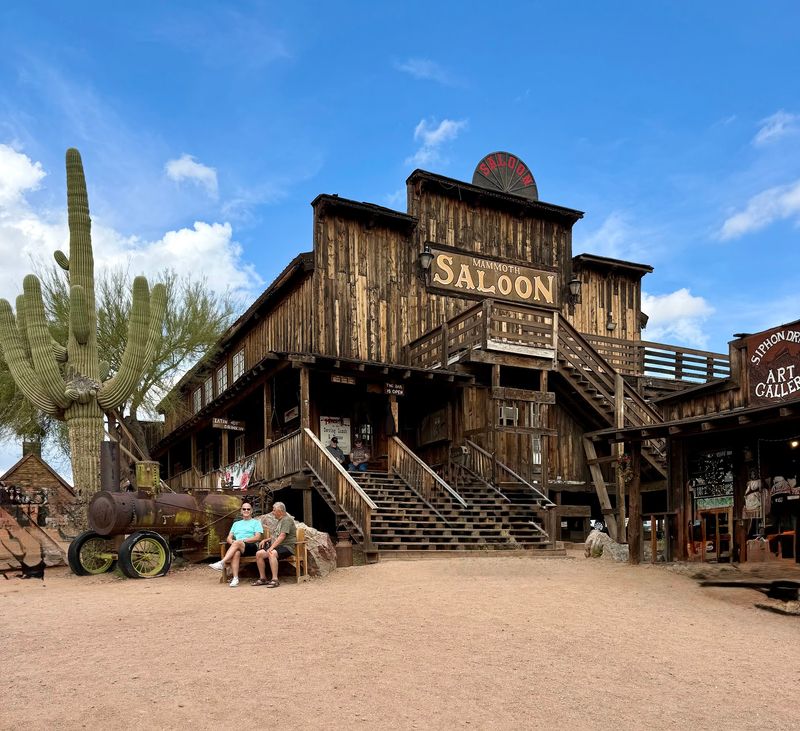
The Superstition Mountains rising behind the buildings make Goldfield Ghost Town one of the more visually striking Western attractions in Arizona. The original settlement boomed during the 1890s before declining when mining became less profitable, and the revived attraction has brought that frontier atmosphere back in a hands-on way.
Visitors can tour the Mammoth Gold Mine, pan for gold, ride a narrow-gauge train, and explore the Goldfield Museum. A saloon, shops, and historic-style buildings fill out the main street area.
During the cooler months, weekend gunfight performances add a theatrical element to the visit.
Goldfield’s official website lists its train, mine tour, museum, and several merchants as operating seven days a week, though individual activities follow seasonal schedules. The attraction sits near Apache Junction, making it a practical day trip from the Phoenix metro area.
Few ghost-town experiences in the state combine this level of activity with such a naturally dramatic landscape backdrop. The mountains do a lot of the storytelling on their own.
Bodie State Historic Park, California
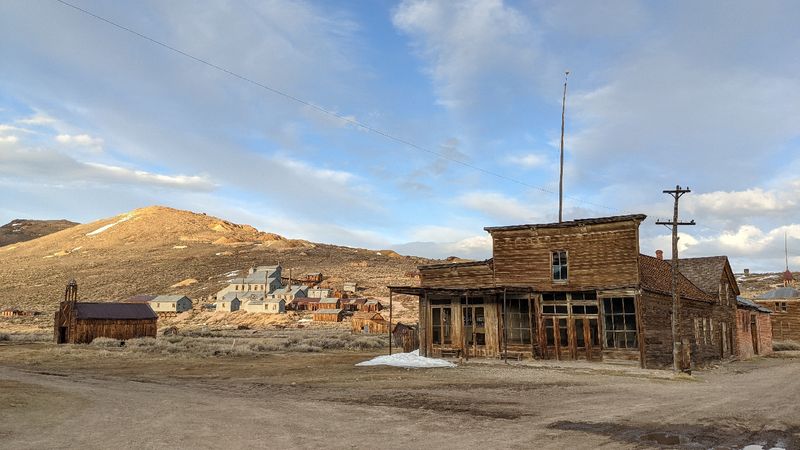
Bodie is unlike nearly every other destination on this list. There are no performers recreating the past and no modern saloon rebuilt for tourists.
The town itself is the entire experience, and that restraint is exactly what makes it remarkable.
Once a booming California gold-mining settlement, Bodie declined over decades until most of the community was abandoned. California State Parks now preserves what remains in a condition it describes as “arrested decay,” meaning the structures are stabilized but not restored to look new.
The result is a ghost town that actually feels like one.
Visitors walk deserted streets surrounded by weathered houses, businesses, a church, and mining structures. California State Parks confirms Bodie is open year-round, with separate summer and winter operating hours.
Winter access can be challenging due to snow and the town’s elevation of more than 8,000 feet. Summer visits tend to be the most accessible.
If an unvarnished, quietly haunting ghost town experience is what you’re after, Bodie belongs at the top of the list.
Columbia State Historic Park, California
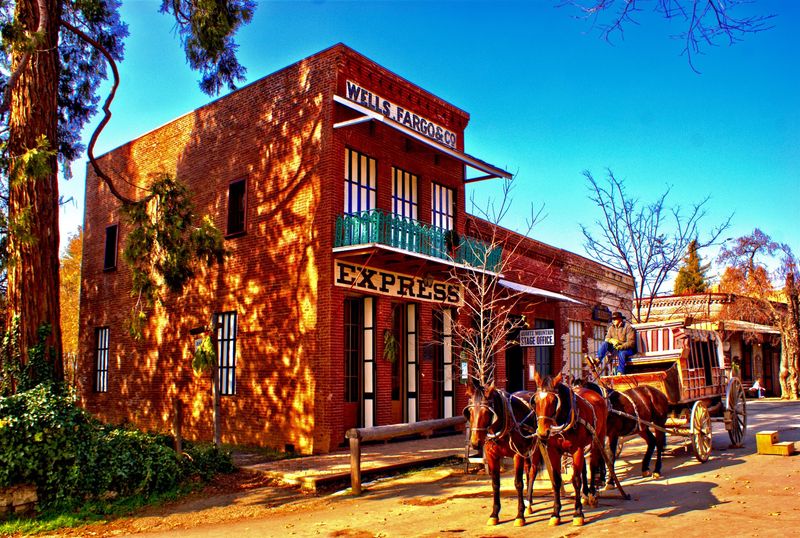
Not every California Gold Rush town faded away. Columbia survived, and it has been welcoming visitors ever since.
The settlement grew rapidly after gold was discovered nearby and became one of the largest communities in the region during the 1850s.
Columbia State Historic Park preserves its Gold Rush-era streets while allowing businesses to continue operating inside many of the historic buildings. Visitors can walk through town, step inside old shops and saloons, watch demonstrations, visit the schoolhouse and cemetery, and browse goods ranging from candy to leather goods.
Stagecoach rides are offered when season and conditions allow.
California State Parks lists the park’s exhibits as open daily, with many merchants typically operating from around 10 a.m. to 5 p.m. What sets Columbia apart from a typical ghost town is its energy.
The community feels like a Gold Rush settlement that simply never completely shut down. Shops are open, people are working, and the historic buildings serve actual purposes rather than just standing as preserved shells.
Calico Ghost Town, California
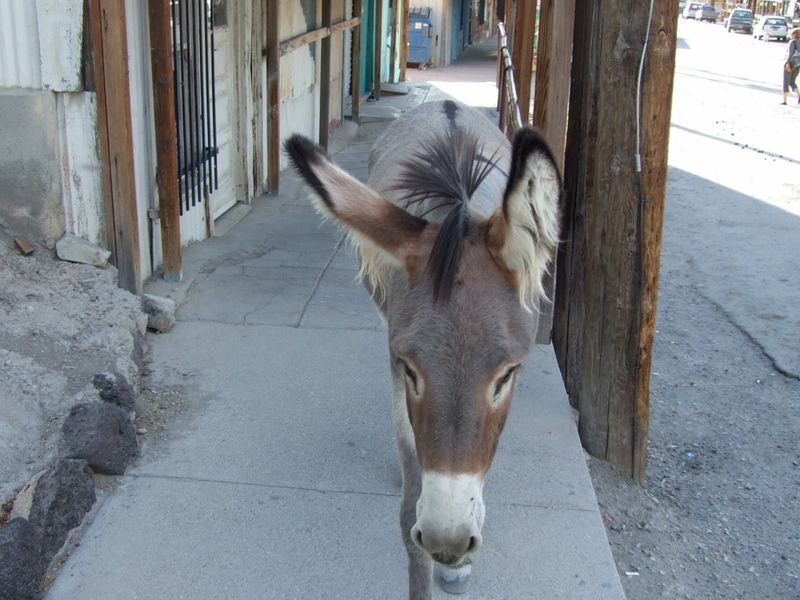
High in the Mojave Desert near Barstow, Calico tells the story of California’s silver-mining era. The town was established in the early 1880s and thrived until falling silver prices cut the economic foundation out from under it.
What remained was eventually purchased by Walter Knott in the 1950s, who restored much of the settlement to resemble its 1880s character.
San Bernardino County now operates Calico Ghost Town Regional Park. Visitors can explore the Maggie Mine, ride the Calico Odessa Railroad, try gold panning, tour a museum, and shop in Western-themed stores.
Several original buildings survive alongside the restored structures, giving the town a layered sense of authenticity.
According to San Bernardino County Parks, Calico is open daily from 9 a.m. to 5 p.m., except Christmas Day. The dry Mojave landscape surrounding the settlement makes the setting feel genuinely remote, even though Barstow and Interstate 15 are nearby.
The combination of accessible location and convincing frontier atmosphere makes Calico a practical stop for road trippers crossing Southern California.
Lincoln Historic Site, New Mexico
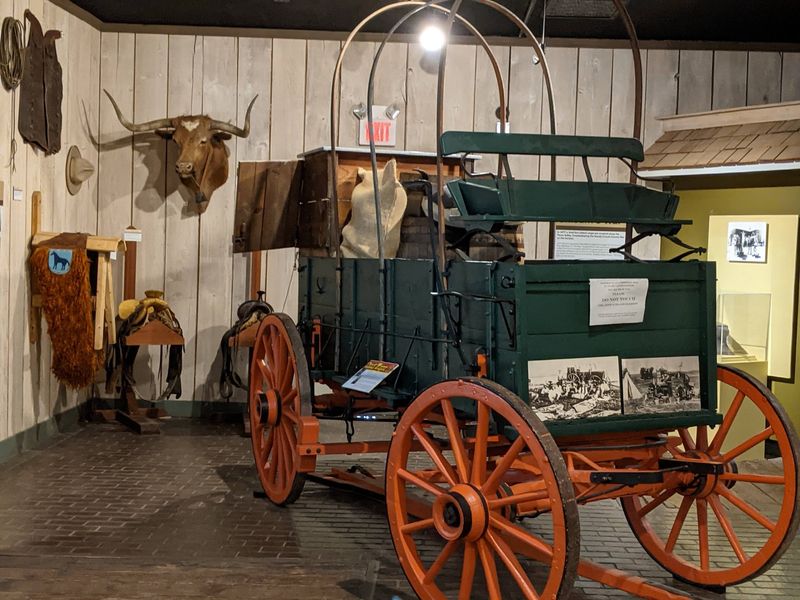
The Lincoln County War wasn’t a legend. The violence was real, the stakes were real, and the small New Mexico community of Lincoln was right at the center of it.
That conflict helped transform Billy the Kid from a local outlaw into one of the most recognizable figures in American frontier history.
Remarkably, much of the historic town remains standing. Visitors can explore the Lincoln County Courthouse, Tunstall Mercantile, San Juan Chapel, and the Torreón.
The courthouse is particularly significant because Billy the Kid escaped from custody there in 1881 while awaiting execution.
New Mexico’s Department of Cultural Affairs says the town has been preserved to reflect its appearance around 1880 and includes 17 historic structures visitors can explore. The Lincoln Historic Site is currently open Thursday through Monday from 10 a.m. to 4 p.m.
Few destinations provide such a direct and physically intact connection to one of the Old West’s most talked-about outlaw stories. The buildings do most of the explaining on their own.
Virginia City and Nevada City, Montana
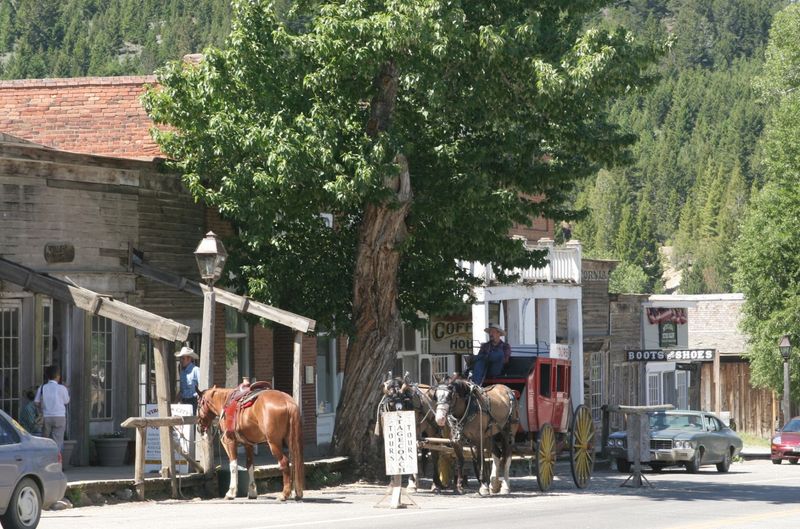
Just a short distance apart in southwestern Montana, Virginia City and Nevada City together create one of the most extensive Old West experiences available anywhere in the country. Virginia City grew during the Alder Gulch gold rush and continues to function as a living town.
Nevada City operates largely as an open-air museum packed with historic structures and exhibits collected from across the region.
During the summer season, visitors can explore museums, walk historic streets, watch living-history interpreters on selected days, pan for gold, and ride the Alder Gulch Shortline Railroad between the two communities. The Montana Heritage Commission lists its main visitor operations as running seven days a week between Memorial Day weekend and Labor Day.
Virginia City itself remains accessible year-round, though many attractions close outside the summer months. The state of Montana confirmed that shops, restaurants, lodging, and entertainment venues were operating for the 2026 season.
The sheer number of historic structures concentrated in this small area makes the experience feel substantially different from a single-site attraction.
Fort Laramie National Historic Site, Wyoming
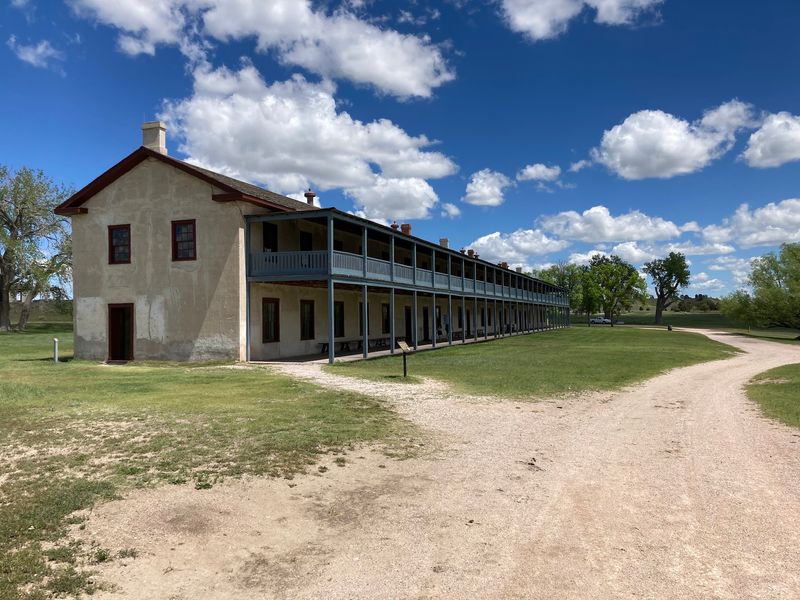
Long before the famous cowtowns of Kansas and Arizona became household names, Fort Laramie was already playing a central role in the story of the American West. Thousands of emigrants heading toward Oregon, California, and Utah passed through this military post, making it one of the most significant stopping points along the major overland migration routes of the 19th century.
Today, the National Park Service operates the site year-round. The grounds are open from sunrise to sunset, while the visitor center and museum operate daily except for several major holidays.
Restored and surviving structures that once housed soldiers, officers, traders, and travelers are open for self-guided exploration.
Summer brings living-history programming to life, with interpreters portraying soldiers, traders, and laundresses. Historic weapons demonstrations are also scheduled on some summer days.
Fort Laramie offers a useful reminder that the frontier West involved much more than gunfights and cattle drives. The wide open landscape surrounding the post makes the isolation those 19th-century travelers experienced feel very real.
Fort Davis National Historic Site, Texas
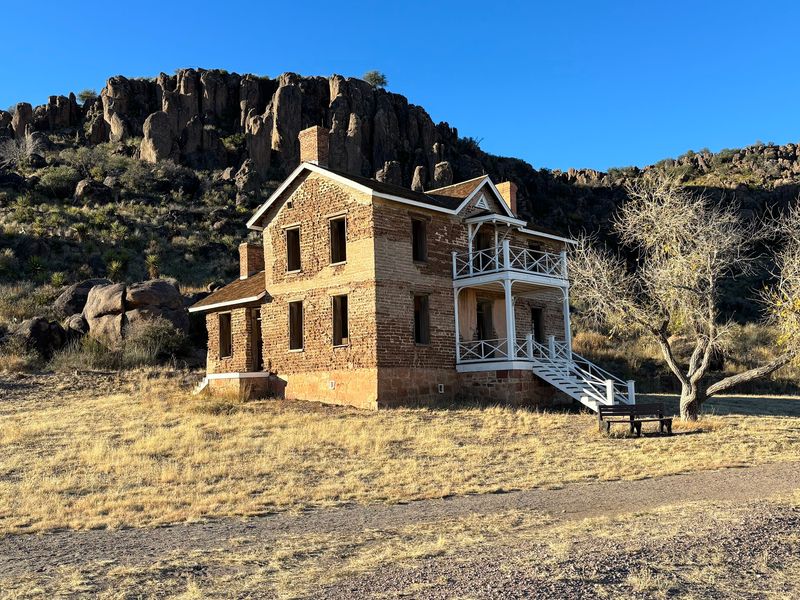
Set against the mountains of West Texas, Fort Davis preserves one of the frontier military posts established to protect travelers and transportation routes crossing the Southwest during the 19th century. The fort is also closely associated with the Buffalo Soldiers, the African American military units who served on the Western frontier after the Civil War.
The site includes restored and refurnished buildings spread across a landscape that makes the isolation of frontier military life easy to picture. Officers’ quarters, barracks, and other structures are open for self-guided exploration.
The setting alone communicates something that exhibits inside a building simply cannot.
The National Park Service currently lists Fort Davis National Historic Site as open from 8 a.m. to 5 p.m., with the visitor center closing slightly earlier. The combination of adobe architecture, open terrain, and rugged mountain backdrop creates an atmosphere that feels genuinely removed from the modern world.
For anyone interested in the military history of the Western frontier, this is one of the better-preserved examples in the entire country.
Fort Smith National Historic Site, Arkansas
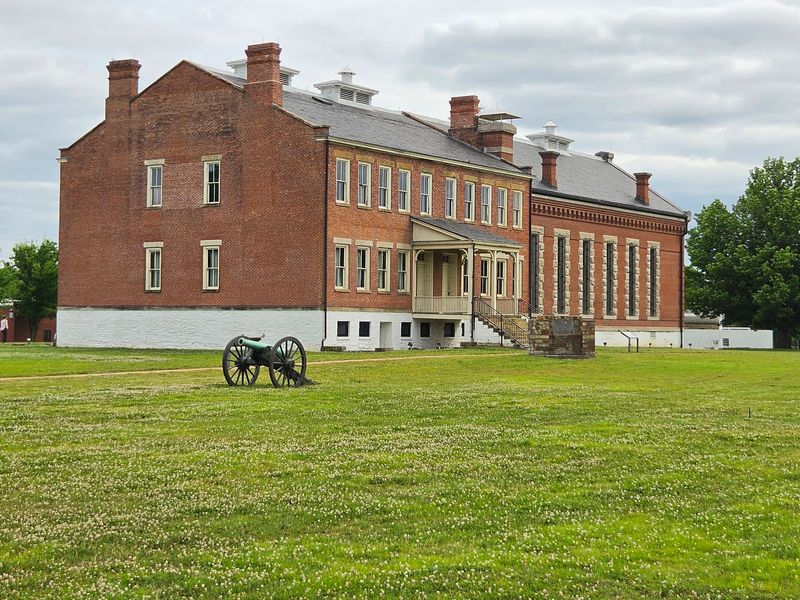
The Wild West had an eastern edge, and Fort Smith, Arkansas sat right on it. Positioned at the boundary of Indian Territory, this town became one of the most important centers of frontier law enforcement in the country during the late 1800s.
The site’s history stretches from the establishment of the original fort in 1817 through the era of federal Judge Isaac C. Parker, whose court handled crimes committed across Indian Territory for more than two decades.
Visitors can explore the old courthouse and jail, view exhibits about lawmen and outlaws, and see the reconstructed gallows that became closely associated with Parker’s court.
The National Park Service says Fort Smith National Historic Site preserves stories spanning nearly 80 years, including soldiers, Native American history, marshals, and frontier justice. As of 2026, the visitor center, gallows, and Commissary Building operate daily during summer hours, with the grounds open every day.
For anyone drawn to the legal and law-enforcement side of Old West history, this site covers territory that most Western destinations overlook entirely.
Old Abilene Town, Kansas
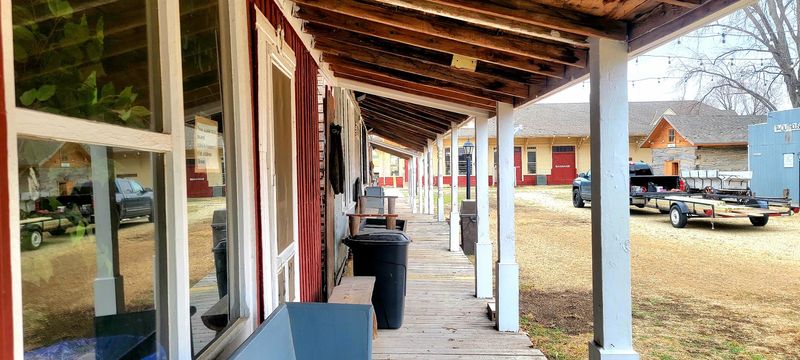
Before Dodge City claimed the cattle-town spotlight, Abilene was already writing the script. Texas longhorns traveled north along the Chisholm Trail and arrived here where the railroad allowed cattle to be shipped east in large numbers.
Wild Bill Hickok served as town marshal in 1871, adding a law-and-order layer to the community’s already colorful reputation.
Old Abilene Town keeps that cowtown history alive through a recreated Western district and seasonal performances. During the summer travel season, visitors can watch gunfight performances, can-can entertainment, and explore historic attractions.
Special events occasionally bring longhorn cattle back into town as well.
Visit Abilene’s official tourism site lists Old Abilene Town as operating on weekends, with Saturday and Sunday hours during the season. In August 2026, the community’s Chisholm Trail Days featured longhorn cattle drives, living-history portrayals of Wild Bill Hickok, music, and other events celebrating Abilene’s cattle-town heritage.
For a Kansas town that often gets overshadowed by its more famous neighbor to the west, Abilene has a frontier story well worth knowing.
Share this story