Some buildings are so famous that you feel like you have already visited them through photos and movies. Seeing one in person is a different story.
The scale, the details, and the setting around each one add things a picture cannot show. This list covers eighteen landmarks across Europe, Asia, Africa, Australia, and the Americas, from ancient stone arenas to glass towers that scrape the clouds.
Some are churches, some are museums, and a few are working government buildings. Each one has a story behind it and a clear reason to be on your travel wish list.
Opening hours and ticket rules change often, so check the official website before you go. Ready to pick your first stop?
Sagrada Família, Barcelona, Spain
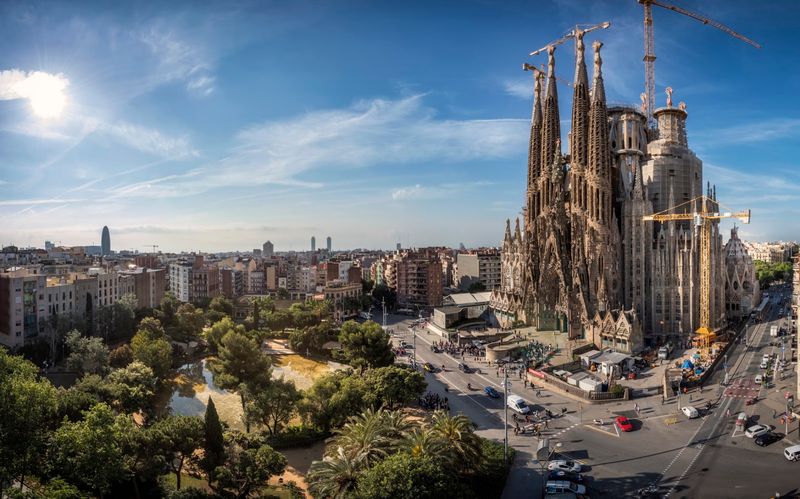
Construction on this basilica began in 1882, and work has continued for well over a century. That makes it one of the longest building projects in modern history, and visitors can see cranes beside the spires.
Antoni Gaudí designed it, and his style shows in every curve. The façades are packed with carved figures and scenes, while the inside is filled with colorful light from stained glass windows.
The basilica welcomes visitors daily, though opening hours change with the season. Tickets are best booked ahead of time through the official site, since timed entry is common.
Give yourself enough time to look up, because the ceiling is built to resemble a forest of branching columns.
It is easy to see why this church has become the symbol of Barcelona.
Sydney Opera House, Sydney, Australia
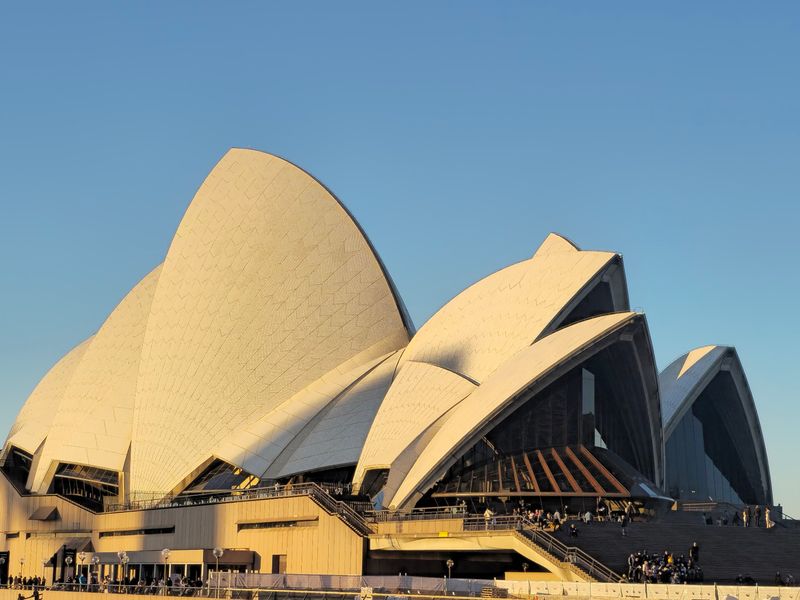
Jørn Utzon’s design looks like a fleet of white sails parked on the edge of Sydney Harbour. The roof shells are covered in tiles, which gives the surface a subtle pattern up close.
Many people stop for photos from the harbour or the nearby Royal Botanic Garden. Getting inside is even better, since the building hosts performances and offers tours.
Visitors can choose from architectural tours, backstage tours, and general walkthroughs. If you enjoy design, the architectural option explains how the unusual roof was engineered and built.
Plan to spend time outside too. The waterfront walkways around the building give you views of the bridge, the ferries, and the skyline, so one visit can cover several Sydney highlights at once.
Eiffel Tower, Paris, France
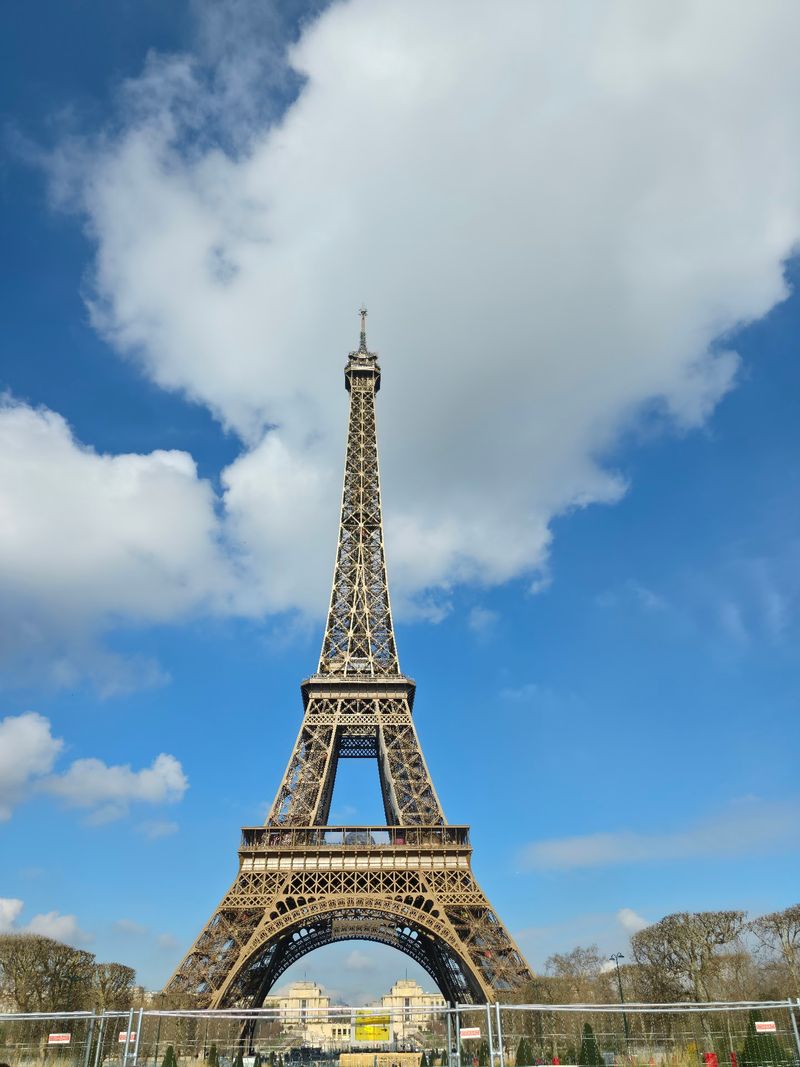
The Eiffel Tower was only meant to stand for a limited time. It was built for the 1889 World’s Fair, and it stayed because it proved useful and wildly popular.
Made of iron, the tower is a lattice of thousands of metal pieces joined together. Up close, the pattern of beams is as interesting as the overall shape.
Visitors can currently travel to the first and second floors. When conditions allow, they can go all the way to the summit for wide views across Paris.
Tickets can sell out, so booking ahead is smart. For a good photo, walk across to the Trocadéro gardens, where the whole tower fits neatly in the frame.
Taj Mahal, Agra, India
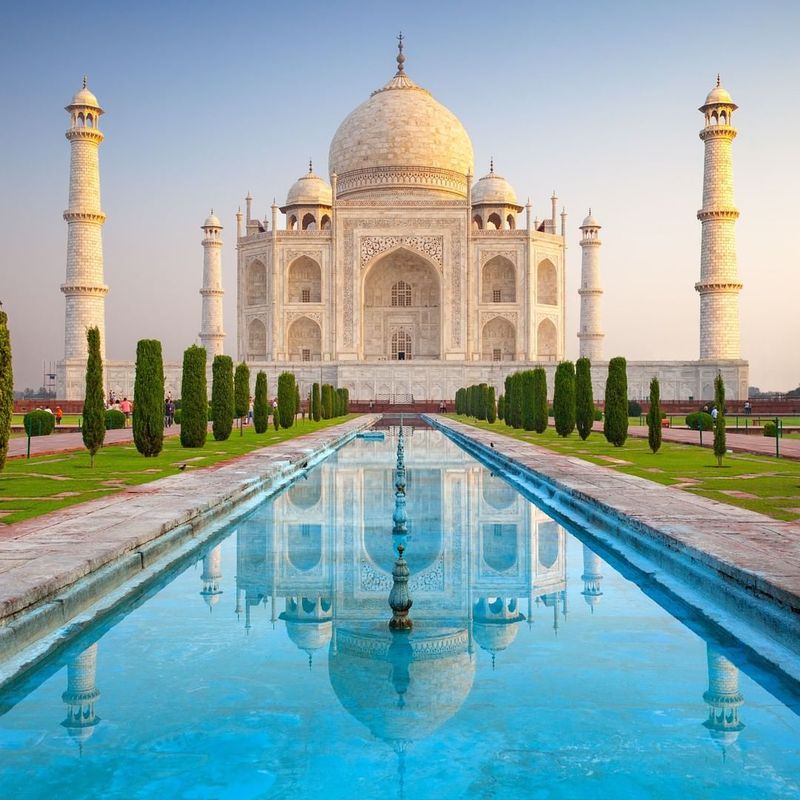
Shah Jahan, a Mughal emperor, commissioned the Taj Mahal in memory of Mumtaz Mahal. Built in the 17th century, it is made mainly of white marble.
UNESCO describes it as an outstanding achievement of Indo-Islamic architecture. The symmetry is a big part of the effect, with gardens, a long reflecting pool, and four minarets framing the central dome.
Look closely at the marble walls and you will see inlaid stonework and carved patterns. The details reward a slow walk around the monument.
It is open every day except Friday, so plan your trip around that. Early morning is a popular time to arrive, since the grounds tend to be calmer and the light is softer for photos.
Burj Khalifa, Dubai, United Arab Emirates
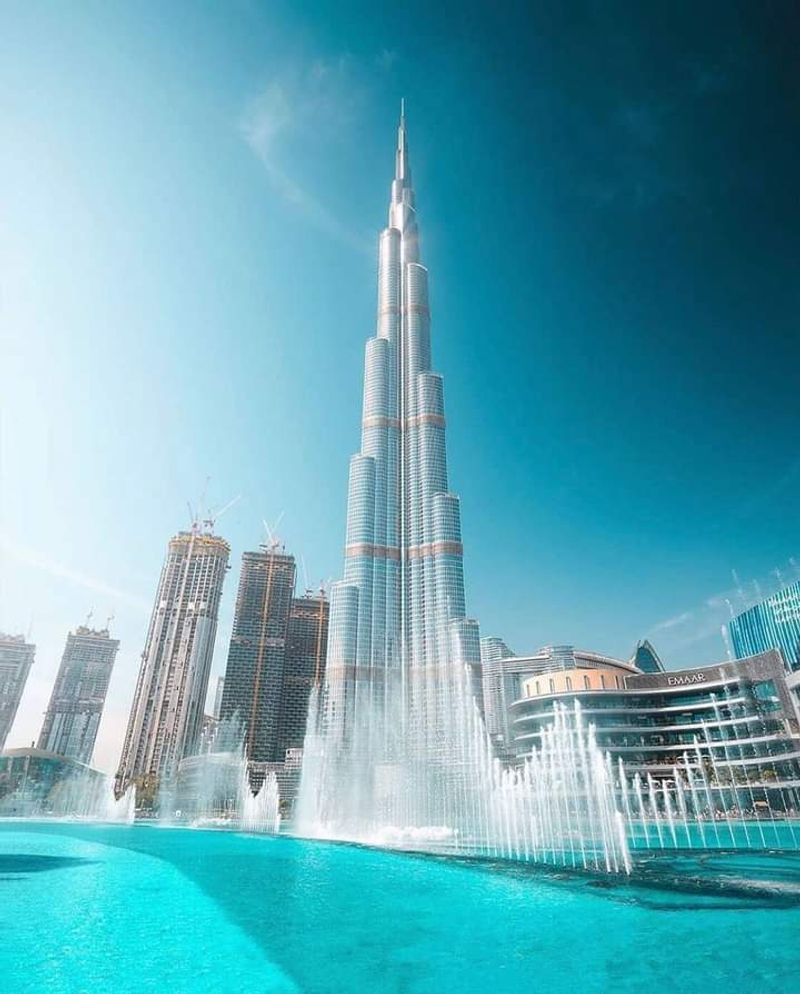
Standing taller than any other building on Earth, the Burj Khalifa changes how a skyline looks. Its tapering shape rises from downtown Dubai like a giant needle.
The observation experiences are the main draw. From the upper decks, you can look across the city, the surrounding desert, and the Persian Gulf.
The tower sits beside the Dubai Mall and the Dubai Fountain, so it is easy to combine several stops in one outing. Many visitors walk the waterfront area before or after going up.
Book tickets in advance if you can, since time slots are common. Clear days give the best views, so checking the weather before choosing your slot is a handy trick.
Empire State Building, New York City, USA
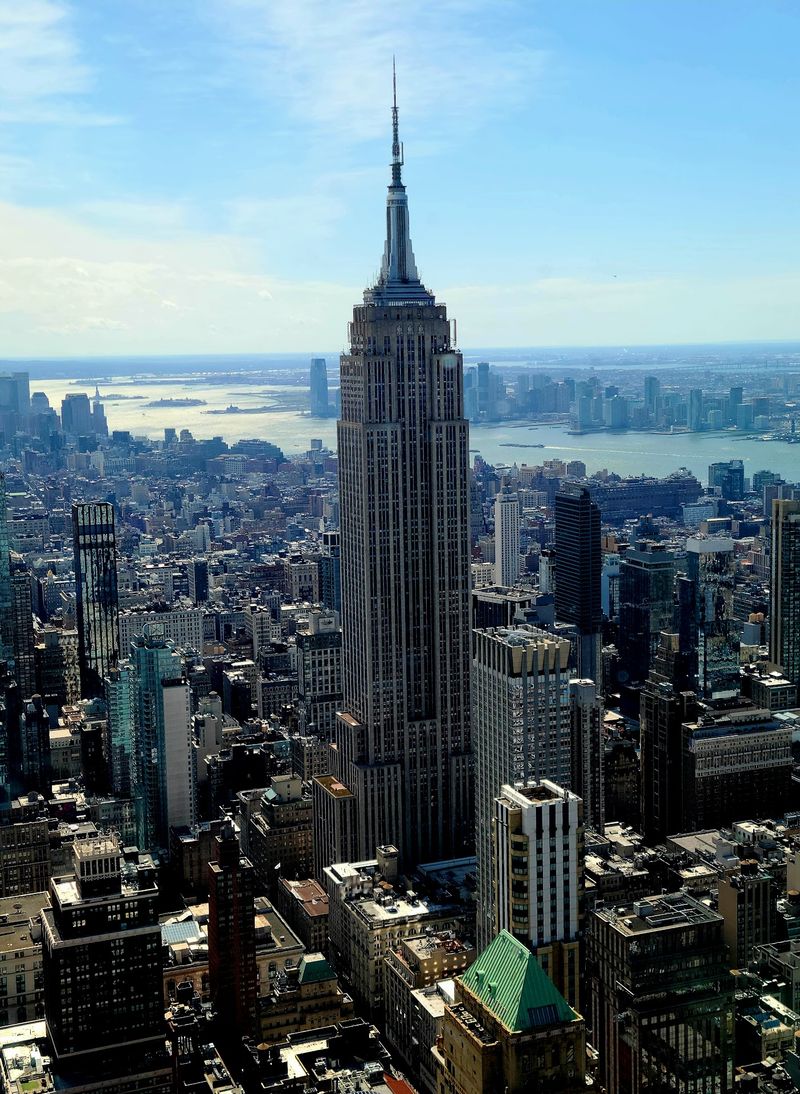
Movies have given this skyscraper plenty of screen time. Its stepped Art Deco silhouette has appeared in films, photos, and postcards for generations.
Few buildings are so tied to one city. In Manhattan, you can spot the tower from many neighborhoods, which makes it a handy landmark for finding your way around.
The observatories continue to welcome visitors high above the streets. From up there, you can see the grid of Manhattan, the rivers, and bridges in the distance.
Lines can be long at busy times, so reserving a time slot online is a sensible choice. Visit on a clear day for the widest views.
Palace of Westminster, London, England
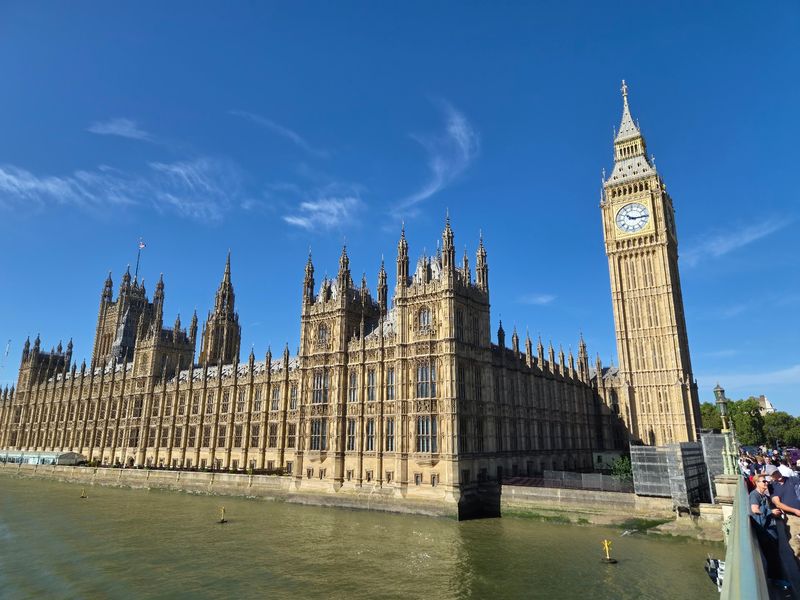
Along the River Thames, this Gothic Revival complex dominates the London skyline. It is the home of the UK’s House of Commons and House of Lords.
Because it is a working government site, access depends on what is happening inside. Visitors can currently explore areas including Westminster Hall and the parliamentary chambers on selected dates.
Tours are offered as guided and self-guided options. The official UK Parliament website lists dates and ticket details, so check there first.
Even if you cannot get inside, the exterior is worth a long look. A walk along Westminster Bridge gives a classic view of the pointed spires and the famous clock tower.
Notre-Dame Cathedral, Paris, France
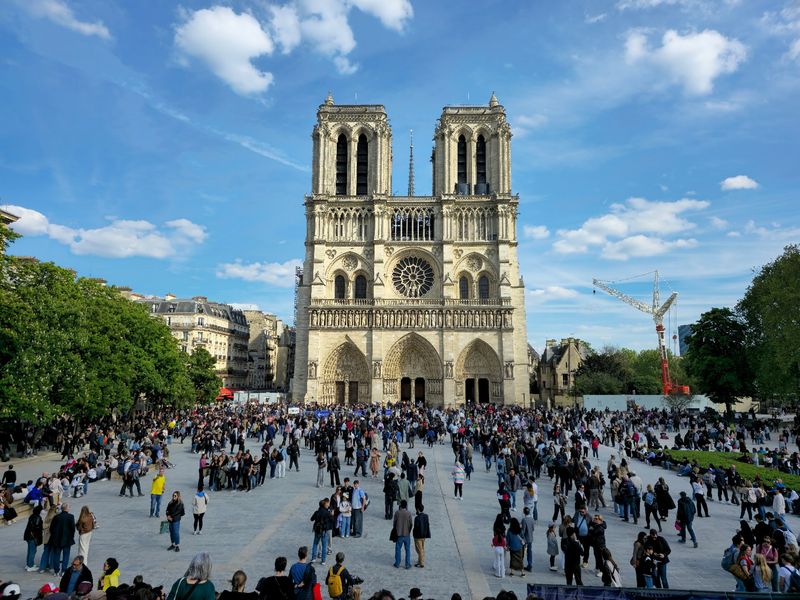
After years of restoration following the 2019 fire, Notre-Dame has returned to the Paris landscape. The cathedral sits on the Île de la Cité, surrounded by the River Seine.
Entry is currently free, and the cathedral keeps regular visitor hours through the week. Lines can form, so arriving early helps.
Take time outside before heading in. The twin towers, carved portals, and flying buttresses show off the skill of medieval builders.
Inside, look up at the high vaulted ceiling and the large stained glass windows. It is one of Europe’s essential architectural stops, and seeing it reopened makes a visit feel timely.
PETRONAS Twin Towers, Kuala Lumpur, Malaysia
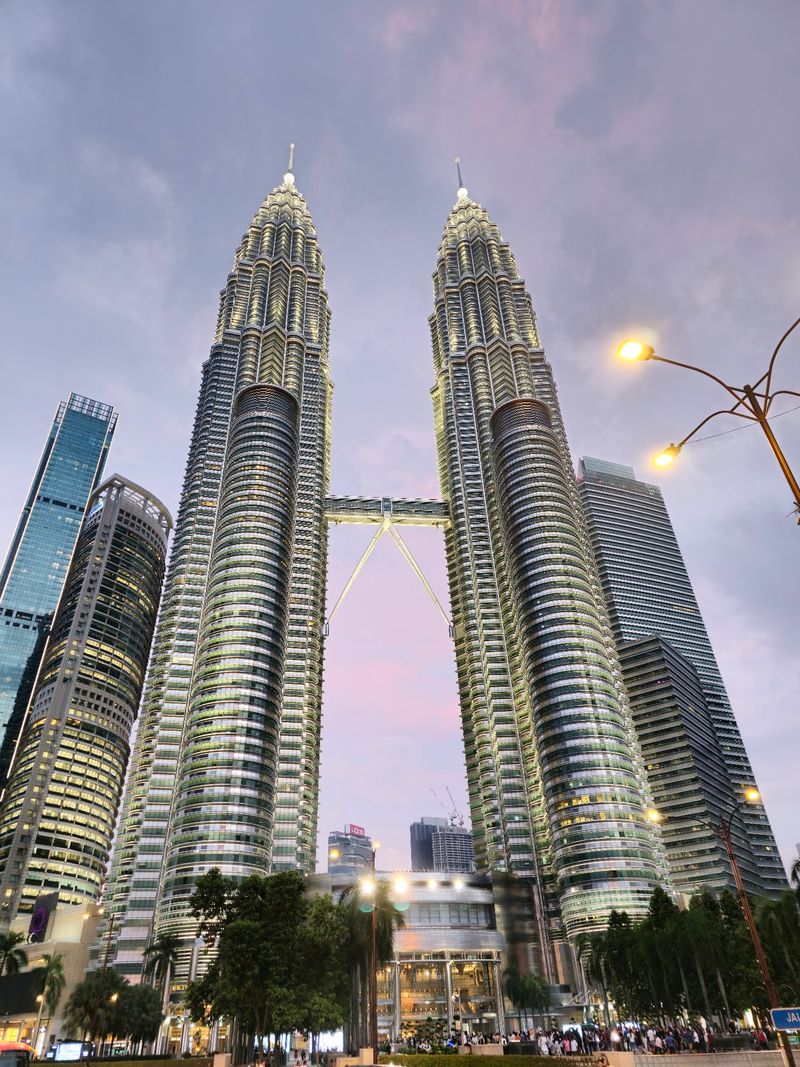
Two silver towers, joined by a bridge, define the skyline of Kuala Lumpur. They are among the most recognizable modern landmarks in Southeast Asia.
The stainless-steel-and-glass façades carry motifs inspired by Islamic geometry. Look at the floor plan and you will see patterns that echo that design idea.
Visitors can experience the connecting Skybridge and the upper observation areas. The attraction operates on scheduled visiting days, so check the schedule before you go.
Tickets are timed, which keeps crowds manageable. The park at the base of the towers is a good spot for photos, especially if you want both towers in one frame.
Casa Batlló, Barcelona, Spain
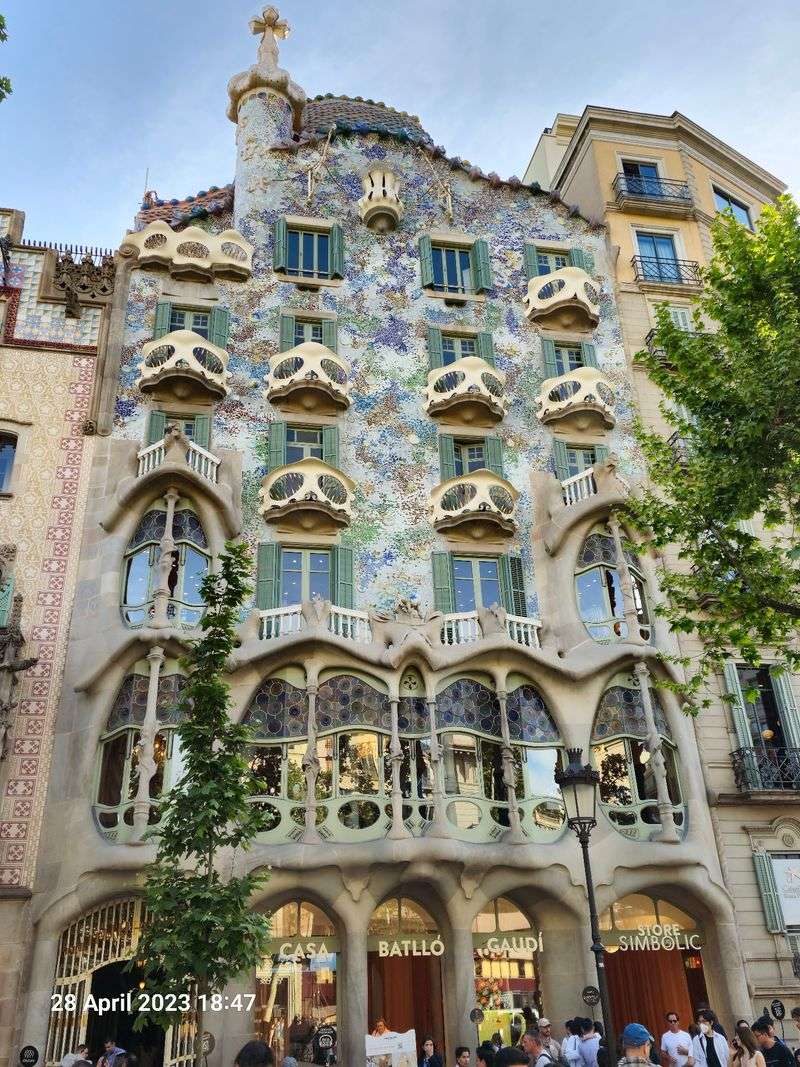
Straight lines are hard to find on this house. Gaudí gave it flowing shapes, unusual windows, and a surface covered in colorful mosaics.
The rooftop is the showstopper, with an arched ridge that looks like the back of a dragon. Many visitors read the balconies as masks or skulls, and the design invites that kind of guessing.
The house operates as a visitor attraction and currently opens daily. Inside, curved walls and detailed woodwork continue the organic look.
It sits on Passeig de Gràcia, a main avenue in Barcelona. That makes it simple to pair with other sights, including a stroll to the nearby Gaudí-designed buildings.
Fallingwater, Mill Run, Pennsylvania
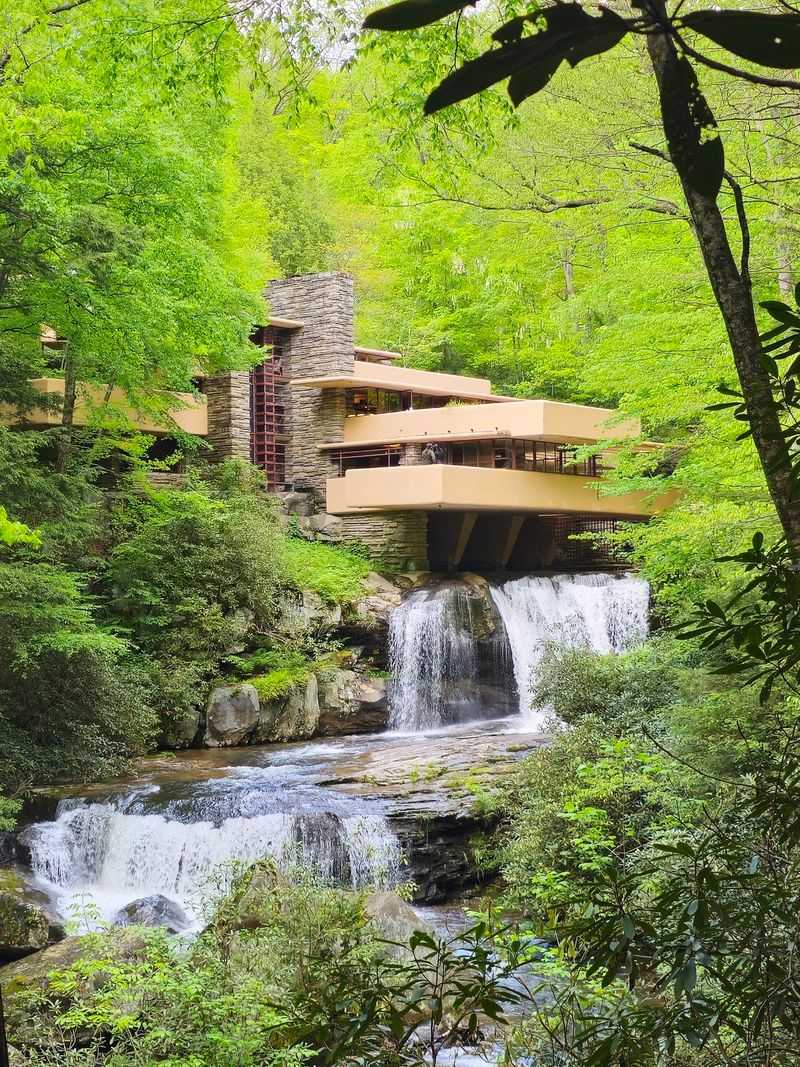
Most houses are built beside a waterfall. Frank Lloyd Wright put this one right over it, in the woods of rural Pennsylvania.
Horizontal concrete terraces extend out from the rock, and the stream runs beneath. It is one of the most famous examples of architecture blended with nature.
The preserved house is open for tours through much of the year, with seasonal entry hours. Advance reservations are a good idea, since tours are the way to see the interior.
The surrounding grounds add to the visit, with trails and forest views. Autumn is a popular season, when the trees around the house change color.
Guggenheim Museum Bilbao, Bilbao, Spain
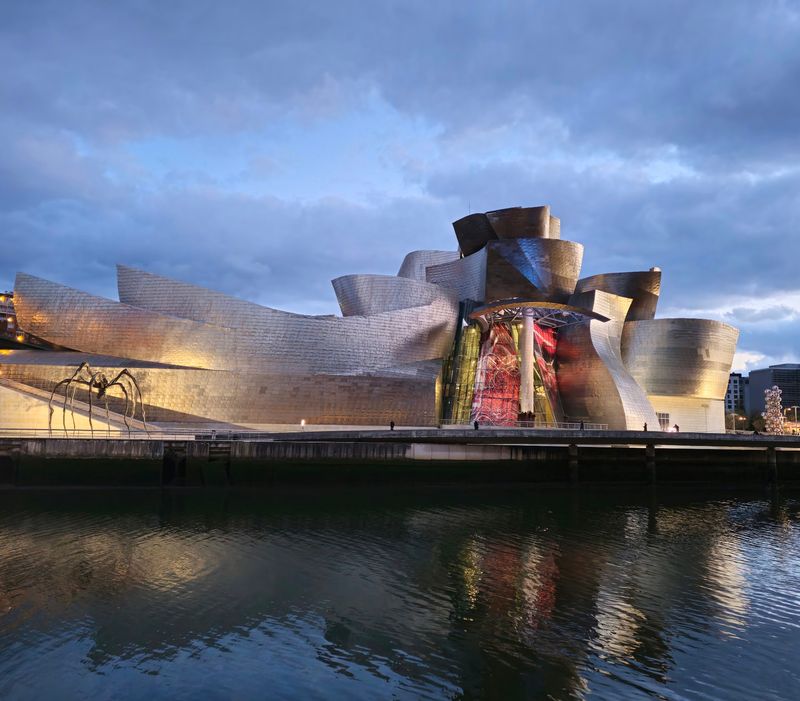
A museum can be a destination all by itself, and this one proved it. Frank Gehry’s titanium-clad design helped make architecture a reason to visit Bilbao.
The curved panels shift in appearance as the light changes. Walk around the outside at different times of day and the building seems to look a little different each time.
Inside, it works as a major modern-art museum. It is currently open Tuesday through Sunday, with some additional Monday openings, so check the calendar.
The riverside setting makes the exterior easy to enjoy, with walkways and public art nearby. Pair the visit with a stroll through the city’s old town.
Louvre Palace and Pyramid, Paris, France
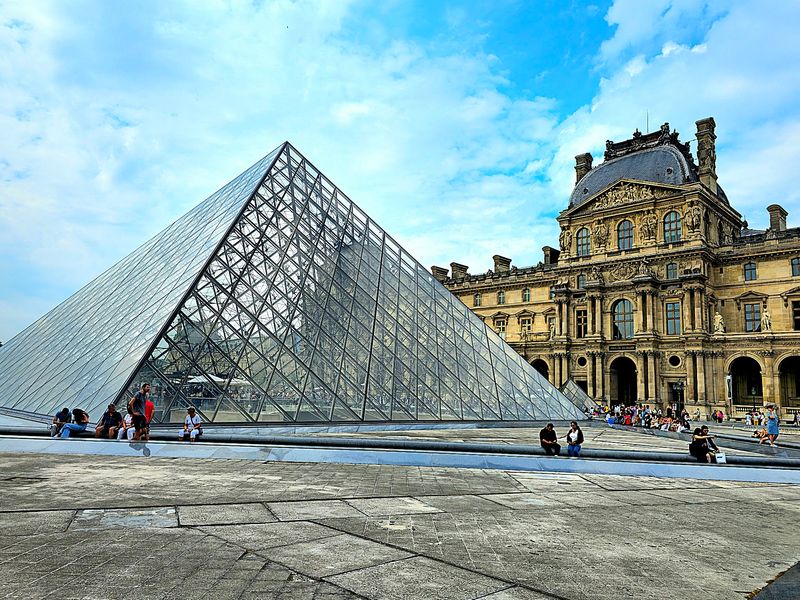
A glass pyramid sits in front of a centuries-old palace, and somehow it works. I.
M. Pei’s design is now as famous as the building around it.
The complex reflects centuries of French palace architecture. Today it houses one of the world’s major art museums.
It is open throughout the week except Tuesdays, though some galleries close from time to time. Checking the official site before you go saves surprises.
The collection is huge, so choosing a few priorities beats trying to see everything. Even a short visit to the courtyard gives you a strong sense of how old and new design meet in Paris.
Reichstag Building, Berlin, Germany
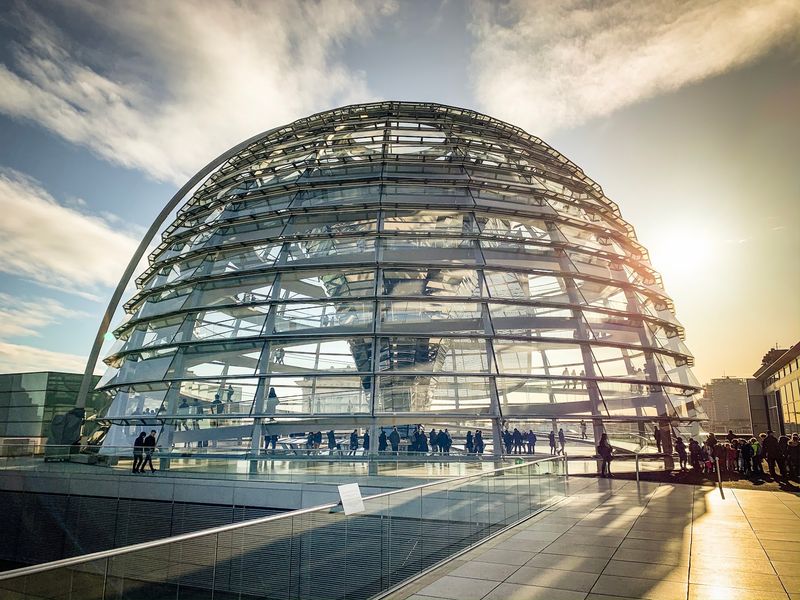
Free entry to a glass dome above a parliament is a rare treat. At the Reichstag, visitors who register ahead can step onto the rooftop terrace and into the dome.
The building mixes 19th-century architecture with Norman Foster’s modern design. The contrast between the stone base and the transparent top is the highlight.
Inside the dome, a spiraling ramp lets you walk up while looking over Berlin. The views stretch across government buildings and city streets.
Maintenance and parliamentary activity can sometimes limit access, so confirm details through the Deutscher Bundestag website. Registration is the key step, so do it early.
Hassan II Mosque, Casablanca, Morocco
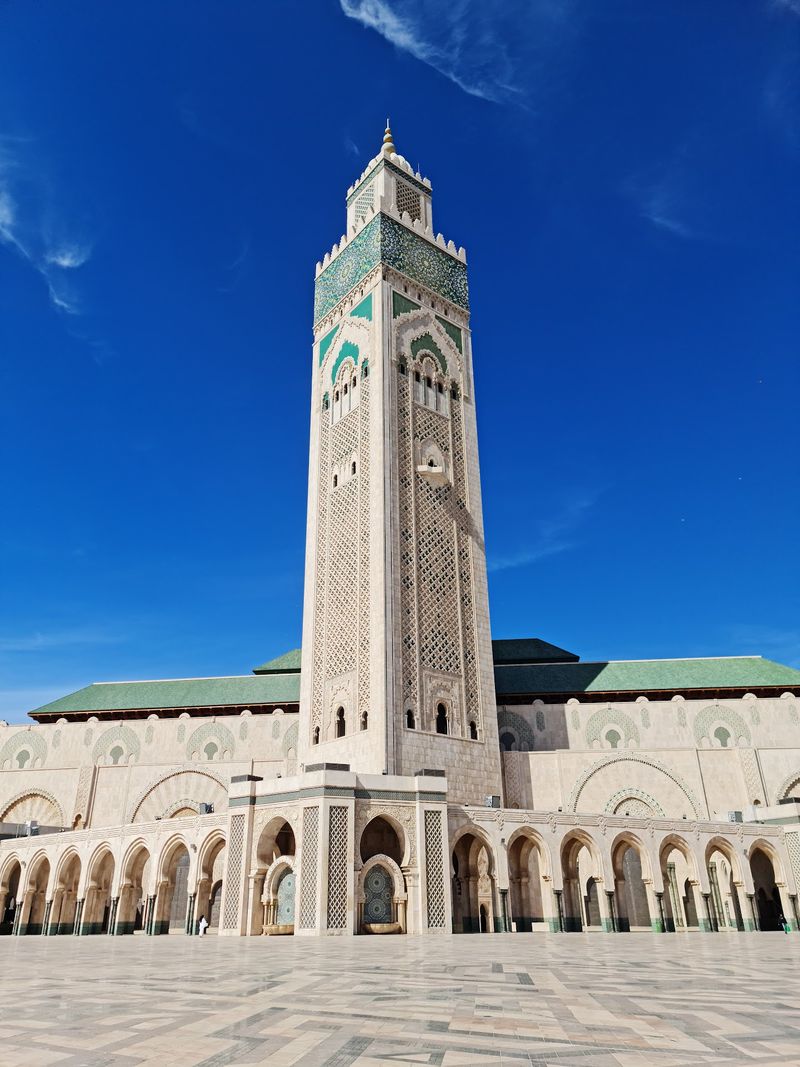
Few religious buildings sit this close to the ocean. This enormous mosque rises beside the Atlantic in Casablanca, with a tall minaret that stands out along the coast.
Moroccan craftsmanship is the star here. Carved wood, marble, plasterwork, and zellige tile cover many surfaces.
Unlike many mosques in Morocco, portions can be explored by non-Muslim visitors. Access is through scheduled guided tours, so check times with the Hassan II Mosque Foundation.
Plan to arrive a little early for your tour slot. The plaza outside is wide and open, which gives you room to take in the scale of the building before heading in.
Cathedral of Brasília, Brasília, Brazil
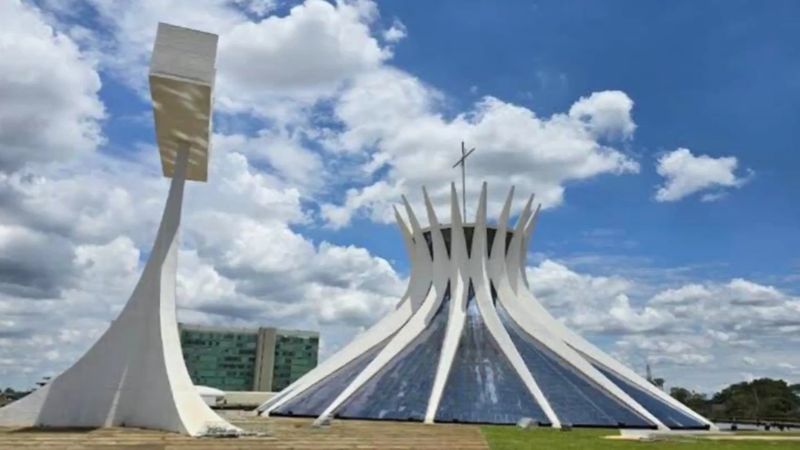
Sixteen concrete columns curve upward and meet at the top, forming a shape that looks like hands reaching skyward. Oscar Niemeyer designed the cathedral as a highlight of Brazil’s purpose-built capital.
The roof is mostly glass, so the interior is filled with daylight. Entering involves a sloping path that leads you down into the space.
The cathedral currently welcomes visitors Tuesday through Sunday, around religious services. Respectful dress and quiet behavior are expected.
Brasília is known for modernist design, so the cathedral fits well into a day of architecture. Government buildings nearby share the same bold, sculptural approach.
Barbican Centre, London, England
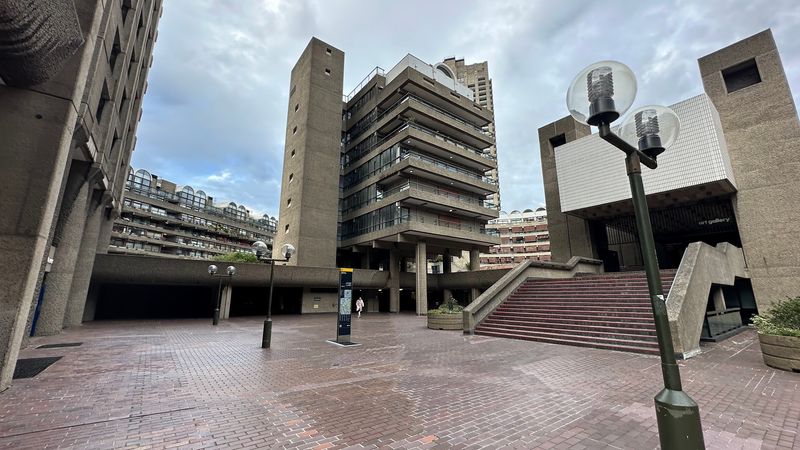
Concrete rarely gets this much attention, yet the Barbican has fans around the world. It is one of the most recognizable large-scale examples of Brutalist architecture.
Layered walkways, terraces, arts venues, and residential towers fit together like a small city. People live, work, and attend shows all in the same complex.
The Barbican remains active, with performances and exhibitions throughout the year. Dedicated architecture tours are running in 2026, which is useful if you want the story behind the design.
Wear comfortable shoes, since the elevated walkways can be a little confusing at first. Following the signs helps, and wandering is part of the fun.
Colosseum, Rome, Italy
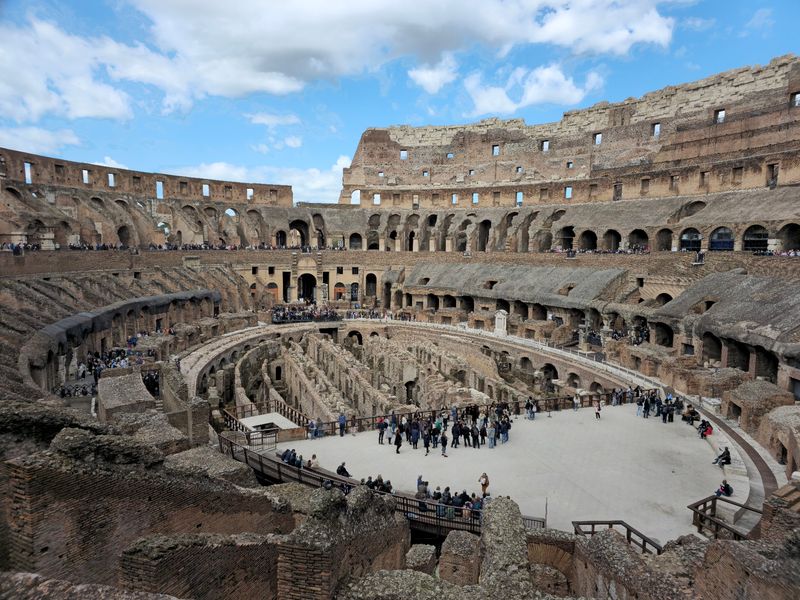
Built during the Roman Empire, the Colosseum has stood for nearly two thousand years. It remains one of the most recognizable structures from antiquity.
The amphitheater once hosted public spectacles for huge crowds. Its oval shape and rows of arches show how advanced Roman engineering was.
Visitors today explore areas of the monument and its archaeological surroundings through timed admission. Booking ahead is wise, since busy days can sell out.
The Roman Forum and Palatine Hill are close by, so a visit can easily grow into a full day of ancient history. Bring water and sun protection in warm months.
Share this story