Some places on Earth are so bizarre, so jaw-dropping, and so completely unexpected that they sound made up. From salt flats that mirror the sky to underground cities carved by hand, our planet hides wonders that no novelist would dare invent.
These 20 real-world attractions prove that reality, when it wants to, can out-weird any fantasy. Pack your curiosity, because things are about to get wonderfully strange.
Salar de Uyuni, Bolivia
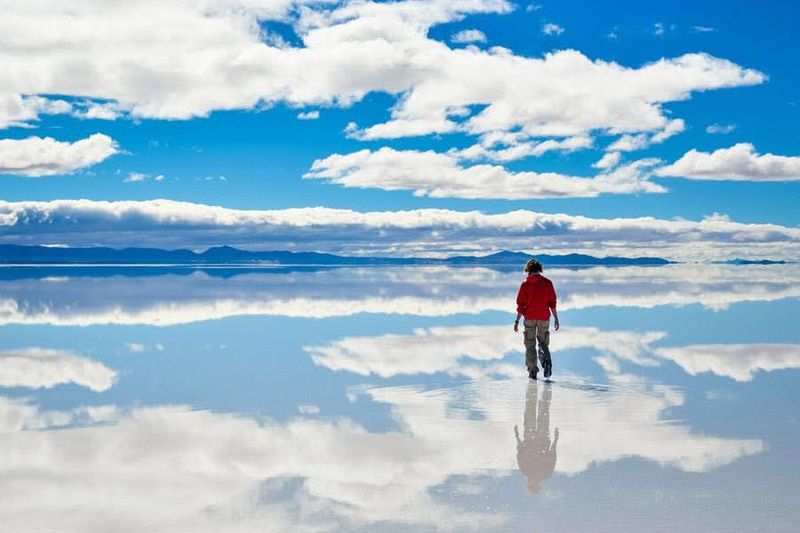
Standing on Salar de Uyuni during the wet season feels like stepping inside a painting that someone forgot to finish. Bolivia’s massive salt flat, the largest on Earth, transforms into a giant natural mirror when shallow rainwater covers its surface.
Clouds, mountains, and even visitors appear perfectly duplicated beneath their feet, making the horizon vanish entirely.
The effect is so convincing that photos taken here routinely confuse people into thinking they were digitally edited. During the dry season, the magic shifts but never disappears.
Geometric salt polygons tile the ground like nature’s own mosaic, stretching in every direction without a single tree or building to break the view.
Ancient lakes once filled this region, and their evaporation left behind an enormous mineral crust rich in lithium. Bolivia holds some of the world’s largest lithium reserves right beneath this dreamy landscape.
Visiting requires preparation since the altitude sits above 3,600 meters, and weather changes quickly. Guided tours from the nearby town of Uyuni make navigation across the featureless expanse much safer and far more enjoyable for first-time visitors.
Darvaza Gas Crater, Turkmenistan
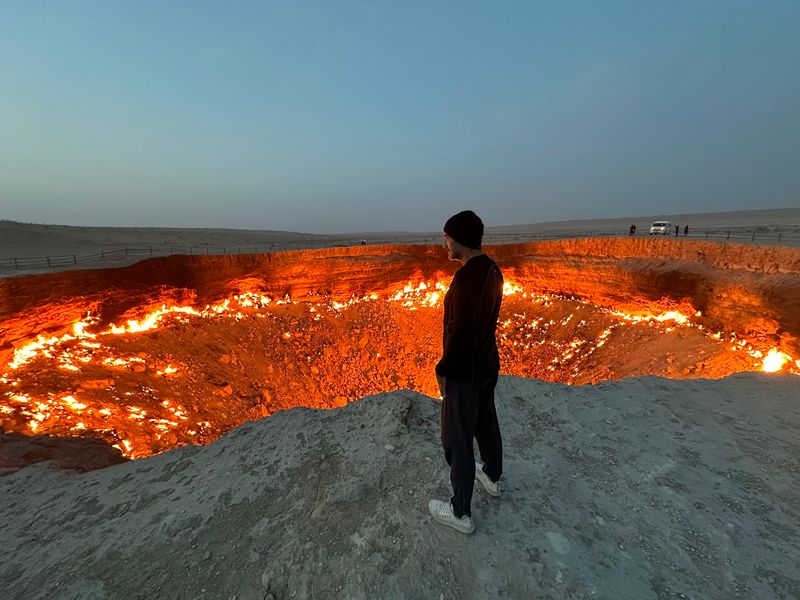
Somewhere in the middle of the Karakum Desert, the ground is literally on fire, and has been for decades. The Darvaza Gas Crater earned its nickname, the Door to Hell, honestly.
Natural gas seeping from underground has kept flames burning inside an enormous pit, turning the surrounding desert a vivid orange after sunset and making the air above it shimmer with heat.
The origin story is still debated, but most accounts suggest a Soviet drilling operation in the 1970s caused the ground to collapse, opening the crater and igniting the gas. Turkmenistan’s government has since announced efforts to reduce methane emissions, and reports suggest the fire is less intense than the famous photographs from earlier years.
Still, flames remain visible, and the crater is no less dramatic in person.
Getting there requires crossing remote desert terrain, usually with a guided expedition from Ashgabat. Camping beside the crater at night is considered one of Central Asia’s most extraordinary experiences.
The glow is visible from a surprising distance, and the sound of burning gas creates an eerie, low roar that makes the whole scene feel genuinely otherworldly rather than simply geological.
Derinkuyu Underground City, Turkiye
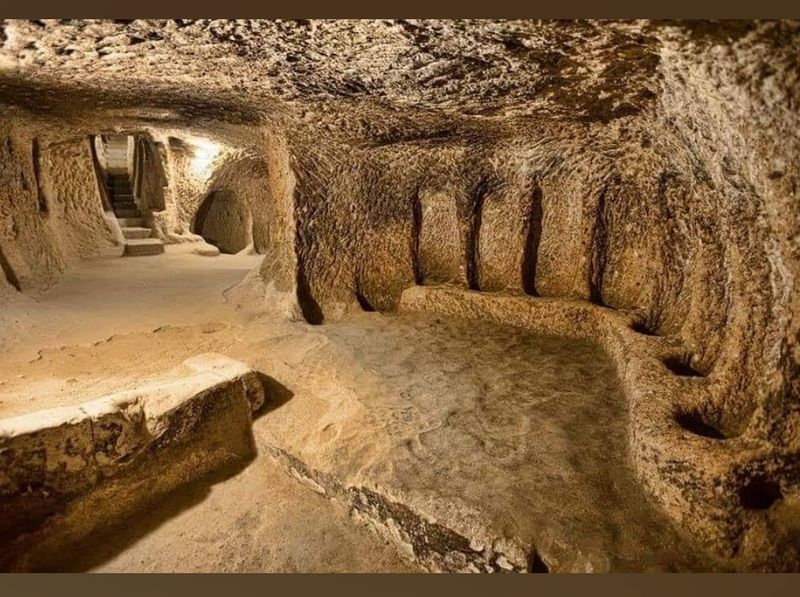
Cappadocia already looks surreal above ground, with its valleys full of cone-shaped volcanic formations called fairy chimneys. Then someone points down and explains that beneath your feet lies an entire city carved into soft rock, and the region becomes a different kind of remarkable altogether.
Derinkuyu is one of the most extraordinary examples of underground architecture anywhere on Earth.
Passages and chambers descend multiple levels below the surface, creating spaces that served as living quarters, storage areas, places of worship, and shelters during times of danger. The volcanic rock, called tuff, is soft enough to carve but hardens when exposed to air, making it ideal for construction.
Rolling stone doors could be sealed from the inside, protecting those sheltering underground.
UNESCO recognized the wider Cappadocian landscape as a World Heritage Site, with Derinkuyu included as a key component. The underground city is open to visitors, though some passages are narrow and require ducking.
Exploring the deeper levels gives a genuine sense of how self-sufficient these subterranean communities were. It is the kind of place that makes you rethink what ancient people were capable of building when survival demanded creativity.
Pamukkale, Turkiye
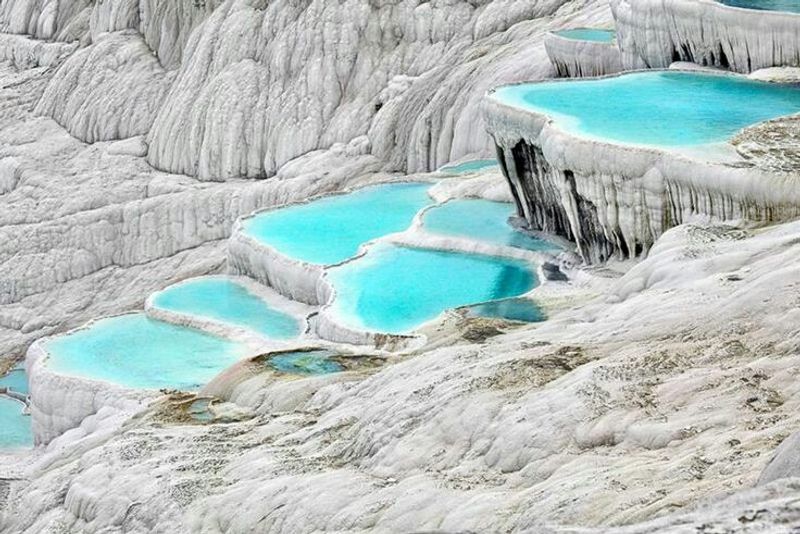
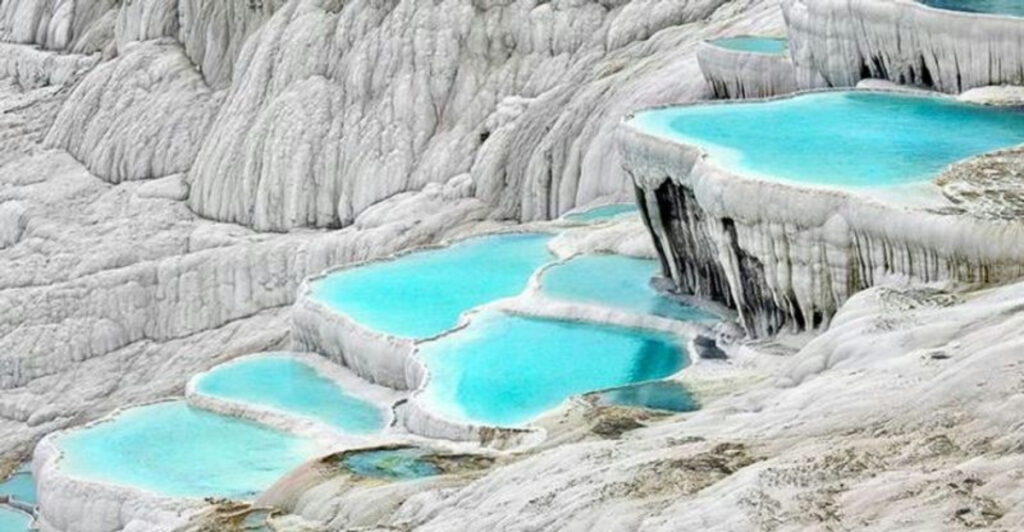
Seen from a distance, Pamukkale looks like a snow-covered mountain sitting stubbornly in the warm Turkish countryside, refusing to acknowledge that it is summer. Up close, the illusion breaks apart in the best possible way.
Those white slopes are not snow but calcium carbonate deposited by thermal water flowing continuously down a cliff nearly 200 meters high, building brilliant white terraces over thousands of years.
The pools that form along the terraces hold warm mineral-rich water, and visitors are allowed to wade through designated sections. The sensation of standing in a shallow thermal pool while looking out over the surrounding valley is genuinely hard to describe without sounding like a brochure.
UNESCO describes the formations as mineral forests and petrified waterfalls, which is both accurate and wonderfully poetic.
Directly above the terraces stand the ruins of Hierapolis, an ancient spa city that recognized the therapeutic value of these waters long before modern tourism existed. The combination of geological wonder and ancient history in one location makes Pamukkale unusually rewarding to visit.
Arriving early in the morning helps avoid crowds and gives the terraces a quieter, more magical atmosphere before the busiest hours of the day begin.
Racetrack Playa, Death Valley, California
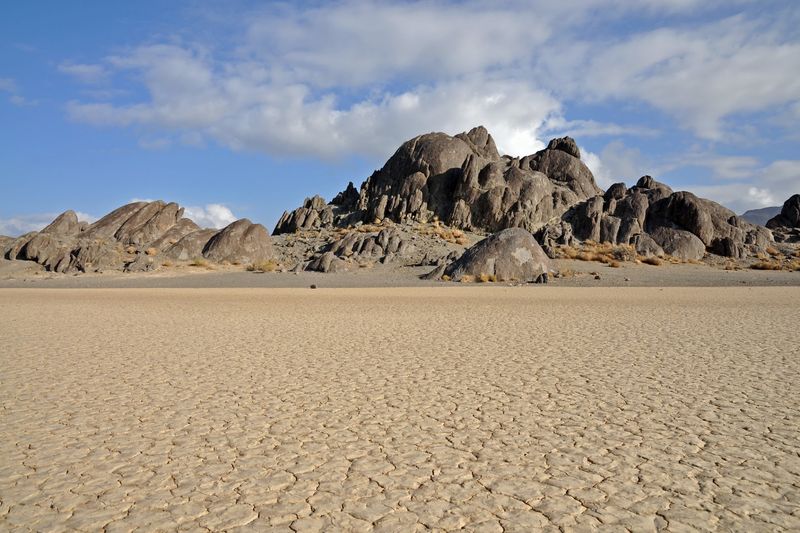
For a long time, the rocks on Racetrack Playa moved, and nobody could catch them doing it. Long trails stretched behind stones across the cracked mud surface of this remote desert lakebed, proving that movement had occurred, but no one had ever witnessed it happening in real time.
The mystery lasted for decades and inspired some wonderfully creative theories.
Scientists eventually solved the puzzle, and the answer turned out to be almost as strange as the mystery itself. Shallow water collects on the playa during winter, then freezes overnight into thin sheets of ice.
When sunlight warms the ice the next morning, it breaks into panels that are pushed by light winds across the slick mud beneath, carrying rocks along with them at an extremely slow pace.
The National Park Service still describes the Racetrack as one of Death Valley’s great geological curiosities, and the trails behind the rocks remain visible for visitors who make the effort to reach it. The access road is unpaved and rough, requiring a high-clearance vehicle.
The remoteness is part of the appeal. Standing on the playa in near-total silence while looking at those trails makes the whole story feel wonderfully improbable, even after the explanation.
Waitomo Glowworm Caves, New Zealand
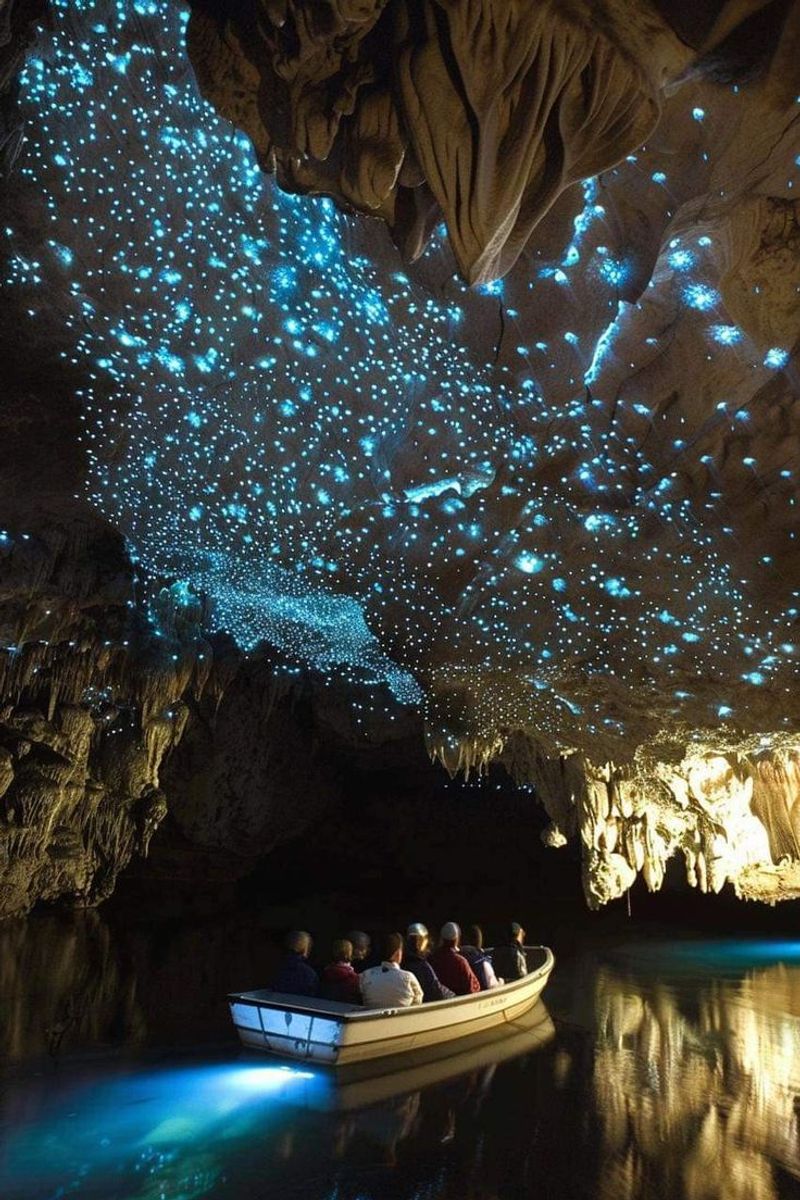
Switching off the lights inside Waitomo is one of those travel moments that stays with a person for years. The cave ceiling above a silent underground river suddenly becomes a galaxy of tiny blue-green lights produced by thousands of glowworms, and the effect is nothing short of spectacular.
The silence, the darkness, and the living light combine into something that photography struggles to fully capture.
The glowworms responsible are actually larvae of a fungus gnat species found only in New Zealand. They produce bioluminescent light to attract prey, dangling sticky threads to catch insects drawn toward the glow.
The biology is fascinating, but standing beneath them on a boat drifting through the darkness, the science temporarily takes a back seat to sheer wonder.
Tourism New Zealand consistently highlights Waitomo as one of the country’s premier natural experiences, and the caves have been welcoming visitors for well over a century. Several tour options exist, from calm boat rides through the main glowworm grotto to more adventurous underground tubing and abseiling experiences for those who want to explore deeper sections.
The caves are located in the Waikato region of the North Island, making them a convenient stop between Auckland and Rotorua.
Kummakivi, Finland
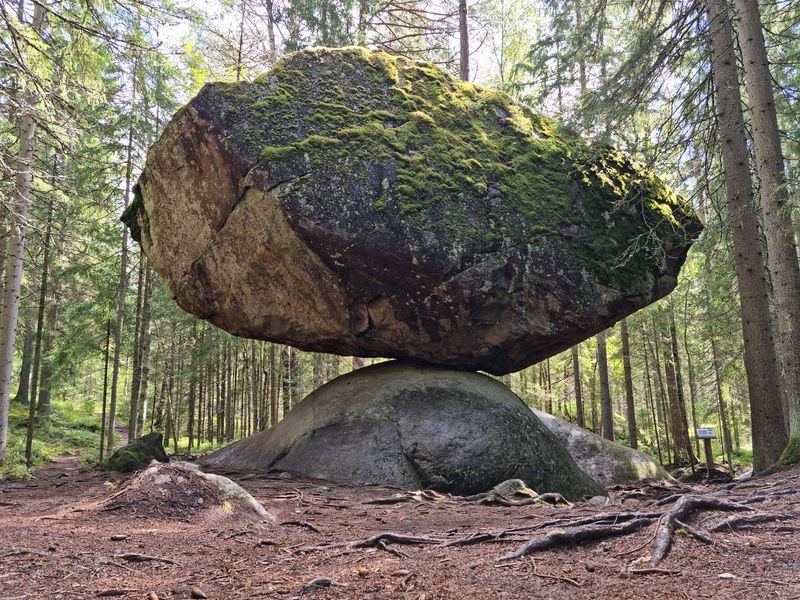
Kummakivi looks like a practical joke played by a giant with too much time and a very good sense of balance. This enormous boulder sits perched on top of a much smaller, curved rock in a Finnish forest, touching its base at what appears to be an impossibly tiny contact point.
The name translates roughly as strange stone, and it earns that title every single day.
The real explanation involves glaciers rather than giants. During the last ice age, glaciers transported massive rocks across vast distances and deposited them wherever the ice happened to melt.
Kummakivi ended up balanced in its current position through this process, and it has remained there for thousands of years without anyone needing to adjust it.
Visit Finland notes that only a small portion of the boulder’s underside actually makes contact with the rock beneath it, which makes the whole arrangement look freshly placed rather than geologically ancient. The site sits in the South Savo region and can be reached via a short forest trail.
There are no crowds, no entrance fees, and no dramatic signage. Just a very large rock sitting exactly where it should not be, quietly defying expectations in the middle of a peaceful woodland.
Giant’s Causeway, Northern Ireland
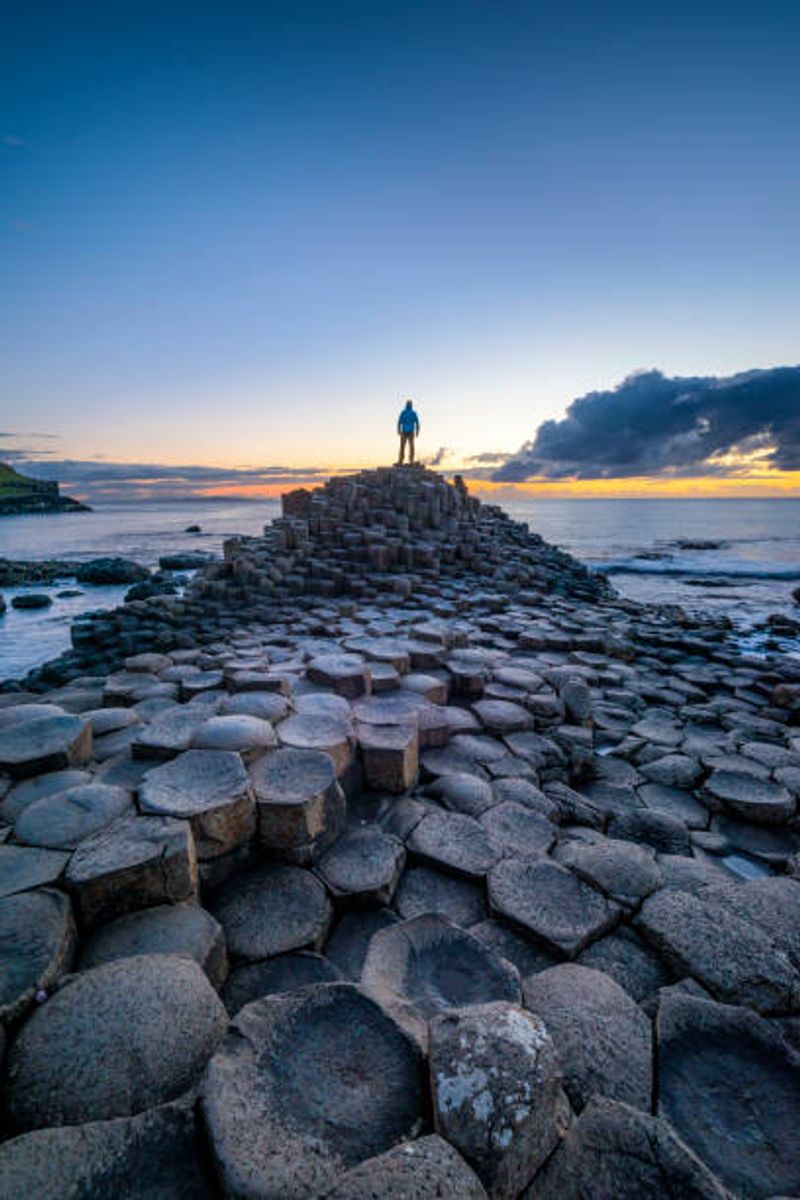
Roughly 60 million years ago, a massive volcanic eruption produced lava flows that cooled in such a specific way that the result looks almost too geometric to be natural. The Giant’s Causeway on Northern Ireland’s Antrim coast features tens of thousands of basalt columns packed tightly together, many of them remarkably close to perfect hexagons.
The overall effect resembles an enormous cobblestone road leading straight into the sea.
Irish legend offered a more entertaining explanation long before geology could. According to folklore, the giant Finn McCool built the causeway to cross the sea and challenge a Scottish rival.
The rival, upon seeing the size of Finn McCool, fled back home, and the causeway was left unfinished. It is a good story, and the formations do look handmade enough to make it tempting.
The site is a UNESCO World Heritage Site and one of Northern Ireland’s most visited attractions. The visitor center explains the geological processes in detail, and the coastal path offers stunning views beyond the main causeway area.
Visiting at low tide gives the best access to the columns, while arriving early or late in the day reduces the number of fellow visitors significantly. The scenery surrounding the causeway is dramatic regardless of season.
Sedlec Ossuary, Czechia
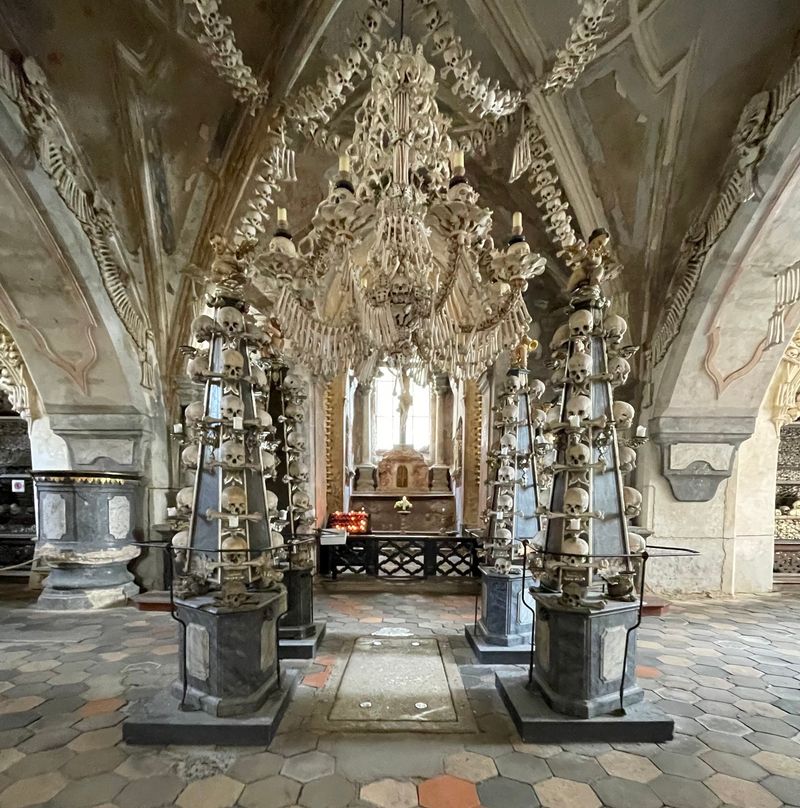
Walking into the Sedlec Ossuary requires a small mental adjustment, because the decorations are made entirely from human bones. Chandeliers, garlands, coats of arms, and architectural ornamentation line the interior of this small Gothic chapel near Kutna Hora, all crafted from the remains of approximately 40,000 people according to VisitCzechia.
The effect is simultaneously eerie and strangely beautiful.
The story behind it involves a medieval abbot who returned from Jerusalem carrying a small amount of soil from Golgotha and scattered it over the local cemetery. Word spread that burial there was spiritually significant, and thousands of people sought interment at the site over the following centuries.
When the cemetery ran out of space, bones were collected and stored inside the chapel.
A woodcarver named Frantisek Rint was hired in the late 1800s to arrange the bones into their current decorative forms, and he apparently approached the task with genuine artistic ambition. His own name is even spelled out in bones near the entrance.
The ossuary sits beneath the Cemetery Church of All Saints and is open to visitors year-round. Kutna Hora itself is a beautiful medieval town worth exploring beyond the ossuary, making the visit even more worthwhile.
Capuchin Catacombs, Palermo, Italy
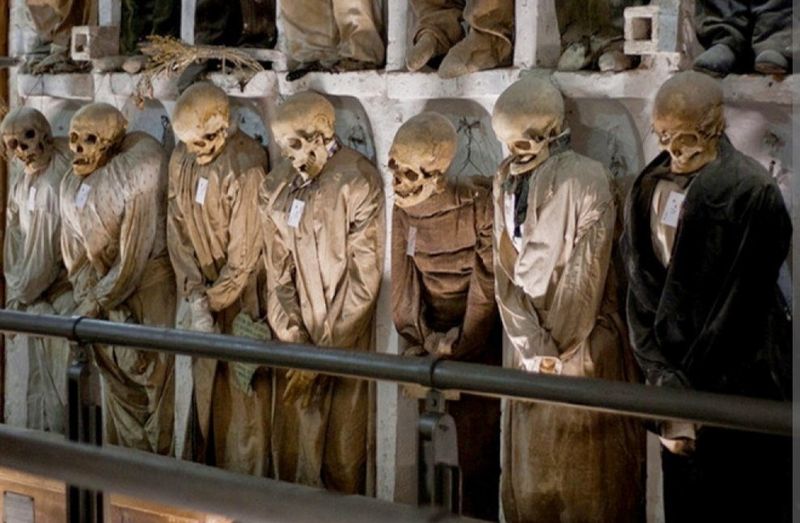
Most catacombs contain skeletons. Palermo’s Capuchin Catacombs contain something considerably more confronting: thousands of preserved bodies, still dressed in clothing that reflects the era and social status they occupied in life.
Rows of mummified figures line the corridors beneath the monastery, creating an archive of human history that is genuinely unlike anything else on Earth.
Sicily’s official tourism authority states that the catacombs hold around 8,000 mummified bodies, ranging from Capuchin friars to aristocrats, professionals, and children. The preservation methods varied and included dehydration, chemical treatment, and the use of vinegar and arsenic depending on the period.
Some figures are remarkably well preserved, while others have deteriorated significantly over the centuries since their placement.
The most famous resident is a two-year-old girl named Rosalia Lombardo, who died in 1920 and whose preservation is so remarkable that she became known as the Sleeping Beauty. Scientists studying her case discovered that injections of formalin, zinc salts, alcohol, salicylic acid, and glycerin were responsible for her extraordinary condition.
Visiting the catacombs requires respectful behavior, and photography rules apply. The experience is sobering, historically rich, and absolutely unforgettable in a way that few travel experiences manage to achieve.
Salt Cathedral of Zipaquira, Colombia
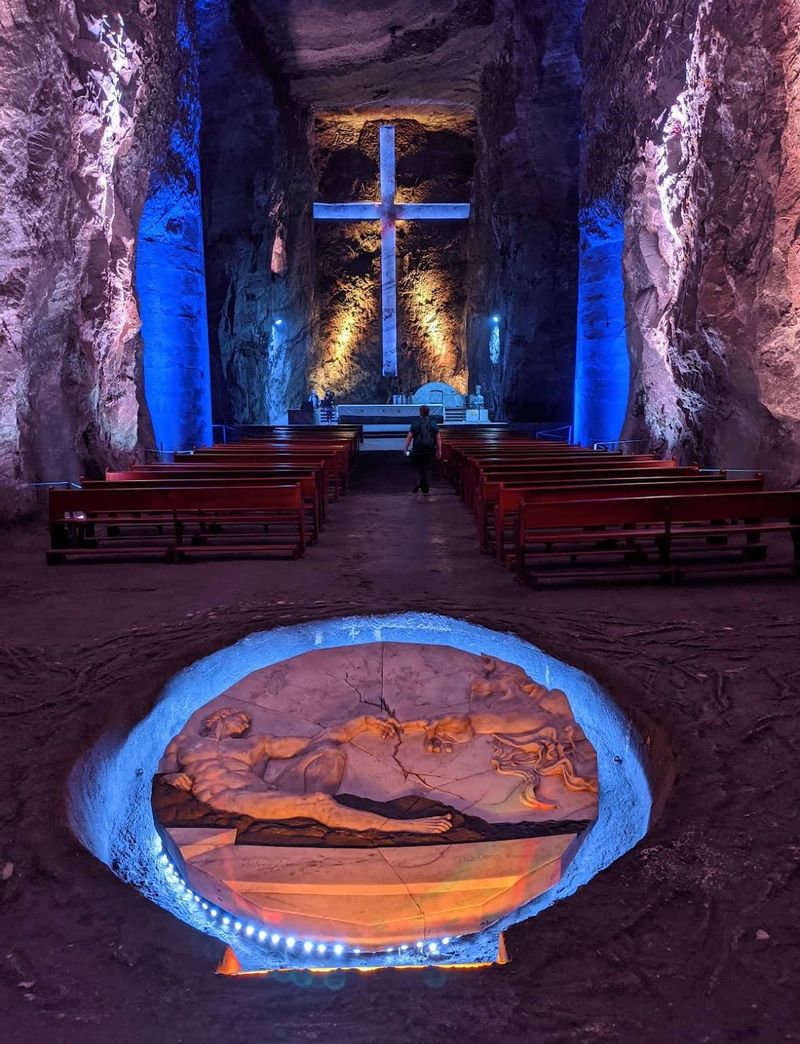
About an hour outside Bogota, visitors descend into an old salt mine and find themselves inside one of the most architecturally striking religious spaces in the world. The Salt Cathedral of Zipaquira is exactly what it sounds like: a full Catholic sanctuary built within a working salt deposit, complete with carved chambers, illuminated crosses, sculptures, and soaring underground spaces that create an atmosphere unlike any conventional church.
The original salt cathedral was constructed in the 1950s by miners who worked the site and wanted a place of worship underground. That version was eventually closed for safety reasons, and the current cathedral was built deeper into the mine and opened in 1995.
Colombia’s official tourism organization describes it as a religious sanctuary built within an underground salt mine, which is accurate but undersells how genuinely impressive the scale feels in person.
The walls, ceiling, and floors are all salt, and the lighting has been carefully designed to emphasize the textures and natural patterns in the rock. Guided tours walk visitors through the fourteen Stations of the Cross before reaching the main nave, which can hold hundreds of worshippers.
The cathedral remains an active place of religious practice as well as a major tourist attraction, giving visits a dual purpose that feels respectful rather than exploitative.
Wieliczka Salt Mine, Poland
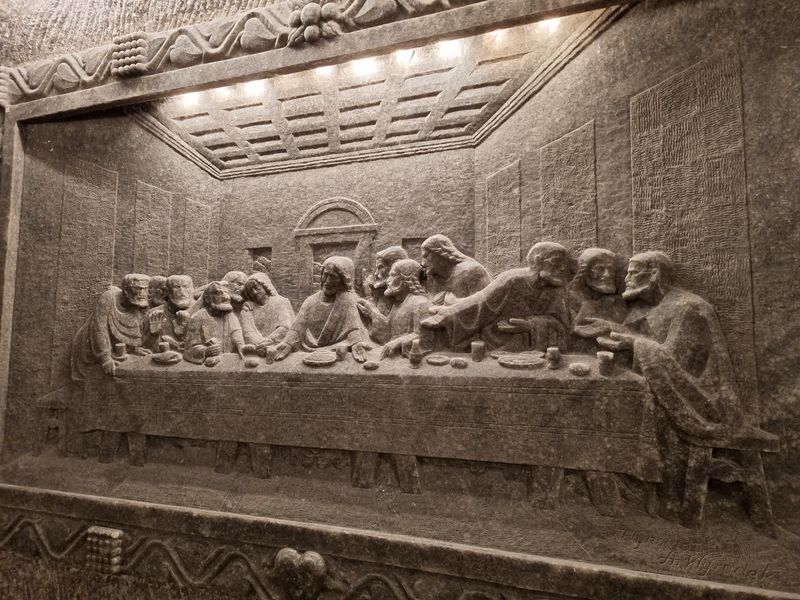
Poland’s Wieliczka Salt Mine makes underground architecture feel like a fine art form. What started as a working salt mine in the thirteenth century gradually transformed into something extraordinary as miners spent their downtime carving chapels, sculptures, bas-reliefs, and entire decorative chambers from the salt walls around them.
The result is a subterranean world that stretches for hundreds of kilometers and contains artworks spanning centuries.
UNESCO recognized Wieliczka alongside the nearby Bochnia mine as a World Heritage Site, noting that together they contain extensive passages, underground chapels, and statues carved entirely from salt. The crown jewel is the Chapel of Saint Kinga, a full-sized underground church with chandeliers made from salt crystals, a carved salt altar, and floor-to-ceiling bas-relief carvings depicting religious scenes.
Everything, including the chandeliers, is made from salt.
The mine descends to a depth of around 327 meters, though tourist routes only cover a portion of the total complex. The air inside maintains a consistent cool temperature and is said to have therapeutic qualities, which led to the development of an underground health resort within the mine itself.
Wieliczka sits just outside Krakow, making it an easy day trip. Visitors consistently describe leaving the mine feeling as though they have discovered a buried civilization rather than simply toured a tourist site.
Wave Rock, Australia
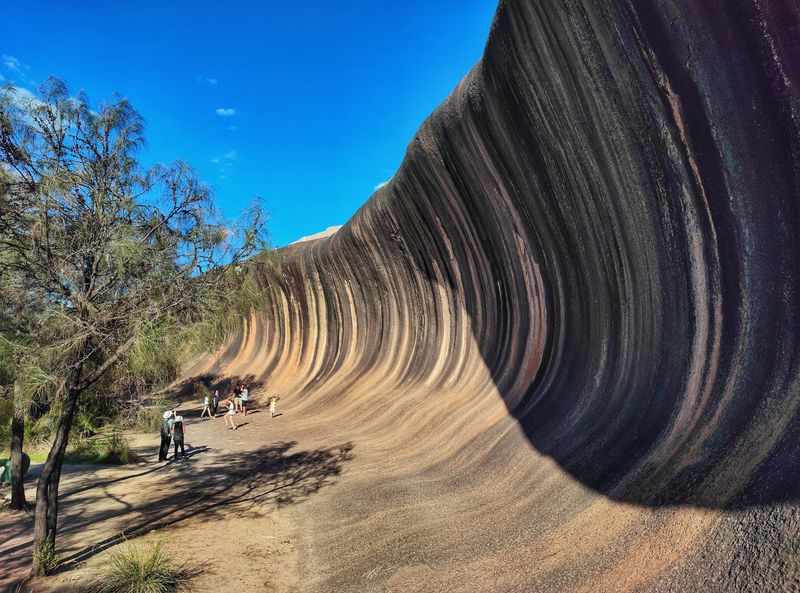
Western Australia hides a stone wave that has been frozen mid-break for millions of years, and it shows no signs of crashing anytime soon. Wave Rock near the small town of Hyden is a granite formation that curves dramatically overhead like a surfer’s dream wave, complete with vertical color stripes of red, yellow, and grey that run down its face like natural paint strokes.
The formation is about 15 meters high and 110 meters long, shaped over an immense period by a combination of weathering, erosion, and the natural exfoliation of granite layers. The color bands come from mineral-rich water that runs down the rock face and leaves deposits behind as it dries.
Tourism Western Australia calls it one of the region’s signature otherworldly sights, and the description holds up completely when you stand beneath it.
Wave Rock is located about 340 kilometers east of Perth, making it a genuine road trip destination rather than a quick detour. The surrounding area offers additional geological curiosities including Hippo’s Yawn, another oddly shaped granite formation nearby.
A small reservoir wall built along the top of Wave Rock collects rainwater, which adds a practical historical layer to the visit. The best photographs are taken in the morning when the light hits the rock face directly and the colors really pop.
Meteora, Greece
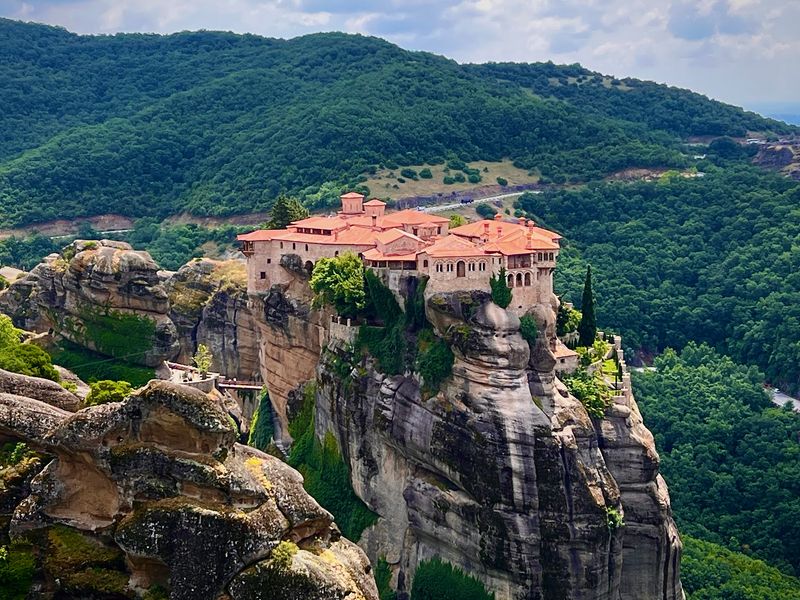
Meteora answers the question nobody thought to ask: what would happen if someone decided to build monasteries on top of enormous stone towers? The answer, it turns out, is one of the most visually stunning landscapes in Europe.
Gigantic sandstone pillars rise from the plain of Thessaly in central Greece, and medieval Orthodox monasteries sit on top of them as though gravity decided the rules did not apply here.
Religious communities began settling on these formations around the fourteenth century, seeking isolation and spiritual focus in locations that were genuinely difficult to reach. Supplies and people were originally hauled up using ropes and nets, which gives the early inhabitants an impressive level of commitment to the concept of living somewhere inconvenient.
UNESCO recognized Meteora as a World Heritage Site for both its natural geology and its outstanding architectural and religious heritage.
Today, staircases cut into the rock and paved roads provide access to the monasteries that remain active. Six monasteries are open to visitors, and each requires modest dress.
The views from the top looking out over the valley are extraordinary, but the most memorable perspective is from below, looking up at buildings that appear to defy both physics and common sense. Visiting at sunrise or sunset adds dramatic light that makes the whole scene feel even more cinematic.
Wulingyuan, China
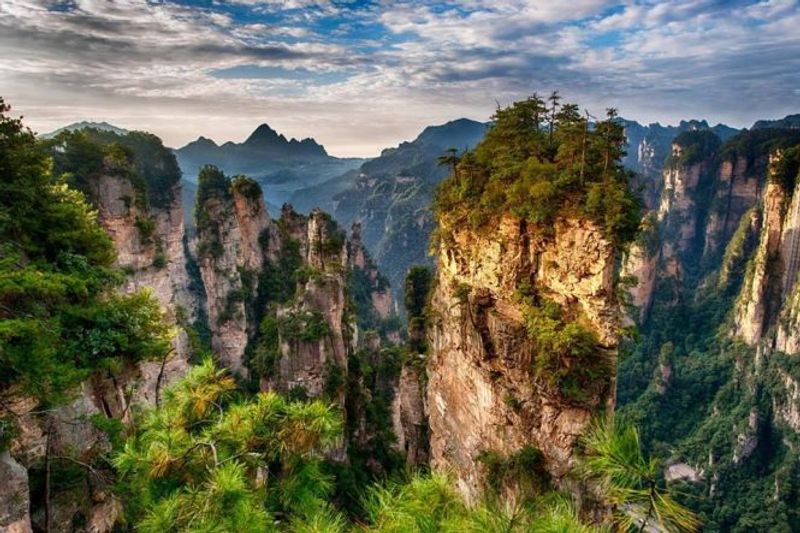
More than 3,000 narrow sandstone pillars shoot upward from the valleys of Wulingyuan in China’s Hunan province, some of them rising over 200 meters into the air. Mist rolls through the gaps between them on most mornings, leaving only the forested tops of the pillars visible above a sea of cloud.
The result looks like something generated by a computer graphics team working on a fantasy film rather than a real geological landscape.
The formations developed over hundreds of millions of years as resistant quartz sandstone was eroded by water and wind, leaving behind these extraordinary vertical columns. The wider Zhangjiajie area became internationally famous after its landscapes inspired the floating mountains in the film Avatar, and visitor numbers increased dramatically following that connection.
The area has since developed elevated glass walkways, cable cars, and observation platforms to help visitors experience the scenery at various heights.
Zhangjiajie National Forest Park was China’s first designated national forest park, established in 1982, and the broader Wulingyuan Scenic Area holds UNESCO World Heritage recognition. The park covers a vast area and contains hundreds of kilometers of trails.
Arriving on weekdays and during non-holiday periods makes a significant difference in crowd levels. The scenery is genuinely breathtaking at any time, but misty mornings produce the most dramatic and photogenic conditions.
Leshan Giant Buddha, China
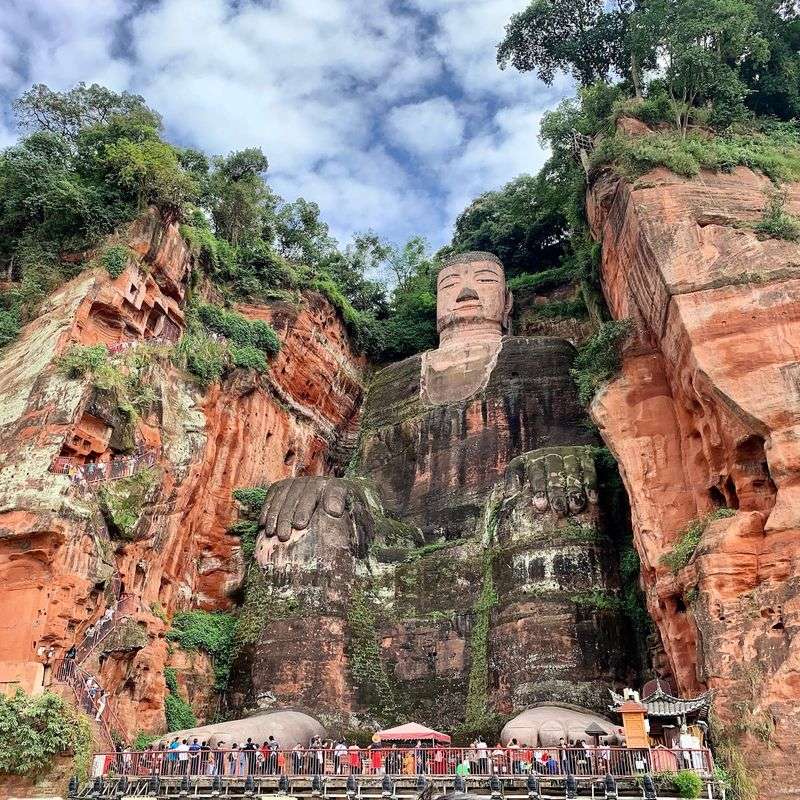
Carving a 71-meter Buddha directly into a cliff face is an ambitious project under any circumstances. Doing it during the Tang dynasty, starting in 713 CE, using hand tools and ropes, is something else entirely.
The Leshan Giant Buddha in Sichuan province is the tallest pre-modern stone Buddha sculpture in the world, and standing at its feet while boats move along the river below is a perspective-shifting experience.
UNESCO describes it as an extraordinary eighth-century sculpture carved from the hillside itself, which understates the engineering involved. The Buddha’s ears are seven meters long, his shoulders are 28 meters wide, and his toenails are large enough to sit on comfortably.
A drainage system was built into the sculpture during its construction to reduce erosion, a detail that reveals just how carefully the project was planned.
The sculpture sits at the confluence of the Minjiang, Dadu, and Qingyi rivers, a location chosen deliberately because the turbulent waters at that junction caused frequent boat accidents. The monk who initiated the project believed that the Buddha’s presence would calm the currents.
Whether or not it worked spiritually, the enormous amount of rock removed during carving actually did alter the river’s flow and reduced the turbulence. Leshan is easily reached from Chengdu and is often combined with a visit to the panda breeding center.
Socotra Archipelago, Yemen
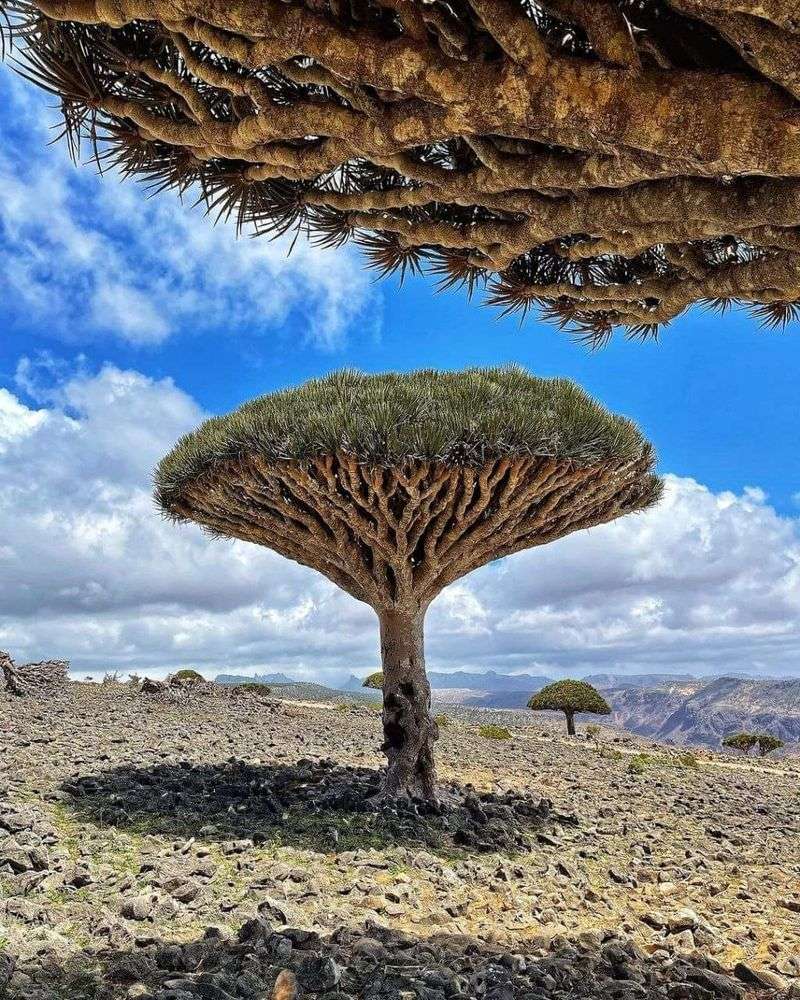
Socotra’s dragon’s blood trees look like something a child might draw when asked to invent a fictional plant: a thick trunk topped with a dense, perfectly flat canopy that spreads outward like an enormous umbrella. These trees exist only on Socotra, a Yemeni archipelago in the Arabian Sea that has been geographically isolated for so long that a remarkable percentage of its species are found nowhere else on Earth.
UNESCO describes Socotra as one of the world’s most significant and well-preserved island ecosystems, with an extraordinary concentration of endemic species. Around a third of the archipelago’s plant species are unique to it, a level of biological distinctiveness that scientists compare to the Galapagos Islands.
The alien-looking landscape extends beyond the trees to include bottle trees, cucumber trees, and succulents with equally improbable forms.
Visiting Socotra has historically been complicated by its remote location and, more recently, by the ongoing conflict in Yemen. Access depends on current conditions, and travelers should check the latest guidance carefully before making plans.
When visits are possible, the experience is described by those who have made the journey as profoundly unlike anywhere else. The combination of extraordinary biodiversity, dramatic landscapes, and near-total isolation from mainstream tourism creates something genuinely rare in a world where unique places are increasingly difficult to find.
Popeye Village, Malta
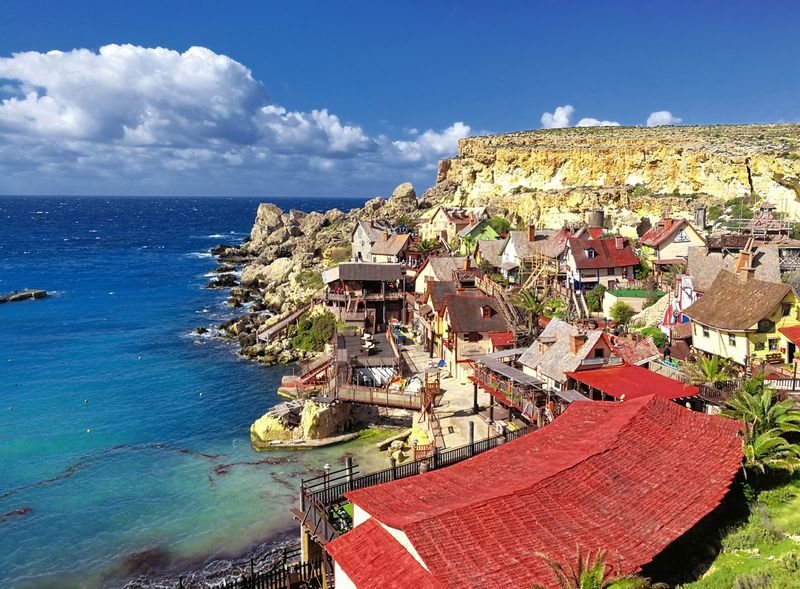
Most movie sets get dismantled after filming wraps. The wooden village built on Malta’s Anchor Bay for the 1980 Popeye musical starring Robin Williams simply never left, and what was once a temporary production backdrop has spent over four decades becoming a permanent part of the Maltese landscape.
Visitors today walk through an artificial fishing village that feels lived-in despite being built entirely for a film.
The production chose Malta for its clear Mediterranean light and scenic coastline, and the crew constructed the ramshackle wooden settlement from scratch on the rocky shore. When filming ended, the decision was made to preserve the set rather than demolish it, and it gradually evolved into a family-friendly attraction with activities, performances, and seasonal events added over the years.
There is something genuinely delightful about the whole situation. A fictional village created for a movie about a fictional sailor has become a real tourist destination that appears on actual maps and in actual travel guides.
Malta leans into the absurdity rather than apologizing for it, which is exactly the right approach. The bay itself is beautiful regardless of the colorful buildings surrounding it, and the combination of film history, Mediterranean scenery, and cheerful kitsch makes Popeye Village one of those places that is harder to explain than it is to enjoy.
The Dead Sea, Jordan
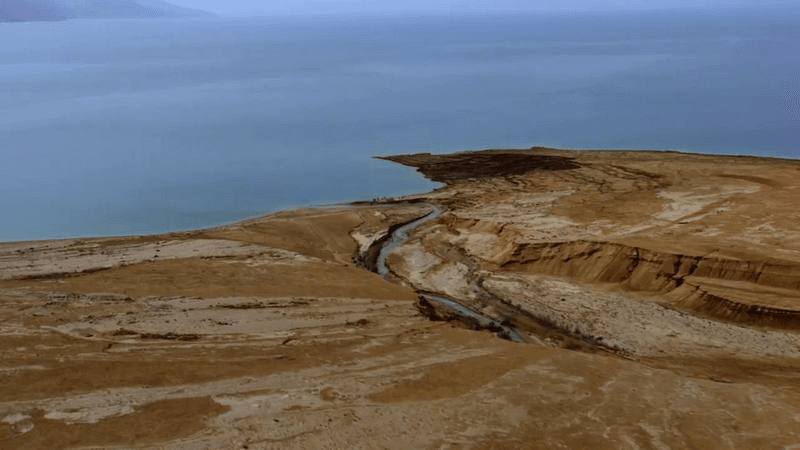
Floating in the Dead Sea requires almost no effort, which sounds relaxing until you realize that trying to swim normally is equally difficult. The water simply refuses to let you sink.
Jordan’s section of the Dead Sea sits roughly 440 meters below sea level, making it the lowest point on Earth’s surface, and its salinity of around 34 percent creates buoyancy that makes conventional swimming feel like trying to push a beach ball underwater.
The water itself is strange to the touch, thick and slightly oily from dissolved minerals, and it stings immediately if it gets into the eyes or any small cut. Visitors are strongly advised not to put their faces in.
Along the shoreline, brilliant white salt formations crystallize where mineral-rich water evaporates, building small surreal sculptures that crunch underfoot and dissolve in the next rainfall.
Jordan’s official tourism organization highlights the Dead Sea as both a natural wonder and a wellness destination, with the mineral-rich mud widely used in skin treatments. Several luxury resorts line the Jordanian shore and offer the full spa experience alongside the floating.
The sea has been shrinking significantly due to water diversion from the Jordan River, and its surface level drops measurably each year. Visiting sooner rather than later is genuinely good advice, not just a cliche.
Hverarönd and the Krafla Region, Iceland
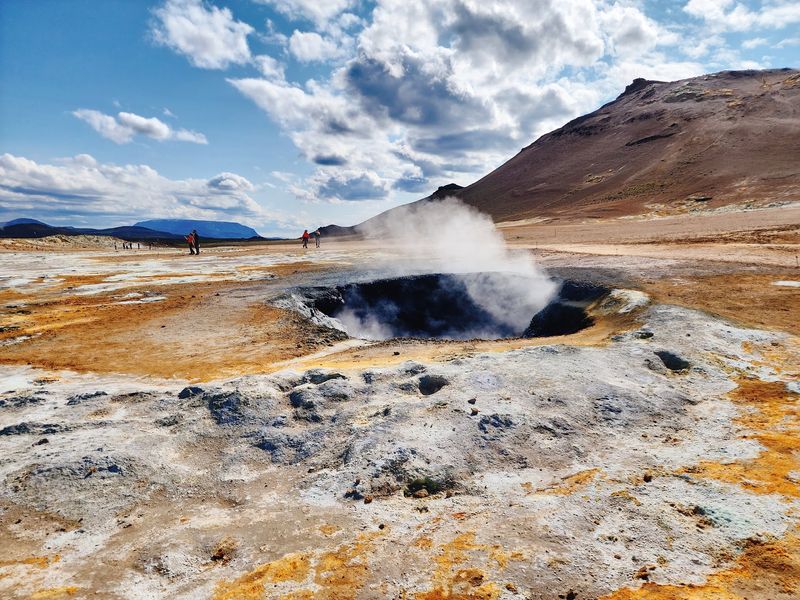
The ground at Hverarönd near Lake Myvatn actually bubbles. Mud pots churn and pop with geothermal energy, steam vents hiss from cracks in the earth, and the surrounding soil is stained vivid shades of orange, yellow, and red by sulfur deposits.
The smell arrives before the view does, a sharp sulfuric punch that makes it instantly clear something powerful is happening beneath the surface.
The area sits on one of Iceland’s most volcanically active zones, where the North American and Eurasian tectonic plates are slowly pulling apart. Nearby Krafla adds another layer of geological drama with its craters and lava fields produced by eruptions in the 1970s and 1980s.
Walking across lava that is only a few decades old, still rough and unweathered, gives a vivid sense of how young some of this landscape actually is.
The broader Lake Myvatn region in northern Iceland packs an extraordinary concentration of volcanic features into a relatively compact area, making it one of the most geologically interesting places on Earth to explore on foot. The midnight sun during summer months allows for extended evening walks when the low light turns the steam and sulfur colors into something genuinely painterly.
Reykjahlid is the main village in the area and provides accommodation and services for visitors exploring the region.
Share this story