Some statues become so closely linked to a place that separating the two feels almost impossible. From a copper lady standing guard over New York Harbor to stone faces watching over a remote Pacific island, these sculptures have become symbols recognized far beyond their home countries.
They carry history, culture, and meaning in ways that words alone rarely can. Get ready to travel the world through twenty of the most legendary statues ever created.
Statue of Liberty, New York City, United States
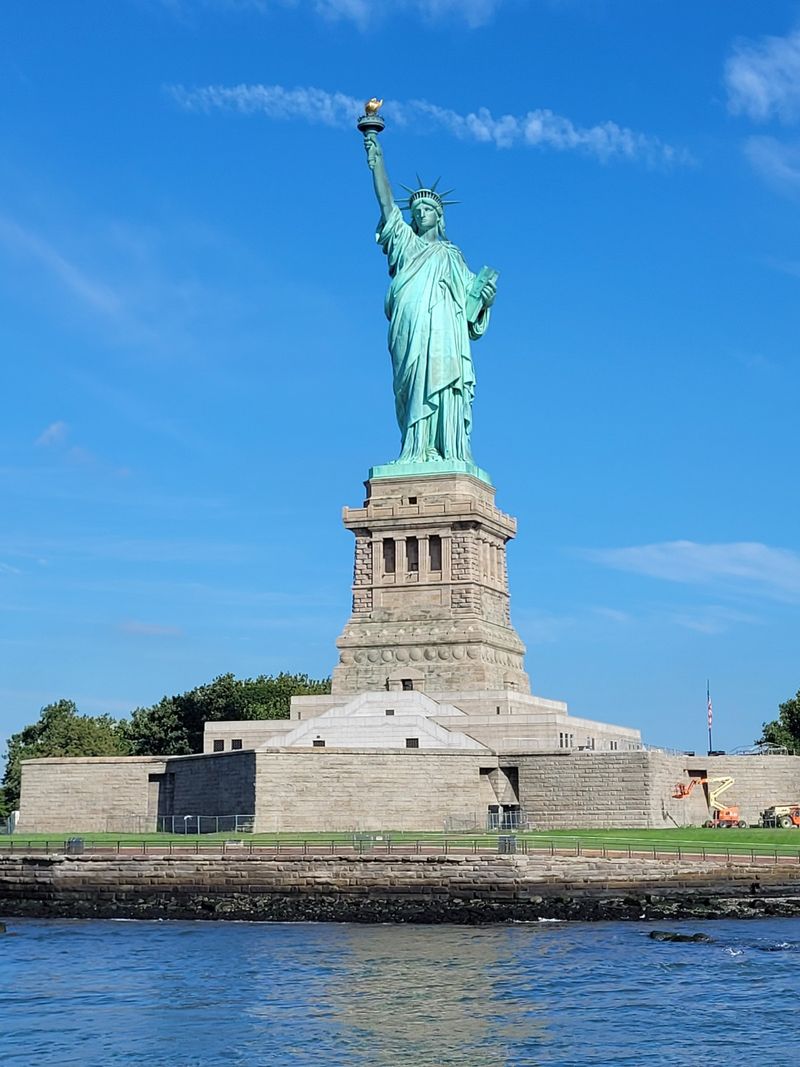
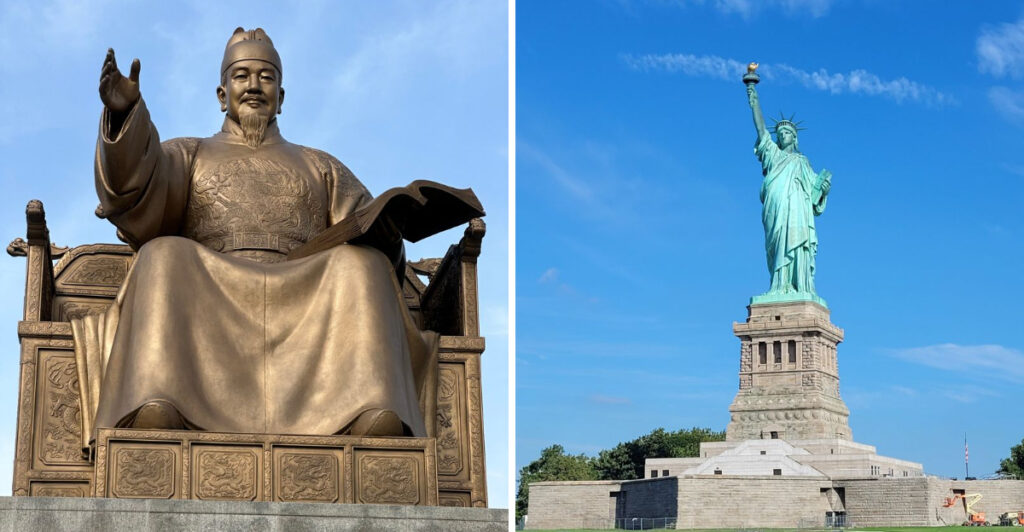
Gifted by France and dedicated on October 28, 1886, the Statue of Liberty quickly became the most recognized symbol of freedom on Earth. French sculptor Frederic-Auguste Bartholdi designed the copper figure, while engineering support came from Eiffel and Company.
She stands at the entrance to New York Harbor, torch raised high, greeting millions of visitors each year.
The tablet in her left hand bears the date July 4, 1776, the day the United States declared independence. UNESCO lists her as a World Heritage Site, recognizing her global cultural importance.
Climbing to her crown offers one of the most breathtaking views in New York City.
What makes Lady Liberty so powerful is how much meaning she holds. She has welcomed immigrants, inspired protests, and appeared in countless films and photographs.
Her image alone is enough to communicate freedom, hope, and possibility to people across the globe. Standing 93 meters tall from ground to torch tip, she remains one of the grandest gifts one nation has ever given another.
Christ the Redeemer, Rio de Janeiro, Brazil
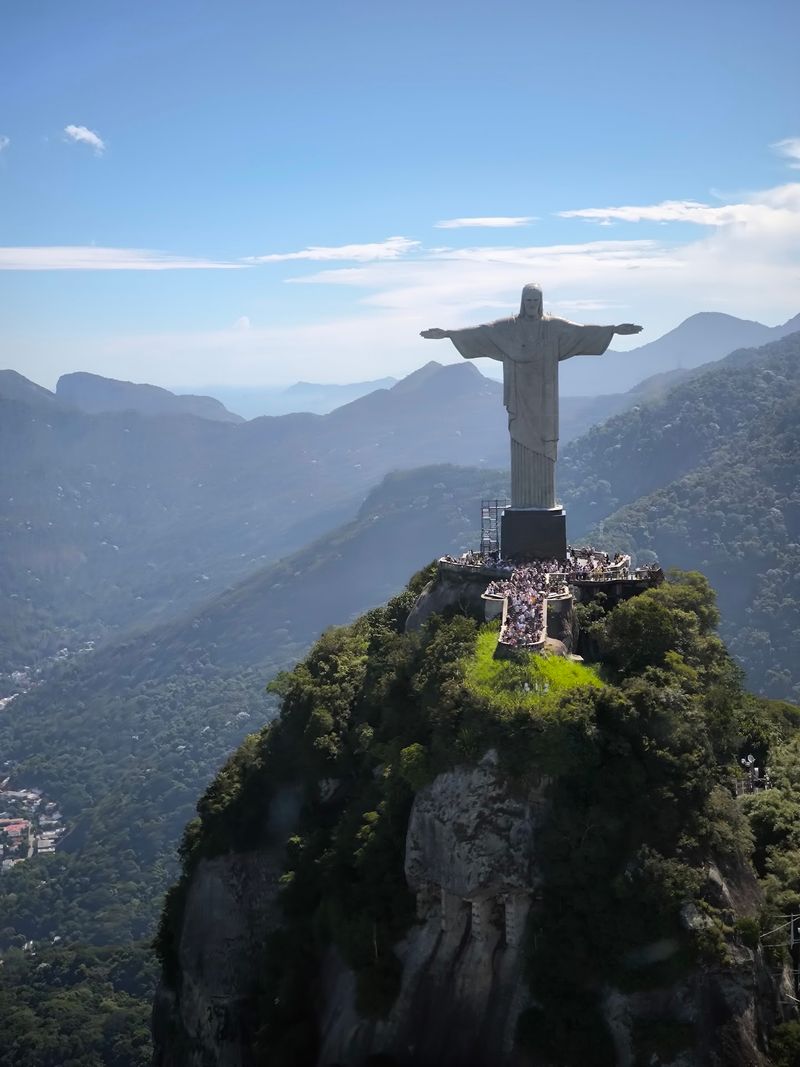
Perched 710 meters above sea level on the peak of Corcovado, Christ the Redeemer stretches his arms wide over Rio de Janeiro like a protective embrace. The statue stands 30 meters tall, not counting its 8-meter pedestal, and can be seen from almost anywhere in the city.
Completed in 1931, it was designed by Brazilian engineer Heitor da Silva Costa and sculpted by French artist Paul Landowski.
UNESCO specifically highlights how images combining the statue, Sugarloaf Mountain, and Guanabara Bay have achieved worldwide recognition. That combination of natural beauty and human artistry is genuinely hard to beat.
Millions of visitors ride the cog railway up through the Atlantic Forest each year to stand at its feet.
Lightning strikes the statue roughly six times per year, which means the maintenance crew has a genuinely exciting job. The outstretched arms span 28 meters, making the figure visible even from cruise ships entering the harbor.
Christ the Redeemer was voted one of the New Seven Wonders of the World in 2007, cementing its status as one of the planet’s most beloved sculptures.
Moai of Rapa Nui, Chile
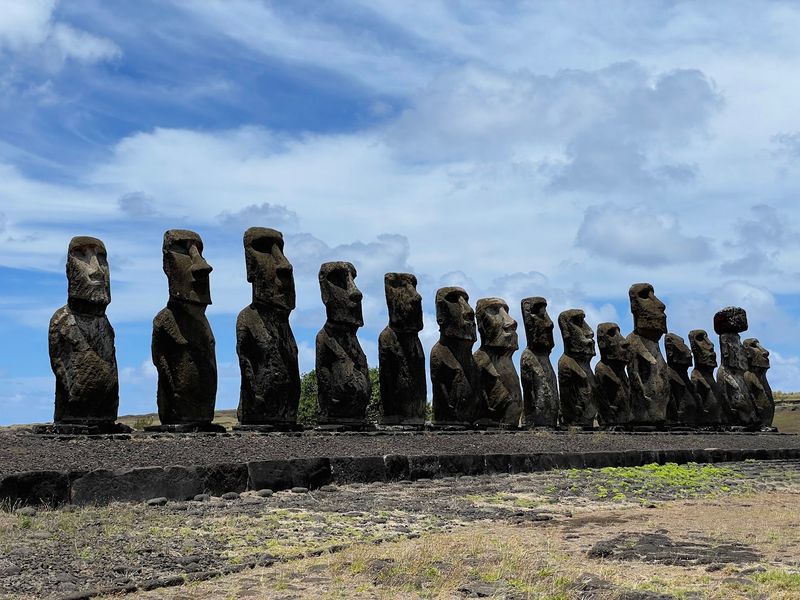
Nobody carved just one moai. Between roughly the 10th and 16th centuries, the Rapa Nui people created nearly 1,000 of these enormous stone figures across their remote Pacific island, now known as Easter Island.
Each one was carved from compressed volcanic ash and could weigh as much as 80 tons. Moving them across the island without modern equipment remains one of history’s most impressive engineering puzzles.
UNESCO describes the resulting landscape as unrivalled, recognizing both the archaeological significance and the sheer visual drama of the moai standing against the open sky. The figures are believed to represent deified ancestors, watching over their descendants with their backs to the sea.
Many were toppled during periods of internal conflict and have since been carefully restored.
Ahu Tongariki, the largest ceremonial platform on the island, holds fifteen restored moai in a row that stops visitors cold. Their elongated faces and heavy brows have made Rapa Nui recognizable to people who could not locate the island on a map.
The moai are not just statues. They are an entire civilization carved in stone, still standing after centuries of isolation.
Terracotta Warriors, Xi’an, China
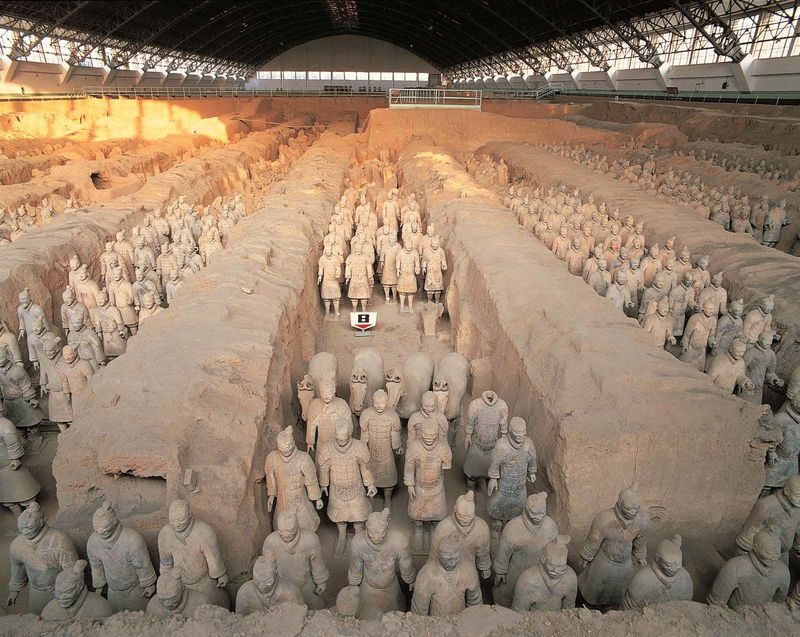
Every single face is different. Among the roughly 8,000 life-sized ceramic soldiers buried near Xi’an, no two warriors share identical features, which suggests each figure was modeled after a real person.
Emperor Qin Shi Huang ordered this extraordinary army to guard him in the afterlife after unifying China’s warring states in 221 BC. Farmers accidentally discovered the site in 1974 while digging a well.
UNESCO emphasizes both the remarkable artistic quality of the figures and their value as evidence of the military organization of Qin-era China. The warriors stand in precise military formation across three massive pits, accompanied by horses, chariots, and bronze weapons.
The colors that once painted them have largely faded after exposure to air, though traces remain.
Archaeologists have excavated only a portion of the site, leaving much of the complex untouched until preservation technology improves. The emperor’s actual tomb mound nearby has never been opened.
Ancient texts describe rivers of mercury flowing through the burial chamber, and soil testing has actually detected high mercury concentrations in the area. The Terracotta Warriors are extraordinary on their own, but the mystery surrounding the unopened tomb makes them even more compelling.
Great Sphinx of Giza, Egypt
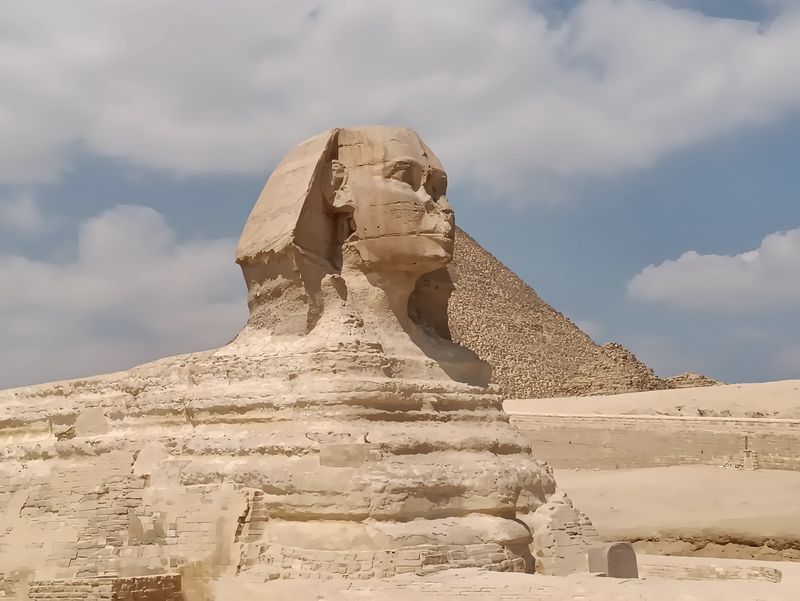
Carved from a single ridge of limestone, the Great Sphinx of Giza has been watching over the desert for roughly 4,500 years. It combines the body of a crouching lion with a human head, most likely representing Pharaoh Khafre, and stretches 73 meters long and 20 meters tall.
The scale only becomes clear when you stand beside it and realize the paws alone are the size of a bus.
It belongs to the UNESCO-listed pyramid fields stretching from Giza to Dahshur, a property that also includes the three great pyramids and thousands of surrounding tombs. Together, these monuments form one of the most recognizable archaeological landscapes anywhere on Earth.
The Sphinx and the pyramids behind it have become a near-universal shorthand for ancient Egypt.
The missing nose has inspired legends for centuries. Some historians blame Napoleon’s soldiers, but drawings made before his campaigns already show the nose absent.
The most likely explanation is deliberate removal during the 14th century. Despite the damage, the Sphinx retains an air of calm authority that centuries of wind, sand, and curious tourists have failed to diminish.
Few ancient sculptures command quite this level of quiet power.
Leshan Giant Buddha, China
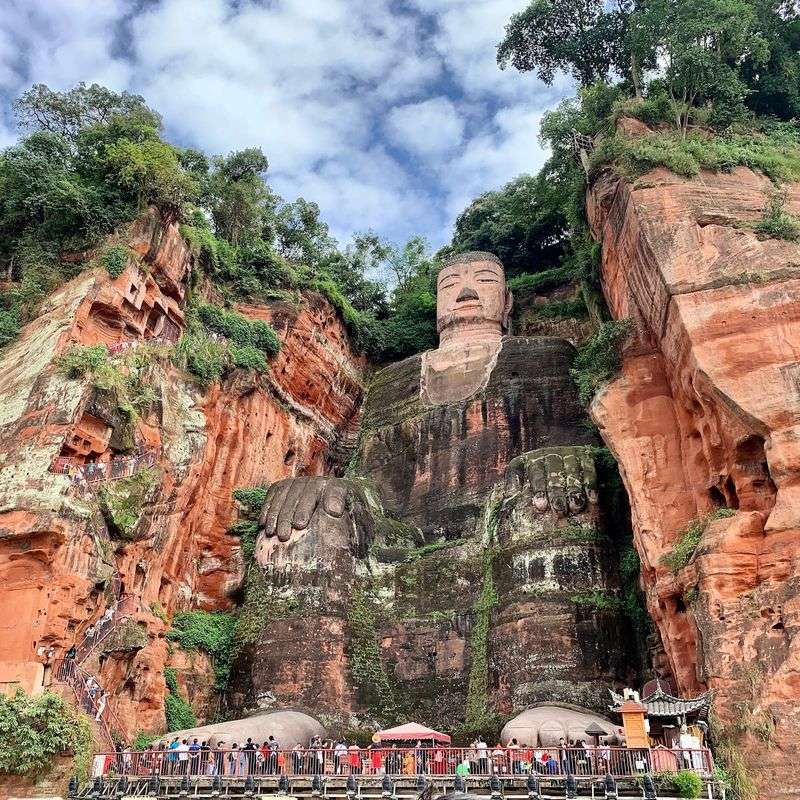
Nobody transported the Leshan Giant Buddha to its location. Monks carved it directly out of a sandstone cliff in Sichuan Province during the Tang Dynasty, beginning in 713 AD and completing the project 90 years later.
The seated figure measures 71 meters from head to toe, making it the largest stone Buddha carved from a cliff anywhere in the world, according to UNESCO.
The project began with a practical goal. A monk named Haitong believed the Buddha’s presence would calm the dangerous confluence of the Min, Dadu, and Qingyi rivers below.
Remarkably, the massive amount of rock debris dumped into the river during carving actually altered the water flow and reduced turbulence. The monk’s plan worked, though perhaps not through divine intervention alone.
Boats passing beneath the cliff look tiny beside the statue’s feet, which are wide enough to park a double-decker bus on. The Buddha’s ears alone measure 7 meters long.
UNESCO lists the site alongside the sacred landscape of Mount Emei, recognizing the area’s deep Buddhist heritage. Visitors who climb the steep staircases carved beside the figure get a sense of its true scale that no photograph fully captures.
Statue of Unity, Gujarat, India
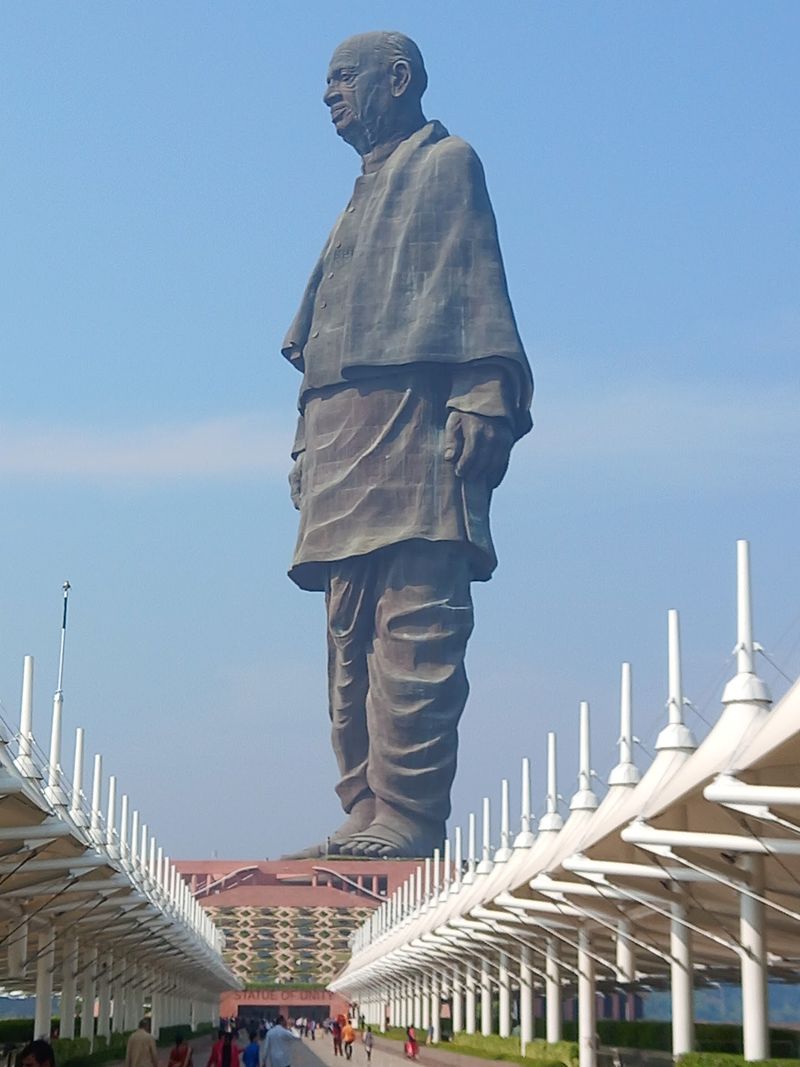
At 182 meters tall, the Statue of Unity is the tallest statue in the world, nearly twice the height of the Statue of Liberty. It depicts Sardar Vallabhbhai Patel, the statesman who played a central role in uniting India’s hundreds of princely states after independence in 1947.
The statue stands on a river island in Gujarat, Patel’s home state, and was inaugurated in October 2018.
The construction involved over 250 engineers and 3,000 workers. Around 135 metric tons of iron were collected from farmers across India to symbolize national unity, though the final structure is primarily steel and bronze.
India’s official tourism authority identifies it as the world’s tallest statue and a powerful symbol of the country’s unity and ambition.
Visitors can ride an elevator to an observation deck inside the chest area at 153 meters, offering sweeping views of the Narmada River valley and the surrounding Vindhya and Satpura mountain ranges. On clear days the view stretches for kilometers in every direction.
The scale of the statue changes the landscape so dramatically that it becomes visible from a considerable distance before you even reach the entrance.
The Little Mermaid, Copenhagen, Denmark
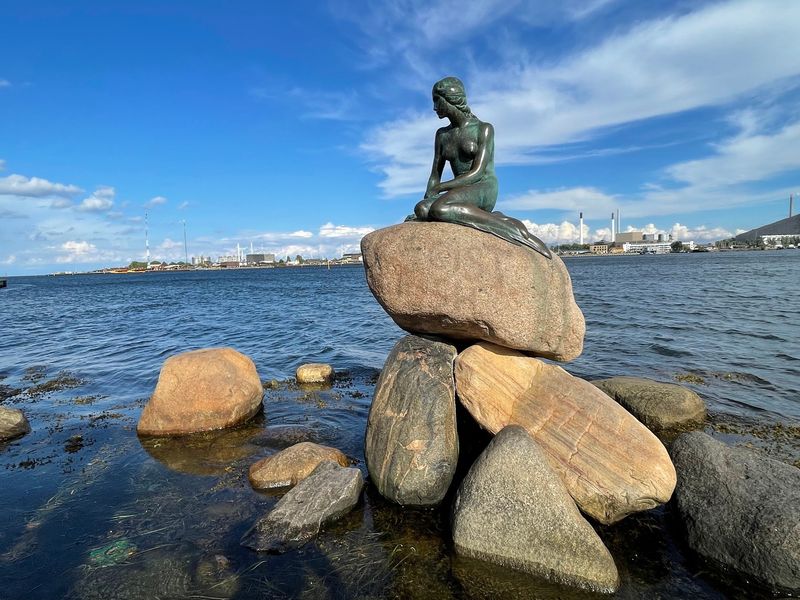
She is smaller than most visitors expect, and that is part of her charm. Copenhagen’s Little Mermaid sits quietly on a rock at the edge of the harbor, just 1.25 meters tall, gazing out over the water with a wistful expression.
Sculptor Edvard Eriksen completed her in 1913 after brewer Carl Jacobsen commissioned a work inspired by Hans Christian Andersen’s beloved fairy tale.
The contrast between expectation and reality is genuinely funny for first-time visitors who have imagined something much grander. Yet the statue draws more tourists than almost any other sight in Denmark, proving that size has very little to do with cultural impact.
She has been vandalized, decapitated, and even removed temporarily, but she always comes back.
Her quiet presence beside the harbor feels oddly moving once you settle into it. Andersen’s original story is far darker than the Disney version most people know, and the statue carries a hint of that melancholy.
Denmark’s tourism board calls her one of the country’s most recognizable symbols, which is remarkable for a figure you could carry home in a large backpack. Sometimes the smallest statues leave the deepest impressions.
Manneken-Pis, Brussels, Belgium
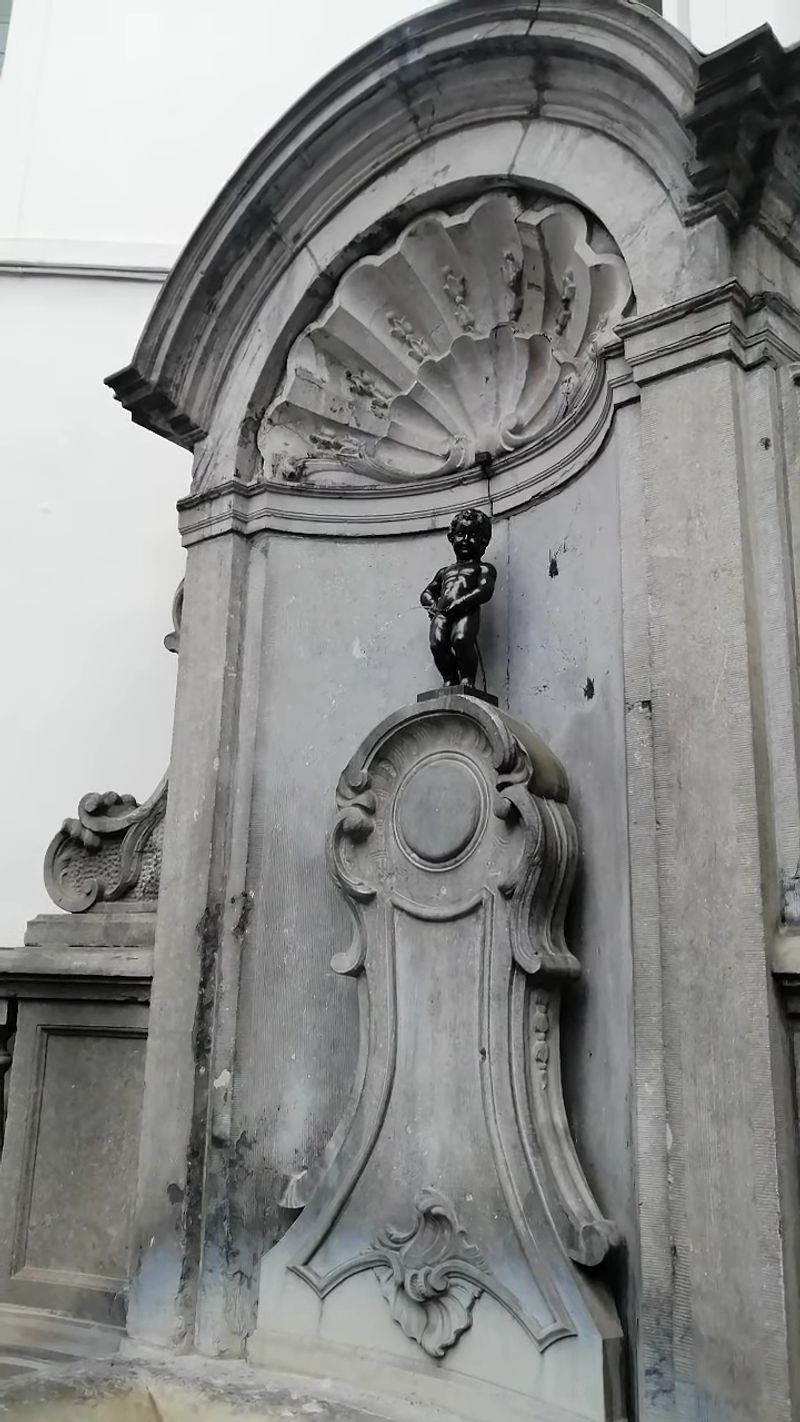
Brussels built its entire civic personality around a small bronze boy doing something most cities would consider undignified. Manneken-Pis, which translates roughly to Little Man Pee, stands just 61 centimeters tall near the Grand-Place and has been drawing curious crowds since sculptor Jerome Duquesnoy created the familiar version in 1619.
Earlier versions of the fountain figure existed even before that.
The statue’s wardrobe is genuinely staggering. He owns over 1,000 outfits, donated by governments, organizations, and individuals from around the world, and is dressed in different costumes throughout the year.
A nearby museum displays hundreds of these miniature outfits, which range from traditional Belgian folk dress to soccer uniforms to full royal regalia. The costume schedule is posted publicly so fans can plan visits around their favorites.
Several legends explain his origin, including stories of a boy who saved the city by urinating on a burning fuse or a nobleman’s son found doing exactly what the statue depicts. None have been confirmed, which suits Brussels just fine.
The city seems to enjoy the mystery as much as the monument itself. Manneken-Pis is proof that irreverence, handled with enough commitment, eventually becomes tradition.
Lion Monument, Lucerne, Switzerland
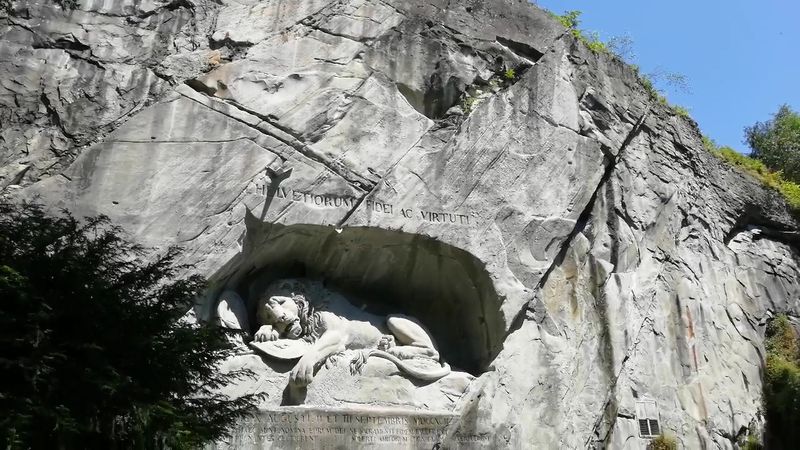
Mark Twain once called it the most mournful and moving piece of stone in the world, and the Lion Monument in Lucerne has spent two centuries proving him right. Carved directly into a sandstone cliff face, the dying lion commemorates the Swiss Guards who lost their lives defending King Louis XVI during the French Revolution in 1792.
More than 600 guards died that day.
Bertel Thorvaldsen designed the monument in 1819, and sculptor Lucas Ahorn carved it from the rock. The lion lies wounded, a broken spear in its flank, its paw resting protectively on a shield bearing the fleur-de-lis.
The expression combines pain and dignity in a way that stops people mid-step. A small reflecting pool at the base adds to the quiet solemnity of the scene.
Switzerland Tourism describes it as one of the country’s most famous monuments and a defining feature of Lucerne’s identity. Unlike most monuments that celebrate victory, this one honors loss, which is precisely why it resonates so deeply.
Visitors often go quiet upon seeing it, which is unusual in a city that otherwise buzzes with activity. Grief carved in stone has a way of cutting through the noise.
Michelangelo’s David, Florence, Italy
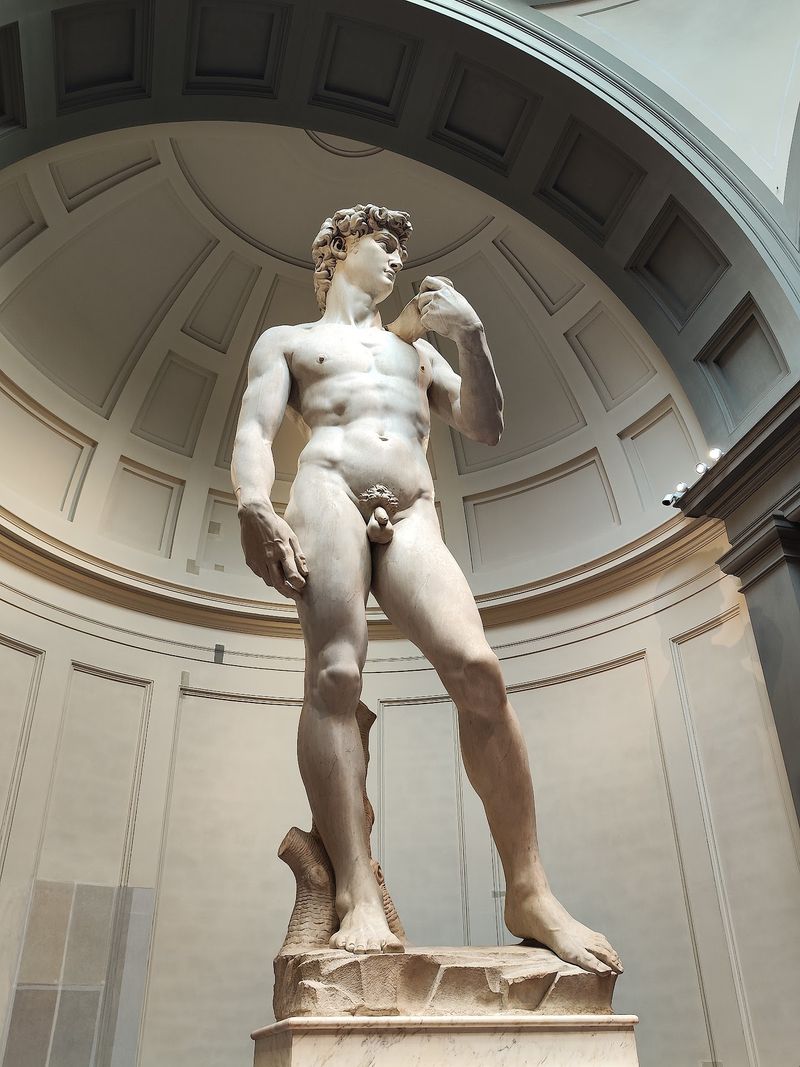
Michelangelo was 26 years old when he started carving David from a block of marble that two previous sculptors had already abandoned as too difficult to work with. He finished the project in 1504, and the result became one of the defining images of the Renaissance.
The figure stands 5.17 meters tall and captures the biblical hero in the tense moment before his confrontation with Goliath.
Florence’s Galleria dell’Accademia has housed the original since 1873, protecting it from weather damage that was threatening the marble outdoors. The gallery also holds the world’s largest collection of Michelangelo sculptures, making it a pilgrimage site for art lovers from every corner of the globe.
A replica stands in Piazza della Signoria, occupying the historic spot where the original once stood.
The anatomy is almost unsettlingly accurate, with veins visible in the hands and the weight shift of the body rendered with extraordinary precision. Michelangelo reportedly said the sculpture was already inside the marble and he simply removed everything that was not David.
That sounds like artist modesty, but standing in front of the finished work, it almost feels believable. David is Florence’s greatest treasure, and Florence knows it.
Michelangelo’s Pieta, Vatican City
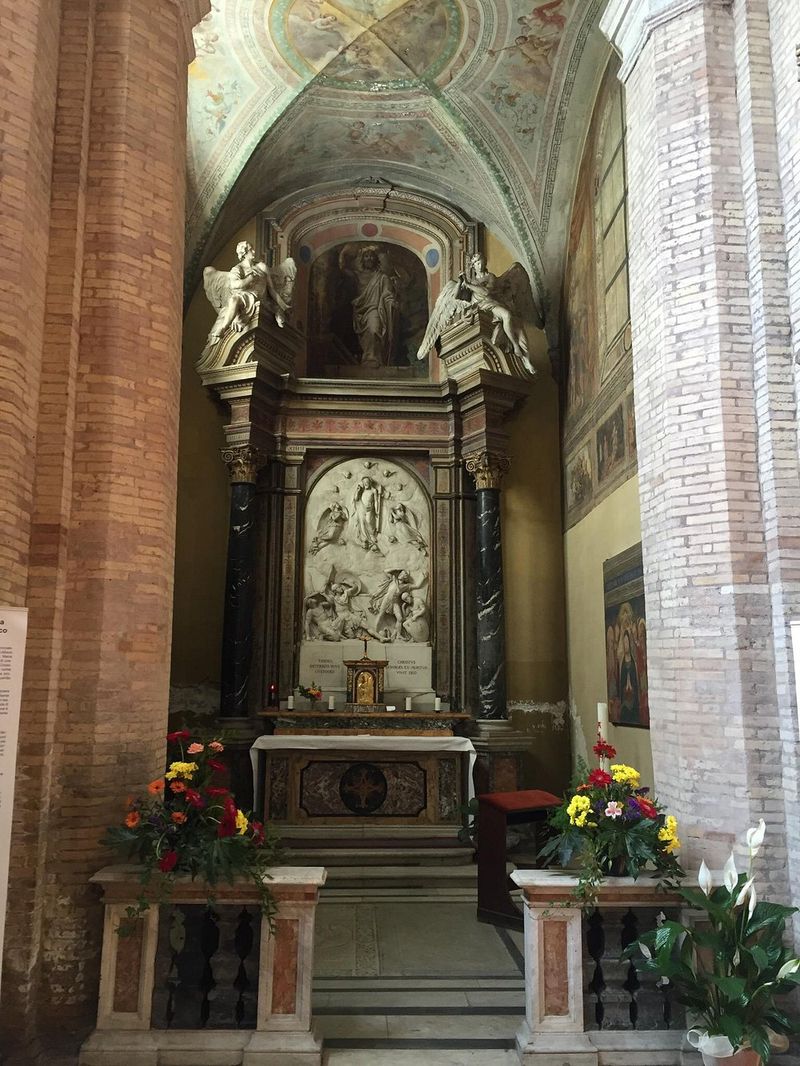
Michelangelo completed the Pieta before he turned 25, which makes the level of craftsmanship almost impossible to comprehend. The marble sculpture depicts the Virgin Mary cradling the body of Christ after the Crucifixion, and it now stands in the northern aisle of St. Peter’s Basilica behind protective glass installed after a vandal attacked it with a hammer in 1972.
The damage was repaired, but the glass stayed.
The work is the only sculpture Michelangelo ever signed. According to Vatican sources, he overheard visitors attributing it to another artist and returned at night to carve his name across Mary’s sash.
He later regretted the act and never signed another piece. The story adds a very human dimension to a work that otherwise feels almost superhuman in its execution.
What strikes most visitors is the emotional restraint. Mary’s expression is sorrowful but composed, and the drapery of her robes is carved with such precision that the fabric appears genuinely soft.
The figures are not proportionally realistic since Mary is much larger than Christ, but the composition feels completely natural. Michelangelo returned to the theme of the Pieta multiple times in his long career, but never quite equaled this first, astonishing attempt.
The Thinker, Paris, France
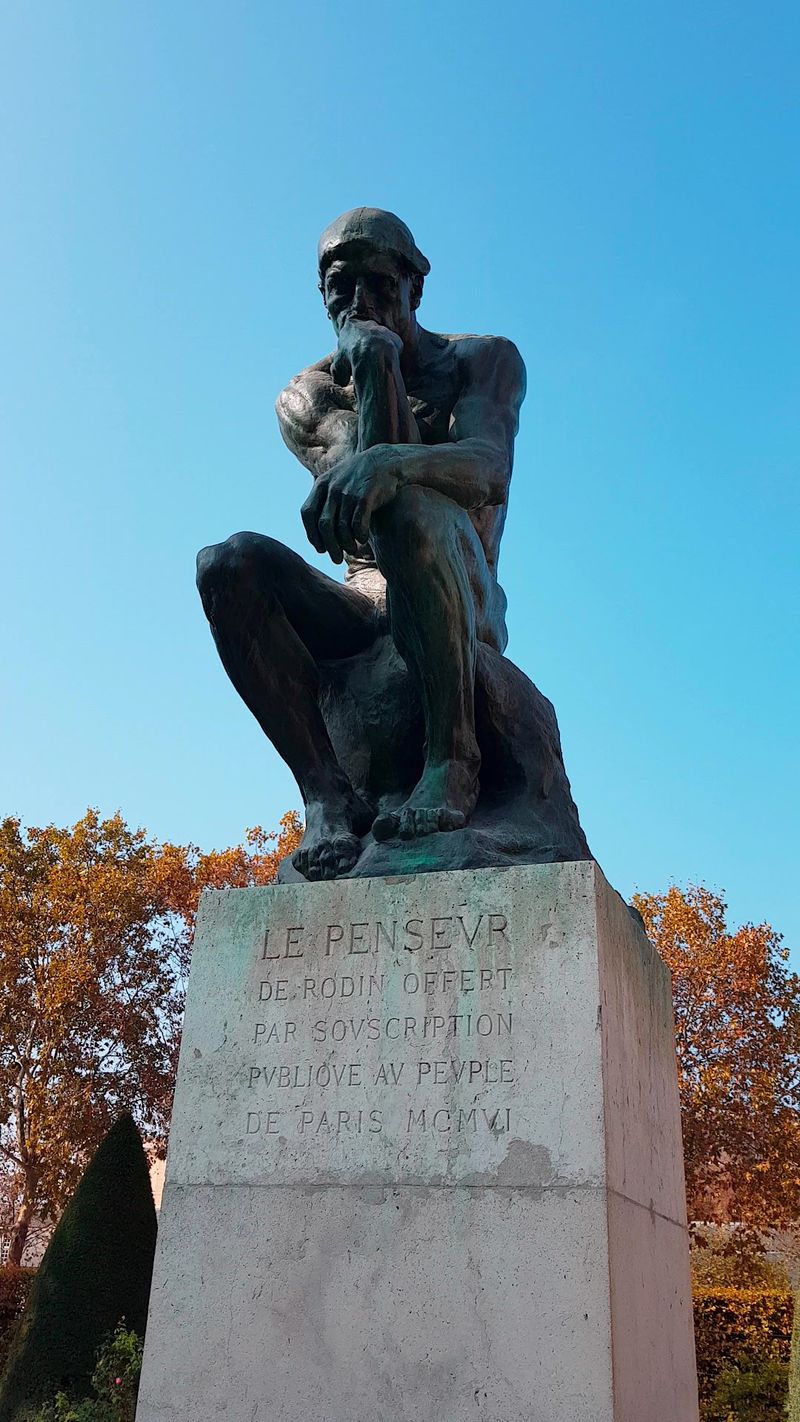
Most people picture The Thinker as a lone figure representing pure intellectual contemplation, but it started life as something far more dramatic. Rodin originally conceived the seated figure around 1880 as part of his monumental Gates of Hell, inspired by Dante’s Inferno.
The figure was initially called The Poet and was meant to represent Dante himself, gazing down at the tortured souls below.
The Musee Rodin in Paris displays a monumental bronze version in its garden, positioned so it faces the Gates of Hell exactly as Rodin intended. Seeing the two works together changes how you read the pose entirely.
The hunched shoulders and furrowed brow suddenly look less like calm thinking and more like someone wrestling with something genuinely terrible.
Rodin authorized multiple casts during his lifetime, which is why versions of The Thinker exist in museums and public spaces across the world. This widespread presence helped transform the pose into one of the most universally recognized images in art history.
People mime it constantly in photographs, often without knowing its origin. The gesture has become shorthand for serious thought, which Rodin might have found amusing given where the figure actually came from.
King Sejong the Great, Seoul, South Korea
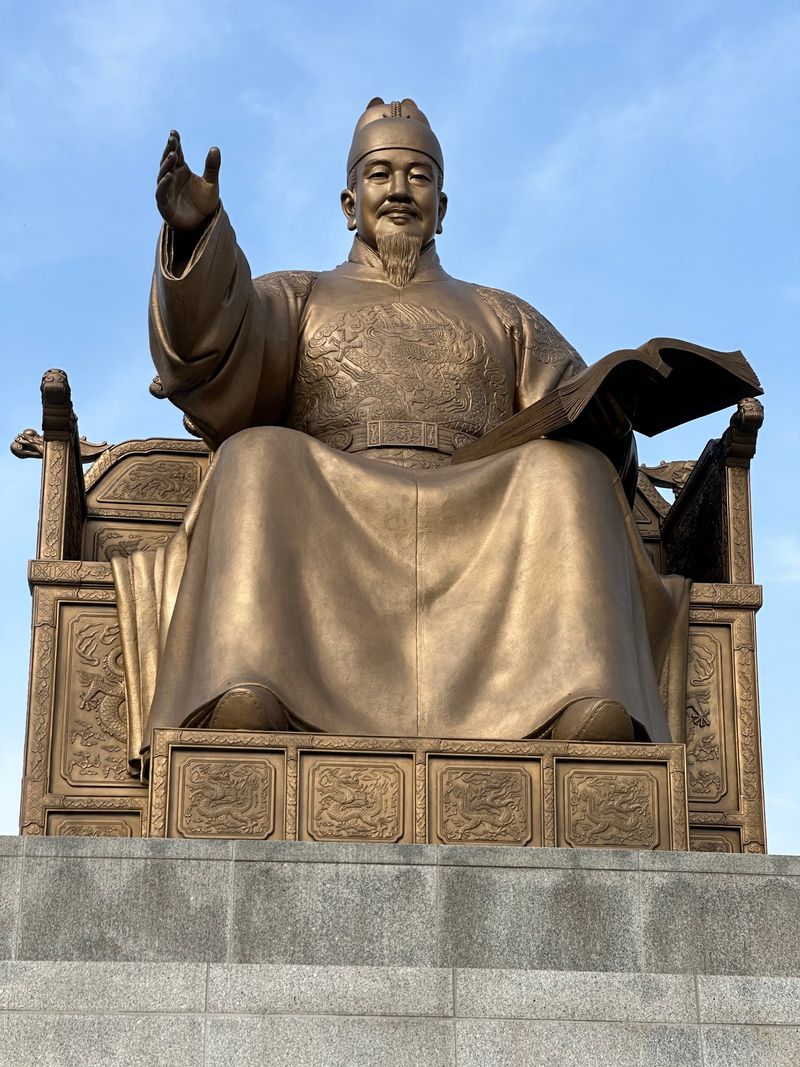
Sitting at the center of Gwanghwamun Square with Gyeongbokgung Palace rising behind him, King Sejong the Great occupies one of the most historically charged spots in Seoul. The monumental seated bronze figure was unveiled in 2009 and immediately became a focal point for the modern capital’s connection to its royal past.
Sejong ruled the Joseon Dynasty from 1418 to 1450 and is considered one of Korea’s greatest leaders.
His most celebrated achievement is the creation of Hangul, the Korean writing system, developed in 1443. Before Hangul, only the educated elite could read and write using complex Chinese characters.
Sejong wanted ordinary people to be literate, so he created an entirely new alphabet specifically designed to be easy to learn. It worked so well that South Korea now boasts one of the highest literacy rates in the world.
Beneath the square, a museum dedicated to Sejong and Admiral Yi Sun-sin explores their legacies in detail. Seoul’s official tourism organization calls the statue the symbolic heart of Gwanghwamun Square, linking the bustling modern city with its Joseon-era heritage.
Standing before the statue with the palace gates framed behind it, the historical continuity of the space feels genuinely tangible and worth lingering over.
Merlion, Singapore
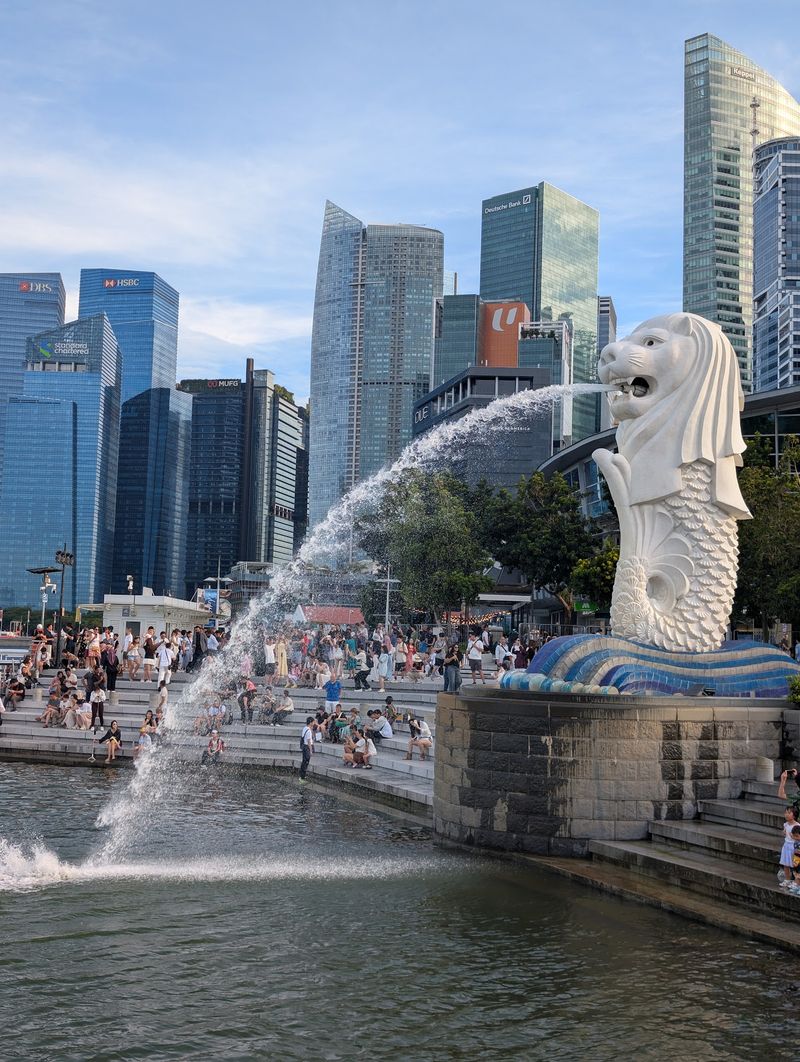
Half lion, half fish, and entirely Singaporean, the Merlion is one of the most unusual national symbols in the world. The fish body references Singapore’s origins as a fishing village and its deep maritime heritage, while the lion head connects to the island’s legendary founding story, in which a Sumatran prince reportedly spotted a lion upon arriving and named the place Singapura, meaning Lion City.
The best-known Merlion stands in Merlion Park overlooking Marina Bay, where it spouts a continuous arc of water toward the harbor. Singapore’s official tourism authority describes it as an enduring symbol of the country, and the statue has appeared in so many photographs that it has become one of Asia’s most recognized landmarks.
The Marina Bay Sands resort glittering in the background makes for one of the most photographed skylines in Southeast Asia.
Interestingly, the original Merlion statue was created in 1972 by local sculptor Lim Nang Seng. A second, larger version stands on Sentosa Island.
The image is trademarked by the Singapore Tourism Board, meaning its use is officially regulated. For a country that only gained independence in 1965, building a mythological mascot recognized worldwide in just a few decades is a genuinely impressive branding achievement.
Buddha Dordenma, Thimphu, Bhutan
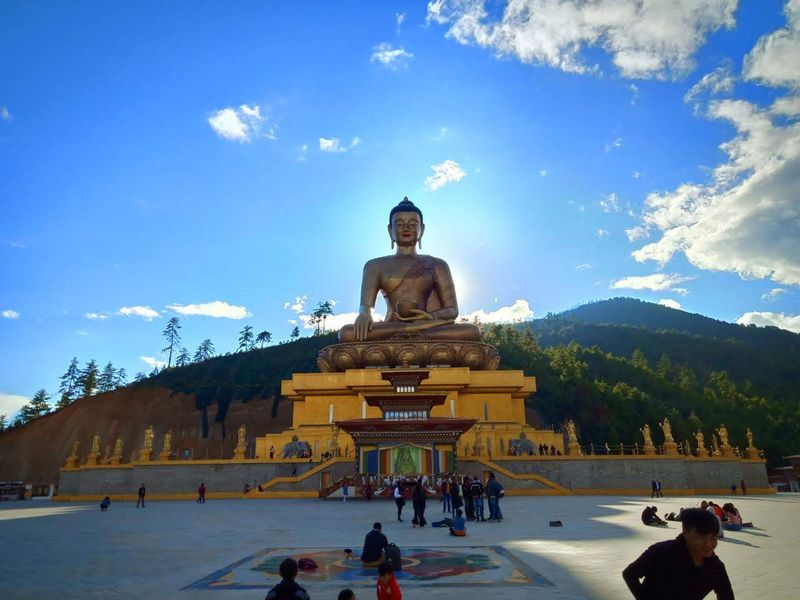
Glowing gold above the forested ridges of the Thimphu Valley, the Buddha Dordenma is the kind of sight that makes you stop walking and simply stare. The massive seated Buddha stands approximately 51.5 meters tall on a throne structure at Kuensel Phodrang, overlooking Bhutan’s capital from an elevated position that amplifies its already considerable scale.
Construction was completed in 2015.
The statue is bronze and gilded with gold, and its interior houses approximately 125,000 smaller Buddha figures, each made of bronze and also gilded. This nesting of thousands of sacred figures within a single monumental one reflects deep Buddhist traditions of merit-making and devotion.
The site functions as an active place of worship, not just a tourist attraction, which gives it a spiritual atmosphere that visitors often find unexpectedly moving.
Bhutan’s tourism model limits visitor numbers through a daily fee system, which means the Buddha Dordenma is never overwhelmed by the kind of crowds that surround more globally famous statues. Reaching it requires a short drive up a winding mountain road, and the payoff is a panoramic view of the entire Thimphu Valley spread below.
The combination of scale, gold, forest, and mountain backdrop makes this one of the most visually striking statues anywhere in Asia.
Angel of Independence, Mexico City, Mexico
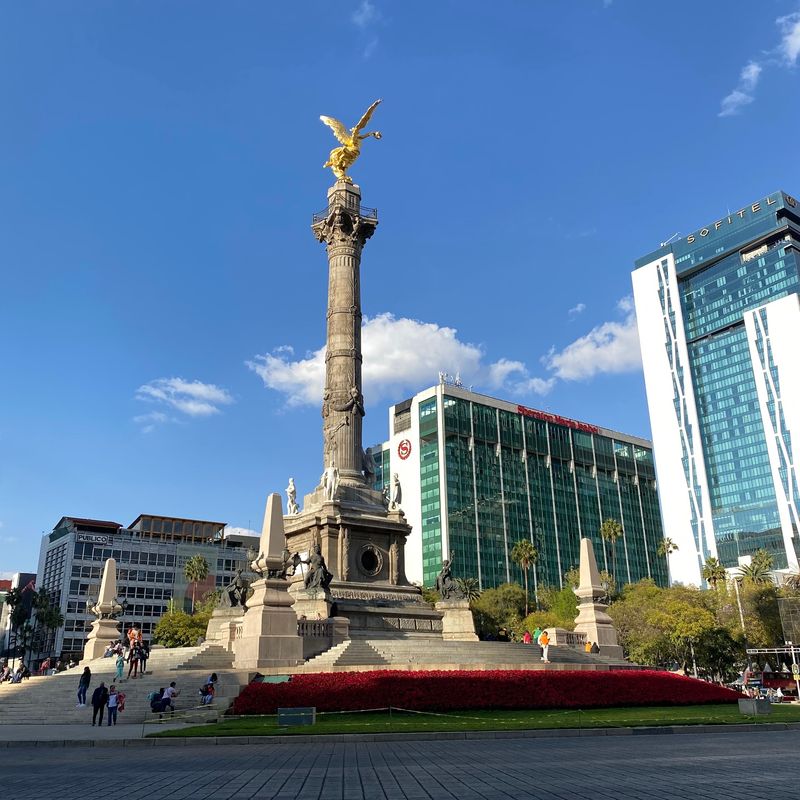
Perched on top of a 36-meter column on the famous Paseo de la Reforma, the golden Angel of Independence has watched over Mexico City since 1910. Officially called the Columna de la Independencia, the monument was unveiled to mark the centennial of Mexico’s War of Independence.
The winged figure at the top holds a laurel crown in one hand and a broken chain in the other, symbols of victory and freedom.
Locals call her simply El Angel, and she has become the city’s most beloved gathering point. After major soccer victories, national holidays, and political milestones, crowds fill the roundabout below to celebrate.
Mexico’s official tourism platform describes her as perhaps the capital’s most iconic monument, and that reputation has only grown stronger over the decades.
The base of the column contains the remains of several key figures from the independence movement, including Miguel Hidalgo and Jose Maria Morelos. A devastating earthquake in 1957 toppled the Angel from her column, and she was carefully restored and returned to her perch.
The fact that Mexico City repaired and reinstated her rather than replacing her says something about the depth of affection the city holds for this golden figure above the boulevard.
Cristo Rei, Almada, Portugal
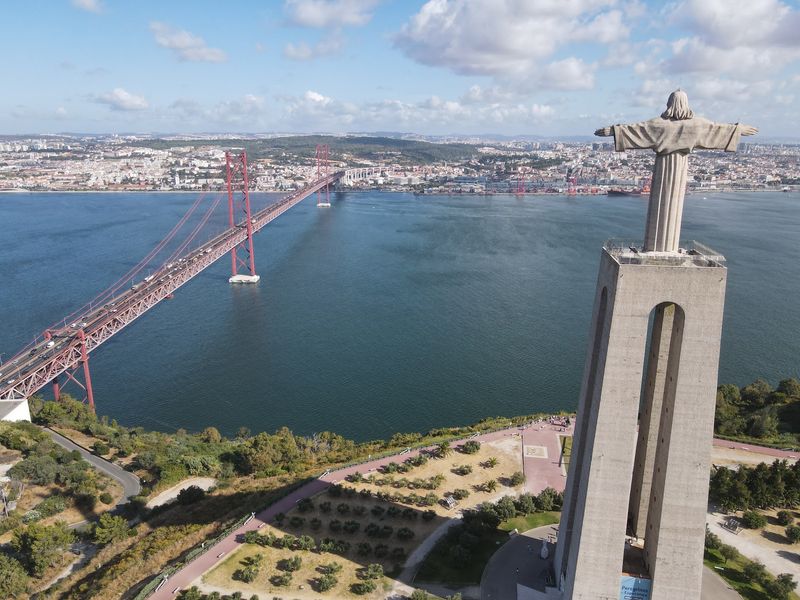
Cross the Tagus River from Lisbon and look up, and there he is. Cristo Rei stands on a hilltop in Almada with arms stretched wide, offering one of the finest panoramic views of any capital city in Europe.
The statue was directly inspired by Rio de Janeiro’s Christ the Redeemer, and Portugal’s Cardinal Patriarch promised to build it if the country was spared from World War II. Construction began in 1949, and it was inaugurated on May 17, 1959.
The figure of Christ stands 28 meters tall atop a 75-meter pedestal, giving the entire monument a total height of 103 meters. An elevator inside the pedestal carries visitors to an observation platform just below the statue’s feet, where the view across Lisbon, the river, and the 25 de Abril Bridge is genuinely spectacular.
Lisbon’s tourism authority calls Cristo Rei one of the most emblematic sights of the wider metropolitan region.
The relationship between Cristo Rei and the 25 de Abril Bridge is visually striking. The bridge, which resembles San Francisco’s Golden Gate, was completed in 1966, and together the two monuments create a skyline that feels simultaneously European and unexpectedly familiar to visitors from the Americas.
From Lisbon’s waterfront, Cristo Rei appears to watch over the city with quiet, steady attention.
Caryatids of the Erechtheion, Athens, Greece
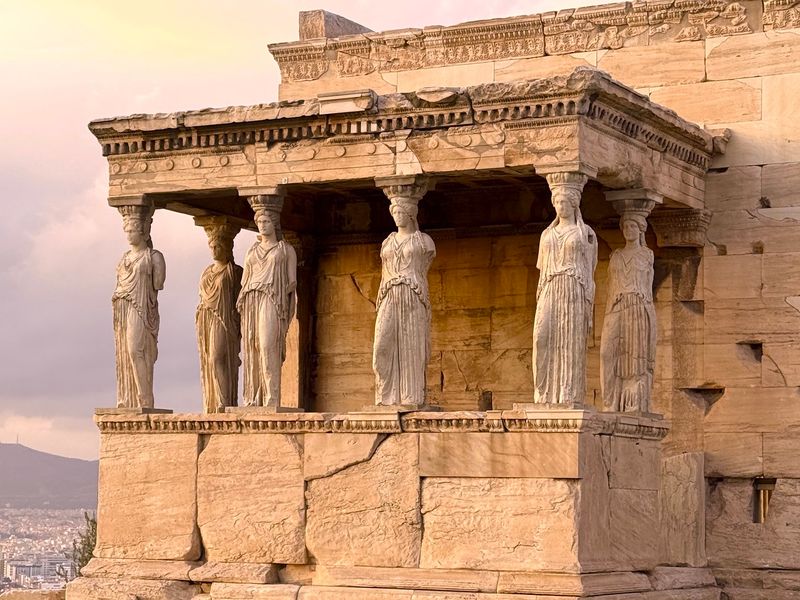
Architecture and sculpture rarely merge as elegantly as they do on the south porch of the Erechtheion on the Acropolis. Six draped female figures, known as Caryatids, stand in place of conventional columns, their heads carrying the weight of the roof with a composure that makes the task look effortless.
The temple dates to around 421-406 BC and sits beside the Parthenon at the heart of ancient Athens.
Greece’s tourism authority notes that five of the six original Caryatids are now carefully conserved in the Acropolis Museum, protected from pollution and acid rain. The sixth was removed by Lord Elgin in the early 19th century and remains in the British Museum in London, a source of ongoing diplomatic tension between Greece and the United Kingdom.
Replicas stand on the porch today.
What makes the Caryatids so visually compelling is the tension between their graceful, human forms and the structural load they are designed to support. Each figure’s weight shifts slightly differently, giving them individuality within their shared role.
The name Caryatid may derive from the women of Caryae, a city in ancient Greece, though the exact origin is debated. Their silhouettes have become inseparable from the image of the Acropolis itself.
Buddhas of Bamiyan, Afghanistan
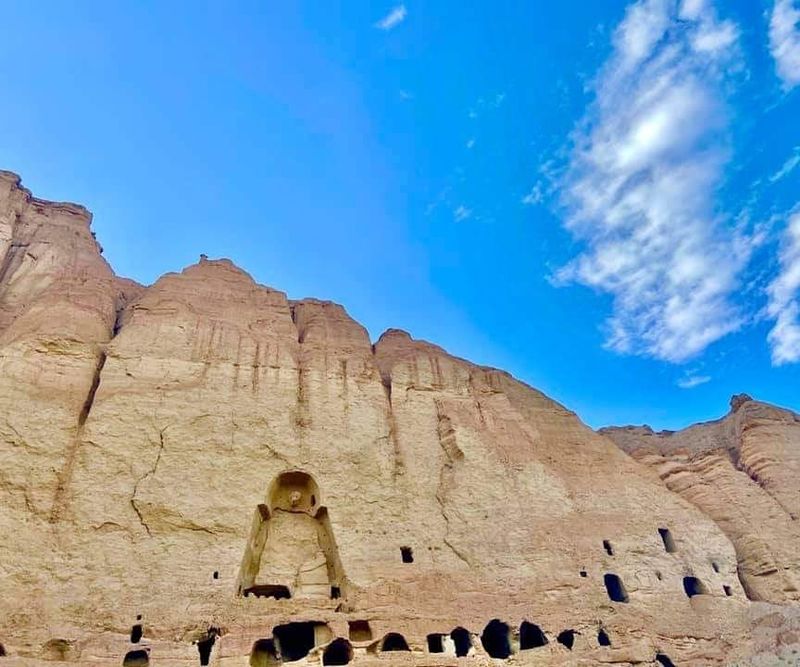
The most haunting entry on this list is defined by absence. For roughly 1,500 years, two colossal standing Buddhas occupied niches carved into the sandstone cliffs of the Bamiyan Valley in central Afghanistan.
UNESCO records their heights at approximately 55 and 38 meters and dates them broadly from the third to fifth centuries. They were among the largest standing Buddha statues in the world.
In March 2001, the Taliban government ordered their destruction, and the figures were demolished with explosives and artillery over several weeks. The act drew international condemnation and was widely described as cultural vandalism on a massive scale.
The empty niches left behind became symbols of irreplaceable loss, and they remain visible in the cliff face today, hollow and enormous.
UNESCO has listed the Bamiyan Valley as a World Heritage Site in Danger, recognizing both the remaining archaeological landscape and the devastation inflicted on it. Debate continues about whether to reconstruct the Buddhas using 3D laser scanning data collected before their destruction.
Some argue reconstruction would honor the originals. Others believe the empty niches tell a more important story about what happens when heritage is deliberately erased.
The Buddhas of Bamiyan matter now precisely because they are gone.
Share this story