There is a certain magic to walking into a small grocery store in Ohio and hearing someone behind the meat counter greet you like an old friend. These are the places where the coffee is fresh, the sausage is made in the back, and nobody rushes you out the door.
If you have only ever shopped the big chains, you might be surprised how many of these hometown gems are still thriving just a short drive away. Grab a cart and get hungry, because these markets prove that personal service never really went out of style.
1. Dorothy Lane Market, Dayton
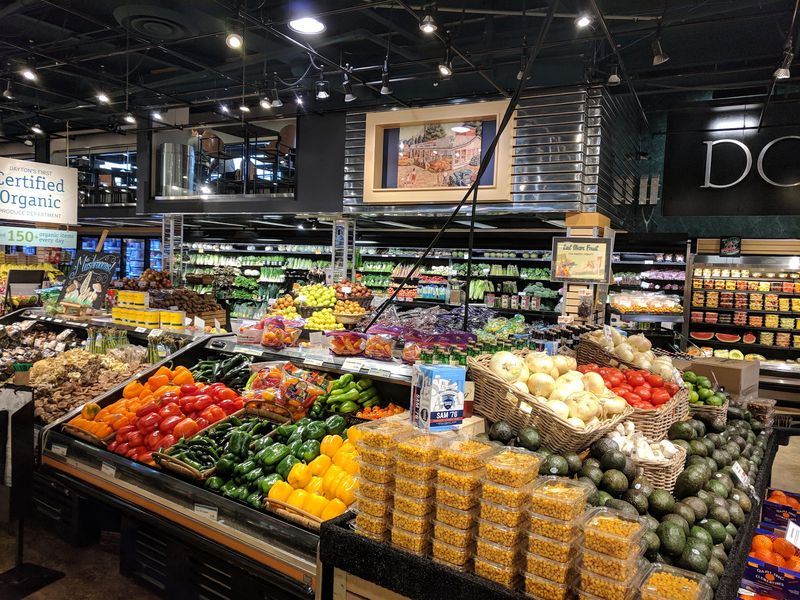
Dorothy Lane Market has grown considerably since beginning as a small fruit stand in 1948, but it remains a fourth-generation, family-owned Ohio grocer. That combination of polished specialty market and neighborhood service is a big part of its appeal.
The meat department is especially serious, with skilled butchers handling USDA Prime beef, Wagyu, heritage pork, local grass-fed beef and air-chilled chicken. Shoppers can also find cuts that go well beyond the standard supermarket selection.
There is plenty to explore after leaving the butcher counter. Dorothy Lane Market is known for its scratch bakery, artisan breads, cheeses, prepared foods, produce and its famous Killer Brownie.
It feels more upscale than the traditional corner grocery, but the emphasis on knowledgeable service and people who can actually answer questions about what they sell keeps the experience surprisingly personal.
2. Fligner’s Market, Lorain
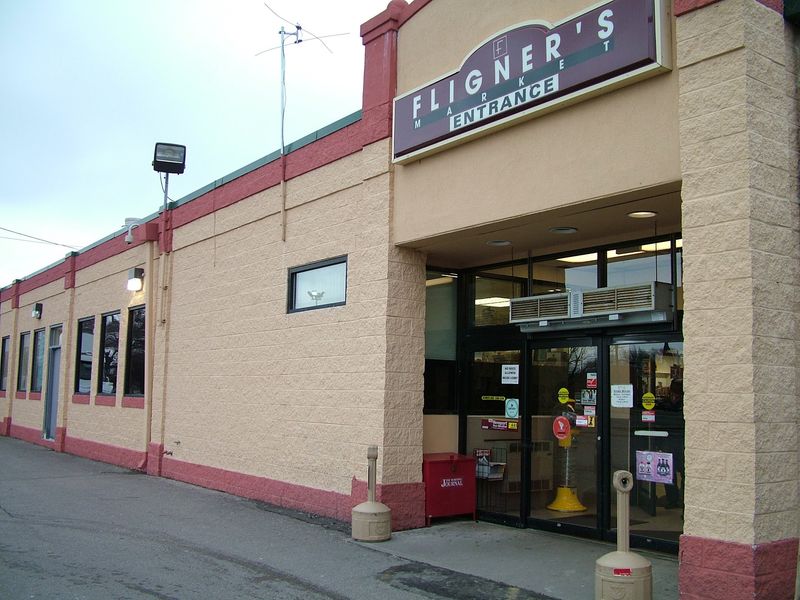
Fligner’s has been part of Lorain for more than a century, tracing its roots to 1924, when Harry and Morris Fligner opened the Lorain Cut-Rate Fruit Company. Today, the independent market is still closely tied to the family and has grown from a tiny produce storefront into a 35,000-square-foot grocery store.
The meat counter is the real centerpiece. Fligner’s promotes its large, full-service custom-cut counter, where shoppers can choose from beef, pork, poultry, veal, lamb, sausage and other meats.
That makes it particularly useful when a recipe calls for something more specific than a prepackaged supermarket cut. The rest of the store is substantial too, with produce, seafood, bakery goods, specialty groceries and catering.
Fligner’s even maintains the old-fashioned practice of taking customers’ groceries out to their cars, a small detail that fits its neighborhood-market personality.
3. Sautter’s Market, Sylvania
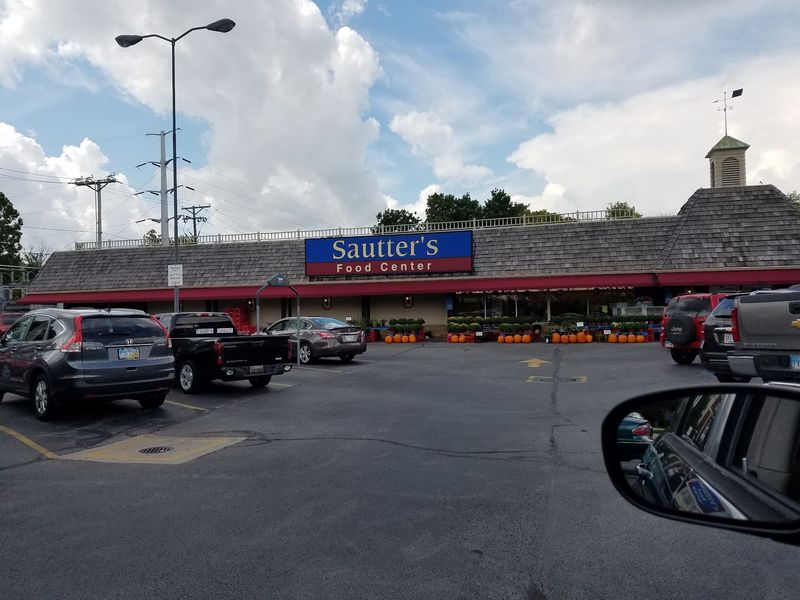
Sautter’s Market can trace its Toledo-area story to 1927, and the business has been passed from generation to generation. That history is important because Sautter’s still presents itself as a family-owned specialty market rather than simply another supermarket.
Its Sylvania location combines everyday grocery shopping with the personal service associated with an old neighborhood store.
Meat is central to the business. Sautter’s began as one of the Greater Toledo area’s early butcher shops and continues to have an on-site butcher working with fresh cuts.
That gives shoppers the chance to ask questions and get help rather than simply choosing whatever happens to be sitting in a refrigerated package. The market also emphasizes fresh and locally sourced foods, with products coming from Ohio and neighboring Michigan and Indiana.
It is a strong example of an old-fashioned butcher-market concept surviving in a modern grocery landscape.
4. Lehr’s Prime Market, Milford
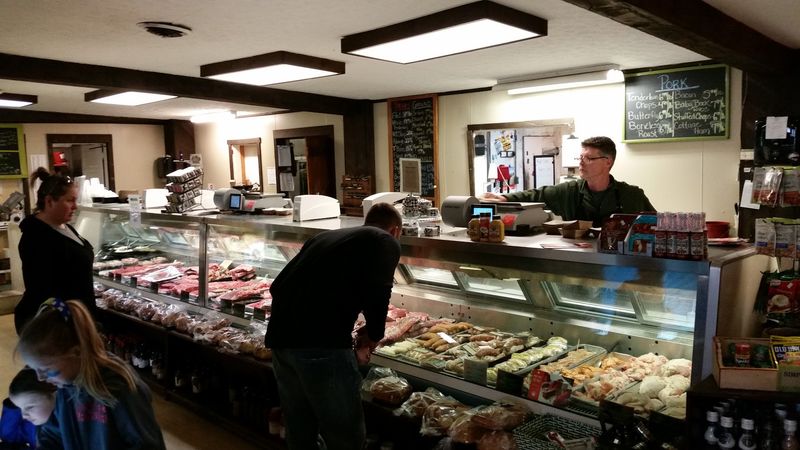
Lehr’s Prime Market takes the neighborhood-butcher idea seriously. The Milford business has operated in various forms since 1960 and today is owned by the Homan family, which describes the store as an old-fashioned butcher shop and specialty market with a contemporary twist.
The butcher shop remains the cornerstone. Professional butchers cut meat to order throughout the day, with choices ranging from Prime and Wagyu beef to pork, poultry and lamb.
Lehr’s also carries HomanGrown beef, its own brand of locally raised cattle from Russellville, Ohio. The grocery side adds sauces, oils, pasta, coffee, sweets and other specialty foods, while fresh produce, seafood and prepared meals make it possible to build an entire dinner in one stop.
The store’s focus on custom cuts and customer interaction makes Lehr’s particularly well suited to the old-school service theme of this list.
5. K & K Portage Market, Cleveland
K & K Portage Market has deep roots in Cleveland’s butcher-shop tradition. The current market opened in 1972, but the family’s meat business stretches back to 1940, when Yaro Kolar opened Kolar’s Meats in Cleveland.
The business is now owned by Jerry Jr. and Richard Kolar, continuing a multigenerational connection to the trade.
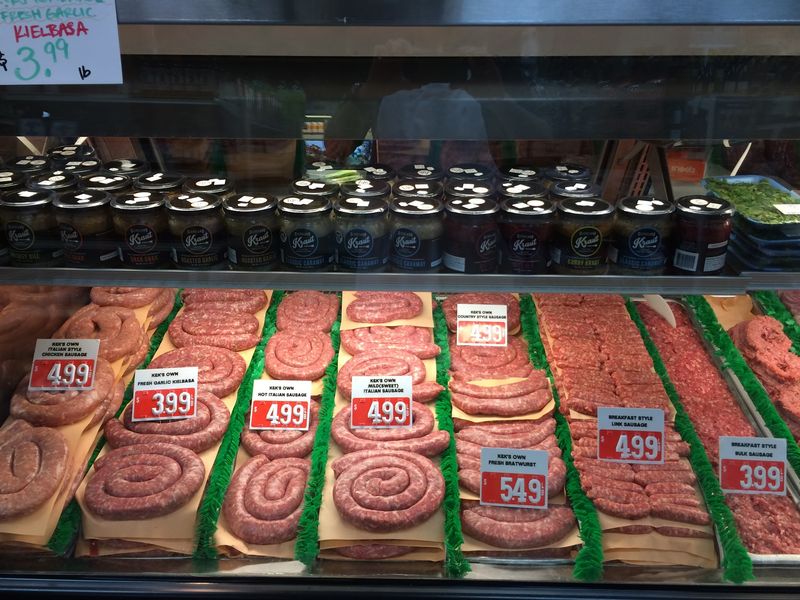
Fresh meat remains the star. K & K operates as a full-service meat market with steaks, chops, chicken, seafood and house-made specialty meats, including fresh sausages.
Customers can also pick up deli meats and cheeses cut to order, freshly baked breads, prepared foods and grocery staples. That broader selection makes it more than a place to grab a steak on the way home.
K & K still feels built around the butcher counter, which is exactly what makes a neighborhood market like this different from shopping the meat aisle at a large supermarket.
6. Produce Place Market & Deli, Willoughby Hills
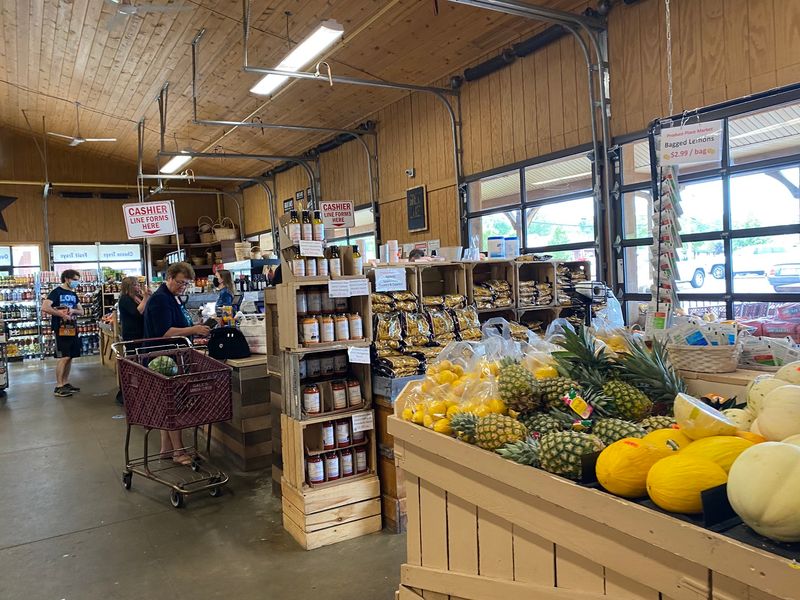
Produce Place Market & Deli is the sort of neighborhood grocery where fresh food gets more attention than endless aisles of packaged products. The Willoughby Hills market combines produce, deli foods, groceries and a meat selection in a smaller setting that feels considerably more personal than a conventional supermarket.
The meat case is an important part of that formula, giving shoppers another reason to use the store for an entire meal rather than stopping only for fruits and vegetables. Its deli and prepared-food offerings add to the appeal for customers who want something ready to take home, while the produce selection remains central to the market’s identity.
The result is a useful middle ground between a specialty food shop and a full supermarket. It is the kind of place where shoppers can pick up fresh ingredients, talk to people behind the counter and leave with dinner handled without navigating a giant big-box grocery store.
7. Heinen’s Grocery Store, Cleveland
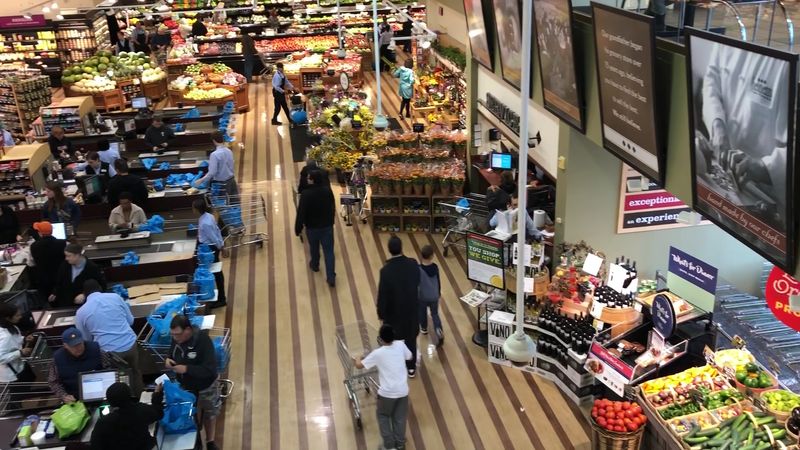
Heinen’s may have grown into a regional grocery company, but its origins could hardly fit this list better. Joe Heinen was a butcher when he opened a small meat market in the Cleveland area in 1929.
The company expanded from those beginnings into a supermarket business while remaining family-owned, with later generations of the Heinen family involved in its leadership.
That butcher-shop heritage still helps distinguish Heinen’s from many larger grocery chains. Its stores place a strong emphasis on fresh foods, including meat, seafood, produce, bakery goods, cheeses and prepared meals.
The experience is more polished and expansive than a tiny hometown meat market, so readers should not expect a one-counter butcher shop. Still, Heinen’s belongs here because its family ownership and Ohio history are genuine, and the entire company grew from one Cleveland butcher’s determination to sell high-quality meat and provide strong neighborhood service.
8. Bay Food Market, Lancaster
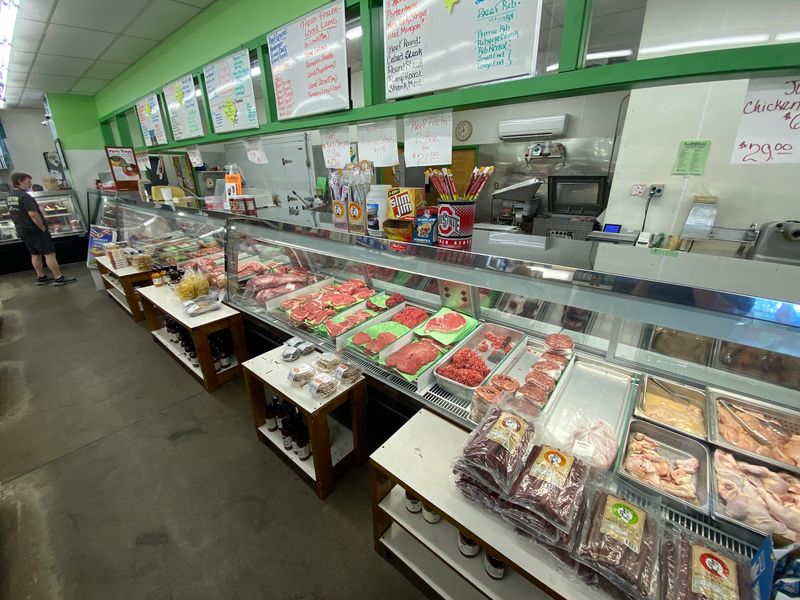
Bay Food Market has been part of Lancaster since 1932, giving it the kind of longevity few modern grocery stores can match. The family-owned business developed into much more than a place for basic pantry supplies, with meat processing becoming an important part of its identity.
The meat case is the reason many shoppers know the name. Bay Food Market offers custom-cut meats and produces specialty items that include sausages and other prepared or cured meats.
Its connection with local agriculture also gives the shop a distinctly Ohio character. Beyond the butcher side, customers can find deli offerings and other foods that make it function as a neighborhood market rather than simply a processing facility.
It is smaller and more specialized than a supermarket chain, which is part of the attraction. For shoppers who still value talking with the people preparing their meat, Bay Food Market preserves a style of grocery shopping that has disappeared from many communities.
9. Copey’s Butcher Shop, Medway
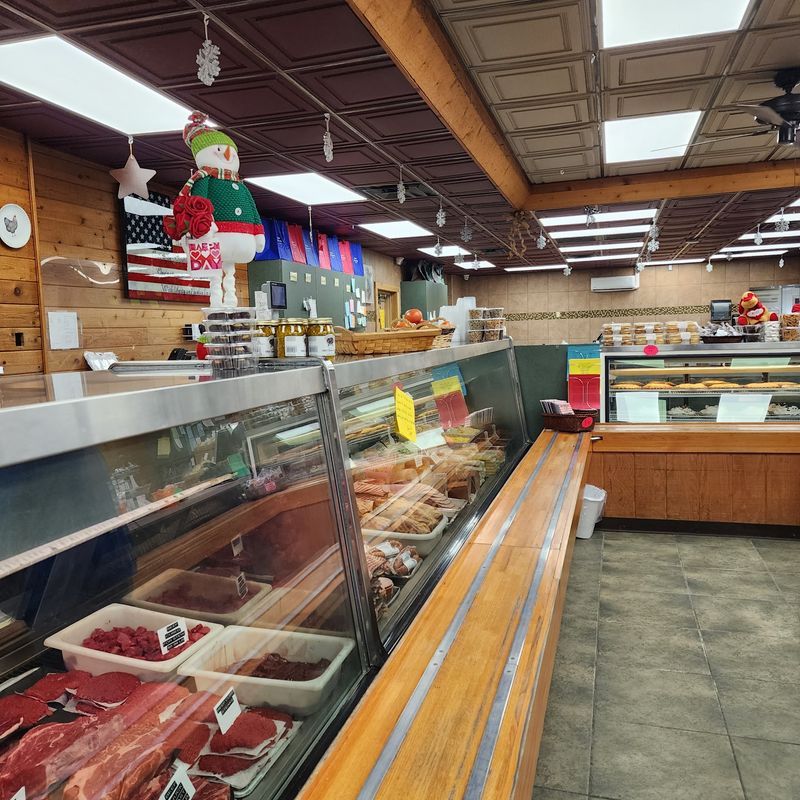
Copey’s Butcher Shop is more butcher shop than conventional supermarket, but that is precisely why it works for anyone chasing old-fashioned meat-counter service. The family-owned Medway business focuses heavily on fresh meats and the kind of direct customer interaction that is difficult to reproduce in a large grocery chain.
This is a place to visit when the meat itself is the reason for the shopping trip. Instead of staring at rows of anonymous packages, customers can choose from butcher-shop cuts and ask questions about what will work best for dinner.
Copey’s also offers deli and bakery products, expanding the selection beyond raw meat and making the shop useful for more than stocking the freezer. It has the straightforward feel of a traditional local food business: fewer distractions, a strong specialty and people behind the counter who know their products.
For this list, that butcher-first identity is a strength rather than a drawback.
Share this story