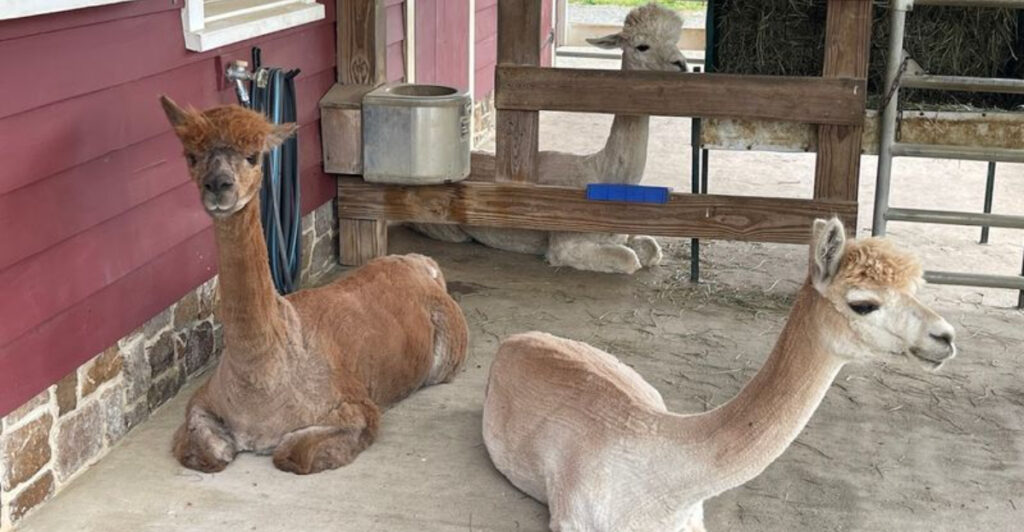
Most weekend trips involve crowded parks, long drives, or overpriced attractions that leave you wondering why you bothered. But tucked into the rolling hills of Somerset County, New Jersey, there is a small farm doing something that has people driving from across the state and even from New York City just to show up on a Saturday morning.
The draw is not a roller coaster or a famous restaurant. It is a herd of fluffy, long-necked alpacas that will eat right out of your hand and let you walk them on a leash through an open field.
This farm in Peapack has quietly become one of the most talked-about weekend destinations in central New Jersey, and once you understand what makes it so different from a typical day trip, the appeal becomes very clear, very fast.
The Story Behind the Farm and Its Herd
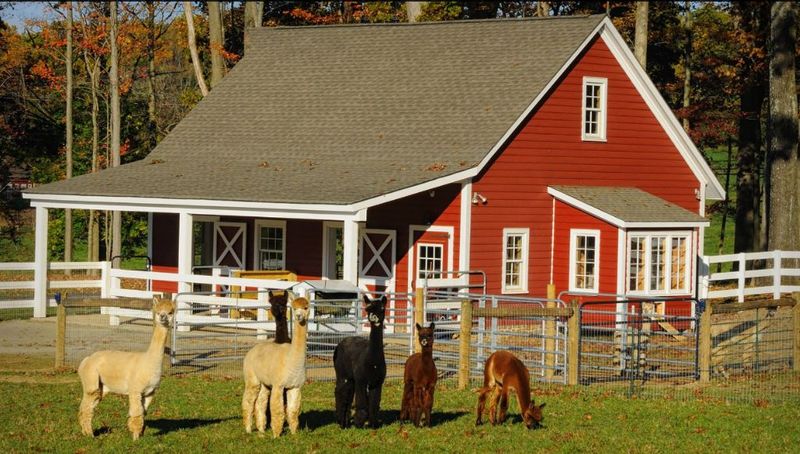
New Jersey is not the first state that comes to mind when people think about alpaca farming, but the Garden State is actually home to around ten alpaca farms, making it something of a quiet hub for these animals in the northeastern United States.
Bluebird Farm Alpacas was built around a genuine love for these animals and a desire to share that connection with the public. The farm is run by a dedicated team led by Nick, whose enthusiasm for the alpacas and the farm itself is something that comes through in every interaction with guests.
Alpacas are part of the camelid family, which includes llamas and camels, and they originate from South America. They typically live between 18 and 24 years and come in 22 natural colors.
The herd at Bluebird is well-cared-for, each animal known by name, and each one carrying its own distinct personality that staff members are happy to describe in detail.
What the Farm Actually Looks Like Up Close
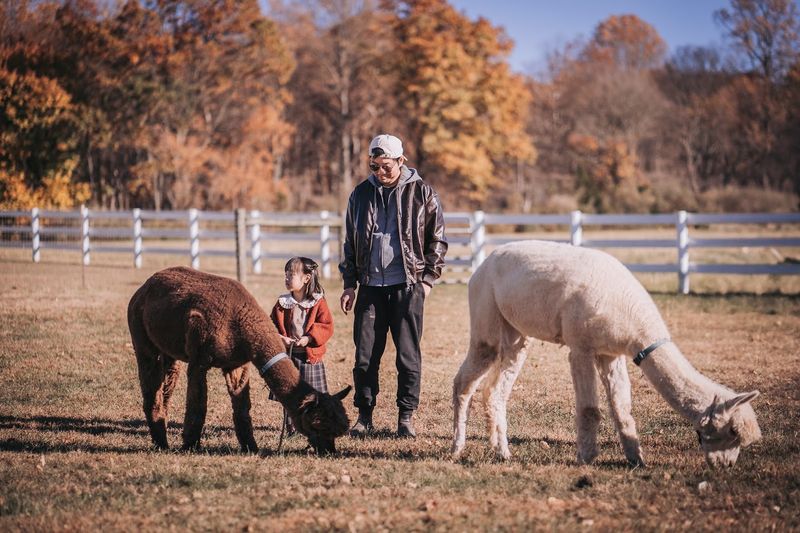
The farm itself is well-maintained and clearly cared for with real attention to detail. The barn is clean, the fencing is tidy, and the fields stretch out with that open, unhurried quality that makes countryside properties feel like a different world from the highway you just drove in on.
In autumn, the views from the property are particularly striking, with fall color rolling across the hillside and the alpacas grazing against a backdrop that looks almost too picturesque to be a quick drive from the city. In winter, the alpacas grow out their full coats, which changes the look of the herd entirely and gives the farm a different kind of charm depending on the season.
The facilities on site include a small bathroom, which is a practical detail worth knowing before you arrive with young children. The overall layout is compact enough to feel personal and easy to navigate, without ever feeling cramped or rushed.
Meeting the Alpacas for the First Time
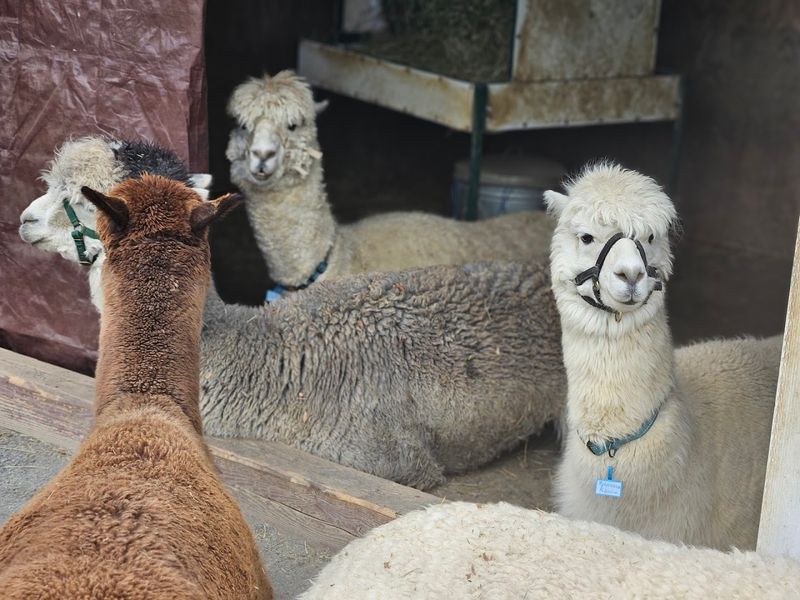
There is something quietly surprising about standing next to an alpaca for the first time. They are smaller than most people expect, somewhere between the size of a large dog and a small deer, and they carry themselves with a calm, unhurried quality that tends to put even nervous visitors at ease fairly quickly.
At Bluebird Farm, the experience begins with a short introduction where staff members explain the basics of alpaca behavior and share facts about the animals in the herd. Guests are then divided between two pens, each holding around half a dozen alpacas, which keeps the interaction personal rather than overwhelming.
Each alpaca has its own name and its own personality. Some are bold and will walk right up to new people, while others are a little more cautious and need a moment before they accept attention.
Staff members explain these differences throughout the visit, which adds a layer of real connection to what could otherwise just be a standard petting zoo experience.
Feeding Time and What Comes With Your Ticket
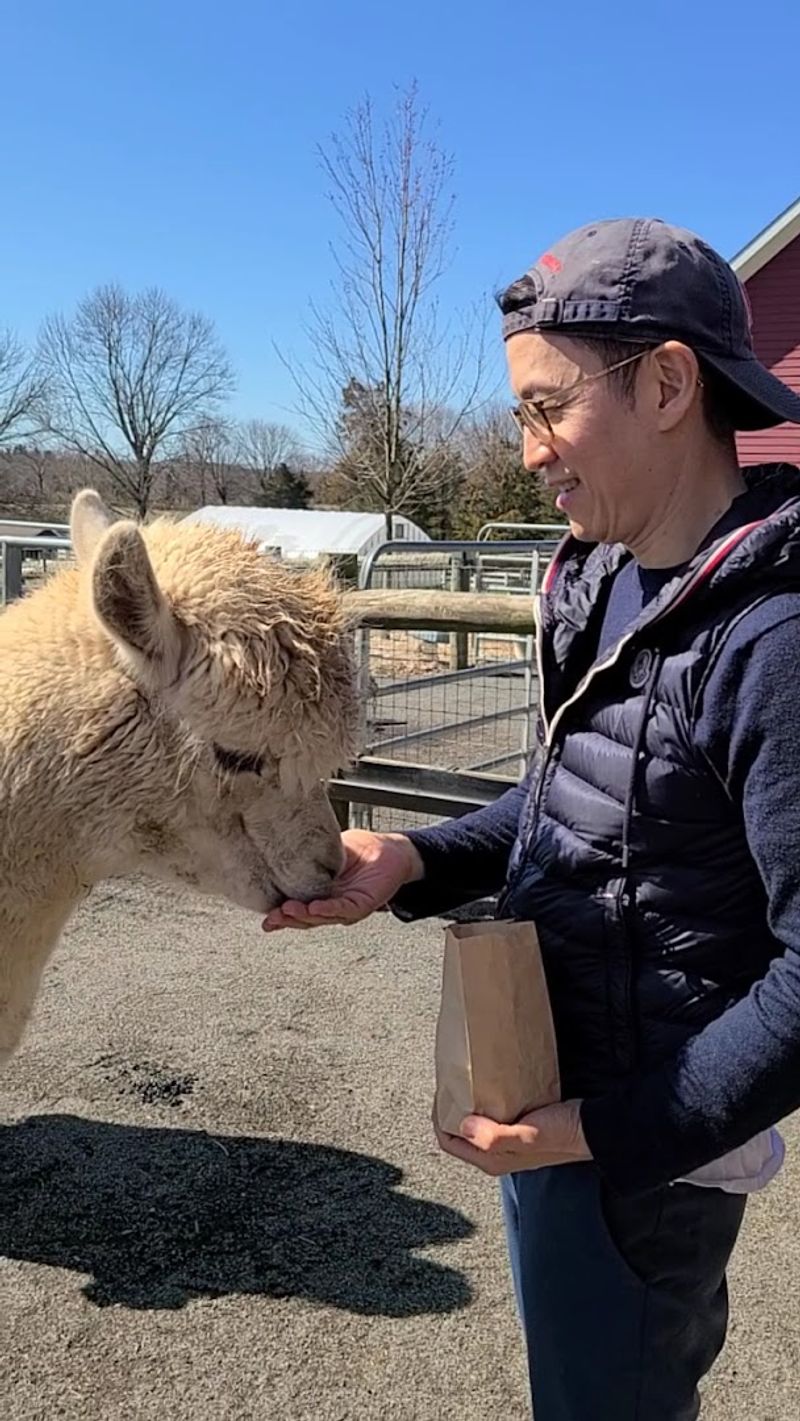
Every standard ticket at Bluebird Farm comes with a complimentary bag of feed, which is one of the details that makes the experience feel generous rather than transactional. The alpacas are enthusiastic eaters and will finish the bag quickly, so the interaction moves at a natural, lively pace.
Feeding alpacas by hand is one of those activities that sounds simple but turns out to be genuinely entertaining. Their lips are soft and the way they search for grain in an open palm can be described as ticklish, which tends to produce a lot of laughter, especially from younger visitors.
Standard tickets start at $14 per person, making the entry point fairly accessible for families. The alpacas are comfortable being touched on their backs, and staff members are present throughout to answer questions and keep the energy calm.
The whole feeding and interaction session is designed to feel relaxed rather than rushed, which sets it apart from more commercial animal encounter experiences.
The Alpaca Walk That Everyone Talks About
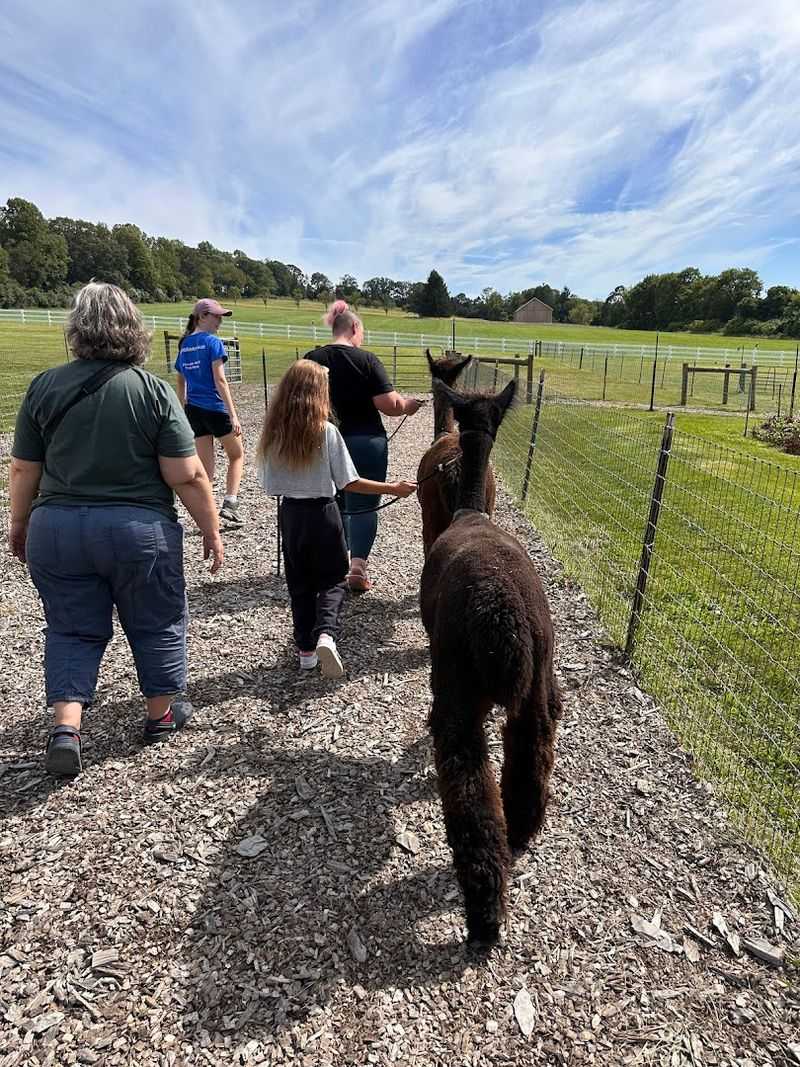
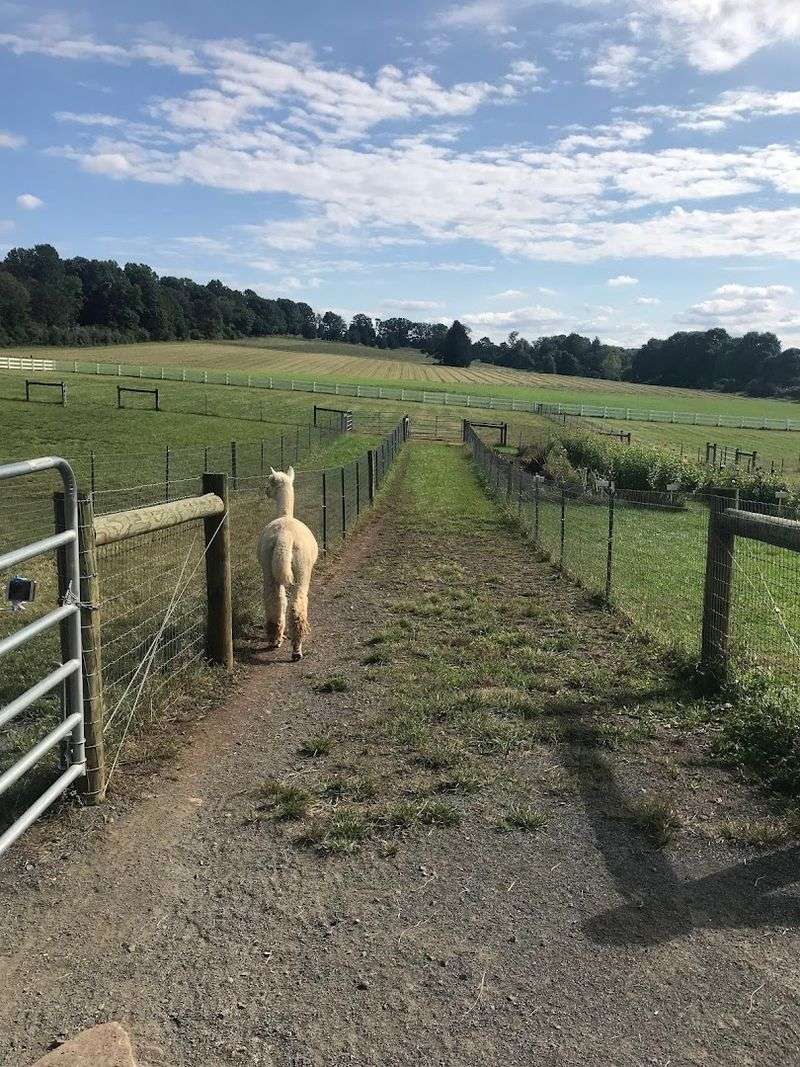
The activity that generates the most excitement at Bluebird Farm is the alpaca walk, which is exactly what it sounds like. Each participant gets an alpaca on a leash and walks with it through the fields, stopping at two designated spots along the route for photos.
The walk costs $30 per adult on top of the base ticket, which some people consider steep for the length of the experience. That said, the novelty of strolling through a New Jersey field with a fluffy, long-necked animal trotting alongside you is the kind of thing that is hard to put a conventional price on, and most people who do it come away feeling it was worth every cent.
The alpacas used for the walks are well-trained and comfortable with the activity. They move at a relaxed pace and respond well to calm, gentle handling.
The walk needs to be reserved online at the time of ticket purchase, as it cannot be added on the day of the visit.
Other Animals Sharing the Property
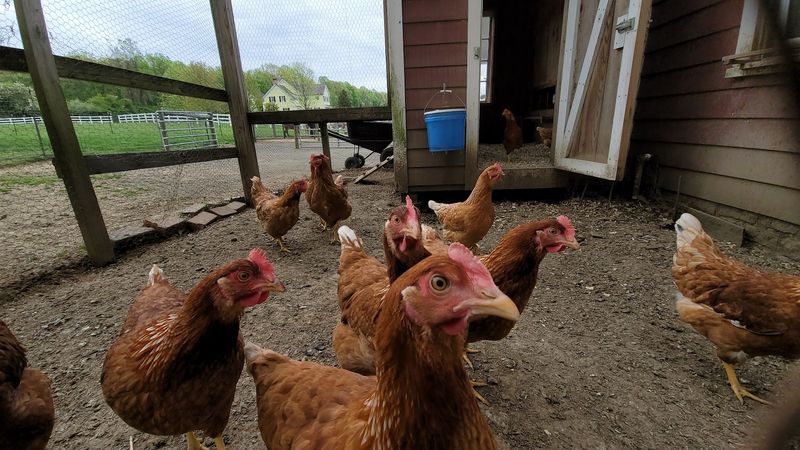
Alpacas are the main attraction at Bluebird Farm, but they are not the only animals on the property. Goats, chickens, and bunnies also call the farm home, adding a bit of variety to the visit and giving younger children more to explore and enjoy beyond the alpaca pens.
For families with kids who have different levels of comfort around larger animals, having smaller and more familiar creatures on site is a thoughtful touch. A child who might be hesitant around an alpaca at first often warms up quickly after spending a few minutes with the bunnies or watching the chickens go about their business.
The presence of multiple animal species also reinforces the sense that this is a real, working farm rather than a themed attraction designed purely for tourism. The animals are well cared for and the overall environment feels genuine, which is something that comes through clearly once you spend more than a few minutes on the property.
Hosting Private Events in a Setting Unlike Any Other
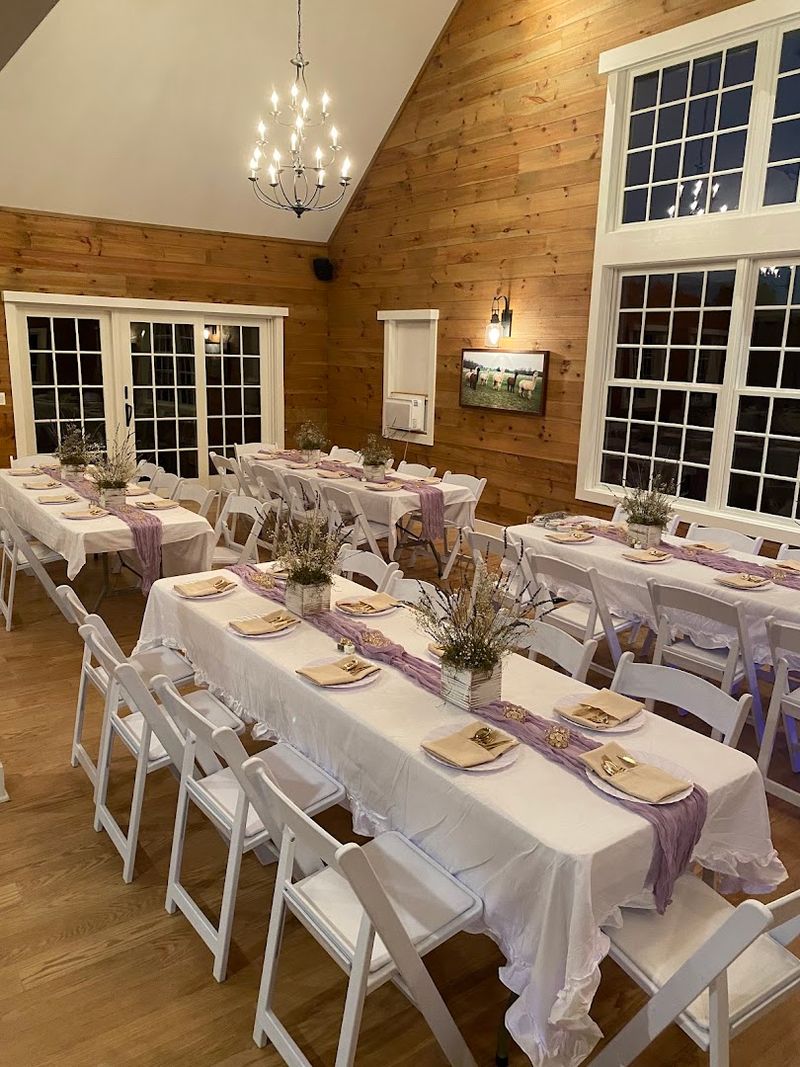
Bluebird Farm Alpacas has become a surprisingly popular venue for private events, and the list of occasions hosted there covers a wide range. Baby showers, bridal showers, birthday celebrations, and even weddings have all taken place on the property, with the barn and surrounding fields providing a backdrop that is both rustic and genuinely beautiful.
The barn is described as clean, well-maintained, and large enough to accommodate meaningful gatherings without feeling like a squeeze. The event space is flexible in its layout, which gives hosts the ability to configure the room to fit their specific vision rather than working around a fixed setup.
For couples who have used the farm as a wedding venue, the experience is consistently described as exceeding expectations. The combination of open fields, sweeping views, and the presence of the alpacas themselves creates an atmosphere that is difficult to replicate at a conventional event space.
Communication with the farm team throughout the planning process is noted as clear, consistent, and genuinely helpful.
What Alpaca Fiber Actually Is and Why It Matters
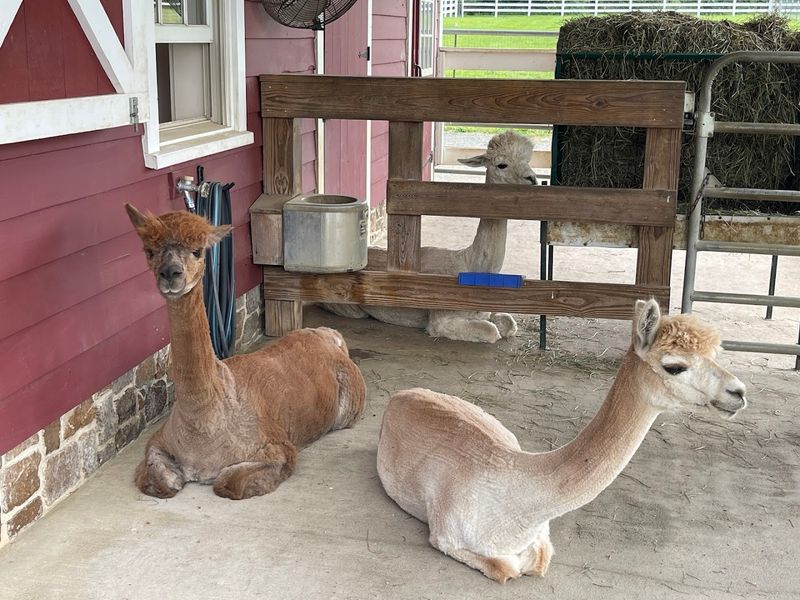
One of the more educational aspects of a visit to Bluebird Farm is learning about alpaca fiber, which is the material produced from the animals’ coats and used to make a range of textile products. Alpaca fiber is known for being exceptionally soft, warmer than wool, and hypoallergenic, which makes it highly valued in the textile world.
The herd at Bluebird is shorn once a year, typically in late spring before the warmer months arrive. Visiting just before shearing season means seeing the alpacas in their full winter coats, which dramatically changes their appearance and adds a certain theatrical quality to the farm visit.
Different seasons genuinely produce different experiences at this farm. Summer visits feature alpacas with short, close coats, while winter and early spring bring out the full, dramatically fluffy versions of the same animals.
This seasonal variation gives regular visitors a reason to return throughout the year rather than treating it as a one-time outing.
The Gift Shop and What You Can Take Home
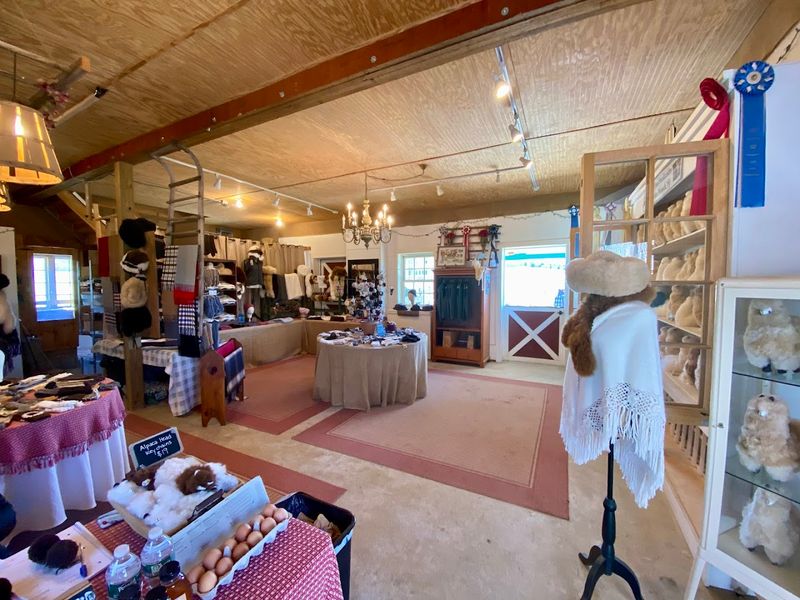
On the way out of the farm, there is a small gift shop where visitors can browse and purchase items made from alpaca fiber as well as farm-themed accessories. The selection includes clothing items like scarves, socks, slippers, gloves, and hats, along with soft goods like blankets and stuffed animals made from alpaca material.
The shop also sells additional bags of alpaca feed for those who want to extend their time with the animals or pick up a small souvenir that connects directly to the experience. The products made from the farm’s own fiber carry a certain authenticity that mass-produced gift shop items simply cannot match.
Some visitors have noted that the shop inventory is relatively limited and that more variety in smaller keepsake items like magnets or stickers would be a welcome addition. That said, what is available tends to be genuinely high quality, and the alpaca fiber products in particular are noticeably softer than standard wool alternatives found in conventional retail settings.
Tips for Planning Your Visit the Smart Way
A few practical details can make the difference between a smooth, enjoyable visit and one that starts with a parking headache or a missed time slot. The farm is open only on Saturdays and Sundays from 10 AM to 4 PM, and all experiences require advance reservations made through the farm’s website at bluebirdfarmalpacas.com.
The parking lot on site is small, so arriving as close to the reserved time as possible is genuinely important. Showing up significantly early means competing for limited parking with other groups, which creates unnecessary stress before the visit even begins.
Weekday visits are not currently available to the general public, but weekday bookings may be possible for private events. For those who want a more personal, one-on-one experience with the animals, booking during less popular time slots or during the off-peak months tends to result in smaller groups and more direct interaction with the herd.
Checking the website for availability and any seasonal programming is always worth doing before finalizing plans.
Who This Farm Is Really Built For
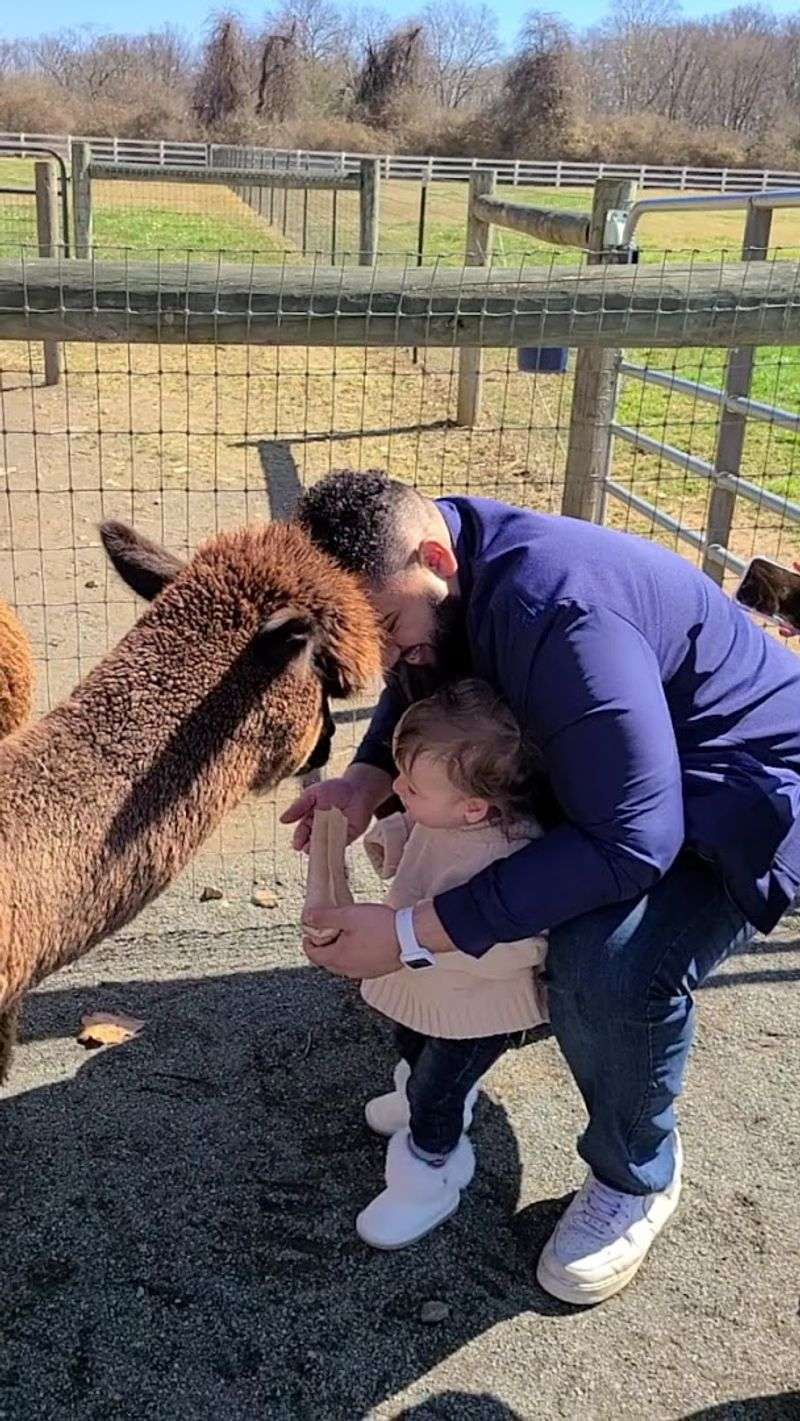
Bluebird Farm Alpacas works for a surprisingly wide range of people, which is part of what makes it such a reliable destination for a weekend outing. Families with young children are the obvious fit, but couples, friend groups, coworkers, and even solo animal enthusiasts have all found something worth returning for at this farm.
The experience is genuinely accessible for toddlers, with even very young children able to participate in the feeding with supervision. At the same time, adults who have never spent time around farm animals tend to find the visit more engaging than they anticipated, largely because the alpacas themselves are curious, expressive, and entertaining in a way that does not require any prior interest in farming to appreciate.
For city dwellers within driving distance, particularly those coming from the New York metro area, the farm offers a pace of day that is simply different from anything available in an urban environment. That contrast alone has a way of making the whole experience feel more restorative than a typical weekend activity.
Why People Keep Coming Back Season After Season
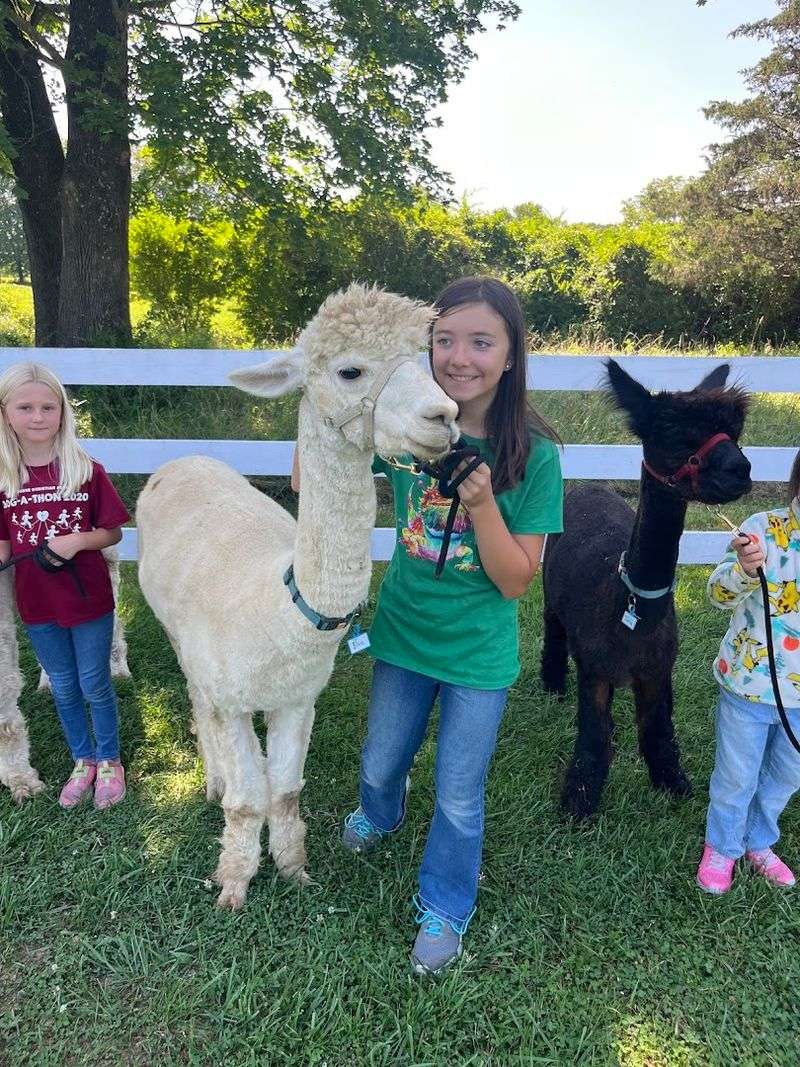
Repeat visits to Bluebird Farm Alpacas are genuinely common, and the reasons people return vary depending on who you ask. Some come back because they want to try a different experience, moving from the basic feeding tour to the alpaca walk or one of the more specialized offerings like yoga or a dining event.
Others return simply because the farm looks and feels different depending on the time of year. The alpacas in full winter coat are a completely different visual experience from the same animals freshly shorn in summer, and the surrounding landscape shifts dramatically from the lush greens of spring to the warm tones of autumn and the bare simplicity of winter.
There is also something to be said for the kind of place that becomes a personal tradition rather than a one-time novelty. Bluebird Farm has quietly earned that status for a growing number of New Jersey families and out-of-state visitors who find that a few hours among alpacas resets something that a typical weekend simply does not reach.
Where Exactly This Farm Sits and How to Find It
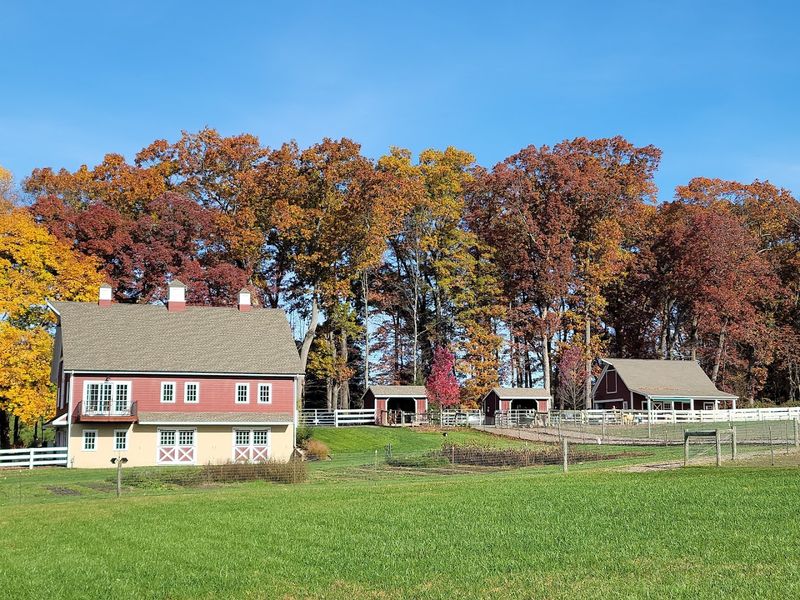
Bluebird Farm Alpacas is located at 44 Willow Ave, Peapack, NJ 07977, sitting right in the heart of Somerset County where the landscape opens up into wide fields and quiet country roads.
Peapack is a small borough in New Jersey that many people drive through without stopping, but this farm gives a very good reason to pull over and stay a while. The surrounding area is known for its preserved farmland and historic estates, which makes the setting feel far removed from the suburban sprawl that covers much of the state.
The farm operates on weekends only, opening at 10 AM and closing at 4 PM on Saturdays and Sundays, and remains closed from Monday through Friday. Booking online in advance is strongly recommended, as time slots fill up quickly, especially on warm weekend days.
The parking lot on site is relatively small, so arriving close to your reserved time is the smart move.
Share this story