Chinese-American cuisine has a fascinating story behind it. Many of the dishes you find at your local Chinese takeout spot were actually invented or heavily changed to suit American preferences, not traditional Chinese ones.
Bold flavors, sweet sauces, and familiar ingredients made these dishes huge hits across the United States. Get ready to learn about 11 popular Chinese-American dishes that owe more to American tastes than to anything you would find in China.
1. General Tso’s Chicken
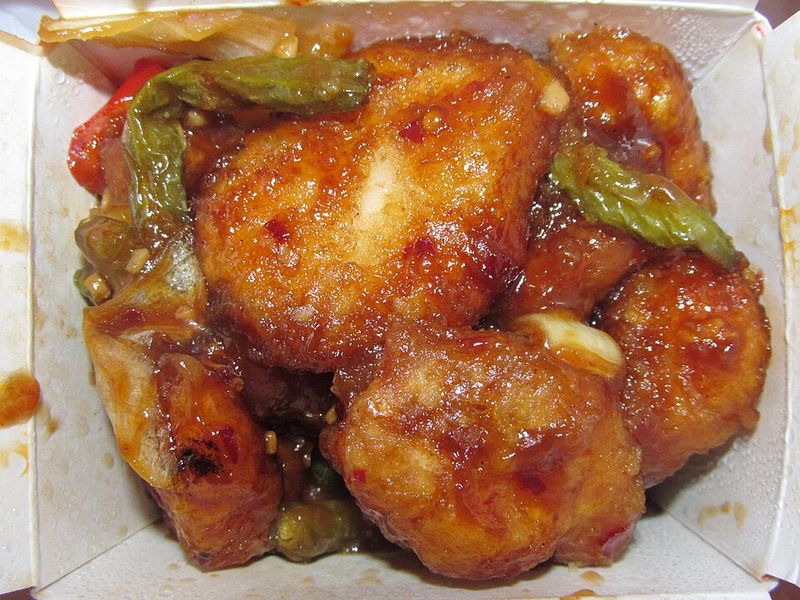
Few dishes sum up Chinese-American cooking quite like General Tso’s Chicken. Despite being named after a real Chinese military leader from the 1800s, the dish itself has almost nothing to do with Chinese culinary tradition.
It was likely developed in New York City during the 1970s by chefs looking to impress American diners.
The recipe features deep-fried chicken chunks tossed in a thick, sweet, and slightly spicy sauce made with soy sauce, vinegar, sugar, and dried chilies. That combination of crunchy texture and bold, sweet heat became an instant crowd-pleaser across the country.
Today, General Tso’s Chicken is one of the most ordered dishes at Chinese-American restaurants nationwide. You won’t find it on menus in mainland China.
It’s a purely American creation wearing Chinese-inspired clothing, and honestly, there’s nothing wrong with loving every single bite of it.
2. Crab Rangoon
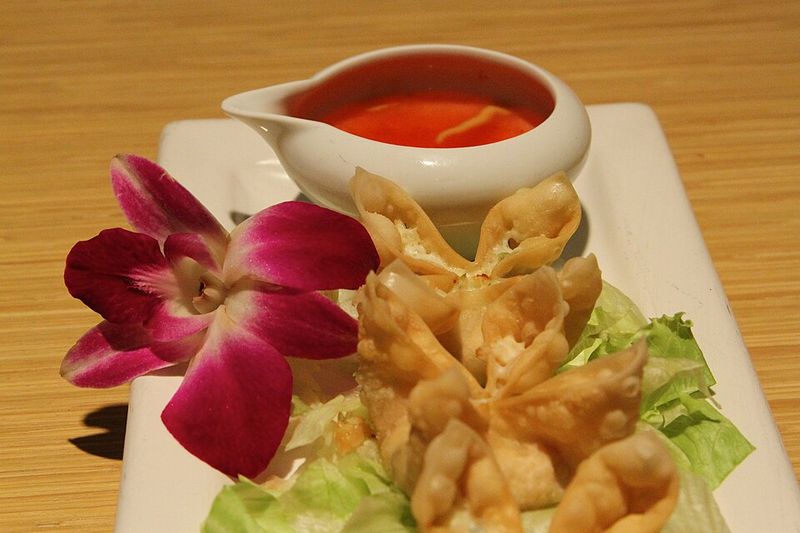
Cream cheese stuffed inside a fried wonton wrapper sounds like something dreamed up at a state fair, not in a traditional Chinese kitchen. Crab Rangoon first appeared on American menus in the 1950s at a Polynesian-themed restaurant called Trader Vic’s in San Francisco.
Cream cheese is not a common ingredient in Chinese cooking at all.
The filling typically combines cream cheese, imitation crab meat, green onions, and a touch of garlic. Once fried, the outside becomes perfectly crispy while the inside turns warm and creamy.
It’s a texture combination that American diners absolutely love.
Interestingly, the name references Rangoon, which is a city in Myanmar, not China. So the dish borrows a Southeast Asian name, uses a very Western ingredient, and gets served at Chinese restaurants.
It’s a wonderfully odd invention that somehow became a beloved American appetizer staple.
3. Fortune Cookies
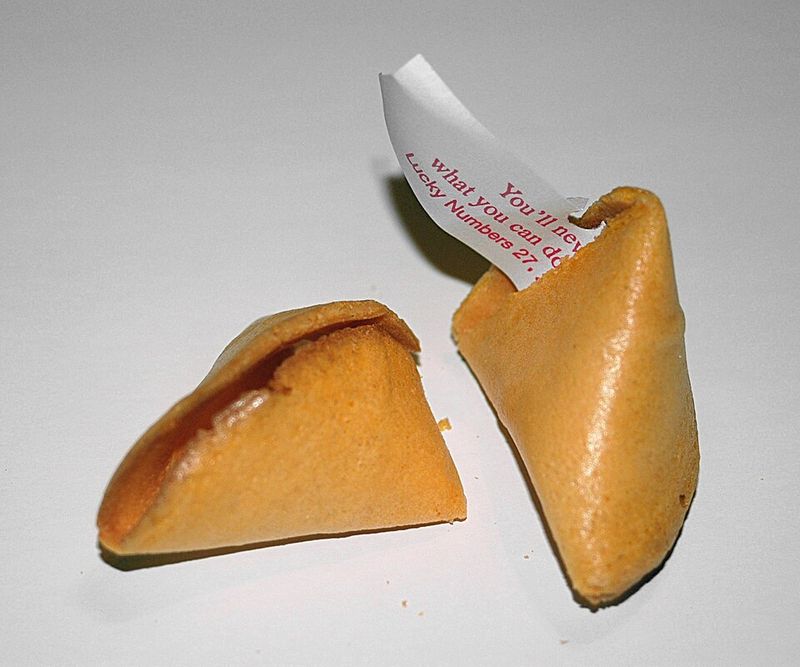
Cracking open a fortune cookie at the end of a Chinese meal feels like a tradition as old as time. Surprise: fortune cookies are not Chinese at all.
Most food historians trace their origin to Japanese immigrants in California during the early 1900s, not to China.
During World War II, Japanese-American bakeries were shut down due to internment, and Chinese-American bakers stepped in to fill the gap. Fortune cookies quickly became associated with Chinese restaurants across the United States, and the connection stuck permanently.
When fortune cookies were introduced to China in the 1990s, they were actually marketed as an American invention. People in China found the whole concept pretty amusing.
Today, nearly 3 billion fortune cookies are produced every year, almost all of them in the United States. They are a uniquely American tradition that somehow became the unofficial symbol of Chinese dining in America.
4. Chop Suey
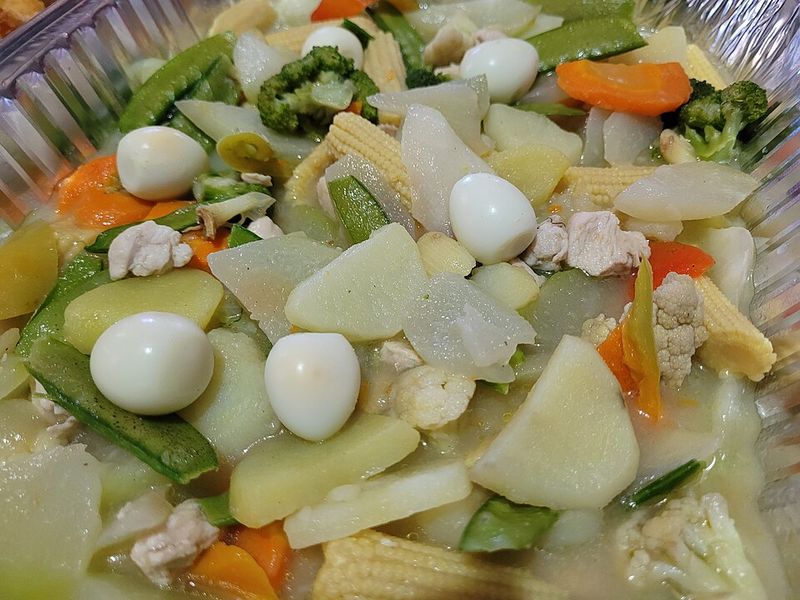
Chop Suey was once the most famous Chinese dish in America, dominating restaurant menus for decades. The name loosely translates to mixed scraps or odds and ends in Cantonese.
Its exact origin is debated, but most stories point to Chinese laborers or restaurant workers in 19th-century America throwing together whatever vegetables and meat were available.
The dish is basically a stir-fry of leftover ingredients like bean sprouts, celery, and mushrooms mixed with meat in a light sauce. It does not represent any specific regional Chinese cuisine.
Traditional Chinese cooking has far more refined and carefully crafted dishes than a pile of mixed scraps.
By the mid-20th century, Chop Suey became the face of Chinese food in America, even inspiring a whole chain of restaurants. Its popularity has faded since, but it played a huge role in shaping how Americans first understood and accepted Chinese-style cooking.
5. Orange Chicken
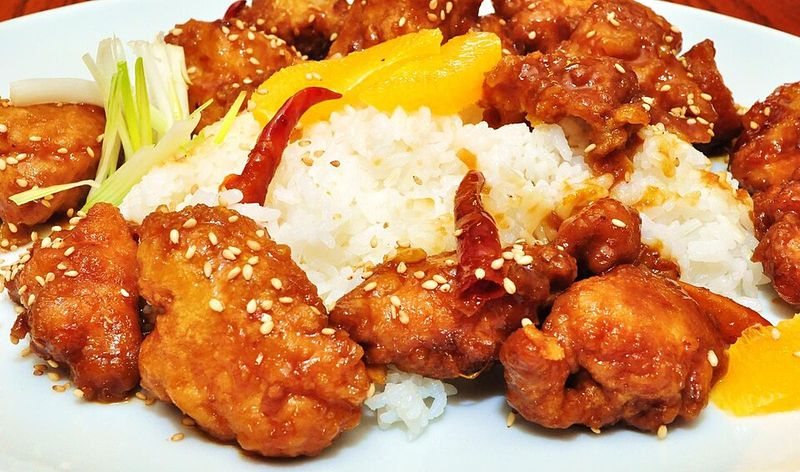
Orange Chicken might be the dish that single-handedly built Panda Express into a fast-food empire. Chef Andy Kao created the recipe in 1987 for the Panda Express location in Honolulu, Hawaii.
The goal was to appeal to American palates that loved sweet, tangy, and slightly spicy flavors all at once.
The dish features battered and fried chicken pieces tossed in a sticky orange-flavored sauce made from orange juice, sugar, soy sauce, and vinegar. It’s intensely sweet compared to anything you’d find in traditional Chinese cuisine.
Chinese cooking does use citrus flavors, but never quite like this.
Panda Express now sells around 100 million pounds of Orange Chicken every single year. It has become a cultural touchstone in American fast-food history.
While it draws loose inspiration from Hunan-style dishes, Orange Chicken is unmistakably built around what American customers crave most: sweetness, crunch, and bold flavor in every bite.
6. Beef with Broccoli
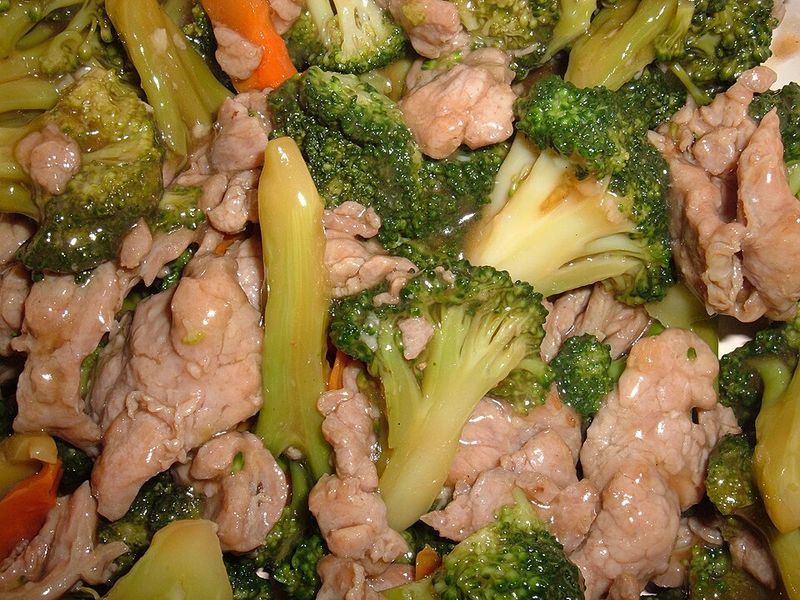
Beef with Broccoli is a staple of Chinese-American takeout menus everywhere, yet it barely resembles anything from traditional Chinese cooking. The dish gets its roots from a Cantonese stir-fry called Gai Lan Chao Niurou, which uses Chinese broccoli instead of the Western broccoli variety most Americans know.
When Chinese immigrants adapted their cooking for American customers, they swapped Chinese broccoli for the more familiar Western kind. The sauce, a savory mix of oyster sauce, soy sauce, and cornstarch, stayed relatively close to Cantonese flavors.
That part actually holds up as somewhat authentic.
What makes this dish distinctly American is the generous portion of beef and the thick, glossy sauce coating everything. American diners wanted hearty, protein-heavy meals, and this dish delivered exactly that.
Today, Beef with Broccoli remains one of the top-ordered items at Chinese-American restaurants, proving that a smart adaptation can outlast generations of changing food trends.
7. Sweet and Sour Chicken
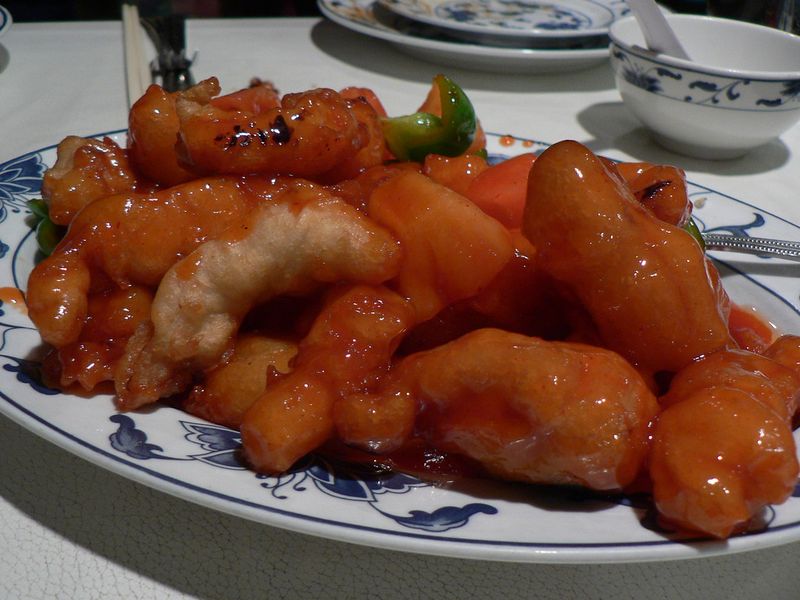
Walk into any Chinese-American restaurant in the country and Sweet and Sour Chicken is almost guaranteed to be on the menu. The vivid red or orange sauce, the crispy battered chicken, and the chunks of pineapple make it instantly recognizable.
It’s a dish built for American preferences from top to bottom.
Traditional Chinese cooking does include sweet and sour flavor combinations, particularly in Cantonese cuisine. However, the thick, neon-colored sauce and the battered deep-fried chicken are distinctly American additions.
The original Chinese versions are far lighter and more delicately balanced.
Kids especially love this dish because the sweet sauce and crunchy texture make it approachable and fun to eat. Restaurants often serve it with fried rice or lo mein.
Over the decades, Sweet and Sour Chicken became one of the defining dishes of Chinese-American food culture, even if it looks nothing like its distant Cantonese cousin.
8. Sesame Chicken
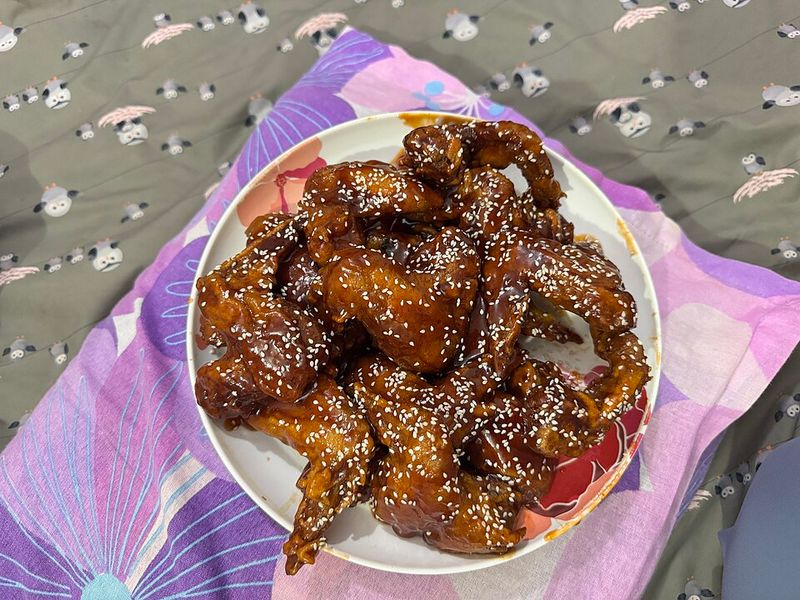
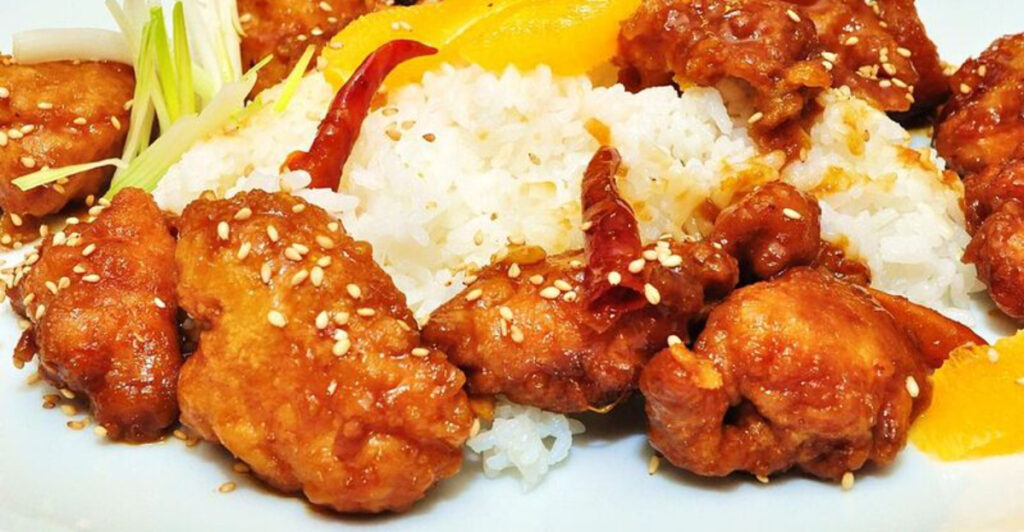
At first glance, Sesame Chicken and General Tso’s Chicken look almost identical. Both feature crispy fried chicken in a dark, sticky sauce.
The key difference is that Sesame Chicken leans sweeter and less spicy, making it even more tailored to American taste buds that prefer milder heat levels.
The sauce combines soy sauce, sugar, sesame oil, and sometimes hoisin sauce, all finished with a generous shower of toasted sesame seeds on top. Sesame seeds do appear in Chinese cooking, but not usually in this heavily sweetened, gloppy sauce format.
Traditional Chinese sesame dishes are far more subtle.
Sesame Chicken became popular in the 1980s and 1990s as Chinese-American restaurants expanded rapidly across suburban America. It filled the same role as General Tso’s but for customers who wanted less kick.
Today it remains a reliable favorite, especially among diners who like their takeout sweet, savory, and absolutely loaded with sesame flavor.
9. Pu Pu Platter
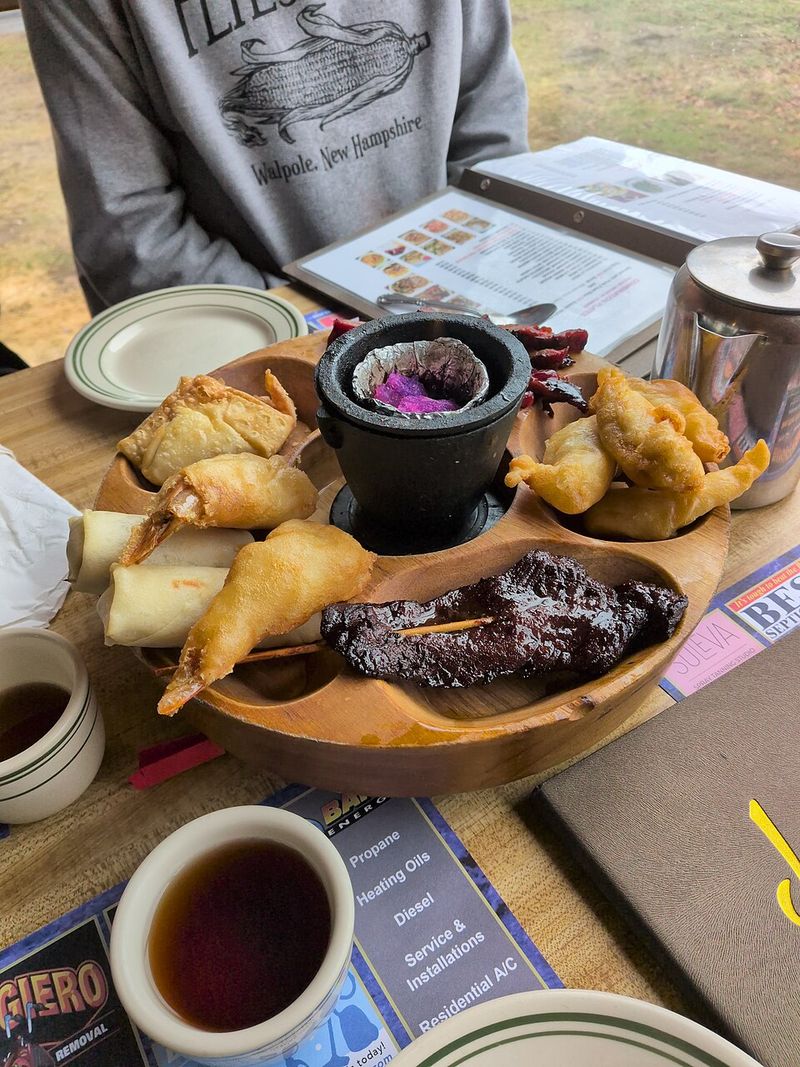
The Pu Pu Platter is one of the most theatrical dining experiences at Chinese-American restaurants. A big round tray arrives loaded with an assortment of appetizers surrounding a small open flame hibachi grill in the center.
Guests cook or warm their own food tableside, which makes it feel like an event rather than just a meal.
Typical items include egg rolls, chicken wings, beef skewers, spare ribs, and fried wontons. There is nothing specifically Chinese about this format.
The name itself comes from a Hawaiian word meaning appetizer, and the concept owes more to mid-century Polynesian-themed American restaurants than to any Chinese culinary tradition.
Trader Vic’s and similar tiki culture restaurants of the 1940s and 1950s helped popularize this style of communal appetizer sharing. Chinese restaurants adopted it because American customers loved the fun, social atmosphere it created.
Today, the Pu Pu Platter remains a nostalgic favorite that brings a sense of festive energy to any dinner table.
10. Chinese Chicken Salad
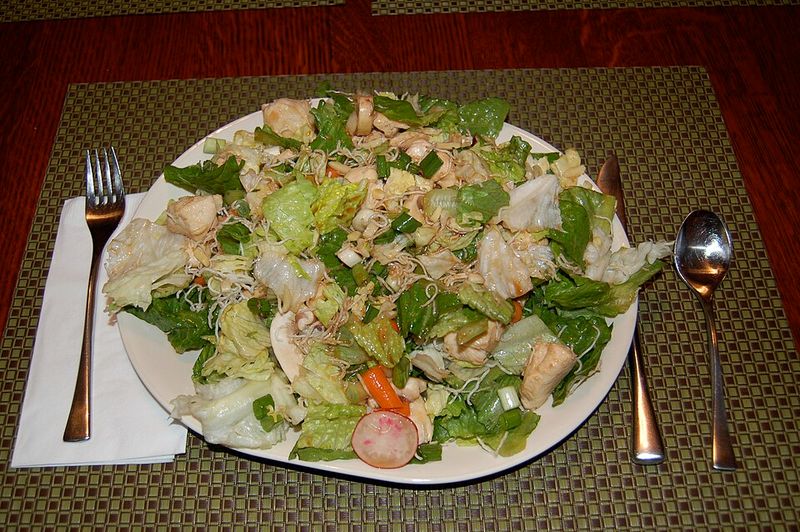
Chinese Chicken Salad sounds like it belongs in a health food magazine, and in many ways it does. This colorful, crunchy salad is a staple of American casual dining restaurants, not Chinese ones.
It features shredded chicken, cabbage, mandarin oranges, slivered almonds, and crispy wonton strips tossed in a sesame ginger dressing.
Many food historians credit chef Wolfgang Puck or restaurateur Cecilia Chiang with popularizing this dish in California during the 1960s and 1970s. Either way, it was designed with American health-conscious diners in mind, not rooted in any traditional Chinese salad tradition.
Cold salads are not a major part of Chinese culinary culture.
The sesame ginger dressing is probably the most Chinese-inspired element of the whole dish. Everything else, from the romaine lettuce base to the mandarin oranges, reflects American preferences.
Today Chinese Chicken Salad appears on menus at Applebee’s, TGI Fridays, and countless other American chains, proving it has fully crossed over into mainstream American food culture.
11. Bourbon Chicken
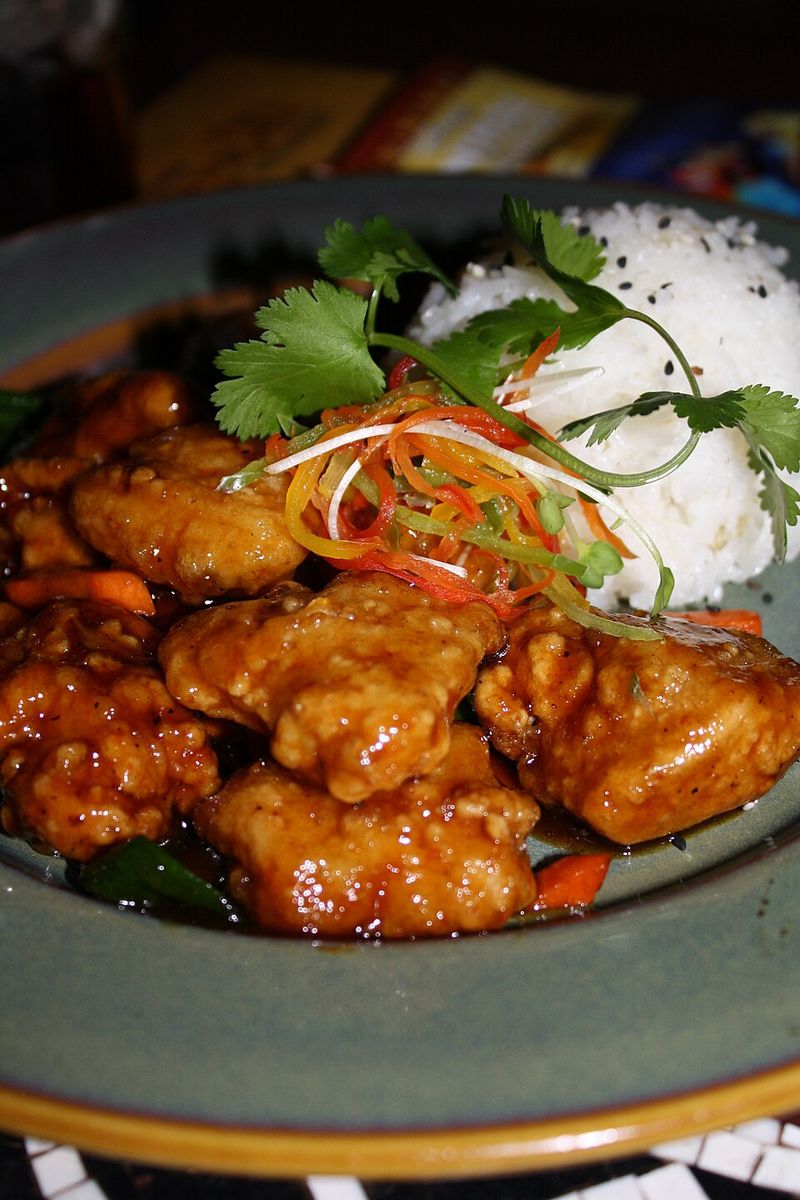
Bourbon Chicken is a fixture of American food courts, particularly in mall settings where the smell of its sweet, caramelized sauce drifts through the corridor and pulls you in like a magnet. Named after Bourbon Street in New Orleans rather than bourbon whiskey, this dish has a Southern American soul hiding behind its Chinese-American restaurant facade.
The sauce combines soy sauce, brown sugar, ginger, and apple juice or bourbon whiskey for a sticky, deeply savory glaze. It’s closer to Southern American barbecue flavors than anything traditional in Chinese cooking.
Some versions skip the alcohol entirely, making it suitable for all ages.
Bourbon Chicken likely originated in New Orleans, where Chinese and Cajun culinary influences have historically mixed together in interesting ways. It became a food court staple through chains like Sarku Japan and similar Asian-inspired fast-food concepts.
Rich, sweet, and satisfying, it’s a dish that could only have been born in America.
Share this story