Back in the early 2000s, road construction crews in northeastern Tennessee made a discovery that stopped everything in its tracks. Workers broke ground for a highway bypass and hit something no one expected: a massive deposit of ancient fossils dating back roughly five million years.
Instead of paving over history, state officials made the remarkable decision to reroute the road entirely. What emerged from that choice is now one of the most significant paleontological sites in the eastern United States.
This spot sits on top of a prehistoric sinkhole that preserved the bones of creatures most people only know from textbooks. Tapirs, red pandas, rhinos, and saber-toothed cats once roamed this corner of Appalachia, and their remains are still being pulled from the earth today.
This is the full story of a place where ancient history is still very much alive.
The Prehistoric Sinkhole That Acted as a Time Capsule
Not every fossil site has an origin story this dramatic. The Gray site formed when a natural limestone cavity collapsed millions of years ago, creating a sinkhole that gradually filled with water, sediment, and the remains of animals that wandered in and could not escape.
That combination of water, fine clay, and low oxygen created near-perfect conditions for preservation. Bones that would normally decay over thousands of years were instead locked in place, protected from the elements by layers of dense sediment that acted like a natural vault.
Scientists estimate the sinkhole deposit is roughly 30 feet deep in places, and excavations have only scratched the surface of what remains underground. The clay matrix that holds the fossils requires painstaking, methodical work to remove safely.
Each layer peeled back reveals a snapshot of a world that existed in this part of North America long before humans arrived on the continent.
Animals You Would Never Expect to Find in Tennessee
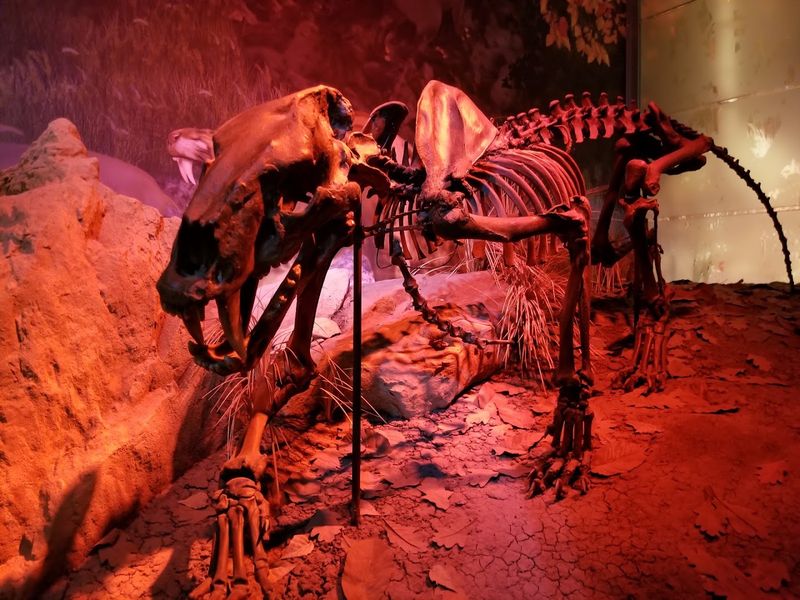
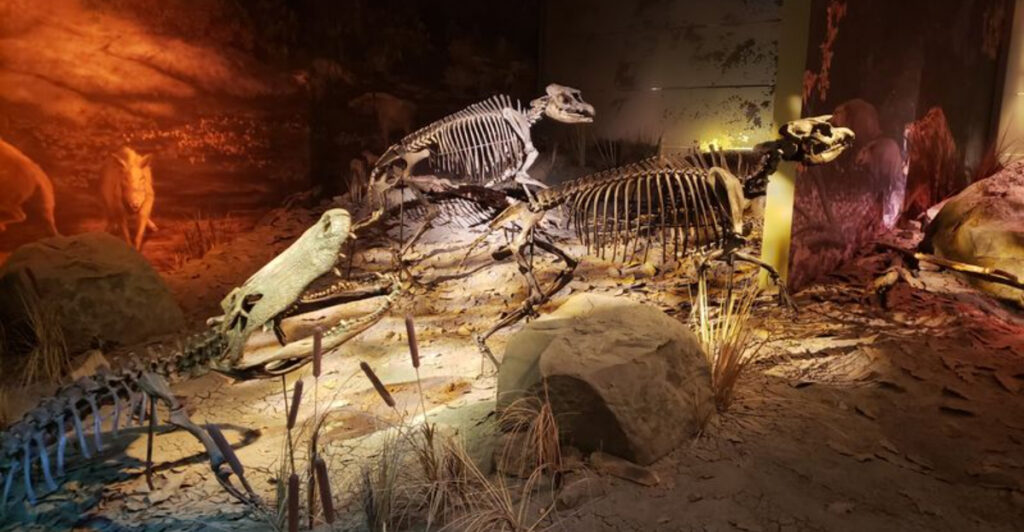
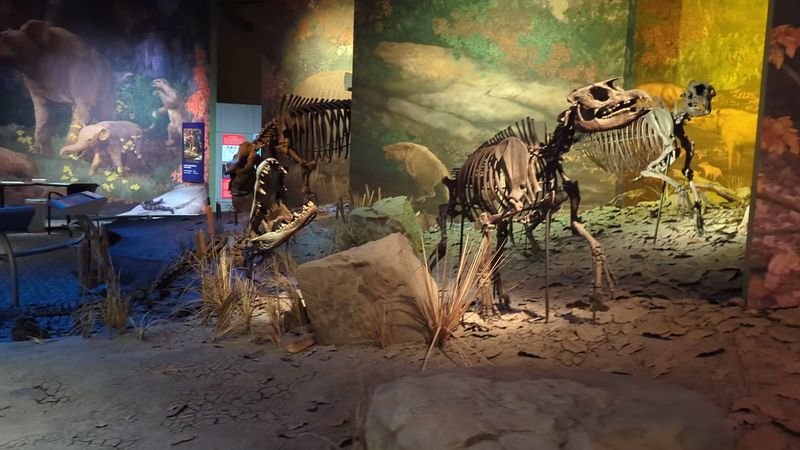
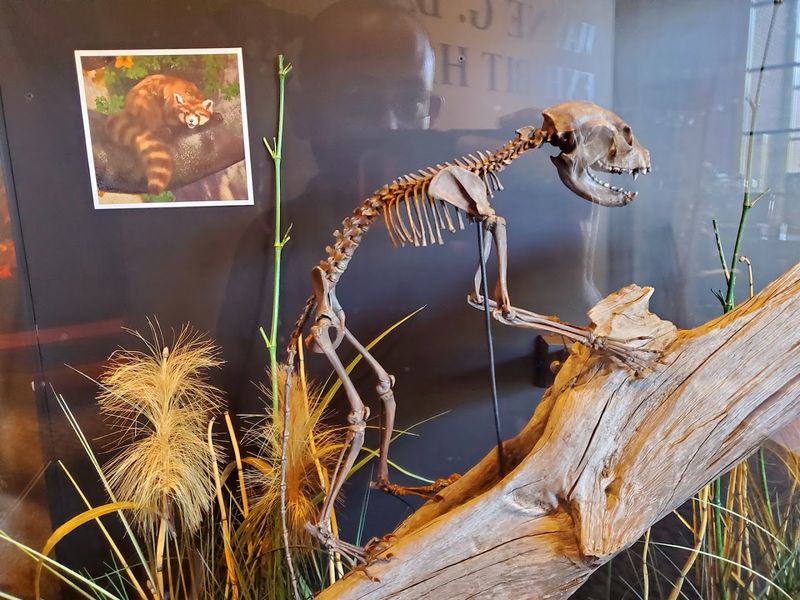
The fossil record at Gray reads like a guest list from a very unusual zoo. Among the species identified at the site are the Tapirus polkensis, an ancient tapir named after President James K.
Polk, a short-faced bear, a relative of the modern red panda, a Teleoceras rhinoceros, and a saber-toothed cat known as Machairodus.
These animals lived during the late Miocene epoch, a period when Tennessee had a warmer, more humid climate than it does today. The region would have looked less like Appalachia and more like a subtropical woodland with dense vegetation and permanent water sources nearby.
The diversity of species recovered from a single site is what makes Gray so scientifically significant. Finding a red panda relative in eastern Tennessee was particularly surprising to researchers, as it suggested migration patterns across North America that had not been previously documented.
Every new excavation season adds more pieces to that ancient puzzle.
What East Tennessee State University Built on Top of the Discovery
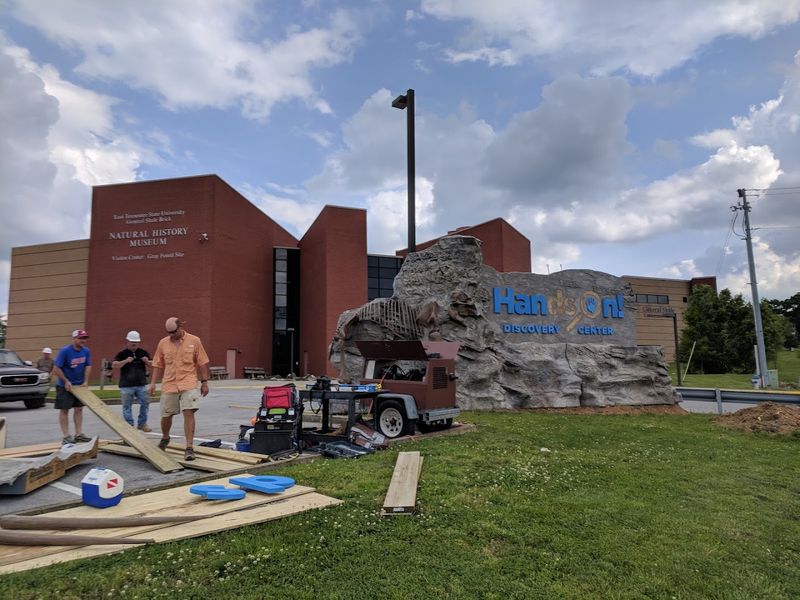
East Tennessee State University stepped up quickly after the site was identified, establishing a research and museum facility directly on top of the excavation area. The university now runs the Gray Fossil Site and Museum as both an active research center and a public attraction, which is a combination that makes it genuinely unusual among natural history institutions.
ETSU paleontologists and students conduct ongoing fieldwork at the site, meaning the science happening here is not archived history but current, active research. Graduate students and faculty publish findings from Gray regularly, contributing to the broader scientific understanding of North American fauna during the Miocene epoch.
The partnership between the state of Tennessee and ETSU created a model for how public universities can anchor important scientific resources while also making them accessible to everyday visitors. The facility has grown considerably since its early days, adding exhibit halls, a laboratory viewing area, and educational programming that serves school groups from across the region every year.
Watching Real Paleontologists Work Through a Window
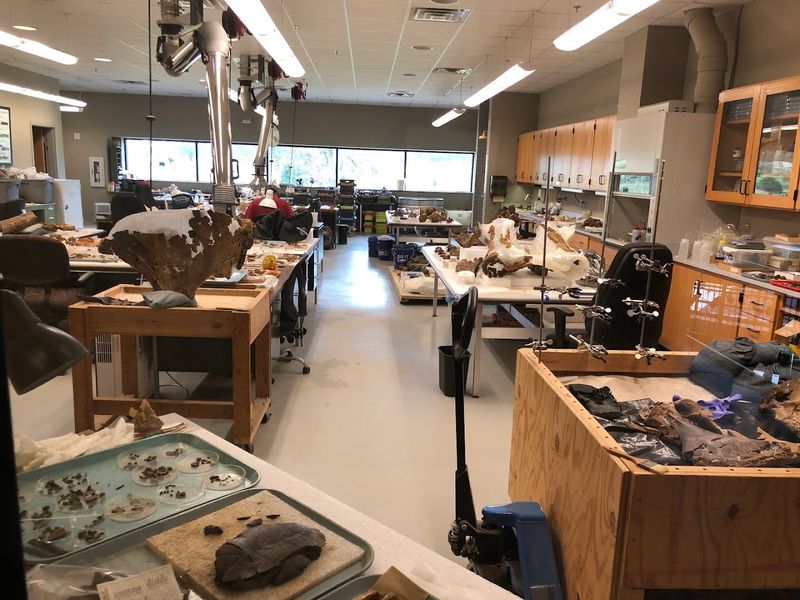
One of the most compelling features at the Gray Fossil Site is the ability to watch actual fossil preparation work happening in real time. A large glass window in the museum allows visitors to observe the fossil lab, where technicians and researchers clean, stabilize, and catalog specimens pulled from the excavation.
This is not a staged demonstration or a theatrical recreation. The work being done behind that glass is genuine scientific preparation, the kind that takes months or years to complete on a single specimen.
Watching someone use a fine brush and an air scribe to remove ancient clay from a five-million-year-old bone is a surprisingly gripping experience.
For younger visitors especially, seeing science in action rather than simply reading about it creates a different kind of connection to the material. The lab window turns passive museum-going into something more like witnessing a discovery unfold, which is a perspective that no exhibit panel or interactive screen can fully replicate.
The Active Dig Site and What Happens During Excavation Season
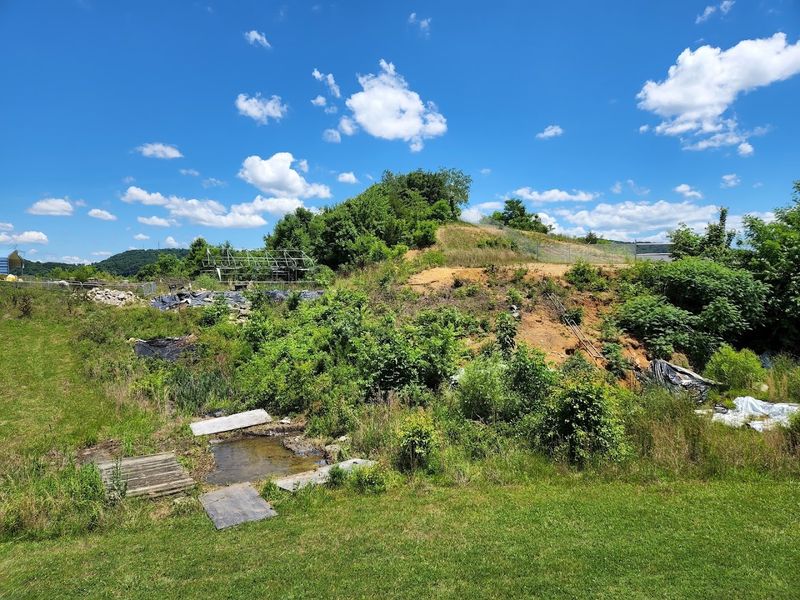
The outdoor excavation area at Gray operates on a seasonal schedule, with active digging typically taking place in warmer months. During excavation season, visitors can view the dig site from an elevated outdoor walkway that runs alongside the active trench areas, giving a clear overhead perspective on the work below.
The digging itself is slow and deliberate. Paleontologists use a combination of hand tools, brushes, and dental picks to carefully expose bones without damaging them.
When a significant find is made, the surrounding matrix is often removed in large blocks and transported to the lab for more controlled preparation work.
Not every visit will coincide with active digging, so checking the museum’s website before planning a trip is a practical step. When the site is active, the outdoor viewing experience adds a dimension to the visit that no indoor exhibit can match.
Seeing the raw excavation landscape puts the scale of the discovery into perspective in a way that photographs simply do not capture.
The Museum Exhibits That Put the Fossils in Context
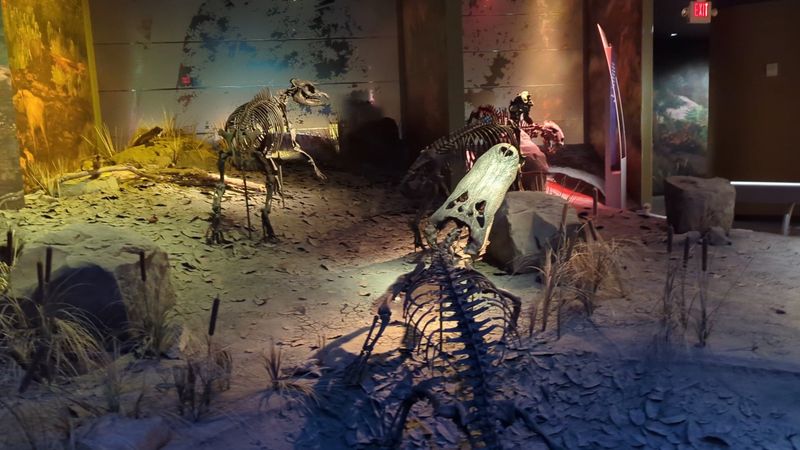
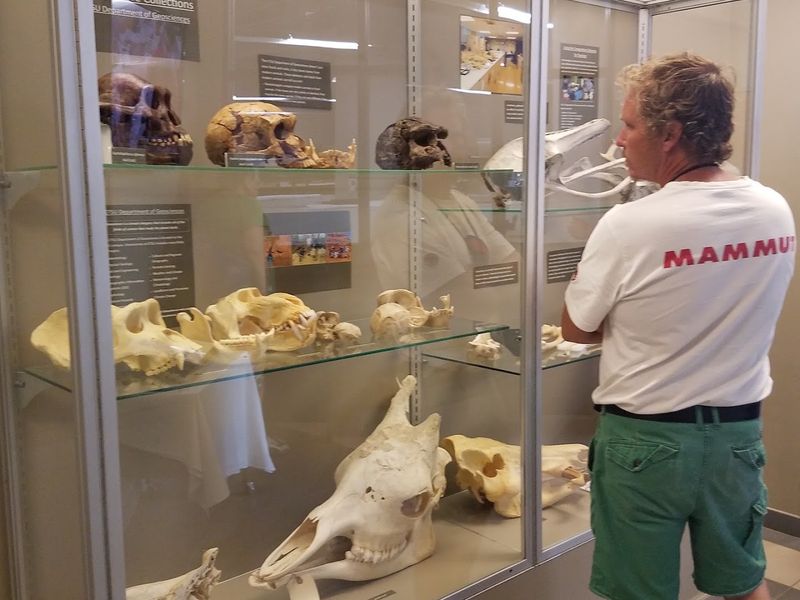
The indoor exhibit halls at the Gray Fossil Site do a thorough job of translating raw scientific data into something a general audience can follow and appreciate. Fossil displays are accompanied by detailed explanations of what each species was, when it lived, and how it relates to animals alive today.
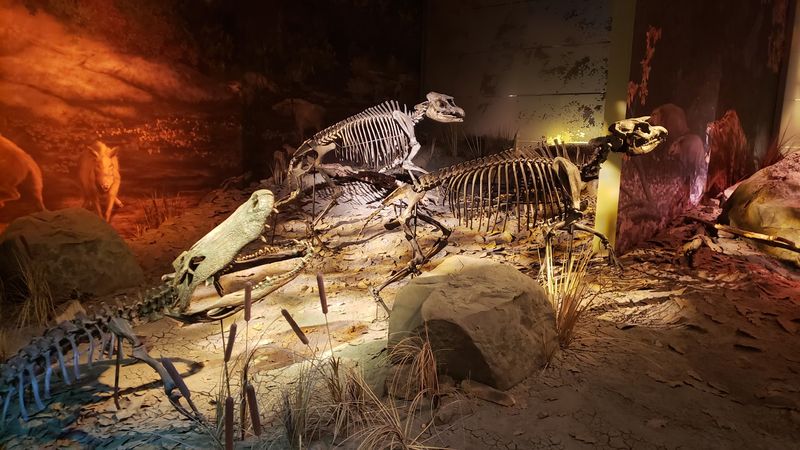
Full or partial skeletal reconstructions give visitors a sense of scale that isolated bones cannot provide. A rhinoceros skeleton, for example, communicates the physical reality of an animal that once walked through what is now northeastern Tennessee in a way that a single fossilized tooth cannot.
The exhibits also cover the geological history of the site itself, explaining how the sinkhole formed, why conditions were so favorable for preservation, and what the excavation process looks like from start to finish. The result is a museum experience that works on multiple levels, giving casual visitors an enjoyable overview while offering enough scientific depth to satisfy those with a more serious interest in paleontology or natural history.
Hands-On Learning for Kids and School Groups
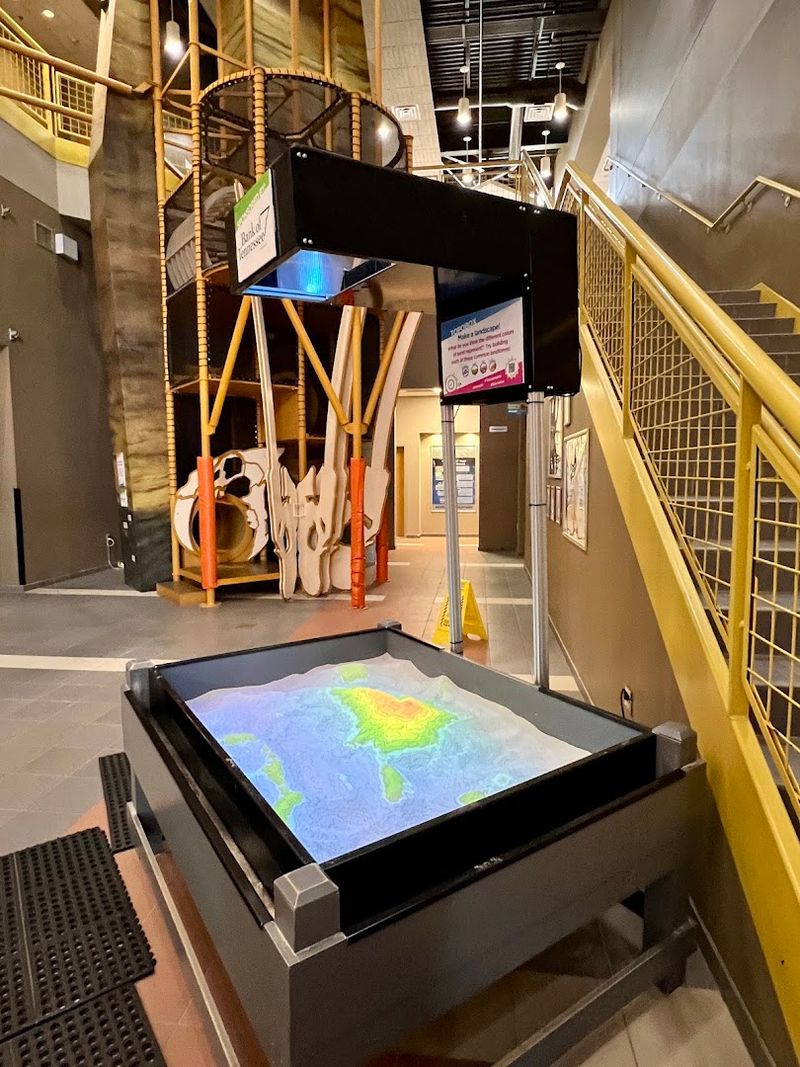
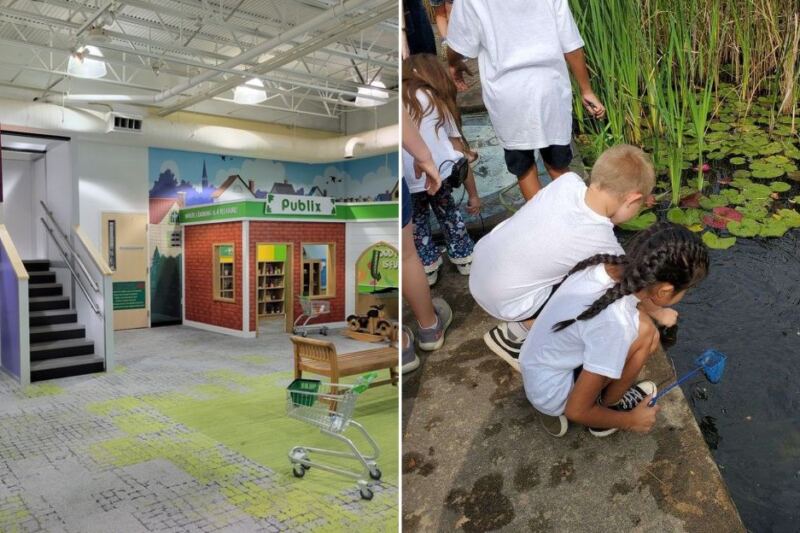
The Gray Fossil Site has built a reputation as a strong destination for school field trips, and the facility’s programming reflects that focus. A dedicated discovery center offers hands-on activities designed to let younger visitors engage with paleontology concepts through direct participation rather than passive observation.
One popular feature is a topography sandpit where kids can build and manipulate landscape features to understand how geological processes shape the earth over time. Other activity stations walk children through basic concepts of fossil identification, sediment layering, and scientific classification in ways that align with standard school curriculum.
The facility is best suited for children in the elementary and middle school age range. The content and interactive features are calibrated for that audience, and the guided tour format works especially well with groups that have some prior classroom exposure to earth science or natural history.
Teachers consistently find that the combination of exhibits, live lab viewing, and hands-on stations gives students a well-rounded introduction to how paleontology actually works.
The Tesla Coil That Adds a Jolt to Science Education
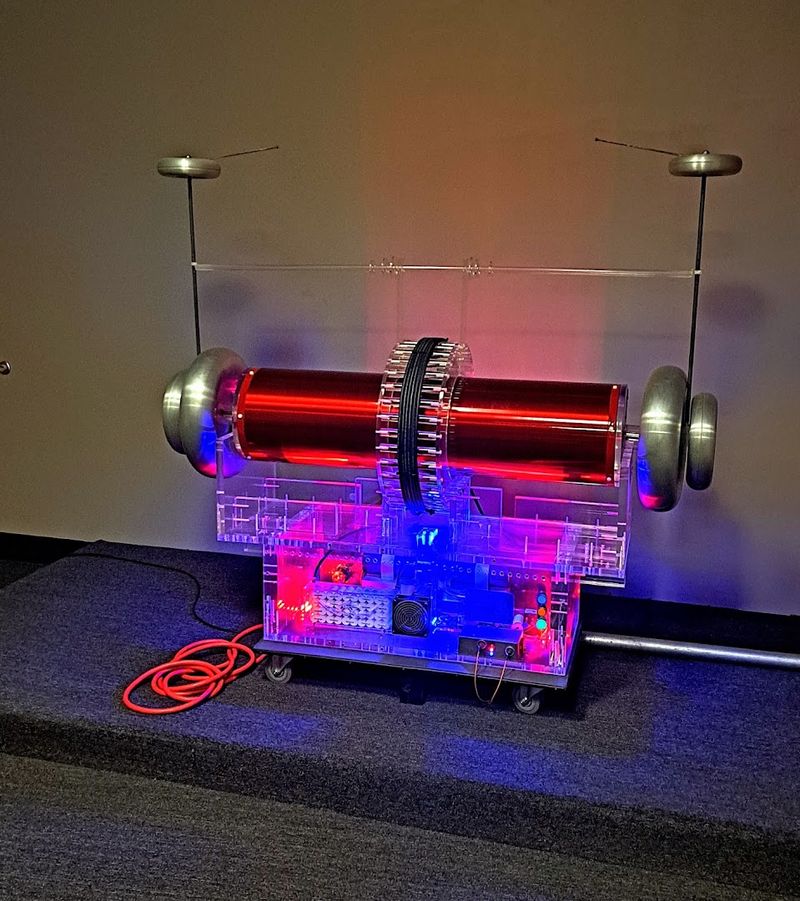
Among the more unexpected features at the Gray Fossil Site is a singing Tesla coil, an electrical device that generates dramatic, highly visible electrical arcs while producing musical tones through modulated electrical discharge. It is an attention-grabbing addition to a paleontology museum, and it works.
The Tesla coil demonstration is typically offered as an add-on experience at a small additional cost. It falls under the broader science education umbrella that the facility has embraced, connecting paleontology to physics and electricity in a way that keeps the programming varied and appealing to different types of learners.
The demonstration does produce a significant amount of sound, which is worth knowing in advance if visiting with very young children who may find the noise level uncomfortable. For older kids and adults, however, the visual spectacle of the electrical arcs tends to be a highlight of the visit.
It is the kind of unexpected feature that keeps the Gray Fossil Site from feeling like a conventional natural history museum.
Guided Tours and the People Who Make Them Worth Taking
The guided tour experience at the Gray Fossil Site regularly stands out as a highlight for those who take the time to book one. The guides, many of whom are ETSU students or trained educators, bring a level of enthusiasm and knowledge to the material that transforms a standard museum walkthrough into something genuinely engaging.
Tours cover the discovery story, the excavation process, the species identified at the site, and the ongoing research being conducted by university scientists. Questions are encouraged, and guides are well-prepared to handle everything from basic curiosity to in-depth scientific inquiry from visitors who arrive with prior knowledge.
Availability can vary depending on staffing levels on any given day, so calling ahead or checking the museum’s website is a good idea, particularly for groups. When tours are running, they typically last around an hour and cover both the indoor exhibits and, when the season allows, a view of the outdoor dig area.
The guided format consistently delivers more value than self-guided exploration alone.
Planning Your Visit: Hours, Costs, and What to Know Before You Go
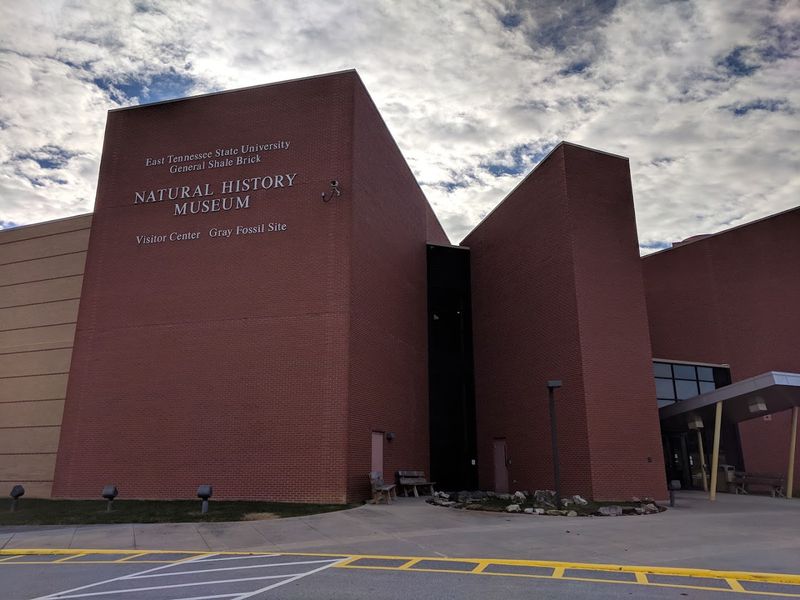
The Gray Fossil Site is open Tuesday through Saturday from 10 AM to 5 PM and on Sundays from 1 PM to 5 PM. The museum is closed on Mondays.
General admission is priced accessibly for families, with additional fees for special activities such as the Tesla coil demonstration. Arriving at least an hour before closing gives enough time to move through the main exhibits comfortably.
The facility is located at 1212 Suncrest Dr in Gray, Tennessee, just off Interstate 26 in Washington County. Parking is available on site, and the museum is clearly marked from the highway.
The building is accessible, and the layout is manageable for strollers and wheelchairs in the indoor areas.
The outdoor dig site area involves uneven terrain, so comfortable footwear is a practical consideration. Bringing water is also a reasonable idea if visiting during warmer months when the outdoor walkway is in use.
The museum’s website at gfs.visithandson.org carries current information on special events, seasonal dig schedules, and group booking options.
Why This Site Matters Beyond Tennessee
The Gray Fossil Site occupies a unique position in North American paleontology not just because of what was found there, but because of where it was found. Eastern North America has far fewer Miocene fossil sites than the western part of the continent, making Gray an unusually valuable data point for scientists trying to reconstruct ancient ecosystems across the full geographic range of the continent.
Discoveries at Gray have contributed to a better understanding of how species migrated between North and South America and across the Bering land bridge during the late Miocene. The red panda relative found here, for example, helped refine theories about the distribution of that lineage across the Northern Hemisphere.
The site also demonstrates what can happen when infrastructure decisions are made with scientific preservation in mind. Tennessee’s choice to reroute a road rather than destroy a fossil deposit produced a research facility that continues to generate new knowledge more than two decades later, a return on that original decision that no one could have fully predicted at the time.
How a Highway Project Accidentally Uncovered Five Million Years of History
In 2000, construction crews were digging a bypass route near the small town of Gray in Washington County, Tennessee, when their equipment hit something unexpected beneath the soil. The ground gave way to a dark, clay-rich deposit packed with fossilized bones that scientists would later determine were approximately five million years old.
The Tennessee Department of Transportation, working alongside East Tennessee State University, quickly recognized the magnitude of the find. A decision was made to reroute the road entirely rather than destroy what lay beneath.
That choice set a remarkable precedent for how infrastructure projects handle unexpected archaeological and paleontological discoveries.
The site turned out to be the remains of a prehistoric sinkhole that had acted like a natural trap for ancient animals. Over millennia, sediment sealed and preserved their bones with extraordinary completeness.
The Gray Fossil Site at 1212 Suncrest Dr, Gray, TN 37615, now stands as a direct result of that pivotal construction-day decision.
Share this story