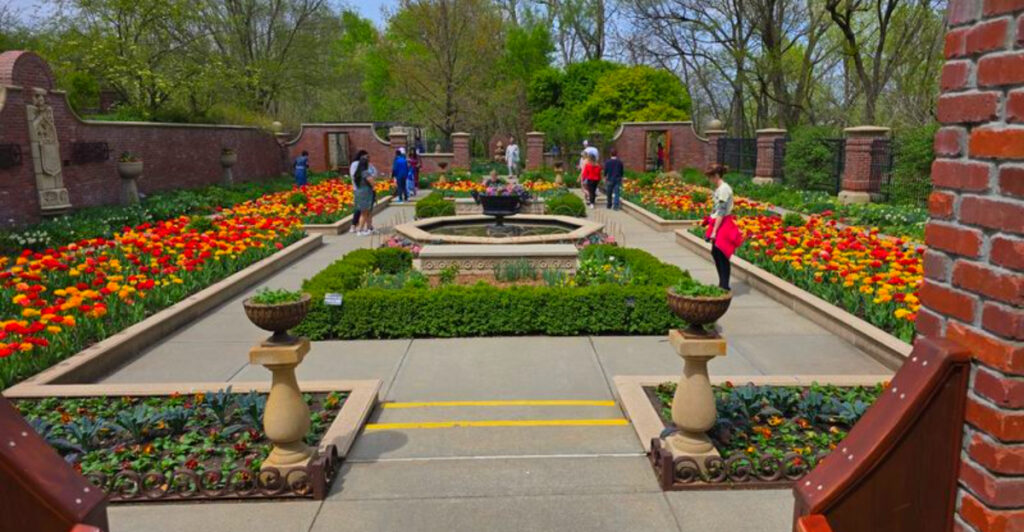
In Omaha, a former limestone quarry and city landfill has been transformed into one of the Midwest’s most spectacular botanical destinations. Visitors come to wander 100 acres of beautifully landscaped gardens, explore a lush tropical conservatory, admire thousands of blooming roses, ride narrated trams, discover giant wooden troll sculptures, and enjoy family-friendly attractions that change with every season. It’s the kind of place where every visit feels completely different, no matter what time of year you arrive.
The experience extends far beyond the flower beds. Tropical plant collections, seasonal festivals, a world-class conservatory, model trains, children’s play areas, bird habitats, peaceful walking paths, educational programs, and constantly changing displays have made this one of Nebraska’s premier attractions. Whether you’re visiting for spring blooms, colorful autumn gardens, or dazzling holiday lights, it’s easy to understand why hundreds of thousands of people return year after year.
Here’s why Lauritzen Gardens has become one of the Midwest’s finest botanical gardens and one of Nebraska’s most unforgettable places to experience the beauty of every season.
From Landfill to Landmark: The Unlikely Origin Story
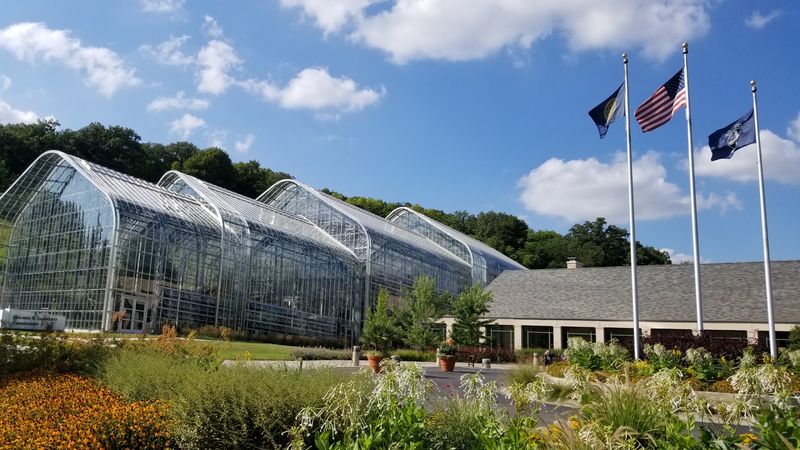
Few botanical gardens in the world can claim an origin story quite like this one. Lauritzen Gardens, located at 100 Bancroft St, Omaha, NE 68108, sits on land that once served as a limestone quarry and later a city landfill.
Compacted garbage bales were used to level deep ravines before the site was covered with soil and reimagined entirely. Plans for a botanical center first took shape in the early 1970s, championed by local columnist Helena Street, whose passion for the project helped inspire an entire community.
The gardens officially opened in April 1994 as the Omaha Botanical Gardens before being rebranded as Lauritzen Gardens in 2001, honoring the philanthropic Lauritzen family. That same year, the impressive Visitor and Education Center made its debut, anchoring the site as a true civic institution. The transformation from a discarded piece of land into a world-recognized botanical garden is, without question, one of Omaha’s most remarkable civic achievements.
The Visitor Center: Where Every Great Adventure Begins
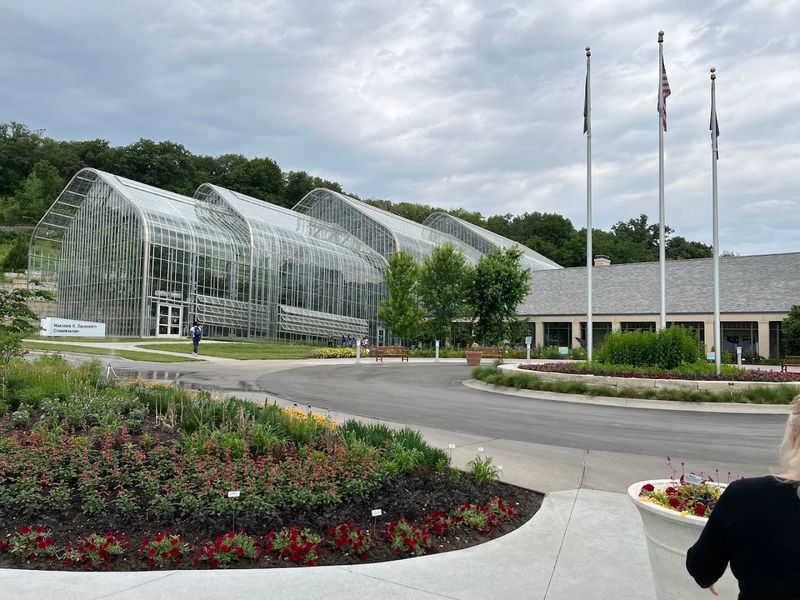
The 32,000-square-foot Visitor and Education Center is far more than a lobby with a welcome mat. From the moment you walk in, the Floral Display Hall commands your attention with rotating seasonal installations that guarantee color and life no matter what month you arrive.
The on-site cafe serves freshly prepared sandwiches, soups, salads, and desserts, making it a genuinely comfortable spot to recharge between garden sections. The gift shop is stocked with botanical-themed keepsakes, garden tools, and nature-inspired items that make surprisingly thoughtful souvenirs.
What really sets this center apart is its dedication to education. Dedicated classrooms and one of the region’s only horticultural libraries sit quietly behind the scenes, serving students, researchers, and curious visitors alike. The center also functions as the launch point for tram tours, special events, and seasonal programs that run throughout the year. Starting your visit here gives you a clear sense of just how much this garden has to offer beyond the outdoor paths.
The Marjorie K. Daugherty Conservatory: A Tropical World Under Glass
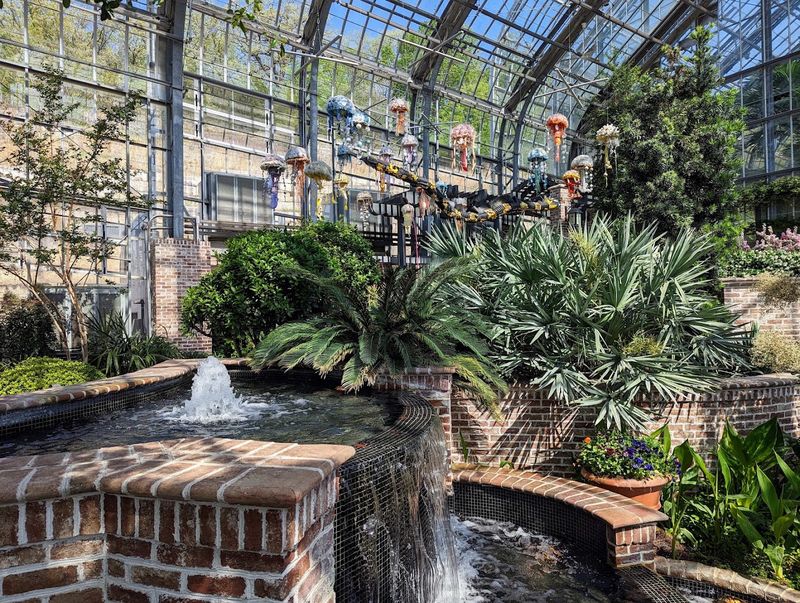
Opened in 2014, the Marjorie K. Daugherty Conservatory is the kind of space that makes you forget you are standing in the middle of the Midwest. The soaring 50-foot-tall glass roof shelters a carefully curated ecosystem of 3,000 plants across 350 species, arranged to create both tropical and temperate environments.
Streams murmur softly, ponds catch the light, and miniature waterfalls add a layered soundtrack to the whole experience. Towering palms and banana trees share space with moss-draped oaks, vibrant azaleas, and crepe myrtles that evoke a lush Southern landscape. The warmth and humidity inside feel genuinely immersive, turning a simple walk into something closer to a mini expedition.
This conservatory is especially appreciated during the winter months, when stepping through its doors offers an immediate and welcome escape from the Nebraska cold. Even longtime visitors consistently describe it as one of the most satisfying spaces on the entire property, and it is easy to understand why after spending just a few minutes inside its warm, green embrace.
Sofia’s Play Garden: Where Kids Become Tiny Explorers
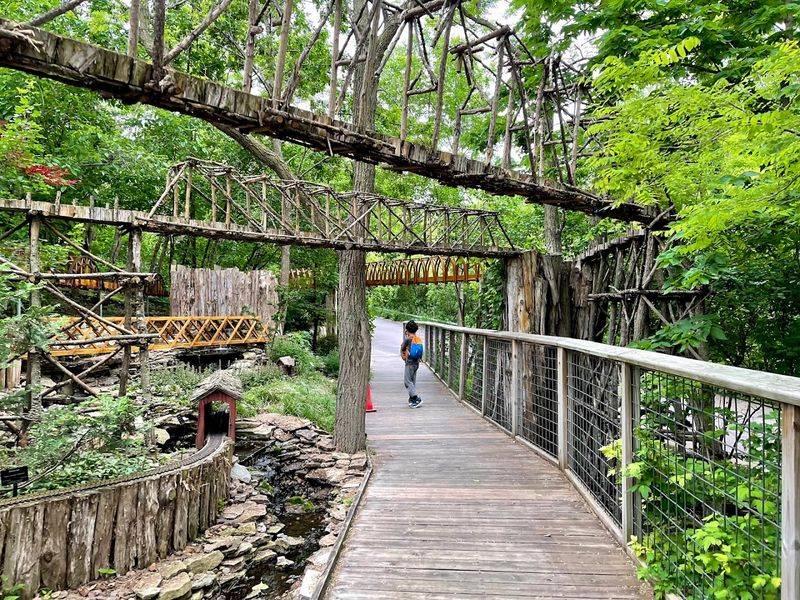
Opened in 2025, Sofia’s Play Garden is a one-acre, sensory-friendly space designed to make nature feel like the best playground imaginable. Eight interactive zones give children of all abilities a chance to splash, climb, dig, and explore in ways that feel genuinely connected to the natural world around them.
The Hager Family Springs splash area features a natural stream, water pumps, and a cascading waterfall that children can actually interact with, and the water feeds directly into the garden’s irrigation system, which is a clever touch. Songbird Village invites kids to step inside giant birdhouses, navigate a spider-web climbing structure, and play outdoor instruments that produce surprisingly melodic results.
The Neighborhood zone includes miniature residential and commercial buildings with working mailboxes that younger visitors find endlessly entertaining. Parents appreciate how thoughtfully the space is laid out, with shaded areas and clear sightlines throughout. This play garden is conveniently located near the Visitor Center, making it easy to weave into your visit without adding extra miles to your route.
Model Railroad Garden: Tiny Trains, Big Smiles
There is something genuinely delightful about watching a G-Scale model train wind its way through a landscape made of living plants, and the Model Railroad Garden at Lauritzen Gardens delivers exactly that kind of joy. First opened in 2007 and expanded in 2008, this outdoor attraction blends horticultural craft with the timeless appeal of miniature railroading.
Tiny trains navigate bridges, disappear into tunnels, and roll past meticulously designed towns, all surrounded by real plants scaled to suggest vast forests and sweeping meadows. Bonsai trees stand in for ancient oaks, and small flowering shrubs become rolling fields of color. The miniature buildings modeled after actual Omaha landmarks add a local pride element that gives the display an extra layer of personality.
Train enthusiasts and casual visitors alike tend to linger here longer than expected, drawn in by the intricate details and the gentle rhythm of the locomotives on their circuits. The display changes with the seasons, meaning repeat visitors are often rewarded with fresh arrangements and new details to spot along the tracks.
The Robert H. Storz Family Rose Garden: Nearly 2,000 Reasons to Slow Down
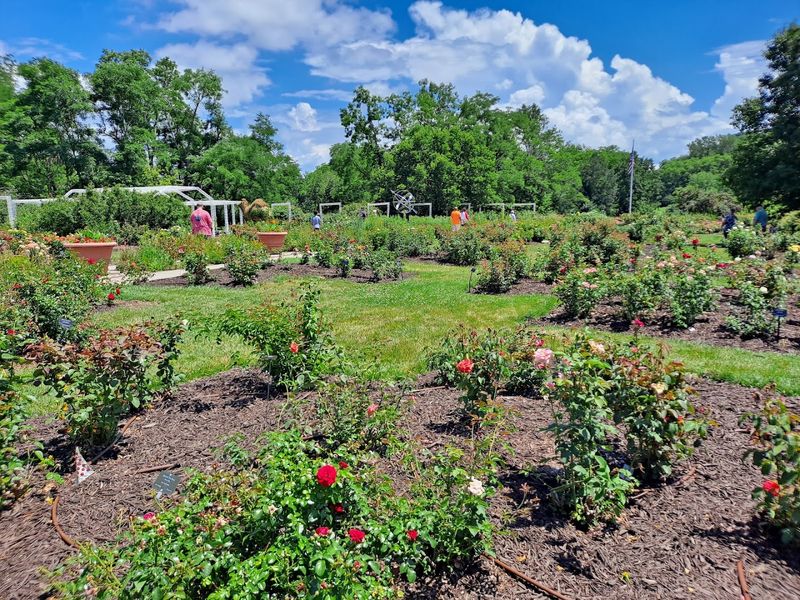
Nearly 2,000 rose plants call this fragrant corner of the garden home, and the Robert H. Storz Family Rose Garden, dedicated in September 1997, is every bit as romantic as that number suggests. Hybrid teas, grandifloras, floribundas, climbers, and shrub roses all share space here, creating a visual and aromatic experience that is hard to replicate anywhere else in the region.
Peak blooming seasons fall in late May and again around mid-September, when the air becomes genuinely heavy with perfume. Paths wind through the beds in a way that invites slow, meandering walks rather than quick passes, and the benches placed throughout encourage visitors to sit and simply absorb the surroundings.
At the center of the garden stands an armillary sphere sundial crafted by Nebraska artist Milt Heinrich, adding a touch of classical elegance that complements the floral abundance around it. The combination of artistic detail and horticultural richness makes this garden one of the most visited and photographed spots on the entire property, and rightfully so.
Victorian Charm Meets Japanese Serenity: Two Gardens, One Walk
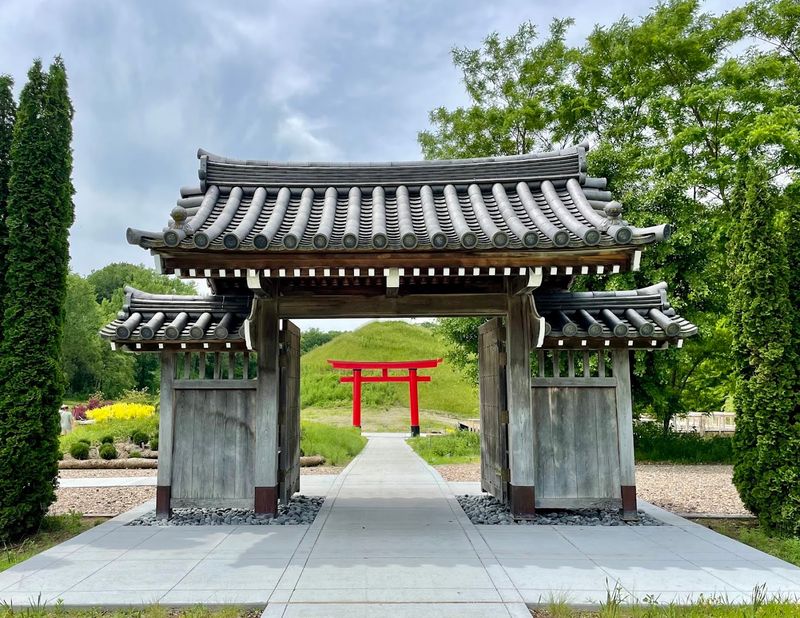
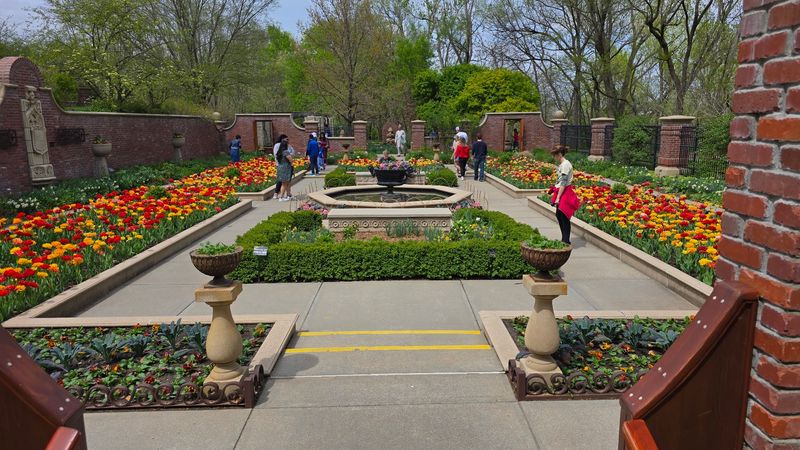
Two of the garden’s most distinct personalities sit close enough together that a single afternoon stroll can take you through both. The Victorian Garden greets visitors with a pair of terra cotta ladies’ faces near a reflecting pool, setting an immediately whimsical tone before leading you into a sunken garden with formal beds, perennial borders, and a collection of salvaged urns and balustrades that feel like they belong in an English estate.
The transition into the Japanese Garden is marked by a kabuki gate, followed by a Sunpu castle gate, and finally a vivid red torii gate that signals a complete shift in atmosphere. The centerpiece is a scaled replica of Japan’s Mount Fuji, adorned with ten volcanic stones representing the ten stations on the real mountain’s climbing route, topped with a granite shrine and a red torii gate from Shizuoka.
Moving between these two spaces in a single visit is a surprisingly effective way to experience how different design philosophies approach the idea of beauty, and both gardens reward slow, attentive exploration rather than a hurried pass-through.
The Arboretum and Bird Sanctuary: Nebraska’s Wild Side, Curated
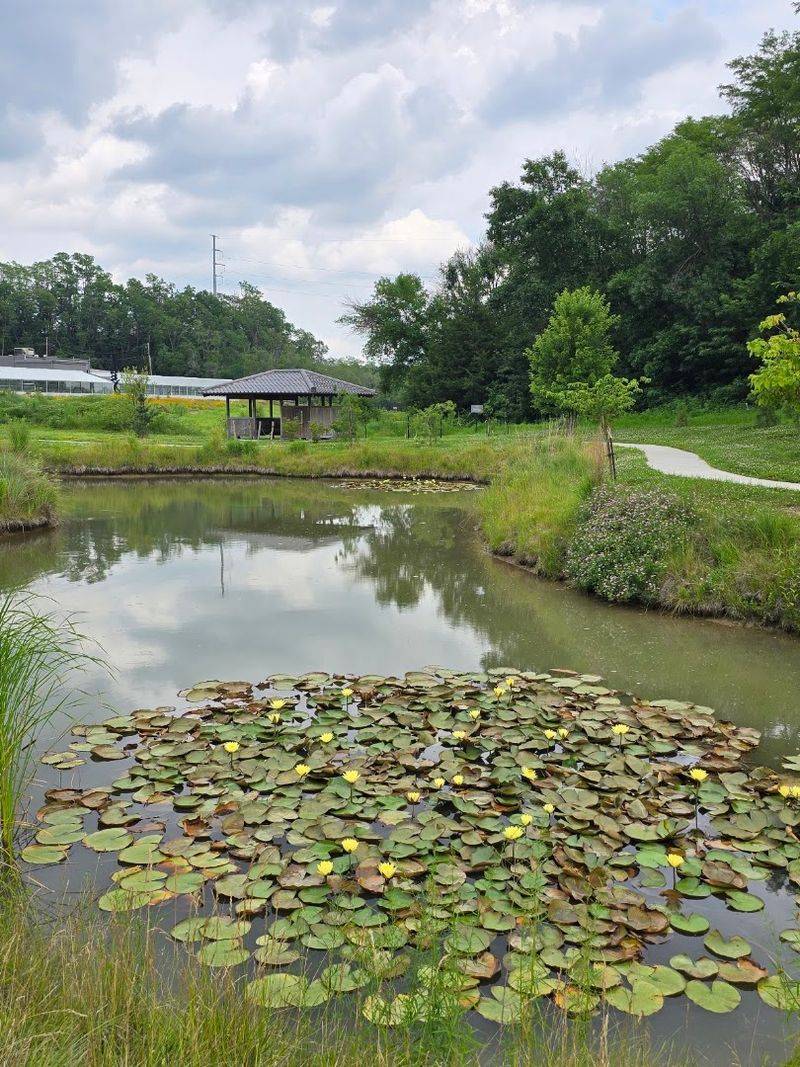
Not every corner of Lauritzen Gardens is manicured and formal, and that is part of what makes the Arboretum and Bird Sanctuary such a refreshing discovery. Spread across four acres, this section represents seven distinct Nebraska plant communities, including prairie, savannah, oak and hickory forest, maple and linden forest, farmstead windbreaks, marshes, and flood plain river margins.
Strategically placed bird feeders and nest boxes attract a steady stream of resident and migratory species, making this one of the better birdwatching spots in the Omaha area. The sanctuary sits along a natural migratory flyway, which means the variety of birds you might encounter changes meaningfully throughout the year.
Spring visits to the marsh area occasionally reward patient observers with the sounds of frogs and other amphibians adding their voices to the chorus. The overall atmosphere here feels looser and wilder than the rest of the garden, which provides a welcome contrast to the more cultivated displays elsewhere on the property. Nature lovers who appreciate ecological authenticity tend to find this section quietly captivating.
Seasonal Magic: Spring Daffodils to Holiday Bright Nights

One of the strongest arguments for visiting Lauritzen Gardens more than once a year is how dramatically the experience shifts with each season. Spring brings the David and Pamela Gross Family Spring Walk, where over 700,000 daffodils line an 800-foot path in a display that genuinely stops people in their tracks. Flowering magnolias, crabapples, redbuds, and dogwoods frame the scene beautifully.
Late April through early June shifts the spotlight to the Peony Garden, where Chinese and Japanese tree peonies and herbaceous varieties bloom in rich, fragrant clusters. Summer activates the pollinator meadow and opens the gardens to dog-friendly days on select dates. Fall brings the Autumn and Japanese Ambiance Festival in October, along with the rose garden’s second peak bloom in mid-September.
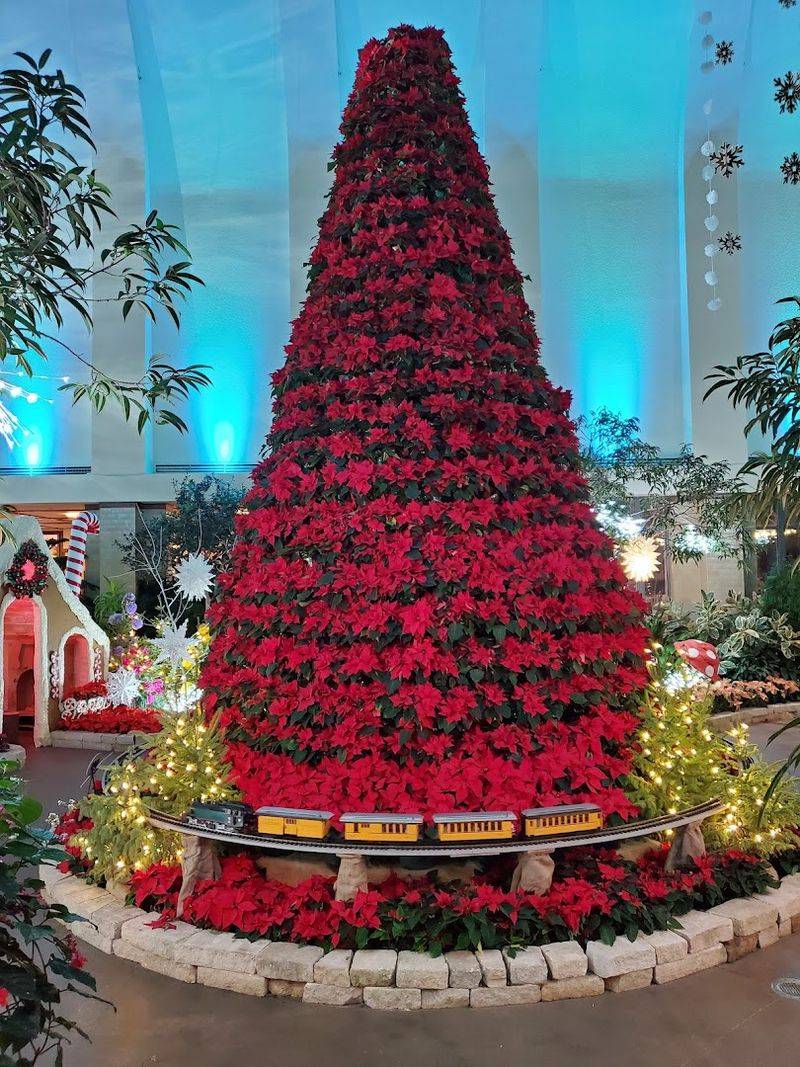
Winter transforms the entire property for Bright Nights, running from November through January, when a 20-foot poinsettia tree surrounded by thousands of companion plants anchors the holiday display indoors. Fire pits, s’mores kits, Santa visits, and festive model trains complete an evening experience that draws crowds well into the coldest months of the year.
Practical Tips for Making the Most of Your Visit
Lauritzen Gardens is open daily from 9 AM to 5 PM, with extended hours until 8 PM on Mondays and Tuesdays. The garden closes on Thanksgiving, Christmas, and New Year’s Day, so it is worth checking the official website at lauritzengardens.org before planning your trip. Admission runs approximately $10 for adults and $5 for children aged 3 to 12, with free entry for children 2 and under.
Parking is free and accommodates around 550 vehicles, which is a genuine relief for a destination this popular. Comfortable shoes are non-negotiable given the hilly terrain across 100 acres, and bringing a water bottle is strongly recommended since vending options can be limited in certain areas of the property.
Narrated tram tours run from May through October for an additional fee and are particularly useful for visitors who find steep paths challenging or simply want an efficient overview before exploring on foot. Service animals are welcome, though other pets are not permitted on most days. Timed tickets may be required during special events, so securing yours in advance is always the smarter move.
Share this story