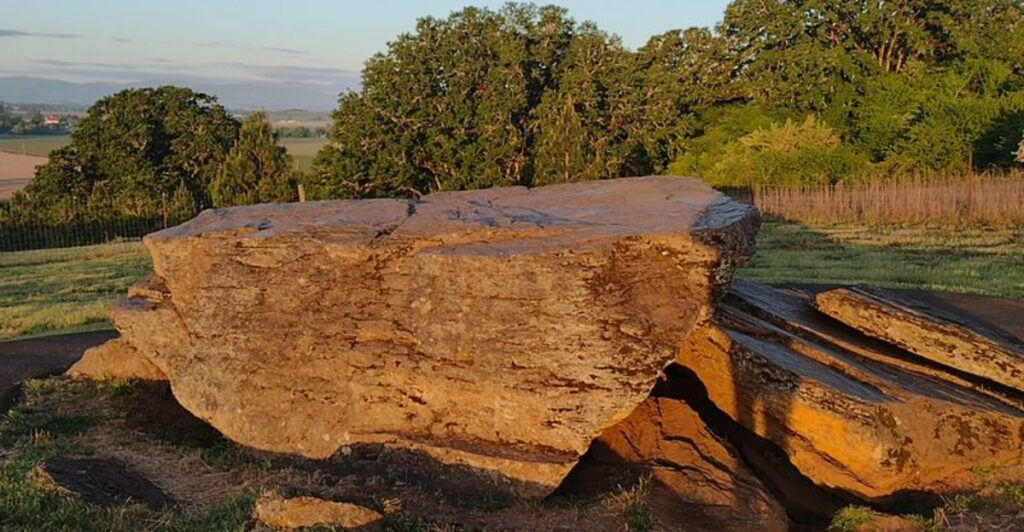
There is a hilltop in Oregon’s wine country where a boulder the size of a small house sits completely out of place, and the story of how it got there involves one of the most powerful flood events in Earth’s history. Thousands of years ago, massive Ice Age floods swept across the Pacific Northwest, carrying enormous rocks from what is now Montana all the way to the Willamette Valley.
The boulder resting on that quiet Oregon hill is a living piece of that dramatic chapter in geological history. I made the short trip out to see it myself, and what I found was far more rewarding than I expected, from the peaceful trail to the sweeping valley views waiting at the top.
Where Exactly You Will Find This Geological Curiosity
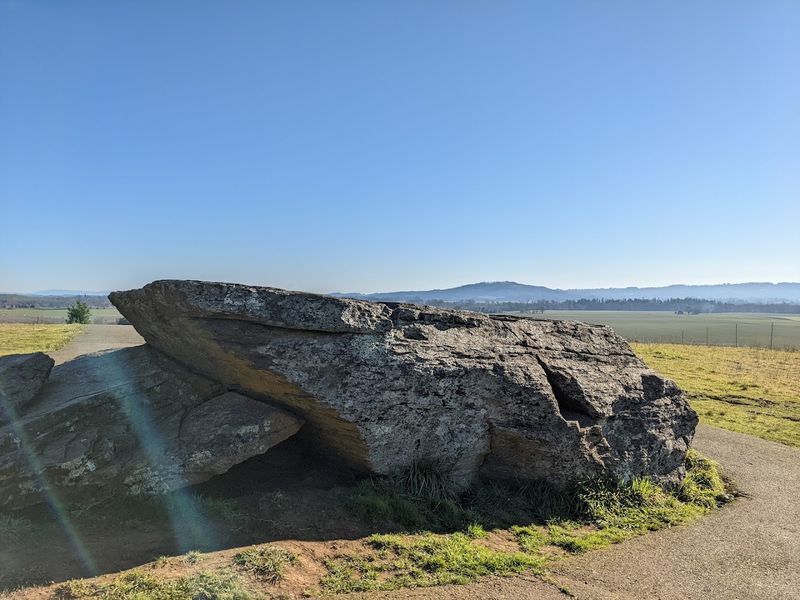
Erratic Rock State Natural Site sits just west of McMinnville in Yamhill County, Oregon, and the official address is Erratic Rock State Natural Site, McMinnville, OR 97128. The site is managed by Oregon State Parks and is open daily from 8 AM to 5 PM, which gives you a solid window to visit without rushing.
Getting there is straightforward from McMinnville, and the drive itself is a pleasant one through rolling farmland and vineyard country. Highway signs along the main road point toward the site, so you are unlikely to miss the turnoff if you keep your eyes open.
The parking area is small, with room for only about three vehicles at most, so arriving earlier in the day is a smart move, especially on weekends. There are no restrooms on site, so plan accordingly before you leave town.
The trailhead starts right at the parking area, making it easy to get oriented and hit the path without any confusion. You can reach Oregon State Parks at 1-800-551-6949 if you need more details before your visit.
The Ice Age Story Behind the Rock
About 15,000 years ago, a massive ice dam in present-day Montana repeatedly failed, releasing enormous volumes of water that swept westward with incredible force. These events are known as the Missoula Floods, and they are considered among the largest flood events in recorded geological history.
The floodwaters carried chunks of ice packed with rocks, and those icy rafts floated across the temporarily flooded Willamette Valley before eventually melting and dropping their cargo.
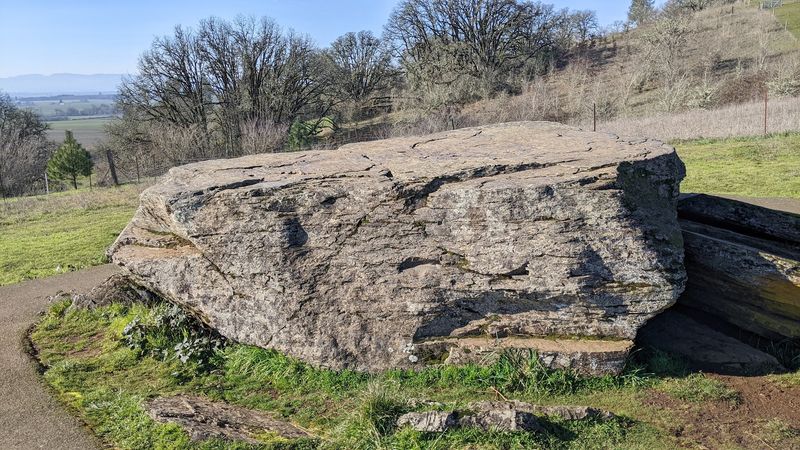
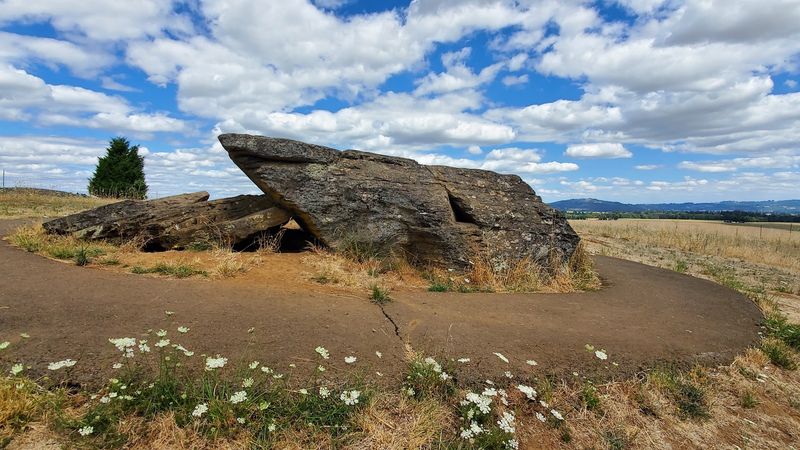
The boulder now resting on this Oregon hilltop is believed to have arrived exactly that way, rafted in on ice and deposited when the floodwaters receded. Geologists classify it as a glacial erratic, meaning a rock that has been transported far from its original location by glacial or flood activity.
This particular specimen is thought to be the largest Missoula Flood erratic in the entire Willamette Valley, weighing in at an estimated 90 tons.
The rock itself is composed of argillite, a type of fine-grained sedimentary stone that is native to the Rocky Mountain region of Montana, not Oregon. That mismatch between the rock’s material and its surroundings is exactly what tipped off geologists to its extraordinary origin story.
What the Trail Actually Looks Like
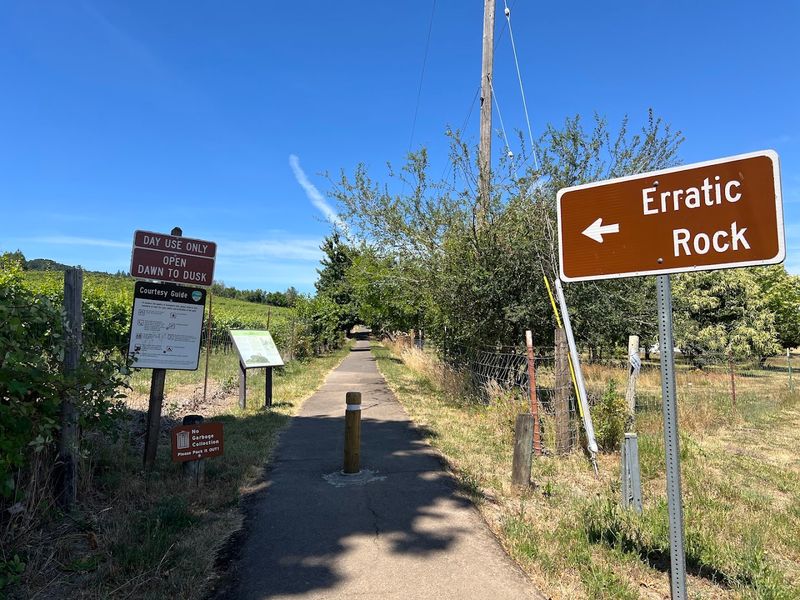
The trail from the parking area to the rock is fully paved the entire way, which makes it accessible for most visitors, though it is worth noting that one section near the top is noticeably steep and not well suited for wheelchairs or strollers. The total distance is just over a quarter of a mile one way, so the whole round trip takes somewhere between ten and twenty minutes depending on your pace.
What makes the walk genuinely enjoyable is the scenery on either side of the path. The trail runs between two historic century farms, and the windbreak plantings along the edges include chokecherries, blackberries, apple trees, pear trees, plum trees, and even grapevines.
In late summer, the blackberries ripen fully and are fair game for a trailside snack, which is a small but satisfying bonus.
The path heads north first and then curves west as it climbs the hill, giving you gradually improving views of the surrounding valley as you ascend. Trash cans are placed along the route, and informational signage helps explain the geological significance of what you are about to see.
The trail is dog-friendly, which makes it a popular outing for locals with energetic four-legged companions.
The Rock Itself Up Close
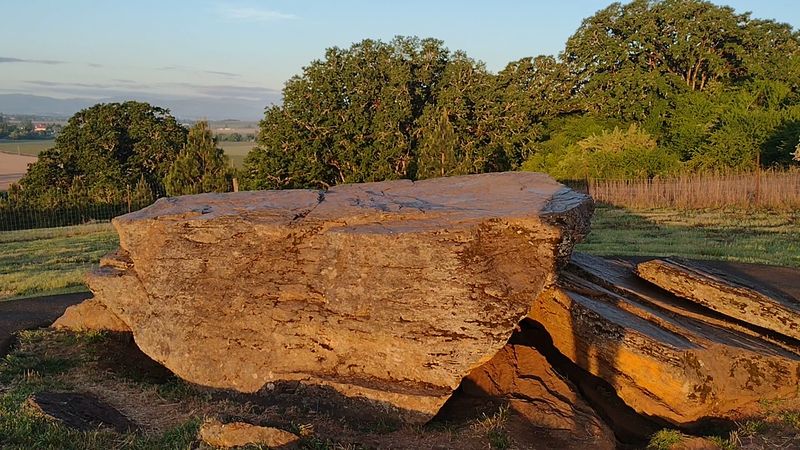
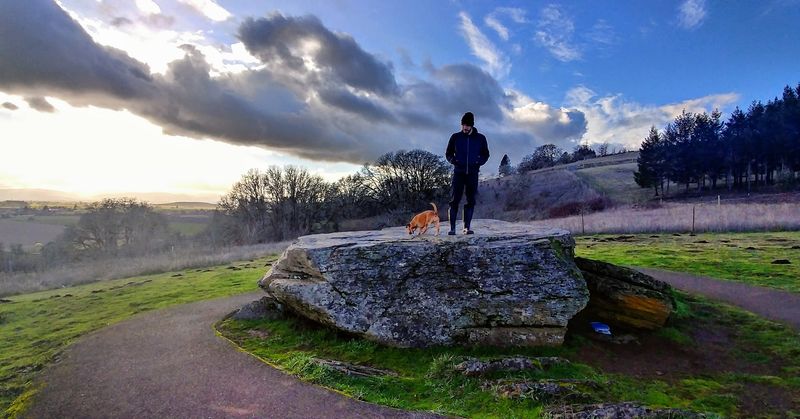
Reaching the top of the hill and finally standing next to the erratic is a genuinely satisfying moment. The rock is large enough that you have to tilt your head back slightly to take it all in, and its rough, weathered surface tells you immediately that this is not a local stone.
The coloring and texture are distinctly different from anything else in the surrounding landscape.
An acre of cleared land surrounds the boulder at the top, giving the whole scene an open, unhurried feeling. A single picnic table sits nearby, making it a perfectly decent spot to sit down, catch your breath after the steep section, and just take in the surroundings.
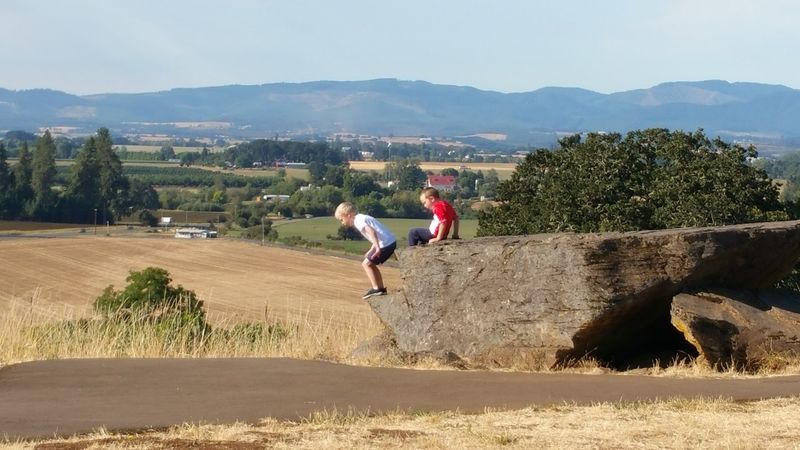
There is no fence around the rock, so you can walk right up and touch it, which adds a tactile dimension to the experience that you do not get from just reading about it.
The rock does not perform tricks or light up at night, and it is not surrounded by elaborate infrastructure. What it offers is quiet, tangible proof that something extraordinary happened here thousands of years ago, and that sense of direct contact with deep geological time is what makes the stop feel worthwhile rather than gimmicky.
The Views from the Top of the Hill
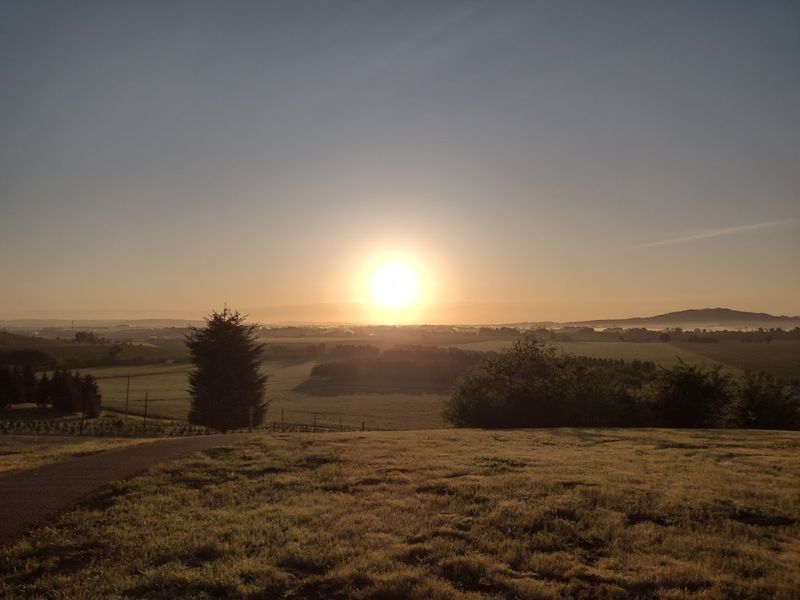
The boulder is the official headline attraction, but the view from the hilltop is genuinely worth the walk on its own. From the cleared area at the top, you get a broad, unobstructed look across the Willamette Valley, with vineyards, farms, and gentle ridgelines filling out the horizon in every direction.
The Yamhill County countryside is particularly beautiful in the warmer months when everything is green and the vineyard rows create tidy geometric patterns across the hillsides. On a clear morning, the light hits the valley at a low angle and the whole scene takes on a warm, golden quality that makes you want to linger longer than you planned.
Watching the sunset from this spot is something a few visitors have done, and based on the setting, it is easy to understand why that would be memorable.
The elevation is not extreme by Oregon standards, but the hill rises enough above the surrounding flatlands to give you a sense of real perspective over the area. The views stretch toward the Sheridan and McMinnville corridor, and on especially clear days, the distant hills of the Coast Range are visible to the west.
It is a genuinely pretty perch, and the rock makes a natural focal point for photos with the valley as a backdrop.
Wildlife and Nature Along the Way
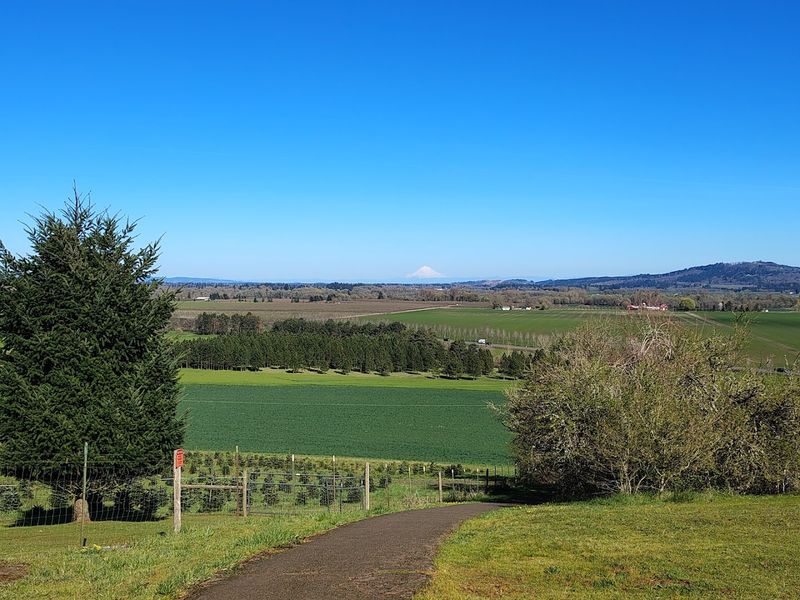
The trail to the erratic passes through a corridor of mixed plantings and wild growth that supports a surprising amount of wildlife for such a short walk. Gopher snakes have been spotted on the path, particularly in warmer months when they come out to soak up heat from the paved surface.
They are non-venomous and generally harmless, but it is still a good idea to watch where you step and keep small dogs close.
Adjacent pastures near the base of the hill are sometimes home to goats, and the sound of them moving around in the grass adds a cheerful, farm-country atmosphere to the whole outing. Ducks and geese have also been spotted in the area, especially in wetter seasons when standing water collects near the fields.
The variety of fruit trees and berry bushes along the trail windbreak creates natural foraging habitat for birds, so birders will find the walk worthwhile even on a slow day.
One important caution is that poison oak grows in the brush alongside parts of the trail, so staying on the paved path and keeping your hands away from the surrounding vegetation is genuinely good advice. The site has no facilities, so come prepared with water, especially if you are bringing a dog or visiting during warmer weather.
Best Times to Visit and Practical Planning Tips
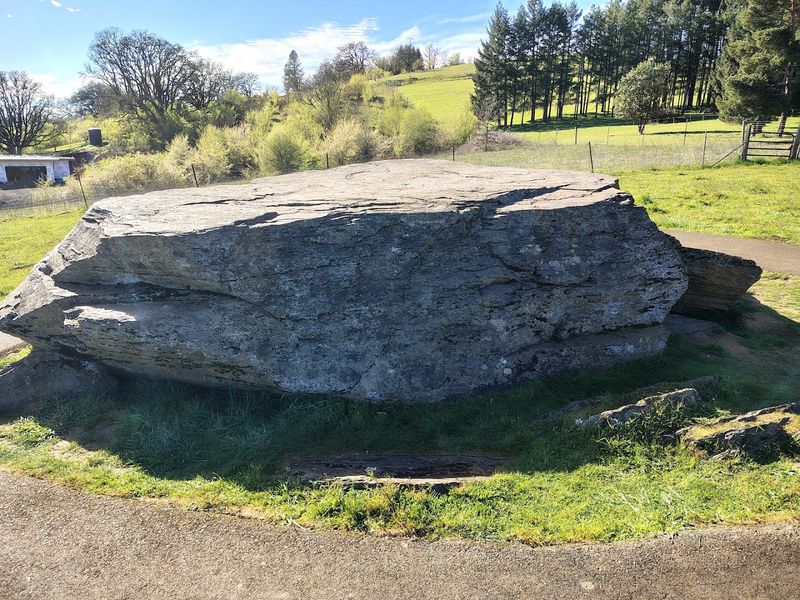
The site is open every day of the week from 8 AM to 5 PM, which keeps things simple from a planning standpoint. Morning visits tend to offer the best light for photographs and the lowest chance of running into other visitors at the small parking area, which realistically fits only two to three cars at one time.
Spring and early summer bring lush green hillsides and pleasant temperatures that make the walk especially enjoyable. Late summer is prime time for ripe blackberries along the trail, which is a small but genuinely fun seasonal bonus.
Fall brings cooler temperatures and clearer air, which can make the valley views from the top particularly sharp and photogenic.
Winter visits are possible but the steep section of trail can get slippery when wet, so proper footwear matters more in the rainy season than at other times of year. There are no restrooms, no water fountains, and no food vendors anywhere on site, so bringing your own water and snacks is the right call regardless of the season.
The site is free to visit, which makes it an easy addition to any day trip through wine country without adding any cost to your itinerary.
How This Stop Fits Into a Yamhill County Day Trip
Erratic Rock State Natural Site is not the kind of place most people would drive two hours out of their way to see on its own, and that is perfectly fine because it was never meant to be a full-day destination. Where it really shines is as a satisfying stop along a broader route through Yamhill County, which is one of Oregon’s most celebrated wine regions.
Several well-regarded wineries operate within a short drive of the site, including Yamhill Valley Vineyards and Youngberg Hill, both of which offer tasting experiences in scenic settings. Combining a quick walk to the erratic with a winery visit or two makes for a well-rounded afternoon that balances outdoor activity with local culture.
McMinnville itself is a charming small city with a lively downtown, good restaurants, and the famous Evergreen Aviation and Space Museum, all within easy reach.
The erratic also sits conveniently between the Willamette Valley and the Oregon Coast, making it a natural leg-stretching stop for anyone driving that corridor. Rather than sitting in the car for the full stretch, a twenty-minute walk to a 90-ton Ice Age relic is a far more interesting way to break up the journey, and you arrive at your next destination feeling refreshed rather than stiff.
Who Will Enjoy This Stop the Most
Geology enthusiasts will find the erratic genuinely fascinating, and the informational signage at the site does a solid job of explaining the science without requiring a background in earth science to follow along. Even visitors with no prior knowledge of the Missoula Floods tend to leave with a new appreciation for how dramatically the Pacific Northwest landscape was shaped by water and ice.
The trail is approachable enough for older children and casual walkers, though the steep section near the summit requires a bit of effort and is not suitable for very young kids in strollers or visitors with limited mobility. Families with school-age children who enjoy outdoor learning will find it a memorable stop, especially if they take a few minutes to read the on-site geological information together before climbing to the rock.
Dog owners consistently rate this as one of the more enjoyable short walks in the area, largely because the paved trail is easy on paws and the open hilltop at the end gives dogs room to explore. Photographers, sunrise chasers, and anyone who appreciates a quiet moment with a genuinely unusual natural feature will also feel right at home at the top of that hill.
A Quiet Place That Earns Its Spot on the Map
Some places earn their reputation through spectacle, and others earn it through something quieter and harder to define. The erratic rock on that Yamhill County hilltop falls firmly into the second category.
There is no grand visitor center, no gift shop, and no ticket booth, just a paved path, a picnic table, and a boulder that traveled roughly 500 miles on a raft of ice to end up exactly where it sits today.
That kind of understated authenticity is genuinely rare, and it is part of what makes the site feel like a discovery rather than a tourist obligation. The 4.5-star rating from over 200 reviews reflects the honest appreciation visitors feel when they realize the experience delivered more than they expected from such a modest-looking stop on the map.
Returning visitors mention coming back simply because the walk is peaceful, the views are reliable, and the rock never stops being a conversation starter. There is something grounding about standing next to an object that has been sitting in the same spot since the last Ice Age, unchanged and unhurried, while the vineyards and farms around it cycle through seasons year after year.
That contrast between the ancient and the everyday is what makes this hilltop genuinely worth your time.
Share this story