Tucked into the smoky folds of the Great Smoky Mountains, Gatlinburg, Tennessee, is the kind of place that makes you wonder why you ever thought a beach resort was relaxing. I stumbled into town on a Tuesday morning with coffee-stained jeans and a phone that desperately needed to stay in my pocket, and within twenty minutes, a black bear had crossed the road in front of my car like it owned the street because, honestly, it kind of does.
The air smelled like wood smoke and pancake syrup, the mountains were wrapped in that famous blue haze, and somewhere down the main strip, a bluegrass tune drifted out of an open shop door. Gatlinburg is equal parts wild nature, cozy comfort food, and winding forest trails, and by the time I checked into my cabin, I already knew I was staying longer than planned.
Black Bears of Great Smoky Mountains National Park
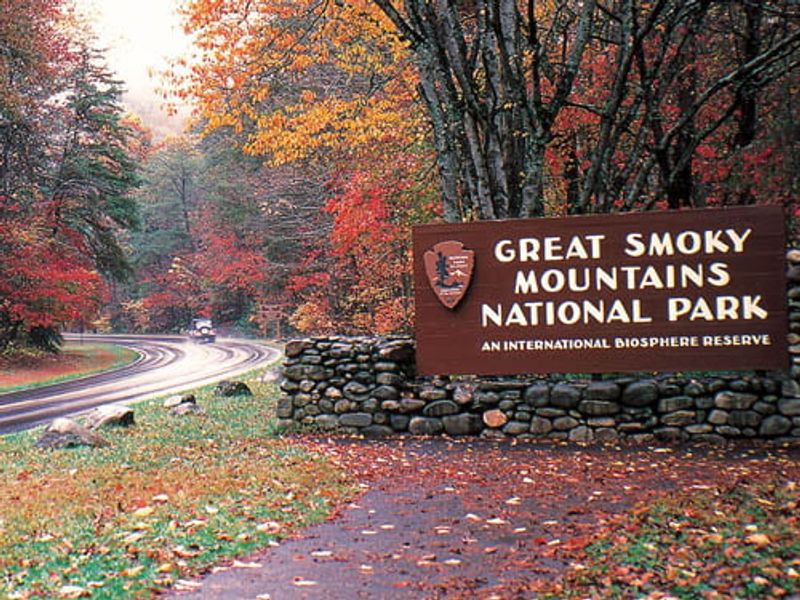
Nothing prepares you for the first time a black bear simply ambles across the road like it has somewhere important to be. Great Smoky Mountains National Park is home to roughly 1,500 black bears, making it one of the highest bear-density areas in the eastern United States.
That is not a small number when you are standing outside your car with a granola bar in your pocket.
Bears are spotted most often near Cades Cove, Roaring Fork Motor Nature Trail, and Newfound Gap Road, especially at dawn and dusk. Rangers remind visitors to stay at least 50 yards away, but watching a mama bear and her cubs tumble through a meadow from a respectful distance is genuinely one of the most thrilling experiences this park offers.
I watched a bear flip over a log looking for insects near the Alum Cave Trail parking area, completely unbothered by the crowd of stunned tourists behind me. Pure magic.
Alum Cave Trail and the Art of Slowing Down
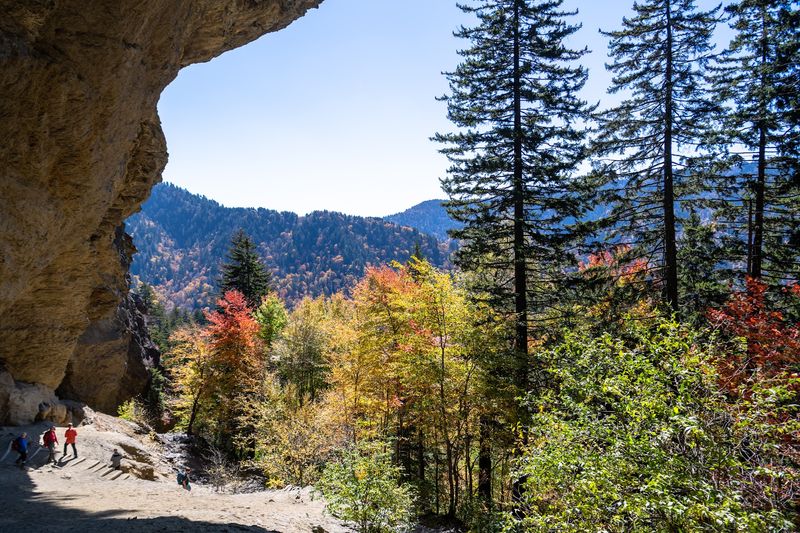
Alum Cave Trail is the kind of hike that rewards you before you even reach the destination. Starting at the Alum Cave Trail trailhead off Newfound Gap Road, the path winds alongside Little Pigeon River through a cathedral of old-growth hemlocks, their roots gripping the mossy creek banks like ancient fingers.
The sound of rushing water follows you the entire way up.
About two miles in, you reach the dramatic Alum Cave Bluffs, a massive overhanging arch of dark rock dripping with minerals and framed by rhododendron. People stop here, sit on the rocks, and stare in silence.
I watched a man put down his phone entirely, which felt like witnessing something rare and beautiful.
The full trail extends to the summit of Mount LeConte, a serious six-mile climb with jaw-dropping views. Even if you only make it to the bluffs, you will leave feeling lighter than when you arrived.
Buckwheat Pancakes at The Pancake Pantry

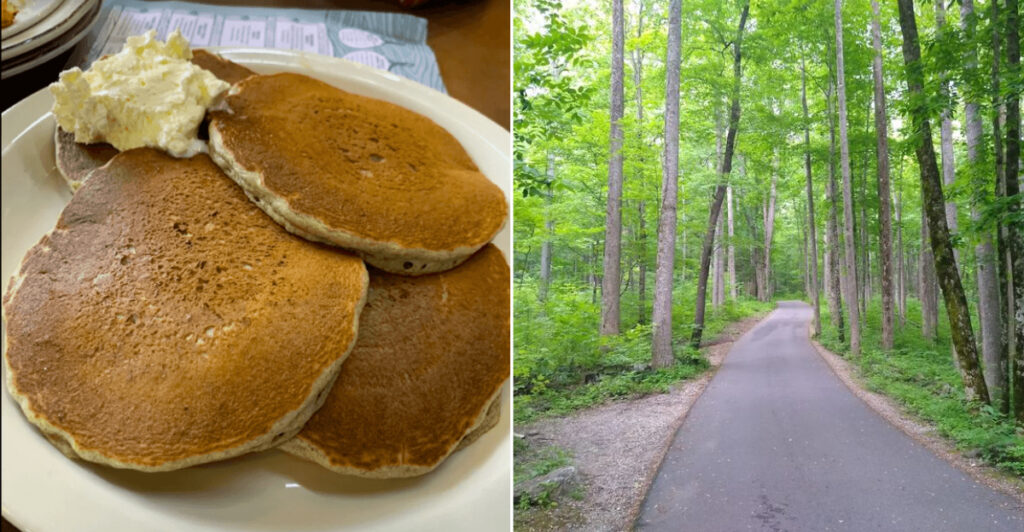
The Pancake Pantry on Historic Nature Trail Road has been flipping pancakes since 1960, and the line outside on a Saturday morning tells you everything you need to know about its reputation. People wait thirty minutes or more without complaint, because they know what is coming.
I joined the queue with a cup of gas station coffee and zero regrets.
The buckwheat pancakes are the stuff of small-town legend. Dark, earthy, slightly nutty in flavor, and served with a warm syrup that soaks in just right, they taste like something your grandmother would have made if your grandmother were a culinary genius.
The menu also features wild blueberry pancakes and Tennessee country ham, but buckwheat is the undisputed star.
Inside, the booths are cozy, the servers are quick, and the smell alone is enough to make you feel like everything is going to be fine. Breakfast has never felt so restorative.
Roaring Fork Motor Nature Trail
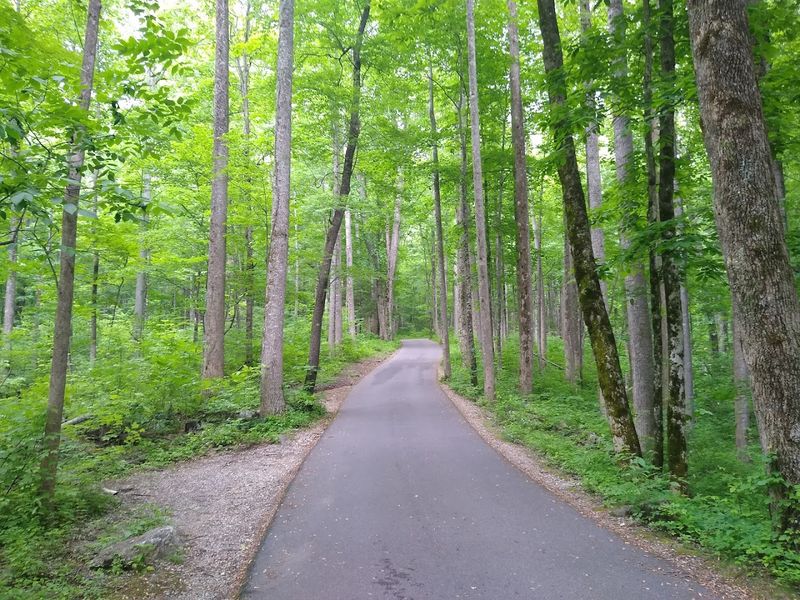
Roaring Fork Motor Nature Trail is a five-mile one-way loop that winds through some of the most spectacular old-growth forest in the eastern United States. The road is narrow, canopied by towering tulip poplars and hemlocks, and follows the rushing Roaring Fork stream almost the entire way.
Pull-offs appear every few hundred yards, practically begging you to stop and listen.
Along the route, you will pass preserved nineteenth-century log cabins that belonged to the mountain settlers who once called this hollow home. The Ephraim Bales Cabin sits right beside the stream and looks like something from a fairy tale, mossy and weathered and impossibly picturesque.
I sat on a nearby rock for twenty minutes watching the water rush past and felt genuinely at peace.
In autumn, the trail becomes a tunnel of orange, red, and gold that photographers chase from miles away. In spring, wildflowers carpet the forest floor.
There is no bad season to drive this road.
Cades Cove: Where Wildlife and History Share the Same Meadow
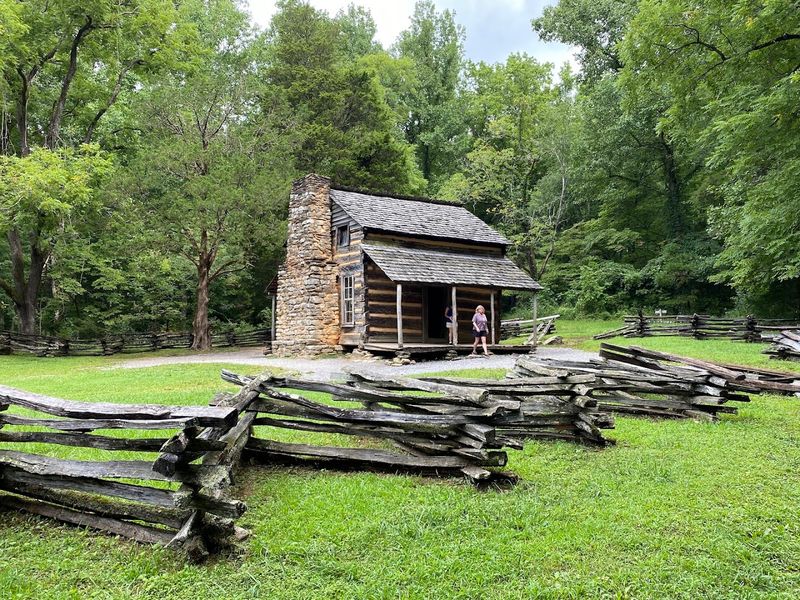
Cades Cove is an eleven-mile loop road that circles a broad, open valley ringed by mountains, and it might be the single most visited spot in the most visited national park in America. That sounds crowded, but arrive before 8 a.m. on a weekday and you will have misty meadows, strutting wild turkeys, and grazing white-tailed deer practically to yourself.
Beyond wildlife, the cove is packed with history. Preserved homesteads, grist mills, and white-painted churches dot the landscape, left behind by the European settlers who farmed this valley through the 1800s.
The John Oliver Cabin, built around 1820, still stands without a single nail in its construction. Walking up to it felt like touching time directly.
Black bears are frequently spotted here too, emerging from the tree line at the edges of the meadow. Rangers manage traffic during bear jams, which is a real thing and somehow both chaotic and wonderful.
Cades Cove earns every single visitor it gets.
Ole Smoky Moonshine and Gatlinburg’s Lively Downtown Strip
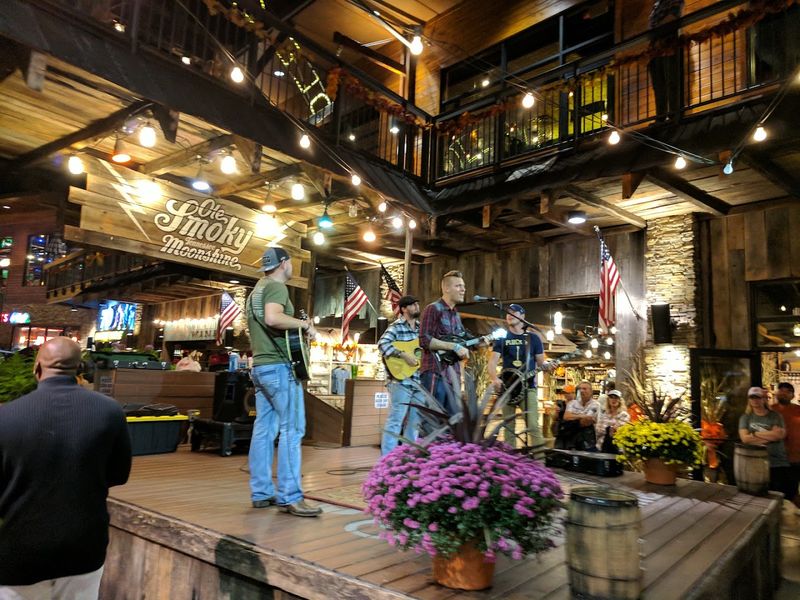
Gatlinburg’s downtown strip is a cheerful contradiction, a mountain town that somehow also has a Ripley’s Aquarium, a SkyLift Park gondola, and a moonshine distillery all within two blocks of each other. It sounds chaotic, but it works, mostly because the mountains loom so dramatically at the end of every street that you never forget where you actually are.
Ole Smoky Moonshine on the Parkway is worth a stop if only for the free samples and the barn-style tasting room that somehow feels authentic despite being on a tourist strip. Their apple pie moonshine is dangerously smooth.
I may have bought two jars.
The strip also has locally owned fudge shops, taffy pullers visible through storefront windows, and wood-carvers selling their work right on the sidewalk. It is touristy, absolutely, but in the best possible way, the kind of touristy that still feels rooted in genuine mountain culture and community pride.
Chimney Tops Trail and the Views That Earn Their Reputation
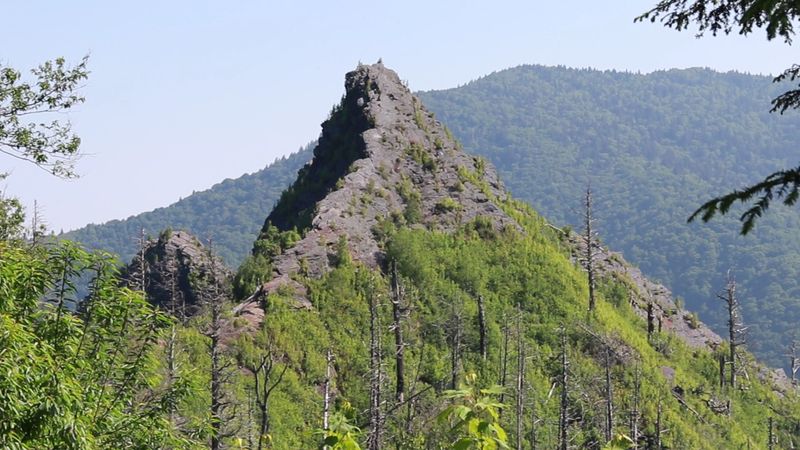
Chimney Tops Trail is two miles of relentless uphill climbing that rewards every burning step with one of the most dramatic views in the entire Smokies. The trail gained recent attention after the 2016 wildfires reshaped parts of the surrounding forest, and the regenerating landscape is striking in its own right, blackened stumps giving way to young green growth like a forest writing its own comeback story.
The final push to the rocky twin summits involves some light scrambling over exposed rock, and it is absolutely worth every scraped knee. From the top, forested ridges roll away in every direction like a green ocean frozen mid-wave, and on clear days you can see deep into North Carolina.
I sat up there eating a slightly crushed sandwich and felt like the luckiest person alive.
The trail is popular and parking fills fast, so an early start is essential. Timed entry permits are now required for the park during peak season, so plan accordingly before your visit.
Fly Fishing the Little Pigeon River
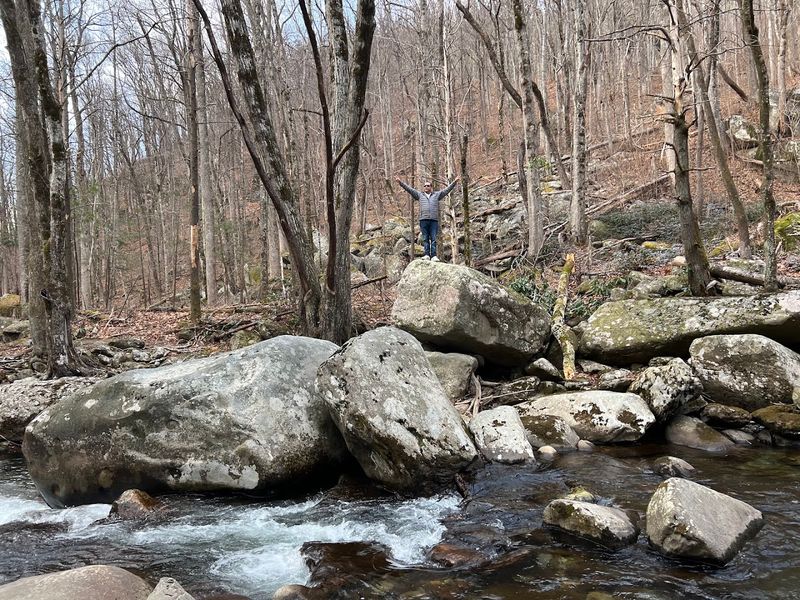
The Little Pigeon River runs right through the heart of Gatlinburg, and watching it tumble over smooth river rocks from a bridge on the Parkway is one of those small pleasures that sneaks up on you. But actually getting into that water with a fly rod in your hand is something else entirely.
The river holds wild rainbow and brown trout, and Great Smoky Mountains National Park has over 2,900 miles of streams open to fishing.
Local outfitters like Smoky Mountain Angler on Historic Nature Trail Road offer guided half-day trips that are worth every penny, especially if you are new to fly fishing. My guide had the patience of a saint and the quiet enthusiasm of someone who genuinely loves every single cast.
He pointed out a heron standing motionless in the shallows like a gray statue.
Even if you never catch a fish, standing in a cold mountain stream surrounded by forest while the rest of the world rushes past is its own kind of therapy. Highly recommended.
Gatlinburg SkyLift Park and the Bridge Above the Trees
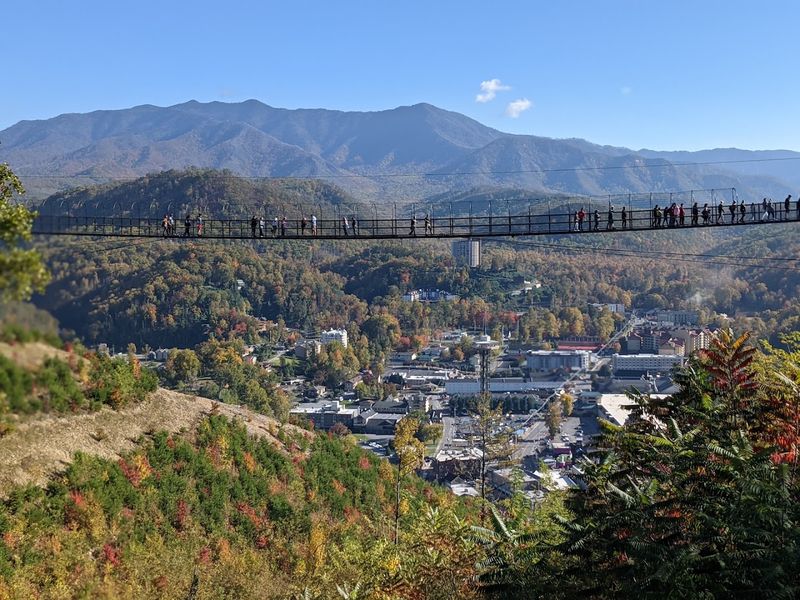
SkyLift Park is the kind of attraction that sounds gimmicky until you are actually standing on it, five hundred feet above the forest floor, watching the mountains stretch to the horizon in every direction. The SkyBridge is the longest pedestrian suspension bridge in North America, stretching 680 feet across a mountain gap with a glass-floored center section that makes your stomach do something involuntary.
The gondola ride up to the bridge is a throwback experience, open-air chairs that have been lifting visitors since 1954 and the views from the top are genuinely spectacular regardless of the season. Fall color from this height looks like someone spilled a paint set across the ridgelines.
Spring blooms make the valley look like a quilt.
I gripped the railing on the glass section longer than I care to admit, but the views made every white-knuckled second worthwhile. The park sits right on the Parkway, making it one of the easiest and most memorable stops in all of Gatlinburg.
Why Gatlinburg Stays With You Long After You Leave
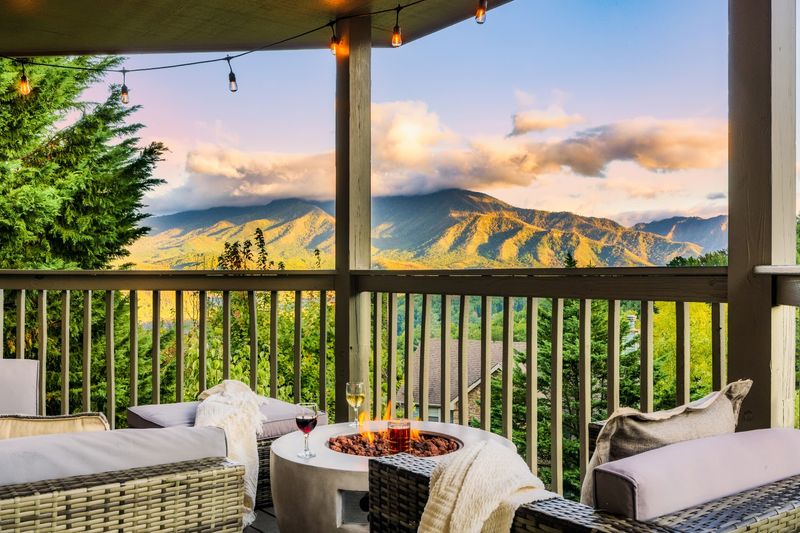
There is a specific moment that happens in Gatlinburg, usually on the second or third morning, when you step onto a porch with coffee and realize your shoulders have dropped about two inches from where they normally live. The mountains do something to a person.
All that green, all that quiet, all those unhurried mornings, it accumulates.
Gatlinburg is not a perfect town. The Parkway gets congested, parking is a puzzle, and the fudge shops are more numerous than strictly necessary.
But underneath the tourist infrastructure is a place with genuine soul, mountain culture, wild nature, real food, and a community that has welcomed strangers since long before the park was established in 1934.
The bears will cross the road when they feel like it. The pancakes will be exactly as good as you hoped.
The trails will leave your legs sore and your mind clear. Gatlinburg is more than a stop on a map, it is the kind of place that quietly resets something inside you, and you carry that home without even realizing it.
Share this story