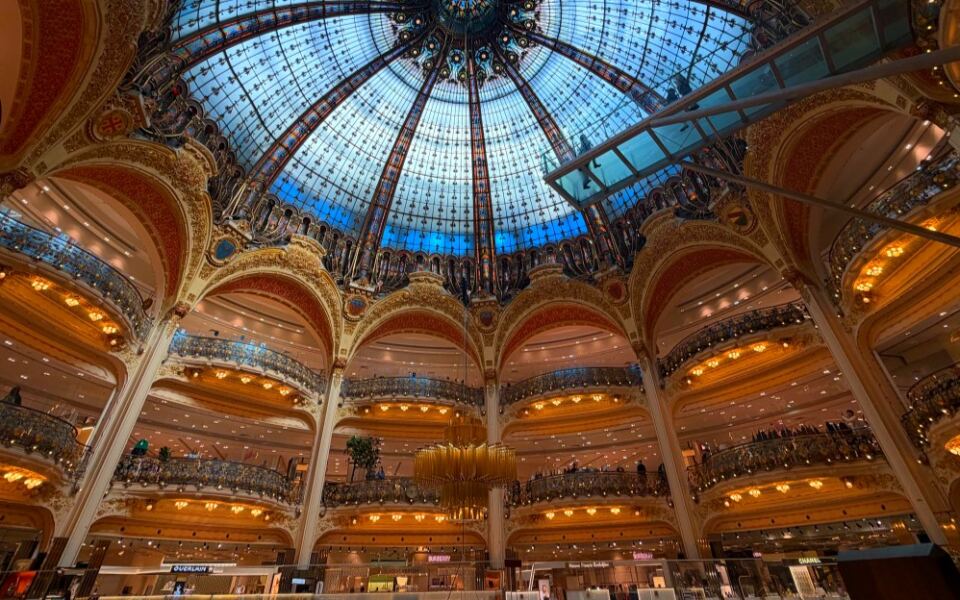
Some department stores were built to impress before shoppers even reached the merchandise. One in Chicago has a ceiling made from 1.6 million pieces of Tiffany glass.
Another in New York still has wooden escalators, while a London landmark was built using timber from old Royal Navy warships.
These buildings were designed when shopping was a major social event. Architects created enormous glass domes, grand staircases, decorative balconies, and elaborate interiors that rivaled those of famous hotels and theaters.
Many of these historic features have survived, and visitors can still see them today. From Paris and London to Chicago and Mexico City, these 13 department stores offer a look at an era when shopping was as much about the building as what was sold inside.
1. Macy’s on State Street, Chicago, Illinois, USA
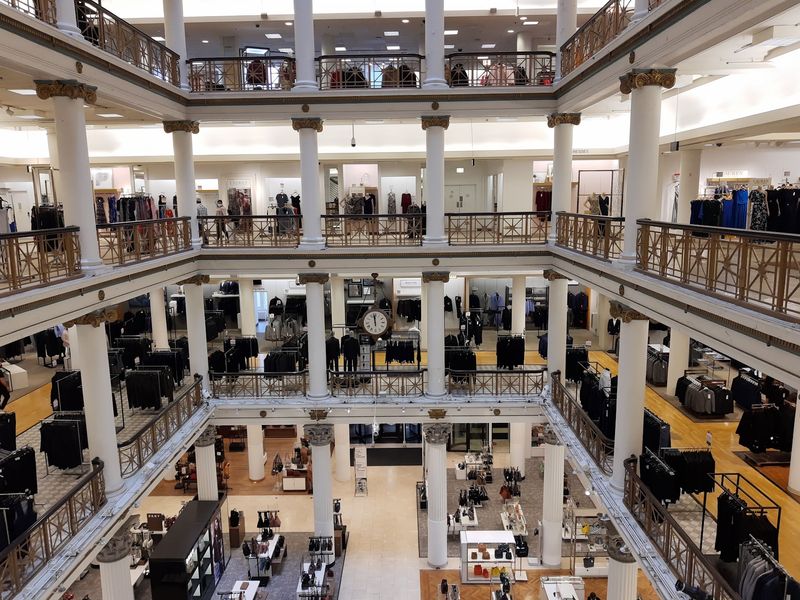
About 1.6 million pieces of glass hang over the cosmetics counters here, and most shoppers forget to look up. The Tiffany mosaic ceiling was finished in 1907 and covers more than 6,000 square feet.
Louis C. Tiffany used his special favrile glass, which gives a wide range of colors.
It is the largest glass mosaic of its kind.
Back then, the store was called Marshall Field’s. Daniel Burnham designed the building, and for a time it was the largest store in the world.
Head to the seventh floor for the Walnut Room, which opened in 1907. It is known as America’s longest-running restaurant inside a department store.
Order Mrs. Hering’s chicken pot pie, a recipe dating to 1890. In winter, a 45-foot Christmas tree takes over the room.
Outside, two huge clocks weigh over seven tons each. Locals still say meet me under the clock, so you can plan your own meetup there too.
2. Printemps Haussmann, Paris, France
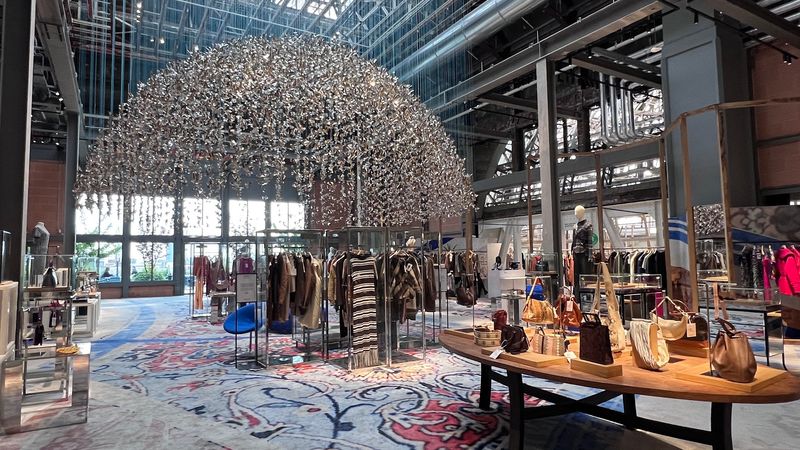
A coffee break has rarely come with a better ceiling. At Printemps, a cafe sits right under a stained-glass cupola in amber, green, and blue.
Master glassmaker Briere installed it in 1923. During World War II, it was taken down and stored for safety.
Years later, in 1972, his grandson rebuilt it using the original family drawings. That is one family project that really stuck around.
In 1975, the cupola and the front of the building were named historic monuments. The store itself first opened in 1865.
Printemps was an early leader in new ideas, adding electric lighting and hydraulic elevators. Today, three connected buildings hold about 44,000 square meters of shopping space.
Look for the decorative ironwork and curving stairways as you move between floors. A newer atrium from the late 2010s helps people move up and down more easily.
Finish on the roof terrace. It offers wide views over Paris, including the Eiffel Tower and the store’s own small domes.
3. Liberty London, London, England, United Kingdom
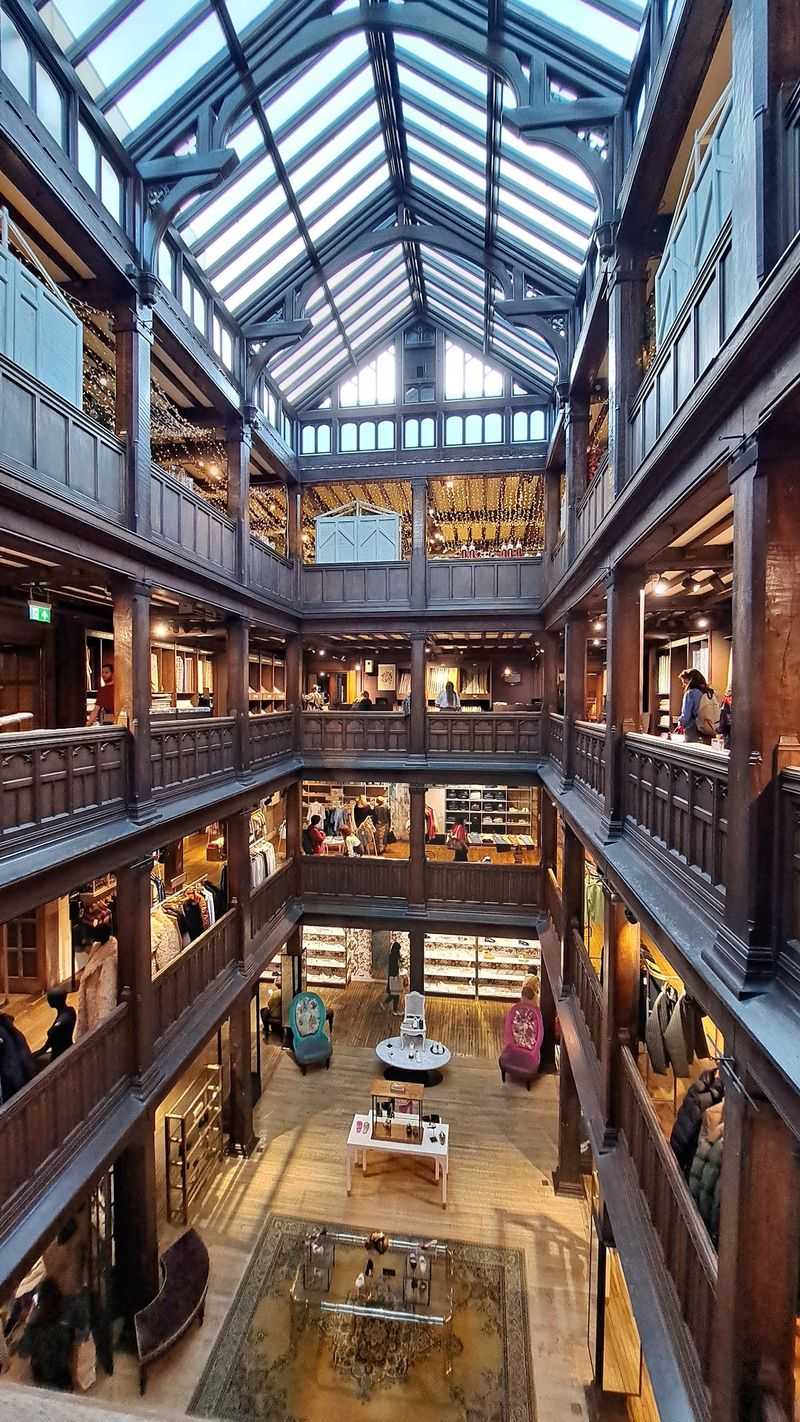
Two old Royal Navy warships ended up as a shop, and the result is Liberty. Timber from HMS Impregnable and HMS Hindustan was used to build this Tudor Revival store in 1924.
The black and white building looks like an English manor from centuries ago. Behind the wood, though, sits a modern steel and concrete frame.
Inside, the store is built around three central atriums. Smaller rooms branch off from them, and some still have their original fireplaces.
Liberty’s own craftsmen carved many of the panels and pillars. One carving job took twenty workers a full eighteen months.
Here is a fun challenge for your visit. Small carved wooden animals hide around the store, especially on the third floor, so see how many you can find.
Founder Arthur Liberty pictured the store as a merchant ship full of goods. A gilded Mayflower weathervane sits on top.
The store is so famous for design that Italians call Art Nouveau Stile Liberty.
4. La Samaritaine, Paris, France
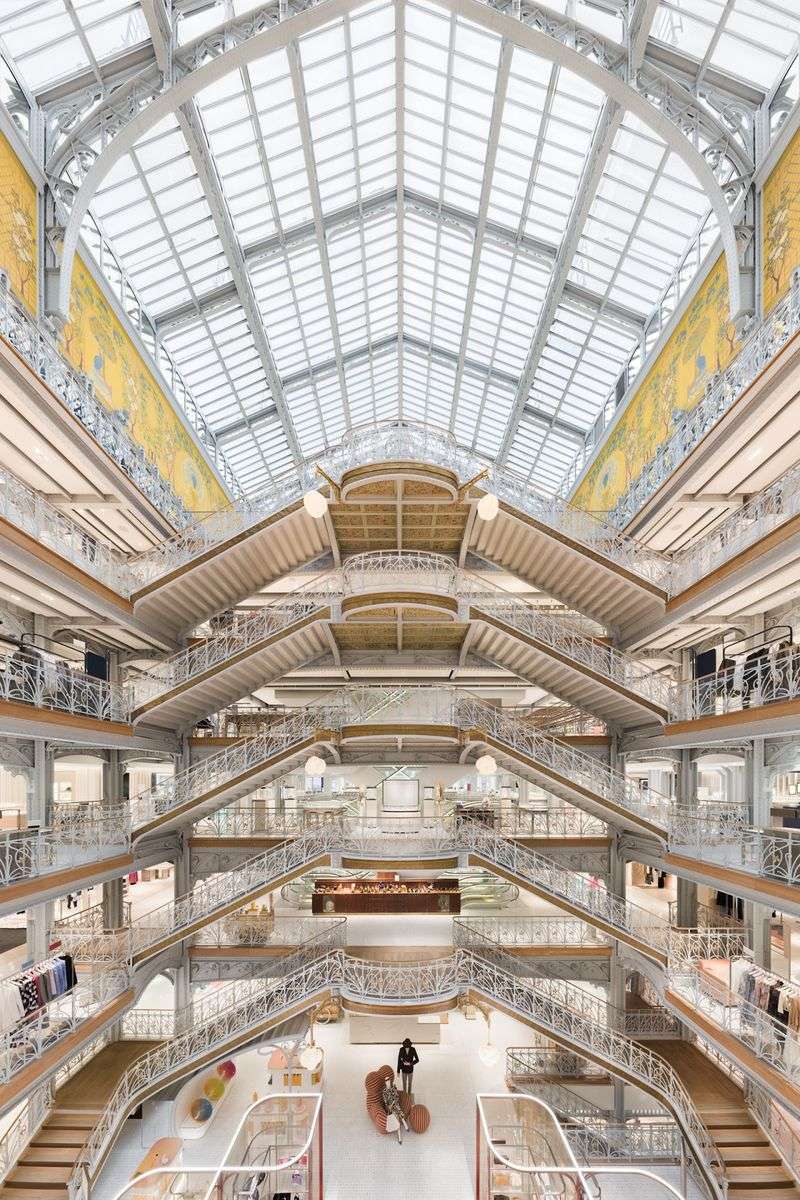
Sixteen years of repair work is a long wait for a shopping trip. La Samaritaine finally reopened in 2021 after a huge restoration that involved 280 French companies.
The star of the show is a peacock fresco under the glass roof. It runs 115 meters long and 3.5 meters high.
Francis Jourdain painted it, and his father, Frantz Jourdain, was the store’s main architect. Talk about a family business.
The glass roof dates from 1907. Today it uses special glass that tints itself when the sun gets too bright.
Over 600 meters of iron railings were restored, with missing pieces made again by hand. Many show flowers and garden designs.
Don’t skip the grand staircase in the Pont-Neuf building. Its railing once carried 16,000 gold leaves, and it still has 270 original oak steps.
Later parts of the store added Art Deco touches. A new wavy glass front on Rue de Rivoli brings the building into modern times.
5. Harrods, London, England, United Kingdom
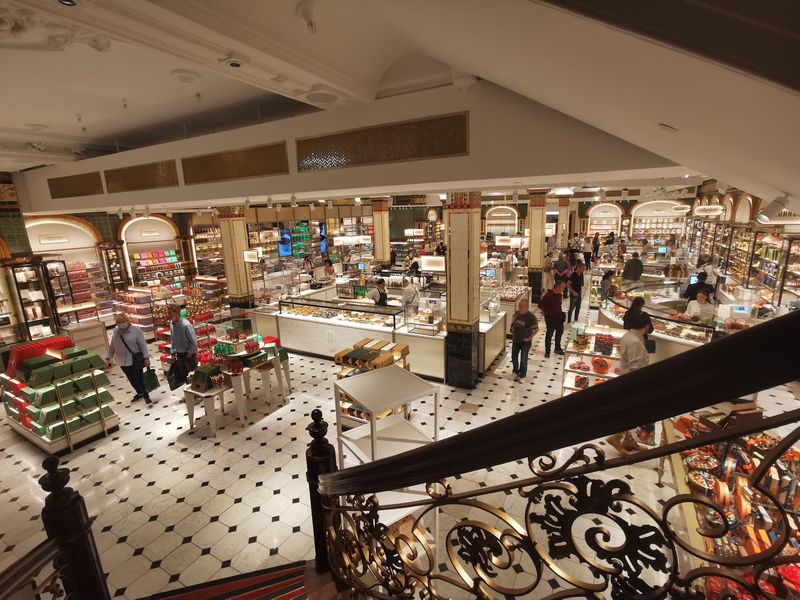
Britain’s very first escalator showed up at Harrods in 1898. It was a moving leather belt, and staff waited at the top to calm nervous riders.
The store you see today opened in 1905 in Knightsbridge. Architect C.
W. Stephens gave it a grand terracotta front.
Food lovers should head straight to the Food Halls. Artist William Neatby created the Royal Doulton tiles there in 1902.
Updates in 1925 added painted ceilings, brass and glass cabinets, and Carrara marble floors. These features are now legally protected.
The Egyptian Escalator Hall is the store’s most theatrical space. Designer William Mitchell created it in 1997 with columns and carvings inspired by ancient Egypt.
Over on the Basil Street side, a newer hall has a restored 1920s staircase. It also features a Dale Chihuly chandelier made from more than 900 hand-blown glass pieces.
Harrods began as a small grocer’s shop in 1849. Now about 15 million people visit each year, so arrive early for elbow room.
6. Macy’s Herald Square, New York City, New York, USA
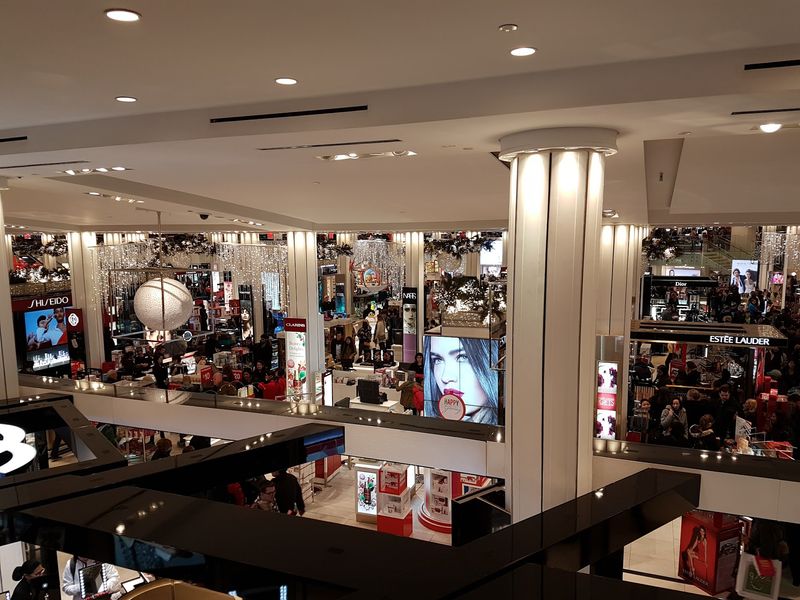
Some of the oldest working escalators on Earth still carry shoppers at Macy’s. The Otis Elevator Company installed wooden escalators here between the 1920s and 1930s.
Their steps, rails, and supports are made of oak and ash. Many lower ones were switched to metal, but several on the upper floors kept their wooden treads.
During a $400 million makeover from 2012 to 2015, Macy’s chose to keep them. That was a smart move, since many visitors ride them just for fun.
The store opened at Herald Square in 1902. For decades, it was the largest department store in the world.
Later additions changed the look from classical to Art Deco. In 1978, the building became a National Historic Landmark.
Check out the stone figures by sculptor J. Massey Rhind at the 34th Street entrance.
Also notice the small corner building that Macy’s had to build around, nicknamed the Million Dollar Corner. Its owners simply refused to sell.
7. El Palacio de Hierro Centro, Mexico City, Mexico
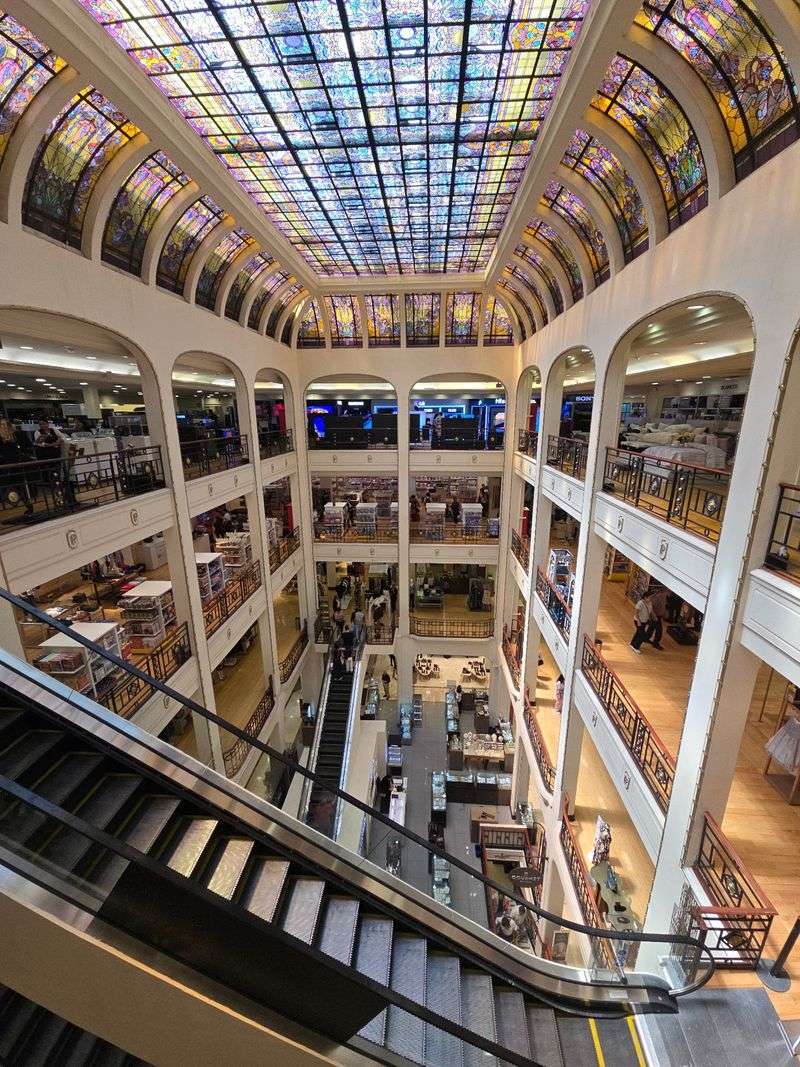
Iron gave this store its name and its fame. El Palacio de Hierro means The Iron Palace, a nickname earned by its early iron and steel frame.
French businessmen founded it in 1891 as Mexico City’s first modern department store. They took ideas from big Paris stores like Le Bon Marche.
In April 1914, a large fire ruined much of the original five-story building. The owners did not give up.
French architect Paul Dubois led the rebuild, and the store reopened in October 1921. The new design mixed Art Nouveau curves with sharp Art Deco lines.
The best feature hangs above the central atrium. Jacques Gruber, the same glass artist behind the Galeries Lafayette dome, designed its stained-glass ceiling.
The store still sells high-end goods in the city’s historic center. Plan time for the top-floor bistro, where your meal comes with city views.
It makes a nice rest stop after a day of sightseeing nearby.
8. Galeries Lafayette Haussmann, Paris, France
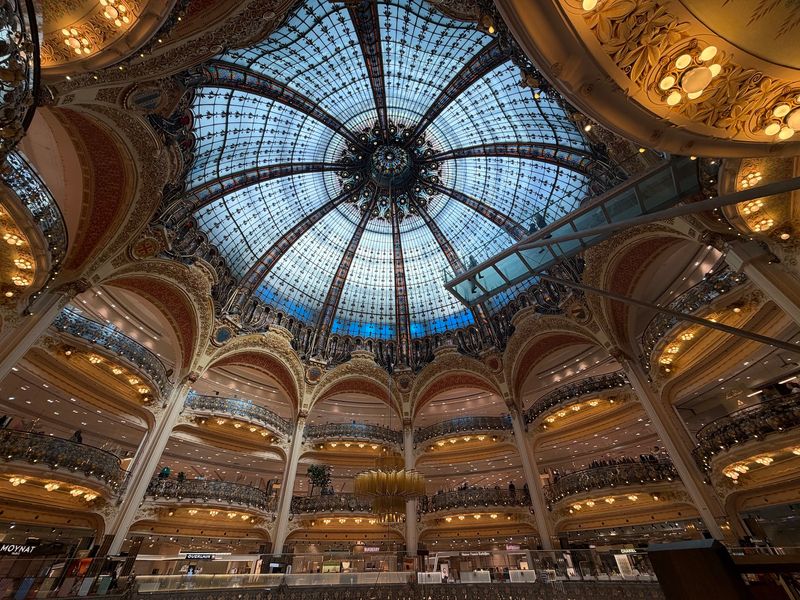
Paris has plenty of famous domes, but only one sits above a handbag counter. The stained-glass dome at Galeries Lafayette was unveiled in 1912 and rises 43 meters high.
Glass artist Jacques Gruber designed the colorful panels, while architect Ferdinand Chanut planned the structure. The dome is made of ten sections shaped like a giant flower.
During World War II, workers took the dome apart to keep it safe. A major restoration finished in 2021, and crews worked at night so the store could stay open.
Gold-trimmed iron balconies wrap around the main hall in tiers. Designer Louis Majorelle created them in the Art Nouveau style.
For the best photo, walk to an upper balcony and look straight across at the dome. Then ride up to the free rooftop terrace.
From there, you can spot the Eiffel Tower and the Opera Garnier. The store was founded in 1893 by two cousins who started with a small shop.
9. Le Bon Marché Rive Gauche, Paris, France
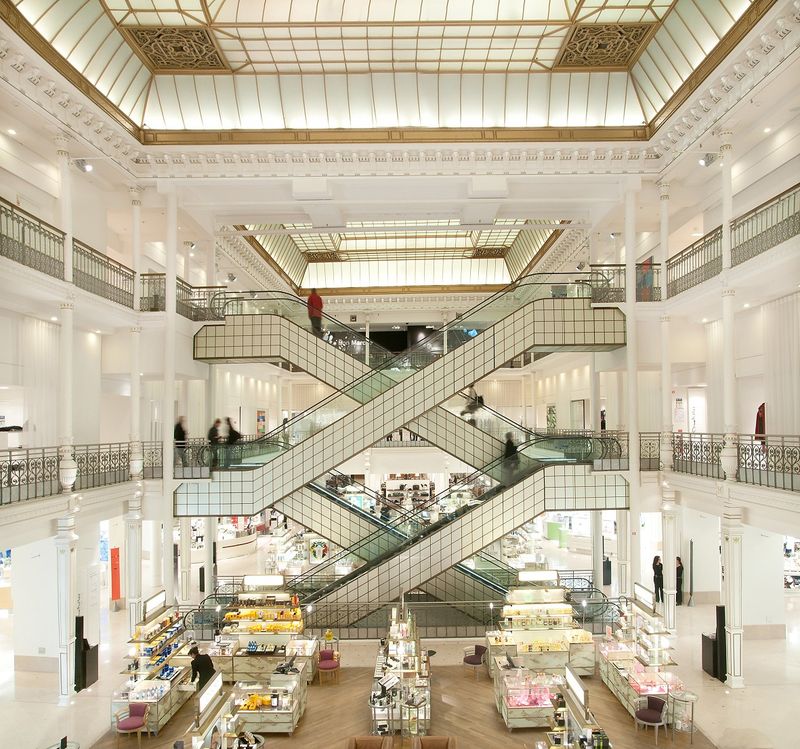
Fixed price tags were once a bold new idea, and this store helped start that trend. Aristide and Marguerite Boucicaut opened Le Bon Marche in 1852.
They also offered money-back guarantees and let people browse without buying. Many experts call it the world’s first modern department store.
Architect Louis-Charles Boileau worked with engineer Gustave Eiffel on the iron building. Eiffel helped with expansion work in 1879, ten years before his famous tower.
Big windows and lots of glass let daylight pour into the open galleries. Here is a fun fact for your friends.
The store’s metal frame weighs about 8,000 tons, which is more than the Eiffel Tower.
Art fans will enjoy a visit too. Big-name artists like Ai Weiwei and Joana Vasconcelos have filled the store with large installations.
Guided tours explain its history and design. Afterward, walk across the street to La Grande Epicerie de Paris, the store’s famous food hall.
10. Selfridges Oxford Street, London, England, United Kingdom
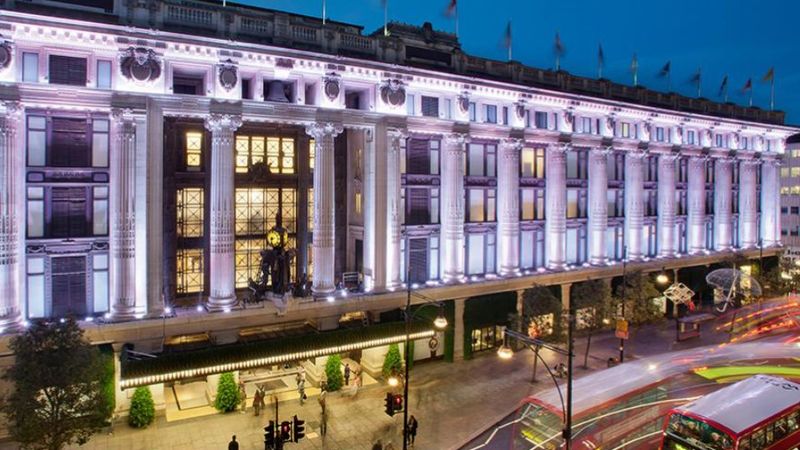
Ever wonder why makeup counters sit by the front door of most department stores? Harry Gordon Selfridge made that choice when he opened this store in 1909, and the world copied him.
American architect Daniel Burnham designed the building. It was an early example of steel-frame construction in Britain.
In February 2026, the restored Fragrance Hall reopened. Workers kept the original Carrara marble floors and columns, along with the decorative ceilings.
The bronze entrance doors on Oxford Street date to 1928. New counters even use brass edging to match them.
In the Accessories Hall, old plaster columns now reach their full height again. Ceiling panels, called coffers, are visible in their first layout.
Selfridge wanted shopping to feel like entertainment, not a chore. The store was named the world’s best department store in 2010 and 2012.
Keep an eye on the window displays outside, since they change often and draw crowds.
11. KaDeWe, Berlin, Germany
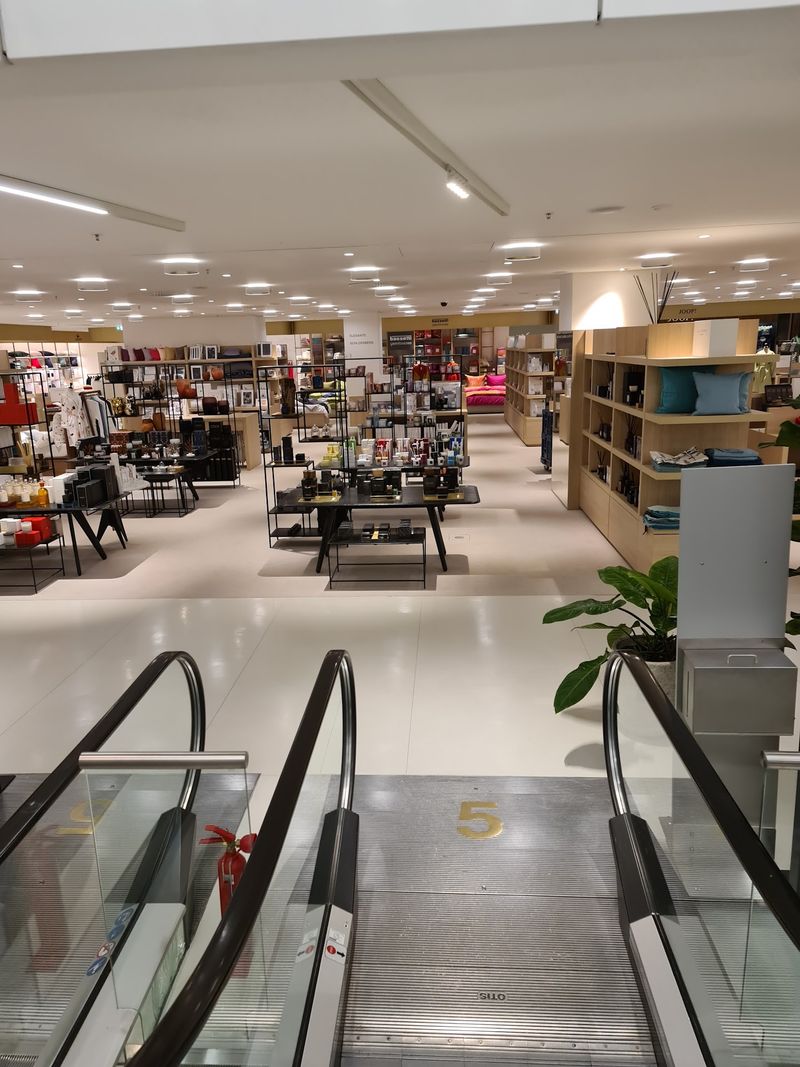
Bring an appetite, because the sixth floor is the main attraction. KaDeWe holds Europe’s largest delicatessen department, covering about 7,000 square meters.
The name is short for Kaufhaus des Westens, or Department Store of the West. Adolf Jandorf opened it in 1907, and architect Emil Schaudt designed it.
Its history follows Berlin’s ups and downs. The store was badly damaged in 1943, then reopened in 1950 as a sign of the city’s comeback.
Today, more than 60,000 square meters spread across eight floors. About 50,000 people visit on a busy day.
Since 2016, the design firm OMA has been reworking the building. Their plan splits the store into four sections, each with its own style, so it feels easier to explore.
Up top, a winter garden restaurant seats about 1,000 guests and looks over Wittenbergplatz. On the food floor, more than 30 counters serve dishes, cheeses, and pastries from around the globe.
12. GUM Department Store, Moscow, Russia
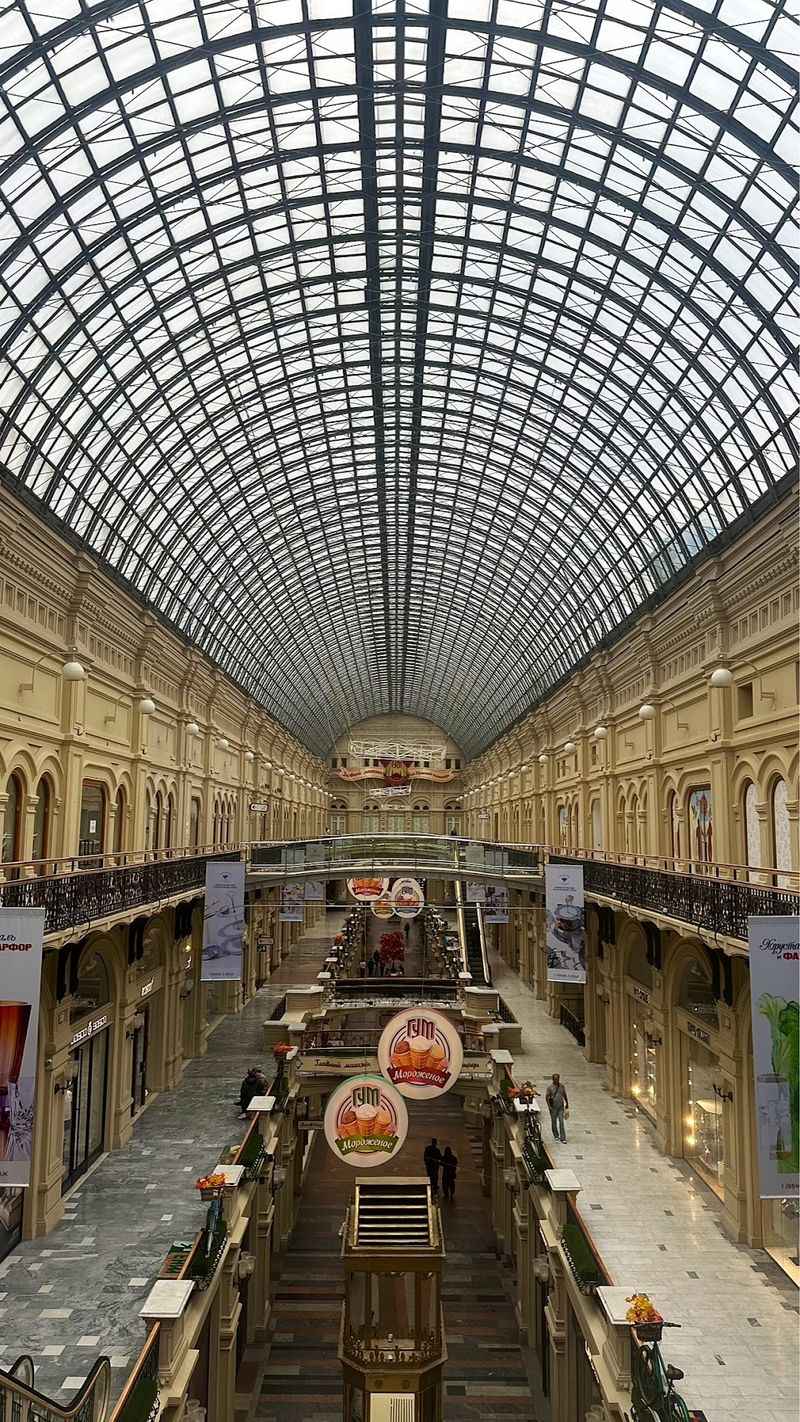
Picture a city street, add a glass roof, and you have GUM. Built between 1890 and 1893, it faces Red Square and fills an entire city block.
Its front stretches 242 meters long. Inside, three parallel shopping passages rise three stories high.
Iron bridges connect the upper levels, so shoppers can cross from one side to the other. Railings often feature flower designs.
Architect Alexander Pomerantsev designed the building, while engineer Vladimir Shukhov handled the roof. Its arches use diagonal ties, a Russian engineering idea from that time.
The roof holds thousands of glass panes and was built strong enough for heavy Moscow snow. That is good planning for a city with long winters.
GUM first opened with around 1,200 shops. After 1917, it was used for other purposes, including offices, before becoming a store again.
Today it holds cafes, restaurants, and a cinema. Locals often meet at the fountain in the central passage.
13. La Rinascente Piazza Duomo, Milan, Italy
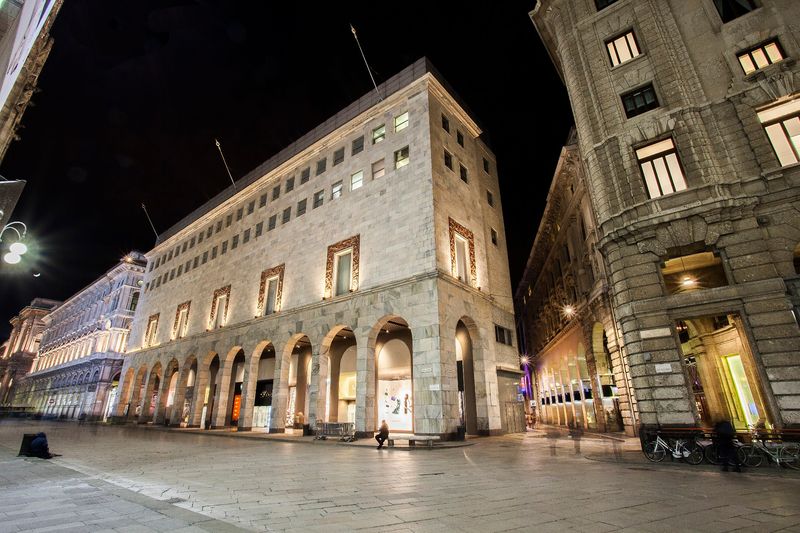
A famous poet named this store, which is not something most shops can claim. Gabriele D’Annunzio picked Rinascente, meaning rebirth, in 1917.
The business began in 1865 when the Bocconi brothers opened Italy’s first ready-to-wear clothing shop. It is now Italy’s oldest department store.
A fire hit the Piazza Duomo store in 1918. It was rebuilt and reopened in 1921.
Compared with the grand Paris stores, the interior is simpler. Still, it has a strong design story.
The company helped create the Compasso d’Oro in 1954, one of the world’s top design awards. It also worked with famous designer Gio Ponti.
Recent updates keep things fresh. The fifth floor now has 24 white plaster columns shaped like mushrooms.
Save the seventh floor for last. Its food hall and terrace seating give close views of Milan Cathedral’s Gothic spires.
Grab a table near the windows for the best look.
Share this story