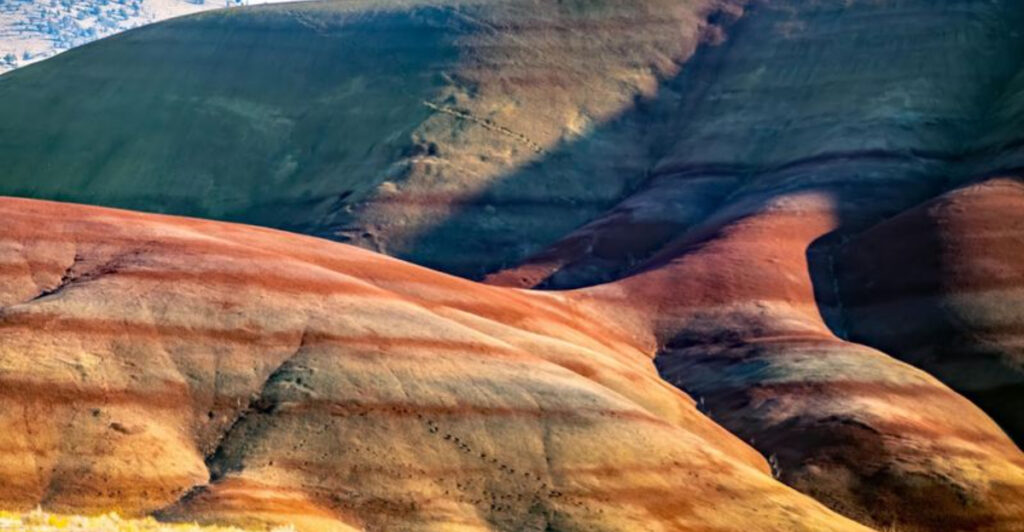
There is a place in central Oregon where the ground looks like it was painted by someone with a very long memory and a very large brush. The hills roll in waves of deep red, burnt gold, and charcoal black, and every stripe you see represents thousands of years of ancient climate change locked into the earth.
No filter, no editing, no enhancement needed. I had seen photos online and thought people were exaggerating, but the moment I stood at the overlook and took in that view, I completely understood why visitors drive hours out of their way just to stand there for a few minutes.
This is one of those rare places that makes you feel genuinely small in the best possible way, and I cannot wait to tell you everything about it.
Where Exactly You Will Find This Painted Landscape
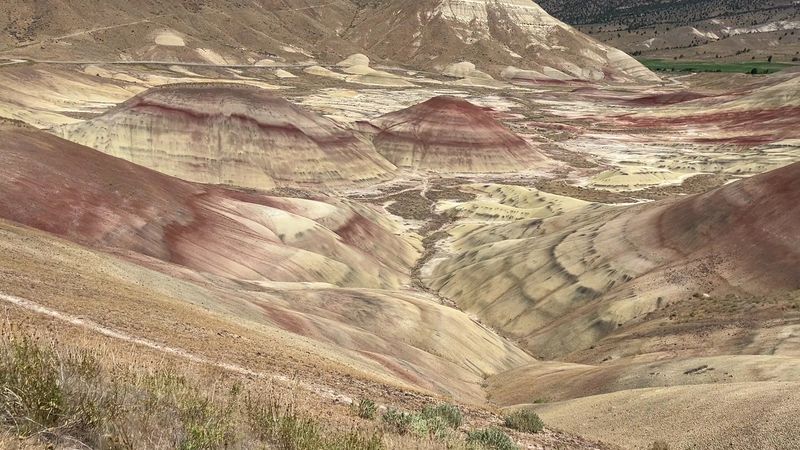
The Painted Hills Overlook sits along Overlook Trail in Mitchell, Oregon 97750, right inside the John Day Fossil Beds National Monument. The monument is divided into three separate units, and the Painted Hills Unit is widely considered the most visually dramatic of the three.
Mitchell is a tiny town in Wheeler County, tucked into the high desert of central Oregon. The drive out here is part of the experience.
You travel through wide-open ranch land, past juniper trees and sagebrush, with almost no traffic and a sky that stretches endlessly in every direction.
The overlook itself sits at coordinates 44.6498529, -120.26676, and the National Park Service manages the entire area. You can reach the visitor contact station by calling +1 541-987-2333, and the official NPS page at nps.gov/joda has trail maps and seasonal updates worth checking before you go.
Parking is free, entry is free, and the site is open 24 hours a day, seven days a week. That kind of access at a place this spectacular is genuinely rare, and it makes planning your visit refreshingly straightforward.
The 39-Million-Year Story Written in Color
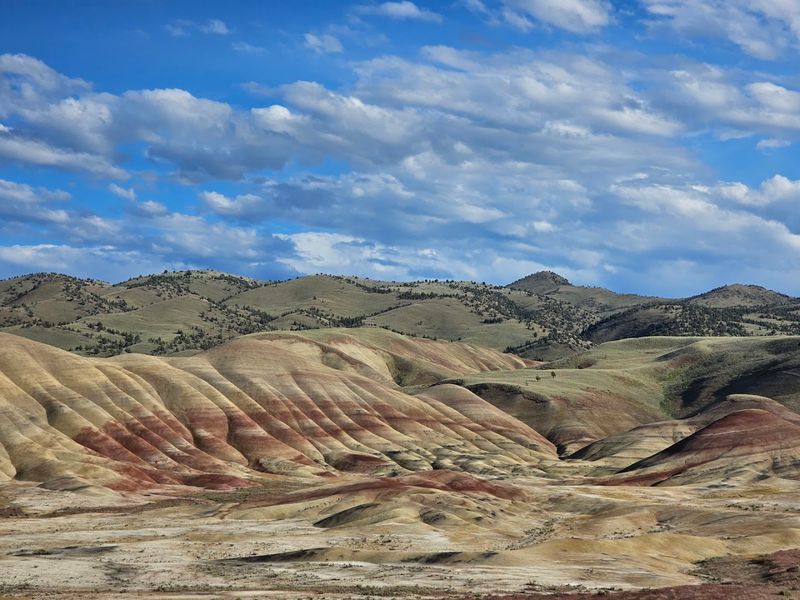
Every stripe of color you see on these hills is a chapter from a very old book. The red layers formed from ancient soils that developed during warm, wet periods roughly 33 to 39 million years ago, when this part of Oregon looked nothing like it does today.
Back then, the region was a floodplain covered in subtropical forests, full of prehistoric horses, rhinos, and giant tortoises. Volcanic ash from nearby eruptions settled over the landscape repeatedly, and over millions of years, those layers compressed and oxidized into the vivid bands you see now.
The black and gold layers tell a different part of the story. The black streaks are rich in manganese and organic material, indicating periods of swampy, low-oxygen conditions.
The gold and tan tones represent drier, more oxidized soil environments between those wet phases.
What makes the Painted Hills so scientifically valuable is that each color shift marks a real climate transition. Geologists and paleoclimatologists study these layers to understand how global temperatures and rainfall patterns changed over tens of millions of years, making this hillside one of the most informative climate records on the planet.
What the Colors Actually Look Like Up Close
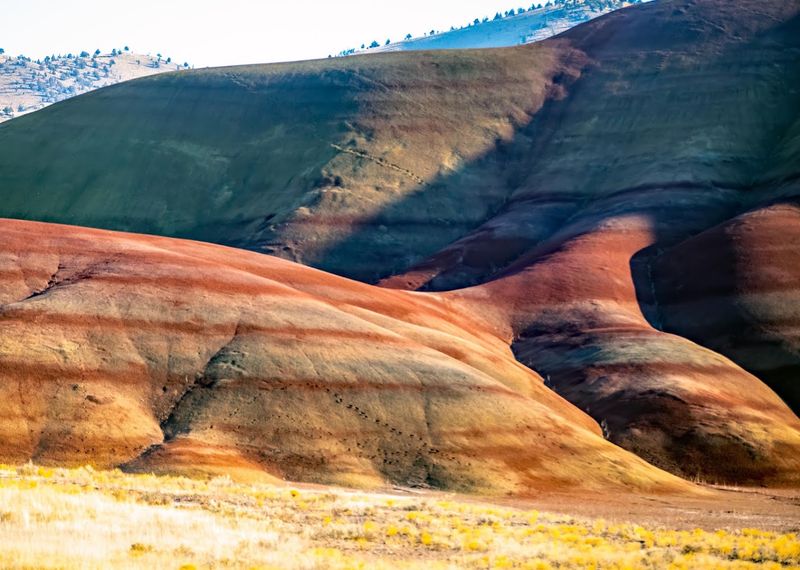
No photograph has ever done this place full justice, and that is not an exaggeration. The reds are not just red; they shift from brick orange in flat light to a deep, almost burgundy tone when the sun hits them at an angle.
The gold hills have a warmth to them that feels almost liquid in late afternoon, like the earth itself is radiating heat and light. The charcoal-black streaks cut through the lighter layers with surprising sharpness, making the whole scene feel structured and deliberate rather than random.
Cloud shadows move across the hills throughout the day, and each passing shadow changes the mood of the entire landscape. A hill that looks coral-colored at noon can turn a rich terracotta red just twenty minutes later.
The surface texture matters too. Up close, the clay-rich soil has a smooth, almost velvety appearance when dry, and the trails are designed to keep visitors on the path so the fragile surface stays intact.
You will want to crouch down and study the ground, and that kind of curiosity is exactly what this place rewards.
The Short Trail That Delivers a Very Big Reward
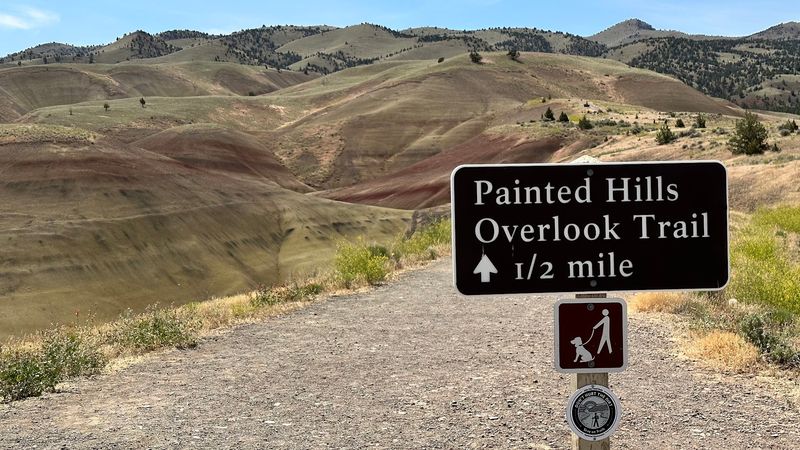
The overlook trail itself is refreshingly short. The main path to the primary viewpoint is less than half a mile round trip, which makes it accessible to a wide range of visitors including kids, older adults, and people who are not looking for a strenuous hike.
The trail surface is mostly packed gravel and dirt, with some wooden boardwalk sections that keep foot traffic off the most sensitive soil areas. There are no steep climbs on the main overlook path, and the elevation gain is minimal.
That said, the John Day Fossil Beds unit also offers a few longer trails nearby, including the Carroll Rim Trail, which gains more elevation and gives you a broader panoramic perspective of the entire Painted Hills basin. That one is worth the extra effort if your legs are willing.
The short overlook trail is best visited early in the morning or in the late afternoon, when the light is low and the colors are most saturated. Midday light tends to wash out the subtler tones and flatten the visual drama that makes this place so striking.
Give yourself at least an hour to walk slowly and really take it all in.
The Best Time of Day and Year to Visit
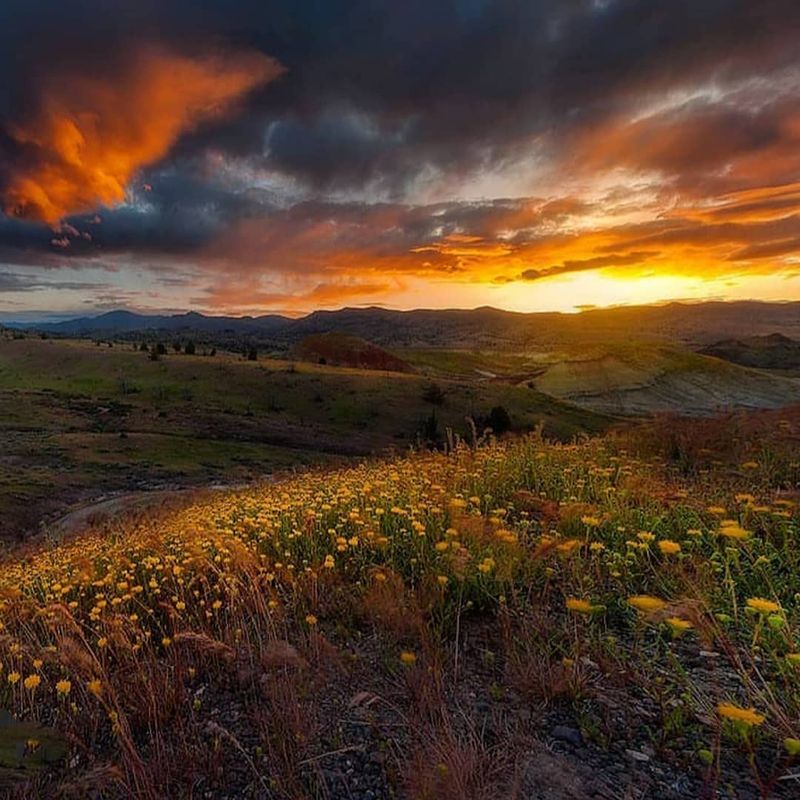
Timing your visit makes a genuine difference here. The Painted Hills respond dramatically to the quality and angle of light, and the difference between a flat midday visit and a golden-hour visit is significant enough to plan your schedule around.
Late afternoon is widely considered the best time of day. The low sun hits the red clay at a raking angle that brings out every texture and deepens the color saturation to something almost surreal.
Morning light works well too, especially in spring when the air is clear and cool.
Spring is also the best season overall, roughly March through May, because the hills are at their most vibrant after winter moisture. Wildflowers sometimes bloom in the surrounding grasslands, adding splashes of yellow and purple to the foreground.
Summer visits are perfectly fine, but the high desert heat can be intense by midday, and the dry conditions can mute some of the subtler clay tones. Fall brings its own appeal with cooler temperatures and dramatic skies.
Winter visits are possible since the site stays open year-round, but snow can occasionally close the access road, so check conditions before heading out.
Wildlife and Desert Life Sharing the Space
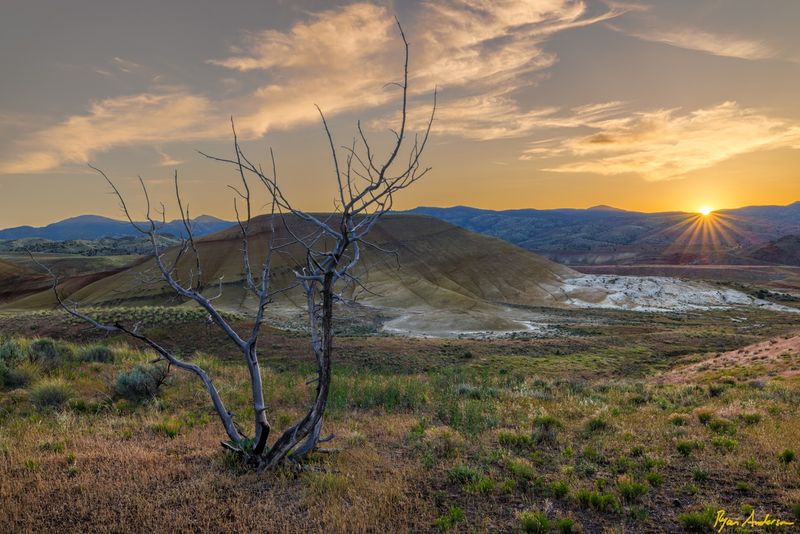
The high desert around the Painted Hills is far more alive than it first appears. On my visit, I spotted several lizards darting across the warm clay near the trail edges, and a red-tailed hawk was circling overhead for most of the time I was at the overlook.
Mule deer are common in the area, especially in the early morning and at dusk. Pronghorn antelope have also been spotted in the wider landscape around the monument, moving quickly through the open sagebrush flats.
One thing worth knowing before you go: scorpions do live in this area. They tend to stay under rocks and in crevices during the day, but it is smart to watch where you step if you wander off the main trail, and to shake out shoes or gear if you have been sitting in rocky areas.
The plant life is equally interesting, with sagebrush, rabbitbrush, and native bunchgrasses filling in the spaces between the hills. In spring, small wildflowers push up through the seemingly inhospitable clay soil, a quiet reminder that life finds a way even in the most unlikely terrain.
Practical Tips for a Smooth Visit
A few practical details can make the difference between a comfortable visit and a frustrating one. The most important thing to bring is water.
The site has no services, no vending machines, and no shade structures on the trail itself, so carry more than you think you will need, especially in summer.
Sunscreen is equally essential. The high desert sun is intense, and the open terrain offers no canopy cover whatsoever.
A hat and sunglasses are worth packing regardless of the season.
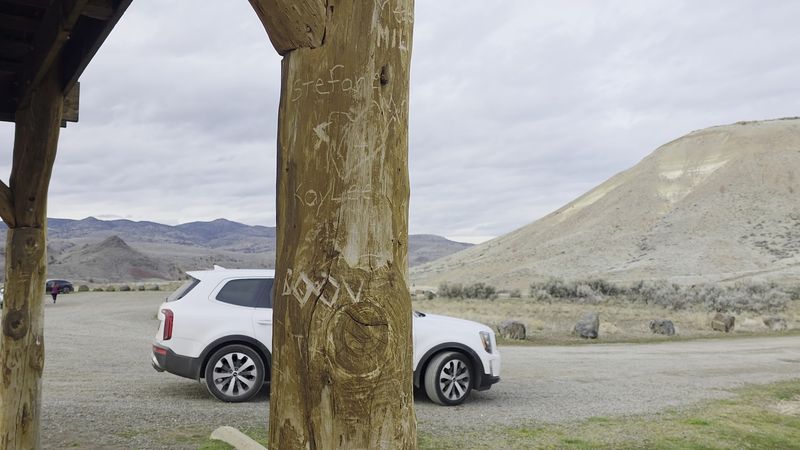
Parking is free and the lot near the overlook trailhead can accommodate cars and small RVs. There are restroom facilities at the main parking area, which is a welcome detail given how remote the location feels.
Cell service is limited or nonexistent in many parts of the drive to Mitchell, so download offline maps before you leave. The NPS website has downloadable trail maps and current road condition updates that are worth reviewing ahead of time.
Bring cash for any supplies you might need in Mitchell, as the small town has limited services and not all businesses accept cards reliably.
The Drive Out Here Is Part of the Adventure
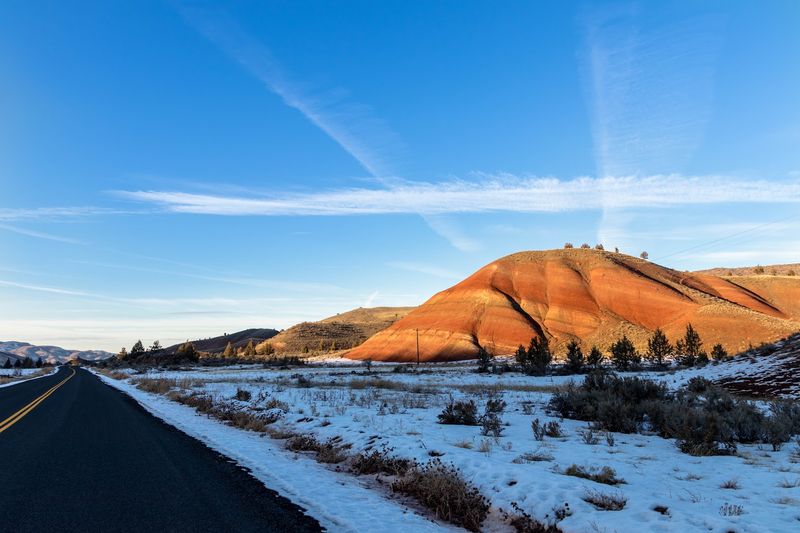
Getting to the Painted Hills is not a quick side trip from a major city. From Portland, the drive is roughly three and a half to four hours, heading east through the Columbia River Gorge and then south through the high desert.
From Bend, it is closer to two hours heading northeast through Prineville.
The Journey Through Time Scenic Byway runs through this region and connects the Painted Hills to other sites including the Sheep Rock Unit of John Day Fossil Beds and the town of John Day itself. The drive along this byway is genuinely one of the more underrated road trips in the Pacific Northwest.
The landscape shifts noticeably as you get closer to Mitchell. The forests thin out, the terrain opens up, and the color of the soil starts changing from ordinary brown to something more unusual.
By the time you see the first painted hills from the car window, the anticipation that has been building for hours suddenly pays off.
Fuel up before heading into this stretch of Oregon, as gas stations are sparse and the distances between towns are longer than they look on a map. The remoteness is part of the appeal, but it rewards a little preparation.
Photography at the Overlook: What Actually Works
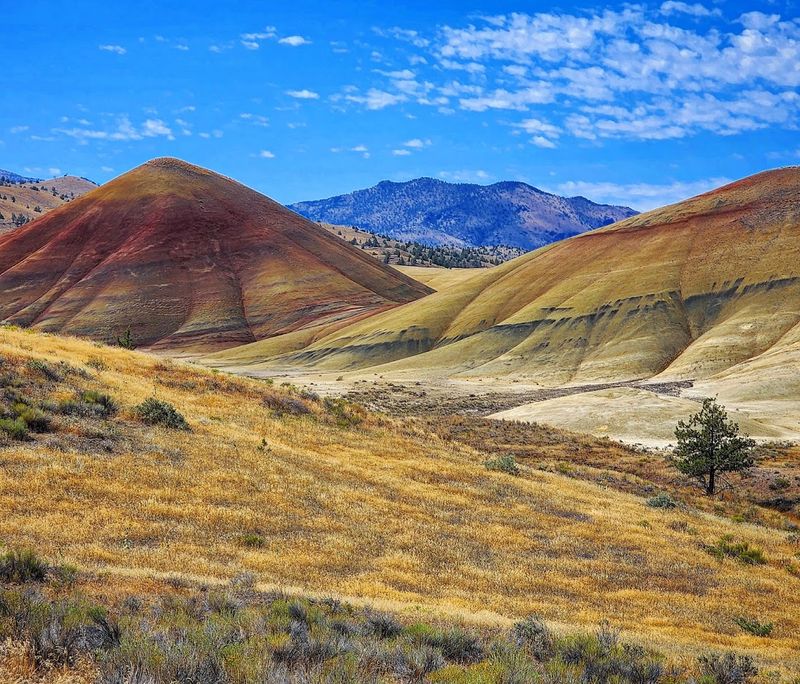
The Painted Hills are one of the most photographed landscapes in Oregon, and for good reason. But getting a shot that actually captures what you see in person takes a bit of thought and the right timing.
Wide-angle lenses work beautifully here because the hills spread across a broad horizontal canvas. Including the sky in your composition adds drama, especially when there are clouds casting moving shadows across the terrain.
The overlook viewpoint gives you a classic straight-on perspective of the main cluster of red and gold hills. For more varied compositions, the Carroll Rim Trail above the valley gives you a higher vantage point that shows how the painted hills sit within the wider desert basin.
Early morning offers soft, directional light and the possibility of mist in the lower areas during cooler months. Late afternoon brings the richest color saturation and the longest shadows, which add depth and dimension to the layered bands.
A polarizing filter can help cut glare on the clay surface and boost color contrast. Even with a smartphone camera, the colors here are vivid enough to produce stunning results as long as you are there at the right time of day.
What Makes This Place Feel Unlike Anywhere Else
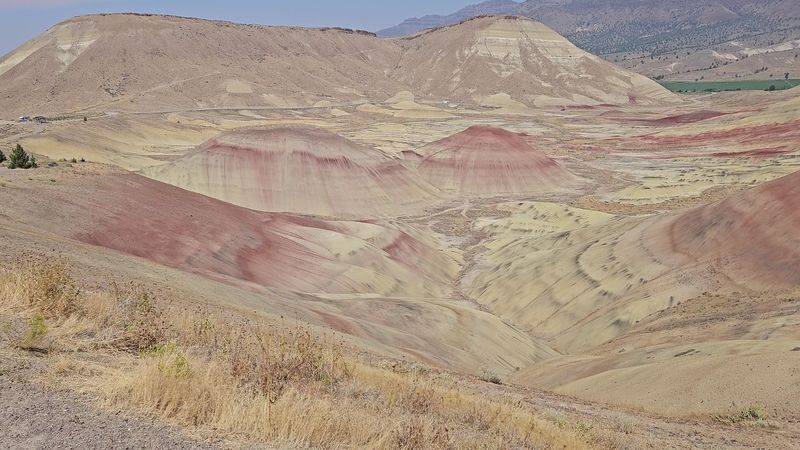
There is a specific kind of quiet at the Painted Hills Overlook that is hard to describe without sounding overly dramatic. The high desert absorbs sound differently than forested areas, and on a calm day the silence has an almost physical quality to it.
The landscape does not look like the rest of Oregon. It does not look like anywhere in the continental United States, really.
The color palette and the smooth, rounded geometry of the hills give the terrain a quality that feels genuinely ancient and foreign in the most fascinating way.
Visitors consistently describe the experience as humbling. Standing at the overlook and knowing that what you are looking at represents nearly 40 million years of Earth history compressed into visible layers tends to recalibrate your sense of scale pretty quickly.
The fact that this site is free, open around the clock, and managed by the National Park Service means it is protected for future generations without any financial barrier to access. That combination of scientific significance, visual drama, and open accessibility makes the Painted Hills Overlook one of the genuinely great public lands experiences in the American West, and one worth making a deliberate trip to experience firsthand.
Share this story